
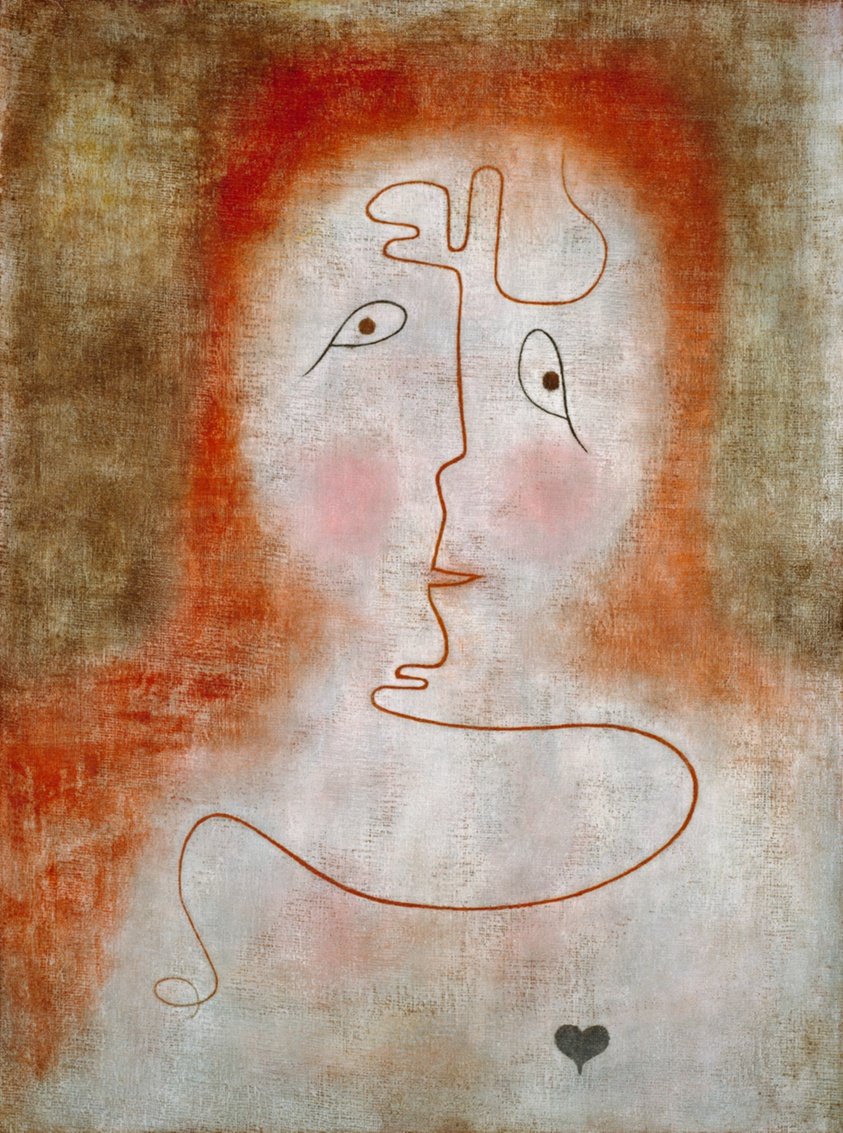
“This painting captures a moment of deep personal turmoil for the artist, expressed through a single, evolving line that creates multiple faces and a poignant black heart. It's a powerful visual metaphor for disillusionment and anxiety.”
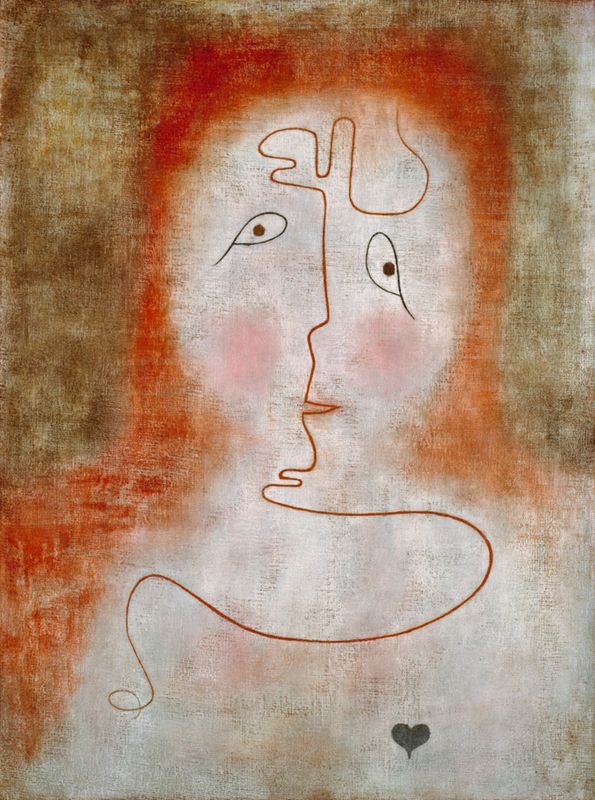
A blank face dominates this canvas, a vertical line snaking from top to bottom, creating a fascinating optical illusion. The line begins as an eyebrow, then morphs into a nose, and finally a chin, giving rise to three distinct visages simultaneously: one looking left, one looking right, and one staring directly out with two tear-shaped eyes. Below these evolving faces, a single, isolated black heart hangs in the void. Painted in 1934, shortly after Paul Klee was labeled a "degenerate artist" by the Nazi Party and forced to leave Germany for Switzerland, this work seems to channel his profound disillusionment. The knotted brow, the sorrowful eyes, and the stark black heart combine to communicate a palpable sense of anxiety, distress, and bitterness that resonates through the canvas.
- Artist
- Paul Klee
- Date
- 1934
- Medium
- Oil on canvas, on board
- Location
- Art Institute of Chicago
What to Notice
Three details hide in plain sight. Here’s where to look.
The single snaking line that forms three faces at once.
The two tear-shaped eyes that gaze out from the central face.
The lone, isolated black heart positioned below the faces.
Stand in front of it and listen
The full narration walks you through In the Magic Mirror — the story behind it, the details most visitors miss, and why it matters. Free in the Art Whisper app.
Paul Klee
1879–1940 · Kingdom of PrussiaPaul Klee was a Swiss-born German artist. His highly individual style was influenced by movements in art that included expressionism, cubism, and surrealism.
Further Works by Klee
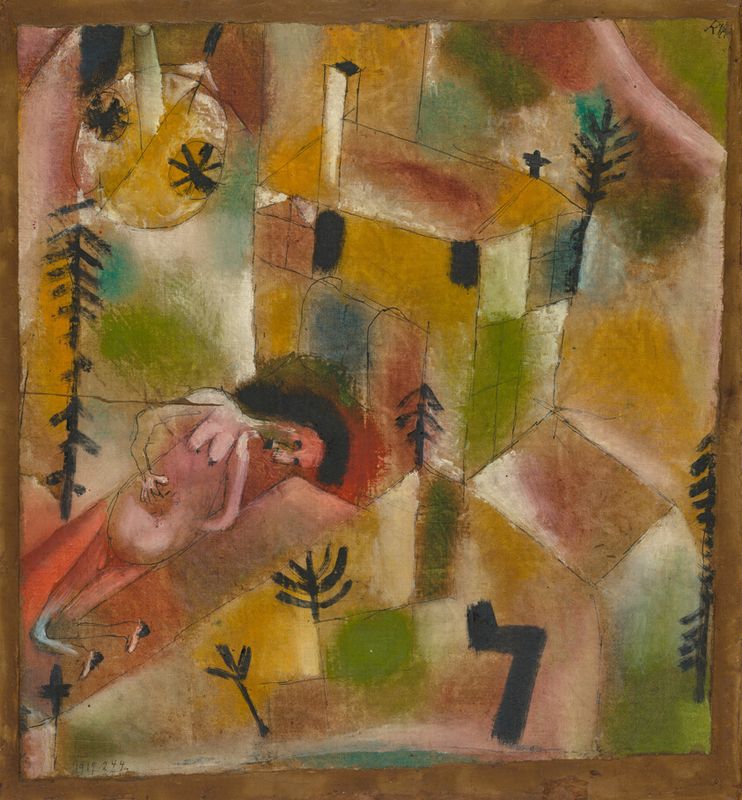 Death in the Garden (Legend)
1919 · Art Institute of Chicago
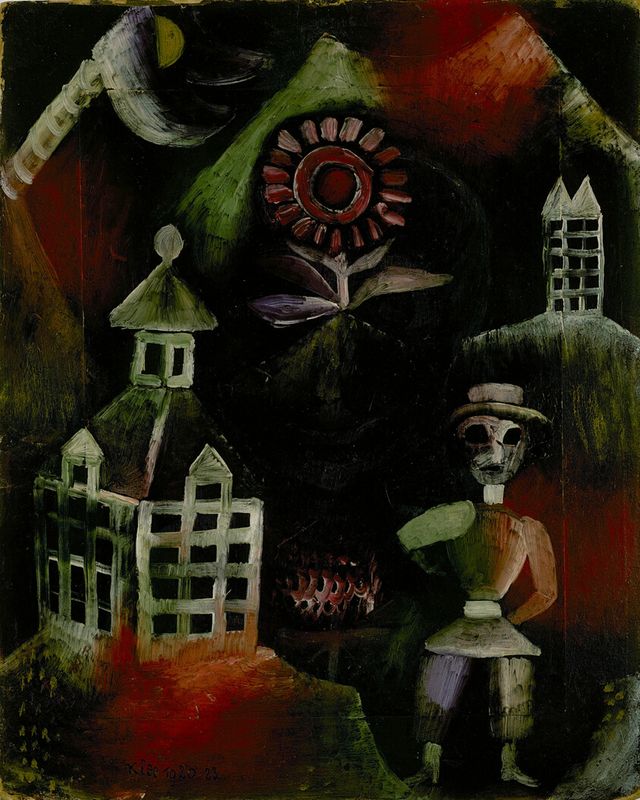 Schoolhouse
1920 · Art Institute of Chicago
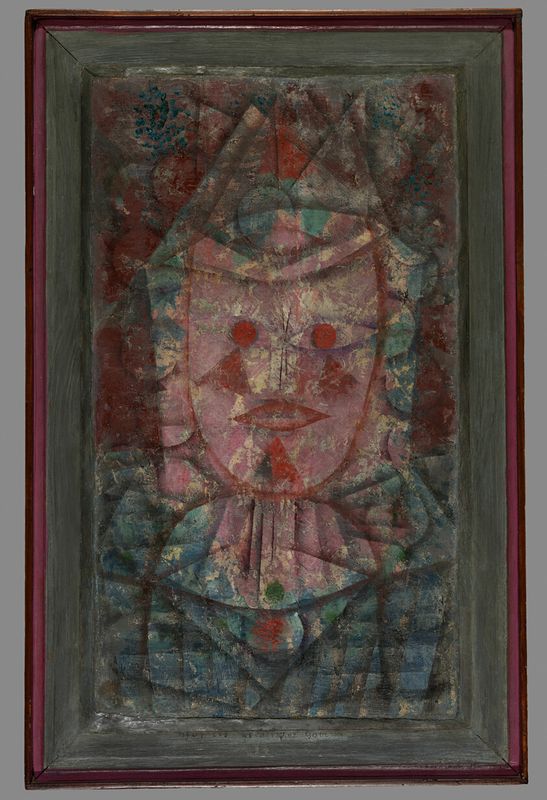 Asiatic God
1924 · Art Institute of Chicago
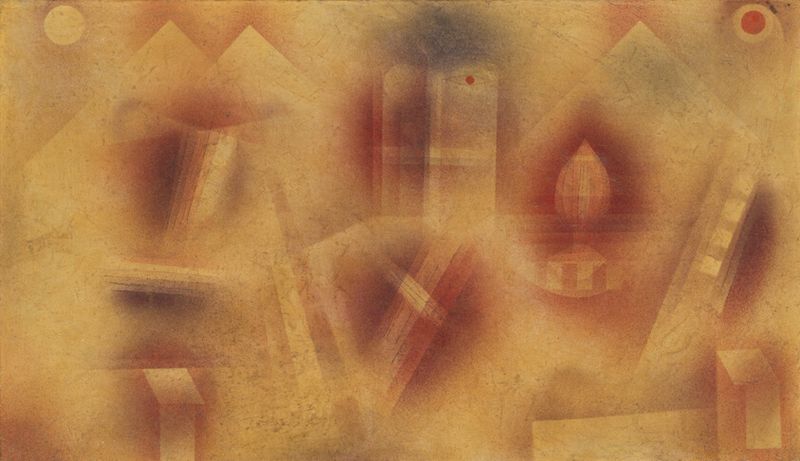 Still Life with Fragments
1925 · Art Institute of Chicago
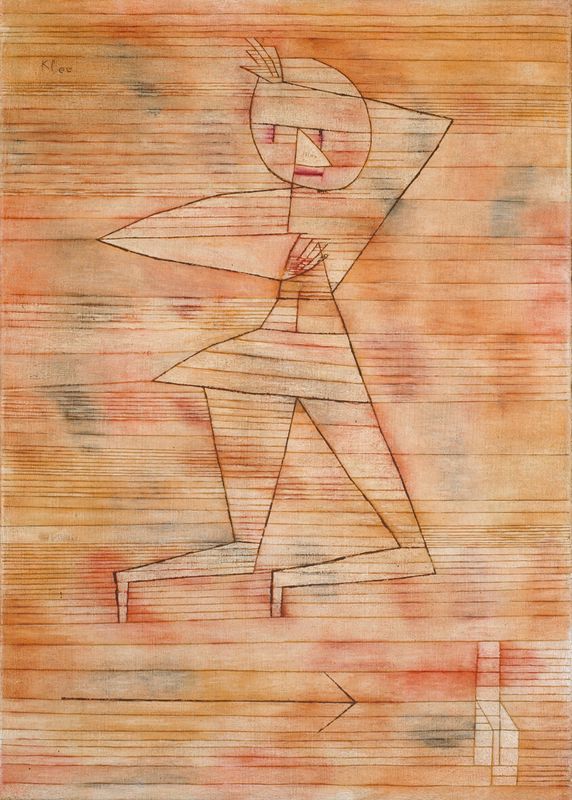 Fleeing Ghost
1929 · Art Institute of Chicago
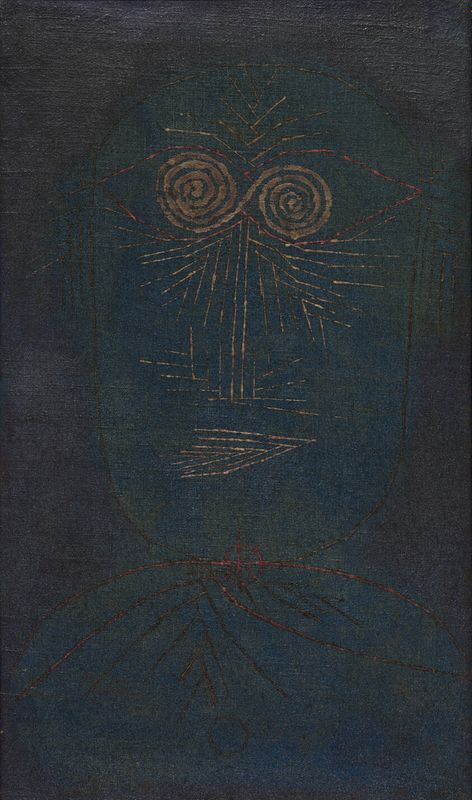 Strange Glance
1930 · Art Institute of Chicago
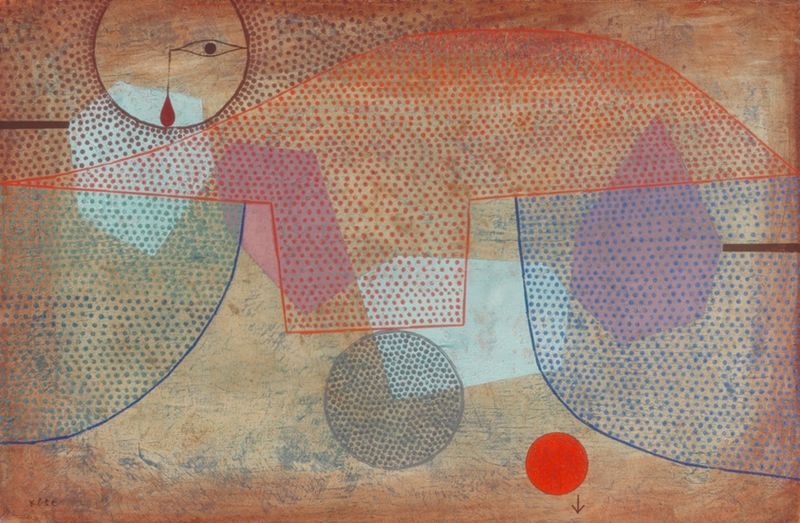 Sunset
1930 · Art Institute of Chicago
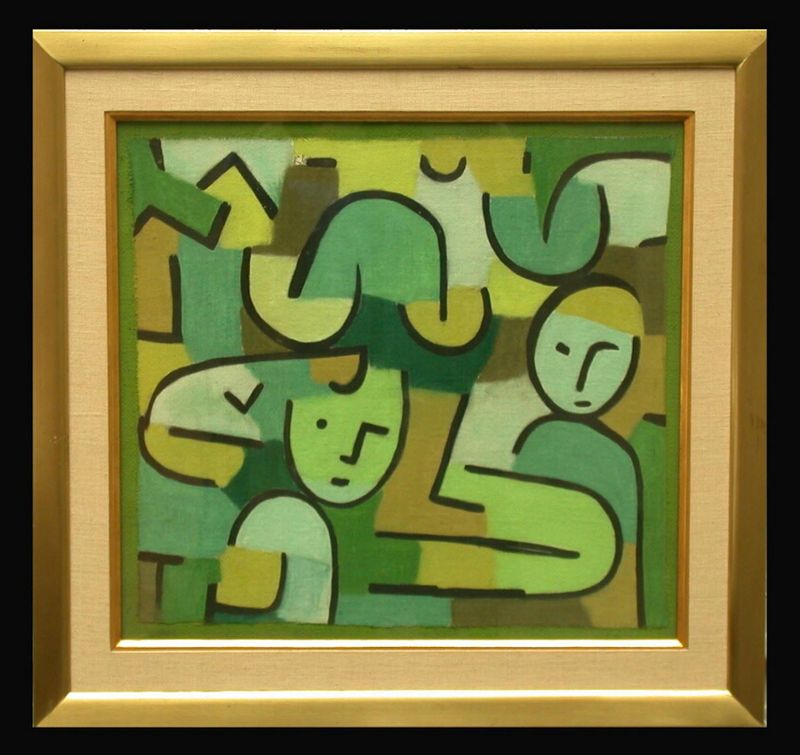 Women Harvesting
1937 · Art Institute of Chicago
More from Expressionism
More works to explore
Beyond Klee and Expressionism: works from the same years, and from the other movements In the Magic Mirror belongs to.
 Same movement · Surrealism
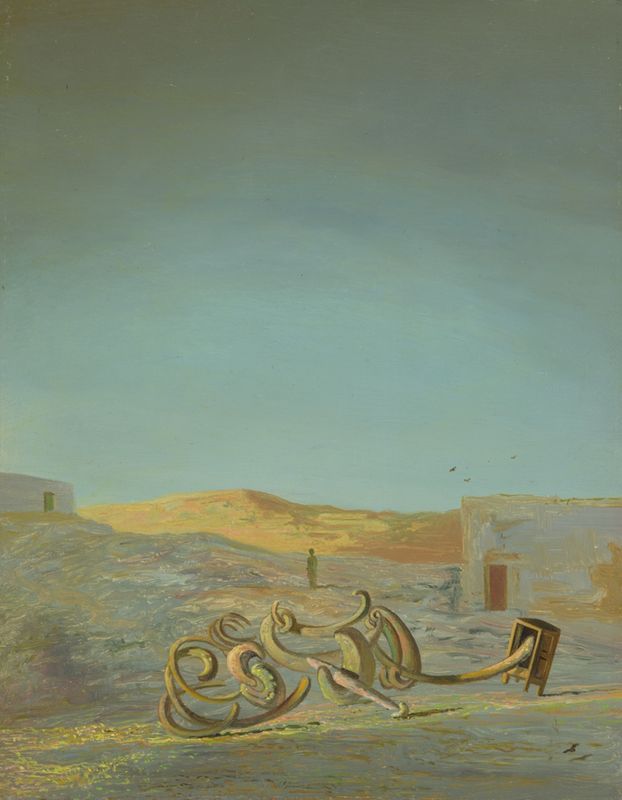
Untitled (Desert Landscape)
Salvador Dalí · 1934 · Art Institute of Chicago
 Same era · 1910s–1940s
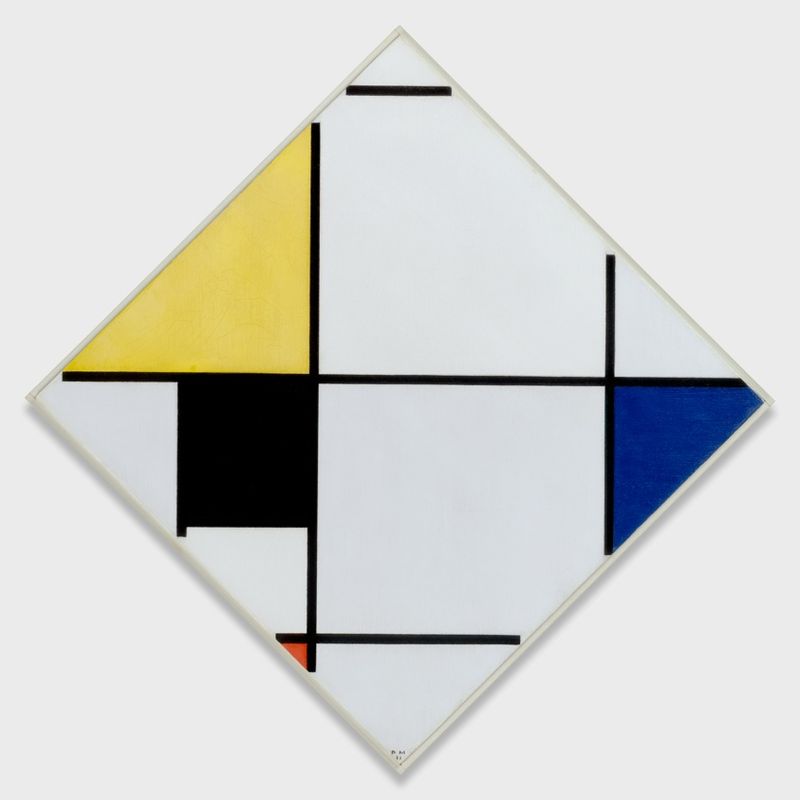
Lozenge Composition with Yellow, Black, Blue, Red, and Gray
Piet Mondrian · 1921 · Art Institute of Chicago
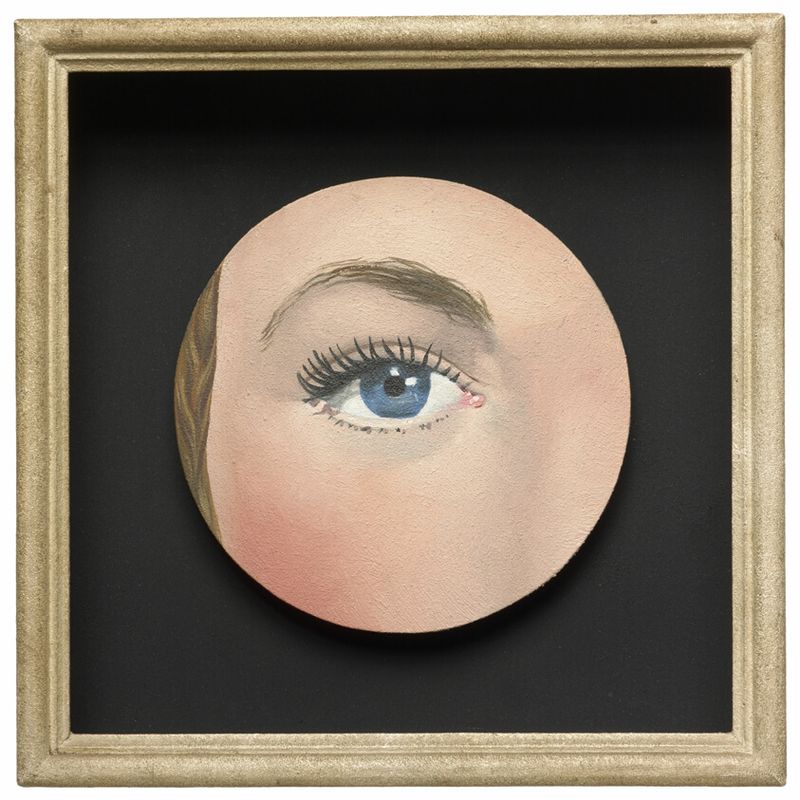 Same movement · Surrealism
The Eye
René Magritte · 1932 · Art Institute of Chicago
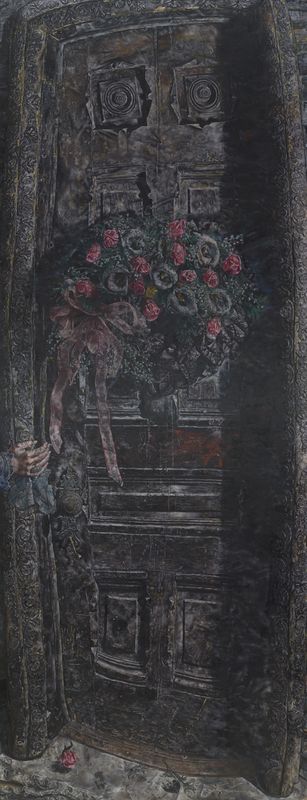 Same era · 1910s–1940s
That Which I Should Have Done I Did Not Do (The Door)
Ivan Puni · 1931 · Art Institute of Chicago
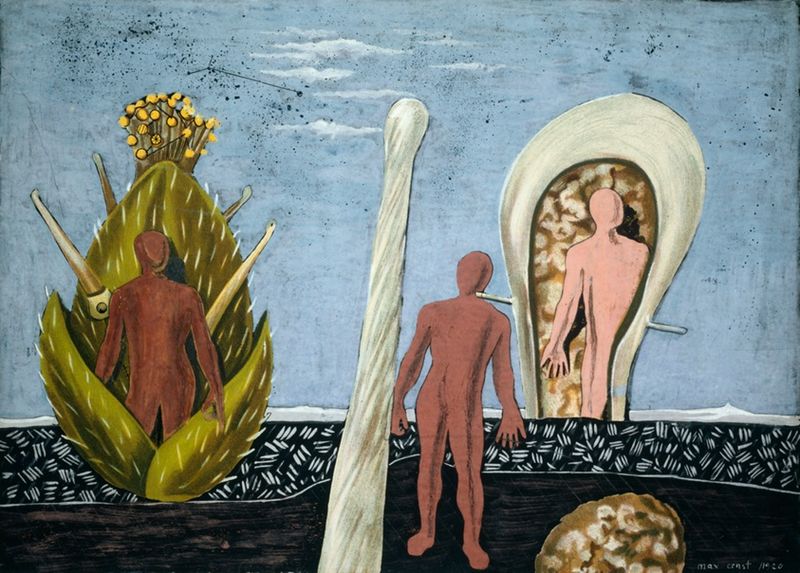 Same movement · Surrealism
Dada Gauguin
Max Ernst · 1920 · Art Institute of Chicago
 Same era · 1910s–1940s
American Gothic
Okada Saburosuke · 1930 · Art Institute of Chicago
 Same movement · Surrealism
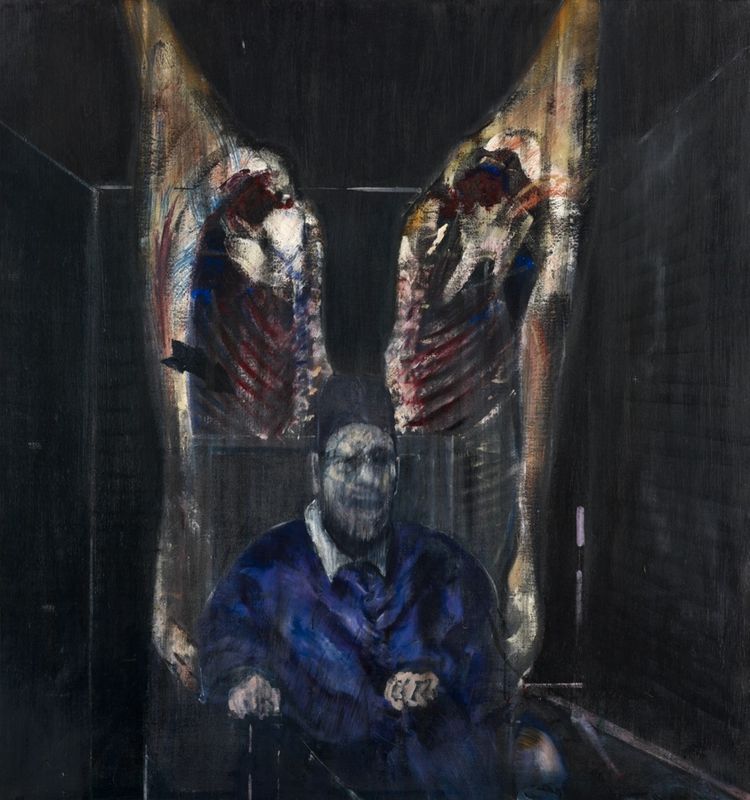
Figure with Meat
Francis Bacon · 1954 · Art Institute of Chicago
 Same era · 1910s–1940s
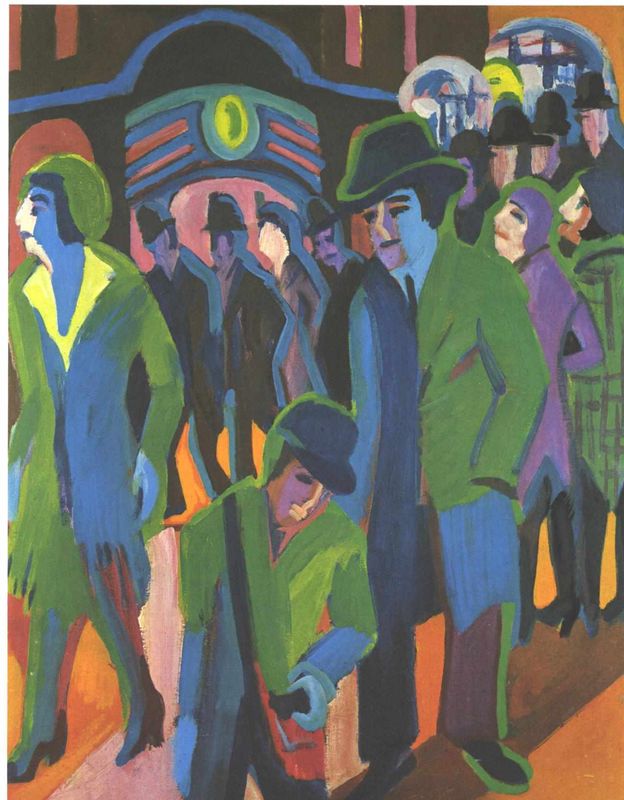
Straße mit Passanten bei Nachtbeleuchtung
Ernst Ludwig Kirchner · 1927 · Museum Frieder Burda
 Same movement · Surrealism
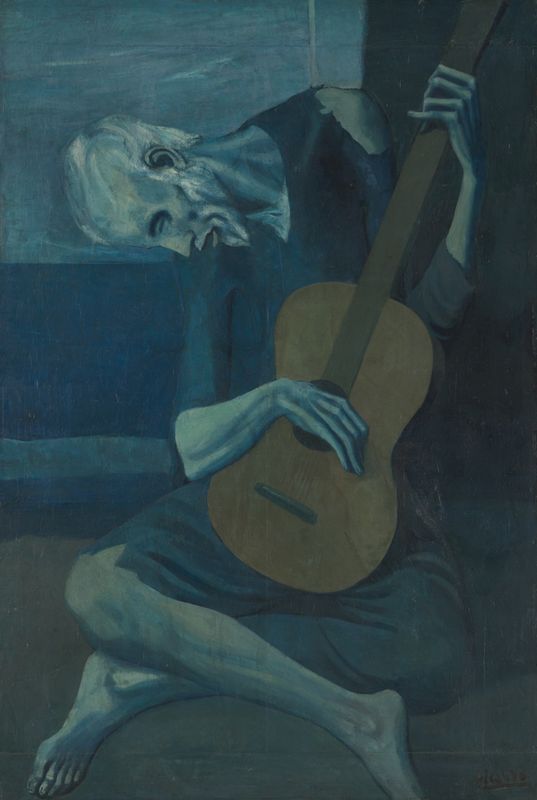
The Old Guitarist
Pablo Picasso · 1903 · Art Institute of Chicago
 Same era · 1910s–1940s
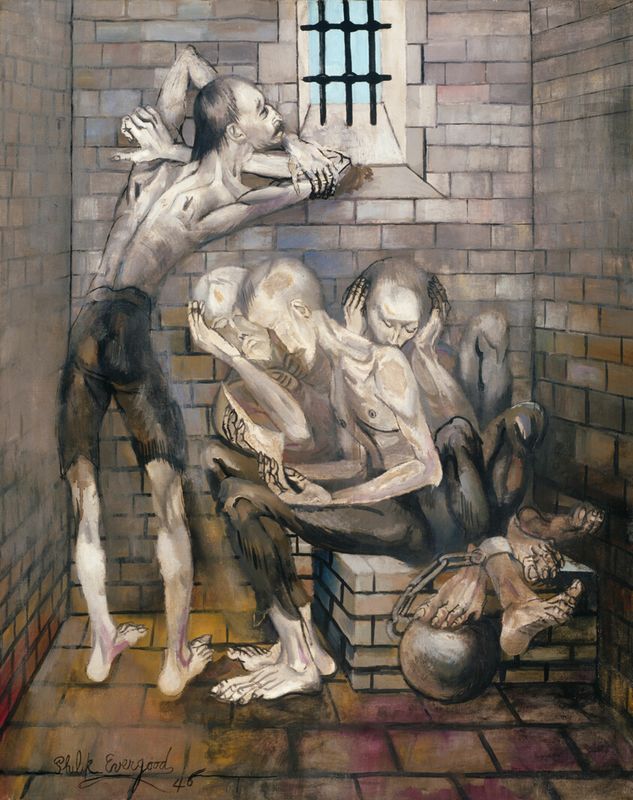
The Indestructibles
Philip Evergood · 1946 · Art Institute of Chicago
 Same era · 1910s–1940s
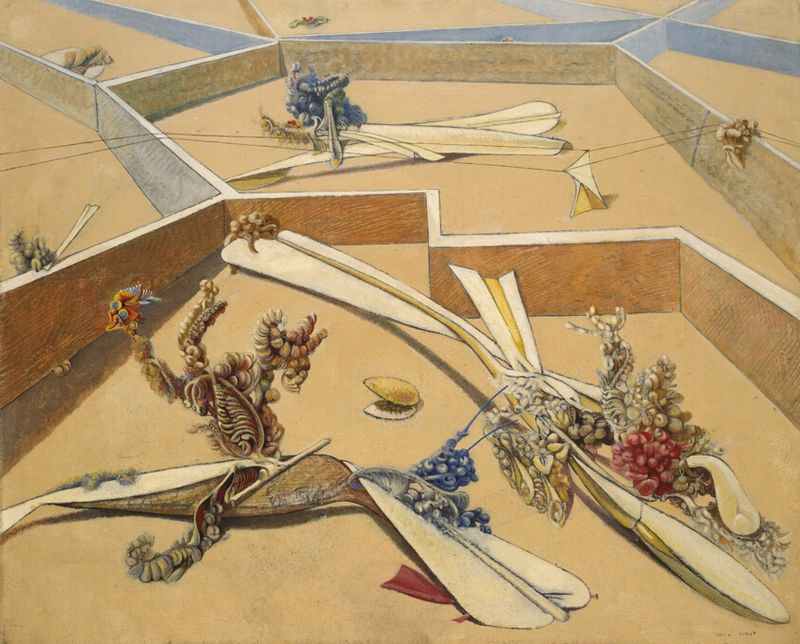
Garden Airplane-Trap
Max Ernst · 1935 · Art Institute of Chicago
 Same era · 1910s–1940s
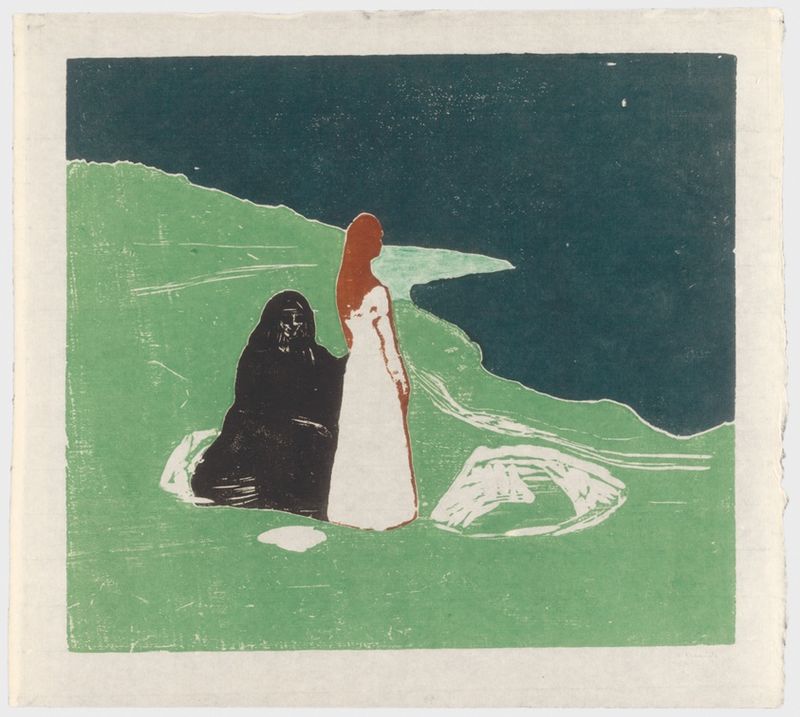
Two Women on the Shore
Edvard Munch · 1935 · Munch Museum
 Same era · 1910s–1940s
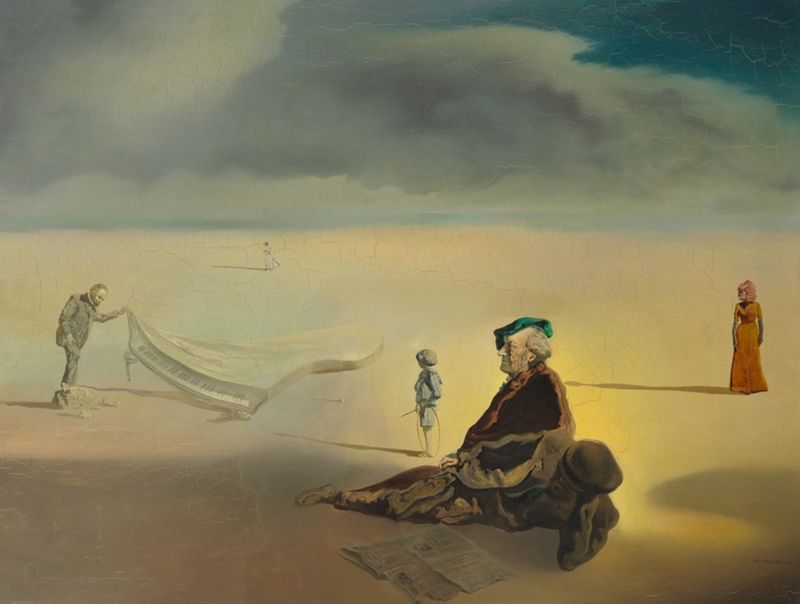
A Chemist Lifting with Extreme Precaution the Cuticle of a Grand Piano
Salvador Dalí · 1936 · Art Institute of Chicago
 Same era · 1910s–1940s
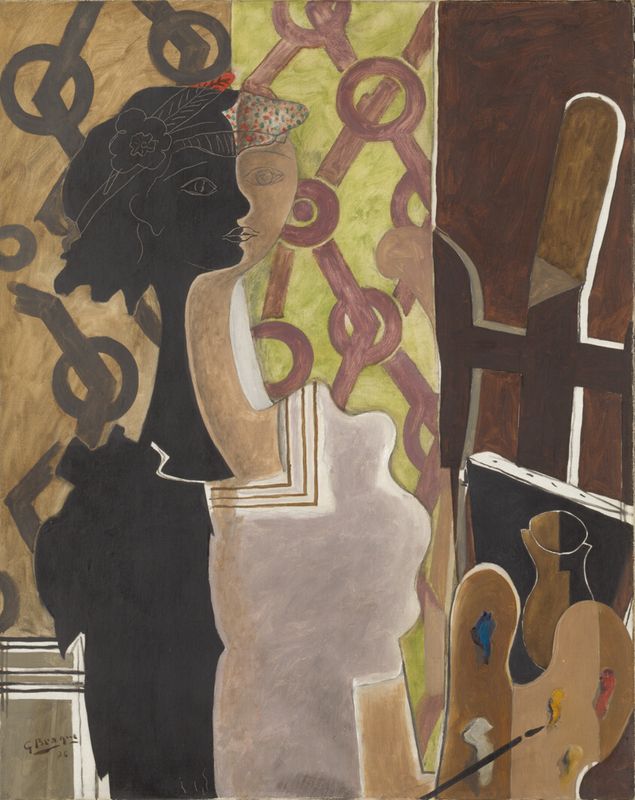
Woman at an Easel (Green Screen)
Georges Braque · 1936 · Art Institute of Chicago
 Same era · 1910s–1940s
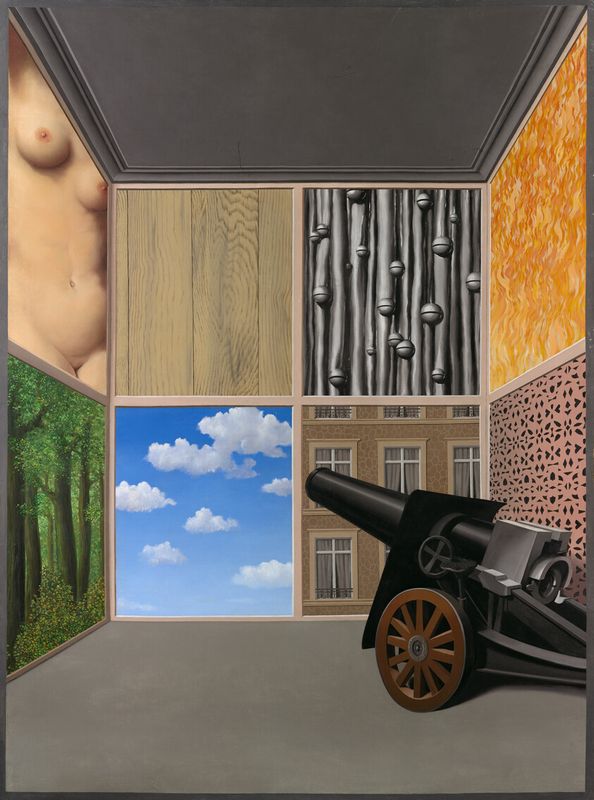
On the Threshold of Liberty
René Magritte · 1937 · Art Institute of Chicago
 Same era · 1910s–1940s
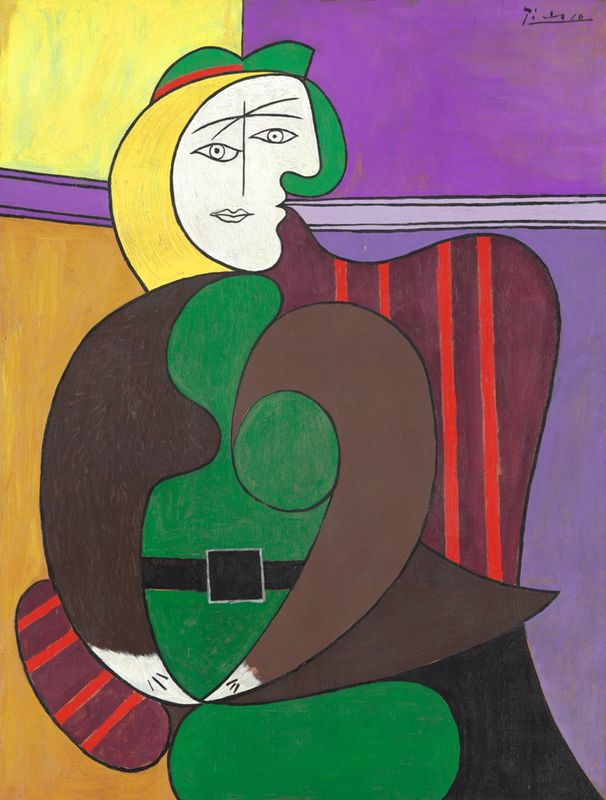
The Red Armchair
Pablo Picasso · 1931 · Art Institute of Chicago
 Same era · 1910s–1940s
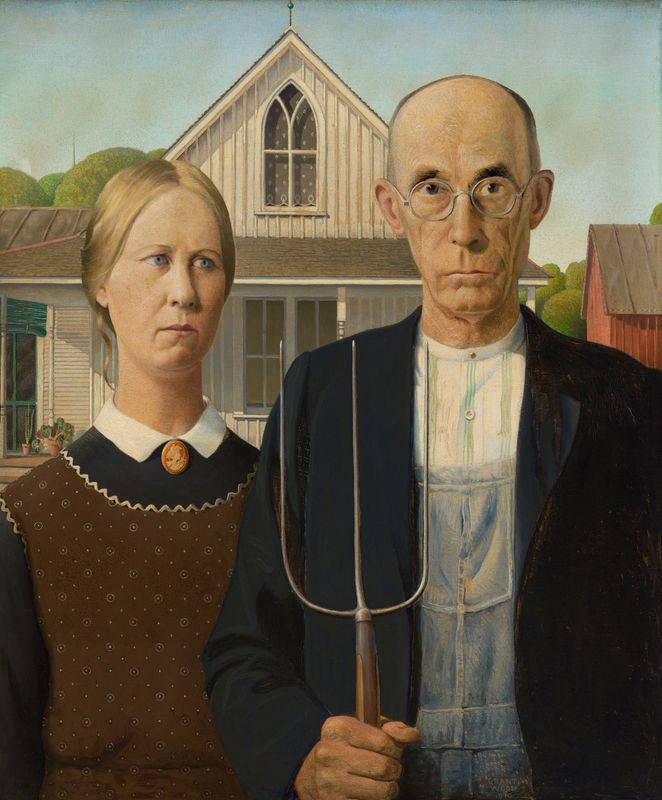
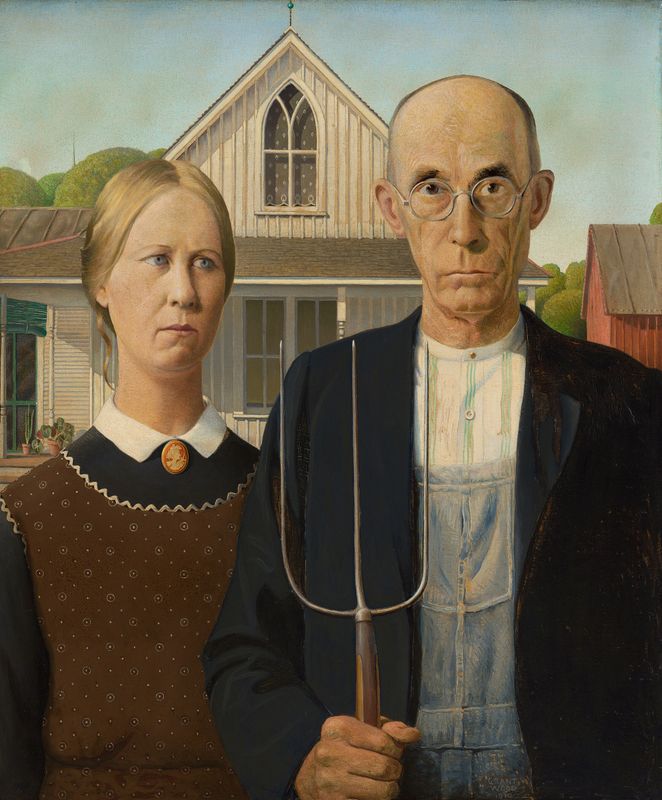
American Gothic
Grant Wood · 1930 · Art Institute of Chicago