01
The blurred screaming face
Find the pale, smeared face under the dark cap. The features blur and the mouth seems to open, so the man looks caught in motion, as if he moves while we look.
1 of 4 on the painting
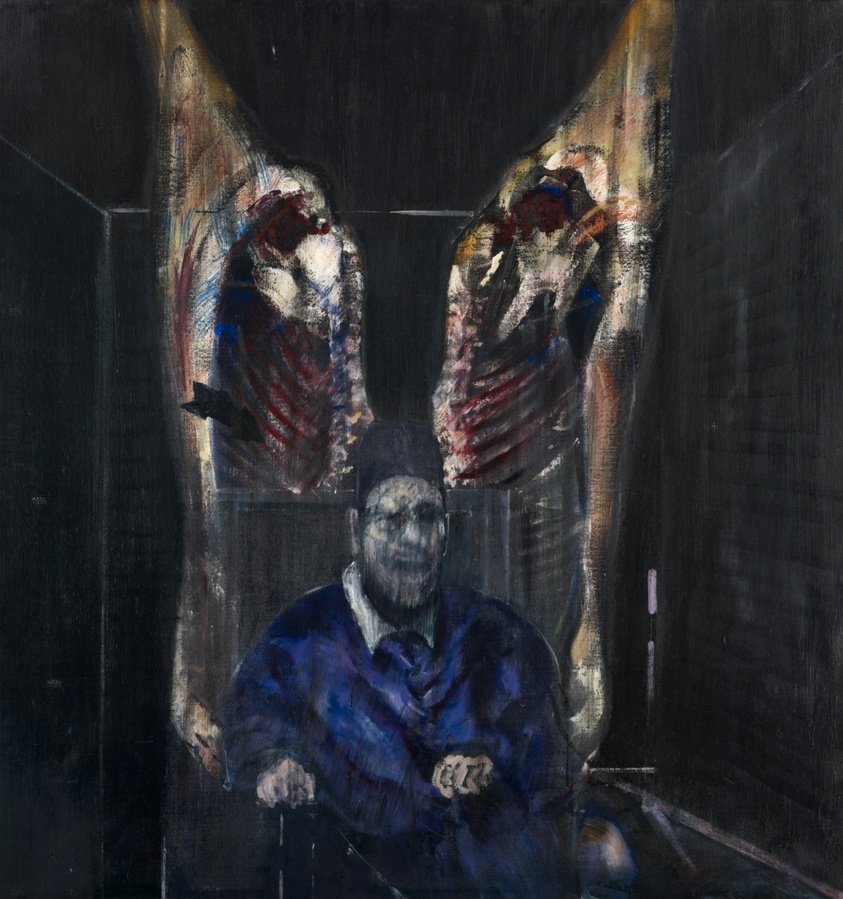
“This painting confronts viewers with a screaming pope, inspired by Velázquez, framed by raw animal carcasses. It’s a visceral exploration of power, decay, and the human condition, blending religious iconography with unsettling imagery.”
A powerful, screaming figure dominates this unsettling painting, seated on a throne and flanked by two halves of a bisected cow carcass. The central figure is an appropriation of Diego Velázquez's 17th-century Portrait of Innocent X, but Francis Bacon transforms the pontiff into a gruesome spectacle. His hands, elegant in Velázquez's original, here grip the arms of the throne in apparent terror, while black striations drip from his nose. The raw meat, likely inspired by Rembrandt's Slaughtered Ox, frames the figure, creating a disturbing, crucifixion-like composition. This juxtaposition of sacred authority with visceral, animalistic imagery, alongside the lavish but decaying feel of the meat, evokes 17th-century vanitas paintings. Bacon uses these elements to explore themes of worldly decadence, power, and carnal sensuality, contrasting them with a palpable sense of existential damnation.
Five details hide in plain sight. Pick one and we’ll show you exactly where to look.
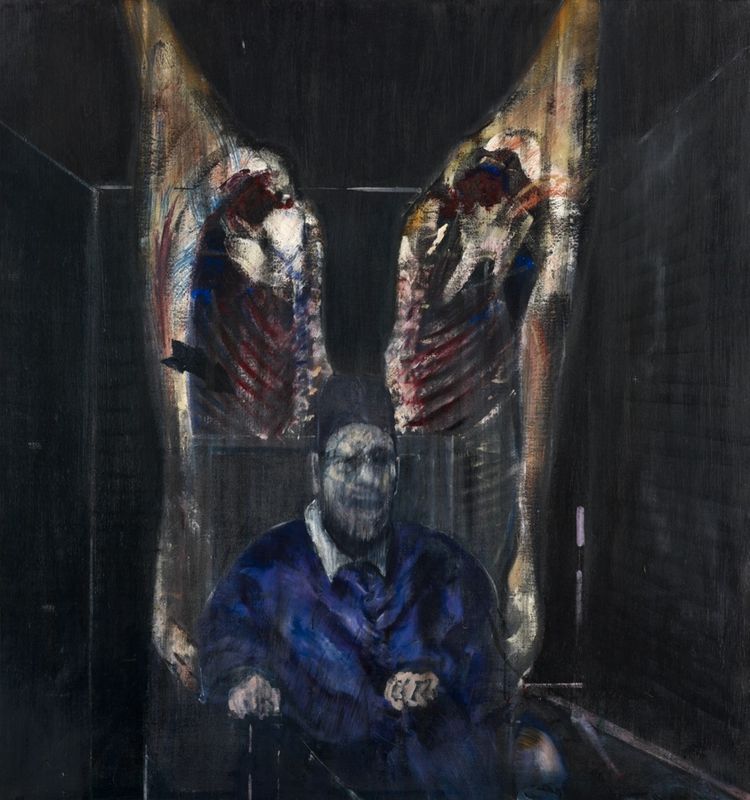
Find the pale, smeared face under the dark cap. The features blur and the mouth seems to open, so the man looks caught in motion, as if he moves while we look.
A split side of beef hangs at the upper left, its ribs streaked with red and blue. Bacon often linked meat and the crucified body, so the carcass may recall a crucifixion.
A second side of beef hangs at the upper right and mirrors the first, with raw red cuts and creamy white fat. Together they frame the seated man like wings or a grim canopy.
At the bottom, two pale hands rest on the chair arms, roughly painted and tense. The grip adds unease to the formal seated pose.
Thin lines of walls and floor make a dark box around the man. The central figure sits trapped between the hanging carcasses, with nowhere to go.
The full narration walks you through Figure with Meat — the story behind it, the details most visitors miss, and why it matters. Free in the Art Whisper app.
Irish painter who transformed human figures into raw, distorted forms trapped in geometric cages.
Beyond Bacon and Expressionism: works from the same years, and from the other movements Figure with Meat belongs to.
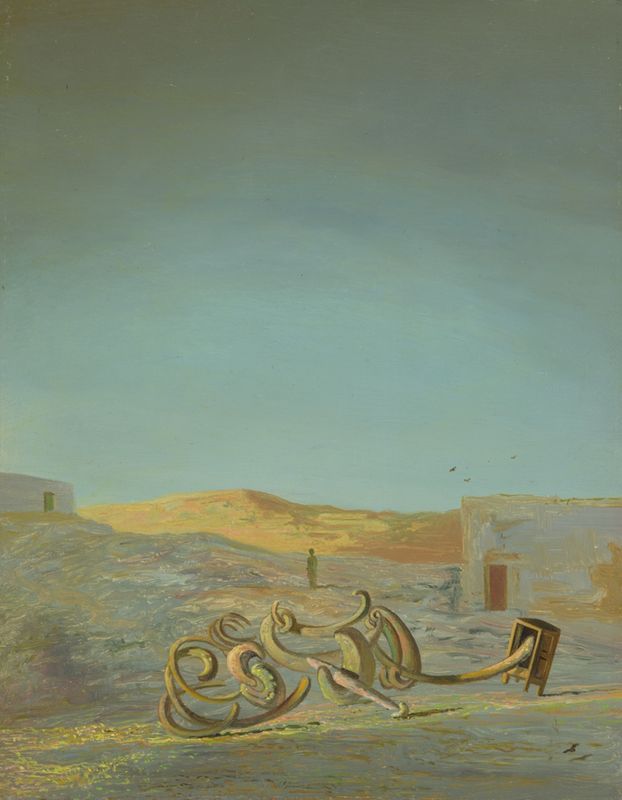 Same movement · Surrealism
Untitled (Desert Landscape)
Salvador Dalí · 1934 · Art Institute of Chicago
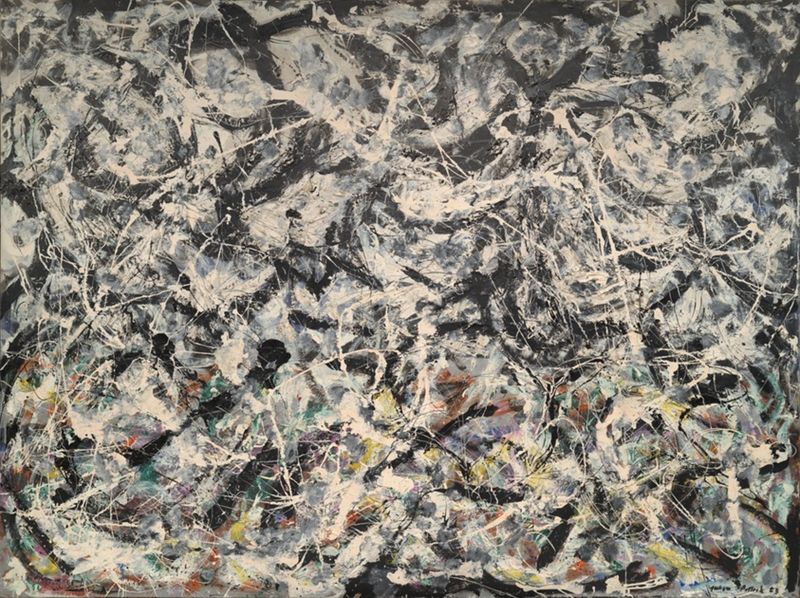 Same era · 1930s–1960s
Greyed Rainbow
Jackson Pollock · 1953 · Art Institute of Chicago
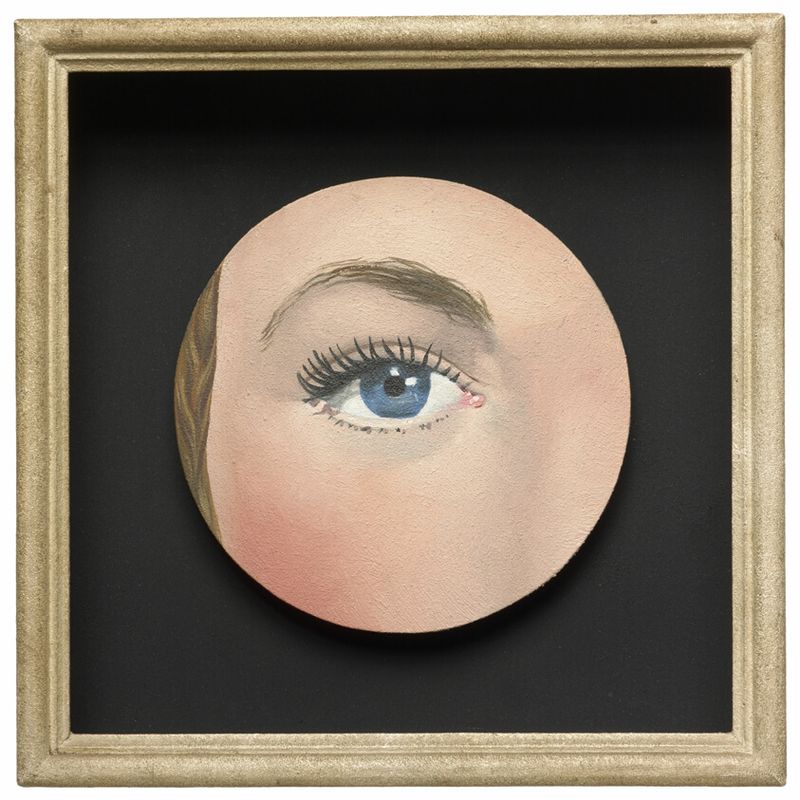 Same movement · Surrealism
The Eye
René Magritte · 1932 · Art Institute of Chicago
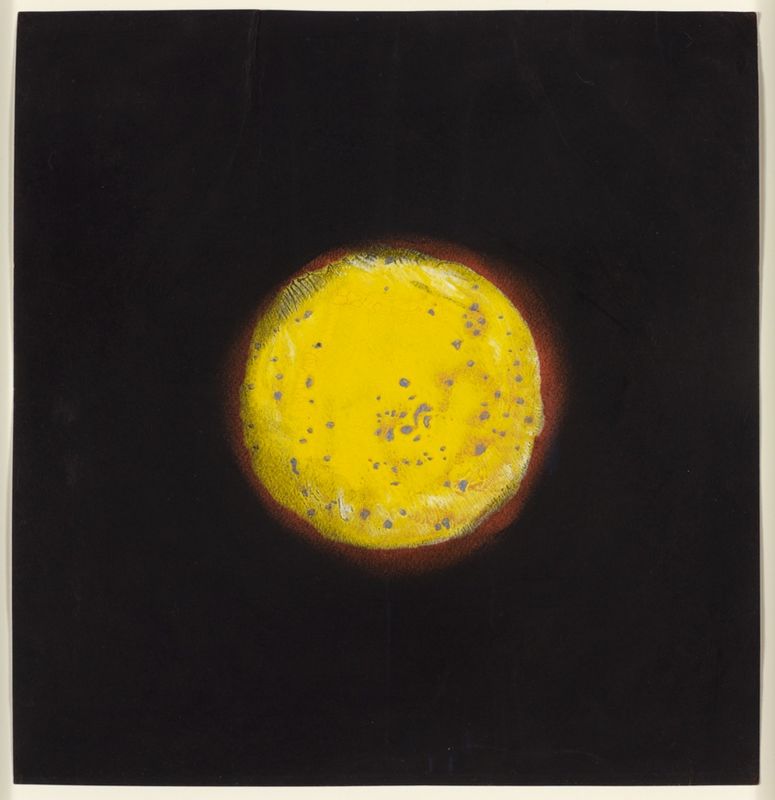 Same era · 1930s–1960s
Sun Spot
Yayoi Kusama · 1953 · Art Institute of Chicago
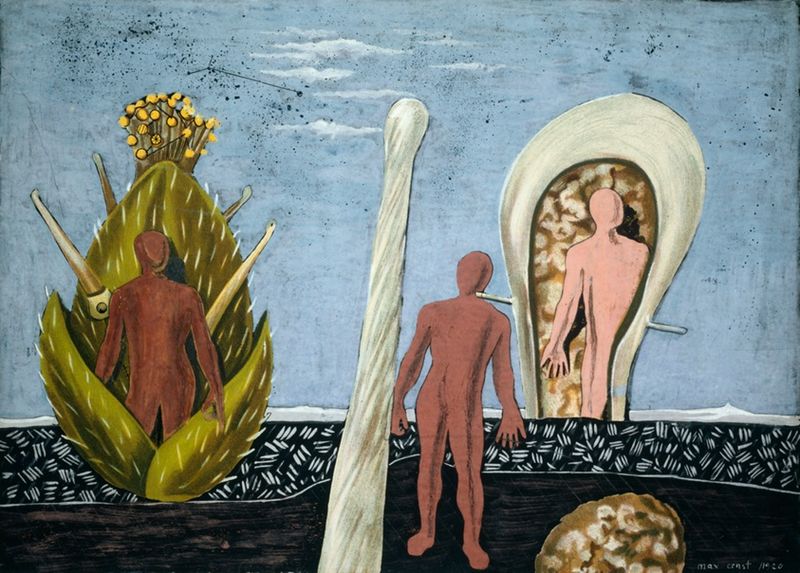 Same movement · Surrealism
Dada Gauguin
Max Ernst · 1920 · Art Institute of Chicago
 Same era · 1930s–1960s
Deux personnages
Pierre Alechinsky · 1950
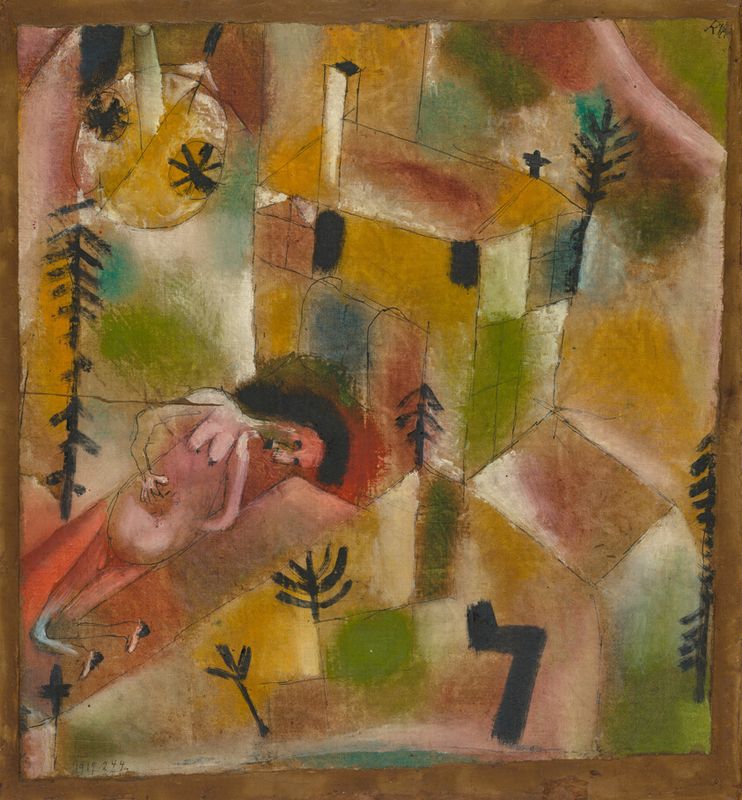 Same movement · Surrealism
Death in the Garden (Legend)
Paul Klee · 1919 · Art Institute of Chicago
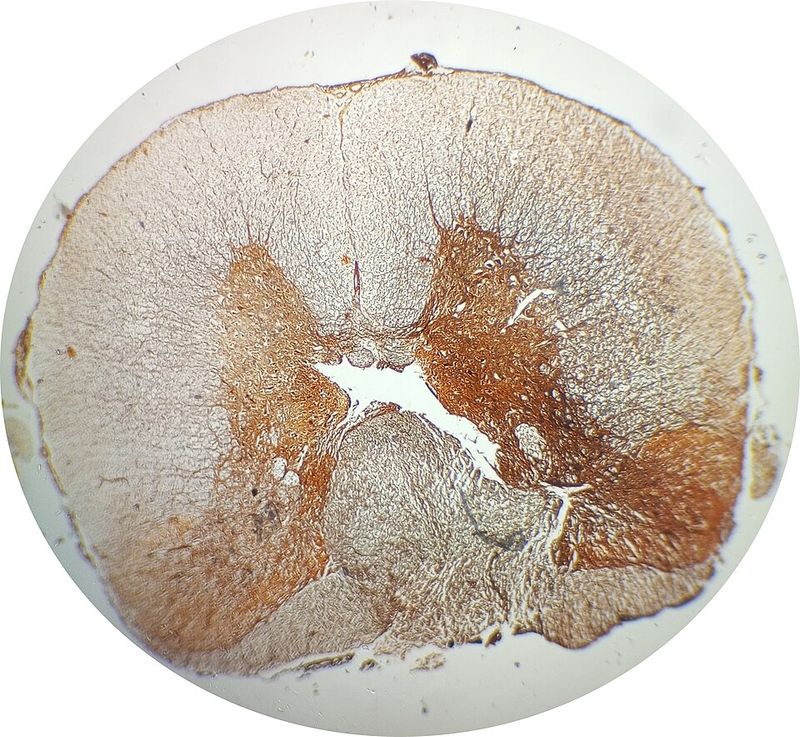 Same era · 1930s–1960s
Impregnazione
Piero Manzoni · 1958
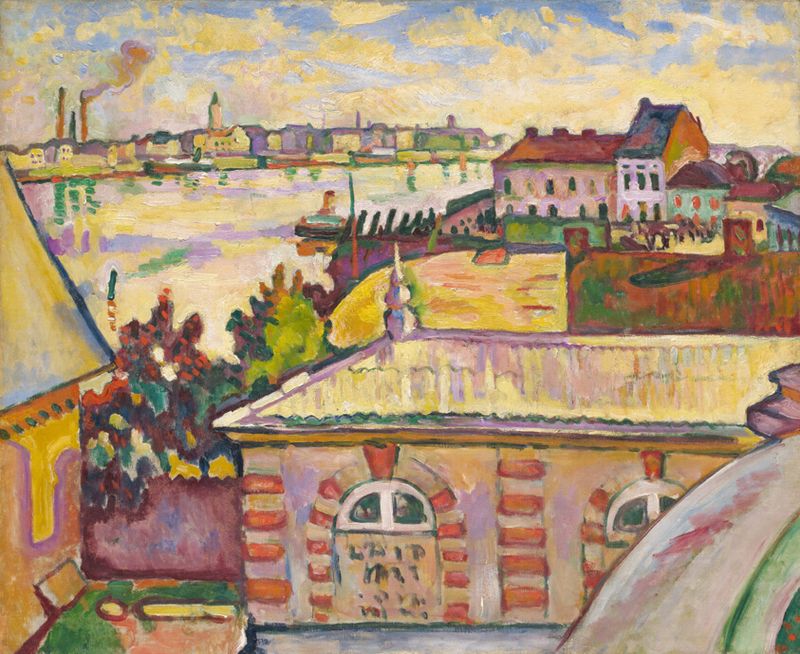 Same movement · Cubism
Antwerp
Georges Braque · 1906 · Art Institute of Chicago
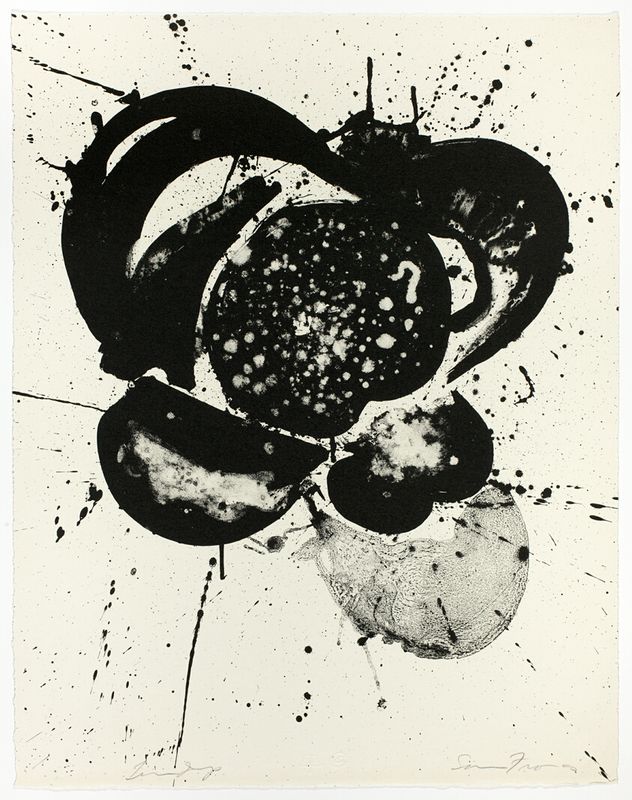 Same era · 1930s–1960s
Essai
Sam Francis · 1963 · Art Institute of Chicago
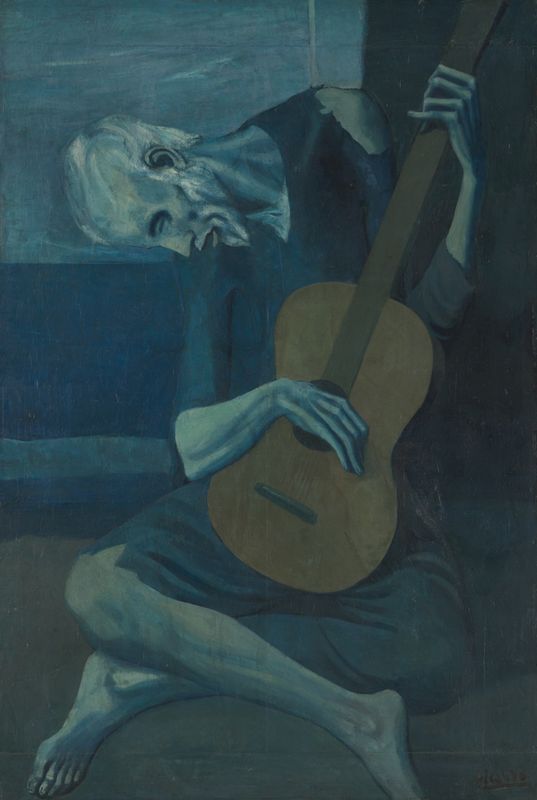 Same movement · Cubism
The Old Guitarist
Pablo Picasso · 1903 · Art Institute of Chicago
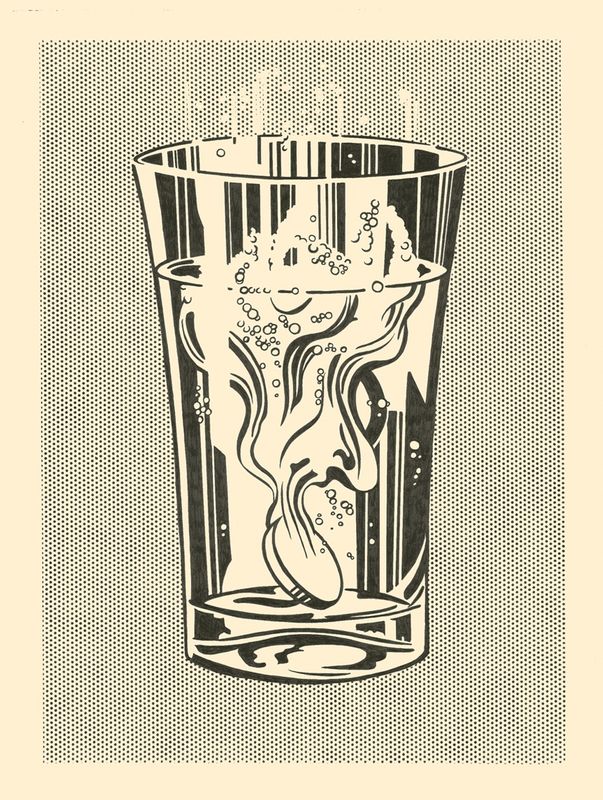 Same era · 1930s–1960s
Alka Seltzer
Roy Lichtenstein · 1966 · Art Institute of Chicago
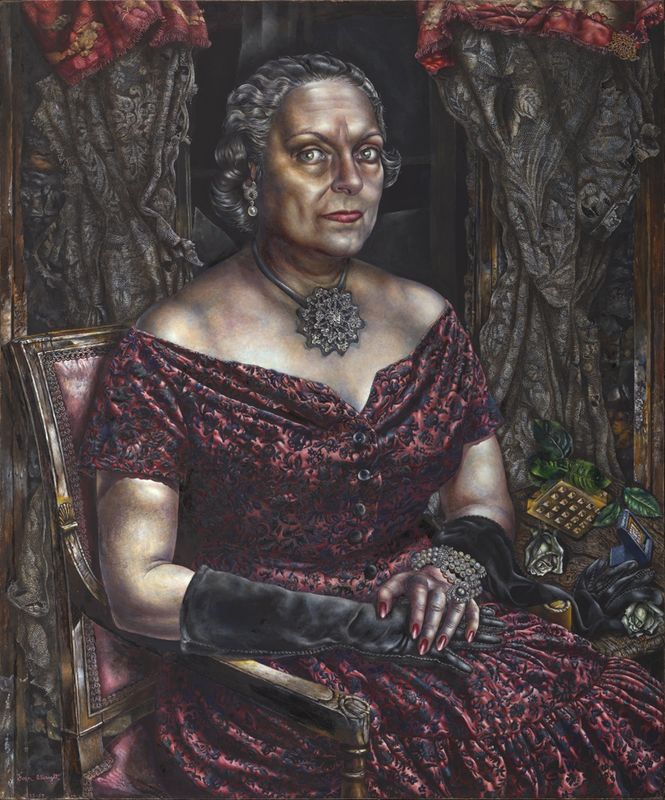 Same era · 1930s–1960s
Portrait of Mary Block
Ivan Puni · 1955 · Art Institute of Chicago
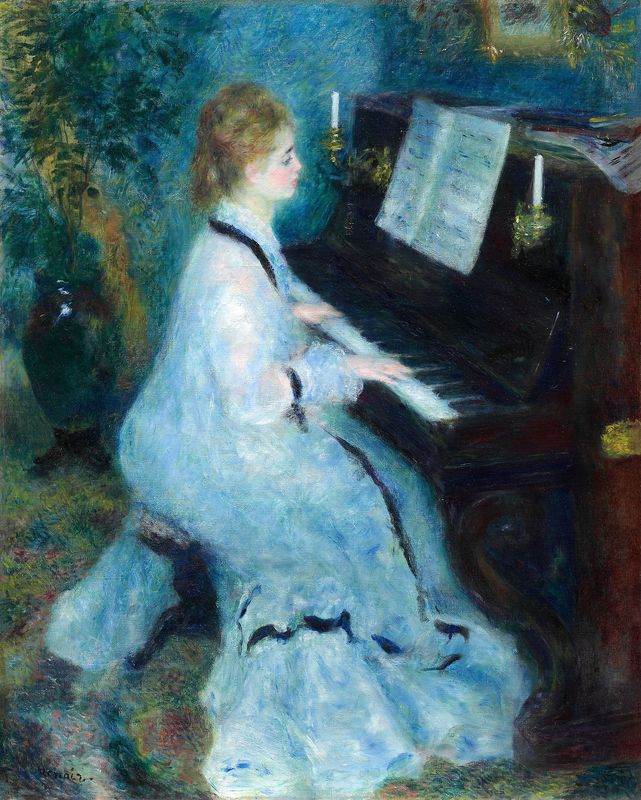 Same era · 1930s–1960s
Woman at the Piano
Philip Evergood · 1955 · Smithsonian American Art Museum
 Same era · 1930s–1960s
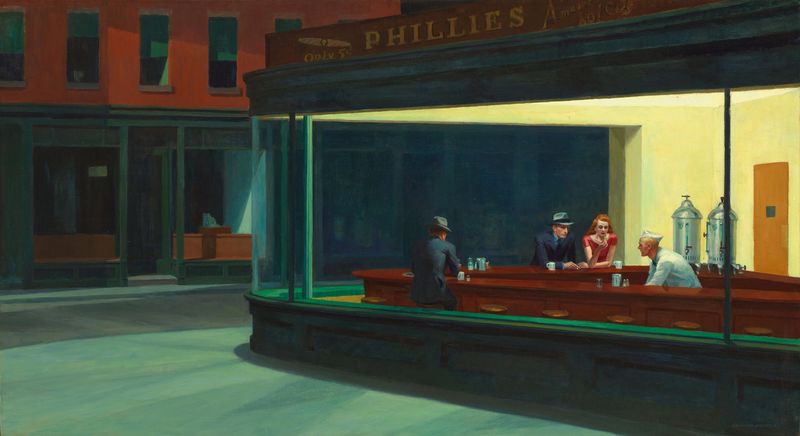
Nighthawks
Okada Saburosuke · 1942 · Art Institute of Chicago
 Same era · 1930s–1960s
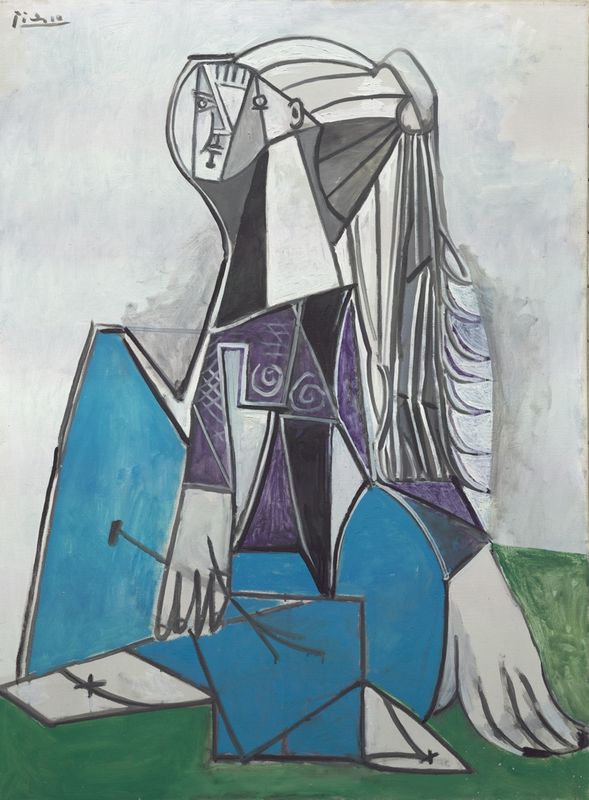
Portrait of Sylvette David
Pablo Picasso · 1954 · Art Institute of Chicago
 Same era · 1930s–1960s
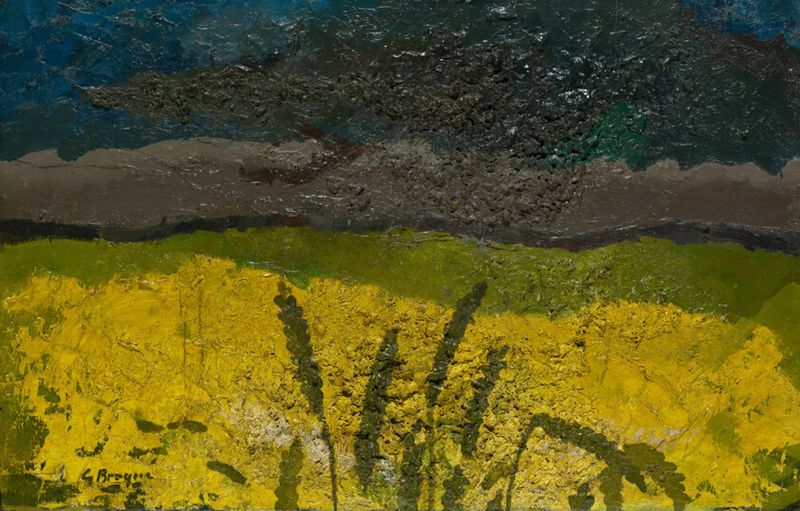
Wheatfield
Georges Braque · 1951 · Art Institute of Chicago
 Same era · 1930s–1960s
Flag
Jasper Johns · 1958