01
His stern gaze
Study the man's round glasses and tight mouth. His long, lean face is as narrow as the pitchfork and the window behind him.
1 of 5 on the painting
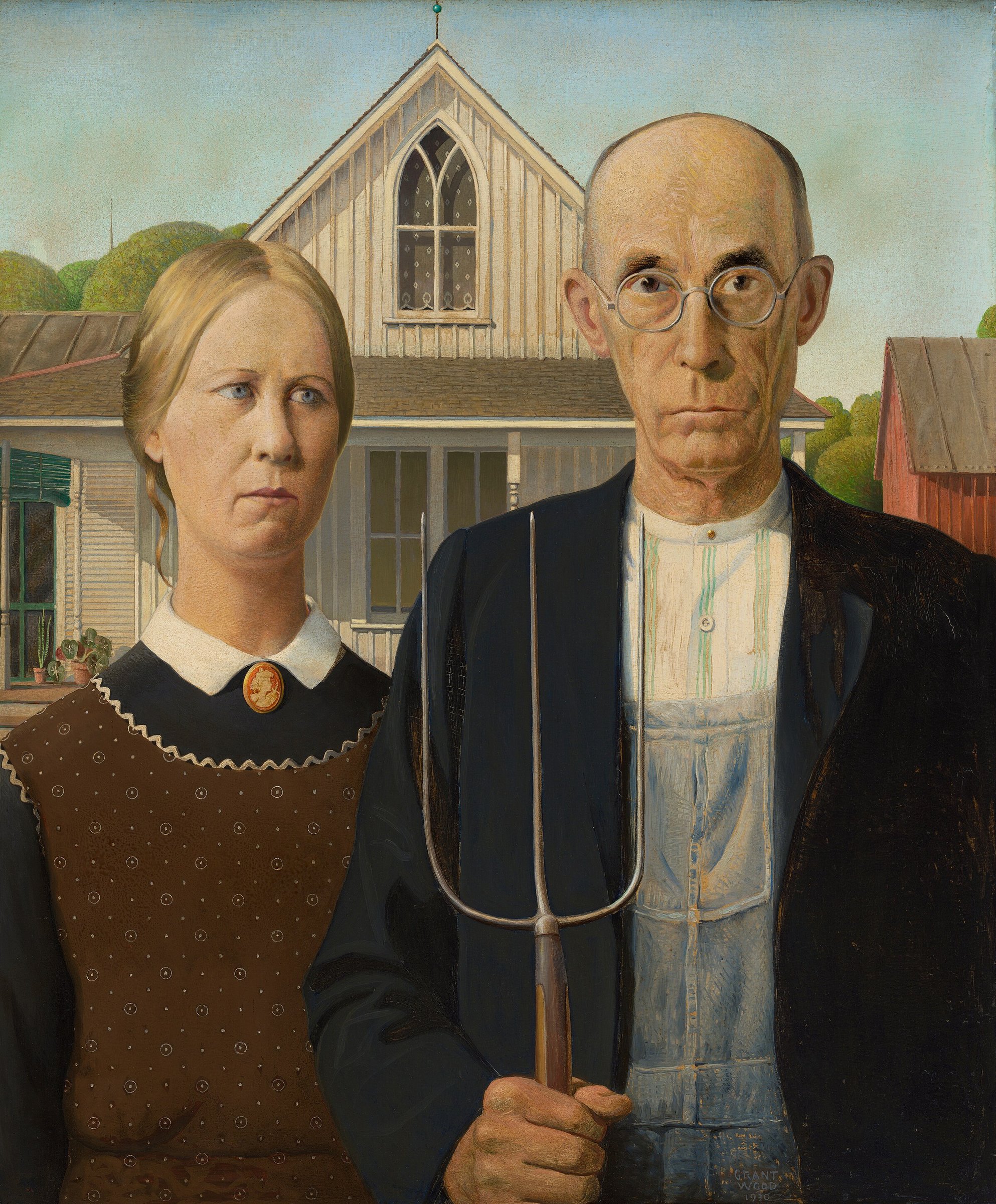
“This painting, "American Gothic," is an iconic portrayal of Midwestern resilience. Its stark figures and distinctive house have made it one of the most recognizable images in American art.”
A stern-faced man and a woman stand rigidly in front of a modest white house, its prominent Gothic-style window giving the painting its title. The figures, modeled by the artist's sister and his dentist, embody a certain Midwestern resolve. The man, clutching a pitchfork, wears overalls beneath a suit jacket, his gaze direct and unyielding. The woman, in a colonial print apron, looks slightly away, her expression a mix of stoicism and perhaps a hint of weariness. This iconic image, painted in 1930, became an immediate sensation, capturing the American spirit during the Great Depression. Its stark composition and meticulous detail, influenced by Northern Renaissance painting, elevate a simple farm scene into a powerful statement about rural American life.
Five details hide in plain sight. Pick one and we’ll show you exactly where to look.
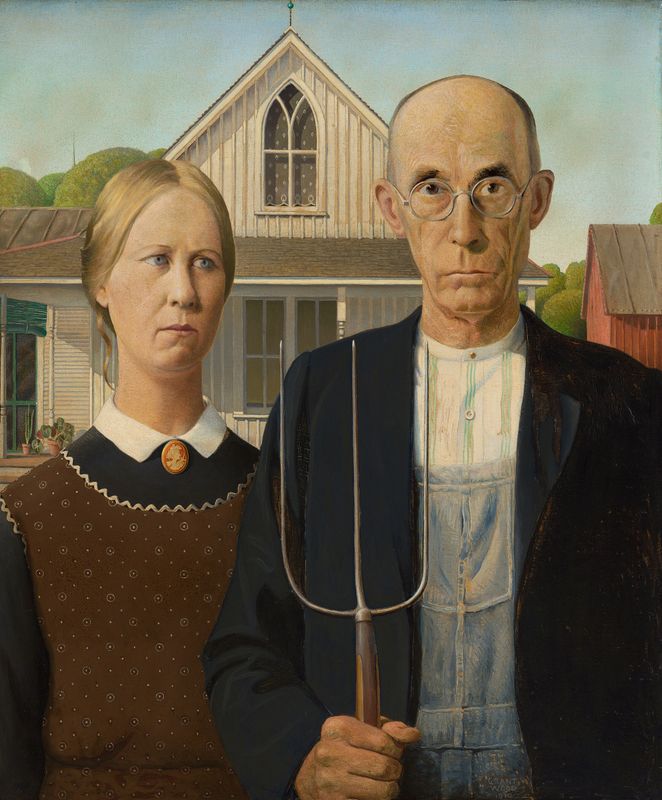
Study the man's round glasses and tight mouth. His long, lean face is as narrow as the pitchfork and the window behind him.
Follow the three tines down the man's chest. The tool becomes the painting's emblem and its vertical lines run through the whole picture.
Look up at the pointed arch in the attic. Wood based it on a real house in Eldon, Iowa, and the Gothic window is what gave the painting its name.
Check the wavy white edging along the neckline and shoulder of her brown apron. It is a small, homey detail that matches the dotted pattern of the fabric.
Find the small oval brooch at her white collar. It is the one warm spot of orange on her dark, buttoned-up outfit.
The full narration walks you through American Gothic — the story behind it, the details most visitors miss, and why it matters. Free in the Art Whisper app.
Grant Wood, the iconic painter of 'American Gothic,' captured the spirit of the rural American Midwest with striking clarity and detail.
Beyond Wood and Social Realism: works from the same years.
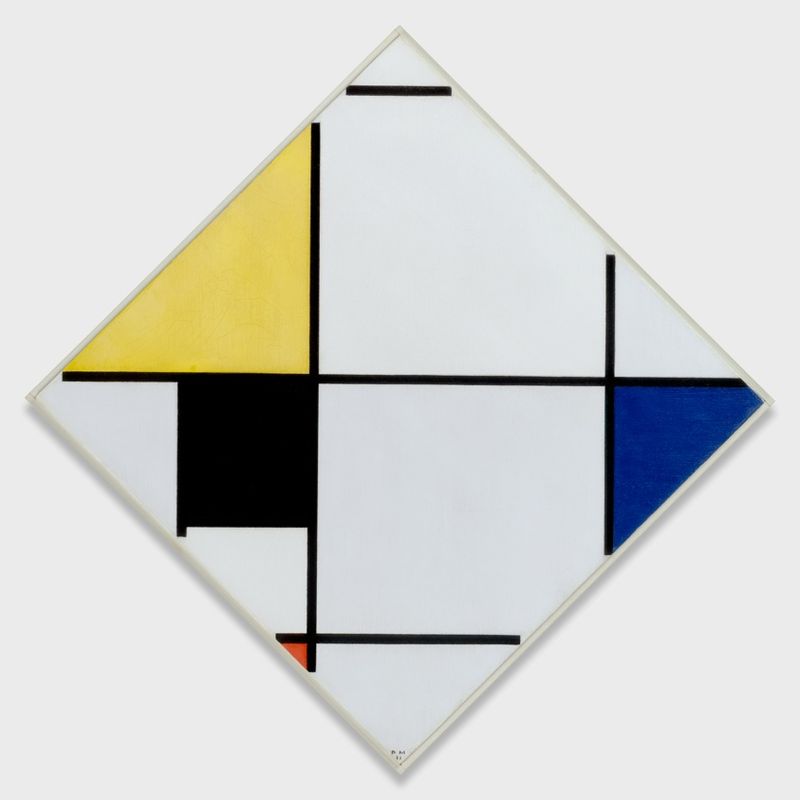 Same era · 1910s–1940s
Lozenge Composition with Yellow, Black, Blue, Red, and Gray
Piet Mondrian · 1921 · Art Institute of Chicago
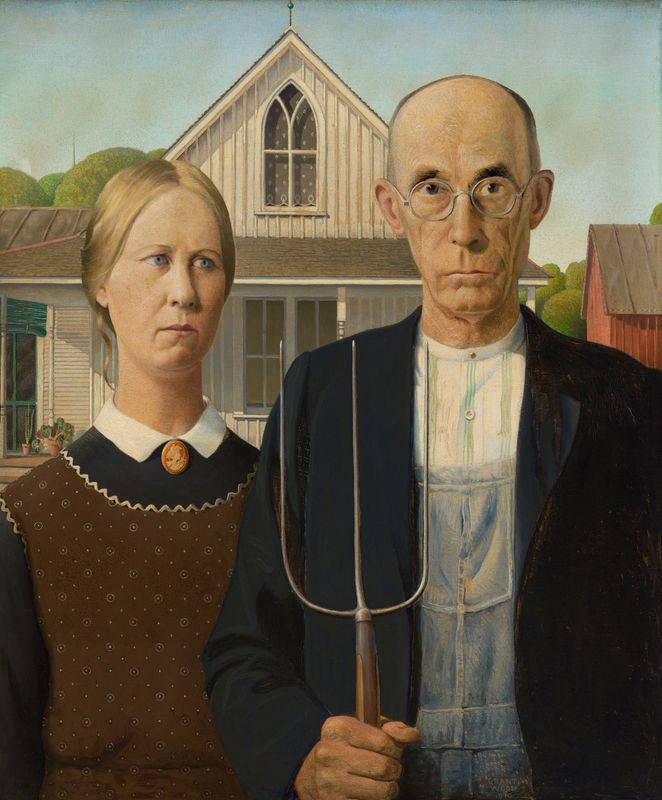 Same era · 1910s–1940s
American Gothic
Okada Saburosuke · 1930 · Art Institute of Chicago
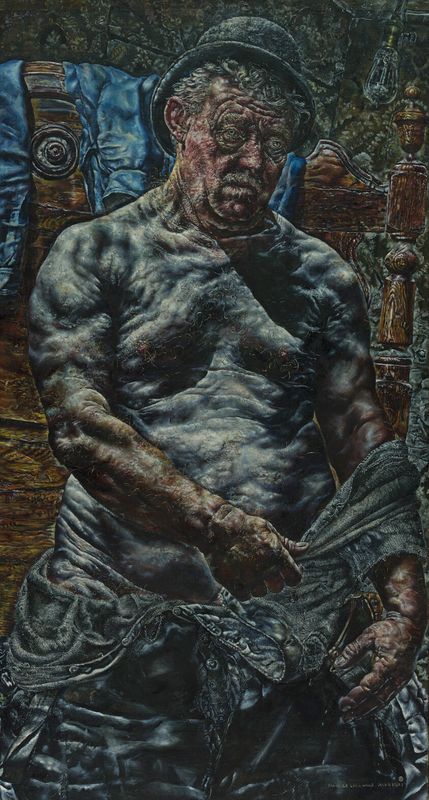 Same era · 1910s–1940s
And Man Created God in His Own Image
Ivan Puni · 1930 · Art Institute of Chicago
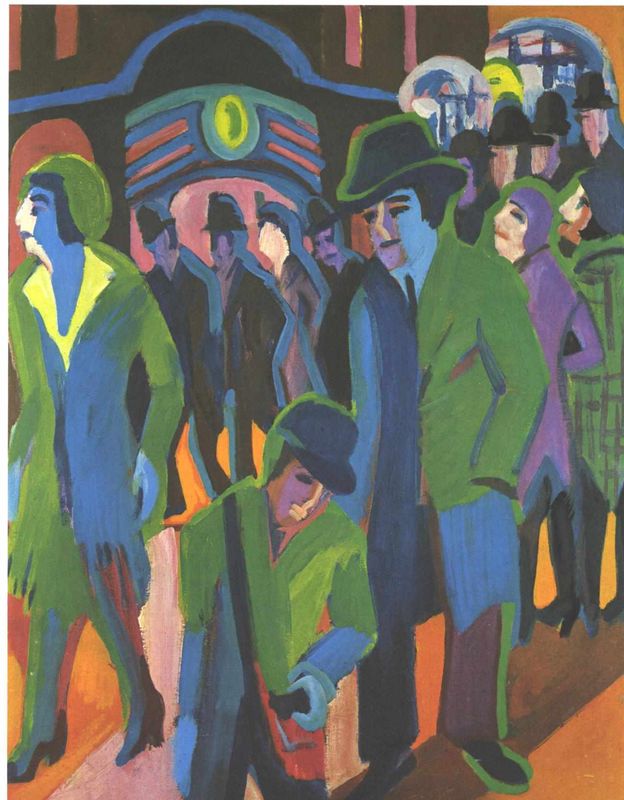 Same era · 1910s–1940s
Straße mit Passanten bei Nachtbeleuchtung
Ernst Ludwig Kirchner · 1927 · Museum Frieder Burda
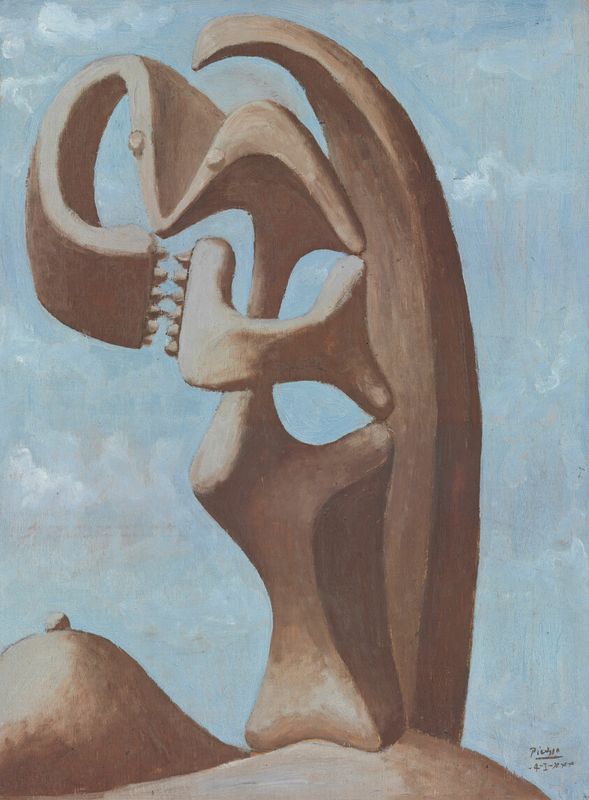 Same era · 1910s–1940s
Abstraction: Background with Blue Cloudy Sky
Pablo Picasso · 1930 · Art Institute of Chicago
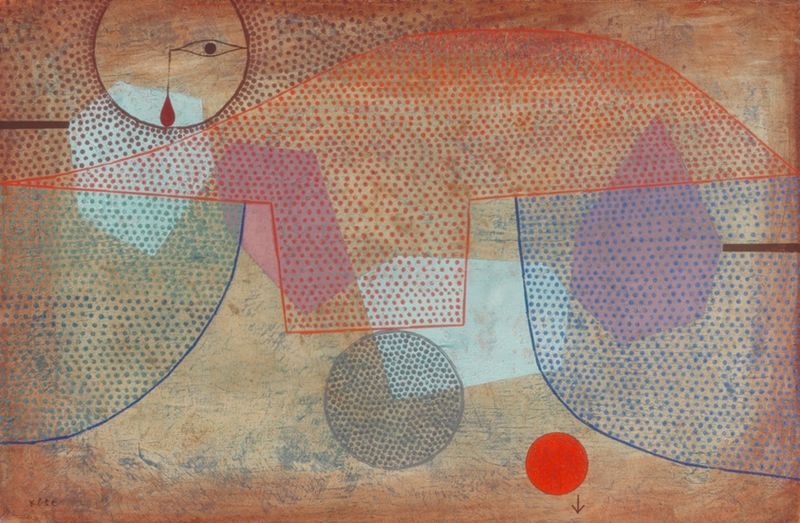 Same era · 1910s–1940s
Sunset
Paul Klee · 1930 · Art Institute of Chicago
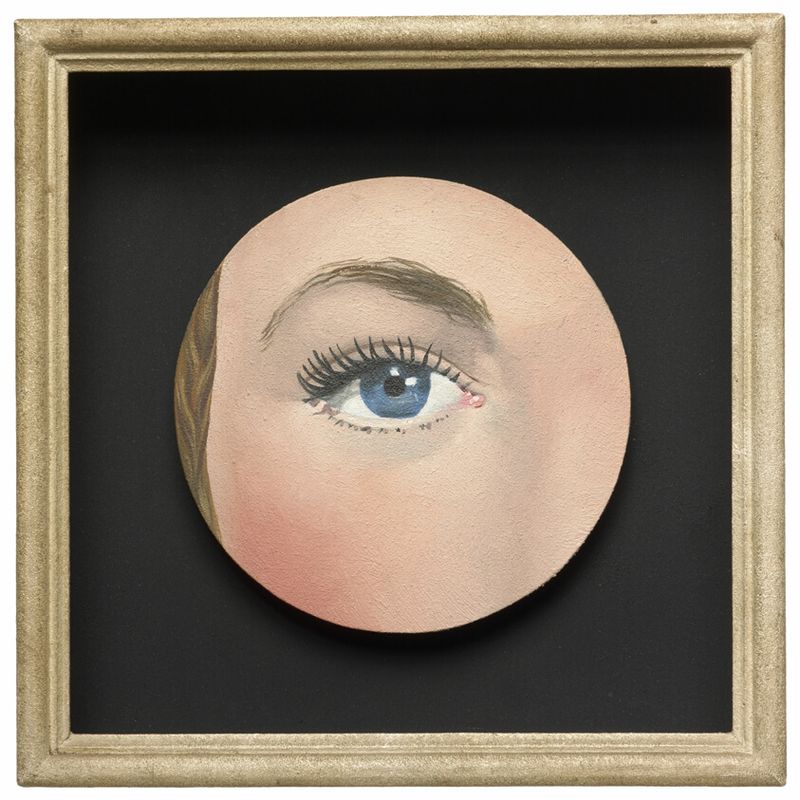 Same era · 1910s–1940s
The Eye
René Magritte · 1932 · Art Institute of Chicago
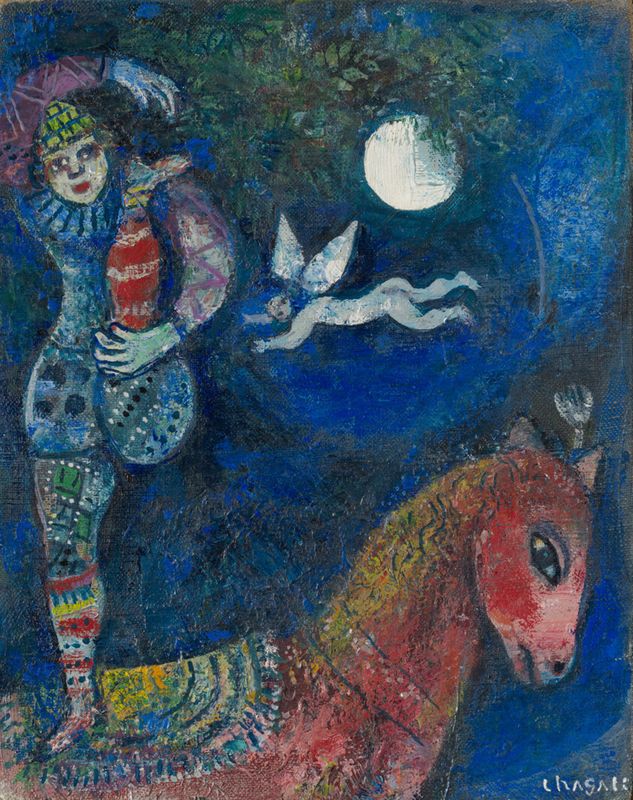 Same era · 1910s–1940s
The Circus Rider
Marc Chagall · 1927 · Art Institute of Chicago
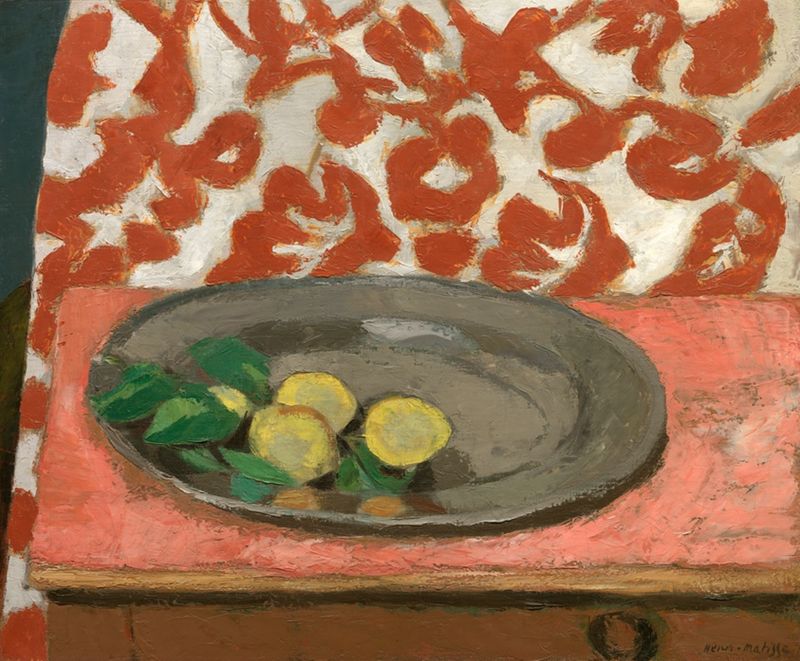 Same era · 1910s–1940s
Lemons on a Pewter Plate
Henri Matisse · 1926 · Art Institute of Chicago
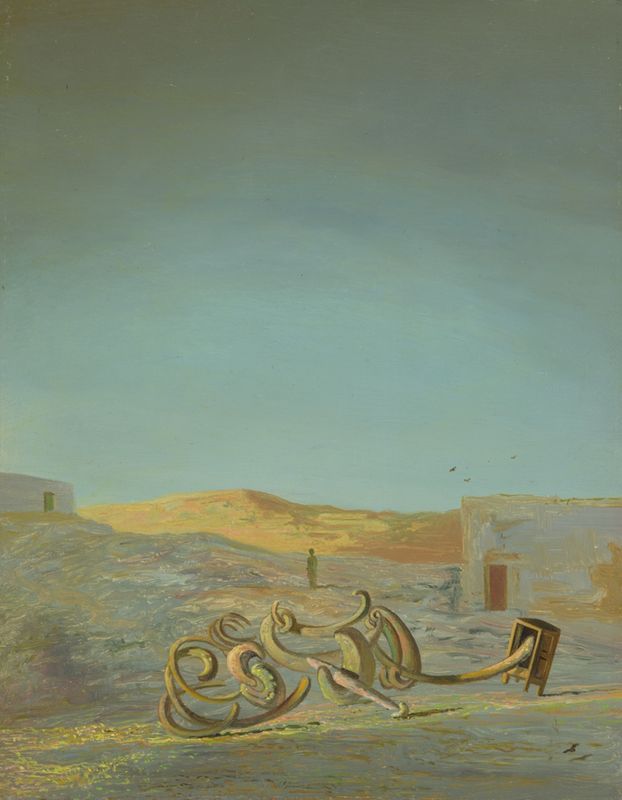 Same era · 1910s–1940s
Untitled (Desert Landscape)
Salvador Dalí · 1934 · Art Institute of Chicago
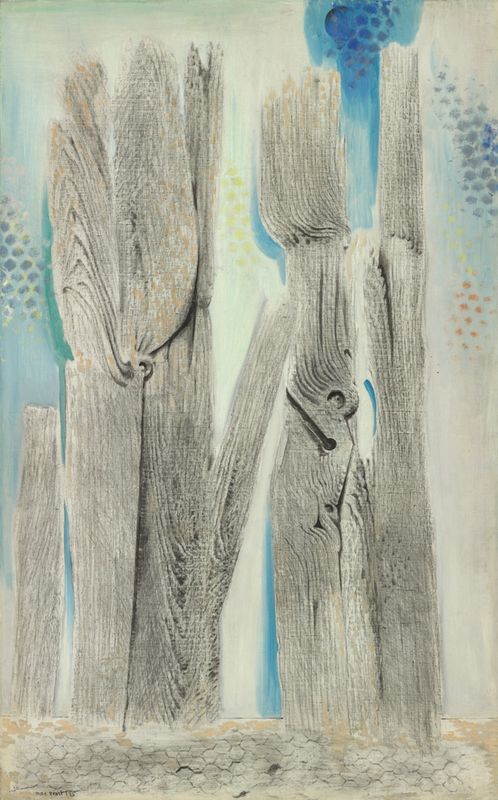 Same era · 1910s–1940s
The Blue Forest
Max Ernst · 1925 · Art Institute of Chicago
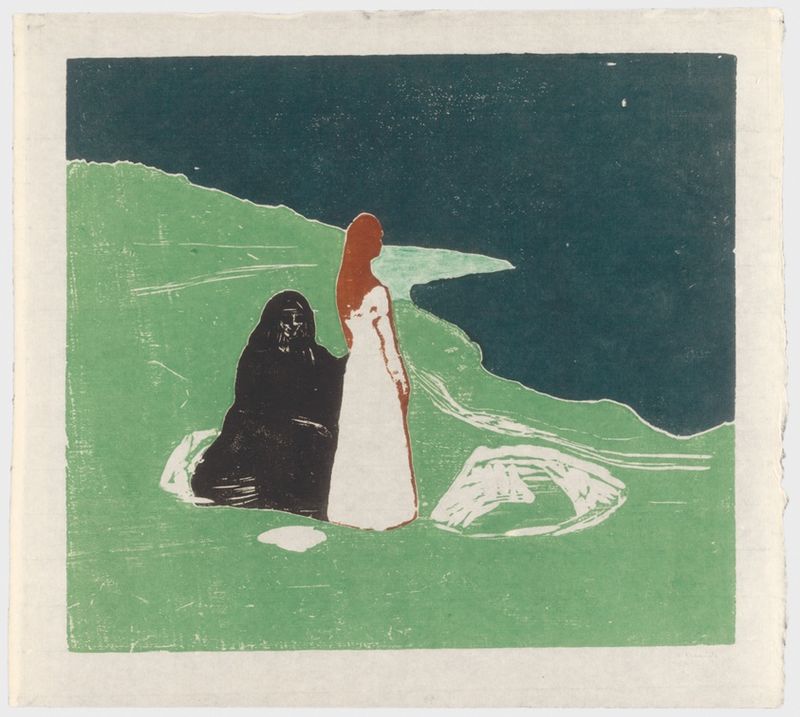 Same era · 1910s–1940s
Two Women on the Shore
Edvard Munch · 1935 · Munch Museum