
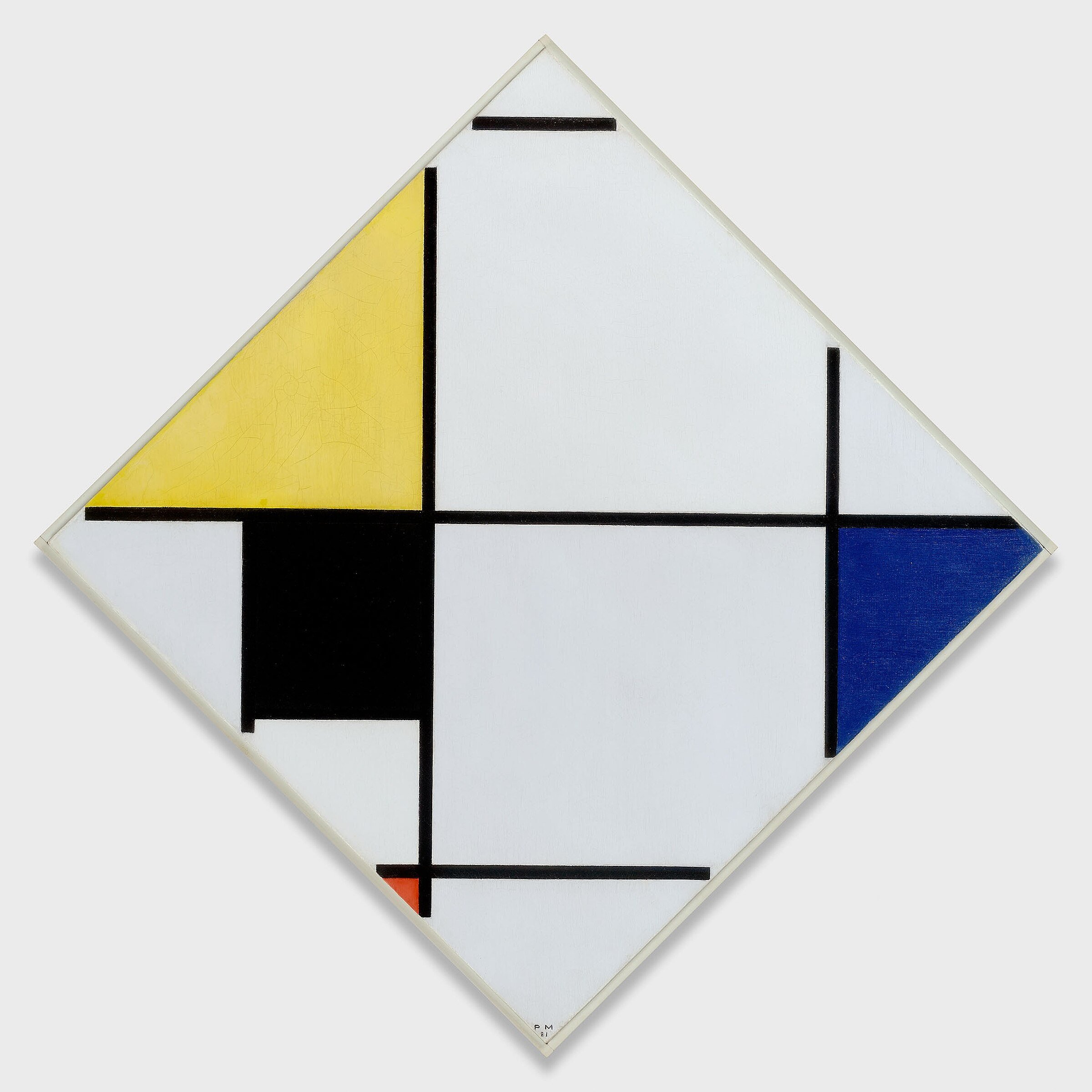
“Stop to appreciate this iconic Mondrian, a striking diamond-shaped canvas that uses a precise grid and primary colors to achieve a dynamic yet balanced abstract composition, inviting you to find harmony in its geometric simplicity.”
This painting immediately grabs your attention with its unusual diamond shape, tilted ninety degrees from a standard square canvas. The composition features a bold black grid, creating an off-kilter balance of primary colors: a large yellow triangle in the upper left, a smaller blue one in the lower right, and a tiny red square near the center. Notice how the thick black lines don't just contain the colors but also extend to the very edges, suggesting a larger, unseen order beyond the frame. The gray areas, more muted than the vibrant yellow, blue, and red, add subtle depth and break up the stark contrast. This work, created in 1921, exemplifies the De Stijl movement's pursuit of pure abstraction, reducing art to its most fundamental elements of line, color, and form to achieve universal harmony.
- Artist
- Piet Mondrian
- Date
- 1921
- Medium
- Oil on canvas
- Location
- Art Institute of Chicago
What to Notice
Five details hide in plain sight. Here’s where to look.
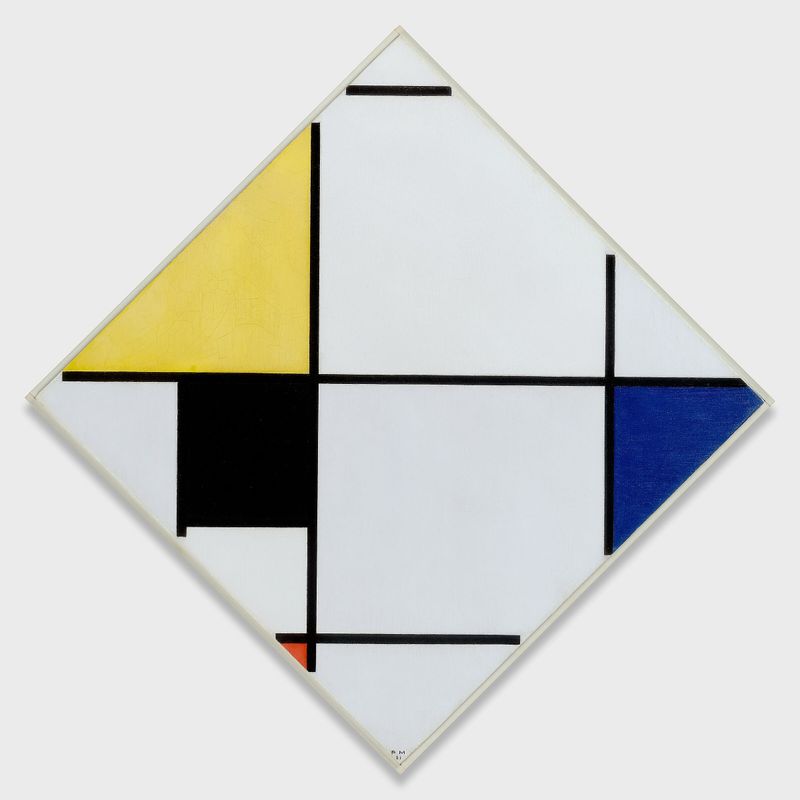
The canvas is rotated 45 degrees, forming a diamond shape.
The prominent yellow triangle in the upper left corner.
A small, vibrant red square near the painting's center.
The thick black lines extend all the way to the canvas edges.
1 more detail is waiting.
See all 5 in Art Whisper →Stand in front of it and listen
The full narration walks you through Lozenge Composition with Yellow, Black, Blue, Red, and Gray — the story behind it, the details most visitors miss, and why it matters. Free in the Art Whisper app.
Piet Mondrian
1872–1944 · Kingdom of the NetherlandsPieter Cornelis Mondriaan, known after 1911 as Piet Mondrian, was a Dutch painter and art theoretician who is regarded as one of the greatest artists of the 20th century. He was one of the pioneers of 20th-century abstract art, as he changed his artistic direction from figurative painting to an increasingly abstract style, until he reached a point where his artistic vocabulary was taken down to simple geometric elements.
Further Works by Mondrian
More from Symbolism
More works to explore
Beyond Mondrian and Symbolism: works from the same years, and from the other movements Lozenge Composition with Yellow, Black, Blue, Red, and Gray belongs to.
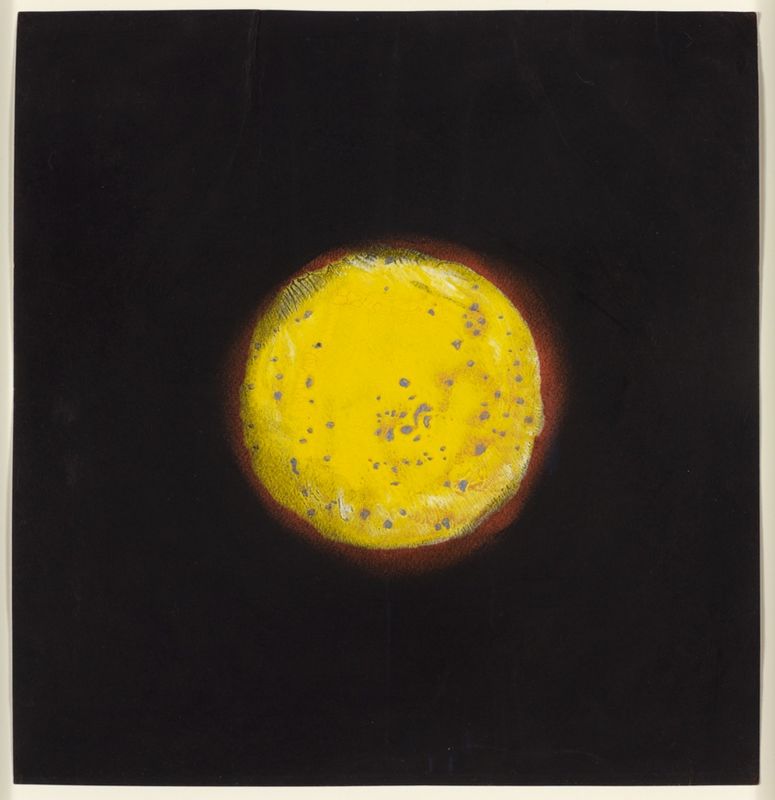 Same movement · Abstract art
Sun Spot
Yayoi Kusama · 1953 · Art Institute of Chicago
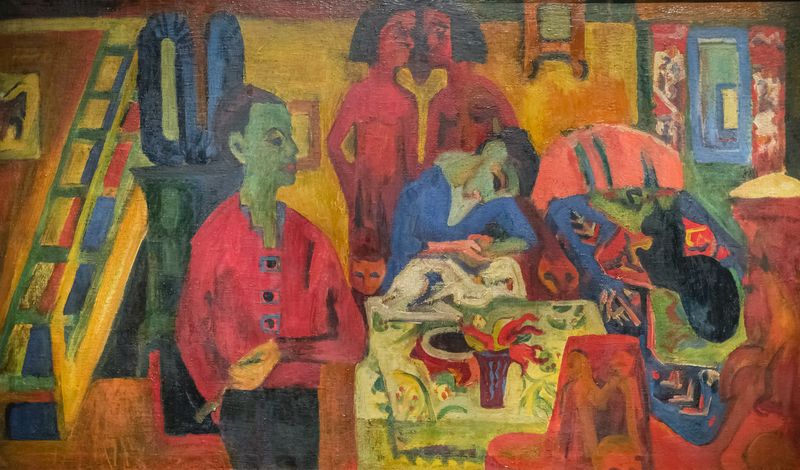 Same era · 1900s–1930s
Interior with painter
Ernst Ludwig Kirchner · 1921 · Buchheim Museum of Imagination
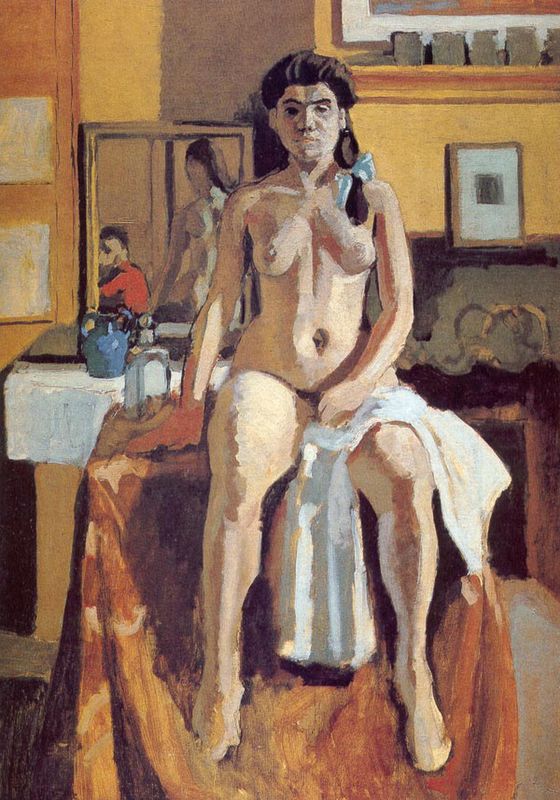 Same movement · Post-Impressionism
Carmelina
Henri Matisse · 1903 · Museum of Fine Arts Boston
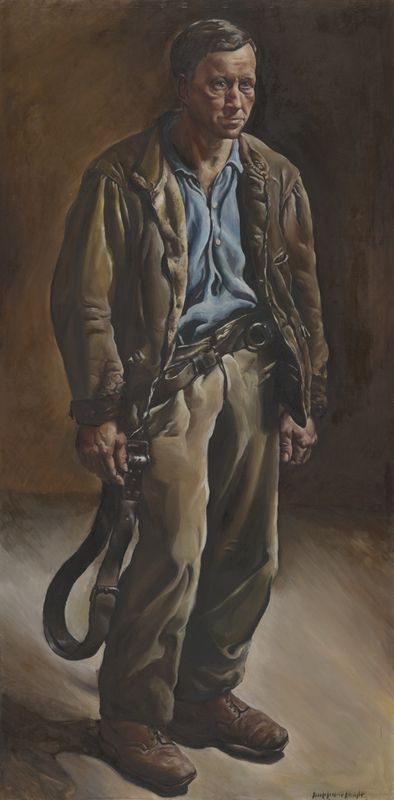 Same era · 1900s–1930s
The Lineman
Ivan Puni · 1927 · Art Institute of Chicago
 Same movement · Post-Impressionism
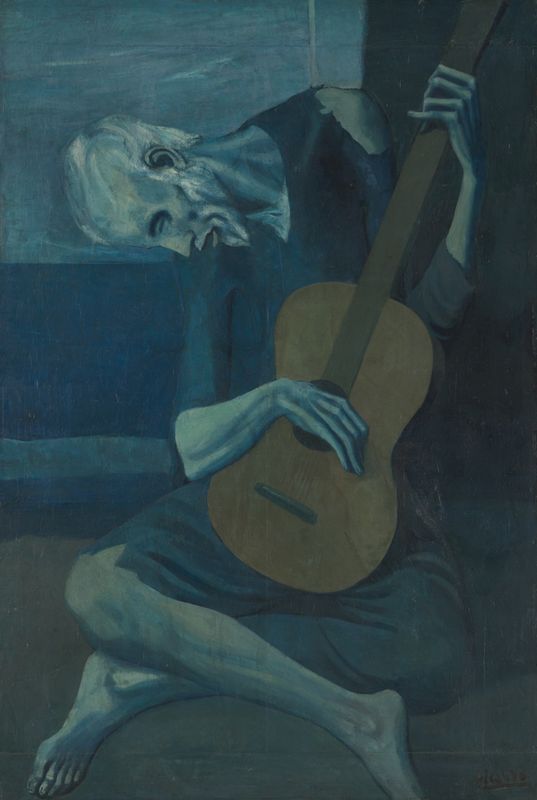
The Old Guitarist
Pablo Picasso · 1903 · Art Institute of Chicago
 Same era · 1900s–1930s
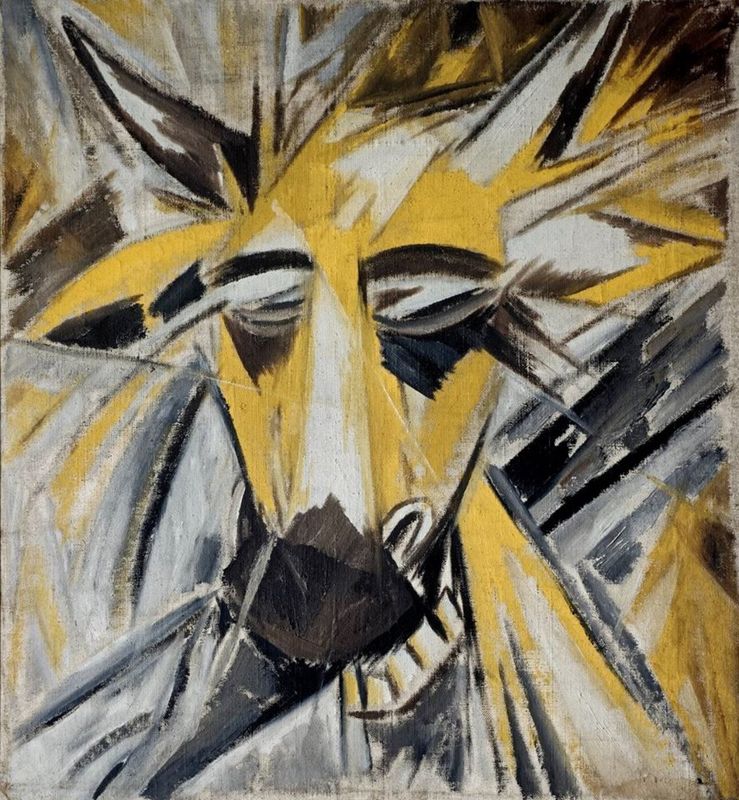
Bull's Head
Mikhail Larionov · 1913 · Tretyakov Gallery
 Same movement · Post-Impressionism
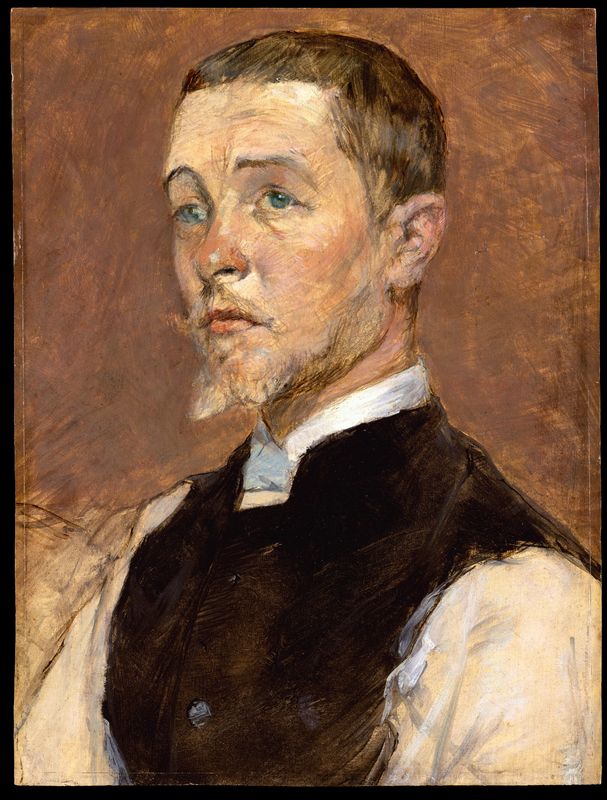
Albert (René) Grenier (1858–1925)
Henri de Toulouse-Lautrec · 1887 · The Metropolitan Museum of Art
 Same era · 1900s–1930s
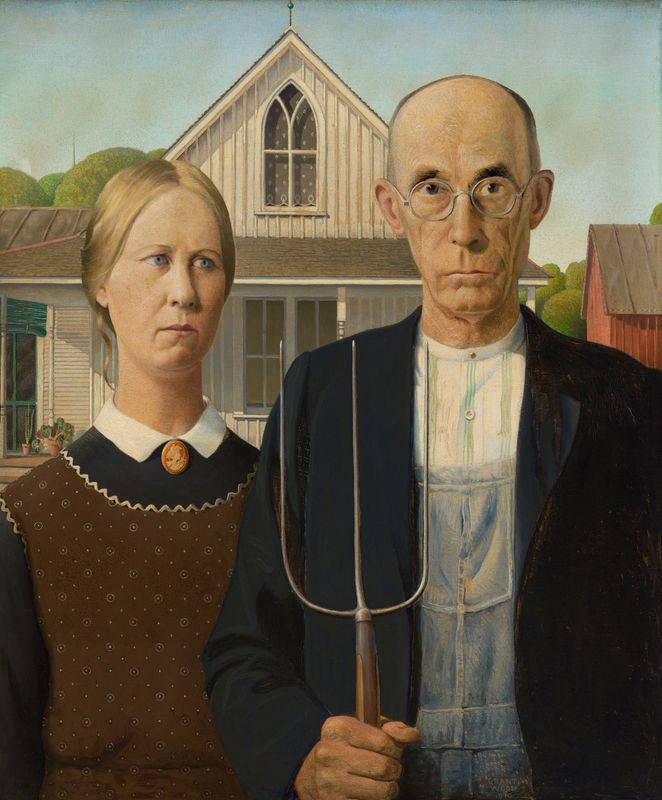
American Gothic
Okada Saburosuke · 1930 · Art Institute of Chicago
 Same movement · Post-Impressionism
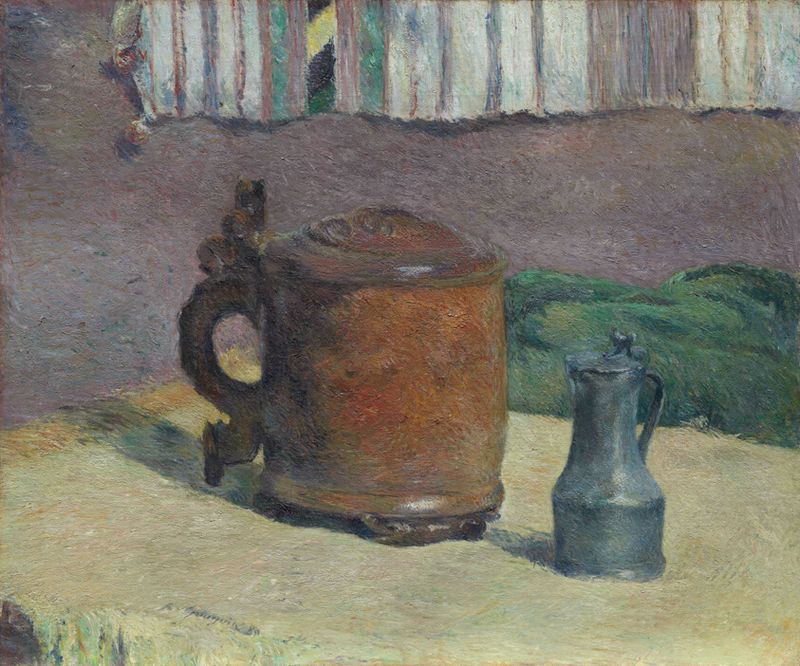
Still Life: Wood Tankard and Metal Pitcher
Paul Gauguin · 1880 · Art Institute of Chicago
 Same era · 1900s–1930s
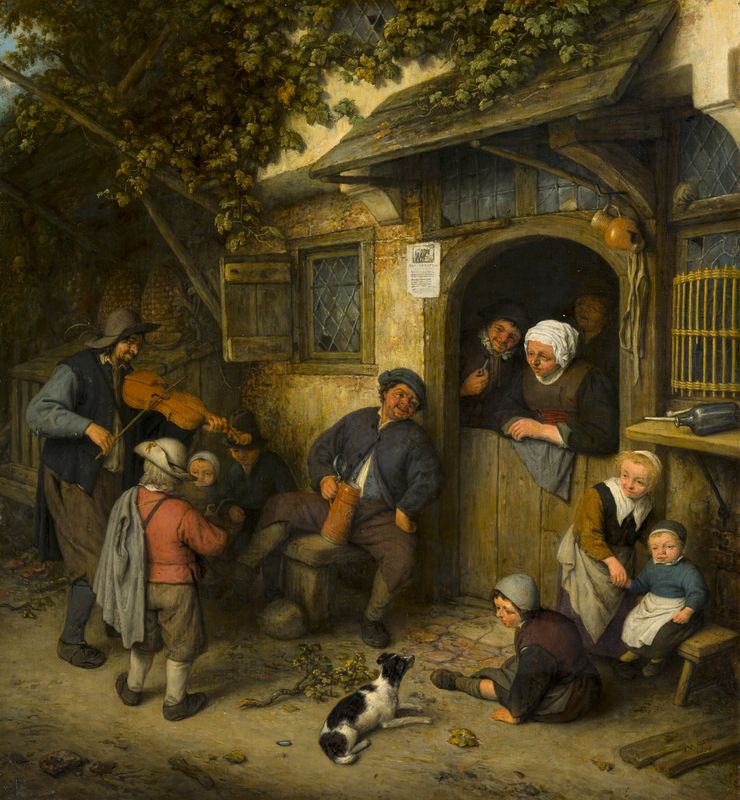
The Fiddler
Norman Rockwell · 1921 · Brandywine Museum of Art
 Same movement · Post-Impressionism
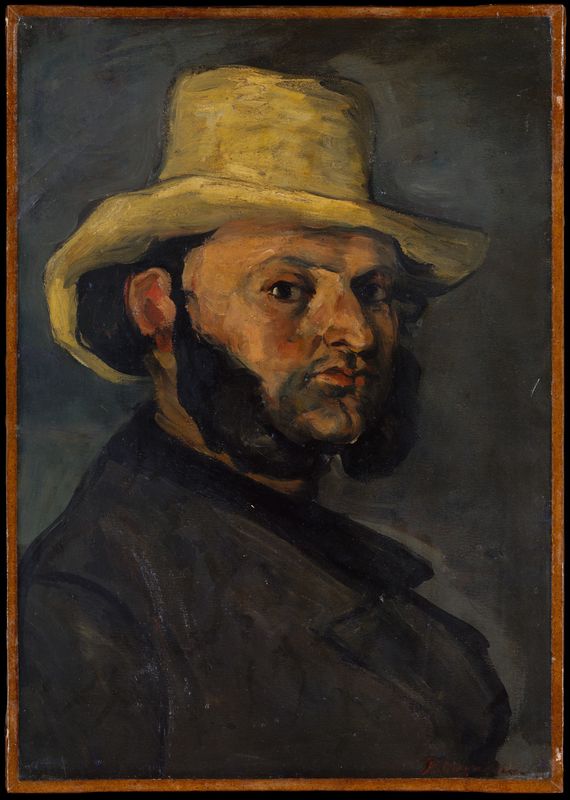
Gustave Boyer (b. 1840) in a Straw Hat
Paul Cézanne · 1870 · The Metropolitan Museum of Art
 Same era · 1900s–1930s
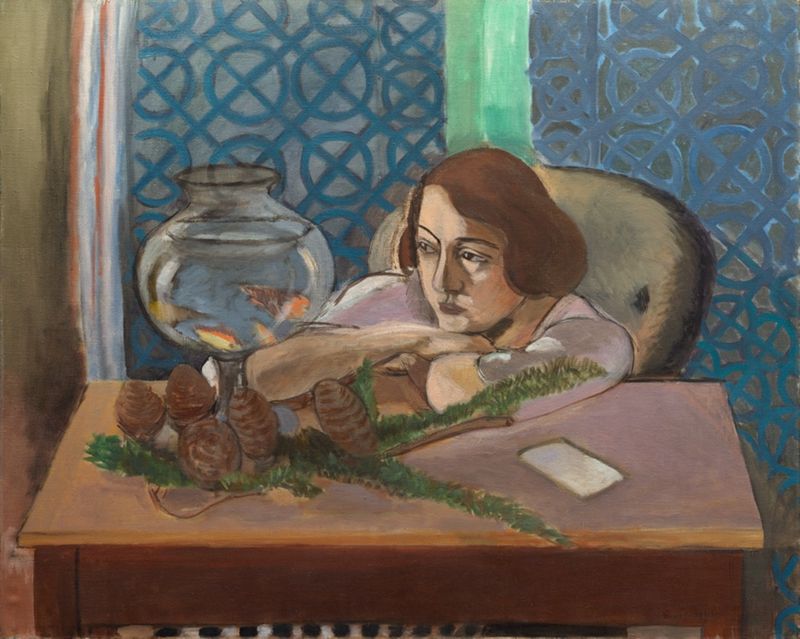
Woman before an Aquarium
Henri Matisse · 1921 · Art Institute of Chicago
 Same movement · Post-Impressionism
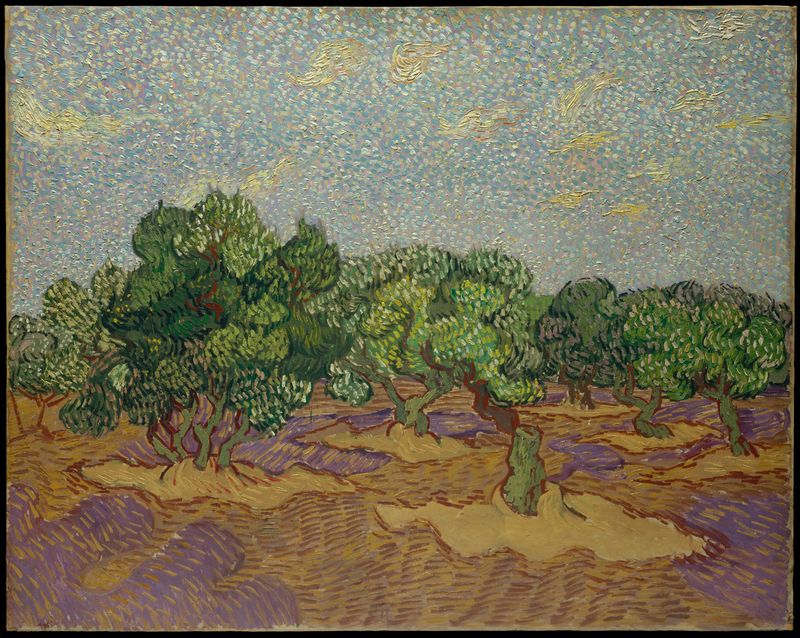
Olive Trees
Vincent van Gogh · 1853 · The Metropolitan Museum of Art
 Same era · 1900s–1930s
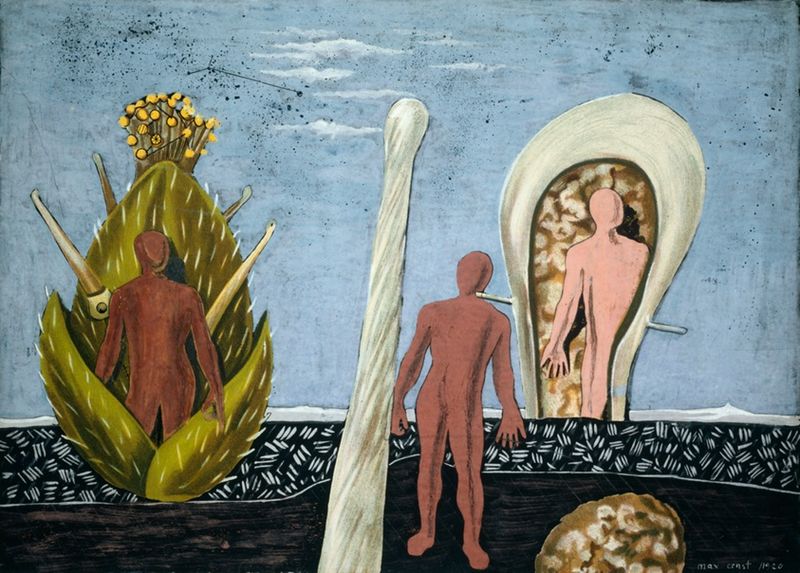
Dada Gauguin
Max Ernst · 1920 · Art Institute of Chicago
 Same era · 1900s–1930s
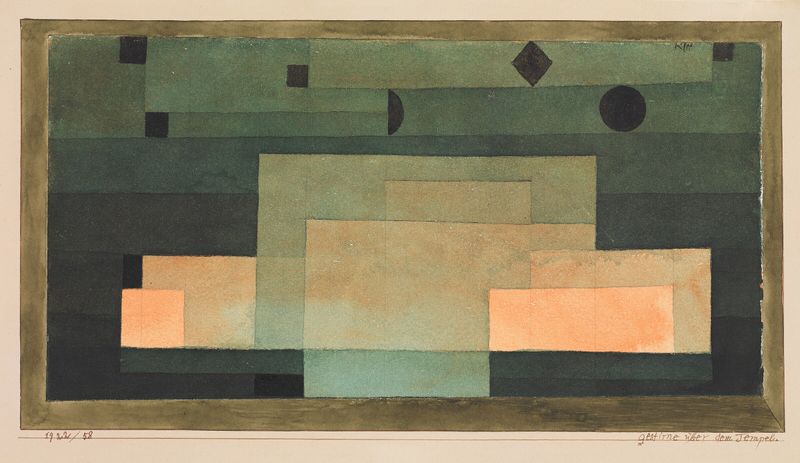
The Firmament Above the Temple
Paul Klee · 1922 · The Metropolitan Museum of Art
 Same era · 1900s–1930s
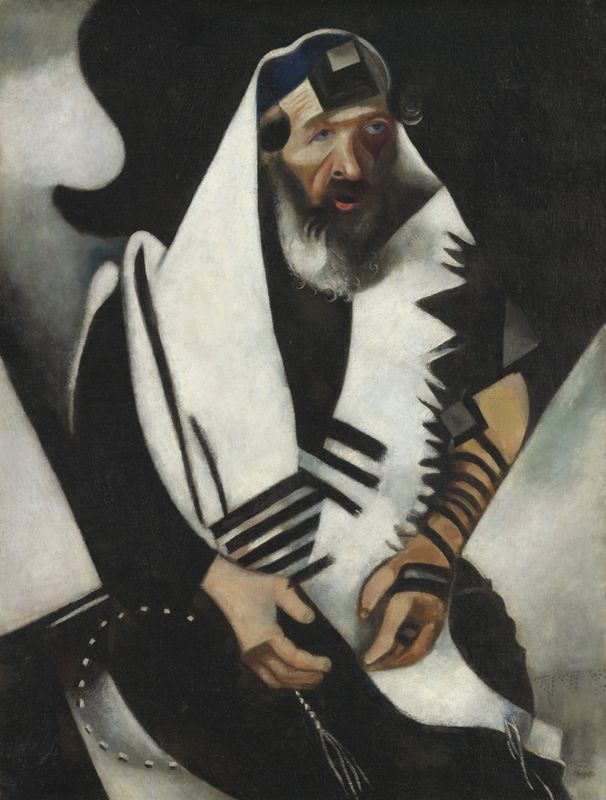
The Praying Jew
Marc Chagall · 1923 · Art Institute of Chicago
 Same era · 1900s–1930s
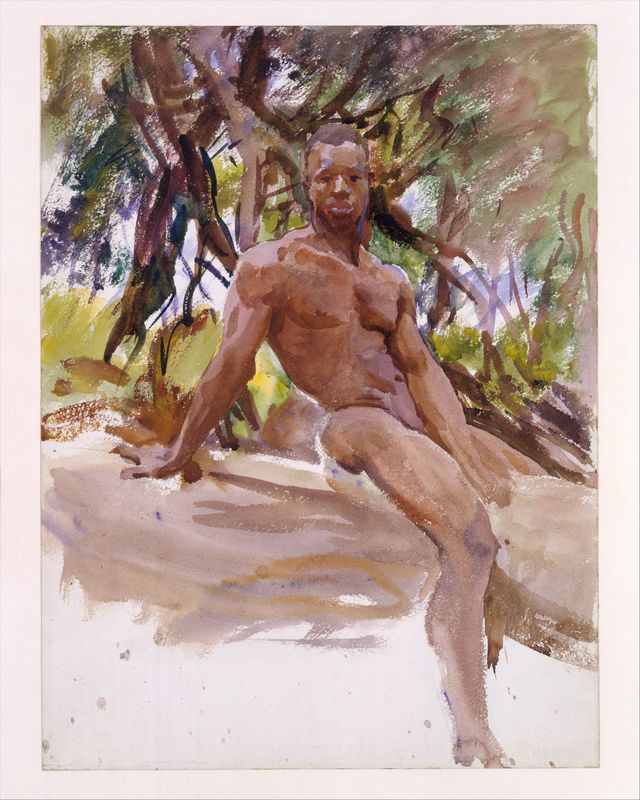
Man and Trees, Florida
John Singer Sargent · 1917 · The Metropolitan Museum of Art
 Same era · 1900s–1930s
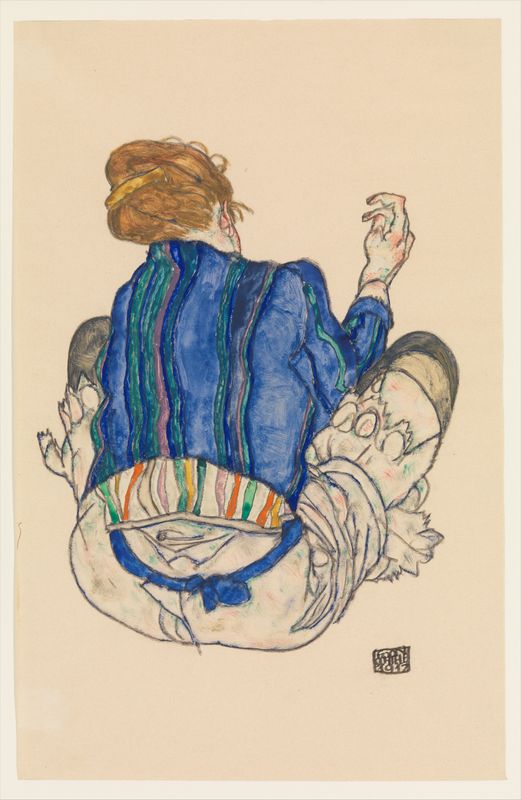
Seated Woman, Back View
Egon Schiele · 1917 · The Metropolitan Museum of Art
 Same era · 1900s–1930s
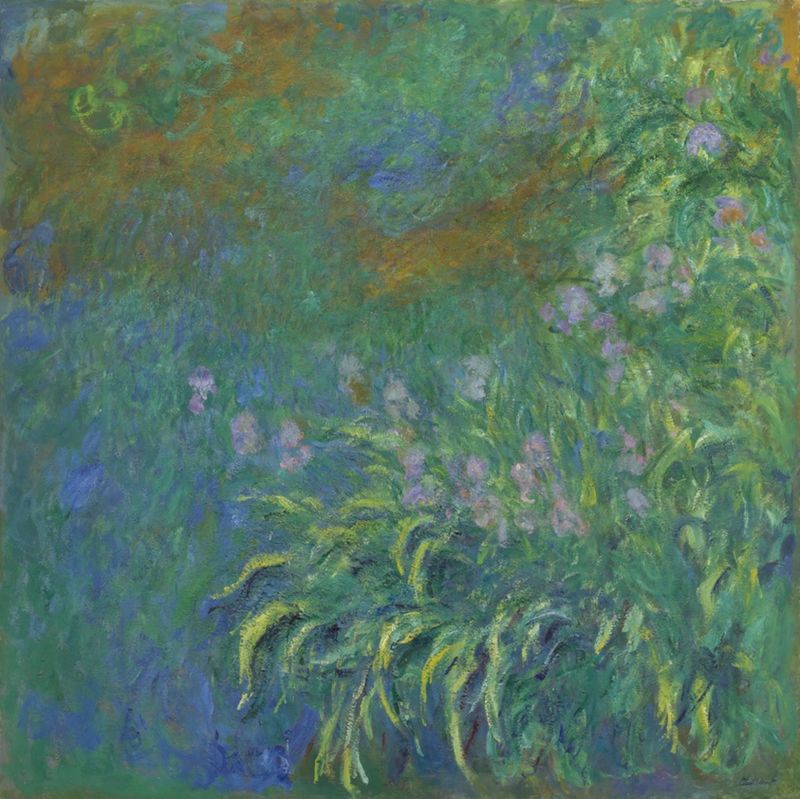
Irises
Claude Monet · 1915 · National Gallery