01
Yellow house
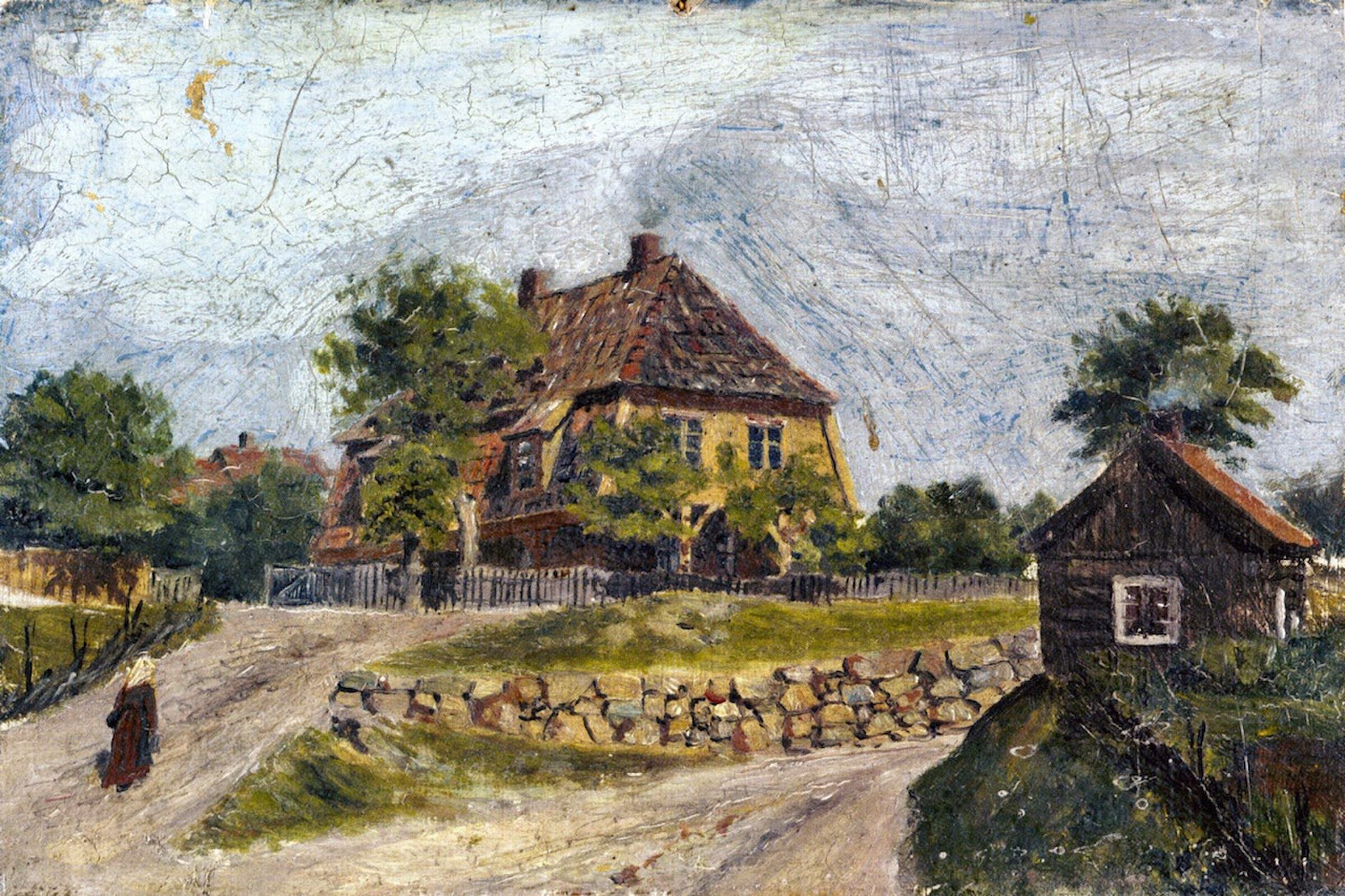
The yellow house with its steep reddish-brown roof sits at the center, with a chimney at the peak and another just to its left. Its warm color stands out against the cool, pale sky.
1 of 5 on the painting
“Stop to appreciate this early work by Edvard Munch, a vivid watercolor of a powerful waterfall. It offers a glimpse into his nascent talent for capturing the raw emotion and grandeur of nature.”
This watercolor, "Øvre Foss," captures a dramatic natural scene with a powerful waterfall at its heart. The raw energy of the cascading water dominates the composition, rendered with fluid washes of color that convey movement and mist. Munch, who would have been around 17 when he created this piece, uses a relatively muted palette, focusing on the interplay of light and shadow across the rocks and the churning water below. The landscape feels untamed and vast, a characteristic often found in Romantic and Symbolist art, movements that would later define much of his career. Despite the early date, there's a hint of the emotional depth that would become a hallmark of his later, more famous works, suggesting a profound connection to the natural world and its inherent power.
Five details hide in plain sight. Pick one and we’ll show you exactly where to look.
The yellow house with its steep reddish-brown roof sits at the center, with a chimney at the peak and another just to its left. Its warm color stands out against the cool, pale sky.
At the lower left, a small woman in a dark red dress and pale headscarf walks the dirt road. She gives the scene human scale and a quiet story.
The pale dirt road sweeps in from the lower left and bends around the grassy mound, leading the eye toward the house. It reads like a path you could step onto.
At the right, a small dark timber hut with an orange roof and one white-framed window sits on a mound. It balances the big house across the road.
Look at the sky, where pale blue and white paint is scuffed with crisscross marks. Cracks and small flaked patches show the age and wear of this small work.
The full narration walks you through Øvre Foss — the story behind it, the details most visitors miss, and why it matters. Free in the Art Whisper app.
Norwegian painter whose 1893 work The Scream became one of Western art's most iconic images.
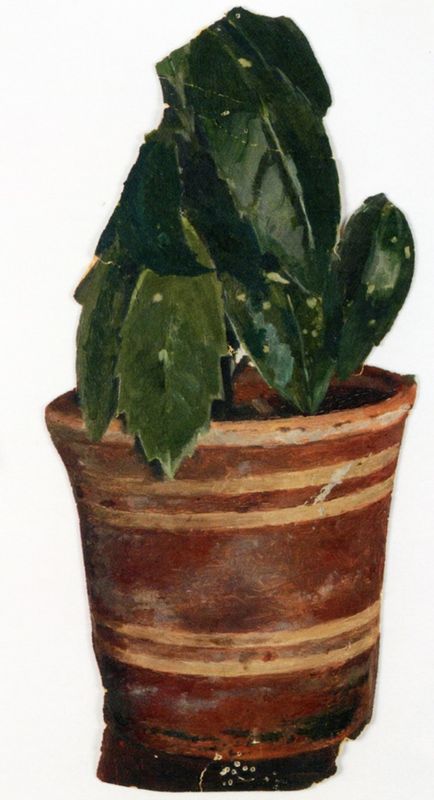 Potted Plant
1881 · Munch Museum
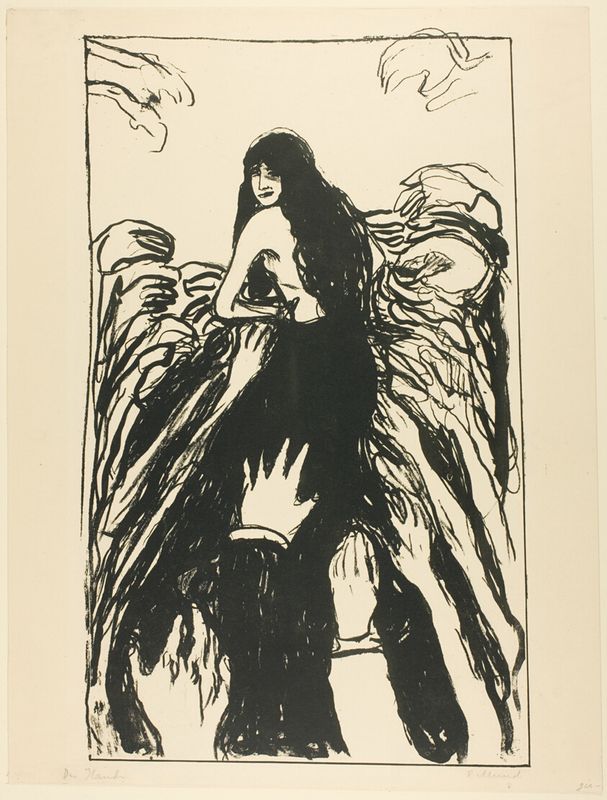 The Hands
1893 · Munch Museum
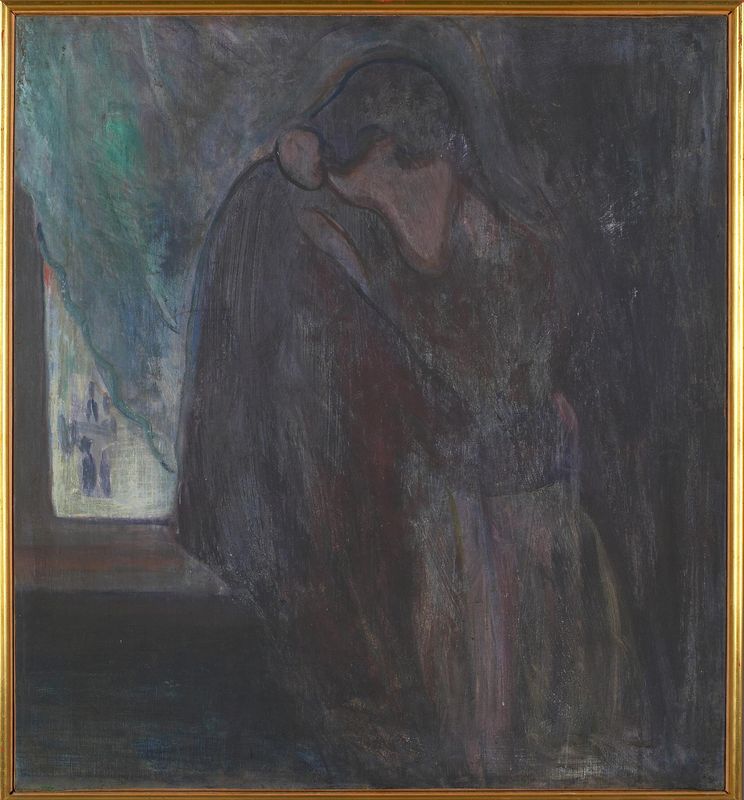 The Kiss
1897 · Munch Museum
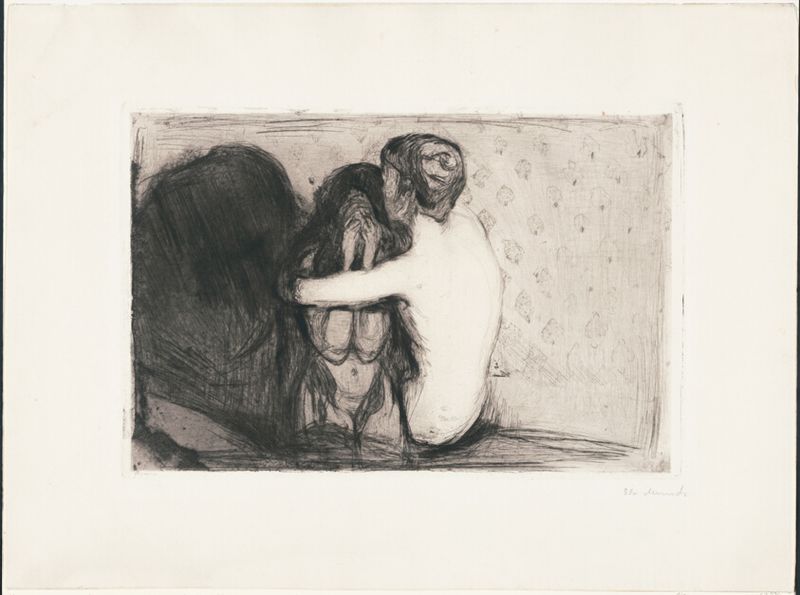 Consolation
1907 · Munch Museum
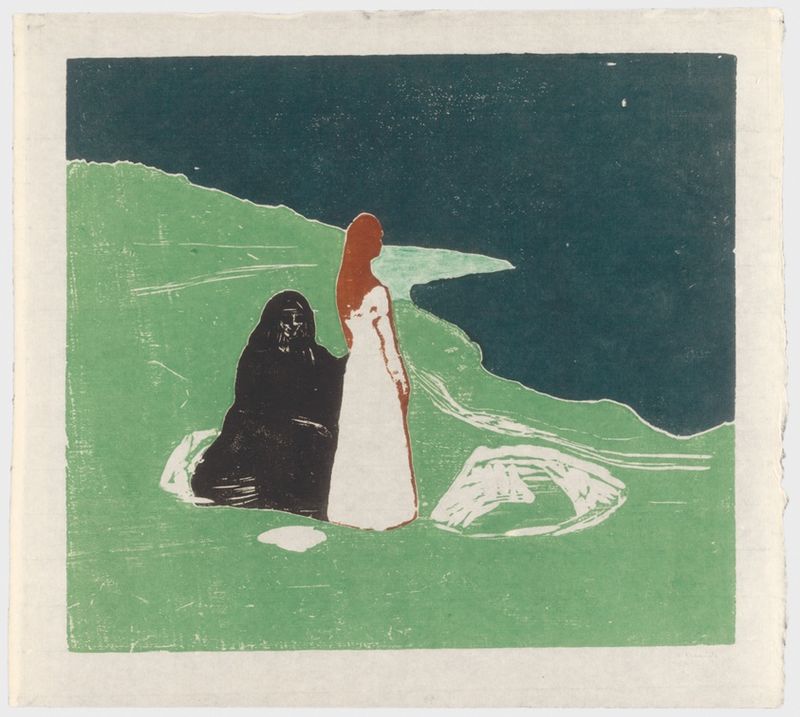 Two Women on the Shore
1935 · Munch Museum
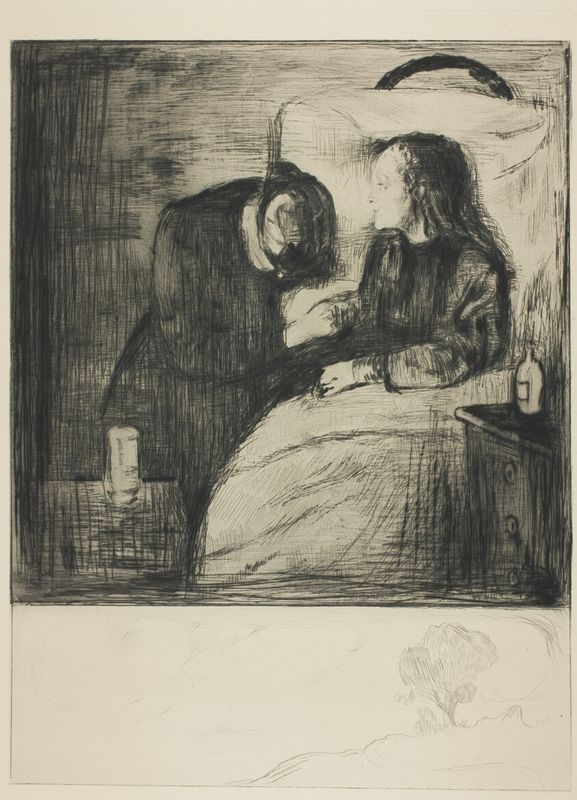 The Sick Child
1885 · National Museum of Art, Architecture and Design
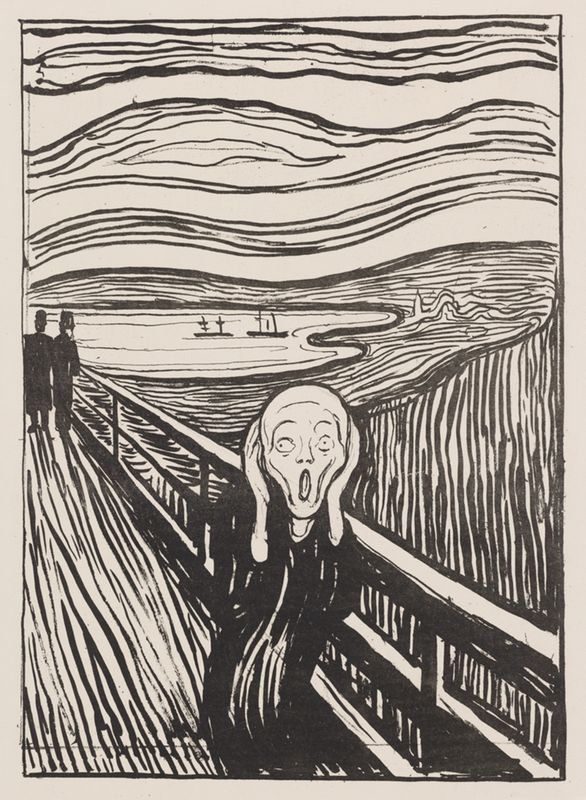 The Scream
1910 · Munch Museum
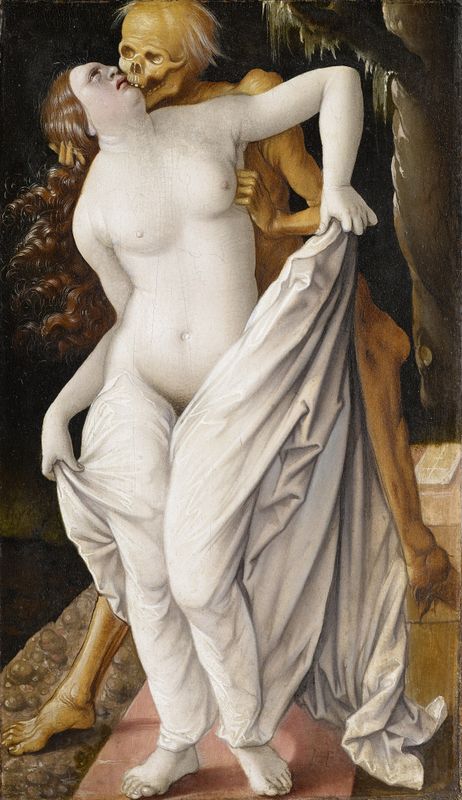 Death and the Woman
1894 · The Metropolitan Museum of Art
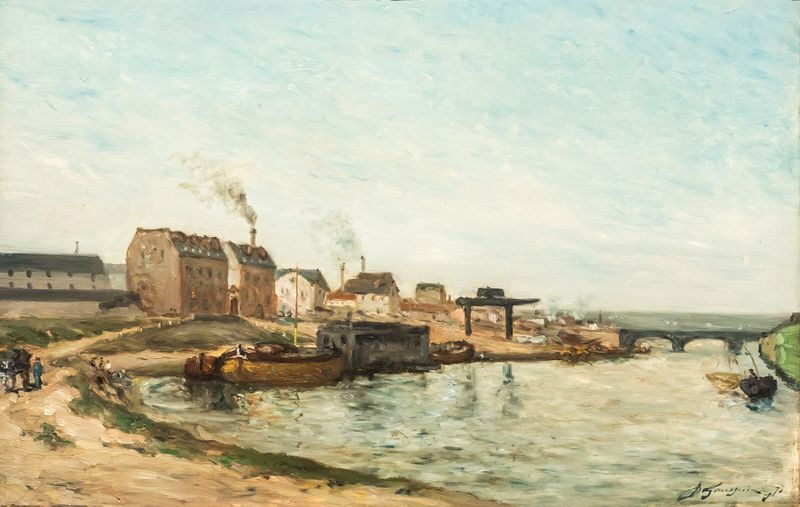 The Seine at Pont de Grenelle
Gauguin · 1875 · Wallraf–Richartz Museum
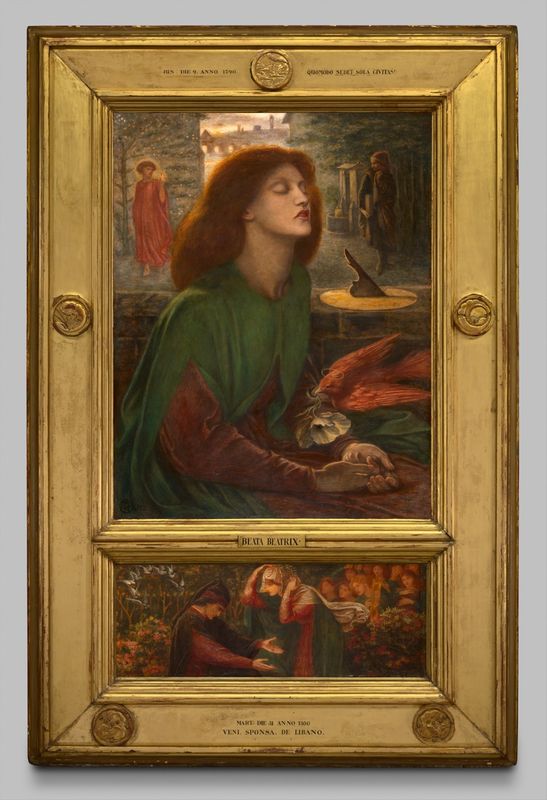 Beata Beatrix
Rossetti · 1877 · Birmingham Museums Trust
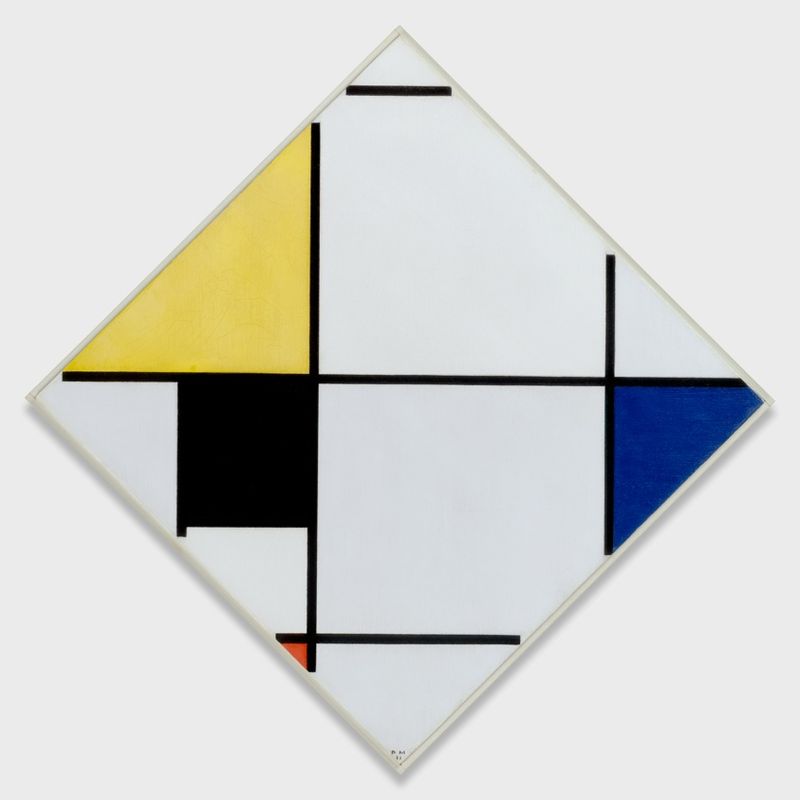 Lozenge Composition with Yellow, Black, Blue, Red, and Gray
Mondrian · 1921 · Art Institute of Chicago
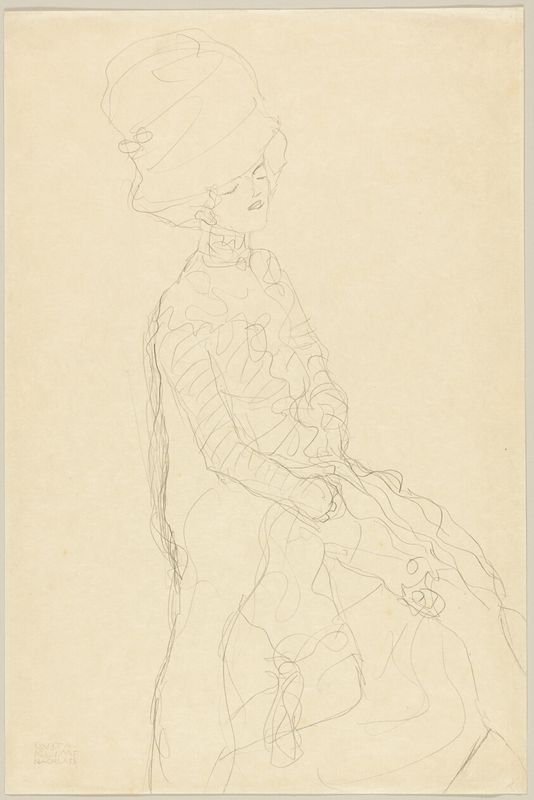 Portrait of a Lady in a High Hat
Klimt · 1882 · Art Institute of Chicago
Beyond Munch and Symbolism: works from the same years, and from the other movements Øvre Foss belongs to.
 Same movement · Expressionism
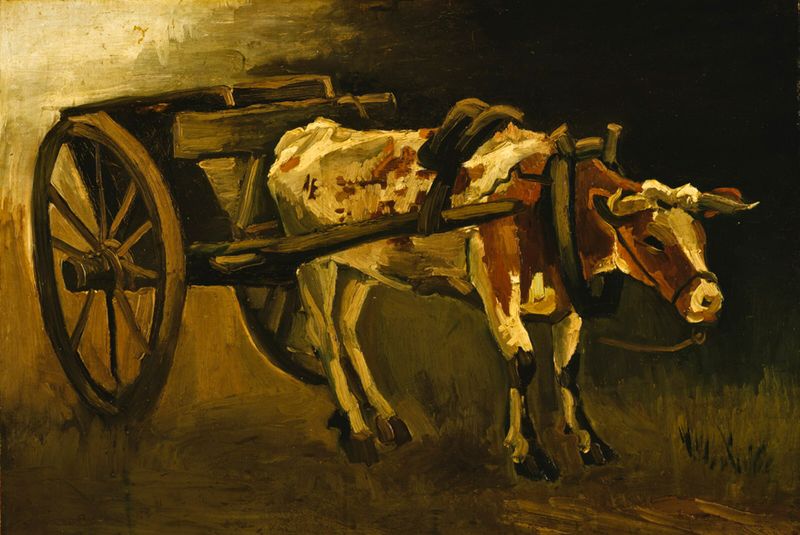
Cart with Red and White Ox
Vincent van Gogh · 1884 · Kröller-Müller Museum
 Same era · 1860s–1890s
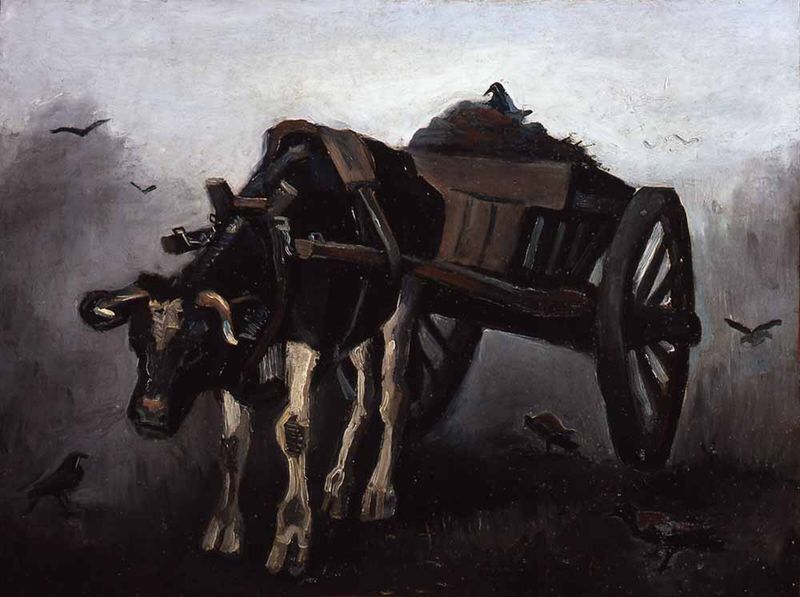
Cart with Black Ox
Vincent van Gogh · 1884 · Portland Art Museum
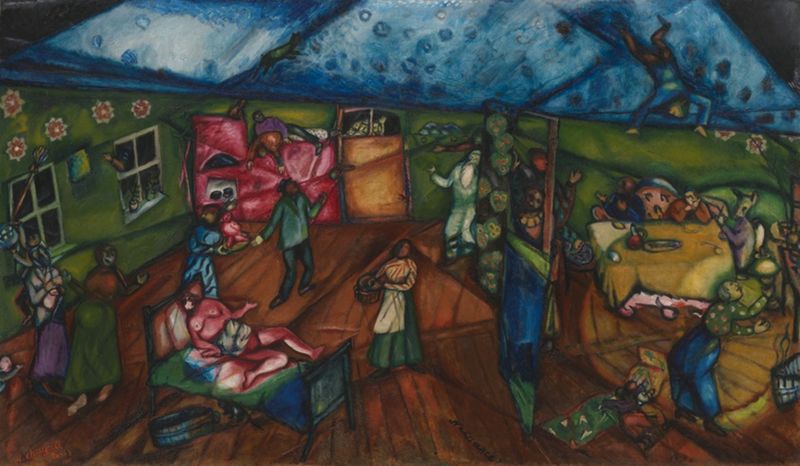 Same movement · Expressionism
Birth
Marc Chagall · 1911 · Art Institute of Chicago
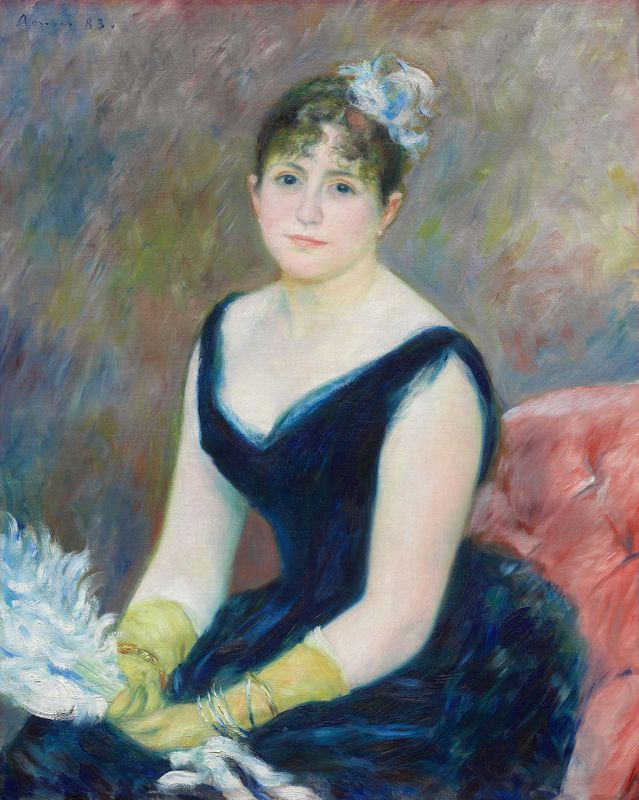 Same era · 1860s–1890s
Madame Léon Clapisson
Léon-Victor Dupré · 1883 · Art Institute of Chicago
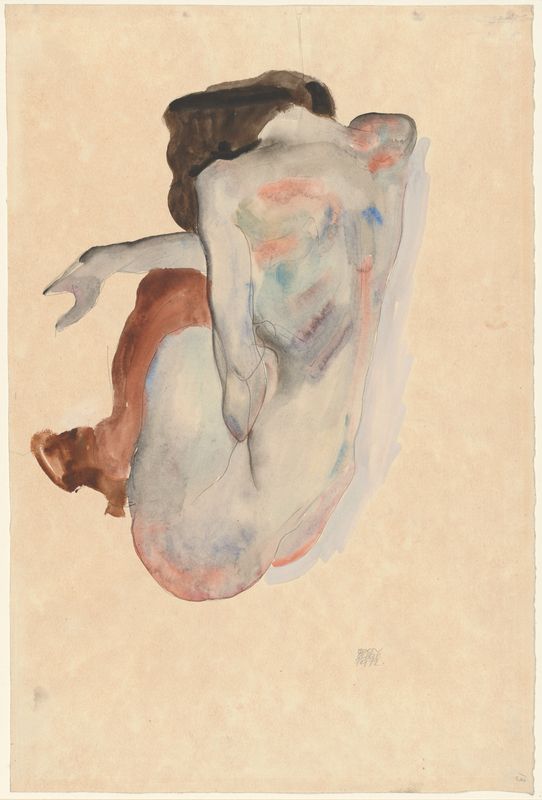 Same movement · Expressionism
Crouching Nude in Shoes and Black Stockings, Back View
Egon Schiele · 1912 · The Metropolitan Museum of Art
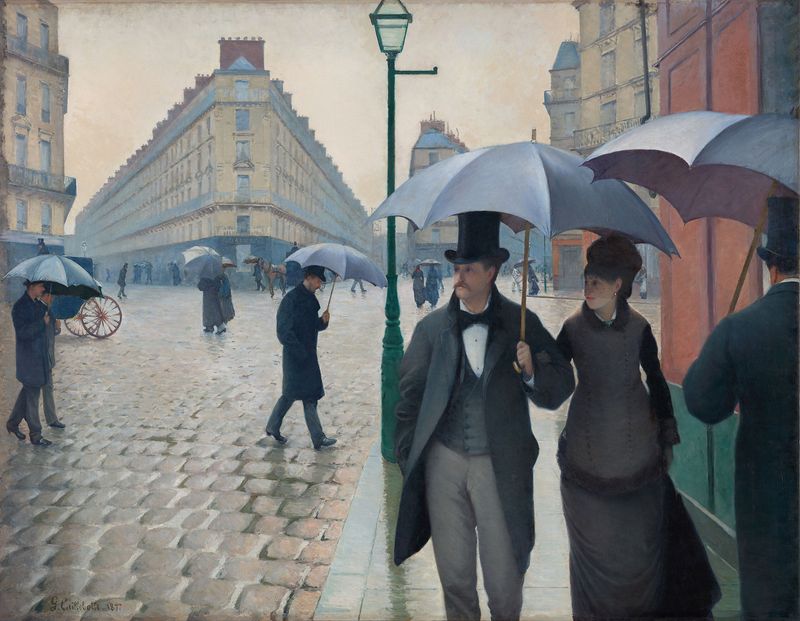 Same era · 1860s–1890s
Paris Street; Rainy Day
Kawabata Gyokushō · 1877 · Art Institute of Chicago
 Same movement · Expressionism
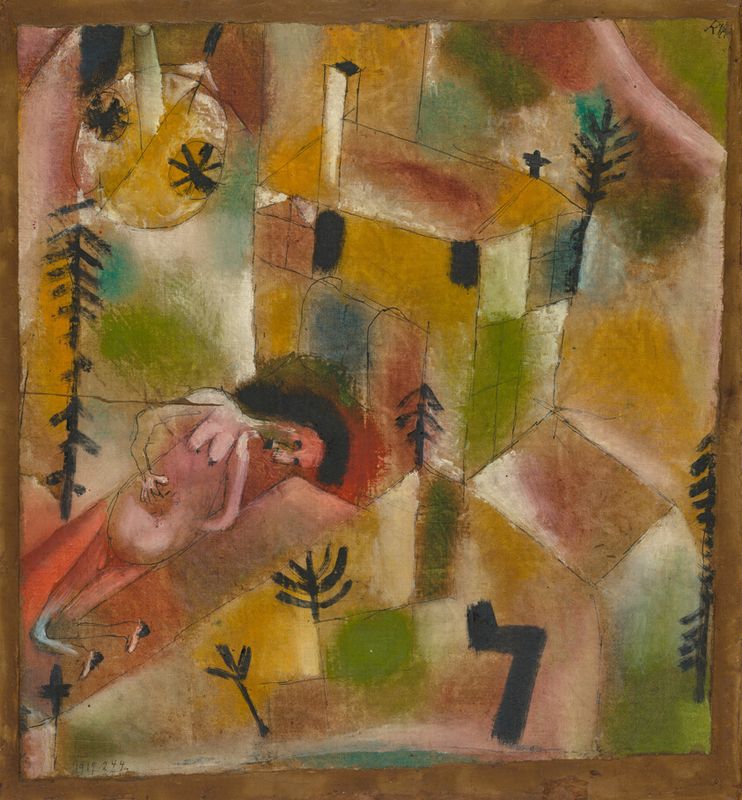
Death in the Garden (Legend)
Paul Klee · 1919 · Art Institute of Chicago
 Same era · 1860s–1890s
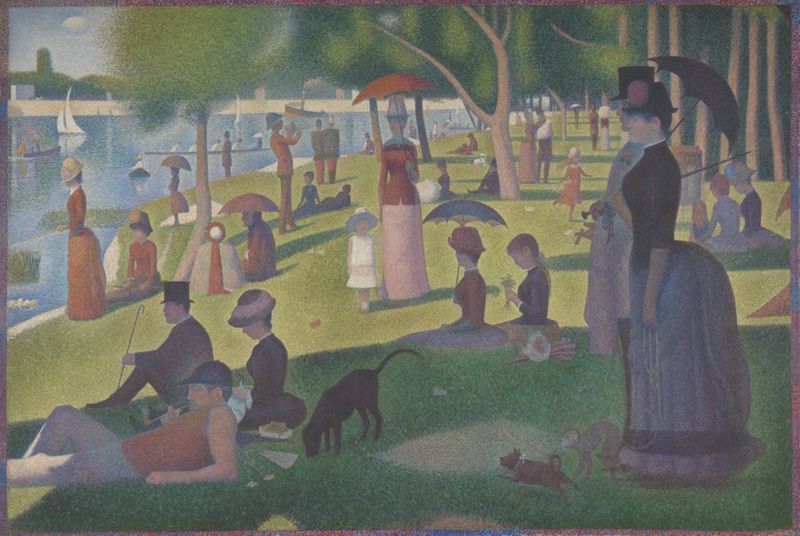
A Sunday on La Grande Jatte — 1884
Okada Saburosuke · 1884 · Art Institute of Chicago
 Same movement · Expressionism
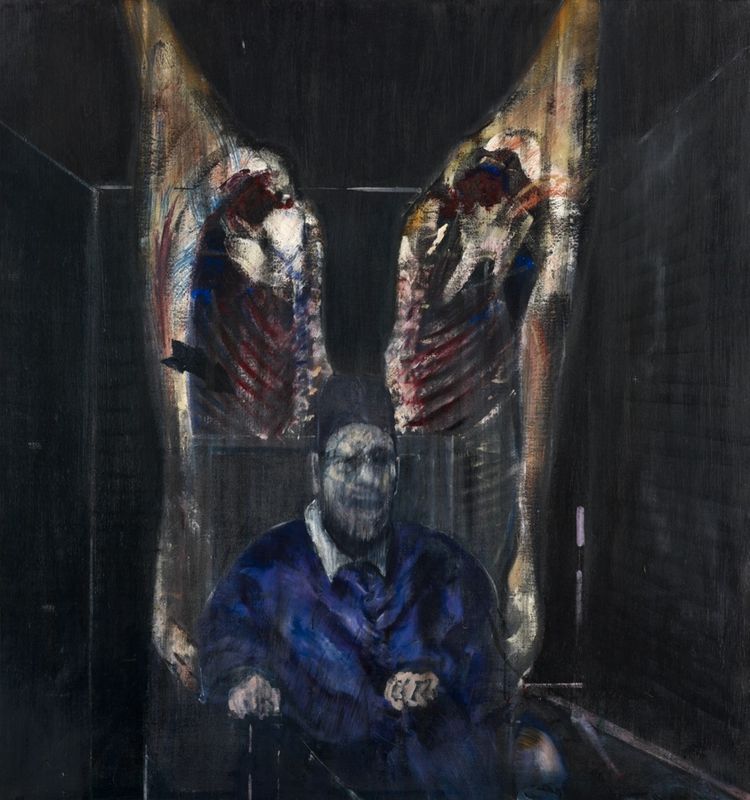
Figure with Meat
Francis Bacon · 1954 · Art Institute of Chicago
 Same era · 1860s–1890s
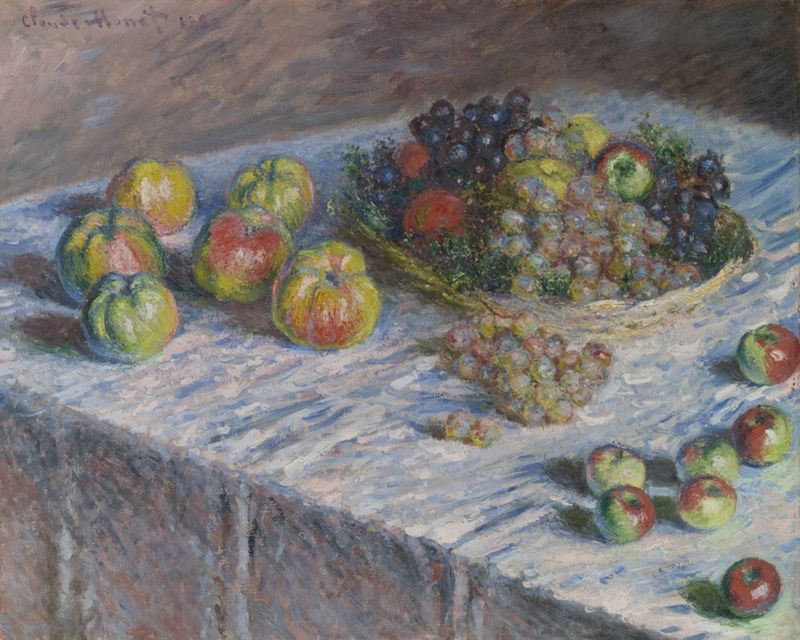
Apples and Grapes
Claude Monet · 1880 · Art Institute of Chicago
 Same era · 1860s–1890s
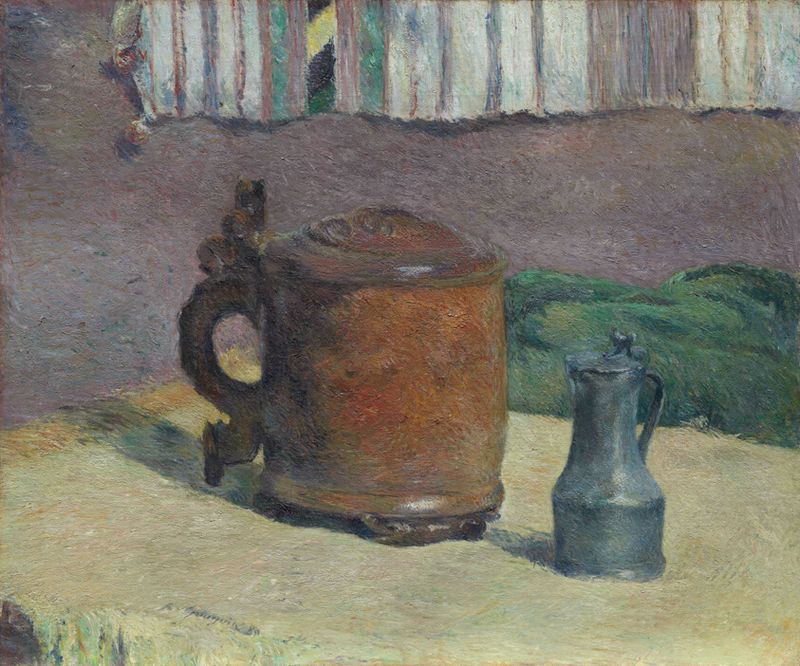
Still Life: Wood Tankard and Metal Pitcher
Paul Gauguin · 1880 · Art Institute of Chicago
 Same era · 1860s–1890s
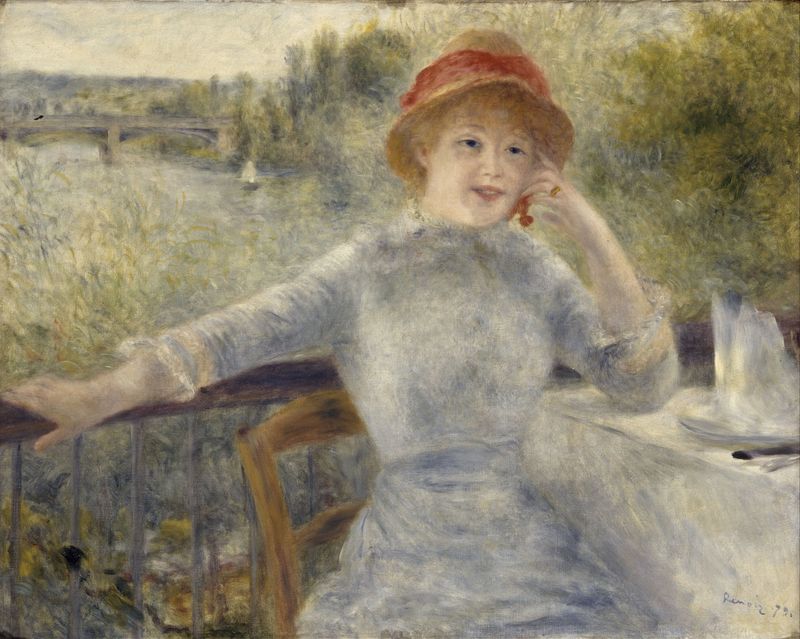
Alphonsine Fournaise
Pierre-Auguste Renoir · 1879 · Musée d'Orsay
 Same era · 1860s–1890s
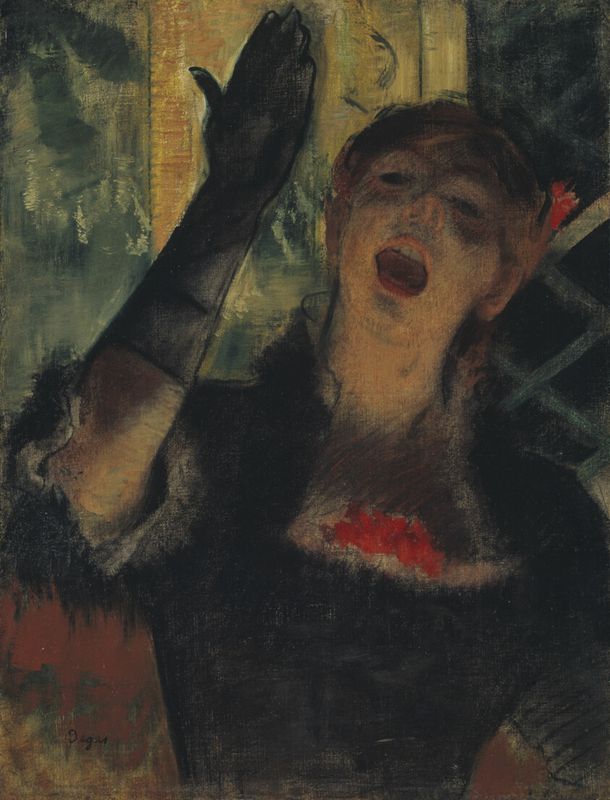
Café Singer
Edgar Degas · 1879 · Art Institute of Chicago
 Same era · 1860s–1890s
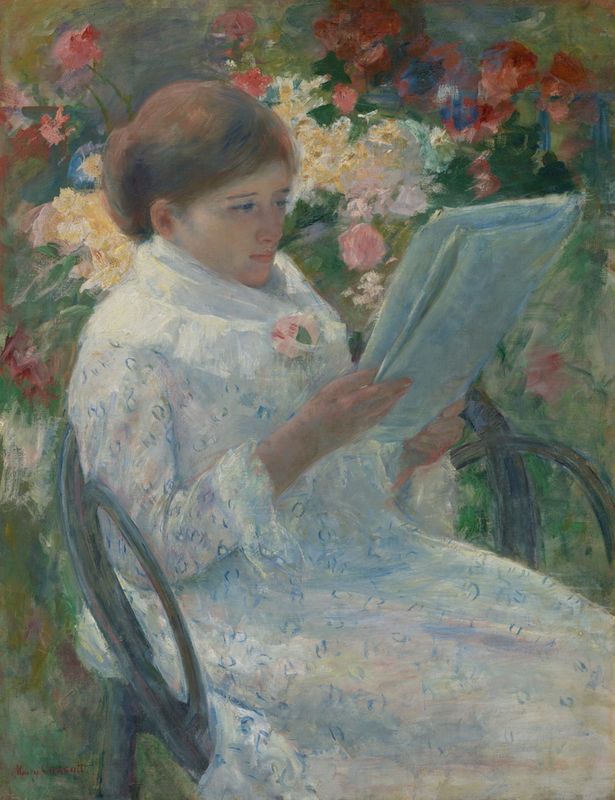
On a Balcony
Mary Cassatt · 1879 · Art Institute of Chicago
 Same era · 1860s–1890s
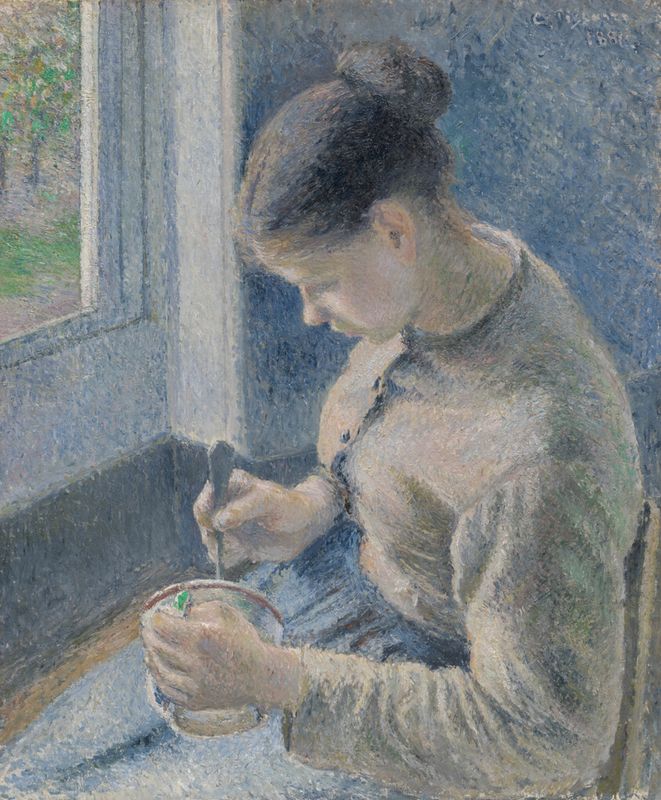
Young Peasant Having Her Coffee
Camille Pissarro · 1881 · Art Institute of Chicago
 Same era · 1860s–1890s
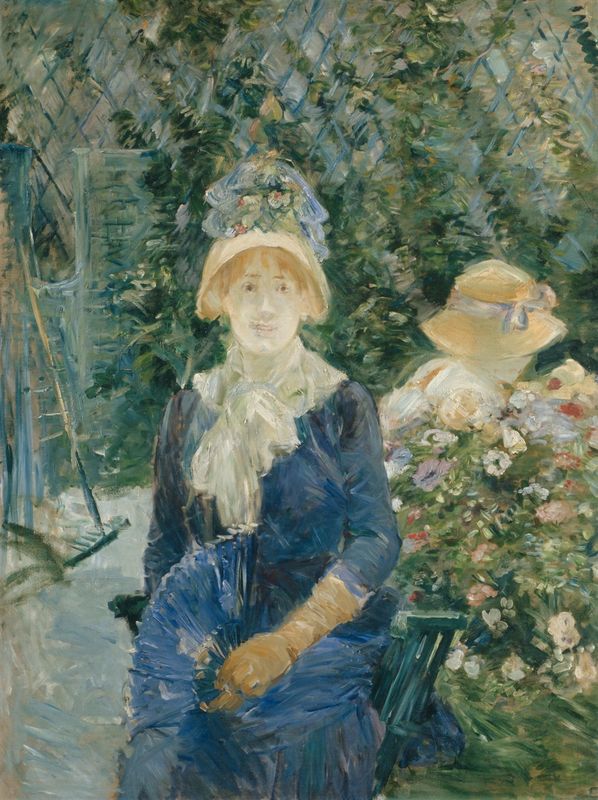
Woman in a Garden
Berthe Morisot · 1882 · Art Institute of Chicago
 Same era · 1860s–1890s
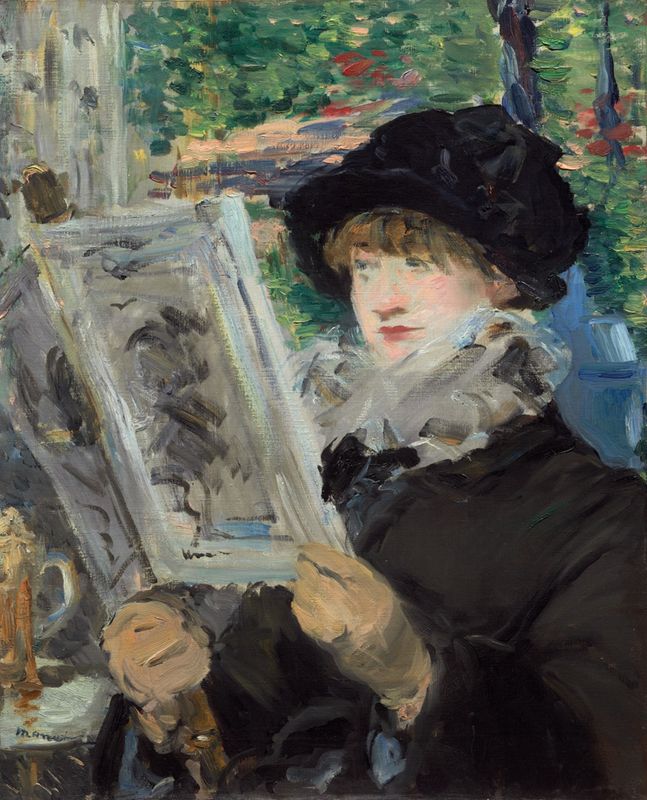
Woman Reading
Édouard Manet · 1878 · Art Institute of Chicago
