01
Giant foreground lantern
Start at the tall lamp on the left. Its glass box is drawn with crisp dark outlines, so it feels close and bigger than everything beyond it.
1 of 5 on the painting
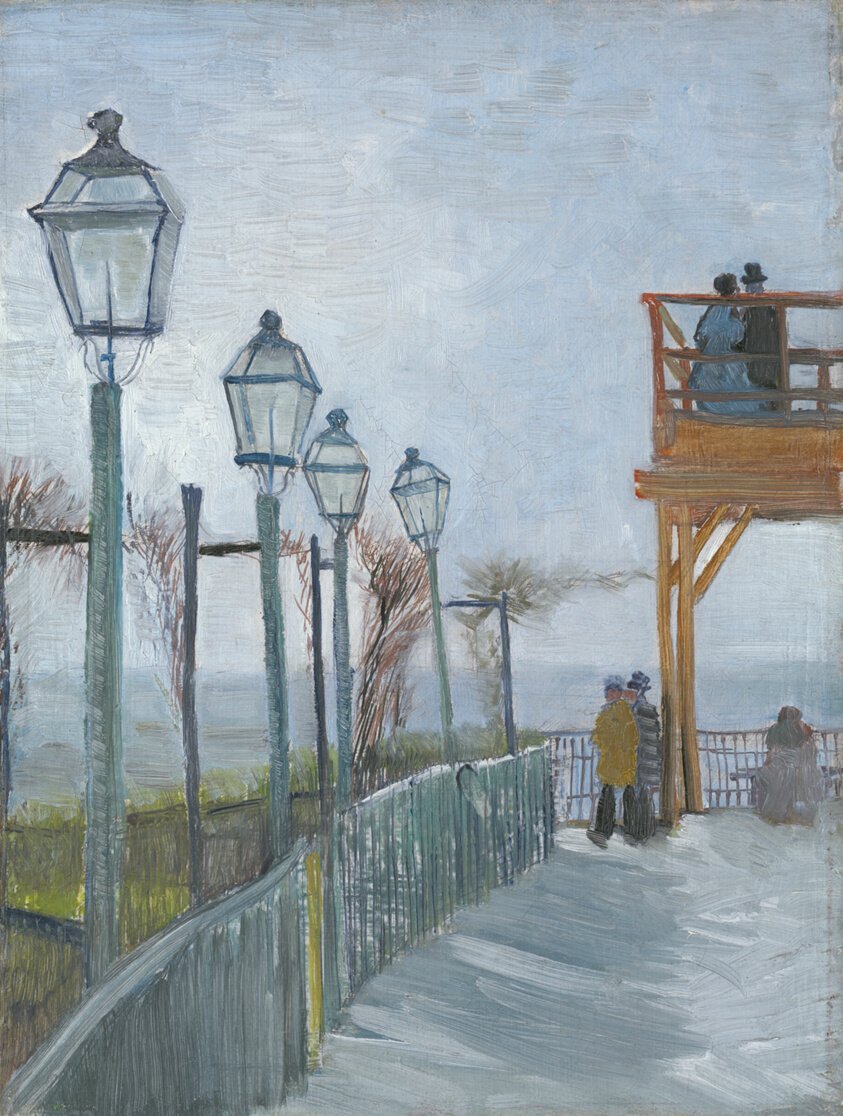
“Step into a vibrant 19th-century Parisian scene by Van Gogh, capturing a lively observation deck atop a Montmartre windmill. This painting showcases his early experiments with vivid color and impressionistic style, a departure from his earlier work.”
A quiet corner of Montmartre comes alive in this painting, offering a glimpse into the bustling life of late 19th-century Paris. The scene centers on the Moulin de Blute-Fin, one of the windmills that dotted the Montmartre hillside, now repurposed into a popular entertainment spot. Notice the observation deck, where visitors could take in panoramic views of the city. The artist uses a vibrant palette and distinct brushstrokes to capture the light and atmosphere, especially the way it illuminates the figures and the surrounding landscape. This work, from early 1887, reflects the artist's engagement with the Parisian avant-garde, where he experimented with brighter colors and a more impressionistic style than his earlier, darker Dutch works. It captures a moment of leisure and urban transformation, a blend of rural charm and modern recreation.
Five details hide in plain sight. Pick one and we’ll show you exactly where to look.
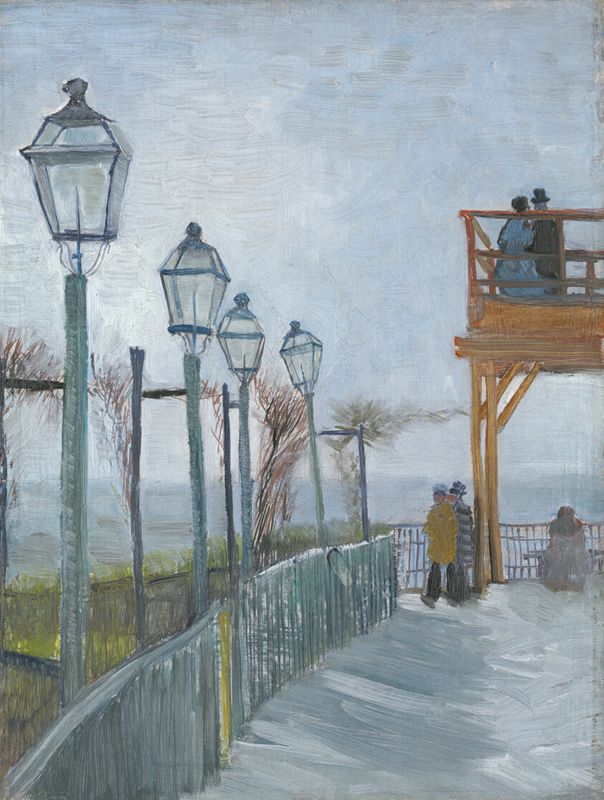
Start at the tall lamp on the left. Its glass box is drawn with crisp dark outlines, so it feels close and bigger than everything beyond it.
Follow the four lamps as they shrink toward the horizon. Their steady drop in size pulls your eye deep into the scene.
Up on the orange wooden deck at right, two small figures in hats stand close together at the rail. They are tiny, but the warm orange of the platform makes this corner a focal point.
Find the strolling pair near the far fence. One mustard-yellow coat is the brightest note in a cool gray scene, so it draws the eye there.
The green fence and gray path slant sharply from the lower left toward the figures. This diagonal works like a ramp that carries your eye into the picture.
The full narration walks you through Terrace and Observation Deck at the Moulin de Blute-Fin, Montmartre — the story behind it, the details most visitors miss, and why it matters. Free in the Art Whisper app.
Vincent van Gogh, whose vibrant brushwork and bold colors transformed landscapes and portraits, created 2,100 artworks in just over a decade.
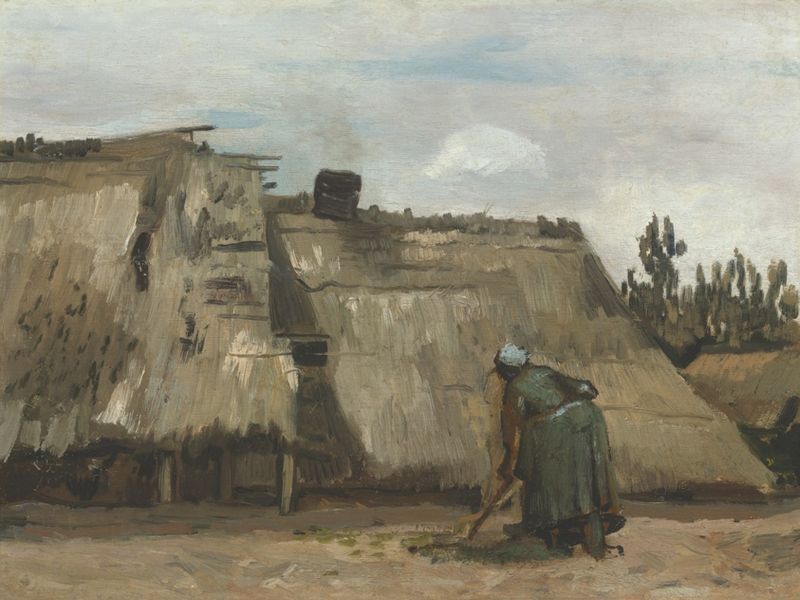 A Peasant Woman Digging in Front of Her Cottage
1880 · Art Institute of Chicago
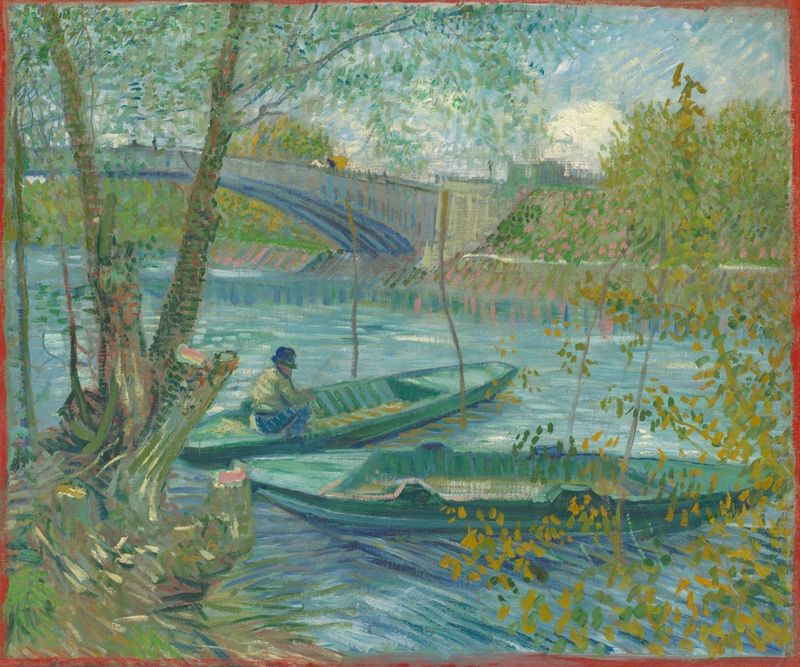 Fishing in Spring, the Pont de Clichy (Asnières)
1887 · Art Institute of Chicago
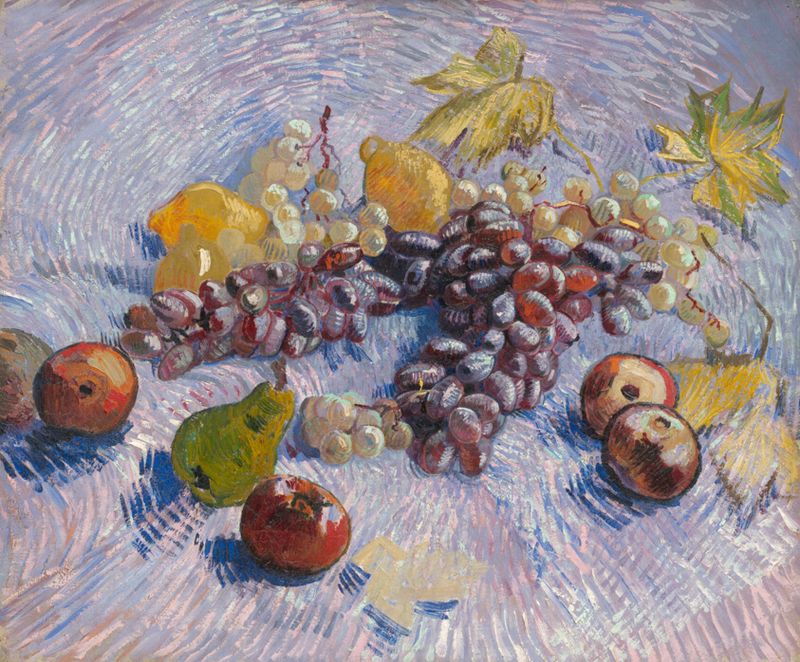 Grapes, Lemons, Pears, and Apples
1887 · Art Institute of Chicago
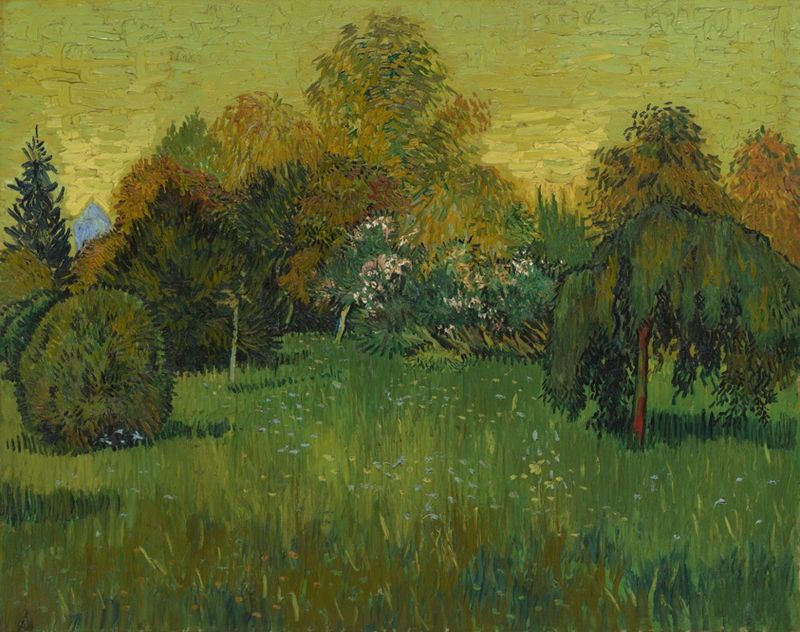 The Poet's Garden
1888 · Art Institute of Chicago
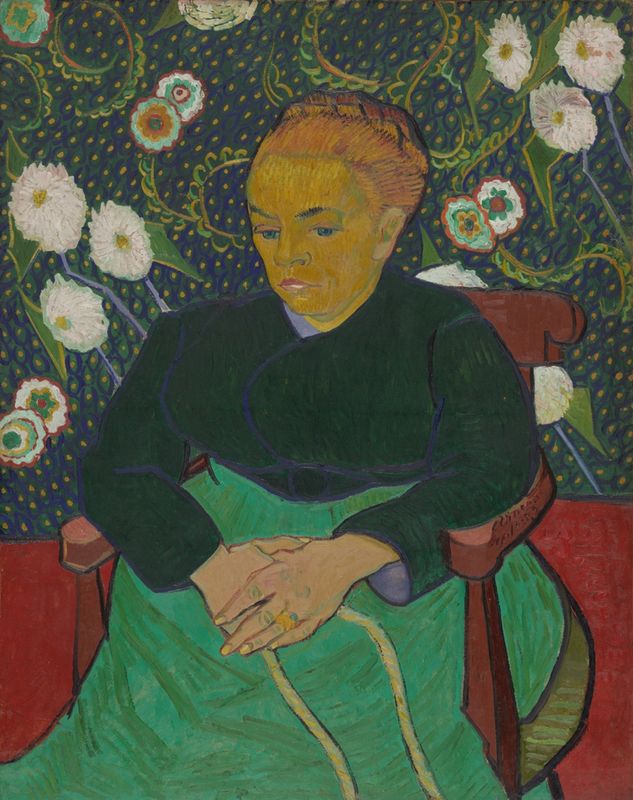 Madame Roulin Rocking the Cradle (La berceuse)
1889 · Art Institute of Chicago
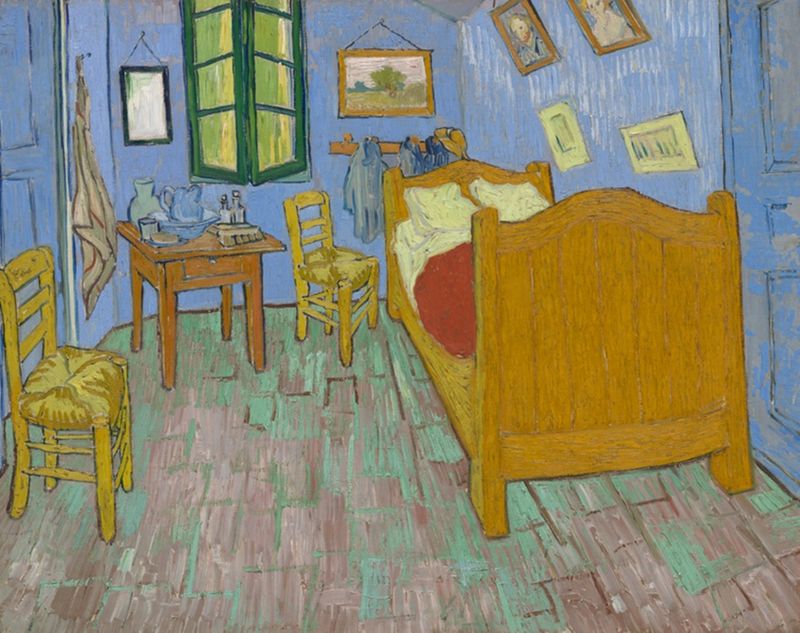 The Bedroom
1889 · Art Institute of Chicago
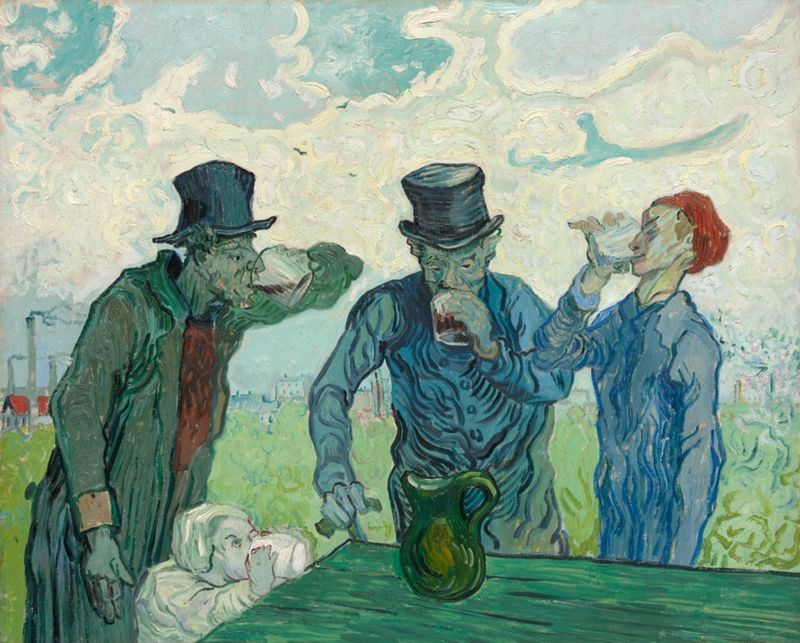 The Drinkers
1890 · Art Institute of Chicago
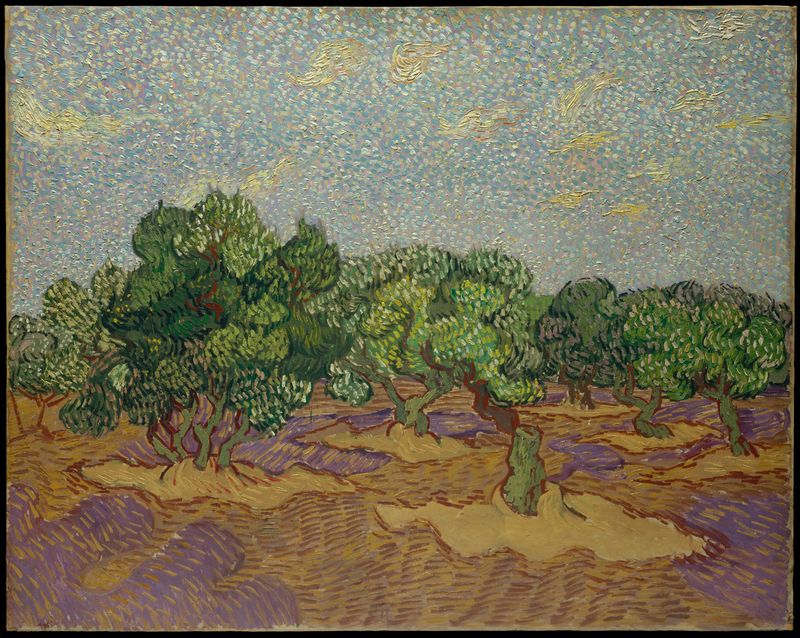 Olive Trees
1853 · The Metropolitan Museum of Art
Beyond van Gogh and Expressionism: works from the same years, and from the other movements Terrace and Observation Deck at the Moulin de Blute-Fin, Montmartre belongs to.
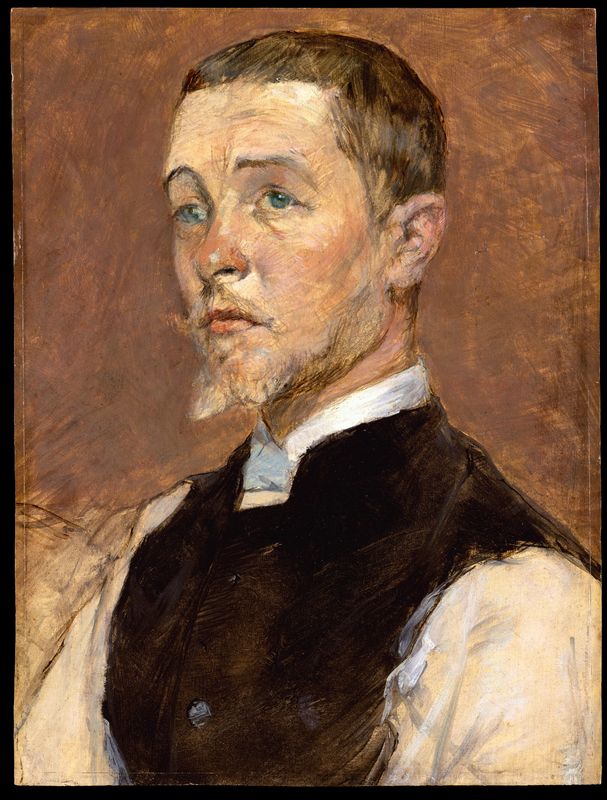 Same movement · Post-Impressionism
Albert (René) Grenier (1858–1925)
Henri de Toulouse-Lautrec · 1887 · The Metropolitan Museum of Art
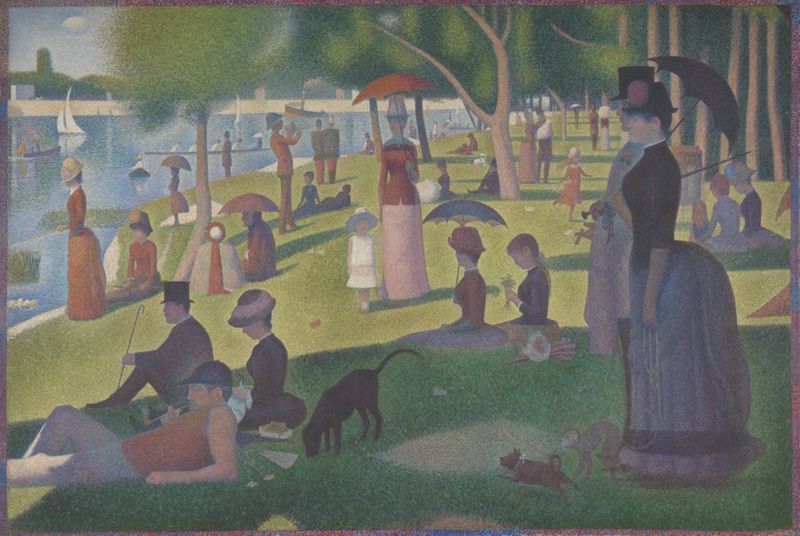 Same era · 1870s–1900s
A Sunday on La Grande Jatte — 1884
Okada Saburosuke · 1884 · Art Institute of Chicago
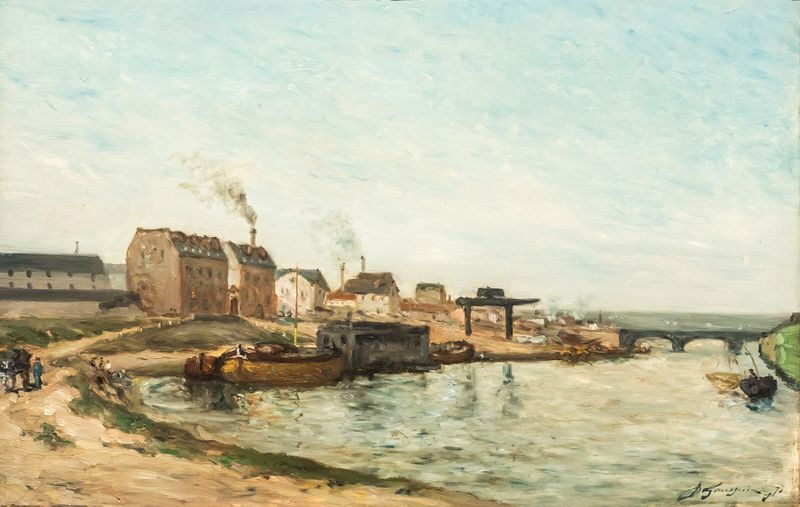 Same movement · Post-Impressionism
The Seine at Pont de Grenelle
Paul Gauguin · 1875 · Wallraf–Richartz Museum
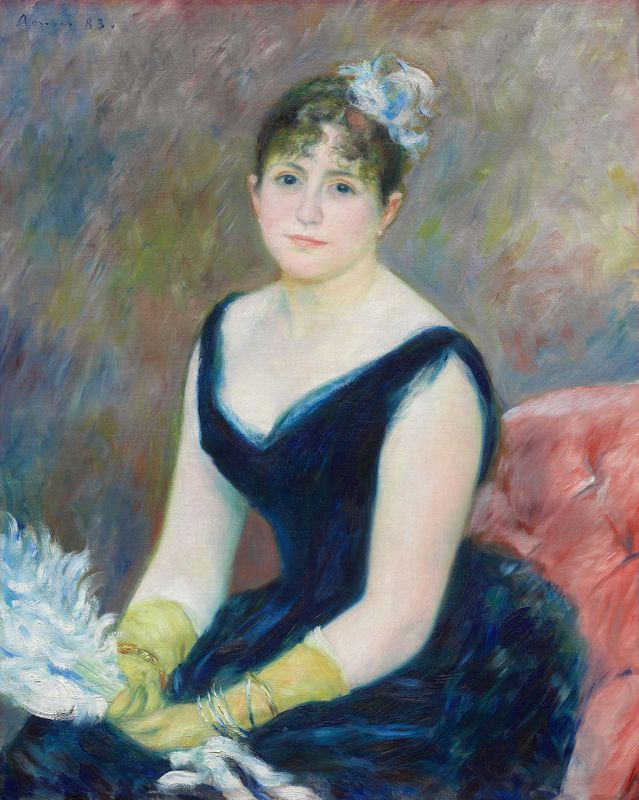 Same era · 1870s–1900s
Madame Léon Clapisson
Léon-Victor Dupré · 1883 · Art Institute of Chicago
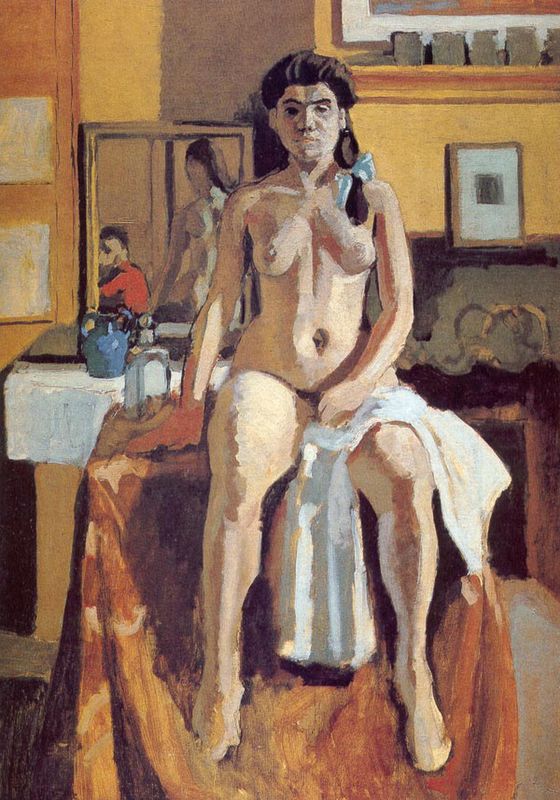 Same movement · Post-Impressionism
Carmelina
Henri Matisse · 1903 · Museum of Fine Arts Boston
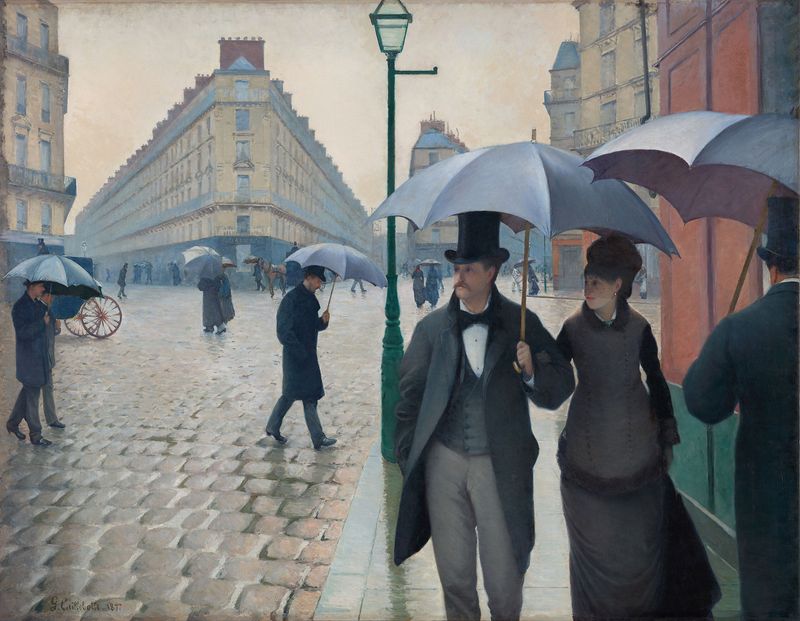 Same era · 1870s–1900s
Paris Street; Rainy Day
Kawabata Gyokushō · 1877 · Art Institute of Chicago
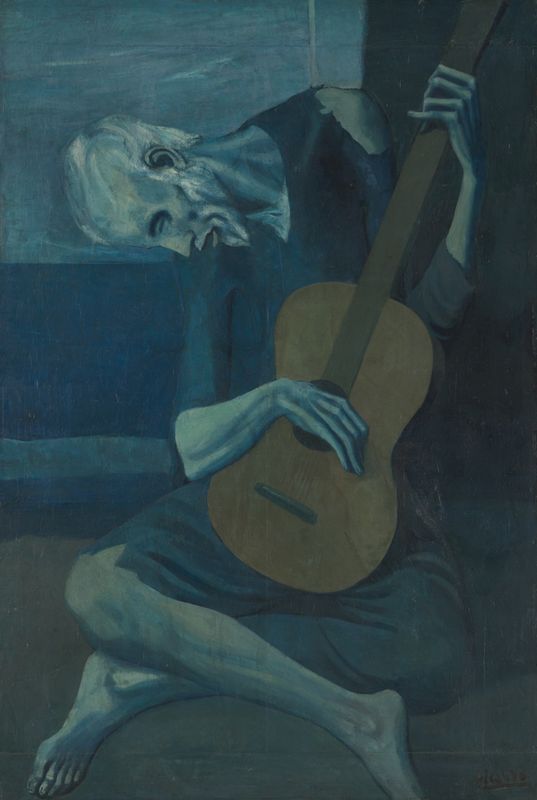 Same movement · Post-Impressionism
The Old Guitarist
Pablo Picasso · 1903 · Art Institute of Chicago
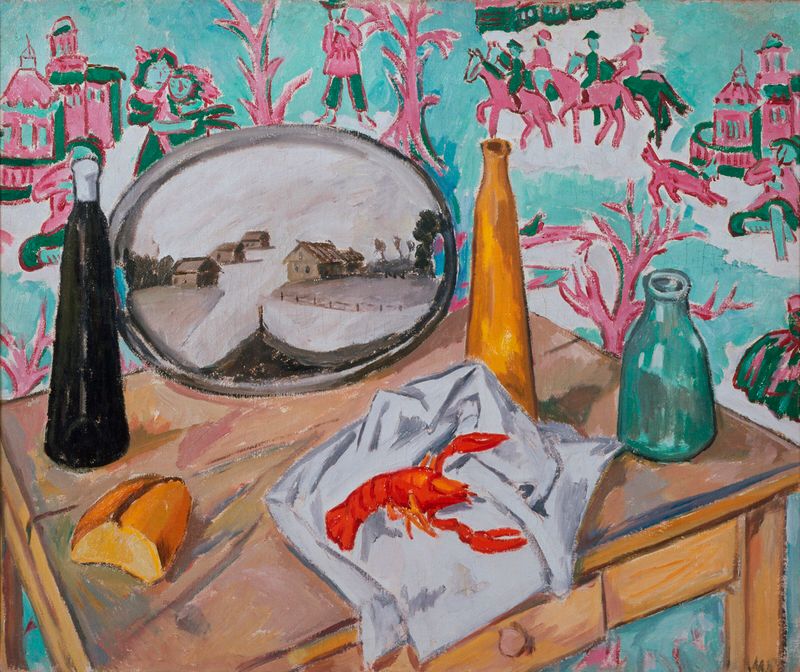 Same era · 1870s–1900s
Still Life with Crayfish
Mikhail Larionov · 1900 · Museum Ludwig
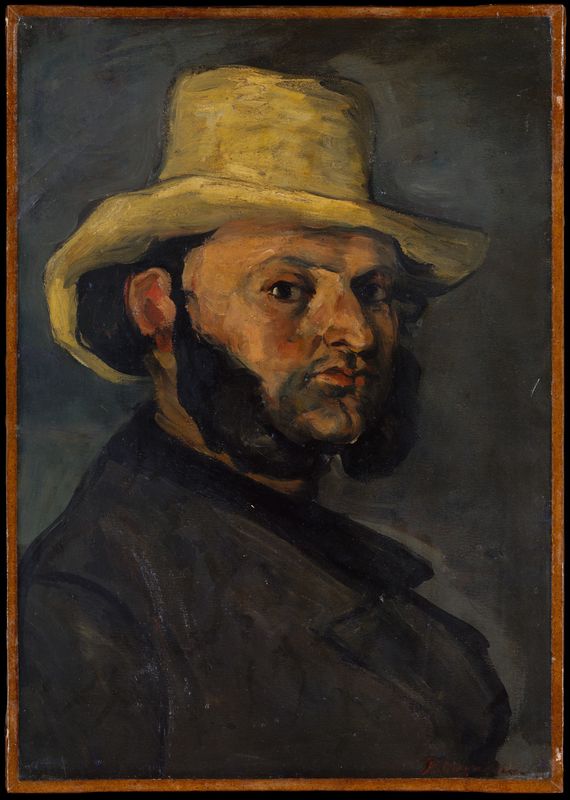 Same movement · Post-Impressionism
Gustave Boyer (b. 1840) in a Straw Hat
Paul Cézanne · 1870 · The Metropolitan Museum of Art
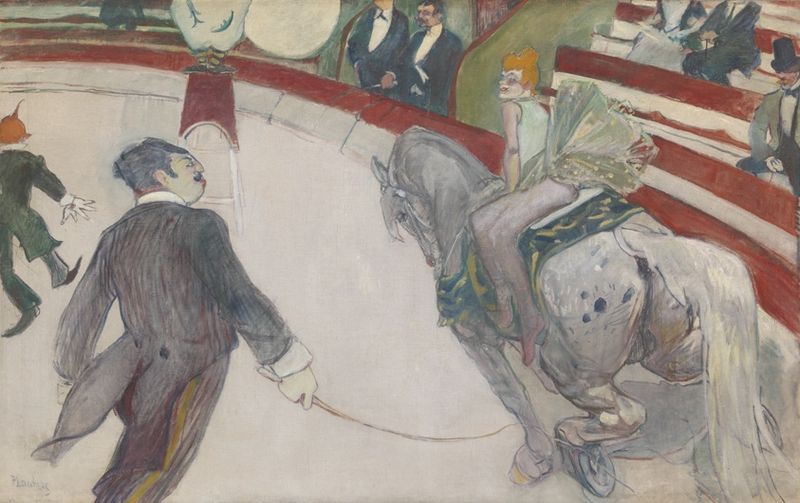 Same era · 1870s–1900s
Equestrienne (At the Cirque Fernando)
Henri de Toulouse-Lautrec · 1887 · Art Institute of Chicago
 Same movement · Post-Impressionism
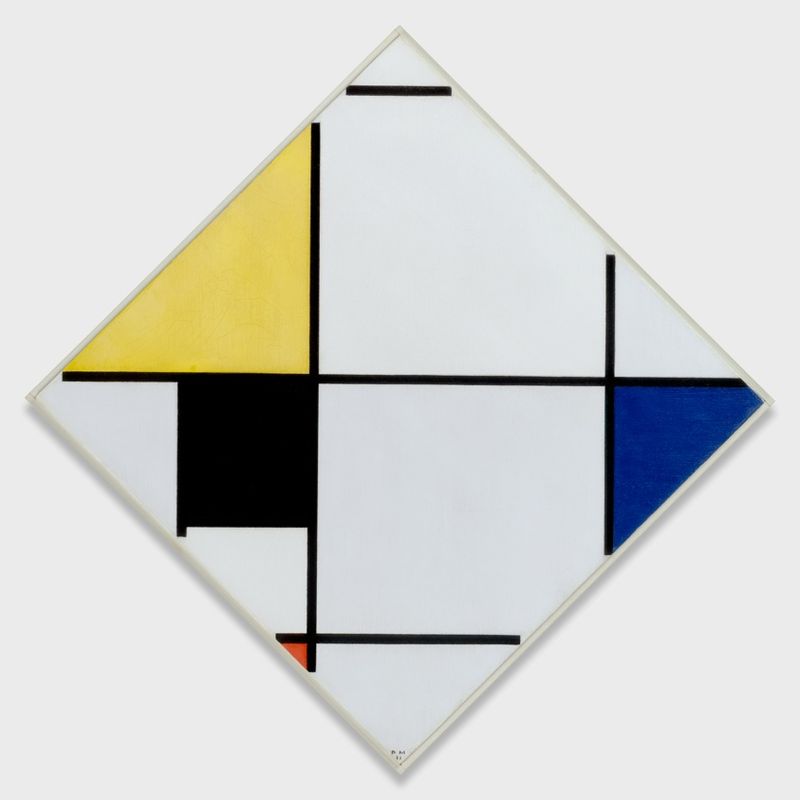
Lozenge Composition with Yellow, Black, Blue, Red, and Gray
Piet Mondrian · 1921 · Art Institute of Chicago
 Same era · 1870s–1900s
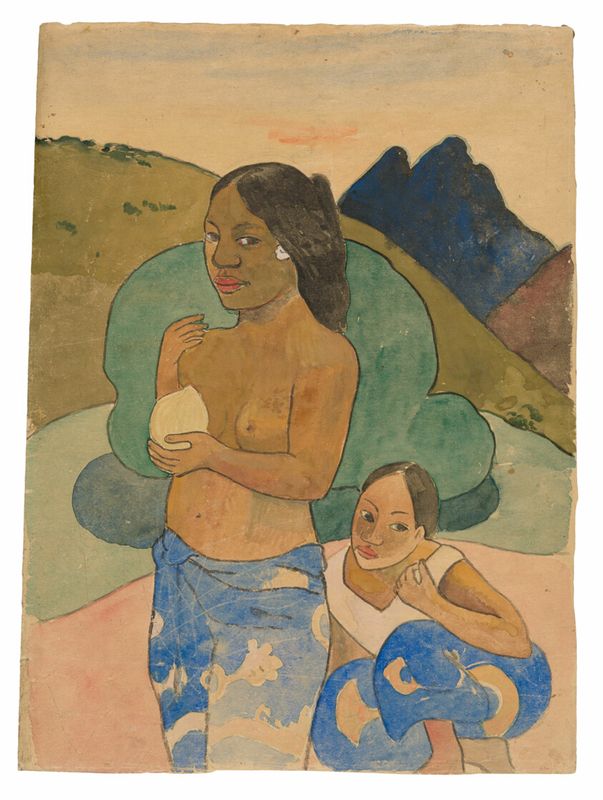
Two Tahitian Women in a Landscape
Paul Gauguin · 1887 · Art Institute of Chicago
 Same era · 1870s–1900s
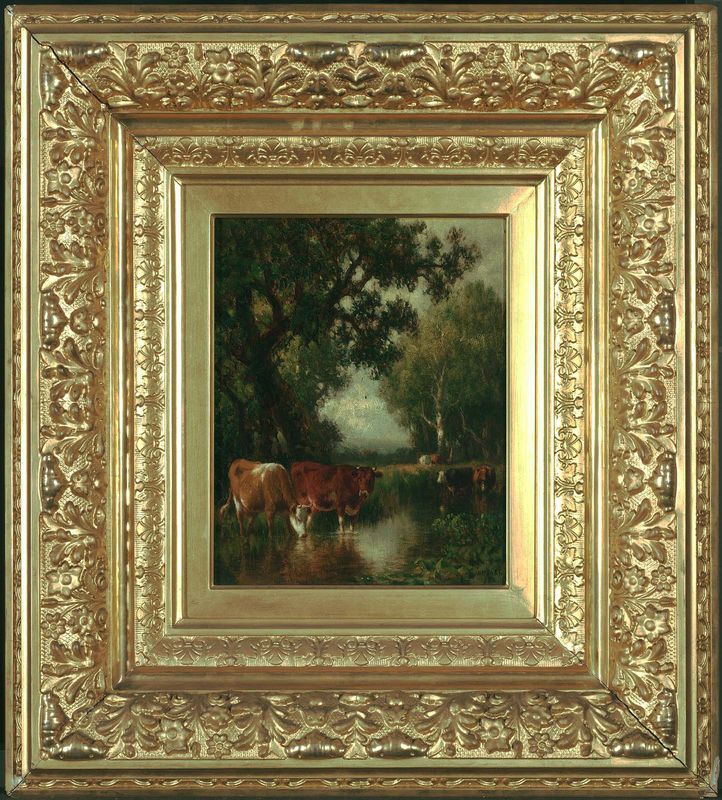
Cows Drinking at a Pool
William Hart · 1886 · Museum of Fine Arts Boston
 Same era · 1870s–1900s
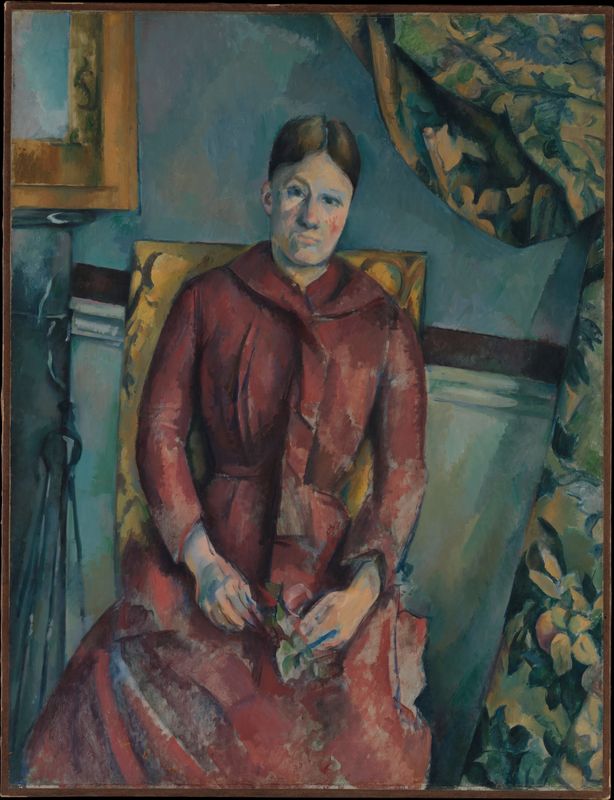
Madame Cézanne (Hortense Fiquet, 1850–1922) in a Red Dress
Paul Cézanne · 1888 · The Metropolitan Museum of Art
 Same era · 1870s–1900s
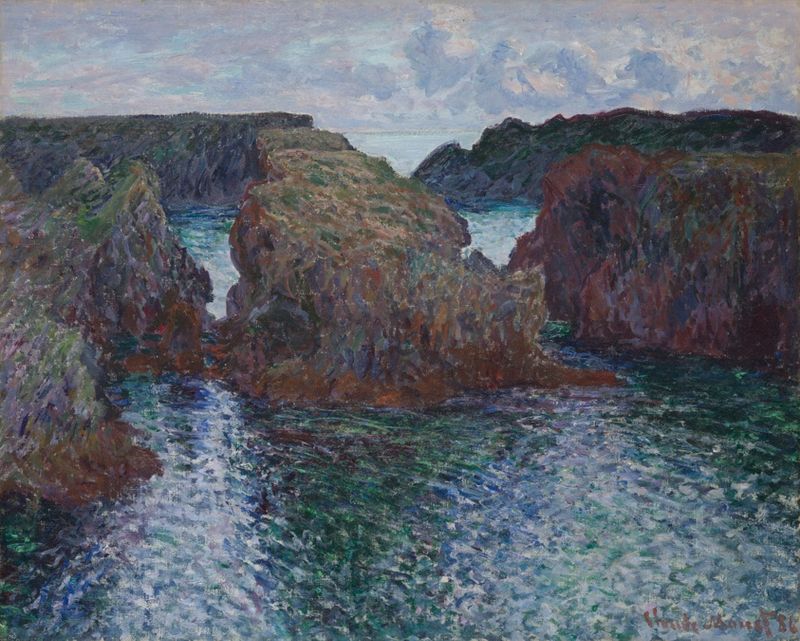
Rocks at Port-Goulphar, Belle-Île
Claude Monet · 1886 · Art Institute of Chicago
 Same era · 1870s–1900s
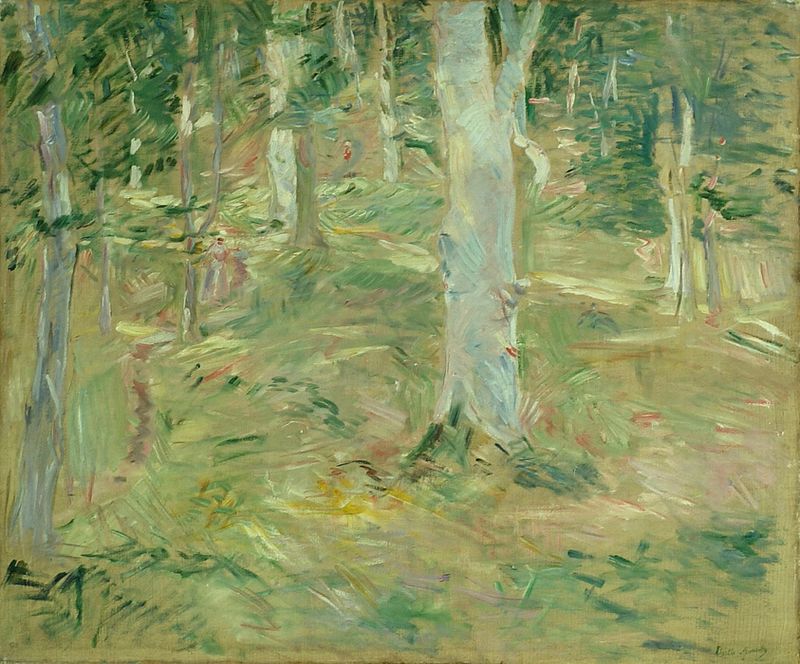
Forêt de Compiègne
Berthe Morisot · 1885 · Art Institute of Chicago
 Same era · 1870s–1900s
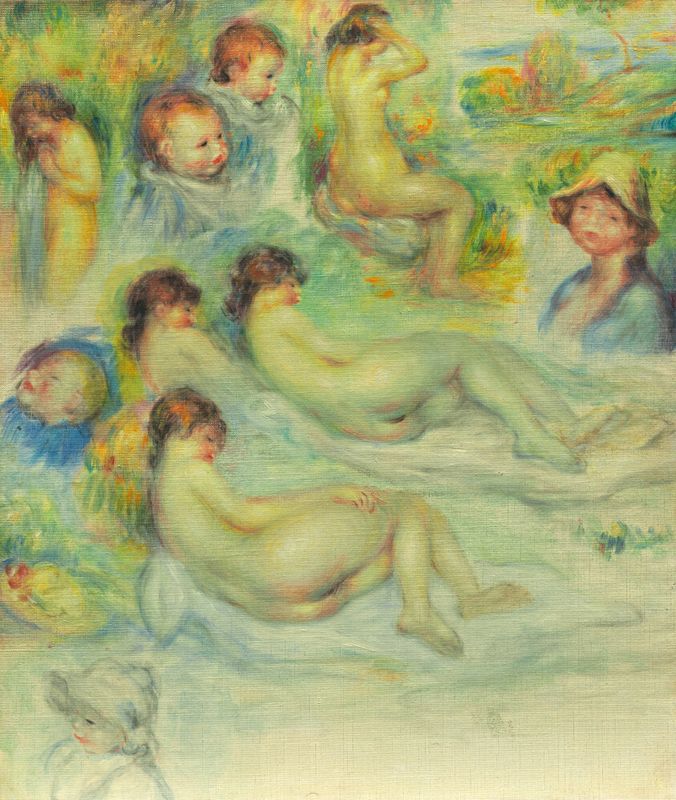
Studies of Pierre Renoir; His Mother, Aline Charigot; Nudes; and Landscape
Pierre-Auguste Renoir · 1885 · Art Institute of Chicago
 Same era · 1870s–1900s
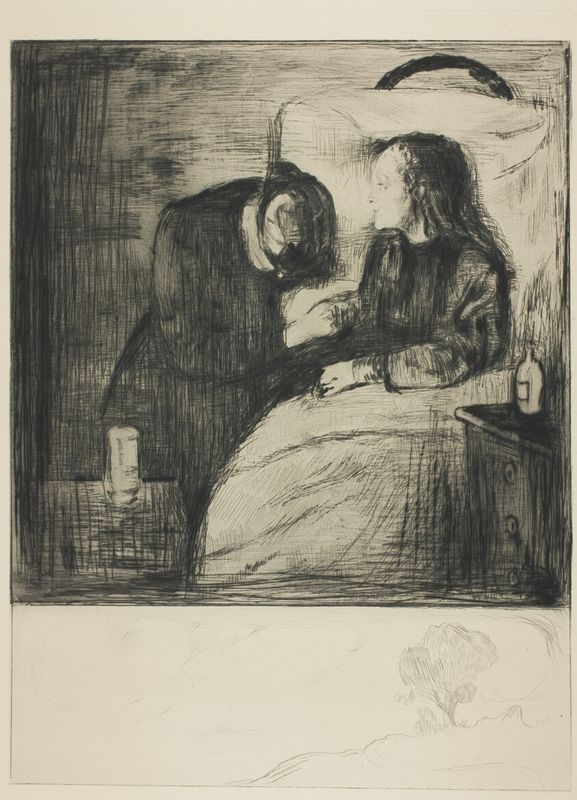
The Sick Child
Edvard Munch · 1885 · National Museum of Art, Architecture and Design