01
The central drinker
Look at the man in the middle tipping his glass. His blue coat swirls in dark lines, and the dark red drink sits right at his lips.
1 of 4 on the painting
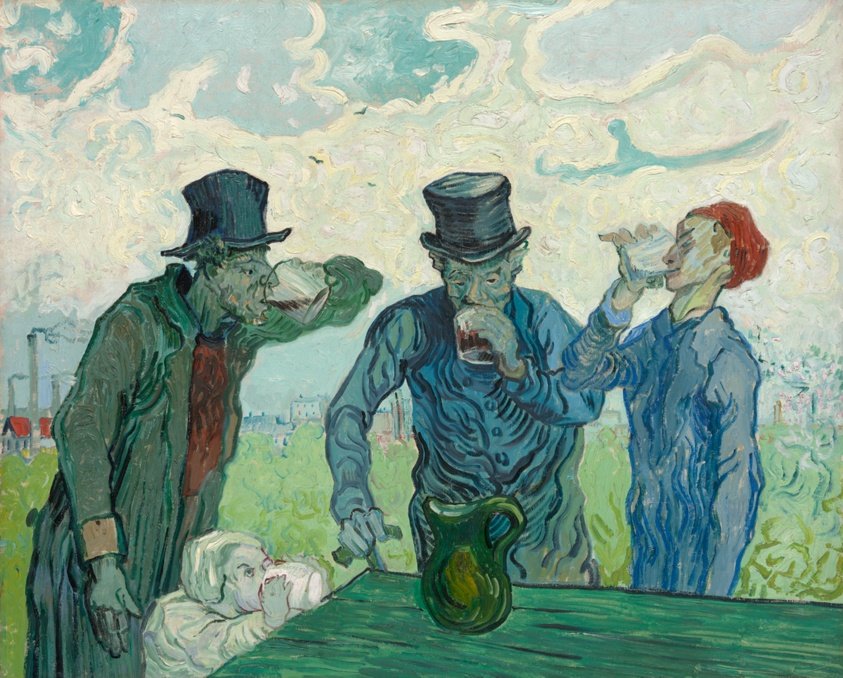
“Step into a bustling tavern scene, rendered with explosive color and brushwork. This painting offers a glimpse into ordinary life, heightened by an intense, almost feverish energy.”
In a flurry of vibrant, almost aggressive brushstrokes, a group of figures gathers around a table, their forms indistinct yet powerfully present. This painting, created in the final months of the artist's life, captures a scene of everyday life, transformed by an intense emotionality. The composition is packed with movement, from the swirling lines of the floorboards to the agitated contours of the drinkers. Notice how the figures, though central, seem almost consumed by the energy of their surroundings. The palette, dominated by earthy tones punctuated with unexpected bursts of yellow and red, amplifies the raw, unpolished atmosphere of the setting, drawing the viewer into this intimate, yet turbulent, gathering. This work exemplifies the Post-Impressionist focus on expressive color and subjective interpretation over objective reality.
Five details hide in plain sight. Pick one and we’ll show you exactly where to look.
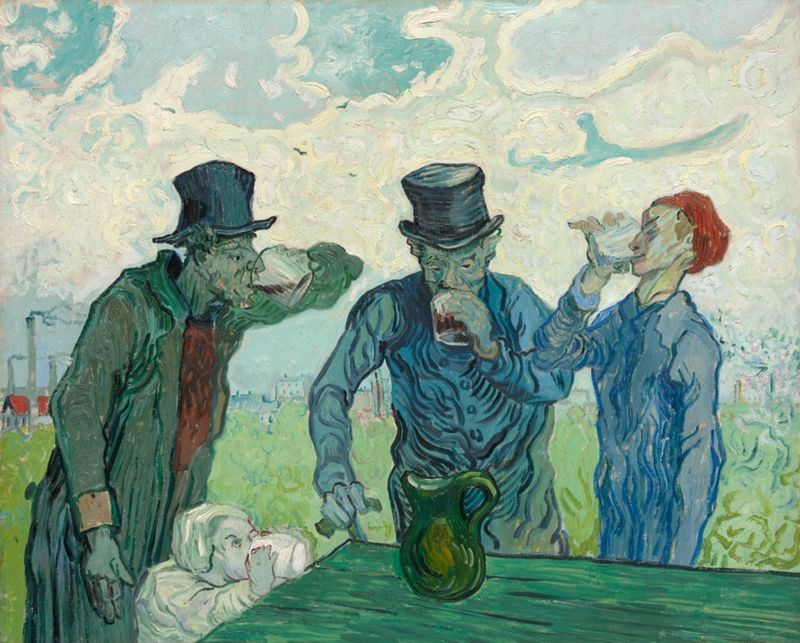
Look at the man in the middle tipping his glass. His blue coat swirls in dark lines, and the dark red drink sits right at his lips.
Low at the lower left, a pale baby in white holds a cup to its mouth. It is easy to miss, and it adds an unexpected, tender note to the drinking scene.
In the sky, thick cream and pale blue strokes curl into loops and ribbons. The paint stands up in ridges, so the clouds feel restless and almost alive.
At the far left edge, small factory chimneys and red roofs sit in the distance behind the figures, a hint of industry on the edge of the countryside.
The figures lean in toward the table and each other, with raised arms forming a rough arc. Their tilted glasses carry your eye across the top of the group.
The full narration walks you through The Drinkers — the story behind it, the details most visitors miss, and why it matters. Free in the Art Whisper app.
Vincent van Gogh, whose vibrant brushwork and bold colors transformed landscapes and portraits, created 2,100 artworks in just over a decade.
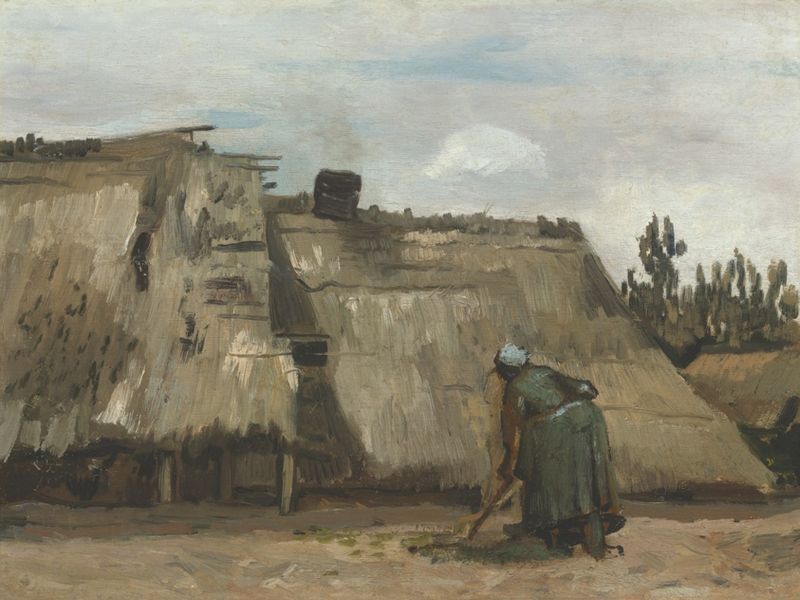 A Peasant Woman Digging in Front of Her Cottage
1880 · Art Institute of Chicago
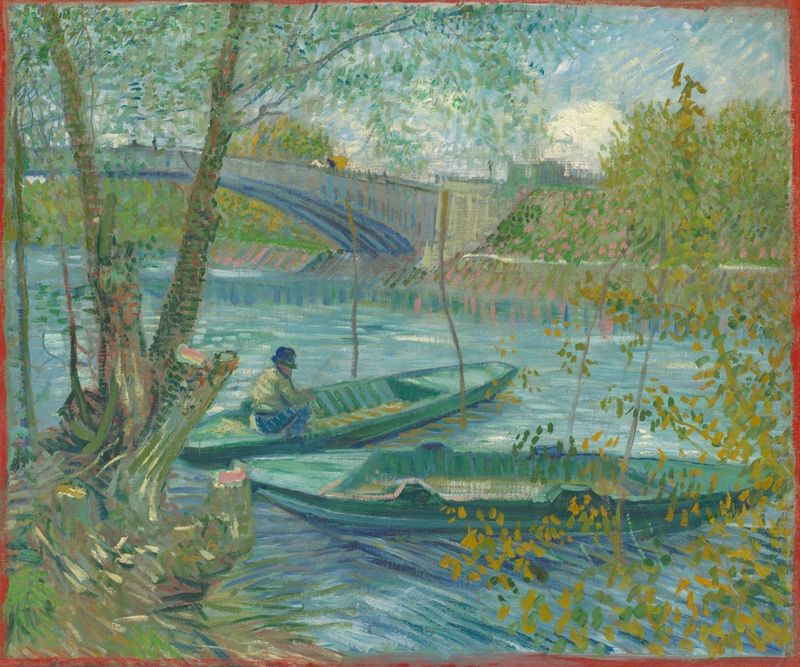 Fishing in Spring, the Pont de Clichy (Asnières)
1887 · Art Institute of Chicago
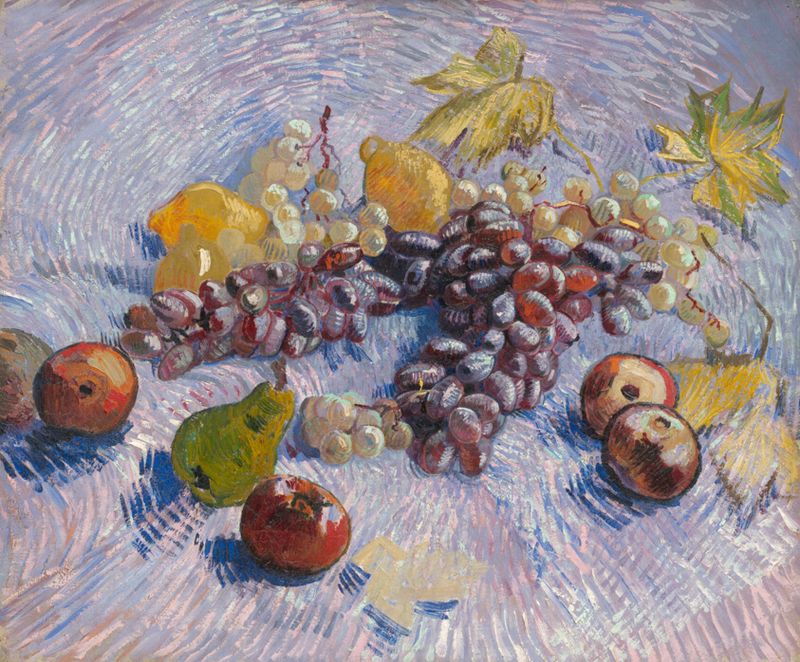 Grapes, Lemons, Pears, and Apples
1887 · Art Institute of Chicago
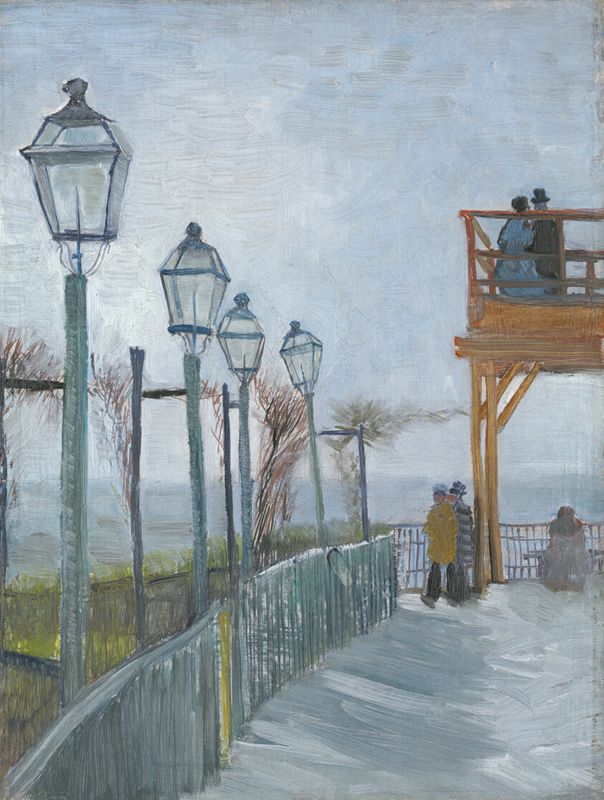 Terrace and Observation Deck at the Moulin de Blute-Fin, Montmartre
1887 · Art Institute of Chicago
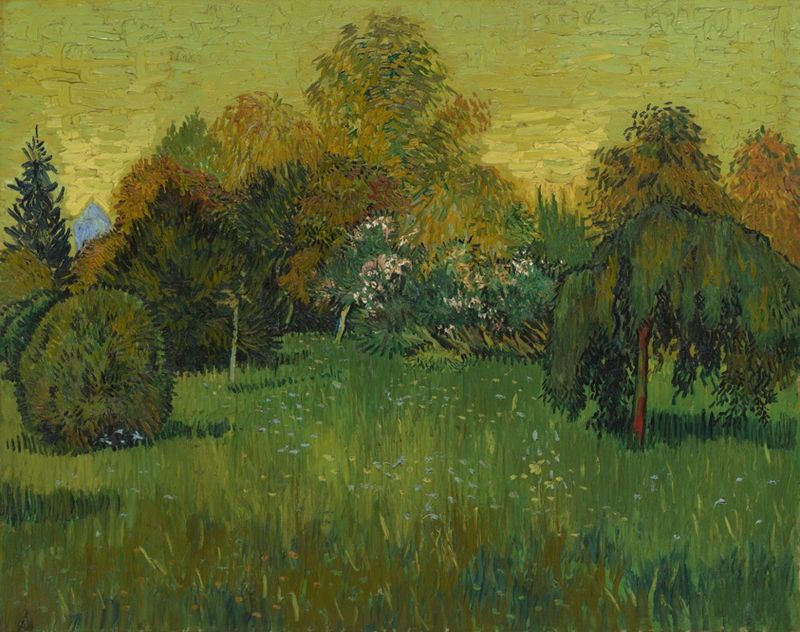 The Poet's Garden
1888 · Art Institute of Chicago
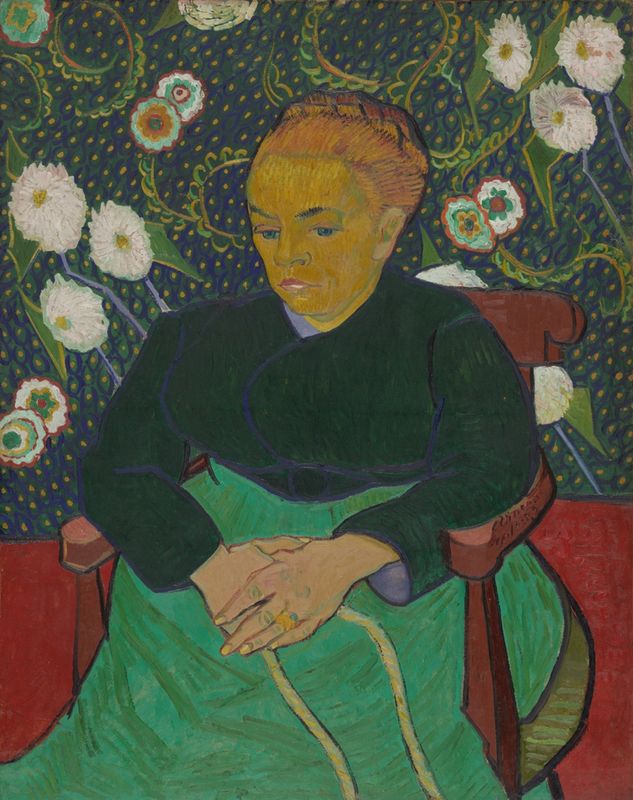 Madame Roulin Rocking the Cradle (La berceuse)
1889 · Art Institute of Chicago
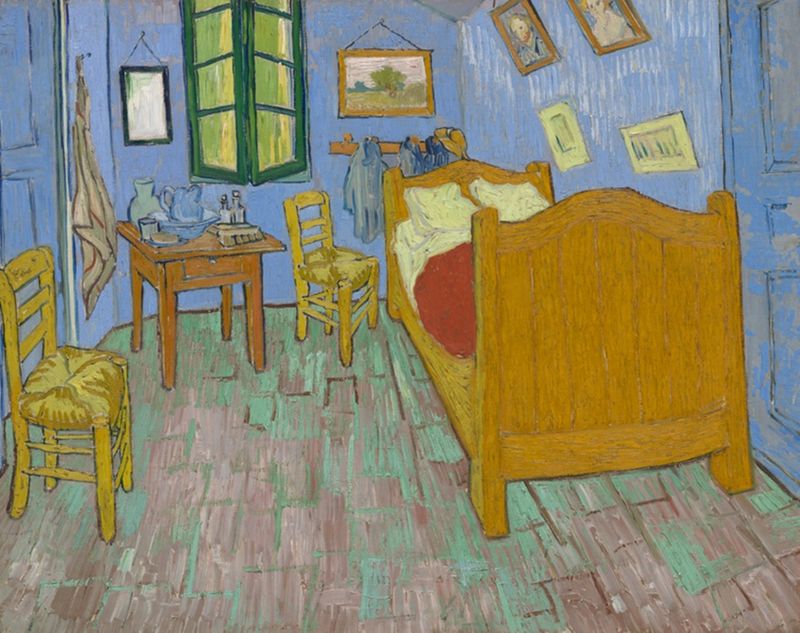 The Bedroom
1889 · Art Institute of Chicago
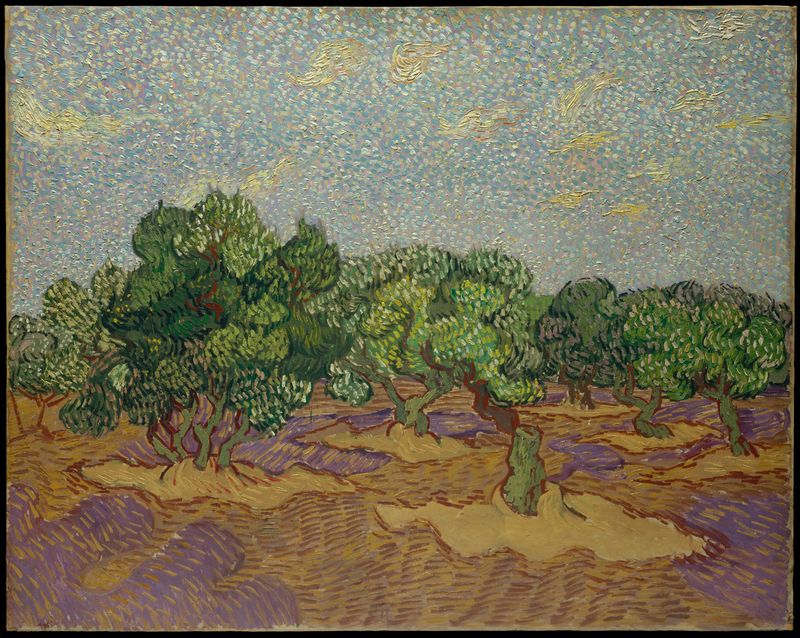 Olive Trees
1853 · The Metropolitan Museum of Art
Beyond van Gogh and Expressionism: works from the same years, and from the other movements The Drinkers belongs to.
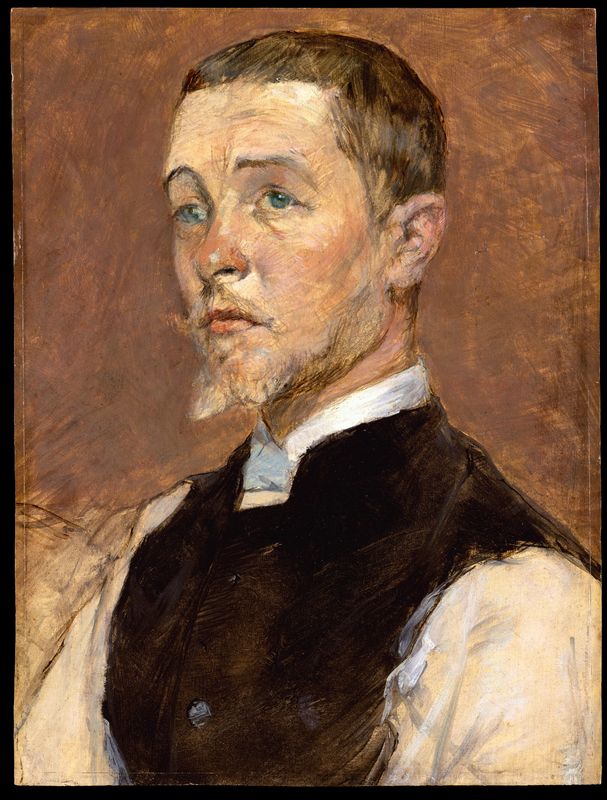 Same movement · Post-Impressionism
Albert (René) Grenier (1858–1925)
Henri de Toulouse-Lautrec · 1887 · The Metropolitan Museum of Art
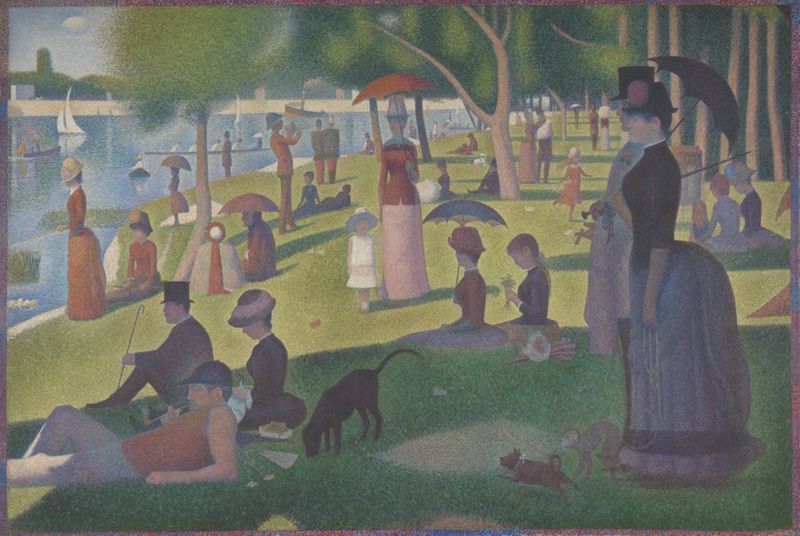 Same era · 1870s–1900s
A Sunday on La Grande Jatte — 1884
Okada Saburosuke · 1884 · Art Institute of Chicago
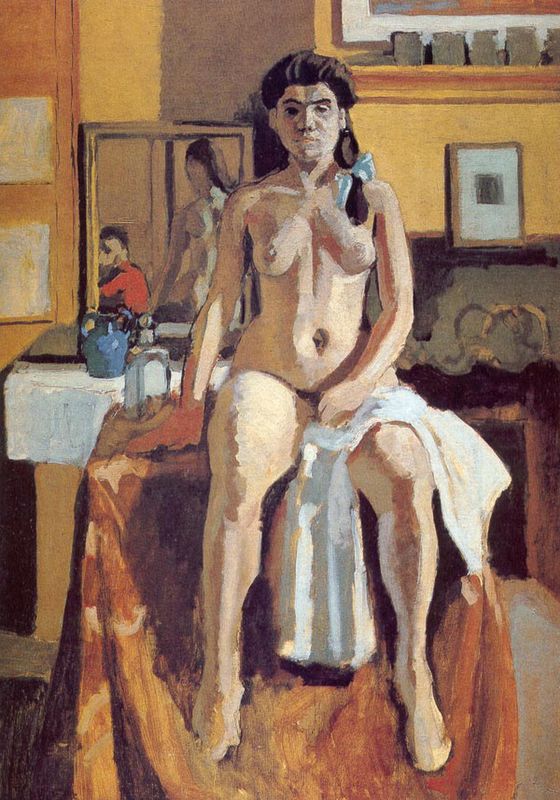 Same movement · Post-Impressionism
Carmelina
Henri Matisse · 1903 · Museum of Fine Arts Boston
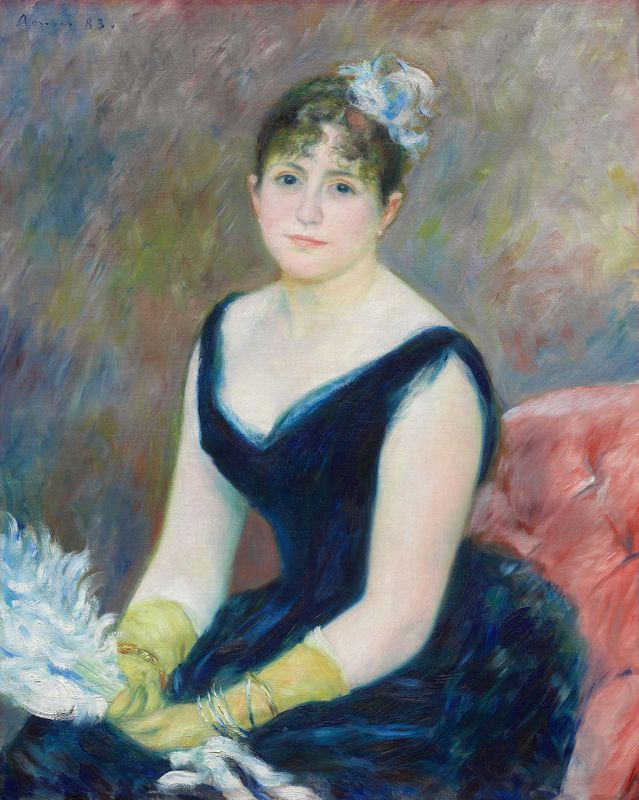 Same era · 1870s–1900s
Madame Léon Clapisson
Léon-Victor Dupré · 1883 · Art Institute of Chicago
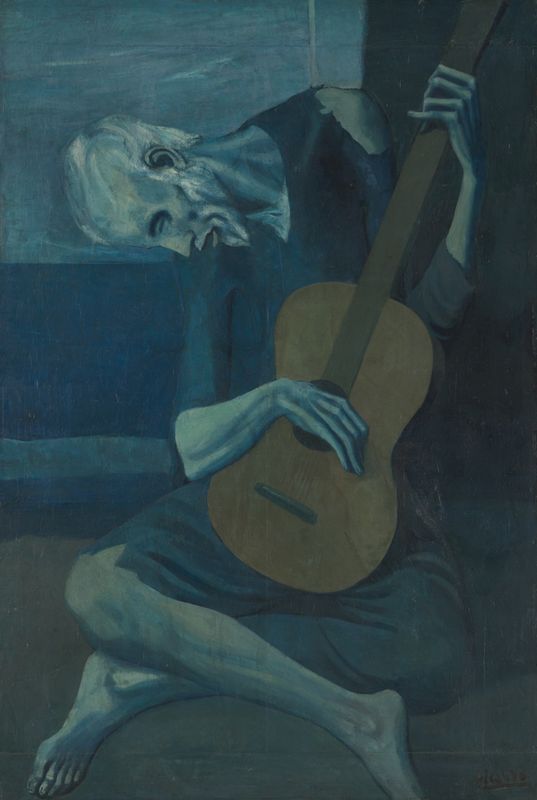 Same movement · Post-Impressionism
The Old Guitarist
Pablo Picasso · 1903 · Art Institute of Chicago
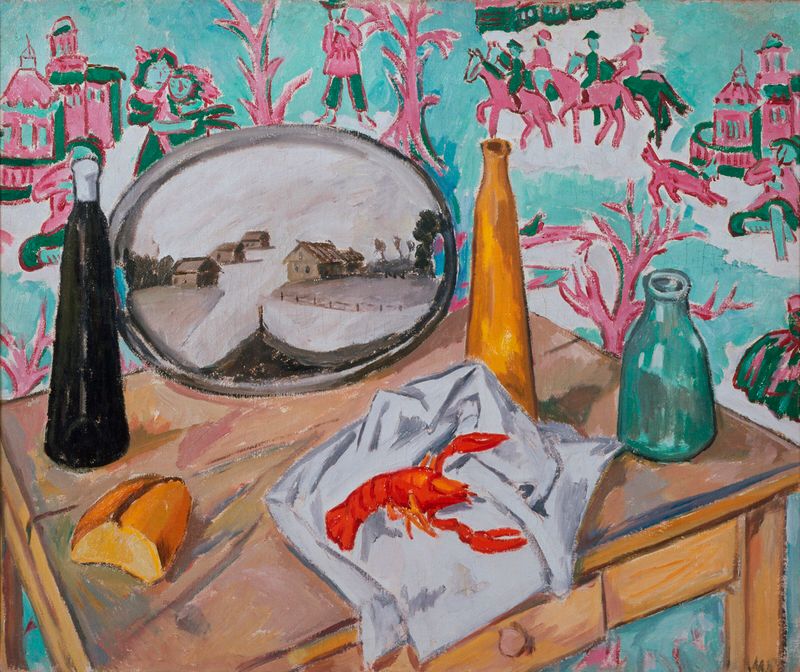 Same era · 1870s–1900s
Still Life with Crayfish
Mikhail Larionov · 1900 · Museum Ludwig
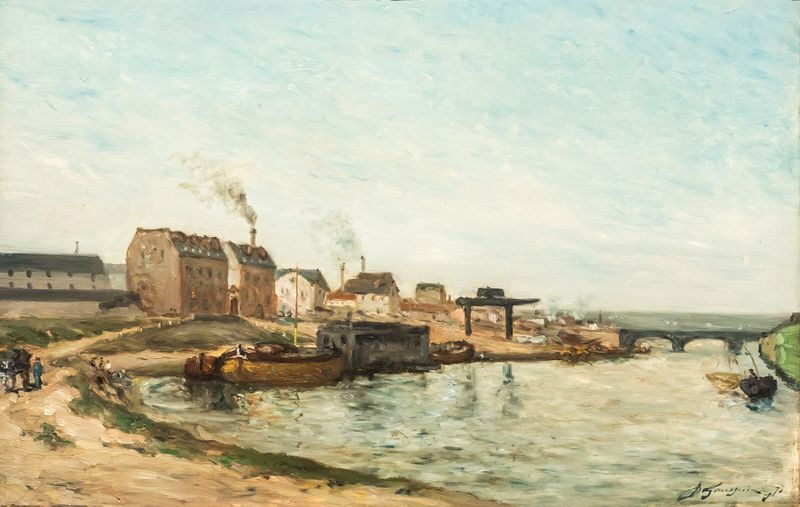 Same movement · Post-Impressionism
The Seine at Pont de Grenelle
Paul Gauguin · 1875 · Wallraf–Richartz Museum
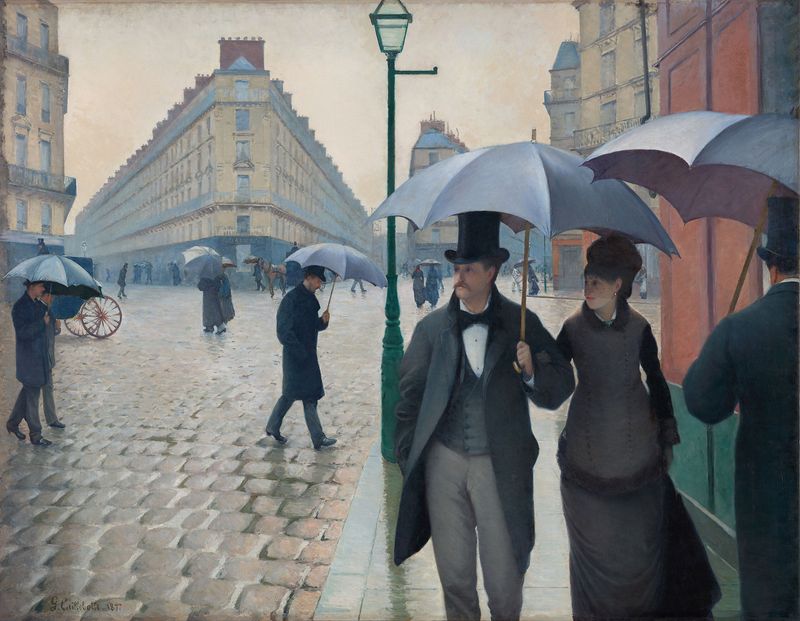 Same era · 1870s–1900s
Paris Street; Rainy Day
Kawabata Gyokushō · 1877 · Art Institute of Chicago
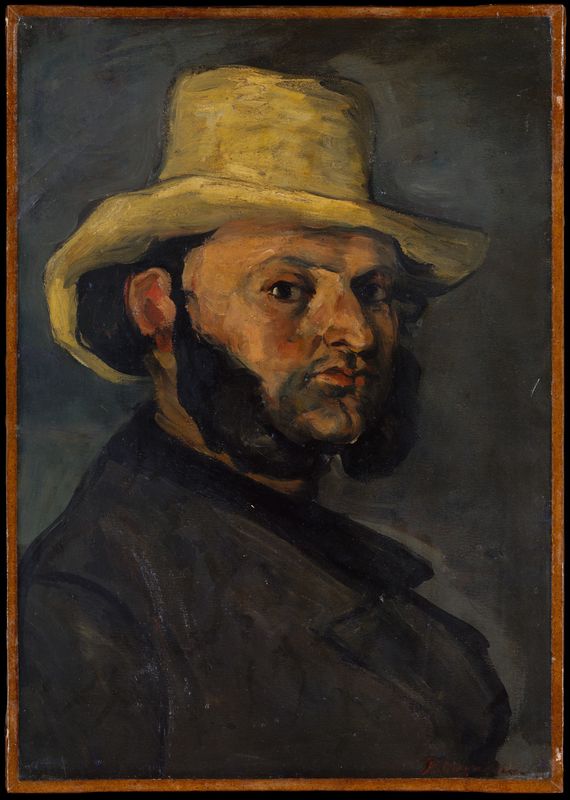 Same movement · Post-Impressionism
Gustave Boyer (b. 1840) in a Straw Hat
Paul Cézanne · 1870 · The Metropolitan Museum of Art
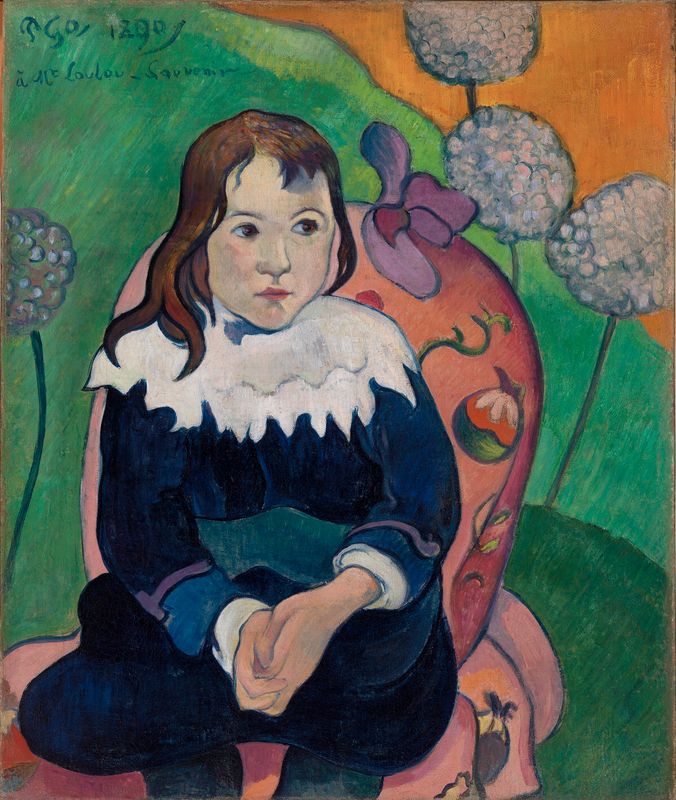 Same era · 1870s–1900s
Mr. Loulou (Louis Le Ray)
Paul Gauguin · 1890 · Barnes Foundation
 Same movement · Post-Impressionism
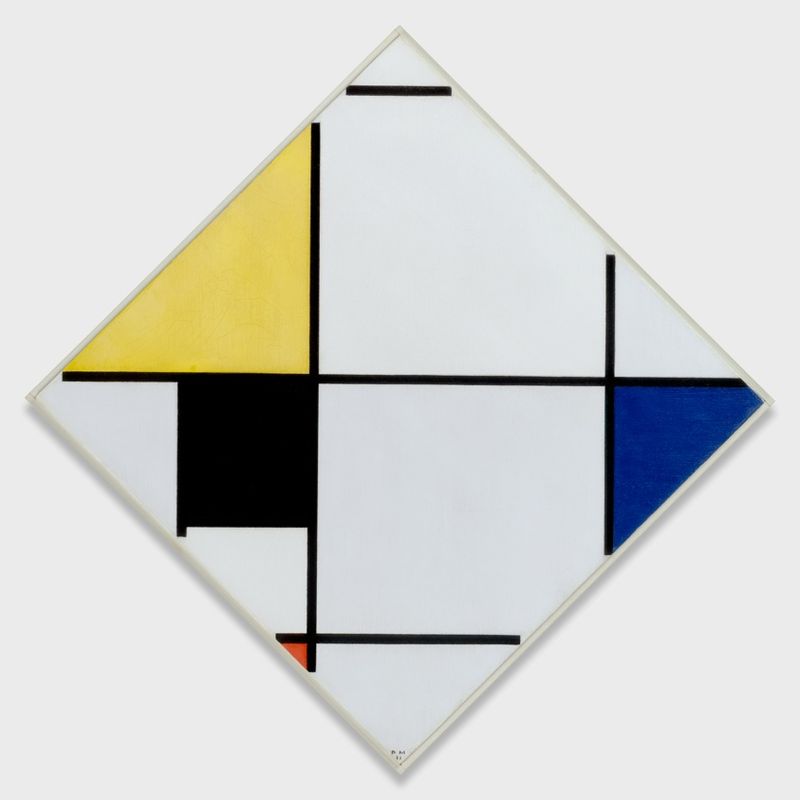
Lozenge Composition with Yellow, Black, Blue, Red, and Gray
Piet Mondrian · 1921 · Art Institute of Chicago
 Same era · 1870s–1900s
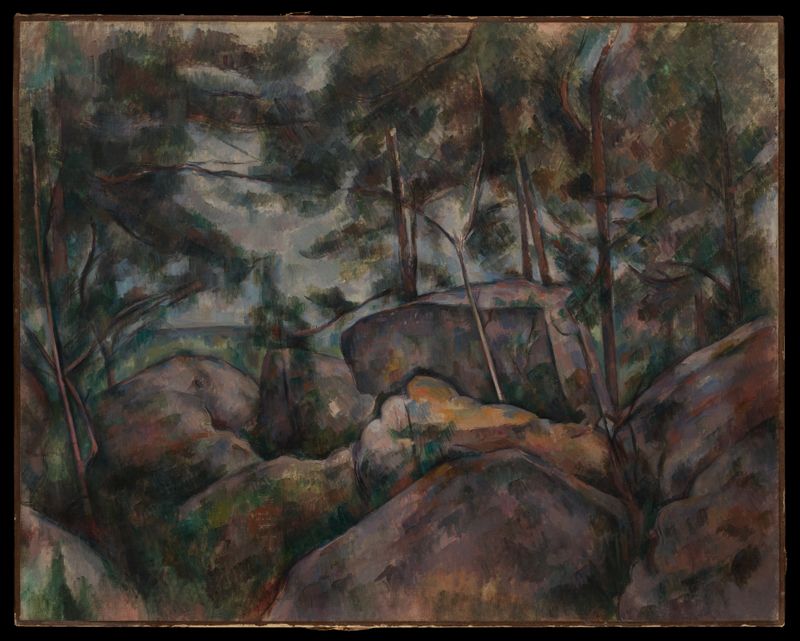
Rocks at Fontainebleau
Paul Cézanne · 1890 · The Metropolitan Museum of Art
 Same era · 1870s–1900s
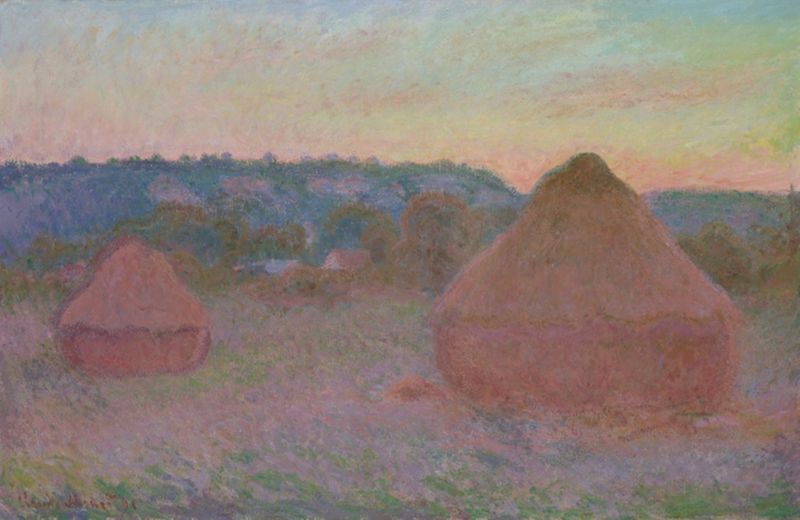
Stacks of Wheat (End of Day, Autumn)
Claude Monet · 1890 · Art Institute of Chicago
 Same era · 1870s–1900s
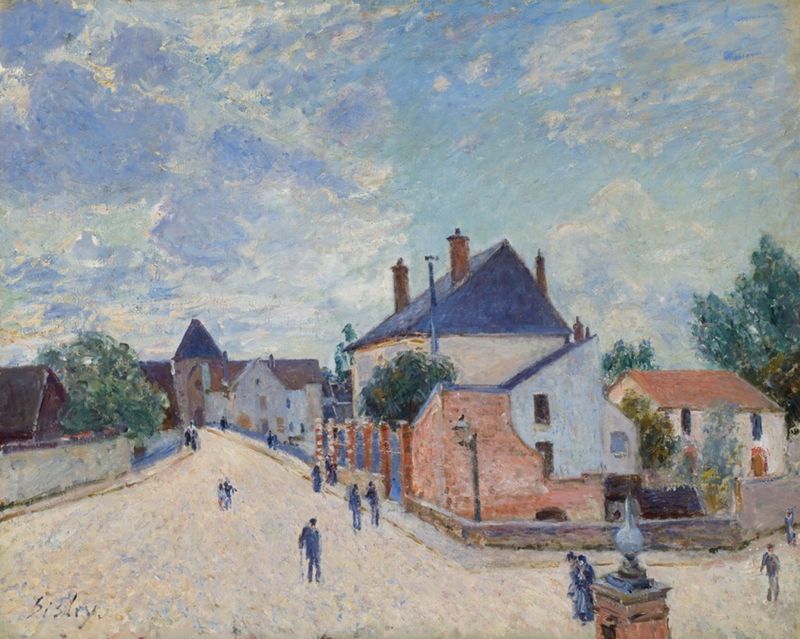
Street in Moret
Alfred Sisley · 1890 · Art Institute of Chicago
 Same era · 1870s–1900s
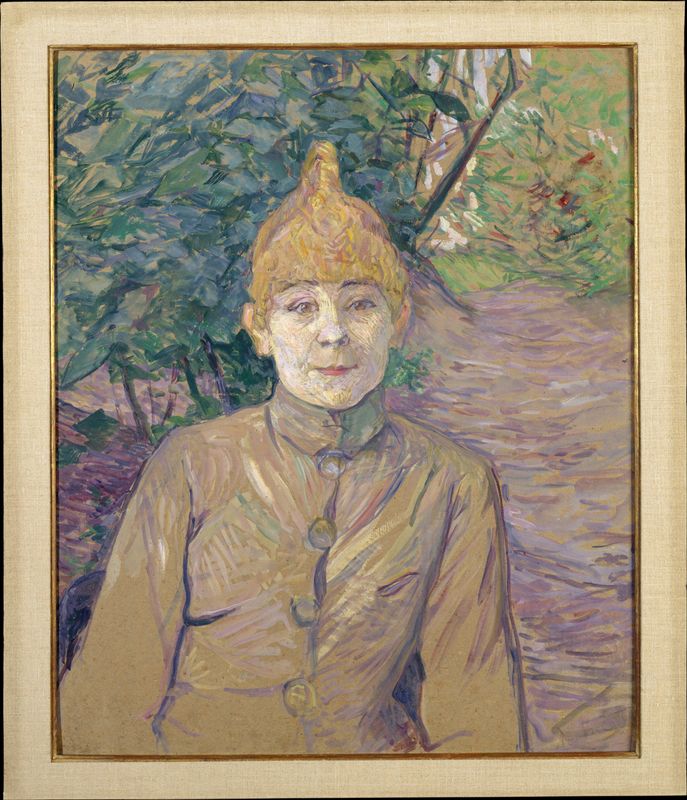
The Streetwalker
Henri de Toulouse-Lautrec · 1890 · The Metropolitan Museum of Art
 Same era · 1870s–1900s
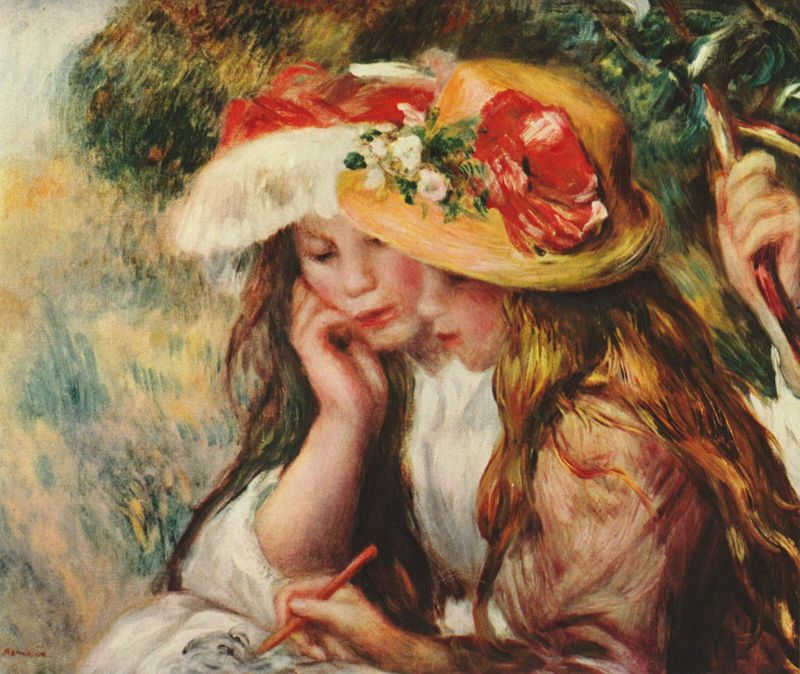
Two Girls Reading in a Garden
Pierre-Auguste Renoir · 1890
 Same era · 1870s–1900s
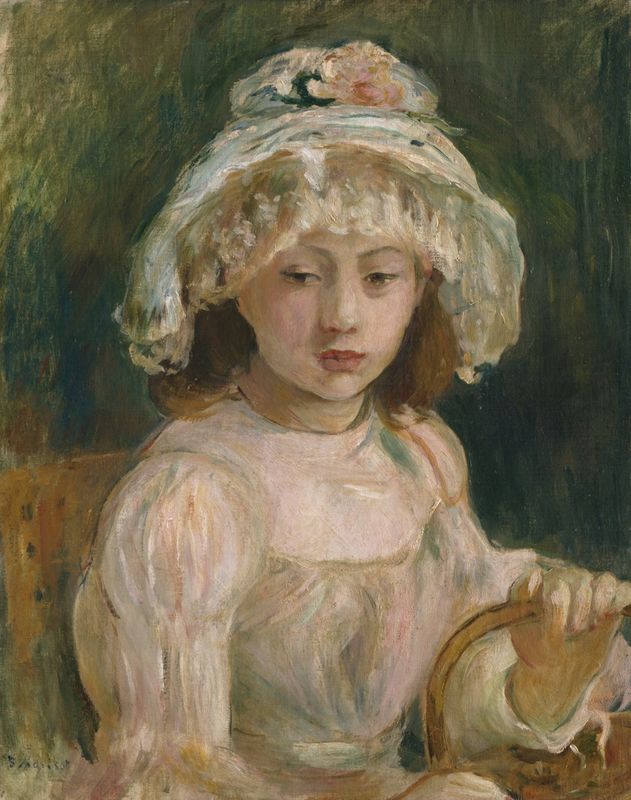
Young Girl with Hat
Berthe Morisot · 1891 · Art Institute of Chicago
 Same era · 1870s–1900s
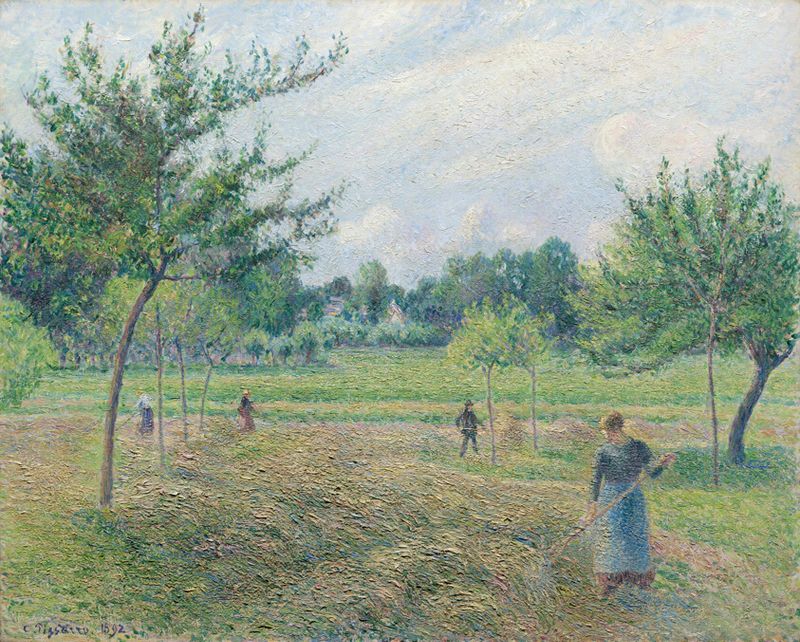
Haymaking at Éragny
Camille Pissarro · 1892 · Art Institute of Chicago