01
The red crayfish
Look at the crayfish on the white cloth. Its hot orange-red is the loudest note in the picture, so your eye lands here first.
1 of 4 on the painting
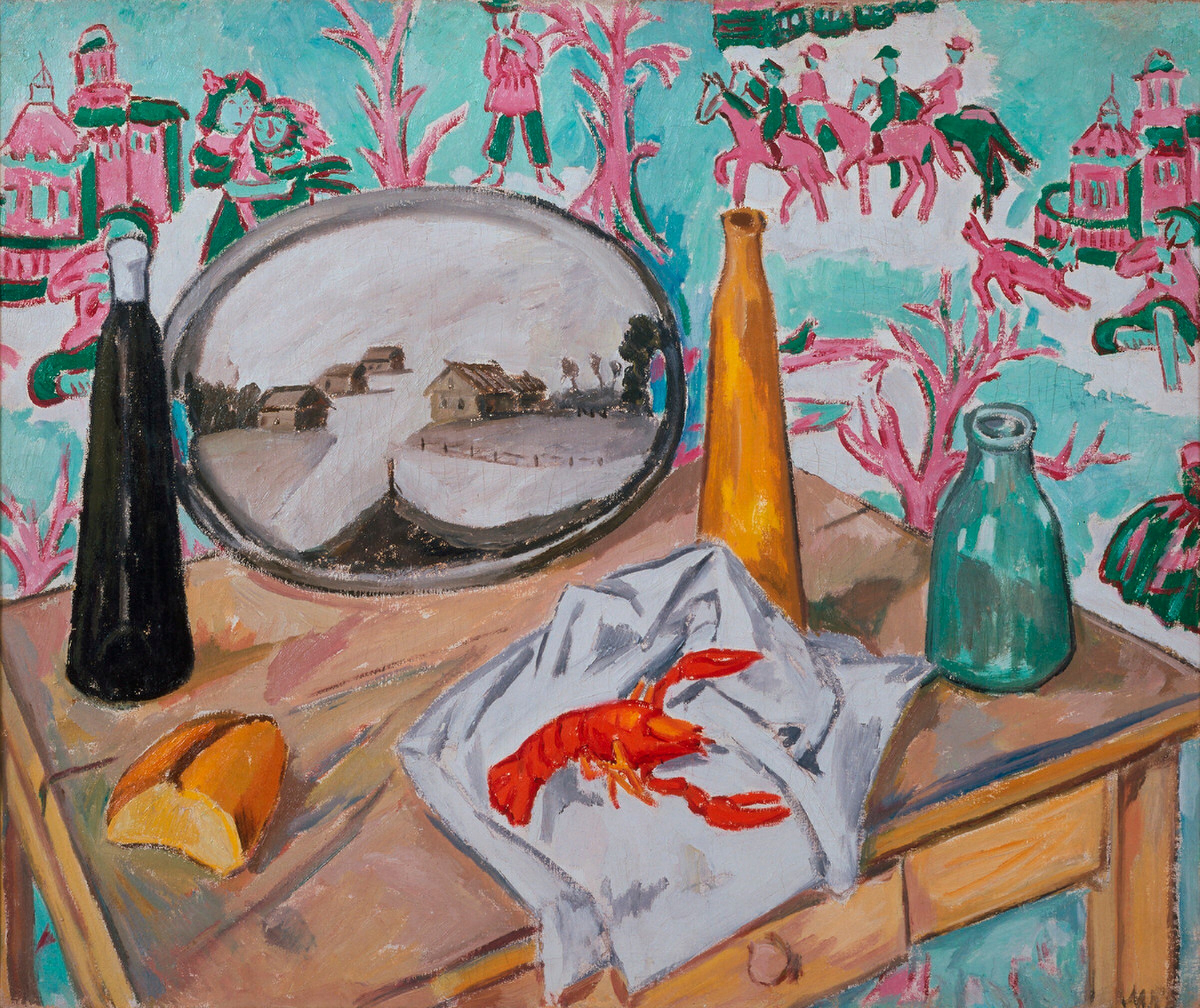
“This early work by Mikhail Larionov offers a striking, intimate look at a single crayfish, showcasing his Impressionistic leanings and a keen eye for color and texture in a humble subject.”
A lone crayfish, vibrant in its red shell, dominates the center of this still life, poised on a simple, rustic surface. The creature, rendered with a directness that almost suggests a portrait, is surrounded by an understated setting. The background is a study in muted tones, allowing the rich color and texture of the crayfish to truly pop. Painted in 1900, this work by Mikhail Larionov shows him exploring Impressionism, a style he adopted around 1902. The brushstrokes here are visible and energetic, capturing the play of light on the crayfish's segmented body and the rough texture of the table. It’s a grounded, unpretentious composition that invites a closer look at the beauty in everyday objects, a characteristic often found in still life paintings.
Five details hide in plain sight. Pick one and we’ll show you exactly where to look.
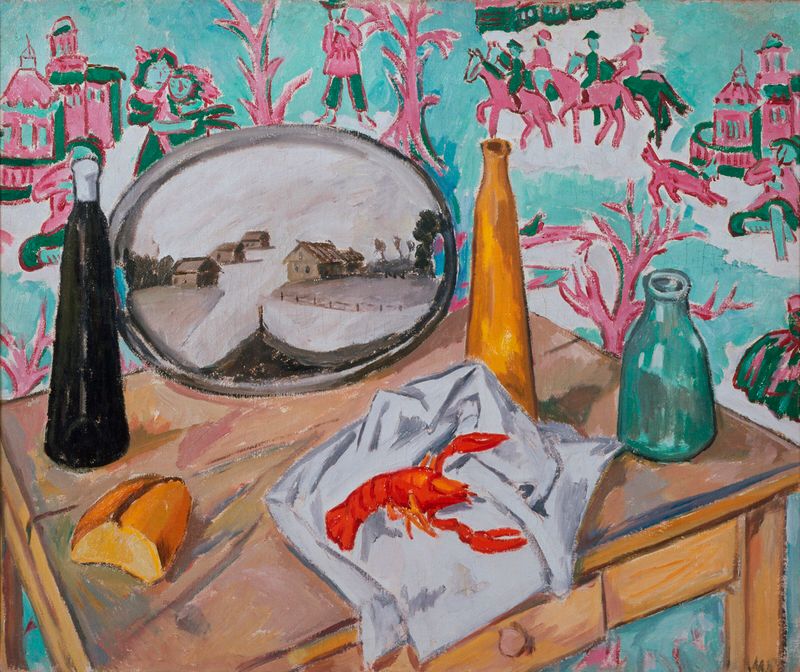
Look at the crayfish on the white cloth. Its hot orange-red is the loudest note in the picture, so your eye lands here first.
The oval tray holds a grey, wintry village with small houses, a fence and a few trees. It reads like a mirror or a window onto another place, and its quiet tones sit against the loud colors around it.
Pink and green figures, riders on horseback, buildings and coral-like plants cover the turquoise wall. The pattern looks like a folk-print fabric, and it flattens the space behind the table.
The white cloth is built from broad, quick strokes of grey, blue and white, with dark edges. The folds are suggested, not smoothed, so the brushwork stays visible.
The table tips up toward us, with its edges running at sharp angles. Objects seem to slide forward, and the space feels flat and bold, not realistic.
The full narration walks you through Still Life with Crayfish — the story behind it, the details most visitors miss, and why it matters. Free in the Art Whisper app.
Pioneered Rayonism in 1913, Russia's first abstract art movement, then designed for Diaghilev's legendary Ballets Russes.
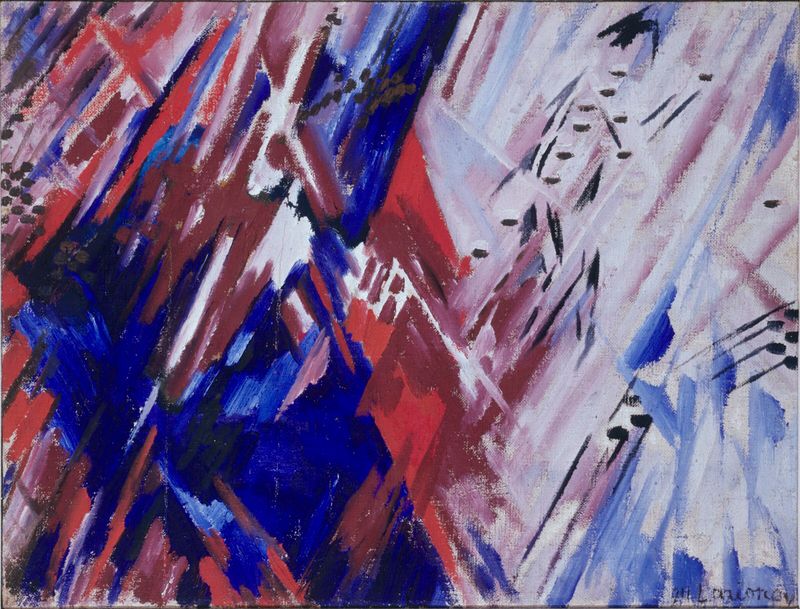 Red and Blue Rayonism (Beach)
1911 · Museum Ludwig
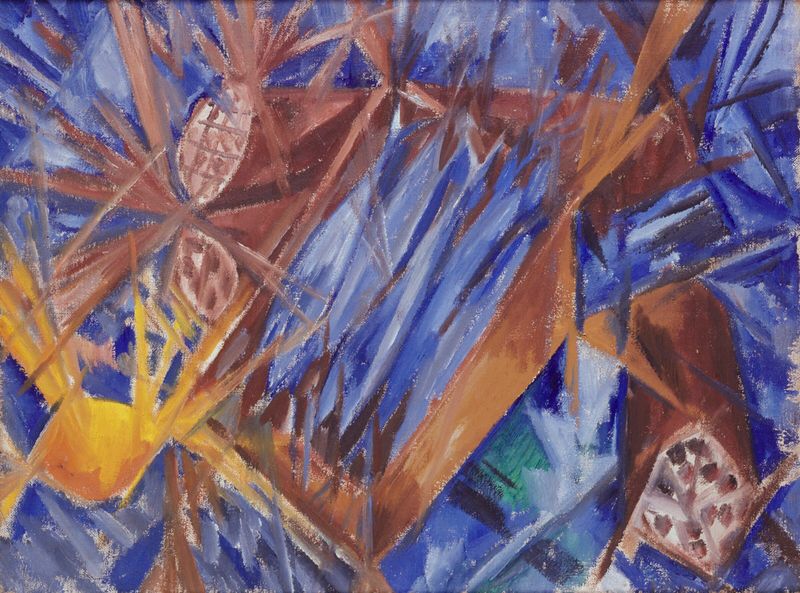 Rayonist Sausages and Mackerel
1912 · Museum Ludwig
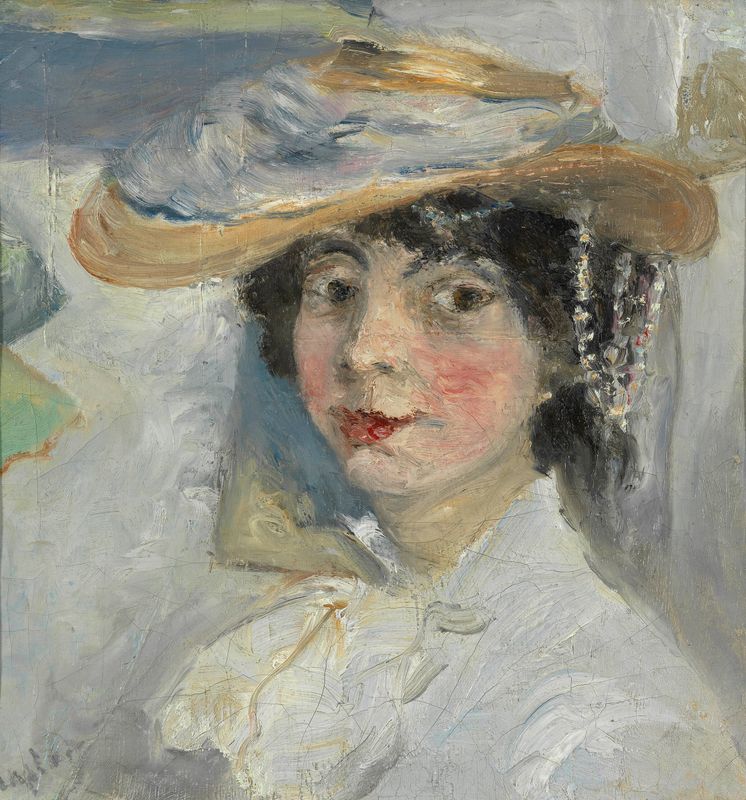 Portrait of Natalia Goncharova
1903
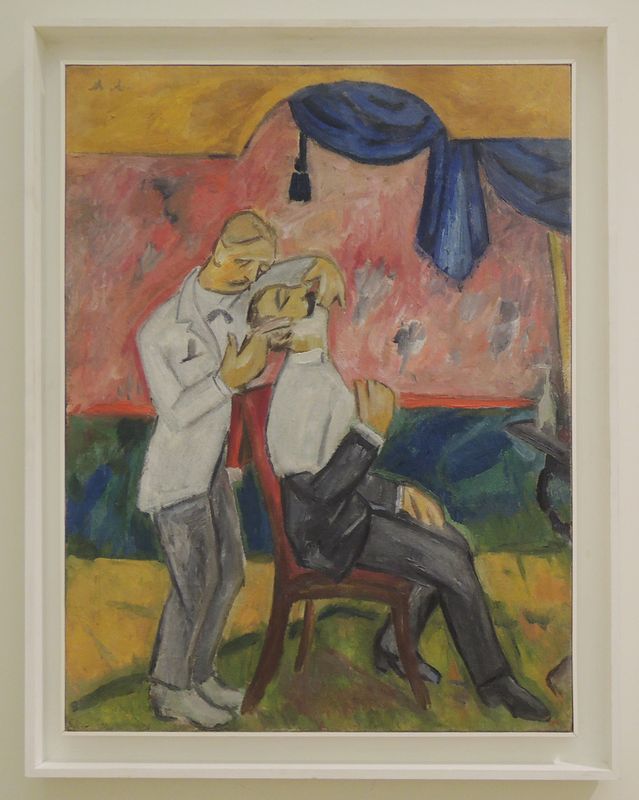 Barber
1907 · Russian Museum
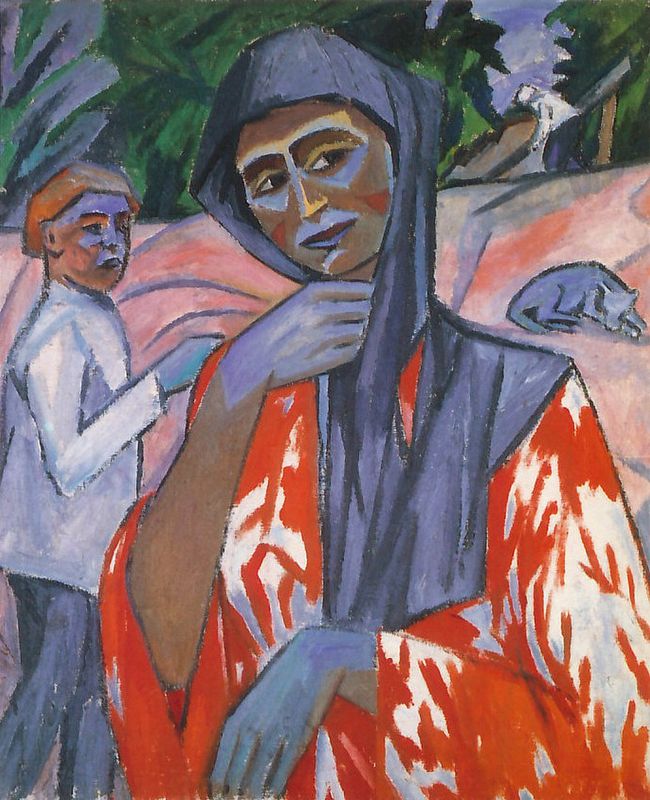 Female Passerby
1911 · Ulyanovsk Oblast Art Museum
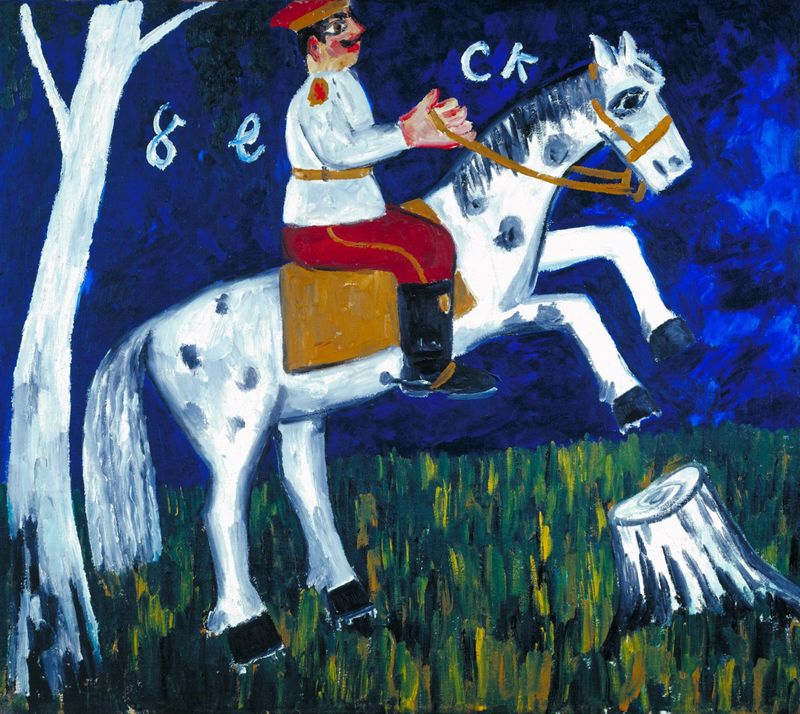 Soldier on a Horse
1911 · Tate
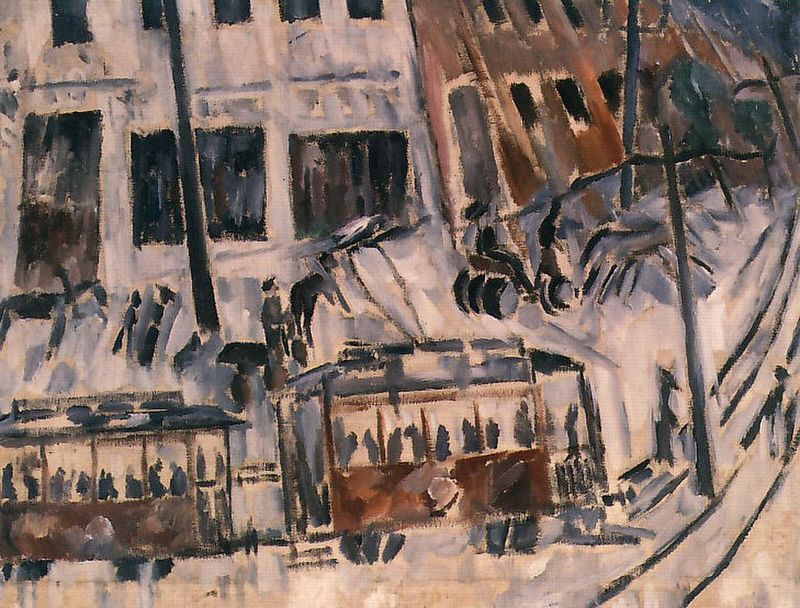 Streetcar
1911 · Bashkir State Art Museum (Nesterov Museum)
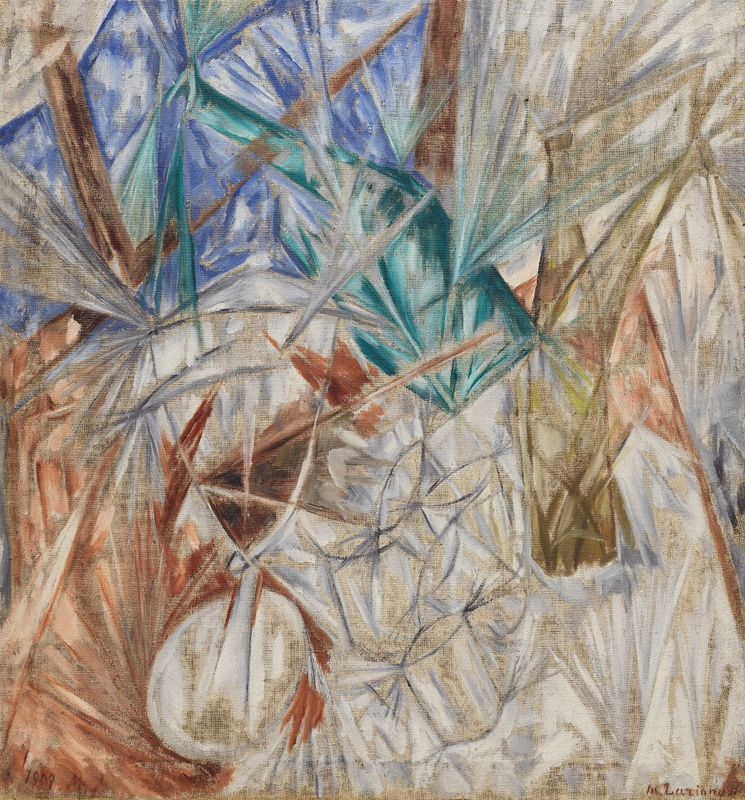 Glass
1912 · Solomon R. Guggenheim Museum
Beyond Larionov and Der Blaue Reiter: works from the same years.
 Same era · 1880s–1910s
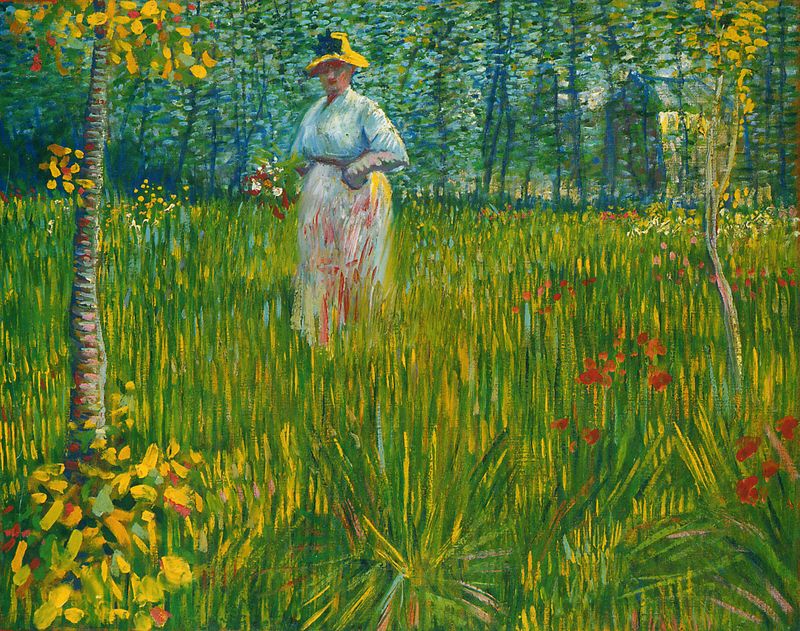
A Woman Walking in a Garden
Vincent van Gogh · 1887 · Frans Buffa & sons
 Same era · 1880s–1910s
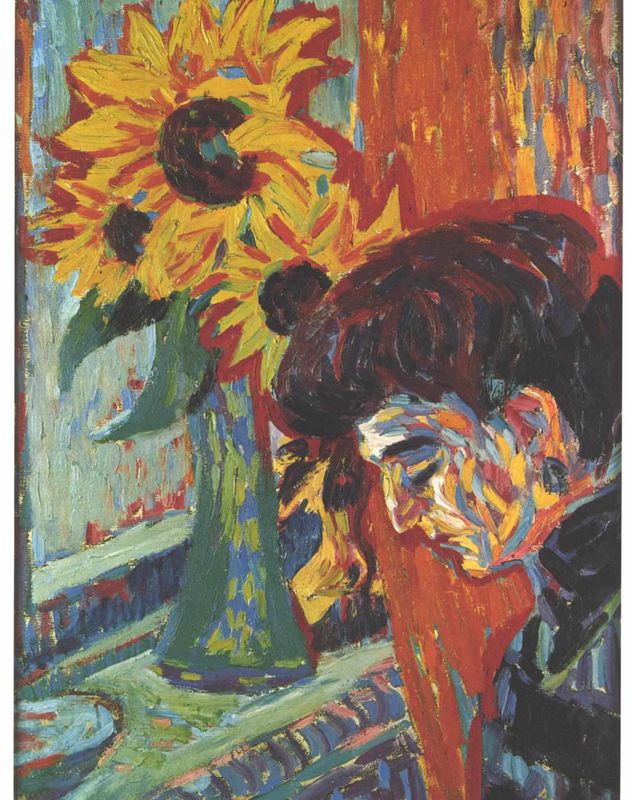
Frauenkopf vor Sonnenblumen
Ernst Ludwig Kirchner · 1906 · Museum Frieder Burda
 Same era · 1880s–1910s
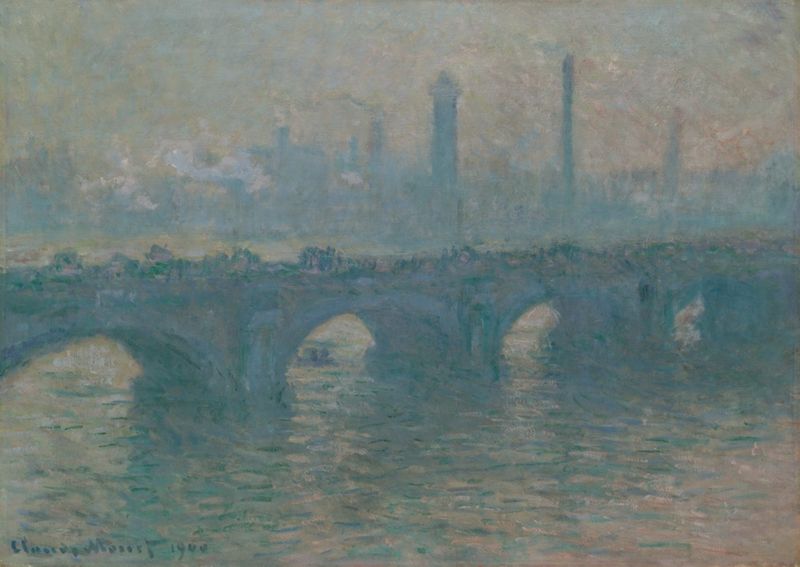
Waterloo Bridge, Gray Weather
Claude Monet · 1900 · Art Institute of Chicago
 Same era · 1880s–1910s
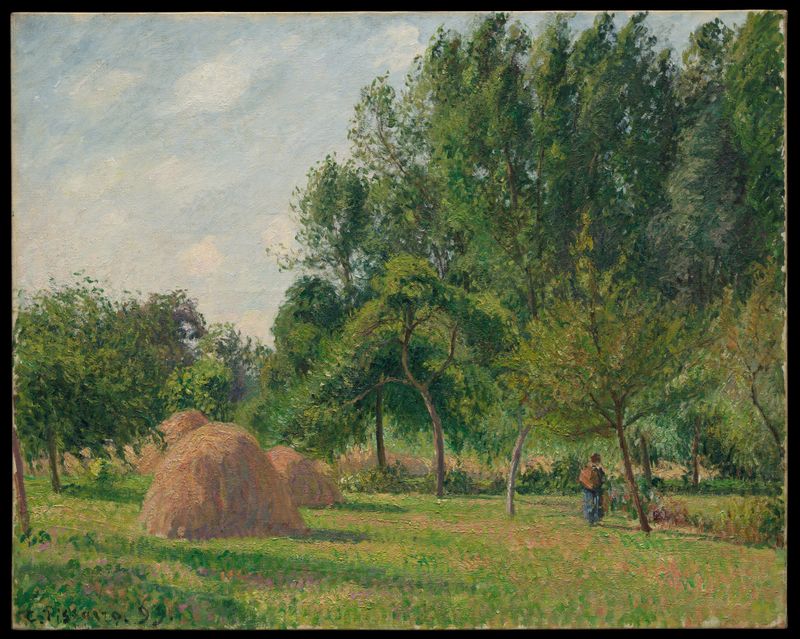
Haystacks, Morning, Eragny
Camille Pissarro · 1899 · The Metropolitan Museum of Art
 Same era · 1880s–1910s
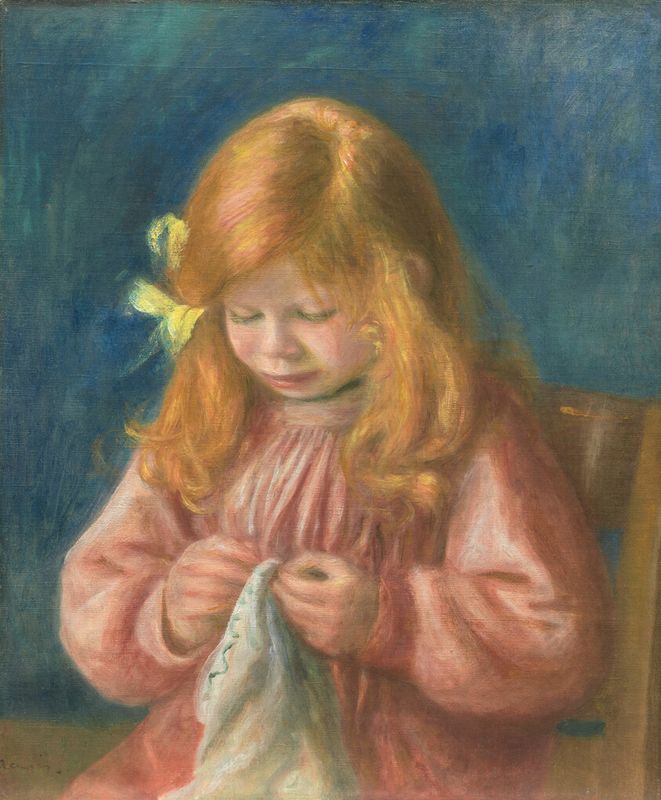
Jean Renoir Sewing
Pierre-Auguste Renoir · 1899 · Art Institute of Chicago
 Same era · 1880s–1910s
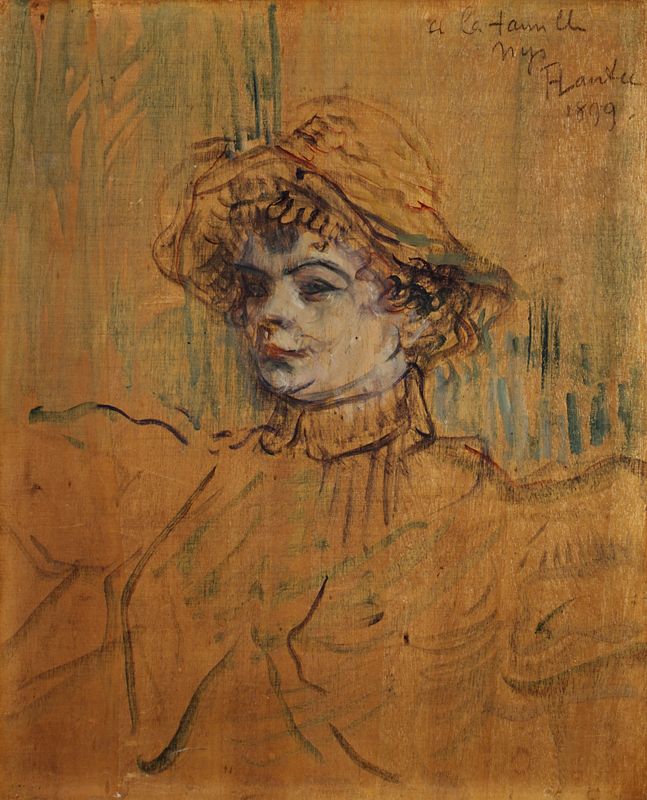
Mademoiselle Nys
Henri de Toulouse-Lautrec · 1899 · The Metropolitan Museum of Art
 Same era · 1880s–1910s
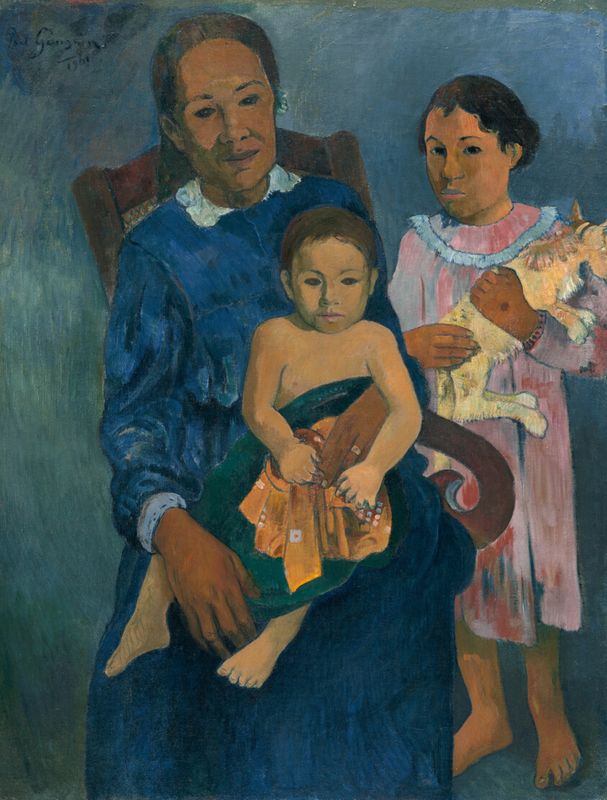
Polynesian Woman with Children
Paul Gauguin · 1901 · Art Institute of Chicago
 Same era · 1880s–1910s
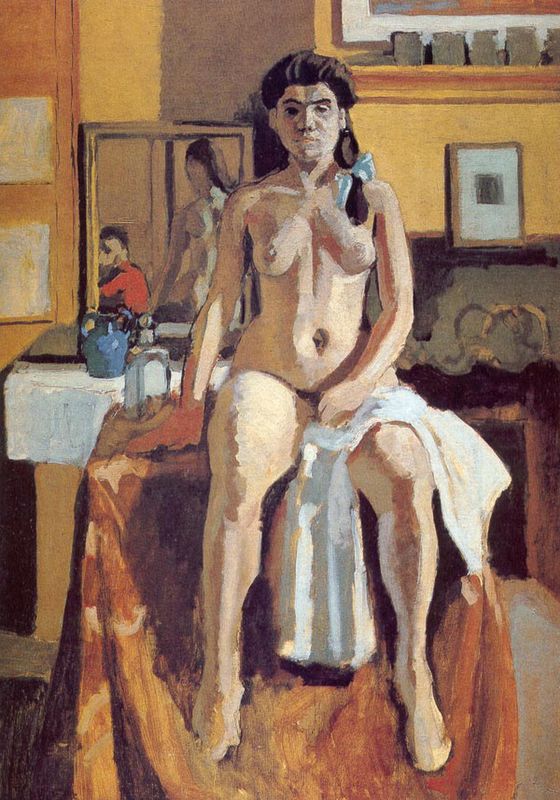
Carmelina
Henri Matisse · 1903 · Museum of Fine Arts Boston
 Same era · 1880s–1910s
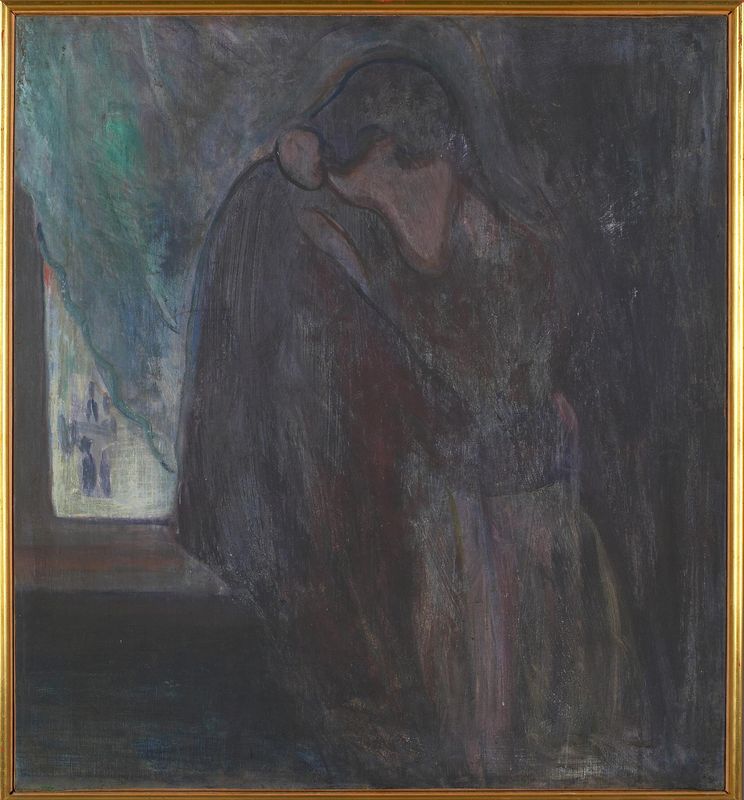
The Kiss
Edvard Munch · 1897 · Munch Museum
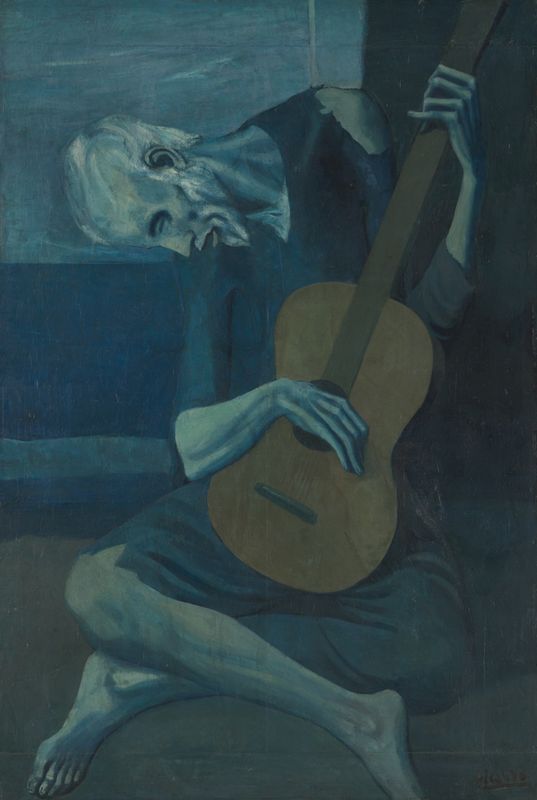 Same era · 1880s–1910s
The Old Guitarist
Pablo Picasso · 1903 · Art Institute of Chicago
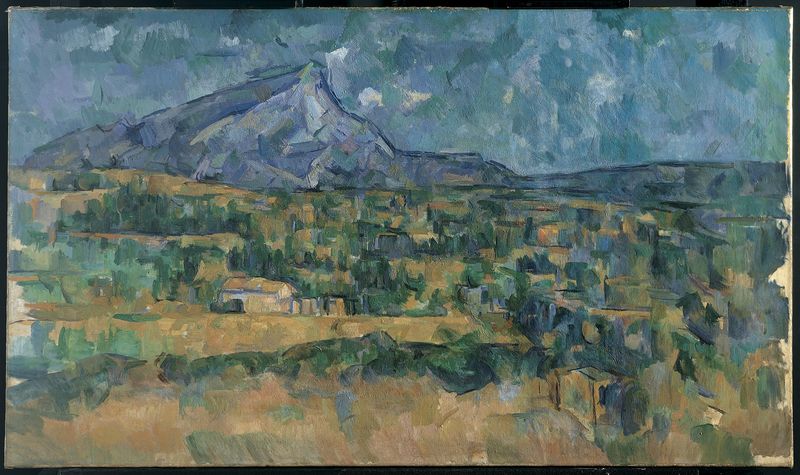 Same era · 1880s–1910s
Mont Sainte-Victoire
Paul Cézanne · 1904 · Detroit Institute of Arts
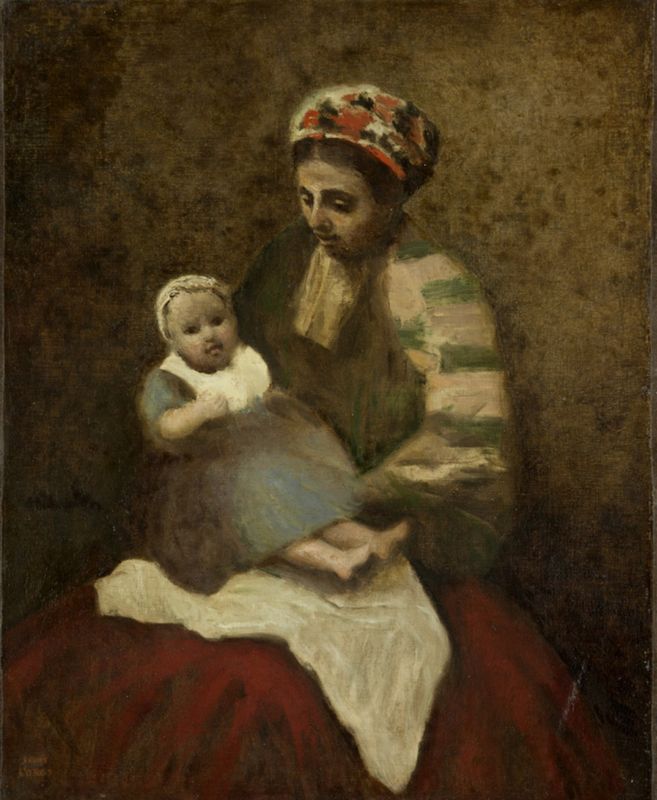 Same era · 1880s–1910s
Nurse and Child
Mary Cassatt · 1896 · The Metropolitan Museum of Art