01
The woman in white
Find the pale figure in the middle distance. Her white dress, streaked with pink and red, stands out against the dark trees and green grass.
1 of 5 on the painting
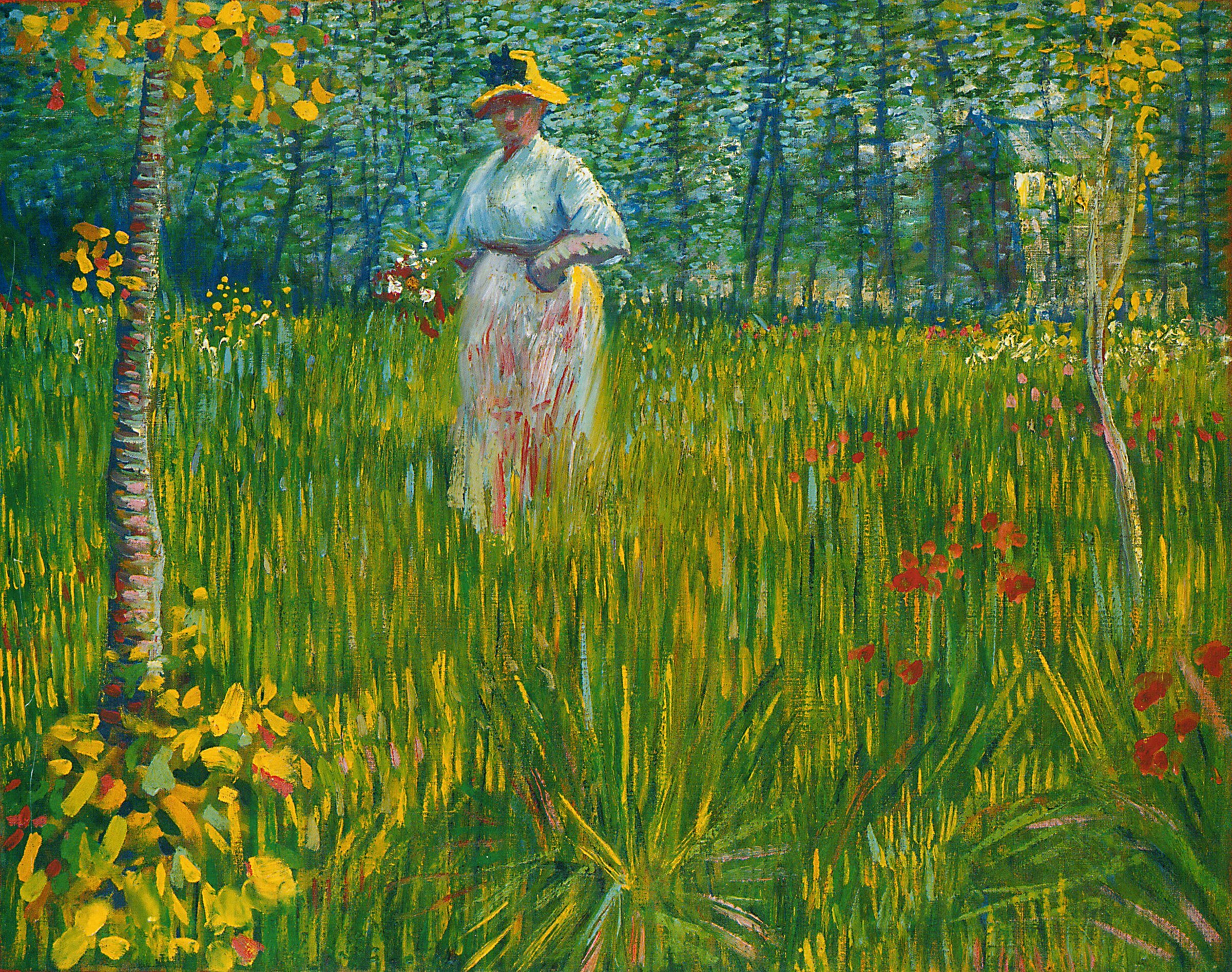
“This painting marks a significant shift in the artist's style, moving from dark realism to a brighter, more vibrant palette, as seen in the lush greens and impressionistic brushwork of this Parisian garden scene. It's also part of a rare triptych, an experimental format for him.”
A lone figure strolls through a vibrant garden in this 1887 painting, a work that captures a pivotal moment in the artist's stylistic evolution. Here, the palette has shifted dramatically from the earthy tones of earlier works to a brighter, more impressionistic style, with lush greens and vivid floral accents. The scene, set in Clichy, a northern suburb of Paris, reflects a broader fascination among artists of the time with the changing landscapes along the Seine River, where serene natural beauty coexisted with burgeoning industrialization. This painting is part of a triptych, a three-panel work, an experimental format for the artist at this time. The red border along the canvas edge is a deliberate choice, signaling its connection to the other two panels in the series.
Five details hide in plain sight. Pick one and we’ll show you exactly where to look.
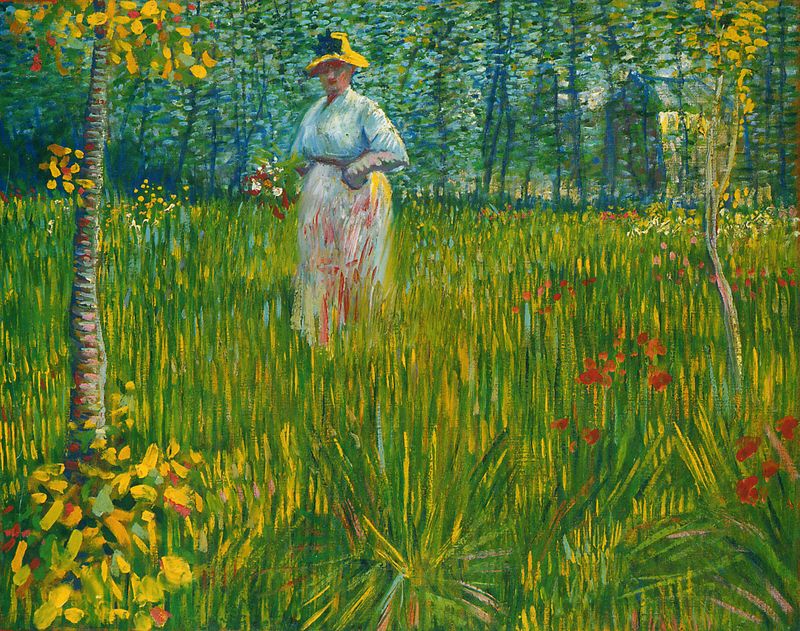
Find the pale figure in the middle distance. Her white dress, streaked with pink and red, stands out against the dark trees and green grass.
The woman's yellow hat, topped with something dark blue-black, is the brightest color note on the figure. It picks up the yellow leaves around her.
To the viewer's left of her, a small cluster of red and white dabs looks like a bunch of flowers held at her side. It is easy to miss.
Look at the upper background, where small blue and green dabs of paint pile up like scales. They turn dense foliage into a shimmering wall.
In the meadow, long thin yellow and green strokes shoot upward. They make the grass feel tall and alive, and they blur the woman's lower dress into the field.
The full narration walks you through A Woman Walking in a Garden — the story behind it, the details most visitors miss, and why it matters. Free in the Art Whisper app.
Vincent van Gogh, whose vibrant brushwork and bold colors transformed landscapes and portraits, created 2,100 artworks in just over a decade.
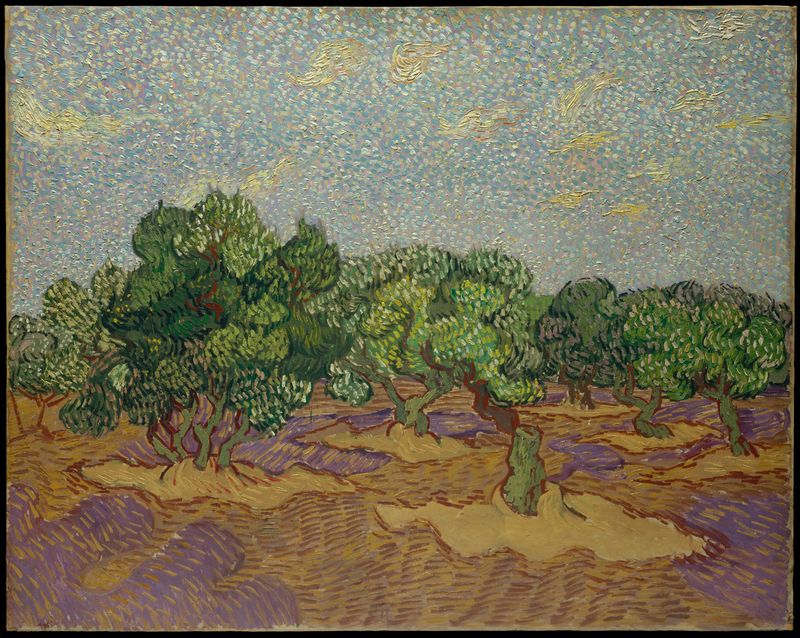 Olive Trees
1853 · The Metropolitan Museum of Art
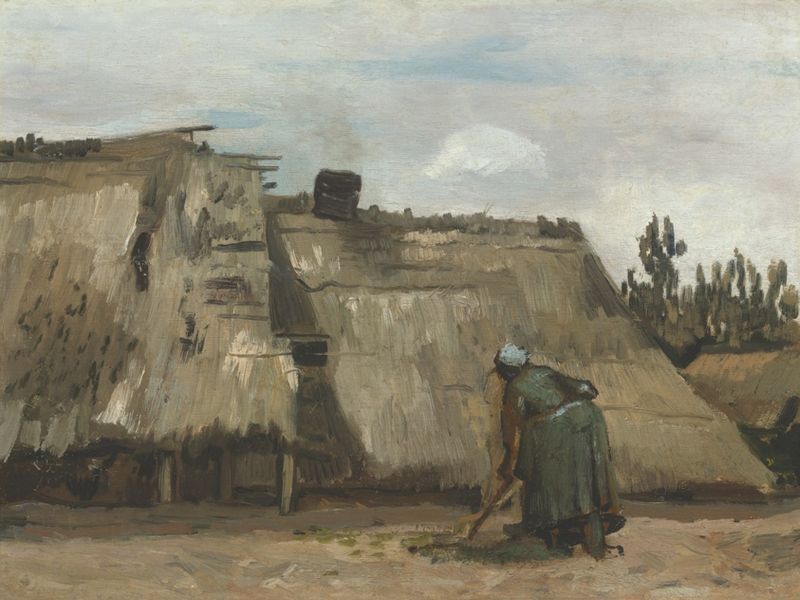 A Peasant Woman Digging in Front of Her Cottage
1880 · Art Institute of Chicago
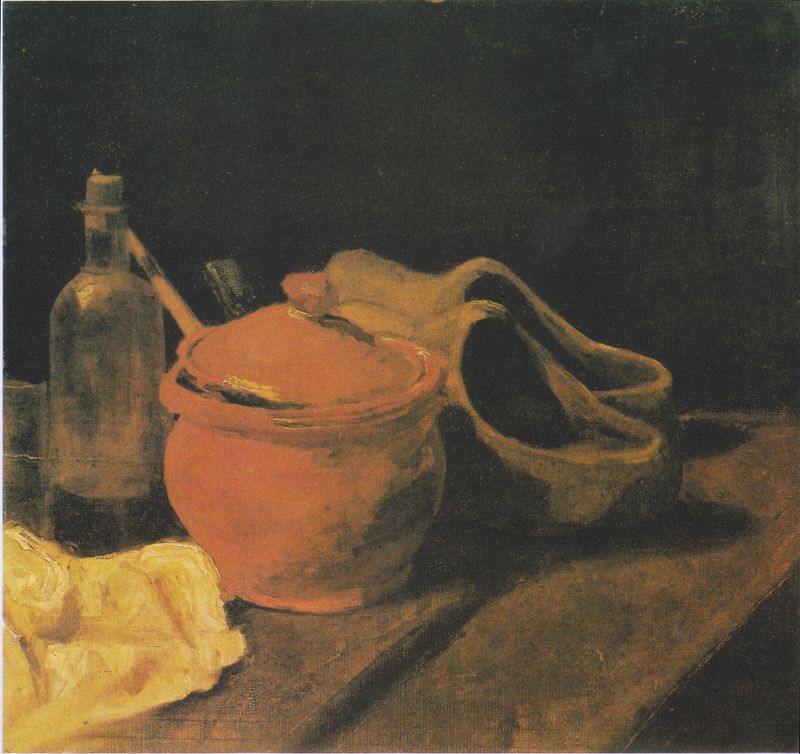 Still Life with Clogs
1881 · Kröller-Müller Museum
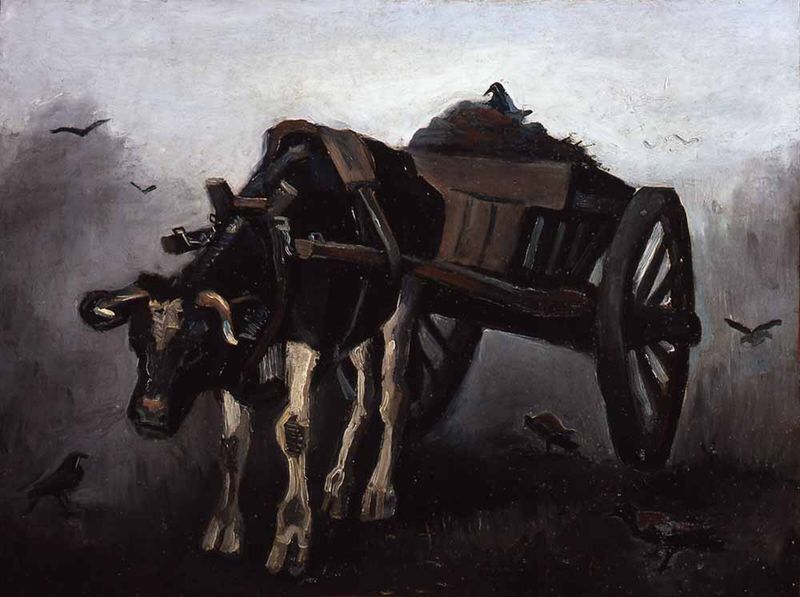 Cart with Black Ox
1884 · Portland Art Museum
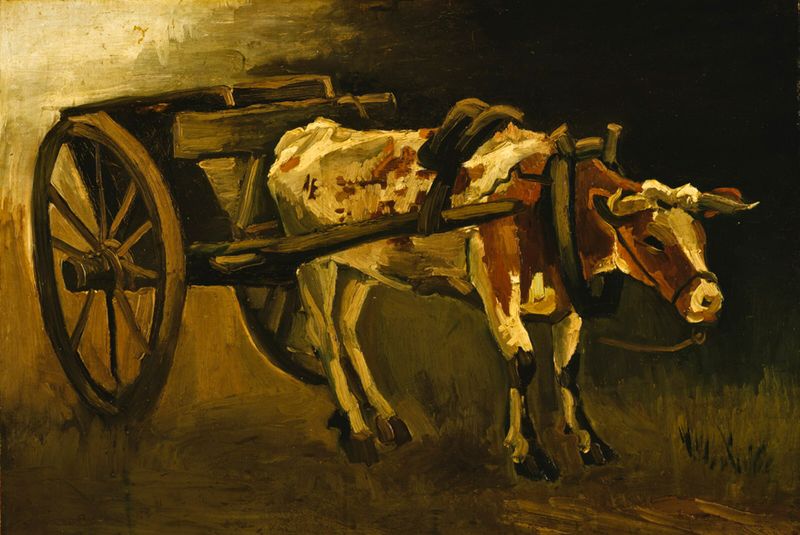 Cart with Red and White Ox
1884 · Kröller-Müller Museum
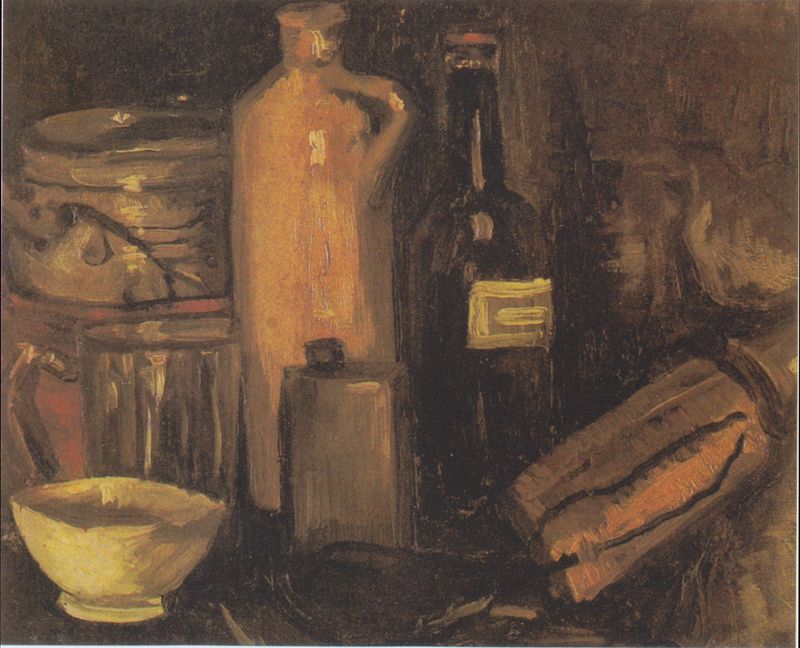 Still Life with Pots, Jar and Bottles
1884 · Kunstmuseum Den Haag
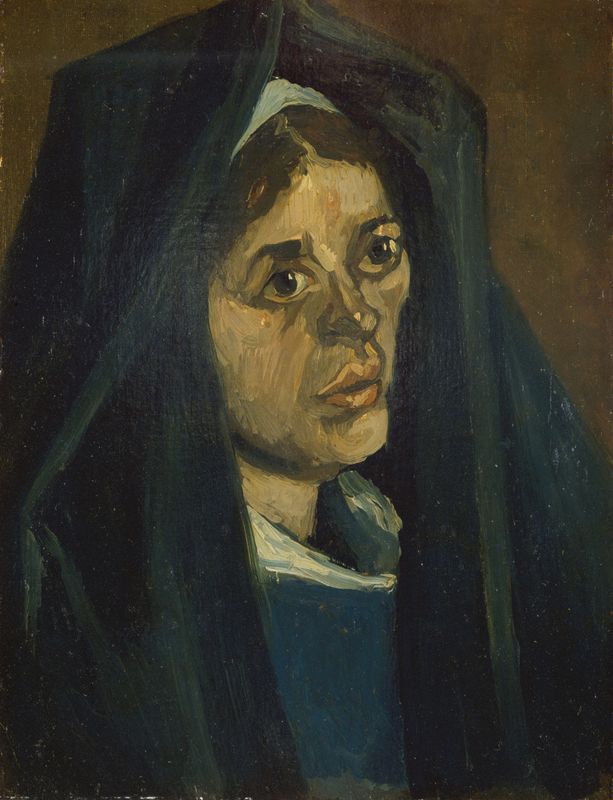 Head of a Peasant Woman with Green Shawl
1885 · Museum of Fine Arts of Lyon
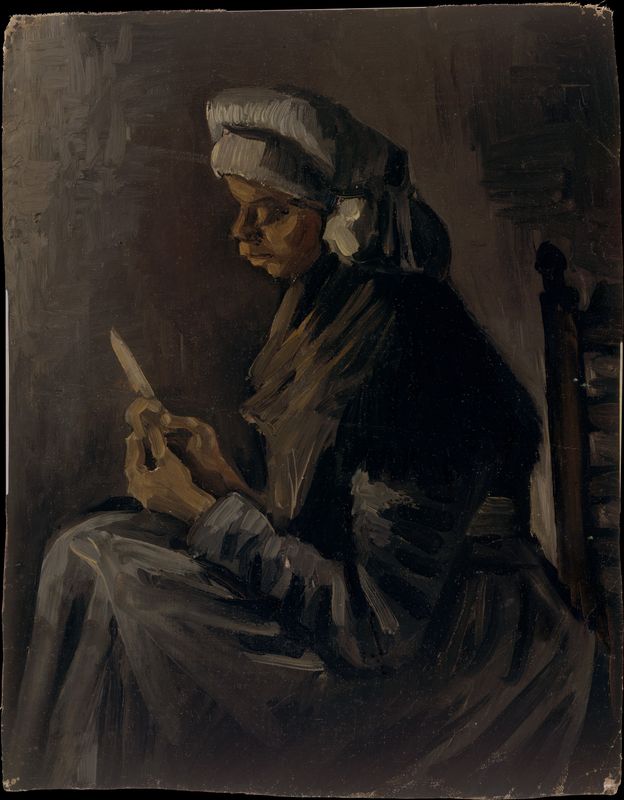 The Potato Peeler (reverse: Self-Portrait with a Straw Hat)
1885 · The Metropolitan Museum of Art
Beyond van Gogh and Expressionism: works from the same years, and from the other movements A Woman Walking in a Garden belongs to.
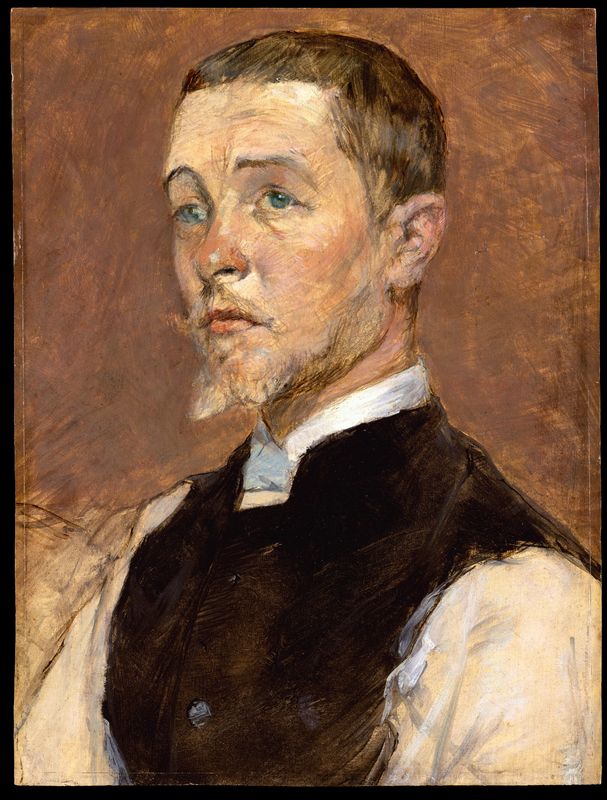 Same movement · Post-Impressionism
Albert (René) Grenier (1858–1925)
Henri de Toulouse-Lautrec · 1887 · The Metropolitan Museum of Art
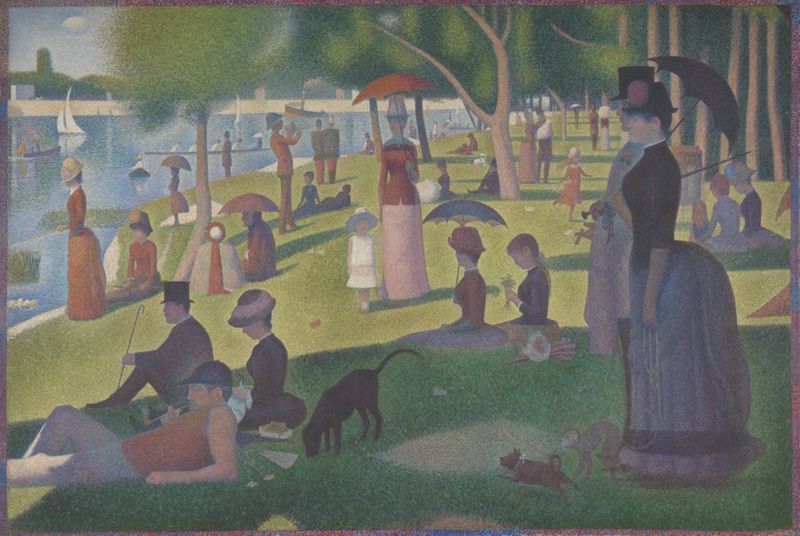 Same era · 1870s–1900s
A Sunday on La Grande Jatte — 1884
Okada Saburosuke · 1884 · Art Institute of Chicago
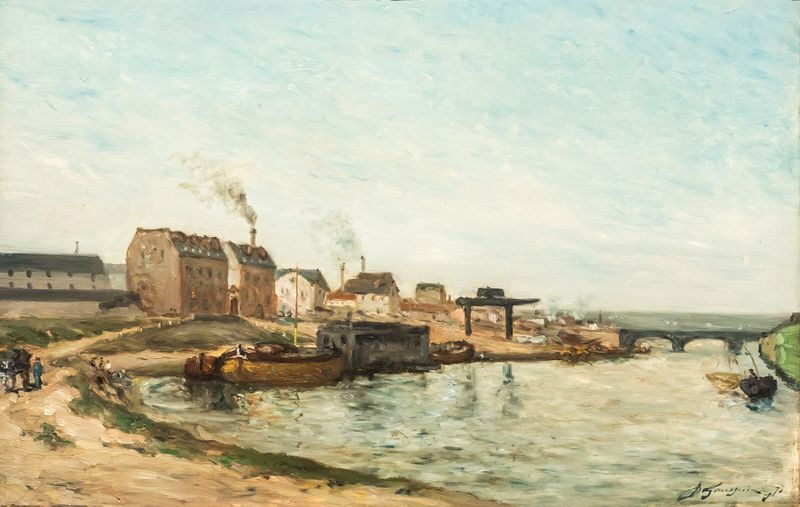 Same movement · Post-Impressionism
The Seine at Pont de Grenelle
Paul Gauguin · 1875 · Wallraf–Richartz Museum
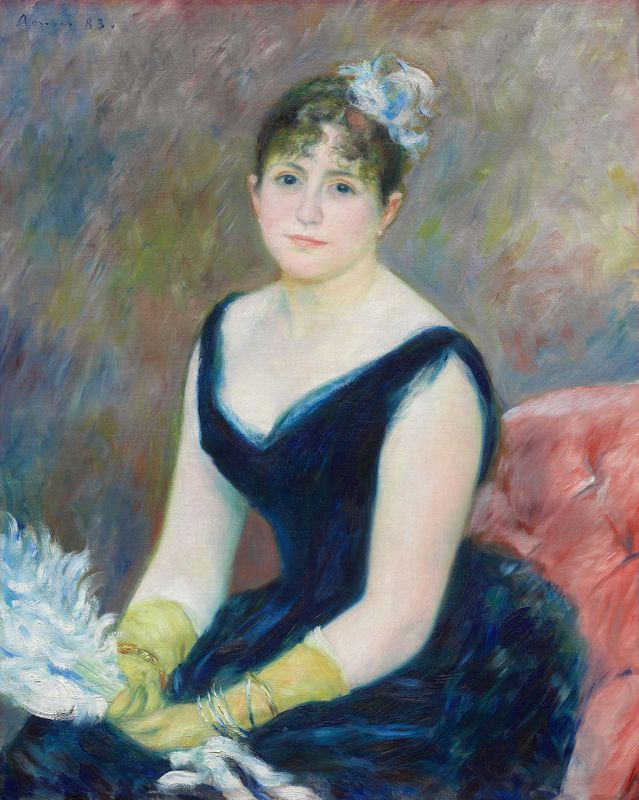 Same era · 1870s–1900s
Madame Léon Clapisson
Léon-Victor Dupré · 1883 · Art Institute of Chicago
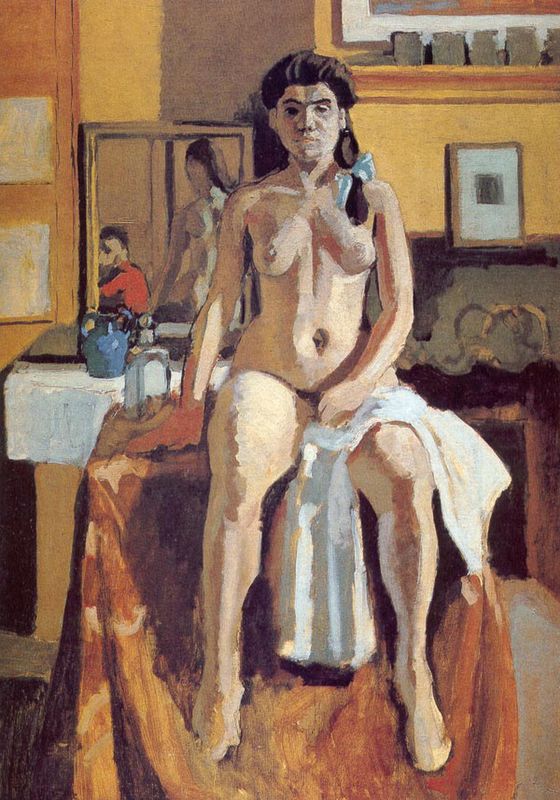 Same movement · Post-Impressionism
Carmelina
Henri Matisse · 1903 · Museum of Fine Arts Boston
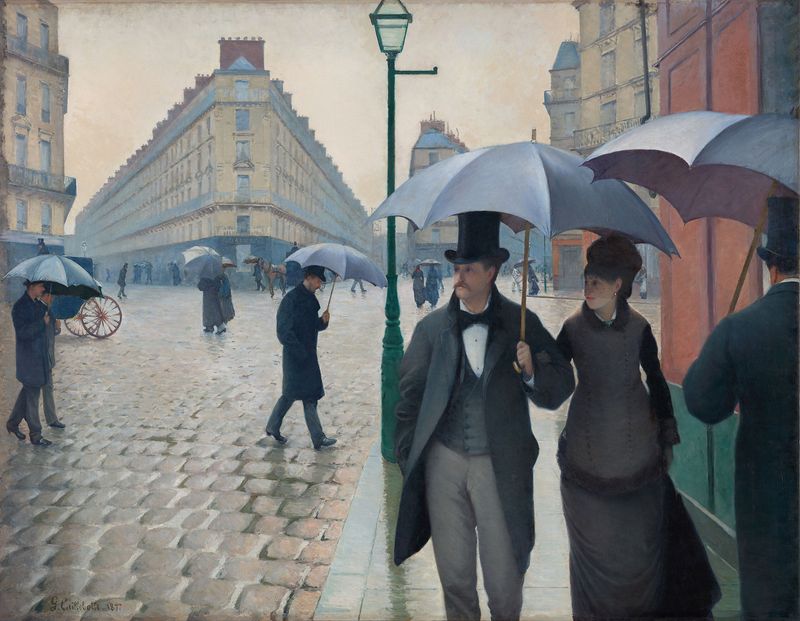 Same era · 1870s–1900s
Paris Street; Rainy Day
Kawabata Gyokushō · 1877 · Art Institute of Chicago
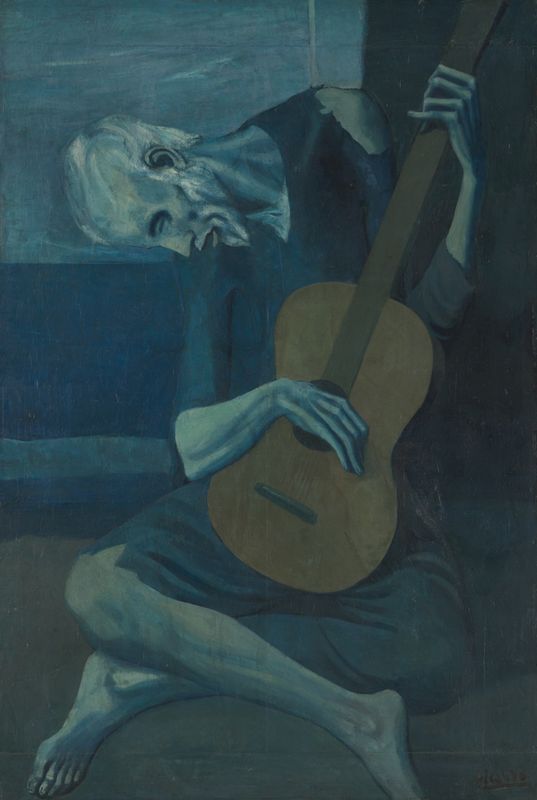 Same movement · Post-Impressionism
The Old Guitarist
Pablo Picasso · 1903 · Art Institute of Chicago
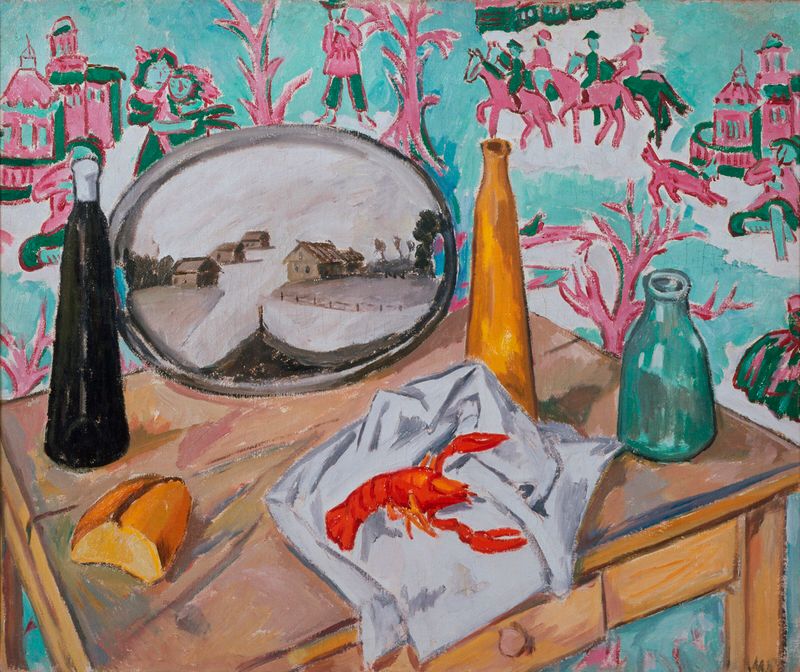 Same era · 1870s–1900s
Still Life with Crayfish
Mikhail Larionov · 1900 · Museum Ludwig
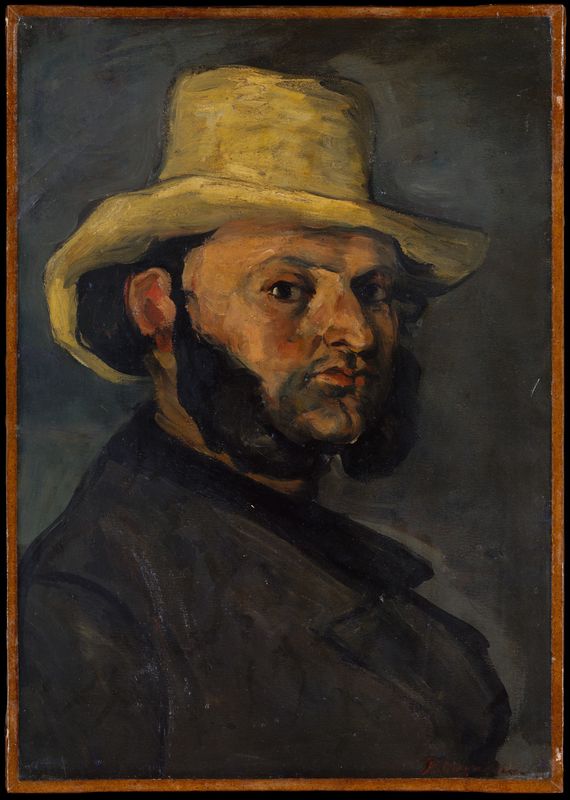 Same movement · Post-Impressionism
Gustave Boyer (b. 1840) in a Straw Hat
Paul Cézanne · 1870 · The Metropolitan Museum of Art
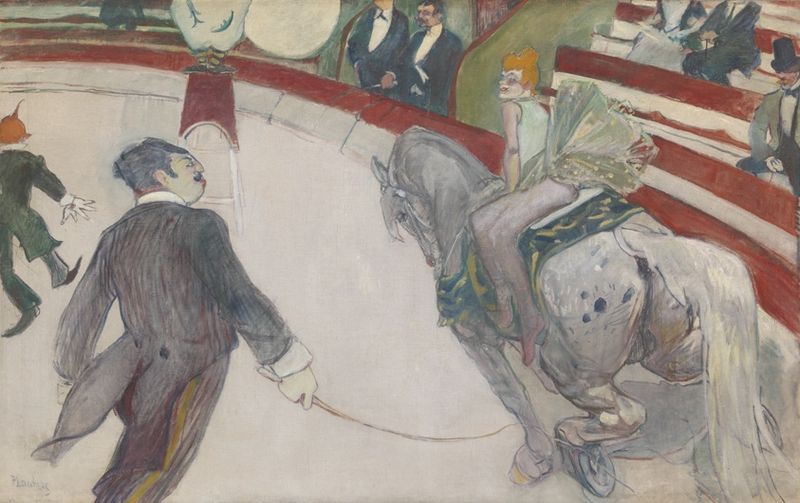 Same era · 1870s–1900s
Equestrienne (At the Cirque Fernando)
Henri de Toulouse-Lautrec · 1887 · Art Institute of Chicago
 Same movement · Post-Impressionism
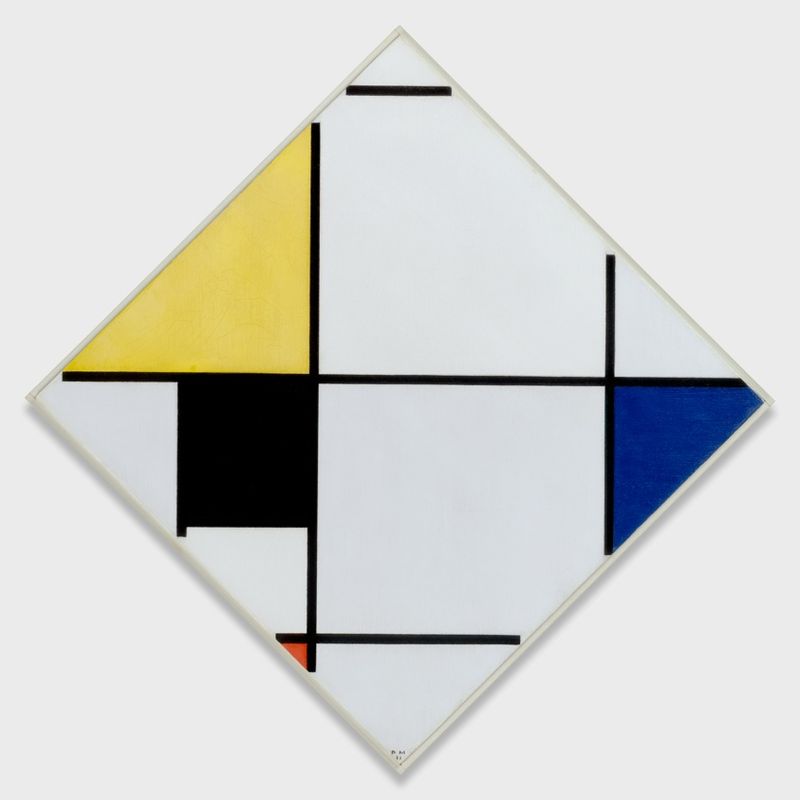
Lozenge Composition with Yellow, Black, Blue, Red, and Gray
Piet Mondrian · 1921 · Art Institute of Chicago
 Same era · 1870s–1900s
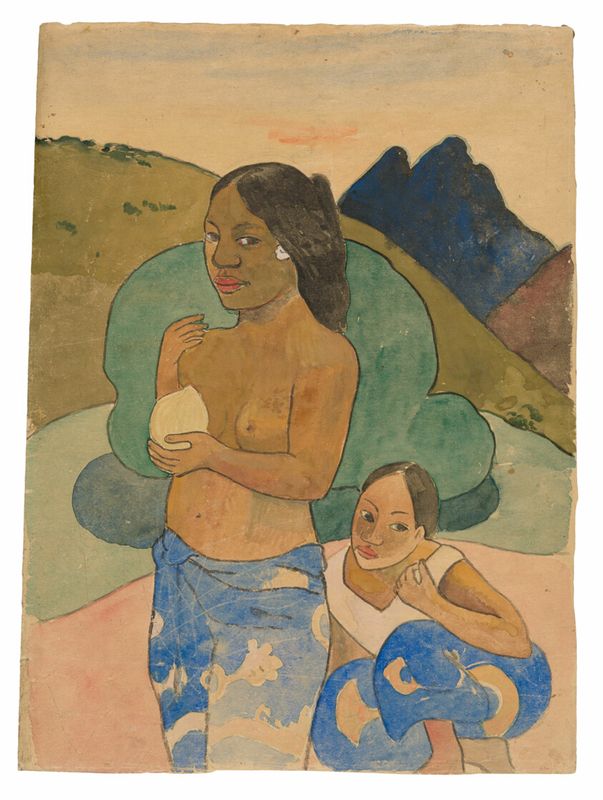
Two Tahitian Women in a Landscape
Paul Gauguin · 1887 · Art Institute of Chicago
 Same era · 1870s–1900s
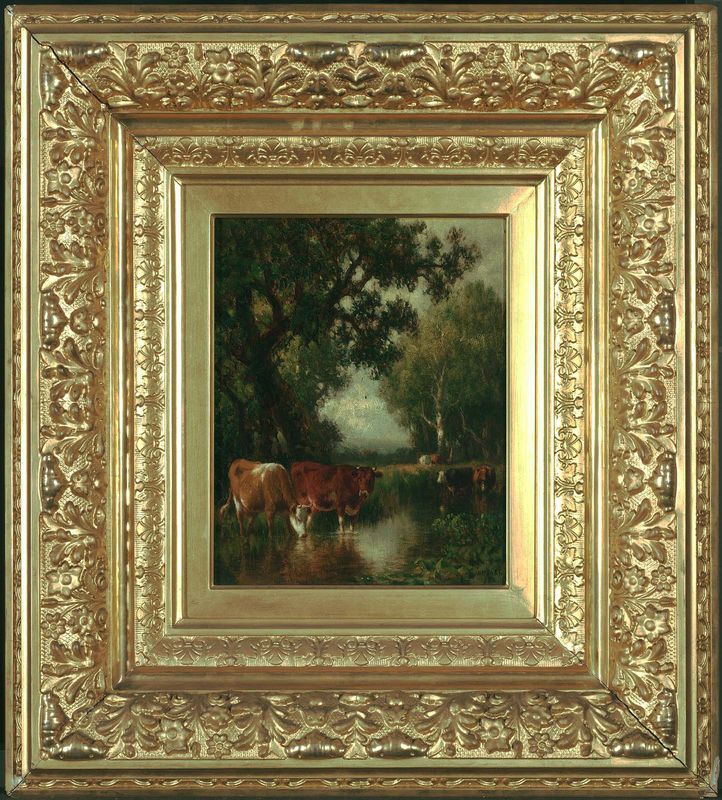
Cows Drinking at a Pool
William Hart · 1886 · Museum of Fine Arts Boston
 Same era · 1870s–1900s
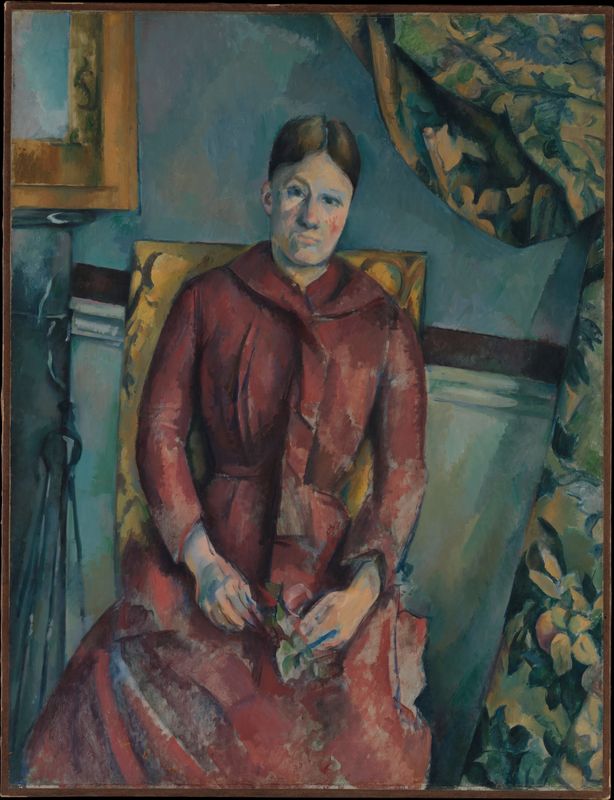
Madame Cézanne (Hortense Fiquet, 1850–1922) in a Red Dress
Paul Cézanne · 1888 · The Metropolitan Museum of Art
 Same era · 1870s–1900s
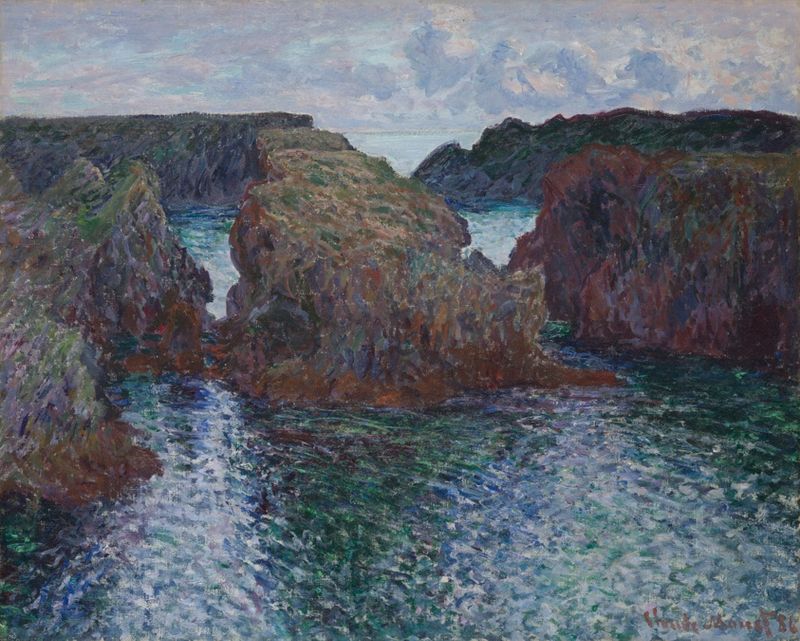
Rocks at Port-Goulphar, Belle-Île
Claude Monet · 1886 · Art Institute of Chicago
 Same era · 1870s–1900s
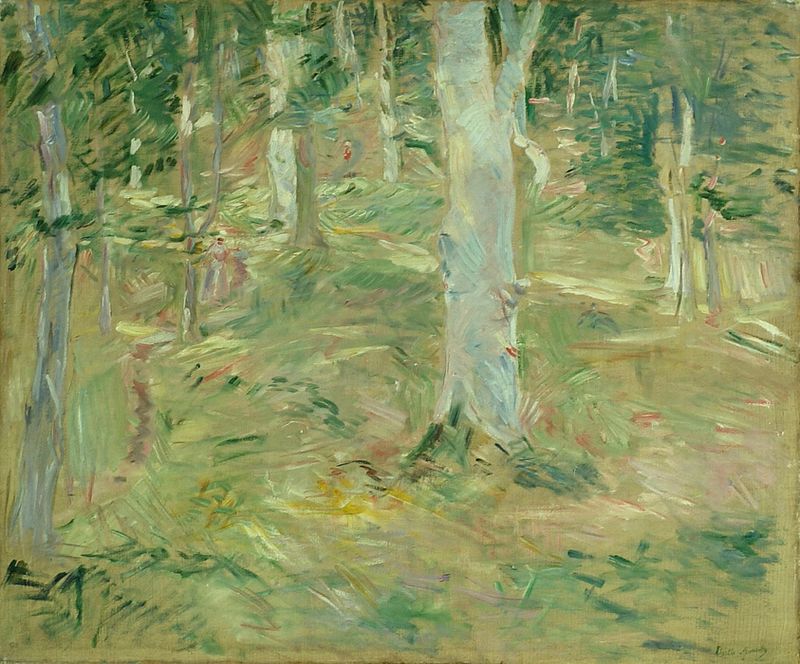
Forêt de Compiègne
Berthe Morisot · 1885 · Art Institute of Chicago
 Same era · 1870s–1900s
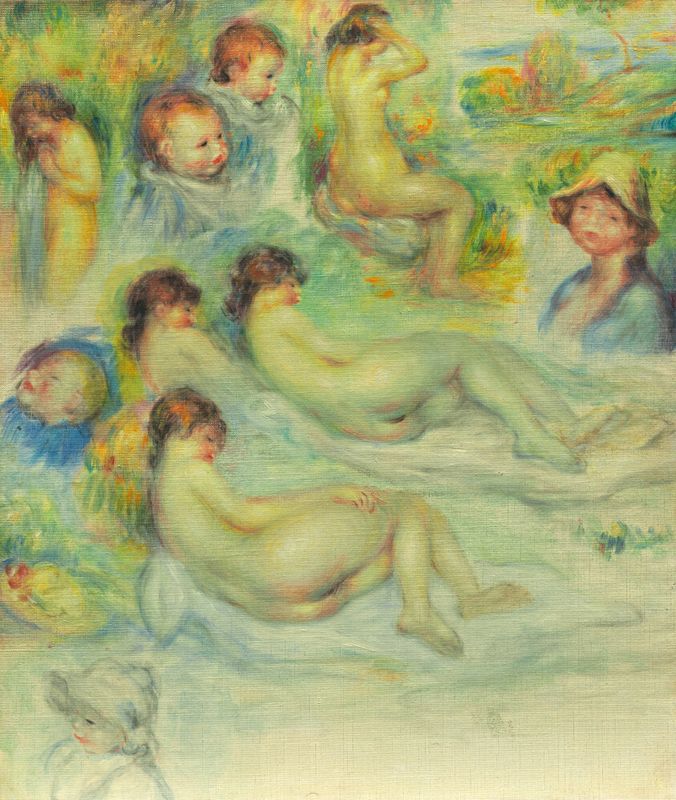
Studies of Pierre Renoir; His Mother, Aline Charigot; Nudes; and Landscape
Pierre-Auguste Renoir · 1885 · Art Institute of Chicago
 Same era · 1870s–1900s
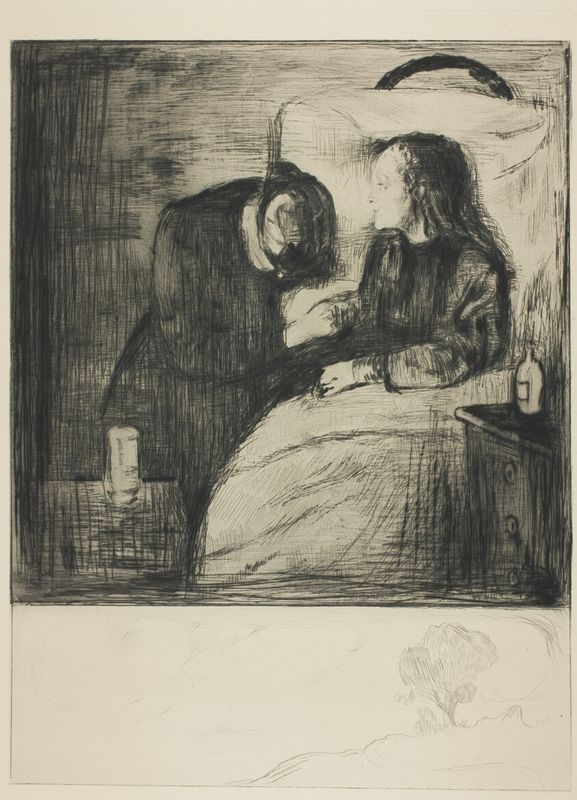
The Sick Child
Edvard Munch · 1885 · National Museum of Art, Architecture and Design