01
Red base block
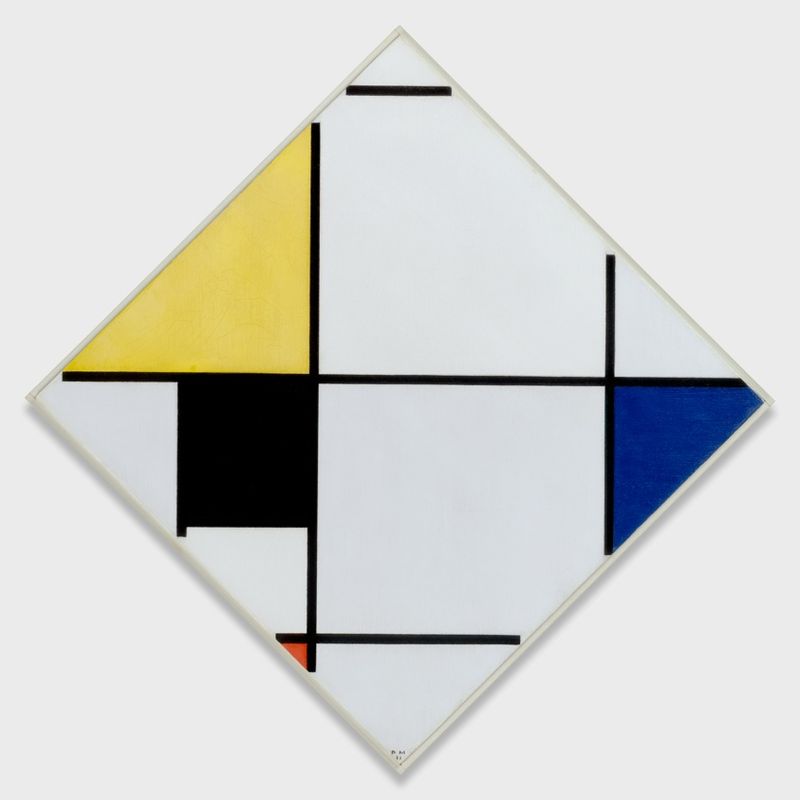
Find the small red rectangle at the bottom edge. It is the only strong colour in a field of grays and whites, so it hits hard.
1 of 5 on the painting
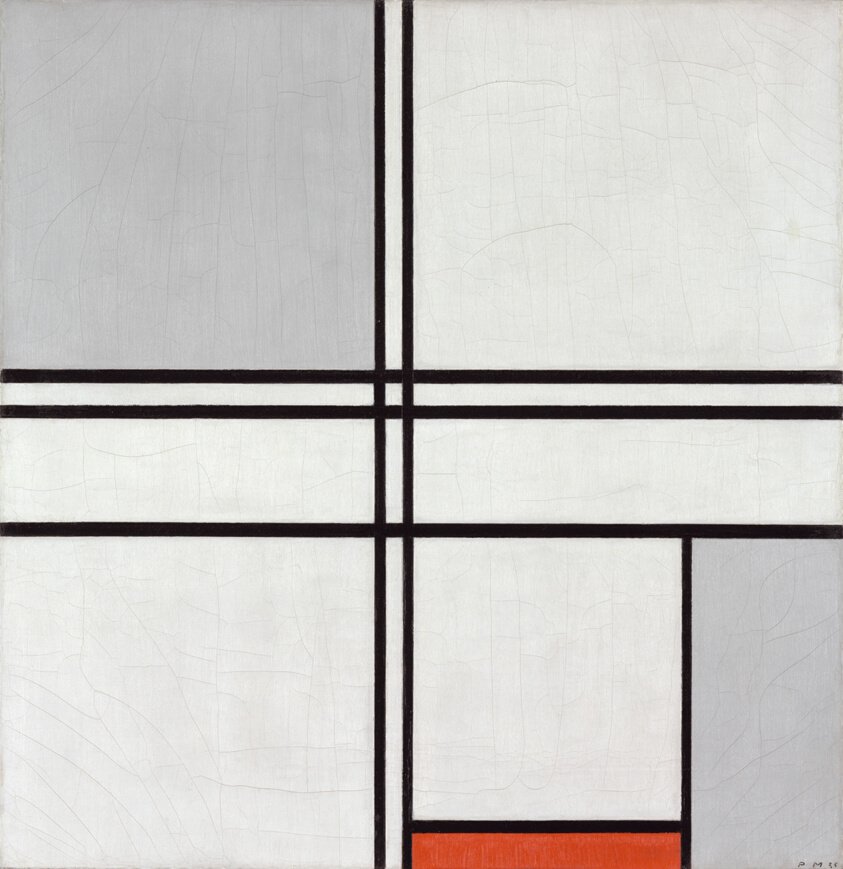
“Stop to appreciate how a few simple lines and blocks of color, particularly the dominant gray and striking red, create a powerful sense of balance and tension in this abstract painting.”
This painting, "Composition (No. 1) Gray-Red," invites you to consider the subtle interplay of primary colors and stark lines. Unlike some of his more vibrant works, here the artist emphasizes a muted palette, with a prominent gray rectangle dominating the canvas. This gray is balanced by a smaller, intense red square, creating a visual tension that draws the eye. Black lines define these geometric forms, extending to the edges of the canvas and suggesting a continuation of the composition beyond our view. The meticulous arrangement of these elements reflects the De Stijl movement's pursuit of universal harmony through simplified forms and colors. Created in 1935, this work demonstrates a refined stage of his abstract style, where every line and plane is precisely placed to achieve a dynamic yet balanced whole.
Five details hide in plain sight. Pick one and we’ll show you exactly where to look.
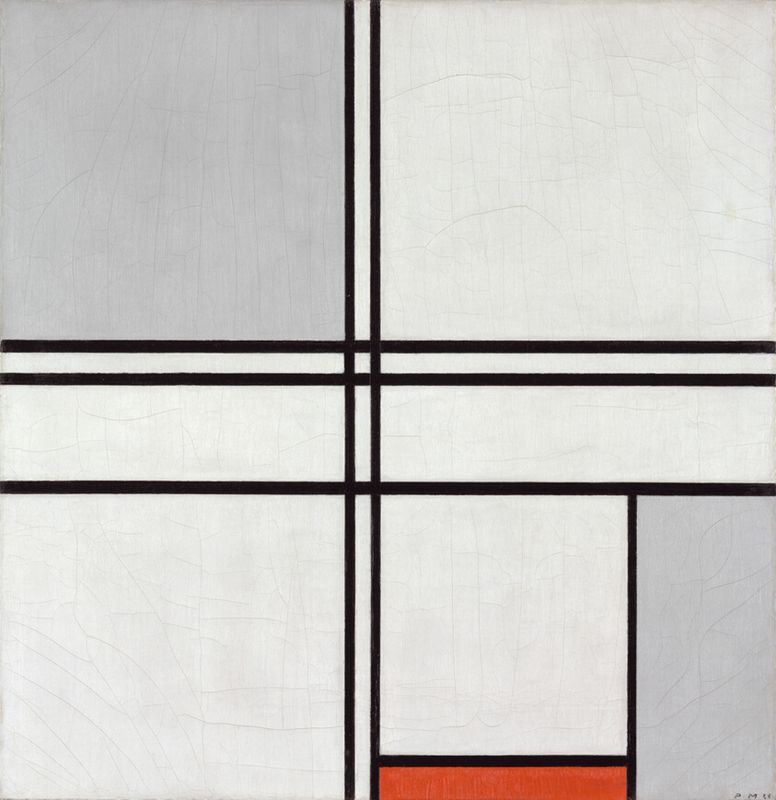
Find the small red rectangle at the bottom edge. It is the only strong colour in a field of grays and whites, so it hits hard.
Where the paired black bars cross near the center, they form a tiny square of white. Mondrian doubles the lines, which gives the grid a pulse.
The large soft gray block in the top left feels heavy and quiet. It balances the small gray strip far away at the lower right.
Look closely at the edges of the black bars. They are not perfectly crisp, and you can sense the paint was applied by hand rather than printed or machined.
Look closely at the white areas for a web of fine cracks. The paint has aged, and the surface reads as a worn skin rather than flat color.
The full narration walks you through Composition (No. 1) Gray-Red — the story behind it, the details most visitors miss, and why it matters. Free in the Art Whisper app.
Pieter Cornelis Mondriaan, known after 1911 as Piet Mondrian, was a Dutch painter and art theoretician who is regarded as one of the greatest artists of the 20th century. He was one of the pioneers of 20th-century abstract art, as he changed his artistic direction from figurative painting to an increasingly abstract style, until he reached a point where his artistic vocabulary was taken down to simple geometric elements.
Beyond Mondrian and Symbolism: works from the same years, and from the other movements Composition (No. 1) Gray-Red belongs to.
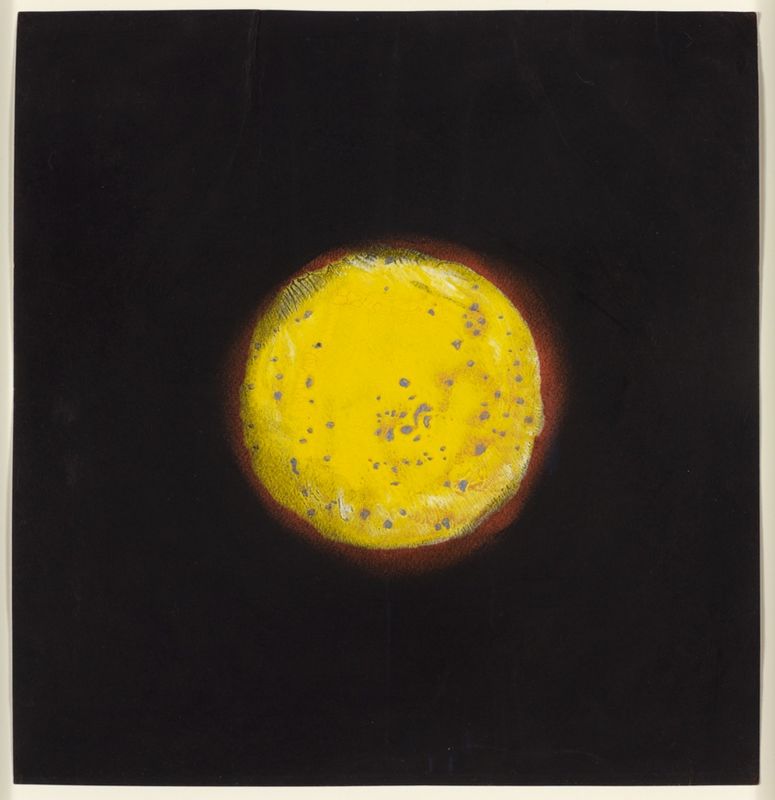 Same movement · Abstract art
Sun Spot
Yayoi Kusama · 1953 · Art Institute of Chicago
 Same era · 1920s–1950s
Deux personnages
Pierre Alechinsky · 1950
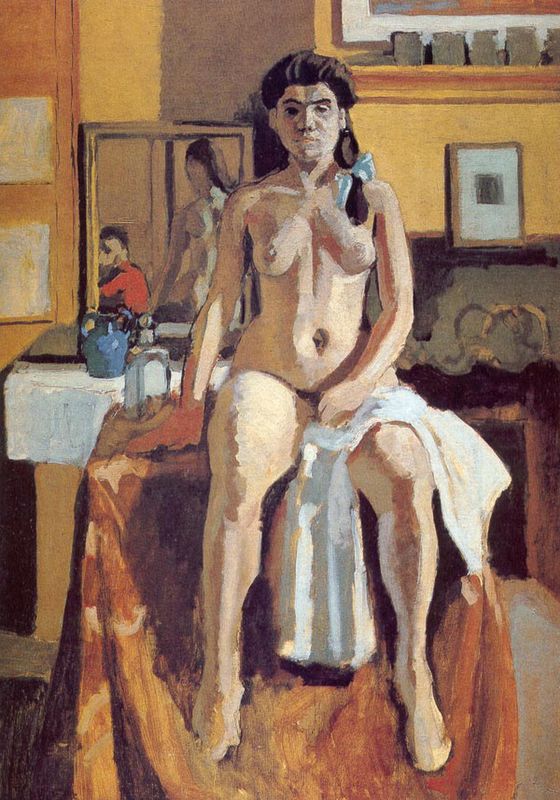 Same movement · Post-Impressionism
Carmelina
Henri Matisse · 1903 · Museum of Fine Arts Boston
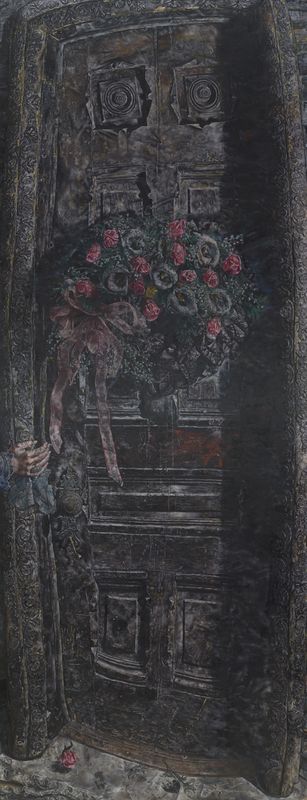 Same era · 1920s–1950s
That Which I Should Have Done I Did Not Do (The Door)
Ivan Puni · 1931 · Art Institute of Chicago
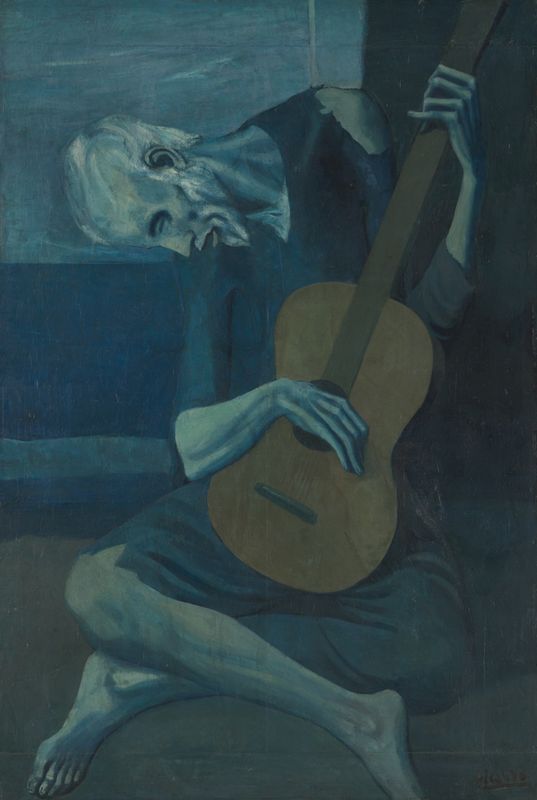 Same movement · Post-Impressionism
The Old Guitarist
Pablo Picasso · 1903 · Art Institute of Chicago
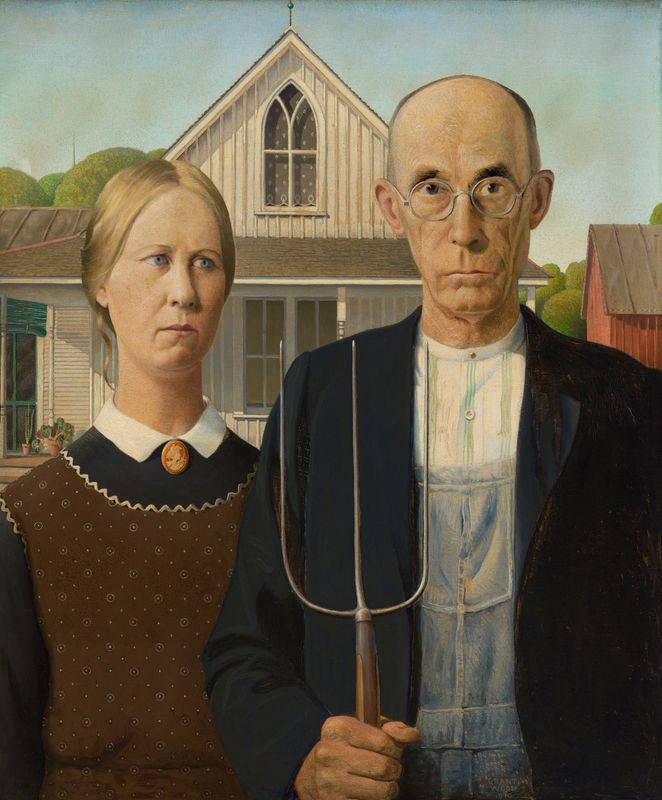 Same era · 1920s–1950s
American Gothic
Okada Saburosuke · 1930 · Art Institute of Chicago
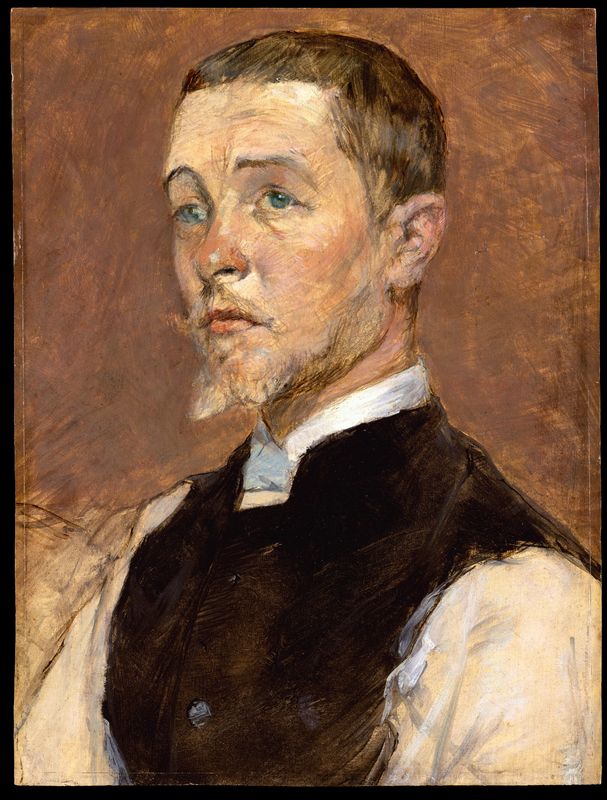 Same movement · Post-Impressionism
Albert (René) Grenier (1858–1925)
Henri de Toulouse-Lautrec · 1887 · The Metropolitan Museum of Art
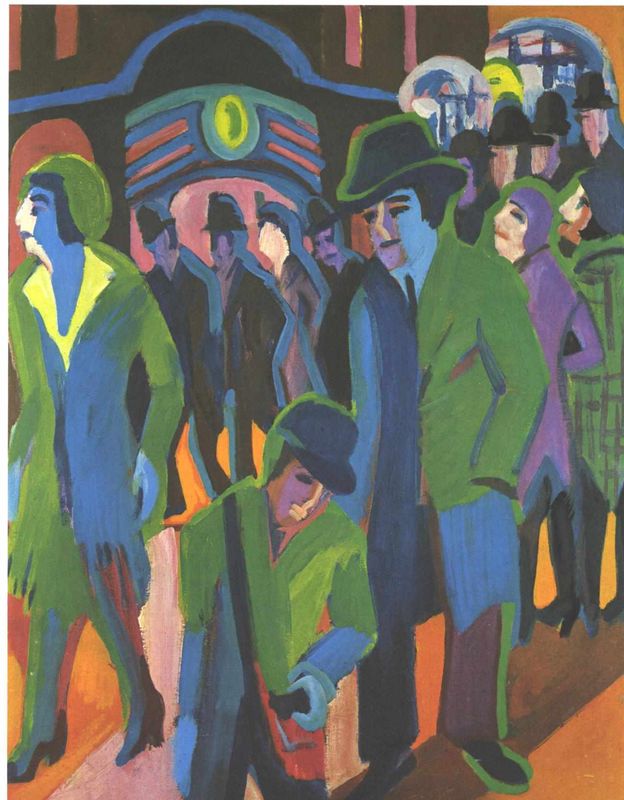 Same era · 1920s–1950s
Straße mit Passanten bei Nachtbeleuchtung
Ernst Ludwig Kirchner · 1927 · Museum Frieder Burda
 Same movement · Post-Impressionism
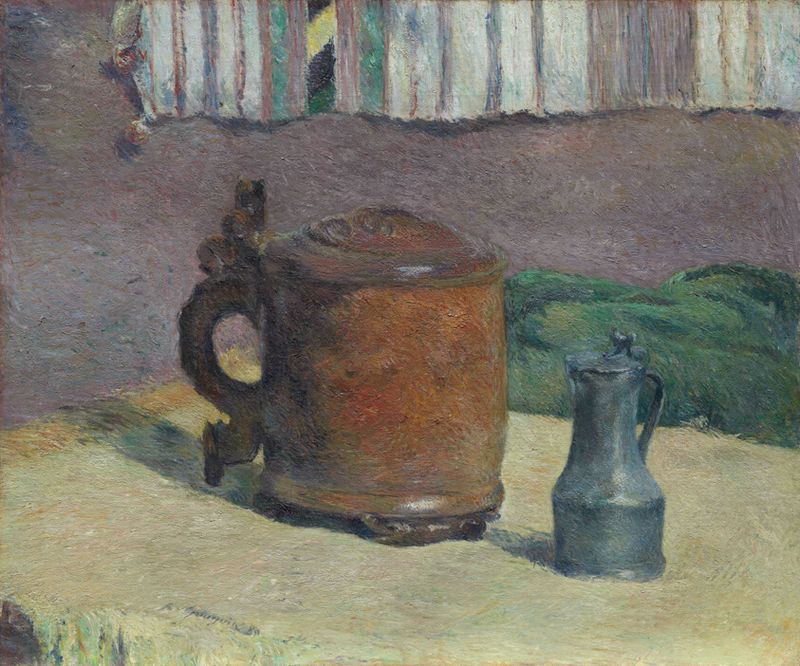
Still Life: Wood Tankard and Metal Pitcher
Paul Gauguin · 1880 · Art Institute of Chicago
 Same era · 1920s–1950s
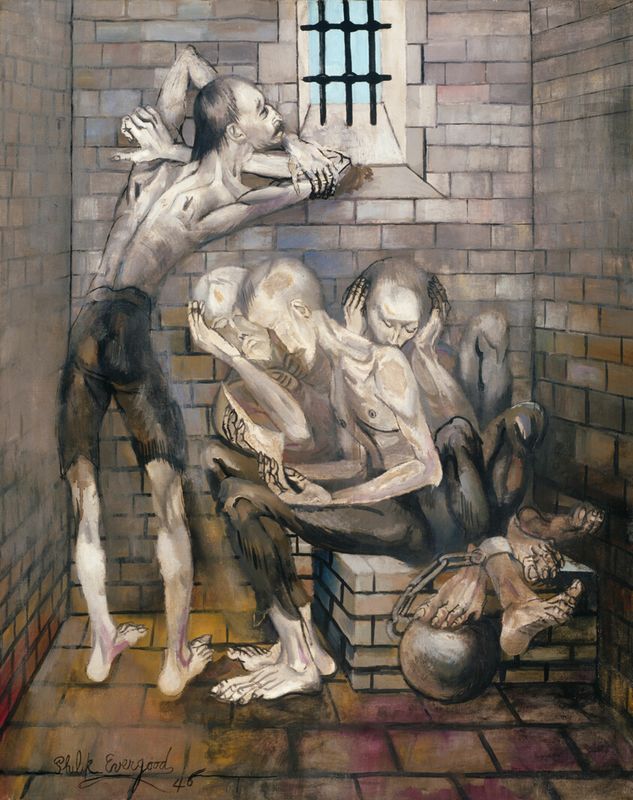
The Indestructibles
Philip Evergood · 1946 · Art Institute of Chicago
 Same movement · Post-Impressionism
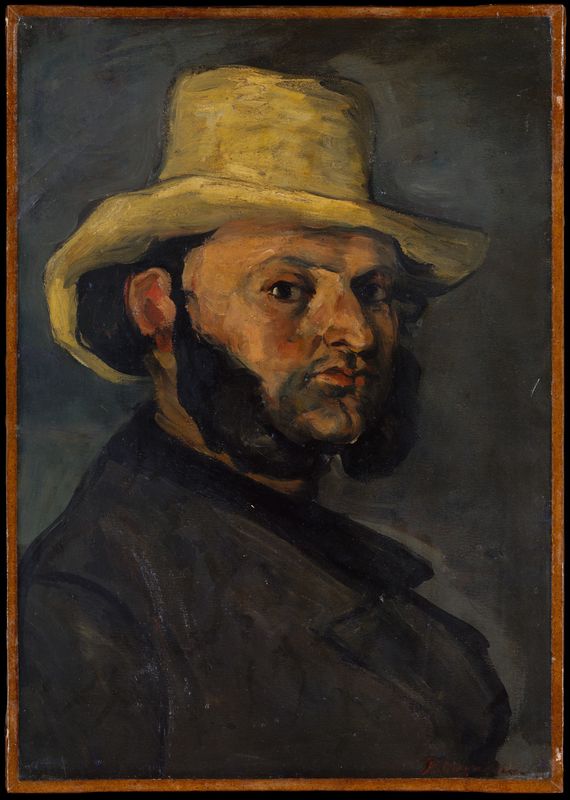
Gustave Boyer (b. 1840) in a Straw Hat
Paul Cézanne · 1870 · The Metropolitan Museum of Art
 Same era · 1920s–1950s
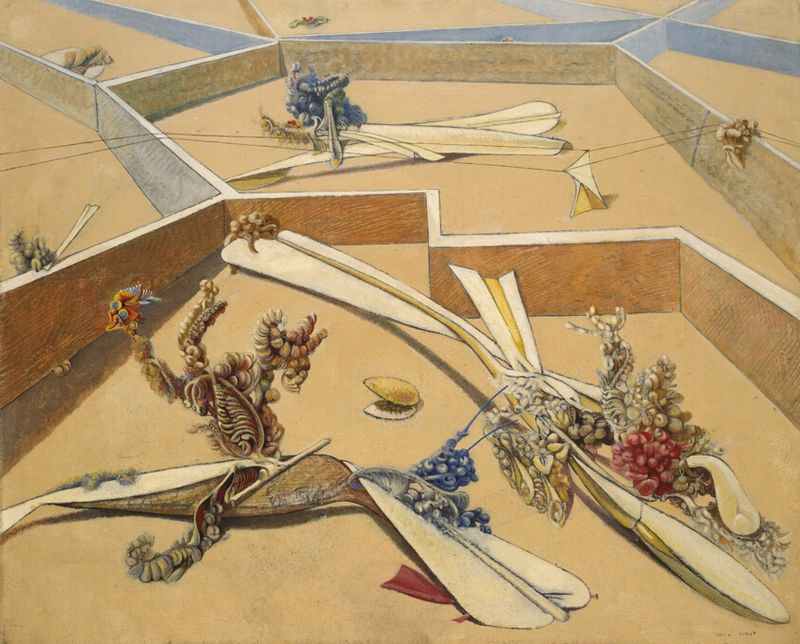
Garden Airplane-Trap
Max Ernst · 1935 · Art Institute of Chicago
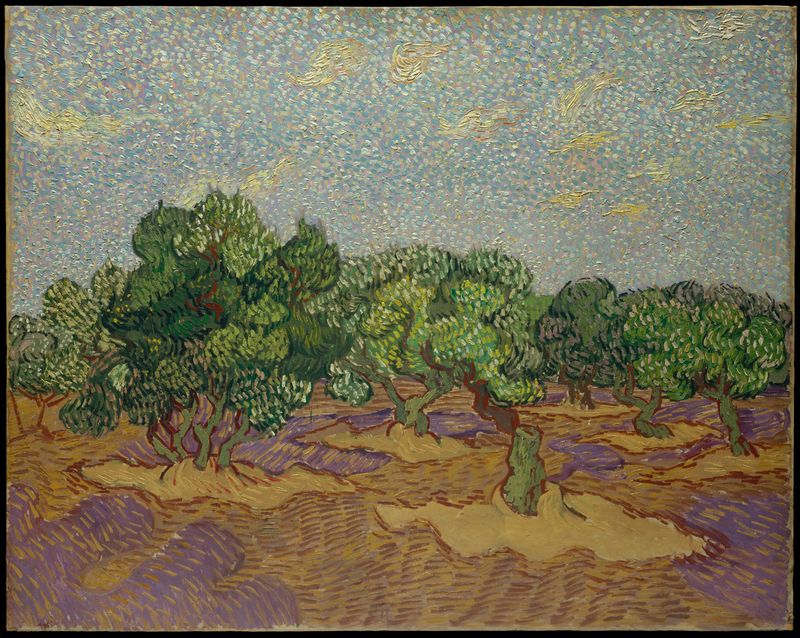 Same movement · Post-Impressionism
Olive Trees
Vincent van Gogh · 1853 · The Metropolitan Museum of Art
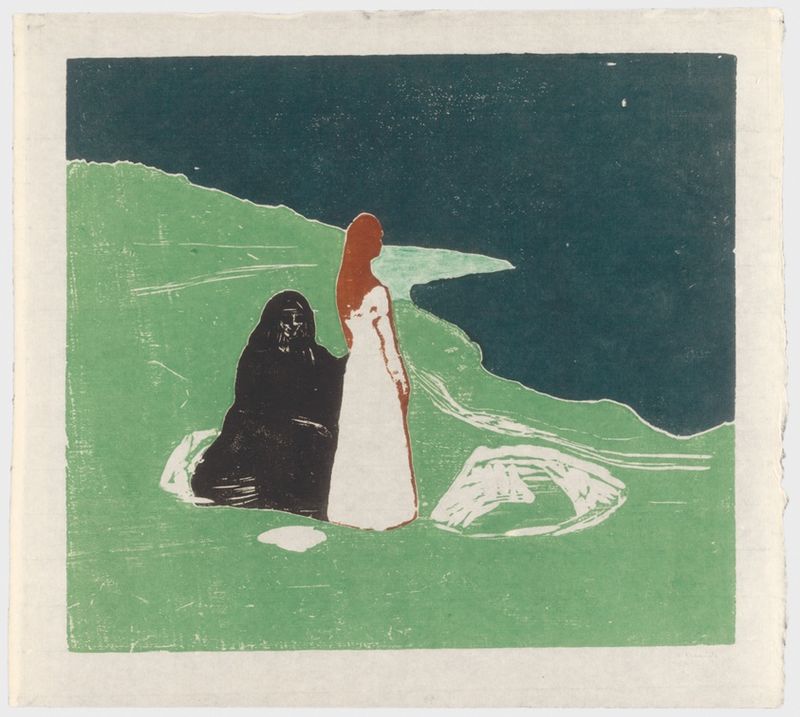 Same era · 1920s–1950s
Two Women on the Shore
Edvard Munch · 1935 · Munch Museum
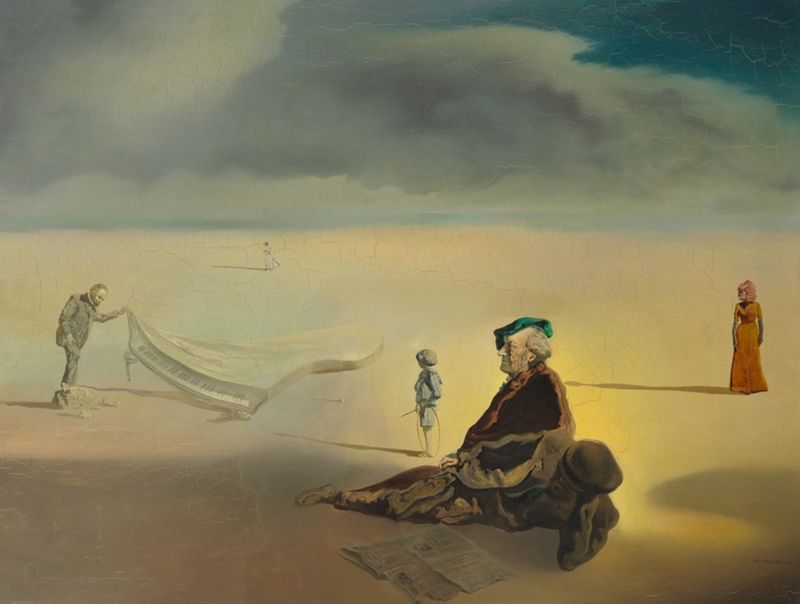 Same era · 1920s–1950s
A Chemist Lifting with Extreme Precaution the Cuticle of a Grand Piano
Salvador Dalí · 1936 · Art Institute of Chicago
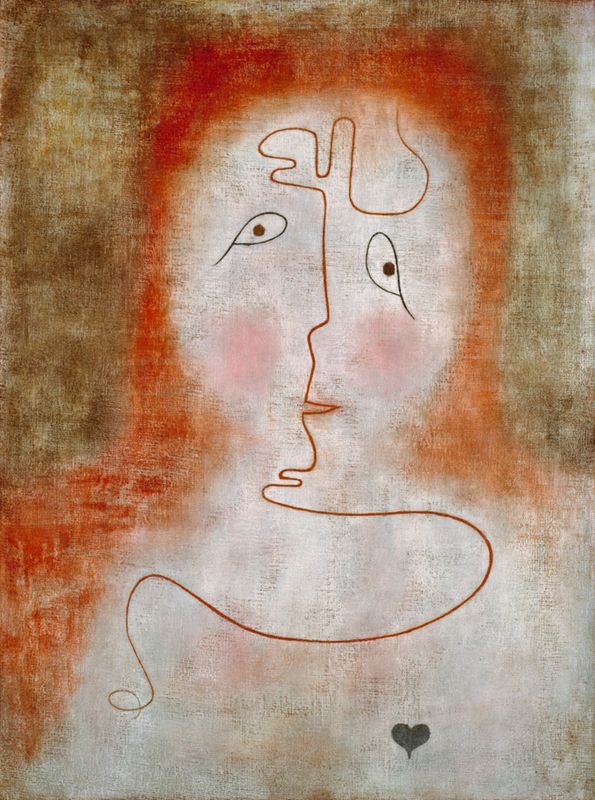 Same era · 1920s–1950s
In the Magic Mirror
Paul Klee · 1934 · Art Institute of Chicago
 Same era · 1920s–1950s
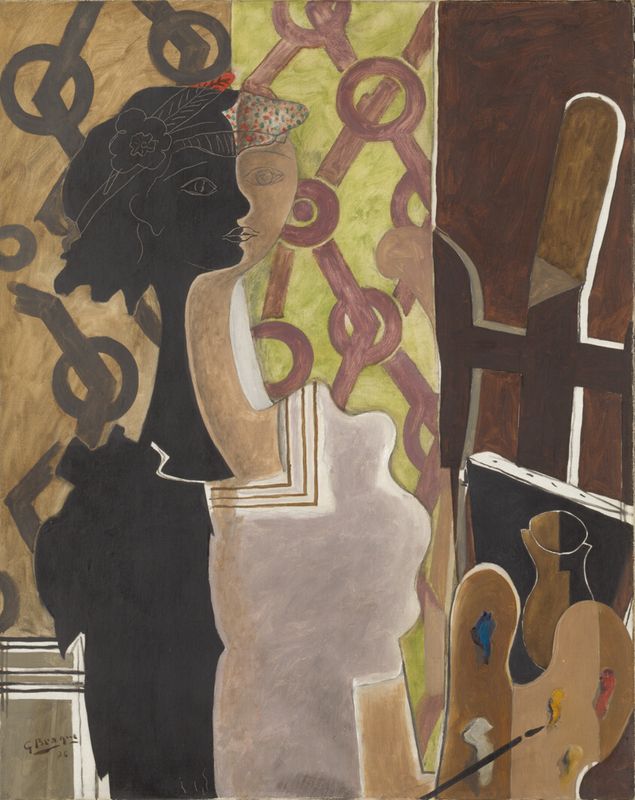
Woman at an Easel (Green Screen)
Georges Braque · 1936 · Art Institute of Chicago
 Same era · 1920s–1950s
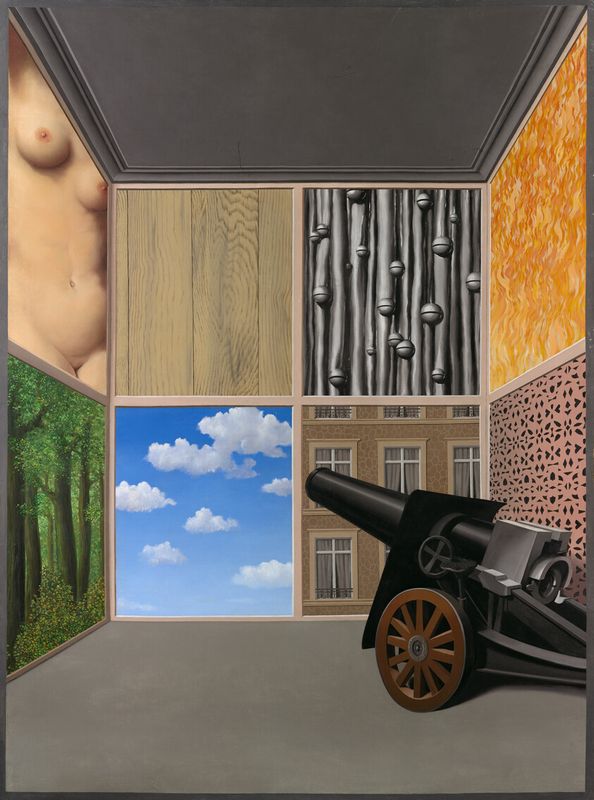
On the Threshold of Liberty
René Magritte · 1937 · Art Institute of Chicago
 Same era · 1920s–1950s
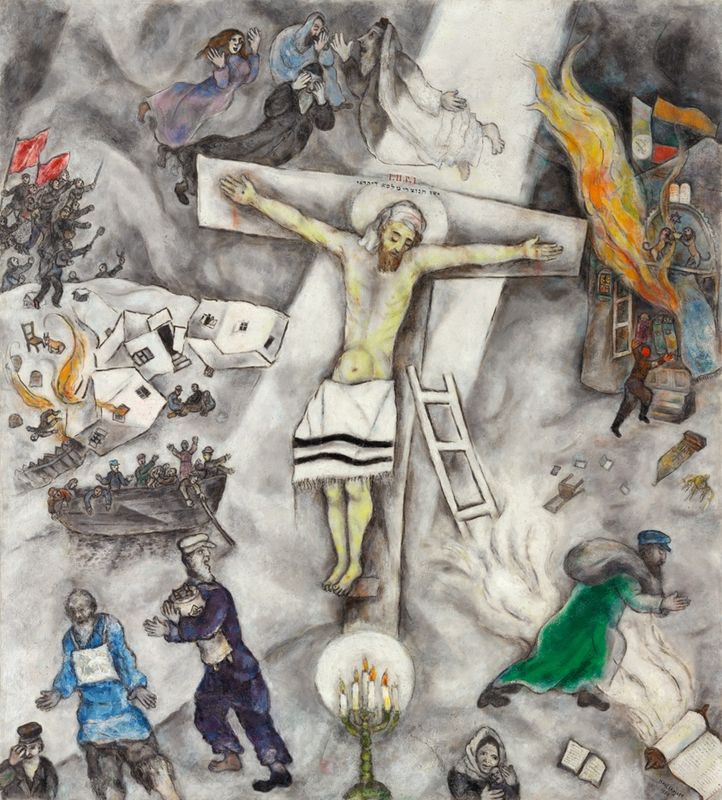
White Crucifixion
Marc Chagall · 1938 · Art Institute of Chicago