01
The dark hunched figure
Perched on top of the arch, a black, smoky figure bends forward with a smooth pale head, its body torn open with ragged holes.
1 of 5 on the painting
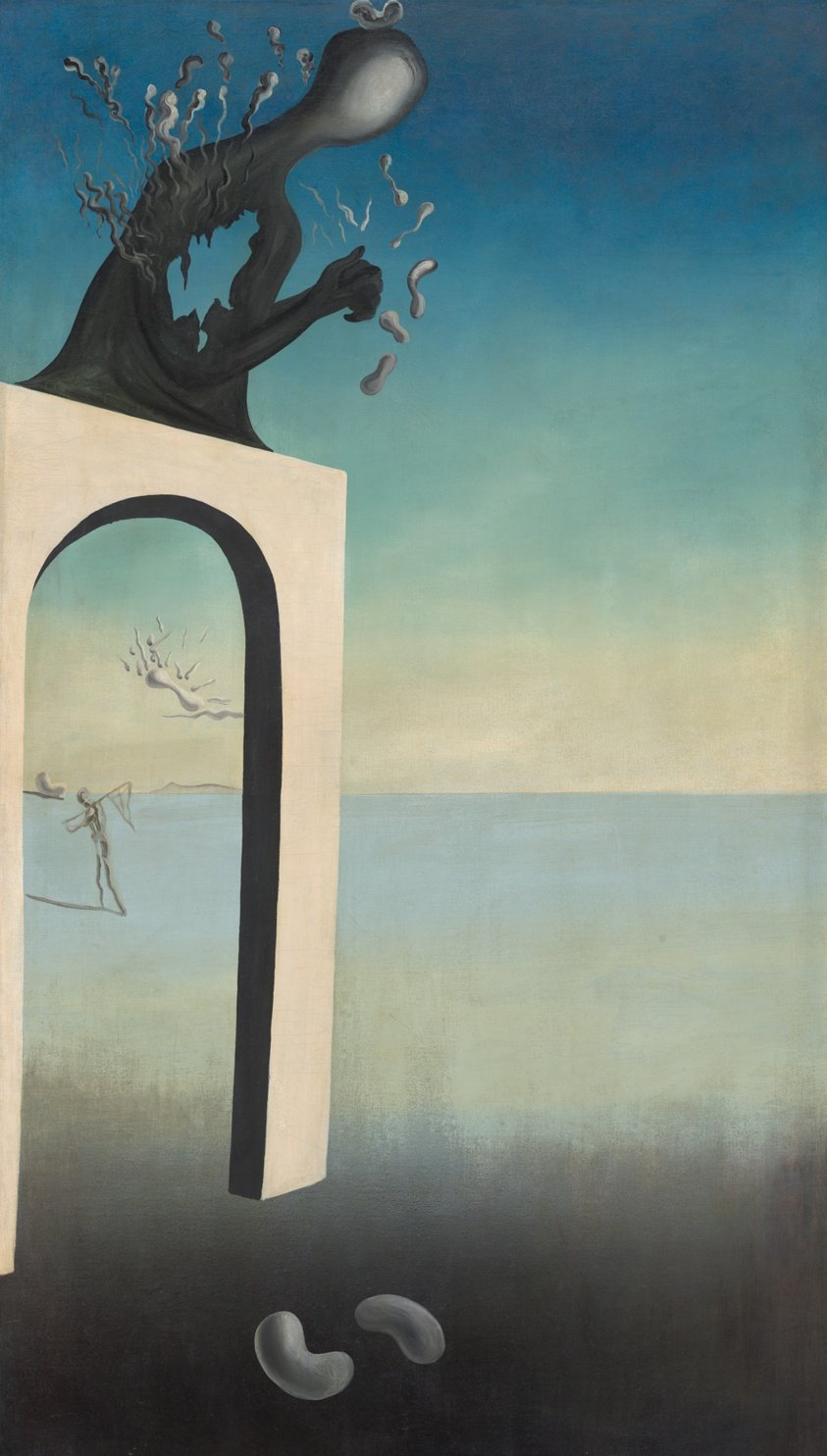
“Step into a dream with this fragment of a mural from Dalí's 1939 World's Fair pavilion, where classical forms meet surreal visions of melting clocks and burning giraffes.”
A lone figure, draped in a white sheet, stands before a vast, empty landscape, framed by an arched passage. This painting was originally part of a much larger mural for Salvador Dalí's "Dream of Venus" pavilion at the 1939 New York World's Fair. The pavilion, a blend of classical beauty and burlesque, featured this mural in its "dry" section, while an adjacent aquarium hosted live performances. The surreal elements, including a melting clock and a burning giraffe, are characteristic of Dalí's iconography from the 1930s. The arched passage seen here was mirrored on the mural's now-lost right side, creating a grand, if unsettling, entryway into Dalí's dreamscape. The work draws you into a world both familiar and deeply strange, reflecting the artist's fascination with dreams and the subconscious.
Five details hide in plain sight. Pick one and we’ll show you exactly where to look.
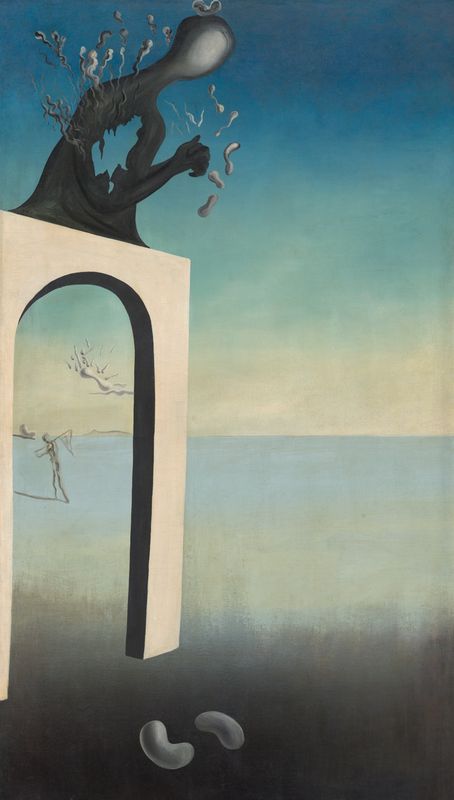
Perched on top of the arch, a black, smoky figure bends forward with a smooth pale head, its body torn open with ragged holes.
The thick black edge of the arch cuts a bold curve against the pale wall. It frames a calm sea and leads your eye from the figure above toward the distant horizon.
Through the opening, a tiny, thin figure stands near the water's edge, holding something up that could be a net or a cloth. It is easy to miss next to the huge arch.
Small gray bean-like shapes and wispy squiggles drift down beside the figure's raised hand. They look like pieces breaking away from the figure.
Two glossy gray bean shapes float near the bottom in the dark foreground. They echo the drifting forms above and anchor the tall picture.
The full narration walks you through Untitled (Dream of Venus) formerly Visions of Eternity — the story behind it, the details most visitors miss, and why it matters. Free in the Art Whisper app.
Dalí painted melting clocks and dream logic with the precision of an Old Master — then became the most famous eccentric alive.
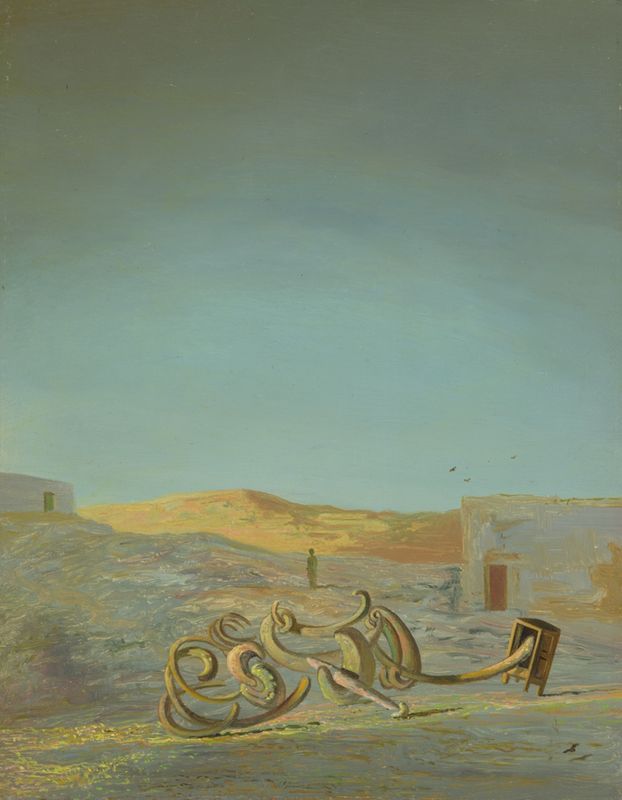 Untitled (Desert Landscape)
1934 · Art Institute of Chicago
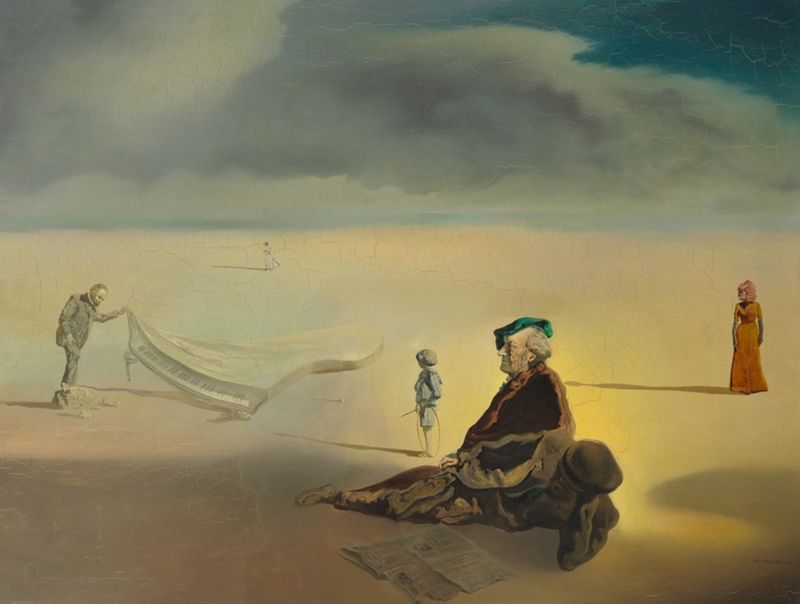 A Chemist Lifting with Extreme Precaution the Cuticle of a Grand Piano
1936 · Art Institute of Chicago
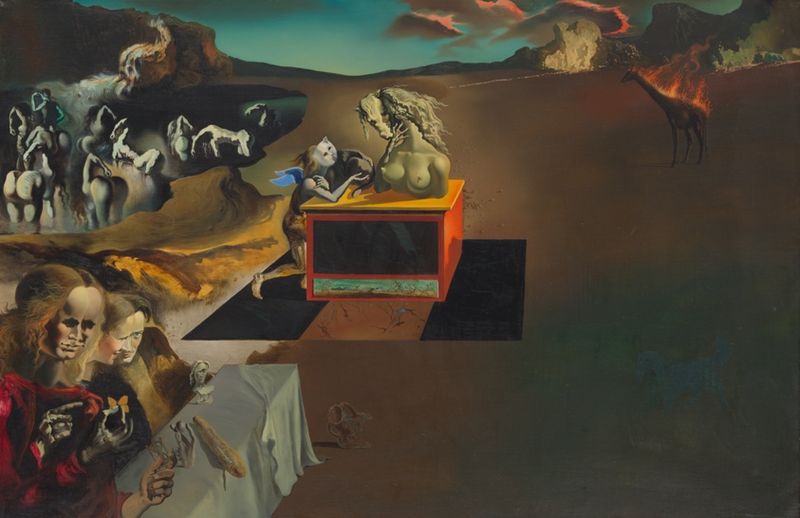 Inventions of the Monsters
1937 · Art Institute of Chicago
 Gala
1931 · Dalí Theatre and Museum
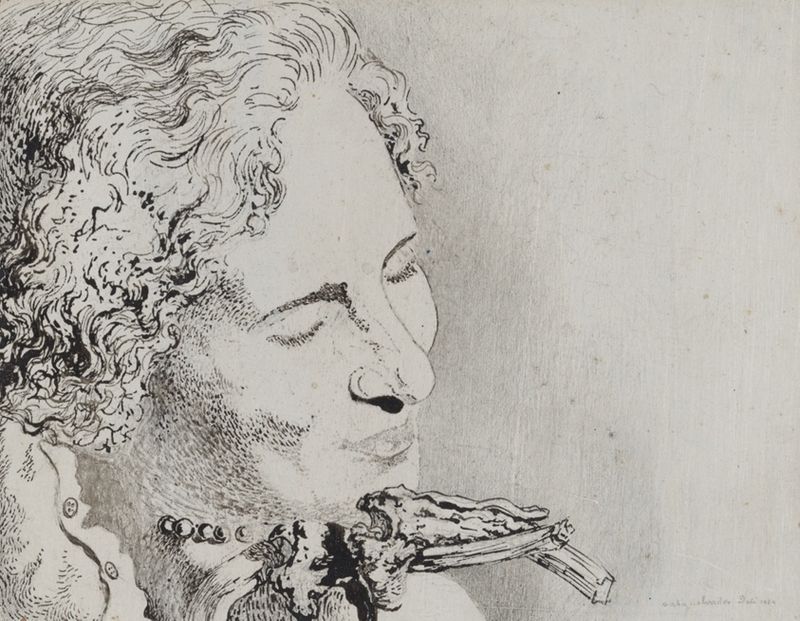 Portrait of Gala with Two Lamb Chops in Equilibrium upon Her Shoulder
1934 · Art Institute of Chicago
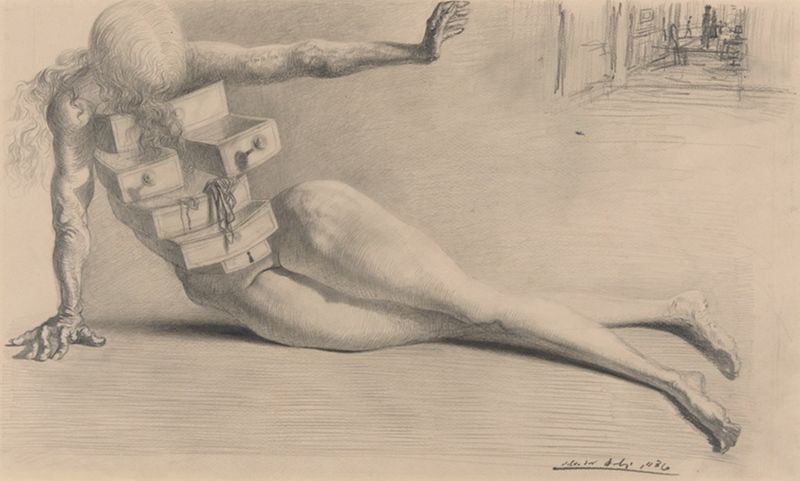 City of Drawers
1936 · Art Institute of Chicago
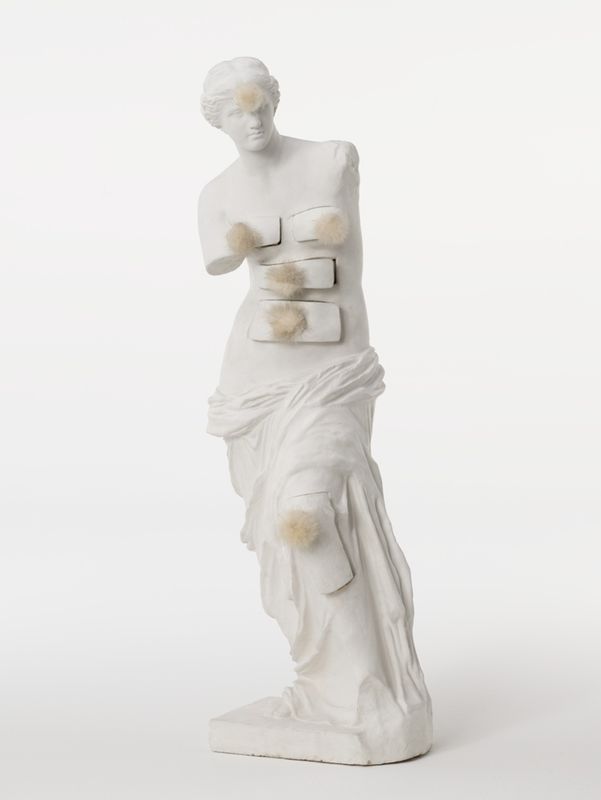 Venus de Milo with Drawers
1936 · Art Institute of Chicago
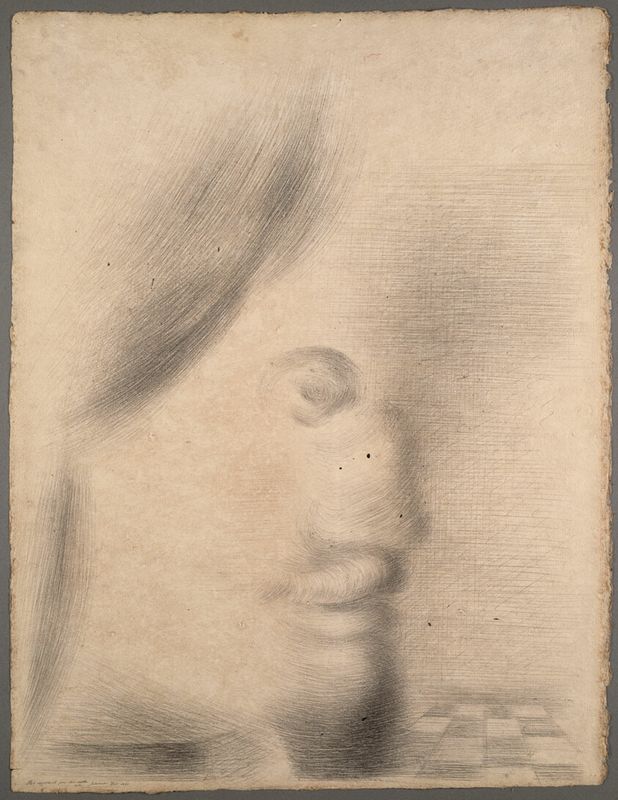 The Image Disappears
1938 · Art Institute of Chicago
Beyond Dalí and Surrealism: works from the same years.
 Same era · 1920s–1950s
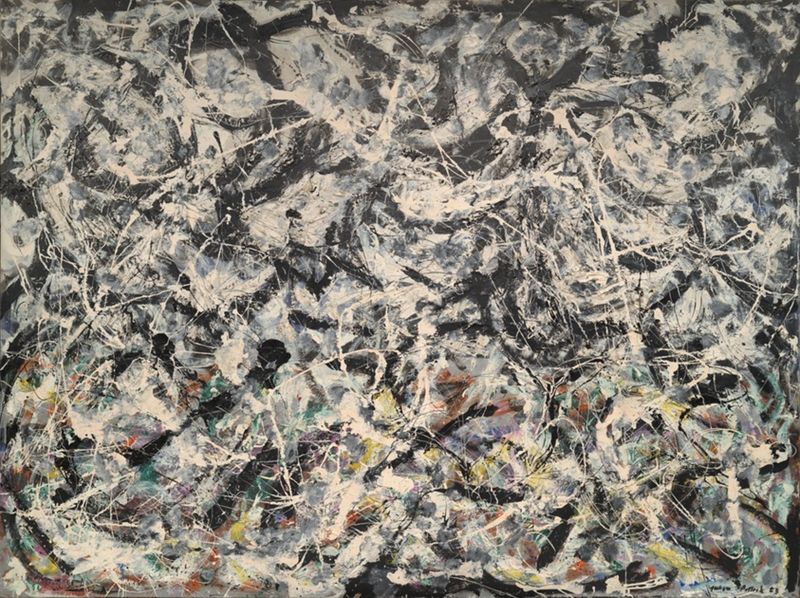
Greyed Rainbow
Jackson Pollock · 1953 · Art Institute of Chicago
 Same era · 1920s–1950s
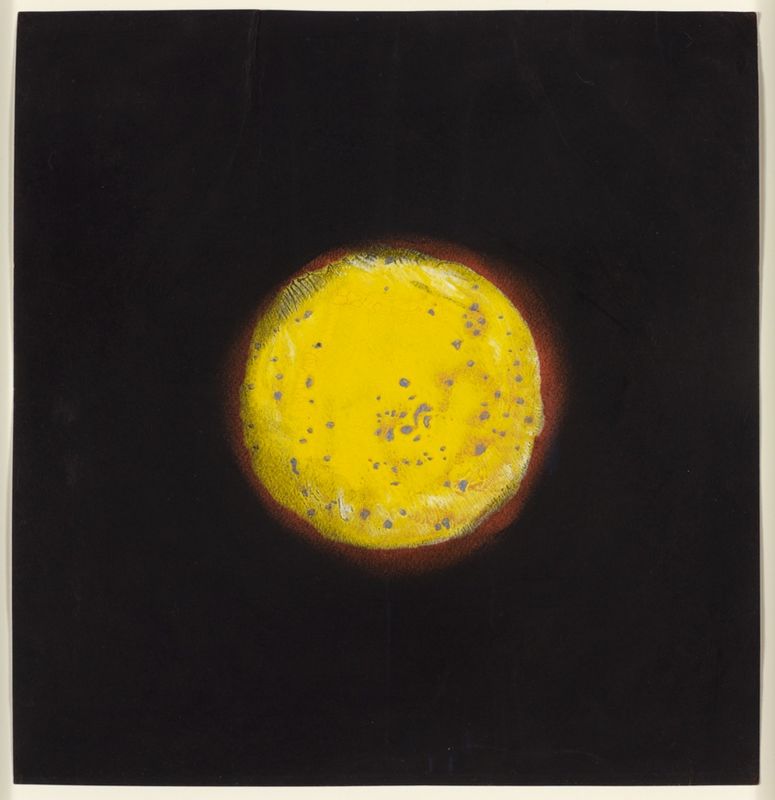
Sun Spot
Yayoi Kusama · 1953 · Art Institute of Chicago
 Same era · 1920s–1950s
Deux personnages
Pierre Alechinsky · 1950
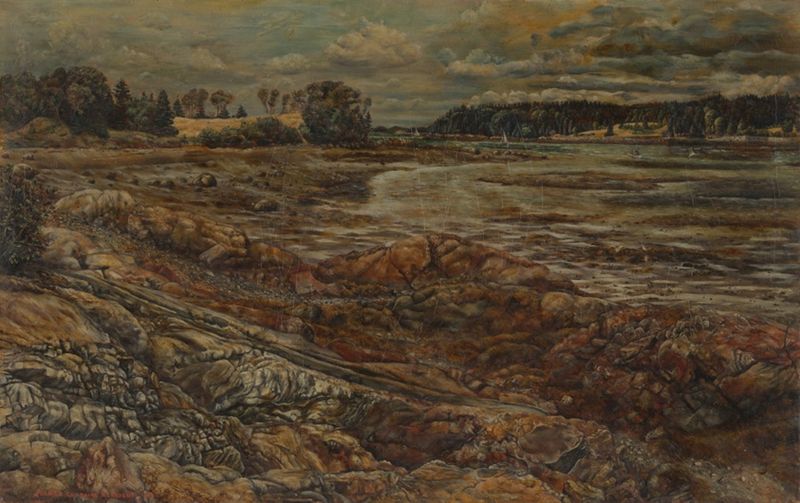 Same era · 1920s–1950s
Divided and Divided
Ivan Puni · 1941 · Art Institute of Chicago
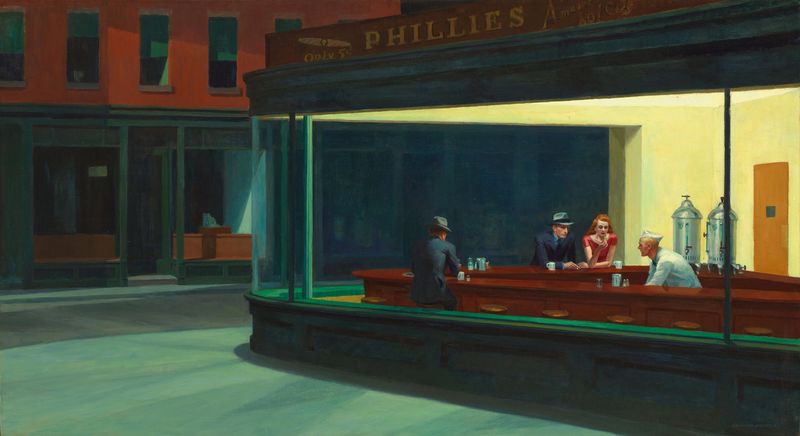 Same era · 1920s–1950s
Nighthawks
Okada Saburosuke · 1942 · Art Institute of Chicago
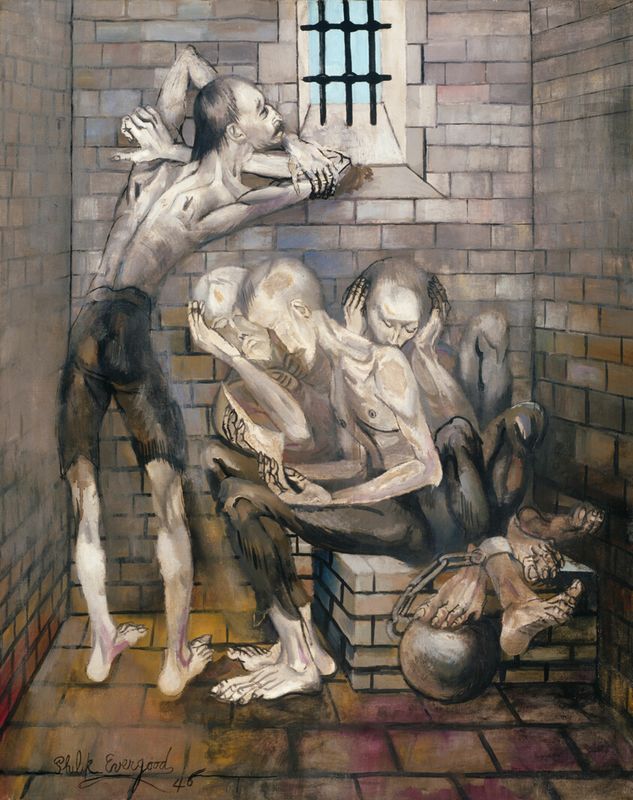 Same era · 1920s–1950s
The Indestructibles
Philip Evergood · 1946 · Art Institute of Chicago
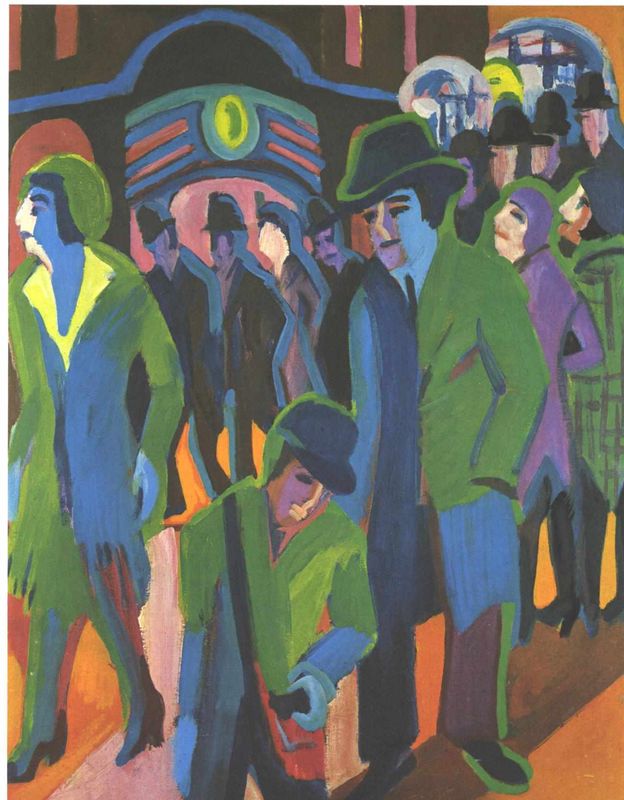 Same era · 1920s–1950s
Straße mit Passanten bei Nachtbeleuchtung
Ernst Ludwig Kirchner · 1927 · Museum Frieder Burda
 Same era · 1920s–1950s
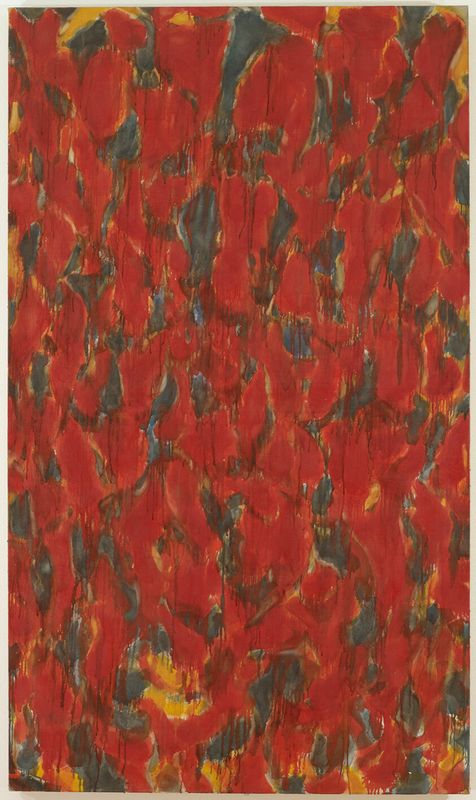
Red No. 2
Sam Francis · 1954 · Art Institute of Chicago
 Same era · 1920s–1950s
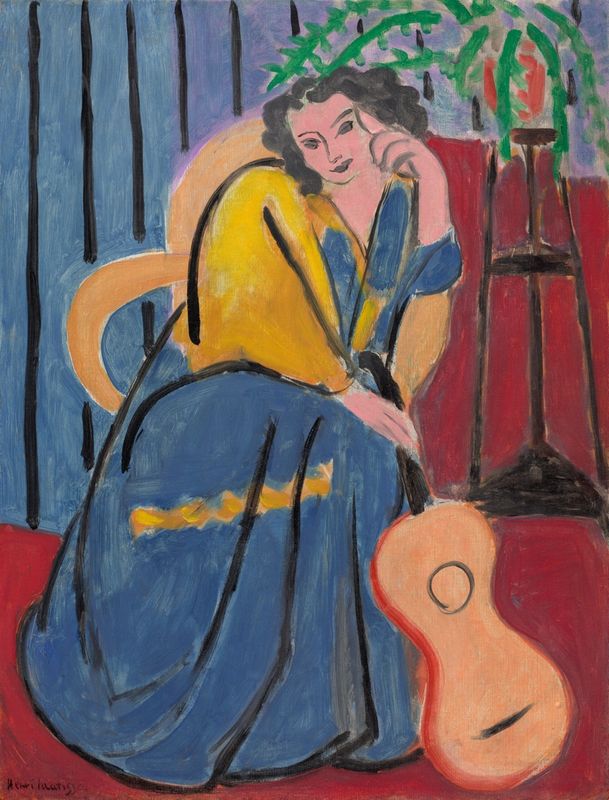
Girl in Yellow and Blue with Guitar
Henri Matisse · 1939 · Art Institute of Chicago
 Same era · 1920s–1950s
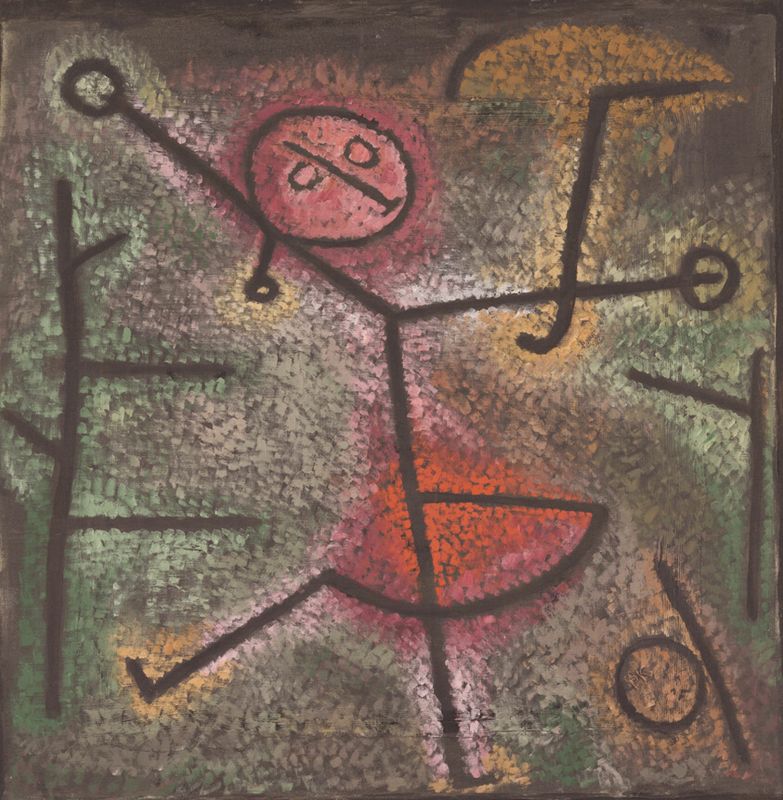
Dancing Girl
Paul Klee · 1940 · Art Institute of Chicago
 Same era · 1920s–1950s
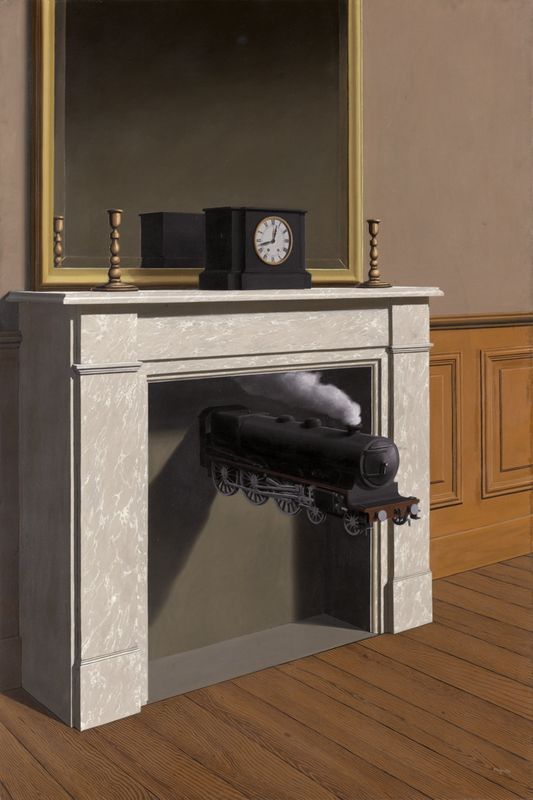
La durée poignardée (Time Transfixed)
René Magritte · 1938 · Art Institute of Chicago
 Same era · 1920s–1950s
Spanish Physician
Max Ernst · 1940 · Art Institute of Chicago