Woman on the balcony
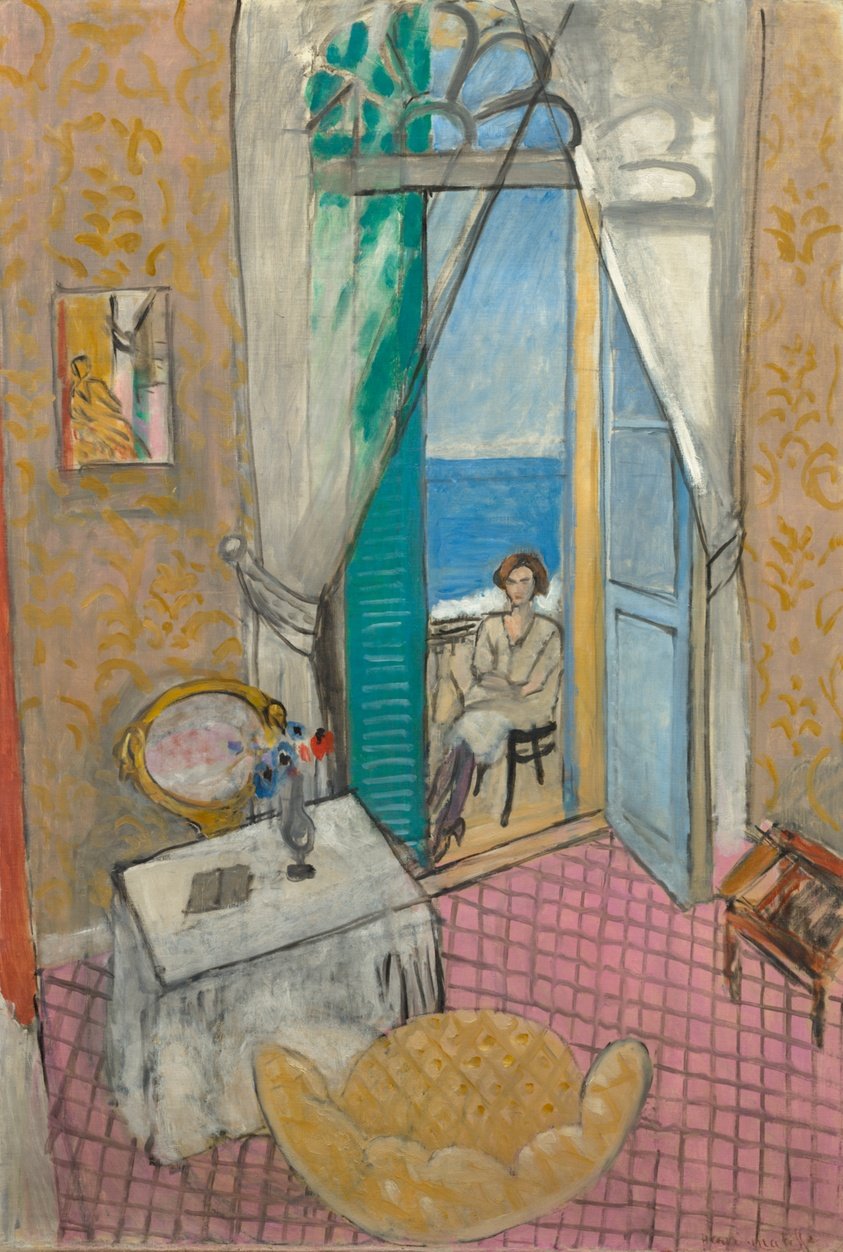
Find the seated woman with folded arms, framed by the open doorway. She sits small against the blue sea and gazes out toward the room, and the doorway and the pull of the floor draw your eye to her.

“Step into a sun-drenched hotel room in Nice, where Henri Matisse blurs the lines between inside and out, capturing a quiet moment with bold patterns and luminous light. Notice how the woman on the balcony draws your eye, connecting you to the scene.”
In "Interior at Nice," a young woman sits on a balcony, her back to the shimmering Mediterranean Sea, gazing directly out at the viewer. This painting captures a specific moment in Henri Matisse's time in Nice, where he frequently stayed at the Hôtel Mediterranée. The Rococo-style hotel, with its pink-tiled floors and yellow, arabesque-patterned wallpaper, provides a vibrant backdrop, creating a sense of intimate domesticity intertwined with the expansive outdoor world. Matisse masterfully uses a high viewpoint and a wide-angled perspective to draw attention to the figure, framed by the light-filled French windows and flowing curtains. This work exemplifies his exploration of linking interior and exterior spaces, structured by patterns and modulated light, a recurring theme in his Nice period.

Five details hide in plain sight. Pick one and we’ll show you exactly where to look.
Find the seated woman with folded arms, framed by the open doorway. She sits small against the blue sea and gazes out toward the room, and the doorway and the pull of the floor draw your eye to her.
The doorway frames sea, sky and woman like a painting inside the painting. Interior and outdoors run together as one continuous space.
The floor is a loose grid of dark lines over pink, tilting steeply upward. The high viewpoint flattens the space and leads your eye toward the open doorway.
On the left wall hangs a small framed image of a figure in yellow. It seems to echo the woman on the balcony, a picture within the room that repeats the theme of a seated figure.
A skirted table holds a vase of small red and blue flowers beside an oval gold mirror. The soft gray-white of the cloth makes the flowers stand out as bright spots of color.
The full narration walks you through Interior at Nice — the story behind it, the details most visitors miss, and why it matters. Free in the Art Whisper app.
Henri Matisse, a master of color and form, moved from law to art after an appendicitis recovery, becoming a defining figure of 20th-century modern art.
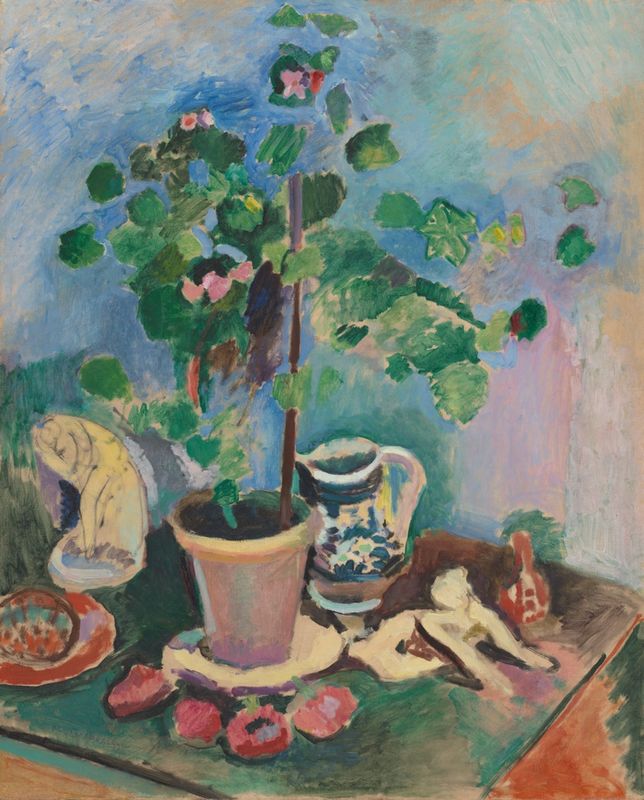
Still Life with Geranium
1906 · Art Institute of Chicago
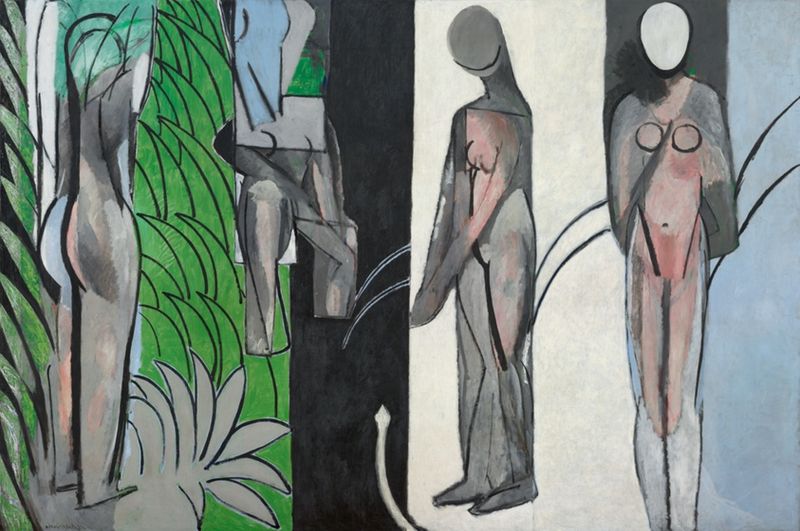
Bathers by a River
1909 · Art Institute of Chicago
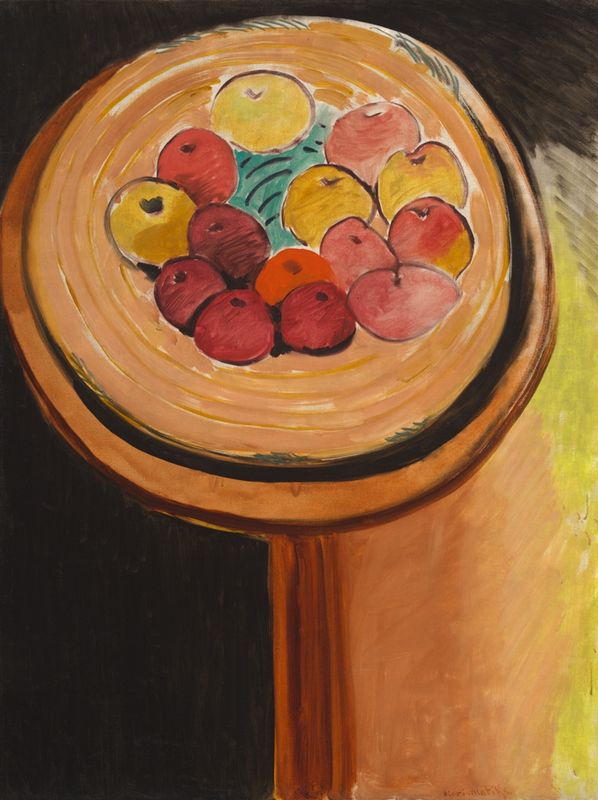
Apples
1916 · Art Institute of Chicago
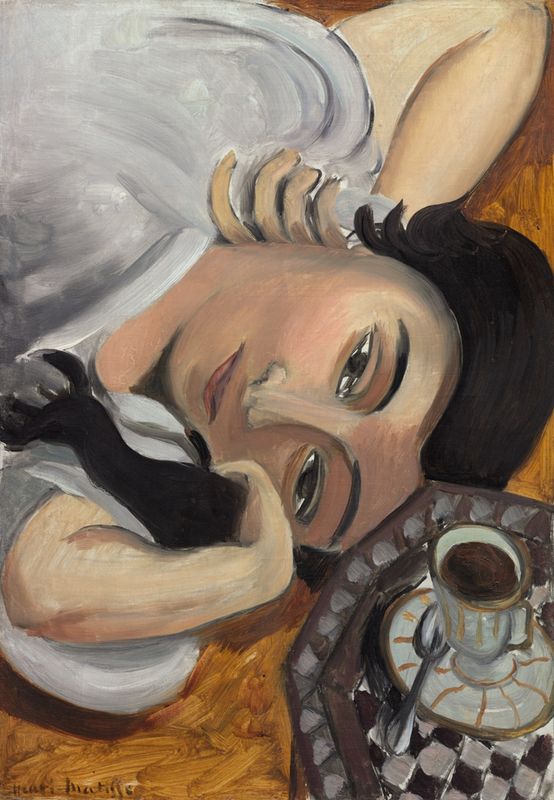
Laurette with a Cup of Coffee
1916 · Art Institute of Chicago
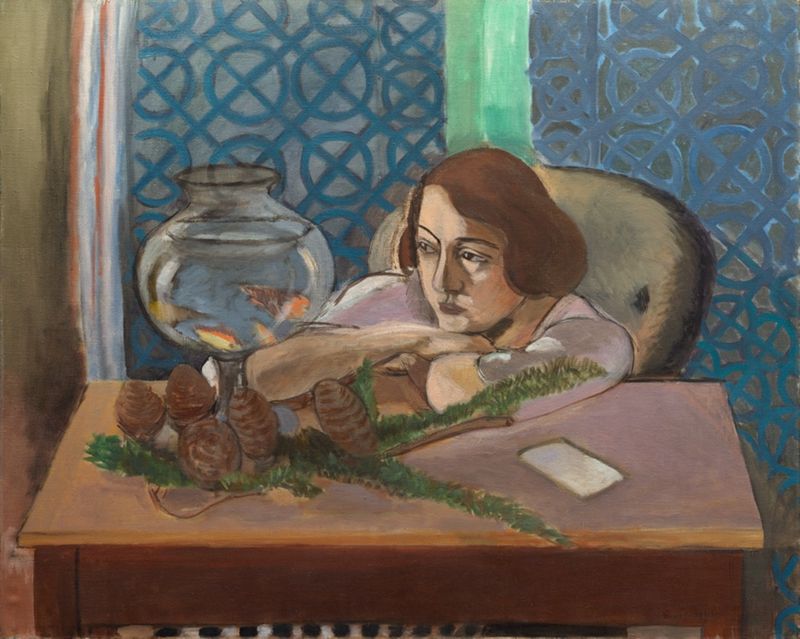
Woman before an Aquarium
1921 · Art Institute of Chicago
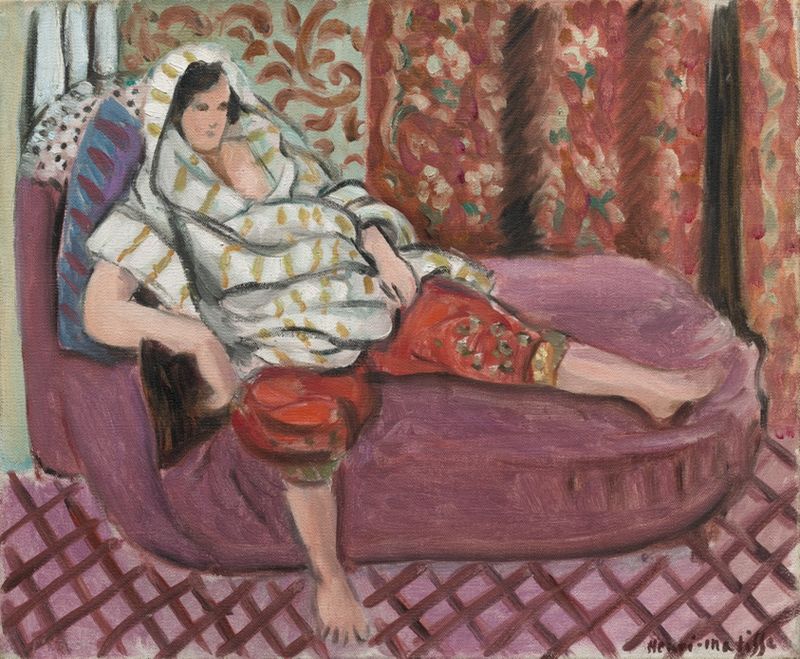
Woman on Rose Divan
1921 · Art Institute of Chicago
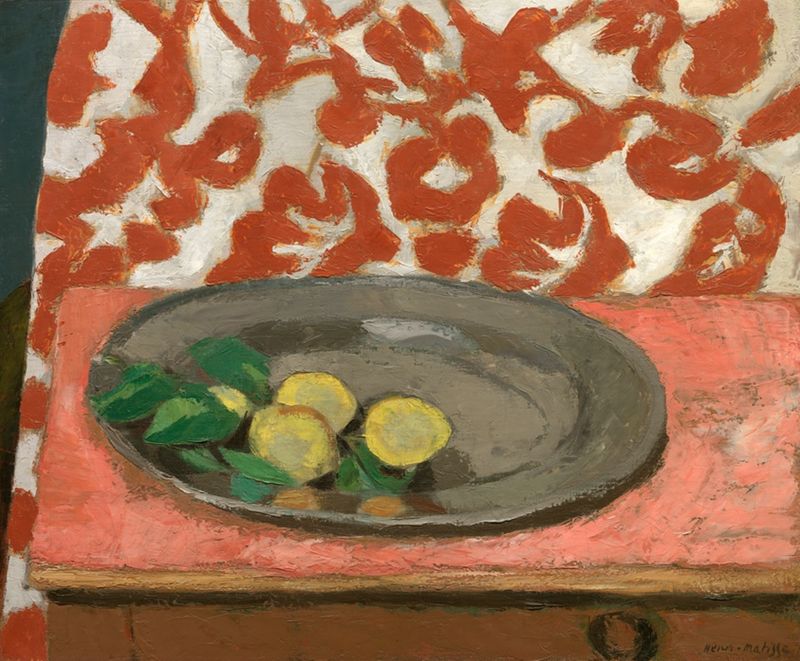
Lemons on a Pewter Plate
1926 · Art Institute of Chicago
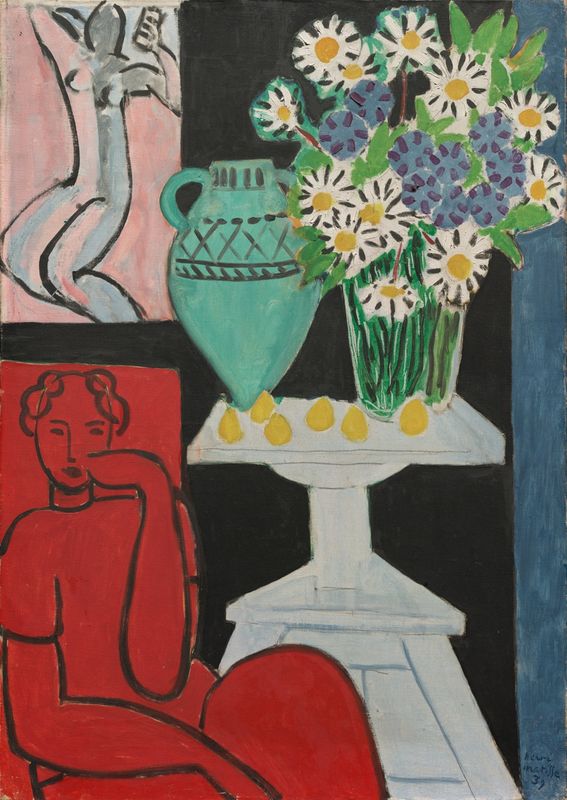
Daisies
1939 · Art Institute of Chicago
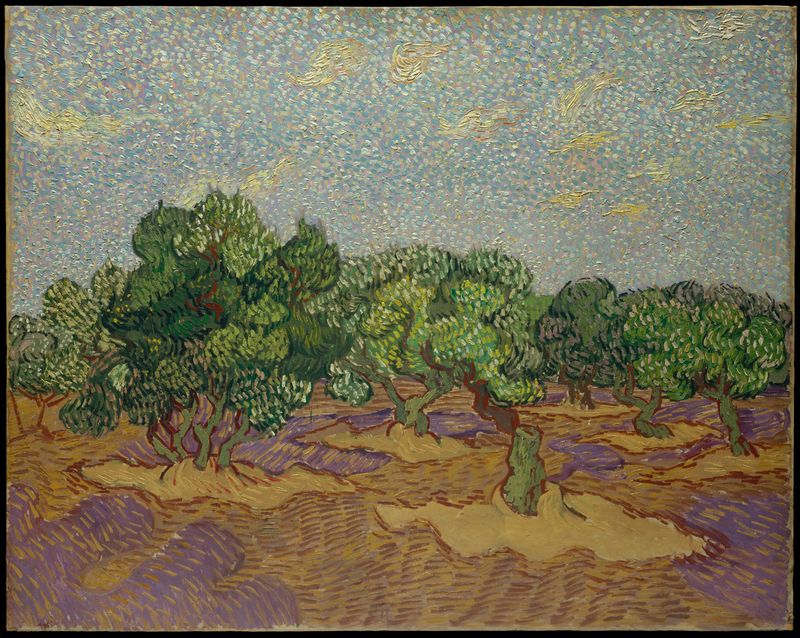
Olive Trees
van Gogh · 1853 · The Metropolitan Museum of Art
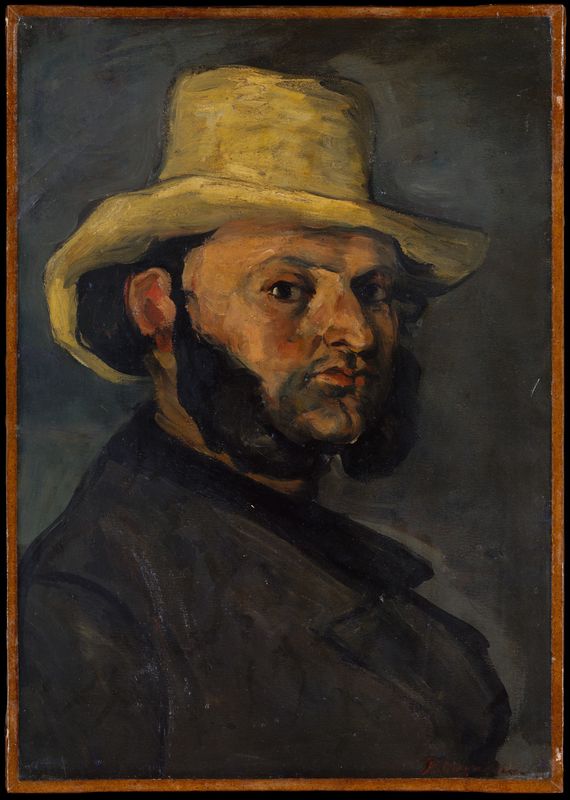
Gustave Boyer (b. 1840) in a Straw Hat
Cézanne · 1870 · The Metropolitan Museum of Art
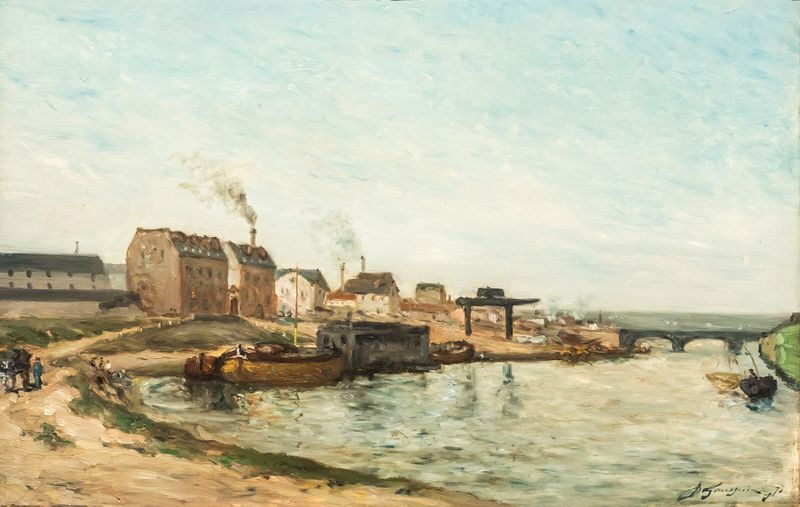
The Seine at Pont de Grenelle
Gauguin · 1875 · Wallraf–Richartz Museum
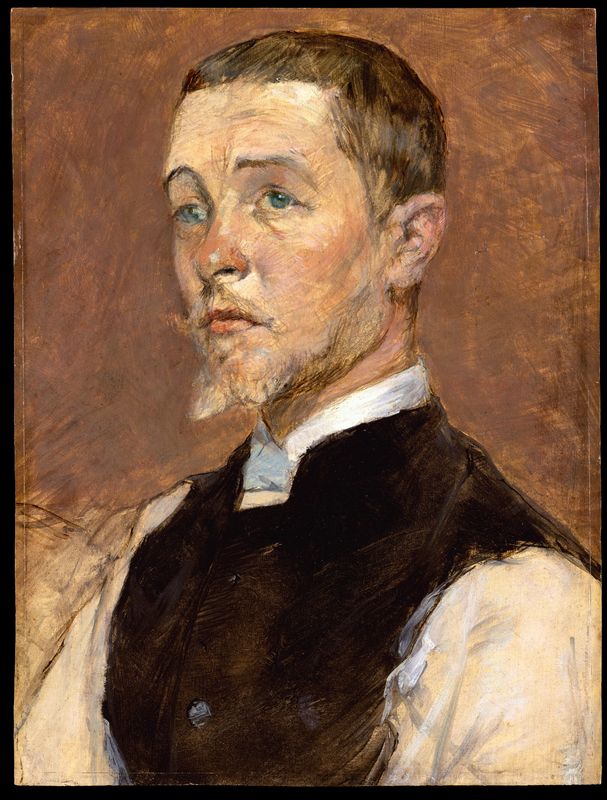
Albert (René) Grenier (1858–1925)
de Toulouse-Lautrec · 1887 · The Metropolitan Museum of Art
Beyond Matisse and Post-Impressionism: works from the same years, and from the other movements Interior at Nice belongs to.
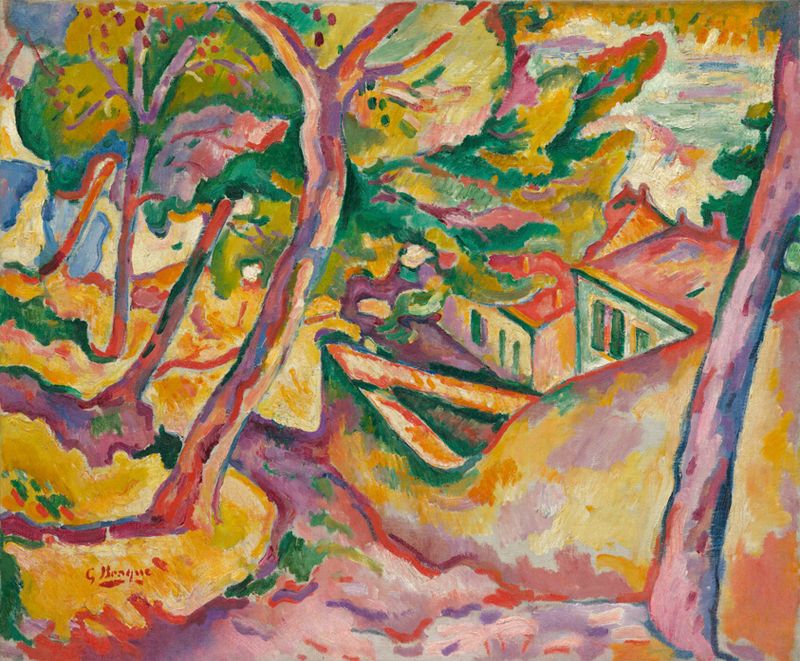
Same movement · Fauvism
Landscape at L'Estaque
Georges Braque · 1906 · Art Institute of Chicago
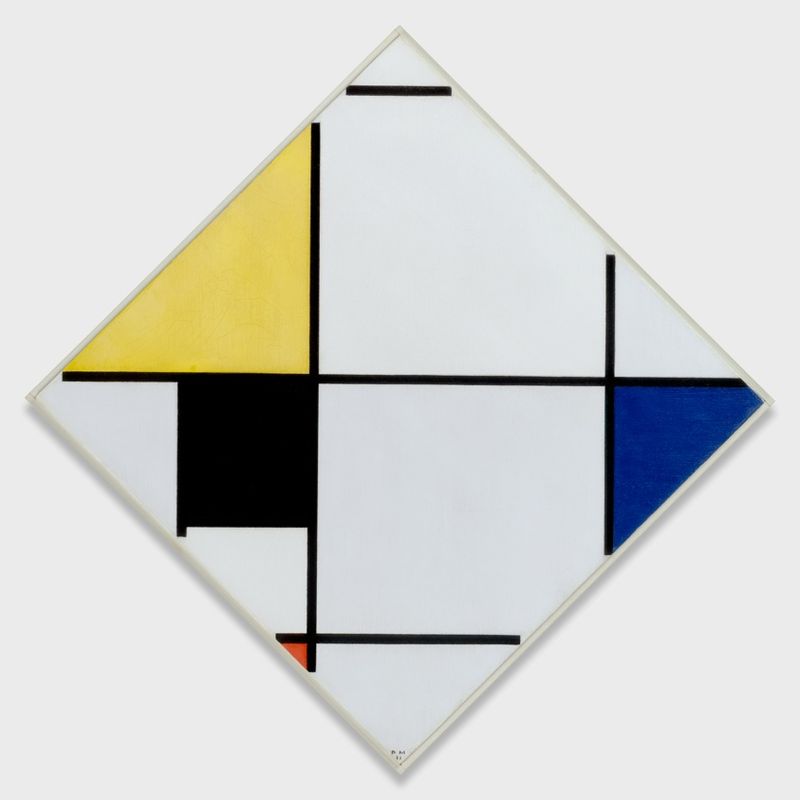
Same era · 1900s–1930s
Lozenge Composition with Yellow, Black, Blue, Red, and Gray
Piet Mondrian · 1921 · Art Institute of Chicago
Same movement · Impressionism
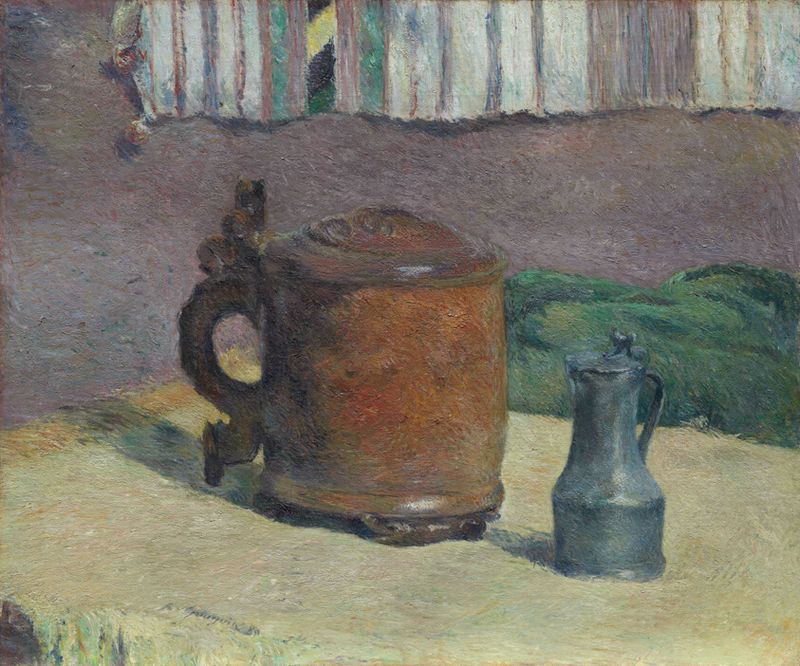
Still Life: Wood Tankard and Metal Pitcher
Paul Gauguin · 1880 · Art Institute of Chicago
Same era · 1900s–1930s
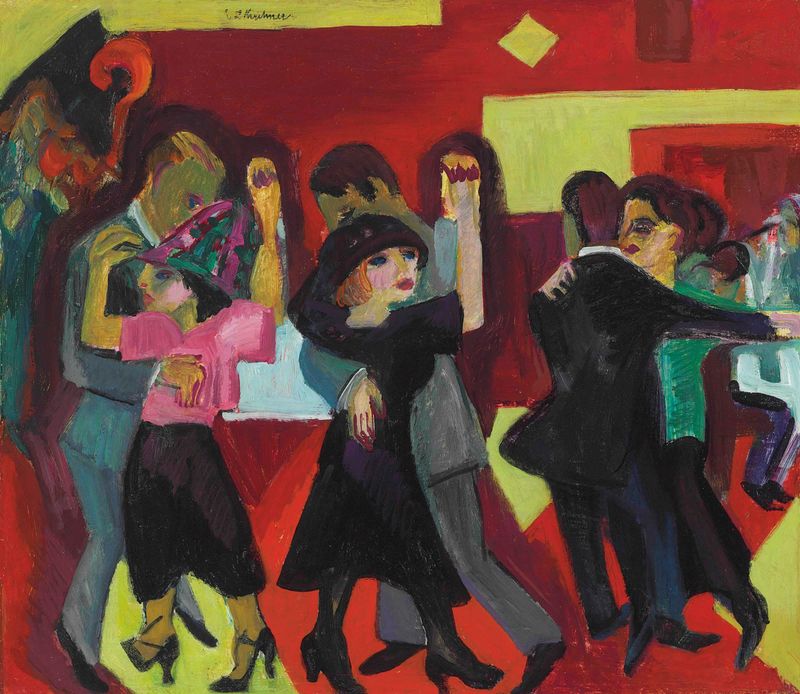
Tangotee
Ernst Ludwig Kirchner · 1920
Same movement · Impressionism
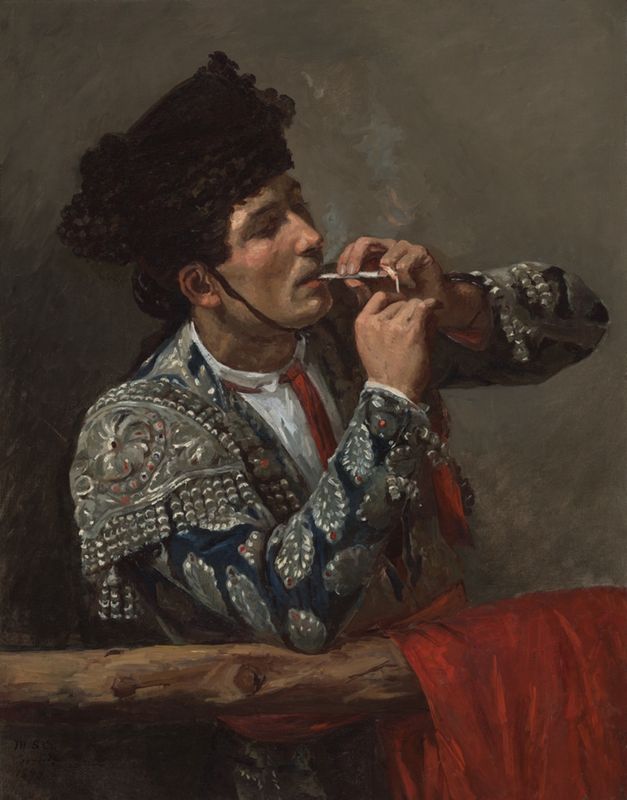
After the Bullfight
Mary Cassatt · 1873 · Art Institute of Chicago
Same era · 1900s–1930s
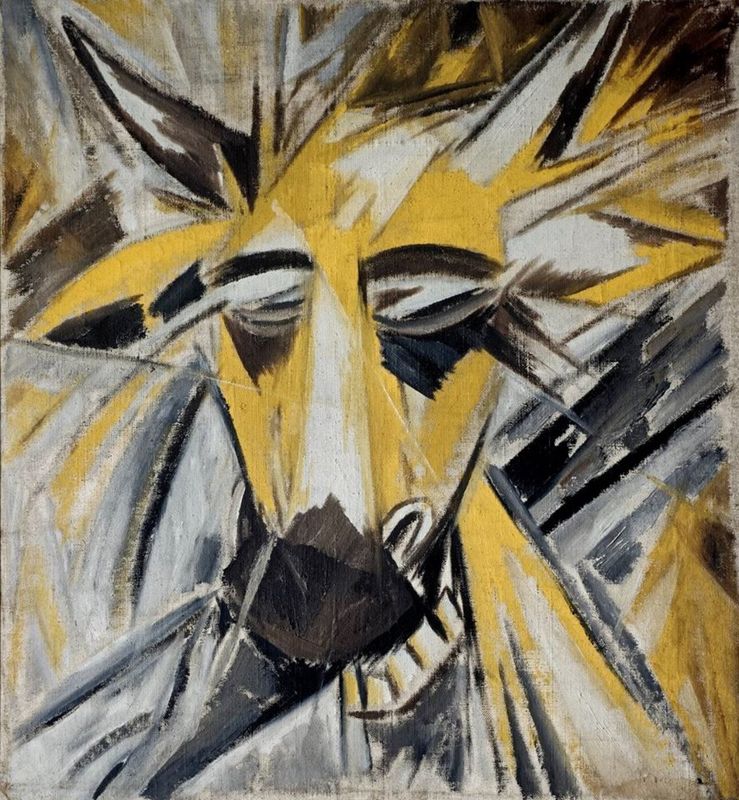
Bull's Head
Mikhail Larionov · 1913 · Tretyakov Gallery
Same movement · Impressionism
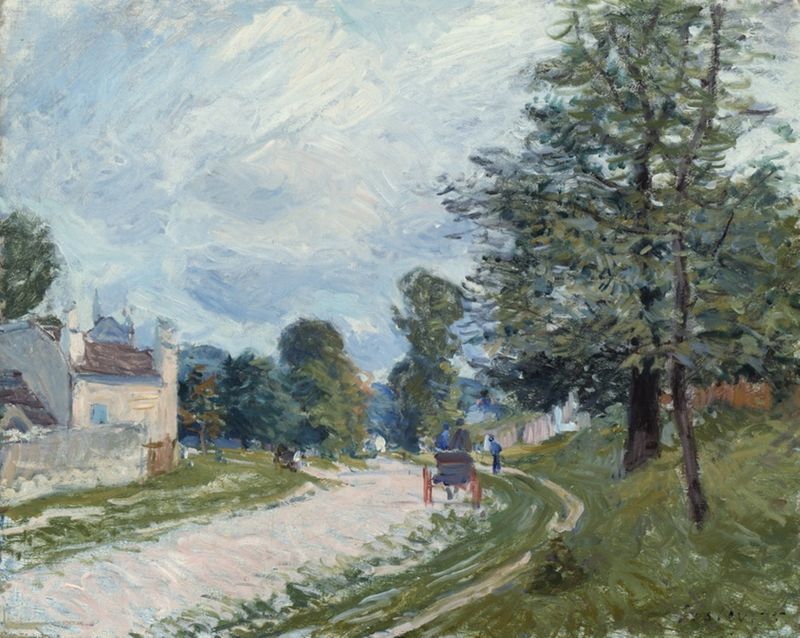
A Turn in the Road
Alfred Sisley · 1873 · Art Institute of Chicago
Same era · 1900s–1930s
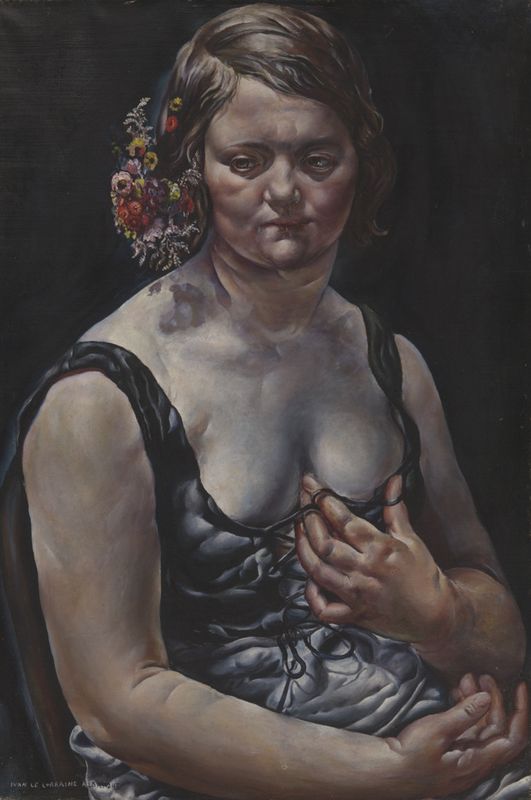
Memories of the Past
Ivan Puni · 1927 · Art Institute of Chicago
Same movement · Impressionism
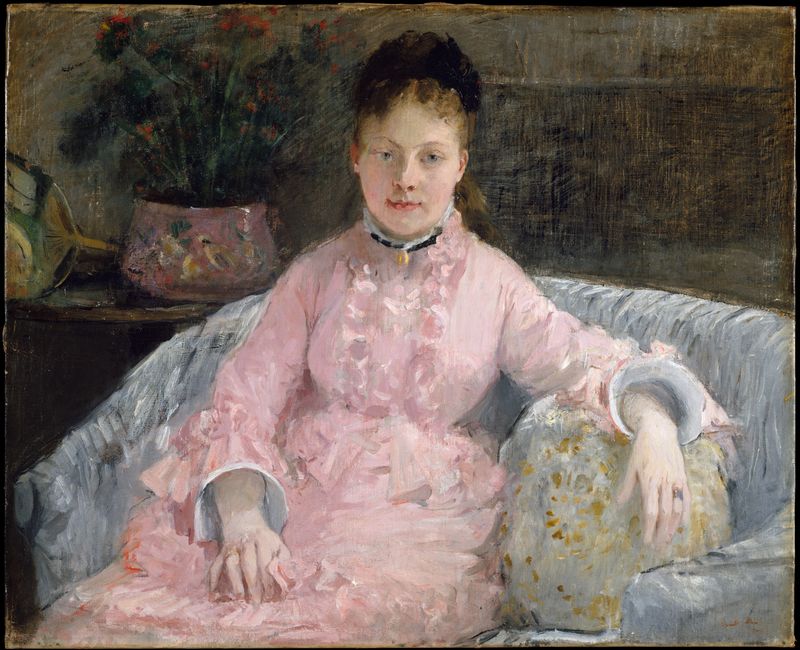
The Pink Dress (Albertie-Marguerite Carré, later Madame Ferdinand-Henri Himmes, 1854–1935)
Berthe Morisot · 1870 · Metropolitan Museum of Art
Same era · 1900s–1930s
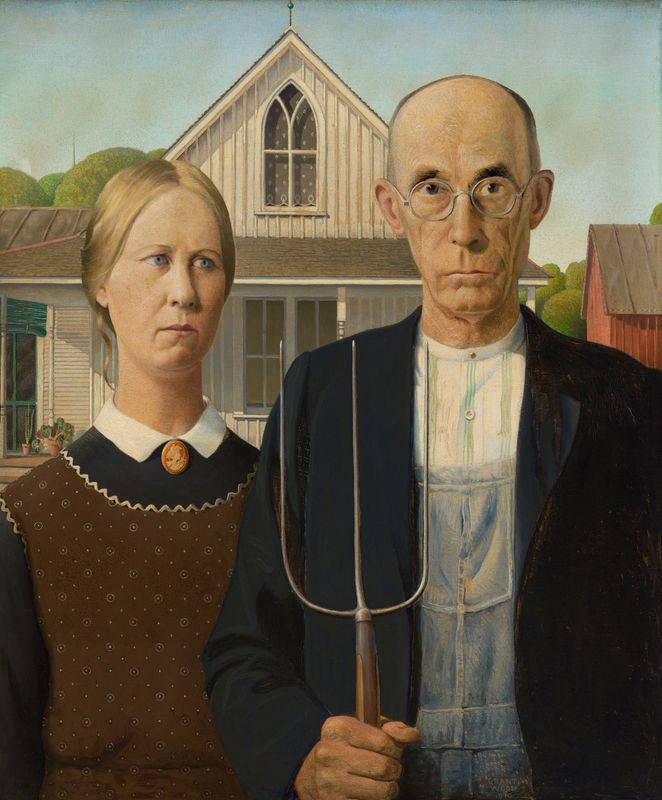
American Gothic
Okada Saburosuke · 1930 · Art Institute of Chicago
Same movement · Impressionism
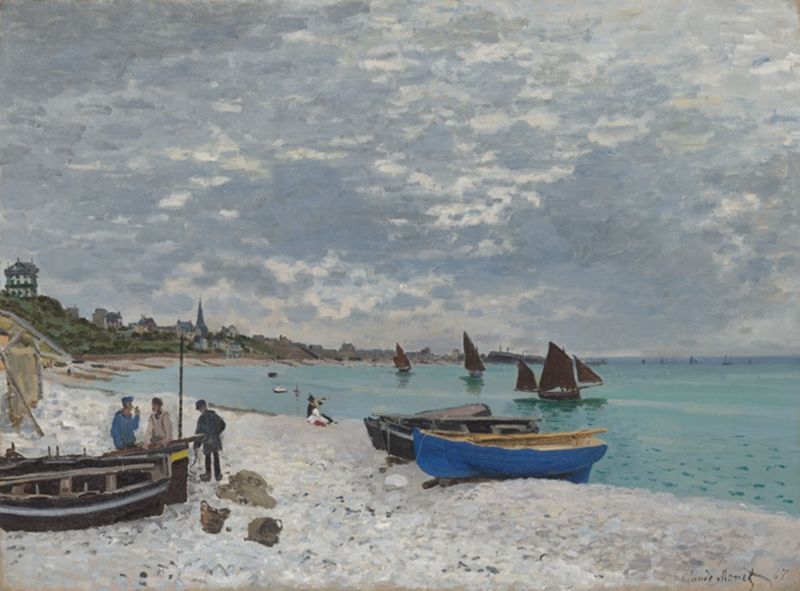
The Beach at Sainte-Adresse
Claude Monet · 1867 · Art Institute of Chicago
Same era · 1900s–1930s
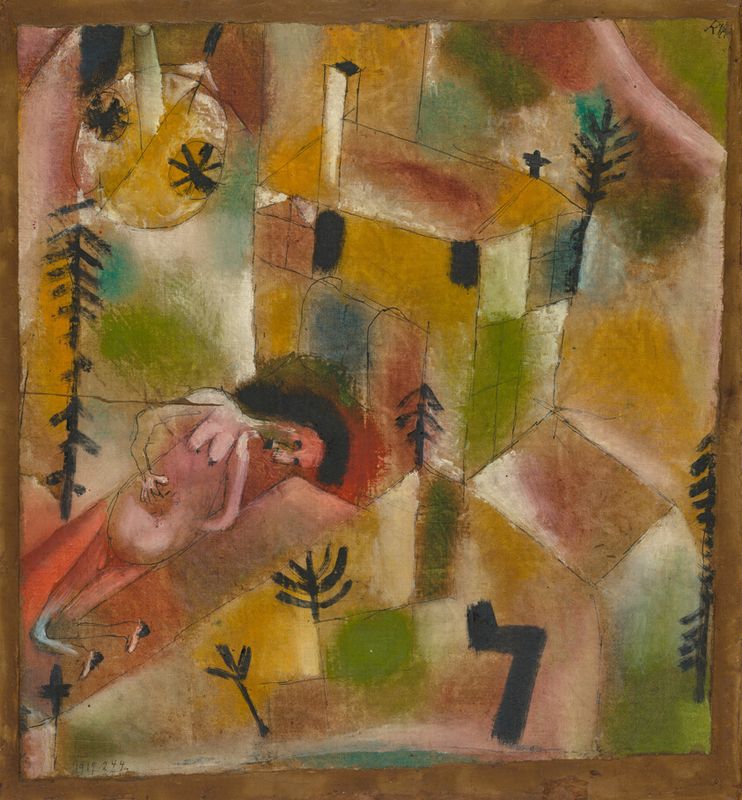
Death in the Garden (Legend)
Paul Klee · 1919 · Art Institute of Chicago
Same movement · Neo-Impressionism
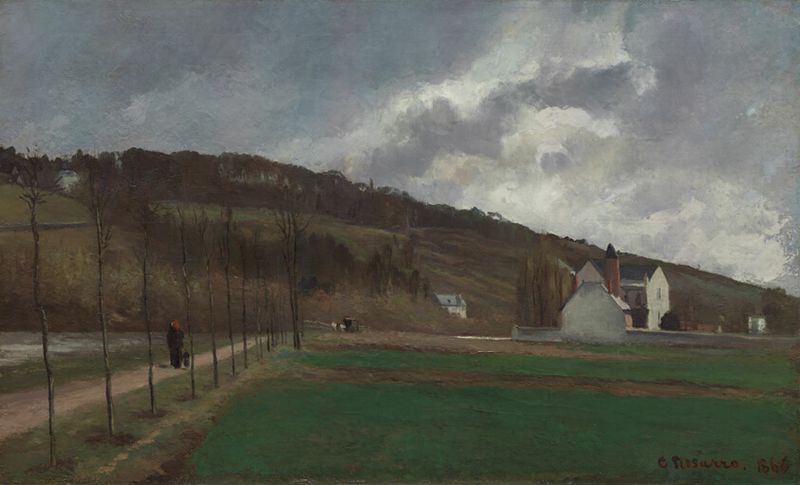
The Banks of the Marne in Winter
Camille Pissarro · 1866 · Art Institute of Chicago
Same era · 1900s–1930s
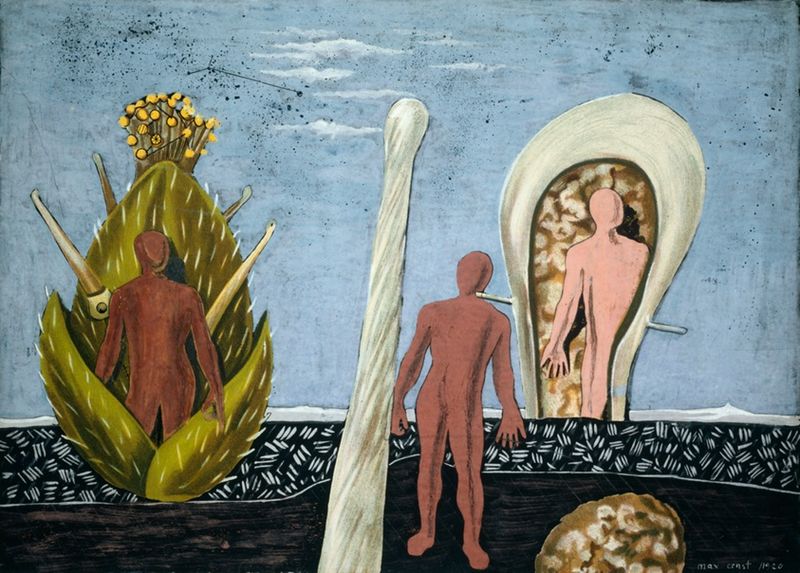
Dada Gauguin
Max Ernst · 1920 · Art Institute of Chicago
Same movement · Impressionism
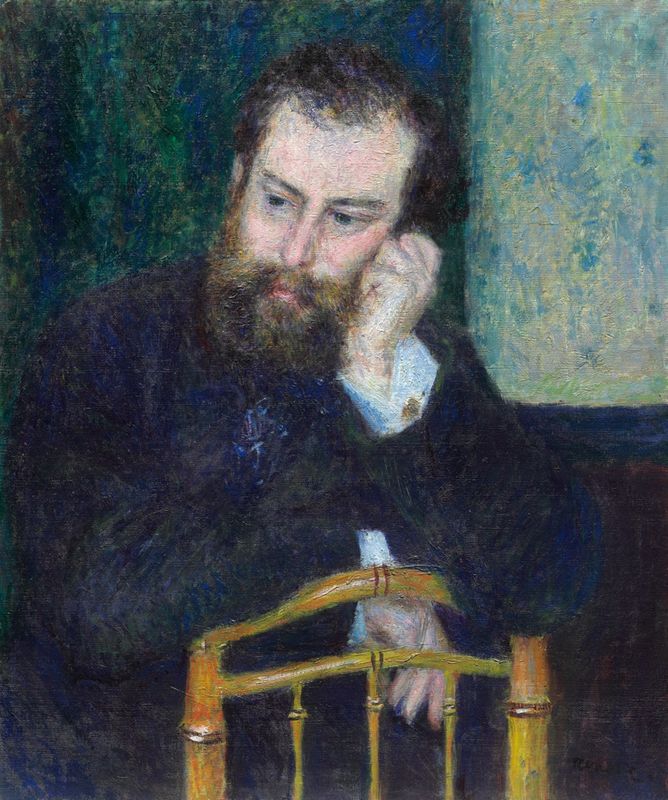
Alfred Sisley
Pierre-Auguste Renoir · 1864 · Foundation E.G. Bührle Collection
Same era · 1900s–1930s
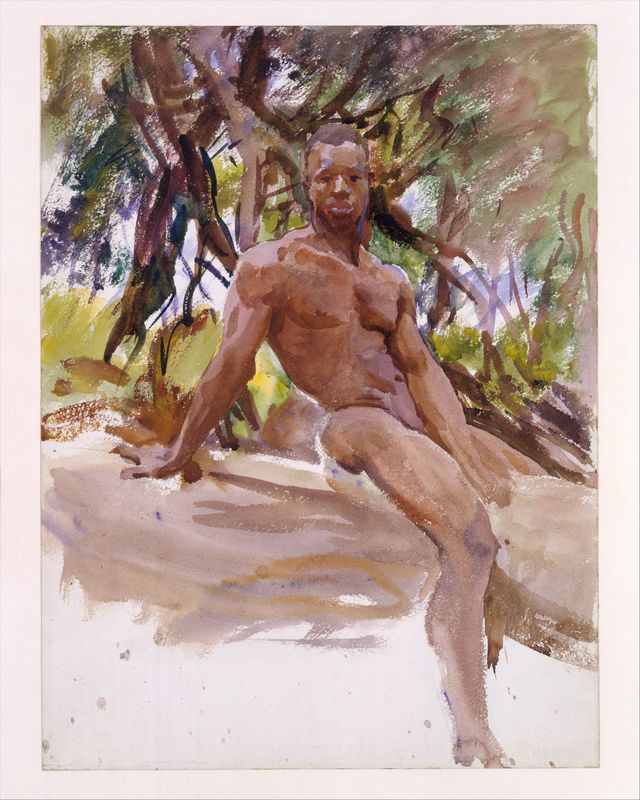
Man and Trees, Florida
John Singer Sargent · 1917 · The Metropolitan Museum of Art
Same movement · Impressionism
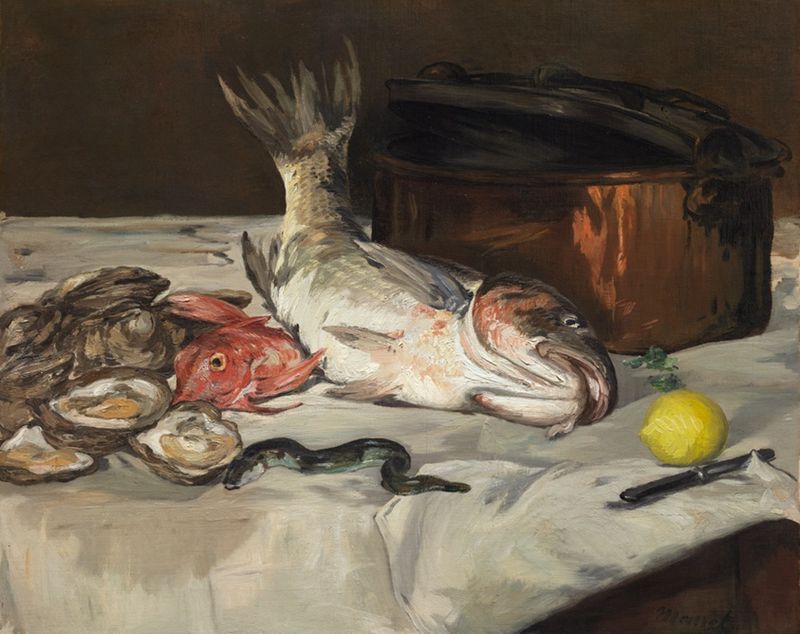
Fish (Still Life)
Édouard Manet · 1864 · Art Institute of Chicago
Same era · 1900s–1930s
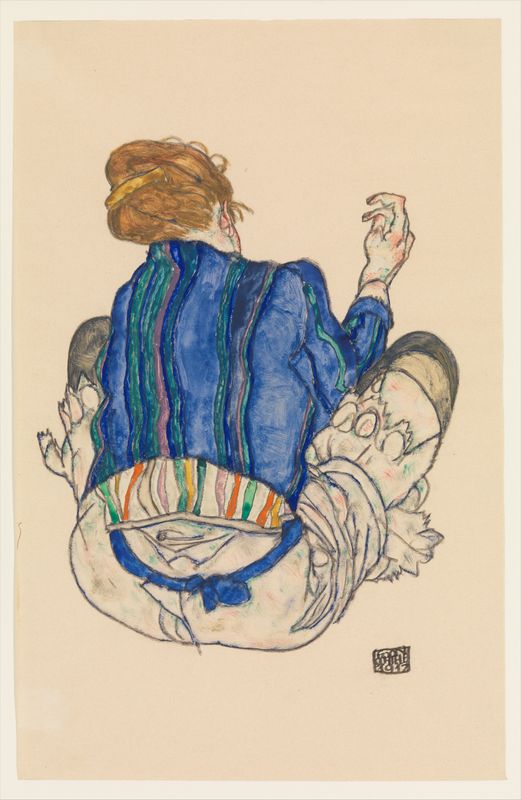
Seated Woman, Back View
Egon Schiele · 1917 · The Metropolitan Museum of Art
Same movement · Impressionism
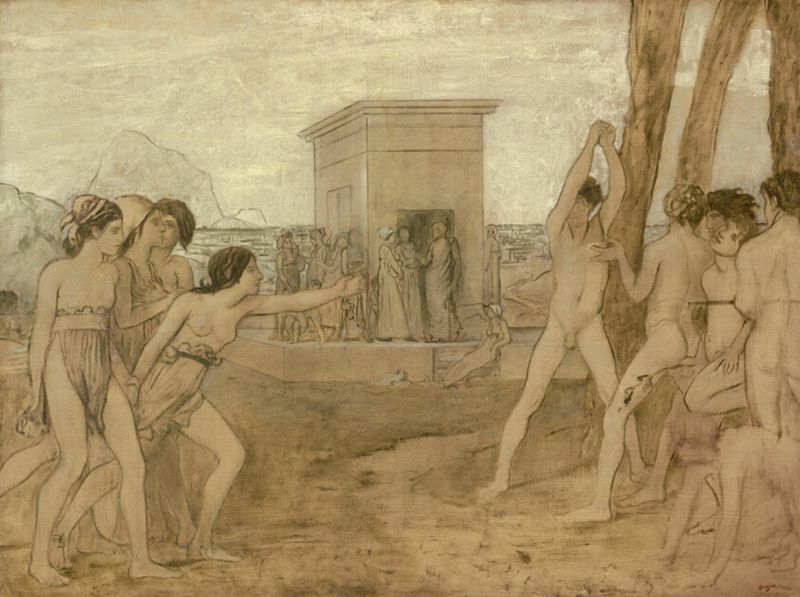
Young Spartan Girls Challenging Boys
Edgar Degas · 1860 · Art Institute of Chicago
Same era · 1900s–1930s
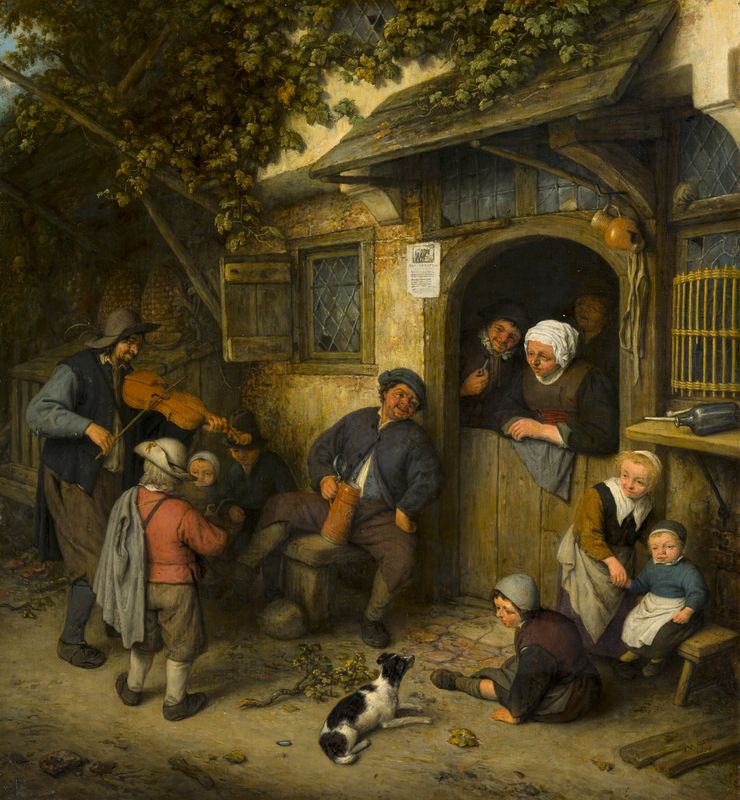
The Fiddler
Norman Rockwell · 1921 · Brandywine Museum of Art
Same era · 1900s–1930s
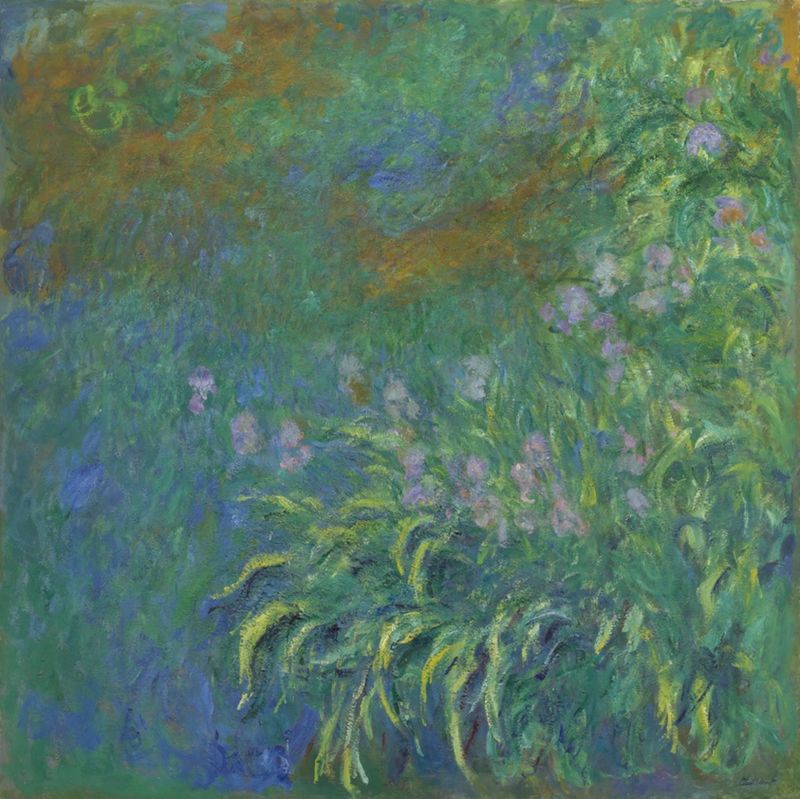
Irises
Claude Monet · 1915 · National Gallery
Same era · 1900s–1930s
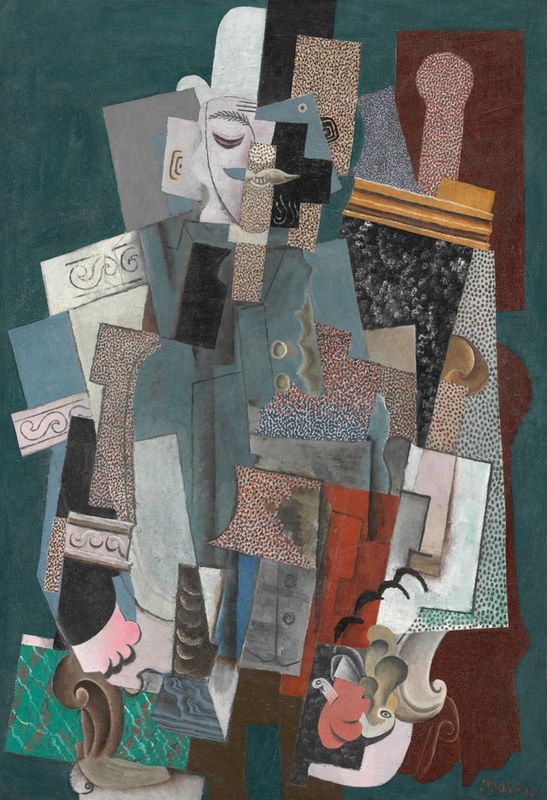
Man with a Pipe
Pablo Picasso · 1915 · Art Institute of Chicago