01
Crescent headband
A small gold crescent sits in the hair of the woman in yellow, the clue that she is Diana, goddess of the hunt, and not an ordinary bather.
1 of 5 on the painting
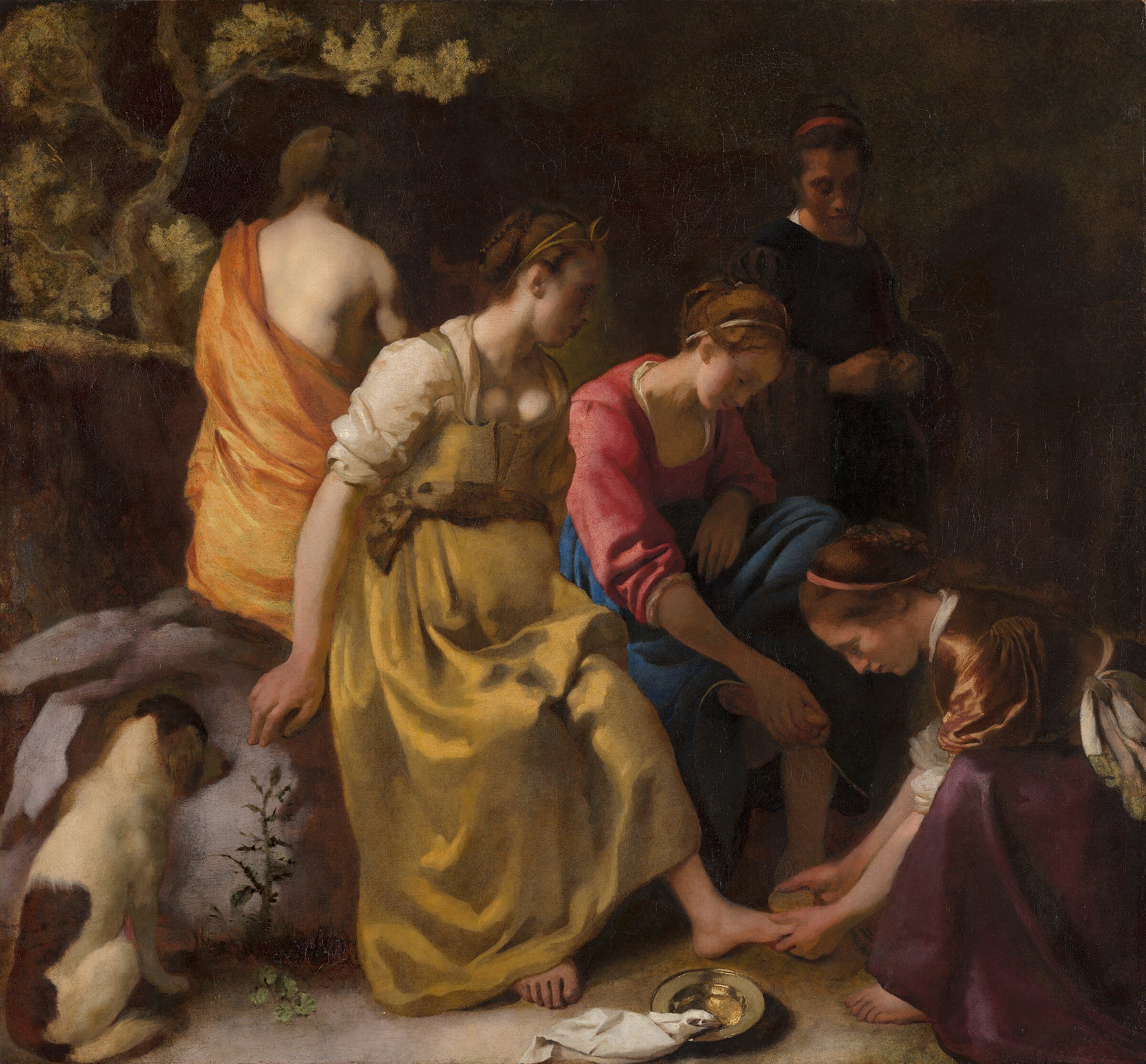
“Stop to appreciate this unusual and early mythological painting, where the goddess Diana is depicted in a moment of tender intimacy and quiet reflection, a rare departure from her typical hunting scenes.”
In this early work, a group of women gathers around a seated figure, presumably the goddess Diana. Unlike the more common dynamic scenes of Diana hunting, here she is shown in a moment of quiet contemplation, her foot being washed by a kneeling nymph. The painting's subdued palette and soft light create an intimate and reflective mood, a departure from the dramatic flair often seen in mythological paintings of the Dutch Golden Age. The careful arrangement of figures, the gentle play of light on their skin, and the rich, earthy tones invite a close examination, hinting at the artist's developing interest in domestic tranquility and the subtle interplay of human connection. The scene feels less like a grand mythological narrative and more like a private, almost everyday moment among women, despite the classical subject.
Five details hide in plain sight. Pick one and we’ll show you exactly where to look.
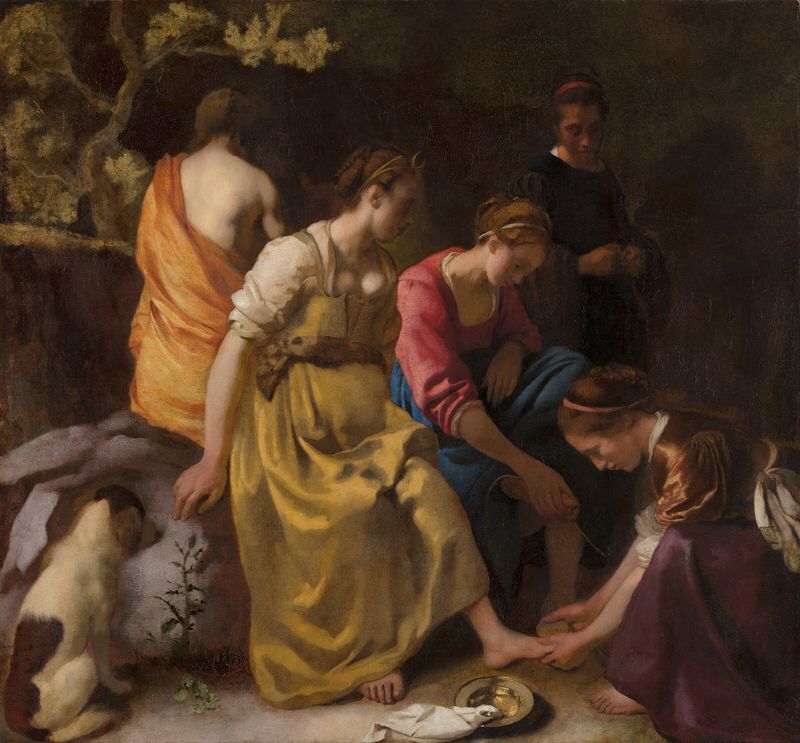
A small gold crescent sits in the hair of the woman in yellow, the clue that she is Diana, goddess of the hunt, and not an ordinary bather.
At lower right, a kneeling woman in purple bends low to wash or dry the outstretched foot of the seated woman in yellow. This quiet act of service is the heart of the scene.
The big yellow skirt shifts from bright gold to deep olive in its folds. Broad, soft strokes make the heavy cloth feel real and pull the eye first.
At upper left, a woman in a bright orange wrap turns her bare back to us. She sits apart from the group and gives a warm accent against the dark foliage.
At lower left, a white and brown dog sits with its back to us, head lowered. Its pale coat echoes the rock behind it and quietly anchors the corner.
The full narration walks you through Diana and her Nymphs — the story behind it, the details most visitors miss, and why it matters. Free in the Art Whisper app.
Vermeer painted just 34 known works, yet became one of history's most beloved masters of light.
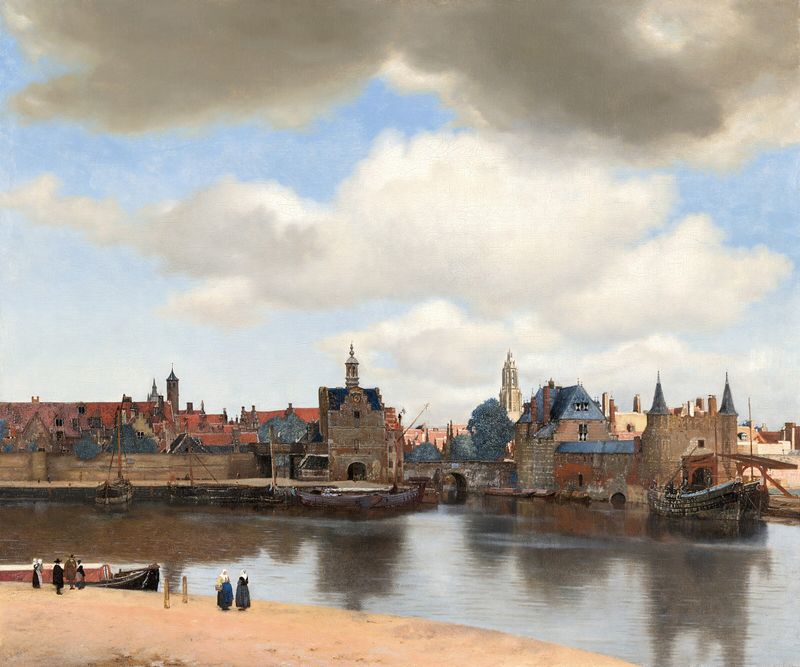 View of Delft
1661 · Mauritshuis
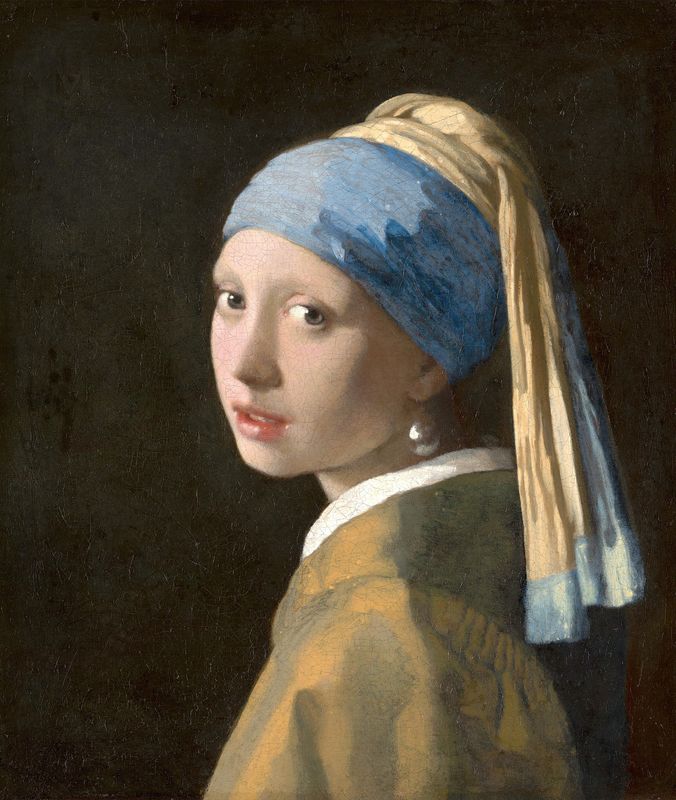 Girl with a Pearl Earring
1665 · Mauritshuis
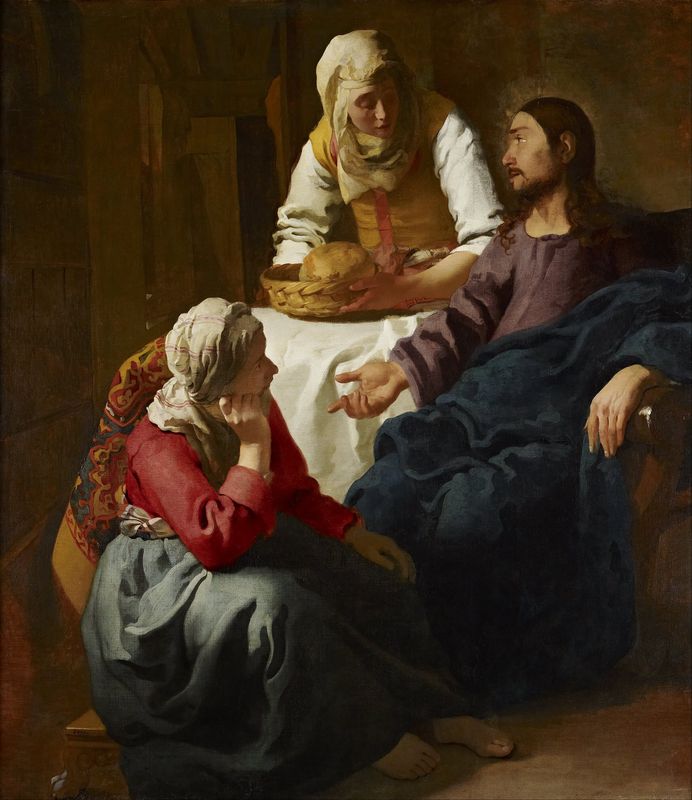 Christ in the House of Martha and Mary
1650 · Scottish National Gallery
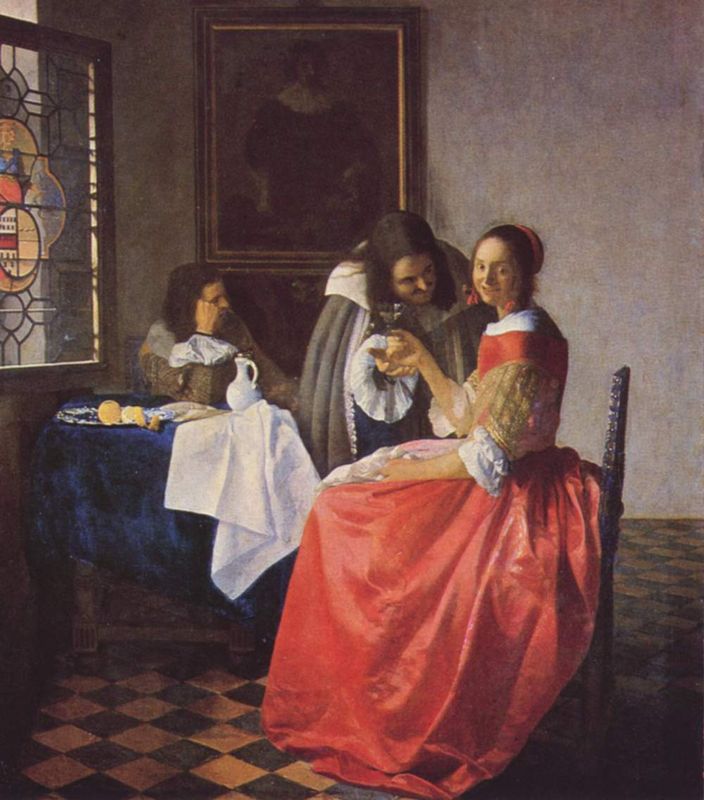 The Girl with the Wine Glass
1650 · Herzog Anton Ulrich Museum
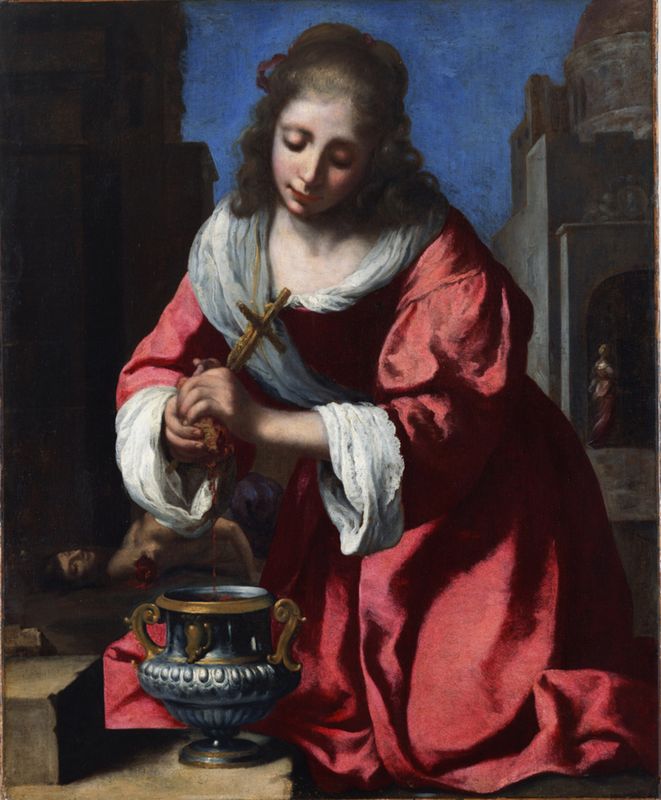 Saint Praxedis
1655 · National Museum of Western Art
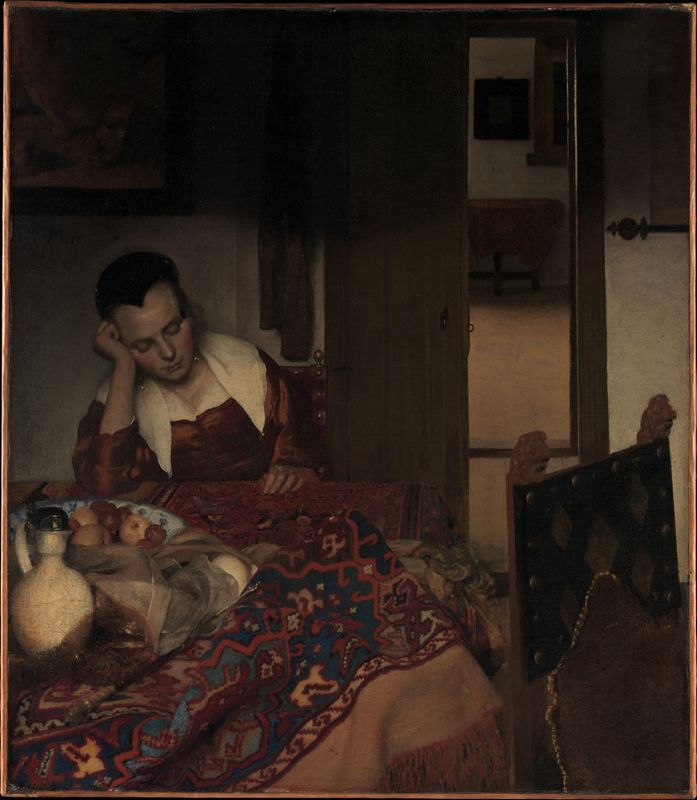 A Maid Asleep
1656 · The Metropolitan Museum of Art
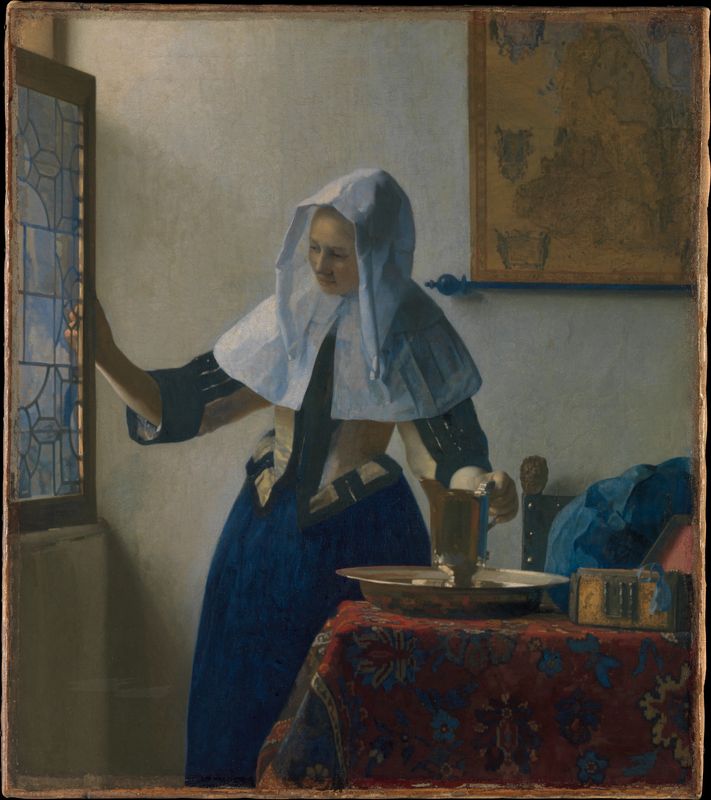 Young Woman with a Water Pitcher
1657 · The Metropolitan Museum of Art
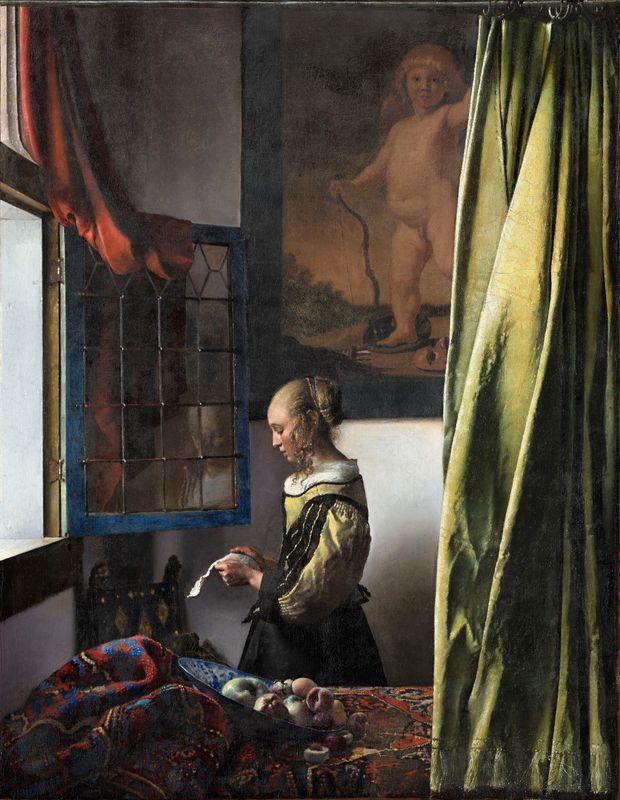 Girl Reading a Letter at an Open Window
1658 · Staatliche Kunstsammlungen Dresden
Beyond Vermeer and Baroque: works from the same years, and from the other movements Diana and her Nymphs belongs to.
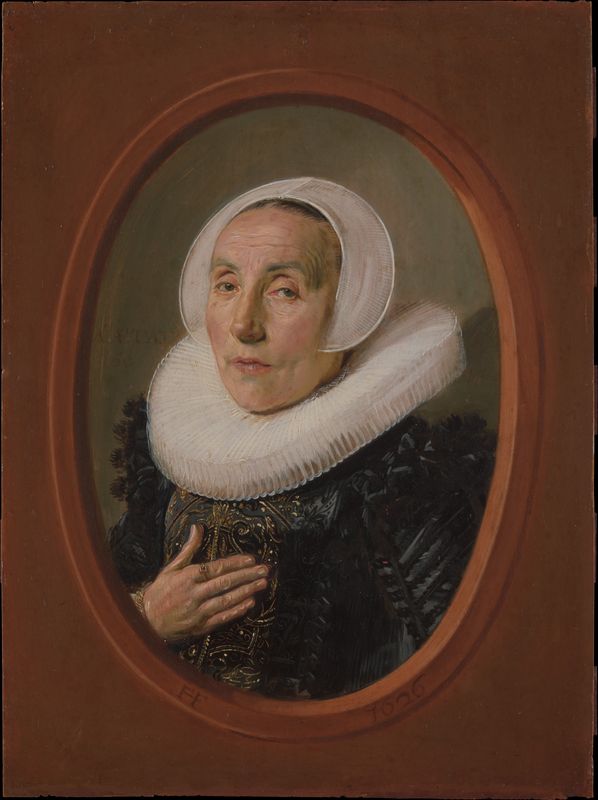 Same movement · Dutch Golden Age painting
Anna van der Aar (born 1576/77, died after 1626)
Frans Hals · 1626 · The Metropolitan Museum of Art
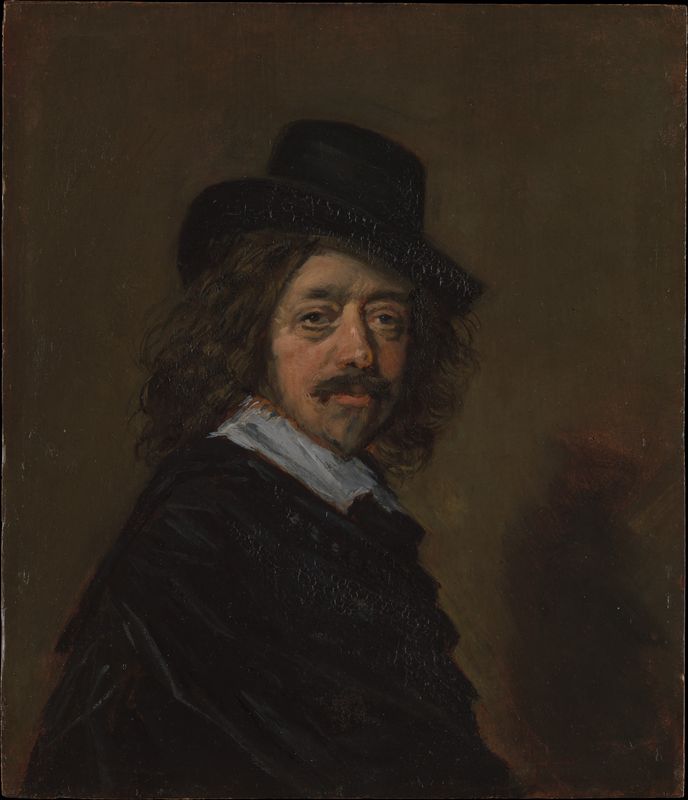 Same era · 1630s–1660s
Frans Hals (1582/83–1666)
Frans Hals · 1650 · The Metropolitan Museum of Art
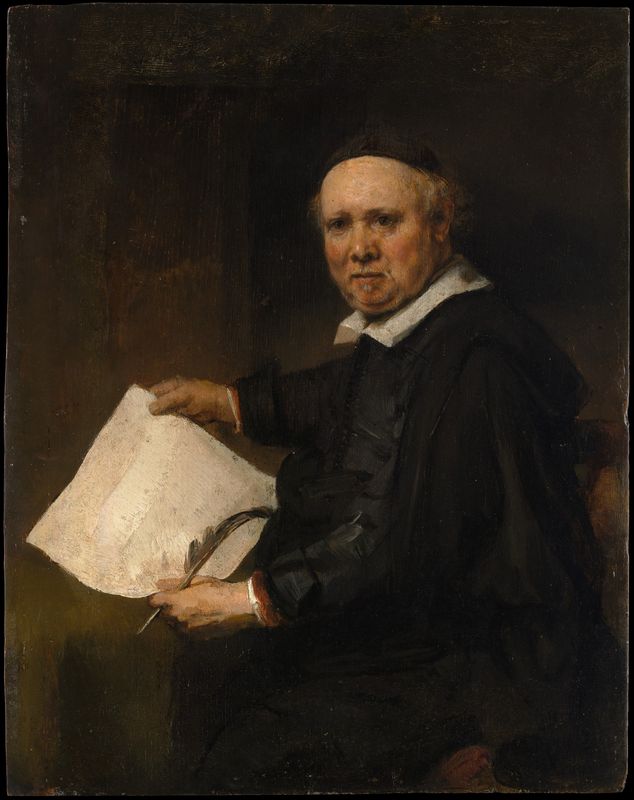 Same movement · Dutch Golden Age painting
Lieven Willemsz van Coppenol (born about 1599, died 1671 or later)
Rembrandt · 1626 · The Metropolitan Museum of Art
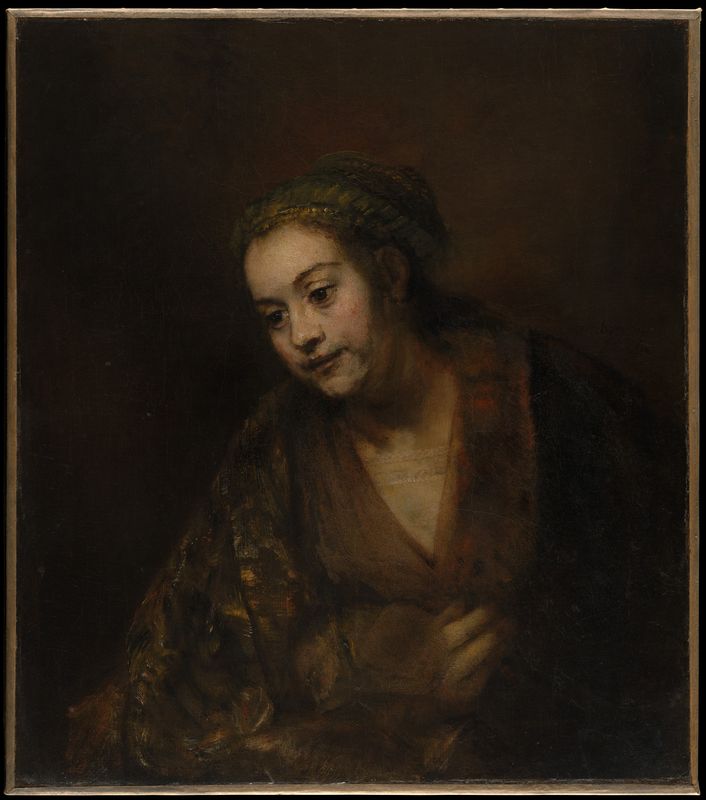 Same era · 1630s–1660s
Hendrickje Stoffels (1626–1663)
Rembrandt · 1650 · Metropolitan Museum of Art
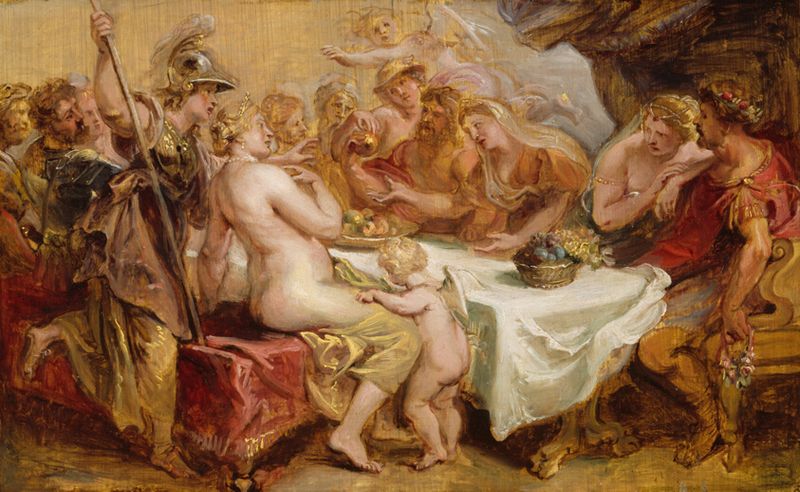 Same era · 1630s–1660s
The Wedding of Peleus and Thetis
Peter Paul Rubens · 1636 · Art Institute of Chicago
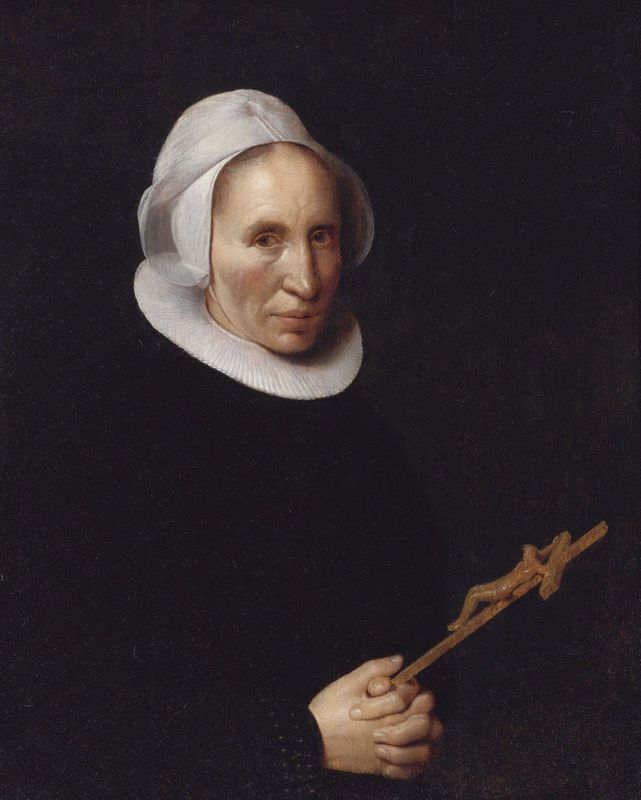 Same era · 1630s–1660s
A lady holding a crucifix
Willem van der Vliet · 1650
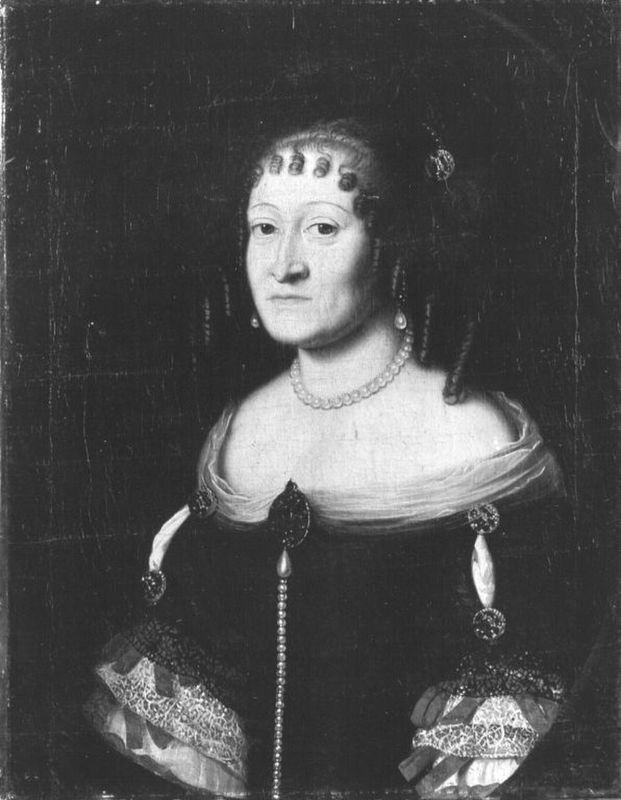 Same era · 1630s–1660s
Portrait of Elisabeth Dorothea of Saxony-Gotha-Altenburg
Salomon Duarte · 1650 · Bavarian State Painting Collections
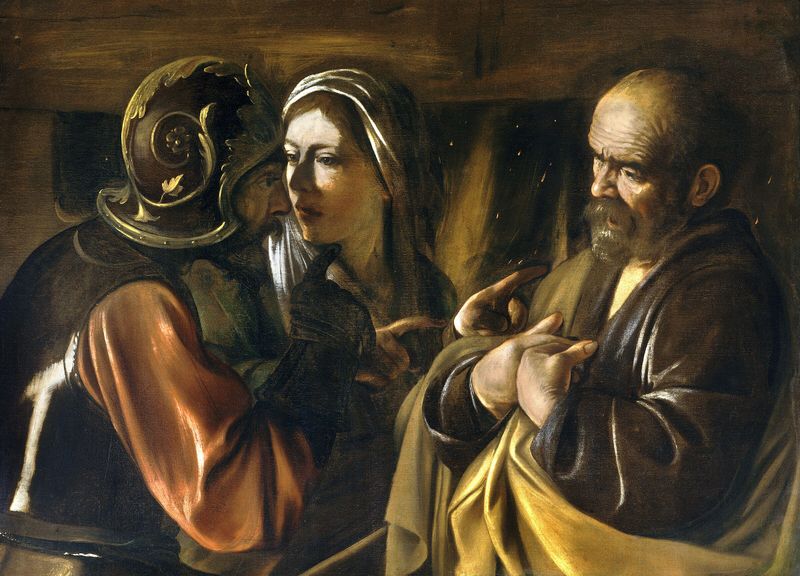 Same era · 1630s–1660s
The Denial of Saint Peter
Georges de La Tour · 1650 · Nantes Museum of Arts
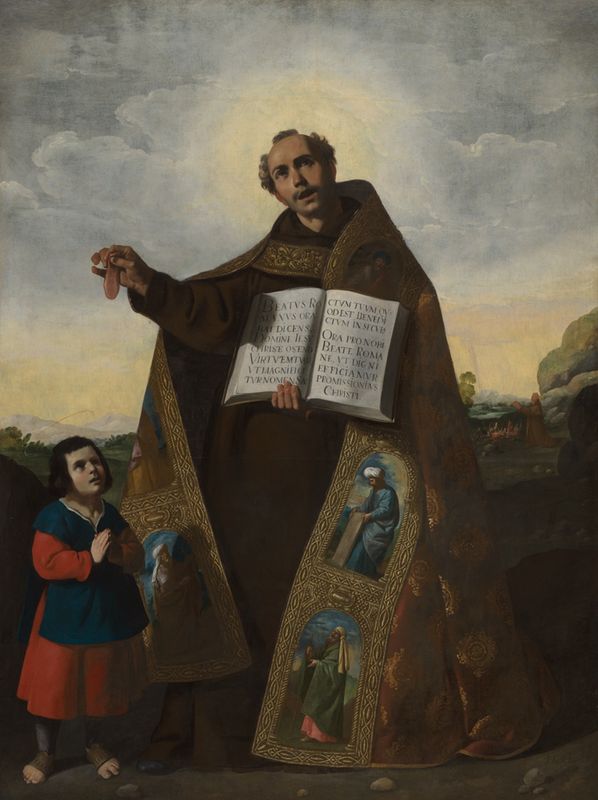 Same era · 1630s–1660s
Saint Romanus of Antioch and Saint Barulas
Master of the View of Saint Gudula · 1638 · Art Institute of Chicago
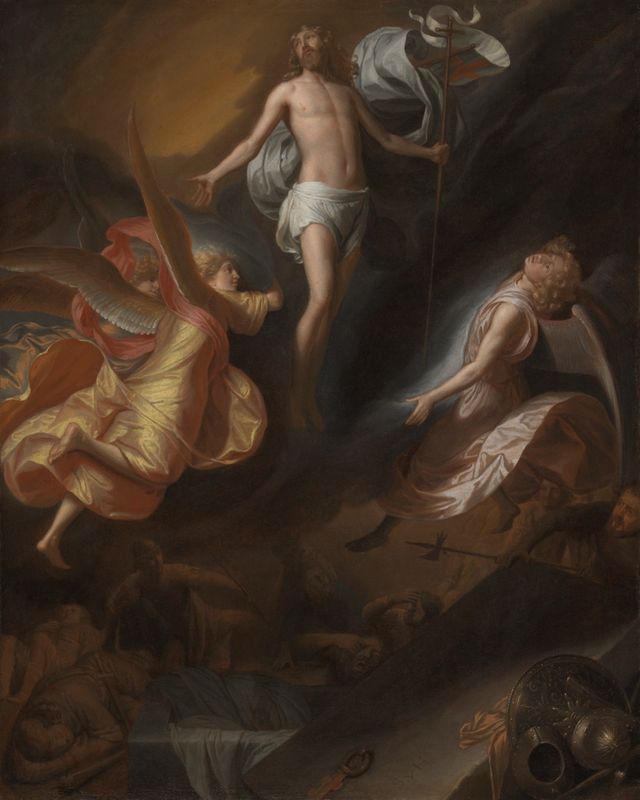 Same era · 1630s–1660s
Resurrection of Christ
Samuel van Hoogstraten · 1665 · Art Institute of Chicago
 Same era · 1630s–1660s
Two Deformed Heads with Very Long Upper Lips
Leonardo da Vinci · 1645 · The Metropolitan Museum of Art
 Same era · 1630s–1660s
Portrait of Edouard Molé
Robert Nanteuil · 1653 · Art Institute of Chicago
 Same era · 1630s–1660s
Abraham and Isaac
Rembrandt van Rijn · 1645 · Art Institute of Chicago
 Same era · 1630s–1660s
Tree Peonies in Full Bloom
Artist Unknown - The Mercat Cross, Aberdeen · 1644 · Art Institute of Chicago