
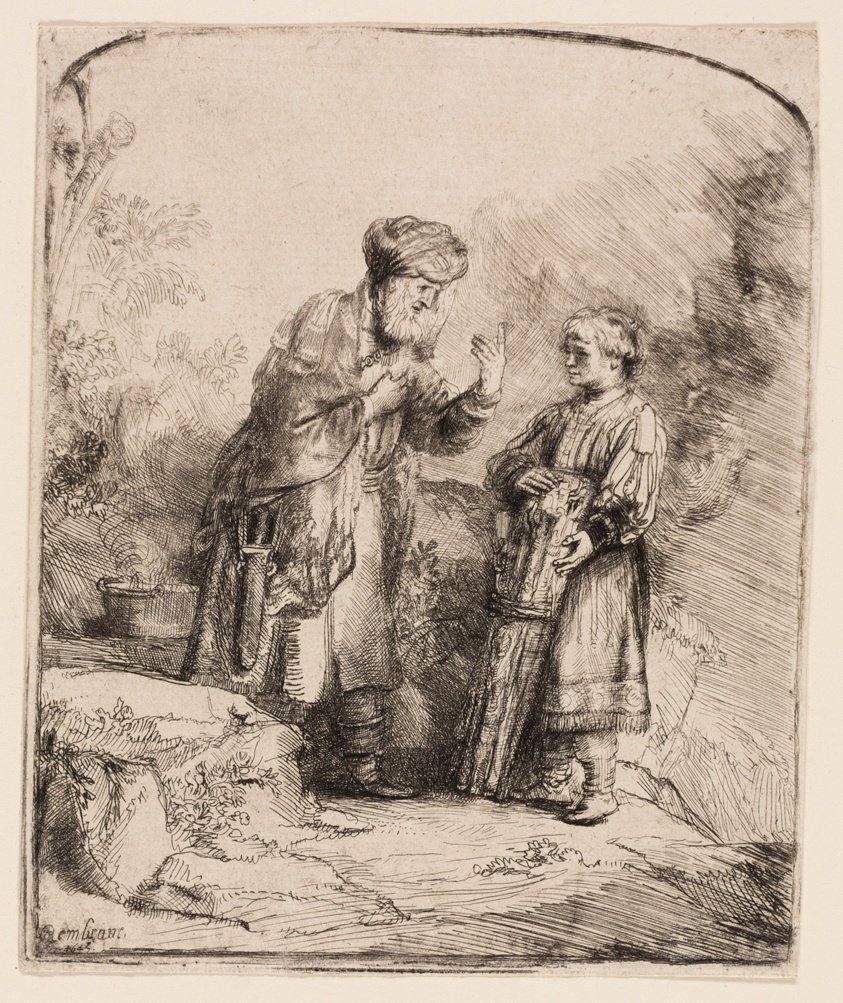
“This etching captures the intense biblical drama of Abraham's near-sacrifice of Isaac, highlighting the moment of divine intervention with powerful contrasts of light and shadow and expressive detail.”
In this dramatic etching, Abraham stands poised to sacrifice his son Isaac, a moment of profound biblical tension. The scene is plunged into a striking contrast of light and shadow, with a divine hand, emanating from a burst of light in the upper left, intervening just as Abraham raises his knife. Isaac, bound and vulnerable, lies on a pile of kindling, his face a mixture of fear and resignation. The deep shadows around Abraham’s face intensify his anguished expression, capturing the moral dilemma of his faith. The rough, almost frenzied lines of the drypoint technique give a palpable texture to the figures and their surroundings, enhancing the emotional weight of this harrowing narrative. This work, created in 1645, captures the raw human emotion and divine intervention that define the story.
- Artist
- Rembrandt van Rijn
- Date
- 1645
- Medium
- Etching and drypoint on white laid paper
- Location
- Art Institute of Chicago
- Dimensions
- Image/plate: 15.6 × 12.8 cm (6 3/16 × 5 1/16 in.); Sheet: 15.9 × 13.1 cm (6 5/16 × 5 3/16 in.)
- Collection
- Prints and Drawings
- Culture
- Holland
- Credit line
- John H. Wrenn Memorial Collection
What to Notice
Five details hide in plain sight. Here’s where to look.
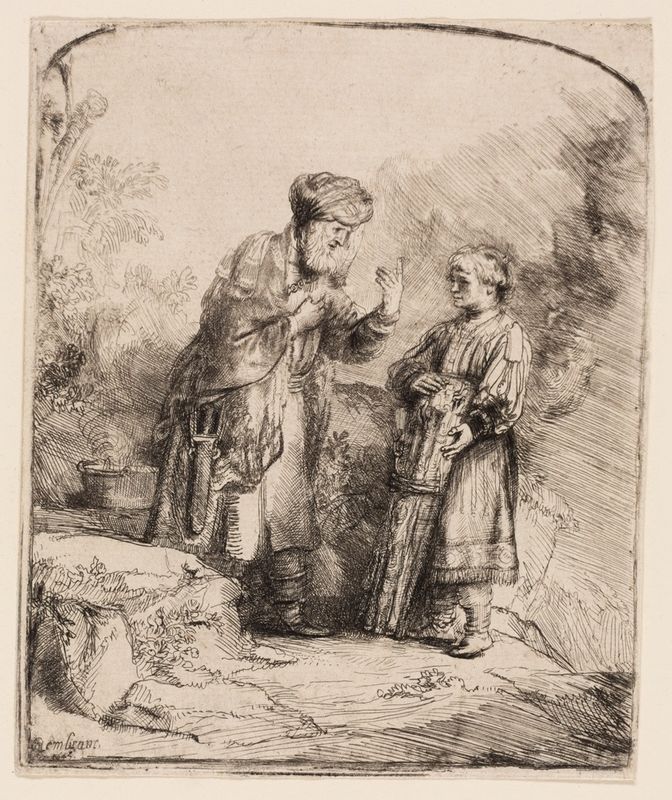
The divine hand emerging from a bright cloud.
Isaac's bound wrists and fearful expression.
The knife held aloft in Abraham's hand.
The texture of Isaac's hair, created with fine lines.
1 more detail is waiting.
See all 5 in Art Whisper →Stand in front of it and listen
The full narration walks you through Abraham and Isaac — the story behind it, the details most visitors miss, and why it matters. Free in the Art Whisper app.
Rembrandt van Rijn
1606–1669More works to explore
Beyond van Rijn: works from the same years.
 Same era · 1630s–1660s
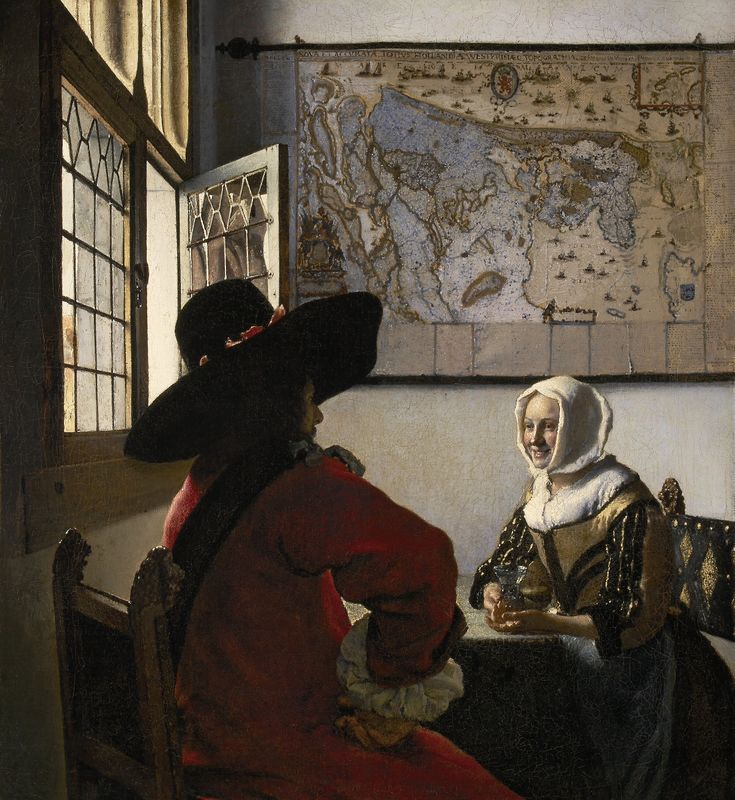
Officer and Laughing Girl
Johannes Vermeer · 1658 · The Frick Collection
 Same era · 1630s–1660s
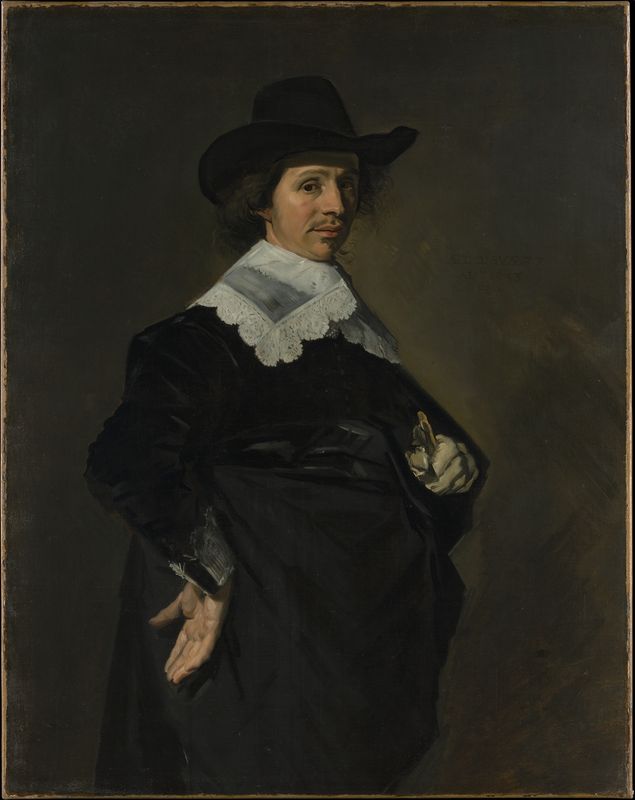
Paulus Verschuur (1606–1667)
Frans Hals · 1643 · The Metropolitan Museum of Art
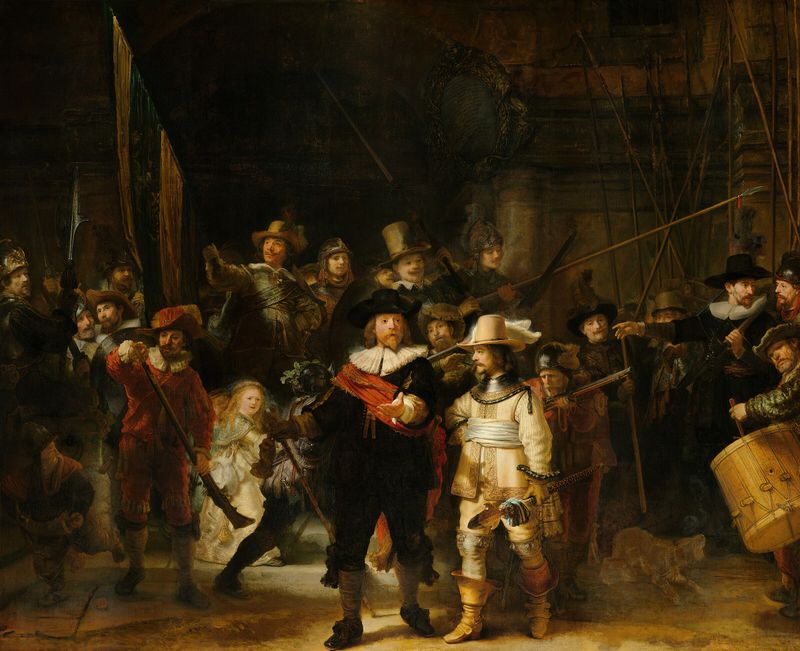 Same era · 1630s–1660s
The Night Watch
Rembrandt · 1642 · Rijksmuseum
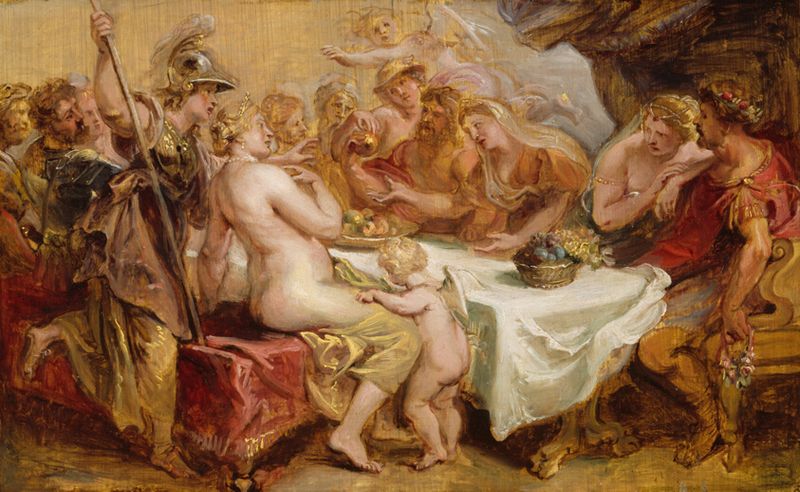 Same era · 1630s–1660s
The Wedding of Peleus and Thetis
Peter Paul Rubens · 1636 · Art Institute of Chicago
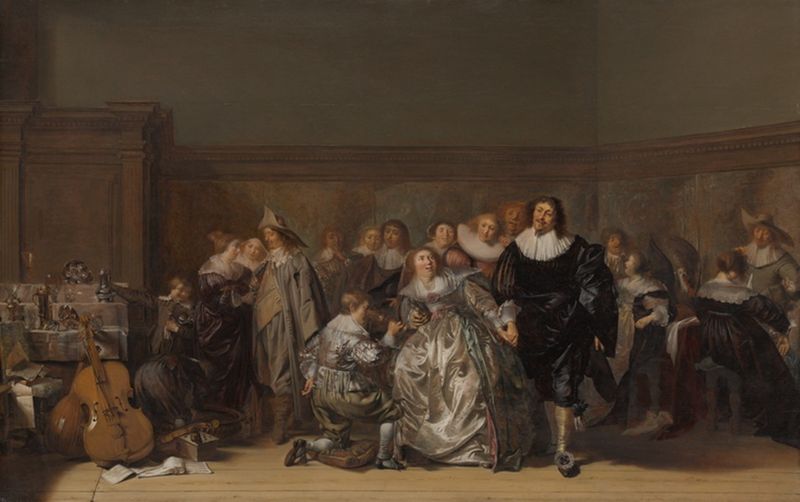 Same era · 1630s–1660s
An Elegant Company
Samuel Alcock & Company · 1632 · Art Institute of Chicago
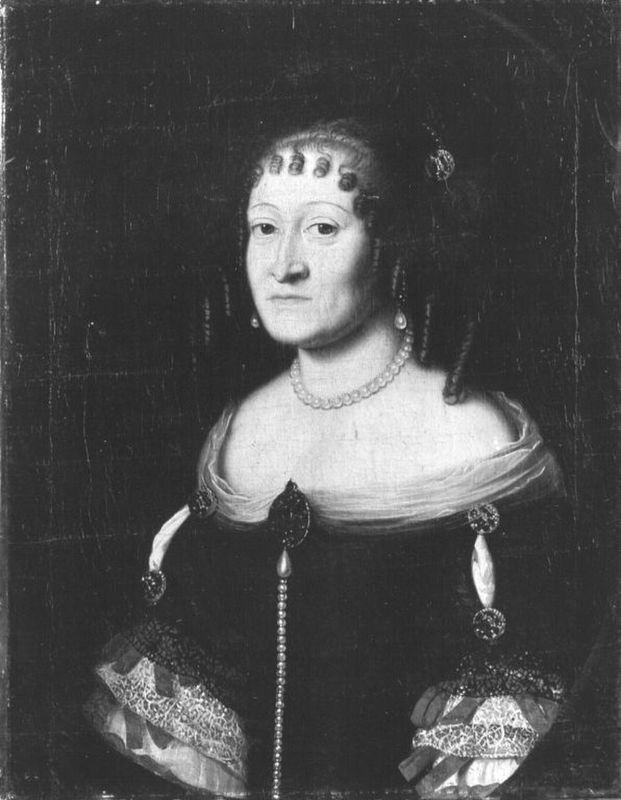 Same era · 1630s–1660s
Portrait of Elisabeth Dorothea of Saxony-Gotha-Altenburg
Salomon Duarte · 1650 · Bavarian State Painting Collections
 Same era · 1630s–1660s
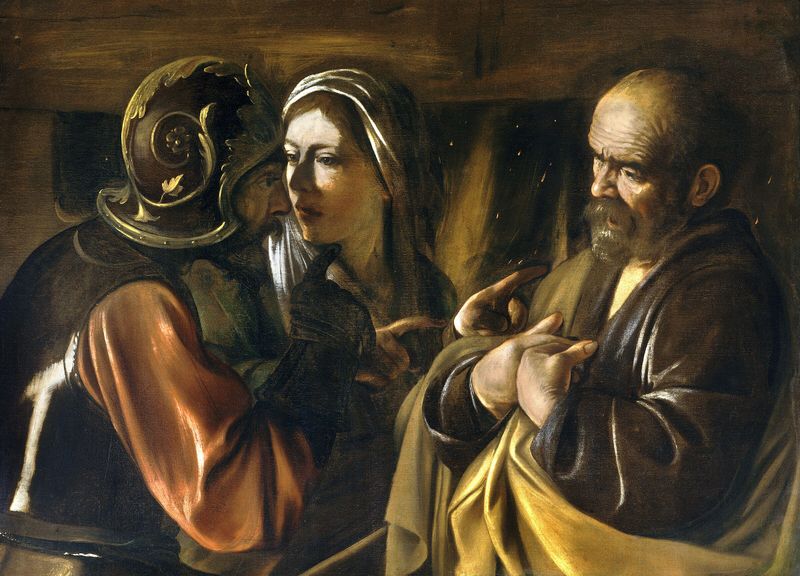
The Denial of Saint Peter
Georges de La Tour · 1650 · Nantes Museum of Arts
 Same era · 1630s–1660s
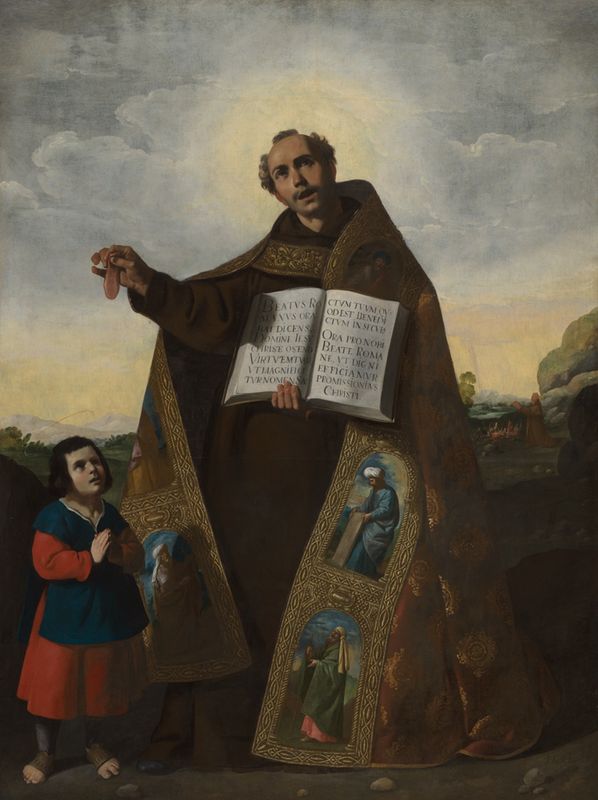
Saint Romanus of Antioch and Saint Barulas
Master of the View of Saint Gudula · 1638 · Art Institute of Chicago
 Same era · 1630s–1660s
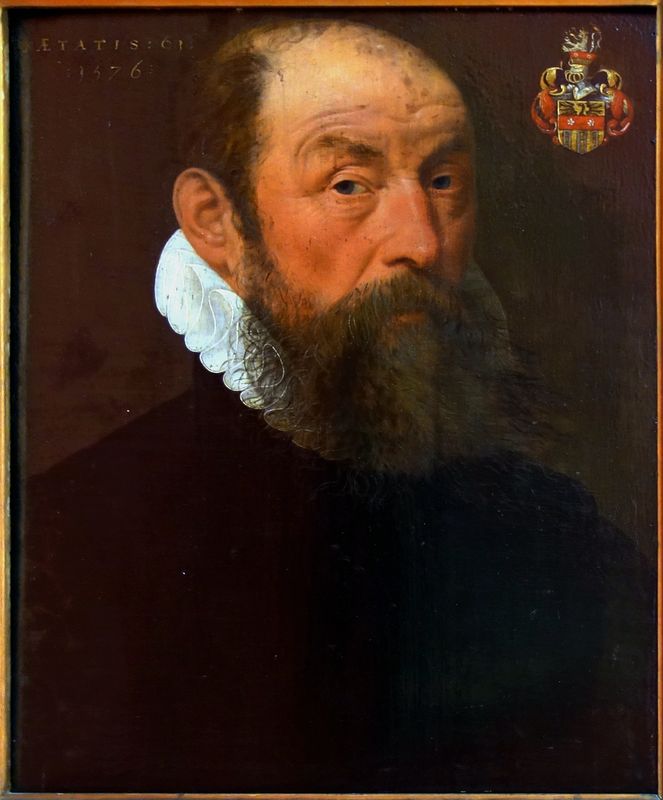
Portrait of a man
Willem van der Vliet · 1634 · Pushkin Museum of Fine Arts
 Same era · 1630s–1660s
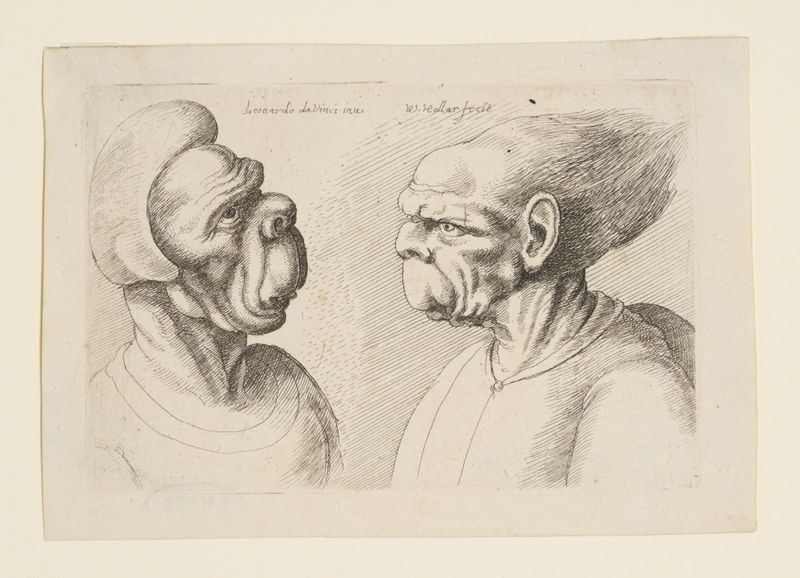
Two Deformed Heads with Very Long Upper Lips
Leonardo da Vinci · 1645 · The Metropolitan Museum of Art
 Same era · 1630s–1660s
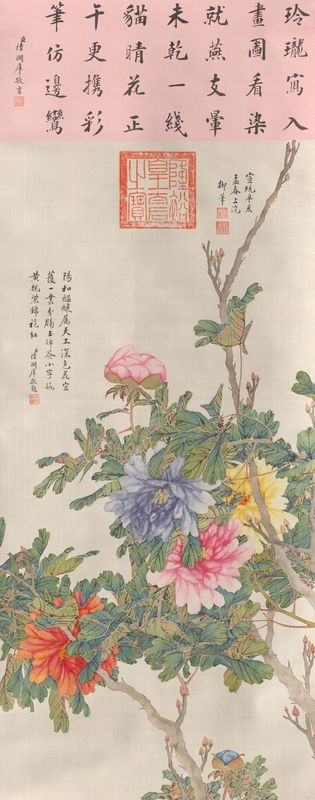
Tree Peonies in Full Bloom
Artist Unknown - The Mercat Cross, Aberdeen · 1644 · Art Institute of Chicago
 Same era · 1630s–1660s
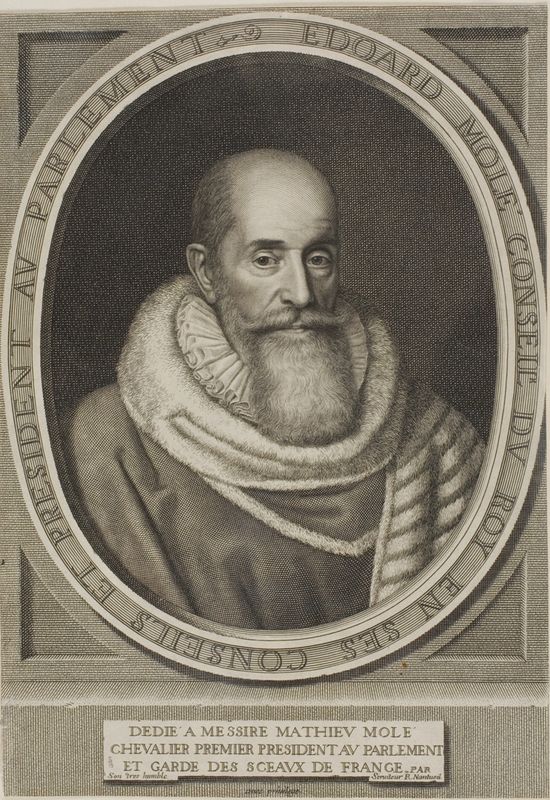
Portrait of Edouard Molé
Robert Nanteuil · 1653 · Art Institute of Chicago