01
Mary's lowered gaze
Look at her smooth, pale face with eyes cast down and a faint halo behind. The calm, idealized features show quiet devotion rather than drama.
1 of 5 on the painting
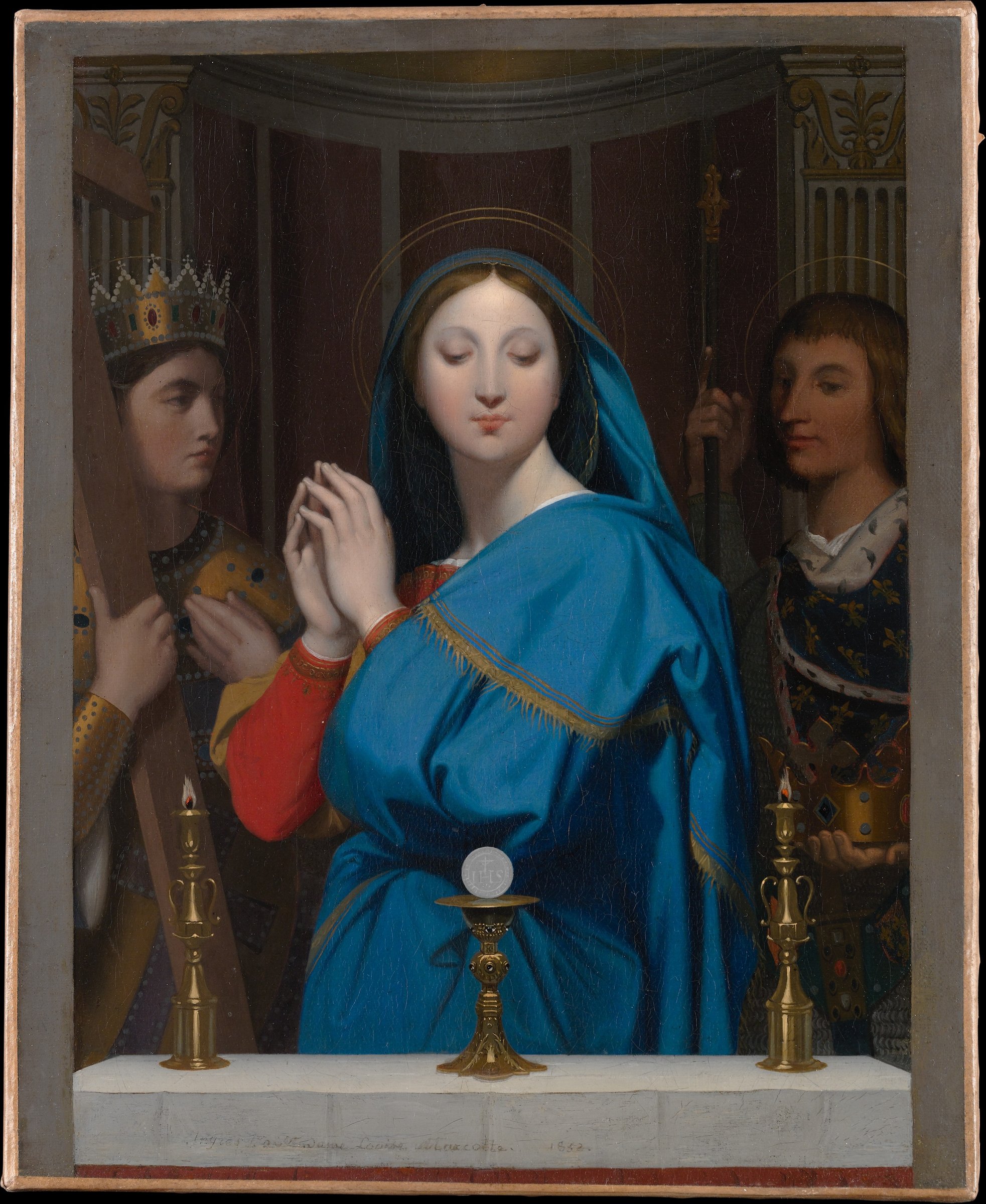
“Stop to appreciate this deeply reverent painting where the Virgin Mary adores the glowing host, flanked by saints, a harmonious blend of Neoclassical beauty and spiritual devotion.”
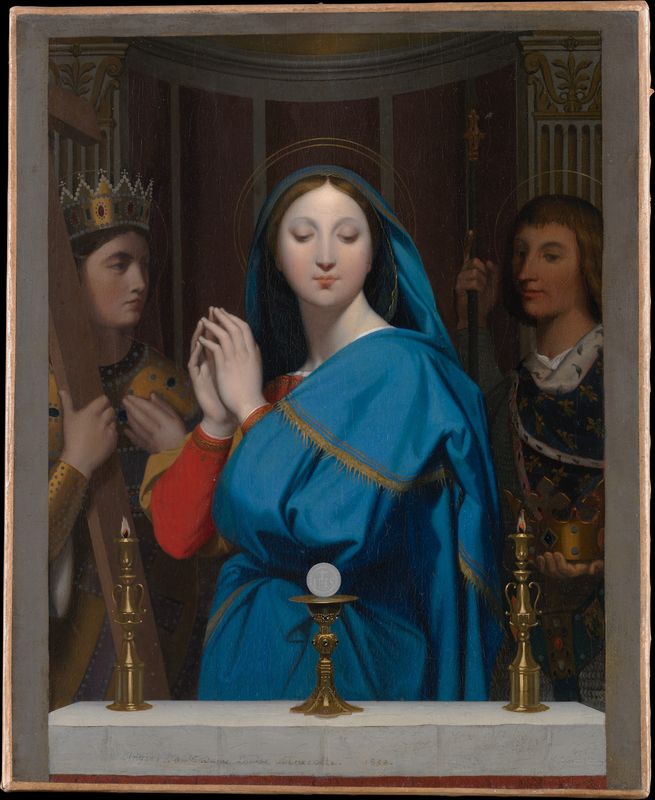
In this serene religious scene, the Virgin Mary kneels in adoration, her gaze fixed on the glowing host held aloft by a cherubic angel. The painting, created in 1841, immerses us in a moment of profound spiritual reverence. Mary's delicate features and the soft drapery of her blue robe are rendered with an almost porcelain-like smoothness, reflecting a Neoclassical ideal of beauty and order. The composition is carefully balanced, with figures arranged around the central, luminous host. Two saints, Nicholas and Alexander Nevsky, flank the Virgin, their presence adding a layer of historical and theological significance to this intimate devotional act. The overall effect is one of quiet contemplation, inviting the viewer to share in the sacred moment.
Five details hide in plain sight. Pick one and we’ll show you exactly where to look.
Look at her smooth, pale face with eyes cast down and a faint halo behind. The calm, idealized features show quiet devotion rather than drama.
Her fingertips press together in a neat, tapered line. The contours are crisp and clean, so the hands read almost like sculpture.
At the bottom center, a small white disc rests on a gold stand. Mary's lowered gaze and the whole composition lead toward this tiny object.
The heavy blue cloak swells over her shoulder in deep folds, with a thin gold fringe along its edge. Its saturated color pulls your eye straight to her.
On the right, a young man in a tunic patterned with fleur-de-lis and a chain mail sleeve holds a gold crown in his open hand. He stands quietly in the background behind Mary.
The full narration walks you through The Virgin Adoring the Host — the story behind it, the details most visitors miss, and why it matters. Free in the Art Whisper app.
Jean-Auguste-Dominique Ingres, a French Neoclassical painter, masterfully blended academic tradition with expressive distortions, influencing modernists like Matisse and Picasso.
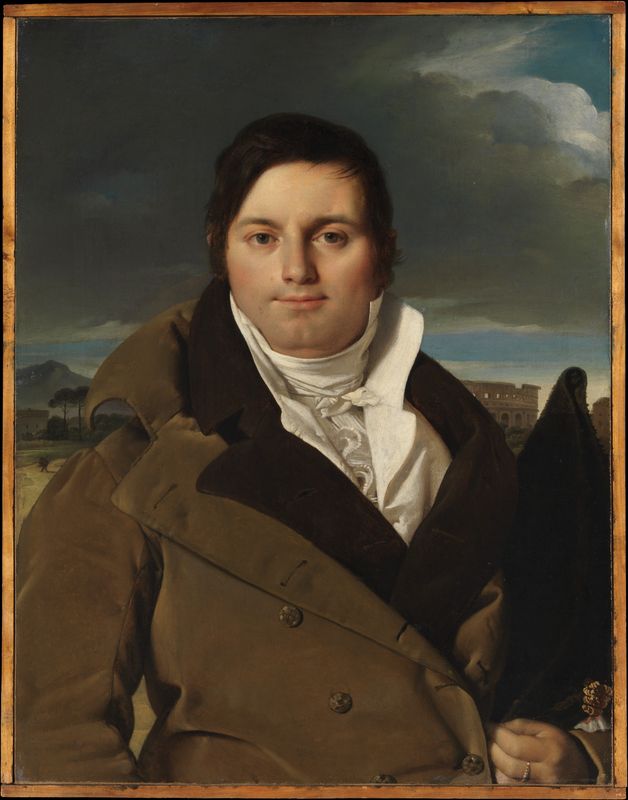 Joseph-Antoine Moltedo (born 1775)
1805 · The Metropolitan Museum of Art
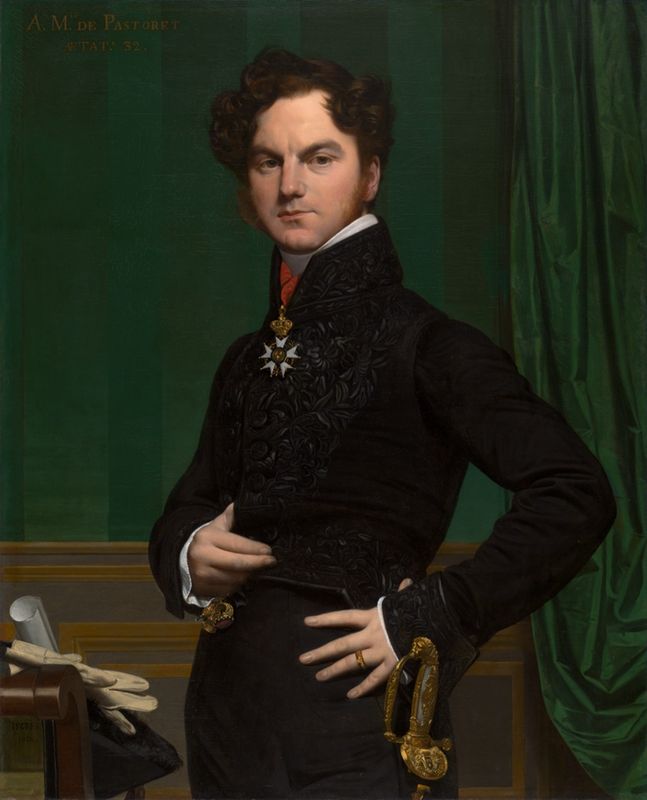 Amédée-David, the Comte de Pastoret
1823 · Art Institute of Chicago
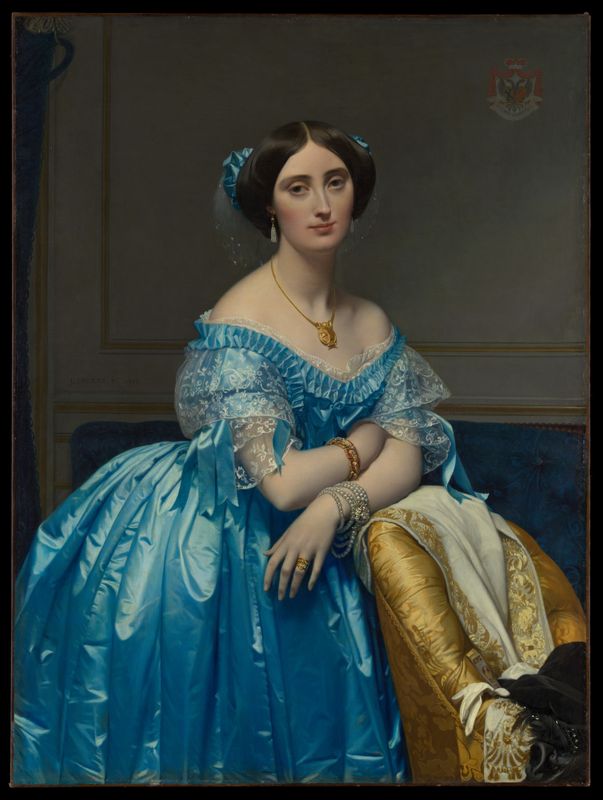 Joséphine-Éléonore-Marie-Pauline de Galard de Brassac de Béarn (1825–1860), Princesse de Broglie
1853 · Metropolitan Museum of Art
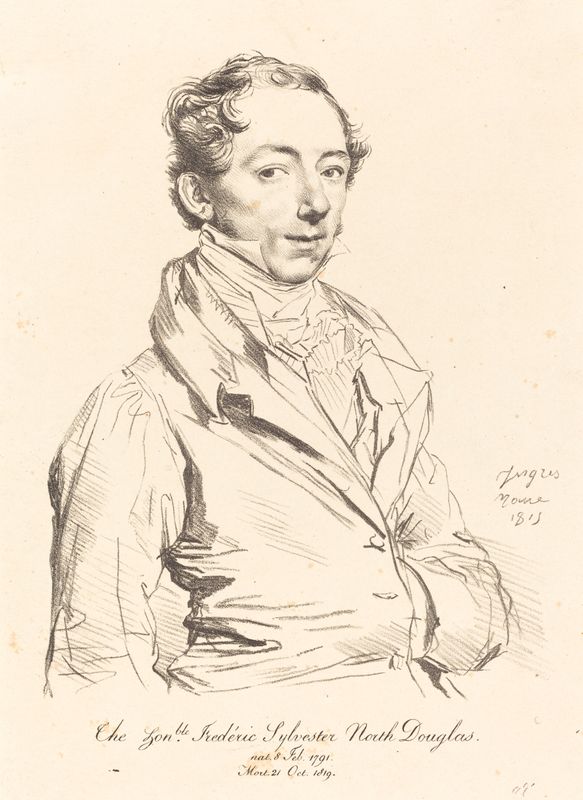 Frederic Sylvester Douglas
1815 · Art Institute of Chicago
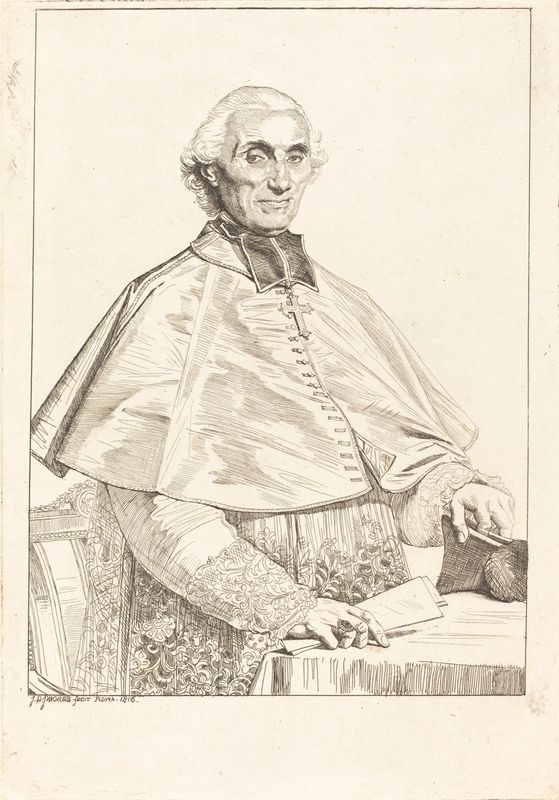 Gabriel Cortois de Pressigny
1816 · Art Institute of Chicago
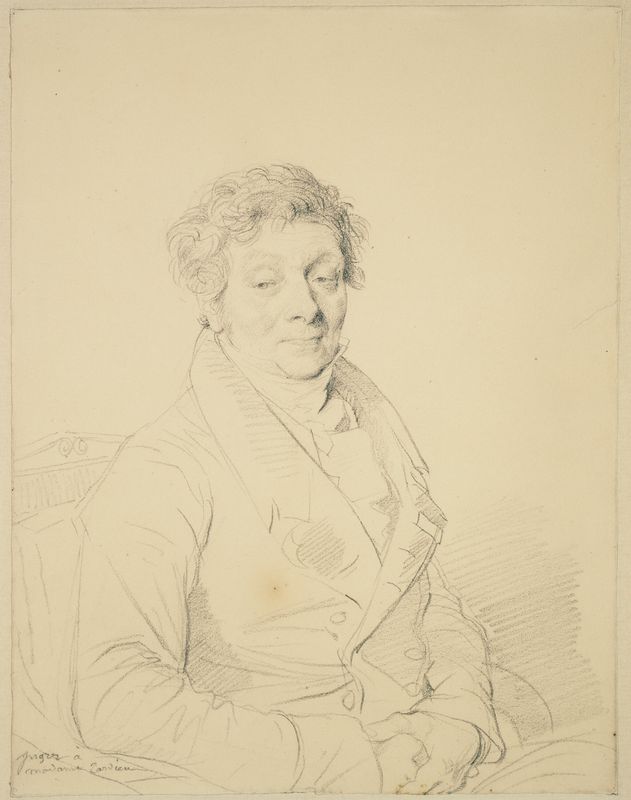 Pierre Alexandre Tardieu
1825 · Art Institute of Chicago
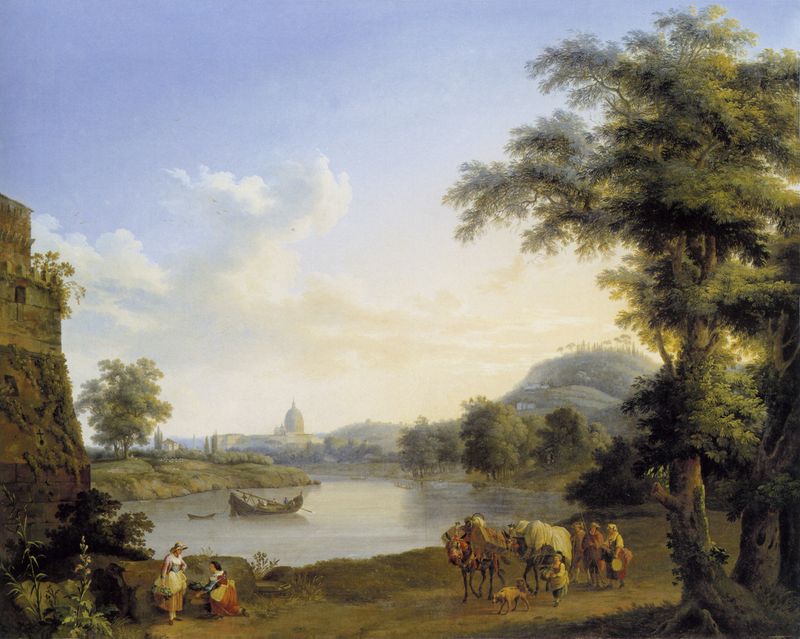 View of Saint Peter's in Rome
Art Institute of Chicago
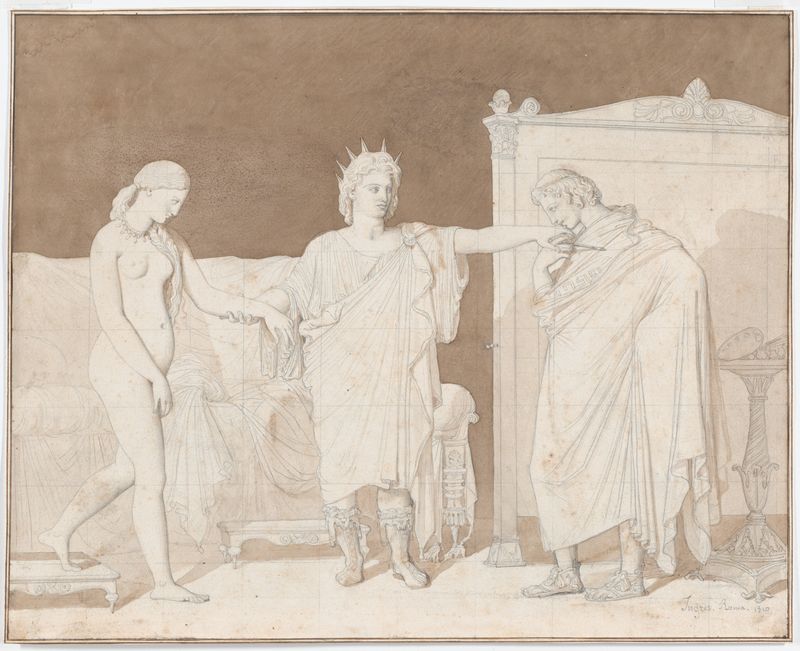 Alexander the Great presenting Campaspe to Apelles
1810 · The Metropolitan Museum of Art
Beyond Ingres and Romanticism: works from the same years, and from the other movements The Virgin Adoring the Host belongs to.
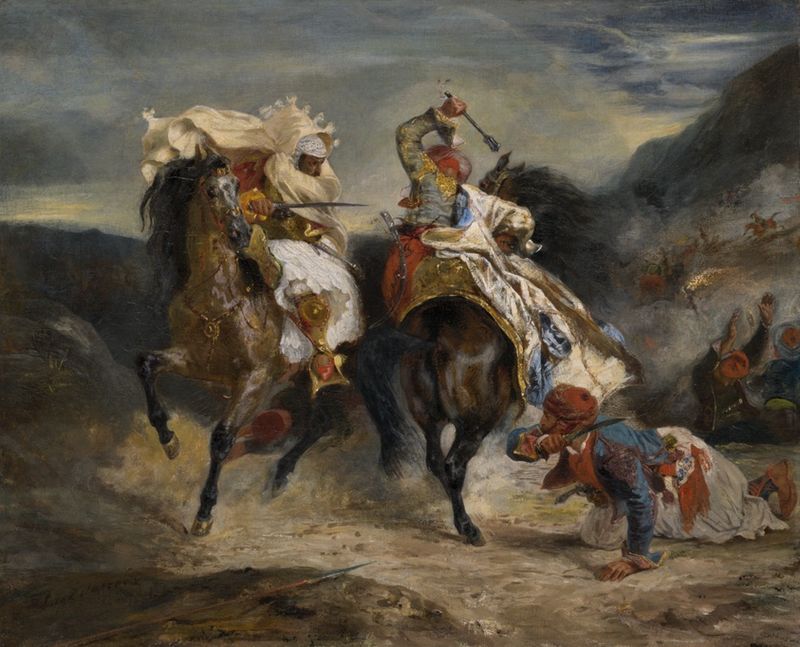 Same movement · Academic art
The Combat of the Giaour and Hassan
Eugène Delacroix · 1826 · Art Institute of Chicago
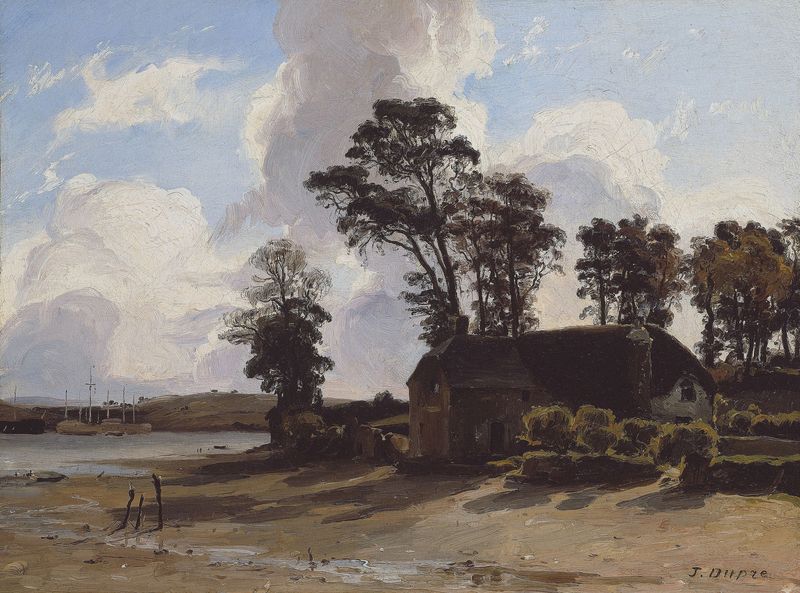 Same era · 1820s–1850s
The Estuary Farm
Léon-Victor Dupré · 1831 · Art Institute of Chicago
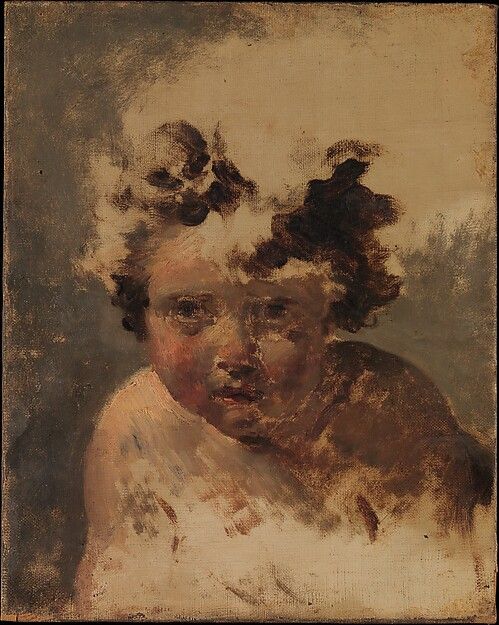 Same movement · Neoclassicism
Head of a Child
Jacques-Louis David · 1768 · The Metropolitan Museum of Art
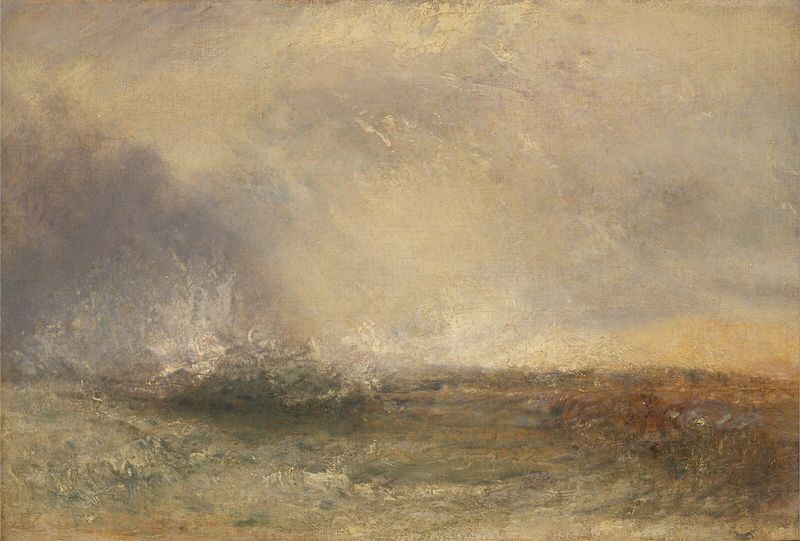 Same era · 1820s–1850s
Stormy Sea Breaking on a Shore
J. M. W. Turner · 1840 · Yale Center for British Art
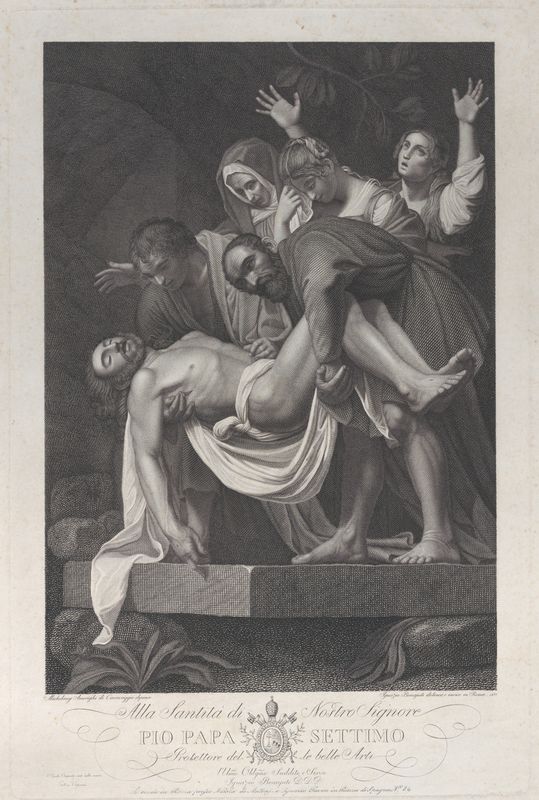 Same movement · Academic art
The Entombment of Christ
Caravaggio · 1600 · Pinacoteca Vaticana
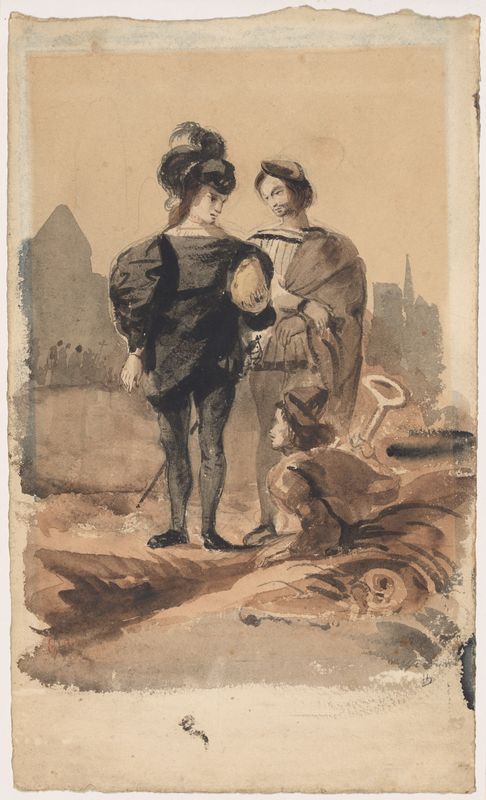 Same era · 1820s–1850s
Hamlet and Horatio in the Graveyard
Eugène Delacroix · 1839 · Department of Paintings of the Louvre
 Same movement · Academic art
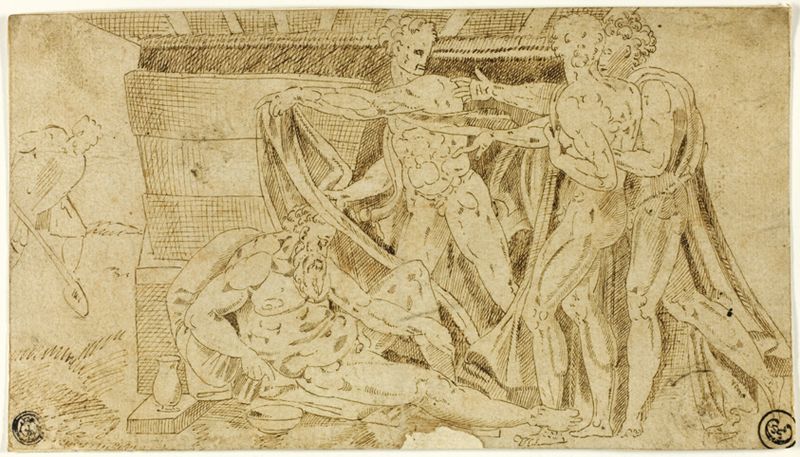
Drunkenness of Noah
Michelangelo · 1509 · Sistine Chapel
 Same era · 1820s–1850s
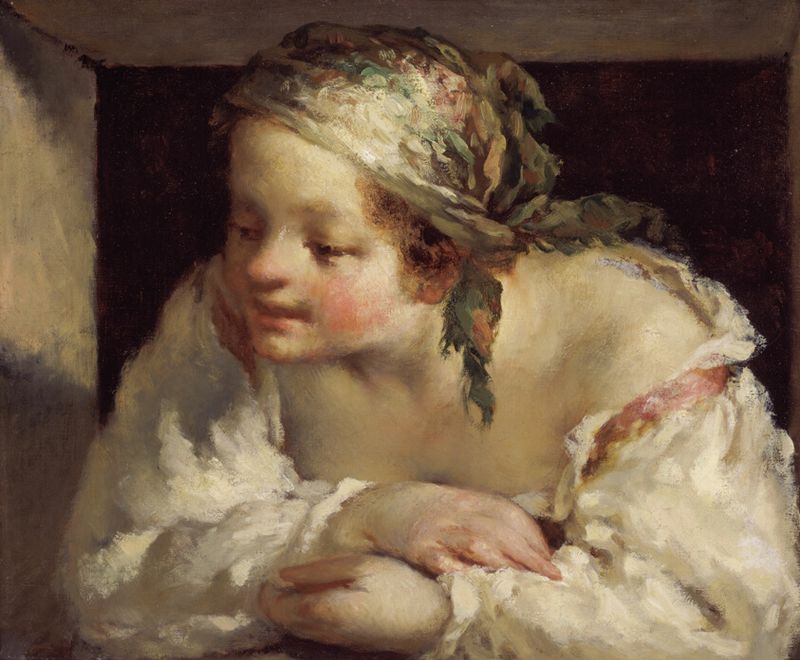
Young Woman
Jean-François Millet · 1844 · Art Institute of Chicago
 Same movement · Academic art
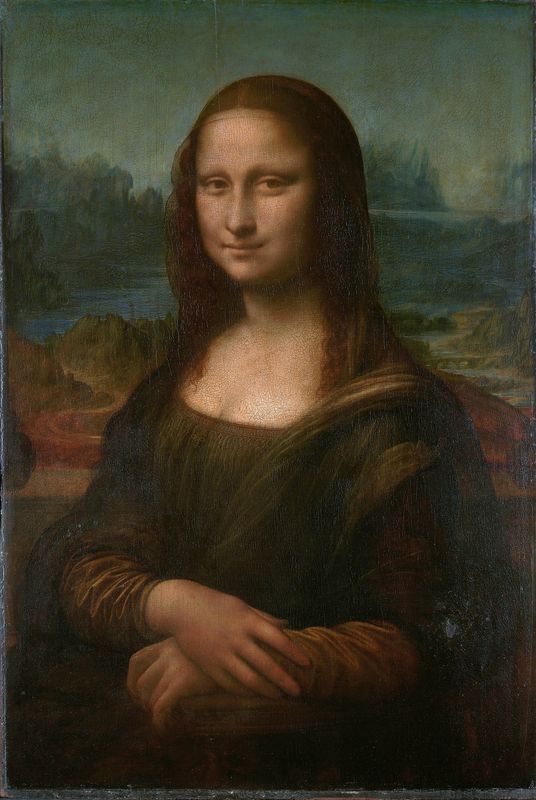
Mona Lisa
Leonardo da Vinci · 1503 · Department of Paintings of the Louvre
 Same era · 1820s–1850s
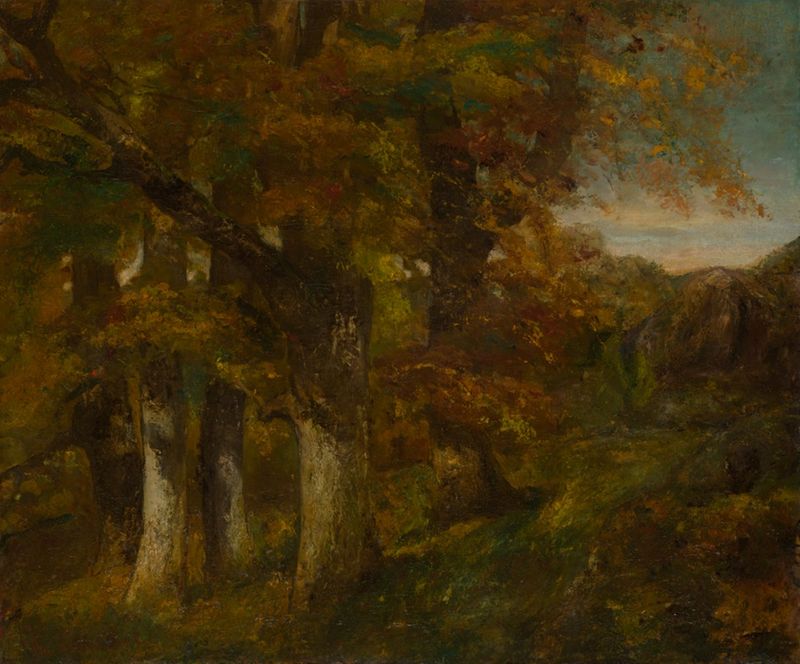
Wooded Landscape
Gustave Courbet · 1848 · Art Institute of Chicago
 Same movement · Academic art
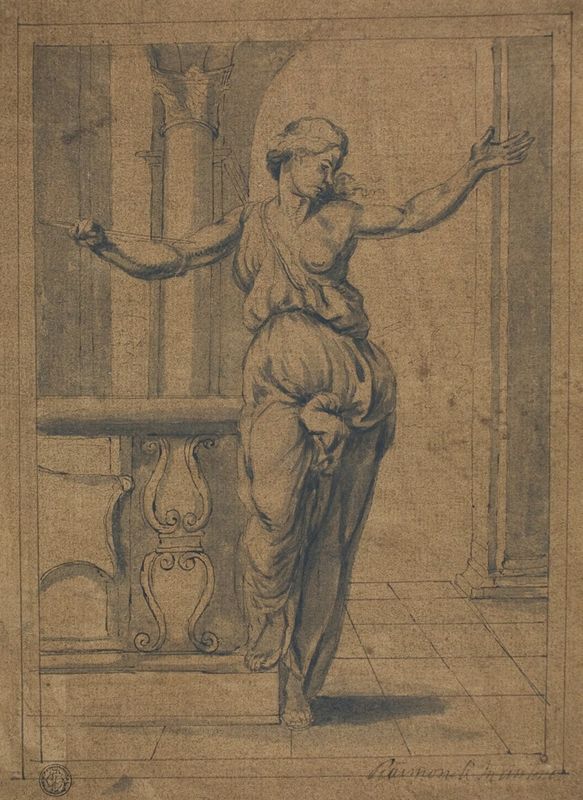
Lucretia
Raphael · Metropolitan Museum of Art
 Same era · 1820s–1850s
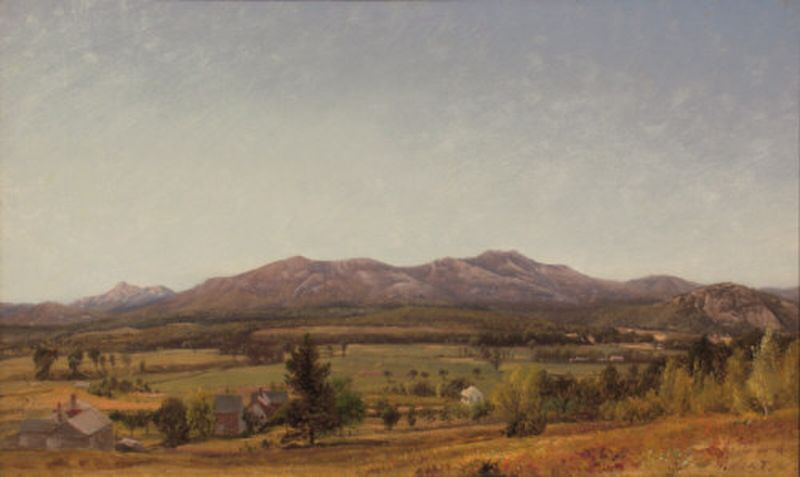
Mount Chocorua and Moat Mountain from North Conway
William Hart · 1850
 Same era · 1820s–1850s
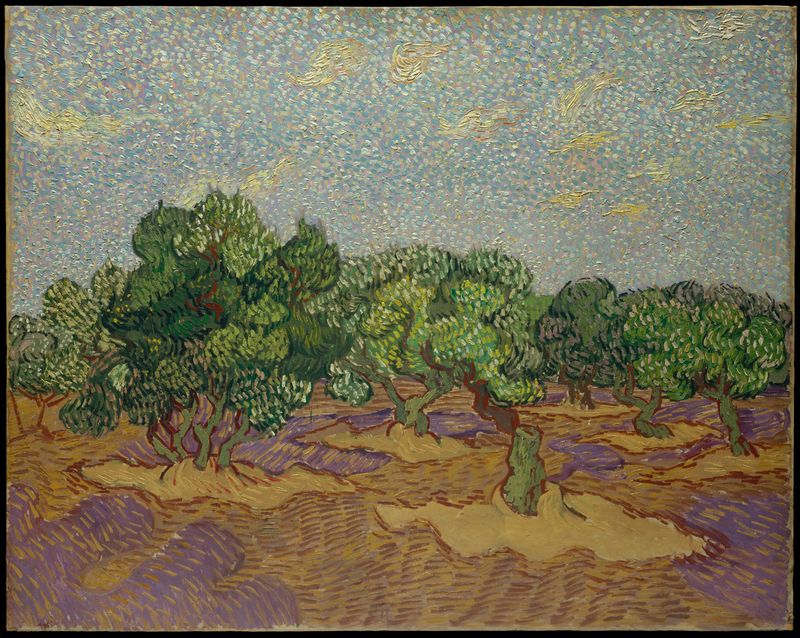
Olive Trees
Vincent van Gogh · 1853 · The Metropolitan Museum of Art
 Same era · 1820s–1850s
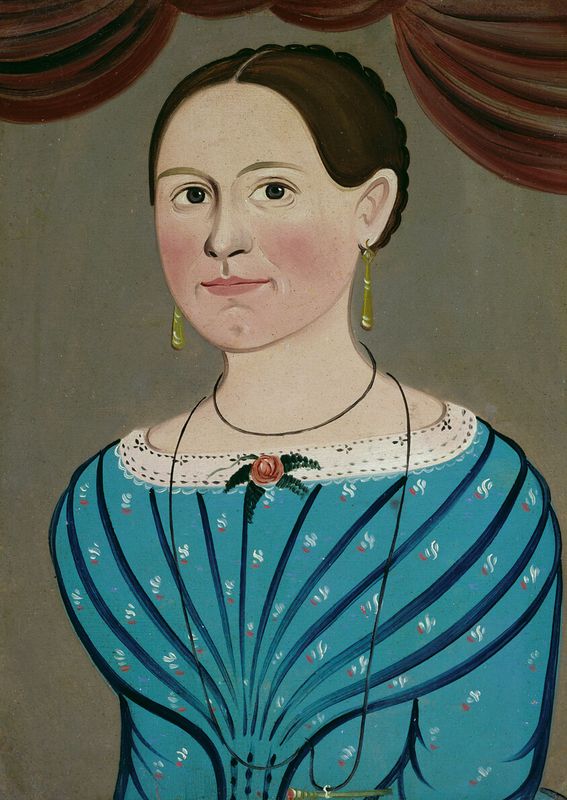
Woman in a Blue Dress
School of William Matthew Prior · 1840 · Art Institute of Chicago
 Same era · 1820s–1850s
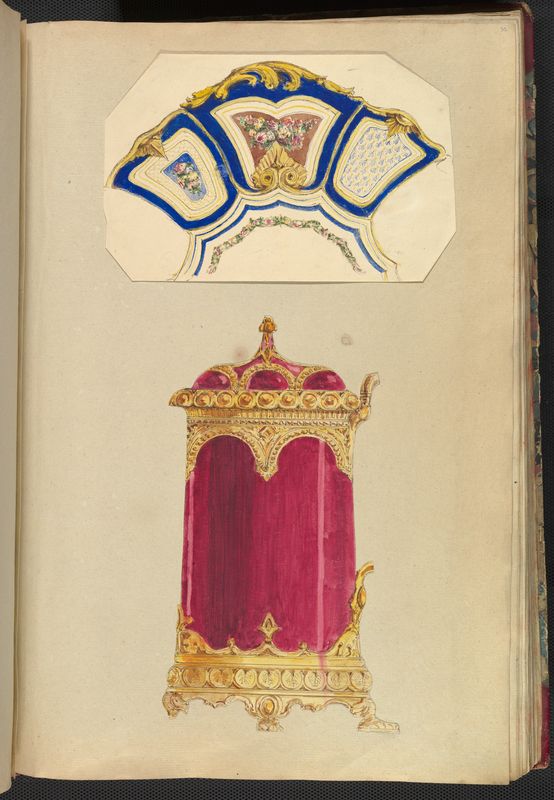
Designs for a Decorated Dish, or Platter, and a Biscuit Barrel
Alfred Henry Forrester [Alfred Crowquill] · 1845 · The Metropolitan Museum of Art
 Same era · 1820s–1850s
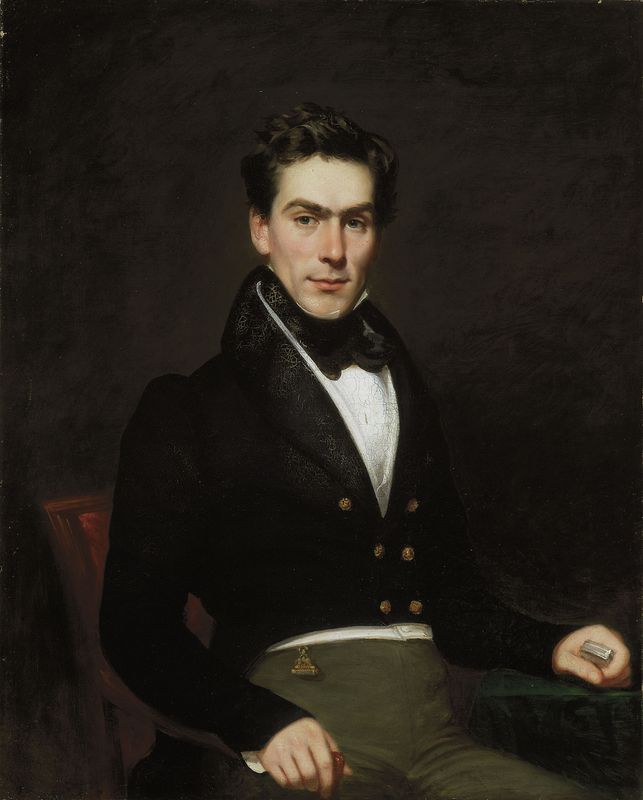
Mr. James Mackie
Samuel Alcock & Company · 1830 · Art Institute of Chicago
 Same era · 1820s–1850s
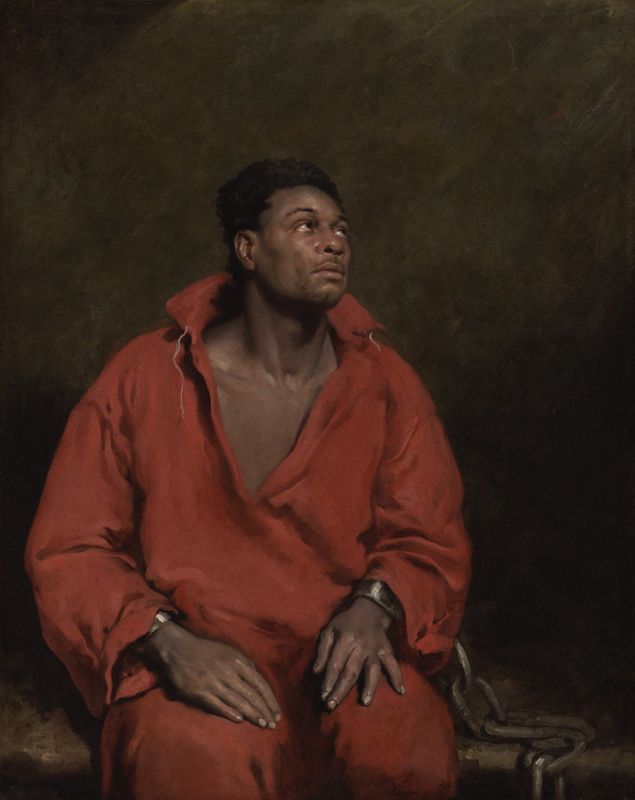
The Captive Slave (Ira Aldridge)
John Philip Simpson · 1827 · Art Institute of Chicago
 Same era · 1820s–1850s
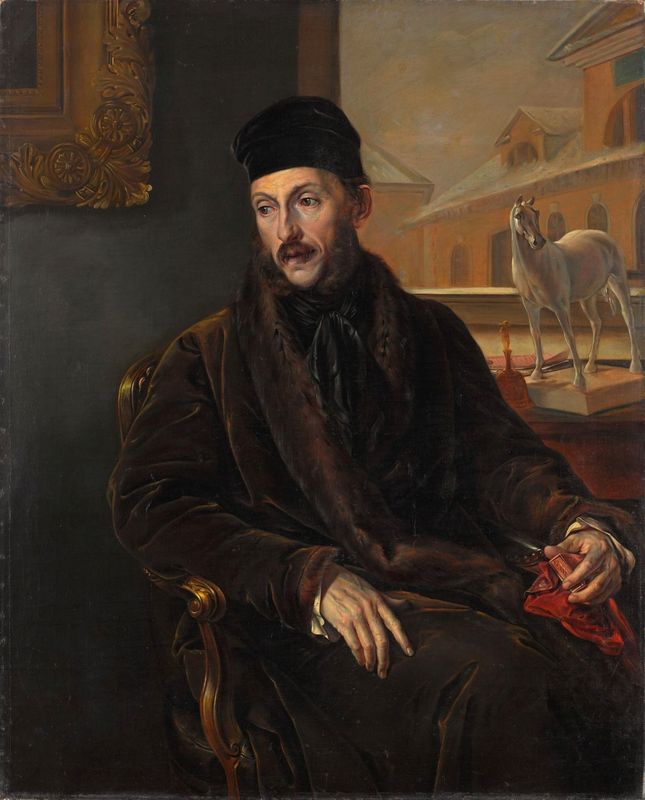
Dmitriy Petrovich Voeykov
Vasily Andreevich Tropinin · 1842 · Tretyakov Gallery