
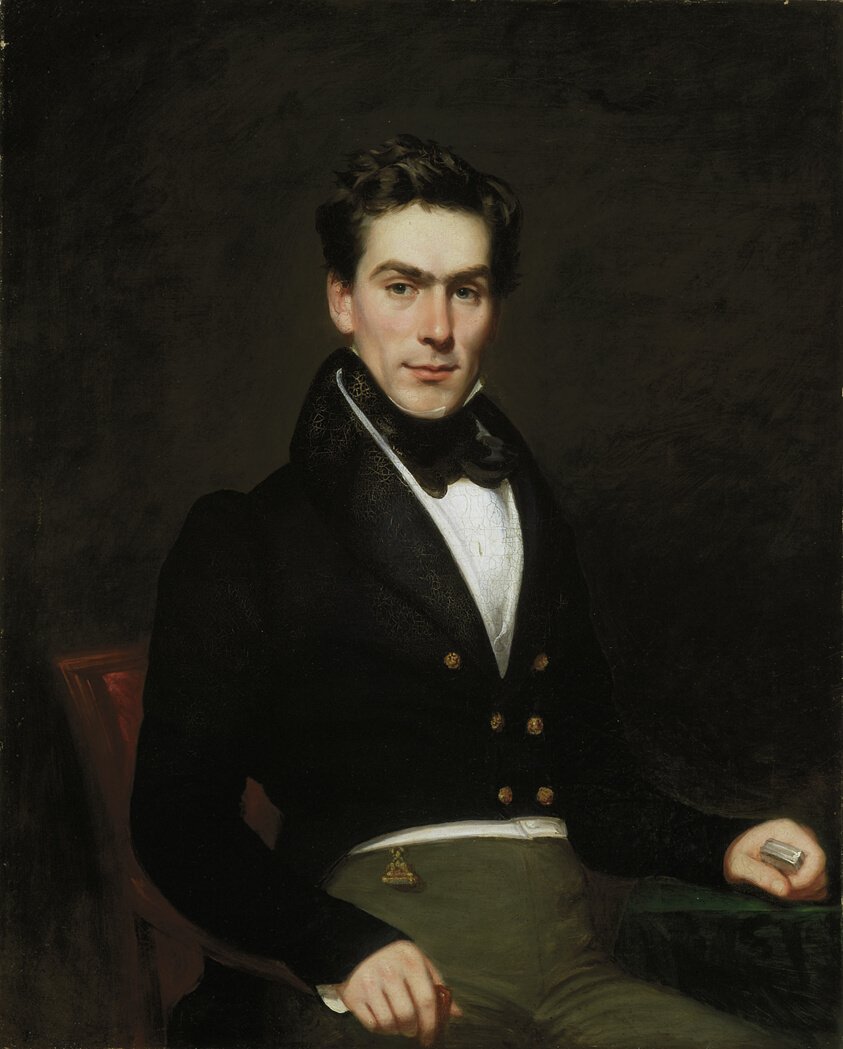
“Stop to appreciate this direct and detailed portrait of Mr. James Mackie from 1830. His steady gaze and the meticulous rendering of his attire offer a fascinating glimpse into early 19th-century identity and style.”
This striking portrait captures Mr. James Mackie in 1830, a time of significant social and industrial change. He faces us directly, his gaze steady and engaging, inviting a connection across nearly two centuries. The artist has rendered him with a keen attention to detail, particularly in the textures of his clothing. Notice the rich, dark fabric of his coat, which suggests a certain gravity and status, contrasting with the crisp white of his shirt and the subtle sheen of his cravat. The background is kept simple, a muted tone that allows Mackie's presence to dominate the canvas, emphasizing his individuality rather than placing him in a specific environment. This focus on the sitter's character, rather than elaborate surroundings, was a common approach in portraiture of the period, aiming to convey the sitter's inner life and public persona.
- Artist
- Samuel Alcock & Company
- Date
- 1830
- Medium
- Oil on canvas
- Location
- Art Institute of Chicago
- Dimensions
- 92.1 × 73.7 cm (36 1/4 × 29 in.)
- Collection
- Arts of the Americas
- Culture
- United States
- Credit line
- Friends of American Art Collection
What to Notice
Five details hide in plain sight. Here’s where to look.
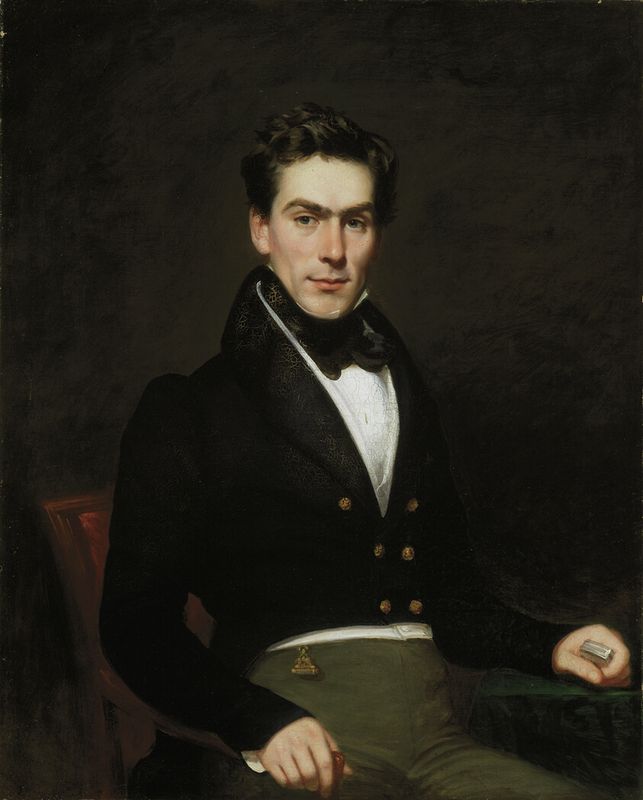
The subtle blush on Mackie's cheeks, giving life to his complexion.
The precise stitching visible on his dark coat lapel.
The faint shadow cast by his cravat, adding depth to his neckwear.
The way his hair is parted and styled, reflecting early 19th-century fashion.
1 more detail is waiting.
See all 5 in Art Whisper →Stand in front of it and listen
The full narration walks you through Mr. James Mackie — the story behind it, the details most visitors miss, and why it matters. Free in the Art Whisper app.
Samuel Alcock & Company
Samuel Alcock & Company, a prominent British business, was renowned for its intricate ceramic designs, particularly elegant cups and tureens, in the mid-19th century.
Further Works by Company
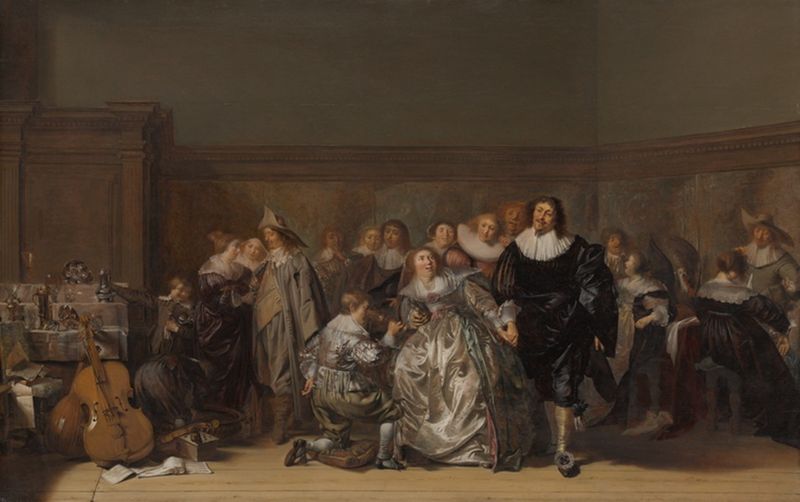 An Elegant Company
1632 · Art Institute of Chicago
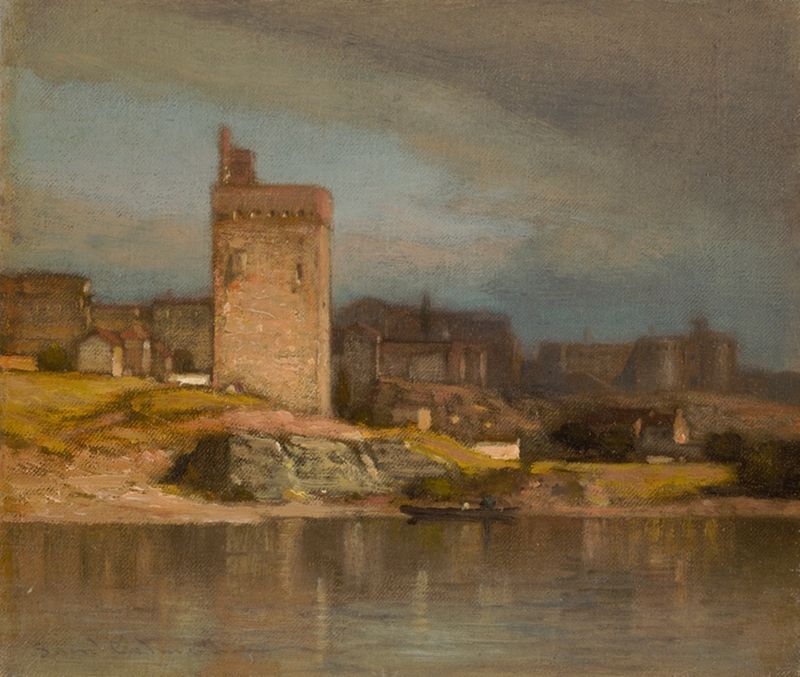 Old Tower at Avignon
1875 · Art Institute of Chicago
 Lettered title: Christy
1845 · The Metropolitan Museum of Art
 The Early Ploughman
1856 · Art Institute of Chicago
 Lord Lyndhurst
1824 · The Metropolitan Museum of Art
 The Pink Boy
1901 · Art Institute of Chicago
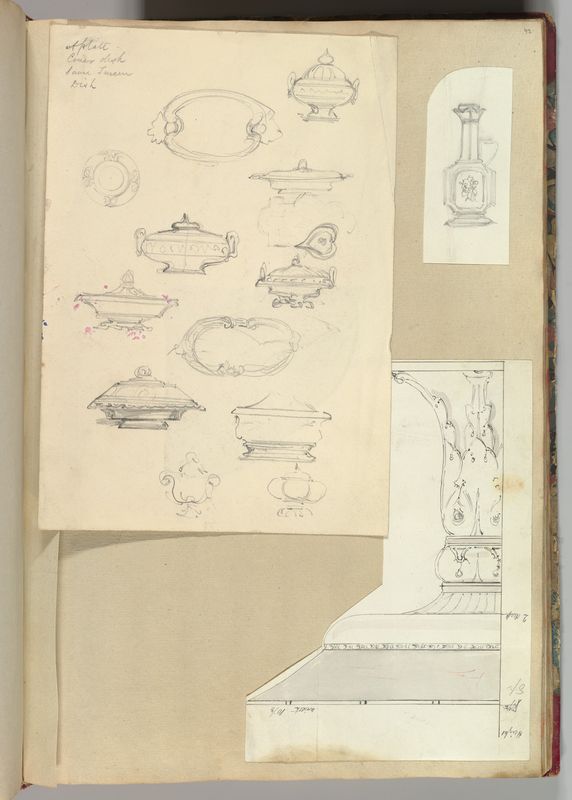 Designs for Tureens and a Platter
1845 · The Metropolitan Museum of Art
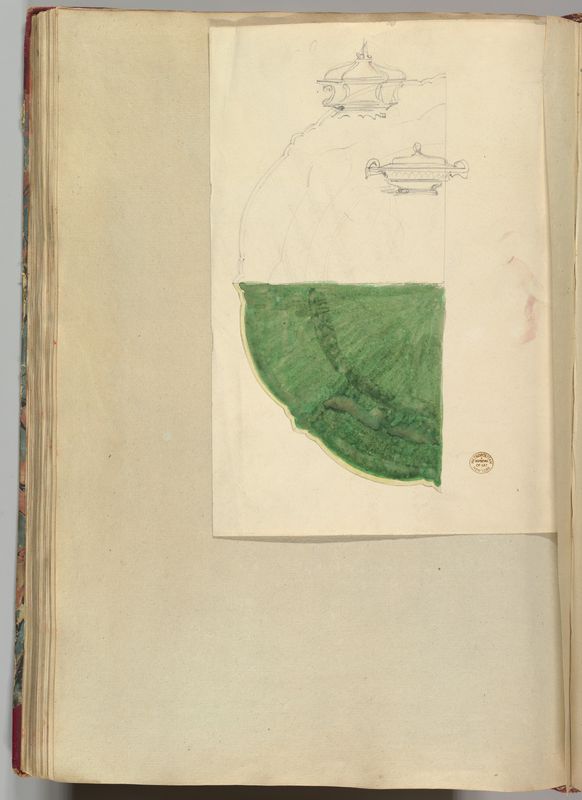 Designs for Two Tureens and a Plate
1845 · The Metropolitan Museum of Art
More works to explore
Beyond Company: works from the same years.
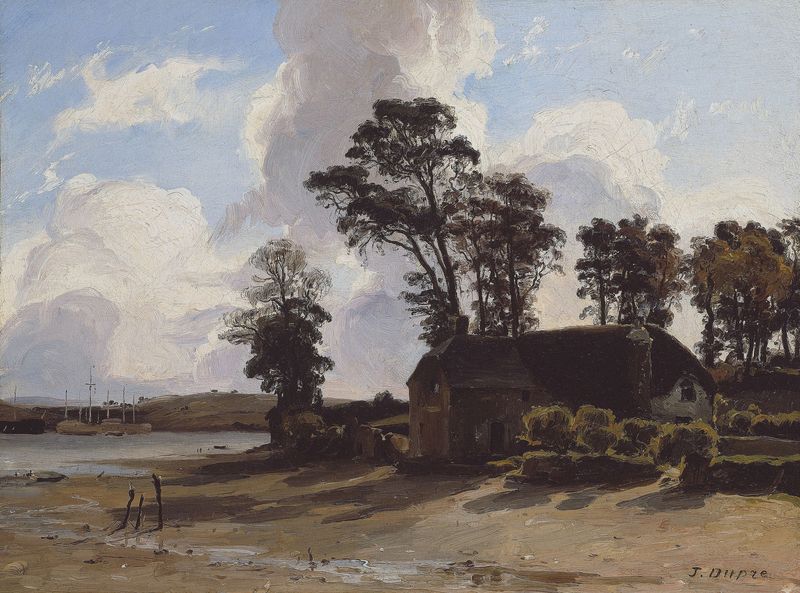 Same era · 1810s–1840s
The Estuary Farm
Léon-Victor Dupré · 1831 · Art Institute of Chicago
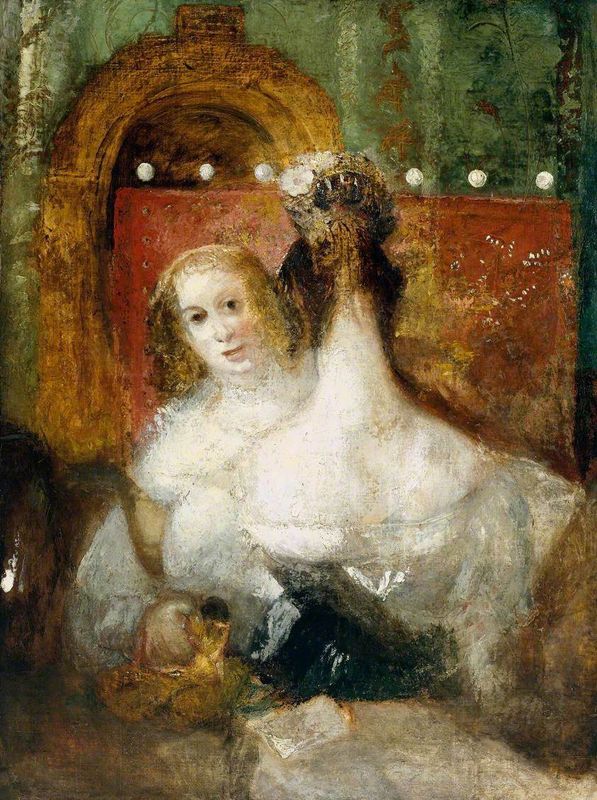 Same era · 1810s–1840s
Two Women with a Letter
J. M. W. Turner · 1830 · National Gallery
 Same era · 1810s–1840s
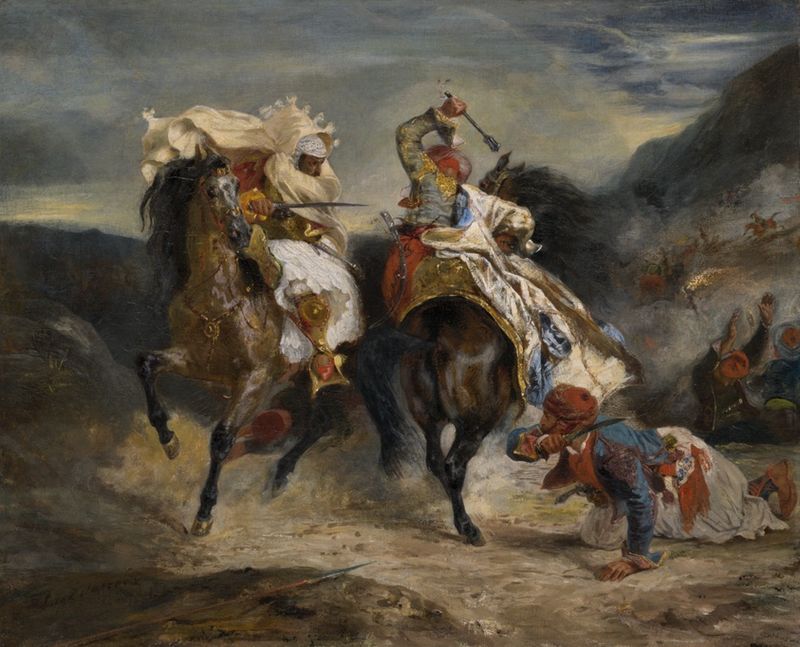
The Combat of the Giaour and Hassan
Eugène Delacroix · 1826 · Art Institute of Chicago
 Same era · 1810s–1840s
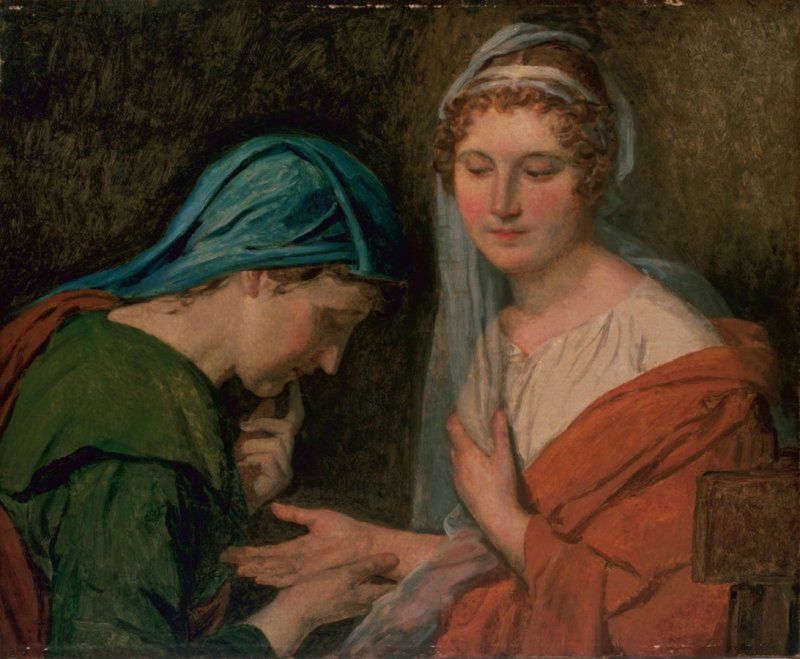
The Fortune Teller (La Bonne Aventure)
Jacques-Louis David · 1824 · Fine Arts Museums of San Francisco
 Same era · 1810s–1840s
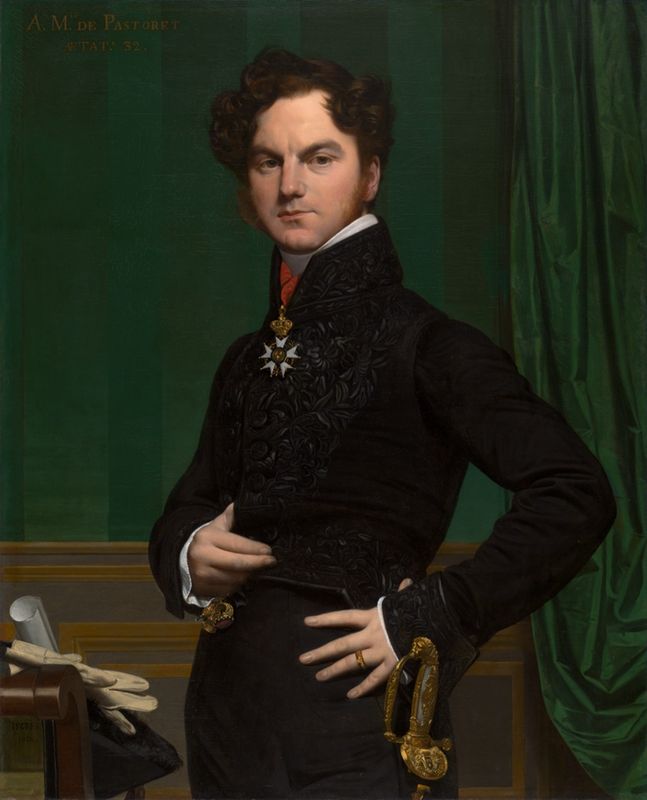
Amédée-David, the Comte de Pastoret
Jean-Auguste-Dominique Ingres · 1823 · Art Institute of Chicago
 Same era · 1810s–1840s
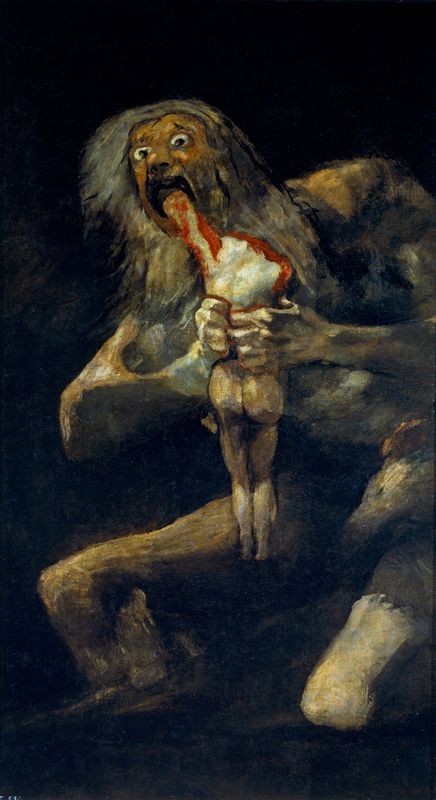
Saturn Devouring His Son
Francisco Goya · 1820 · Museo del Prado
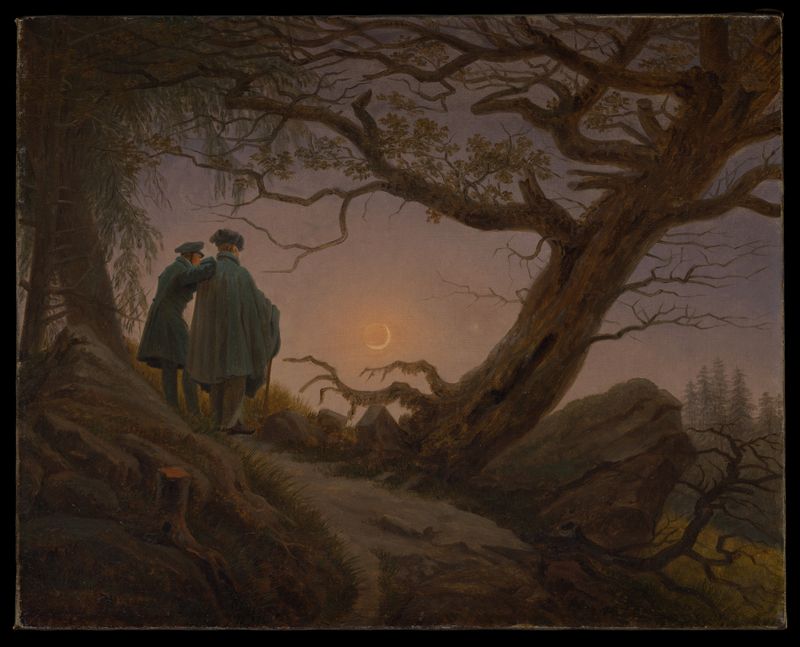 Same era · 1810s–1840s
Two Men Contemplating the Moon
Caspar David Friedrich · 1819 · Staatliche Kunstsammlungen Dresden
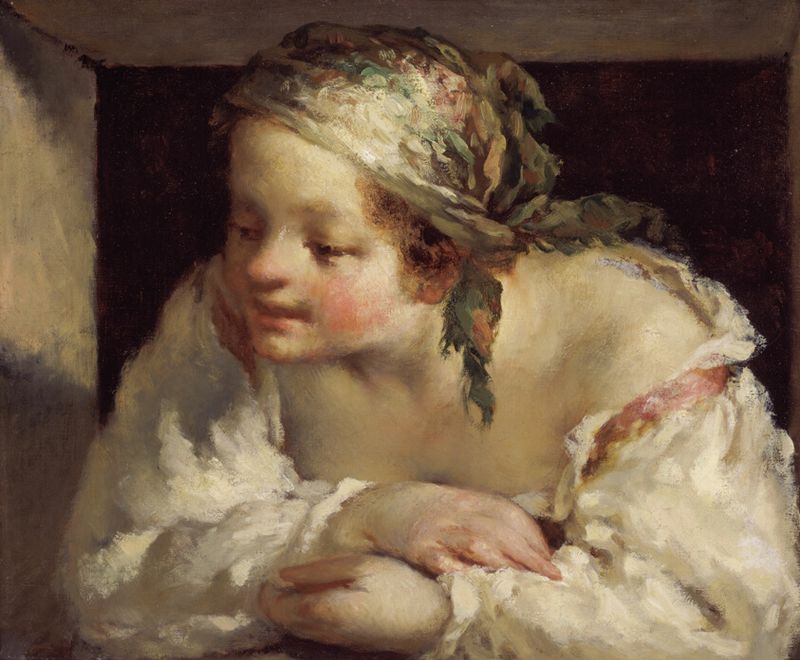 Same era · 1810s–1840s
Young Woman
Jean-François Millet · 1844 · Art Institute of Chicago
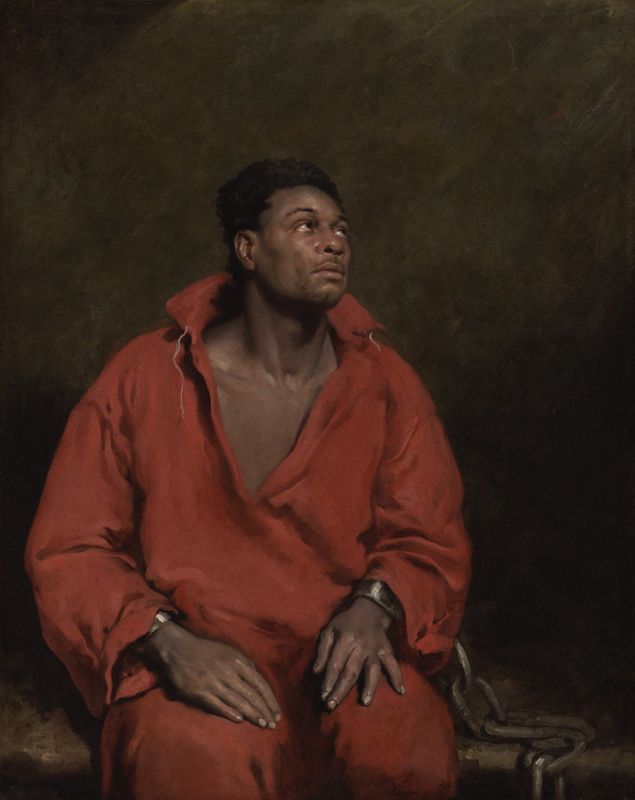 Same era · 1810s–1840s
The Captive Slave (Ira Aldridge)
John Philip Simpson · 1827 · Art Institute of Chicago
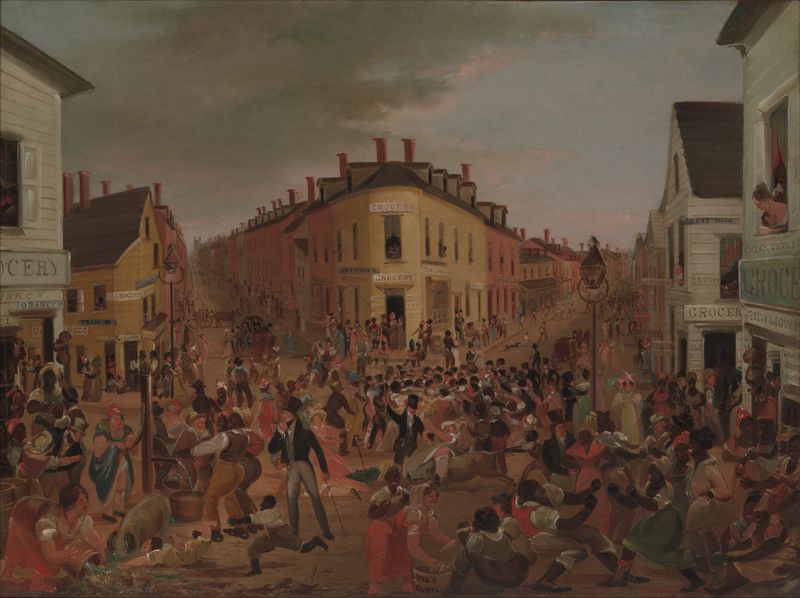 Same era · 1810s–1840s
The Five Points
Artist Unknown - The Mercat Cross, Aberdeen · 1822 · The Metropolitan Museum of Art
 Same era · 1810s–1840s
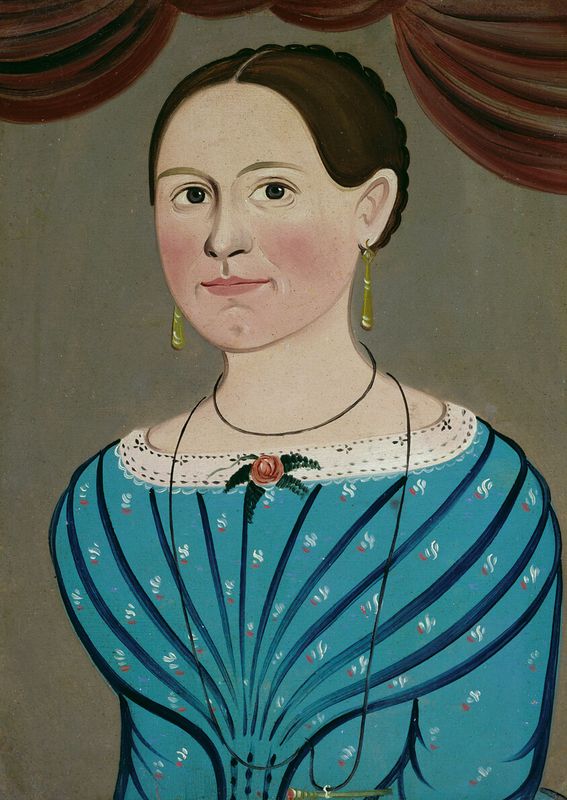
Woman in a Blue Dress
School of William Matthew Prior · 1840 · Art Institute of Chicago
 Same era · 1810s–1840s
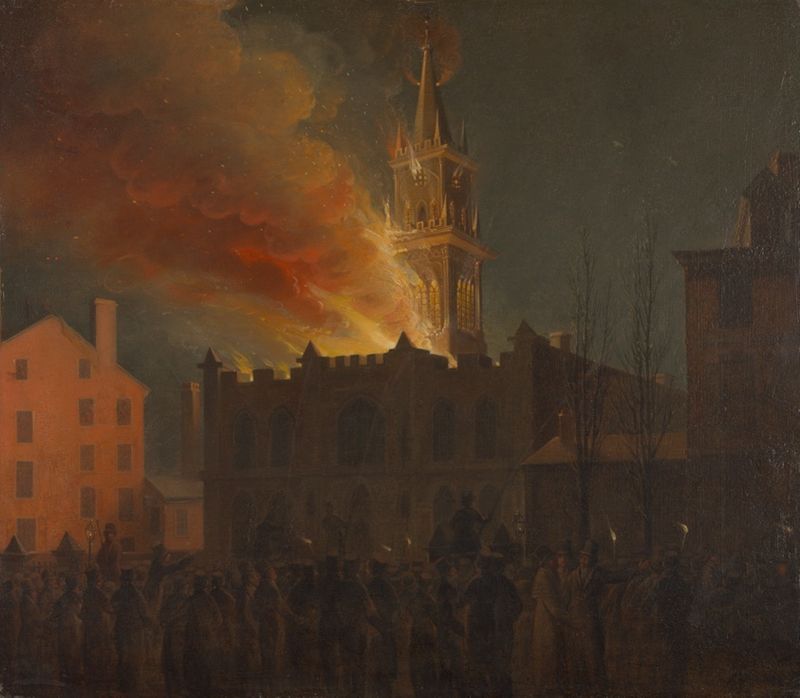
Conflagration of the Masonic Hall, Chestnut Street, Philadelphia, Pennsylvania
Samuel Jones · 1819 · Art Institute of Chicago