
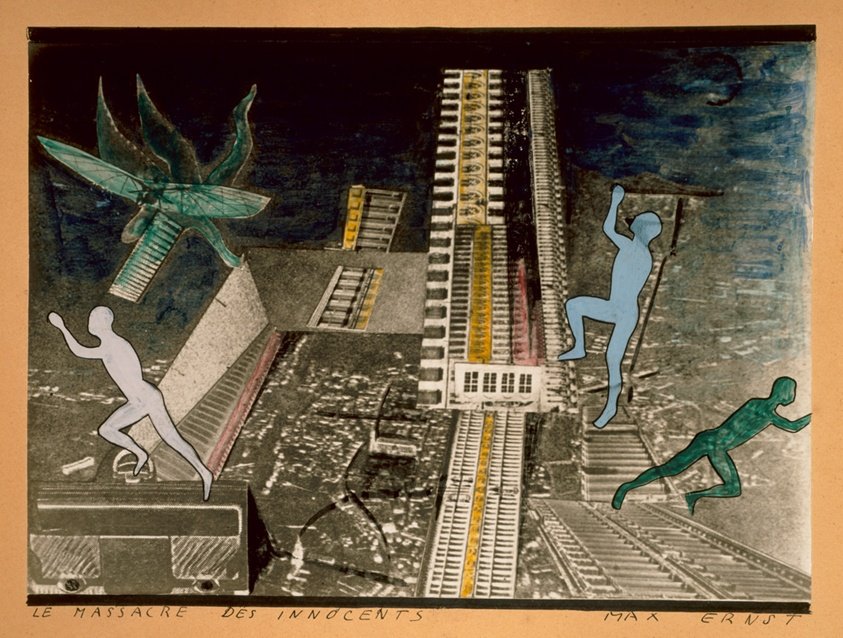
“Stop and look at this early work by Max Ernst, a pioneer of Dada. It's a hand-colored photograph that blends the real with the surreal, offering a disturbing vision of the "Massacre of the Innocents" unlike any you've seen.”
In this unsettling image, a black-and-white photograph is transformed into a surreal landscape through hand-coloring. Max Ernst, a key figure in the Dada movement, created the work in 1920, a time when artists were experimenting with collage and photography to express the chaos and trauma of the modern world. Here, familiar elements are reassembled into something profoundly disturbing. The title, "The Massacre of the Innocents," evokes a biblical narrative, yet the scene itself is far from traditional. Instead, we see a bizarre, almost mechanical tableau, a testament to the artist's inventive approach to art making. The delicate watercolor and gouache over the photographic base create an eerie, dreamlike quality, blurring the lines between reality and nightmare. This work exemplifies the Dadaists' radical rejection of conventional art and their embrace of the absurd to critique society.
- Artist
- Max Ernst
- Date
- 1920
- Medium
- Black-and-white photograph with hand-coloring in watercolor, gouache, and black ink, laid down on tan wove wood-pulp paper
- Location
- Art Institute of Chicago
- Dimensions
- Primary support: 21.5 × 28.9 cm (8 1/2 × 11 7/16 in.); Secondary support, sight: 29.5 × 38 cm (11 5/8 × 15 in.)
What to Notice
Five details hide in plain sight. Here’s where to look.
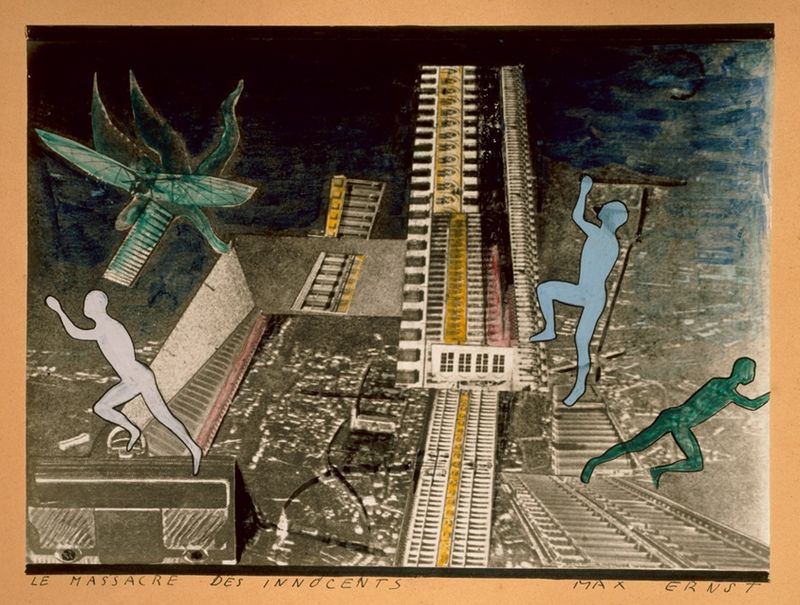
The stark black-and-white photographic base.
Subtle hand-coloring in watercolor and gouache.
The unusual, almost machine-like forms in the foreground.
The way the figures are distorted and fragmented.
1 more detail is waiting.
See all 5 in Art Whisper →Max Ernst
1891–1976 · CubaMax Ernst, a pioneer of Dada and Surrealism, invented techniques like frottage and grattage, transforming everyday textures into visionary art.
Further Works by Ernst
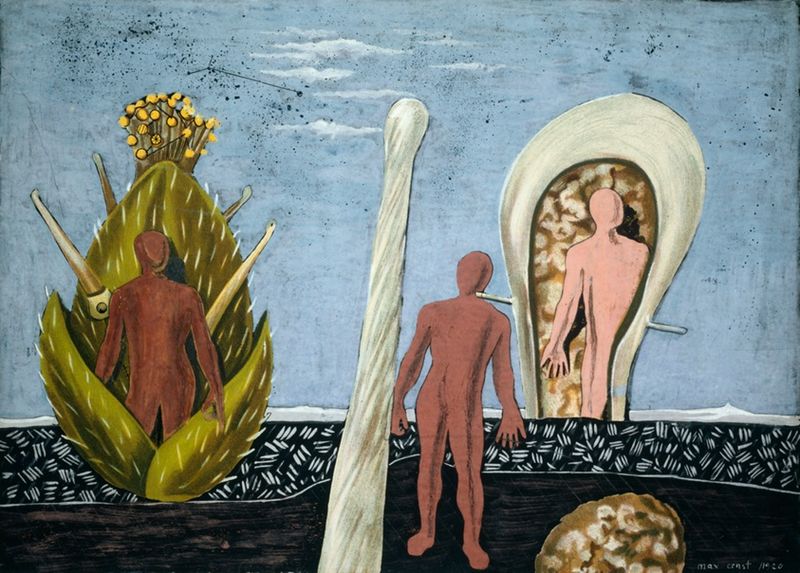 Dada Gauguin
1920 · Art Institute of Chicago
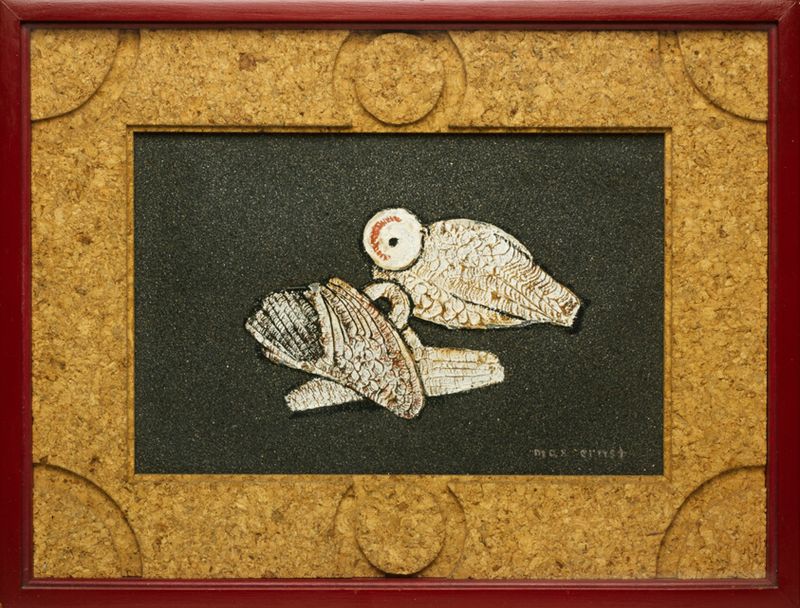 Untitled (Birds)
1924 · Art Institute of Chicago
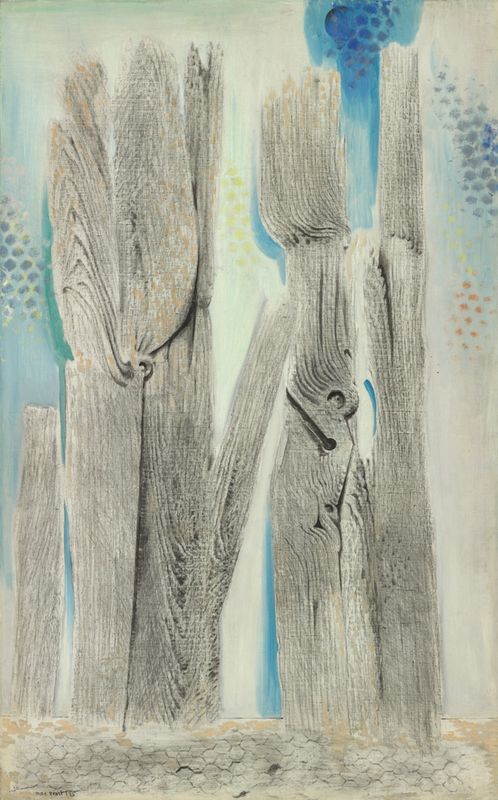 The Blue Forest
1925 · Art Institute of Chicago
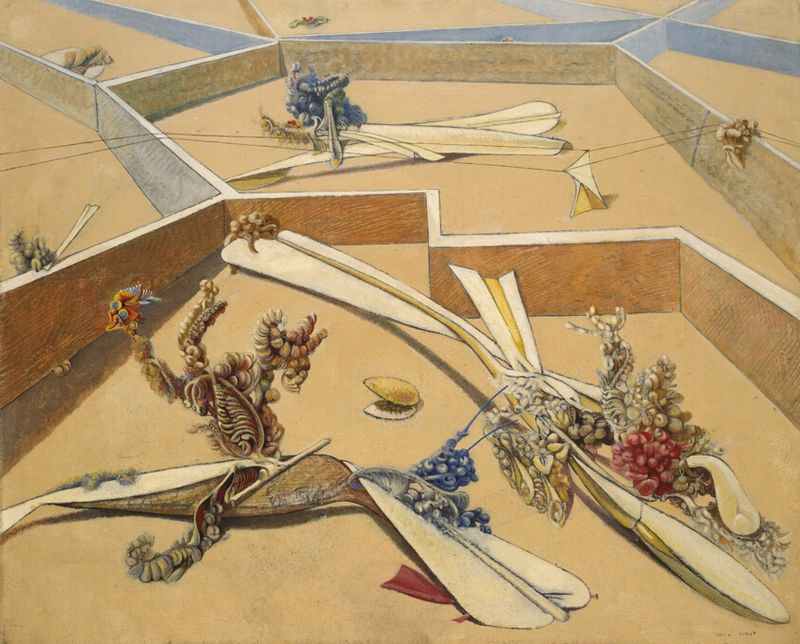 Garden Airplane-Trap
1935 · Art Institute of Chicago
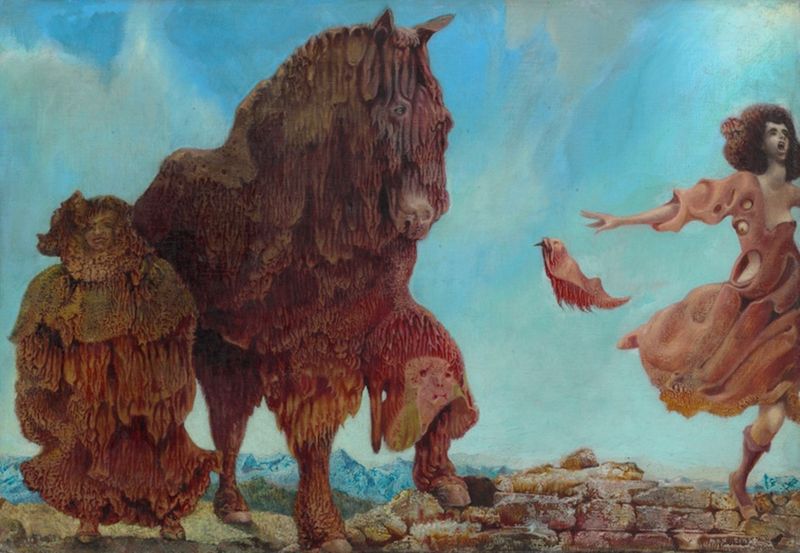 Spanish Physician
1940 · Art Institute of Chicago
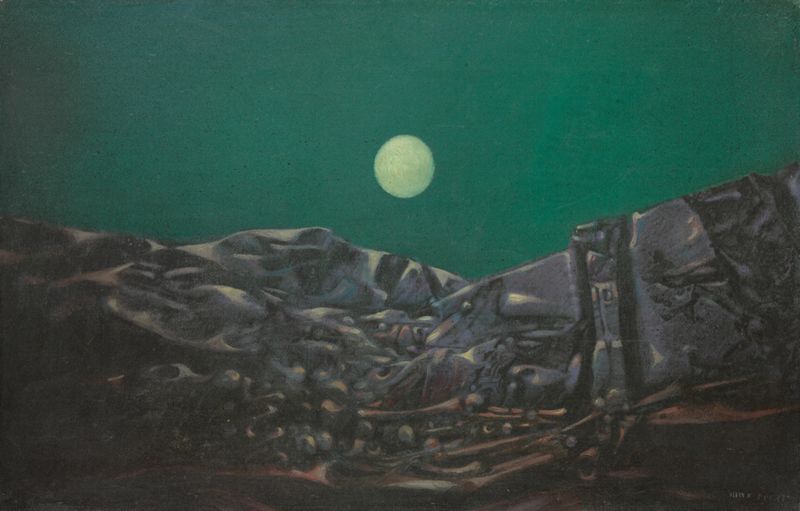 Summer Night in Arizona
1944 · Art Institute of Chicago
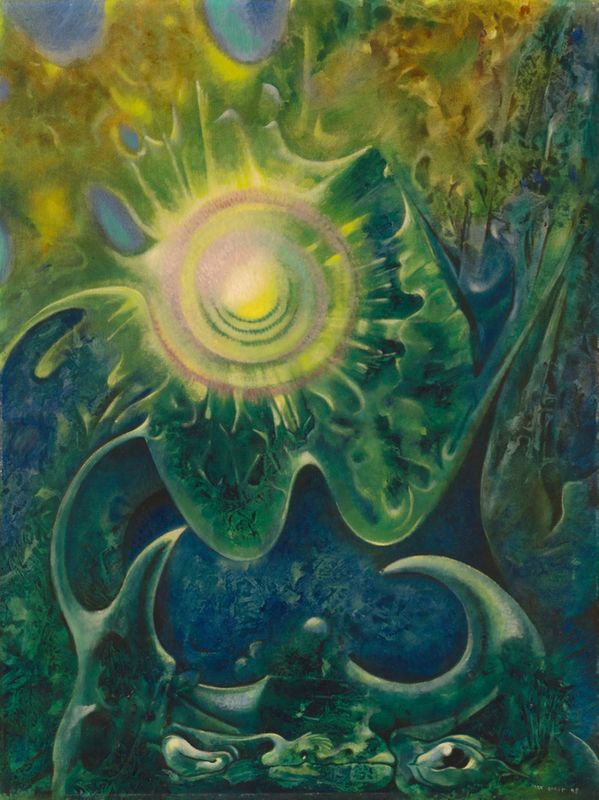 Halleluiah
1948 · Art Institute of Chicago
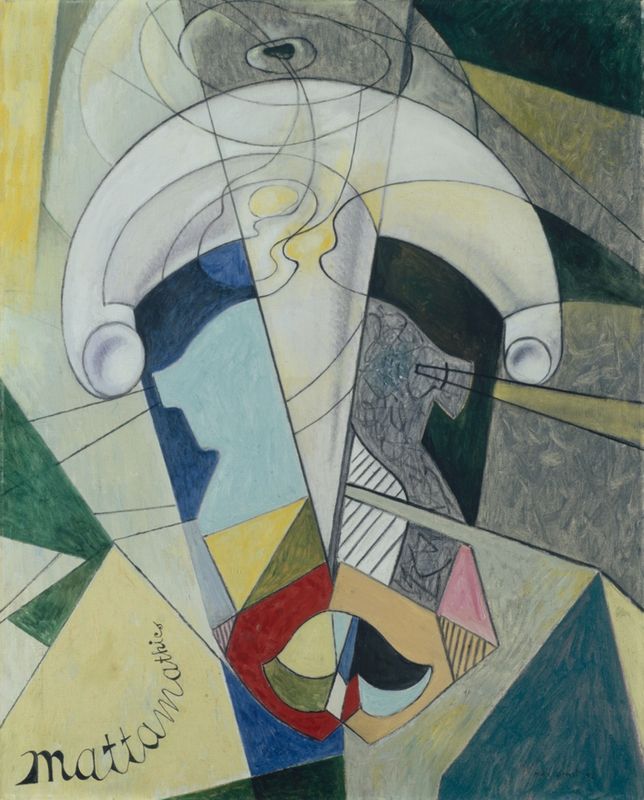 Mattamathics
1948 · Art Institute of Chicago
More from Surrealism
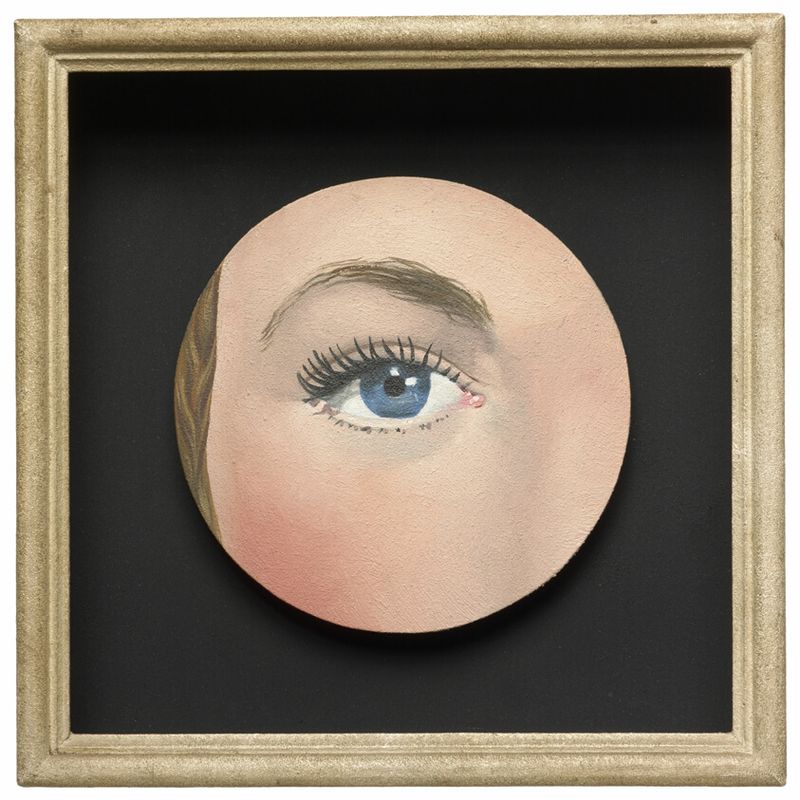
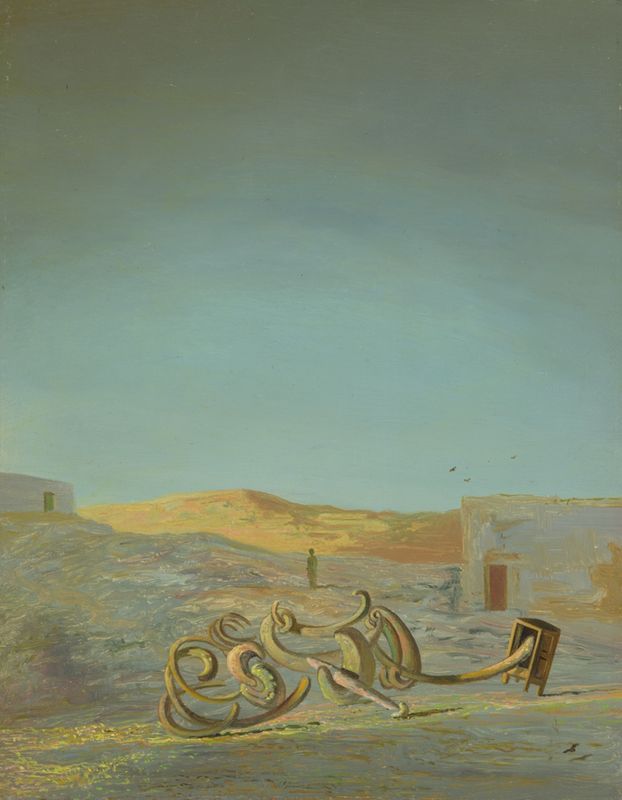
More works to explore
Beyond Ernst and Surrealism: works from the same years.
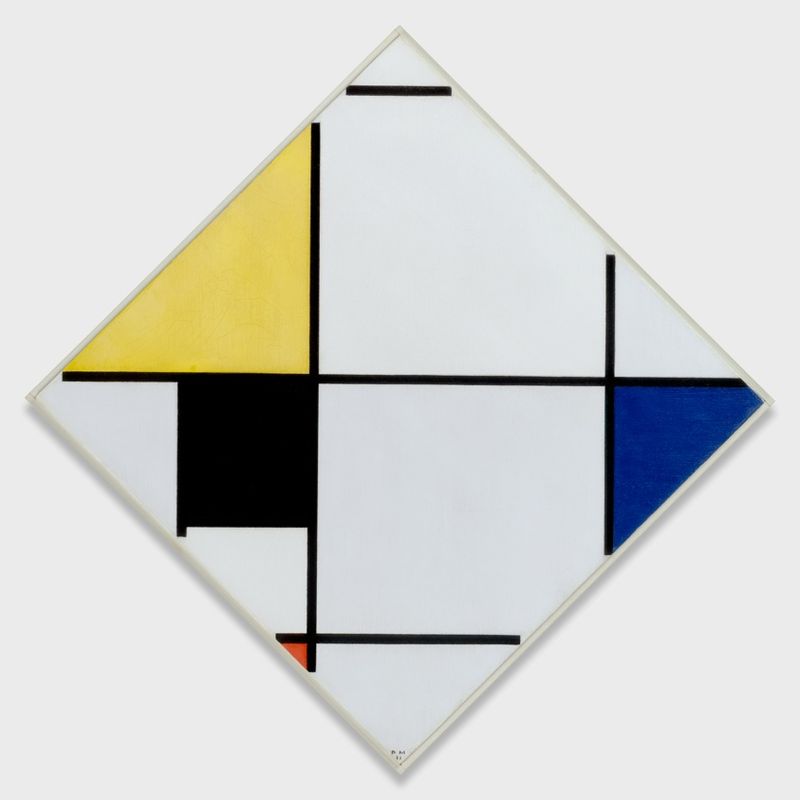 Same era · 1900s–1930s
Lozenge Composition with Yellow, Black, Blue, Red, and Gray
Piet Mondrian · 1921 · Art Institute of Chicago
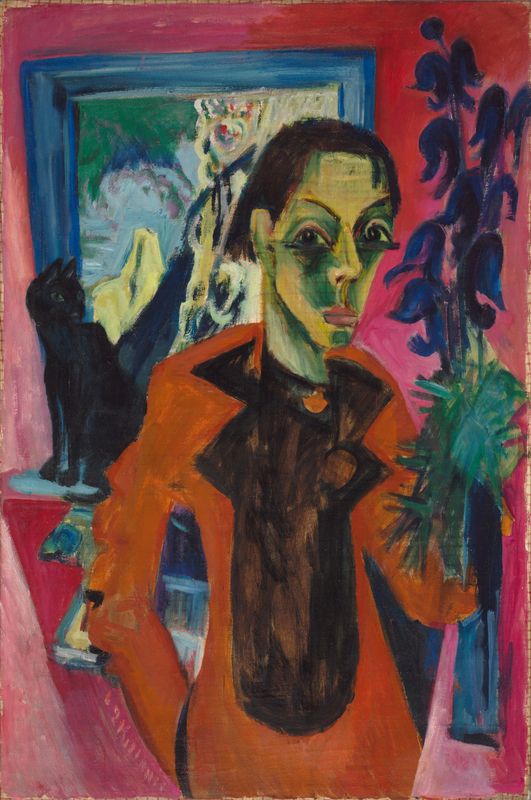 Same era · 1900s–1930s
Self-Portrait with Cat
Ernst Ludwig Kirchner · 1920 · Museum Folkwang
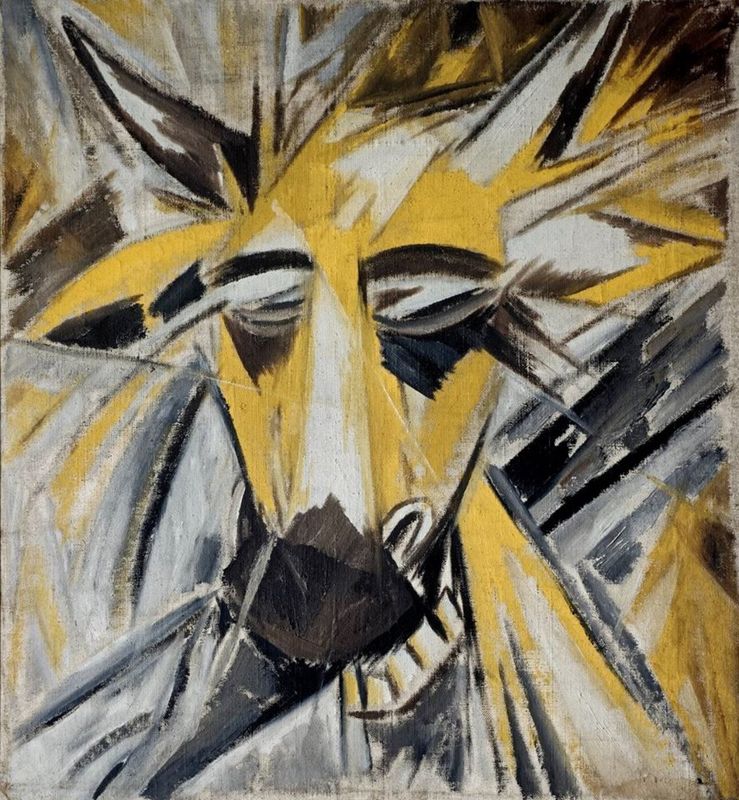 Same era · 1900s–1930s
Bull's Head
Mikhail Larionov · 1913 · Tretyakov Gallery
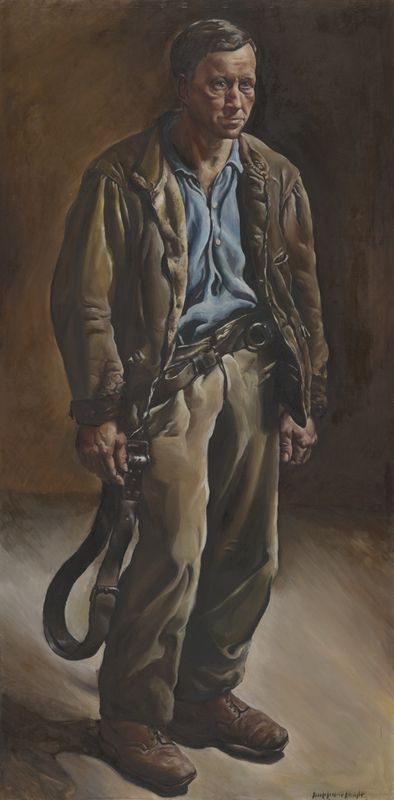 Same era · 1900s–1930s
The Lineman
Ivan Puni · 1927 · Art Institute of Chicago
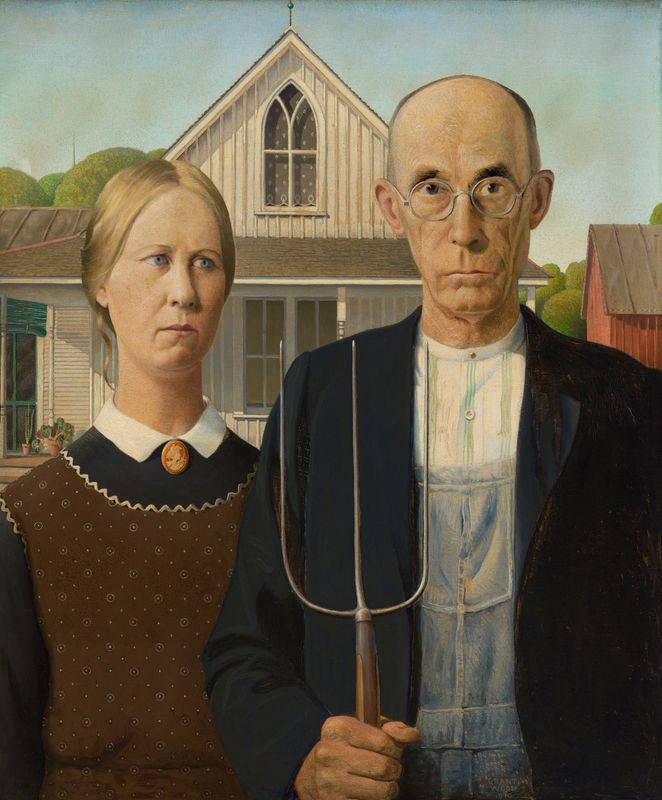 Same era · 1900s–1930s
American Gothic
Okada Saburosuke · 1930 · Art Institute of Chicago
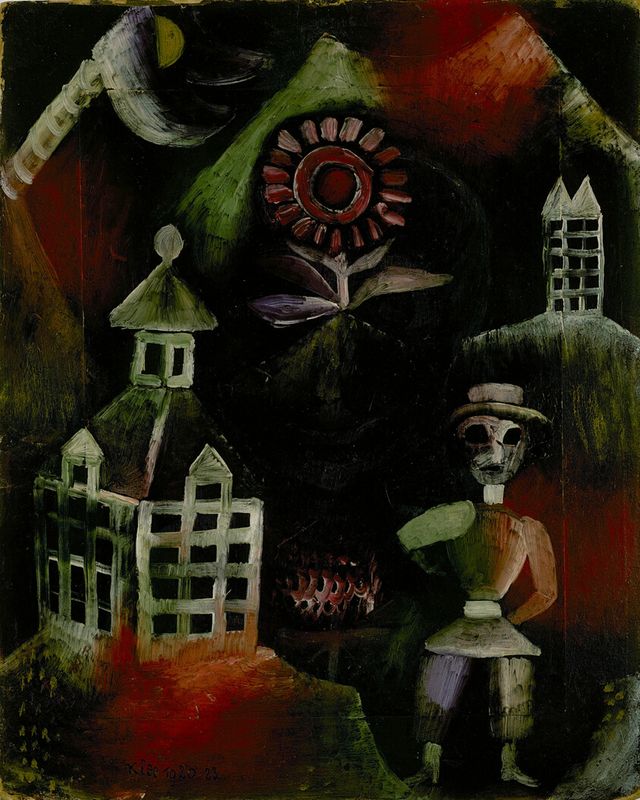 Same era · 1900s–1930s
Schoolhouse
Paul Klee · 1920 · Art Institute of Chicago
 Same era · 1900s–1930s
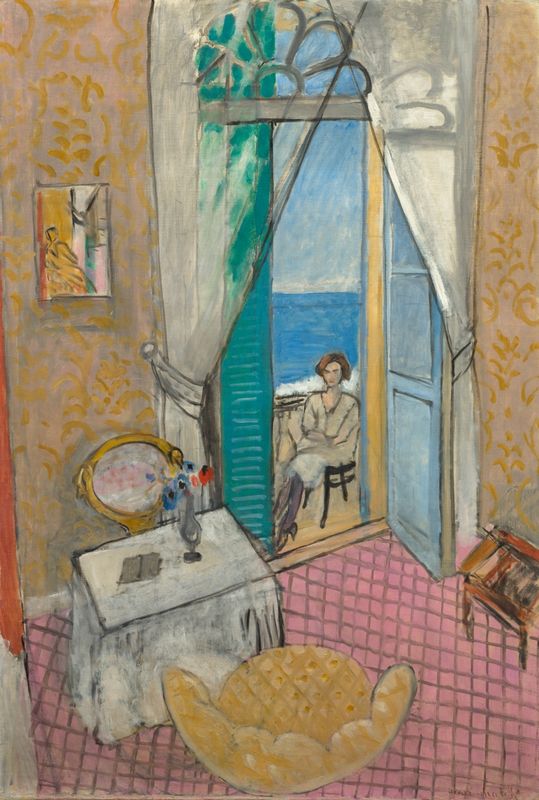
Interior at Nice
Henri Matisse · 1919 · Art Institute of Chicago
 Same era · 1900s–1930s
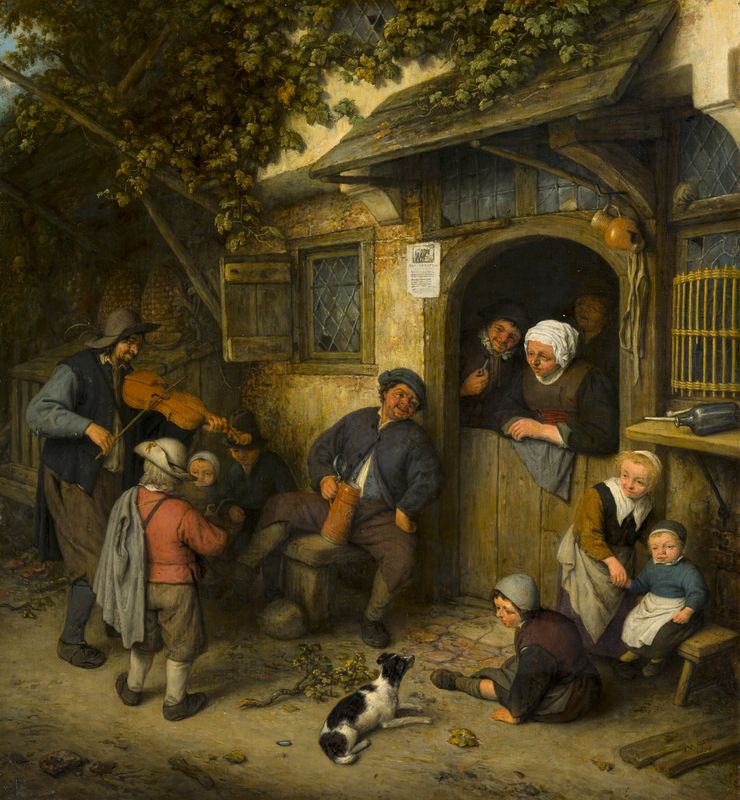
The Fiddler
Norman Rockwell · 1921 · Brandywine Museum of Art
 Same era · 1900s–1930s
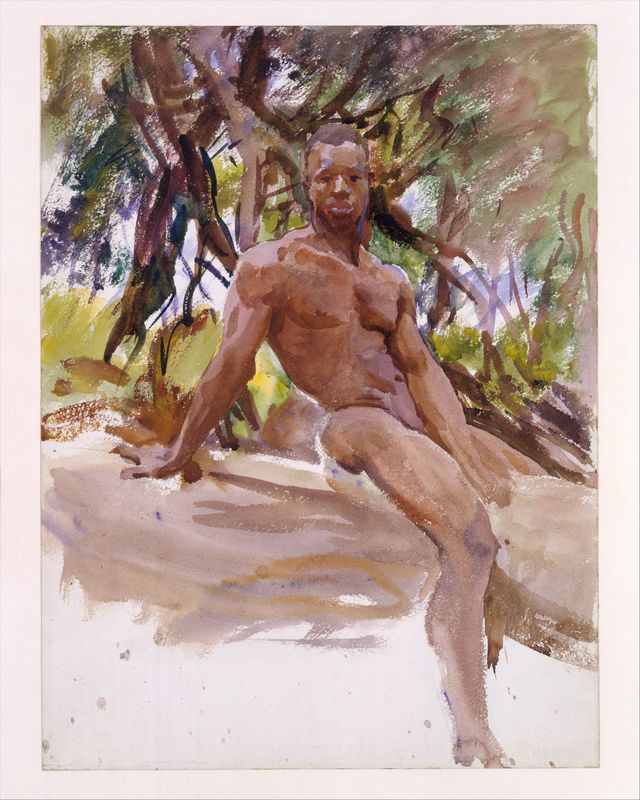
Man and Trees, Florida
John Singer Sargent · 1917 · The Metropolitan Museum of Art
 Same era · 1900s–1930s
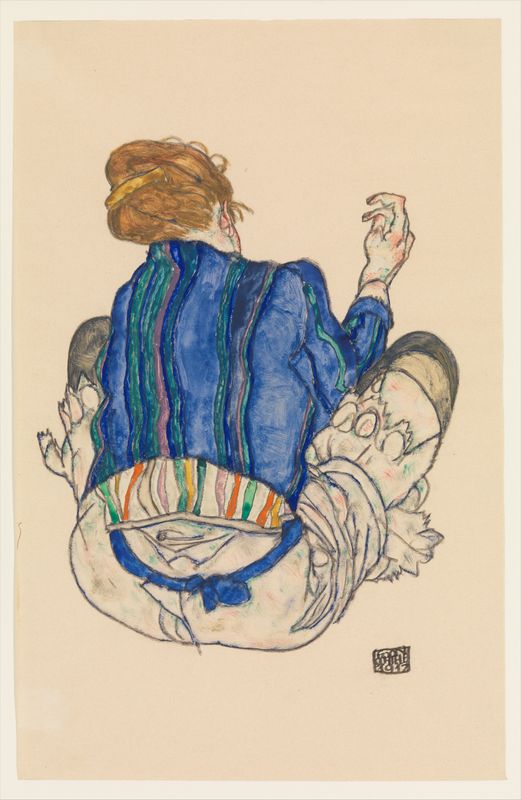
Seated Woman, Back View
Egon Schiele · 1917 · The Metropolitan Museum of Art
 Same era · 1900s–1930s
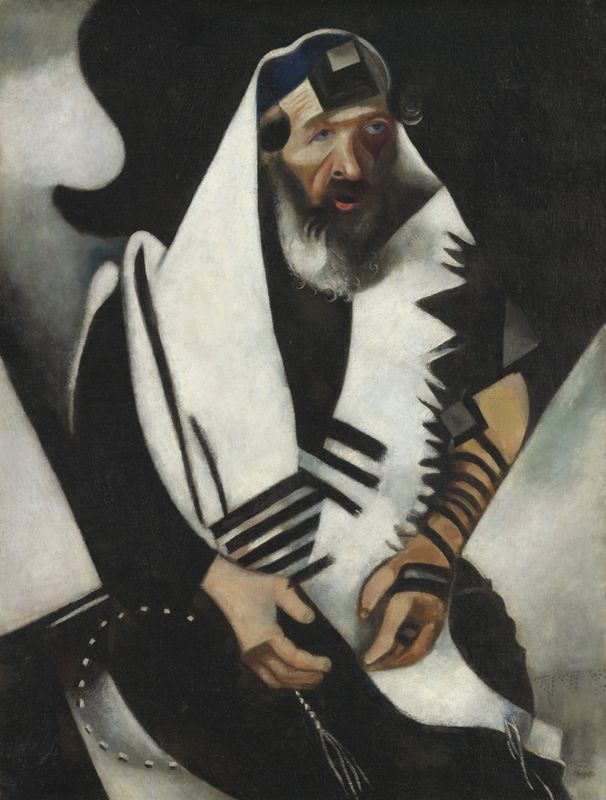
The Praying Jew
Marc Chagall · 1923 · Art Institute of Chicago
 Same era · 1900s–1930s
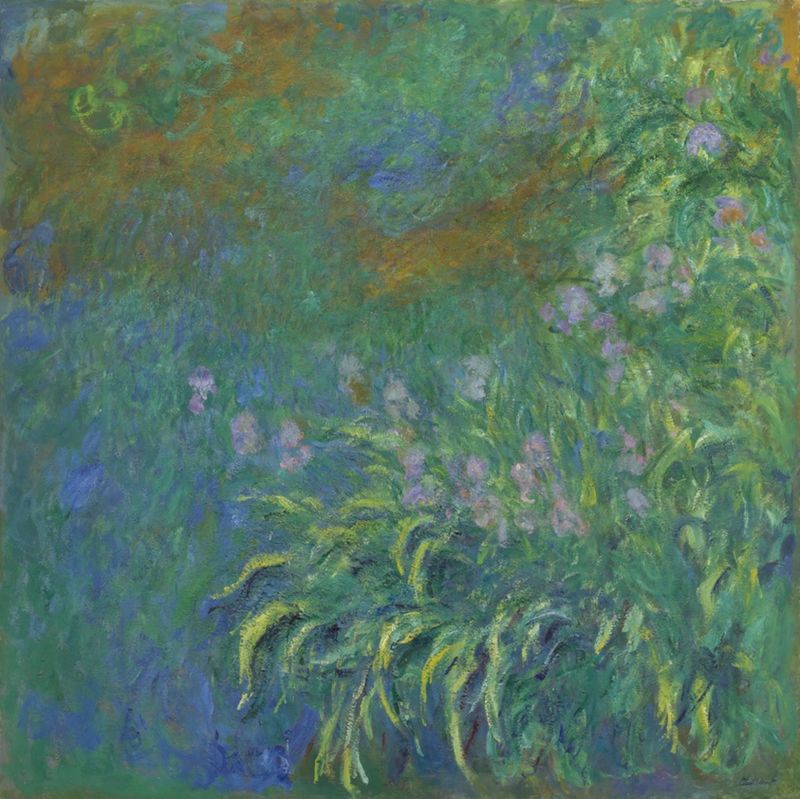
Irises
Claude Monet · 1915 · National Gallery