01
Downcast profile
Follow the soft line from brow to nose, lips and chin. The lowered eyelid gives her a quiet, private mood.
1 of 5 on the painting
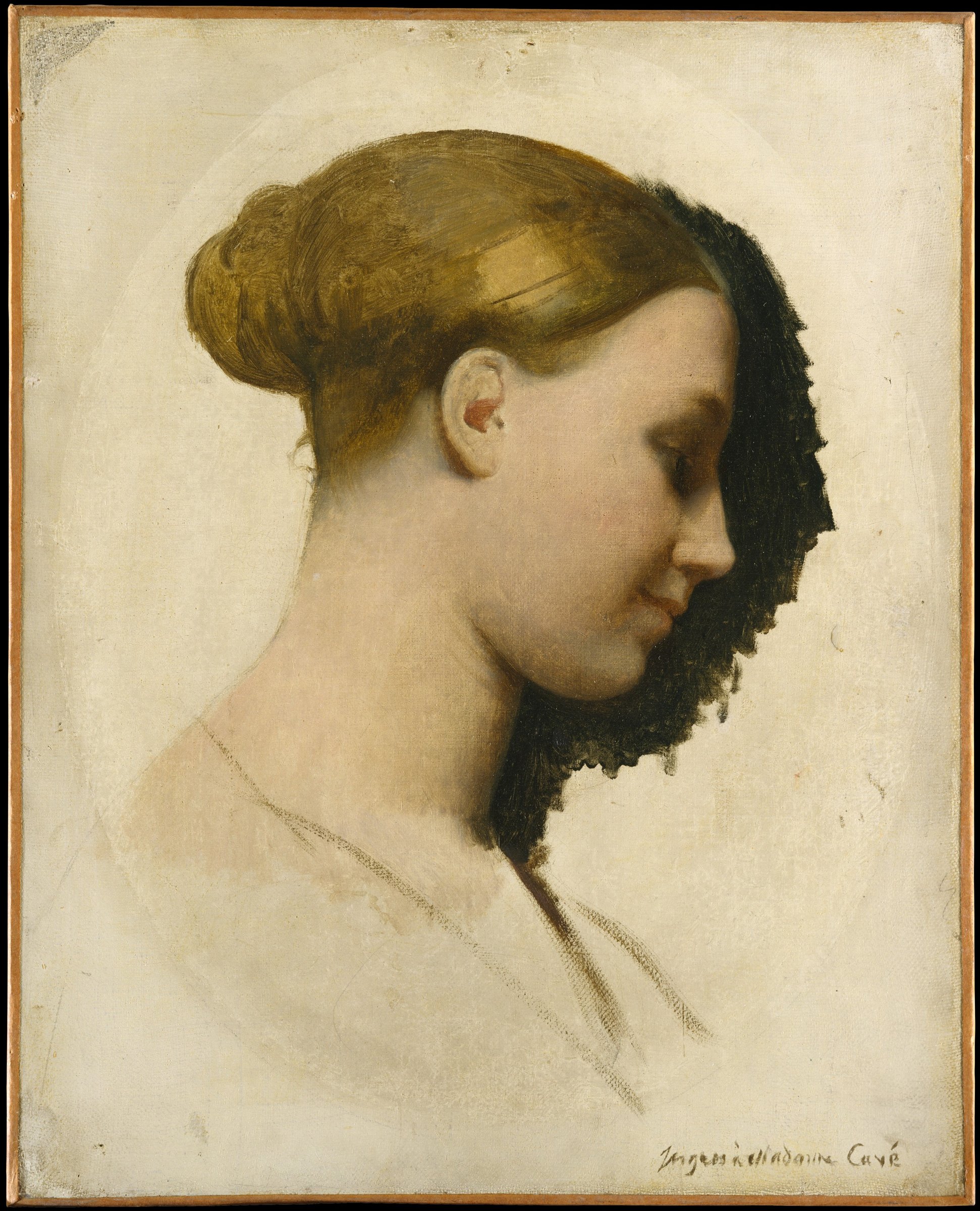
“Stop to appreciate this striking portrait of Madame Edmond Cavé. Its elegant simplicity and the sitter's direct gaze offer a window into 19th-century Parisian society and the enduring power of a well-rendered likeness.”
In this intimate portrait, Marie-Élisabeth Blavot, Madame Edmond Cavé, gazes out with a direct, yet gentle, expression. Her profile is sharply defined against a plain background, a technique that highlights her delicate features and the elegant curve of her neck. The artist, Jean-Auguste-Dominique Ingres, often focused on the purity of line and form, a hallmark of Neoclassicism. Here, the precise drawing of her hair, meticulously styled with a central part and soft waves around her ears, creates a sense of understated sophistication. Her simple black dress, though lacking elaborate detail, is rendered with a subtle sheen that suggests luxurious fabric. This work captures a moment of quiet dignity, emphasizing the sitter's inner grace rather than external adornment, a characteristic that makes it feel both timeless and deeply personal.
Five details hide in plain sight. Pick one and we’ll show you exactly where to look.
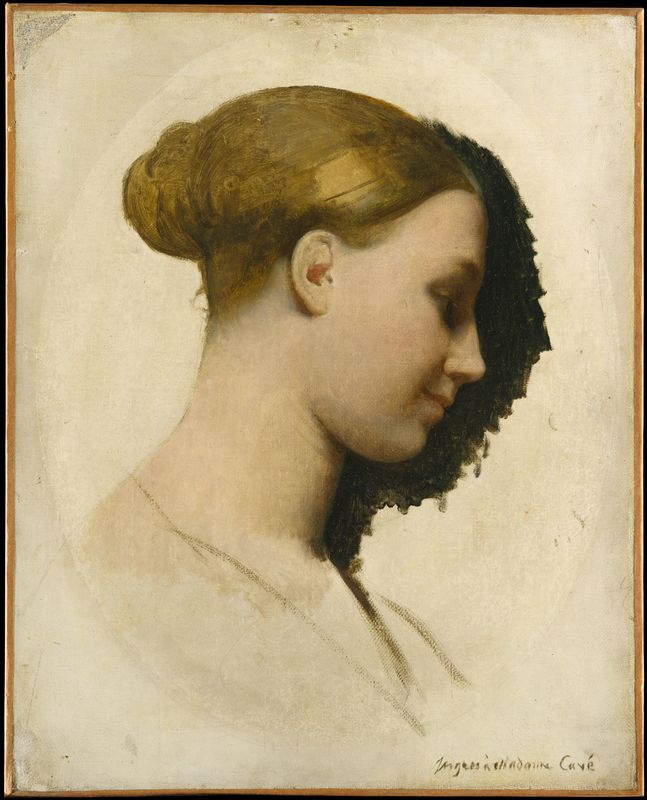
Follow the soft line from brow to nose, lips and chin. The lowered eyelid gives her a quiet, private mood.
The black patch behind her face has a rough, scrubby edge. It makes her pale skin glow, and it may have been a quick test of the tonal contrast.
Thick, buttery strokes in the bun and along the crown catch the light. They contrast with the thin, smooth paint of the face.
The shoulder and neckline are only thin brown lines over bare, pale ground. You can see the drawing underneath, left unfinished.
In the lower right corner, a handwritten inscription in dark ink reads as a dedication to Madame Cavé. It hints the sketch may have been a personal gift.
The full narration walks you through Madame Edmond Cavé (Marie-Élisabeth Blavot, born 1810) — the story behind it, the details most visitors miss, and why it matters. Free in the Art Whisper app.
Jean-Auguste-Dominique Ingres, a French Neoclassical painter, masterfully blended academic tradition with expressive distortions, influencing modernists like Matisse and Picasso.
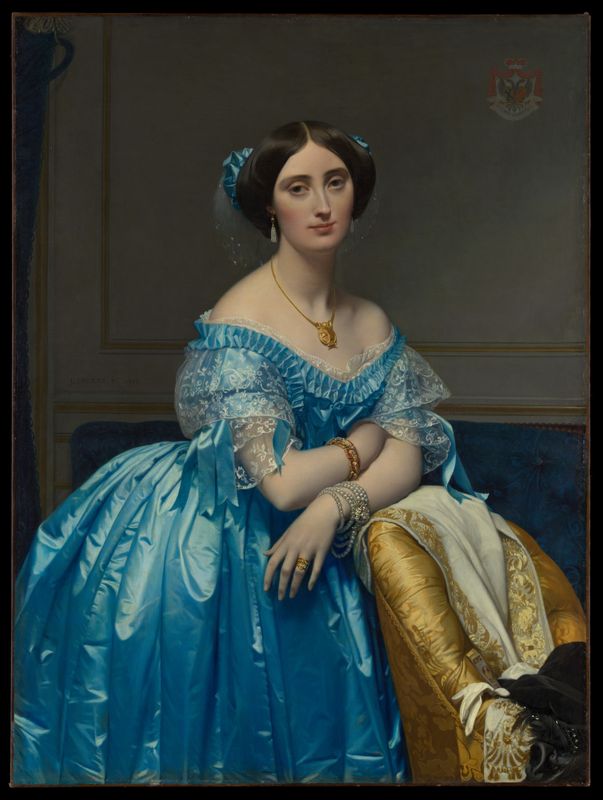 Joséphine-Éléonore-Marie-Pauline de Galard de Brassac de Béarn (1825–1860), Princesse de Broglie
1853 · Metropolitan Museum of Art
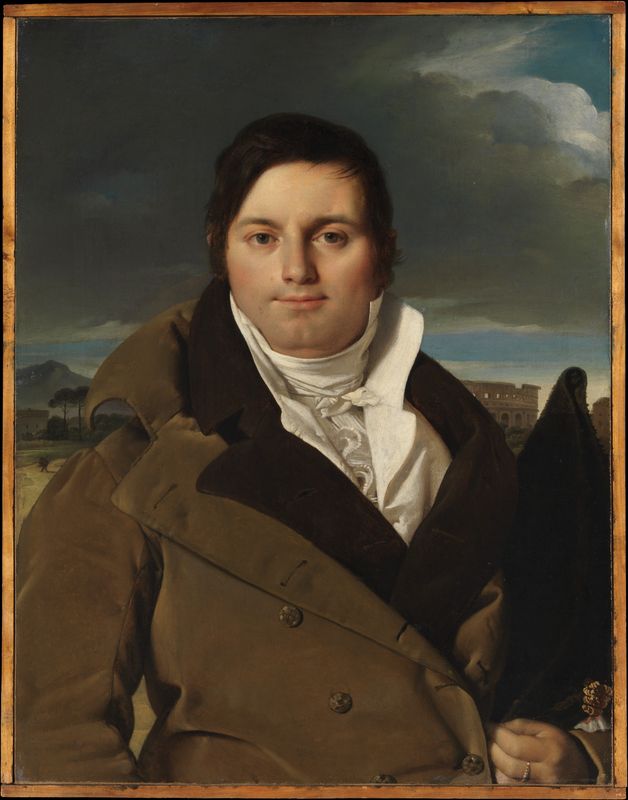 Joseph-Antoine Moltedo (born 1775)
1805 · The Metropolitan Museum of Art
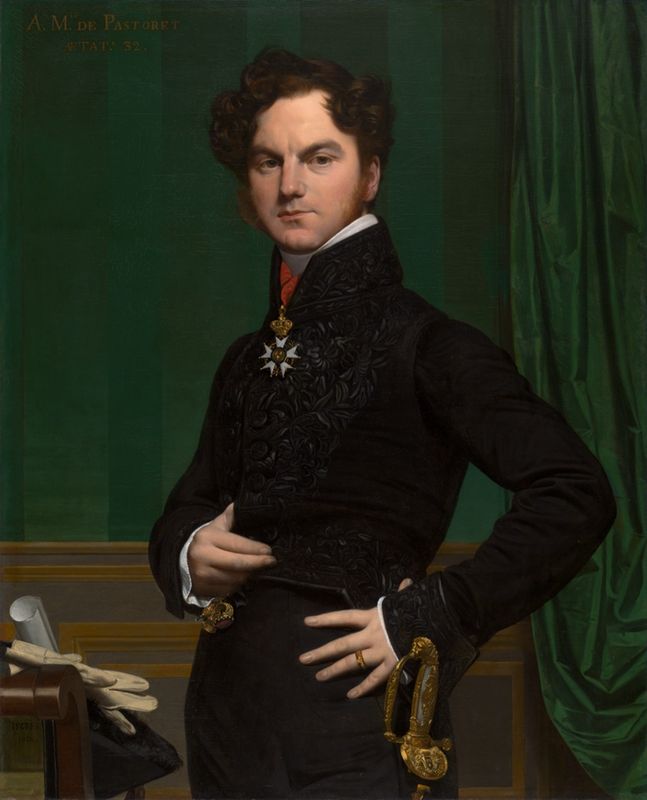 Amédée-David, the Comte de Pastoret
1823 · Art Institute of Chicago
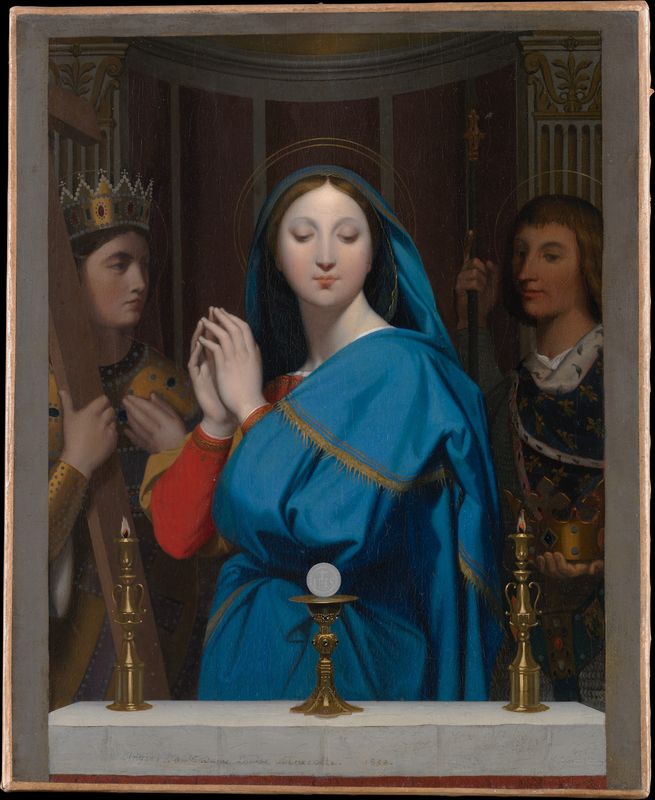 The Virgin Adoring the Host
1841 · Pushkin Museum of Fine Arts
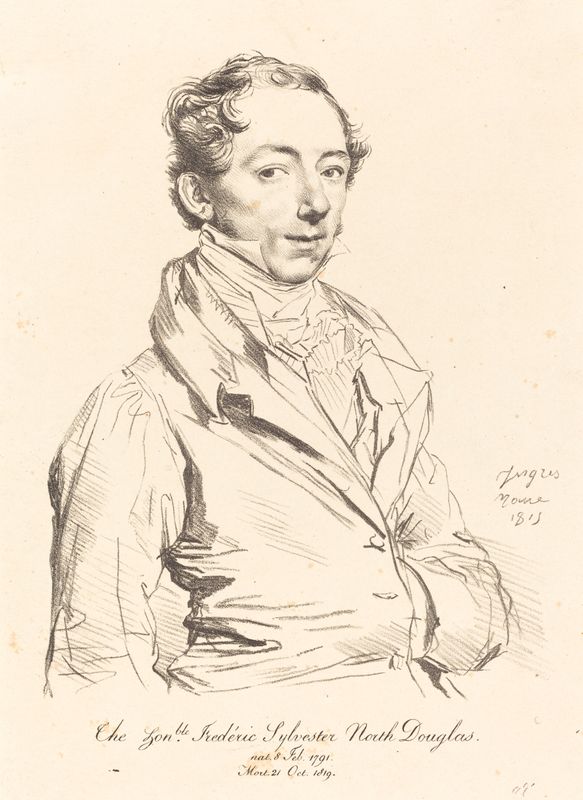 Frederic Sylvester Douglas
1815 · Art Institute of Chicago
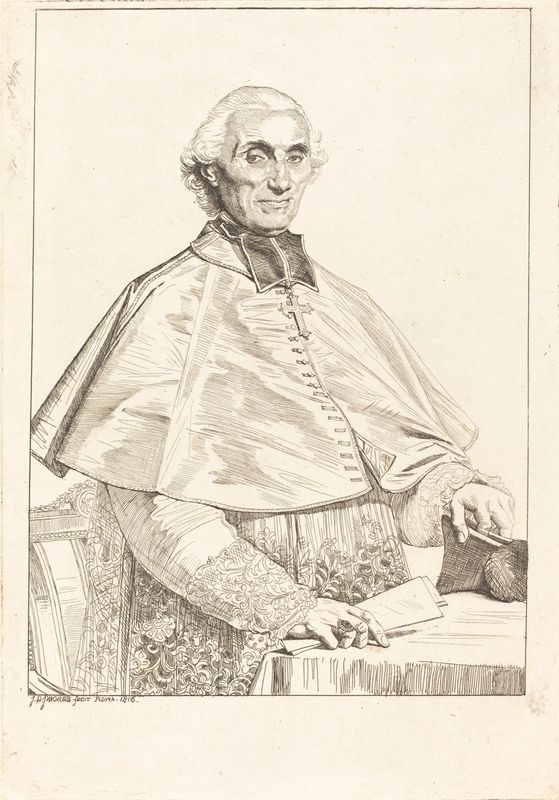 Gabriel Cortois de Pressigny
1816 · Art Institute of Chicago
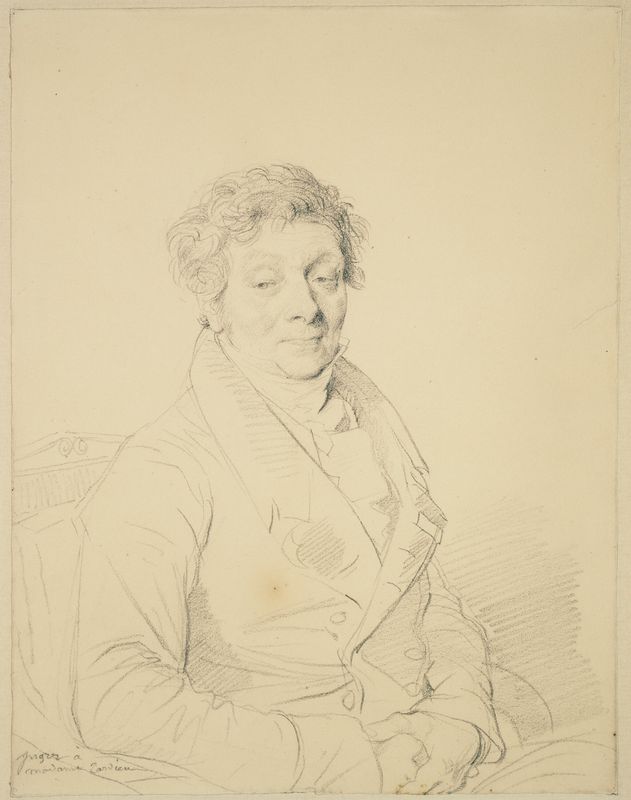 Pierre Alexandre Tardieu
1825 · Art Institute of Chicago
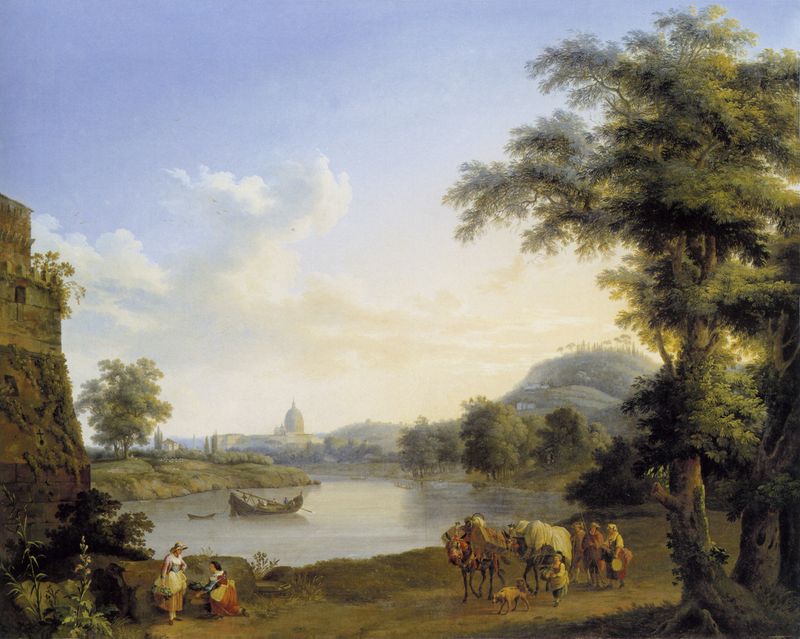 View of Saint Peter's in Rome
Art Institute of Chicago
Beyond Ingres and Romanticism: works from the same years, and from the other movements Madame Edmond Cavé (Marie-Élisabeth Blavot, born 1810) belongs to.
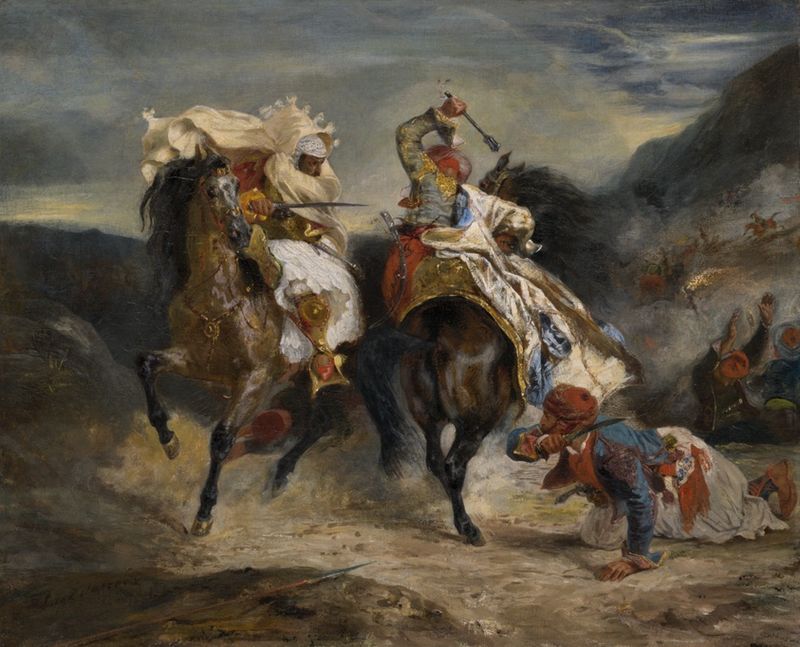 Same movement · Academic art
The Combat of the Giaour and Hassan
Eugène Delacroix · 1826 · Art Institute of Chicago
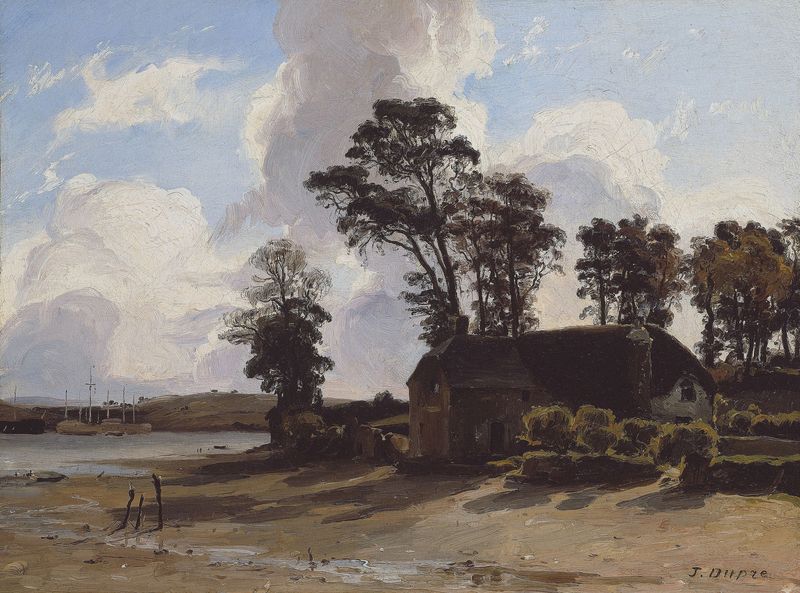 Same era · 1810s–1840s
The Estuary Farm
Léon-Victor Dupré · 1831 · Art Institute of Chicago
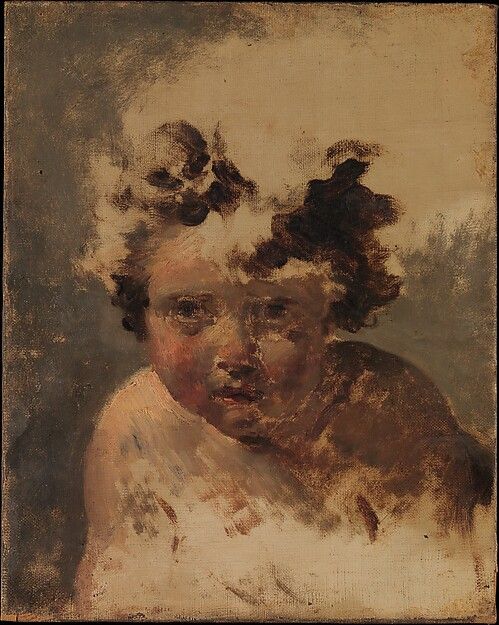 Same movement · Neoclassicism
Head of a Child
Jacques-Louis David · 1768 · The Metropolitan Museum of Art
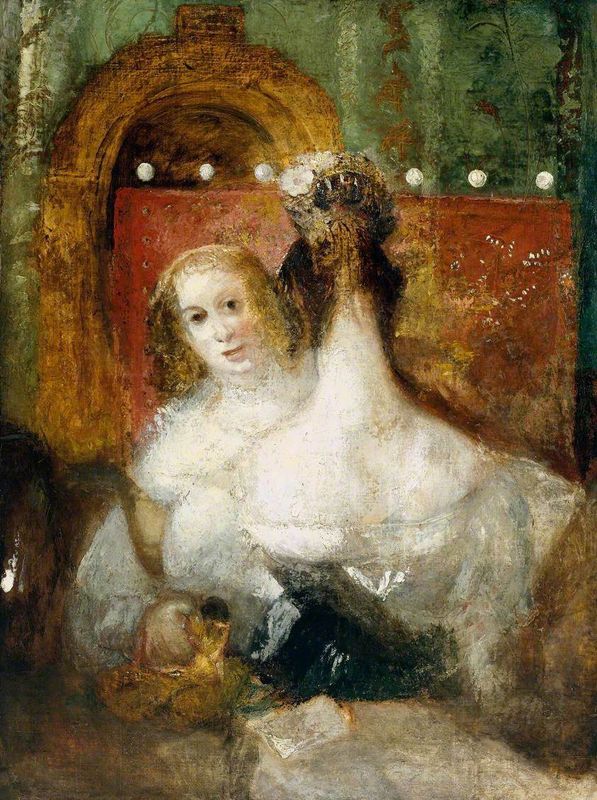 Same era · 1810s–1840s
Two Women with a Letter
J. M. W. Turner · 1830 · National Gallery
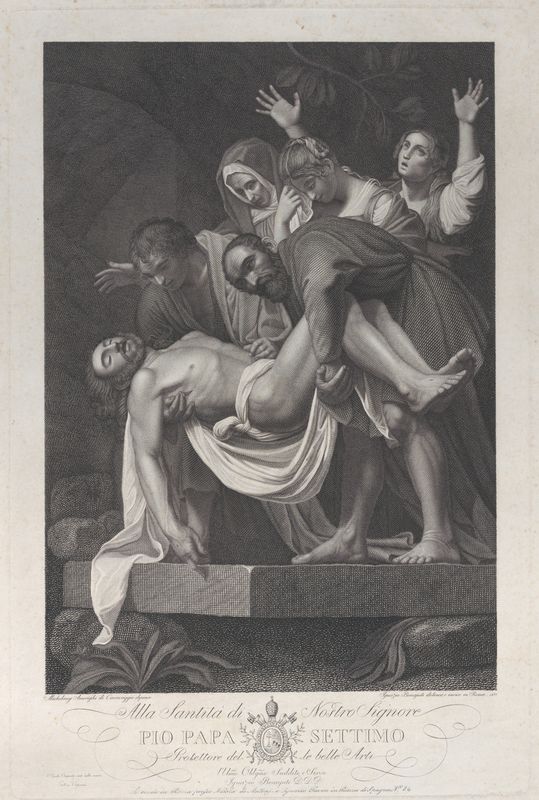 Same movement · Academic art
The Entombment of Christ
Caravaggio · 1600 · Pinacoteca Vaticana
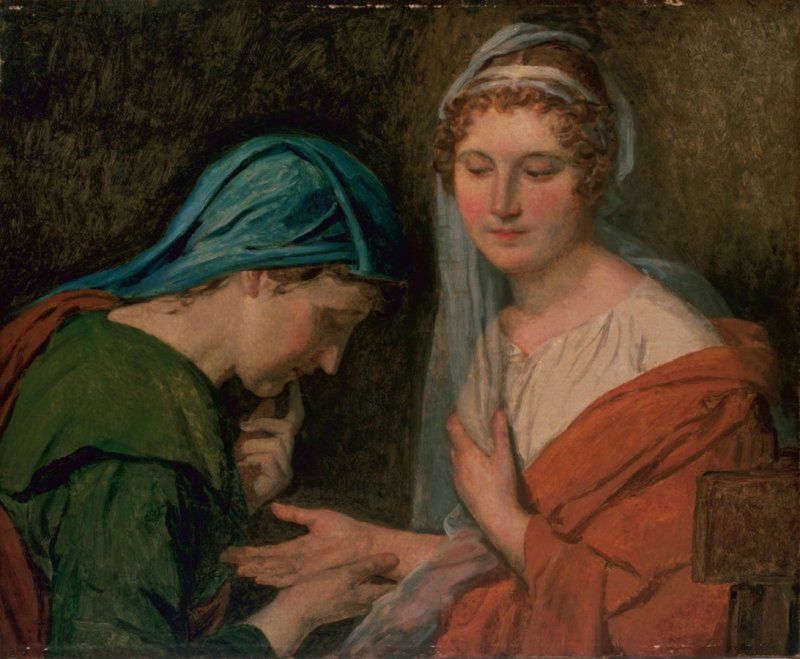 Same era · 1810s–1840s
The Fortune Teller (La Bonne Aventure)
Jacques-Louis David · 1824 · Fine Arts Museums of San Francisco
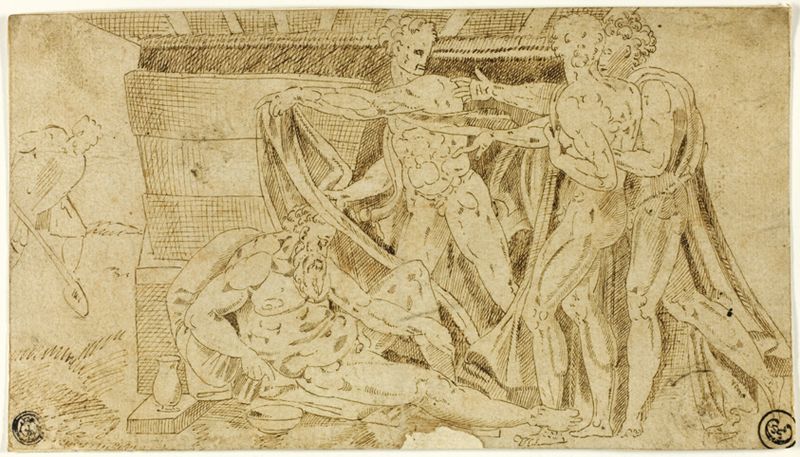 Same movement · Academic art
Drunkenness of Noah
Michelangelo · 1509 · Sistine Chapel
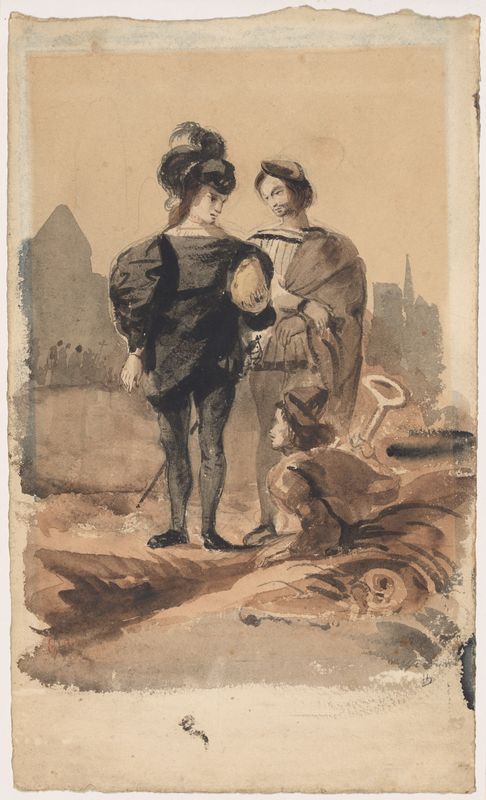 Same era · 1810s–1840s
Hamlet and Horatio in the Graveyard
Eugène Delacroix · 1839 · Department of Paintings of the Louvre
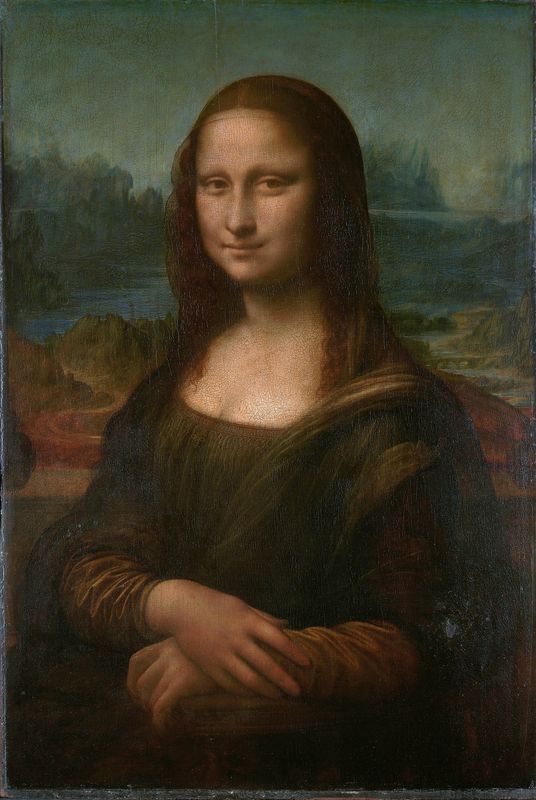 Same movement · Academic art
Mona Lisa
Leonardo da Vinci · 1503 · Department of Paintings of the Louvre
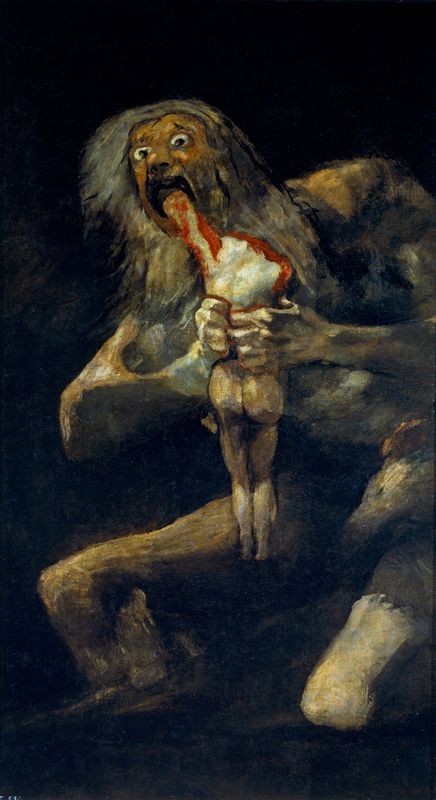 Same era · 1810s–1840s
Saturn Devouring His Son
Francisco Goya · 1820 · Museo del Prado
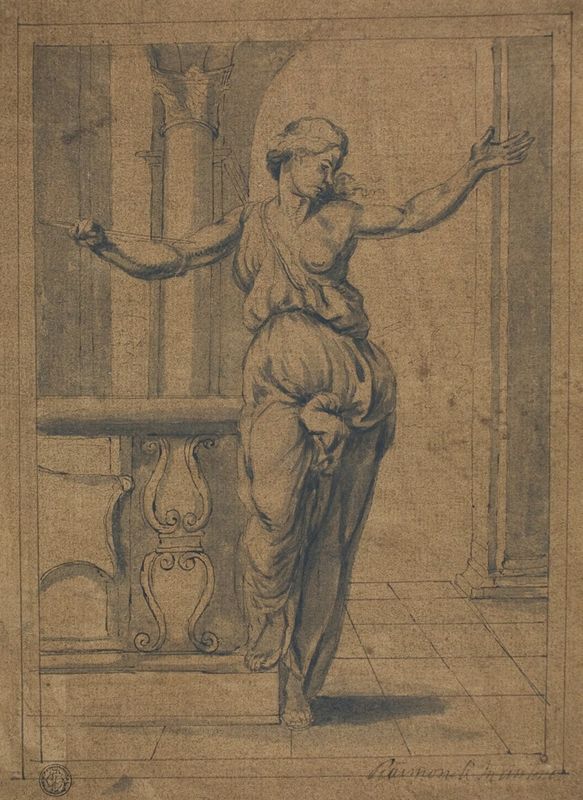 Same movement · Academic art
Lucretia
Raphael · Metropolitan Museum of Art
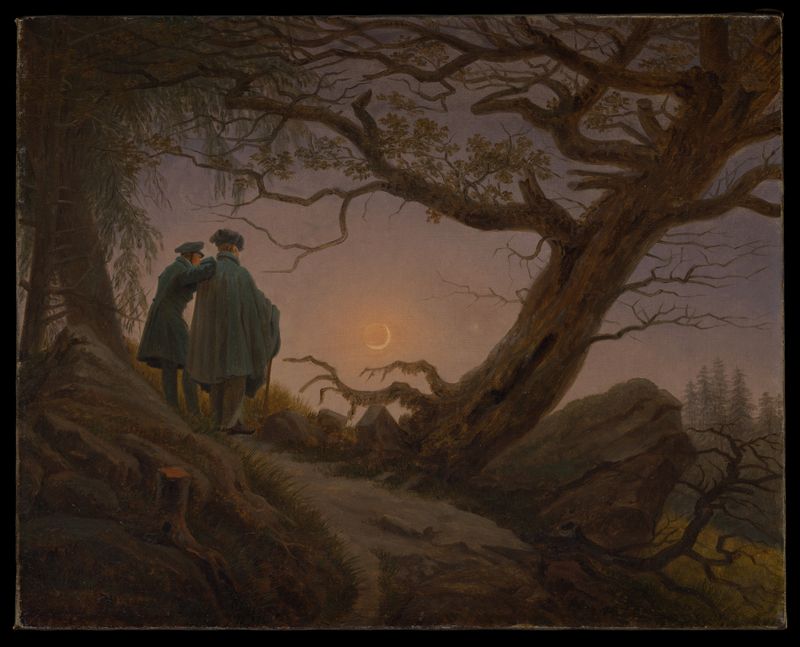 Same era · 1810s–1840s
Two Men Contemplating the Moon
Caspar David Friedrich · 1819 · Staatliche Kunstsammlungen Dresden
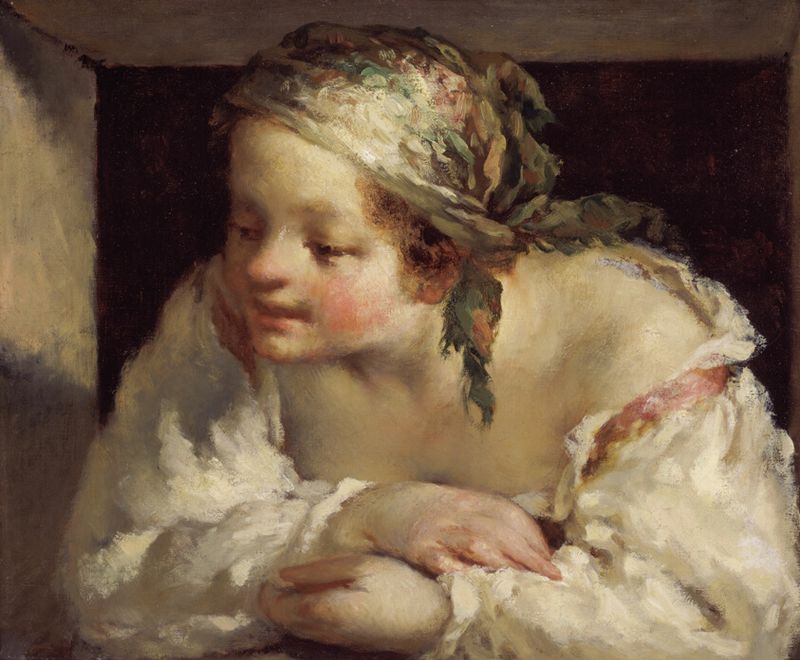 Same era · 1810s–1840s
Young Woman
Jean-François Millet · 1844 · Art Institute of Chicago
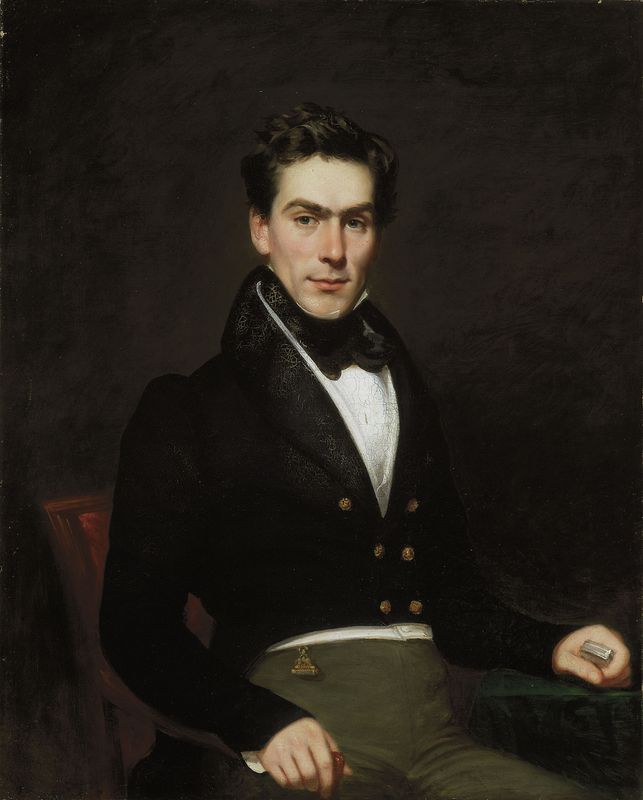 Same era · 1810s–1840s
Mr. James Mackie
Samuel Alcock & Company · 1830 · Art Institute of Chicago
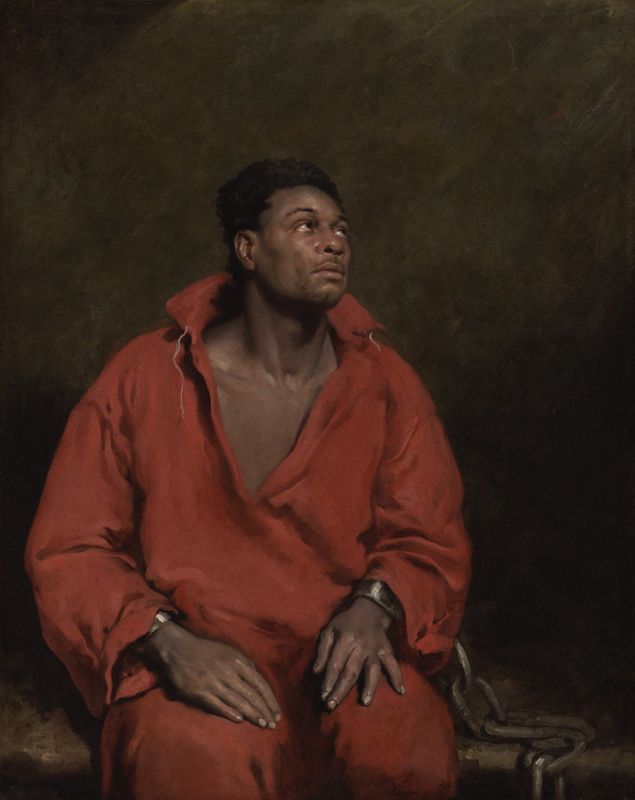 Same era · 1810s–1840s
The Captive Slave (Ira Aldridge)
John Philip Simpson · 1827 · Art Institute of Chicago
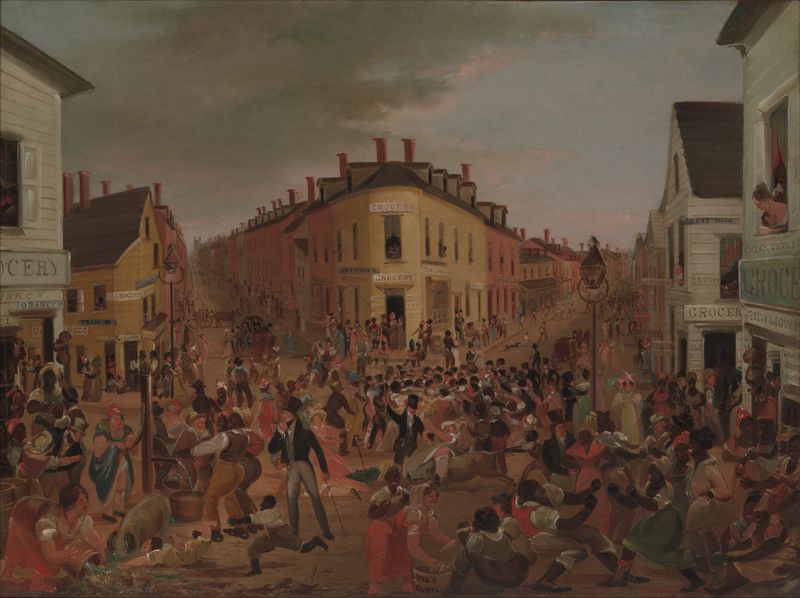 Same era · 1810s–1840s
The Five Points
Artist Unknown - The Mercat Cross, Aberdeen · 1822 · The Metropolitan Museum of Art
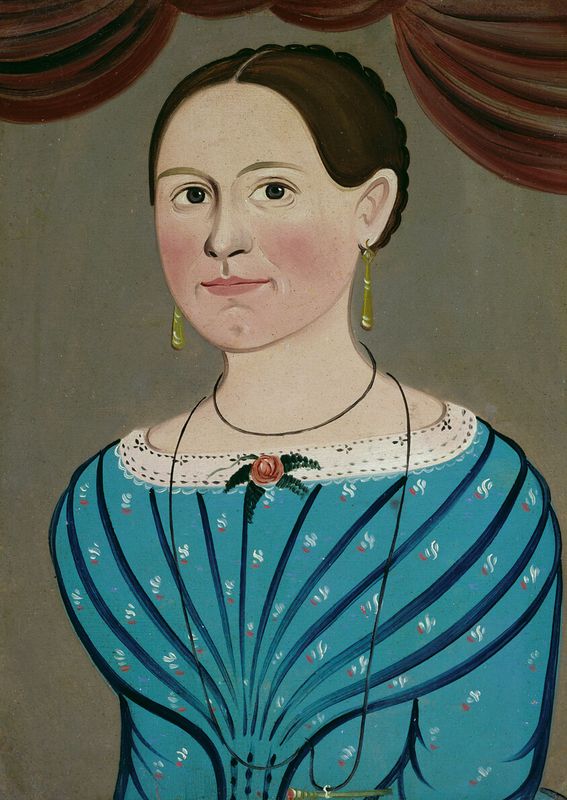 Same era · 1810s–1840s
Woman in a Blue Dress
School of William Matthew Prior · 1840 · Art Institute of Chicago
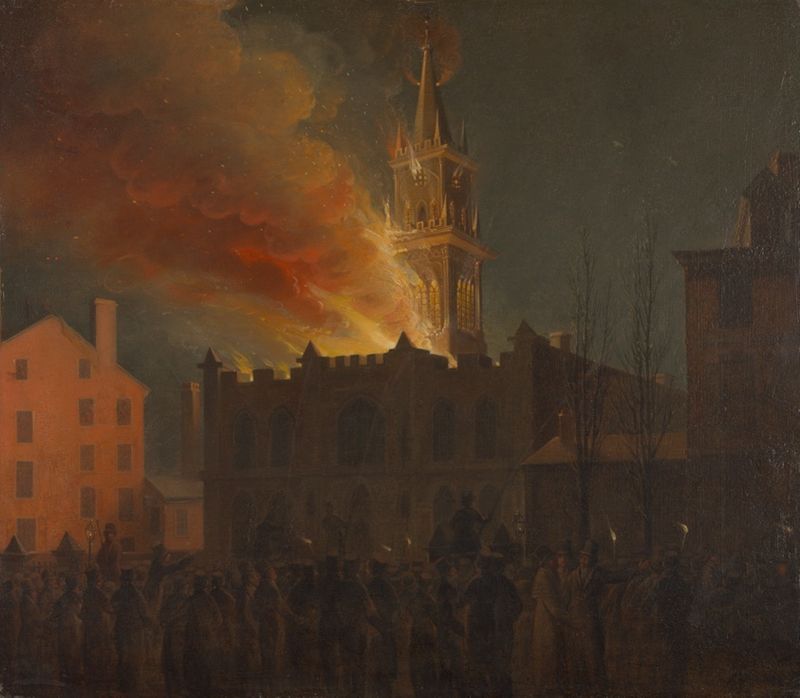 Same era · 1810s–1840s
Conflagration of the Masonic Hall, Chestnut Street, Philadelphia, Pennsylvania
Samuel Jones · 1819 · Art Institute of Chicago