01
The raised tricolour
Follow the red, white and blue flag at the top as it snaps in the wind. It is one of the brightest patches of color in the picture and stands for the revolution's cause.
1 of 5 on the painting
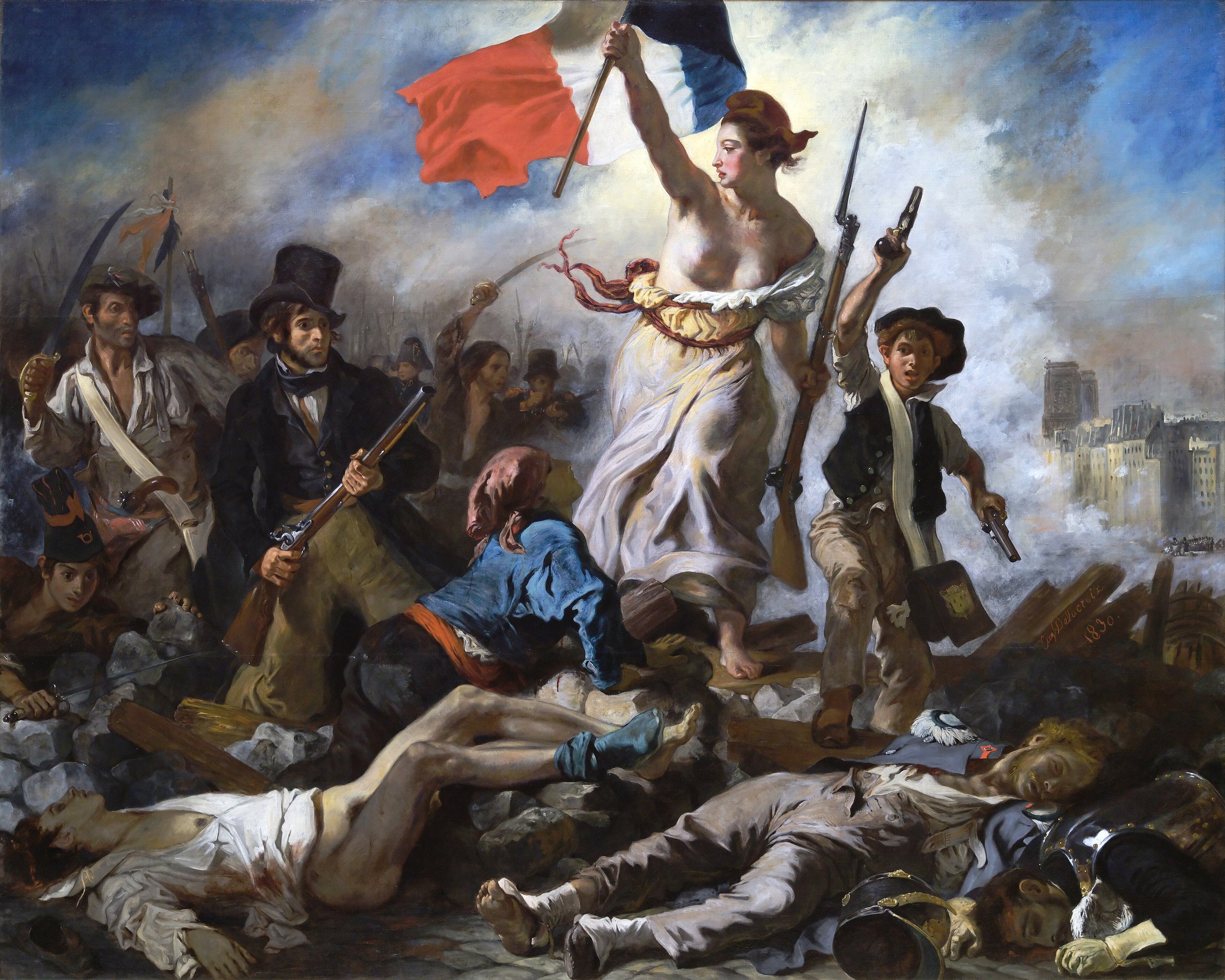
“This iconic painting captures the raw energy of the 1830 July Revolution, with Liberty personified leading a diverse group of revolutionaries over a barricade, making it a powerful symbol of French republicanism.”
A powerful allegorical figure of Liberty, bare-breasted and wearing a Phrygian cap, charges forward over a barricade, leading a diverse group of revolutionaries. This dramatic canvas commemorates the July Revolution of 1830, which toppled King Charles X and saw the tricolor flag reinstated as France's national banner. Delacroix painted this work in the autumn of 1830, expressing a desire to "paint for her" country if he couldn't fight. The scene is a chaotic yet unified surge, with figures from different social classes, from top-hatted bourgeoisie to a pistol-wielding street boy, united in their fierce determination. The painting served as a potent symbol of French Republicanism, so much so that it was initially removed from public display due to its inflammatory political message.
Five details hide in plain sight. Pick one and we’ll show you exactly where to look.
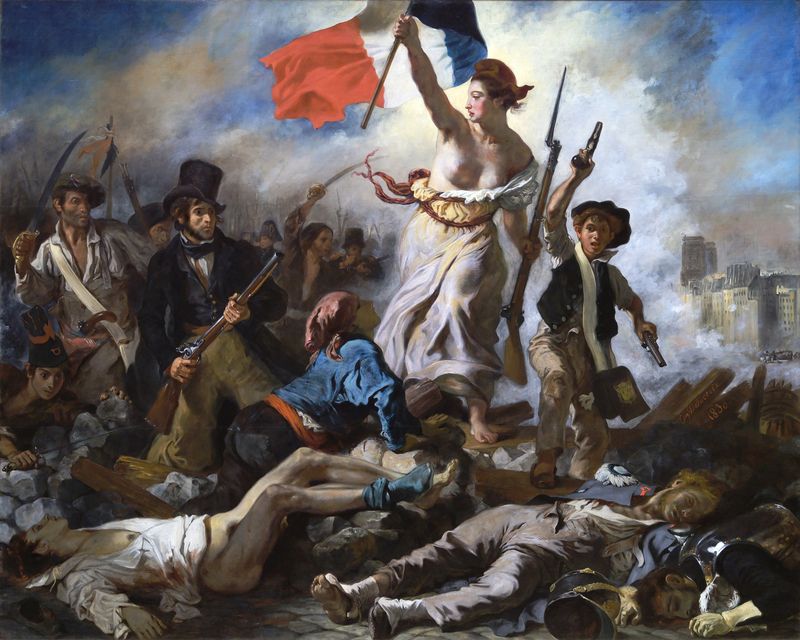
Follow the red, white and blue flag at the top as it snaps in the wind. It is one of the brightest patches of color in the picture and stands for the revolution's cause.
Liberty turns her face to the side, strong and calm, with a red cap on her head. She reads as both a goddess and a working woman, urging the crowd on.
At right, a boy in a dark cap rushes forward with a pistol in each hand and his mouth open in a shout. Ordinary Parisians, even young ones, fight beside Liberty.
At left, a man in a top hat and dark coat grips a musket beside a worker in a white shirt. Men from different walks of life fight side by side.
Along the bottom, fallen men lie across the rubble, one in a white shirt and one in a uniform. Liberty steps over them, so the cost of victory is the base of the scene.
The full narration walks you through Liberty Leading the People — the story behind it, the details most visitors miss, and why it matters. Free in the Art Whisper app.
French Romantic master whose 'Lion Hunt' and exotic scenes revolutionized color and movement in 19th-century art.
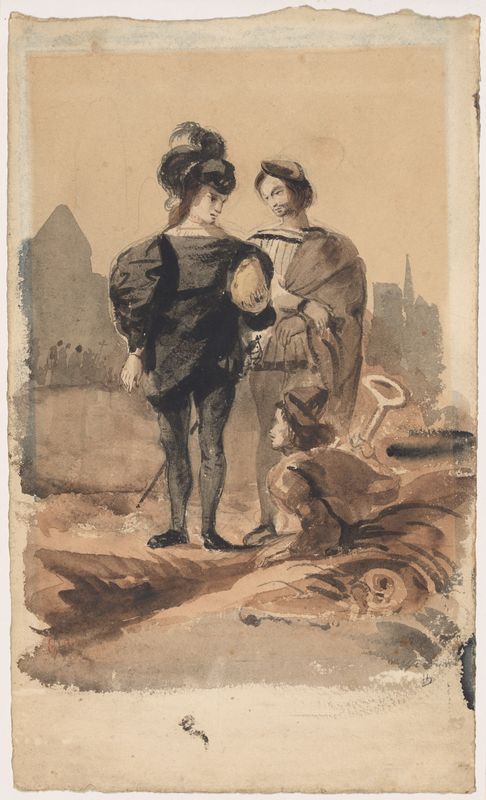 Hamlet and Horatio in the Graveyard
1839 · Department of Paintings of the Louvre
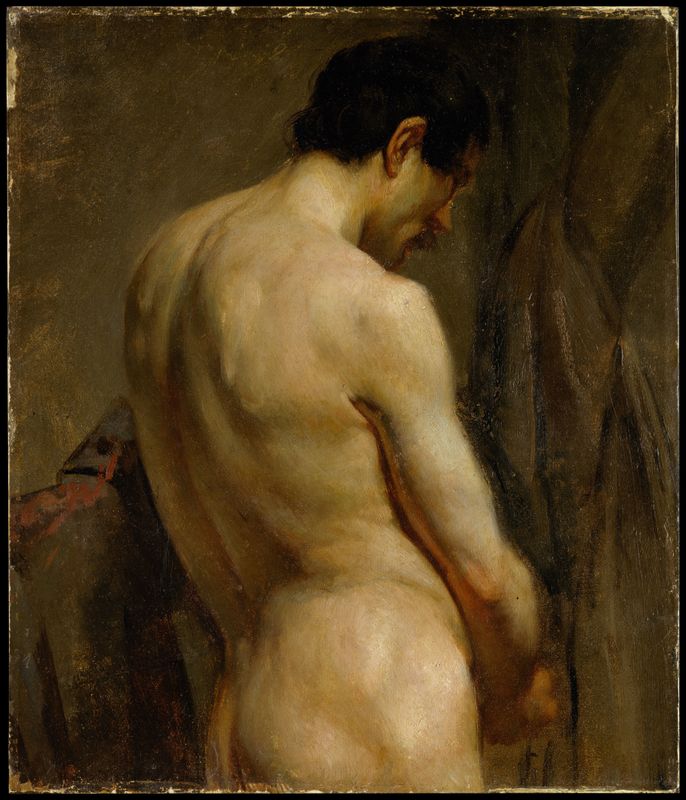 Male Academy Figure: Half-Length, Side View
1819 · Karen B. Cohen Collection
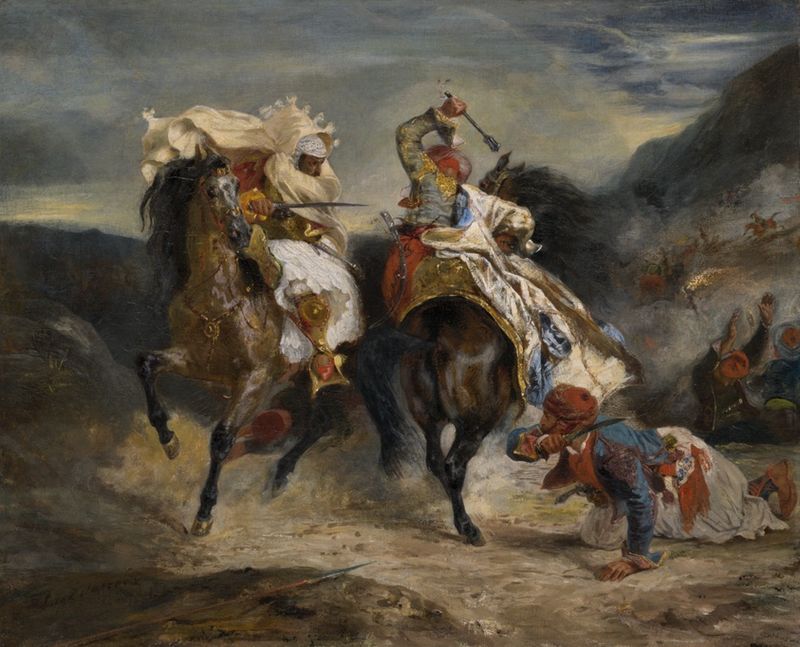 The Combat of the Giaour and Hassan
1826 · Art Institute of Chicago
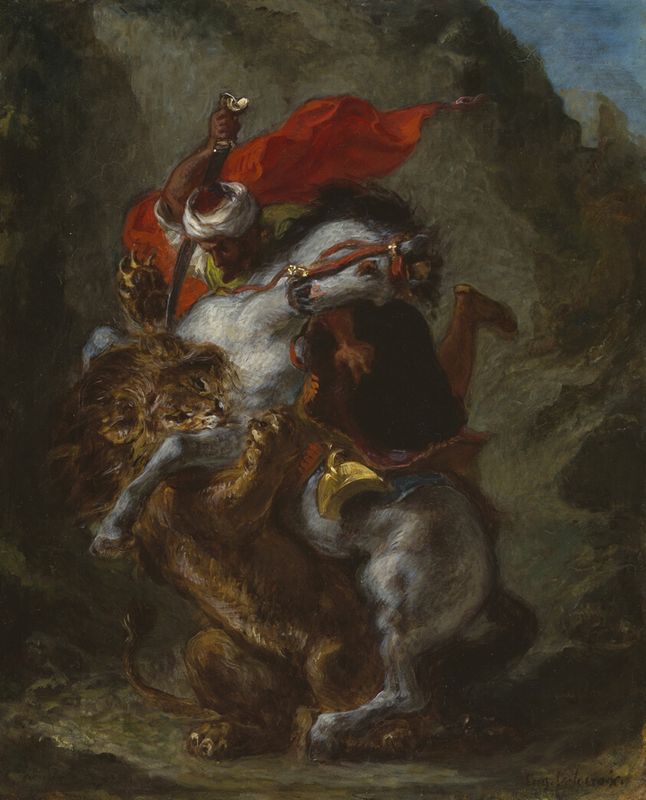 Arab Horseman Attacked by a Lion
1849 · Art Institute of Chicago
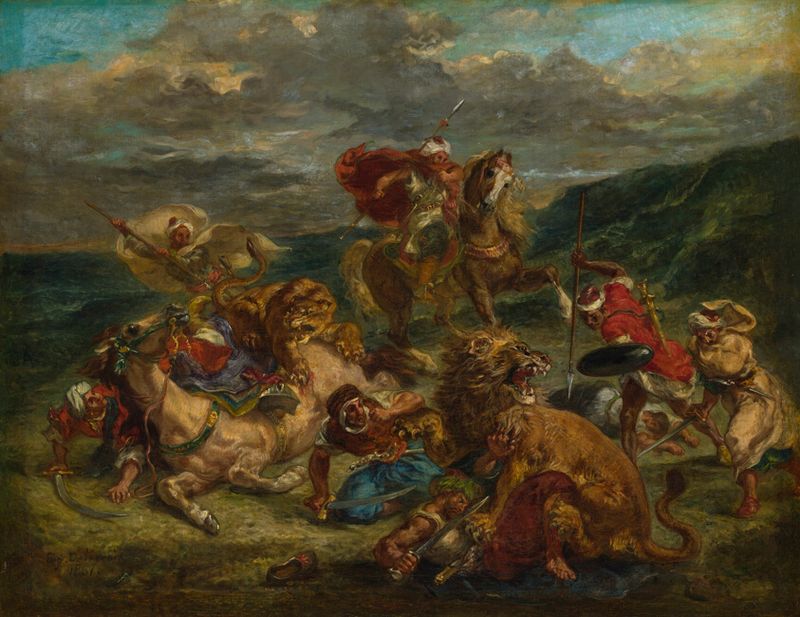 Lion Hunt
1858 · Museum of Fine Arts Boston
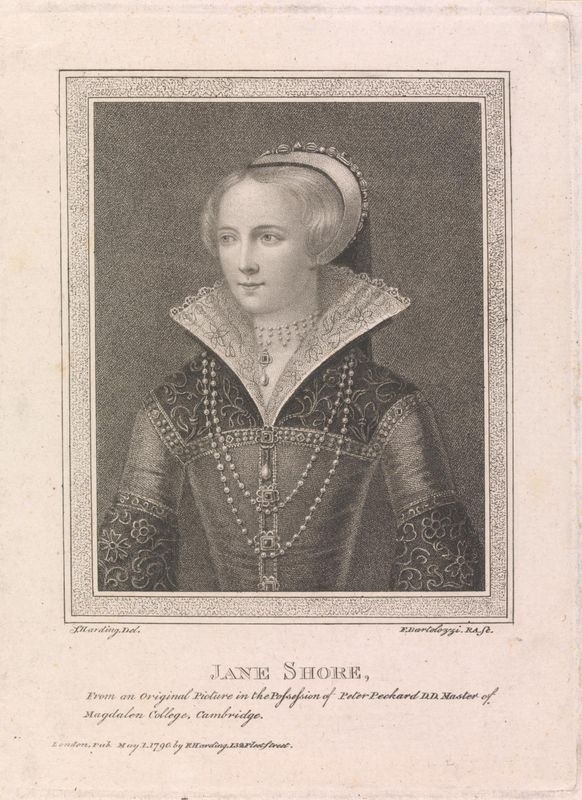 Jane Shore
1828 · Art Institute of Chicago
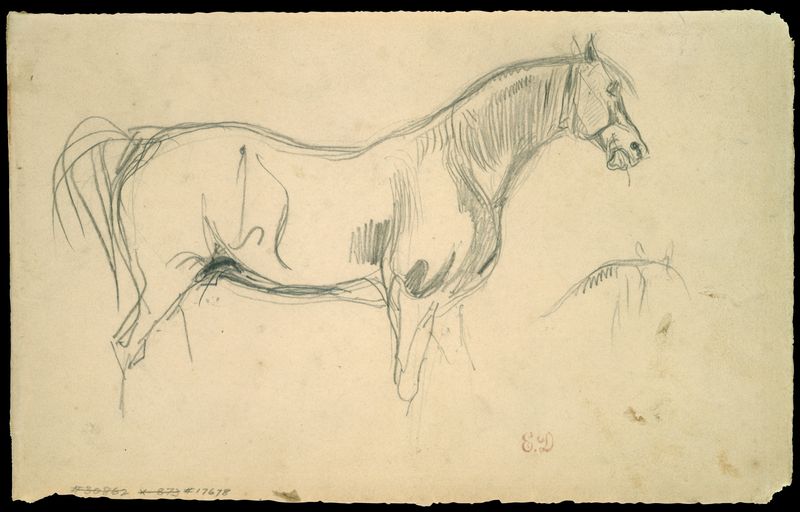 Studies of a Horse in Profile
1823 · The Metropolitan Museum of Art
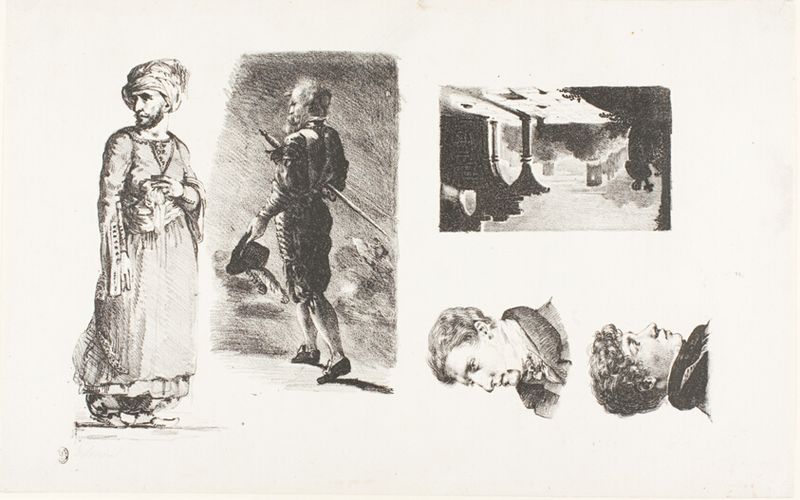 Sheet of Sketches
1826 · Art Institute of Chicago
Beyond Delacroix and Romanticism: works from the same years, and from the other movements Liberty Leading the People belongs to.
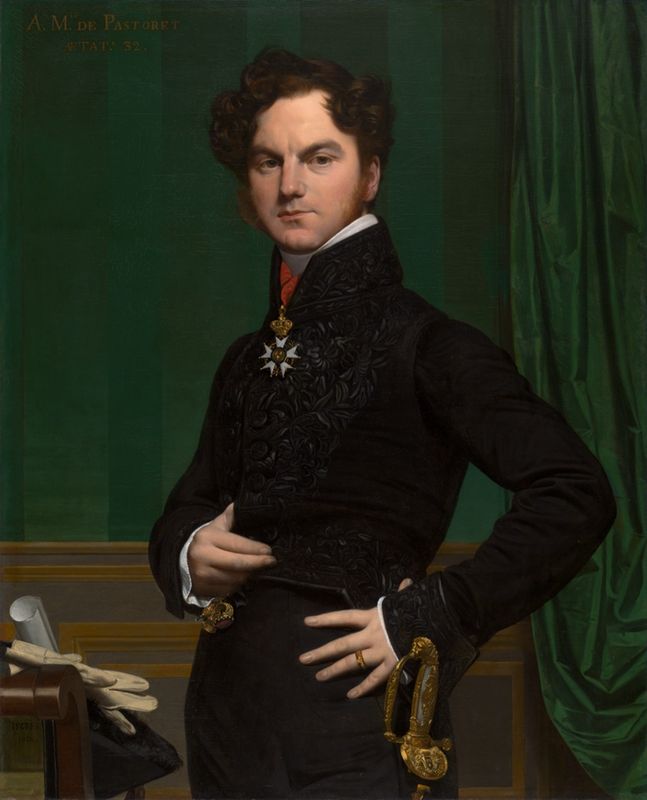 Same movement · Academic art
Amédée-David, the Comte de Pastoret
Jean-Auguste-Dominique Ingres · 1823 · Art Institute of Chicago
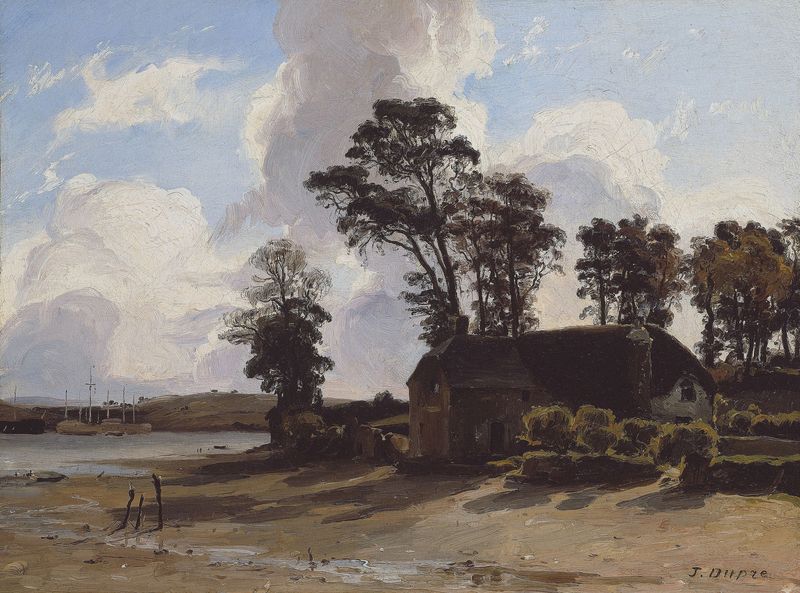 Same era · 1810s–1840s
The Estuary Farm
Léon-Victor Dupré · 1831 · Art Institute of Chicago
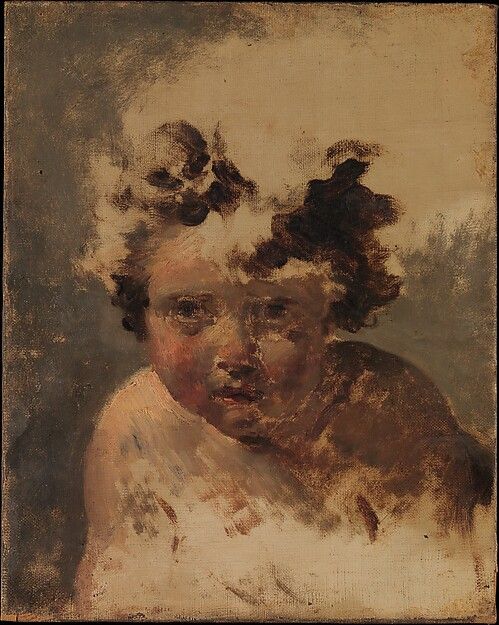 Same movement · Academic art
Head of a Child
Jacques-Louis David · 1768 · The Metropolitan Museum of Art
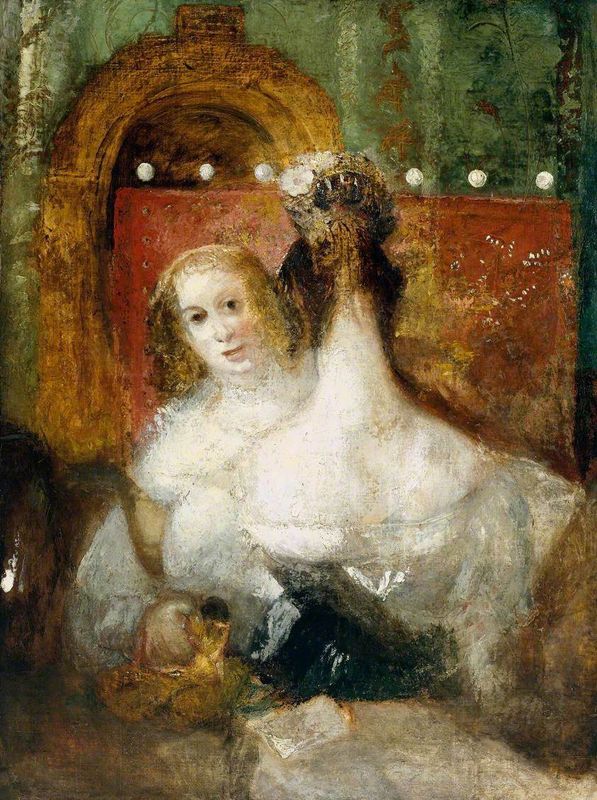 Same era · 1810s–1840s
Two Women with a Letter
J. M. W. Turner · 1830 · National Gallery
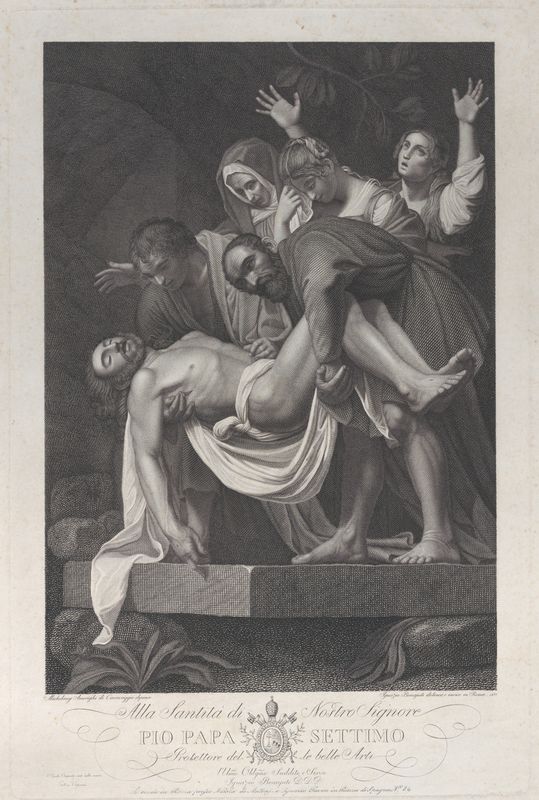 Same movement · Academic art
The Entombment of Christ
Caravaggio · 1600 · Pinacoteca Vaticana
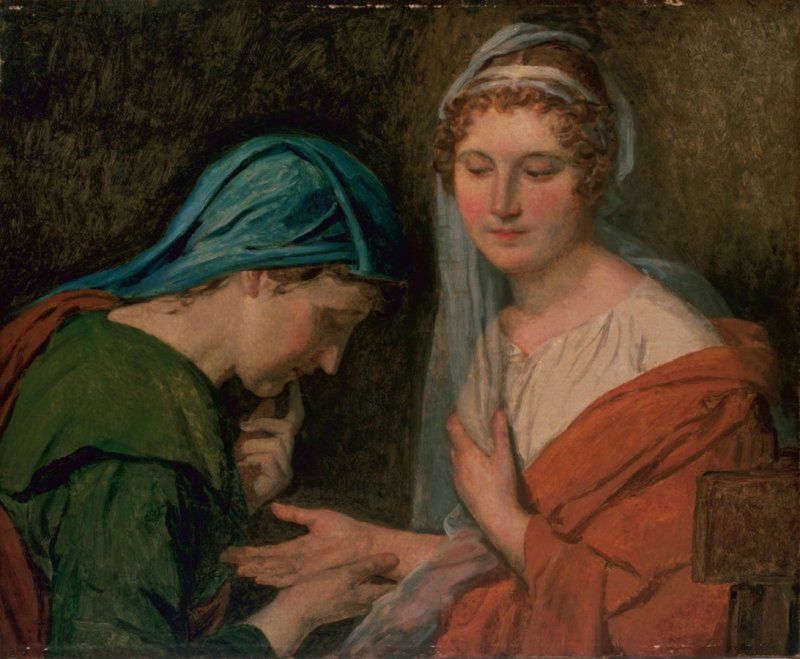 Same era · 1810s–1840s
The Fortune Teller (La Bonne Aventure)
Jacques-Louis David · 1824 · Fine Arts Museums of San Francisco
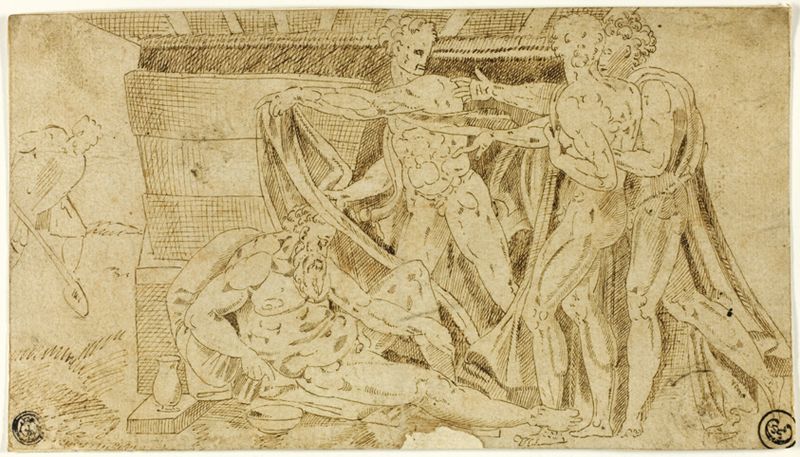 Same movement · Academic art
Drunkenness of Noah
Michelangelo · 1509 · Sistine Chapel
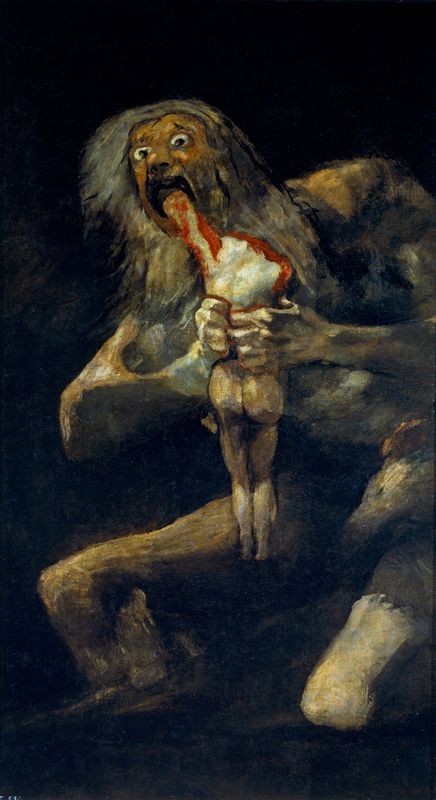 Same era · 1810s–1840s
Saturn Devouring His Son
Francisco Goya · 1820 · Museo del Prado
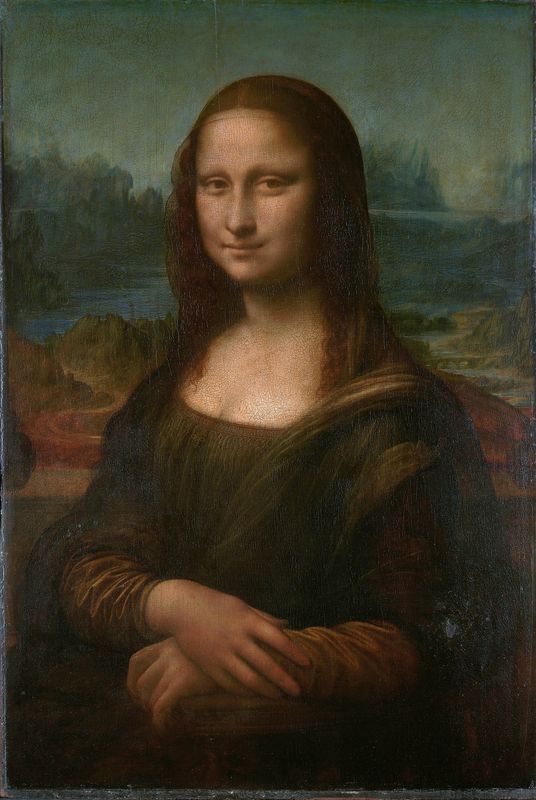 Same movement · Academic art
Mona Lisa
Leonardo da Vinci · 1503 · Department of Paintings of the Louvre
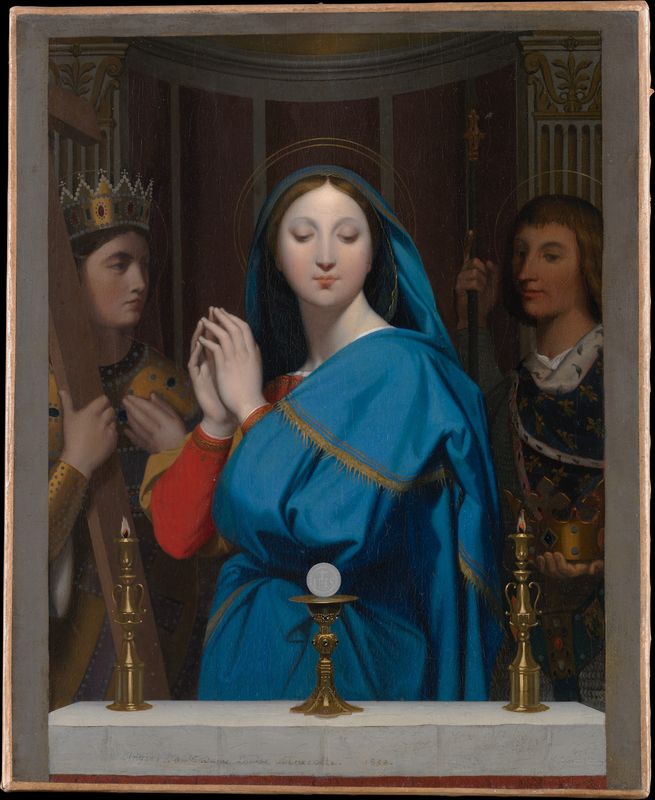 Same era · 1810s–1840s
The Virgin Adoring the Host
Jean-Auguste-Dominique Ingres · 1841 · Pushkin Museum of Fine Arts
 Same movement · Academic art
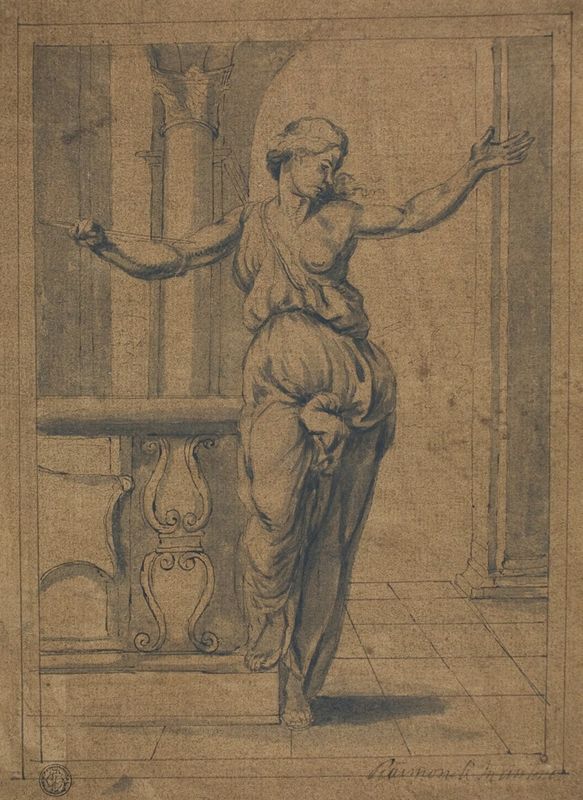
Lucretia
Raphael · Metropolitan Museum of Art
 Same era · 1810s–1840s
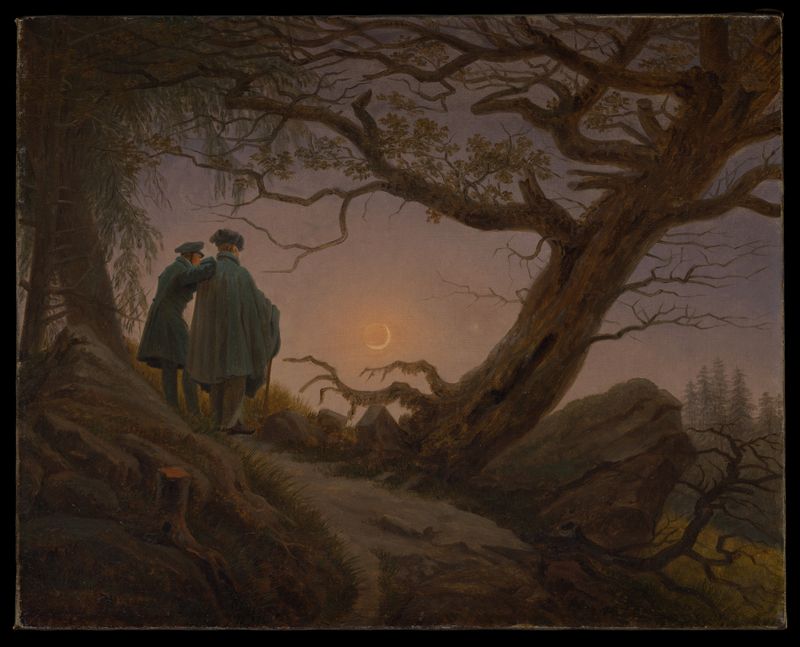
Two Men Contemplating the Moon
Caspar David Friedrich · 1819 · Staatliche Kunstsammlungen Dresden
 Same era · 1810s–1840s
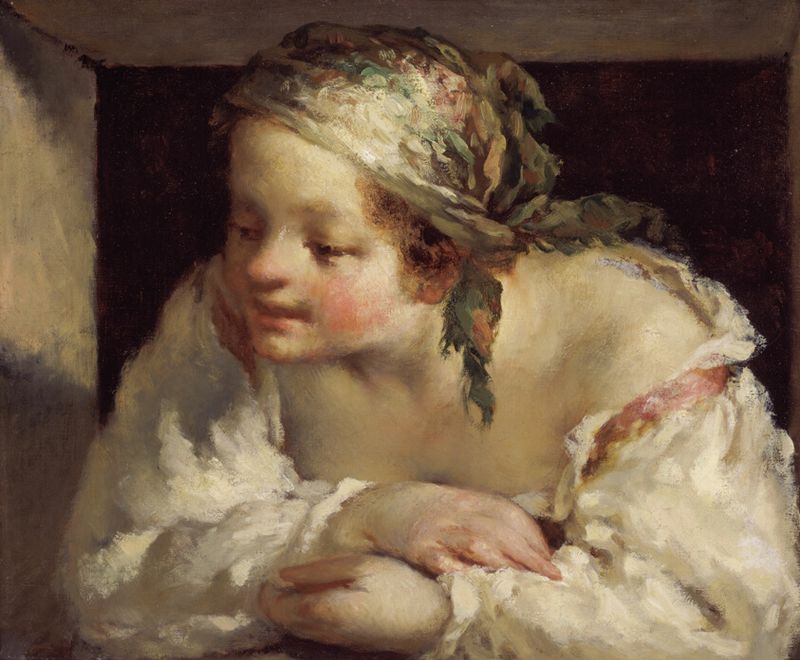
Young Woman
Jean-François Millet · 1844 · Art Institute of Chicago
 Same era · 1810s–1840s
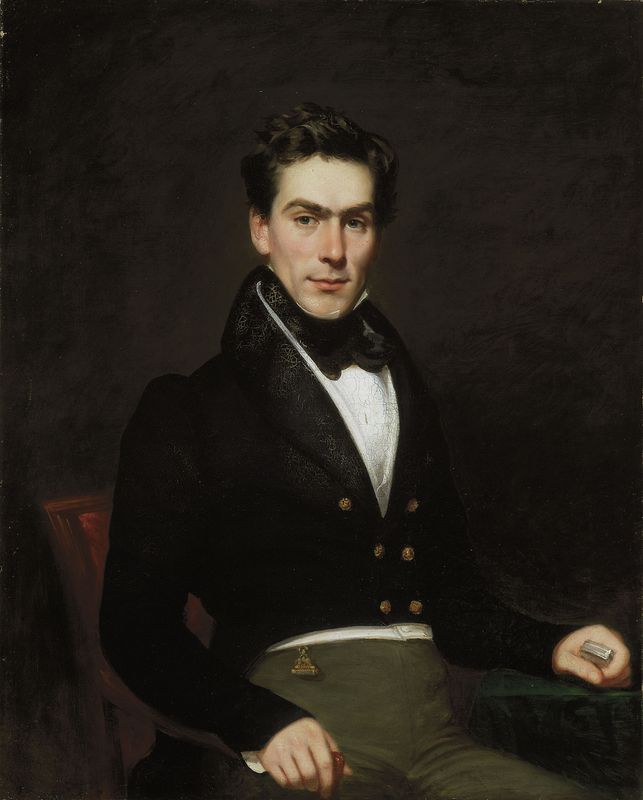
Mr. James Mackie
Samuel Alcock & Company · 1830 · Art Institute of Chicago
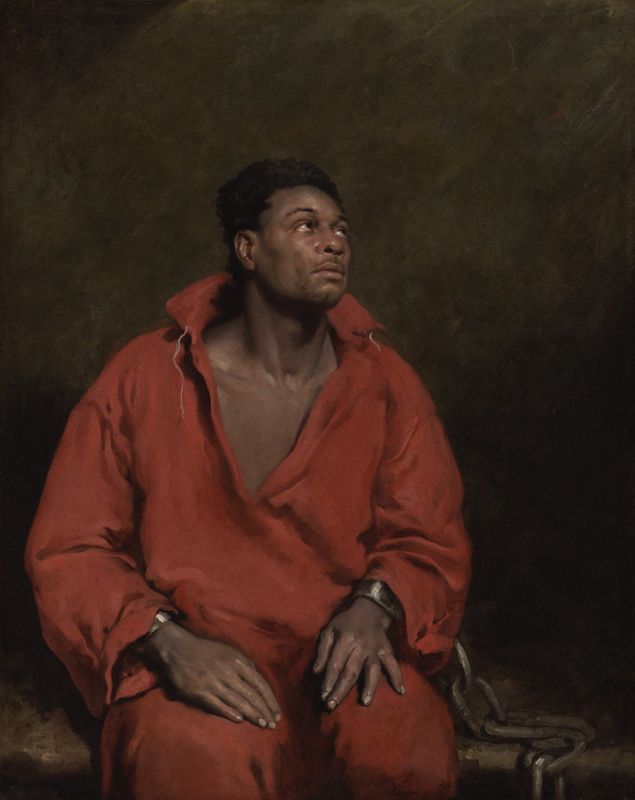 Same era · 1810s–1840s
The Captive Slave (Ira Aldridge)
John Philip Simpson · 1827 · Art Institute of Chicago
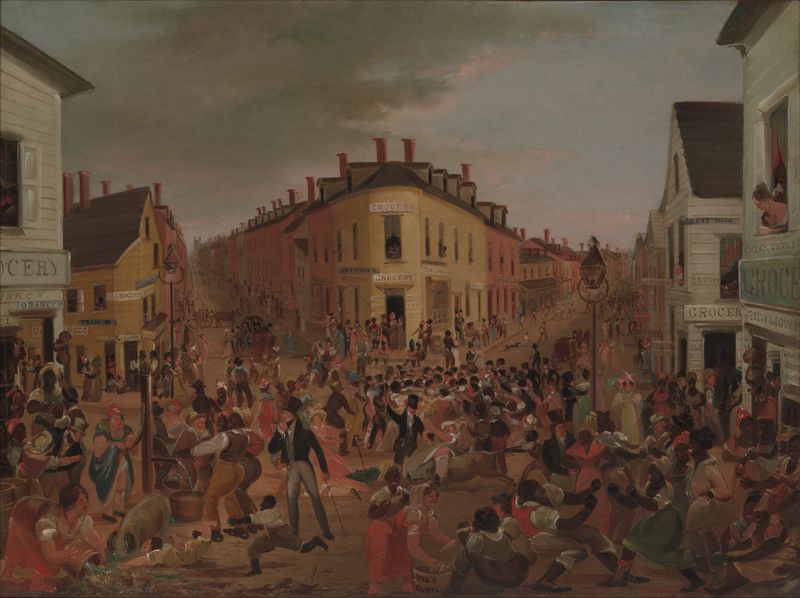 Same era · 1810s–1840s
The Five Points
Artist Unknown - The Mercat Cross, Aberdeen · 1822 · The Metropolitan Museum of Art
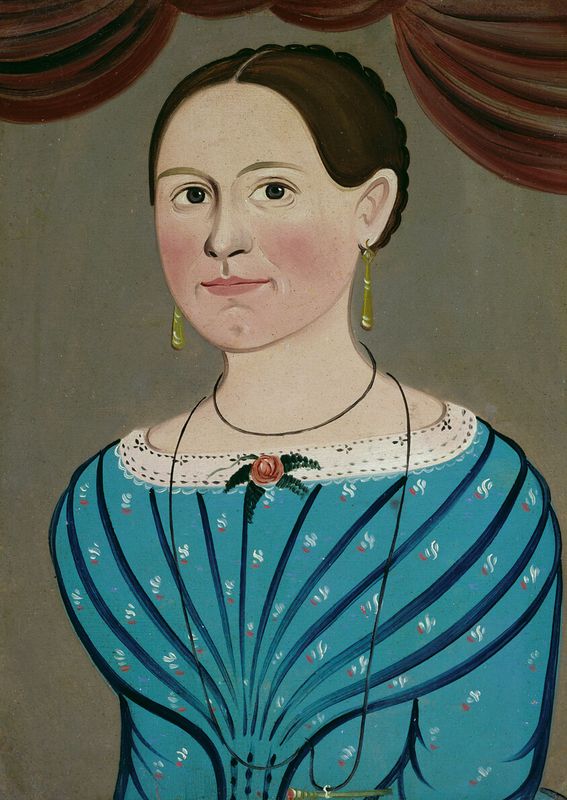 Same era · 1810s–1840s
Woman in a Blue Dress
School of William Matthew Prior · 1840 · Art Institute of Chicago
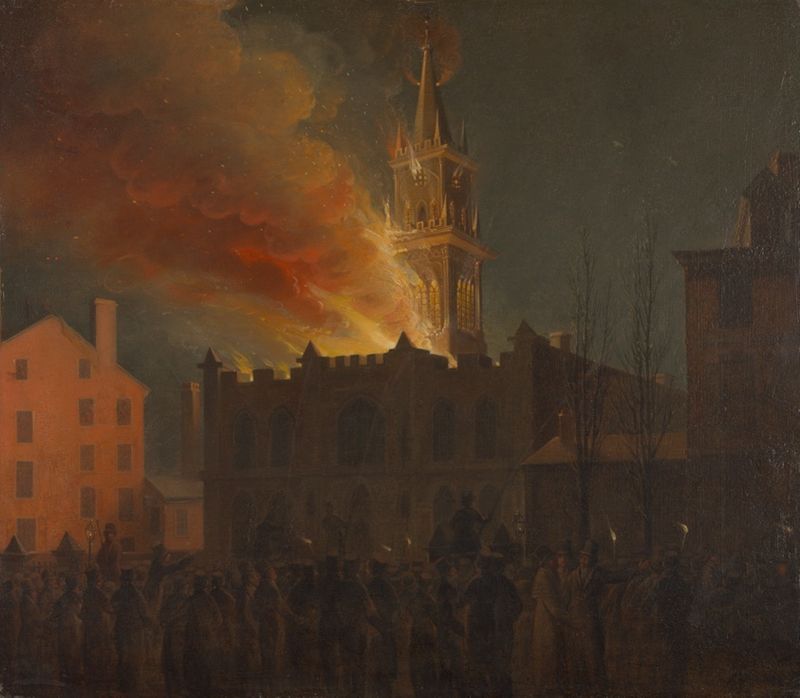 Same era · 1810s–1840s
Conflagration of the Masonic Hall, Chestnut Street, Philadelphia, Pennsylvania
Samuel Jones · 1819 · Art Institute of Chicago