
“Imagine walking into a gallery and seeing a guitar that looks like it's been taken apart and reassembled from multiple angles at once—that's Cubism in action.”
Born in the bohemian studios of early 20th-century Paris, this revolutionary movement shattered centuries of artistic tradition by refusing to show objects from just one viewpoint. Instead, Pablo Picasso and Georges Braque asked: why not show all sides of something simultaneously?
Cubism emerged around 1907 when Picasso painted his groundbreaking 'Les Demoiselles d'Avignon,' featuring fragmented figures that looked nothing like the smooth, realistic nudes audiences expected. The movement developed in two distinct phases: Analytic Cubism (roughly 1908-1912), where artists broke objects down into geometric shards and muted colors, and Synthetic Cubism (1912-1919), where they built images back up using collage, brighter colors, and simplified shapes. What united both phases was a radical idea—that a painting didn't need to trick the eye into seeing reality; it could be a flat surface honestly showing multiple realities at once.
When you stand before a Cubist painting, you're seeing the world as the mind knows it, not just as the eye sees it. That coffee cup? You might see its circular rim from above while simultaneously viewing its cylindrical side. This fractured, intellectual approach influenced everything from architecture to graphic design, making Cubism one of the most important art movements of the 20th century. It essentially gave artists permission to stop imitating nature and start reimagining it entirely.
- Period
- c. 1907–1919
- Peak
- around 1912
- Born in
- Paris, France
- Key artists
- Alexander Archipenko, Francis Bacon, Georges Braque, Pablo Picasso
- Came before
- Post-Impressionism and Fauvism
- Came after
- Futurism, Constructivism, and Art Deco
When it happened
- CAME BEFOREPost-Impressionism and Fauvism
- ~1907 · STARTED
- ~1912 · PEAKED
- ~1919 · ENDED
- CAME AFTERFuturism, Constructivism, and Art Deco
What makes it Cubism
Fragmented, Multi-Angle Views
Objects shown from several viewpoints at once—see the front, side, and top of a face or object in the same image.
e.g. Les Demoiselles d'Avignon by Pablo PicassoGeometric Shapes & Sharp Angles
Forms broken into cubes, cones, cylinders, and angular planes rather than smooth, realistic curves.
e.g. Houses at L'Estaque by Georges BraqueMuted, Monochromatic Palette
Early Cubist works use browns, grays, and ochres to keep focus on form rather than color (especially Analytic phase).
e.g. Ma Jolie by Pablo PicassoFlattened Space & Shallow Depth
Traditional perspective abandoned; backgrounds and foregrounds compressed into a shallow, puzzle-like picture plane.
e.g. Violin and Candlestick by Georges BraqueCollage & Mixed Media Elements
Real materials like newspaper clippings, wallpaper, or fabric glued directly onto canvas (Synthetic Cubism phase).
e.g. Still Life with Chair Caning by Pablo PicassoHow to spot Cubism
Three signs you’re standing in front of one — all easy to see in Mountains of Málaga.
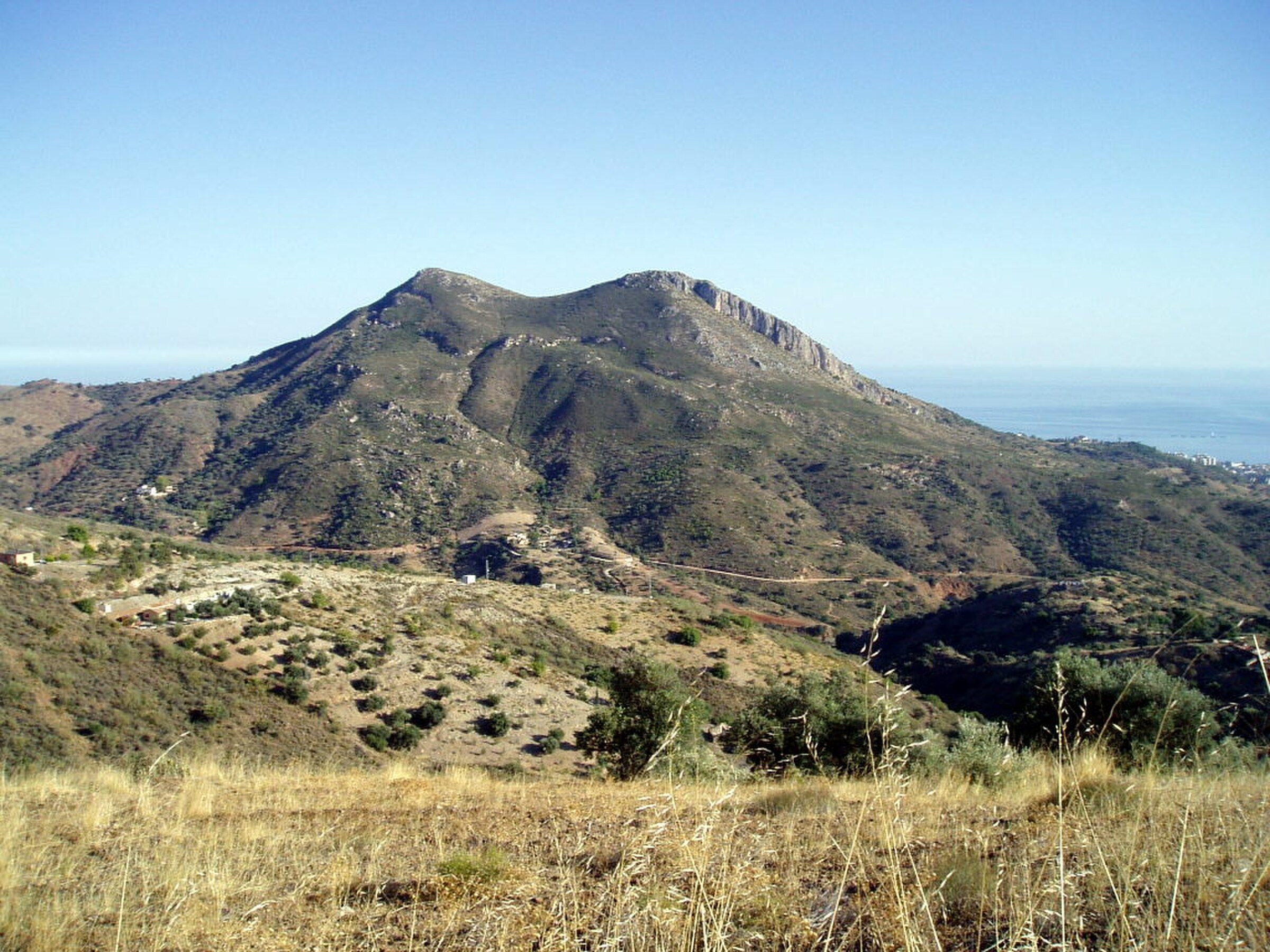
Look for faces or objects that show multiple angles at once—like seeing someone's profile and frontal view simultaneously in the same head.
Check if the painting looks fragmented or puzzle-like, with geometric shapes and sharp angles instead of smooth, natural forms.
Notice if real materials like newspaper or fabric are glued onto the canvas—that's Synthetic Cubism's signature collage technique.
The term 'Cubism' came from a critic's insult—Louis Vauxcelles mocked Braque's paintings as being made of 'little cubes.'
Picasso and Braque worked so closely during Cubism's peak that they called themselves 'roped mountaineers' exploring uncharted artistic territory.
Cubism inspired camouflage patterns in WWI—artists created 'dazzle' ship designs using fragmented geometric shapes to confuse enemy submarines.
The artists who defined it
Works to know
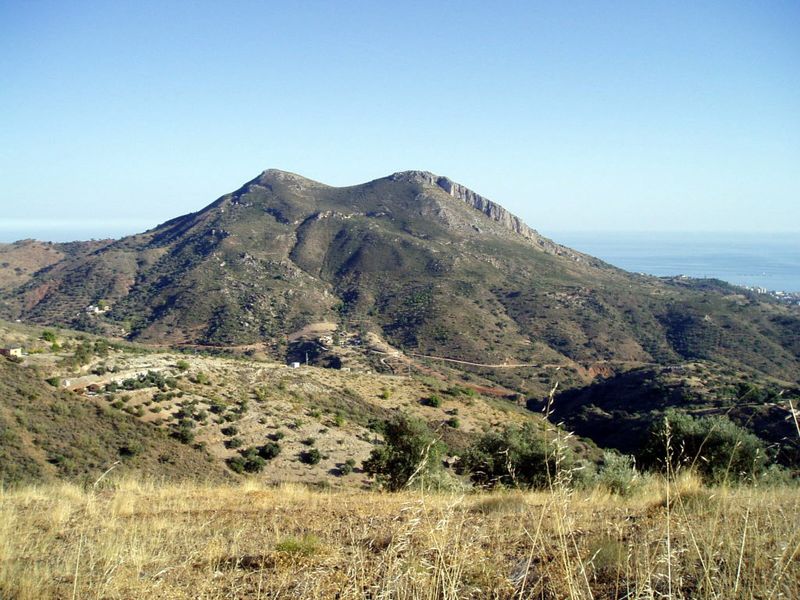 Mountains of Málaga
1896 · Museu Picasso
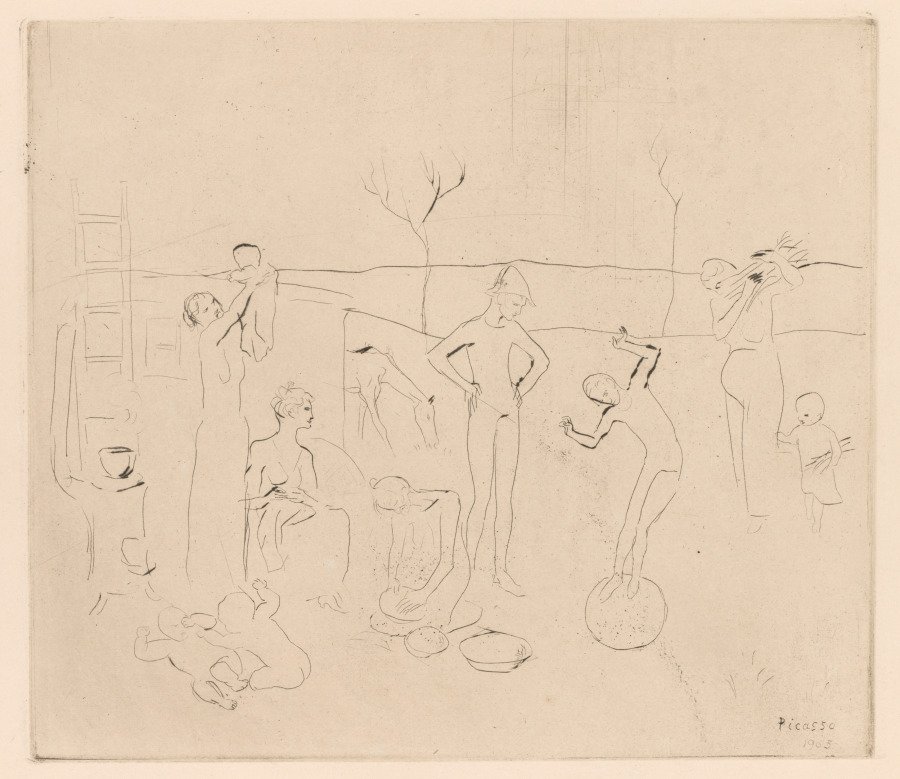
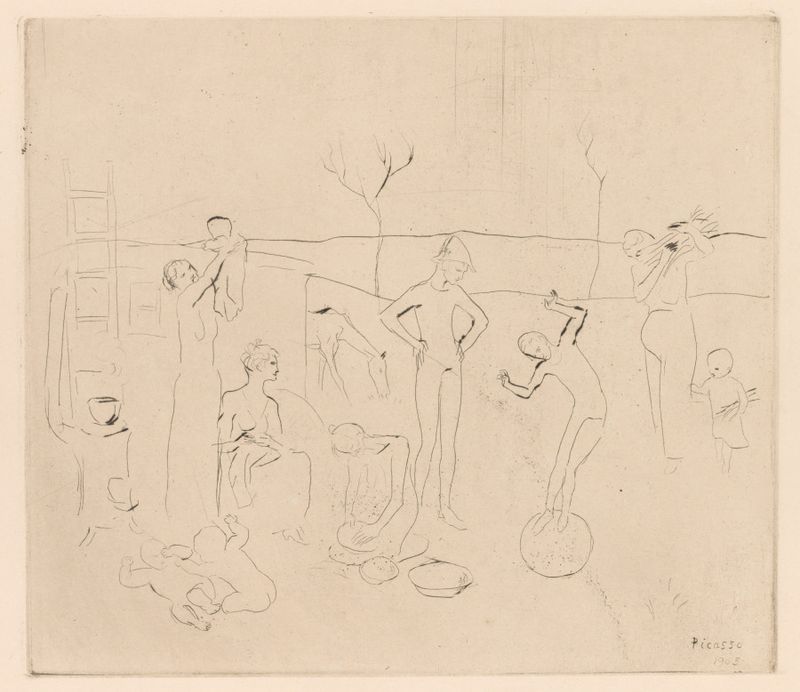 The Saltimbanques
1905 · Cleveland Museum of Art
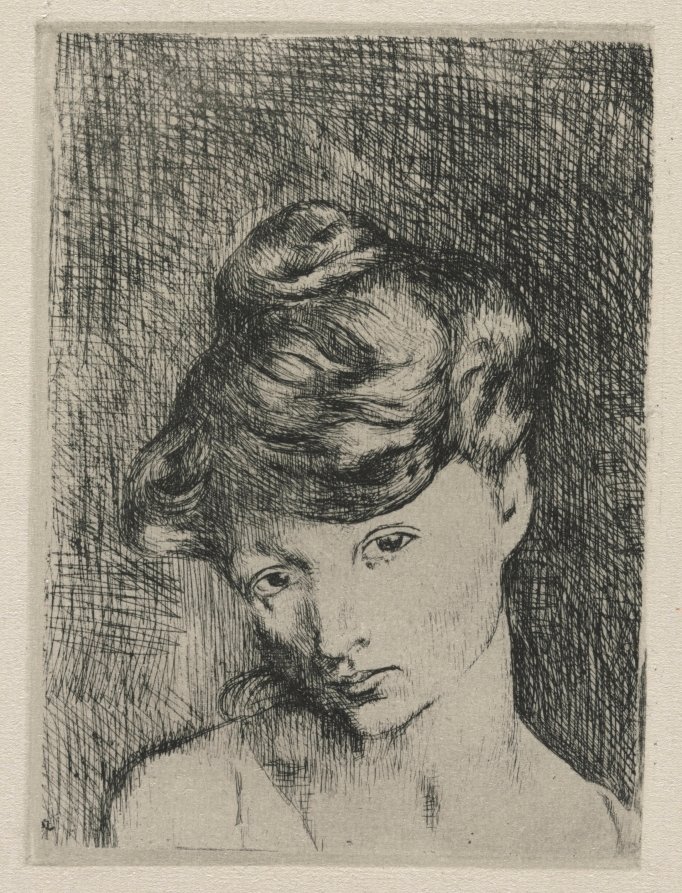
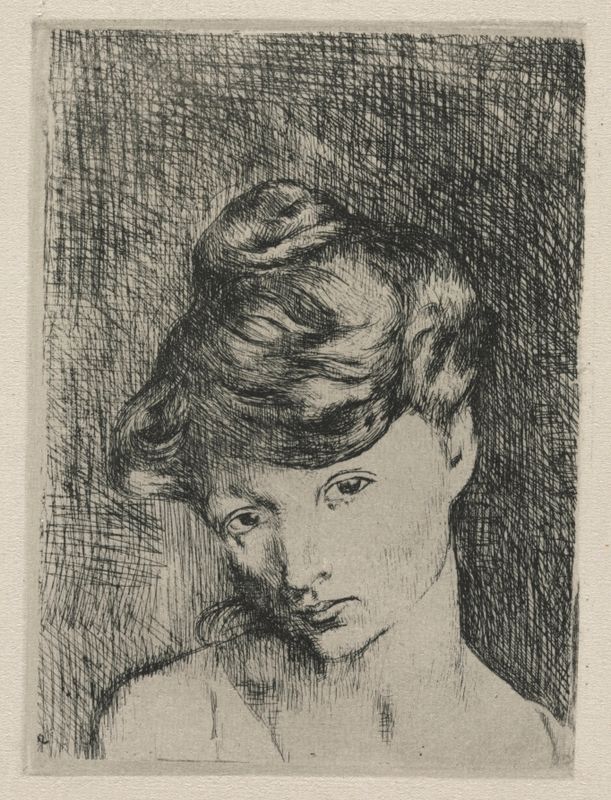 Head of a Woman: Madeleine
1905 · Cleveland Museum of Art
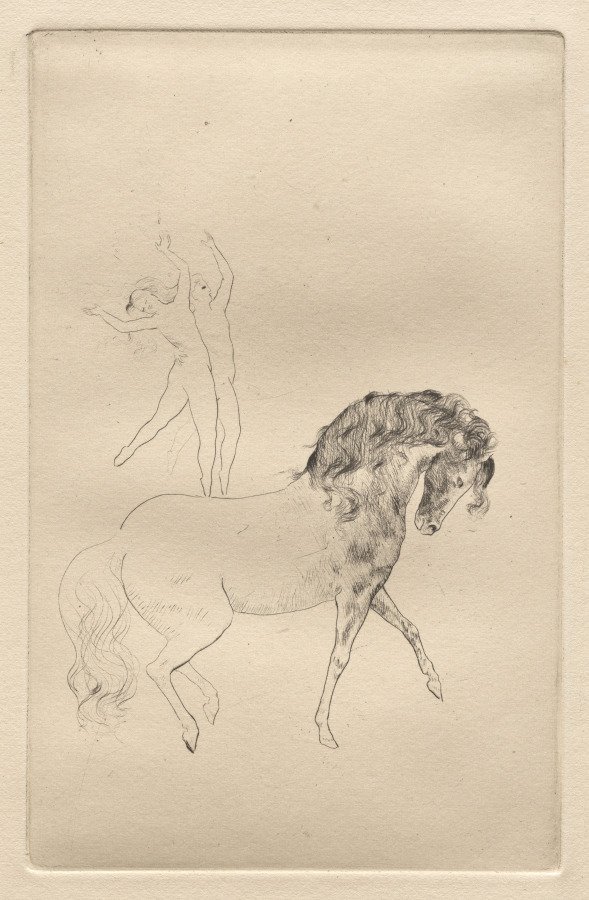
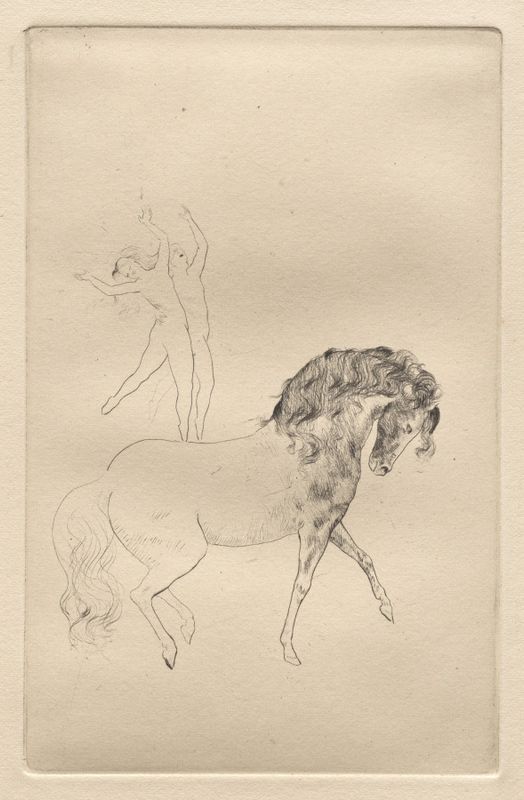 At the Circus
1905 · Cleveland Museum of Art
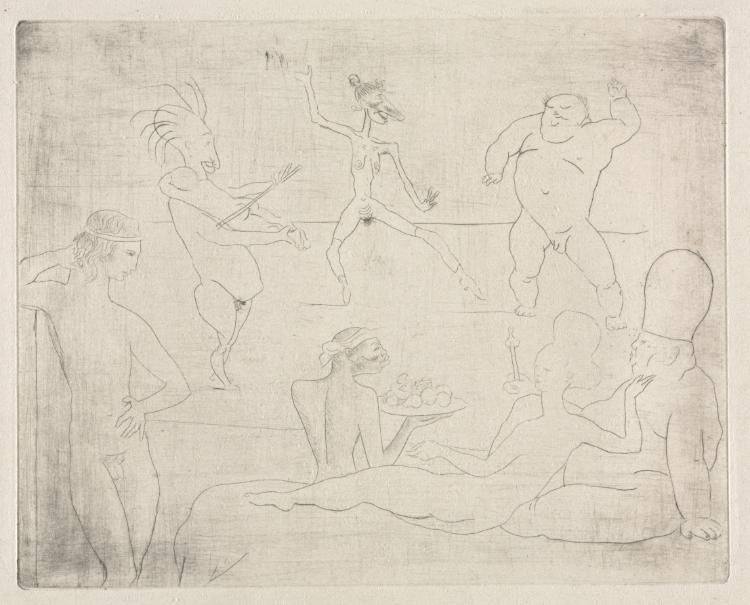 The Barbaric Dance (Before Salomé and Herod)
1905 · Cleveland Museum of Art
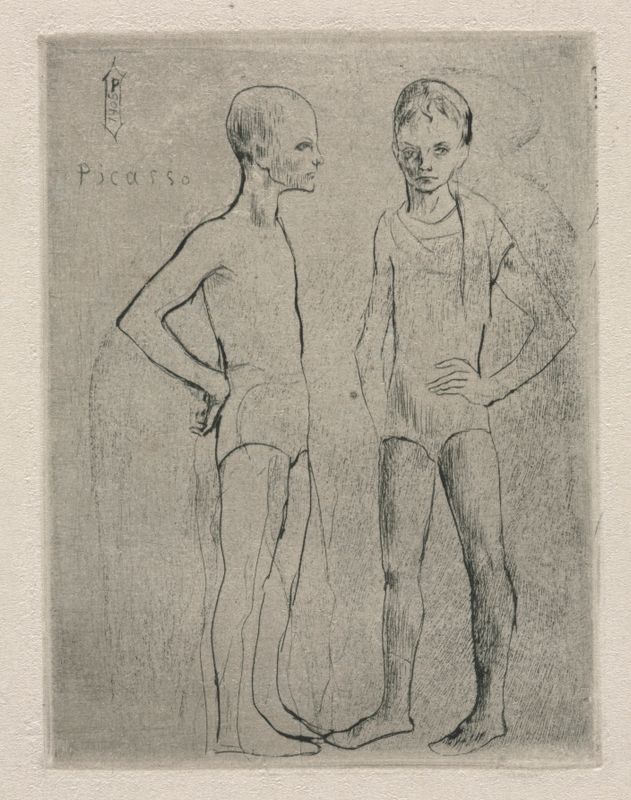 The Two Saltimbanques
1905 · Cleveland Museum of Art
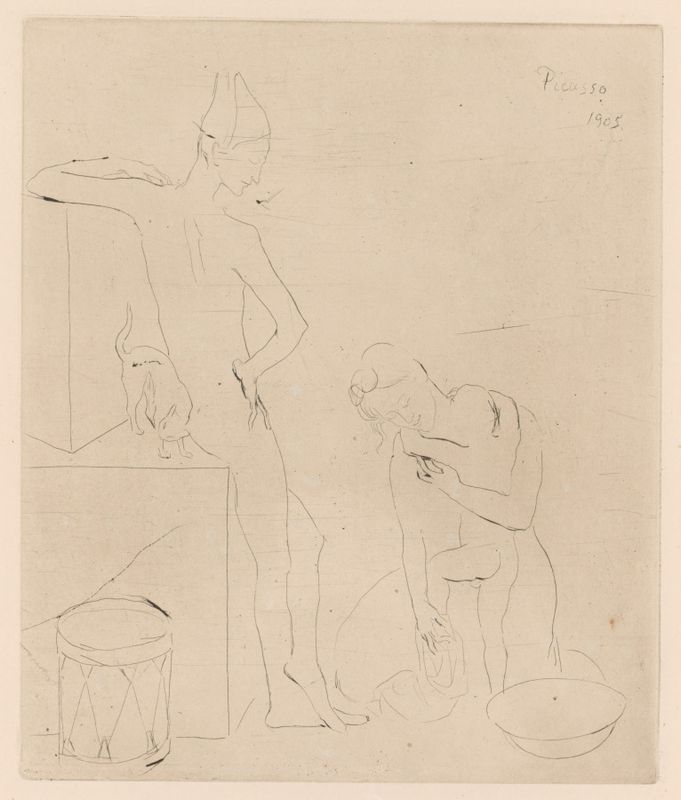 The Bath
1905 · Cleveland Museum of Art
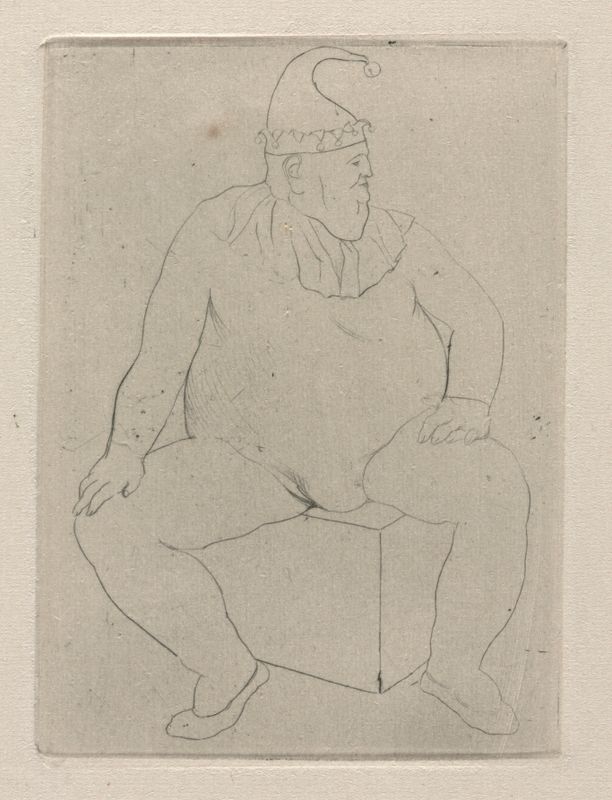 Saltimbanque at Rest
1905 · Cleveland Museum of Art
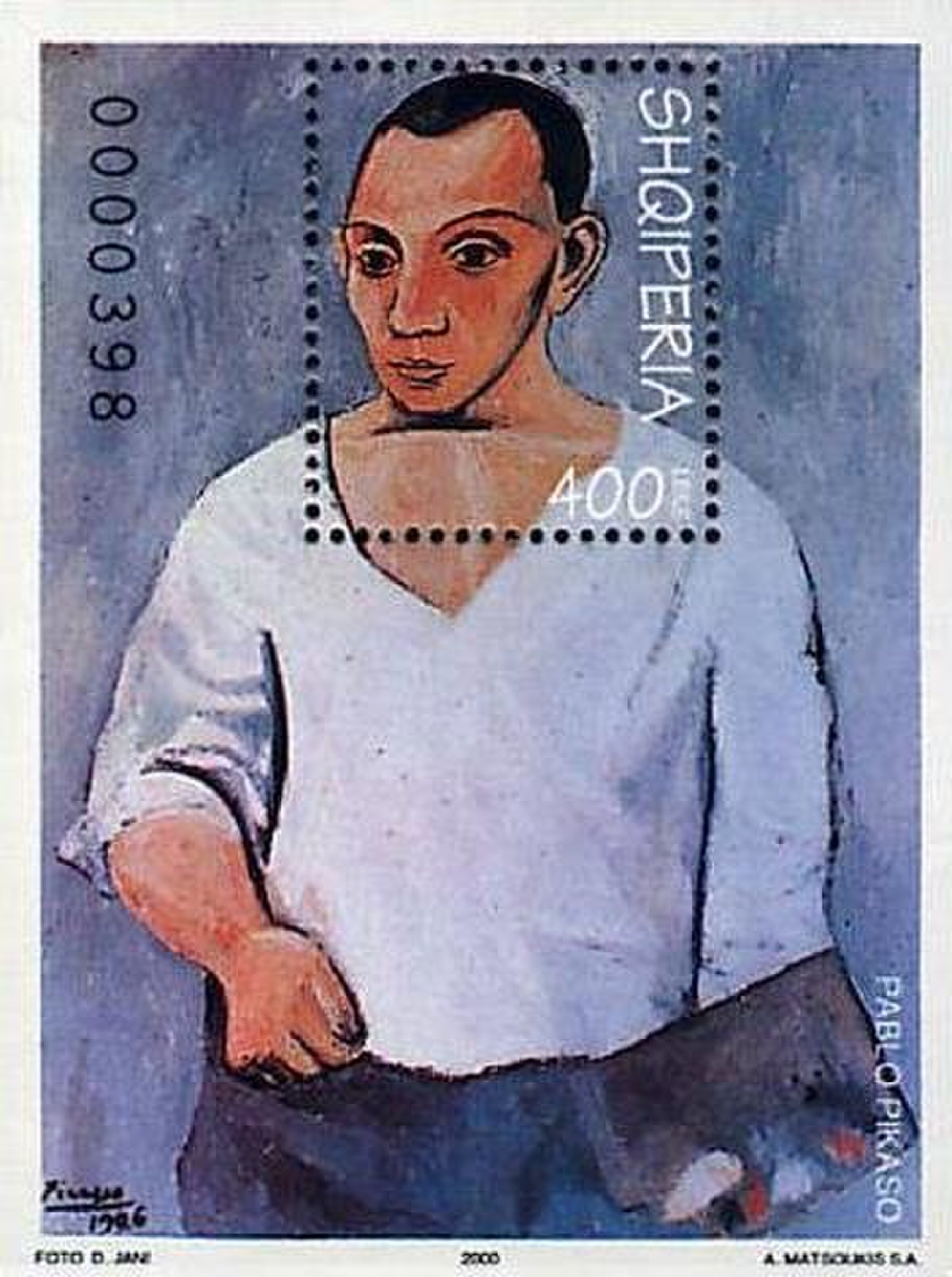
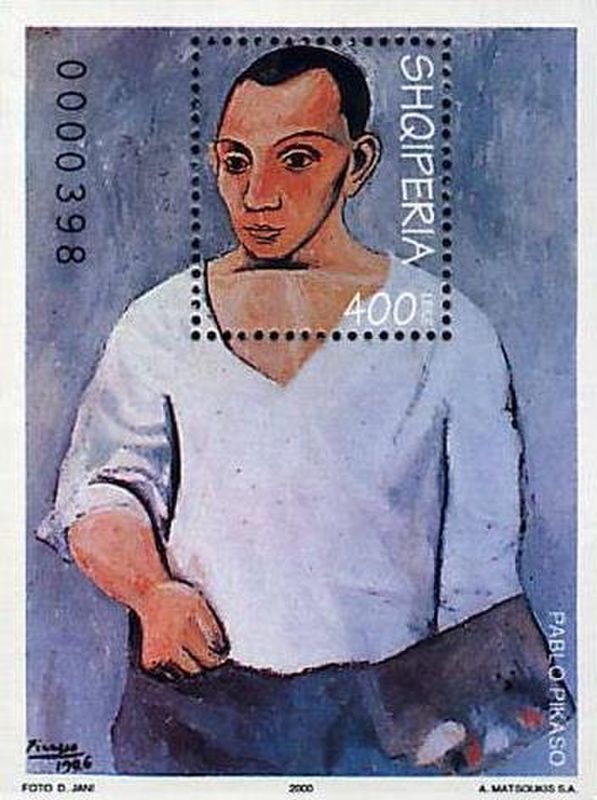 Self-Portrait with Palette
1906 · Philadelphia Museum of Art
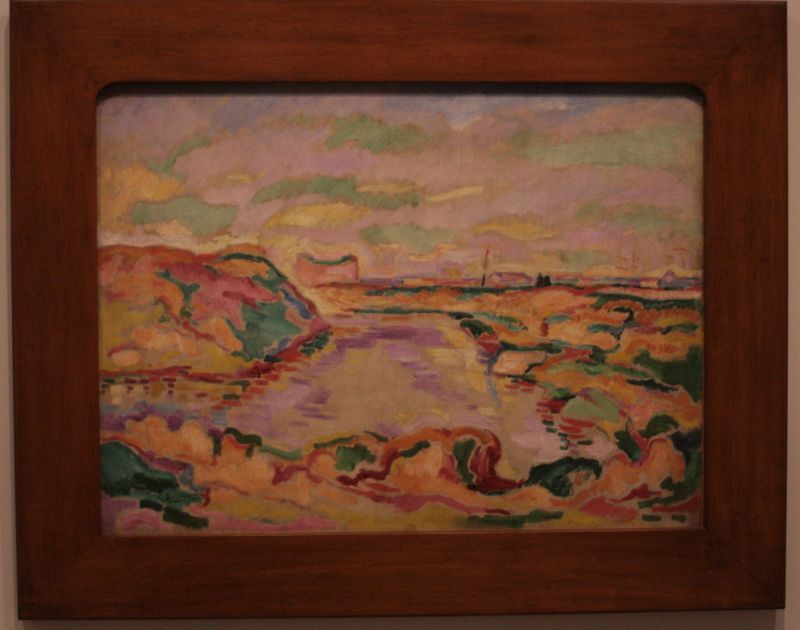 Landscape near Antwerp
1906 · Solomon R. Guggenheim Museum
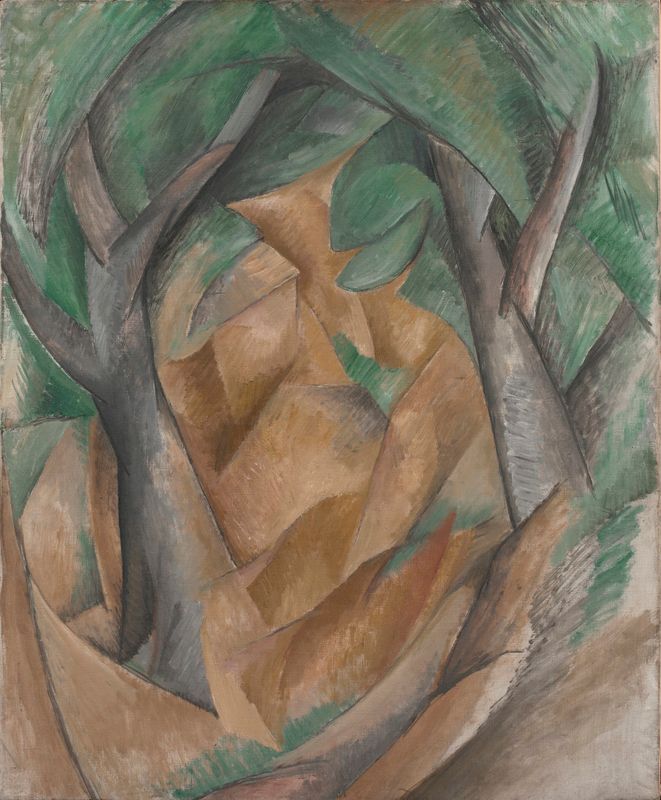 Trees at L'Estaque
1908 · Statens Museum for Kunst
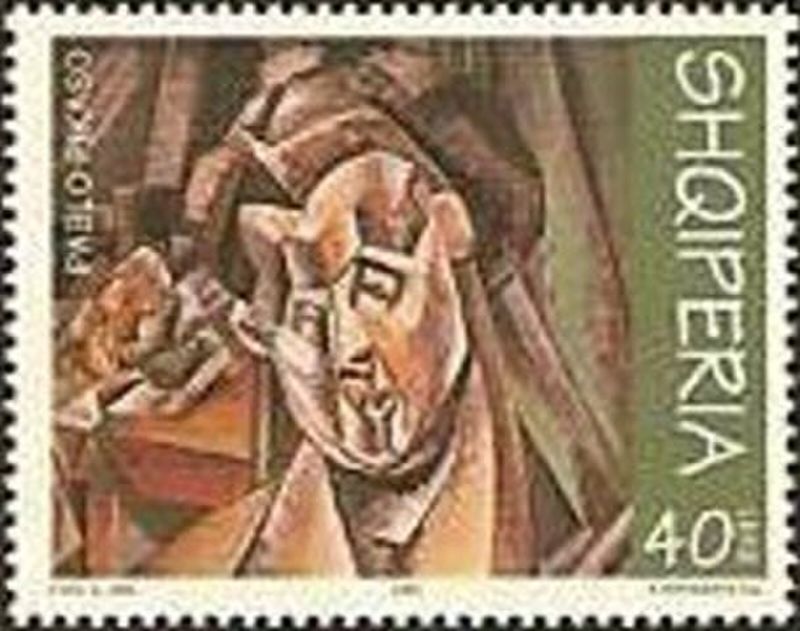 Woman with Pears
1909 · Museum of Modern Art
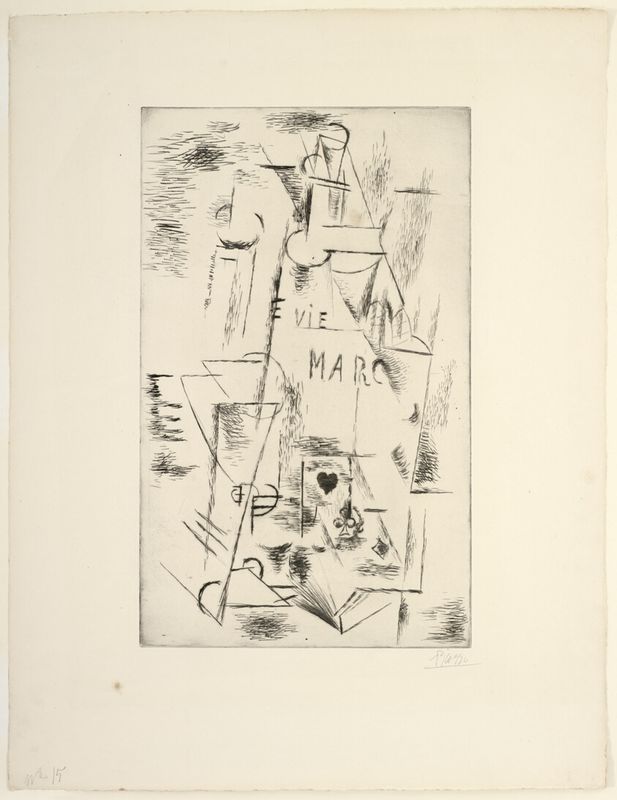 Still Life with Bottle of Marc
1911 · Art Institute of Chicago
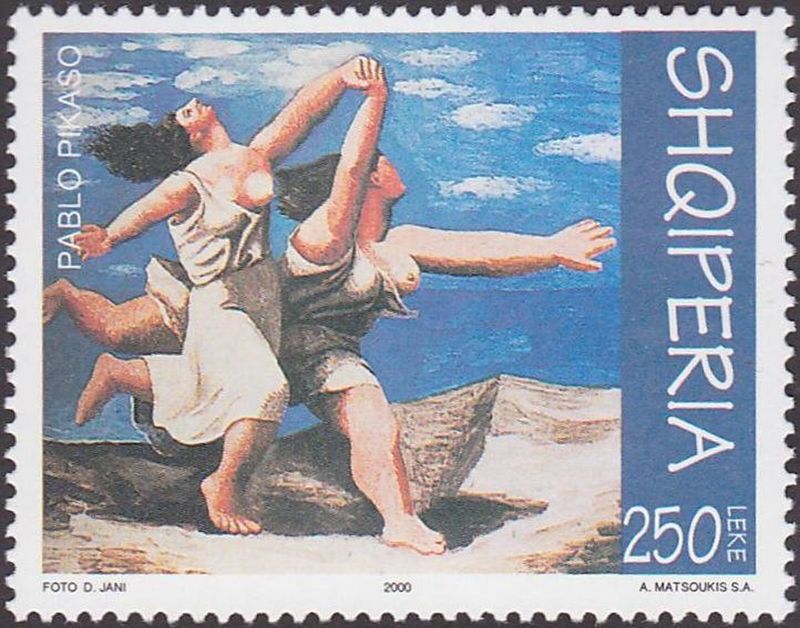 Two women running on the beach
1922 · Musée Picasso
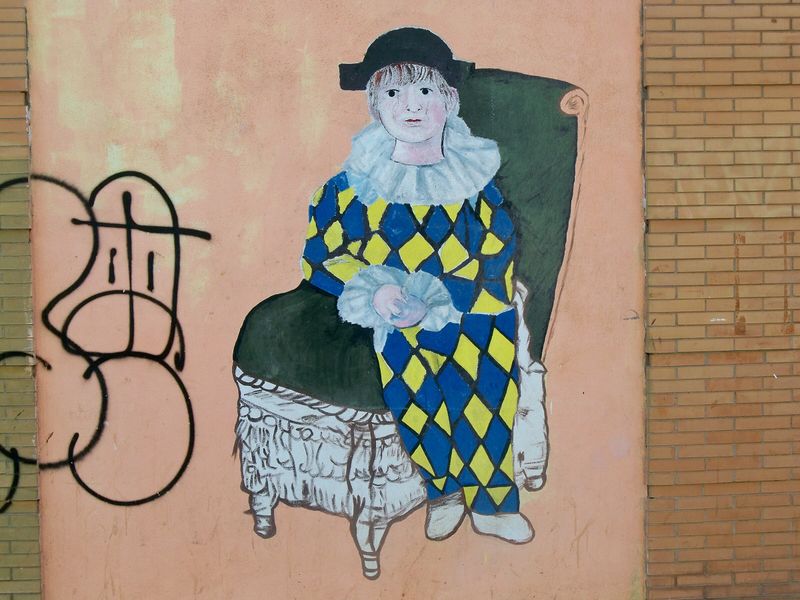 Paul en Arlequin
1924 · Musée Picasso
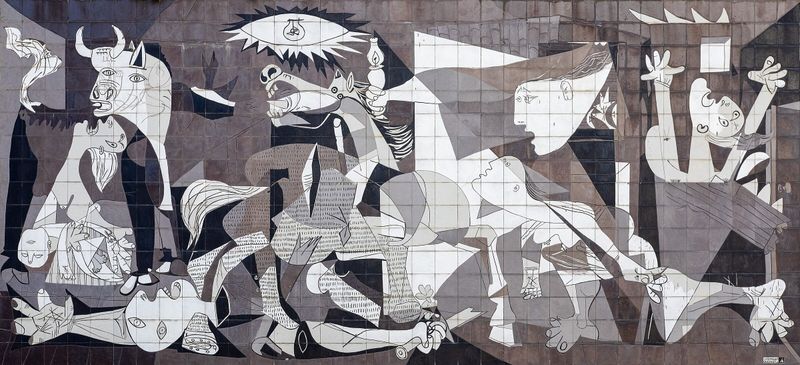 Guernica
1937 · Museo Nacional Centro de Arte Reina Sofía
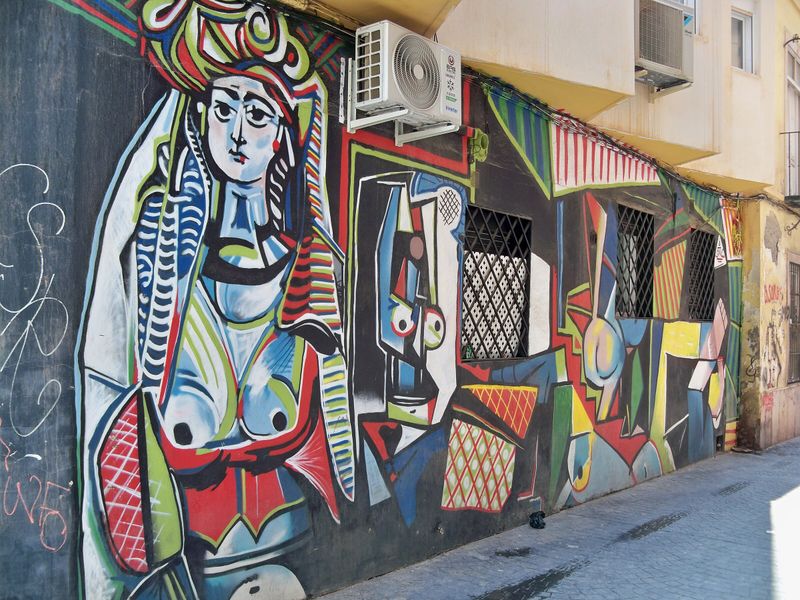 Women of Algiers, O version
1955
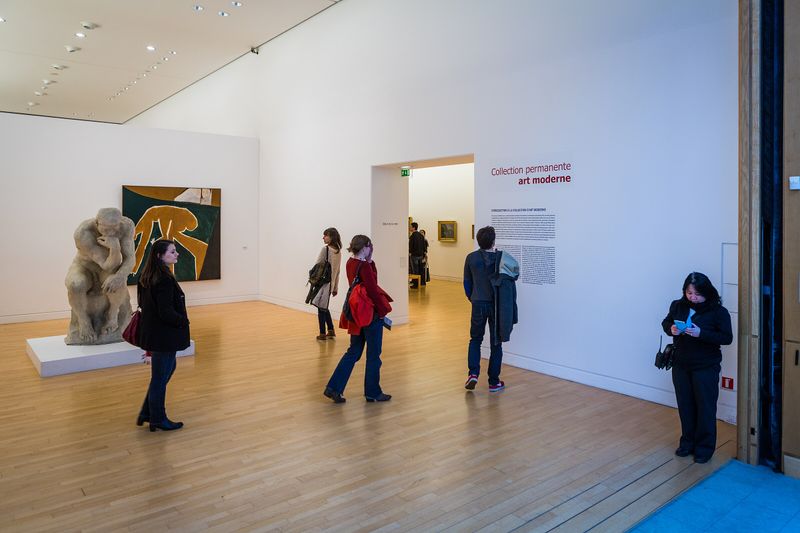 Personnage cueillant des fleurs
1958 · Musée Picasso
Take Cubism to the museum
Point your phone at any painting and Art Whisper tells you its story — who made it, what to notice, and why it matters. Free to start.