01
The painted face
Look up in the bottle's neck. A calm, pale woman's face with red lips fills the narrow glass, as if she were the bottle's own spirit.
1 of 4 on the painting
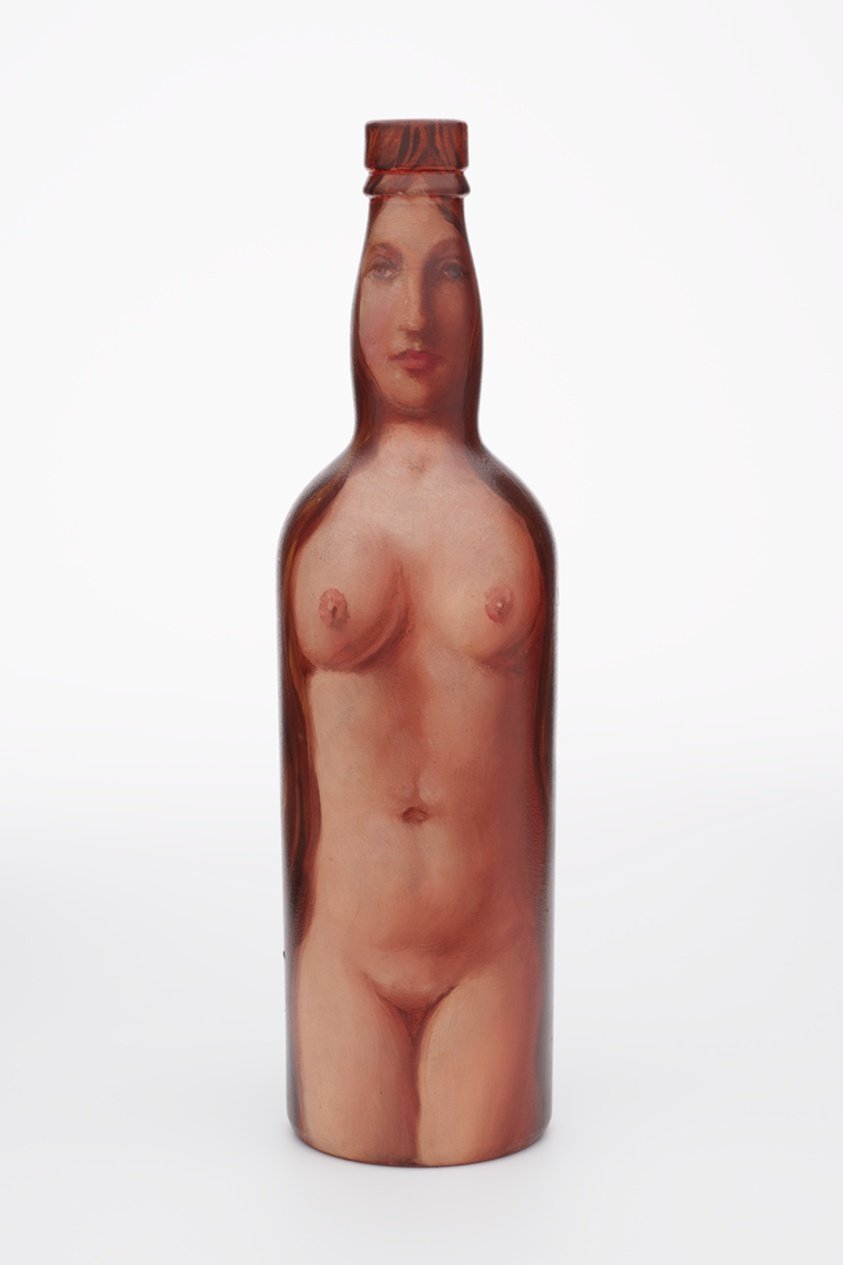
“Stop and look at this ordinary bottle, transformed into a surreal figure. This artwork is a testament to ingenuity, created during wartime scarcity, blurring the lines between painting and sculpture.”
This unique piece transforms a common glass bottle into an unexpected canvas, featuring a woman's torso painted directly onto its curved surface. The figure, rendered in a muted palette, seems almost to emerge from the glass itself, her form stretching and distorting with the bottle's contours. This playful experiment in three dimensions was born out of necessity during the German occupation of Belgium in World War II, when traditional art supplies were scarce. Magritte, known for his surrealist explorations, turned to discarded objects like this Bordeaux bottle, using them for his "painting in the round" creations. He made more than 25 such works, often giving them as gifts, blurring the lines between painting, sculpture, and everyday objects, and inviting us to see the familiar in a completely new way.
Five details hide in plain sight. Pick one and we’ll show you exactly where to look.
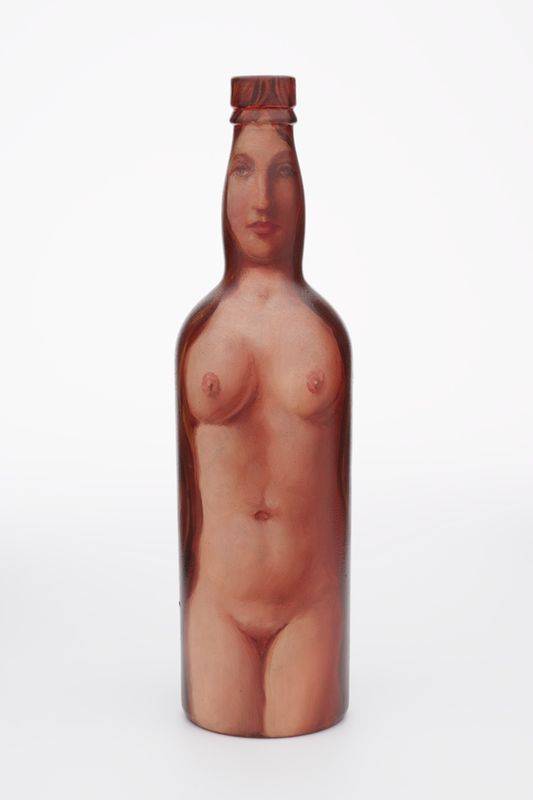
Look up in the bottle's neck. A calm, pale woman's face with red lips fills the narrow glass, as if she were the bottle's own spirit.
Where the glass curves out from neck to body, the painted shoulders and breasts follow the swelling shape of the bottle. The curve of the glass and the curve of the nude line up neatly.
The woman's figure follows the bottle's outline closely: head in the neck, shoulders at the slope, torso and thighs in the straight body. Body and container read as one shape.
The figure is painted directly on a curved glass bottle instead of a flat canvas. The paint follows the rounded form, so the lower body seems to wrap around the glass.
Along both edges, long reddish-brown strokes frame the body. They read as hair, but they also match the dark reddish tint of the bottle, so the two ideas blur.
The full narration walks you through Untitled (Woman-Bottle) — the story behind it, the details most visitors miss, and why it matters. Free in the Art Whisper app.
René Magritte was a Belgian surrealist master who painted familiar objects in dreamlike, often unsettling, unexpected contexts.
Beyond Magritte and Surrealism: works from the same years.
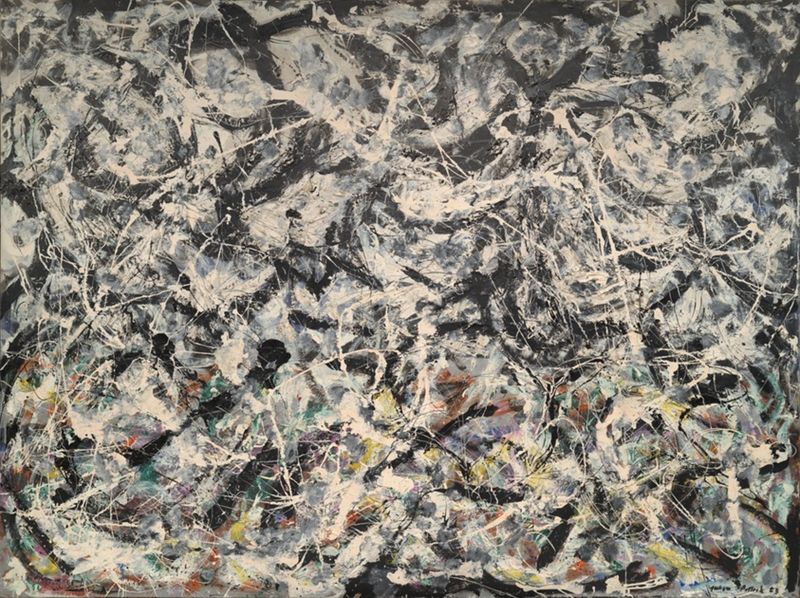 Same era · 1920s–1950s
Greyed Rainbow
Jackson Pollock · 1953 · Art Institute of Chicago
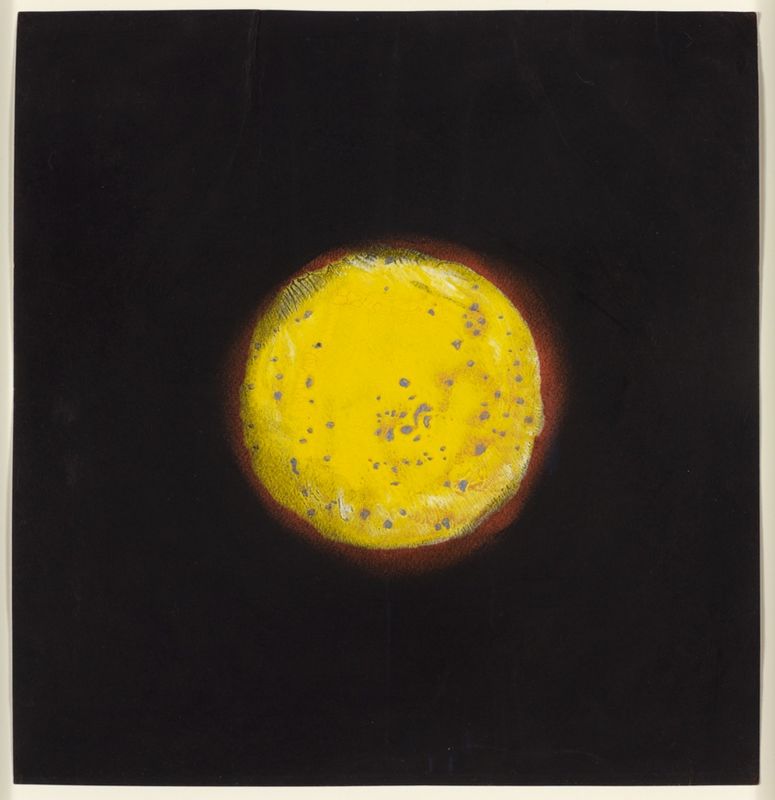 Same era · 1920s–1950s
Sun Spot
Yayoi Kusama · 1953 · Art Institute of Chicago
 Same era · 1920s–1950s
Deux personnages
Pierre Alechinsky · 1950
 Same era · 1920s–1950s
Impregnazione
Piero Manzoni · 1958
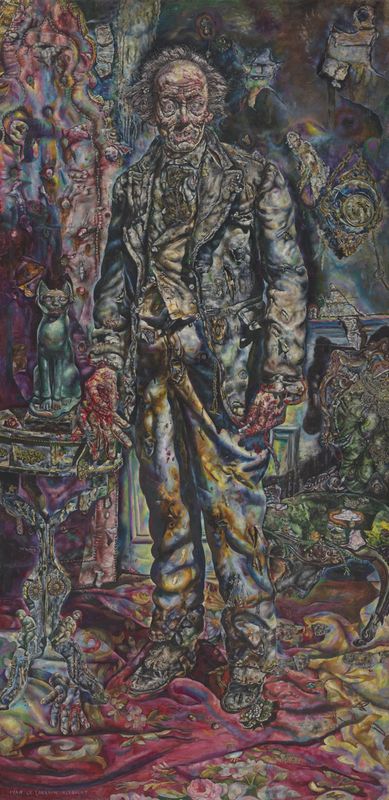 Same era · 1920s–1950s
Picture of Dorian Gray
Ivan Puni · 1943 · Art Institute of Chicago
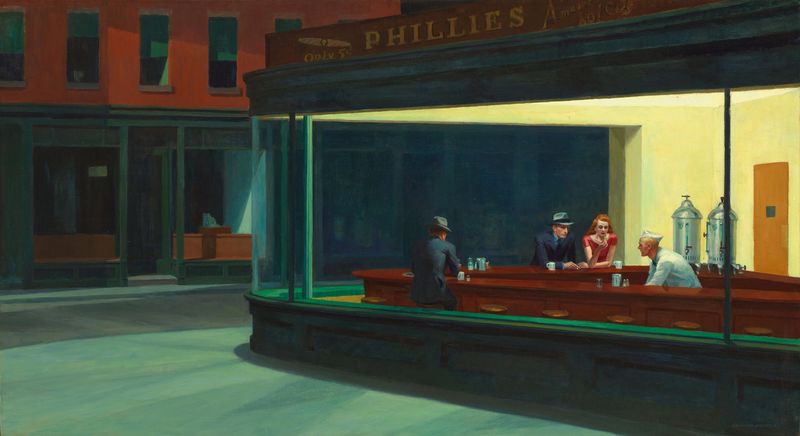 Same era · 1920s–1950s
Nighthawks
Okada Saburosuke · 1942 · Art Institute of Chicago
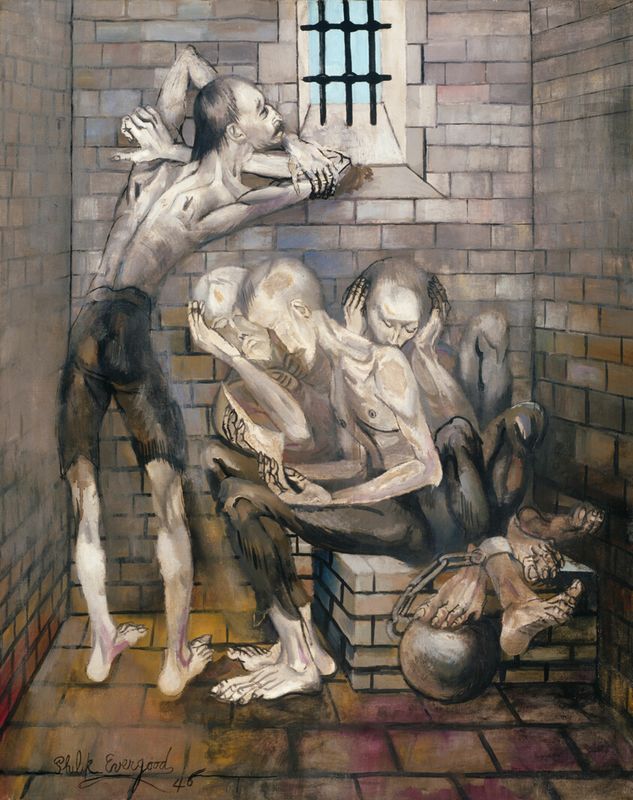 Same era · 1920s–1950s
The Indestructibles
Philip Evergood · 1946 · Art Institute of Chicago
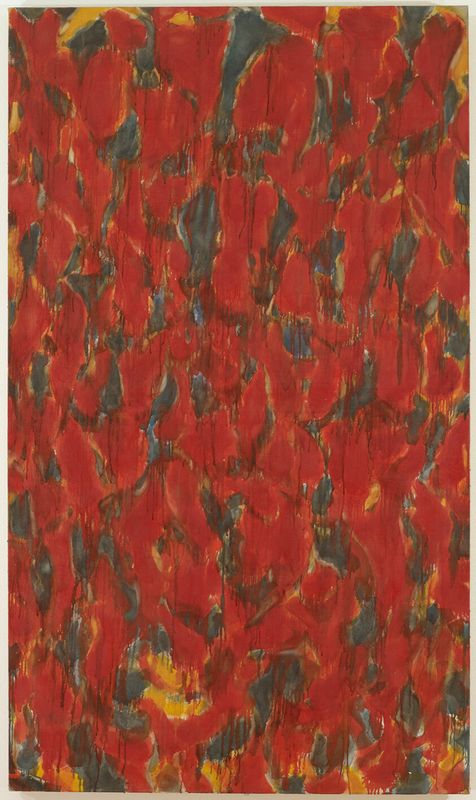 Same era · 1920s–1950s
Red No. 2
Sam Francis · 1954 · Art Institute of Chicago
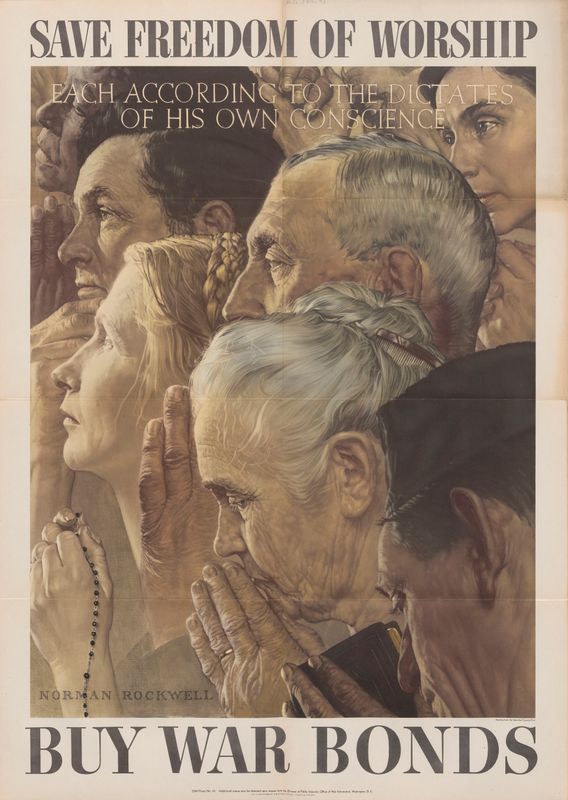 Same era · 1920s–1950s
Freedom of Worship
Norman Rockwell · 1943 · Norman Rockwell Museum
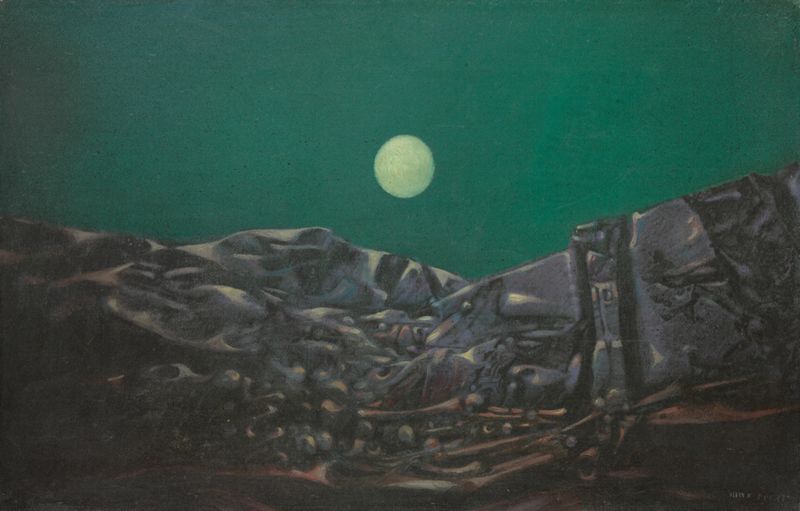 Same era · 1920s–1950s
Summer Night in Arizona
Max Ernst · 1944 · Art Institute of Chicago
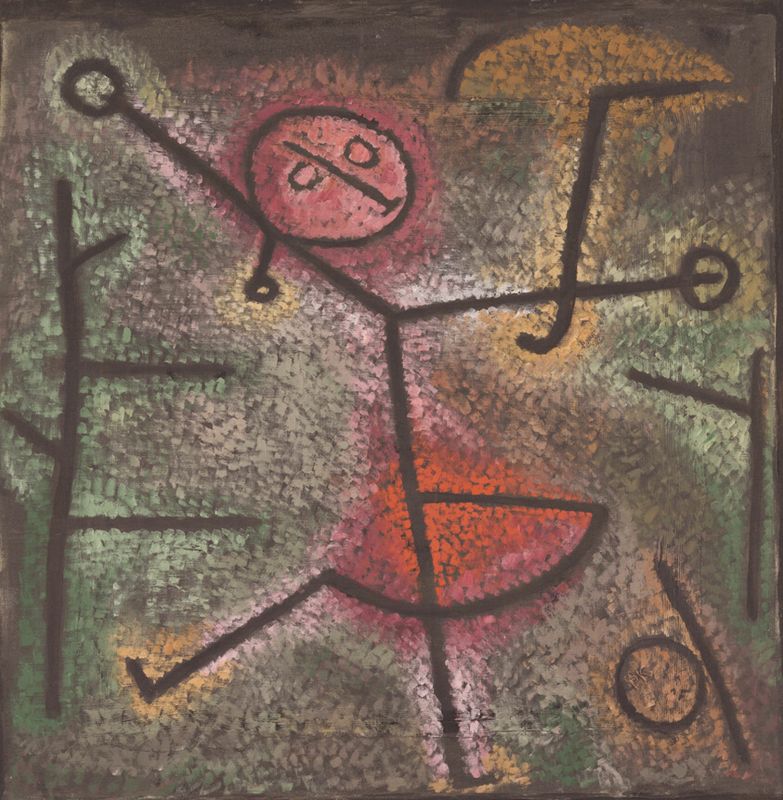 Same era · 1920s–1950s
Dancing Girl
Paul Klee · 1940 · Art Institute of Chicago
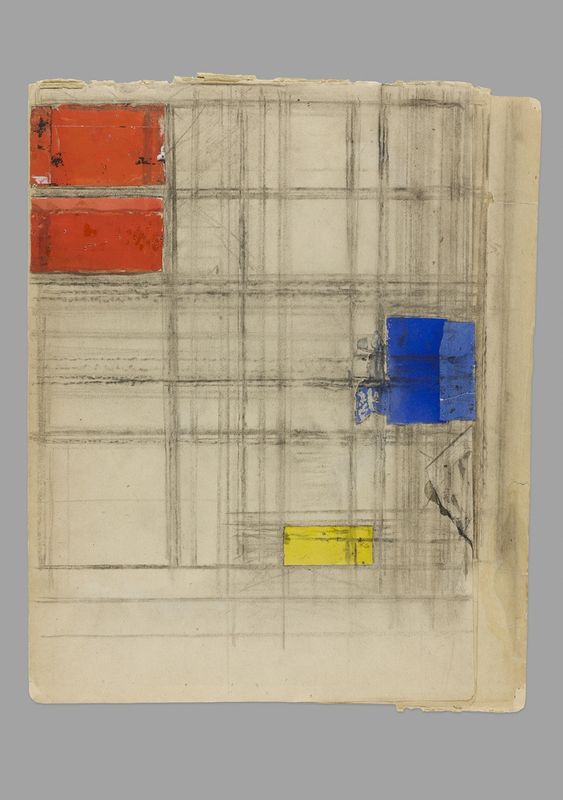 Same era · 1920s–1950s
Study for a Composition
Piet Mondrian · 1940 · Art Institute of Chicago