01
The famous smile
Find the faint smile on the lower right face. Warhol keeps Leonardo's hint of a smile, but the stark black and pale pink ink makes it look flatter and less mysterious.
1 of 4 on the painting
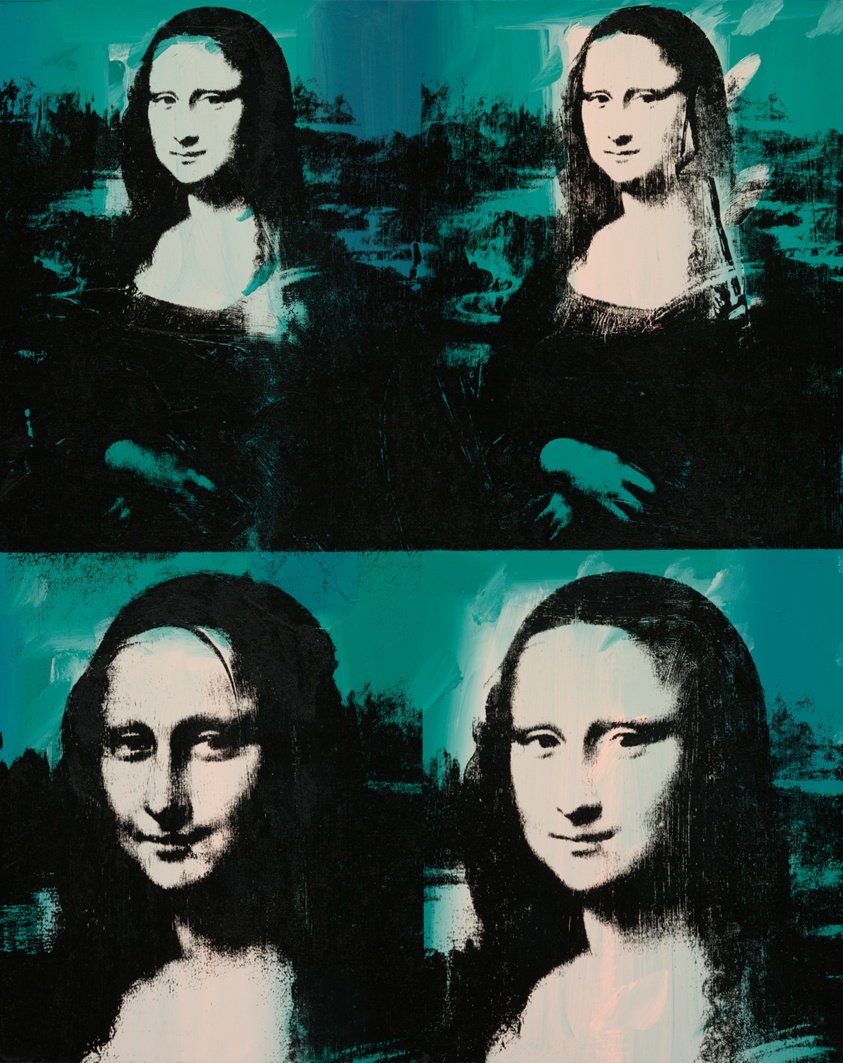
“This artwork confronts you with four nearly identical Mona Lisas, questioning how mass reproduction changes our experience of an iconic image. It's a striking example of Pop art's engagement with celebrity and consumer culture.”
In "Four Mona Lisas," four nearly identical images of Leonardo da Vinci's iconic portrait are arranged in a grid, each one a silkscreen print. The familiar face, with her enigmatic smile, appears in a faded, almost ghost-like quality, suggesting the pervasive nature of her image in popular culture. The repetition and slight variations in the silkscreen process highlight how mass media can transform and dilute an original masterpiece. Look closely at the subtle shifts in color and registration between the four panels; these imperfections are part of the work's commentary on mechanical reproduction. Created in 1978, this piece continues the artist's exploration of celebrity, consumerism, and the way images are consumed and re-consumed in modern society, taking a universally recognized symbol and presenting it as a manufactured commodity.
Five details hide in plain sight. Pick one and we’ll show you exactly where to look.
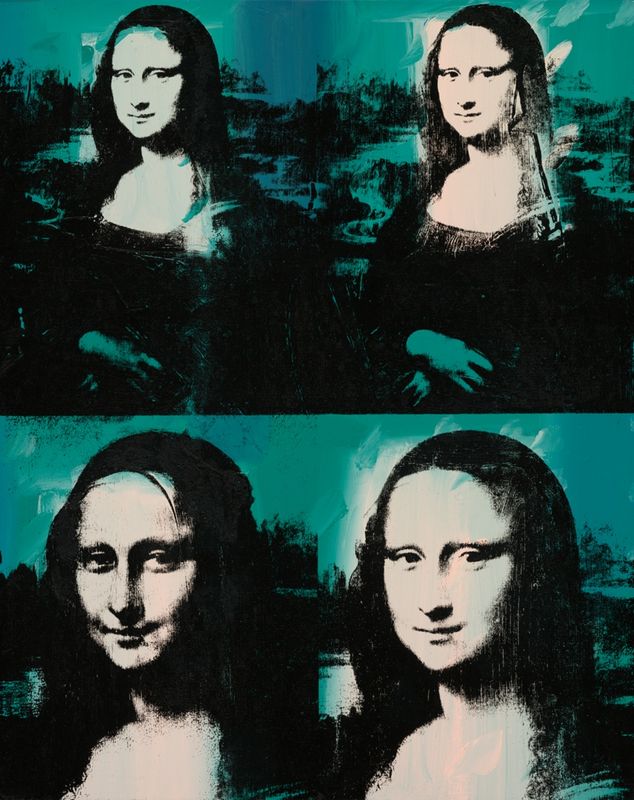
Find the faint smile on the lower right face. Warhol keeps Leonardo's hint of a smile, but the stark black and pale pink ink makes it look flatter and less mysterious.
The canvas splits into four panels, two wide views above and two close crops below. The repetition makes the world's most famous face feel like a mass-produced product.
Compare the two lower faces. The left one is darker and more broken up, while the right is cleaner and paler, so each print of the same image comes out different.
Look at the pale brushstrokes in the teal sky at upper right. Hand-painted gestures sit beside the silkscreened image, so the surface feels part made, part printed.
Behind the upper left figure, the winding landscape breaks into black and teal patches. Leonardo's detailed background turns into a rough, high-contrast pattern.
The full narration walks you through Four Mona Lisas — the story behind it, the details most visitors miss, and why it matters. Free in the Art Whisper app.
Andy Warhol transformed everyday objects and celebrity portraits into iconic art, blurring the lines between high culture and mass media.
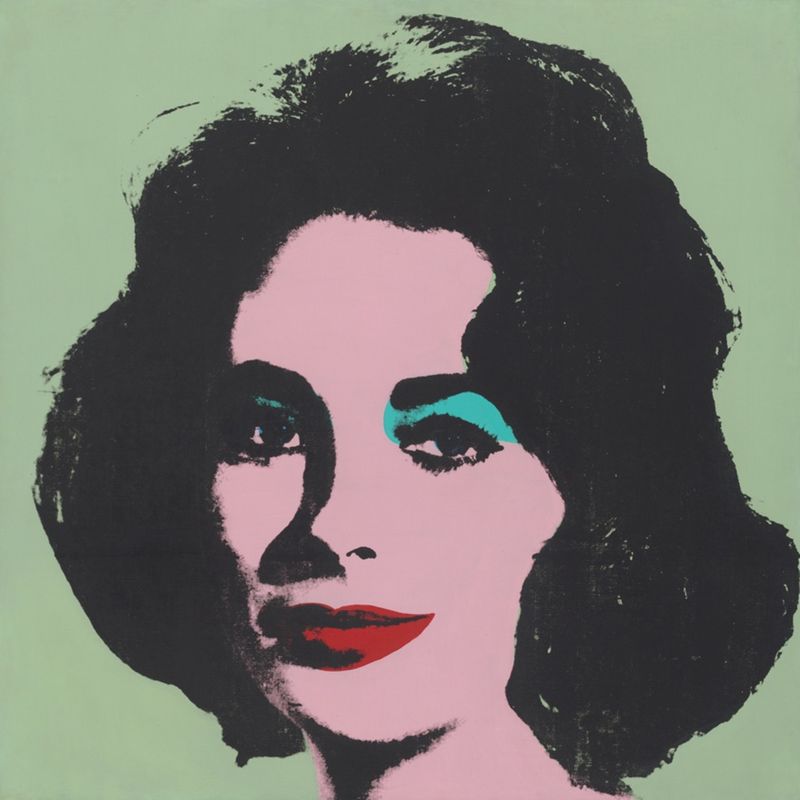 Liz #3 [Early Colored Liz]
1963 · Art Institute of Chicago
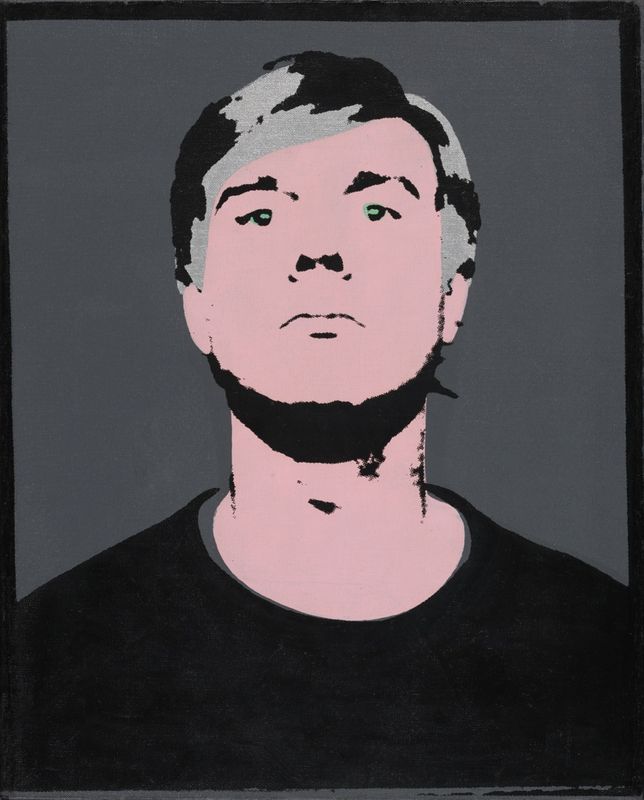 Self-Portrait
1964 · Art Institute of Chicago
 Pat Hearn
1985 · Art Institute of Chicago
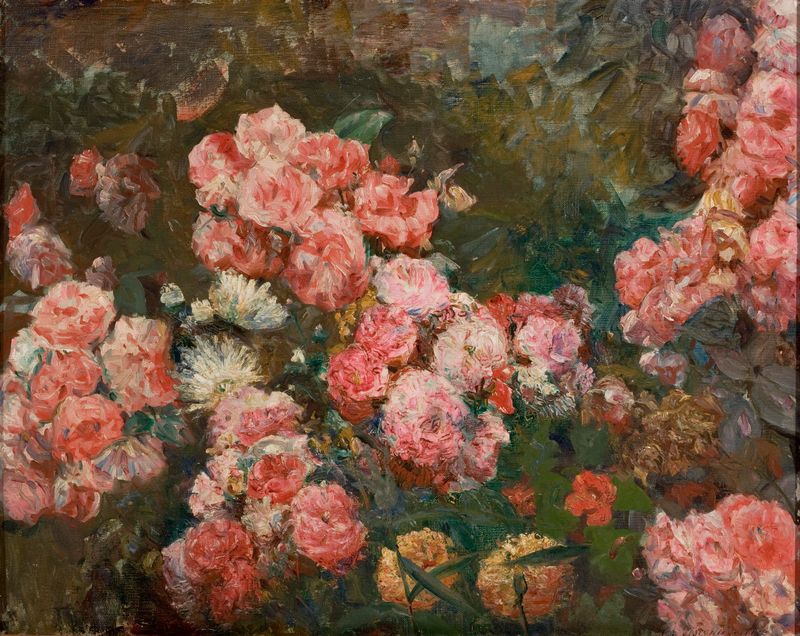 Flowers
1964 · Cleveland Museum of Art
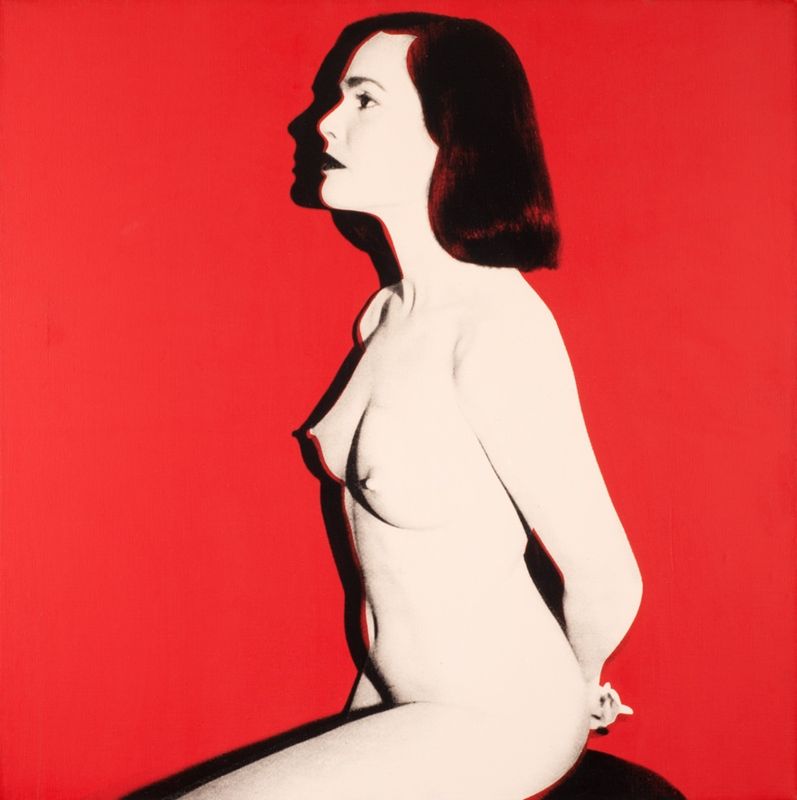
 Nude (Red)
1986
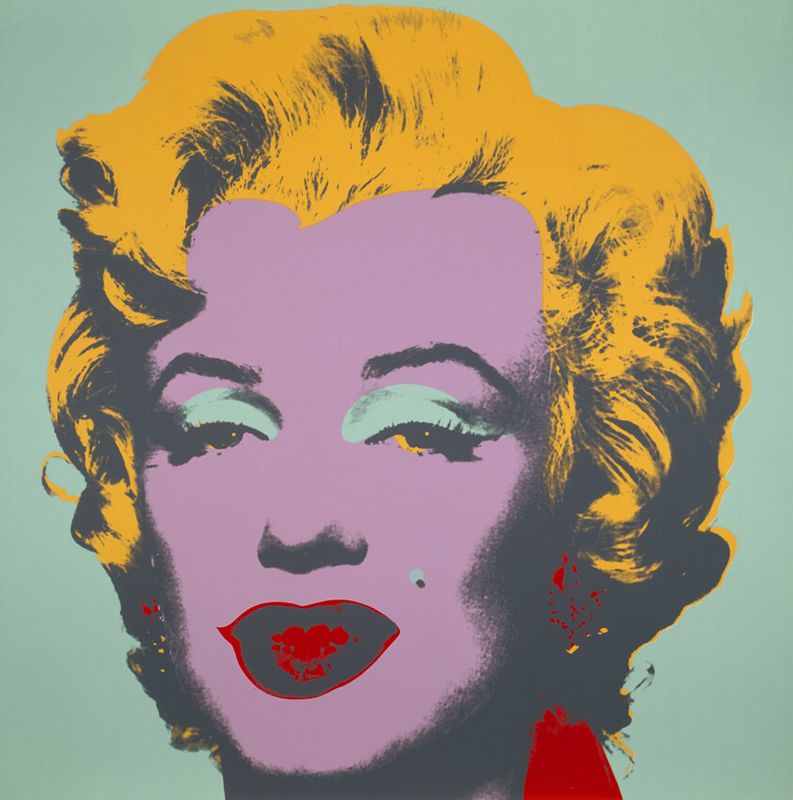 Marilyn Monroe (Marilyn)
1967 · Art Institute of Chicago
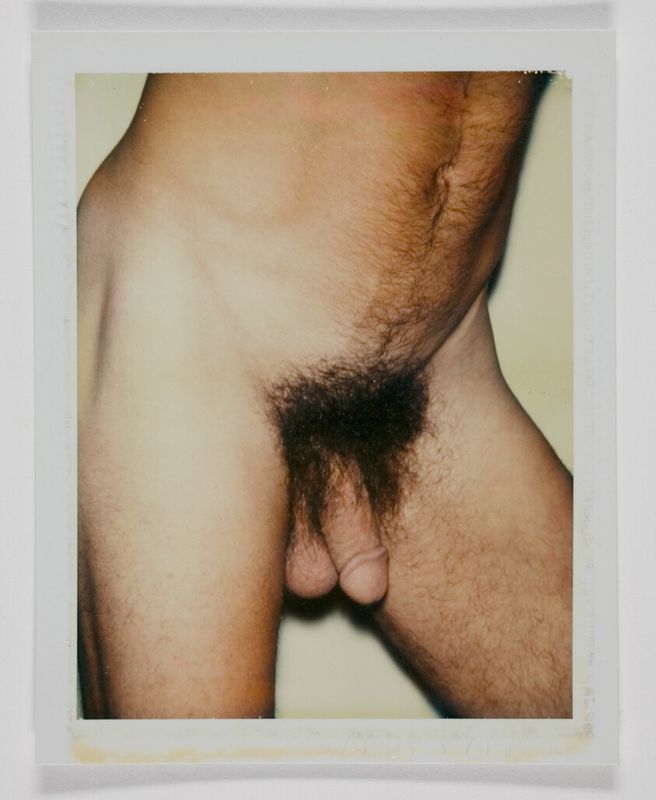 Nude Model (Male)
1977 · Art Institute of Chicago
Beyond Warhol and Postmodernism: works from the same years, and from the other movements Four Mona Lisas belongs to.
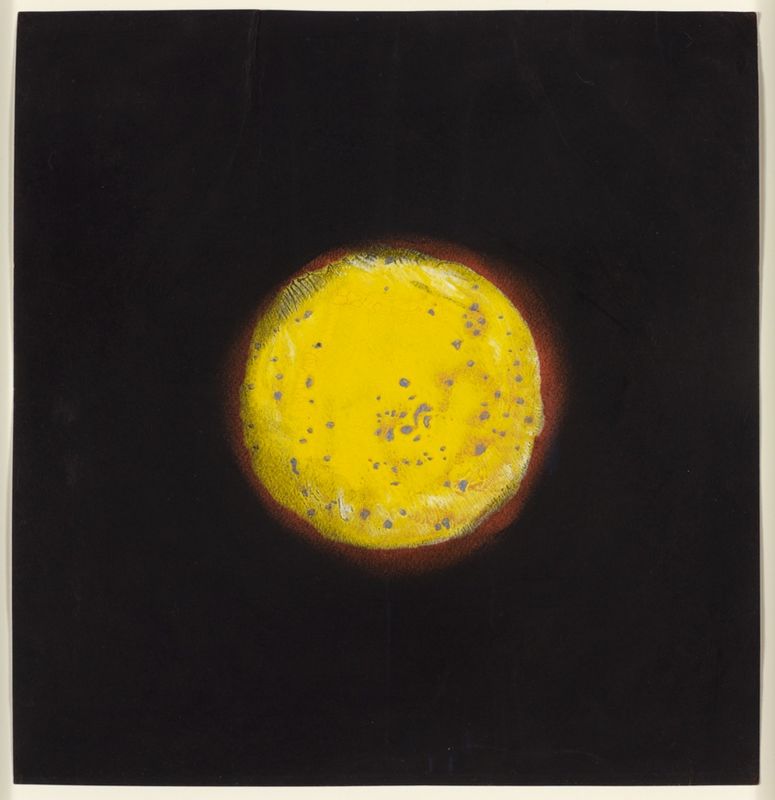 Same movement · Pop Art
Sun Spot
Yayoi Kusama · 1953 · Art Institute of Chicago
 Same era · 1960s–1990s
La grande bellezza
Pierre Alechinsky · 1965
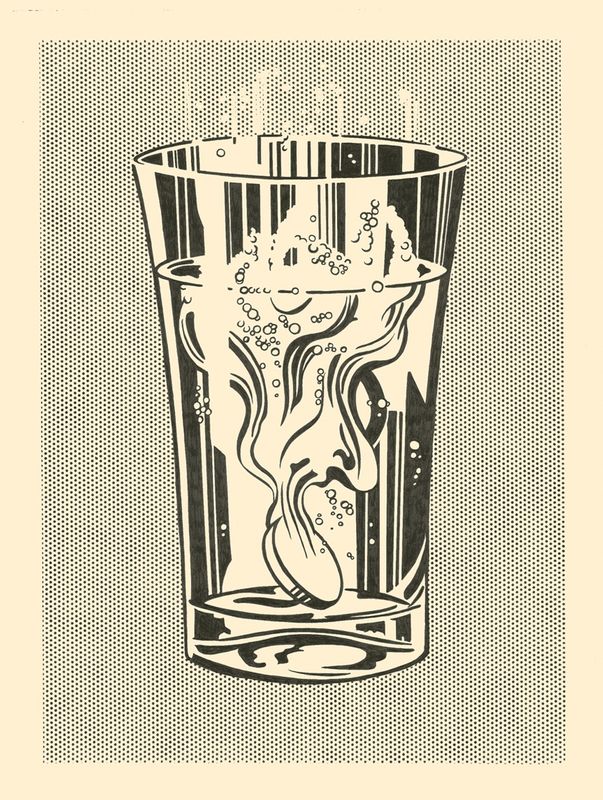 Same movement · Pop Art
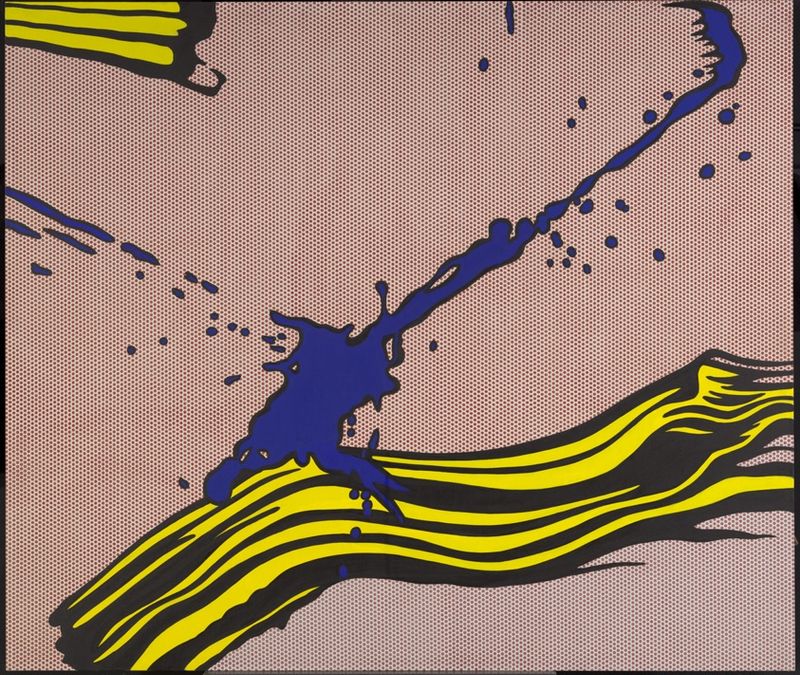
Alka Seltzer
Roy Lichtenstein · 1966 · Art Institute of Chicago
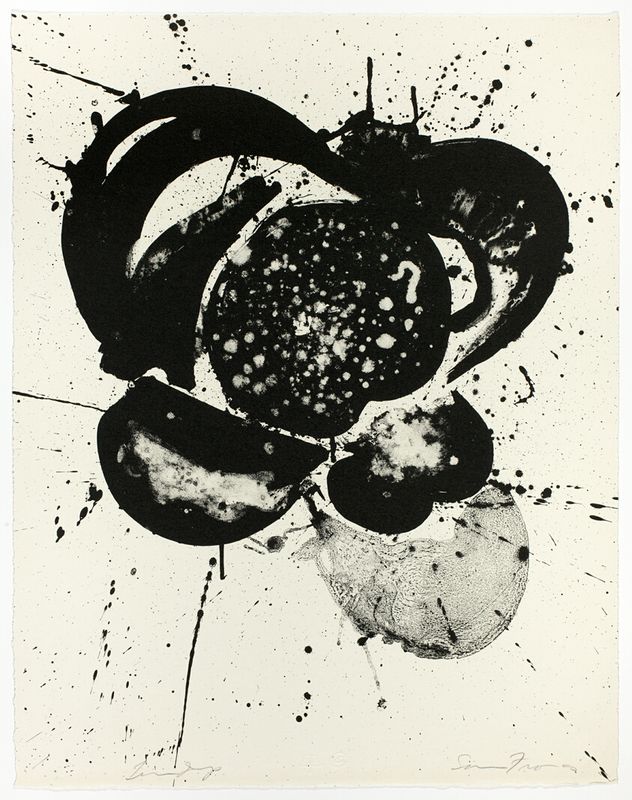 Same era · 1960s–1990s
Essai
Sam Francis · 1963 · Art Institute of Chicago
 Same era · 1960s–1990s
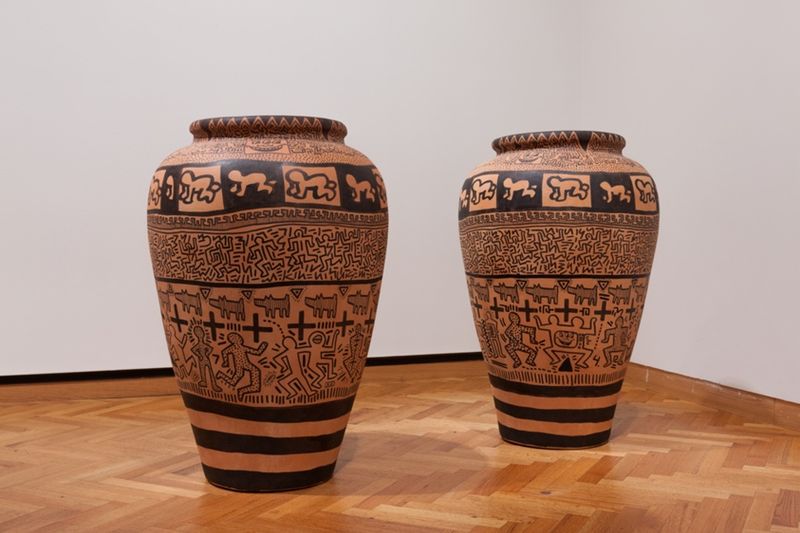
Untitled (Pair of Vases)
Keith Haring · 1981 · Art Institute of Chicago
 Same era · 1960s–1990s
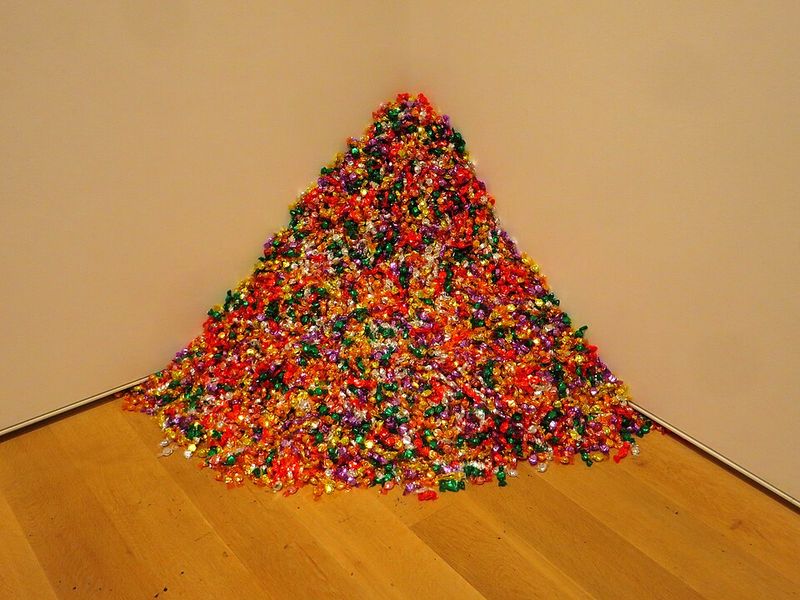
Untitled (Portrait of Ross in L.A.)
Félix González-Torres · 1991
 Same era · 1960s–1990s
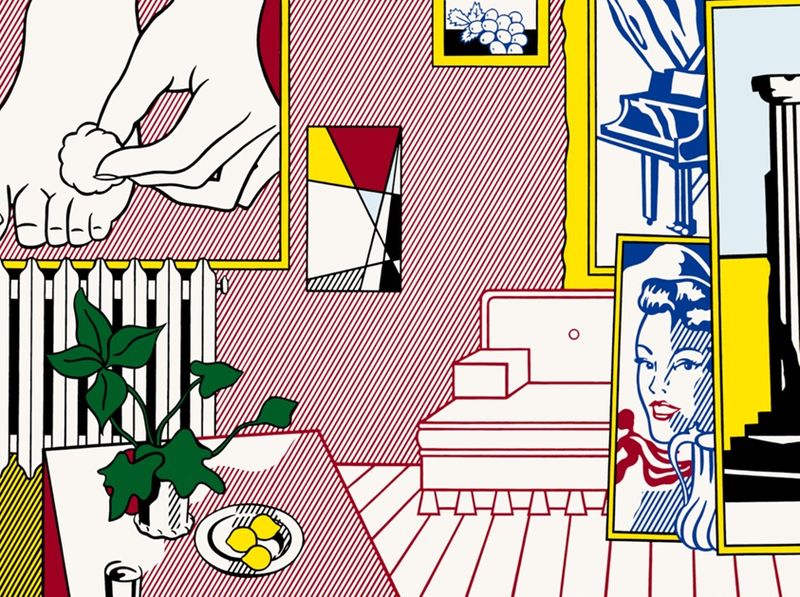
Artist's Studio "Foot Medication"
Roy Lichtenstein · 1974 · Art Institute of Chicago
 Same era · 1960s–1990s
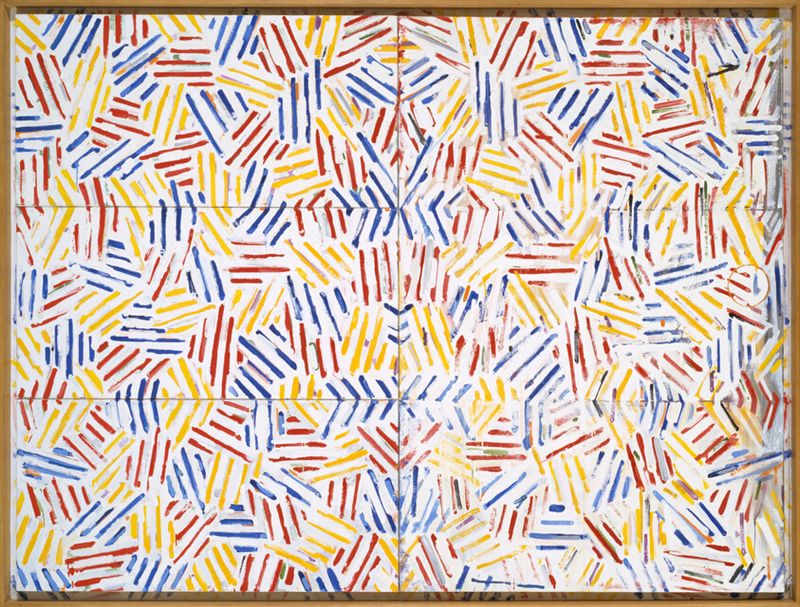
Corpse and Mirror II
Jasper Johns · 1974 · Art Institute of Chicago
 Same era · 1960s–1990s
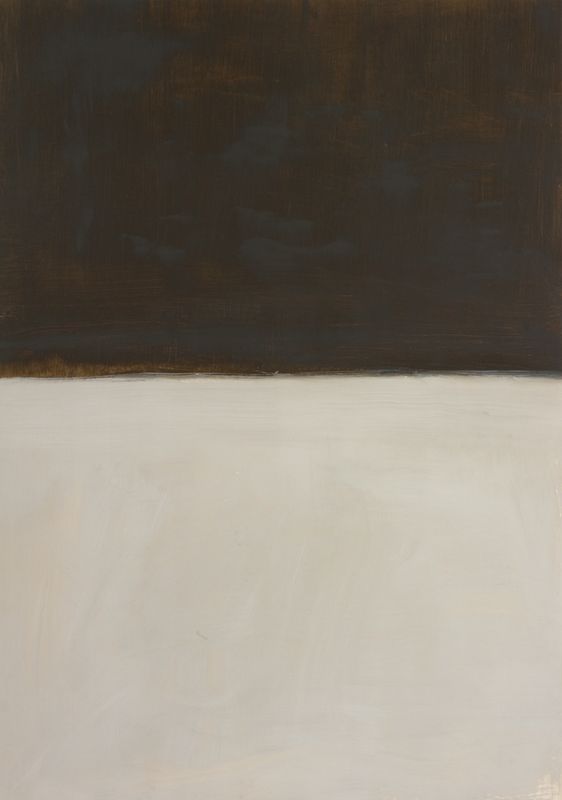
Untitled (Brown and Gray)
Mark Rothko · 1969 · The Metropolitan Museum of Art
 Same era · 1960s–1990s
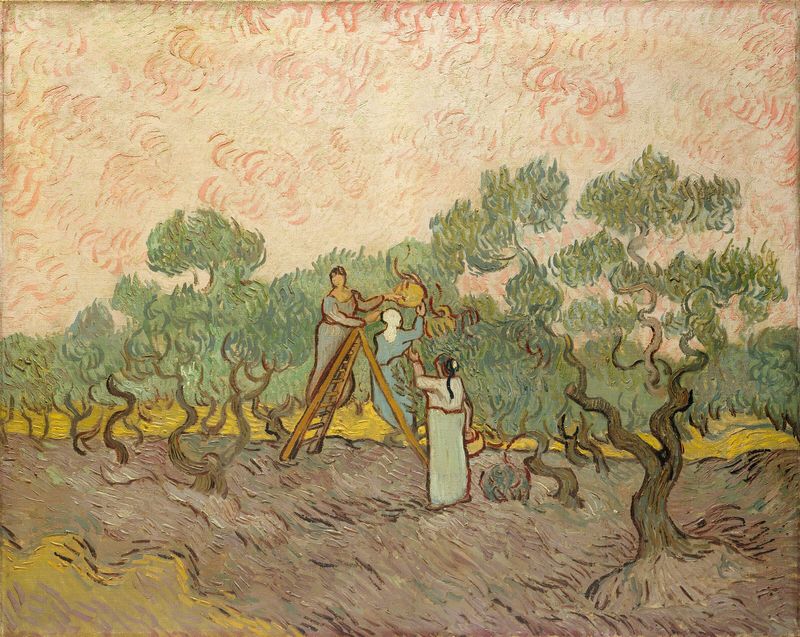
Olive Picking
Reuven Rubin · 1967 · Rubin Museum
 Same era · 1960s–1990s
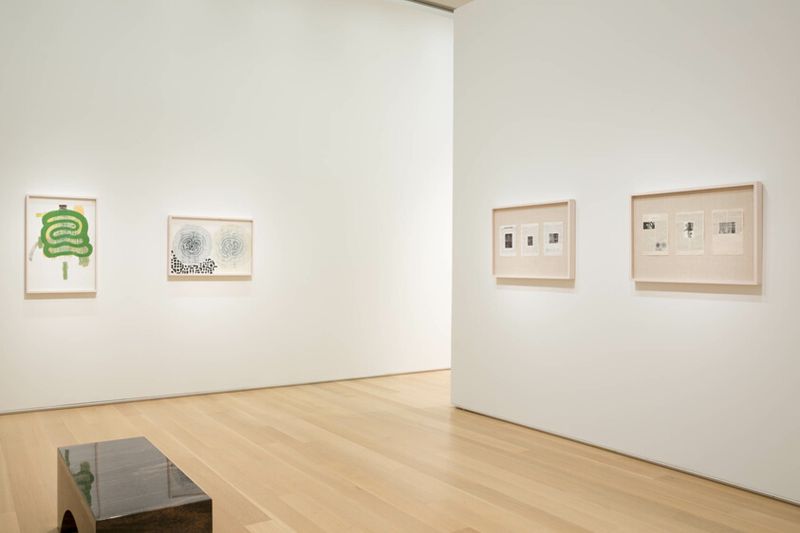
Wu Street
Xu Bing · 1993 · Art Institute of Chicago
 Same era · 1960s–1990s
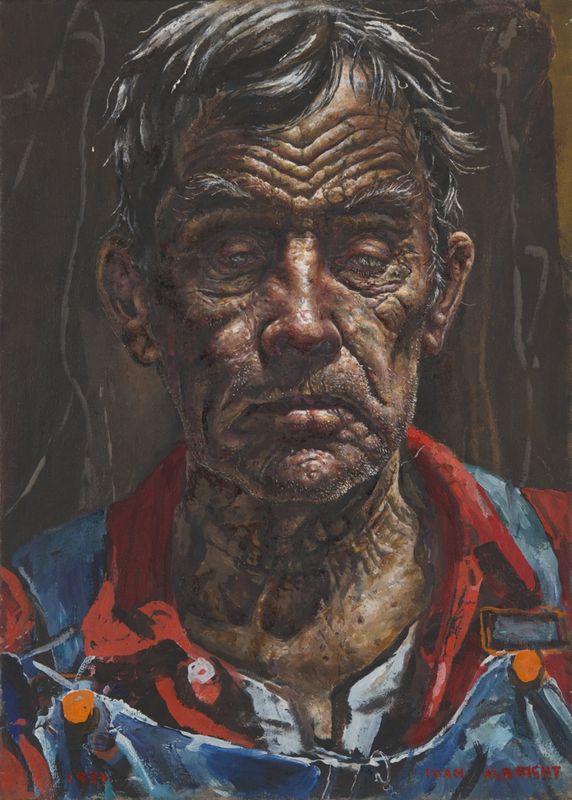
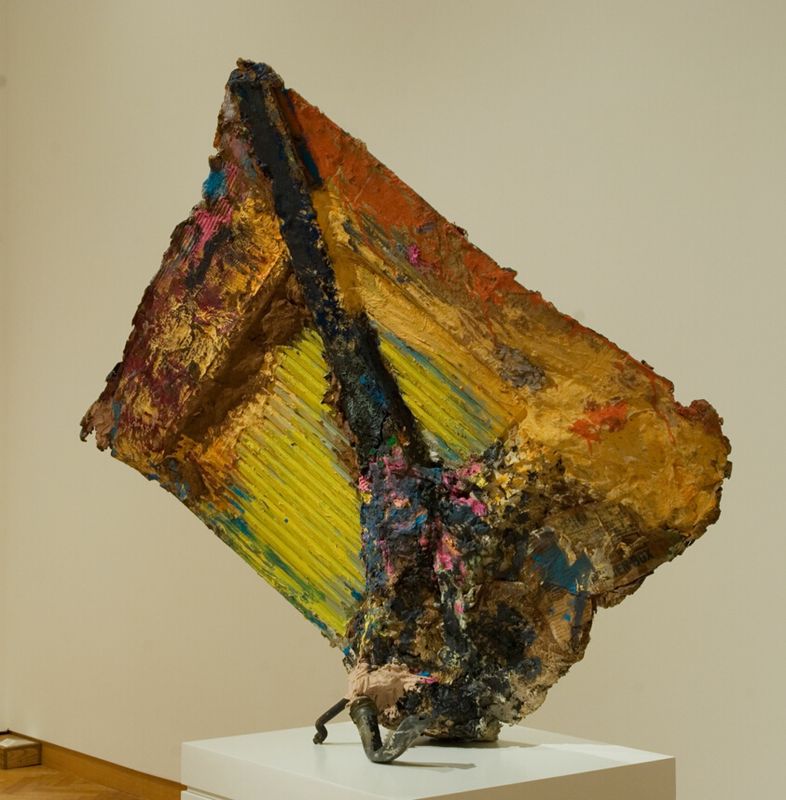
A Face from Georgia
Ivan Albright · 1970 · Art Institute of Chicago
 Same era · 1960s–1990s
Krach
Philip West · 1987 · Art Institute of Chicago
 Same era · 1960s–1990s
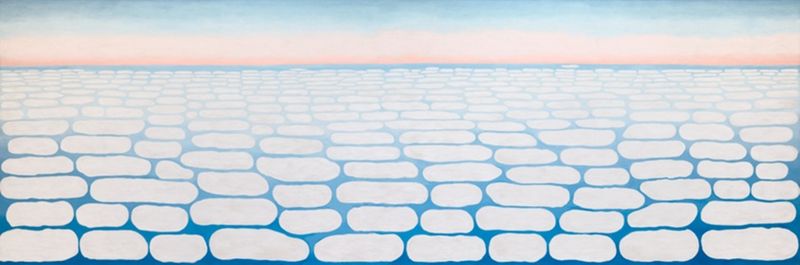
Sky above Clouds IV
Georgia O'Keeffe · 1965 · Art Institute of Chicago