
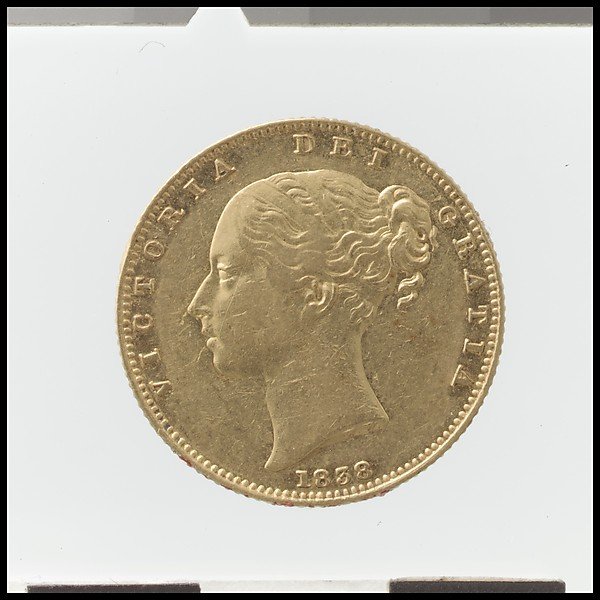
“This tiny gold coin offers an intimate glimpse of Queen Victoria in her youth, a miniature portrait that launched a new era in British coinage and influenced designs for decades to come.”
Turn this small gold coin over in your hand, and you hold a miniature portrait of a young Queen Victoria, her profile facing left, her hair elegantly tied back. This sovereign, minted in 1838, was one of the first coins to feature Victoria's likeness after her accession to the throne, marking a new era for British currency. The detailed engraving captures a sense of regal youth, a stark contrast to the more mature images of monarchs that preceded her. Its small size, just 23 millimeters in diameter, belies the intricate craftsmanship required to produce such a clear and refined image on a circulating medium. This coin is a tangible link to a pivotal moment in British history, when a new queen began her long and influential reign, and its design would go on to influence everything from postage stamps to other coinage for decades.
- Artist
- William Wyon
- Date
- 1838
- Medium
- Gold
- Location
- The Metropolitan Museum of Art
- Dimensions
- Diameter: 23 mm.
- Collection
- European Sculpture and Decorative Arts
- Culture
- British
- Credit line
- Gift of Assunta Sommella Peluso, Ada Peluso, and Romano I. Peluso, in memory of Ignazio Peluso, 2001
What to Notice
Four details hide in plain sight. Here’s where to look.
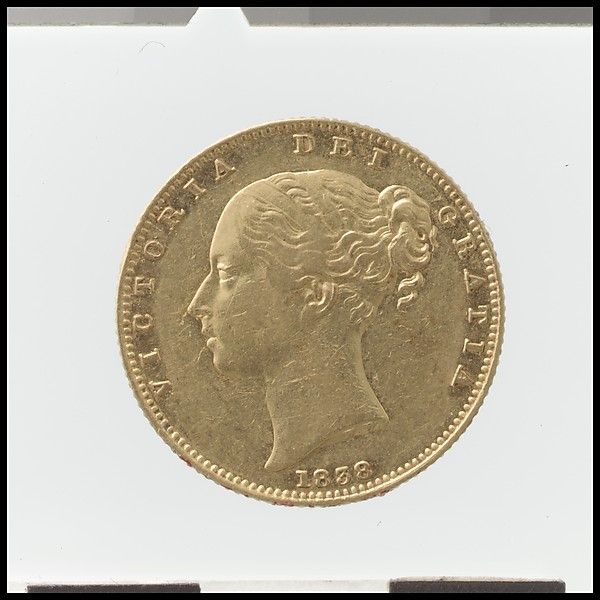
Observe Victoria's youthful profile, a distinct "Young Head" portrait.
Notice the delicate rendering of her hair, tied back with a ribbon.
Look for the precise lettering around the edge, indicating the year and denomination.
Examine the overall condition, remarkably preserved for a coin from 1838.
Stand in front of it and listen
The full narration walks you through Victoria sovereign — the story behind it, the details most visitors miss, and why it matters. Free in the Art Whisper app.
William Wyon
1795–1851 · British EmpireWilliam Wyon, Chief Engraver at the Royal Mint, left an indelible mark on British coinage and even the world's first adhesive postage stamp, the Penny Black.
Further Works by Wyon
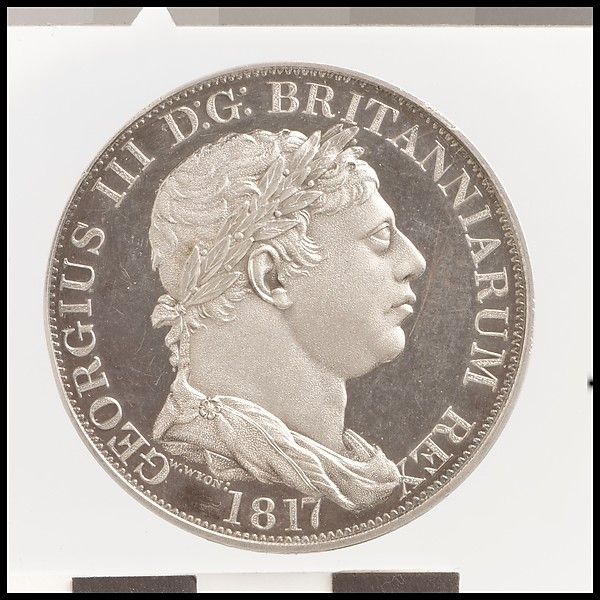 George III "Incorrupta" crown
1817 · The Metropolitan Museum of Art
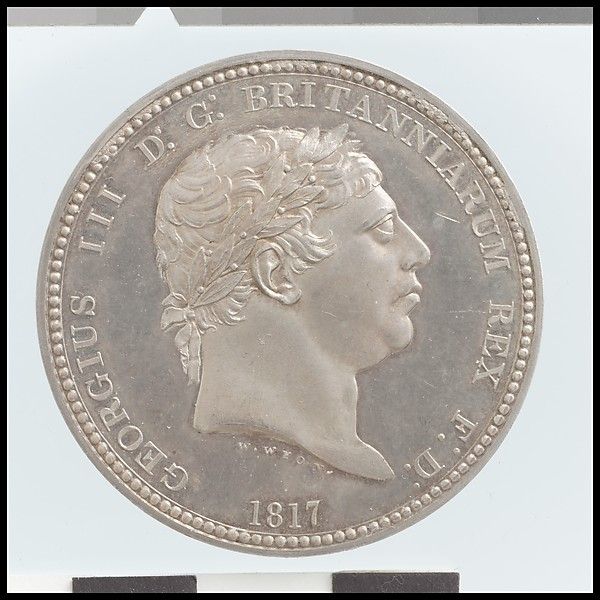 "Three Graces" crown
1817 · The Metropolitan Museum of Art
 Study for "Flying Victory"
1825 · The Metropolitan Museum of Art
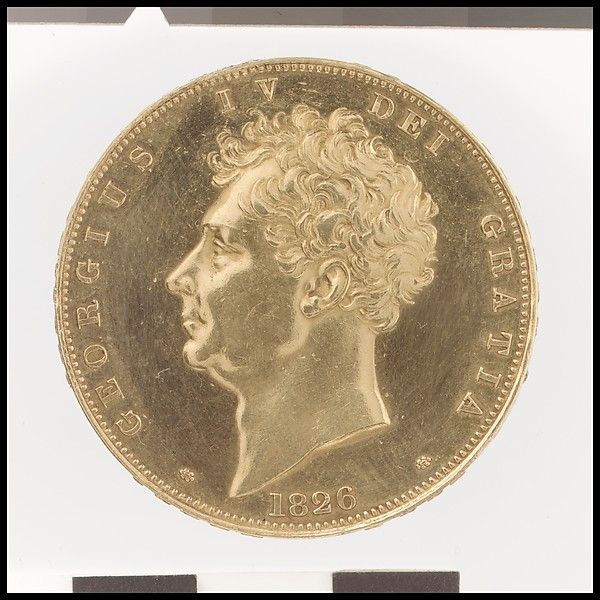 George IV crown
1826 · The Metropolitan Museum of Art
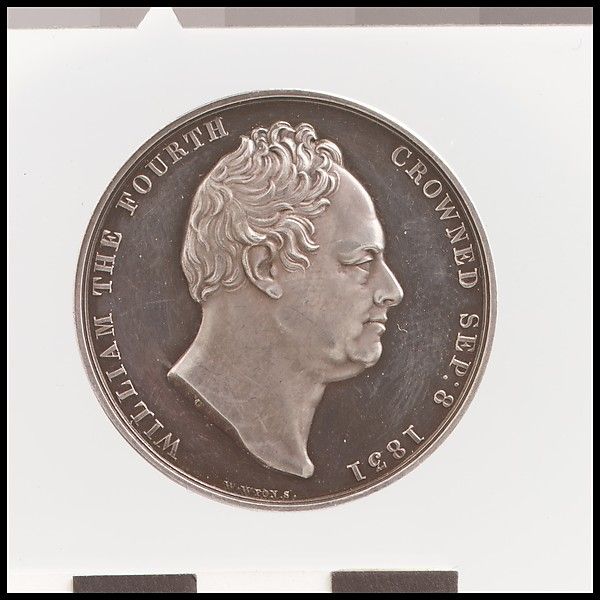 Coronation of William IV
1831 · The Metropolitan Museum of Art
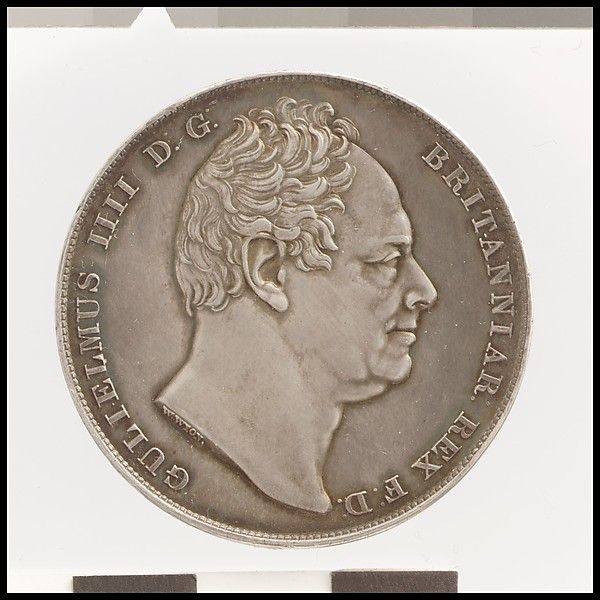 William IV proof crown
1831 · The Metropolitan Museum of Art
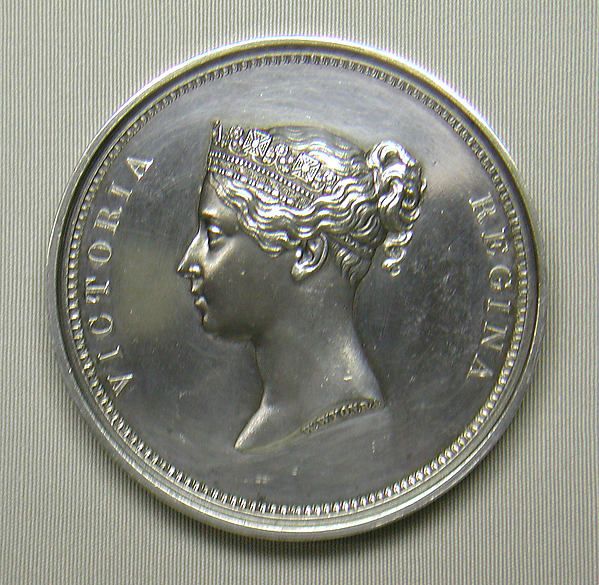 Queen Victoria's Visit to the Corporation of London
1837 · The Metropolitan Museum of Art
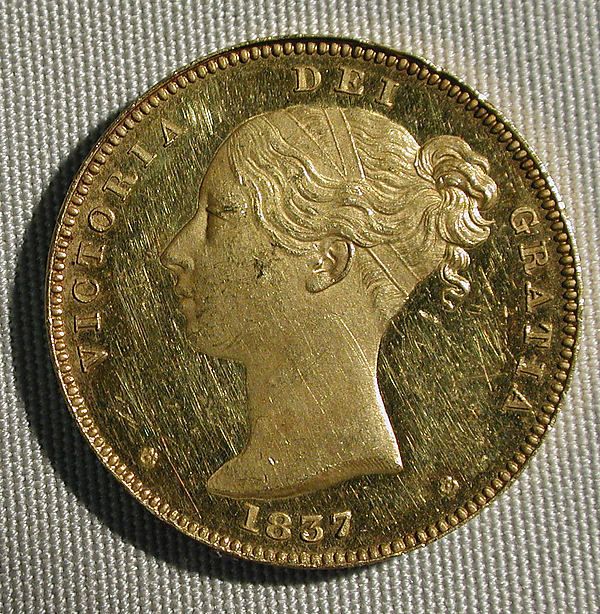 Victoria proof sovereign
1837 · The Metropolitan Museum of Art
More works to explore
Beyond Wyon: works from the same years.
 Same era · 1820s–1850s
The Estuary Farm
Léon-Victor Dupré · 1831 · Art Institute of Chicago
 Same era · 1820s–1850s
Hamlet and Horatio in the Graveyard
Eugène Delacroix · 1839 · Department of Paintings of the Louvre
 Same era · 1820s–1850s
Stormy Sea Breaking on a Shore
J. M. W. Turner · 1840 · Yale Center for British Art
 Same era · 1820s–1850s
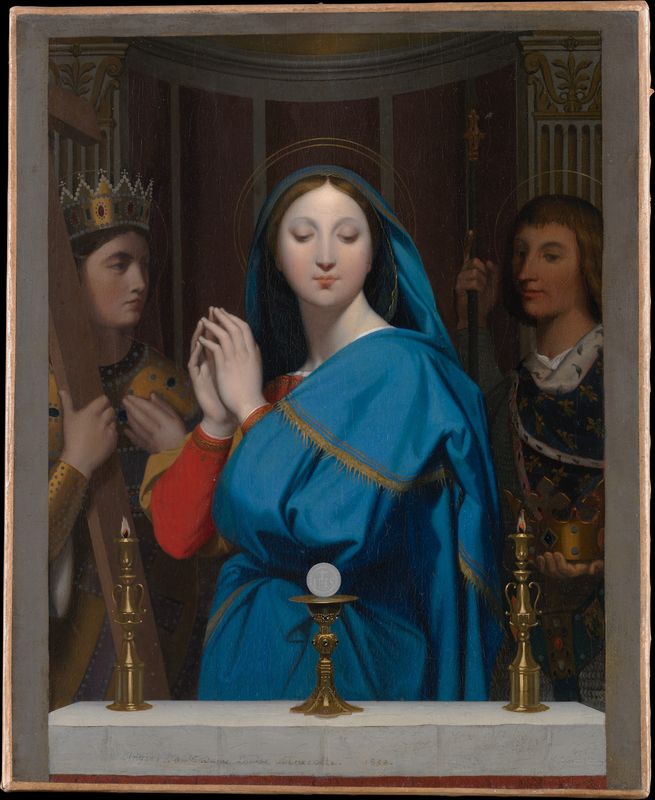
The Virgin Adoring the Host
Jean-Auguste-Dominique Ingres · 1841 · Pushkin Museum of Fine Arts
 Same era · 1820s–1850s
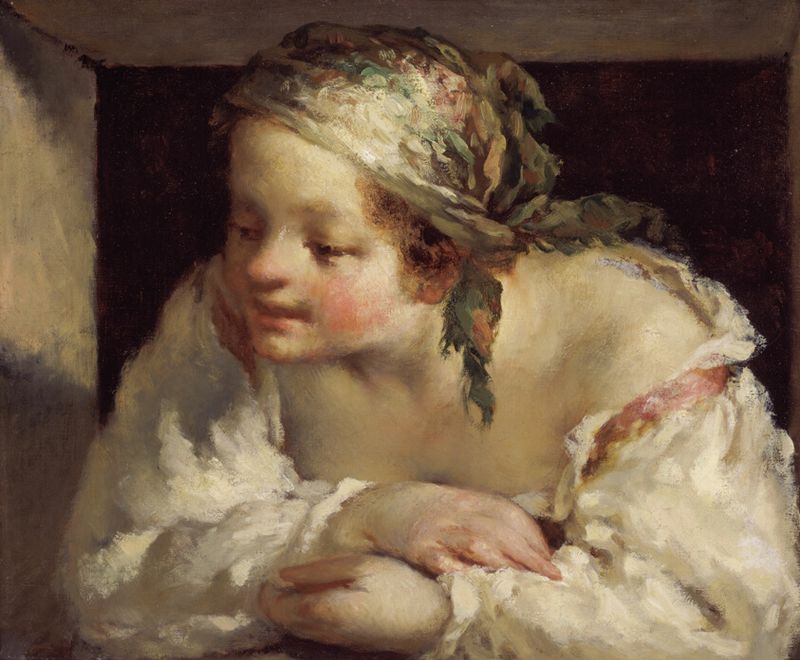
Young Woman
Jean-François Millet · 1844 · Art Institute of Chicago
 Same era · 1820s–1850s
Wooded Landscape
Gustave Courbet · 1848 · Art Institute of Chicago
 Same era · 1820s–1850s
Mount Chocorua and Moat Mountain from North Conway
William Hart · 1850
 Same era · 1820s–1850s
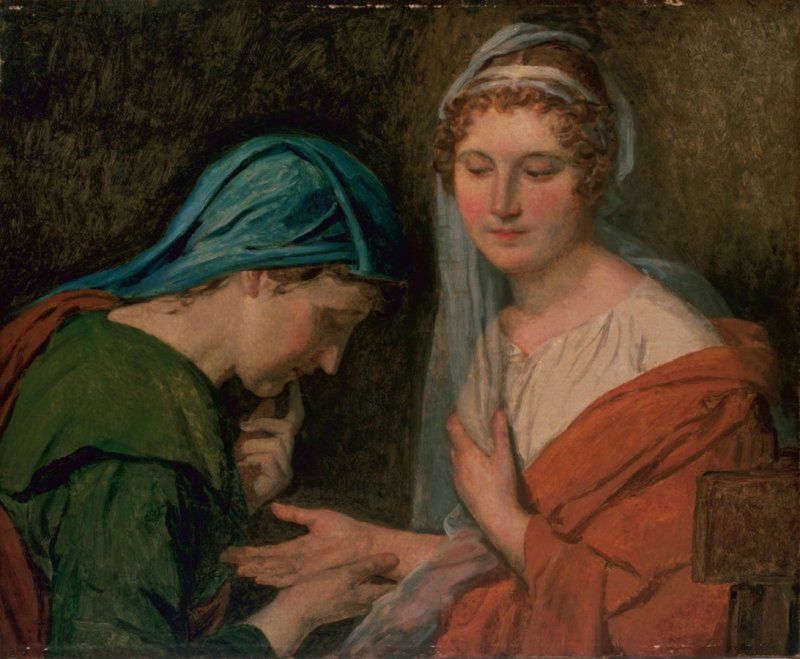
The Fortune Teller (La Bonne Aventure)
Jacques-Louis David · 1824 · Fine Arts Museums of San Francisco
 Same era · 1820s–1850s
Olive Trees
Vincent van Gogh · 1853 · The Metropolitan Museum of Art
 Same era · 1820s–1850s
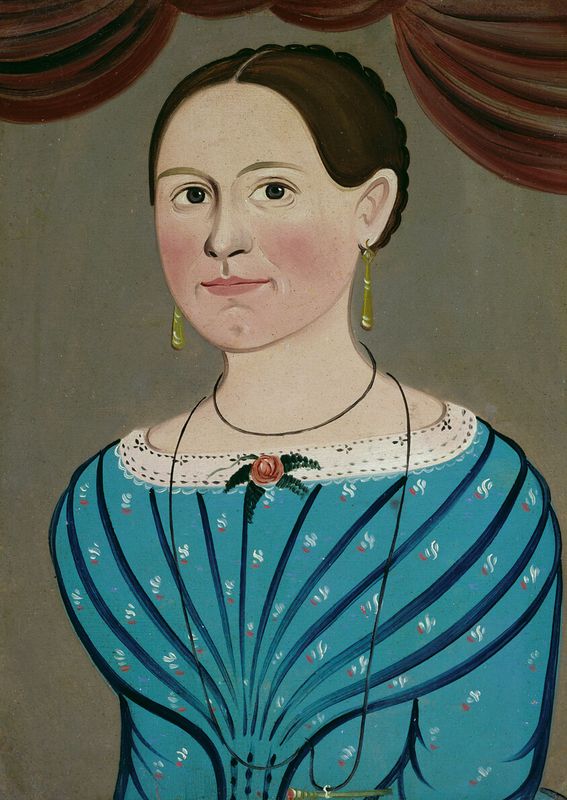
Woman in a Blue Dress
School of William Matthew Prior · 1840 · Art Institute of Chicago
 Same era · 1820s–1850s
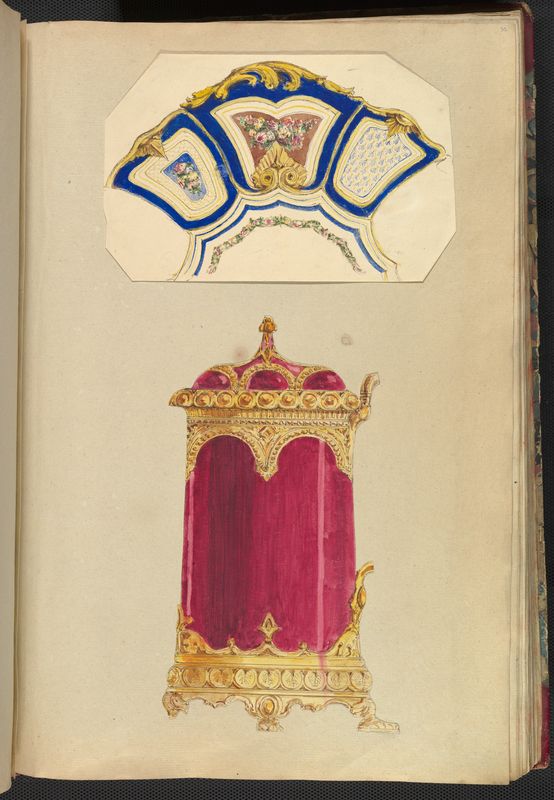
Designs for a Decorated Dish, or Platter, and a Biscuit Barrel
Alfred Henry Forrester [Alfred Crowquill] · 1845 · The Metropolitan Museum of Art
 Same era · 1820s–1850s
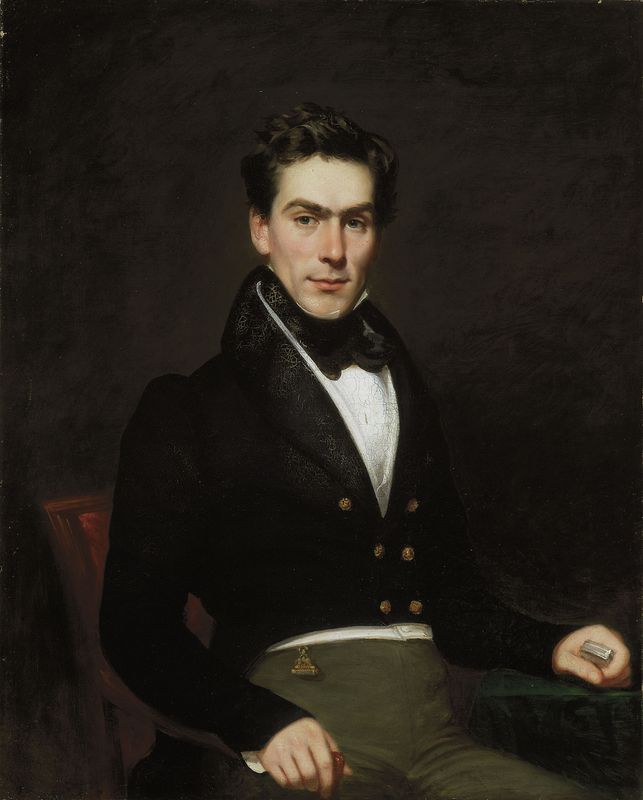
Mr. James Mackie
Samuel Alcock & Company · 1830 · Art Institute of Chicago