01
The standing flute player
Look at the child angel at left, bare feet planted, blowing a small pipe. The rounded limbs and tilted head make the quiet focus of playing feel real.
1 of 5 on the painting
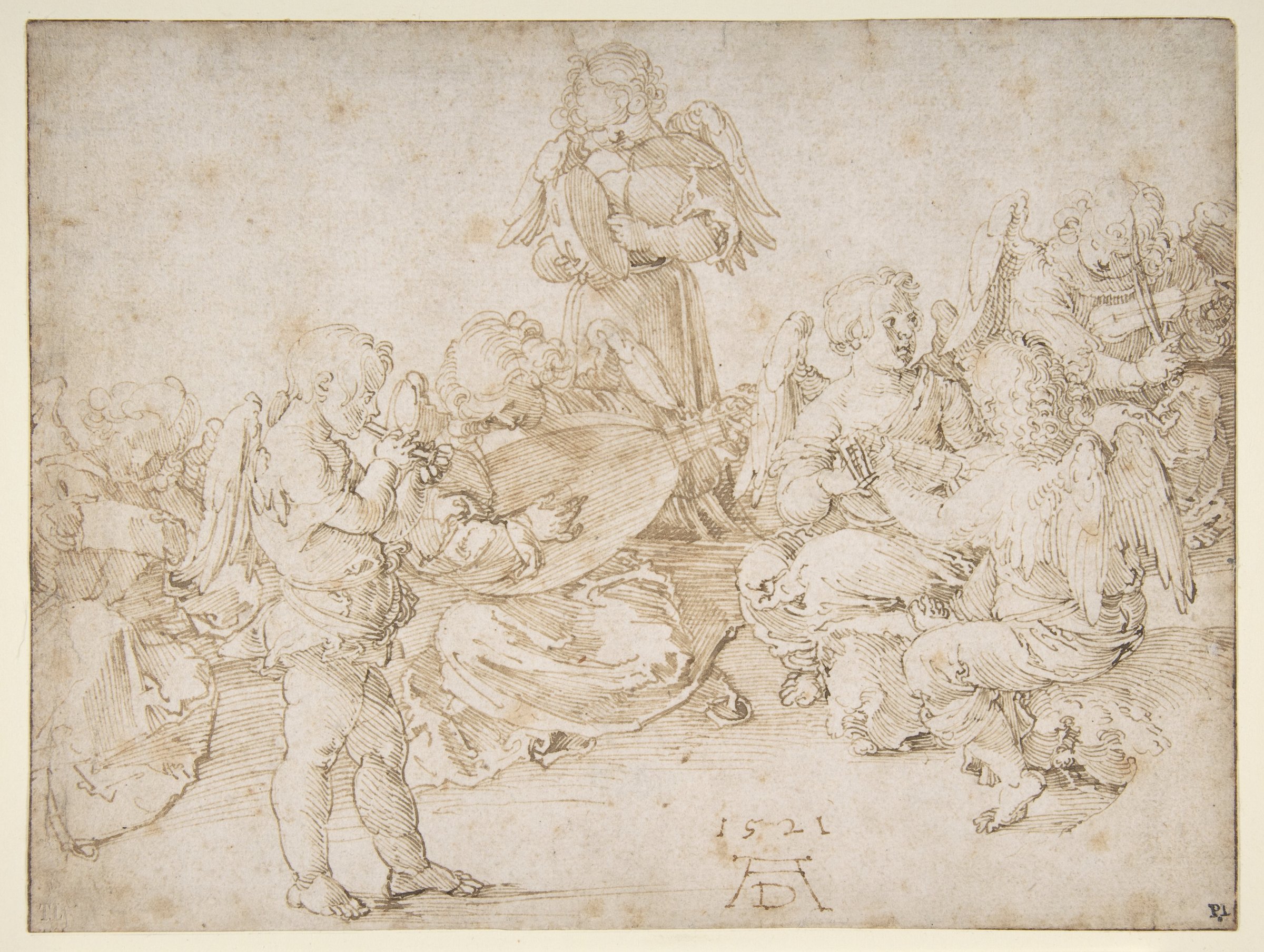
“This drawing captures a dynamic scene of music-making angels, showcasing the lively draftsmanship of Albrecht Dürer during his travels in the Netherlands, a period when he produced many observational works.”
In this energetic pen and ink drawing, five angels are deeply absorbed in making music. Their bodies twist and turn with the effort, their drapery swirling around them as they play a variety of instruments. One angel in the foreground leans back dramatically, vigorously bowing a stringed instrument, while another behind him blows into a wind instrument, cheeks puffed out. The detailed rendering, particularly in the angels' expressive faces and the intricate folds of their garments, shows a lively hand. This drawing was created during Albrecht Dürer's trip to the Netherlands, a period when he meticulously documented his travels and observations in a journal. The religious subject, combined with a dynamic, almost theatrical composition, reflects the artistic trends of the German Renaissance.
Five details hide in plain sight. Pick one and we’ll show you exactly where to look.
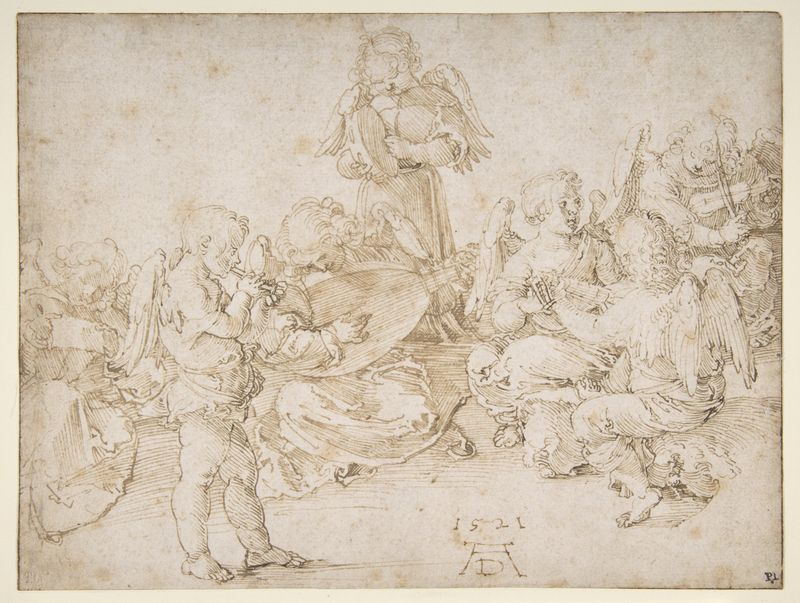
Look at the child angel at left, bare feet planted, blowing a small pipe. The rounded limbs and tilted head make the quiet focus of playing feel real.
The seated angel's lute has a wide, rounded belly shaded with curved lines. Its bulk anchors the center and shows how the angels hold real instruments.
One tall angel stands alone above the seated group, set against bare paper. This upright figure breaks the low mass of the crowd and caps the grouping like the peak of a pyramid.
Look at the robes of the angel seated at right, whose back is turned to us. Dense parallel strokes and curved hatching build heavy folds and deep shadow using only pen lines.
At the bottom center, the date 1521 sits above Dürer's AD monogram. Together they work as a signature and date for this quick pen sketch.
The full narration walks you through Music-Making Angels — the story behind it, the details most visitors miss, and why it matters. Free in the Art Whisper app.
Renaissance master who revolutionized printmaking across Europe before turning 30.
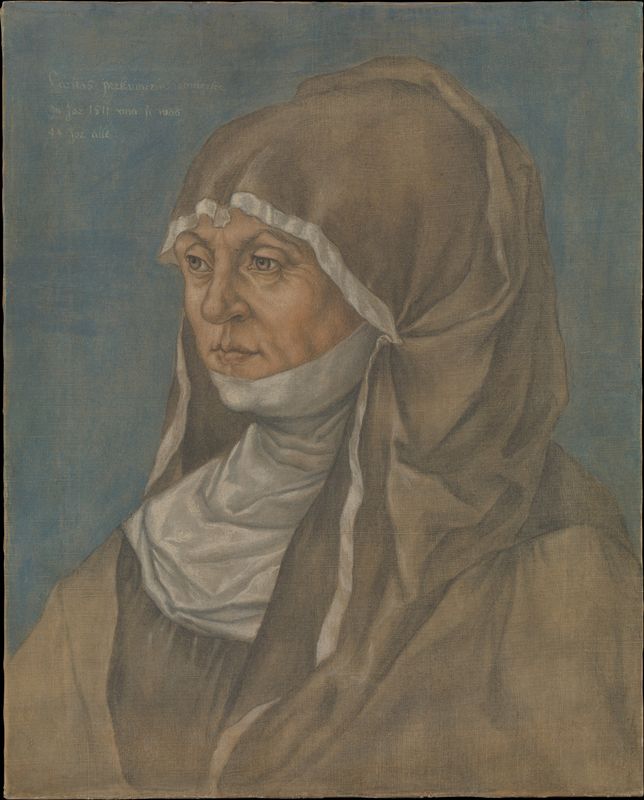 Portrait of a Woman, Said to Be Caritas Pirckheimer (1467–1532)
The Metropolitan Museum of Art
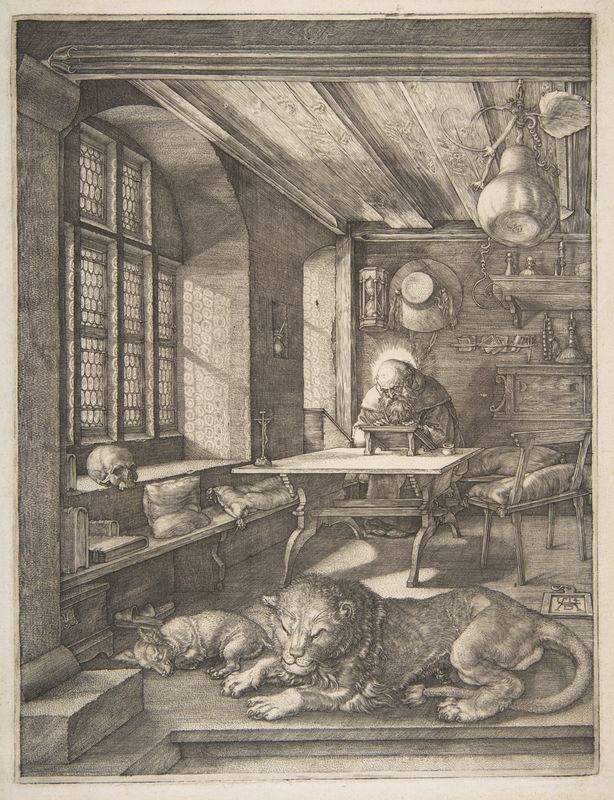 Saint Jerome in His Study
1521 · National Museum of Ancient Art
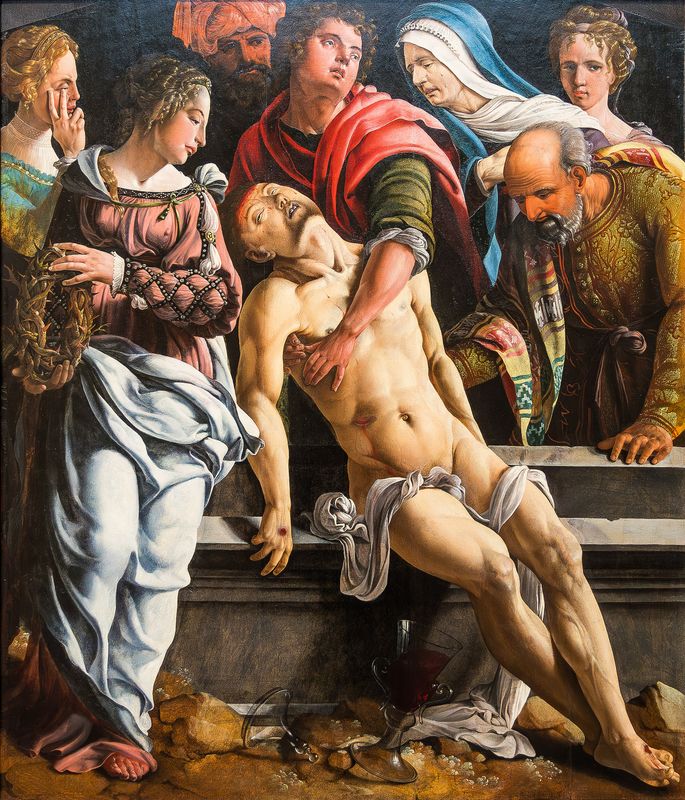 The Lamentation
1477 · The Metropolitan Museum of Art
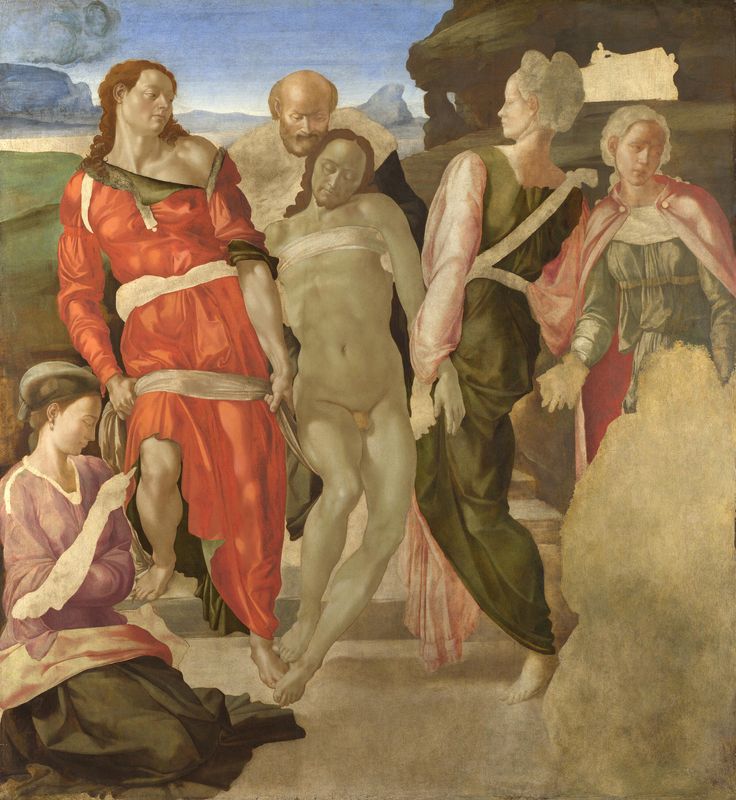 The Entombment
1485 · The Metropolitan Museum of Art
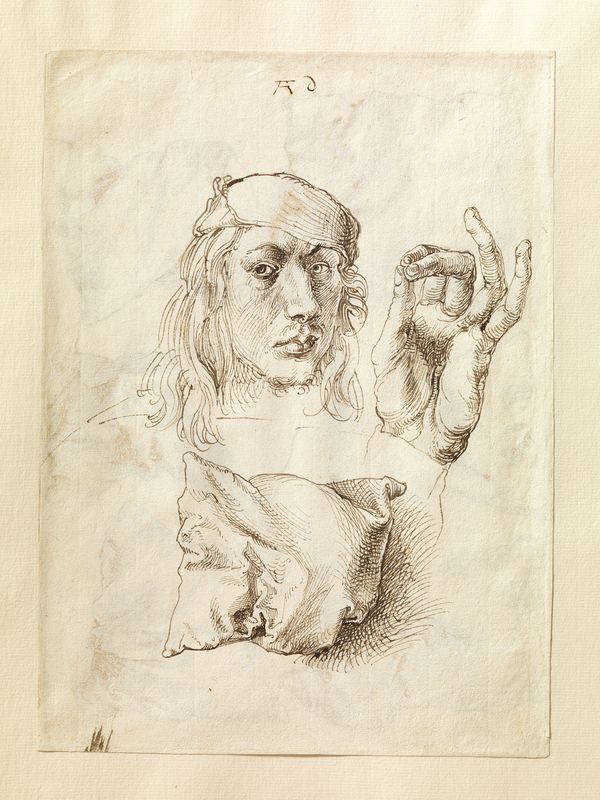 Self-portrait, Study of a Hand and a Pillow (recto); Six Studies of Pillows (verso)
1493 · The Metropolitan Museum of Art
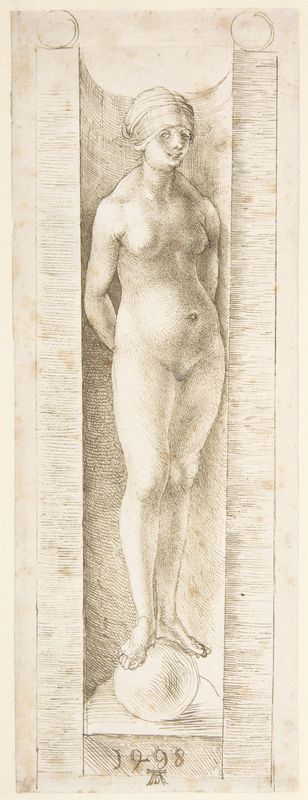 Fortuna in a Niche
1498 · The Metropolitan Museum of Art
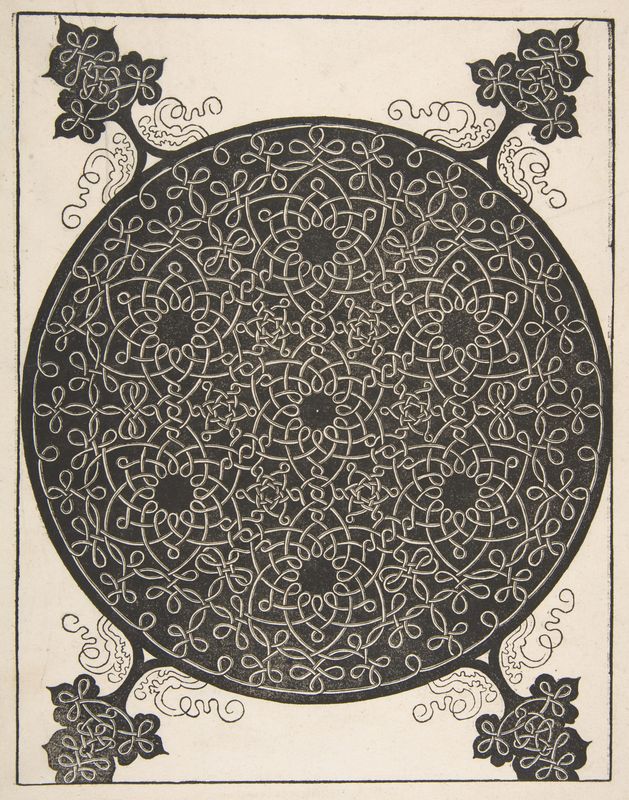 Embroidery Pattern with Seven Six-pointed Stars and Four Corner Pieces
1500 · The Metropolitan Museum of Art
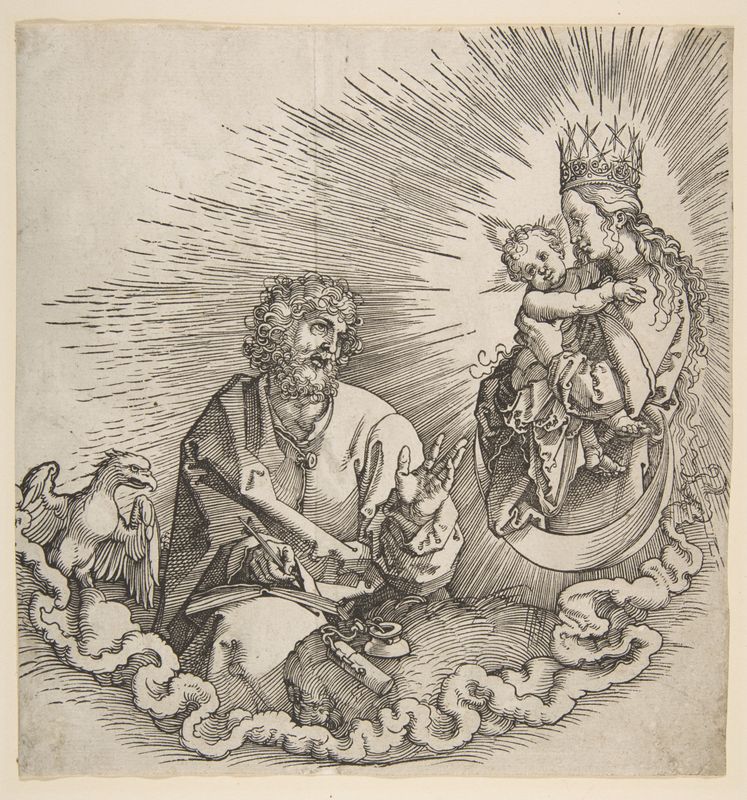 The Virgin Appearing to Saint John, Frontispiece to the Apocalypse
1511 · The Metropolitan Museum of Art
Beyond Dürer and Northern Renaissance: works from the same years.
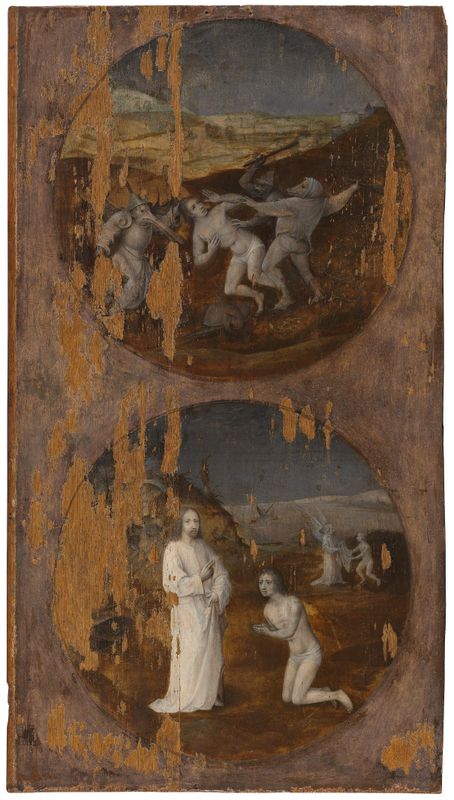 Same era · 1500s–1530s
Two Medallions with Symbolic-Religious Representations
Hieronymus Bosch · 1515 · Museum Boijmans Van Beuningen
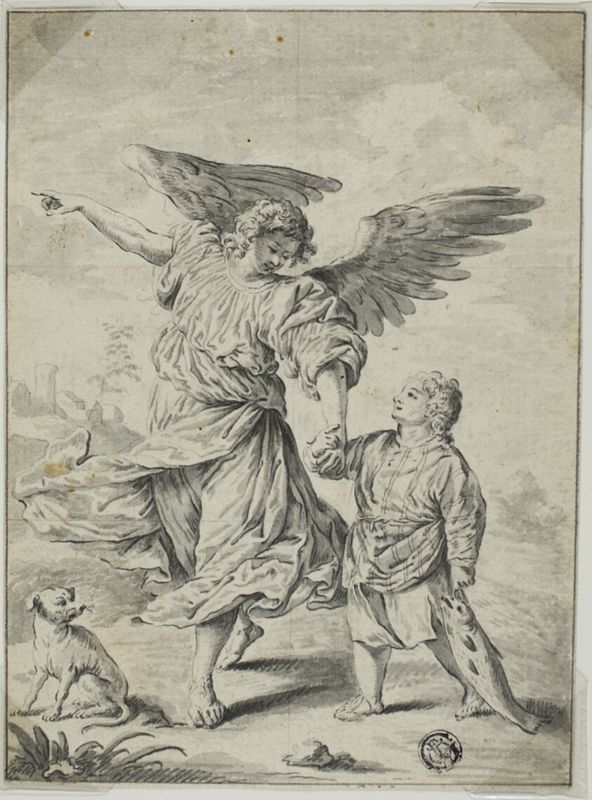 Same era · 1500s–1530s
Tobias and the Angel
Titian · 1530 · Madonna dell'Orto
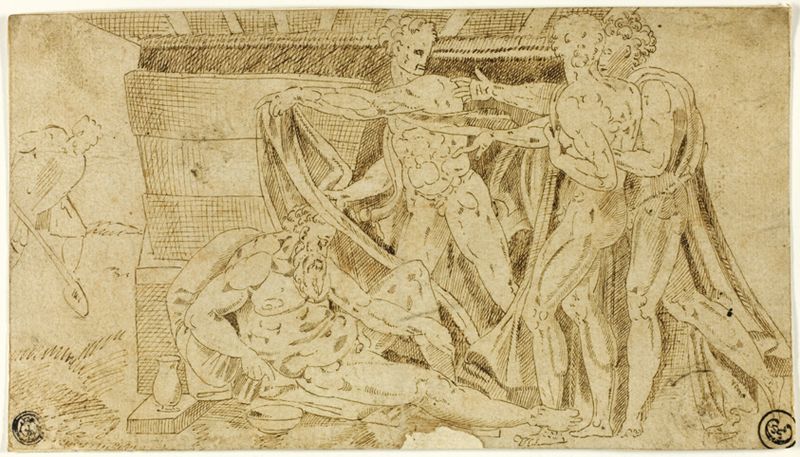 Same era · 1500s–1530s
Drunkenness of Noah
Michelangelo · 1509 · Sistine Chapel
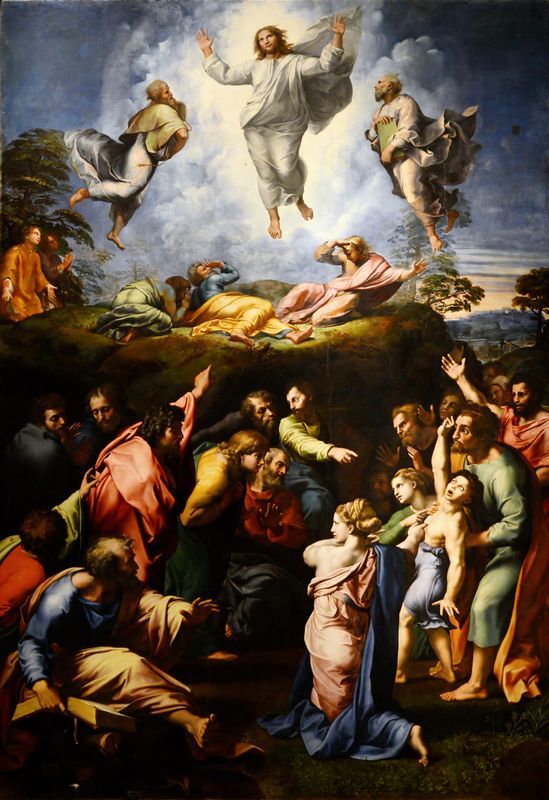 Same era · 1500s–1530s
The Transfiguration
Raphael (Raffaello Sanzio da Urbino) · 1516
 Same era · 1500s–1530s
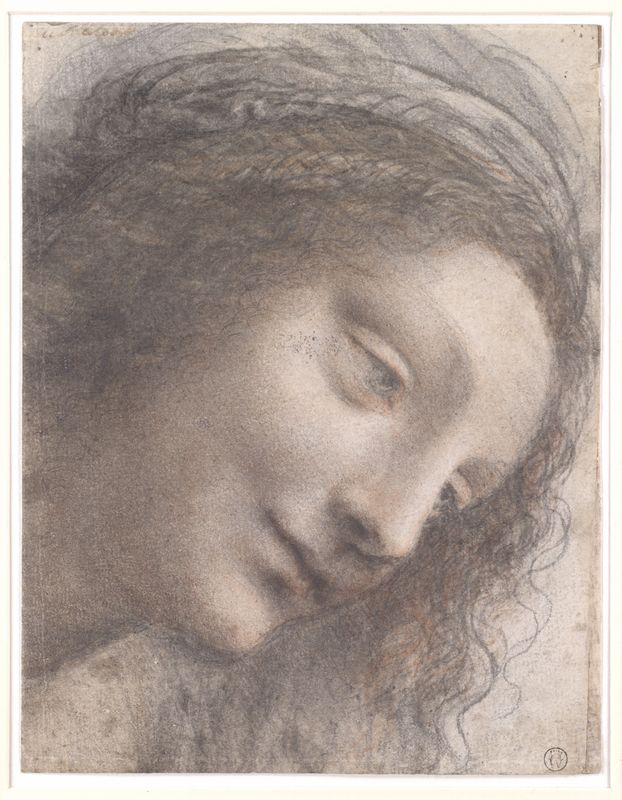
The Head of the Virgin in Three-Quarter View Facing Right
Leonardo da Vinci · 1510 · The Metropolitan Museum of Art
 Same era · 1500s–1530s
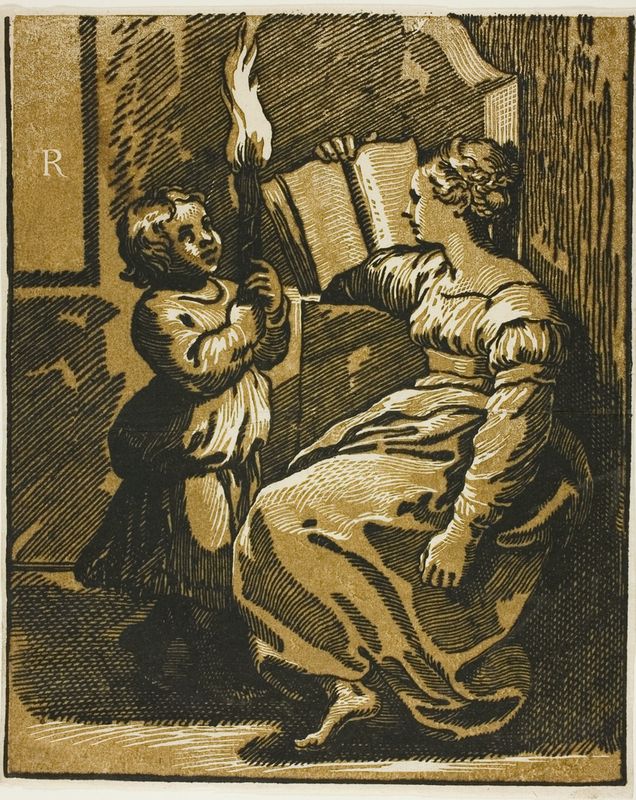
The Sibyl and a Child Bearing a Torch
Artist Unknown - The Mercat Cross, Aberdeen · 1520 · Art Institute of Chicago
 Same era · 1500s–1530s
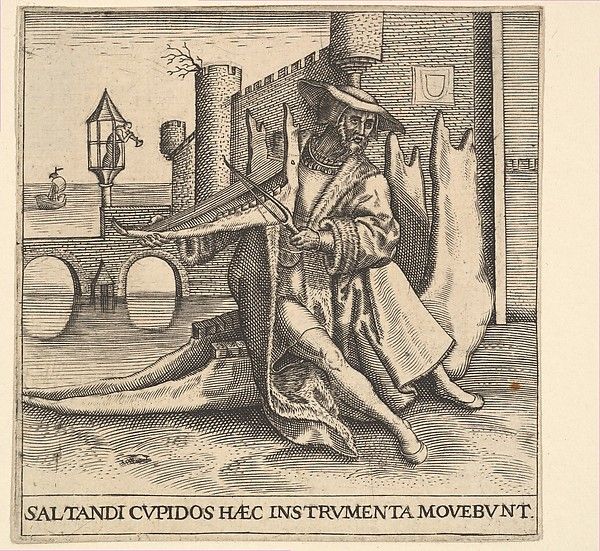
The Rich Man Playing Violin on a Jaw Bone
Pieter Bruegel the Elder · 1528 · The Metropolitan Museum of Art