
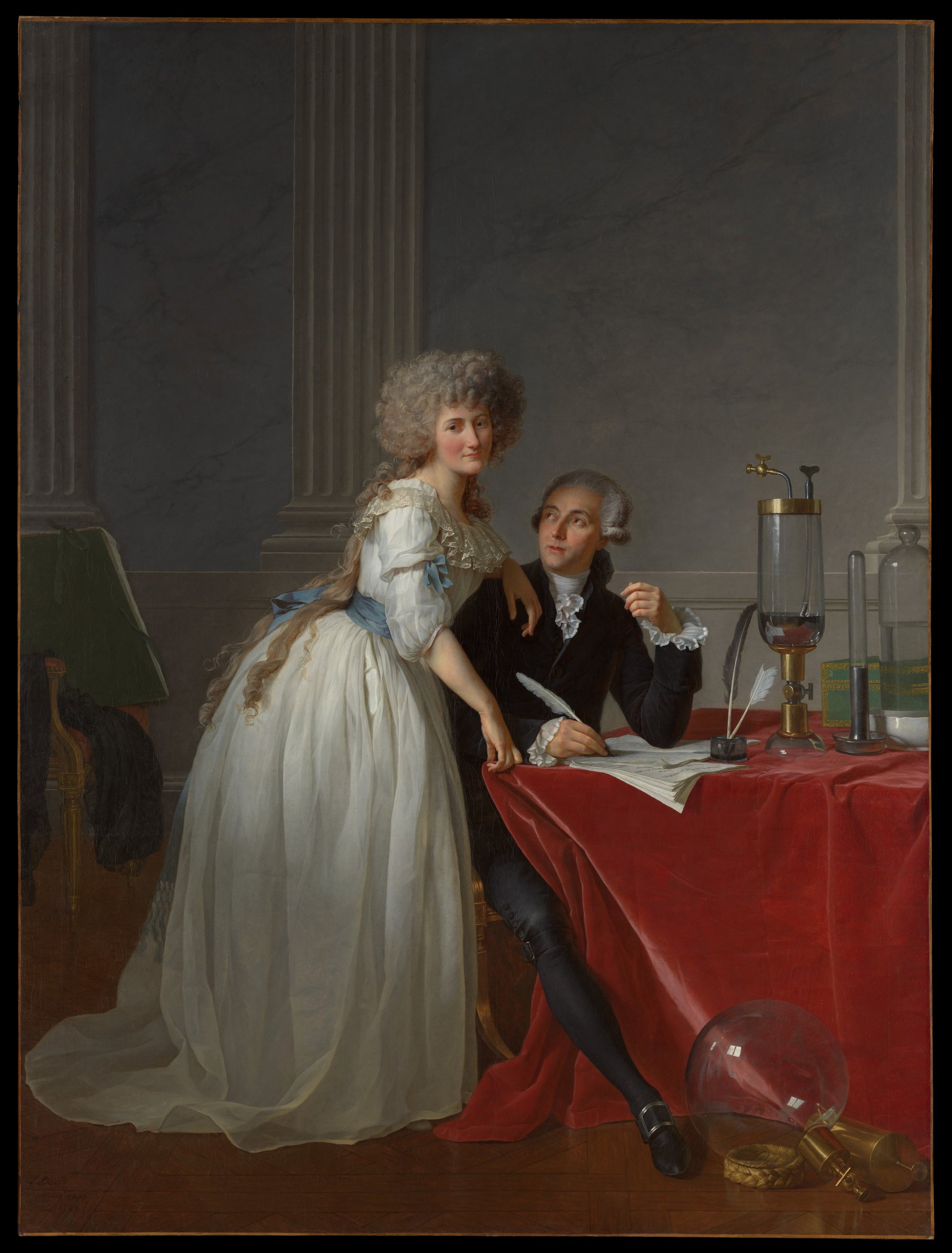
“Step into the world of scientific discovery with this grand portrait of Antoine and Marie Anne Lavoisier, a power couple of 18th-century chemistry, depicted with both elegance and intellectual rigor.”
This striking double portrait captures Antoine Laurent Lavoisier, often called the father of modern chemistry, and his wife and collaborator, Marie Anne Lavoisier. The couple occupies a lavish, yet functional, laboratory space, surrounded by instruments of their scientific pursuits. Lavoisier himself sits at a table, quill in hand, gazing out at us with an air of intellectual confidence, while his wife stands beside him, her gaze equally direct and engaging. Her pose, with one arm resting on his shoulder and the other on the table, suggests both intimacy and active participation in his work. The painting's Neoclassical style, with its crisp lines and balanced composition, elevates the Lavoisiers' scientific endeavors to a realm of heroic importance, reflecting the Enlightenment's reverence for reason and discovery. Their elegant attire and the rich fabrics hint at their elevated social status, even as the scientific tools ground them in their pioneering work.
- Artist
- Jacques-Louis David
- Date
- 1788
- Medium
- Oil on canvas
- Location
- The Metropolitan Museum of Art
- Dimensions
- 102 1/4 x 76 5/8 in. (259.7 x 194.6 cm)
- Collection
- European Paintings
- Credit line
- Purchase, Mr. and Mrs. Charles Wrightsman Gift, in honor of Everett Fahy, 1977
What to Notice
Five details hide in plain sight. Here’s where to look.
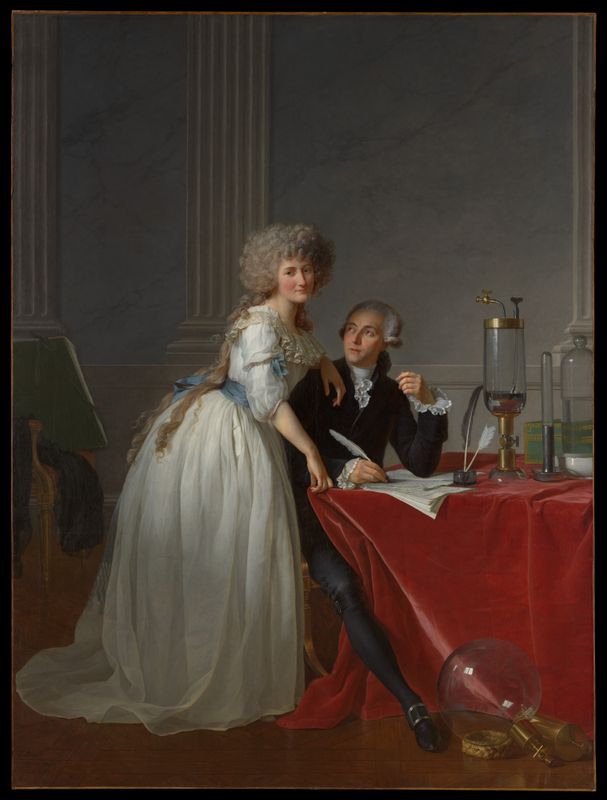
Lavoisier's scientific instruments, including a barometer and a large glass flask
Marie Anne's elegant, plumed hat and the intricate lace of her dress
The papers and diagrams scattered on the table, hinting at ongoing research
The inkwell and quill, emphasizing the act of scientific documentation
1 more detail is waiting.
See all 5 in Art Whisper →Stand in front of it and listen
The full narration walks you through Antoine Laurent Lavoisier (1743–1794) and Marie Anne Lavoisier (Marie Anne Pierrette Paulze, 1758–1836) — the story behind it, the details most visitors miss, and why it matters. Free in the Art Whisper app.
Jacques-Louis David
1748–1825 · FranceDavid survived revolution, prison, and exile to paint Napoleon's glory — and still died the most influential artist in France.
Further Works by David
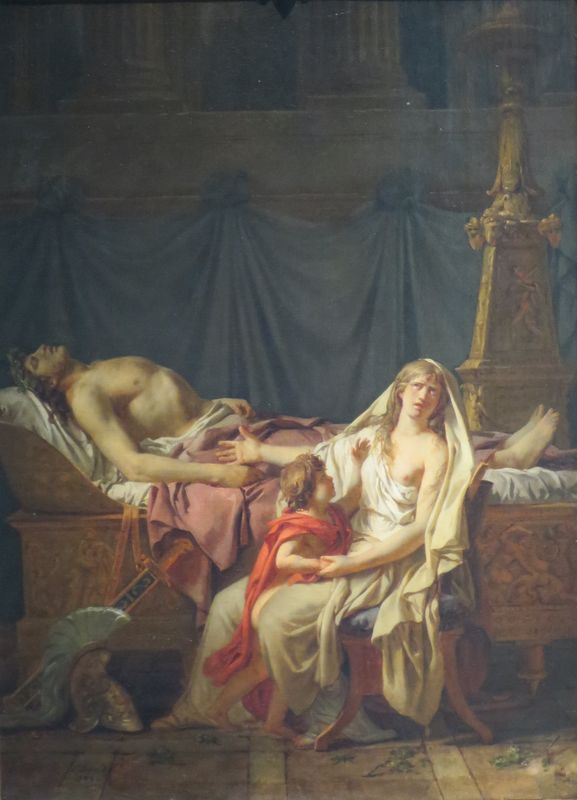 Andromache Mourning Hector
1783 · Pushkin Museum of Fine Arts
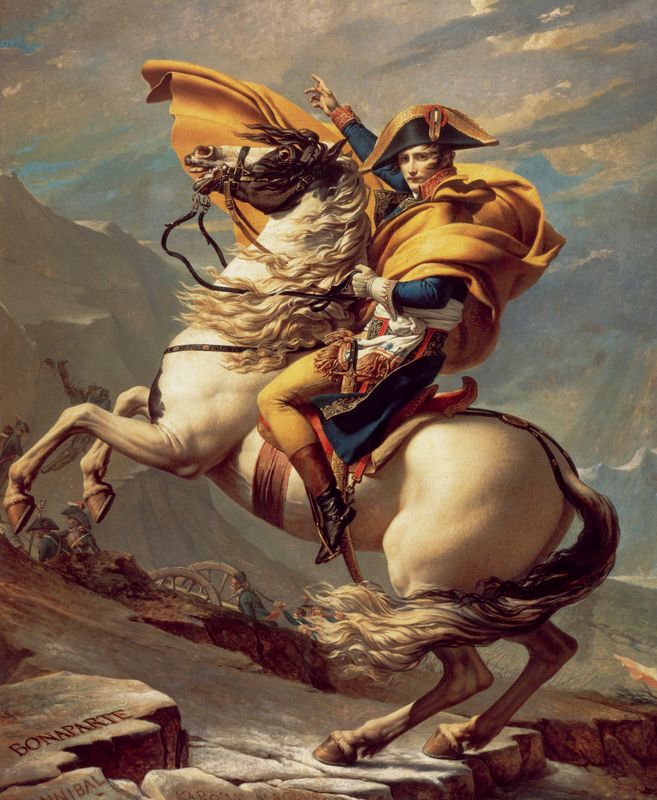 Napoleon Crossing the Alps
1800 · Musée national de Malmaison et Bois-Préau
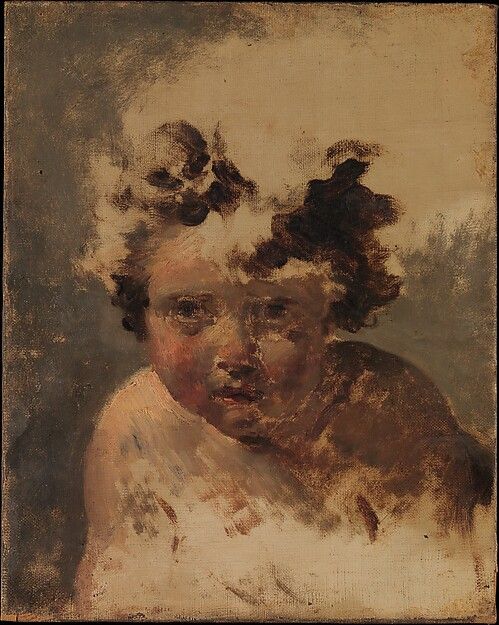 Head of a Child
1768 · The Metropolitan Museum of Art
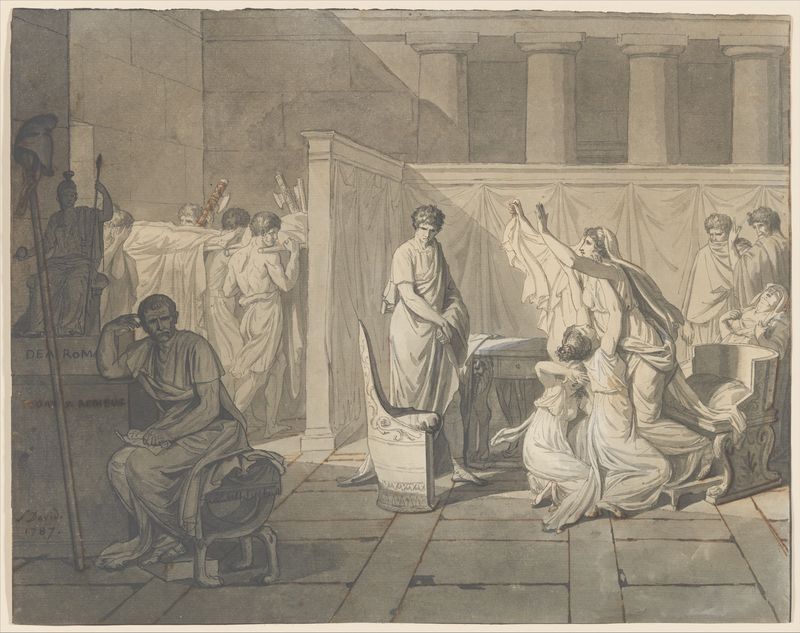 The Lictors Bringing Brutus the Bodies of his Sons
1787 · The Metropolitan Museum of Art
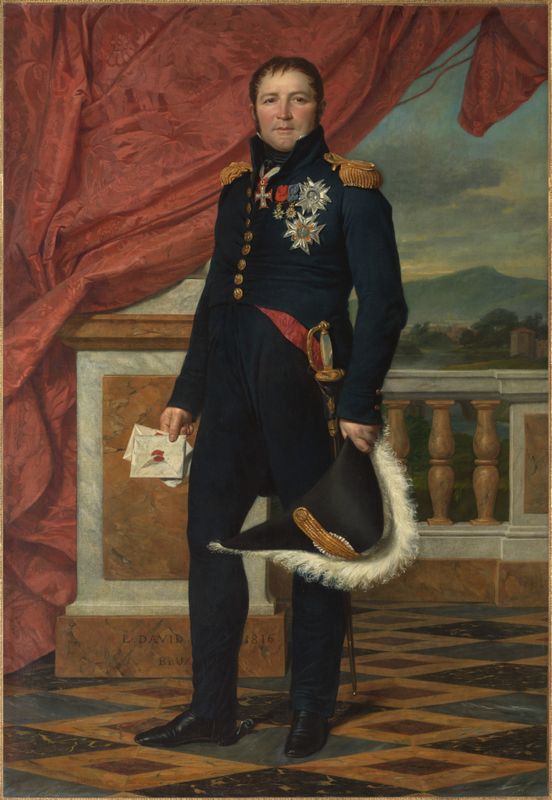 General Étienne-Maurice Gérard (1773–1852)
1816 · The Metropolitan Museum of Art
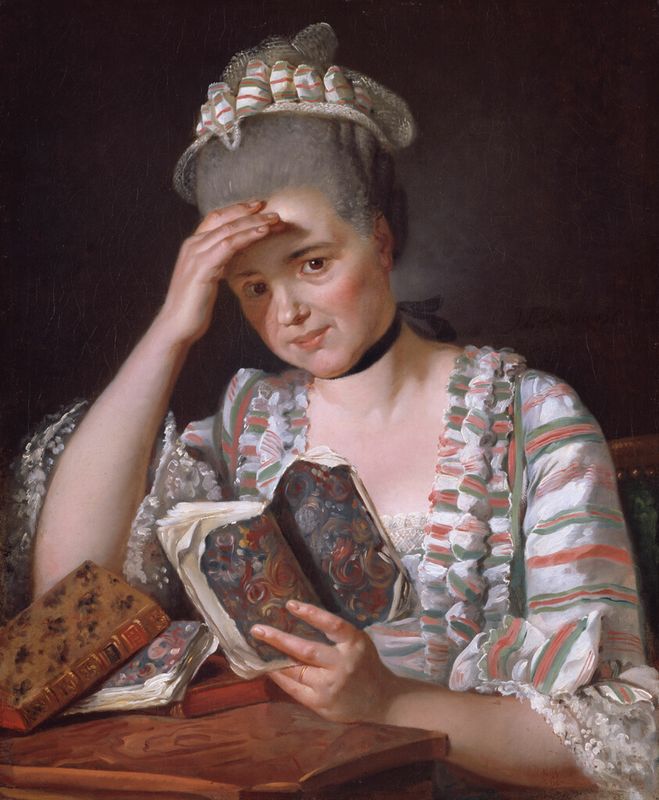 Madame François Buron
1769 · Art Institute of Chicago
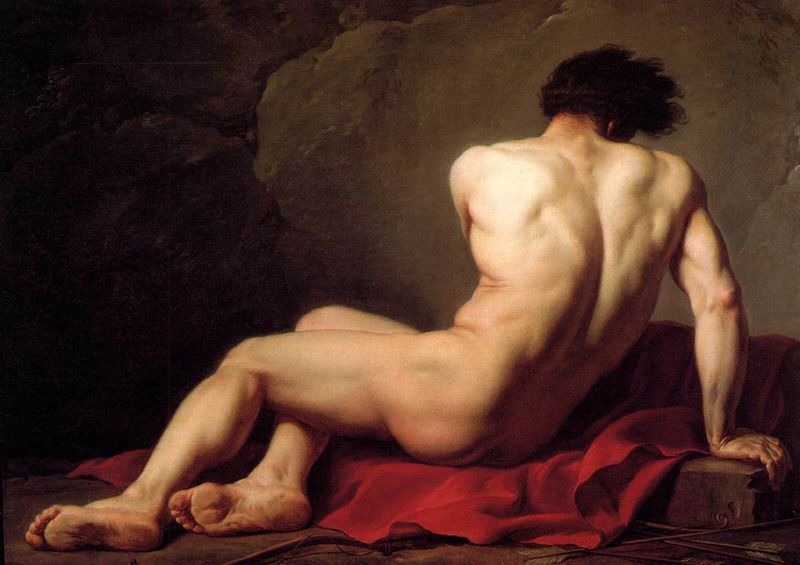 Patroclus
1780 · Musée Thomas-Henry
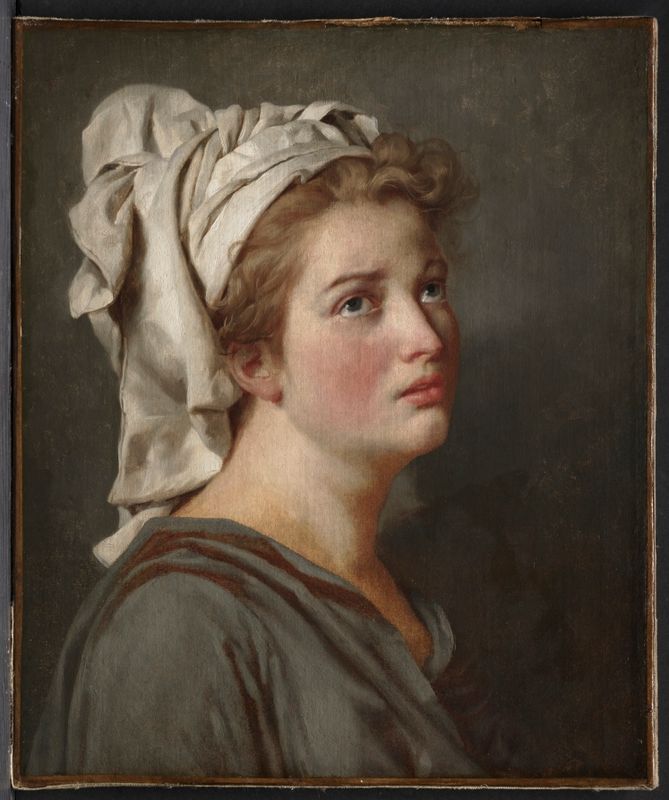 Young Woman with a Turban
1780 · Cleveland Museum of Art
More from Academic art
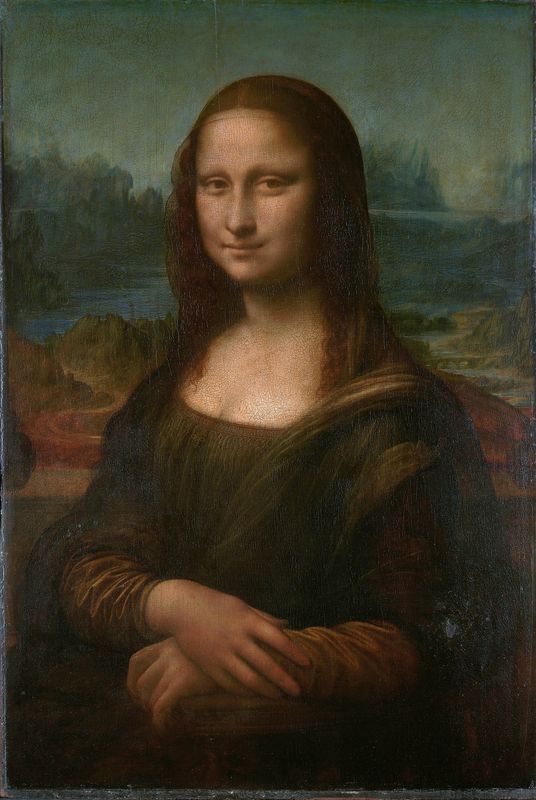
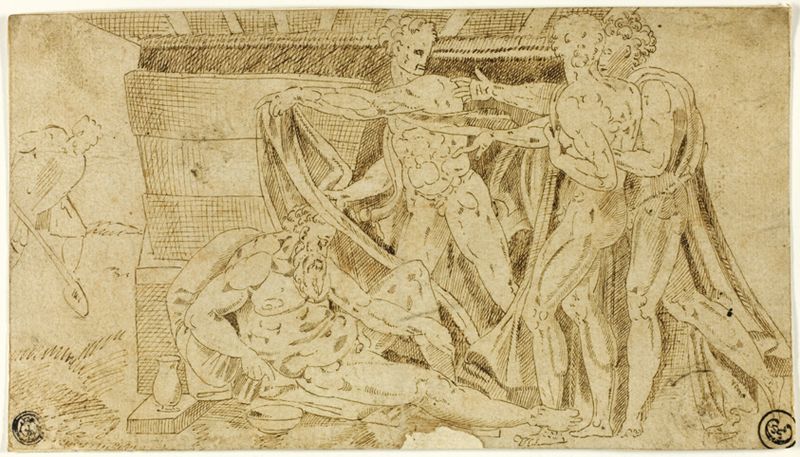
More works to explore
Beyond David and Academic art: works from the same years, and from the other movements Antoine Laurent Lavoisier (1743–1794) and Marie Anne Lavoisier (Marie Anne Pierrette Paulze, 1758–1836) belongs to.
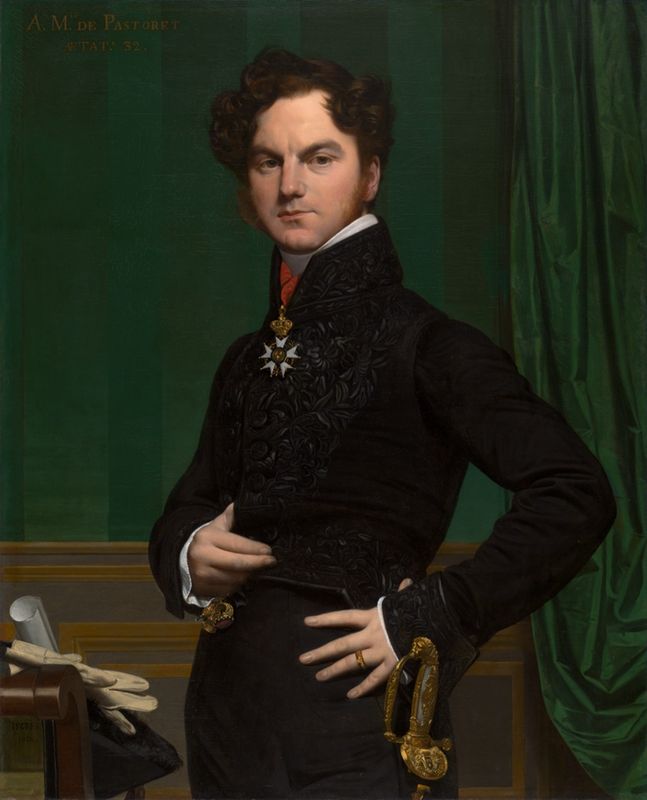 Same movement · Neoclassicism
Amédée-David, the Comte de Pastoret
Jean-Auguste-Dominique Ingres · 1823 · Art Institute of Chicago
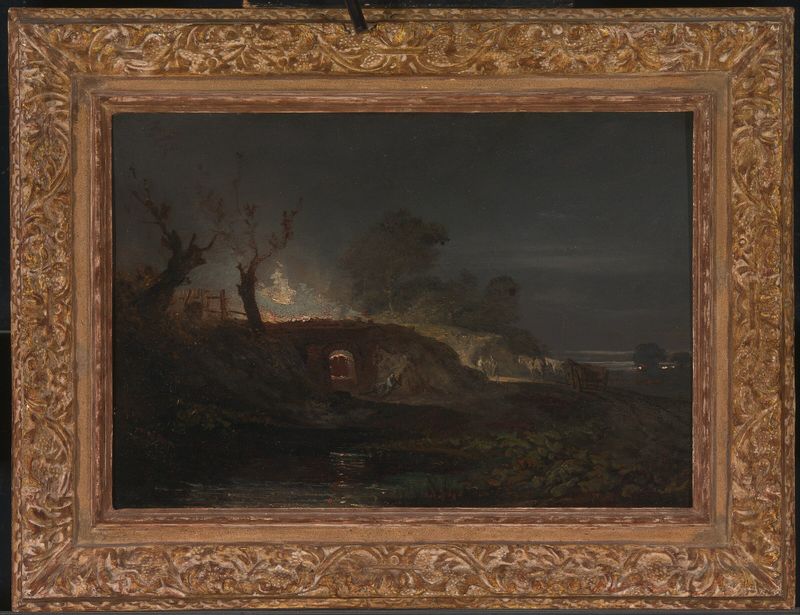 Same era · 1770s–1800s
A Limekiln, Possibly at Briton Ferry in South Wales
J. M. W. Turner · 1797 · Yale Center for British Art
 Same era · 1770s–1800s
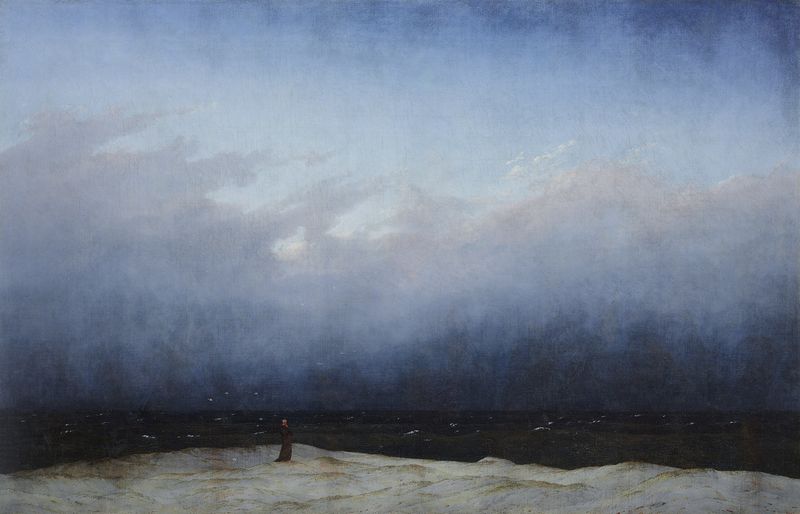
The Monk by the Sea
Caspar David Friedrich · 1800 · Alte Nationalgalerie
 Same era · 1770s–1800s
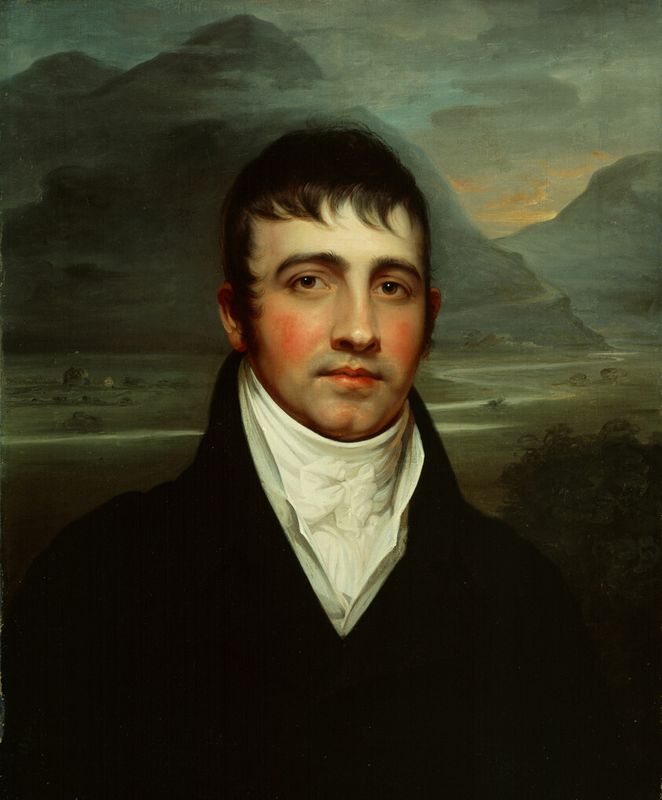
Samuel Fisher Bradford
Rembrandt Peale · 1803 · Art Institute of Chicago
 Same era · 1770s–1800s
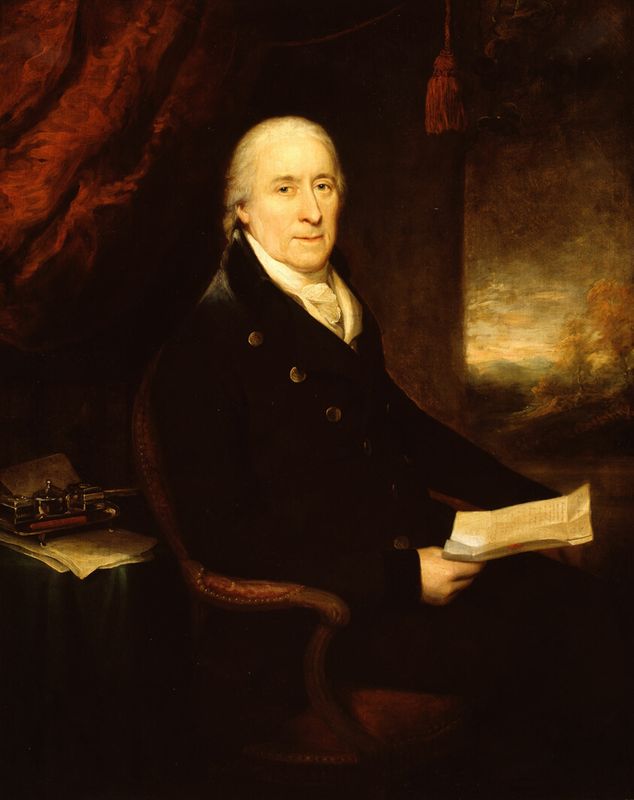
Portrait of a Man
Benjamin West · 1790 · Art Institute of Chicago
 Same era · 1770s–1800s
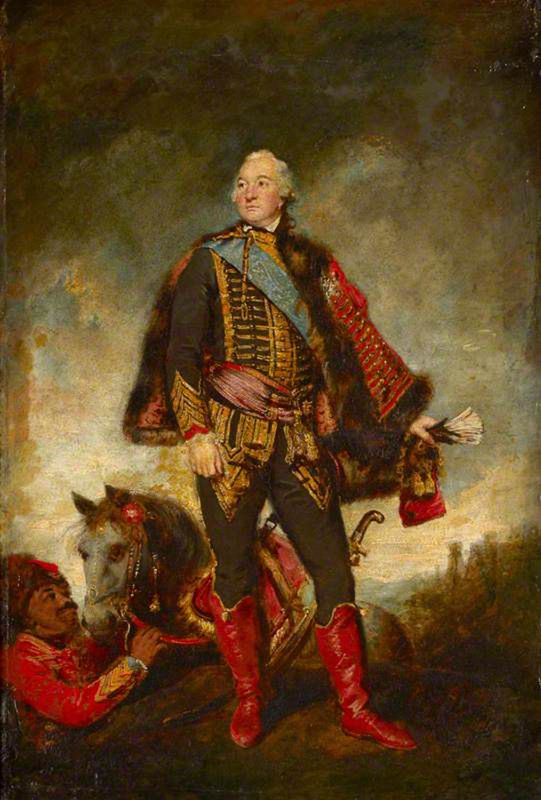
Louis-Philippe-Joseph, Duke of Orleans 'Philippe Egalité' (1747-1793) (after Sir Joshua Reynolds)
Samuel Drummond · 1785 · National Trust
 Same era · 1770s–1800s
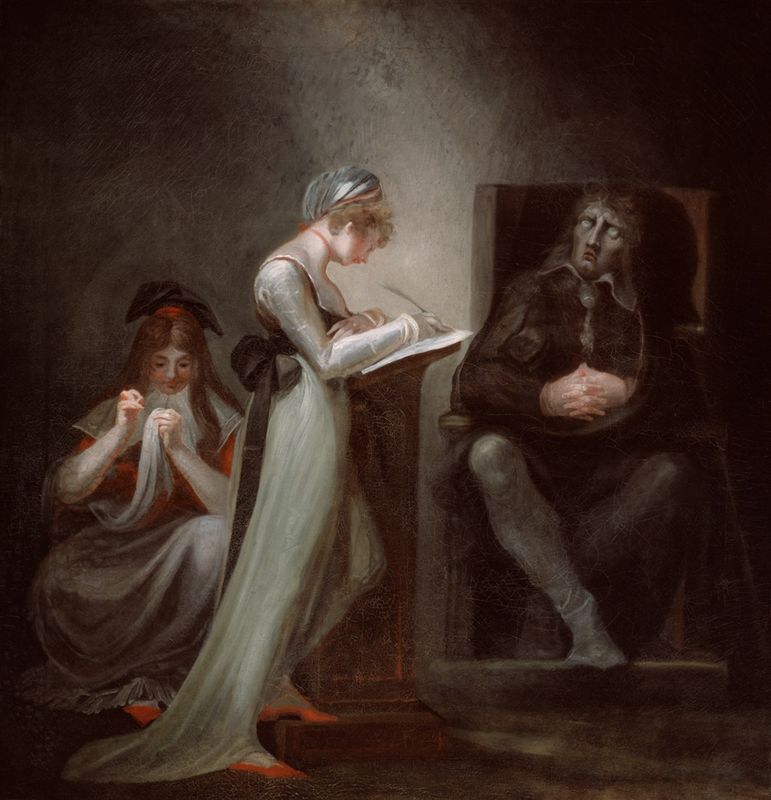
Milton Dictating to His Daughter
Henry Fuseli · 1794 · Art Institute of Chicago
 Same era · 1770s–1800s
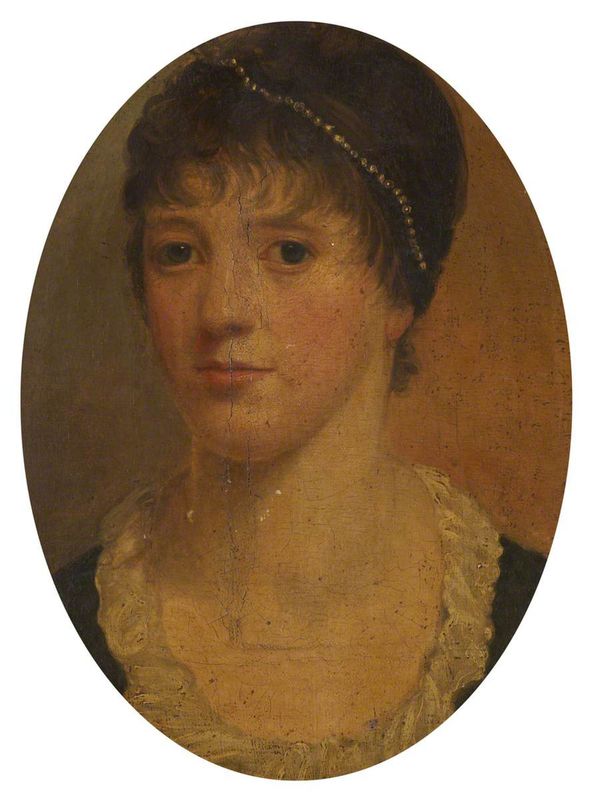
Mrs Jackson
Thomas Stewardson · 1800 · Abbot Hall Art Gallery
 Same era · 1770s–1800s
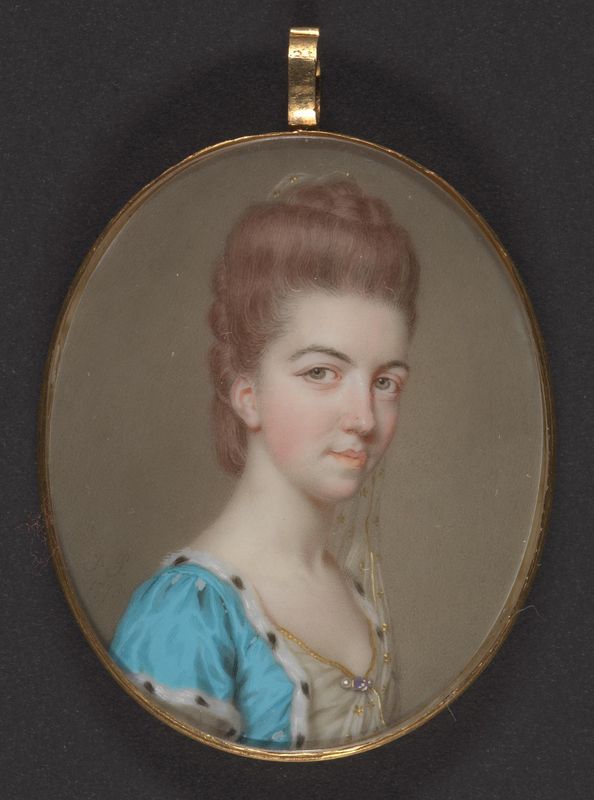
Portrait of a Lady
John Smart of Ipswich · 1773 · Yale Center for British Art
 Same era · 1770s–1800s
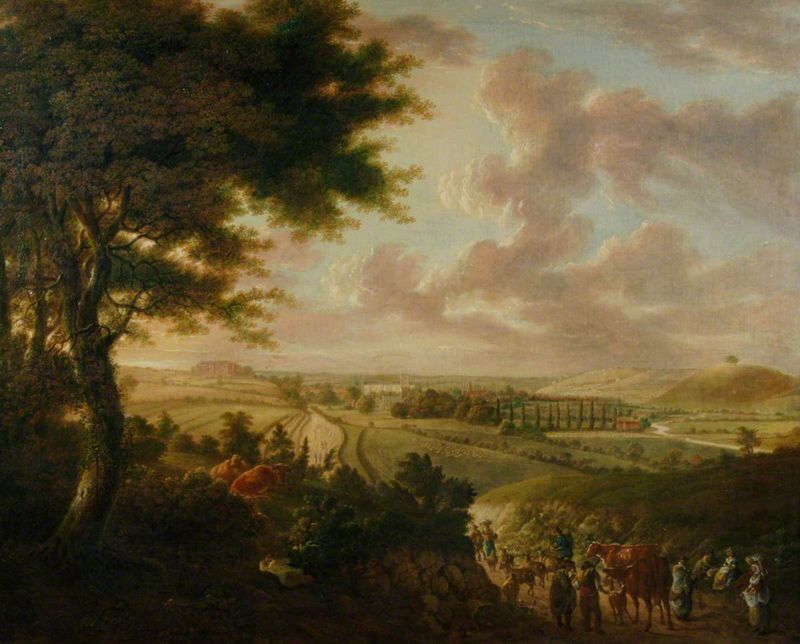
Winchester from the South
Tobias Young · 1803 · Winchester Guildhall
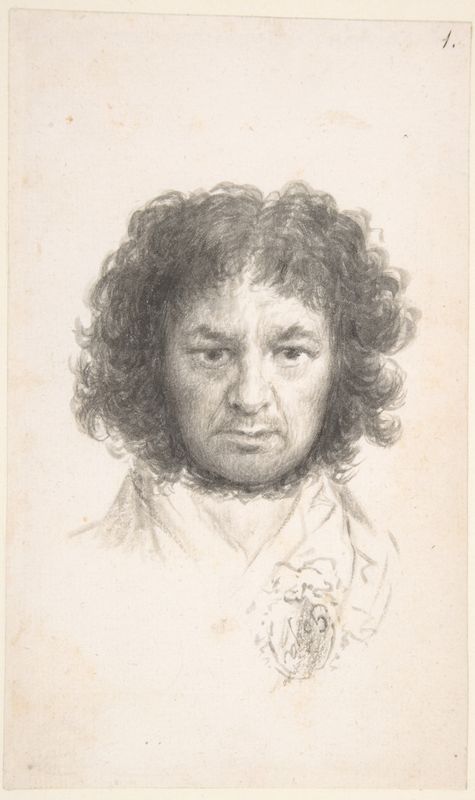 Same era · 1770s–1800s
Self-Portrait
Francisco Goya · 1783 · Musée des Beaux-Arts d'Agen
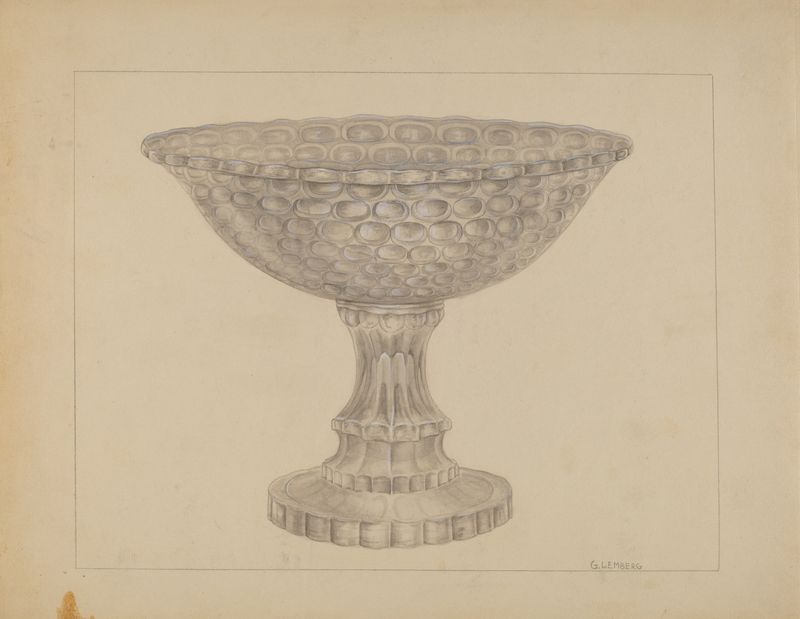 Same era · 1770s–1800s
Punch Bowl
Artist Unknown - The Mercat Cross, Aberdeen · 1789 · Art Institute of Chicago
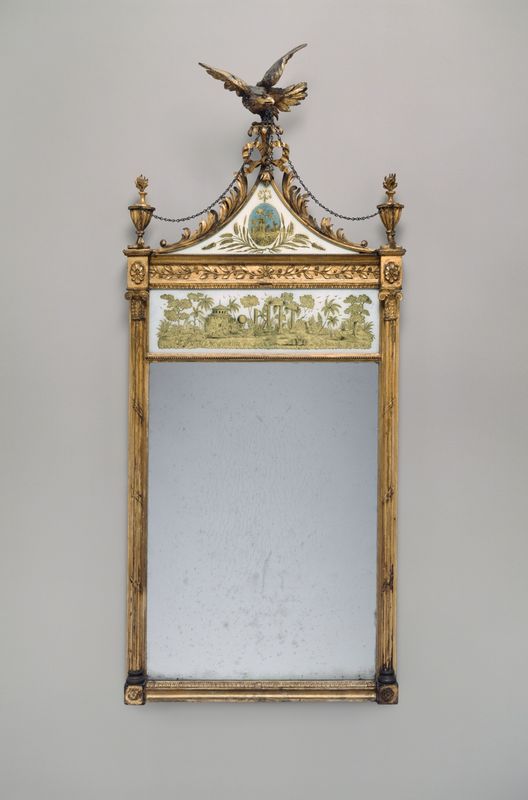 Same era · 1770s–1800s
Looking Glass
unknown composer author · 1790 · Art Institute of Chicago