
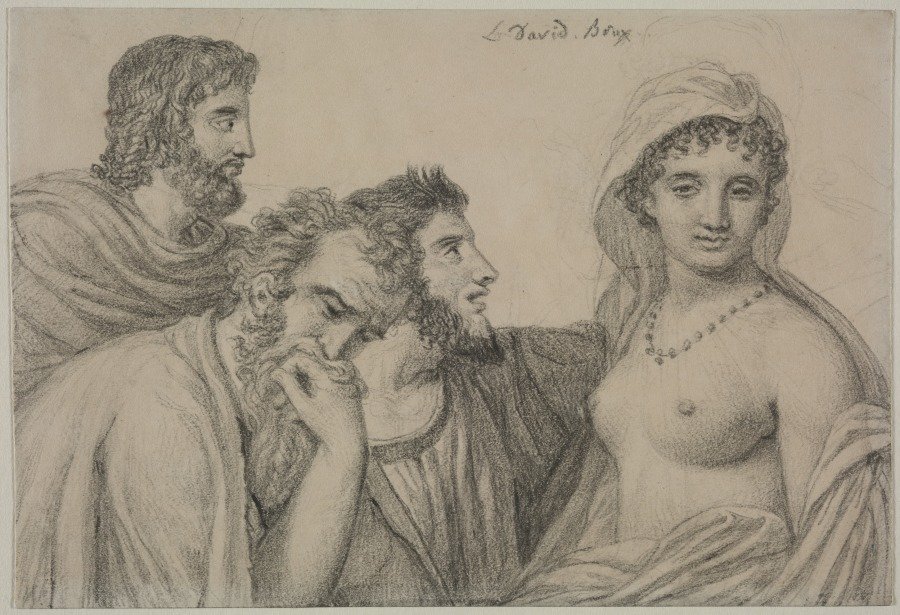
“This powerful black chalk drawing captures the mythological courtesan Phryne on trial, her nude form dramatically revealed. It's an intimate, emotionally charged work from the artist's later years, showcasing his exploration of raw human feeling.”
In this dramatic drawing, the mythological courtesan Phryne stands accused of blasphemy, her nude body exposed before a panel of judges. The scene is rendered in black chalk, capturing the intensity of the moment with stark contrasts and expressive lines. This work, made late in the artist's life while in exile in Brussels, shows a departure from his earlier large-scale historical paintings. Here, the focus is intimate and psychological, exploring raw emotion through close-up figures. The two male figures at the center, possibly têtes d’expression, are studies in conveying feeling through pose and facial contortion, adding to the drawing's enigmatic quality. The artist himself embraced this shift, noting that he was simply "throwing down the mad ideas that came into my head," highlighting a newfound freedom in his creative process.
- Artist
- Jacques-Louis David
- Date
- 1816
- Medium
- black chalk on wove paper discolored to beige
- Location
- Cleveland Museum of Art
- Dimensions
- [object Object]
- Collection
- Drawings
- Culture
- France, 19th century
- Credit line
- Gift in memory of Helen Borowitz
What to Notice
Five details hide in plain sight. Here’s where to look.
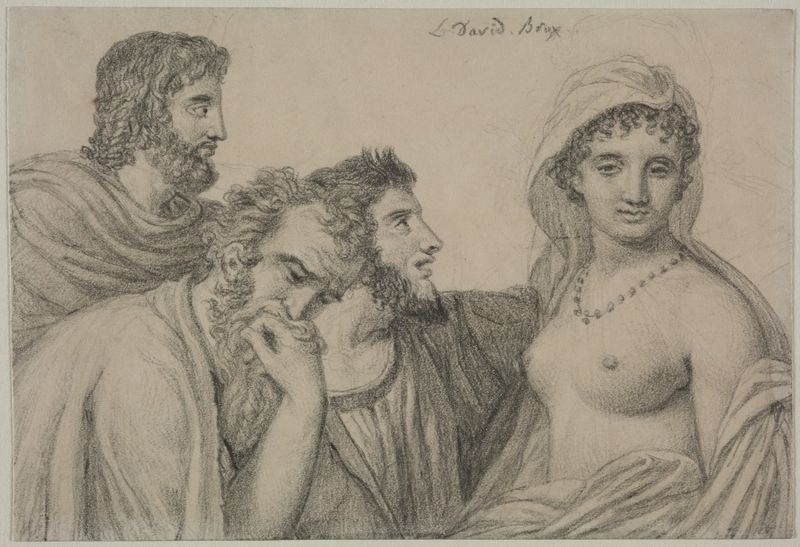
Phryne's exposed figure, central to the drama
The grimacing faces of the two central male judges
The stark contrasts created by the black chalk
The subtle beige tone of the discolored paper
1 more detail is waiting.
See all 5 in Art Whisper →Stand in front of it and listen
The full narration walks you through Phryne before Her Judges — the story behind it, the details most visitors miss, and why it matters. Free in the Art Whisper app.
Jacques-Louis David
1748–1825 · FranceDavid survived revolution, prison, and exile to paint Napoleon's glory — and still died the most influential artist in France.
Further Works by David
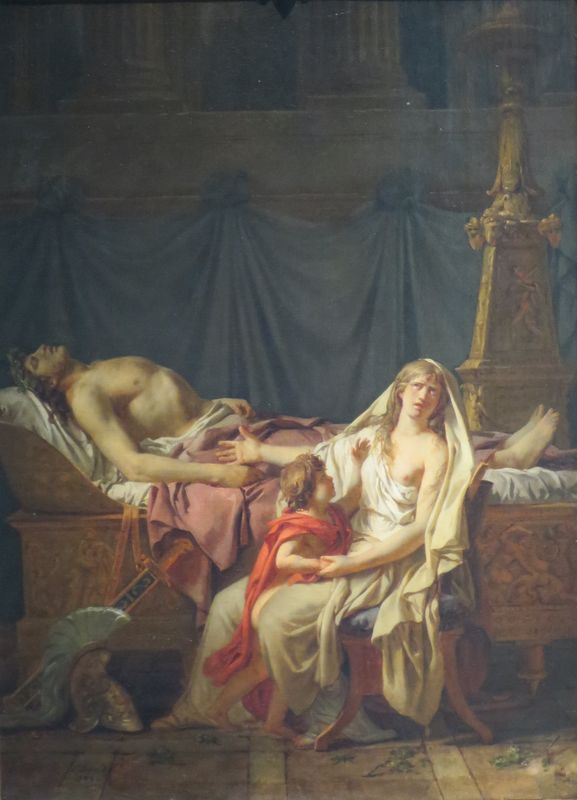 Andromache Mourning Hector
1783 · Pushkin Museum of Fine Arts
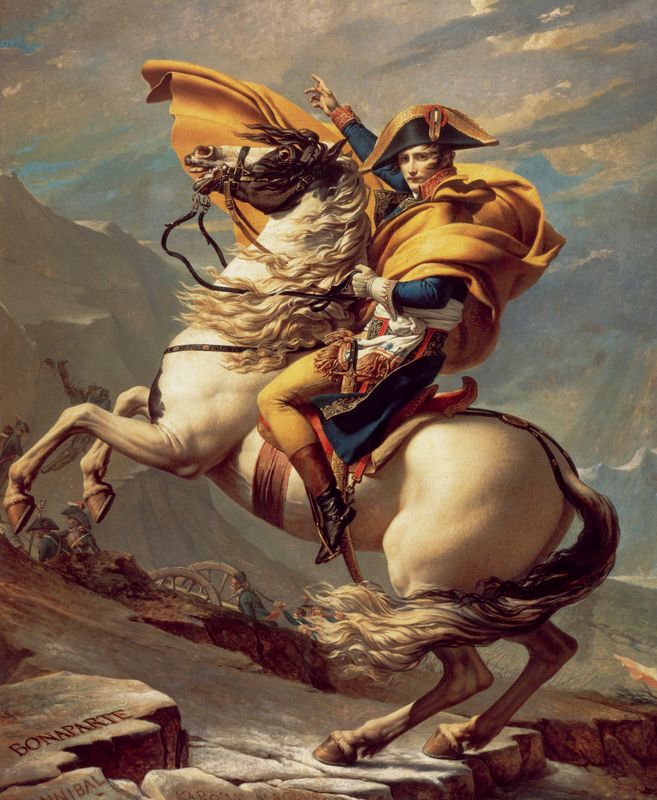 Napoleon Crossing the Alps
1800 · Musée national de Malmaison et Bois-Préau
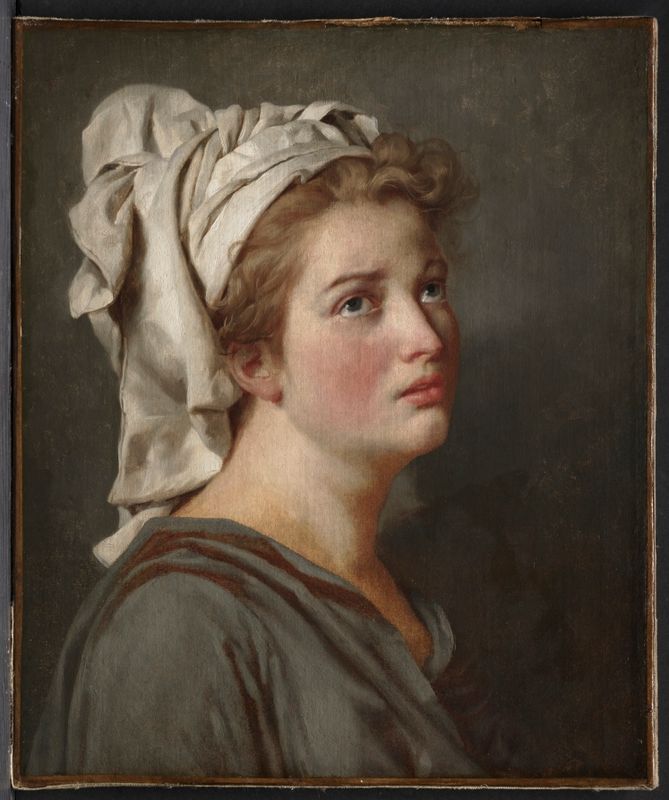 Young Woman with a Turban
1780 · Cleveland Museum of Art
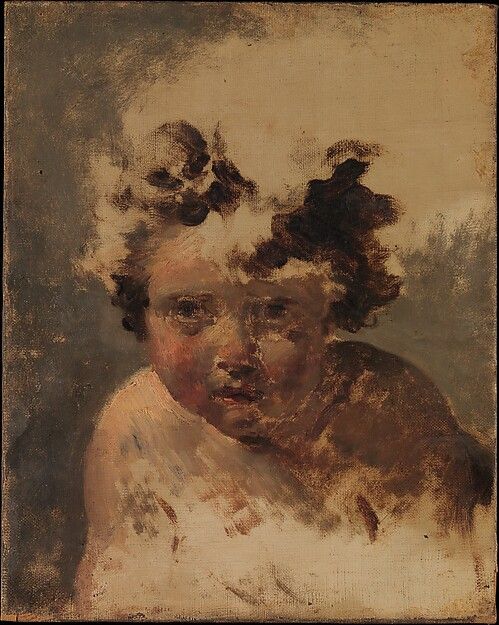 Head of a Child
1768 · The Metropolitan Museum of Art
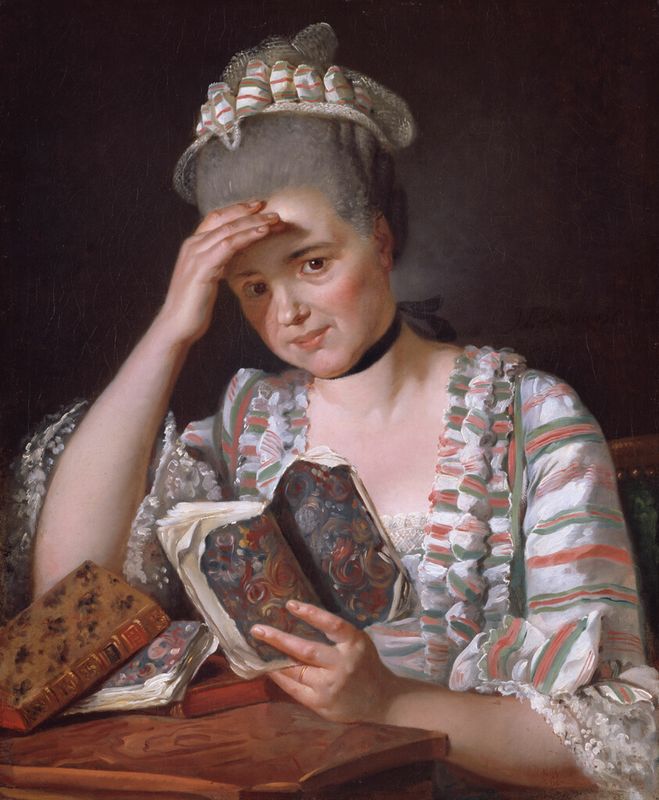 Madame François Buron
1769 · Art Institute of Chicago
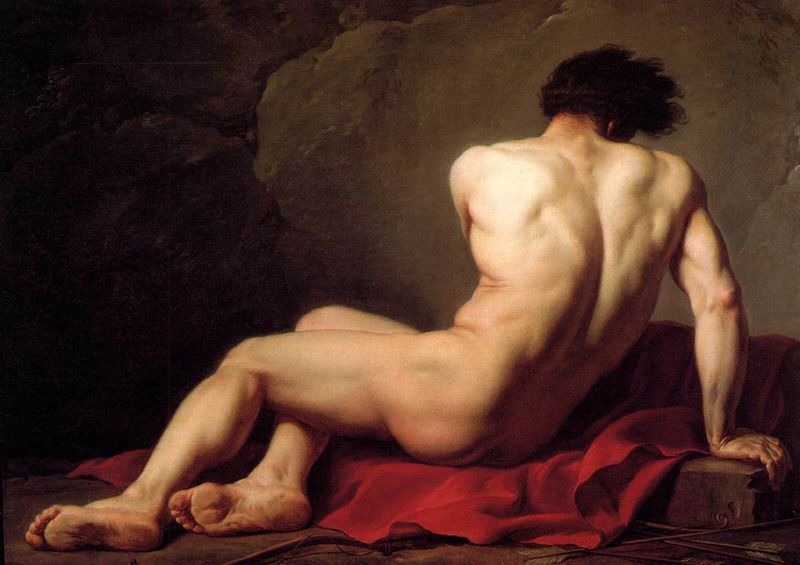 Patroclus
1780 · Musée Thomas-Henry
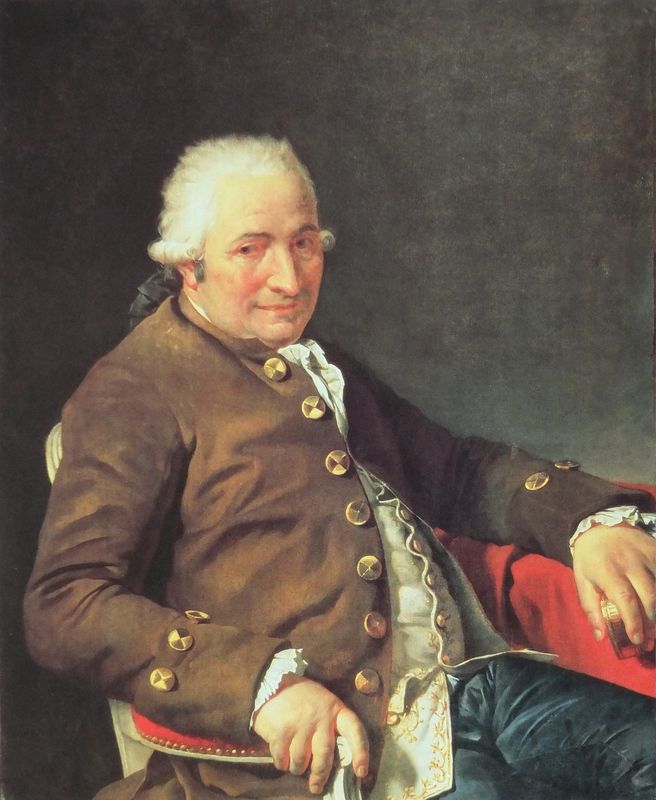 Portrait of Charles-Pierre Pécoul
1784 · Department of Paintings of the Louvre
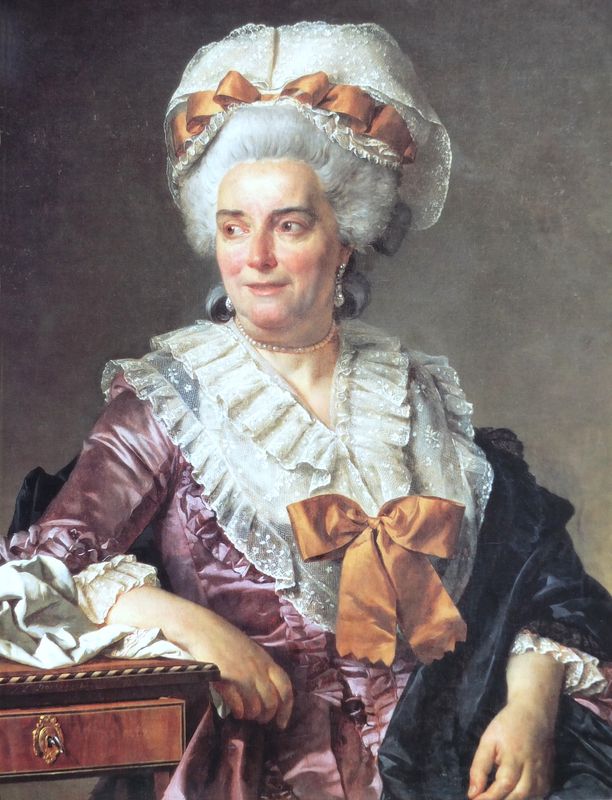 Portrait of Madame Charles-Pierre Pecoul
1784 · Department of Paintings of the Louvre
More from Academic art
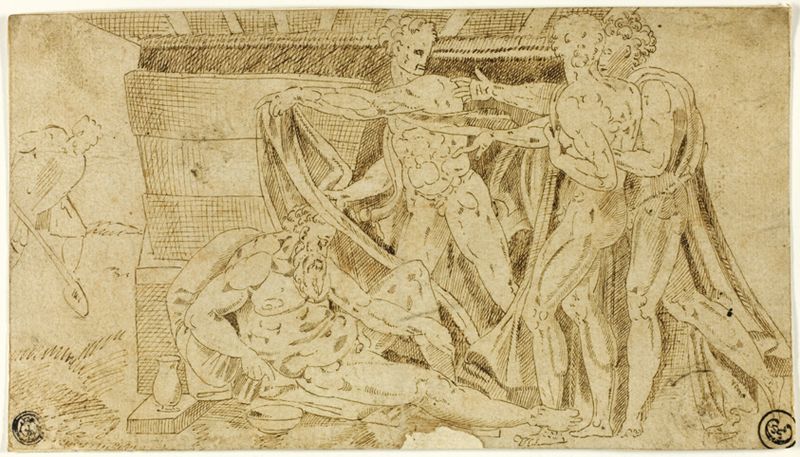
More works to explore
Beyond David and Academic art: works from the same years, and from the other movements Phryne before Her Judges belongs to.
 Same movement · Neoclassicism
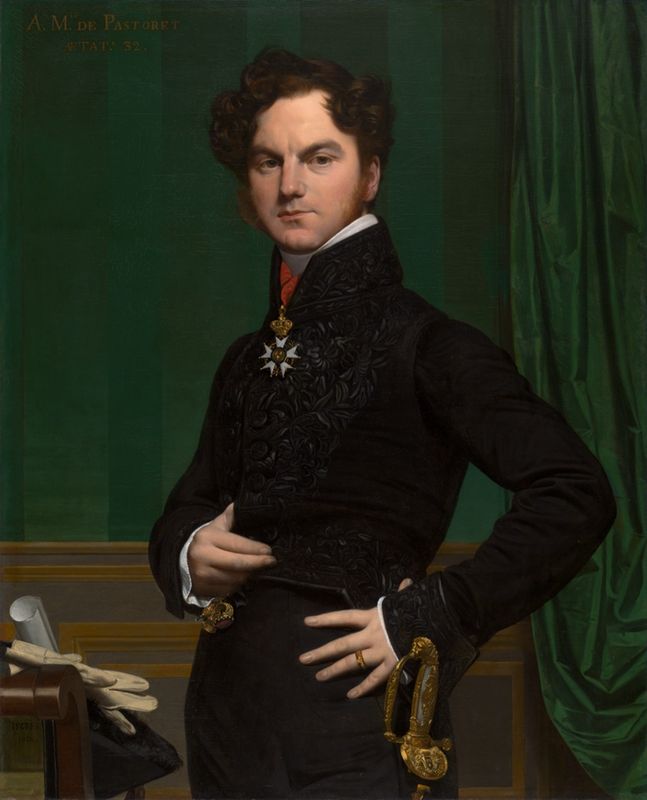
Amédée-David, the Comte de Pastoret
Jean-Auguste-Dominique Ingres · 1823 · Art Institute of Chicago
 Same era · 1800s–1830s
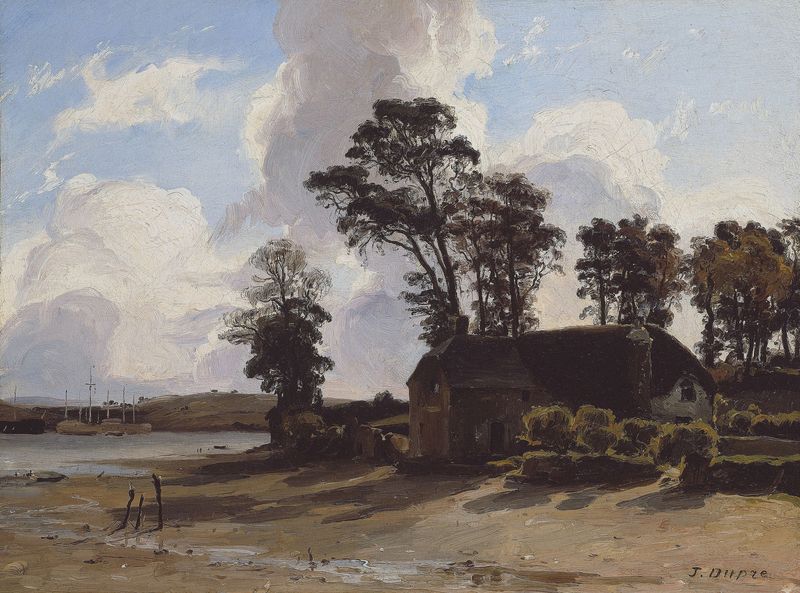
The Estuary Farm
Léon-Victor Dupré · 1831 · Art Institute of Chicago
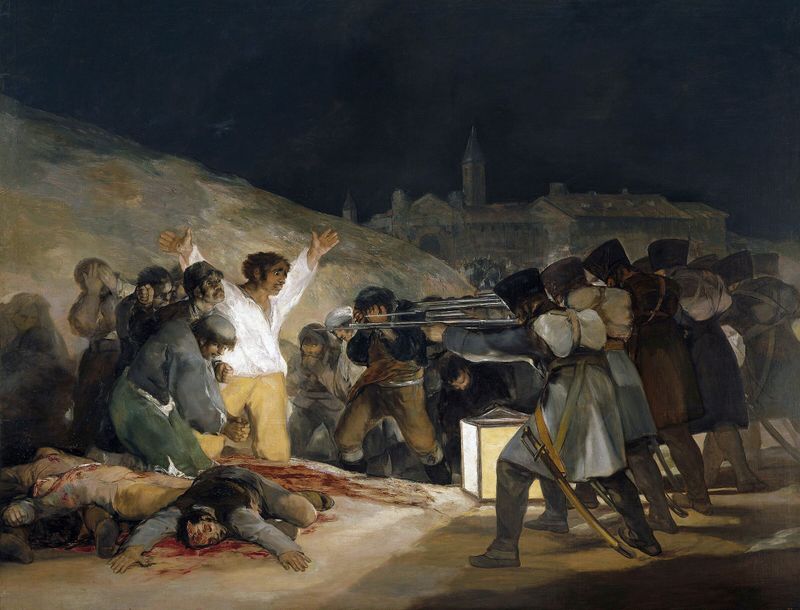 Same era · 1800s–1830s
The Third of May 1808
Francisco Goya · 1814 · Museo del Prado
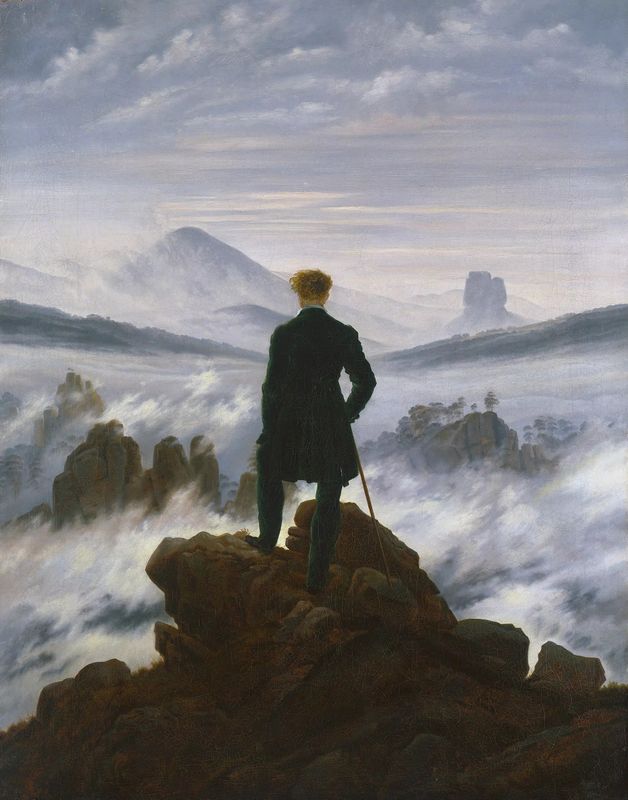 Same era · 1800s–1830s
Wanderer above the Sea of Fog
Caspar David Friedrich · 1818 · Hamburger Kunsthalle
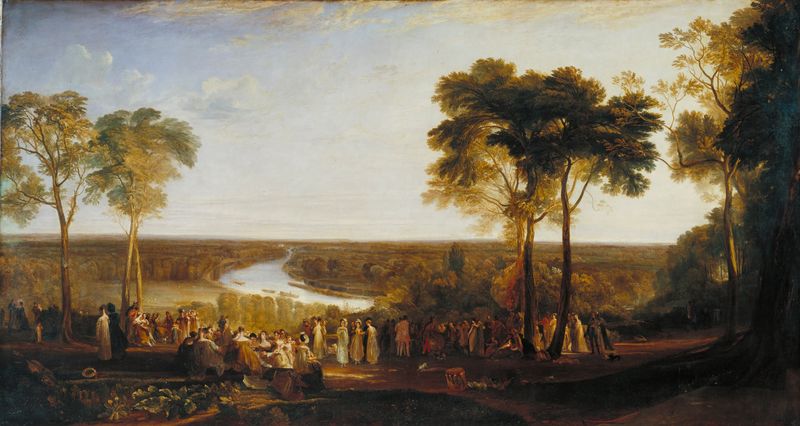 Same era · 1800s–1830s
England: Richmond Hill, on the Prince Regent's Birthday
J. M. W. Turner · 1819 · National Gallery
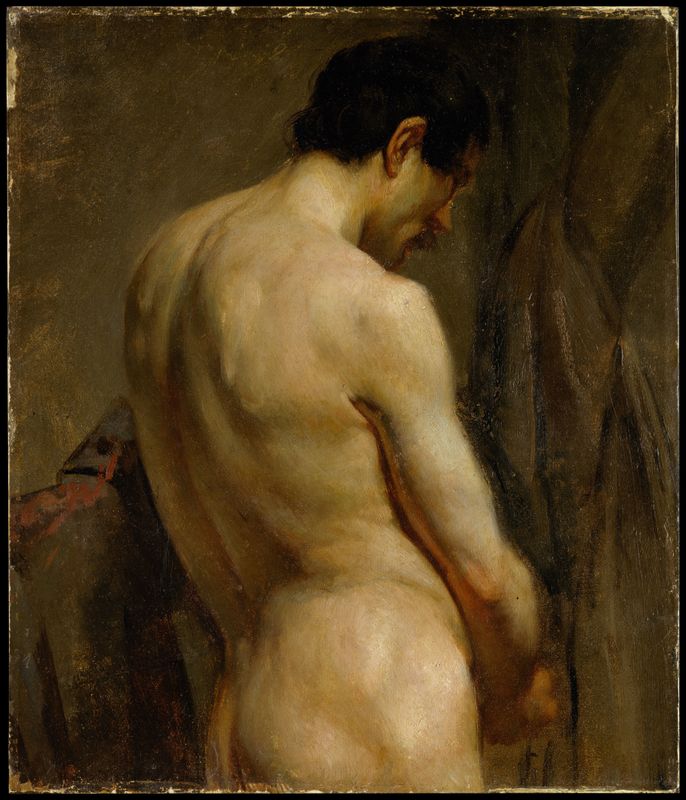 Same era · 1800s–1830s
Male Academy Figure: Half-Length, Side View
Eugène Delacroix · 1819 · Karen B. Cohen Collection
 Same era · 1800s–1830s
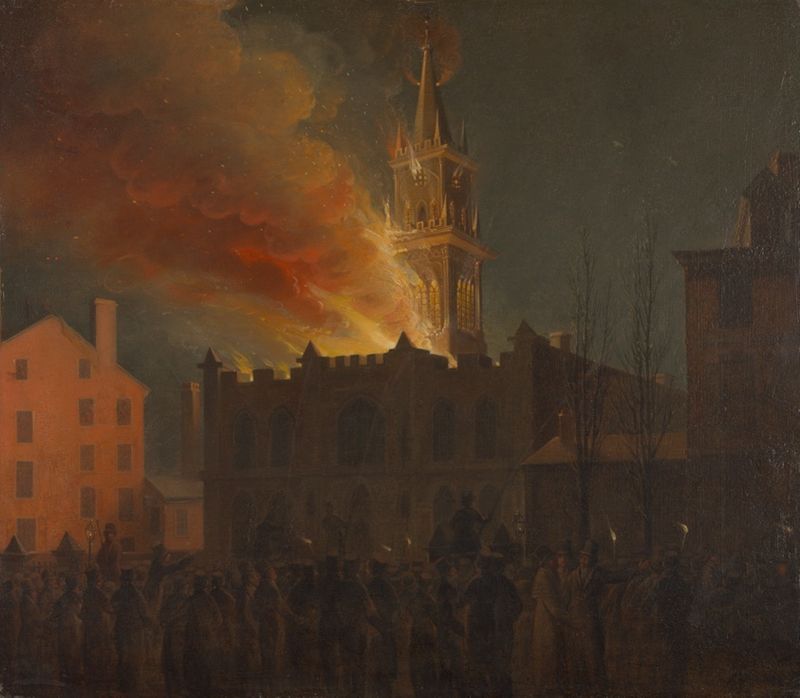
Conflagration of the Masonic Hall, Chestnut Street, Philadelphia, Pennsylvania
Samuel Jones · 1819 · Art Institute of Chicago
 Same era · 1800s–1830s
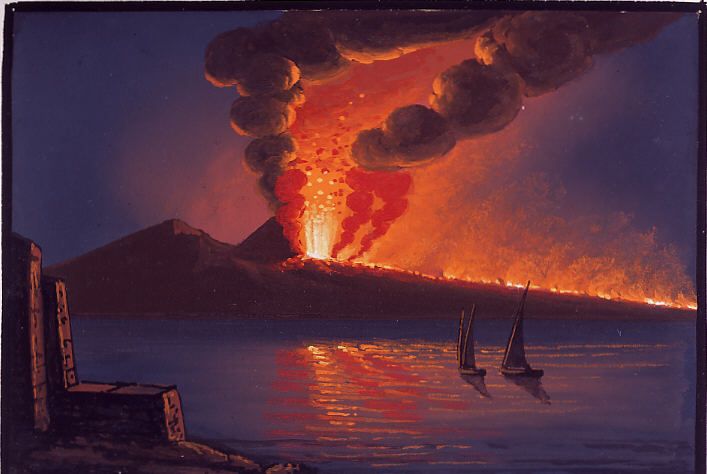
Sketchbook: Souvenir of Naples
Artist Unknown - The Mercat Cross, Aberdeen · 1821 · The Metropolitan Museum of Art
 Same era · 1800s–1830s
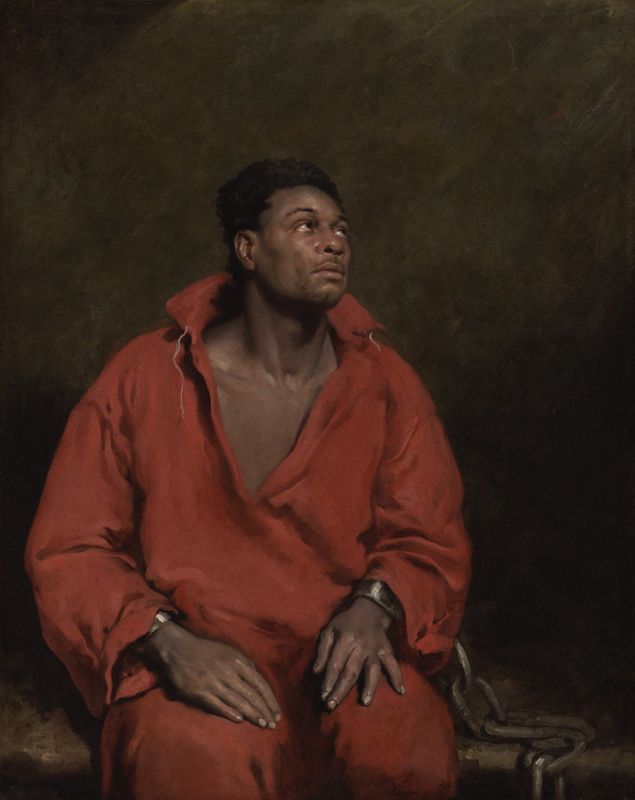
The Captive Slave (Ira Aldridge)
John Philip Simpson · 1827 · Art Institute of Chicago
 Same era · 1800s–1830s
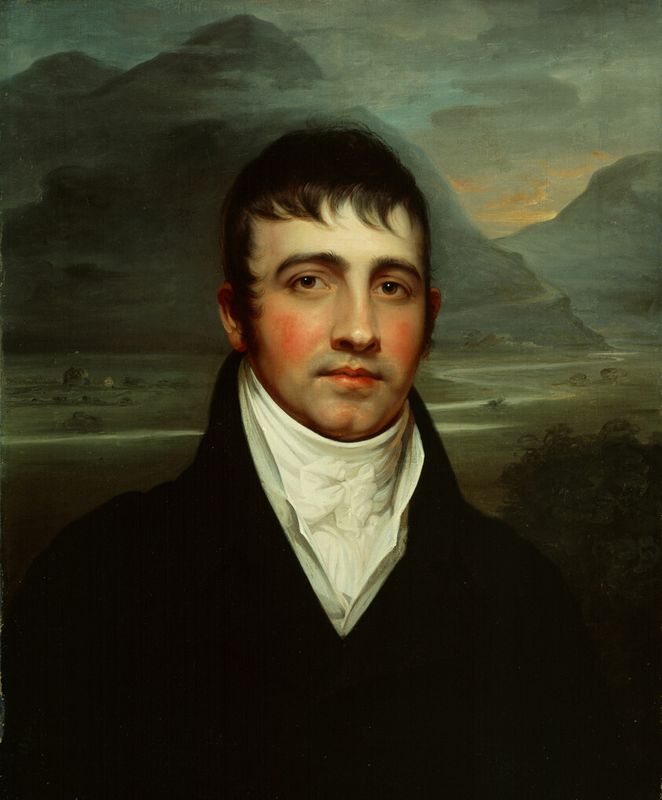
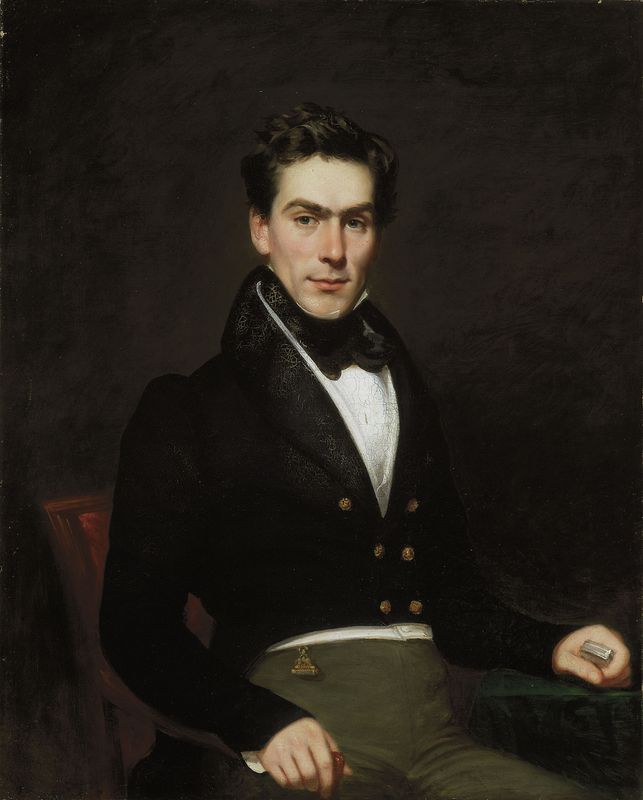
Samuel Fisher Bradford
Rembrandt Peale · 1803 · Art Institute of Chicago
 Same era · 1800s–1830s
Mr. James Mackie
Samuel Alcock & Company · 1830 · Art Institute of Chicago
 Same era · 1800s–1830s
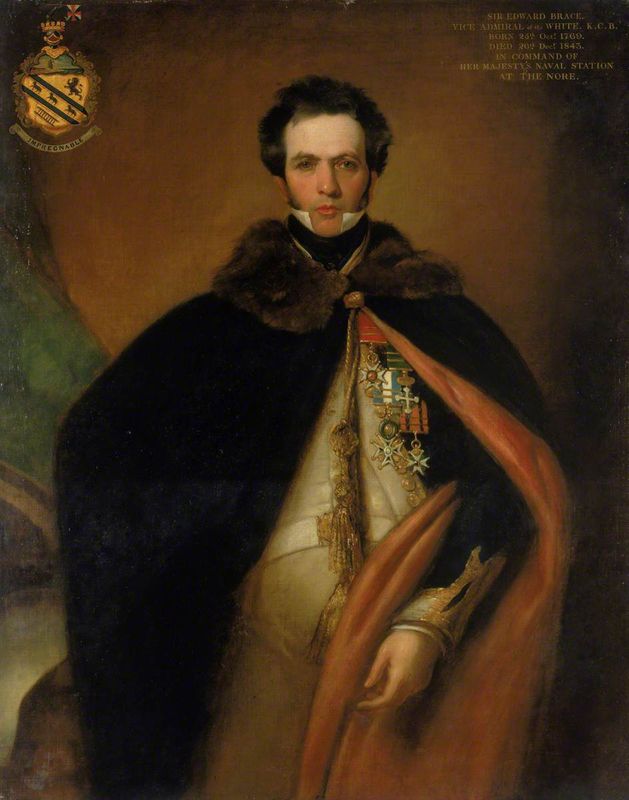
Captain Sir Edward Brace, circa 1769-1843
Thomas Stewardson · 1816 · Royal Museums Greenwich
 Same era · 1800s–1830s
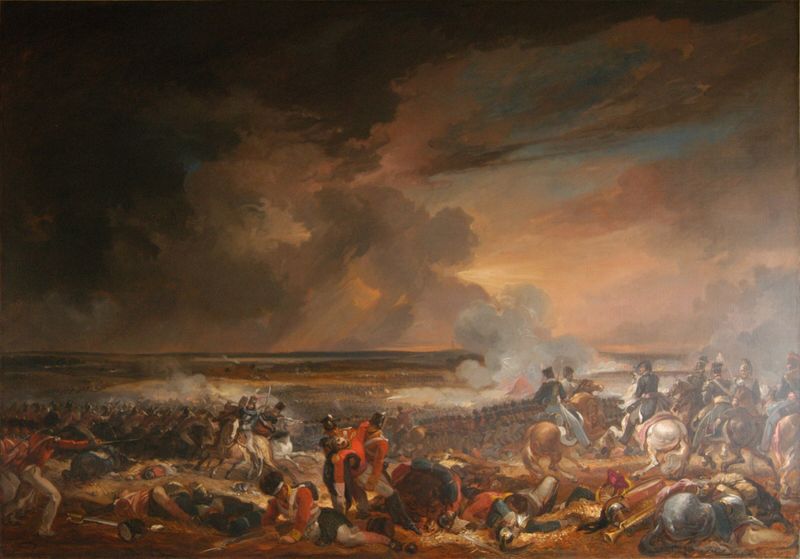
The Battle of Waterloo, 18 June 1815
Samuel Drummond · 1815 · Bradford Museums and Galleries