01Whole painting
A picture made of dots
Look at how the shapes are built from tiny ink dots, with almost no continuous outlines. Pissarro was experimenting with a pointillist approach here, using black ink alone.
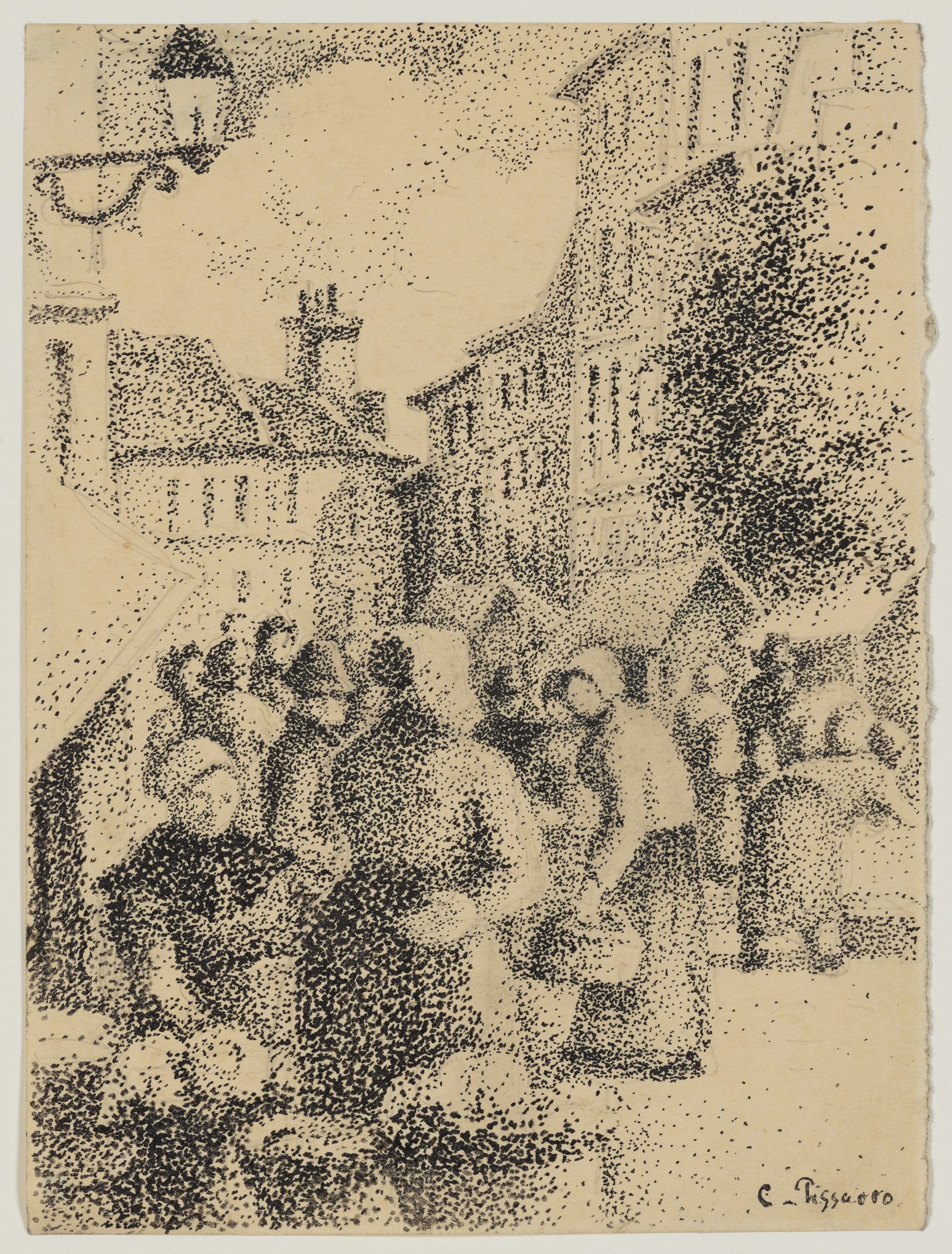
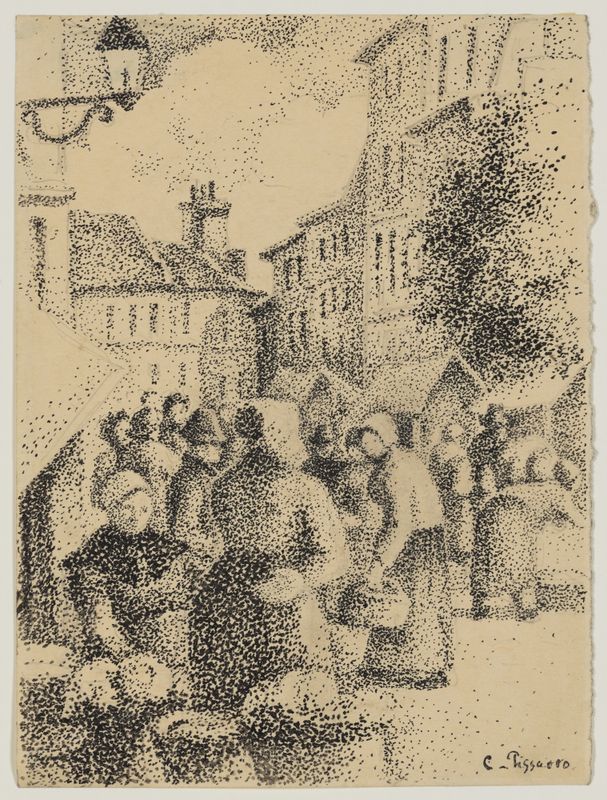
“Stop and observe this vibrant drawing of a 19th-century marketplace, where Camille Pissarro's energetic lines bring a bustling crowd to life. It's a quick, intimate glimpse into daily life in Pontoise.”
This lively drawing, "Marketplace in Pontoise," captures a bustling outdoor scene with remarkable immediacy. Pissarro sketches a dynamic crowd of figures, some identifiable as vendors and others as shoppers, gathered under what appears to be temporary awnings or stalls. The quick, energetic lines of graphite and ink convey a sense of movement and activity, suggesting the sounds and smells of a busy market day. You can almost feel the crisp air of late 19th-century France. The artist's focus here is on the everyday life of the town, rendering ordinary people in their daily routines, a common theme for him. The composition, though seemingly spontaneous, skillfully directs the eye through the various groups and individual figures, creating a cohesive yet vibrant tableau of community life.
Five details hide in plain sight. Pick one and we’ll show you exactly where to look.
Look at how the shapes are built from tiny ink dots, with almost no continuous outlines. Pissarro was experimenting with a pointillist approach here, using black ink alone.
The densest dots gather on the big dark-clothed figures at lower left. Their heavy shapes anchor the crowd and make the market feel packed.
Near the center right, a figure in a pale cap leans forward toward something held low, perhaps a basket. The gesture is caught with only a few dots.
On the right, dots clump into a dark, scattered mass that reads as foliage beside the buildings. Thicker and thinner dots stand in for light and shadow.
The tall house on the right and the rooftops with the chimney lead your eye back along the street, behind the crowd, giving depth with very little drawing.
The full narration walks you through Marketplace in Pontoise — the story behind it, the details most visitors miss, and why it matters. Free in the Art Whisper app.
Camille Pissarro, the Danish-French painter, was a pivotal figure in both Impressionism and Neo-Impressionism, capturing everyday life from Parisian streets to snow-covered villages.
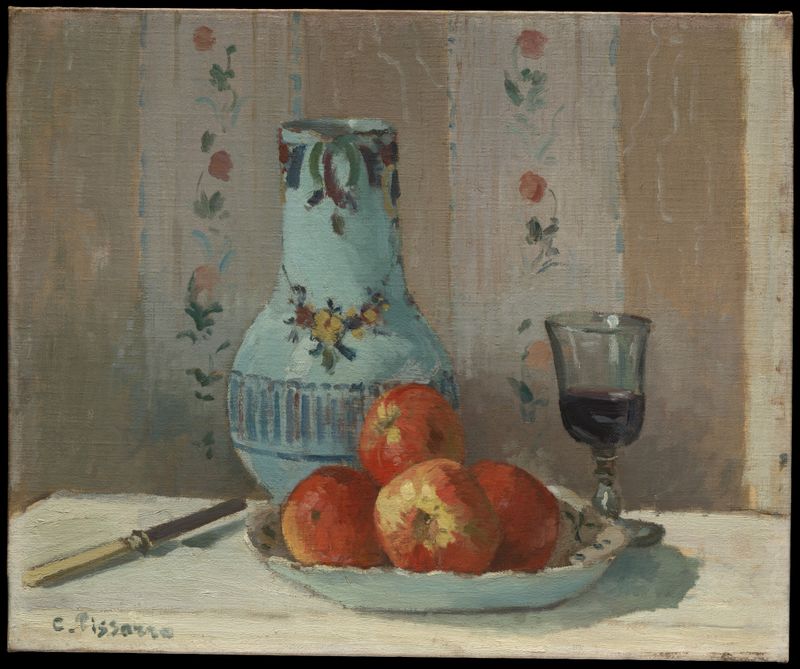 Still Life with Apples and Pitcher
1872 · The Metropolitan Museum of Art
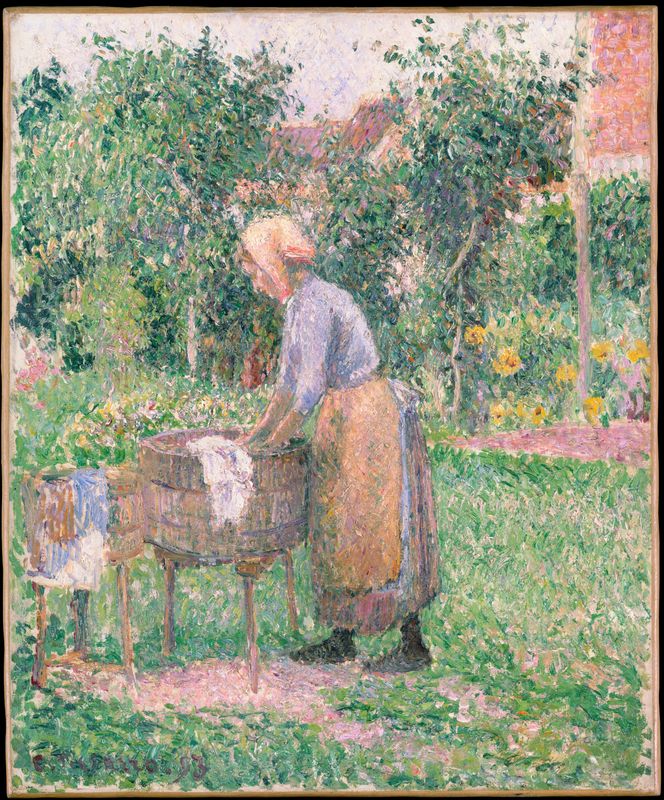 A Washerwoman at Eragny
1893 · The Metropolitan Museum of Art
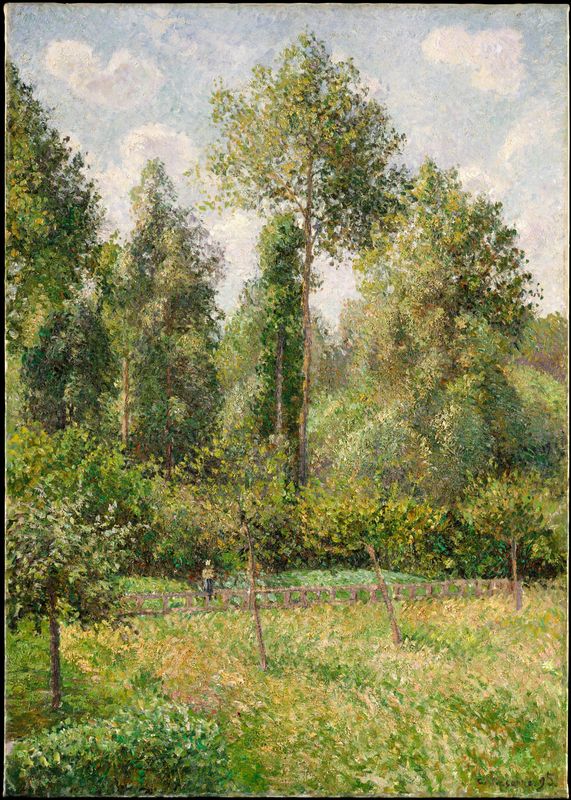 Poplars, Eragny
1895 · The Metropolitan Museum of Art
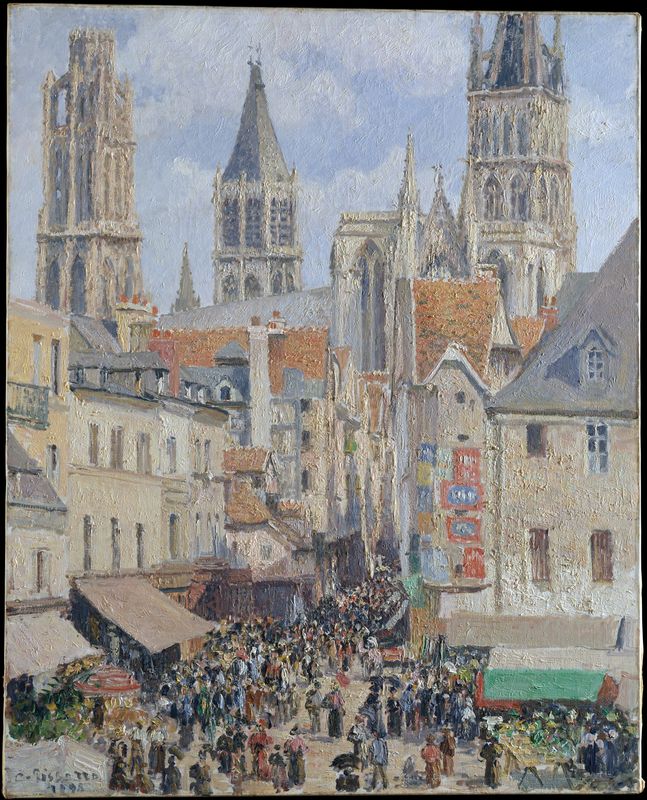 Rue de l'Epicerie, Rouen (Effect of Sunlight)
1898 · The Metropolitan Museum of Art
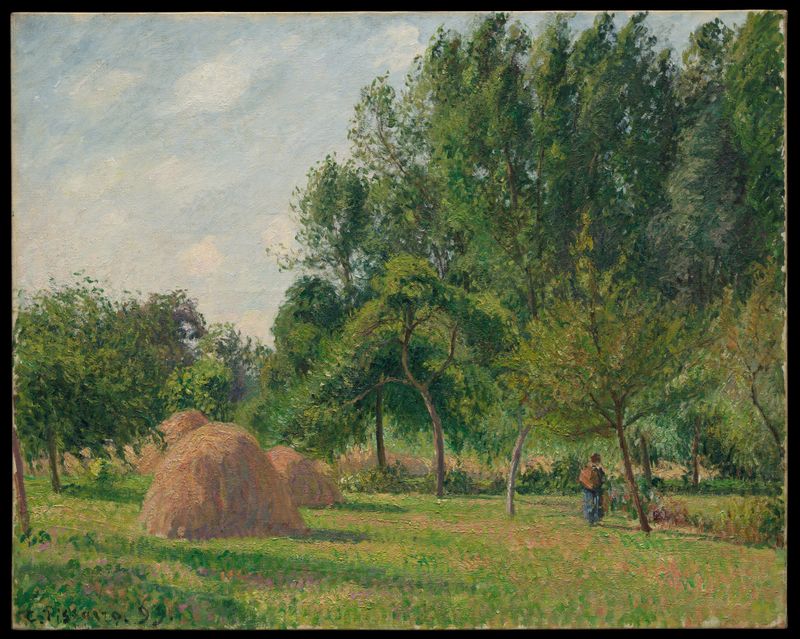 Haystacks, Morning, Eragny
1899 · The Metropolitan Museum of Art
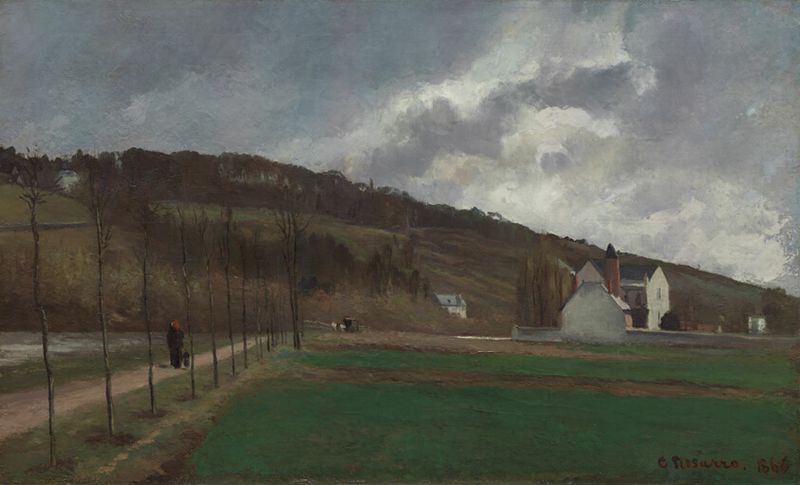 The Banks of the Marne in Winter
1866 · Art Institute of Chicago
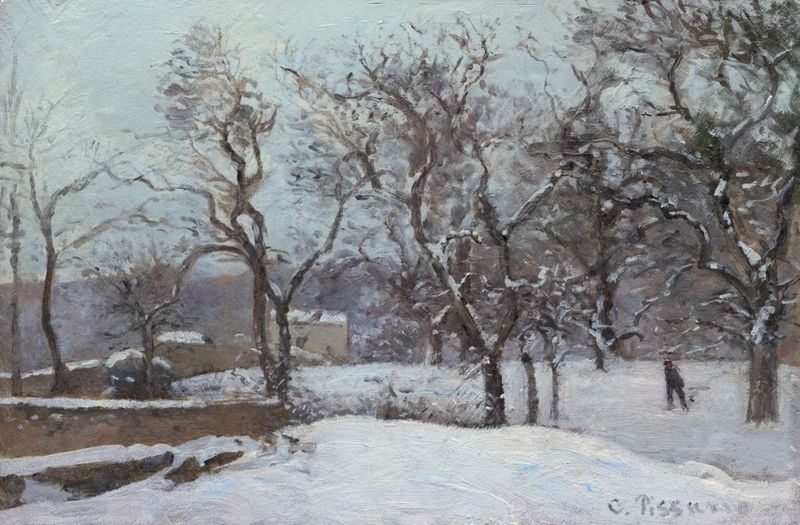 Snow at Louveciennes
1870 · Art Institute of Chicago
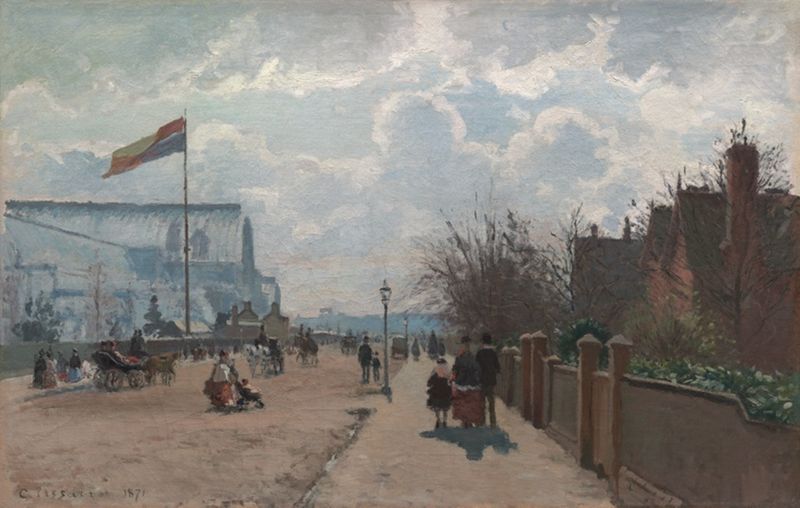 The Crystal Palace
1871 · Art Institute of Chicago
Beyond Pissarro and Impressionism: works from the same years, and from the other movements Marketplace in Pontoise belongs to.
 Same movement · Neo-Impressionism
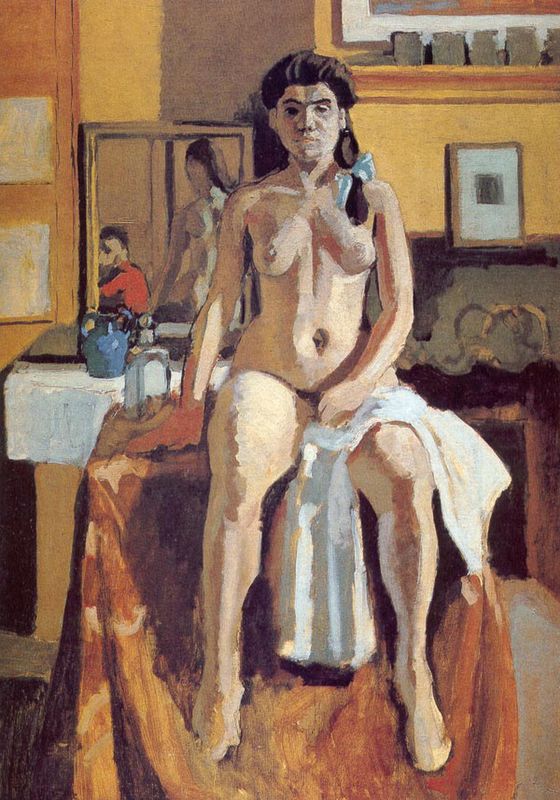
Carmelina
Henri Matisse · 1903 · Museum of Fine Arts Boston
 Same era · 1870s–1900s
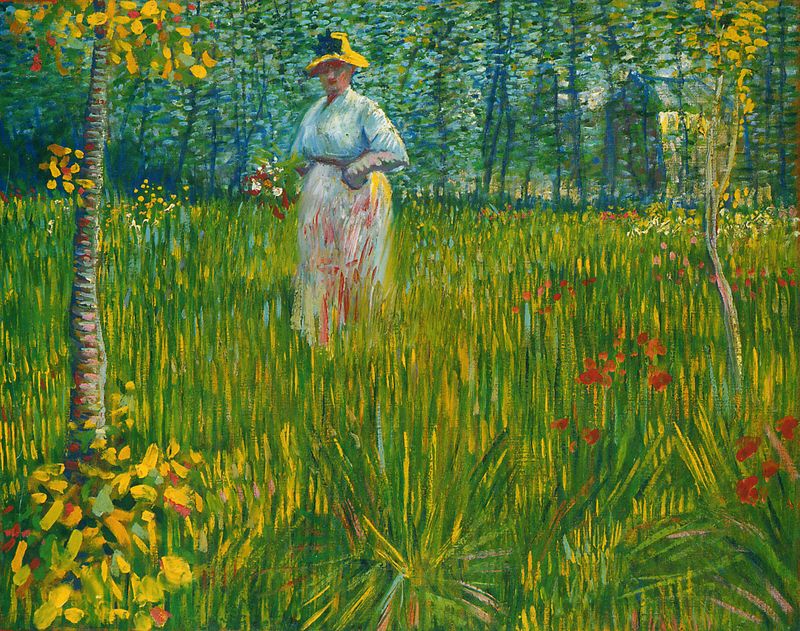
A Woman Walking in a Garden
Vincent van Gogh · 1887 · Frans Buffa & sons
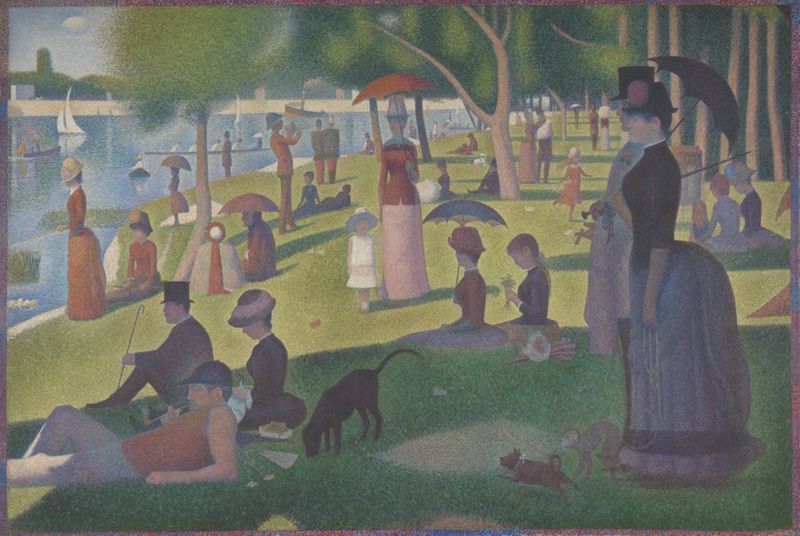 Same era · 1870s–1900s
A Sunday on La Grande Jatte — 1884
Okada Saburosuke · 1884 · Art Institute of Chicago
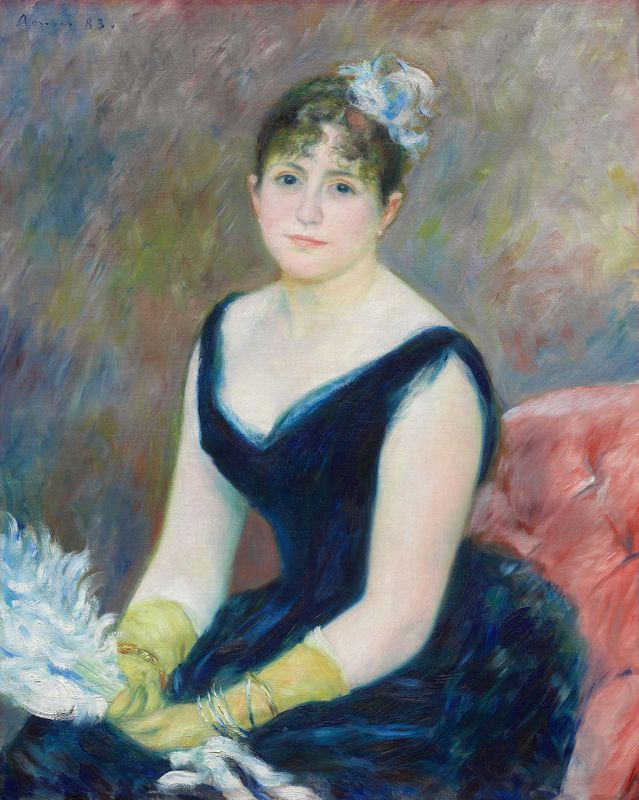 Same era · 1870s–1900s
Madame Léon Clapisson
Léon-Victor Dupré · 1883 · Art Institute of Chicago
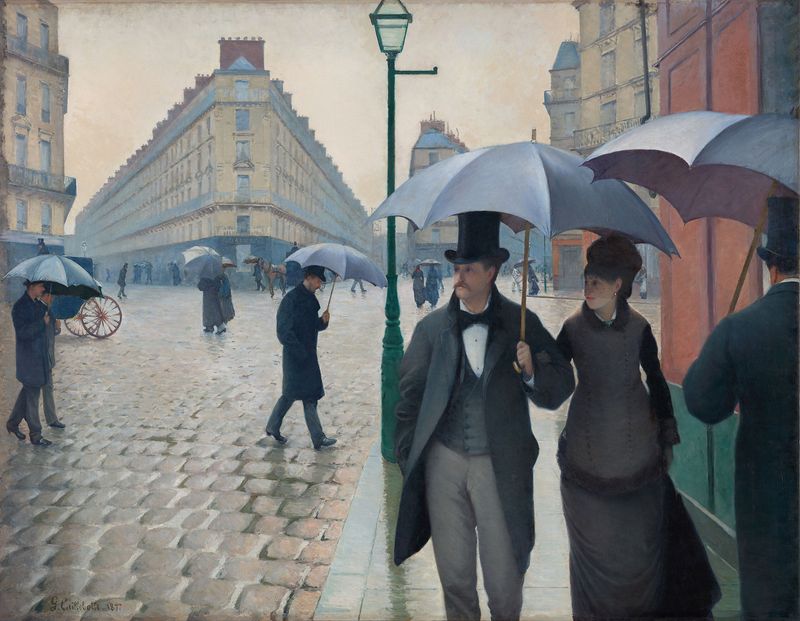 Same era · 1870s–1900s
Paris Street; Rainy Day
Kawabata Gyokushō · 1877 · Art Institute of Chicago
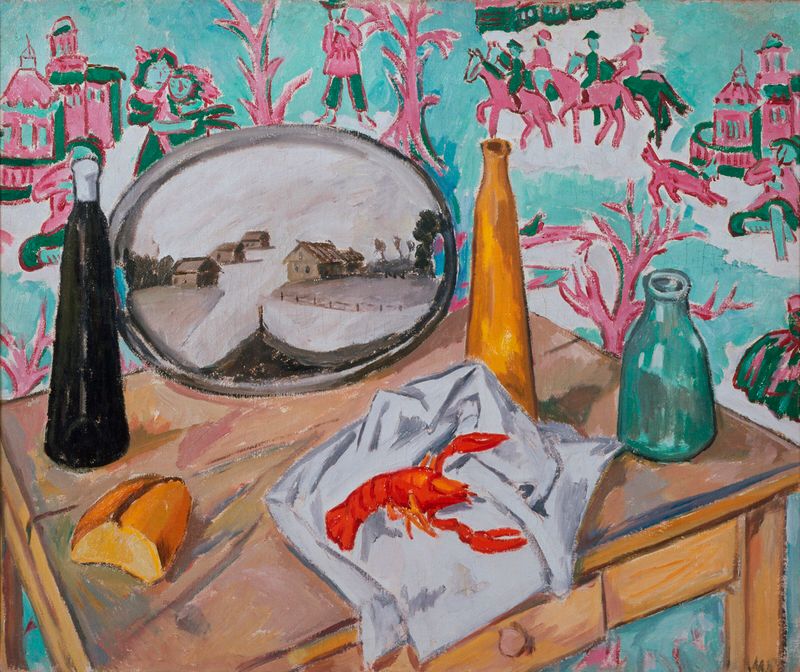 Same era · 1870s–1900s
Still Life with Crayfish
Mikhail Larionov · 1900 · Museum Ludwig
 Same era · 1870s–1900s
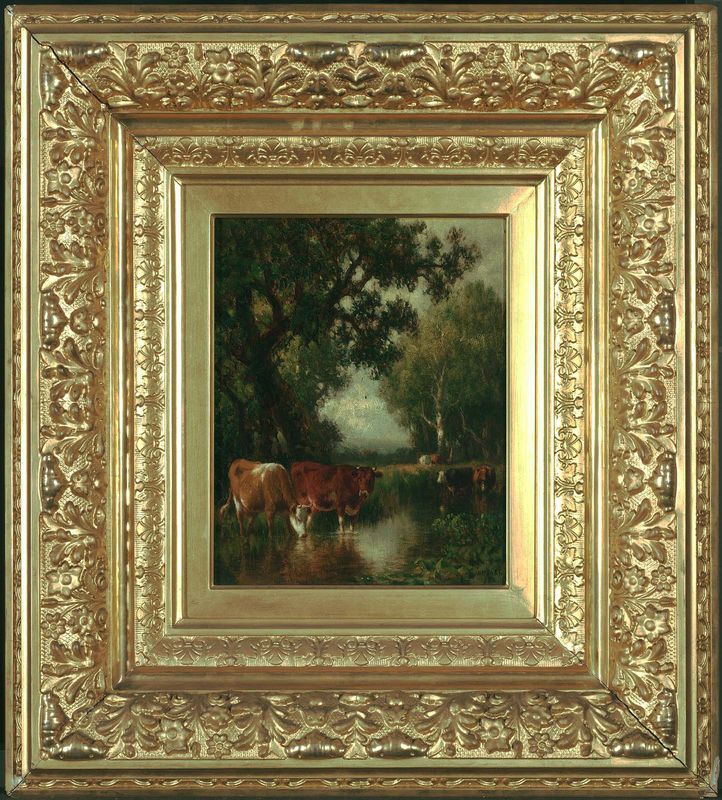
Cows Drinking at a Pool
William Hart · 1886 · Museum of Fine Arts Boston
 Same era · 1870s–1900s
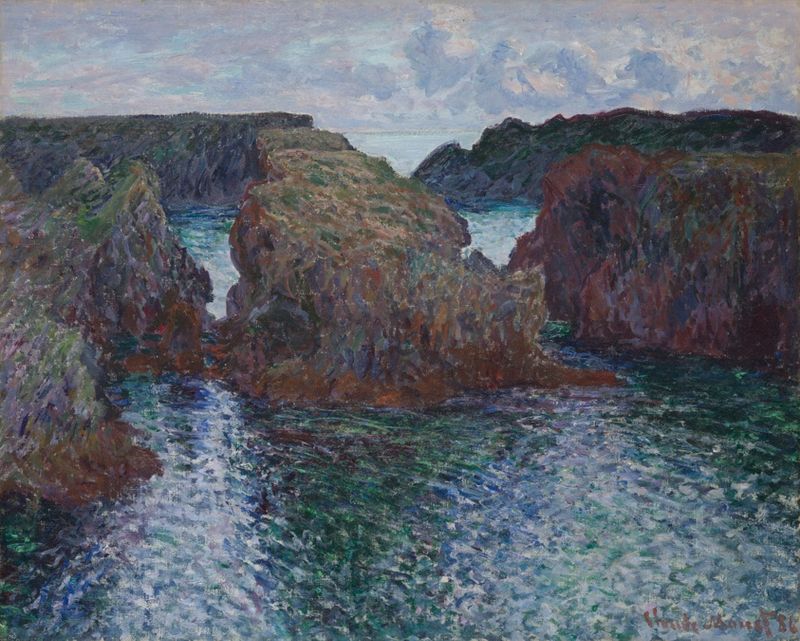
Rocks at Port-Goulphar, Belle-Île
Claude Monet · 1886 · Art Institute of Chicago
 Same era · 1870s–1900s
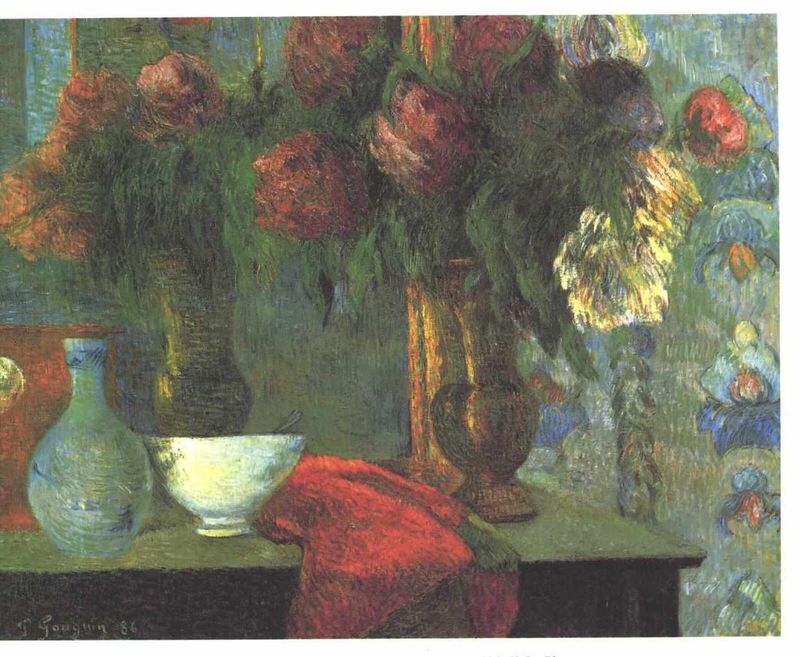
Stil life with white vase
Paul Gauguin · 1886 · Kunsthaus Zürich
 Same era · 1870s–1900s
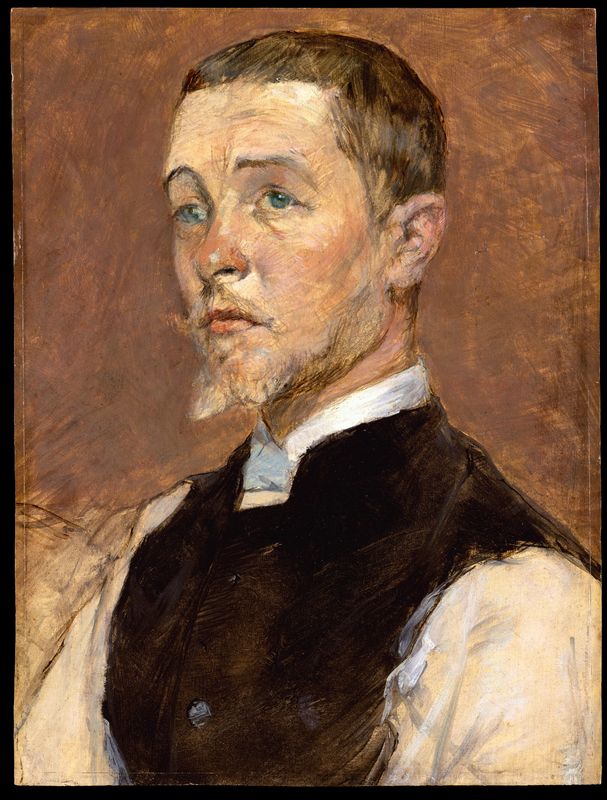
Albert (René) Grenier (1858–1925)
Henri de Toulouse-Lautrec · 1887 · The Metropolitan Museum of Art
 Same era · 1870s–1900s
Forêt de Compiègne
Berthe Morisot · 1885 · Art Institute of Chicago
 Same era · 1870s–1900s
Studies of Pierre Renoir; His Mother, Aline Charigot; Nudes; and Landscape
Pierre-Auguste Renoir · 1885 · Art Institute of Chicago
 Same era · 1870s–1900s
The Sick Child
Edvard Munch · 1885 · National Museum of Art, Architecture and Design