01
Tiger maple drawers
Look at the three lower drawer fronts, where wavy bands of light and dark ripple across the wood. This rippling figure gives the chest its most eye-catching surface.
1 of 4 on the painting
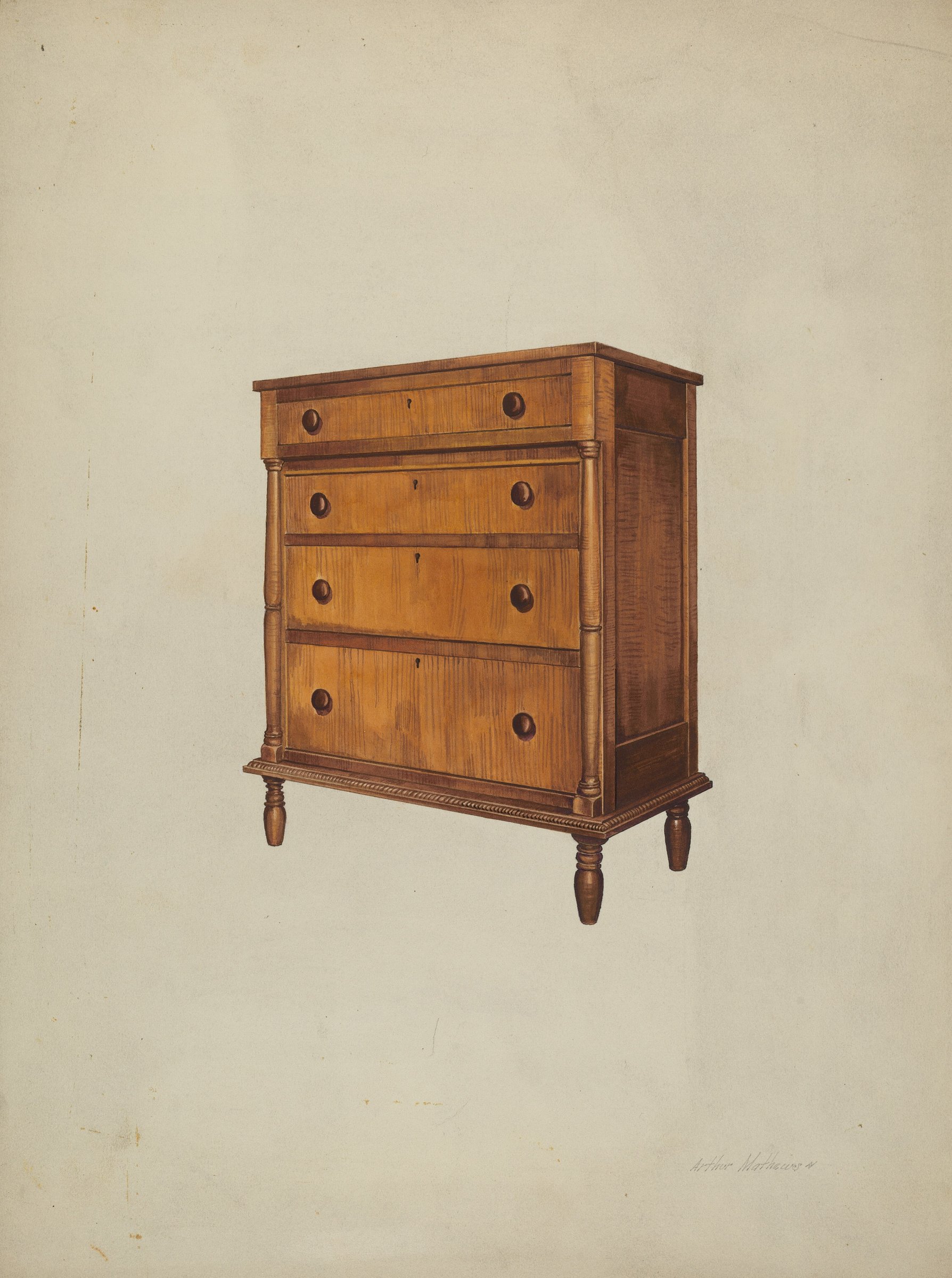
“Stop to appreciate this elegant chest of drawers from around 1800. Its sophisticated design and contrasting wood veneers offer a glimpse into early American craftsmanship and style.”
This chest of drawers, crafted around 1800, presents a striking example of American furniture design from the early Federal period. Its form is both sturdy and elegant, with a rich mahogany veneer that catches the light, contrasting with the lighter birch used for decorative inlay. The piece’s substantial size suggests it was a prominent fixture in a well-appointed home, designed not only for storage but also as a statement of refinement. Look closely at the subtle variations in grain and color, which reveal the careful selection of woods by the anonymous maker. This chest embodies the aesthetic of its time, balancing practicality with a desire for classical order and understated beauty, reflecting a period when American craftspeople were developing a distinct national style.
Five details hide in plain sight. Pick one and we’ll show you exactly where to look.
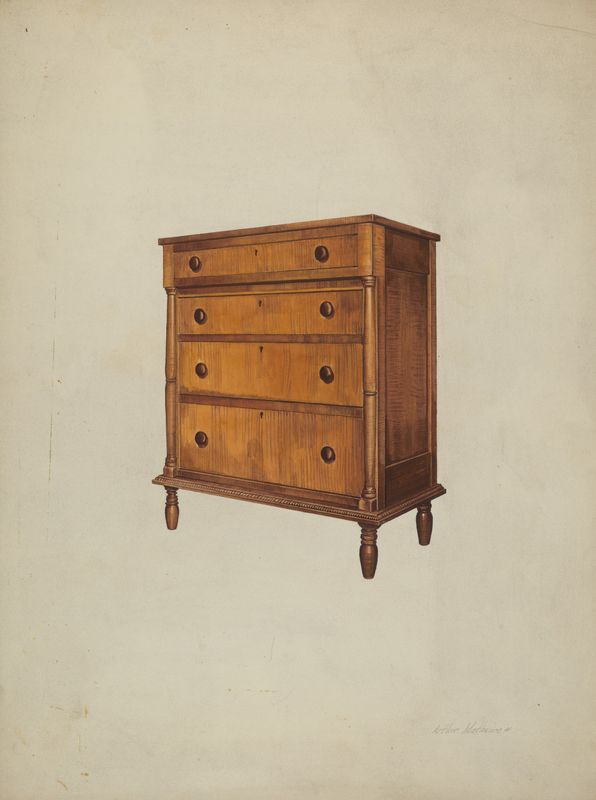
Look at the three lower drawer fronts, where wavy bands of light and dark ripple across the wood. This rippling figure gives the chest its most eye-catching surface.
Follow the slender turned columns at the front corners. Their ringed, swelling shapes add a classical touch to a plain box.
Along the bottom edge, a thin band of twisted rope carving catches the light. It is a small, careful bit of handwork that frames the whole chest.
On the right side, the darker panel shows vertical grain inside a framed recess. The painter has rendered the shadowed wood in soft browns.
The chest sits alone at an angle on bare, stained paper with no floor or cast shadow. All attention goes to its form and warm color.
The full narration walks you through Chest of Drawers — the story behind it, the details most visitors miss, and why it matters. Free in the Art Whisper app.
This 'Artist Unknown' represents a vast collection of anonymous creators, whose works like 'Boston Common' and 'Self Portrait' offer glimpses into diverse historical periods and artistic practices.
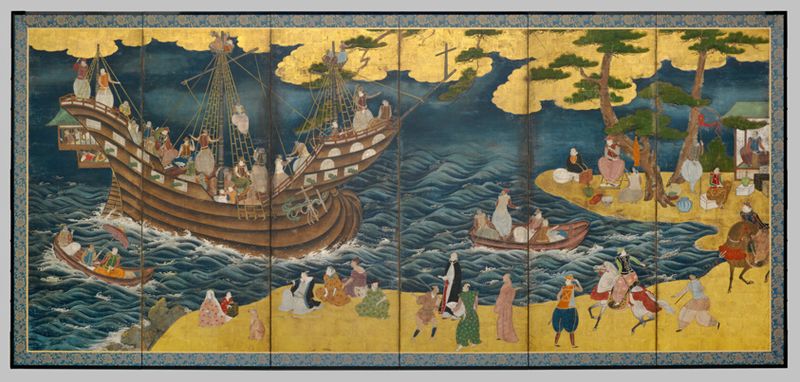 Southern Barbarians
1625 · Art Institute of Chicago
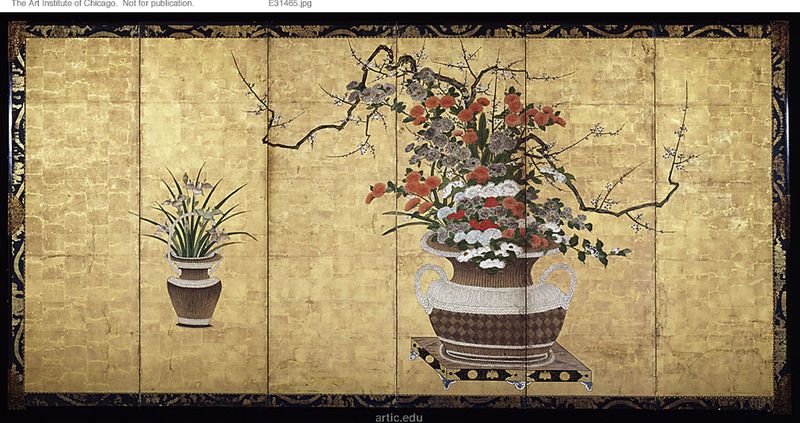 Baskets with Flowers of the Four Seasons
1701 · Art Institute of Chicago
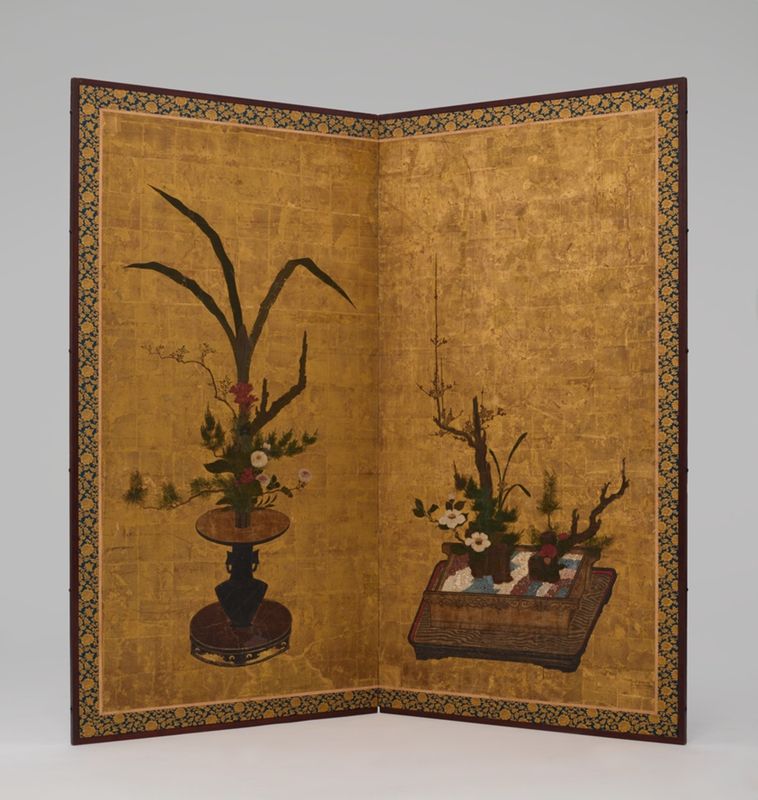 Flower Arrangements
1595 · Art Institute of Chicago
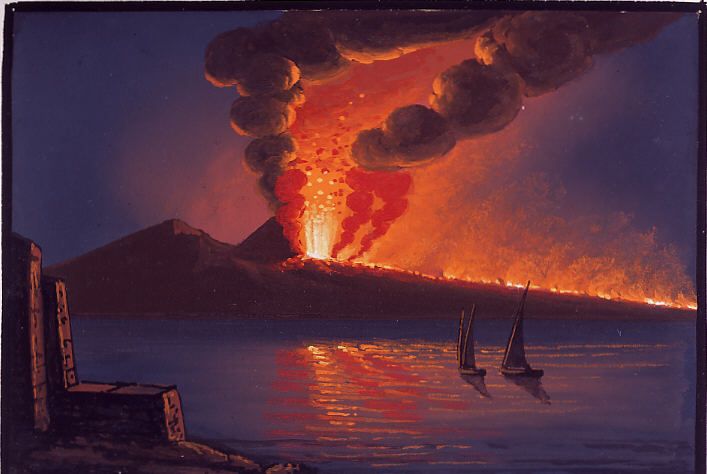 Sketchbook: Souvenir of Naples
1821 · The Metropolitan Museum of Art
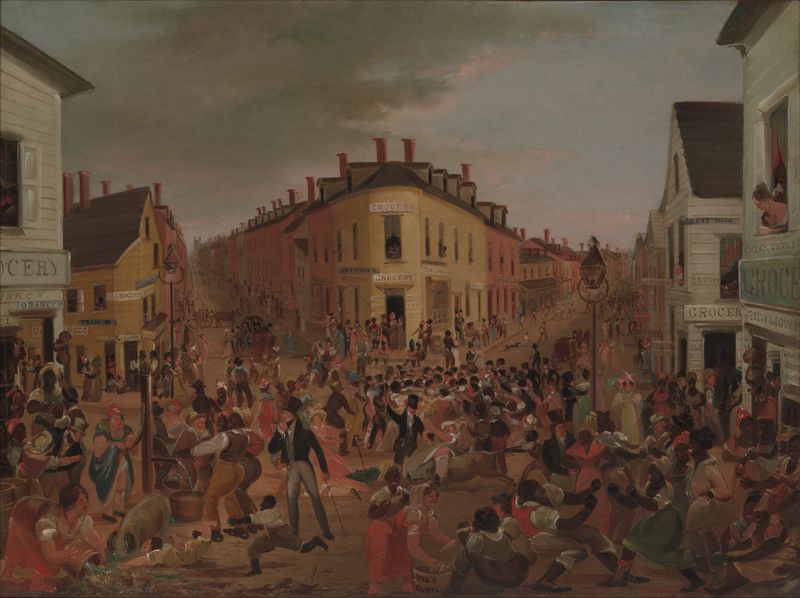 The Five Points
1822 · The Metropolitan Museum of Art
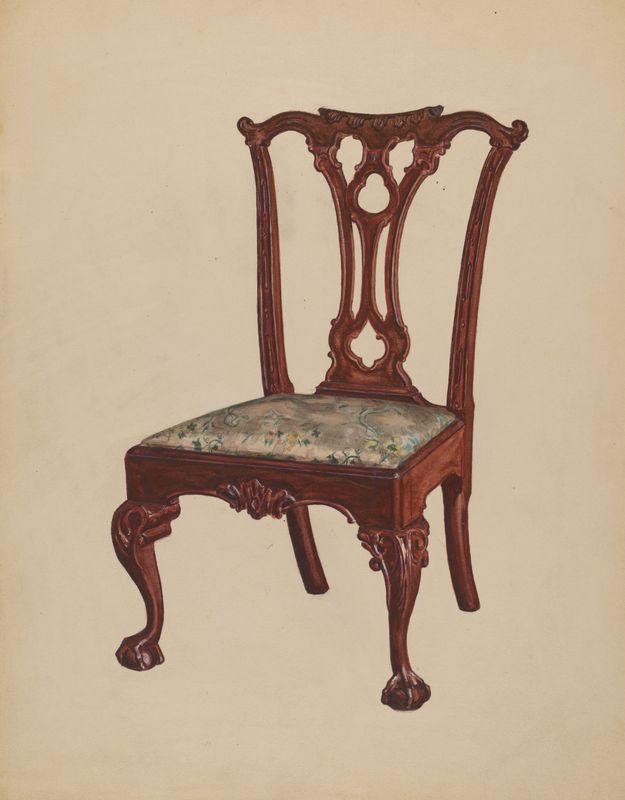 Side Chair
1750 · Art Institute of Chicago
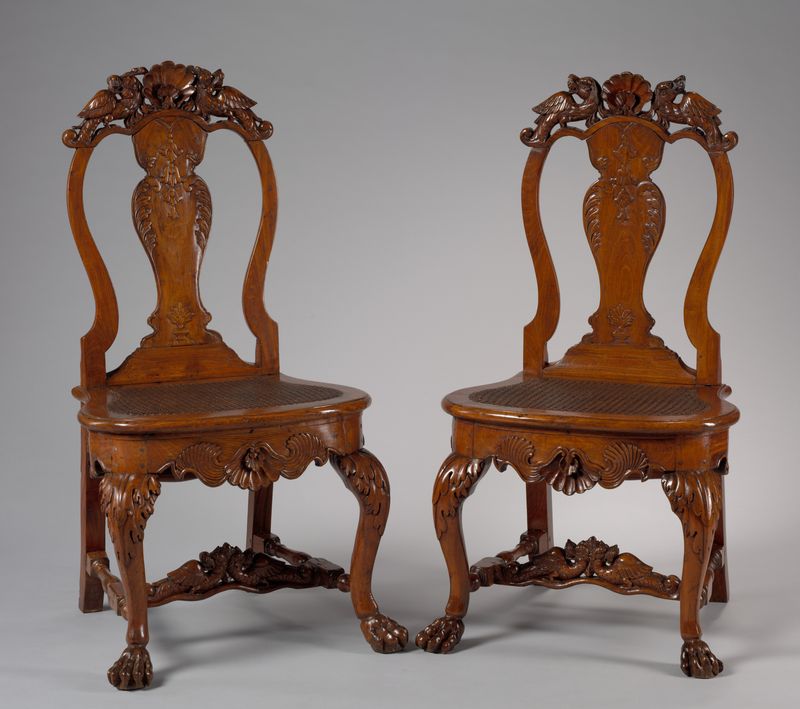 Pair of Side Chairs
1770 · Art Institute of Chicago
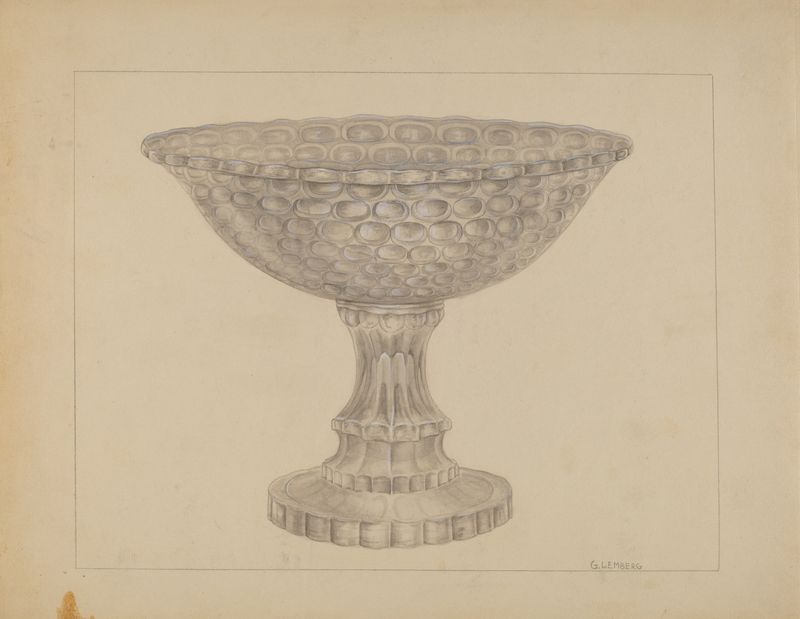 Punch Bowl
1789 · Art Institute of Chicago
Beyond Aberdeen: works from the same years.
 Same era · 1780s–1810s
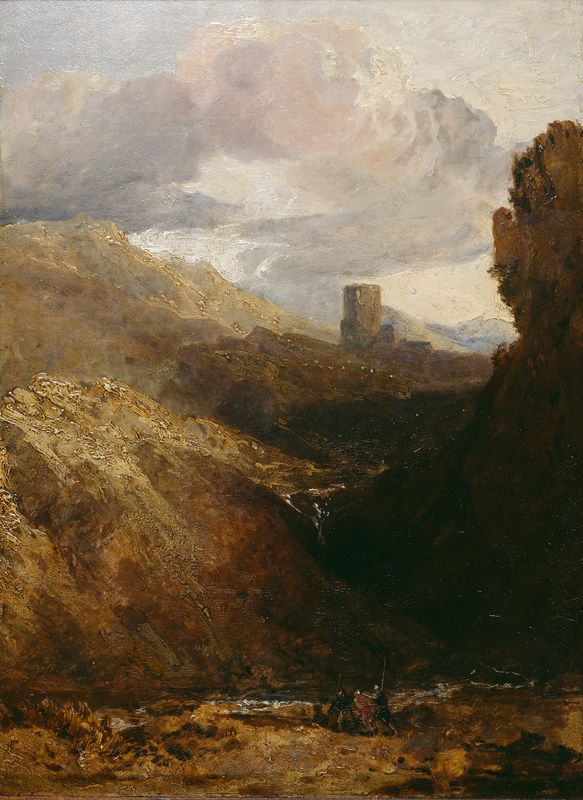
Dolbadarn Castle
J. M. W. Turner · 1800 · National Library of Wales
 Same era · 1780s–1810s
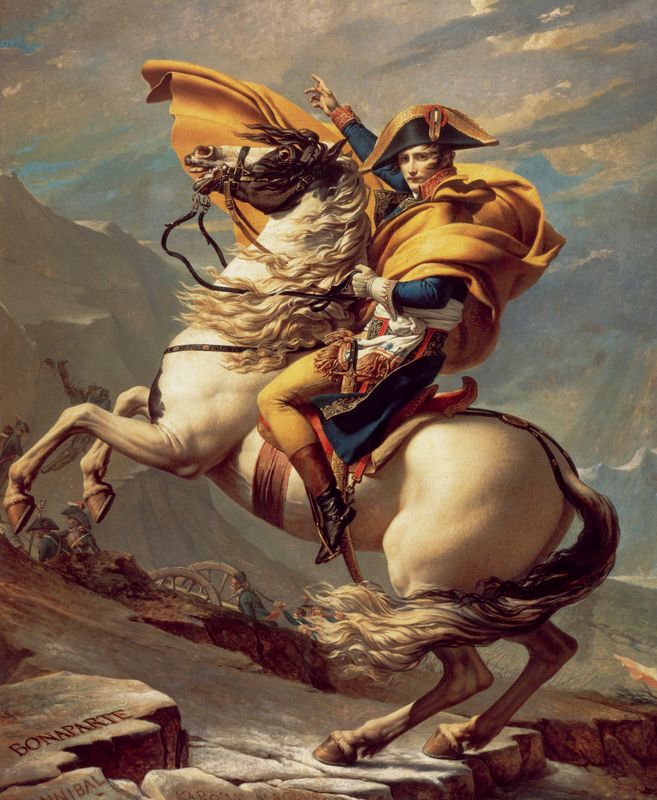
Napoleon Crossing the Alps
Jacques-Louis David · 1800 · Musée national de Malmaison et Bois-Préau
 Same era · 1780s–1810s
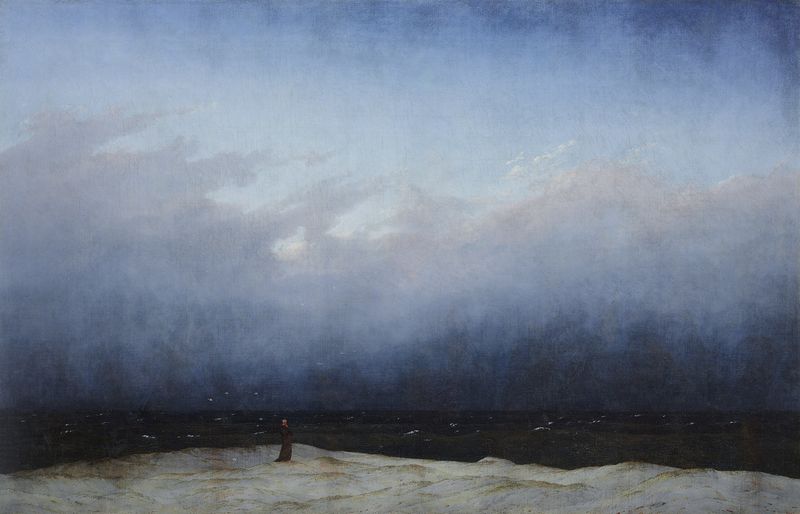
The Monk by the Sea
Caspar David Friedrich · 1800 · Alte Nationalgalerie
 Same era · 1780s–1810s
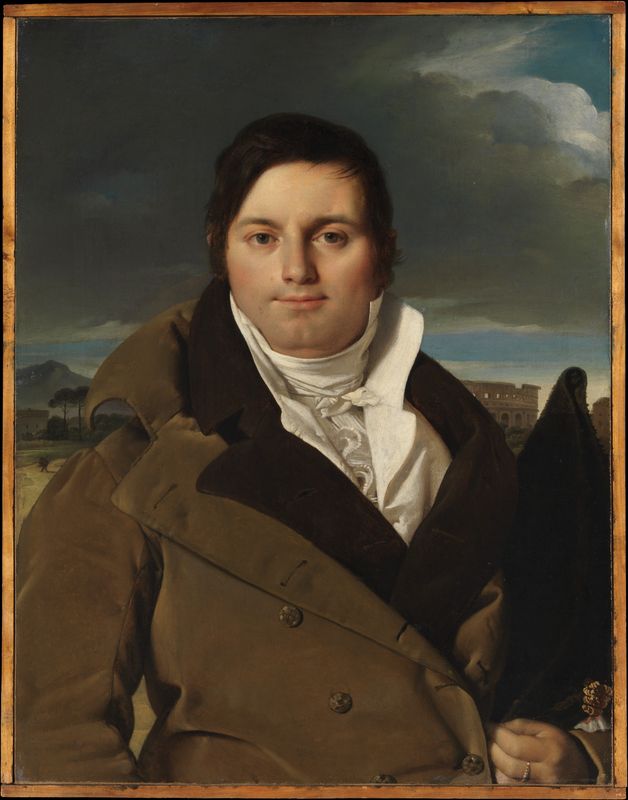
Joseph-Antoine Moltedo (born 1775)
Jean-Auguste-Dominique Ingres · 1805 · The Metropolitan Museum of Art
 Same era · 1780s–1810s
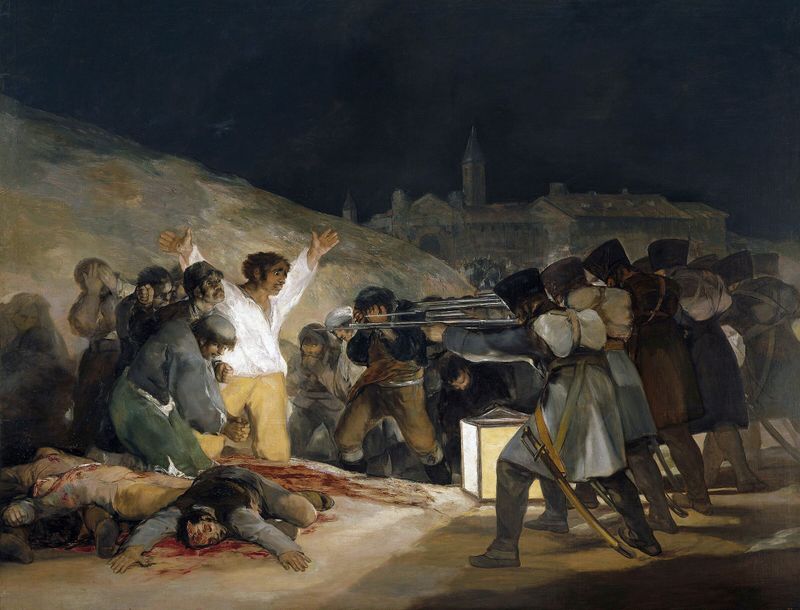
The Third of May 1808
Francisco Goya · 1814 · Museo del Prado
 Same era · 1780s–1810s
Samuel Fisher Bradford
Rembrandt Peale · 1803 · Art Institute of Chicago
 Same era · 1780s–1810s
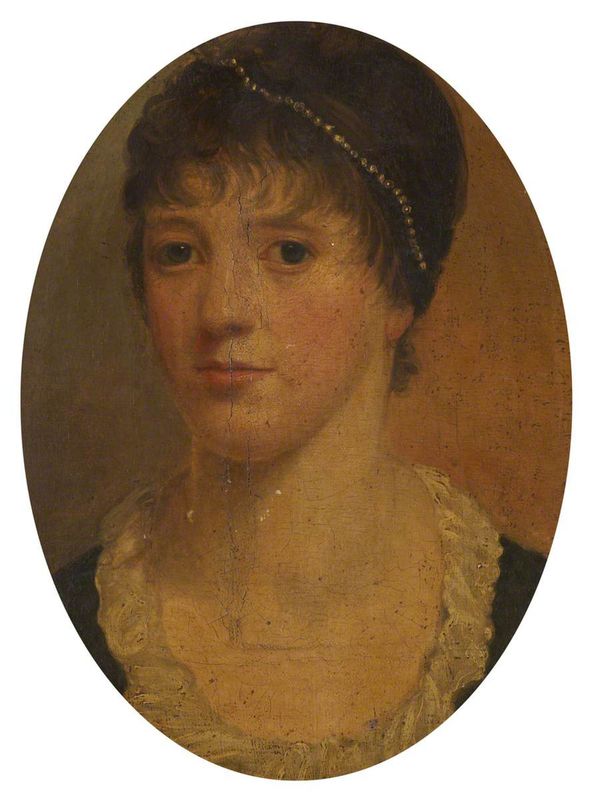
Mrs Jackson
Thomas Stewardson · 1800 · Abbot Hall Art Gallery
 Same era · 1780s–1810s
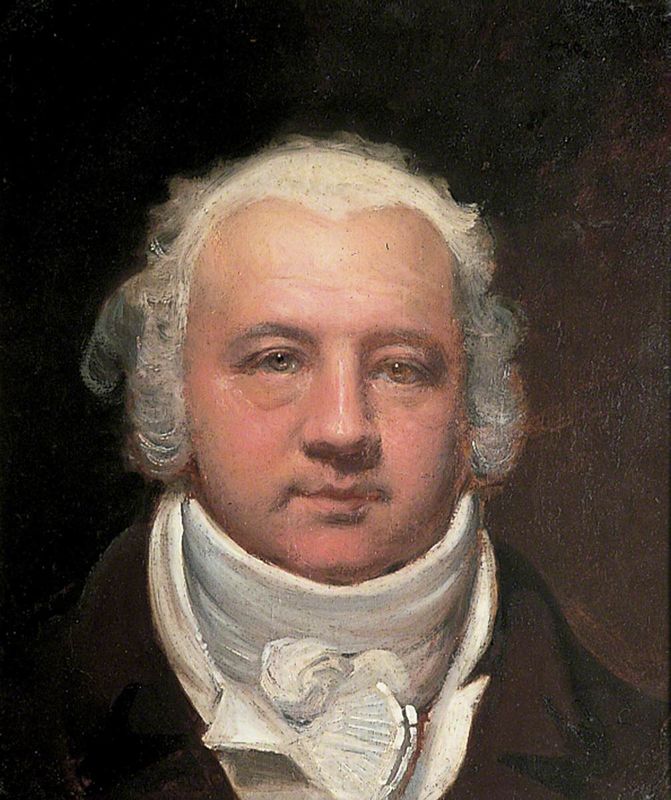
John Blake (1770–1810), Mayor of Maidstone (1799)
Samuel Drummond · 1799 · Maidstone Museum and Bentlif Art Gallery
 Same era · 1780s–1810s
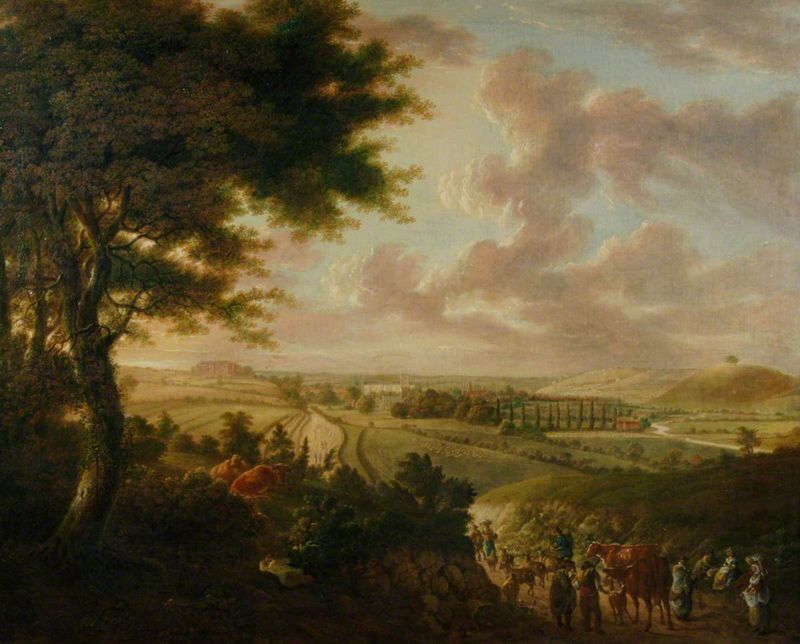
Winchester from the South
Tobias Young · 1803 · Winchester Guildhall
 Same era · 1780s–1810s
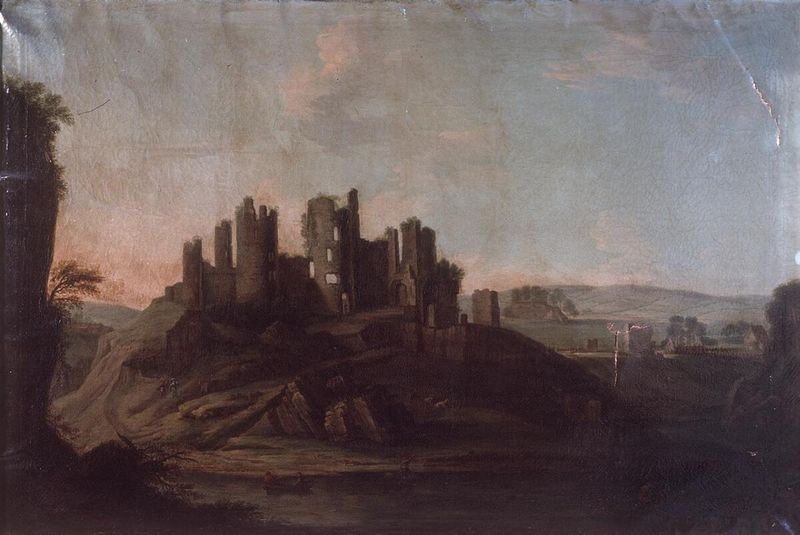
Cilgerran Castle
William Havell · 1805 · National Museum Cardiff
 Same era · 1780s–1810s
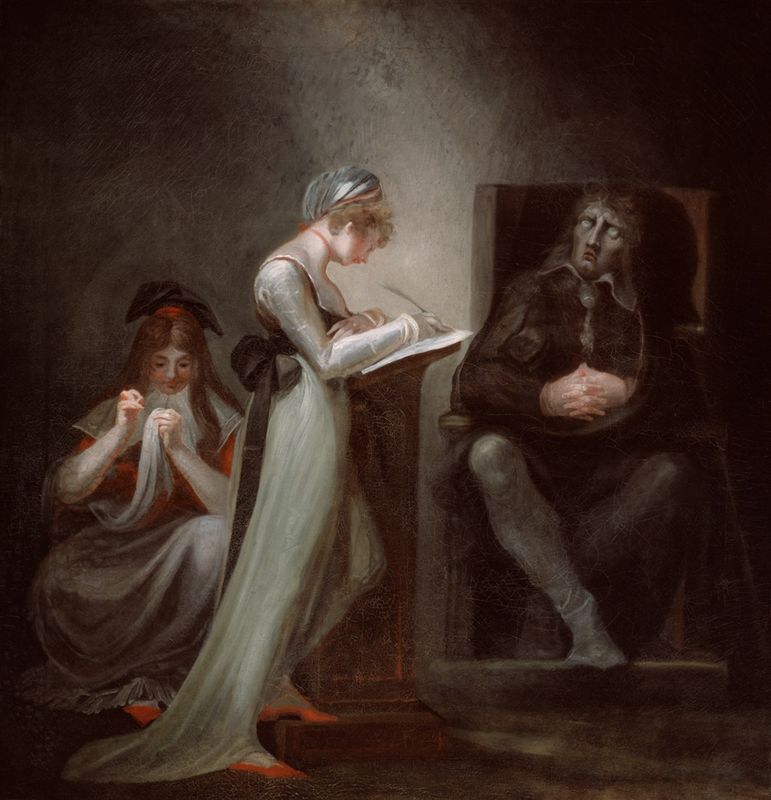
Milton Dictating to His Daughter
Henry Fuseli · 1794 · Art Institute of Chicago
 Same era · 1780s–1810s
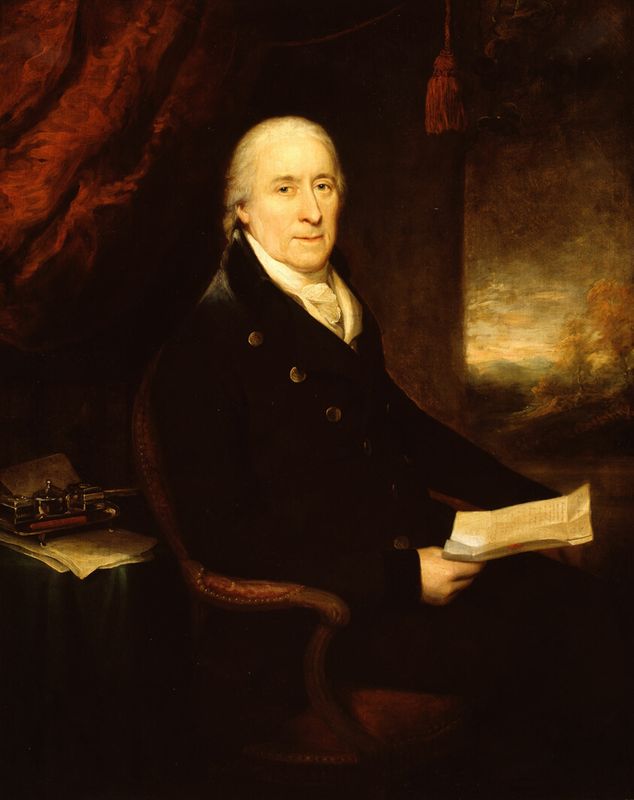
Portrait of a Man
Benjamin West · 1790 · Art Institute of Chicago
