Mirrored flower garlands
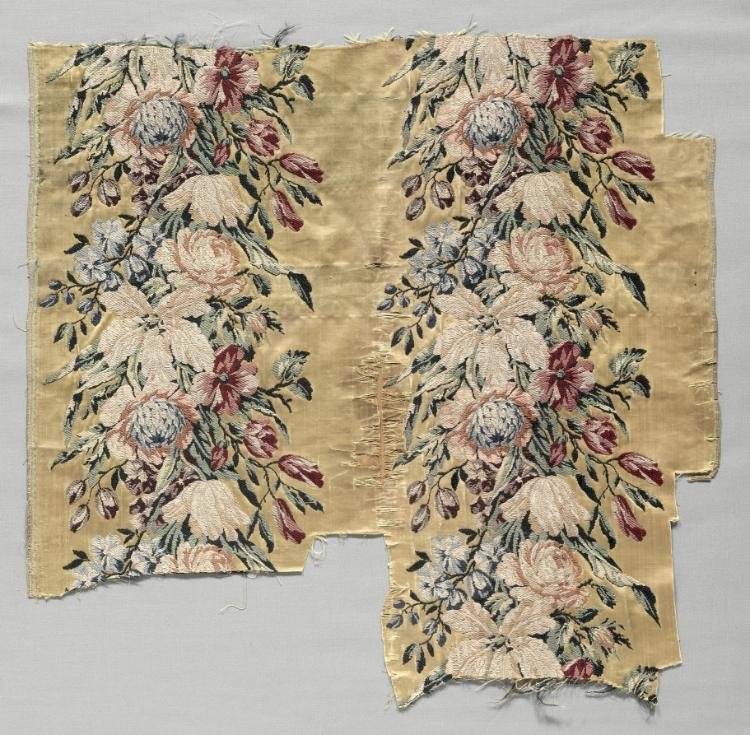
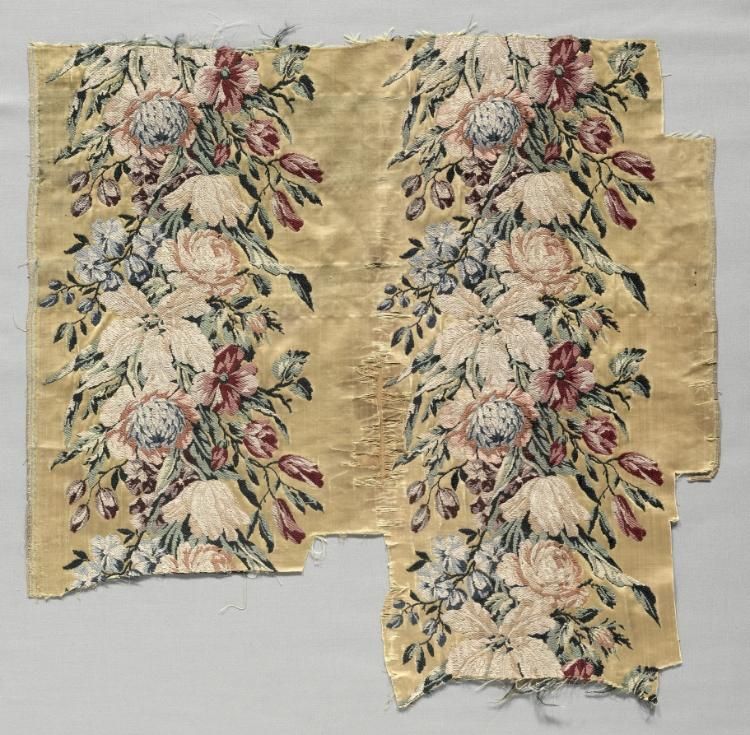
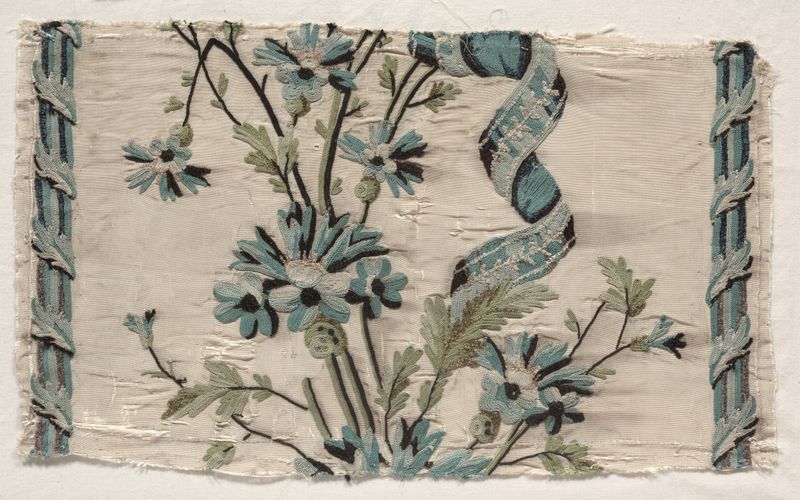
Two vertical garlands of flowers rise side by side, and the right one nearly repeats the left. The repeated motif suggests the silk was woven with a regular pattern, and the cut edges show it was later trimmed.

“Step into the luxurious world of 18th-century French textiles with this exquisite silk brocade. Its intricate weaving and vibrant floral design offer a glimpse into the era's refined taste and the artistry of Lyon's master weavers.”
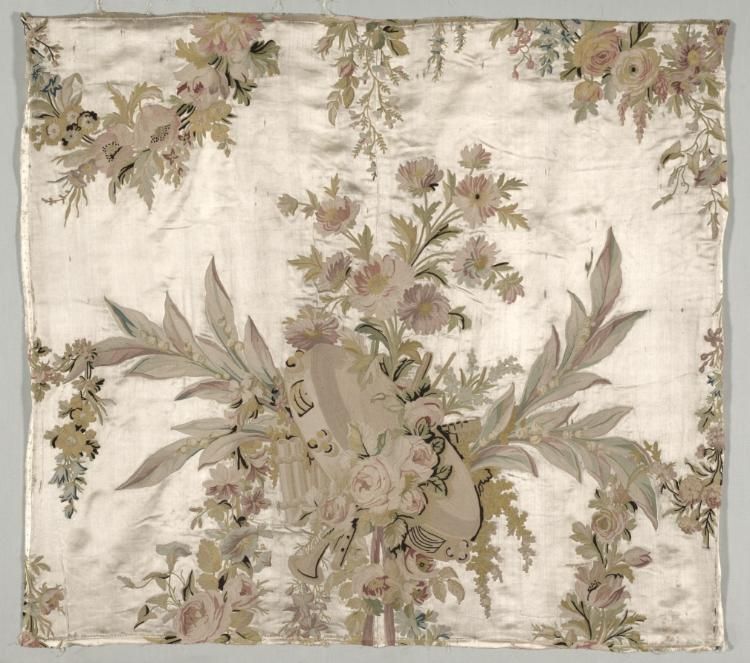
This vibrant silk brocade, rich with floral motifs, embodies the opulence of French Rococo design. Swirling ribbons and delicate garlands create a sense of playful movement across the fabric, a characteristic of the mid-18th century when natural forms were highly stylized. The intricate weaving technique, known as brocade, allowed for multiple colors and textures to be integrated directly into the fabric, rather than embroidered on top. This piece, dating to 1774, was created during a period when textiles were not merely decorative but also powerful statements of wealth and taste, adorning palaces and fashionable homes. Philippe de la Salle, a prominent designer from Lyon, was celebrated for his innovative patterns and technical mastery in silk production, contributing significantly to France's reputation as a leader in luxury textiles. His designs often featured asymmetrical arrangements and a lightness that was distinctively Rococo.

Five details hide in plain sight. Pick one and we’ll show you exactly where to look.
Two vertical garlands of flowers rise side by side, and the right one nearly repeats the left. The repeated motif suggests the silk was woven with a regular pattern, and the cut edges show it was later trimmed.
Find the blue-grey flower with a spiky, thistle-like head near the top of the left strip. Its cool tones set it apart from the warm pinks and reds around it.
On the large pink rose at left center, the color shifts from cream to peach in small steps. Fine threads in different shades build the rounded form.
Along the inner edge of the right strip, the silk has worn into loose, dangling threads. You can see the weave underneath and how fragile the fabric has become.
Look at the deep red flower with a small pale center at the top of the left band. Its saturated color is the strongest accent on the pale gold ground.
The full narration walks you through Brocaded Silk — the story behind it, the details most visitors miss, and why it matters. Free in the Art Whisper app.
Philippe de la Salle was a master of 18th-century Lyon silk weaving, known for luxurious textiles like his 'Branche de Corail'.
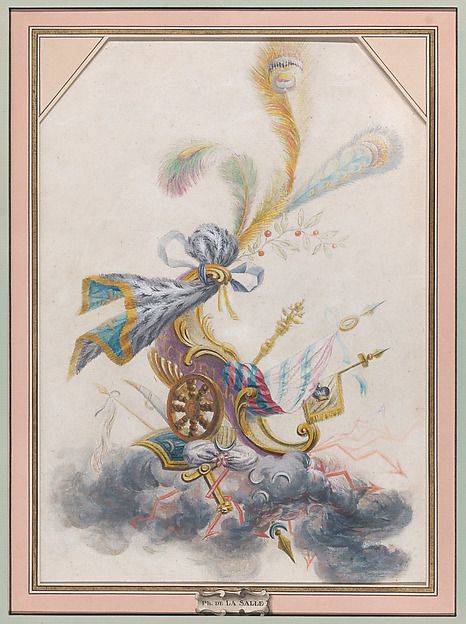
Design for a Lampas Silk with a Triumphal Chariot on a Cloud
1765 · The Metropolitan Museum of Art
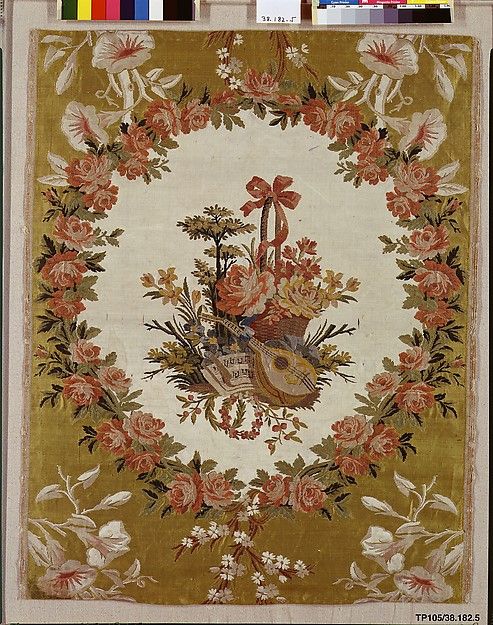
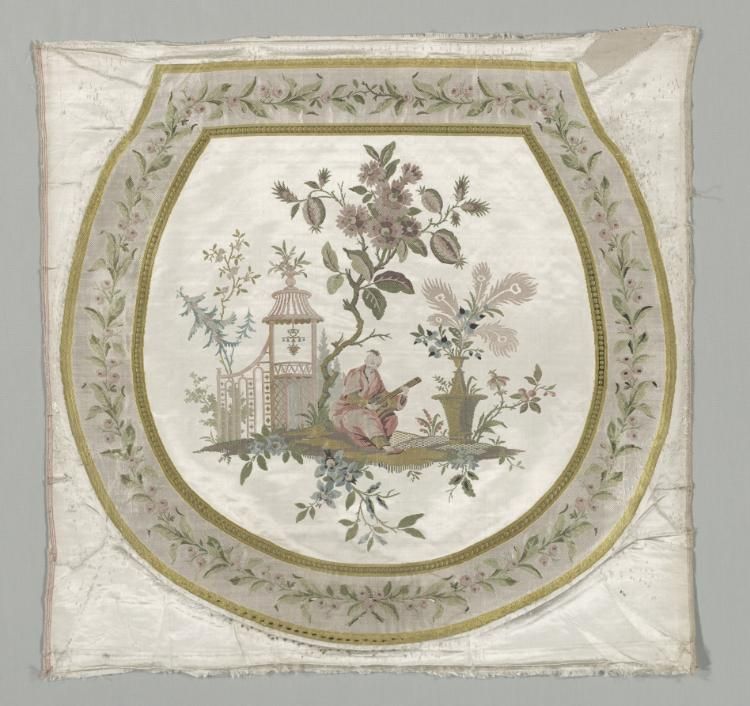
Chair back
1765 · The Metropolitan Museum of Art
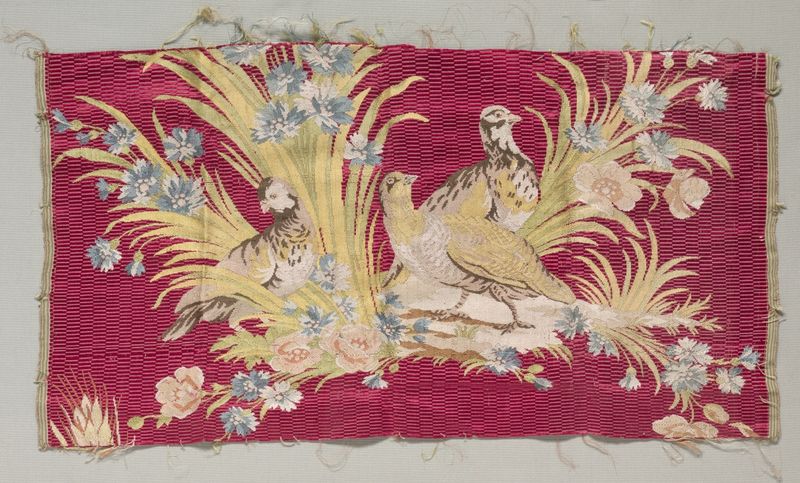
Two Pieces of Embroidery
1723 · Cleveland Museum of Art
Upholstery for a Chair Seat
1738 · Cleveland Museum of Art
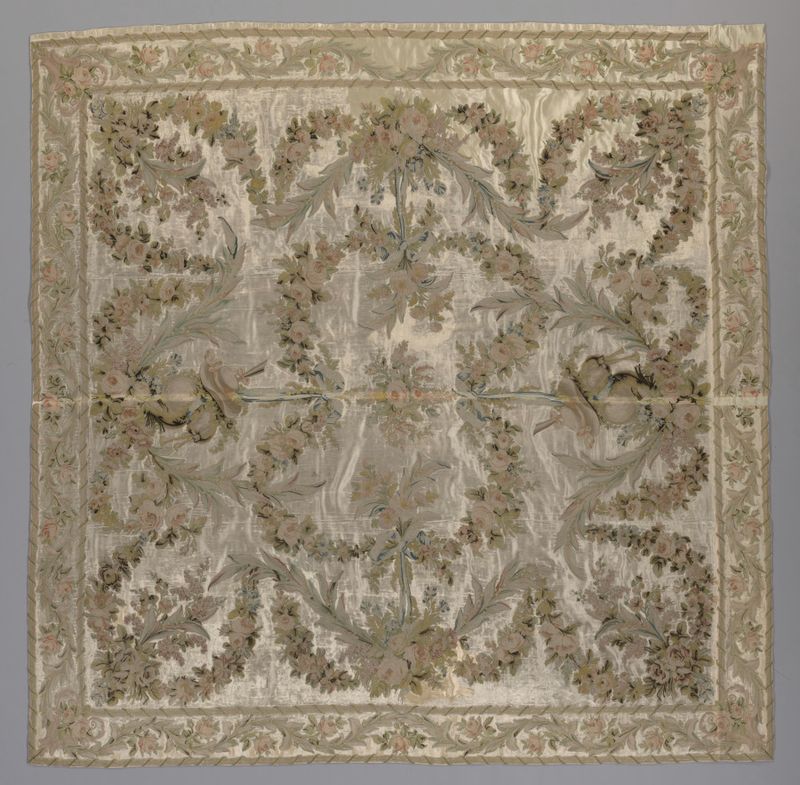
Coverlet
1755 · Cleveland Museum of Art
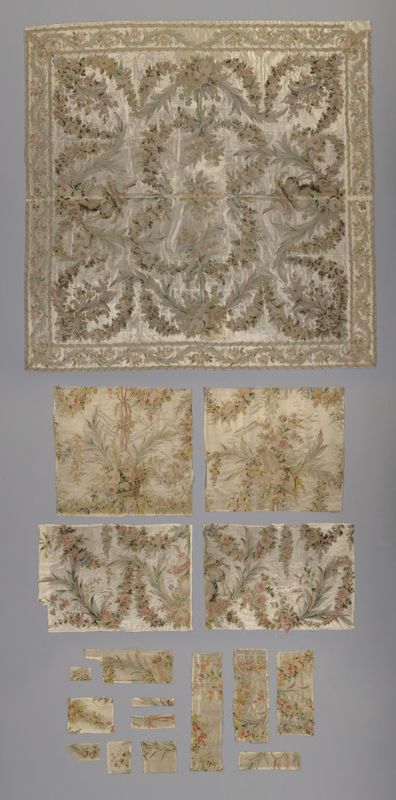
Coverlet and Fragments
1755 · Cleveland Museum of Art
Coverlet Fragment
1755 · Cleveland Museum of Art
Silk Fragment
1770 · Cleveland Museum of Art
Beyond de la Salle: works from the same years.
Same era · 1750s–1780s
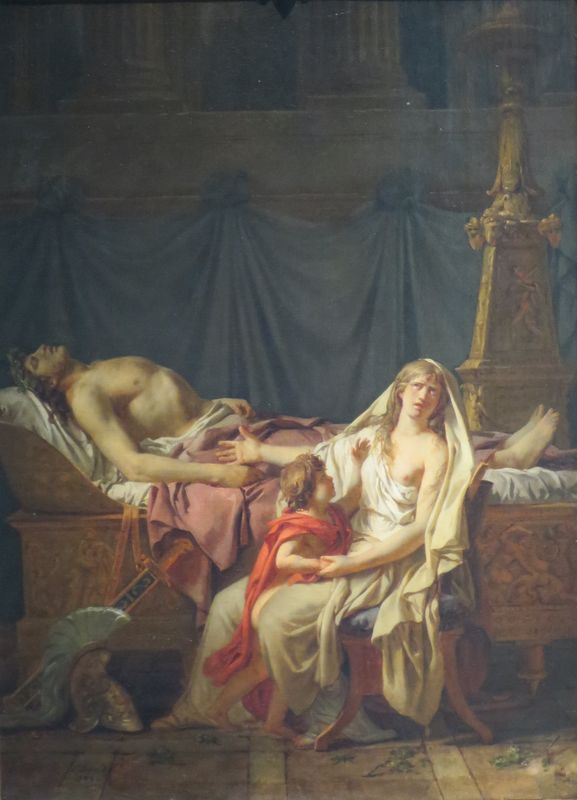
Andromache Mourning Hector
Jacques-Louis David · 1783 · Pushkin Museum of Fine Arts
Same era · 1750s–1780s
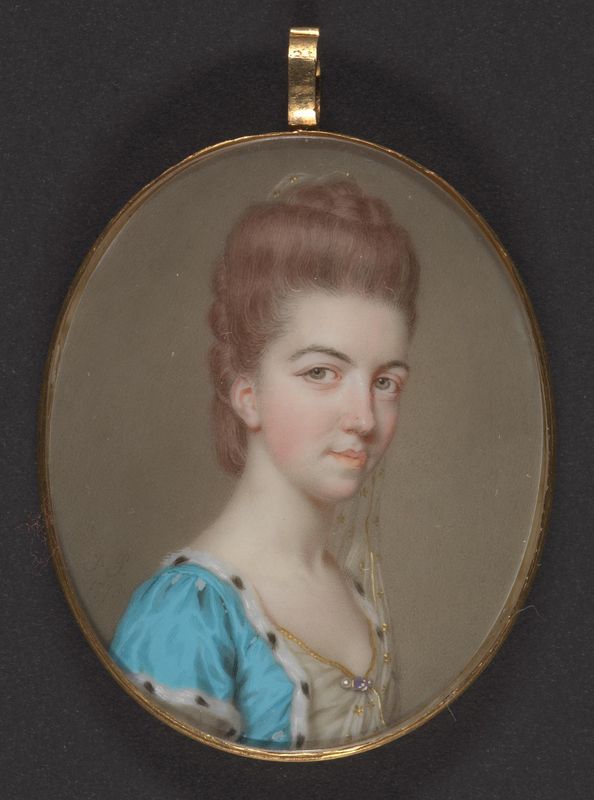
Portrait of a Lady
John Smart of Ipswich · 1773 · Yale Center for British Art
Same era · 1750s–1780s
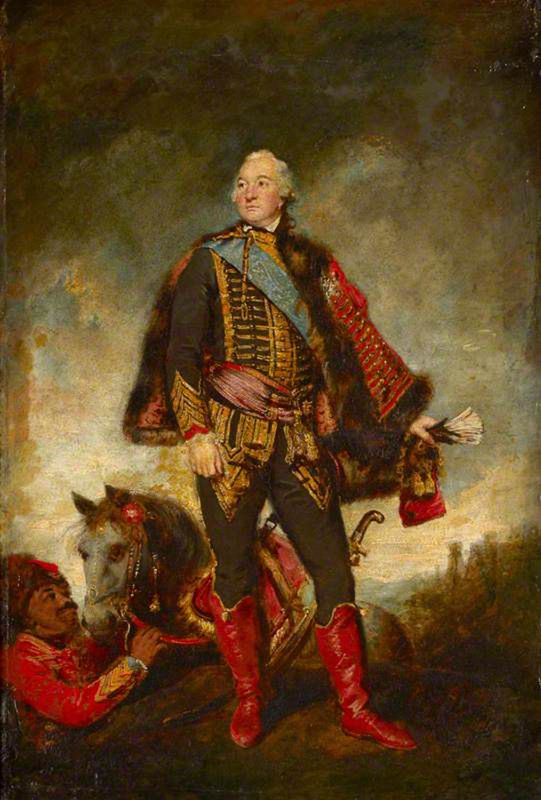
Louis-Philippe-Joseph, Duke of Orleans 'Philippe Egalité' (1747-1793) (after Sir Joshua Reynolds)
Samuel Drummond · 1785 · National Trust
Same era · 1750s–1780s
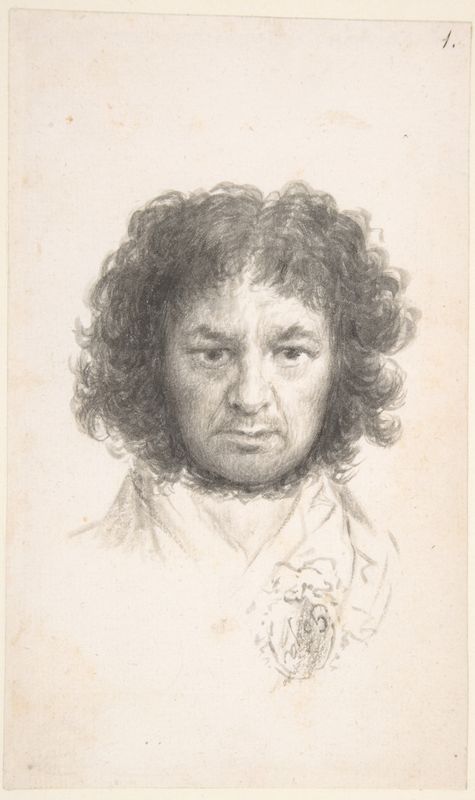
Self-Portrait
Francisco Goya · 1783 · Musée des Beaux-Arts d'Agen
Same era · 1750s–1780s
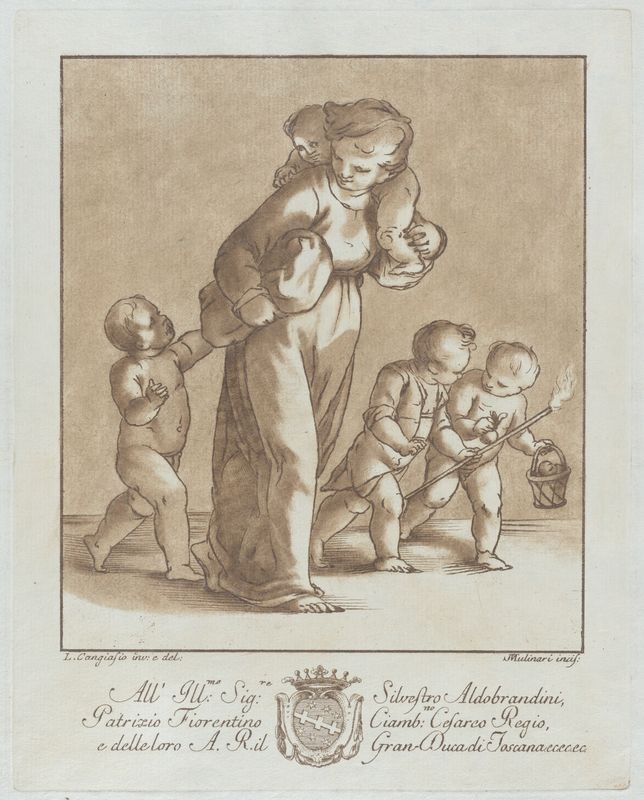
A young girl walks towards the left with one infant on her shoulder and holding another small child's hand, while two children walk at right with a torch and a basket
Luca Cambiaso · 1775 · The Metropolitan Museum of Art
Same era · 1750s–1780s
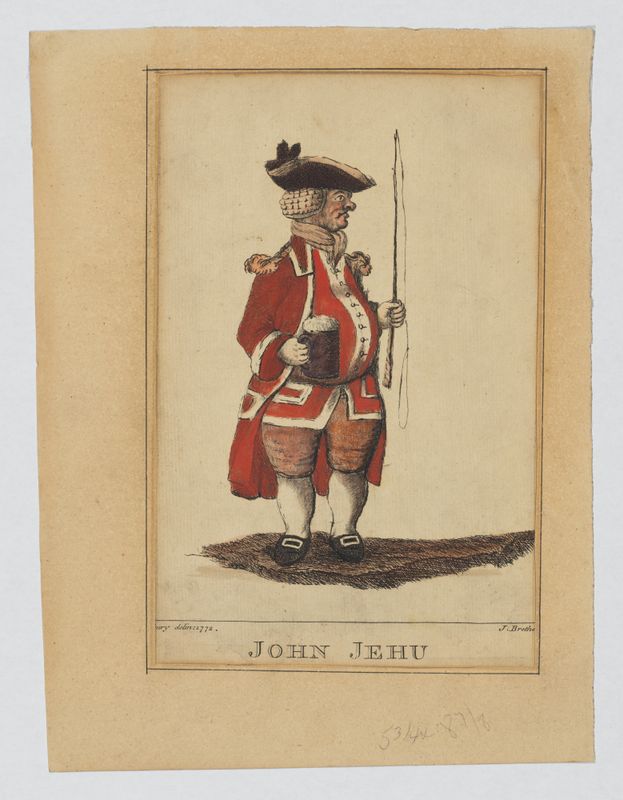
John Jehu, L'Inghilterra
James Bretherton · 1772 · The Metropolitan Museum of Art
Same era · 1750s–1780s
Hot milk jug
Höchst Manufactory · 1770 · The Metropolitan Museum of Art
Same era · 1750s–1780s
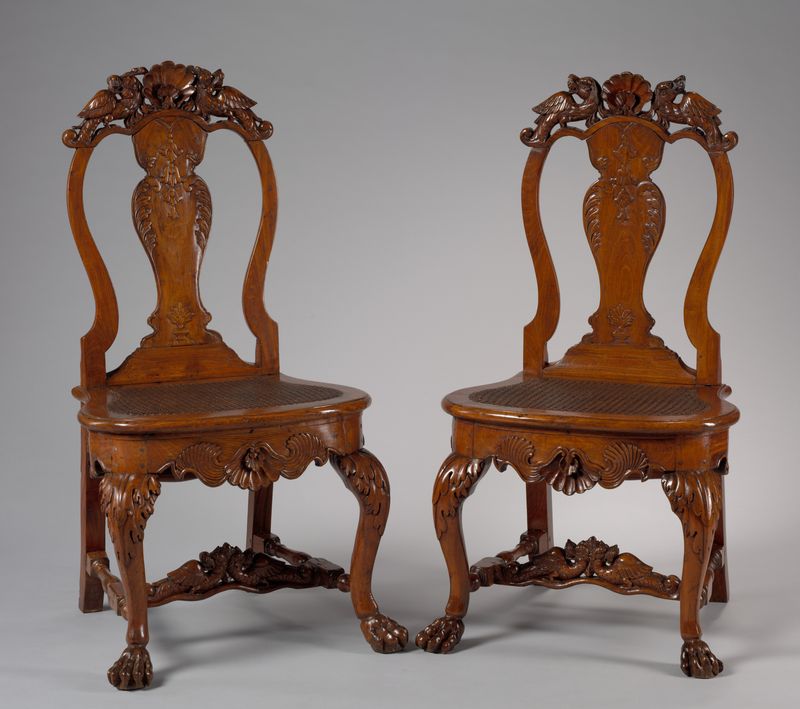
Pair of Side Chairs
Artist Unknown - The Mercat Cross, Aberdeen · 1770 · Art Institute of Chicago
Same era · 1750s–1780s
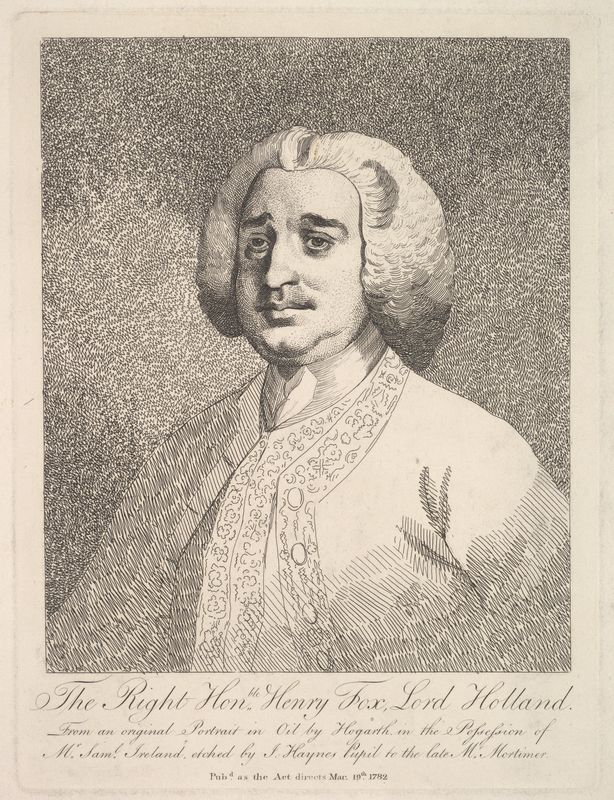
The Right Honorable Henry Fox, Lord Holland
William Hogarth · 1782 · The Metropolitan Museum of Art
Same era · 1750s–1780s
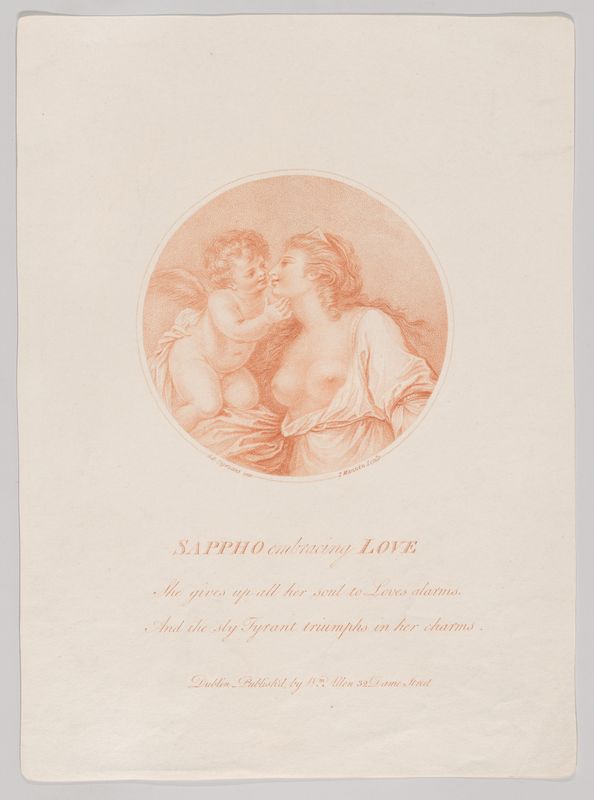
Sappho embracing Love
John Mannin · 1786 · The Metropolitan Museum of Art
Same era · 1750s–1780s
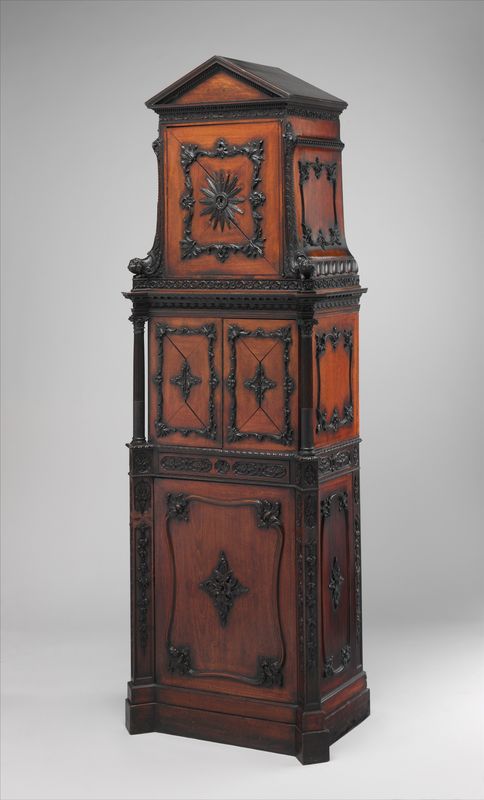
Medal cabinet
William Vile · 1760 · The Metropolitan Museum of Art
Same era · 1750s–1780s
Fan
Benjamin West · 1775 · Art Institute of Chicago