01
Praying petal arch
Two pale petals lean together at the top and meet in a pointed arch. The shape guides your eye down toward the dark center, a bit like a doorway.
1 of 4 on the painting
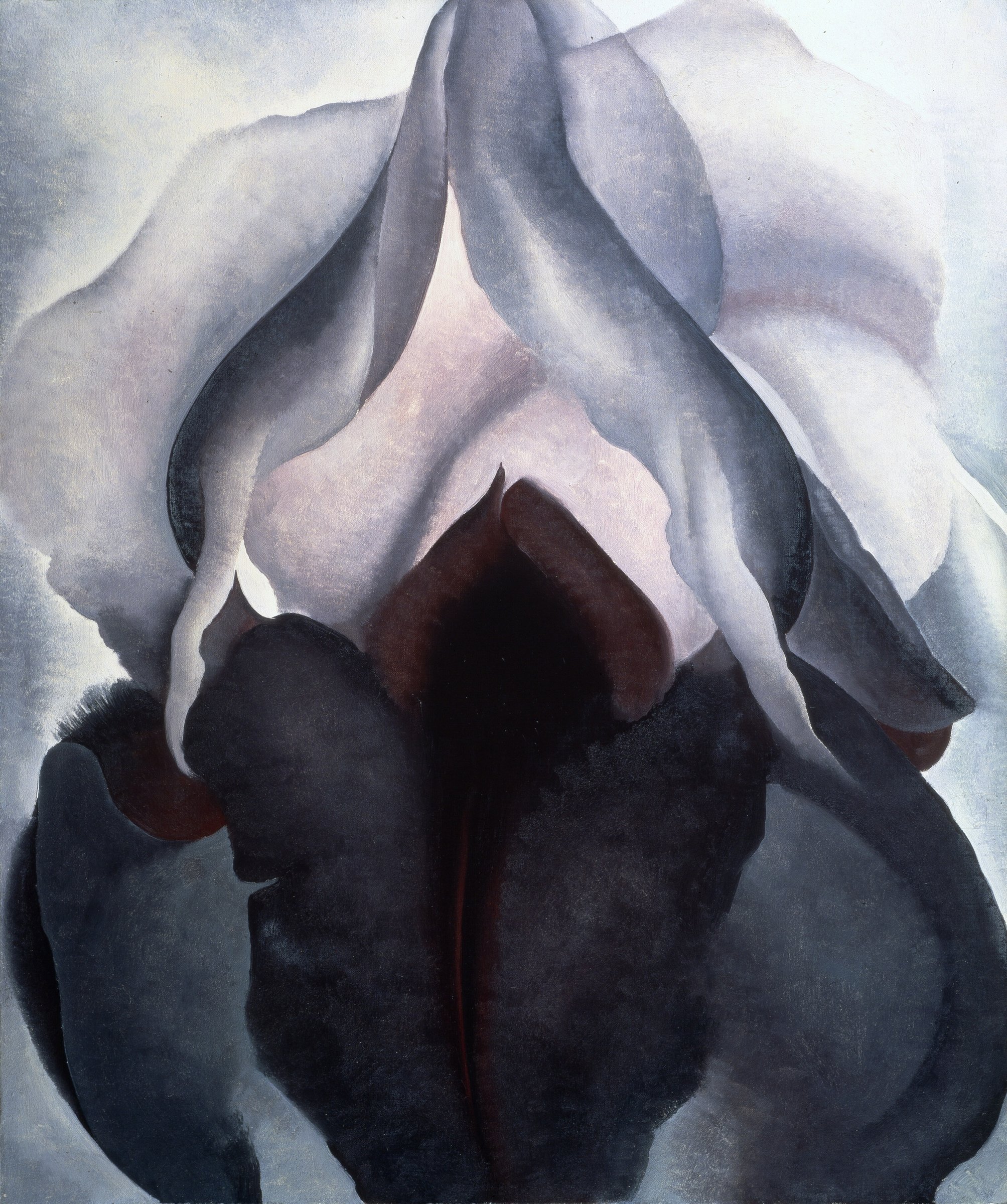
“Step close to experience this iconic Georgia O'Keeffe painting, where a single, magnified iris becomes a powerful, almost abstract form, inviting you to look beyond its surface and into its mysterious depths.”
A monumental iris fills this canvas, its dark, velvety petals rendered in deep purples, maroons, and blacks. The flower is seen in extreme close-up, its forms swelling and receding as if breathing, drawing you into its mysterious center. The upper petals, brushed with hints of pink, gray, and white, catch an unseen light, creating a stark contrast with the profound shadows below. This dramatic scale and intimate perspective transform a common garden bloom into something otherworldly and powerful. When this painting was first exhibited, some viewers interpreted it as a metaphor for female anatomy, a reading the artist firmly rejected. She insisted that her intention was to make people truly see the flower itself, stripped of external associations, focusing instead on its inherent beauty and vital energy.
Five details hide in plain sight. Pick one and we’ll show you exactly where to look.
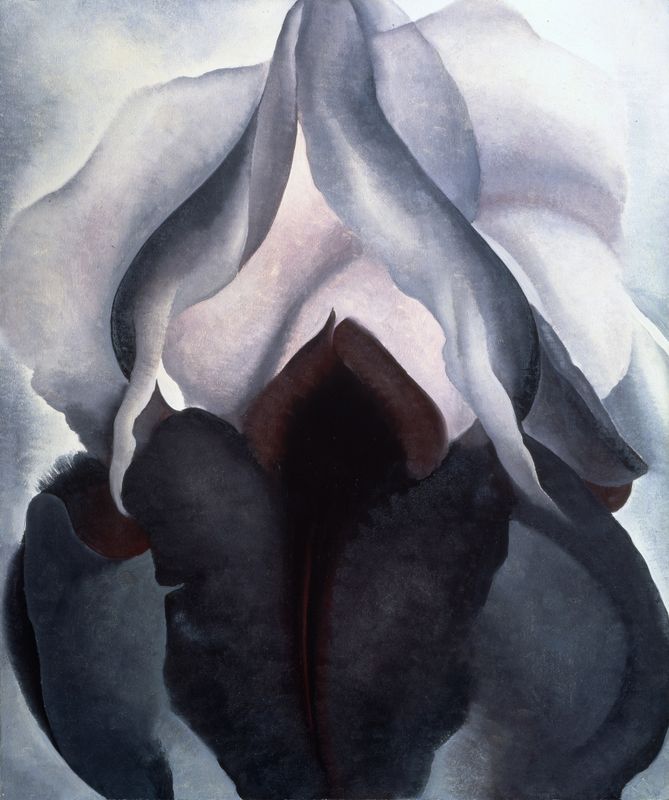
Two pale petals lean together at the top and meet in a pointed arch. The shape guides your eye down toward the dark center, a bit like a doorway.
Find the near-black vertical opening at the center, with a thin dark red line running down it. The surrounding shapes draw your eye toward this deep core of the painting.
Between the pale petals, a soft pink-lilac glow sits just above the darkest area. The light tone makes the dark center look even deeper.
At the upper left, the pale petals dissolve into a hazy gray-white ground with no hard outline. The soft blending makes the flower seem to glow.
The iris is cropped so close that it fills the whole canvas, and its petals read as soft folds and hollows. At this scale the flower becomes almost abstract, and viewers have often found their own associations in it.
The full narration walks you through Black Iris — the story behind it, the details most visitors miss, and why it matters. Free in the Art Whisper app.
Georgia O'Keeffe, the 'Mother of American modernism,' transformed natural forms into powerful abstractions, from magnified flowers to the stark beauty of the New Mexico desert.
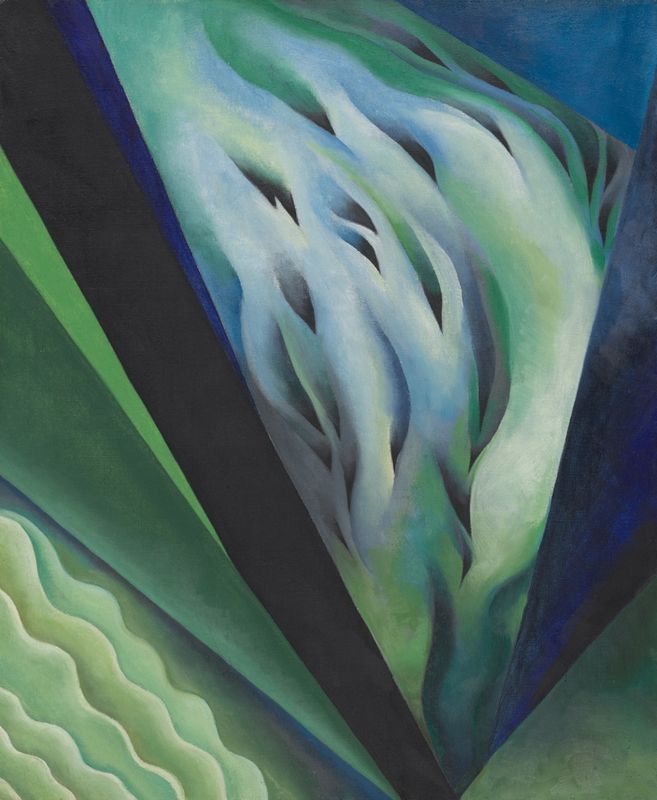 Blue and Green Music
1919 · Art Institute of Chicago
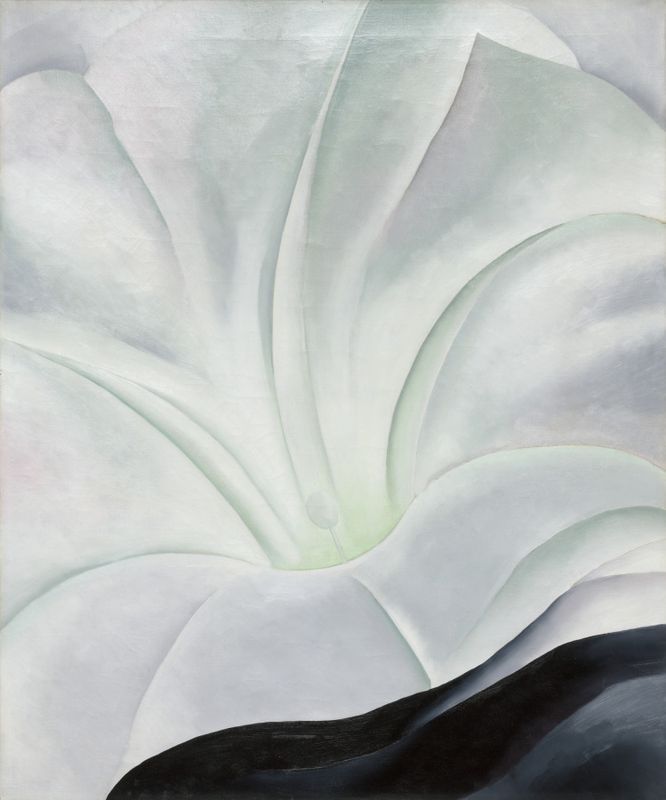 Morning Glory with Black
1926 · Cleveland Museum of Art
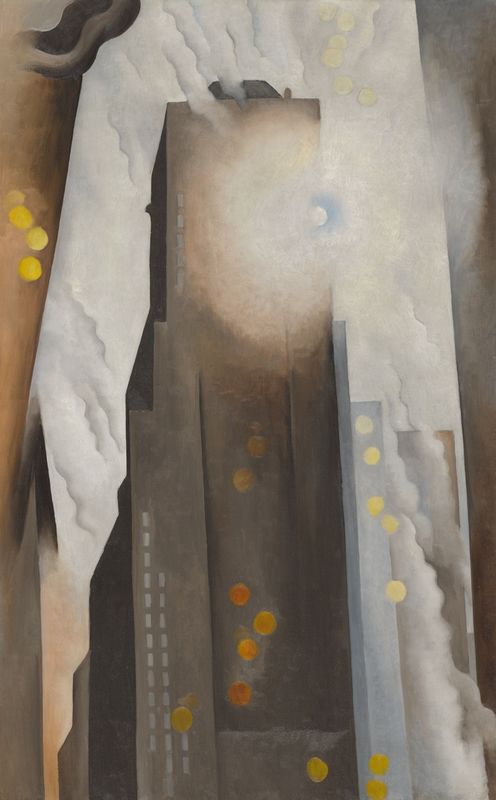 The Shelton with Sunspots, N.Y.
1926 · Art Institute of Chicago
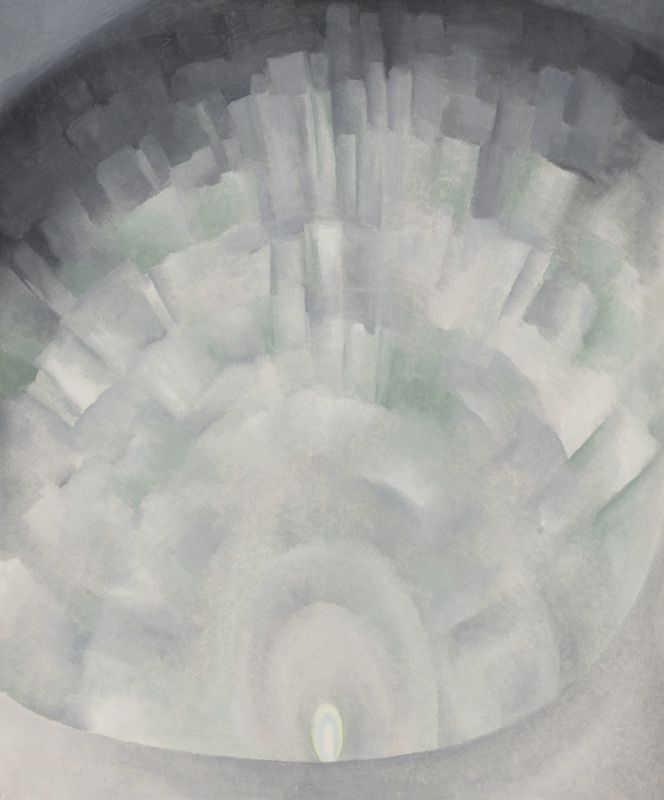 Ballet Skirt or Electric Light (from the White Rose Motif)
1927 · Art Institute of Chicago
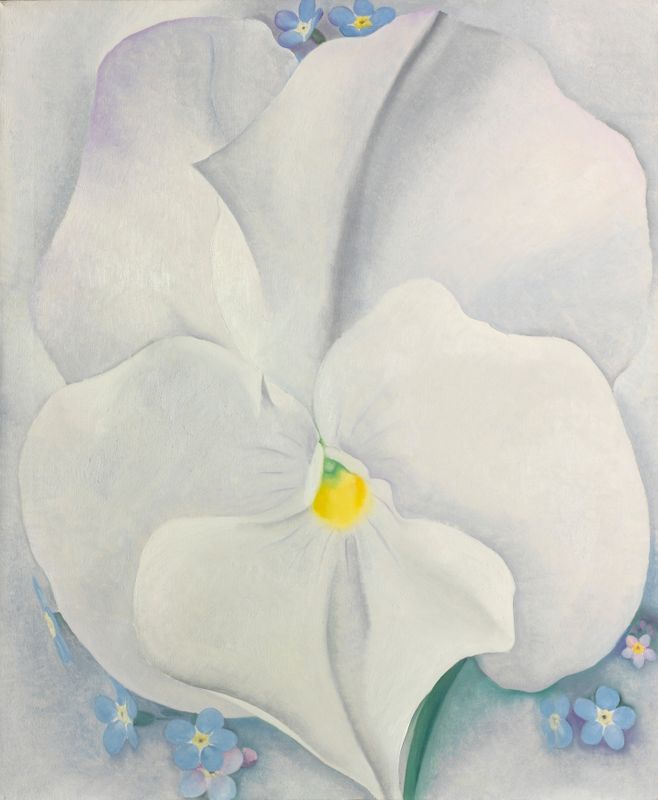 White Pansy
1927 · Cleveland Museum of Art
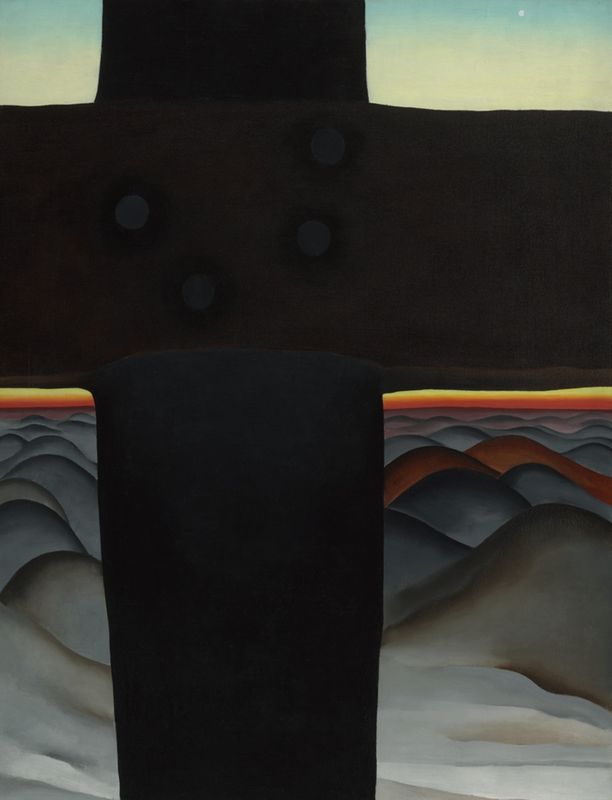 Black Cross, New Mexico
1929 · Art Institute of Chicago
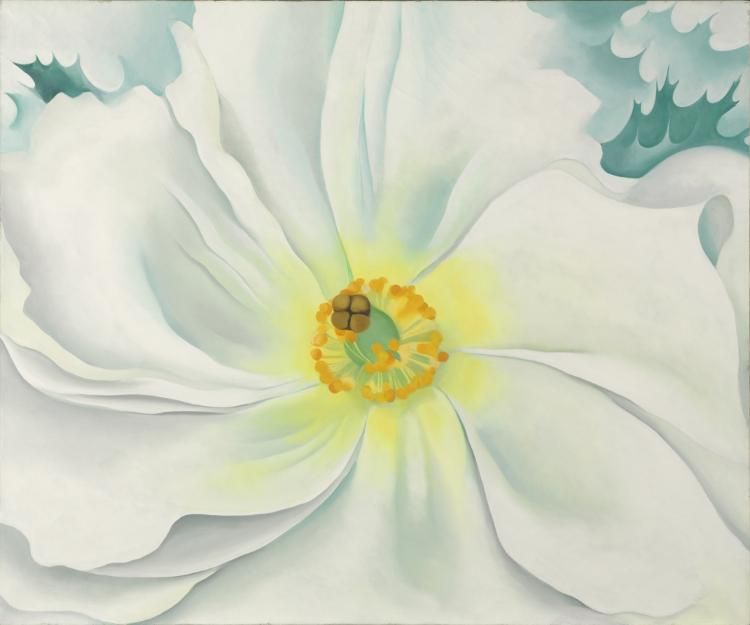 White Flower
1929 · Cleveland Museum of Art
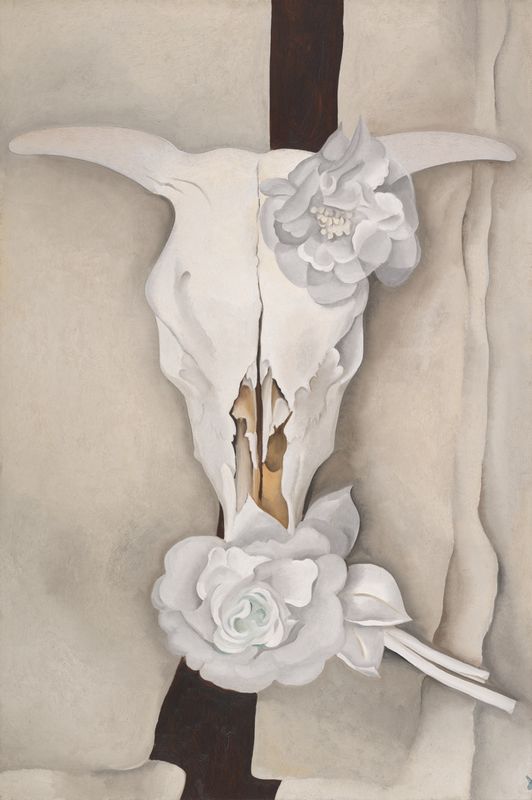 Cow's Skull with Calico Roses
1931 · Art Institute of Chicago
Beyond O'Keeffe: works from the same years.
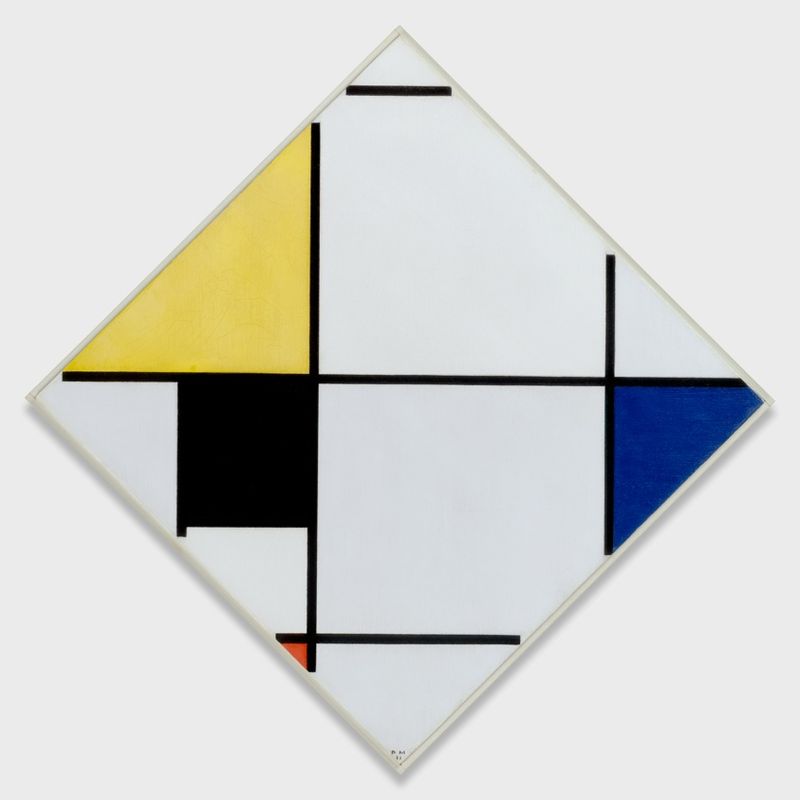 Same era · 1910s–1940s
Lozenge Composition with Yellow, Black, Blue, Red, and Gray
Piet Mondrian · 1921 · Art Institute of Chicago
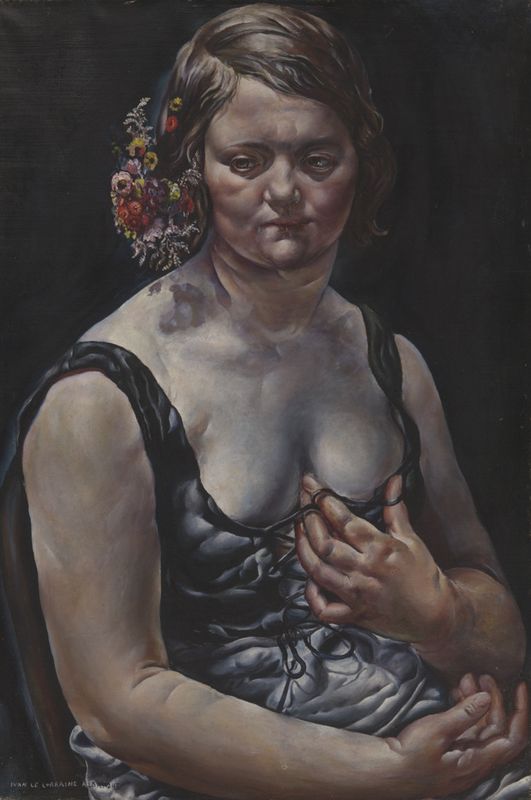 Same era · 1910s–1940s
Memories of the Past
Ivan Puni · 1927 · Art Institute of Chicago
 Same era · 1910s–1940s
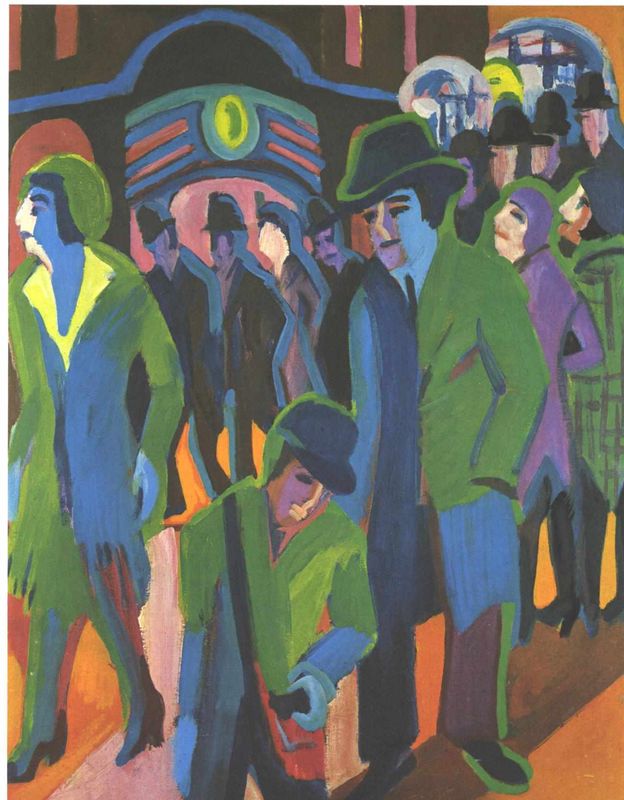
Straße mit Passanten bei Nachtbeleuchtung
Ernst Ludwig Kirchner · 1927 · Museum Frieder Burda
 Same era · 1910s–1940s
American Gothic
Okada Saburosuke · 1930 · Art Institute of Chicago
 Same era · 1910s–1940s
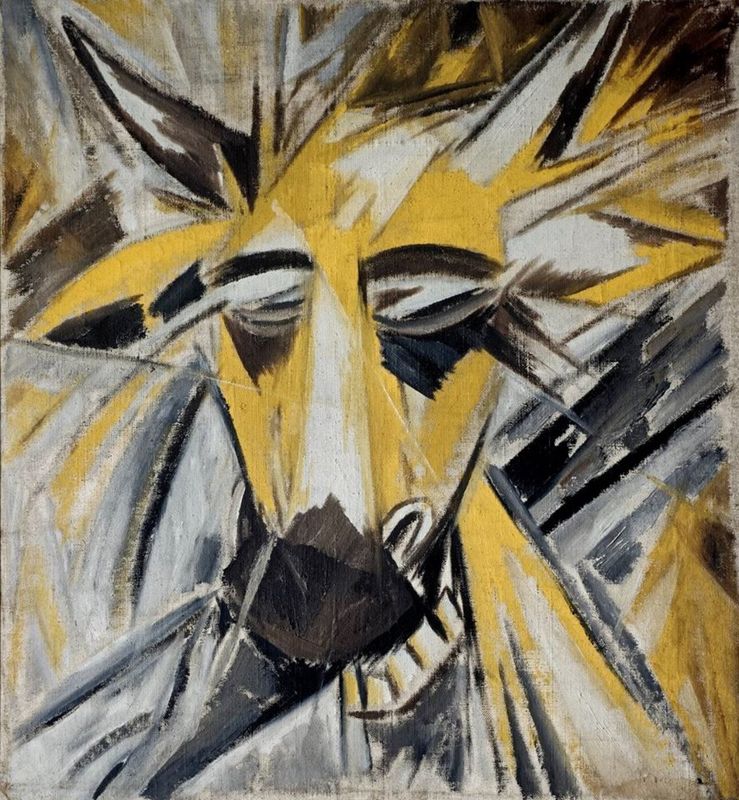
Bull's Head
Mikhail Larionov · 1913 · Tretyakov Gallery
 Same era · 1910s–1940s
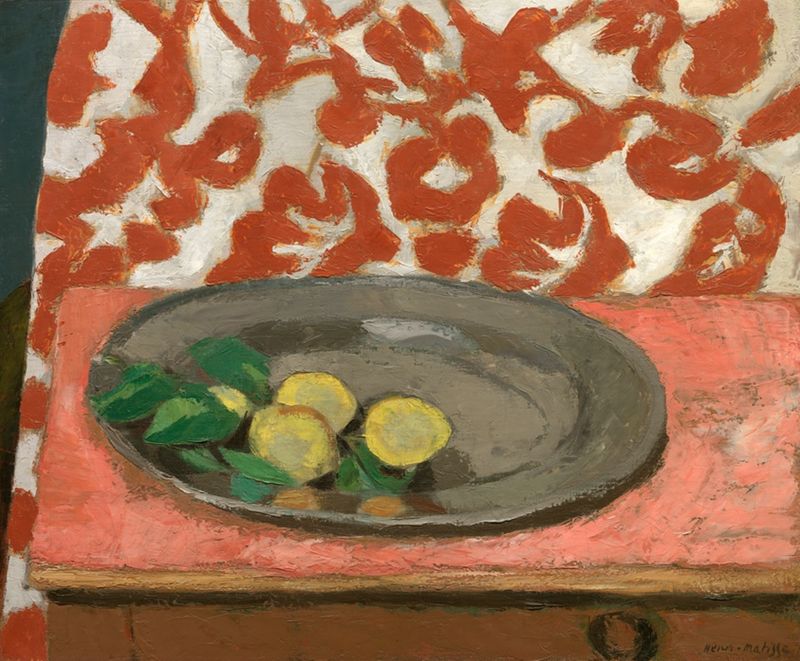
Lemons on a Pewter Plate
Henri Matisse · 1926 · Art Institute of Chicago
 Same era · 1910s–1940s
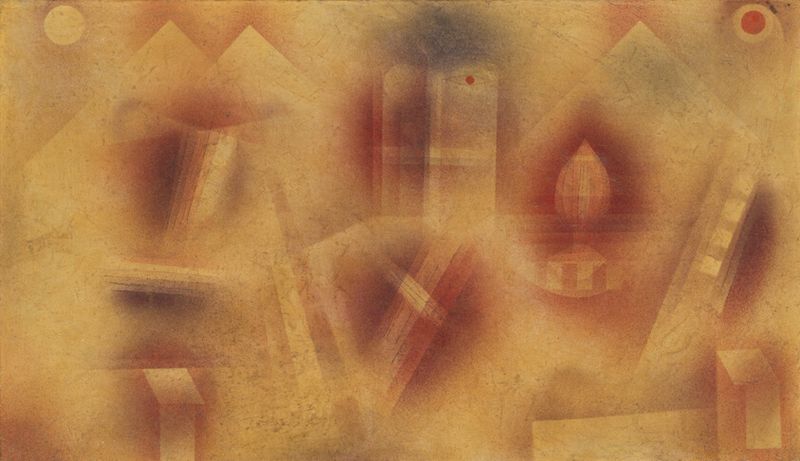
Still Life with Fragments
Paul Klee · 1925 · Art Institute of Chicago
 Same era · 1910s–1940s
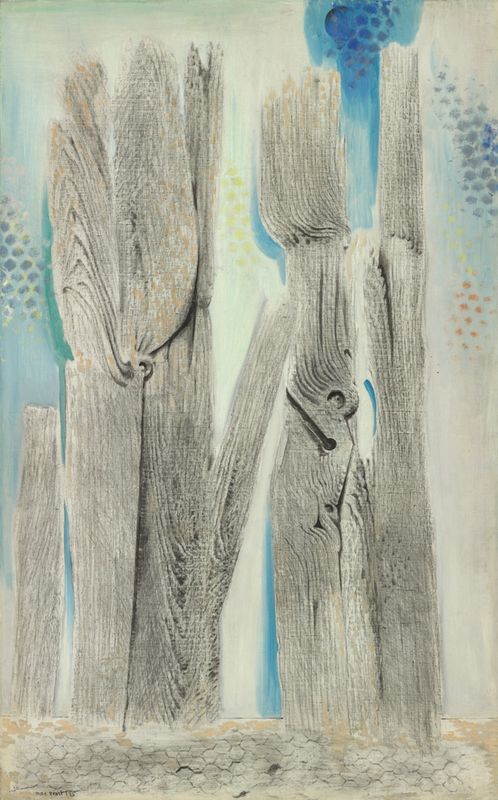
The Blue Forest
Max Ernst · 1925 · Art Institute of Chicago
 Same era · 1910s–1940s
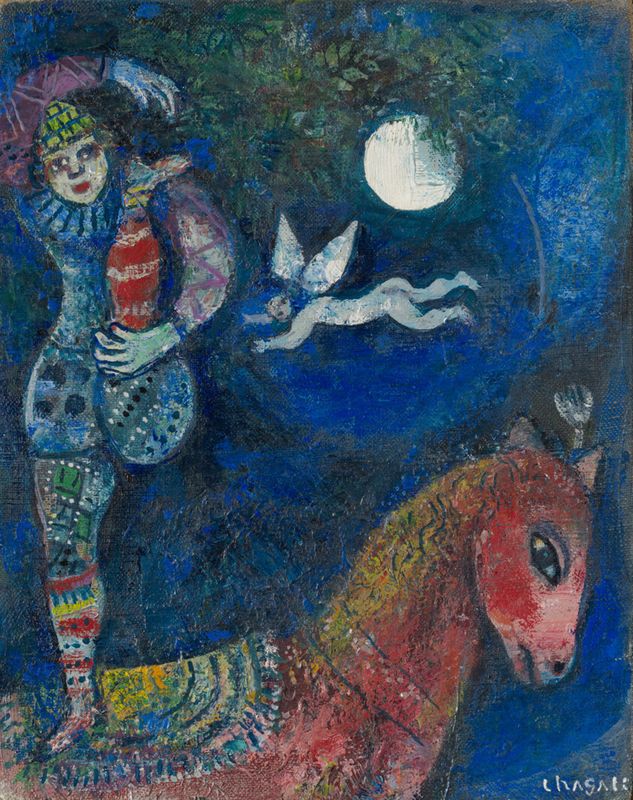
The Circus Rider
Marc Chagall · 1927 · Art Institute of Chicago
 Same era · 1910s–1940s
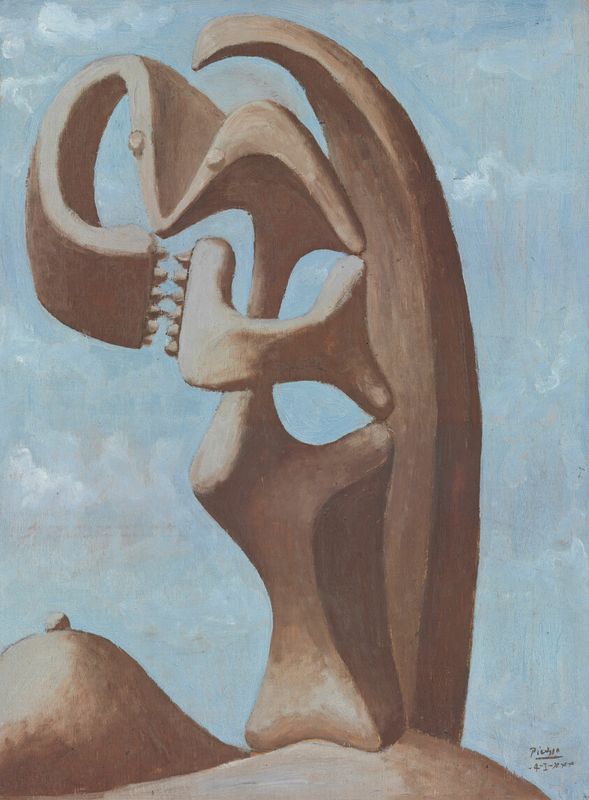
Abstraction: Background with Blue Cloudy Sky
Pablo Picasso · 1930 · Art Institute of Chicago
 Same era · 1910s–1940s
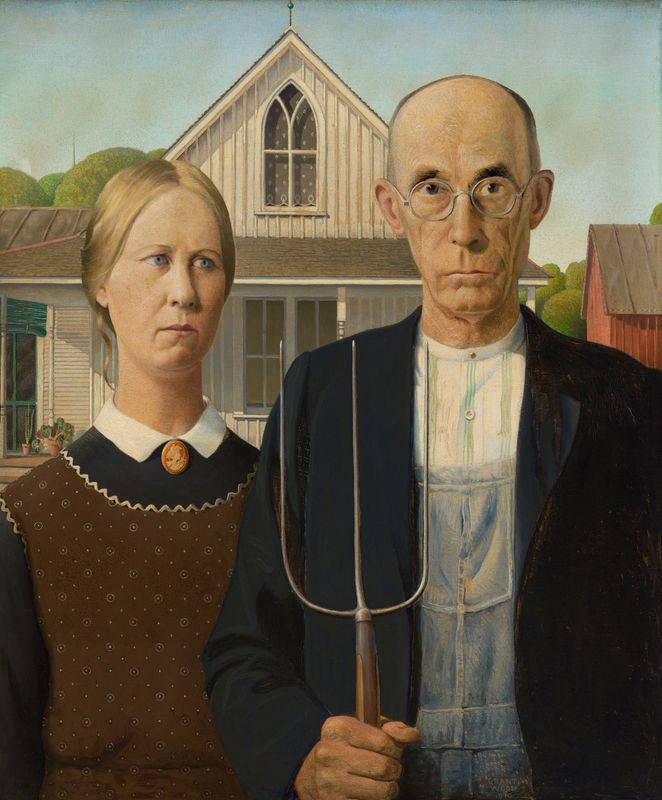
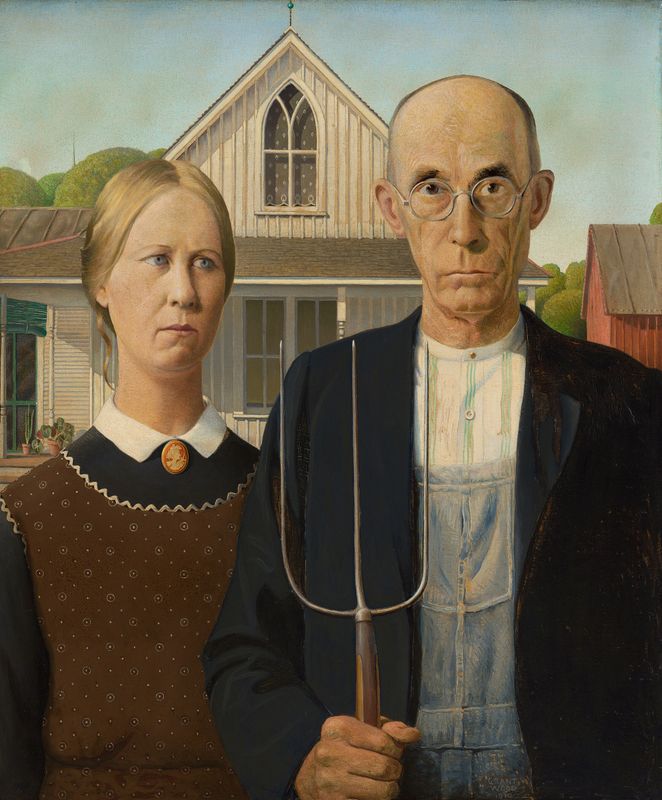
American Gothic
Grant Wood · 1930 · Art Institute of Chicago
 Same era · 1910s–1940s
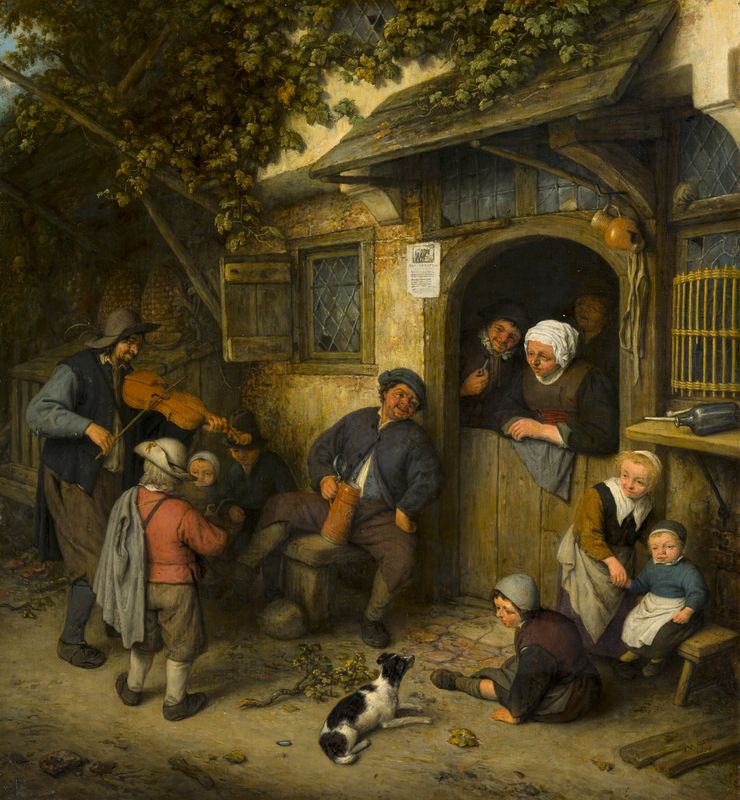
The Fiddler
Norman Rockwell · 1921 · Brandywine Museum of Art
