01
Christ raising the chalice
Christ stands at the center in a red cloth, his raised arm lifting a golden chalice high. The whole scene turns around that gesture.
1 of 4 on the painting
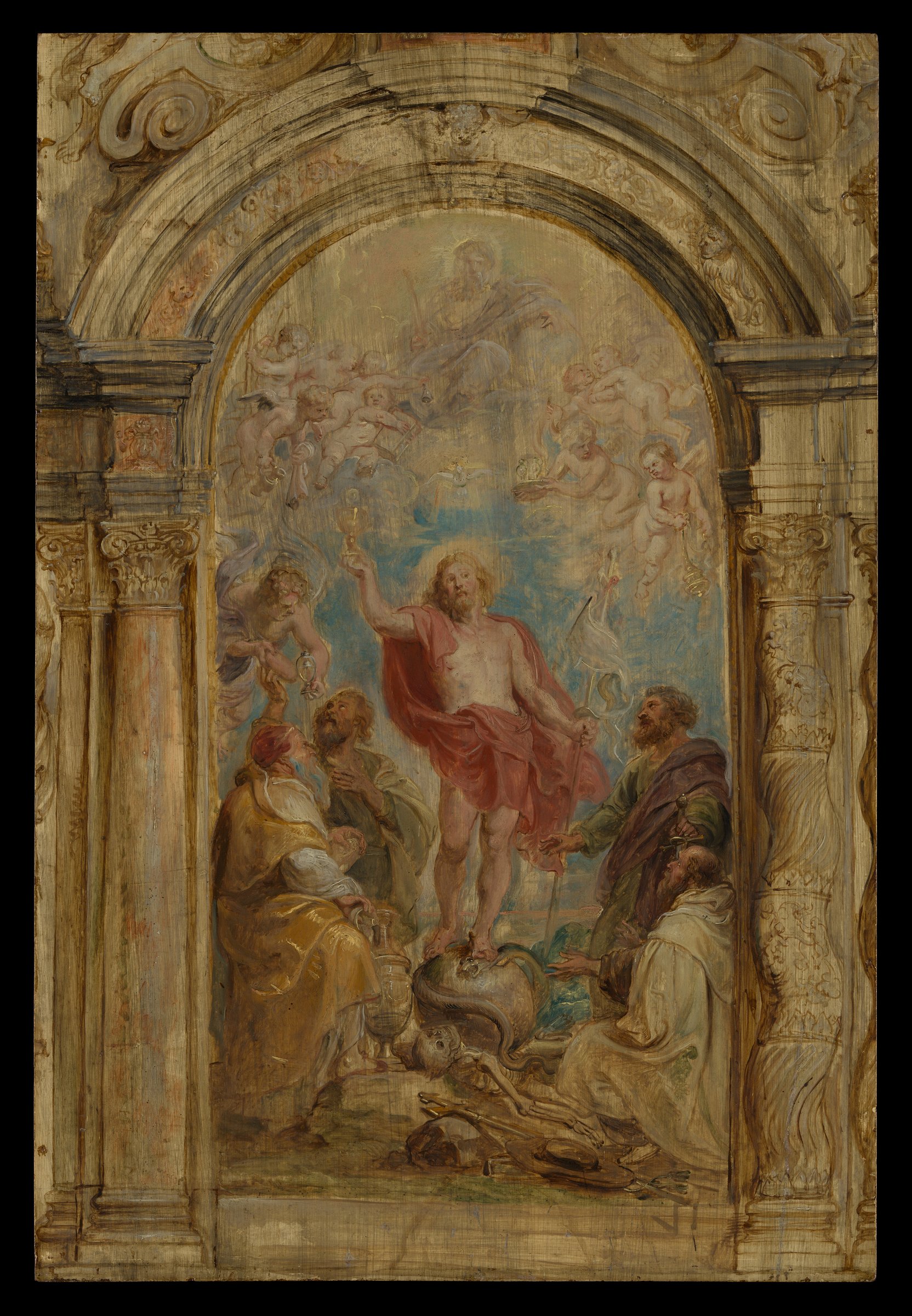
“This energetic oil sketch captures a swirling vision of angels and saints celebrating the Eucharist, a powerful statement of faith and a testament to the dramatic flair of Baroque art.”
In "The Glorification of the Eucharist," a vibrant host of figures swirls around a golden monstrance, which radiates light at the very center of the composition. This oil sketch, a preparatory work for a tapestry series, bursts with the dynamic energy characteristic of Baroque art. Below the monstrance, a defeated serpent and a skeleton (representing Death) recoil, emphasizing the triumph of the Eucharist over sin. Above, angels and cherubs tumble through clouds, their forms rendered with a fluid grace that suggests rapid, confident brushwork. The scene is a dramatic visual argument for the Catholic doctrine of transubstantiation, a key tenet reaffirmed during the Counter-Reformation, and it would have been a powerful statement in its final tapestry form.
Five details hide in plain sight. Pick one and we’ll show you exactly where to look.
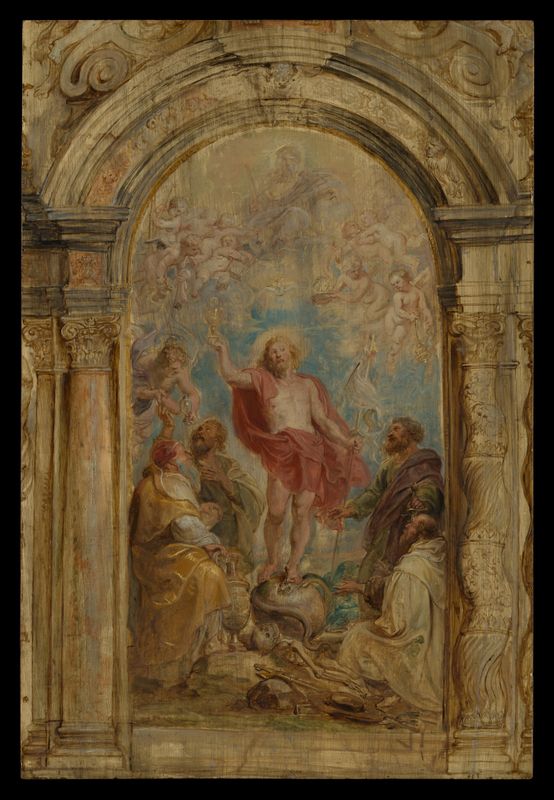
Christ stands at the center in a red cloth, his raised arm lifting a golden chalice high. The whole scene turns around that gesture.
Christ's bare feet rest on a globe wrapped by a snake, with a skeleton below. The imagery suggests sin and death overcome by the Eucharist.
Above Christ's head, a tiny white dove glows against the blue sky. It is easy to miss, and it points to the Holy Spirit within the Trinity.
Cherubs tumble around a bearded figure in the clouds at the top, while the dove sits in the light below. The eye climbs from the saints on earth toward heaven.
The brownish architectural arch with columns and scrolls is painted in oil, not real stonework. It frames the vision like a window and suggests how the scene would sit within a larger setting.
The full narration walks you through The Glorification of the Eucharist — the story behind it, the details most visitors miss, and why it matters. Free in the Art Whisper app.
Flemish master who blended diplomacy with art, creating movement-filled Baroque masterpieces across Europe.
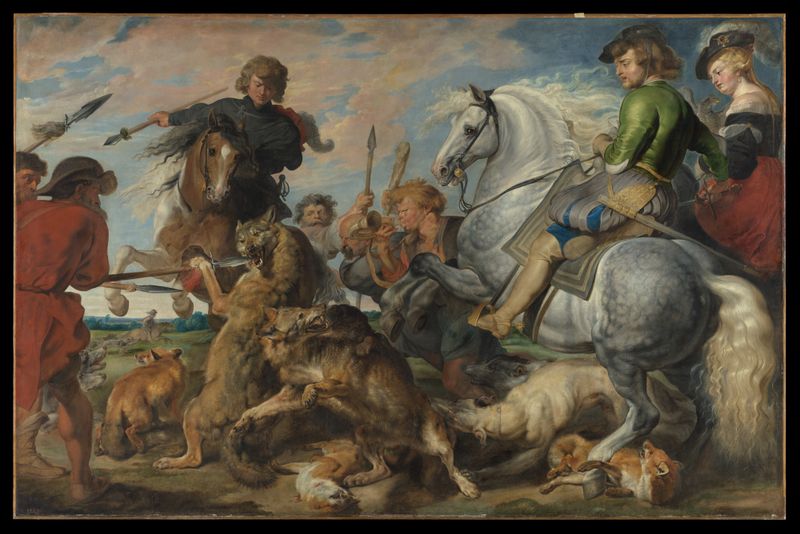 Wolf and Fox Hunt
1611 · The Metropolitan Museum of Art
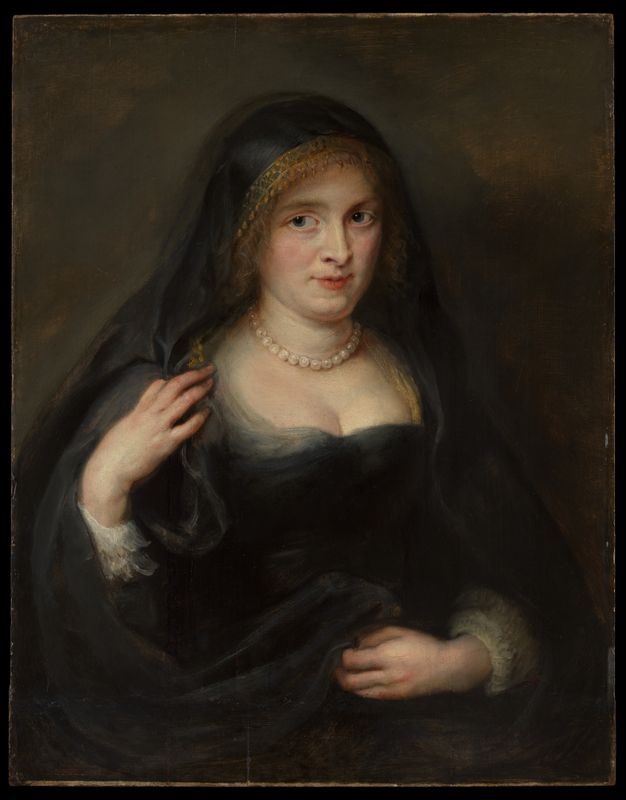 Portrait of a Woman, Probably Susanna Lunden (Susanna Fourment, 1599–1628)
1625 · The Metropolitan Museum of Art
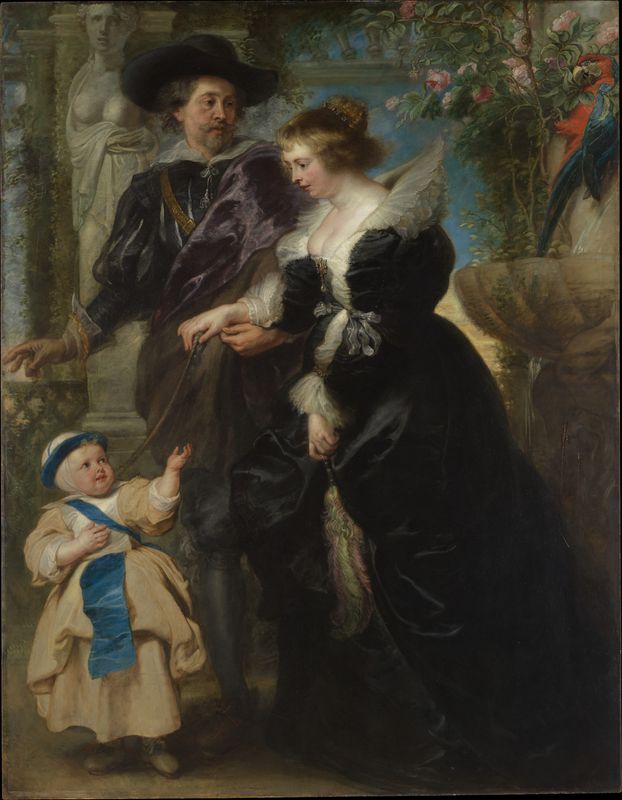 Rubens, Helena Fourment (1614–1673), and Their Son Frans (1633–1678)
1630 · The Metropolitan Museum of Art
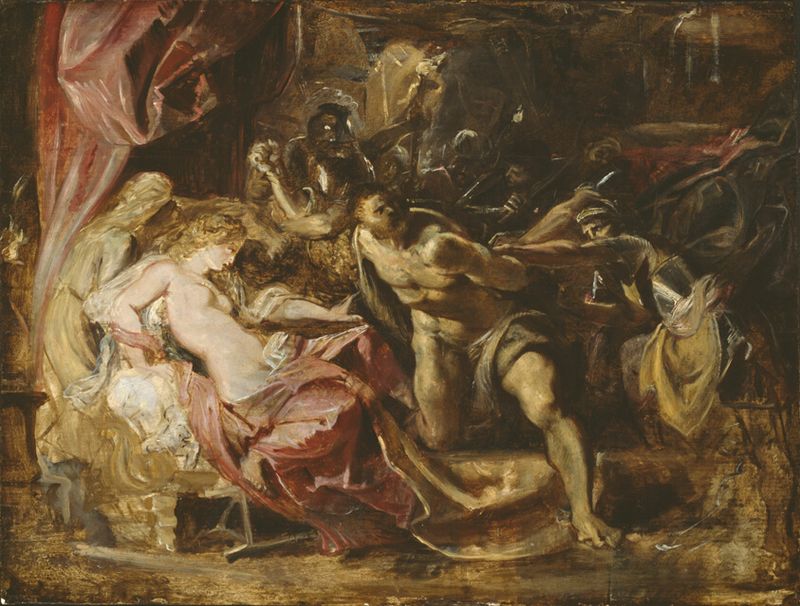 The Capture of Samson
1609 · Art Institute of Chicago
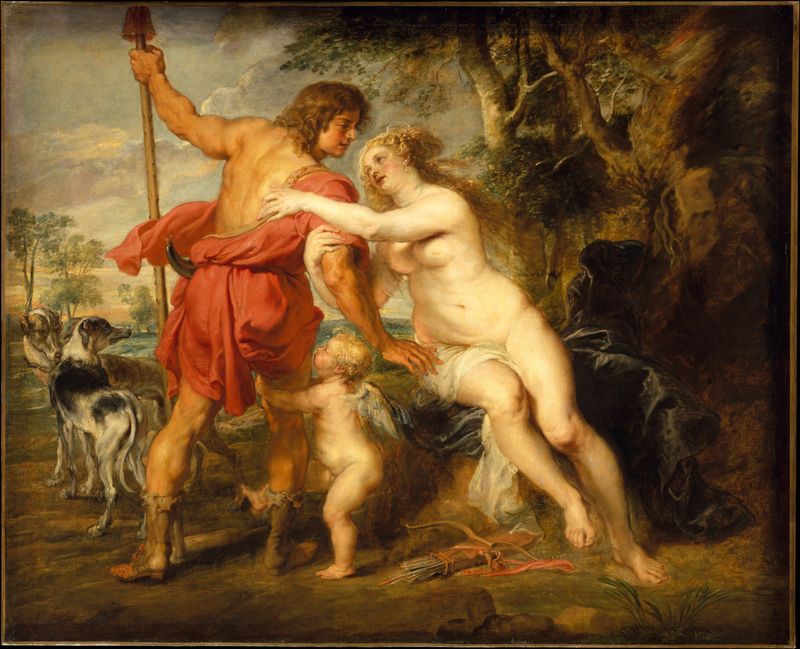 Venus and Adonis
1610 · Museum Kunstpalast
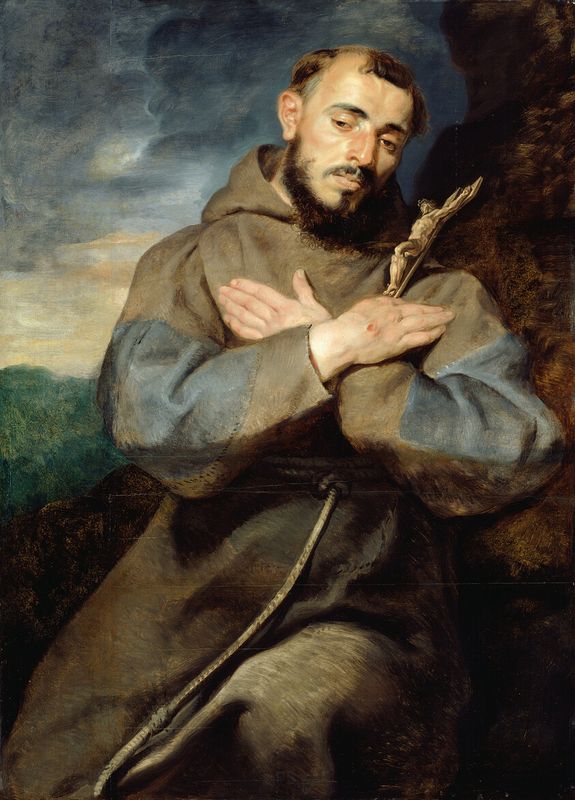 Saint Francis
1615 · Art Institute of Chicago
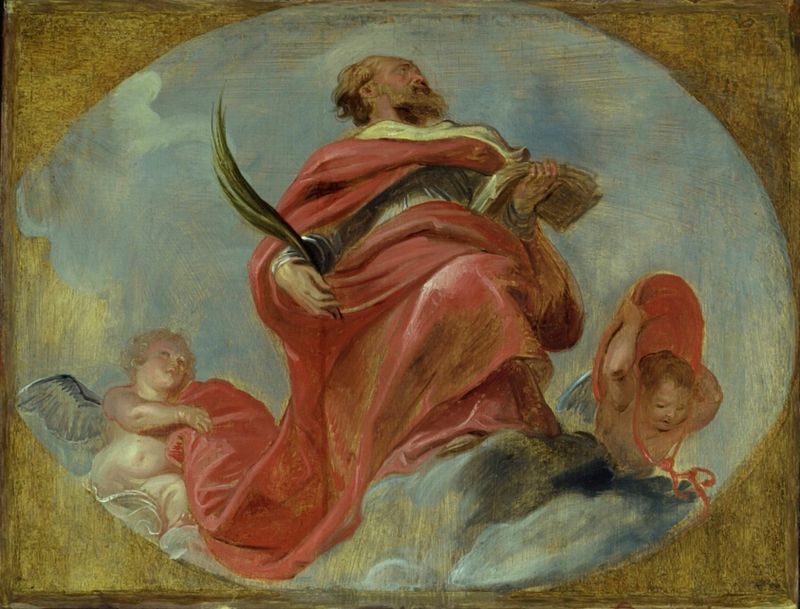 St. Albert of Louvain
1620 · Art Institute of Chicago
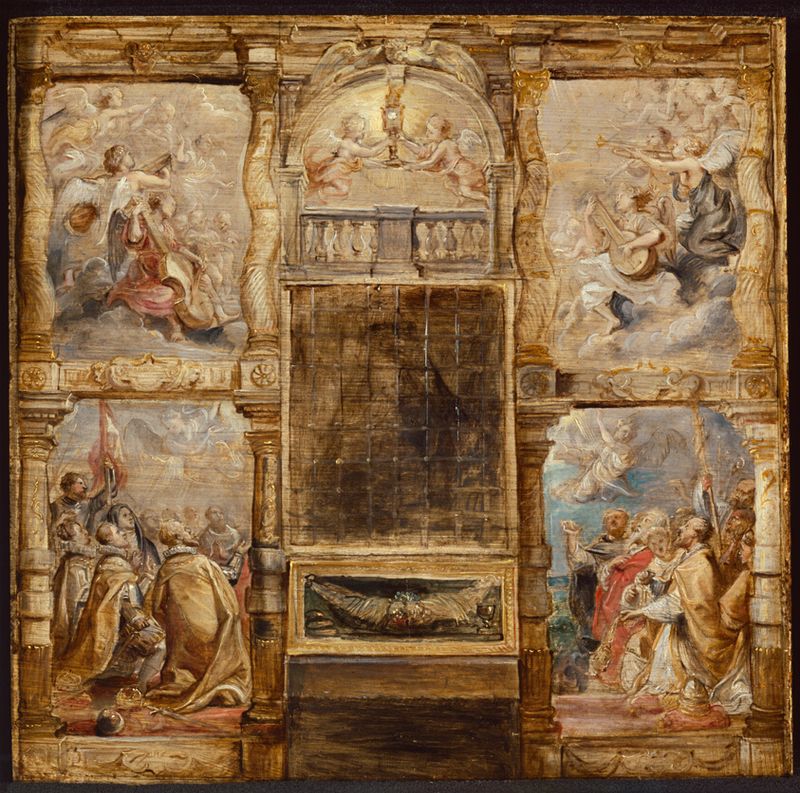 The Adoration of the Eucharist
1626 · Art Institute of Chicago
Beyond Rubens and Baroque: works from the same years.
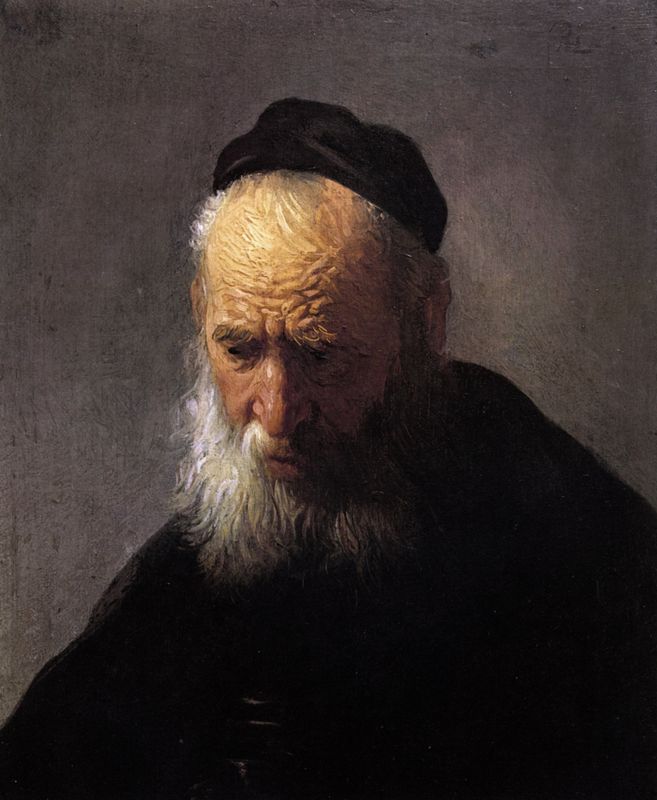 Same era · 1610s–1640s
Head of an Old Man in a Cap
Rembrandt · 1629 · Agnes Etherington Art Centre
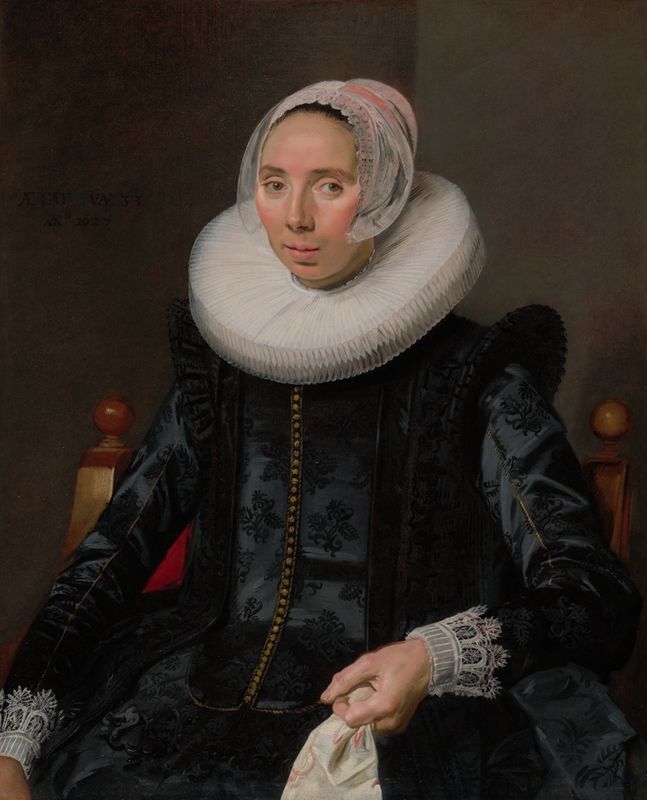 Same era · 1610s–1640s
Portrait of a Lady
Frans Hals · 1627 · Art Institute of Chicago
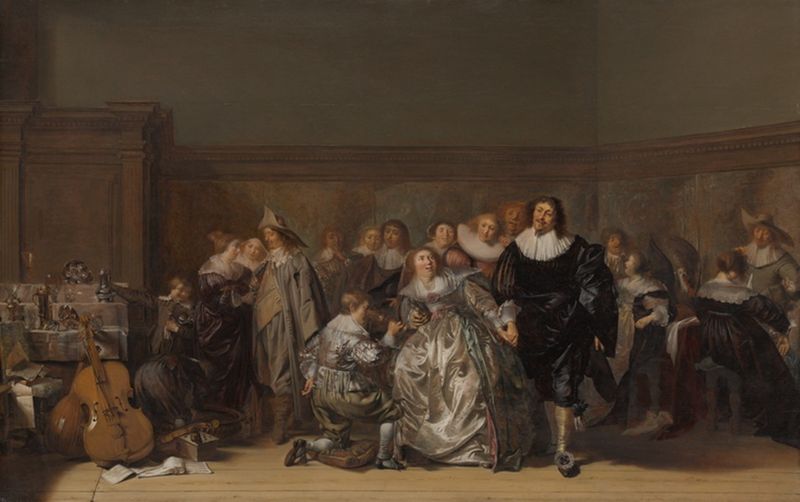 Same era · 1610s–1640s
An Elegant Company
Samuel Alcock & Company · 1632 · Art Institute of Chicago
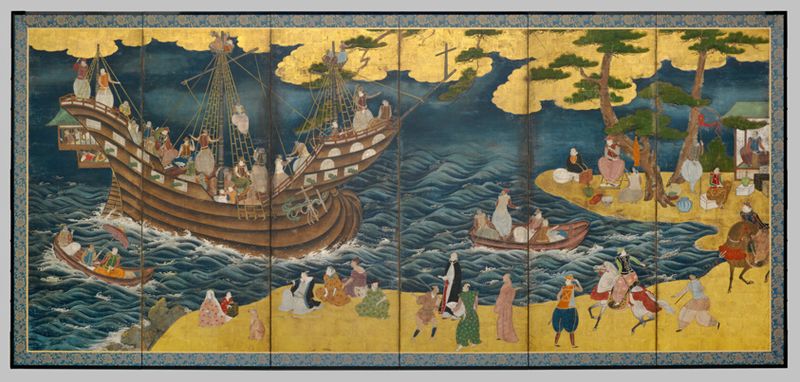 Same era · 1610s–1640s
Southern Barbarians
Artist Unknown - The Mercat Cross, Aberdeen · 1625 · Art Institute of Chicago
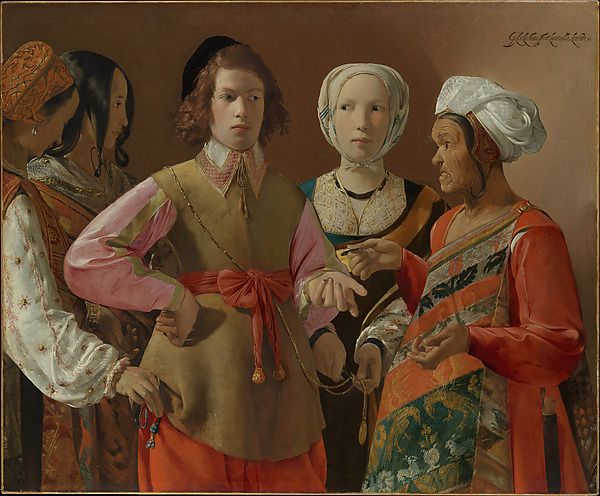 Same era · 1610s–1640s
The Fortune-Teller
Georges de La Tour · 1630 · The Metropolitan Museum of Art
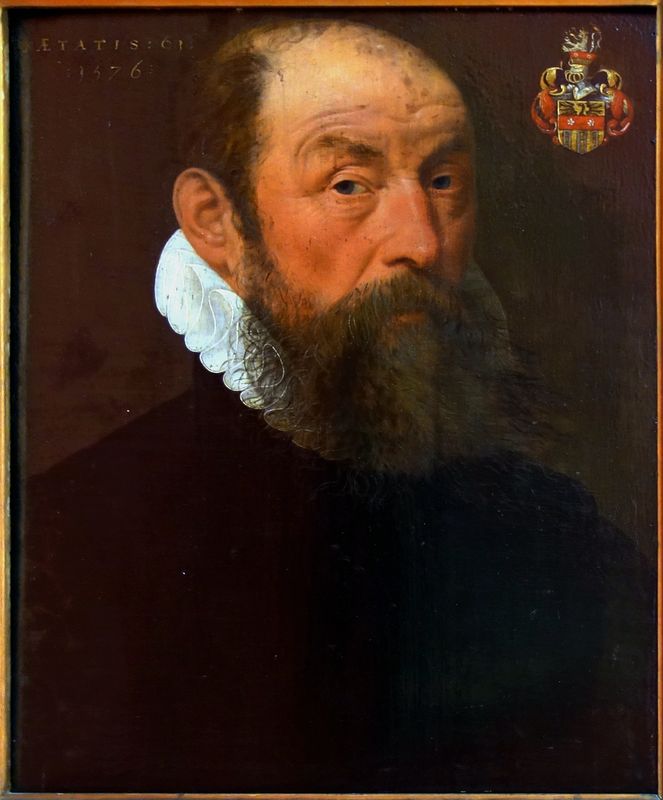 Same era · 1610s–1640s
Portrait of a man
Willem van der Vliet · 1634 · Pushkin Museum of Fine Arts
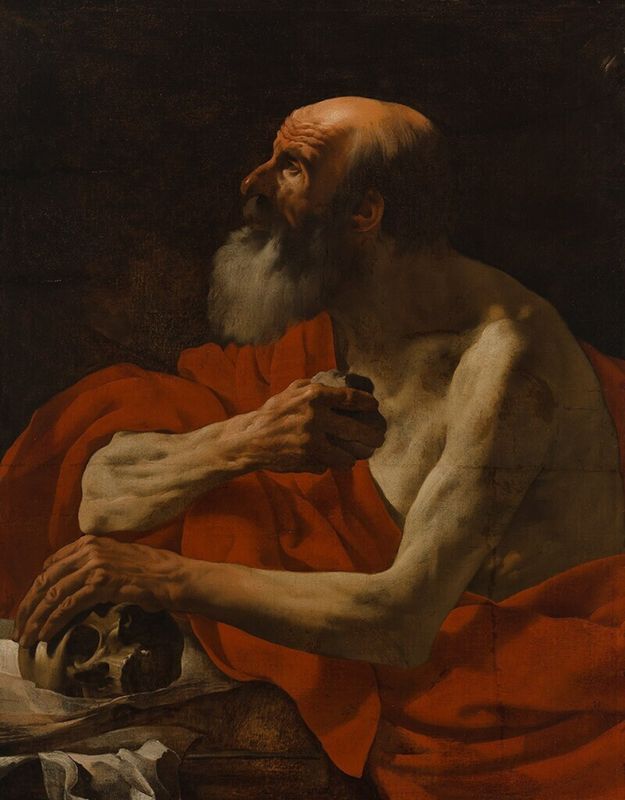 Same era · 1610s–1640s
Saint Jerome
Hendrick ter Brugghen · 1624 · Museum Boijmans Van Beuningen
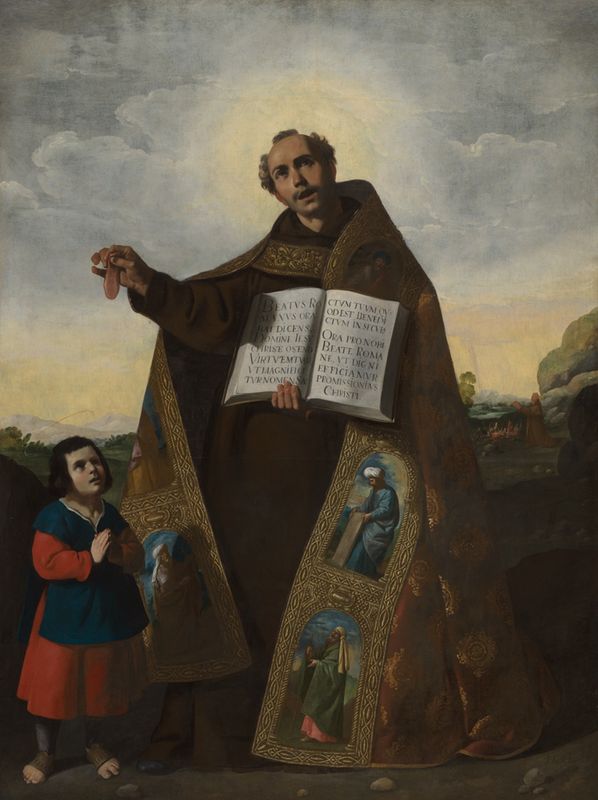 Same era · 1610s–1640s
Saint Romanus of Antioch and Saint Barulas
Master of the View of Saint Gudula · 1638 · Art Institute of Chicago
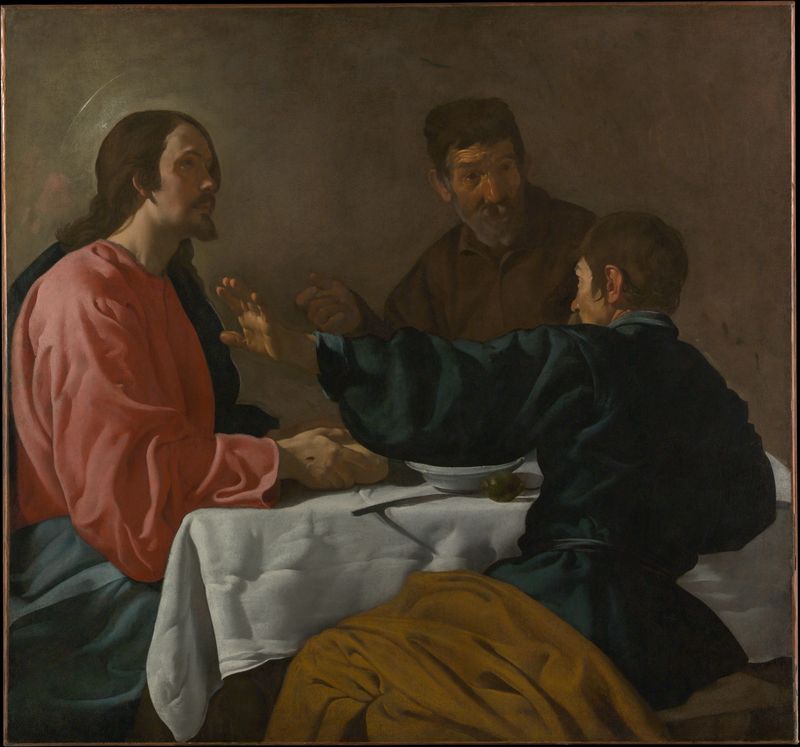 Same era · 1610s–1640s
The Supper at Emmaus
Diego Velázquez · 1618 · Metropolitan Museum of Art
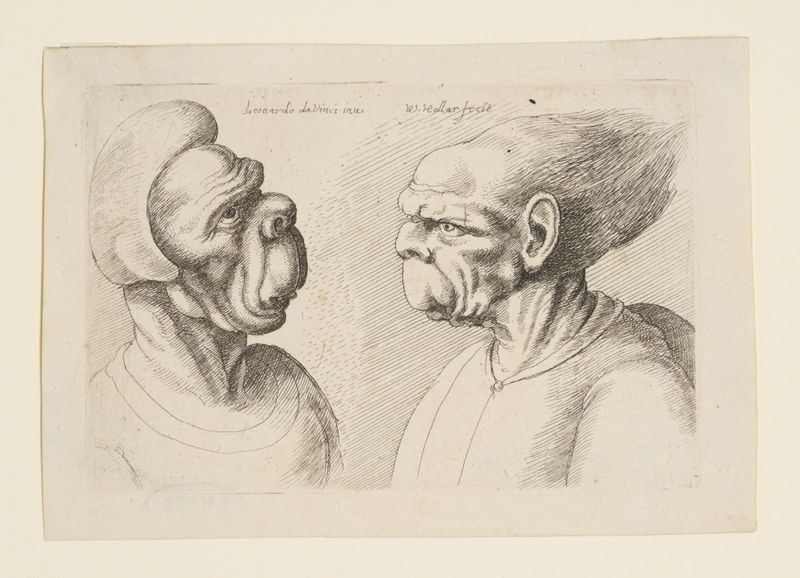 Same era · 1610s–1640s
Two Deformed Heads with Very Long Upper Lips
Leonardo da Vinci · 1645 · The Metropolitan Museum of Art
 Same era · 1610s–1640s
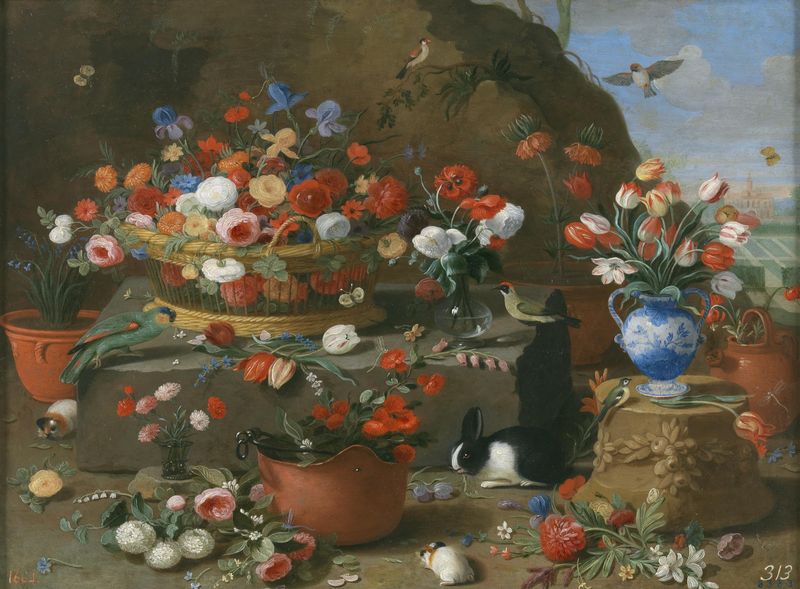
Floral Still Life
Jan van Kessel the Elder · 1633 · Museo del Prado
 Same era · 1610s–1640s
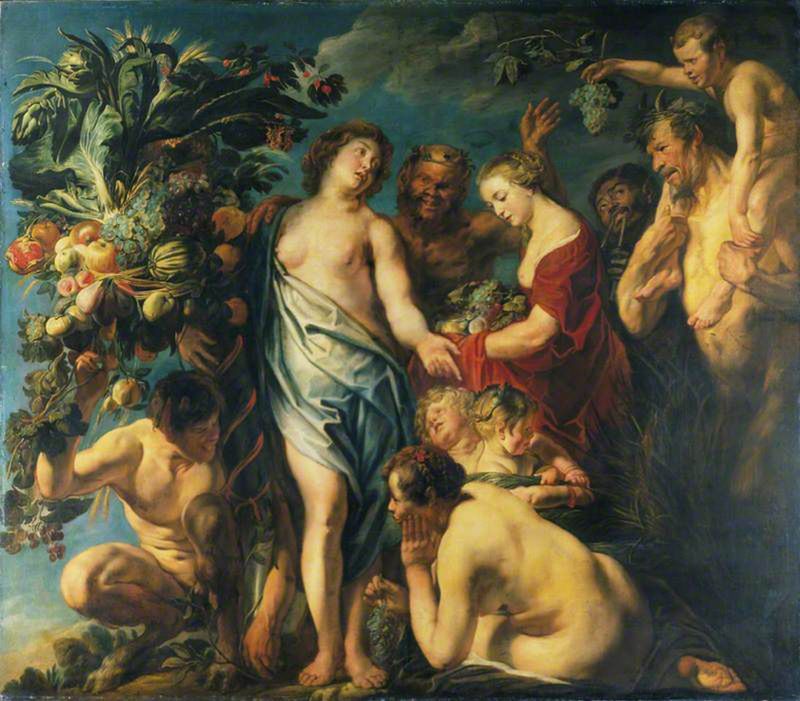
An Allegory of Fruitfulness
Jacob Jordaens · 1620 · Wallace Collection