01
Faint halo
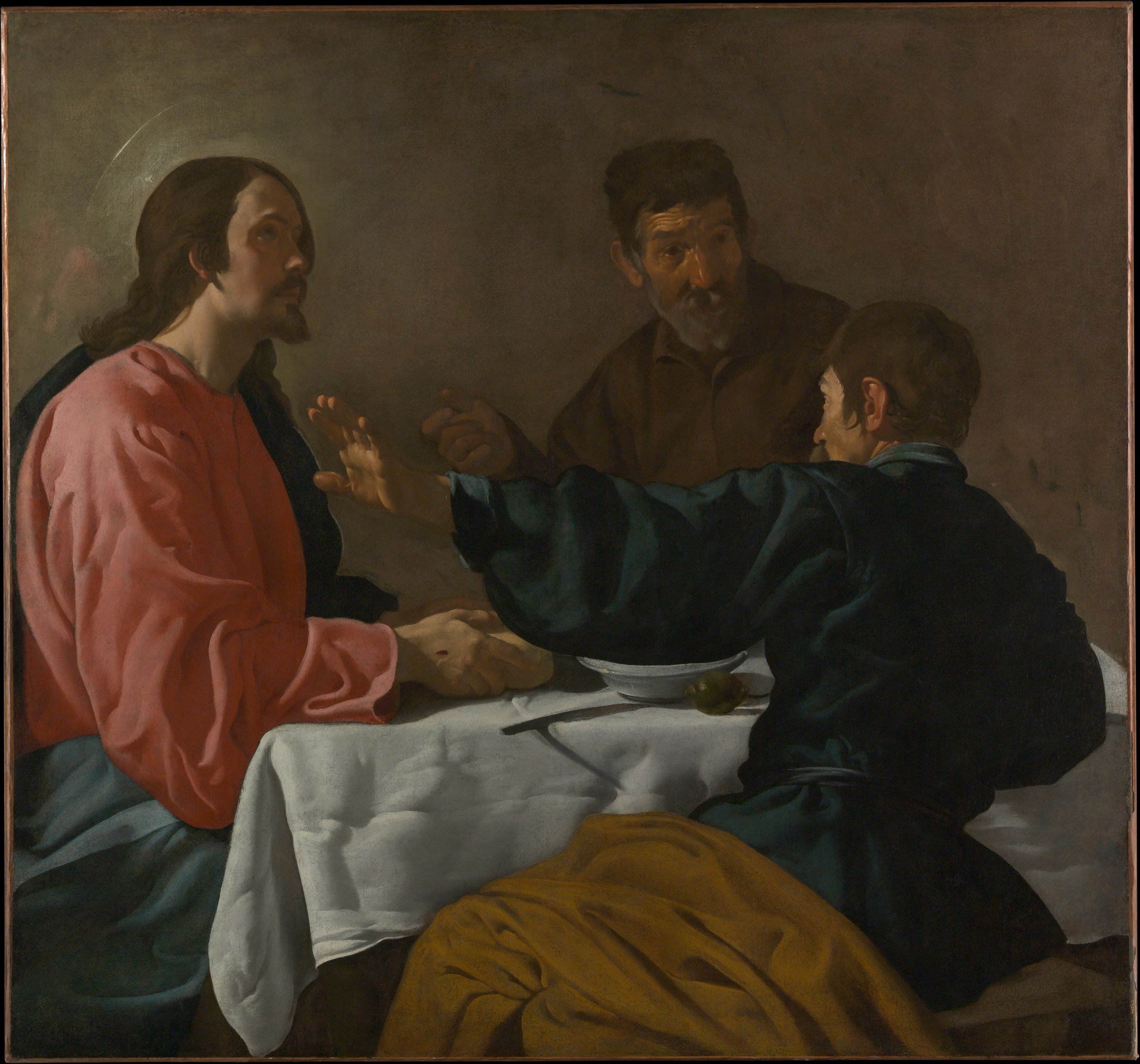
Look above the left figure's head for a faint pale ring against the dark wall. This subtle halo is the main sign that the quiet man at the table is Christ.
1 of 5 on the painting
“Stop to see how Diego Velázquez uses dramatic light and shadow to transform a simple meal into a powerful moment of divine revelation, capturing the disciples' shock and awe.”
In this early painting, Jesus, recognizable by his halo, is shown at the climactic moment of revealing himself to two disciples in Emmaus. The scene unfolds with a dramatic contrast between the brightly lit figures and the deep shadows that surround them, a hallmark of the Baroque style. One disciple, seated at the table, raises his hands in astonishment, his face a mask of sudden recognition. The other, seen from behind, leans forward, his body language conveying intense curiosity and surprise. The humble setting of a tavern, with its simple fare of bread and wine, grounds this miraculous event in everyday reality, making the divine encounter feel immediate and relatable. This work captures the raw emotion and human drama of the biblical story, drawing the viewer into the sacred moment.
Five details hide in plain sight. Pick one and we’ll show you exactly where to look.
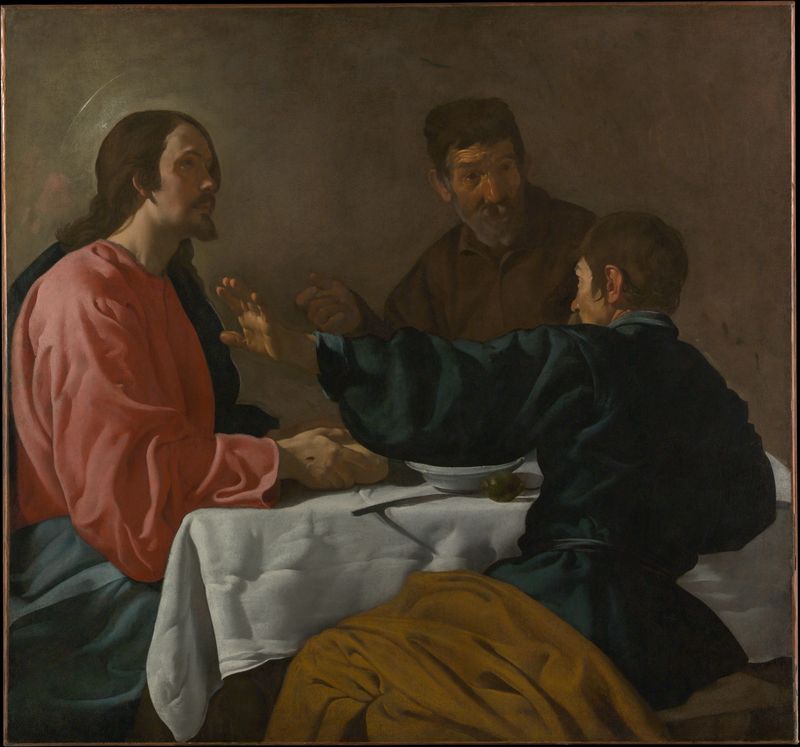
Look above the left figure's head for a faint pale ring against the dark wall. This subtle halo is the main sign that the quiet man at the table is Christ.
The dark-sleeved disciple's hand is raised beside Christ's face, palm open. The gesture suggests surprise, as if he has just recognized who sits across from him.
Christ's hands rest together on the white cloth, calm and still. Their quiet contrasts with the animated gestures of the disciples.
The bearded man in the back leans forward with a pointing hand and an intent, questioning face. His weathered look makes the scene feel real and human.
The white cloth is built from soft grays and crisp highlights, with sharp creases at the table edge. It is the brightest area and anchors the dark scene.
The full narration walks you through The Supper at Emmaus — the story behind it, the details most visitors miss, and why it matters. Free in the Art Whisper app.
Court painter to Philip IV whose mastery of light and realism changed Western art forever.
Beyond Velázquez and Baroque: works from the same years.
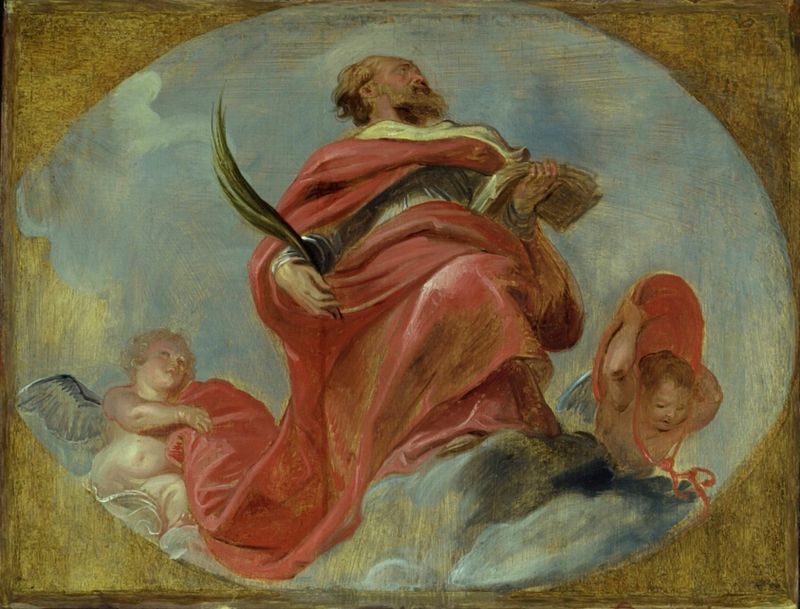 Same era · 1600s–1630s
St. Albert of Louvain
Peter Paul Rubens · 1620 · Art Institute of Chicago
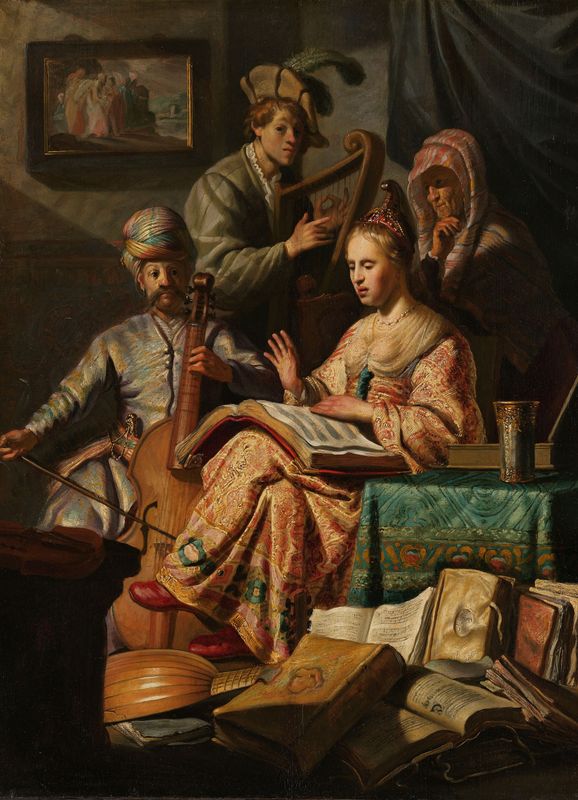 Same era · 1600s–1630s
Musical Company
Rembrandt · 1626 · Museum De Lakenhal
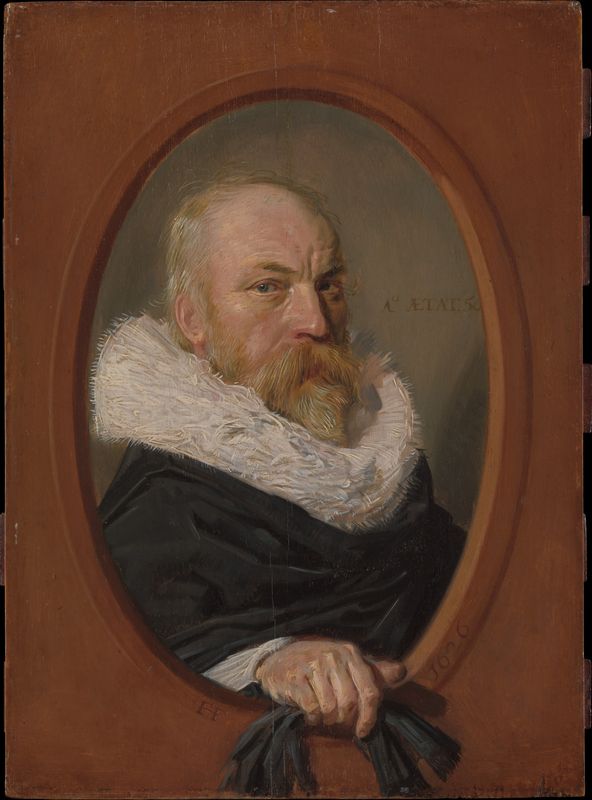 Same era · 1600s–1630s
Petrus Scriverius (1576–1660)
Frans Hals · 1626 · The Metropolitan Museum of Art
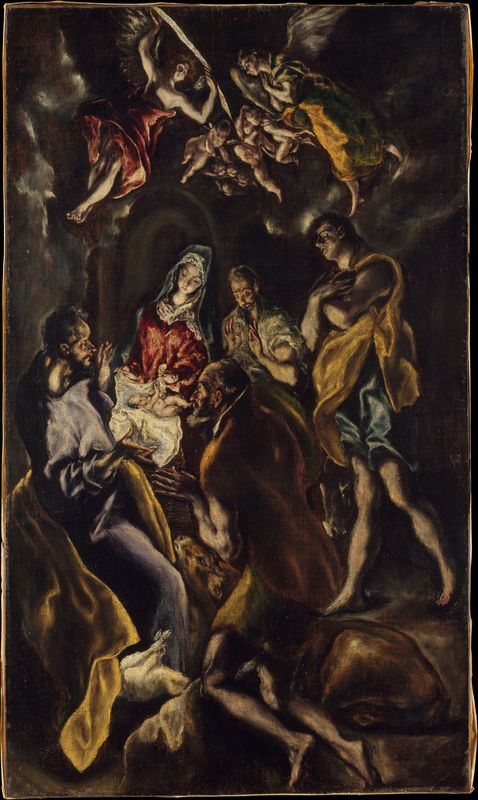 Same era · 1600s–1630s
The Adoration of the Shepherds
El Greco · 1610
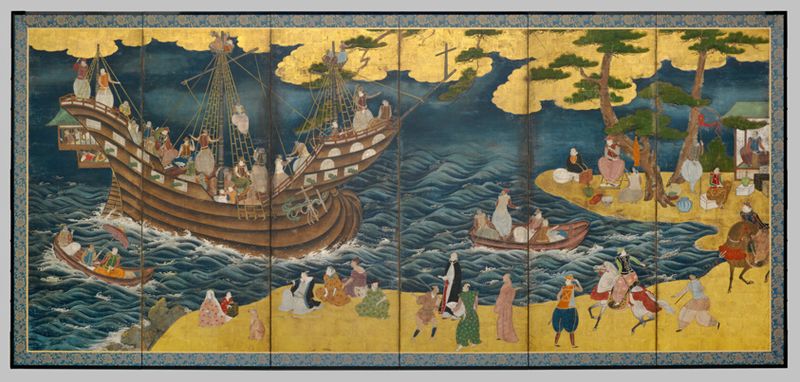 Same era · 1600s–1630s
Southern Barbarians
Artist Unknown - The Mercat Cross, Aberdeen · 1625 · Art Institute of Chicago
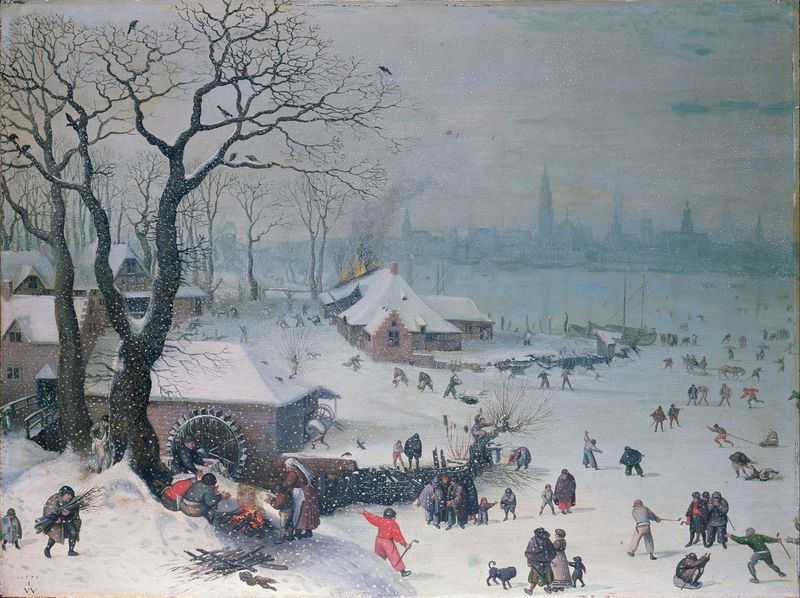 Same era · 1600s–1630s
Winter Landscape with Snowfall near Antwerp
Jan Brueghel the Elder · 1610
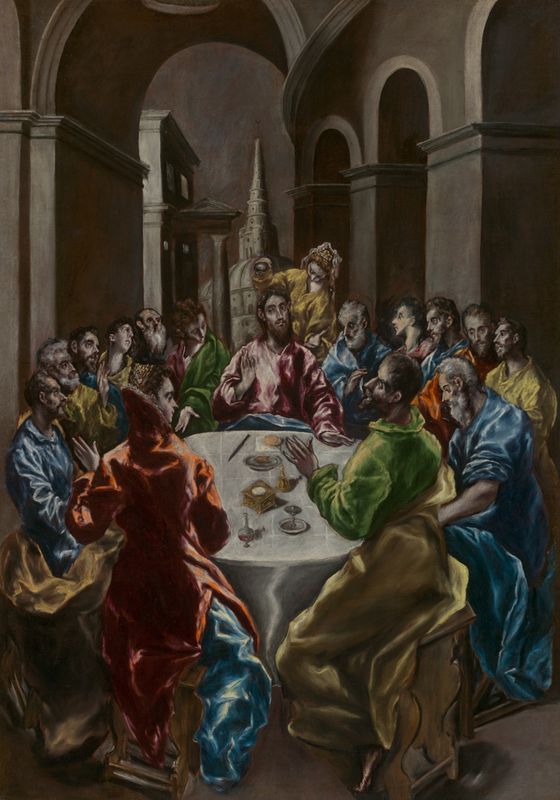 Same era · 1600s–1630s
The Feast in the House of Simon
El Greco (Doménikos Theotokópoulos) and workshop · 1608 · Art Institute of Chicago
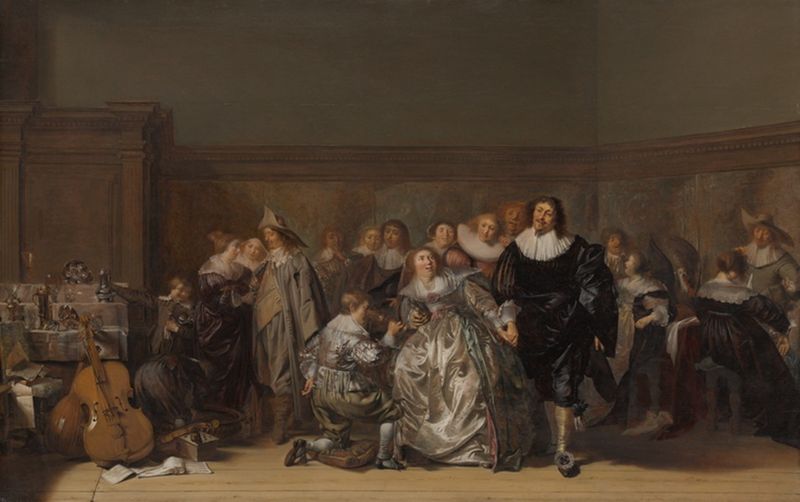 Same era · 1600s–1630s
An Elegant Company
Samuel Alcock & Company · 1632 · Art Institute of Chicago
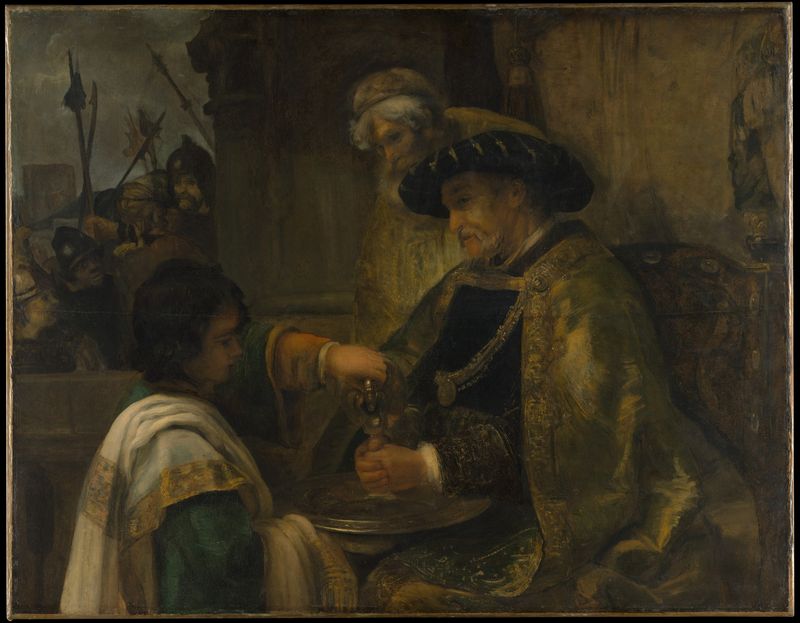 Same era · 1600s–1630s
Pilate washing his hands
Hendrick ter Brugghen · 1617 · National Museum in Lublin
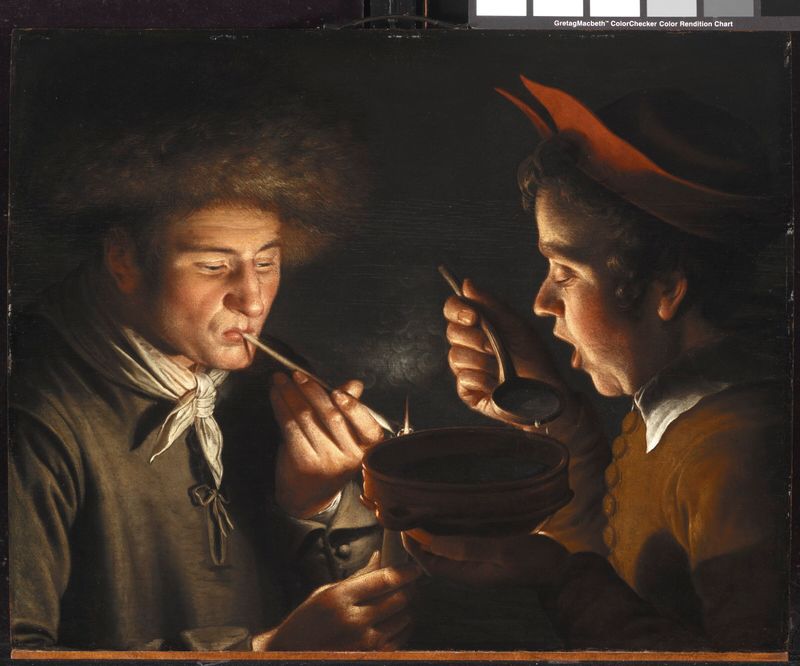 Same era · 1600s–1630s
A Man Smoking and Another Man Eating by Candlelight
Willem van der Vliet · 1624 · Detroit Institute of Arts
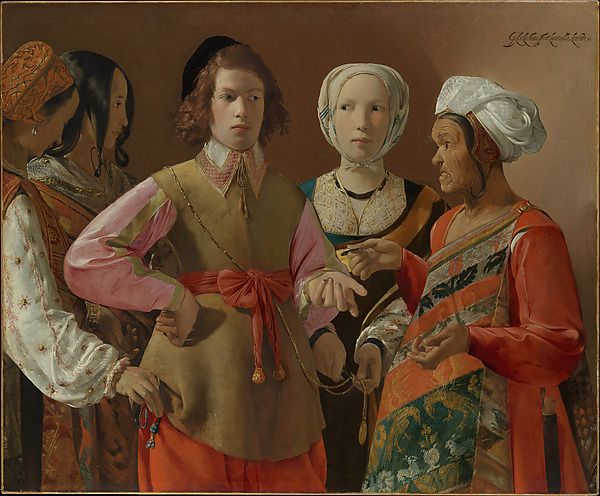 Same era · 1600s–1630s
The Fortune-Teller
Georges de La Tour · 1630 · The Metropolitan Museum of Art
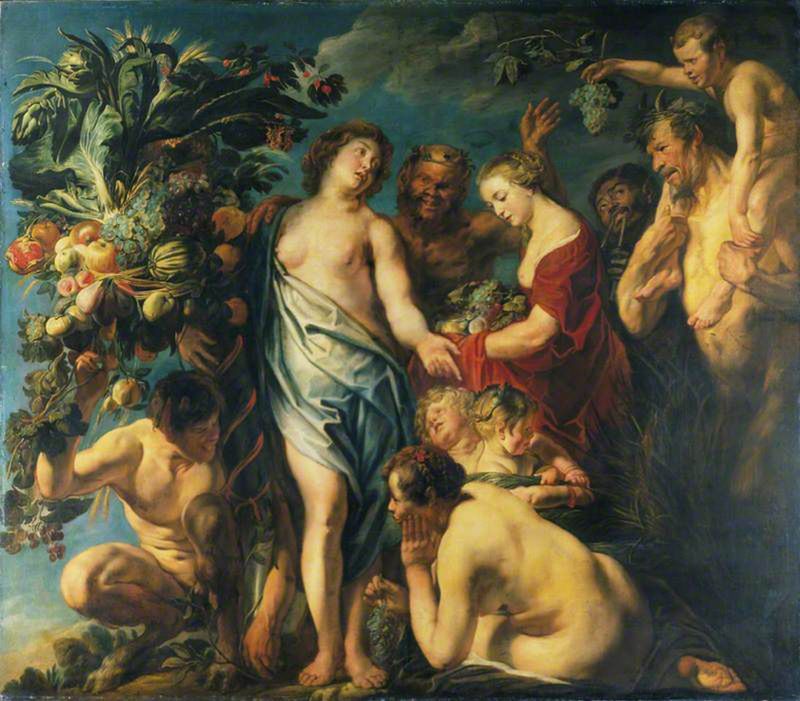 Same era · 1600s–1630s
An Allegory of Fruitfulness
Jacob Jordaens · 1620 · Wallace Collection