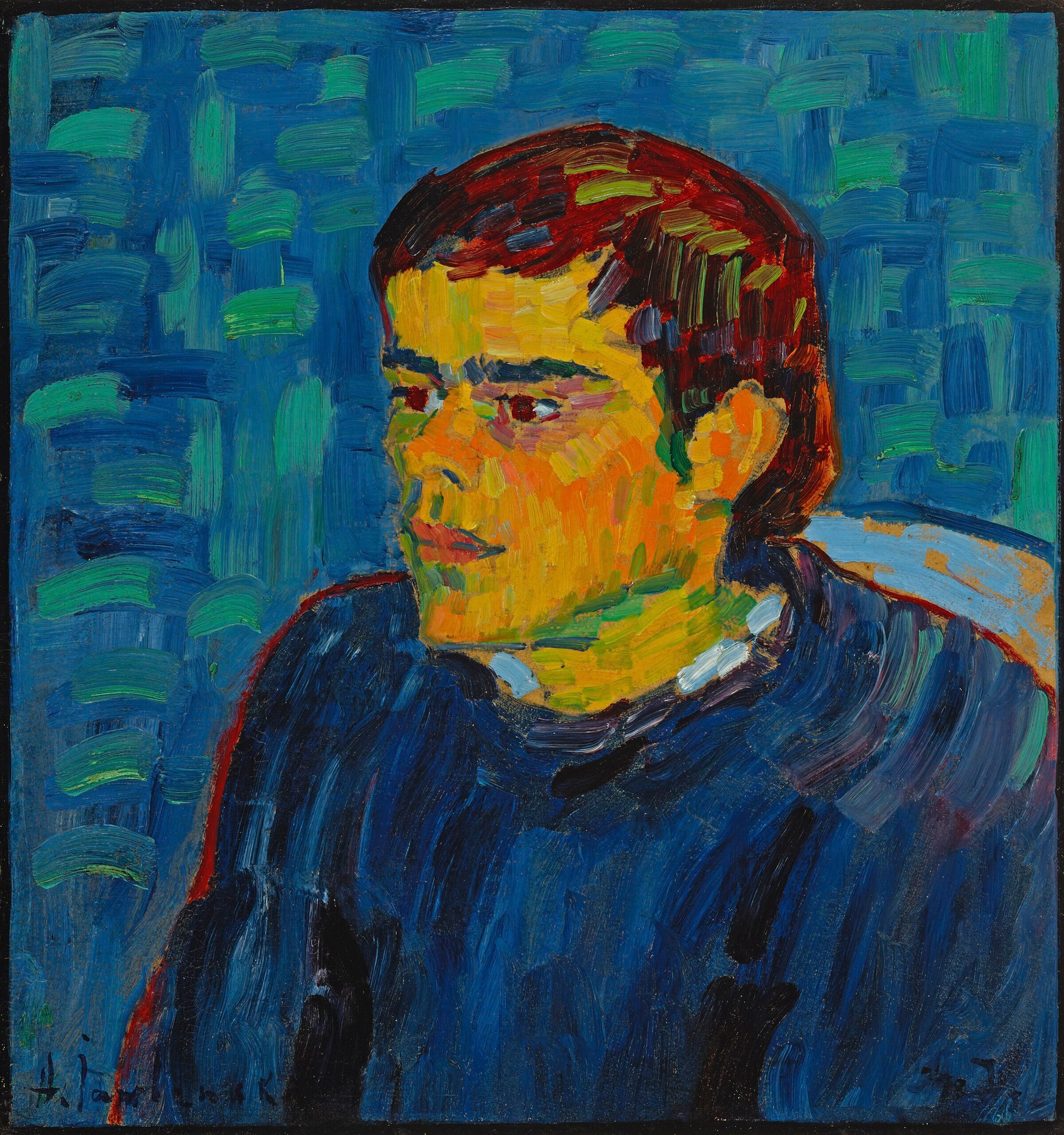
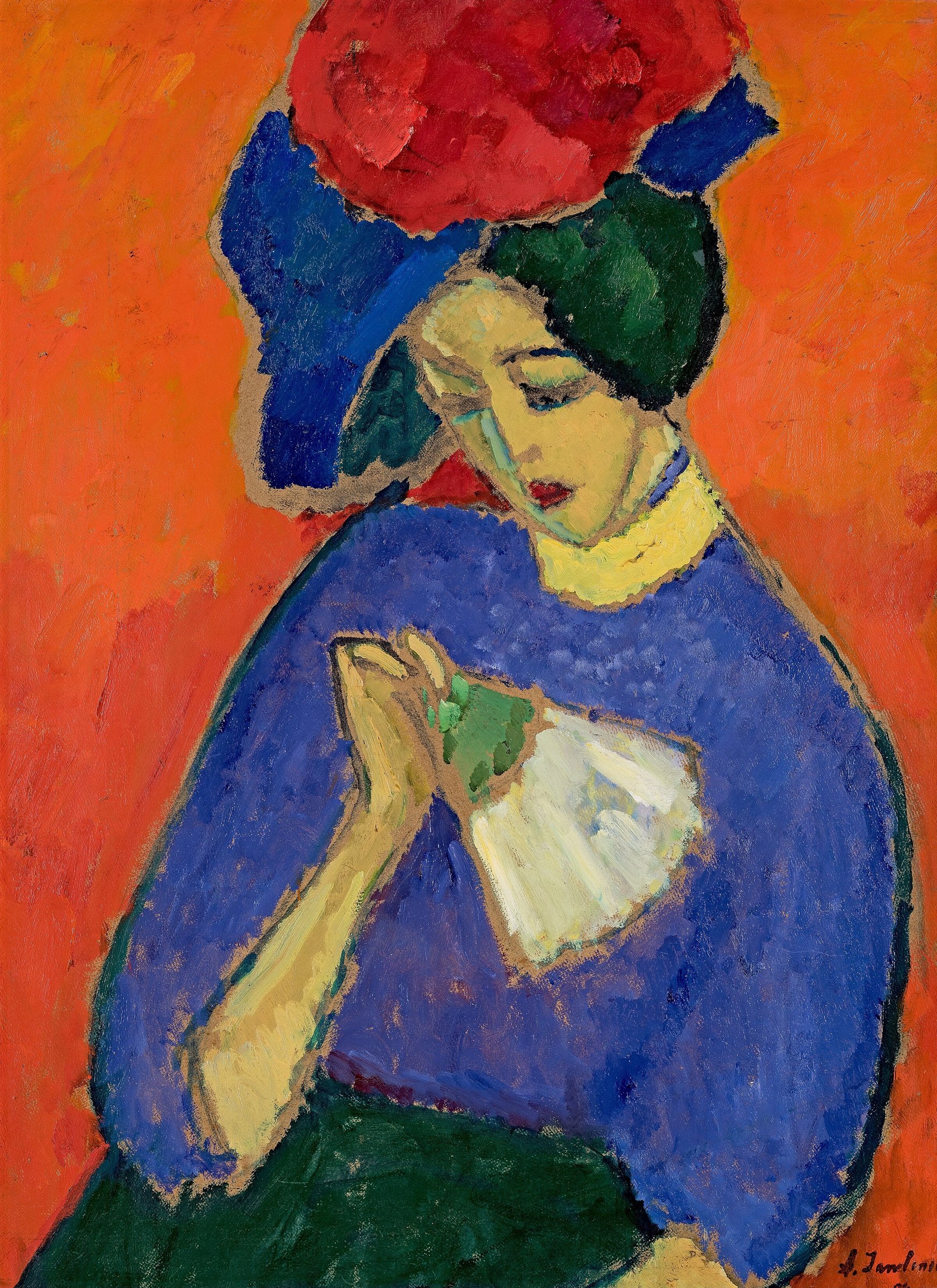
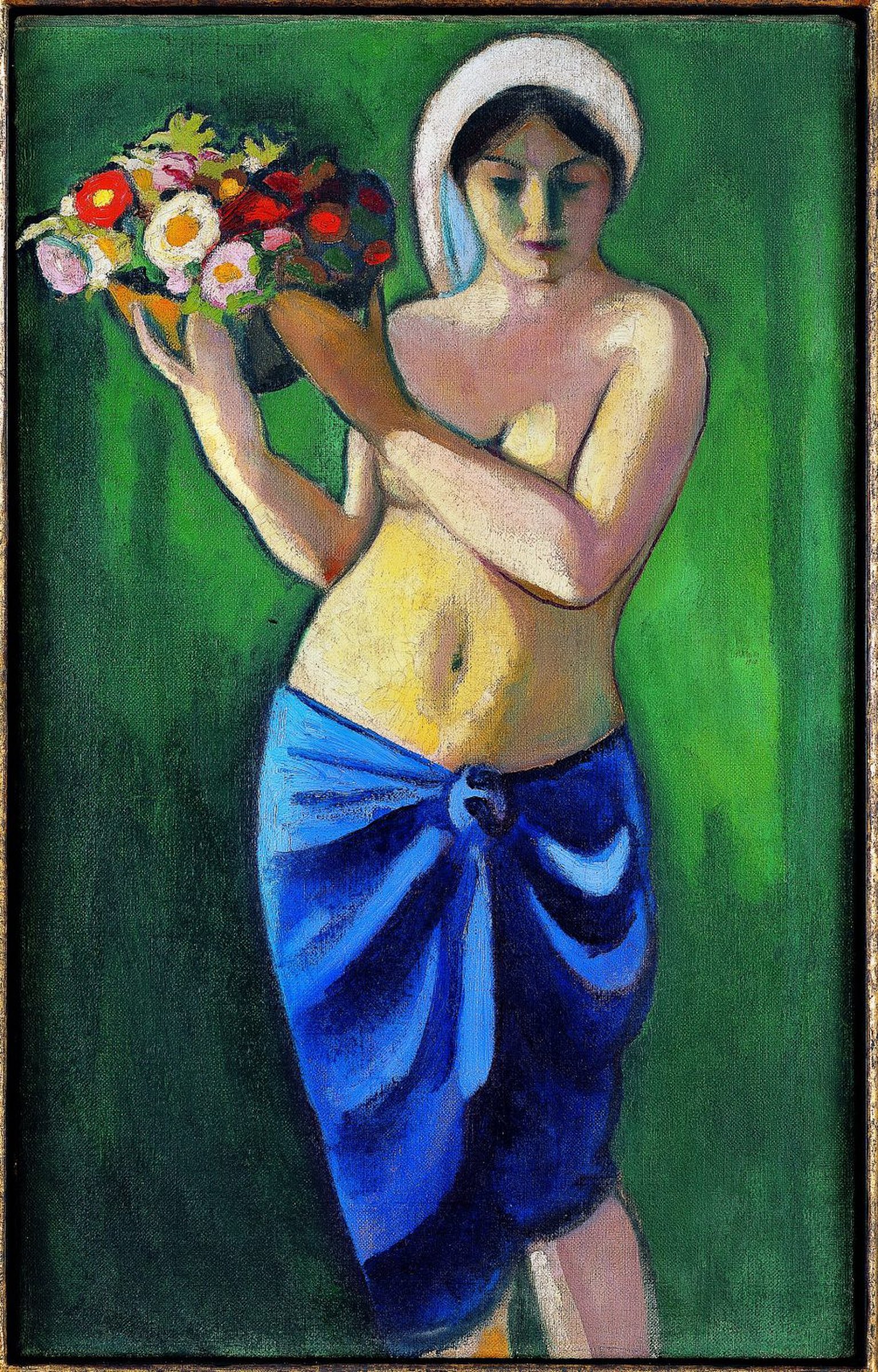
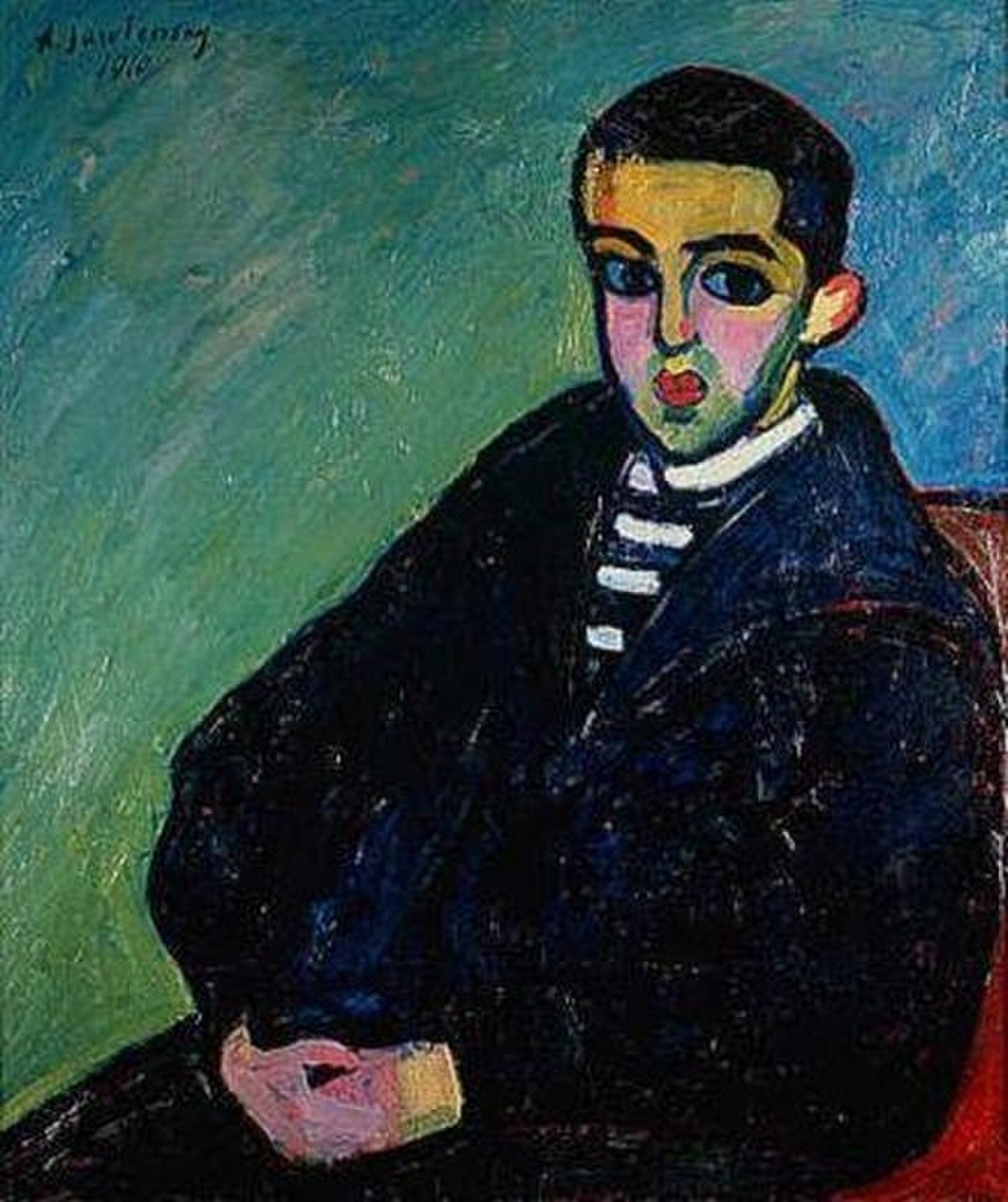

“Imagine walking into a gallery and being hit by a wave of pure, almost electric color — horses in impossible blues, angels rendered in jagged geometric forms, cityscapes that feel more like emotions than places.”
That's Der Blaue Reiter, a loose but electrifying collective of avant-garde artists who gathered in Munich around 1911 under the creative partnership of Wassily Kandinsky and Franz Marc. Unlike a formal school, it was more of a shared spiritual mission: the belief that art could bypass the rational mind and speak directly to the soul.
Kandinsky and Marc named the group after a painting by Kandinsky, and both men happened to love horses and the color blue — Marc saw blue as a symbol of masculinity and spirituality, while Kandinsky associated colors with musical notes and inner vibration. Their landmark almanac, also called Der Blaue Reiter, mixed their own paintings with folk art, children's drawings, and music scores, arguing that all of these were equally valid expressions of an inner truth. This radical openness set the movement apart from its contemporaries.
The group organized two major exhibitions in Munich in 1911 and 1912, pulling in artists like Paul Klee, August Macke, and Gabriele Münter, and sent traveling shows across Germany and Europe. Their run was tragically brief — World War I shattered the collective in 1914, claiming the lives of Marc and Macke on the battlefield. But their influence proved immortal, planting seeds for Abstract Expressionism, non-objective art, and the entire twentieth-century conviction that a painting doesn't need to show you something — it needs to make you feel something.
- Period
- c. 1911–1914
- Peak
- around 1912
- Born in
- Germany
- Key artists
- Albert Bloch, Alexej von Jawlensky, August Macke, Egon Schiele
- Came before
- Fauvism and Die Brücke Expressionism
- Came after
- Abstract Expressionism and the Bauhaus movement
When it happened
- CAME BEFOREFauvism and Die Brücke Expressionism
- ~1911 · STARTED
- ~1912 · PEAKED
- ~1914 · ENDED
- CAME AFTERAbstract Expressionism and the Bauhaus movement
What makes it Der Blaue Reiter
Bold, Non-Naturalistic Color
Colors are chosen for emotional impact, not realism — expect vivid blues, yellows, and reds that feel almost musical.
e.g. The Large Blue Horses by Franz MarcSpiritual & Symbolic Imagery
Horses, riders, and angels recur as spiritual symbols rather than literal subjects.
e.g. Improvisation 28 by Wassily KandinskyLoose, Expressive Brushwork
Forms dissolve into sweeping, gestural strokes — the paint itself feels alive and in motion.
e.g. Kochel — Waterfall by Gabriele MünterPush Toward Abstraction
Recognizable subjects blur into pure shape and color, inching toward fully non-representational art.
e.g. With the Black Arc by Wassily KandinskyFlattened, Simplified Forms
Depth and perspective are downplayed; shapes feel flat and outline-heavy, echoing folk art and woodcuts.
e.g. Bright Air by August MackeHow to spot Der Blaue Reiter
Three signs you’re standing in front of one — all easy to see in Still life with apples.
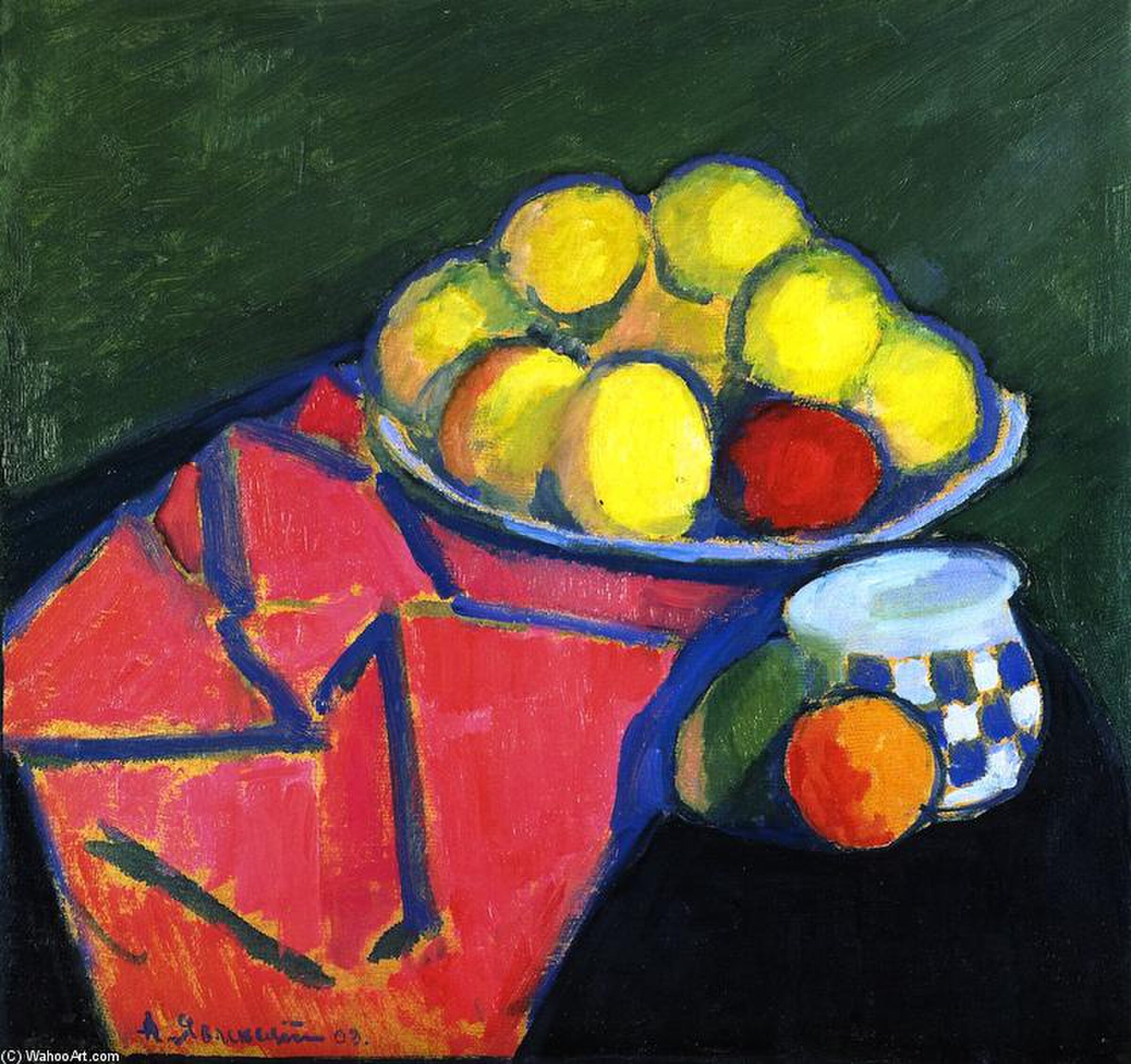
Look for animals — especially horses — painted in unreal colors like deep blue or vivid yellow. That emotional color choice is a signature giveaway.
If the painting seems to be dissolving into pure shapes and swirling lines with no clear 'scene,' you may be watching abstraction being born.
Notice if the forms feel flattened or outlined, almost like stained glass — the group drew heavy inspiration from folk art and medieval woodcuts.
The name 'Der Blaue Reiter' reportedly came from Kandinsky and Marc chatting over coffee — both simply loved blue and horses, and the name stuck.
Their almanac treated a child's drawing as equal in artistic value to a Picasso — a wildly radical idea in 1912.
Franz Marc, who painted those iconic blue horses, was killed at the Battle of Verdun in 1916 at just 36 years old.
The artists who defined it
Works to know
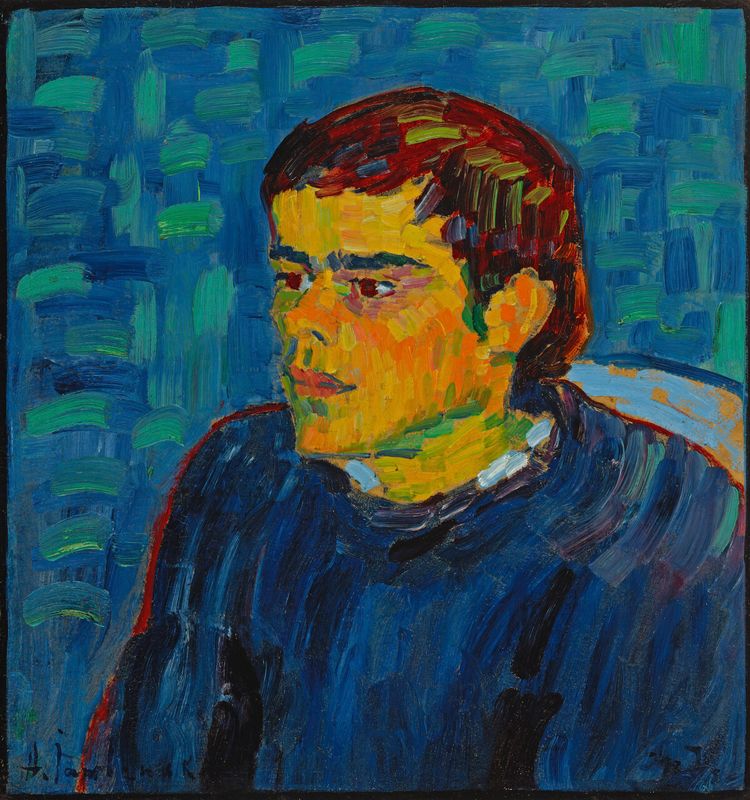 The Hunchback
1906 · Lenbachhaus
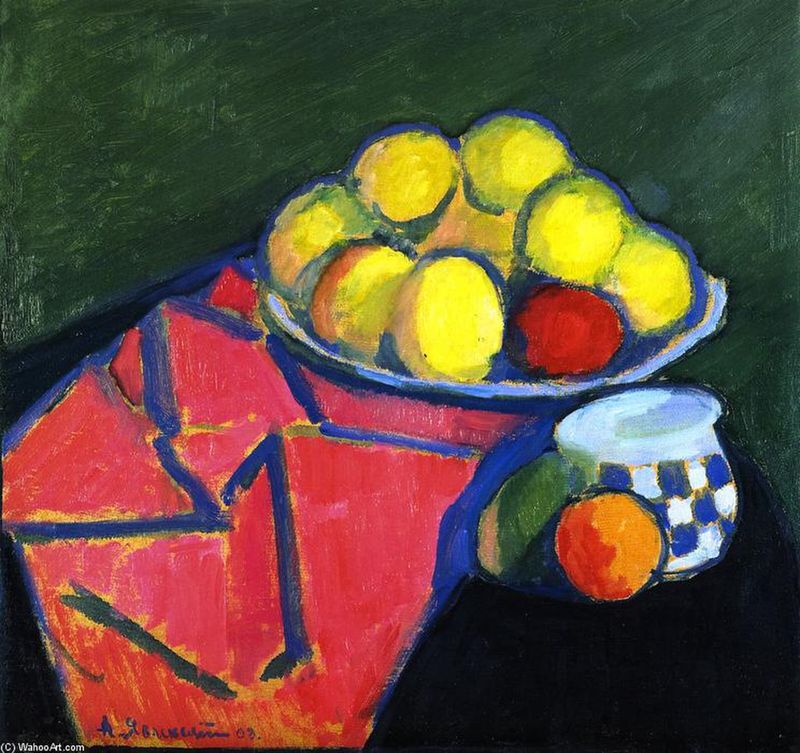 Still life with apples
1908 · Museum Wiesbaden
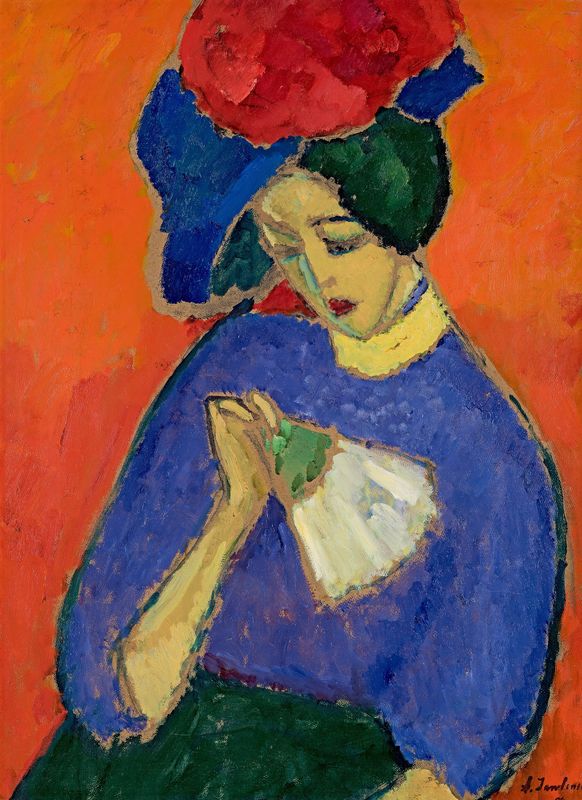 Lady with fan
1909 · Museum Wiesbaden
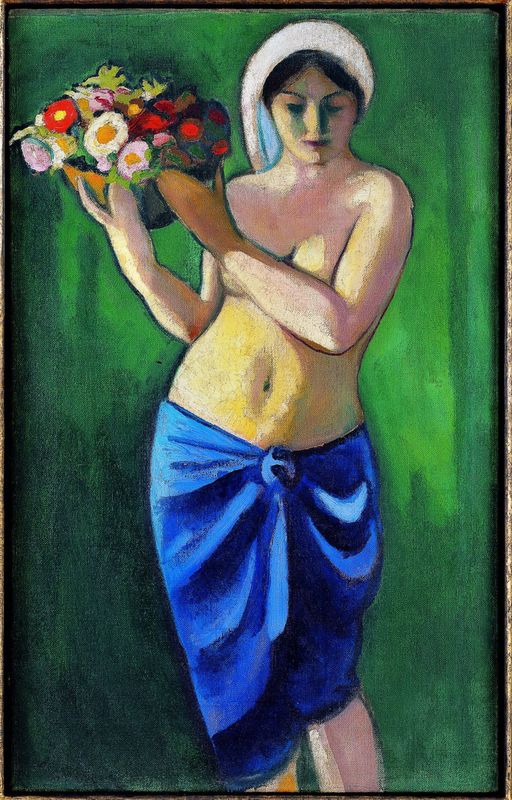 Woman supporting a flower bowl
1910
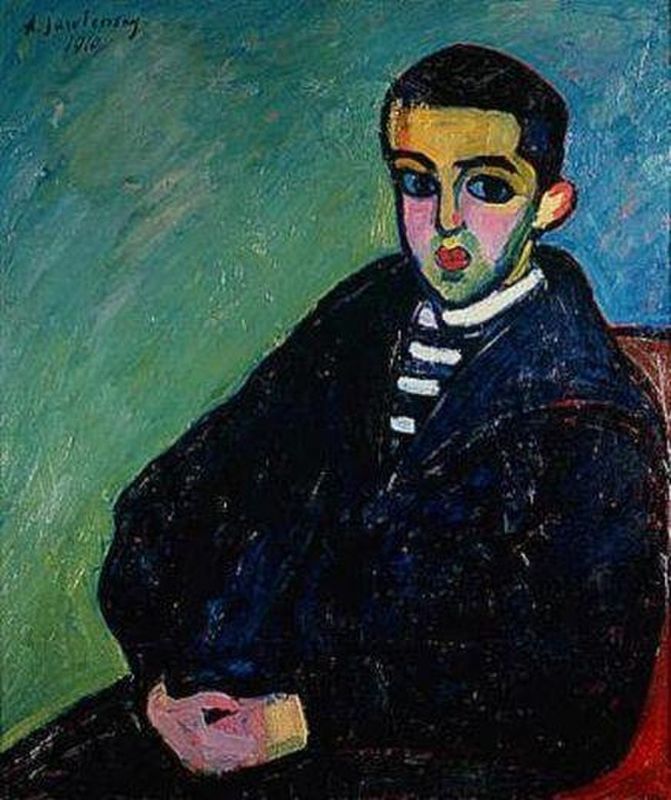 Nikita
1910 · Museum Wiesbaden
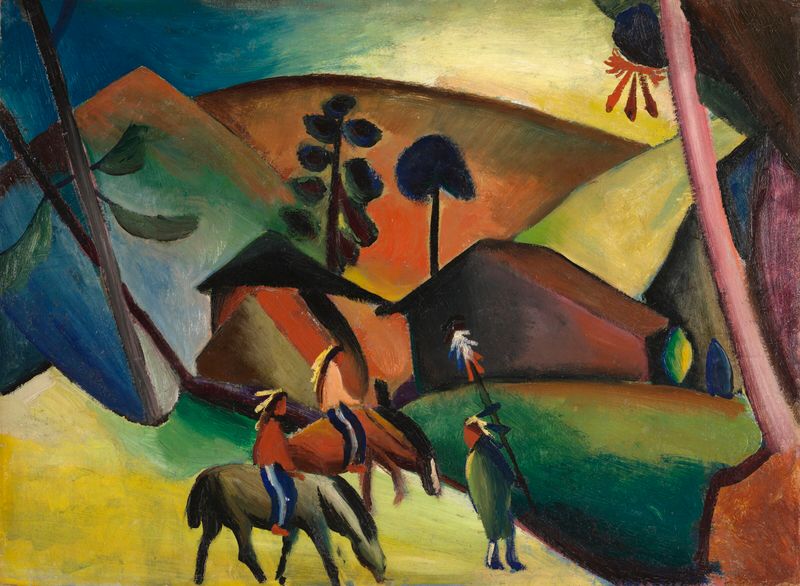 Native Americans on Horses
1911 · Lenbachhaus
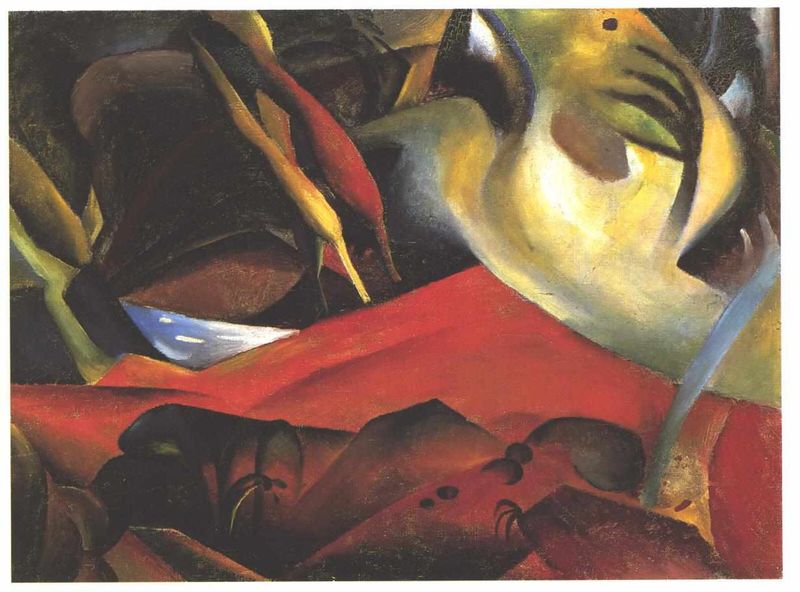 The Storm
1911 · Saarland Museum
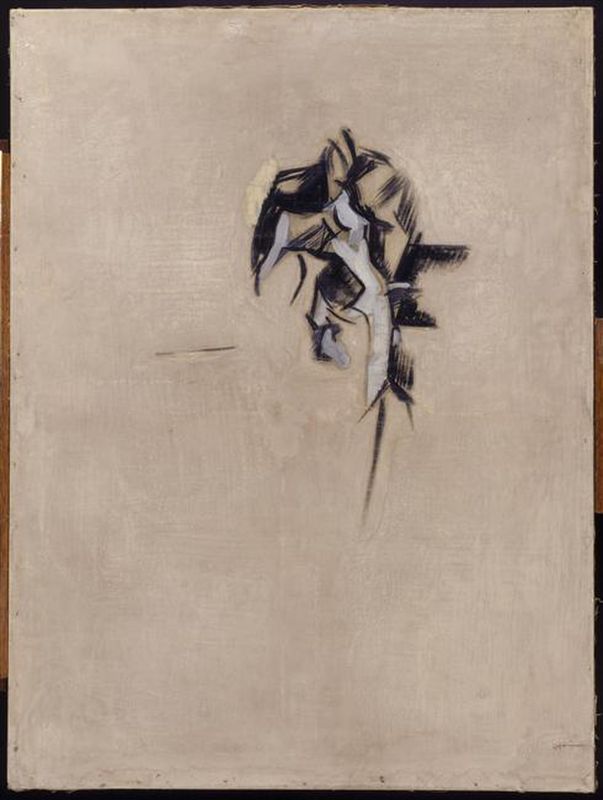 Portrait of Guillaume Apollinaire
1911 · Musée National d'Art Moderne
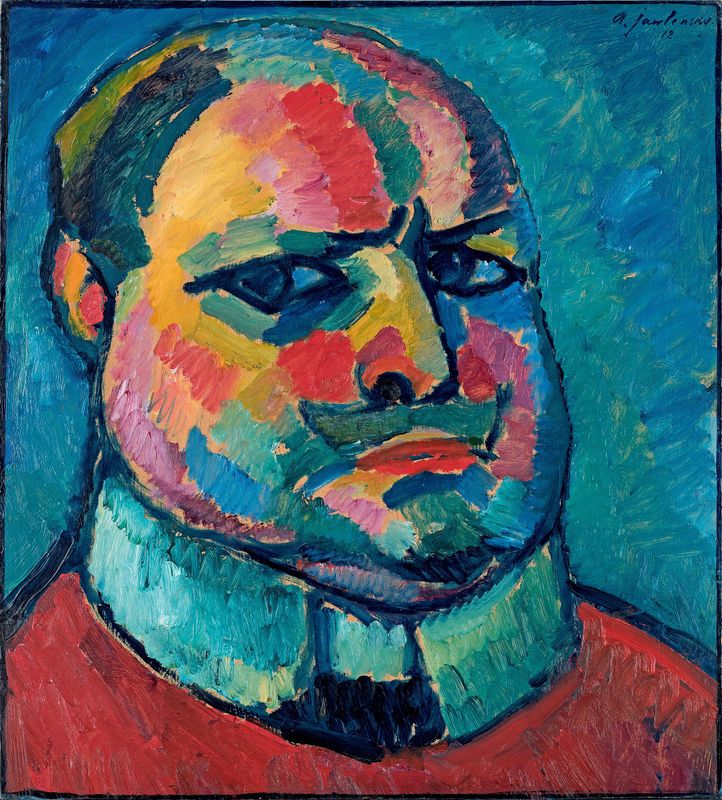 Self-portrait
1912 · Museum Wiesbaden
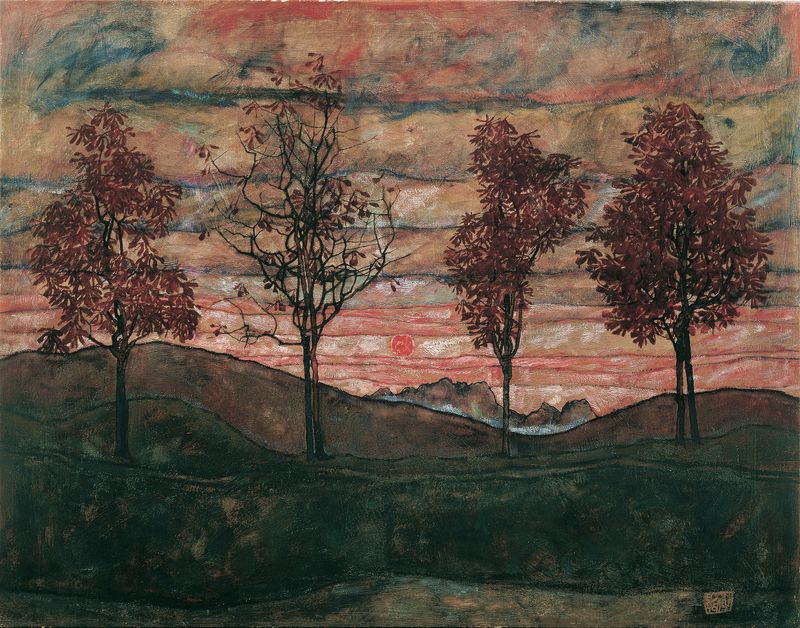 Four trees
1917 · Belvedere
Take Der Blaue Reiter to the museum
Point your phone at any painting and Art Whisper tells you its story — who made it, what to notice, and why it matters. Free to start.