
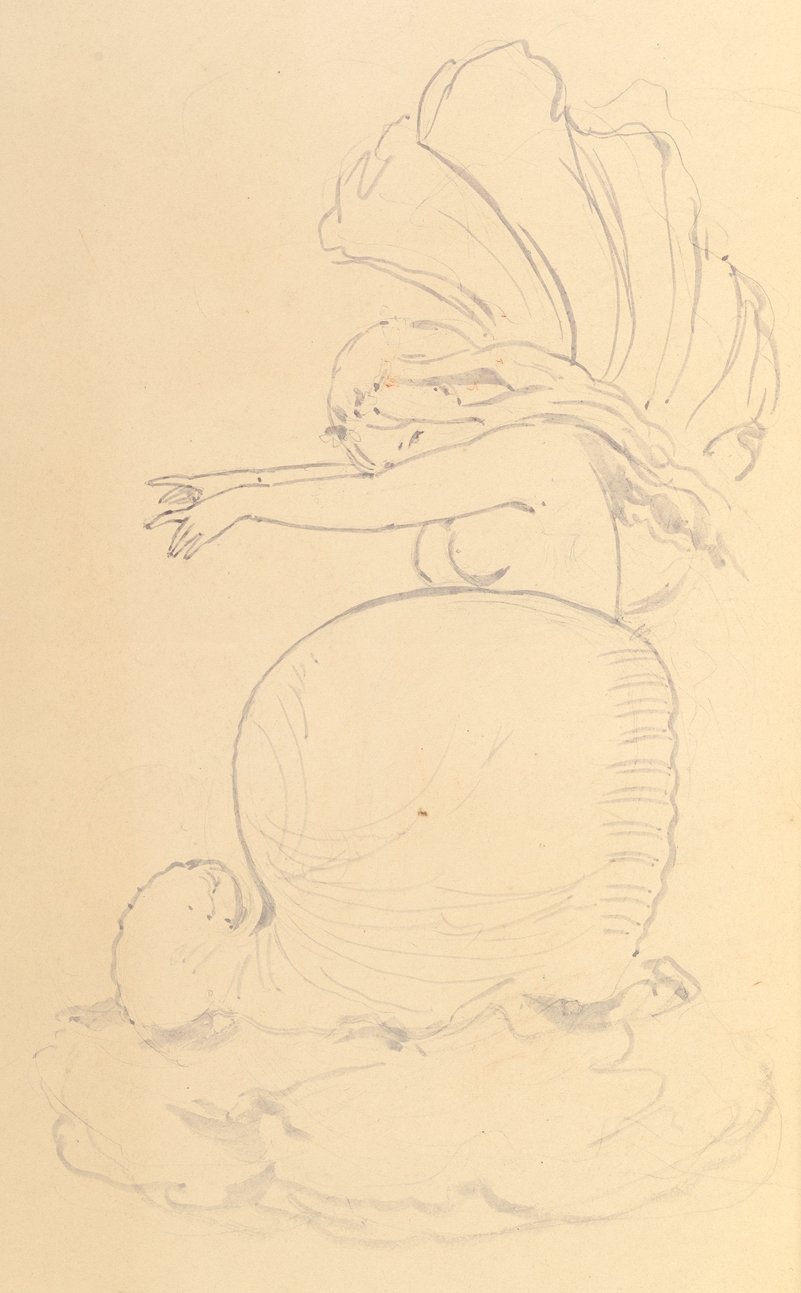
“This captivating graphite sketch reveals a fantastical spirit emerging from a shell, likely an early design concept from a 19th-century ceramics company, offering a glimpse into the creative process behind decorative arts.”
A delicate, ethereal figure, perhaps a fairy or spirit, unfurls from the curving embrace of a shell in this graphite sketch. The artist, Samuel Alcock & Company, a ceramics firm, likely created this drawing as a design concept for a decorative object, perhaps a porcelain figurine or a piece of tableware. The figure's translucent wings and flowing drapery suggest a moment of emergence, caught between the natural world of the shell and the fantastical realm it inhabits. The composition emphasizes the contrast between the rough, textured shell and the smooth, almost shimmering quality of the spirit. The meticulous detail in the shell's ridges and the figure's delicate features speaks to the precision required for translating such a design into a three-dimensional ceramic form.
- Artist
- Samuel Alcock & Company
- Date
- 1845
- Medium
- Graphite
- Location
- The Metropolitan Museum of Art
- Dimensions
- sheet: 12 11/16 x 10 1/16 in. (32.3 x 25.5 cm)
- Collection
- Drawings and Prints
- Credit line
- The Elisha Whittelsey Collection, The Elisha Whittelsey Fund, 1956
What to Notice
Four details hide in plain sight. Here’s where to look.
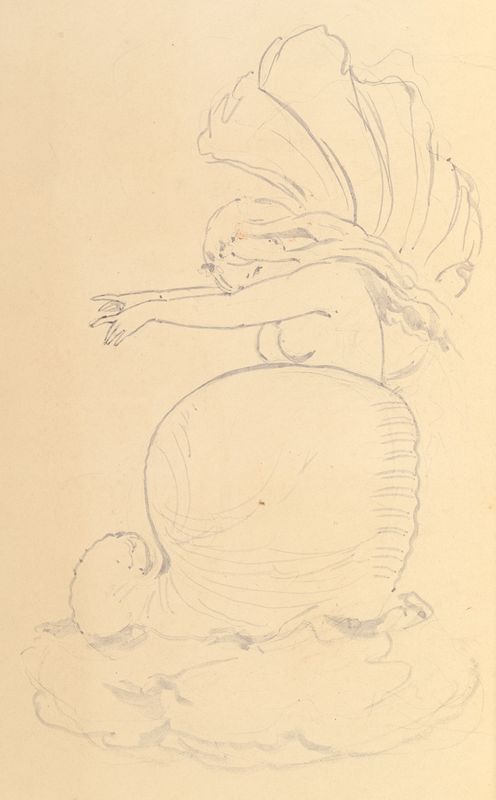
The way the spirit's body seems to organically grow from the shell's opening.
The delicate, almost transparent quality of the spirit's wings.
The intricate shading that gives the shell its three-dimensional form.
The small, almost imperceptible face of the spirit, hinting at its gentle nature.
Stand in front of it and listen
The full narration walks you through Sketch of a Fairy or Spirit Emerging from a Shell — the story behind it, the details most visitors miss, and why it matters. Free in the Art Whisper app.
Samuel Alcock & Company
Samuel Alcock & Company, a prominent British business, was renowned for its intricate ceramic designs, particularly elegant cups and tureens, in the mid-19th century.
Further Works by Company
 An Elegant Company
1632 · Art Institute of Chicago
 Mr. James Mackie
1830 · Art Institute of Chicago
 Old Tower at Avignon
1875 · Art Institute of Chicago
 Lettered title: Christy
1845 · The Metropolitan Museum of Art
 Lord Lyndhurst
1824 · The Metropolitan Museum of Art
 The Early Ploughman
1856 · Art Institute of Chicago
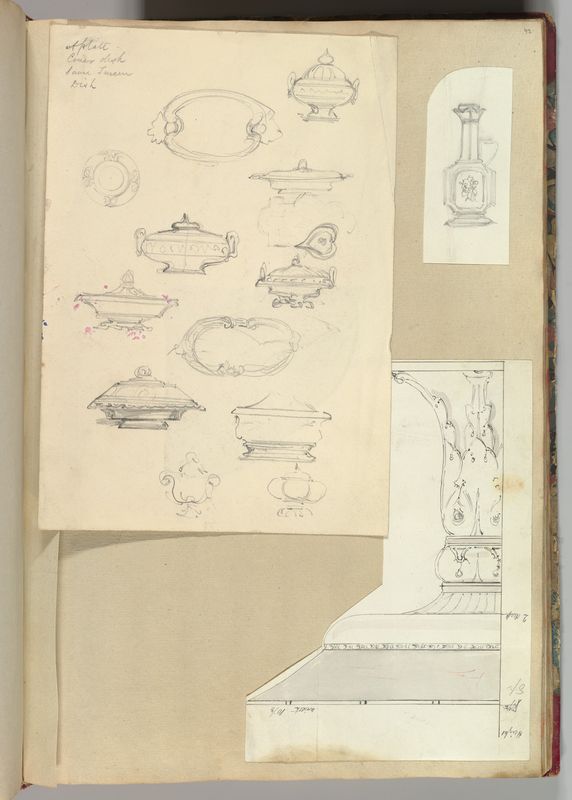 Designs for Tureens and a Platter
1845 · The Metropolitan Museum of Art
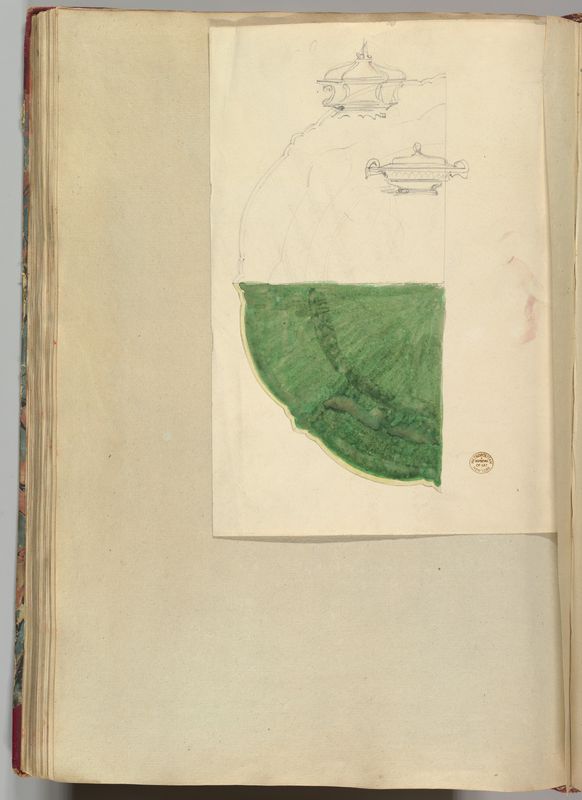 Designs for Two Tureens and a Plate
1845 · The Metropolitan Museum of Art
More works to explore
Beyond Company: works from the same years.
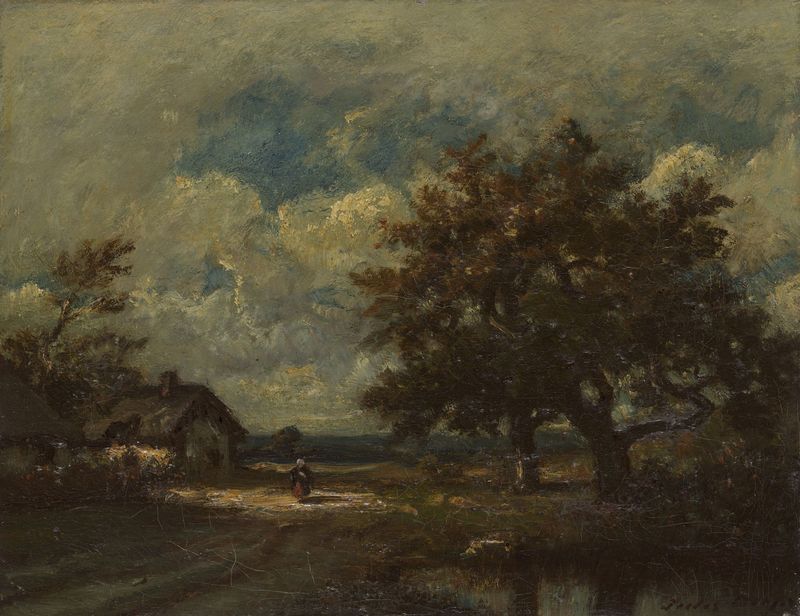 Same era · 1830s–1860s
The Cottage by the Roadside, Stormy Sky
Léon-Victor Dupré · 1855 · Art Institute of Chicago
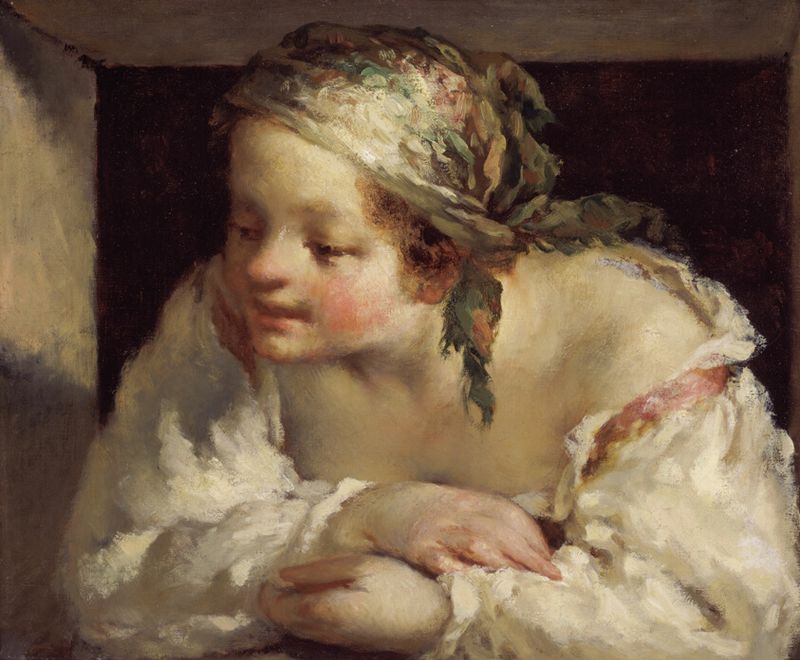 Same era · 1830s–1860s
Young Woman
Jean-François Millet · 1844 · Art Institute of Chicago
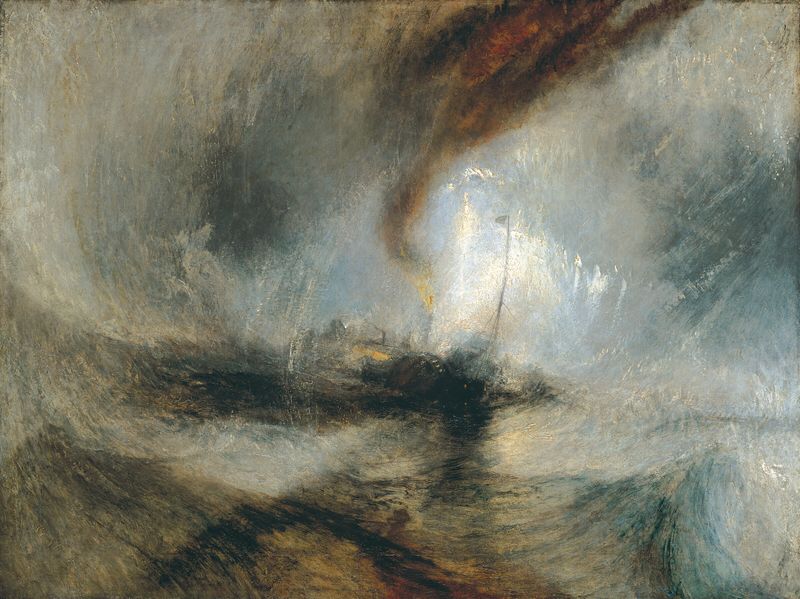 Same era · 1830s–1860s
Snow Storm: Steam-Boat off a Harbour's Mouth
J. M. W. Turner · 1842 · National Gallery
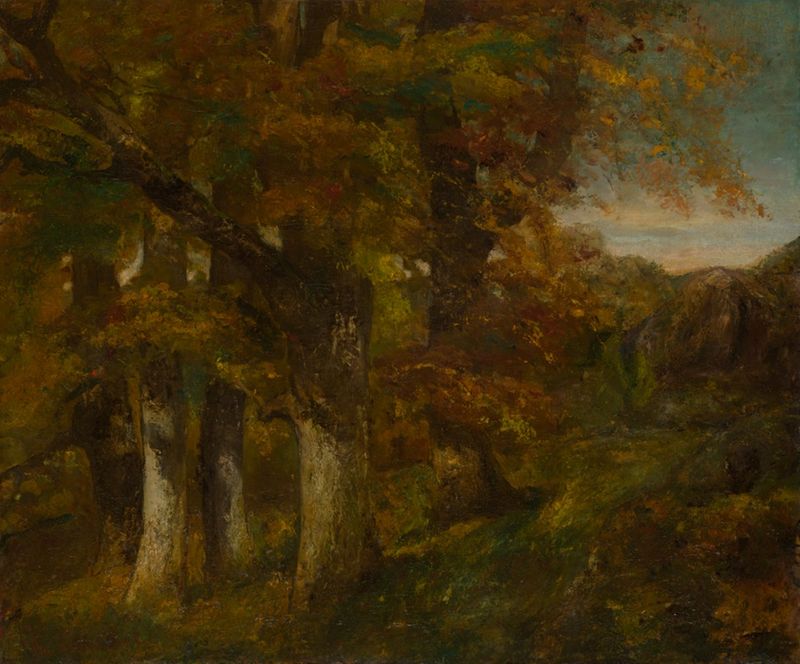 Same era · 1830s–1860s
Wooded Landscape
Gustave Courbet · 1848 · Art Institute of Chicago
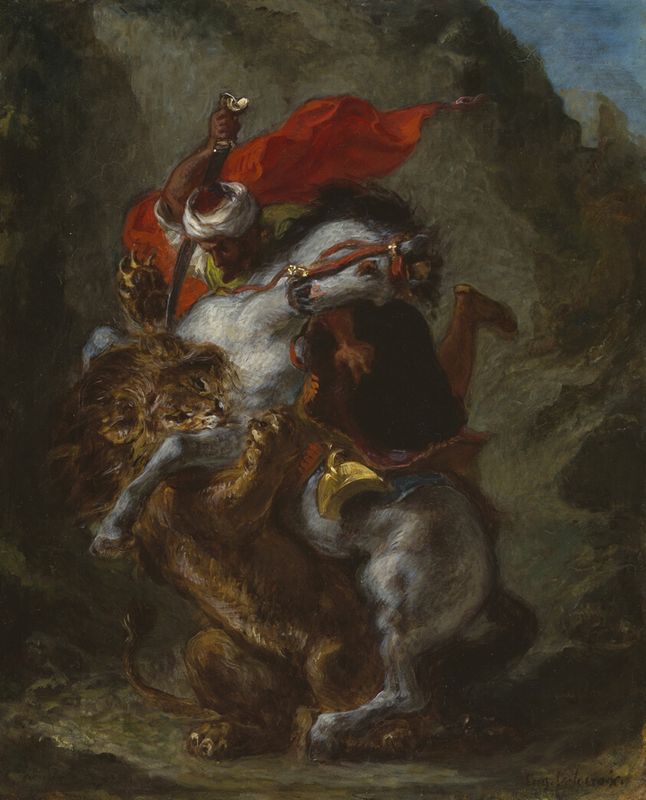 Same era · 1830s–1860s
Arab Horseman Attacked by a Lion
Eugène Delacroix · 1849 · Art Institute of Chicago
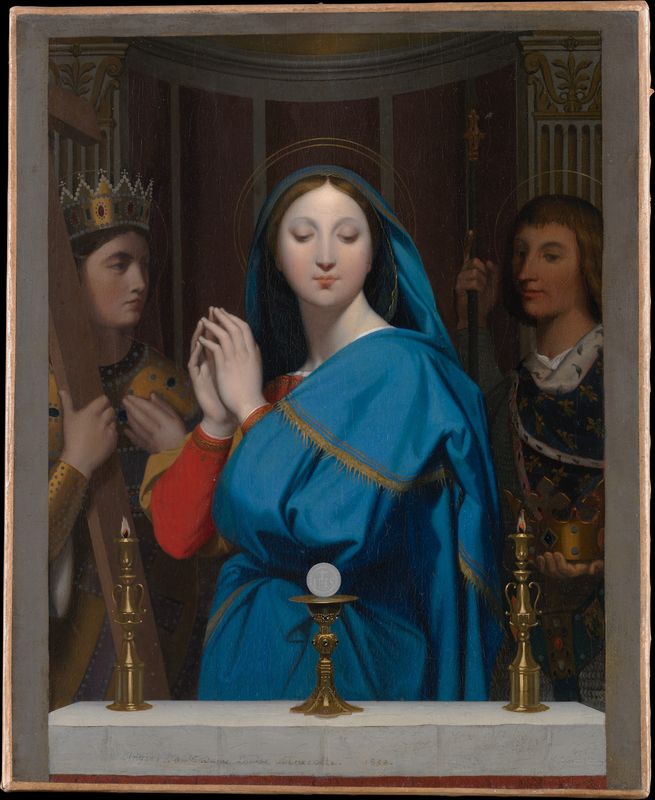 Same era · 1830s–1860s
The Virgin Adoring the Host
Jean-Auguste-Dominique Ingres · 1841 · Pushkin Museum of Fine Arts
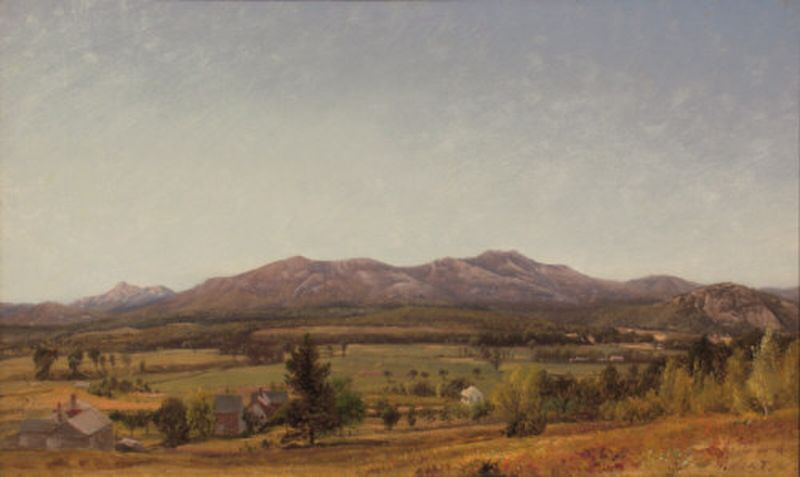 Same era · 1830s–1860s
Mount Chocorua and Moat Mountain from North Conway
William Hart · 1850
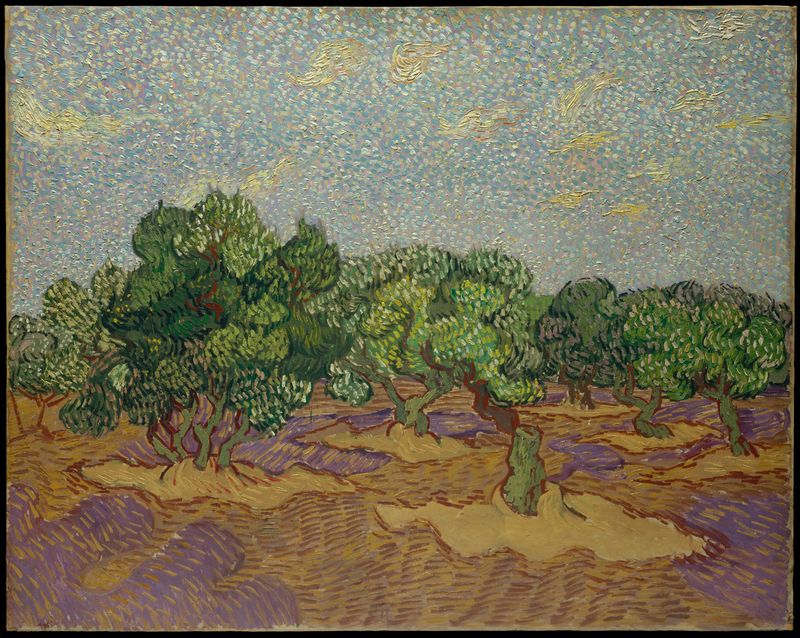 Same era · 1830s–1860s
Olive Trees
Vincent van Gogh · 1853 · The Metropolitan Museum of Art
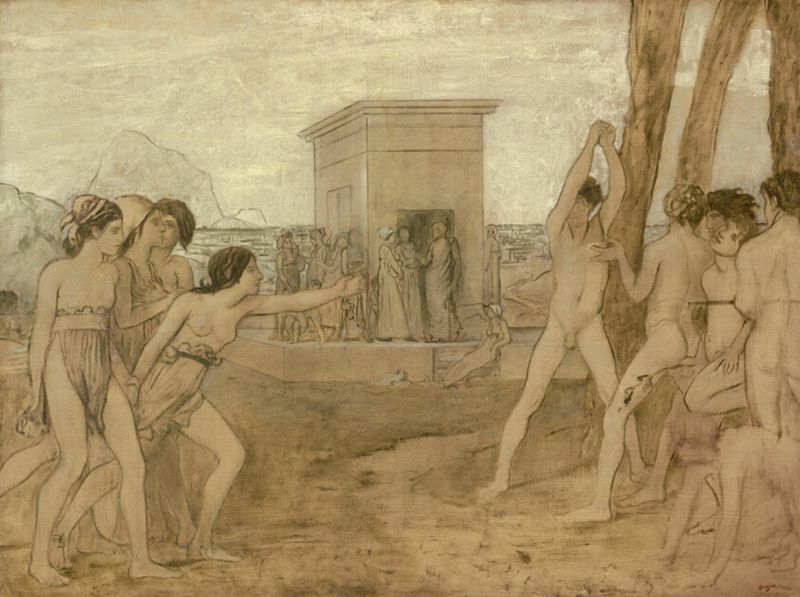 Same era · 1830s–1860s
Young Spartan Girls Challenging Boys
Edgar Degas · 1860 · Art Institute of Chicago
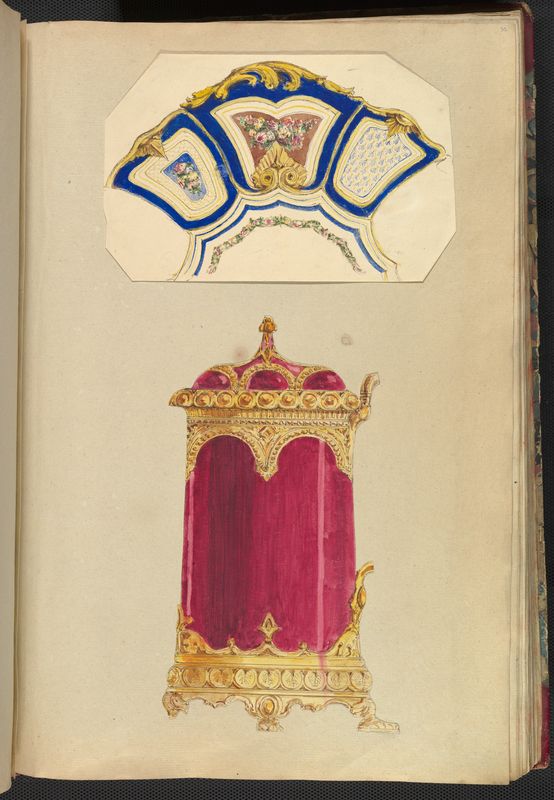 Same era · 1830s–1860s
Designs for a Decorated Dish, or Platter, and a Biscuit Barrel
Alfred Henry Forrester [Alfred Crowquill] · 1845 · The Metropolitan Museum of Art
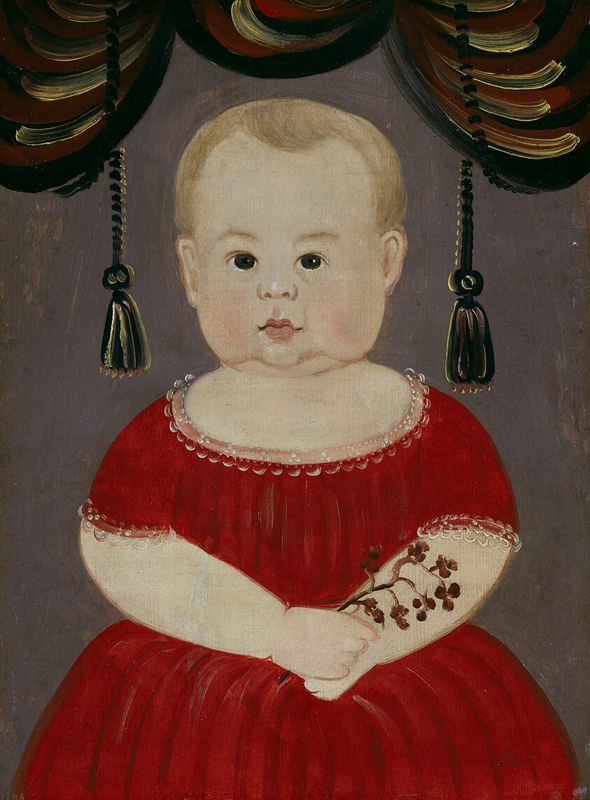 Same era · 1830s–1860s
Portrait of Fred Adelbert Haywood
School of William Matthew Prior · 1848 · Art Institute of Chicago
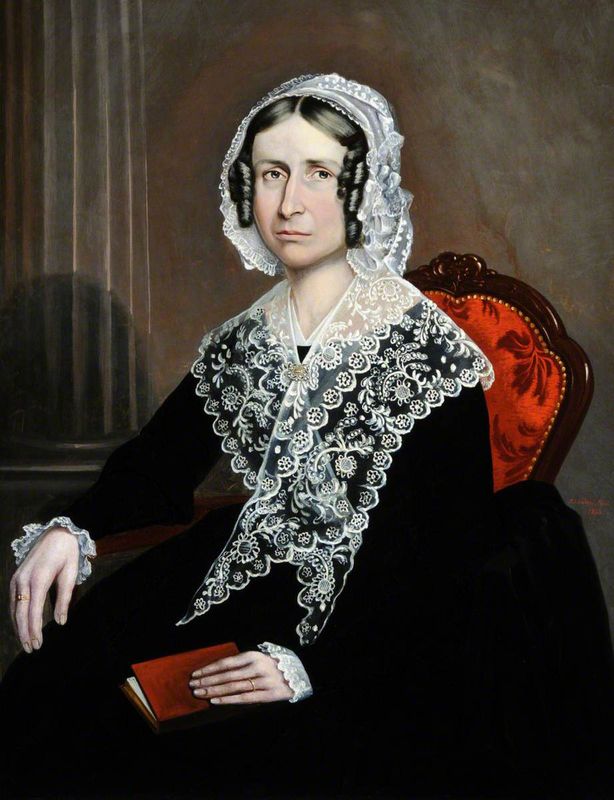 Same era · 1830s–1860s
Portrait of Mary Ann (c.1796–after 1880), Wife of the Reverend George Balleine
Philip John Ouless · 1846 · Jersey Museum and Art Gallery