
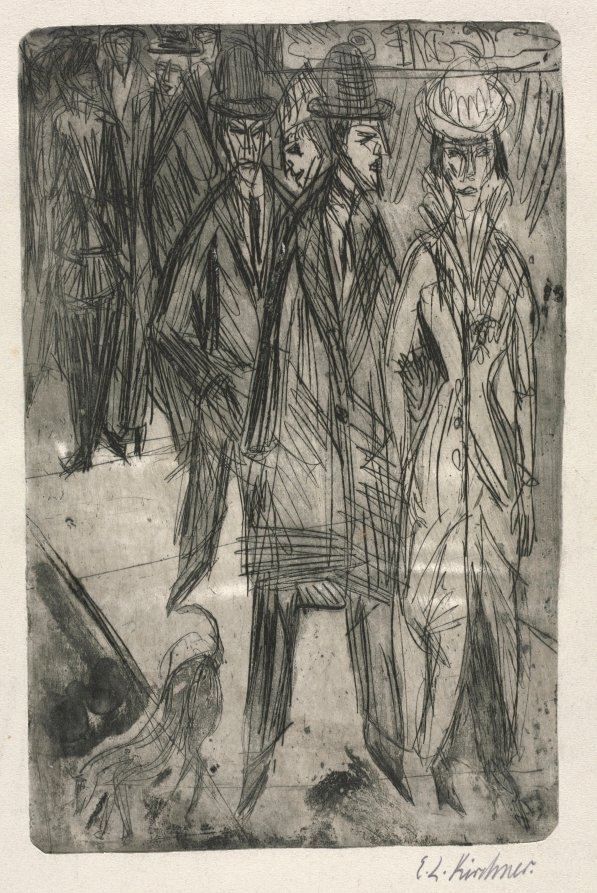
“This etching throws you into a bustling, yet isolating, city street. Its stark contrasts and angular forms capture the unsettling energy of modern urban life through an Expressionist lens.”
In "On the Street," a lone figure strides through a stark, angular cityscape, their form elongated and almost swallowed by the surrounding architecture. The etching and aquatint medium creates a dramatic contrast, with deep blacks and sharp whites emphasizing the jagged lines and fragmented shapes that define the urban environment. The figure's face is obscured, adding to a sense of anonymity and isolation, a common theme in early 20th-century art reflecting the alienation of modern life. This work, created around 1914, captures the raw energy and psychological tension of a rapidly changing city, a subject Kirchner explored in his "Straßenszenen" (street scenes) series during this period. The frenetic lines and stark tones pull the viewer into a world that feels both immediate and unsettling, reflecting the Expressionist drive to convey inner emotion rather than objective reality.
- Artist
- Ernst Ludwig Kirchner
- Date
- 1909
- Medium
- etching and aquatint
- Location
- Cleveland Museum of Art
- Dimensions
- [object Object]
- Collection
- Prints
- Culture
- Germany, 20th century
- Credit line
- Gift of the Womens Council of the Cleveland Museum of Art
What to Notice
Four details hide in plain sight. Here’s where to look.
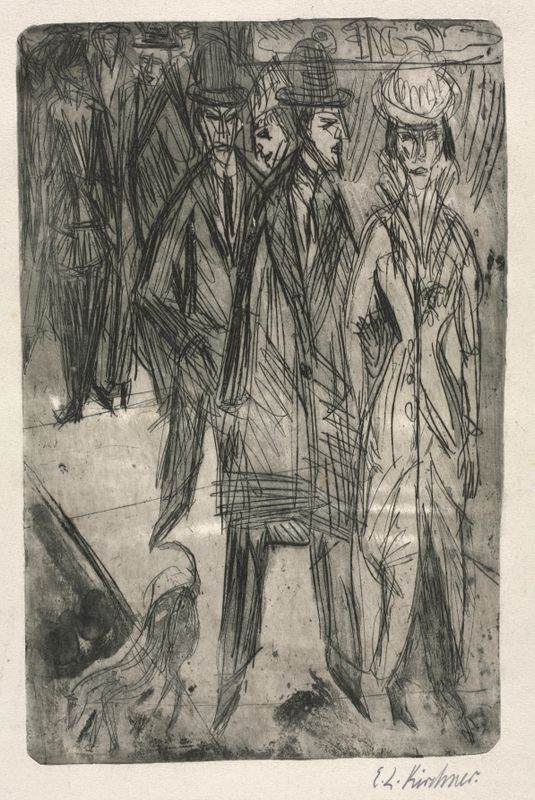
The sharp, almost violent angles of the buildings.
The way the figure's body seems to merge with the background.
The intense contrast between light and shadow.
The minimal detail on the figure's face, enhancing anonymity.
Stand in front of it and listen
The full narration walks you through On the Street — the story behind it, the details most visitors miss, and why it matters. Free in the Art Whisper app.
Ernst Ludwig Kirchner
1880–1938 · German ReichErnst Ludwig Kirchner, a founder of the revolutionary Die Brücke group, reshaped German art with his raw, emotional Expressionist vision.
Further Works by Kirchner
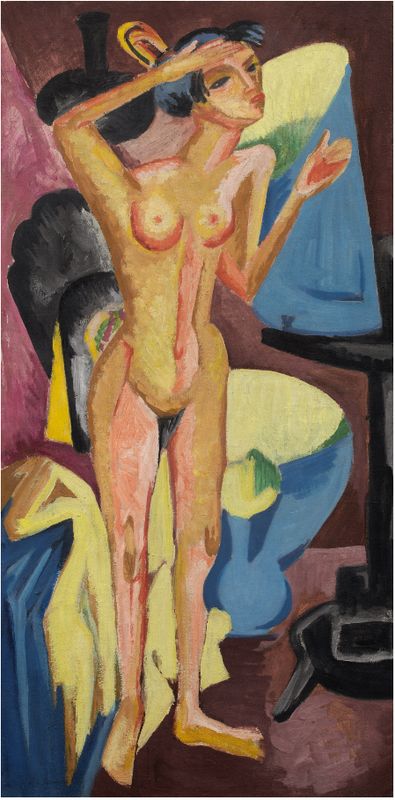 NUDE AT THE MIRROR
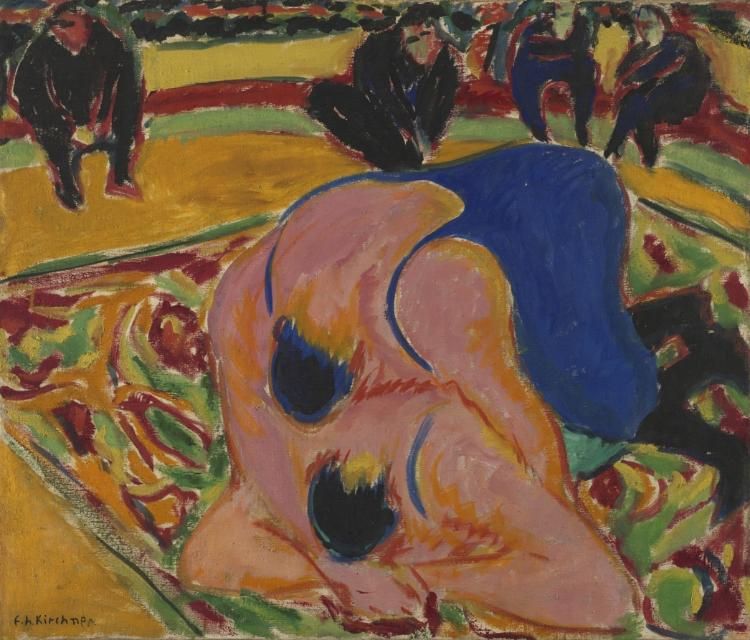 Wrestlers in a Circus
1909 · Cleveland Museum of Art
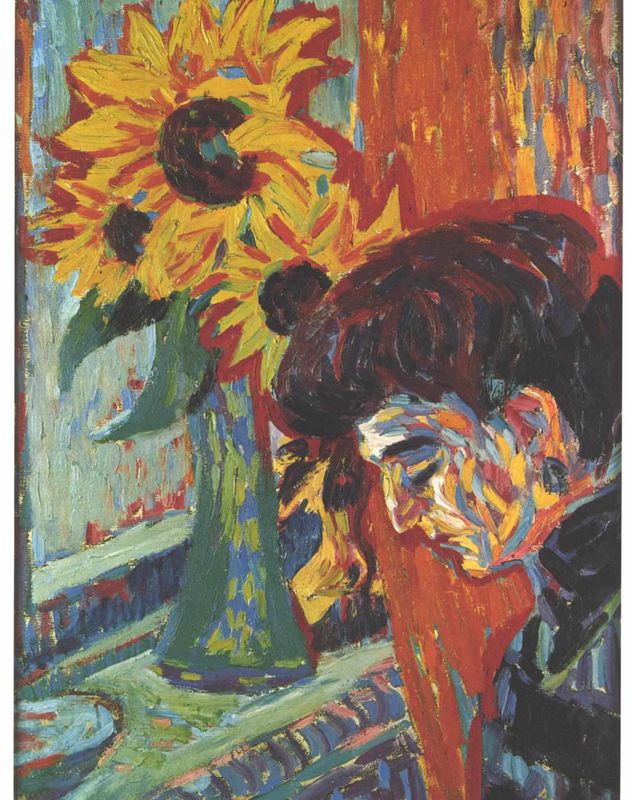 Frauenkopf vor Sonnenblumen
1906 · Museum Frieder Burda
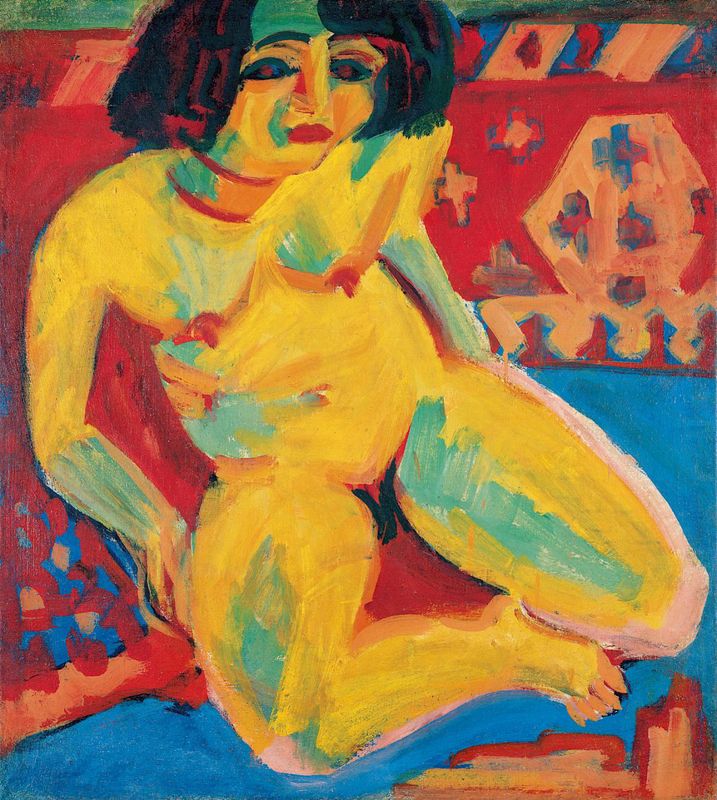 Female Nude (Dodo)
1909 · Albertina
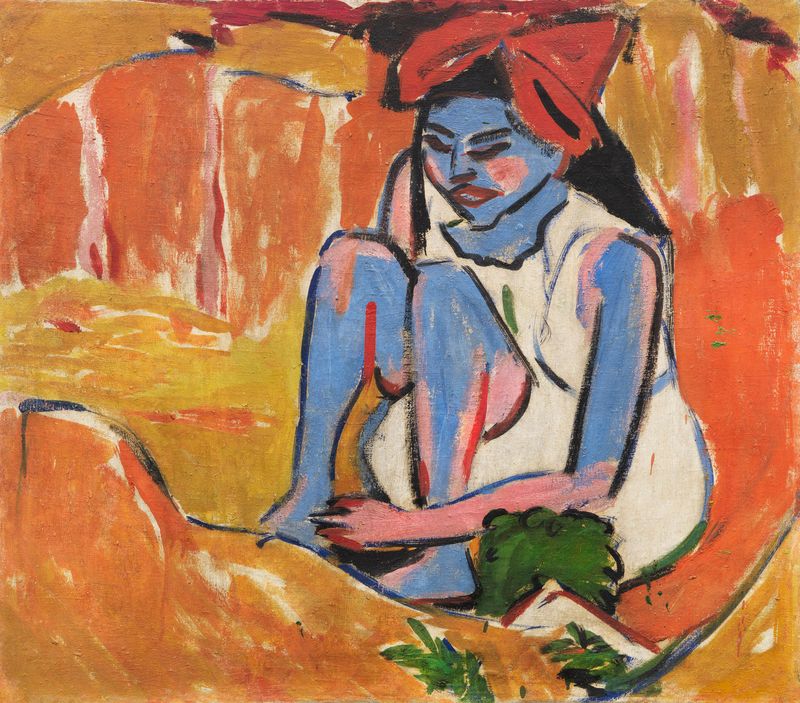 Blue Girl in the Sun
1910
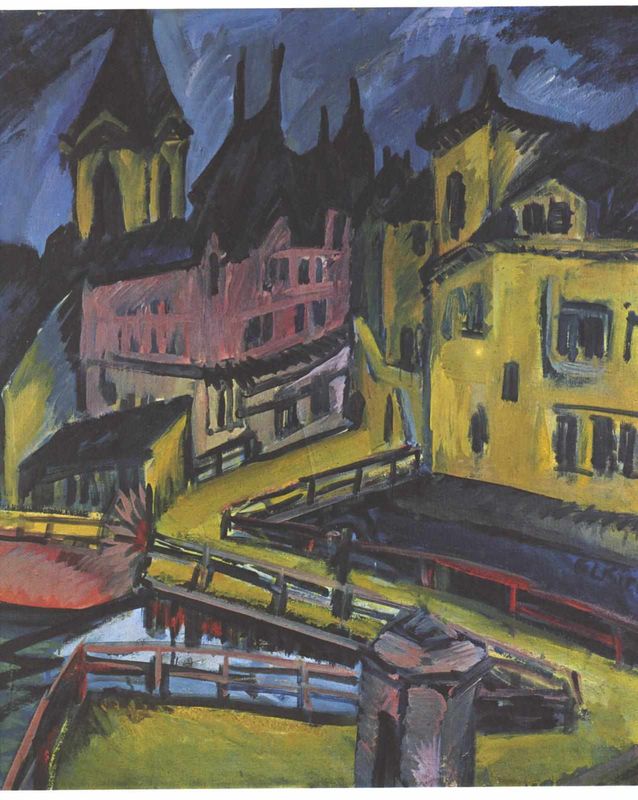 Pfortensteg Chemnitz
1910 · Museum Frieder Burda
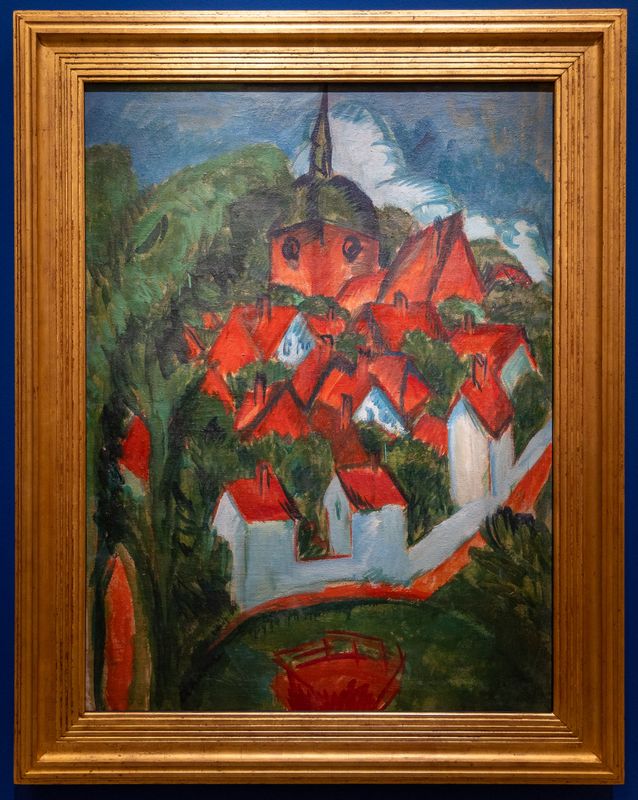 Burg on Fehmarn
1912 · Westphalian State Museum of Art and Cultural History
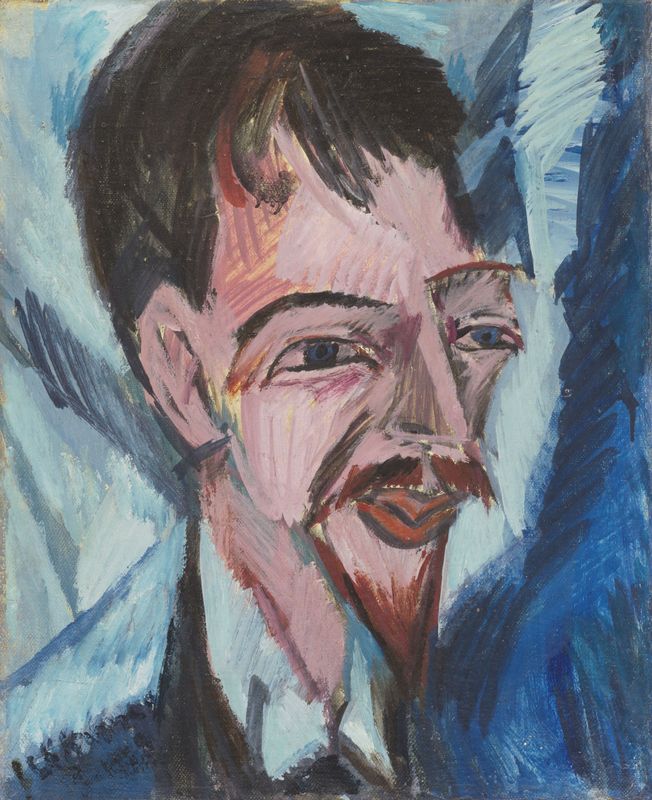 Portrait of Alfred Döblin
1912 · Busch–Reisinger Museum
More from Die Brucke
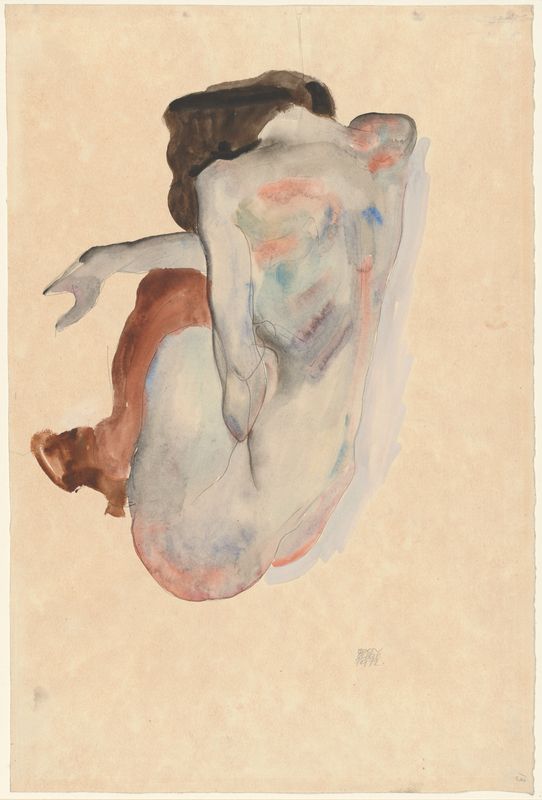
More works to explore
Beyond Kirchner and Die Brucke: works from the same years.
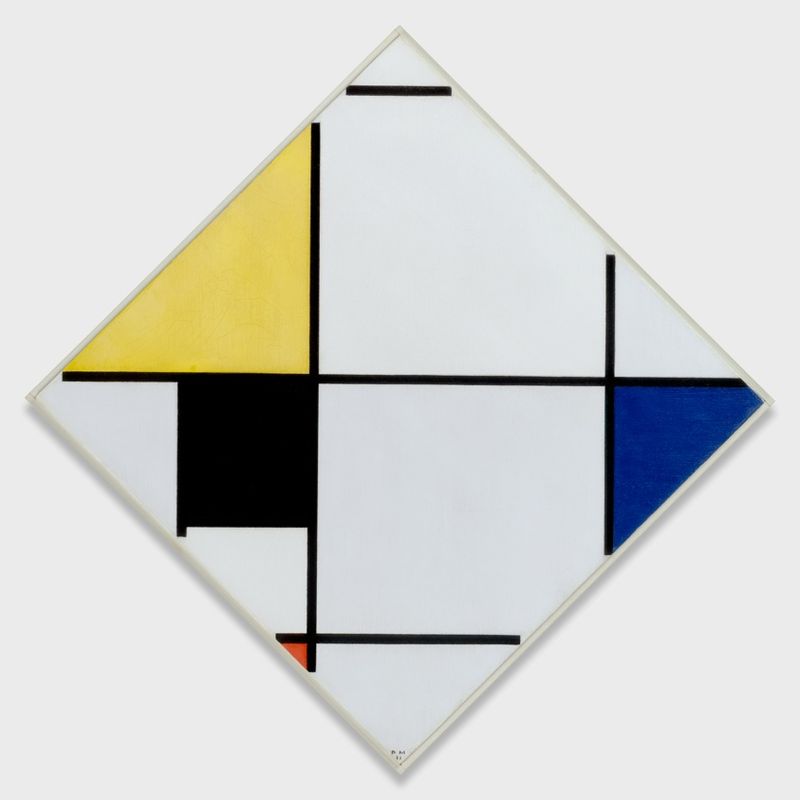 Same era · 1890s–1920s
Lozenge Composition with Yellow, Black, Blue, Red, and Gray
Piet Mondrian · 1921 · Art Institute of Chicago
 Same era · 1890s–1920s
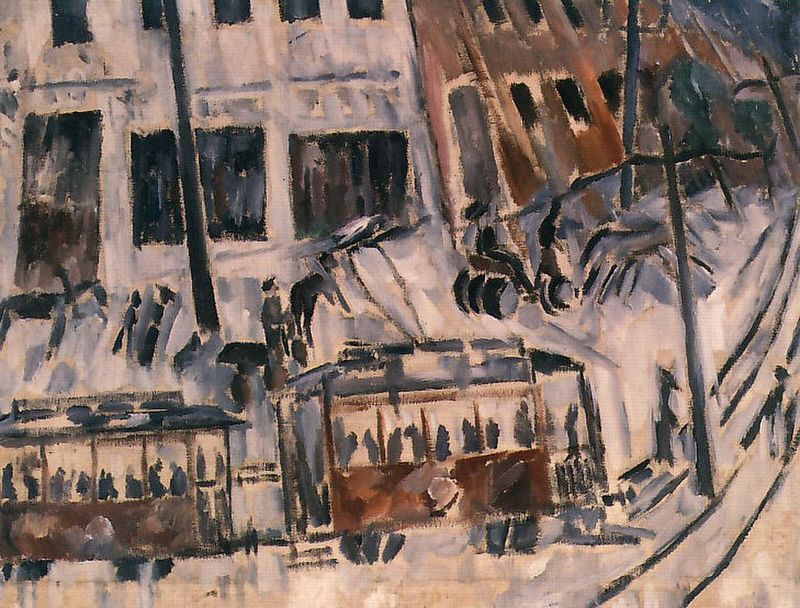
Streetcar
Mikhail Larionov · 1911 · Bashkir State Art Museum (Nesterov Museum)
 Same era · 1890s–1920s
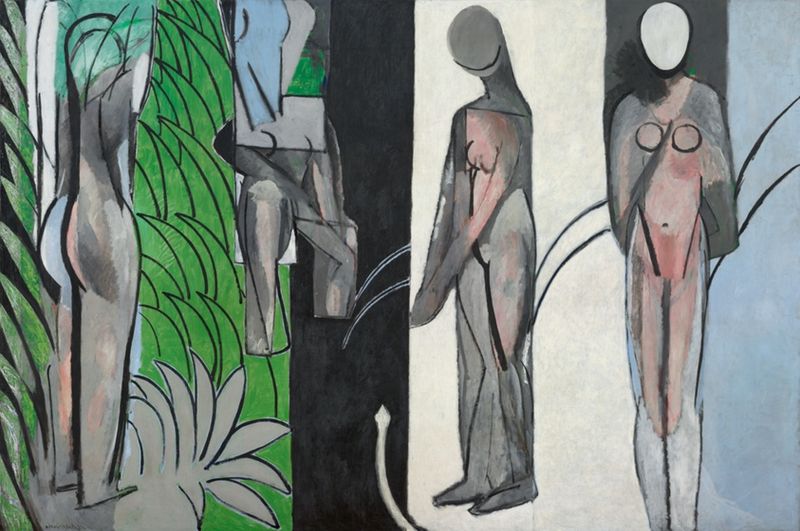
Bathers by a River
Henri Matisse · 1909 · Art Institute of Chicago
 Same era · 1890s–1920s
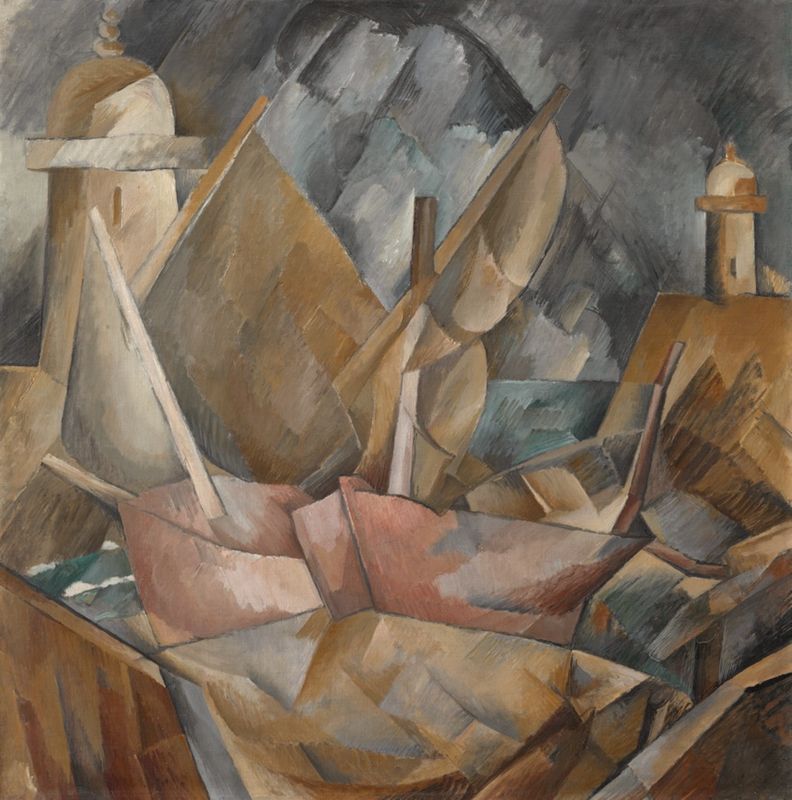
Little Harbor in Normandy
Georges Braque · 1909 · Art Institute of Chicago
 Same era · 1890s–1920s
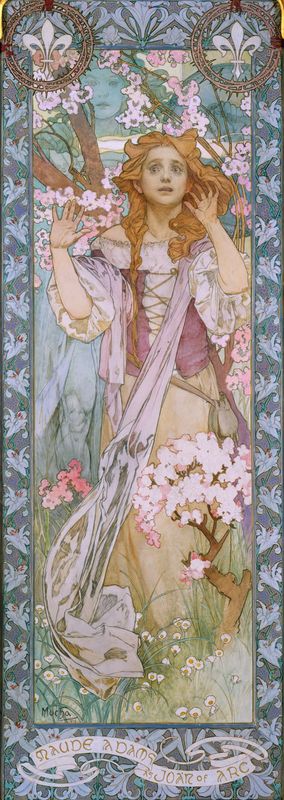
Maude Adams (1872–1953) as Joan of Arc
Alphonse Mucha · 1909 · The Metropolitan Museum of Art
 Same era · 1890s–1920s
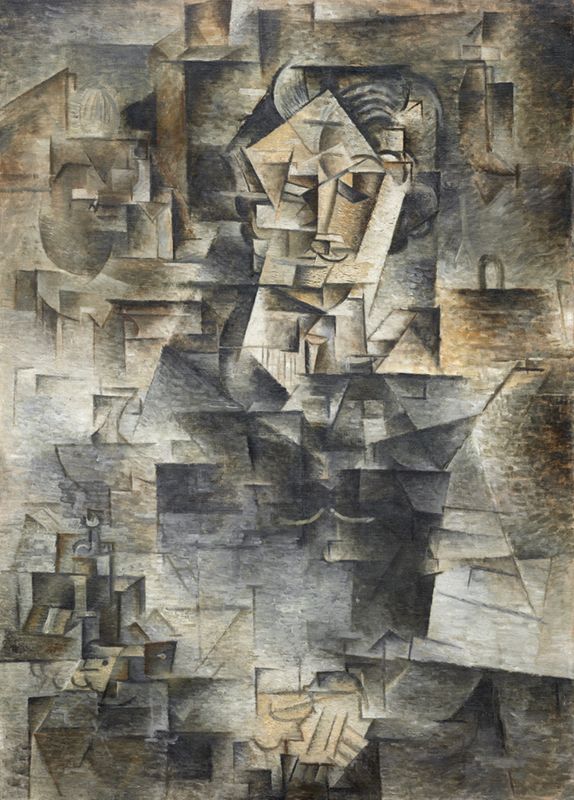
Daniel-Henry Kahnweiler
Pablo Picasso · 1910 · Art Institute of Chicago
 Same era · 1890s–1920s
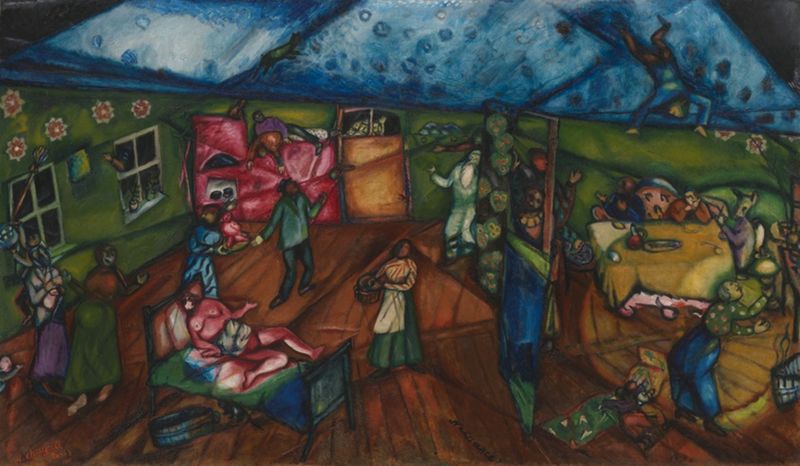
Birth
Marc Chagall · 1911 · Art Institute of Chicago
 Same era · 1890s–1920s
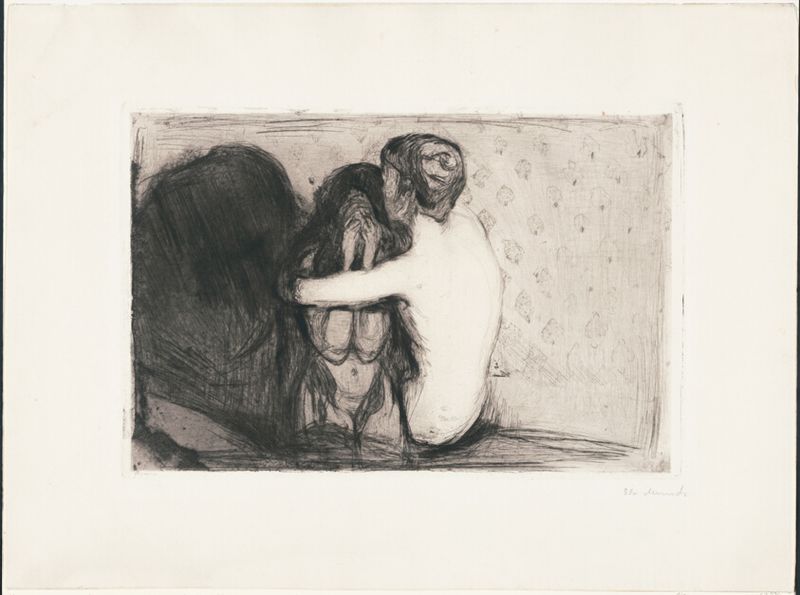
Consolation
Edvard Munch · 1907 · Munch Museum
 Same era · 1890s–1920s
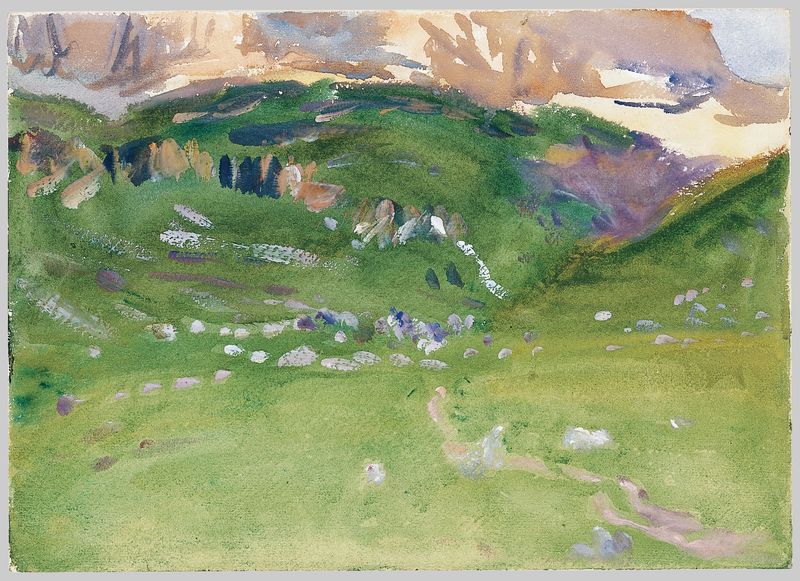
Sellar Alp, Dolomites
John Singer Sargent · 1913 · The Metropolitan Museum of Art
 Same era · 1890s–1920s
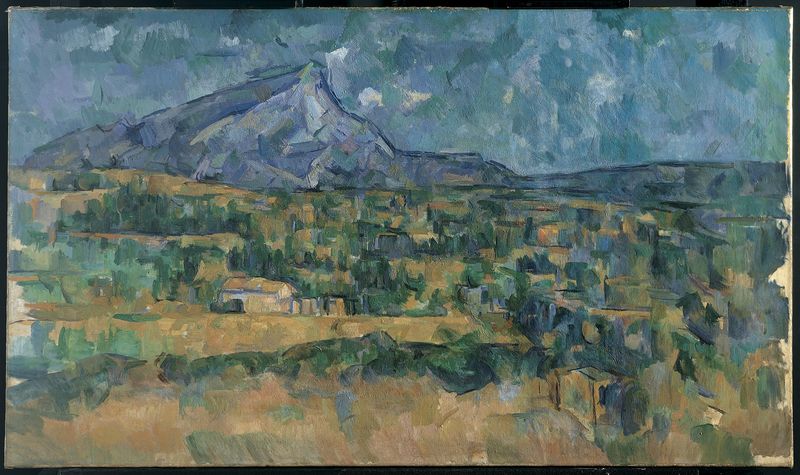
Mont Sainte-Victoire
Paul Cézanne · 1904 · Detroit Institute of Arts
 Same era · 1890s–1920s
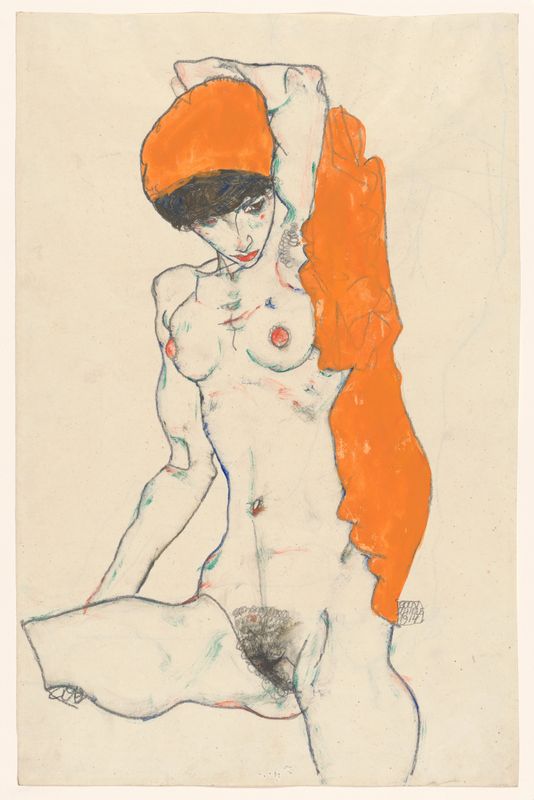
Standing Nude with Orange Drapery (recto): Study of Nude with Arms Raised (verso)
Egon Schiele · 1914 · The Metropolitan Museum of Art
 Same era · 1890s–1920s
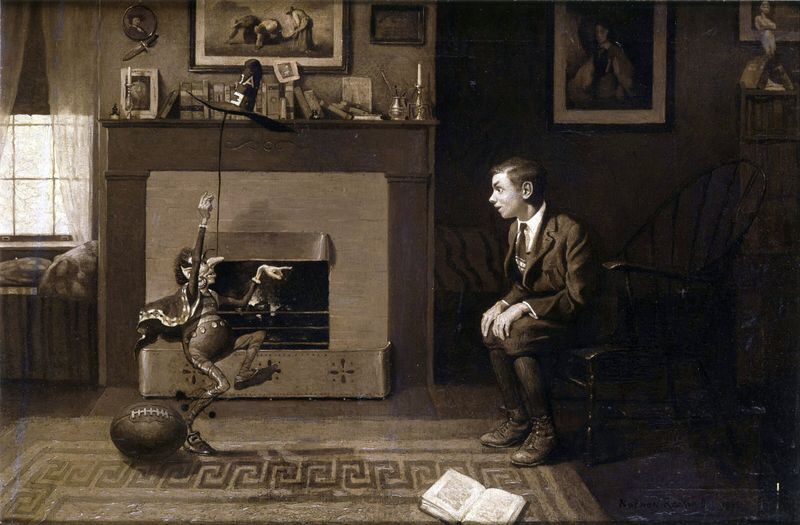
The Magic Foot-ball, 'I thought you were wrong,' he said in triumph. 'You said it was nine! Stupid!'
Norman Rockwell · 1914 · Norman Rockwell Museum