01
Central wheel motif
Find the big round motif in the lower middle, with thick white spokes fanning out from a small dotted hub. It is the boldest shape on the page.
1 of 4 on the painting
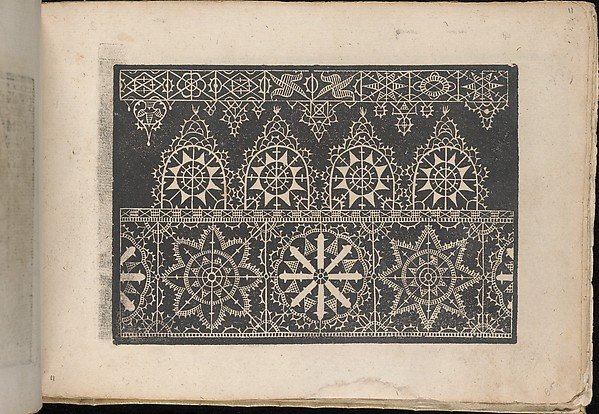
“Step into the world of Renaissance design with this woodcut pattern, an exquisite example of the floral motifs that inspired artisans creating lace, embroidery, and other decorative arts in the late 1500s.”
This intricate woodcut presents a dense, symmetrical pattern of intertwining floral motifs, characteristic of the elaborate lace and embroidery designs popular in late 16th-century Europe. The title, "Fiori di Ricami Nuovamente Posti in Luce," translates to "Flowers of Embroidery Newly Brought to Light," suggesting its purpose as a pattern book for artisans. Here, delicate tendrils of leaves and blossoms unfurl from a central point, creating a mirror image across the page. The design is so tightly woven it almost resembles a textile itself, inviting close inspection to trace each individual element. This particular page, one of many in the series, showcases the era's fascination with natural forms transformed into decorative art, providing inspiration for everything from needlework to architectural ornamentation.
Five details hide in plain sight. Pick one and we’ll show you exactly where to look.
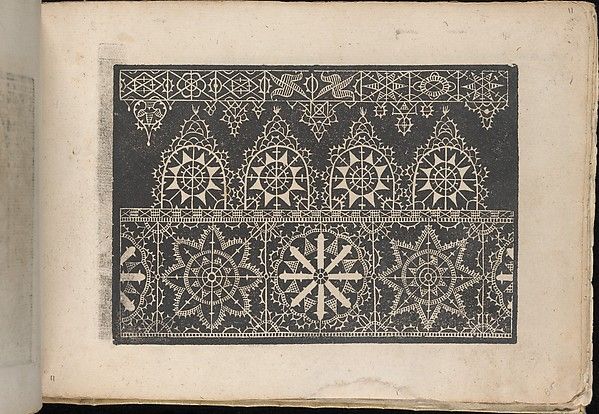
Find the big round motif in the lower middle, with thick white spokes fanning out from a small dotted hub. It is the boldest shape on the page.
Four arch-shaped panels line up across the middle, each holding a starburst. Their steady repeat gives the eye a rhythm to follow from left to right.
Look at the star on the lower left. Its fine white lines and tiny dots stand out from a dark ground, which is typical of woodcut, where the carver cuts away the areas that should not print.
In the narrow strip along the top, look for small curling shapes that may be stylized birds, tucked among the diamond and star patterns. They are easy to skip past.
The print sits on a soft, aged page with a visible gutter at the left. It suggests a bound book of patterns, likely meant to be leafed through and used as a design source.
The full narration walks you through Fiori di Ricami Nuovamente Posti in Luce, page 11 (recto) — the story behind it, the details most visitors miss, and why it matters. Free in the Art Whisper app.
Matteo Florimi was a prolific Italian engraver and publisher, known for his religious prints and intricate embroidery patterns.
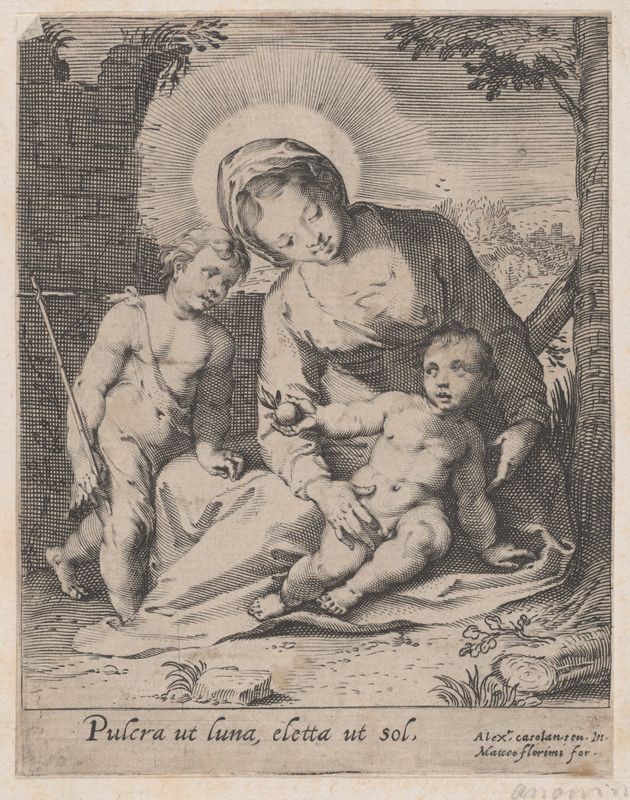 Virgin and Child with the infant Saint John the Baptist
1576 · The Metropolitan Museum of Art
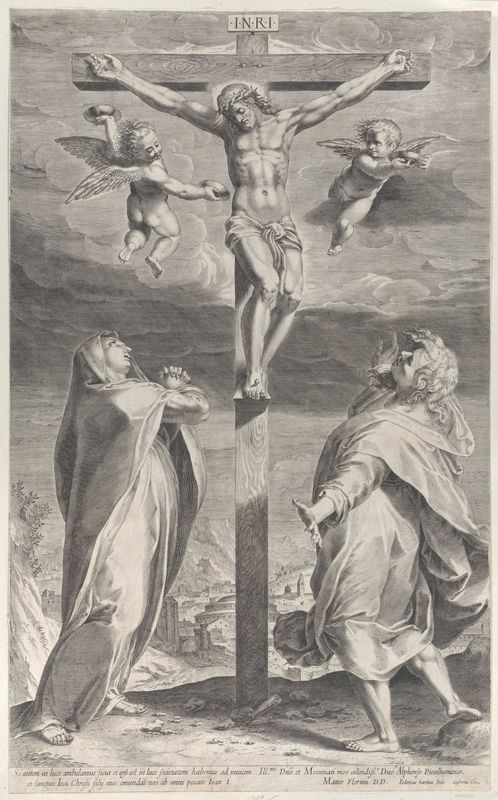 Crucifixion with the Virgin Mary and Saint John the Evangelist, angels overhead
1588 · The Metropolitan Museum of Art
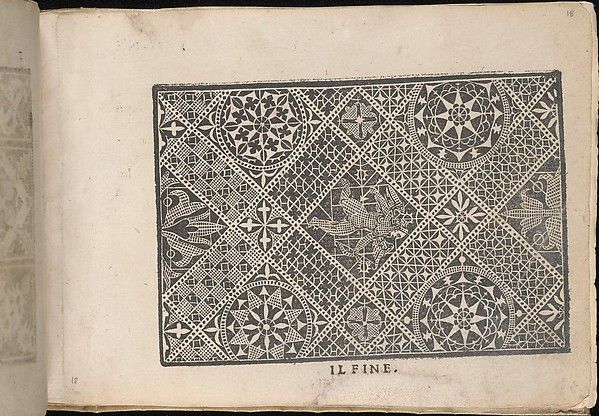 Fiori di Ricami Nuovamente Posti in Luce, page 18 (recto)
1591 · The Metropolitan Museum of Art
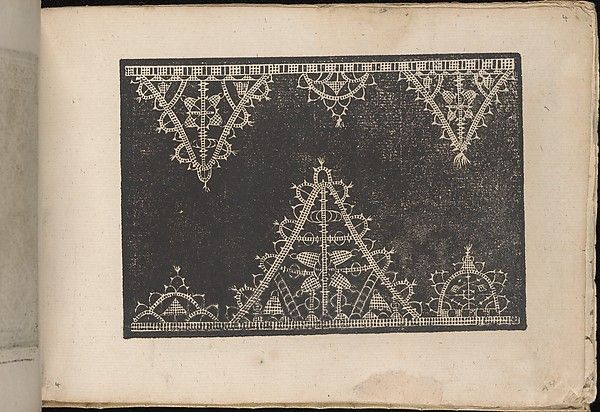 Fiori di Ricami Nuovamente Posti in Luce, page 4 (recto)
1591 · The Metropolitan Museum of Art
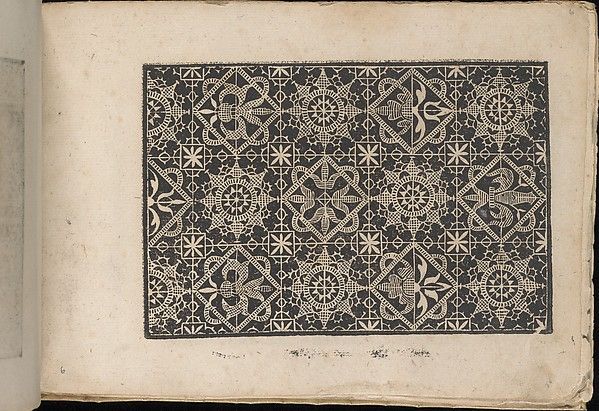 Fiori di Ricami Nuovamente Posti in Luce, page 6 (recto)
1591 · The Metropolitan Museum of Art
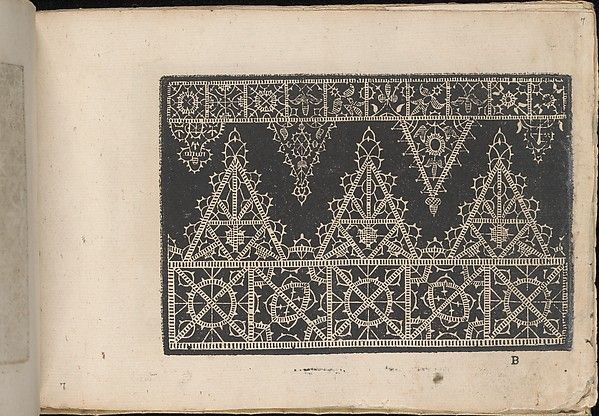 Fiori di Ricami Nuovamente Posti in Luce, page 7 (recto)
1591 · The Metropolitan Museum of Art
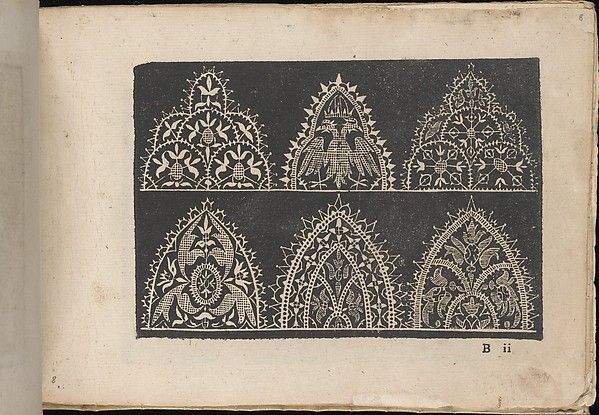 Fiori di Ricami Nuovamente Posti in Luce, page 8 (recto)
1591 · The Metropolitan Museum of Art
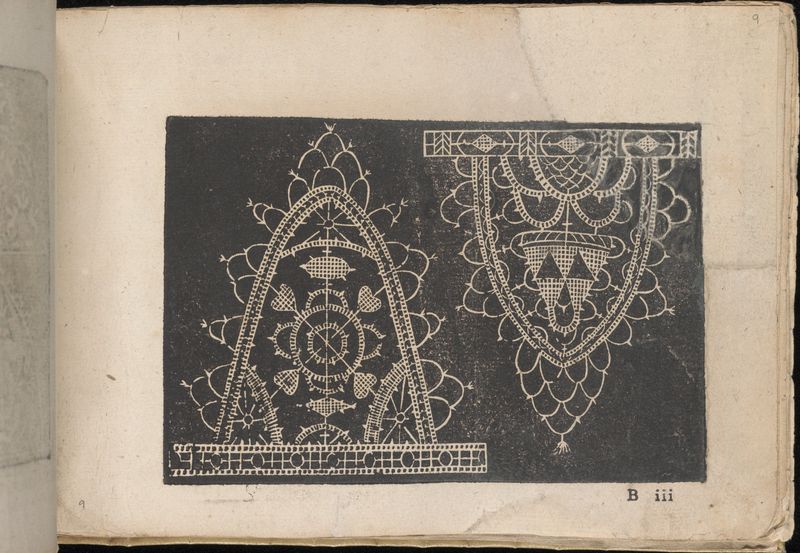 Fiori di Ricami Nuovamente Posti in Luce, page 9 (recto)
1591 · The Metropolitan Museum of Art
Beyond Florimi: works from the same years.
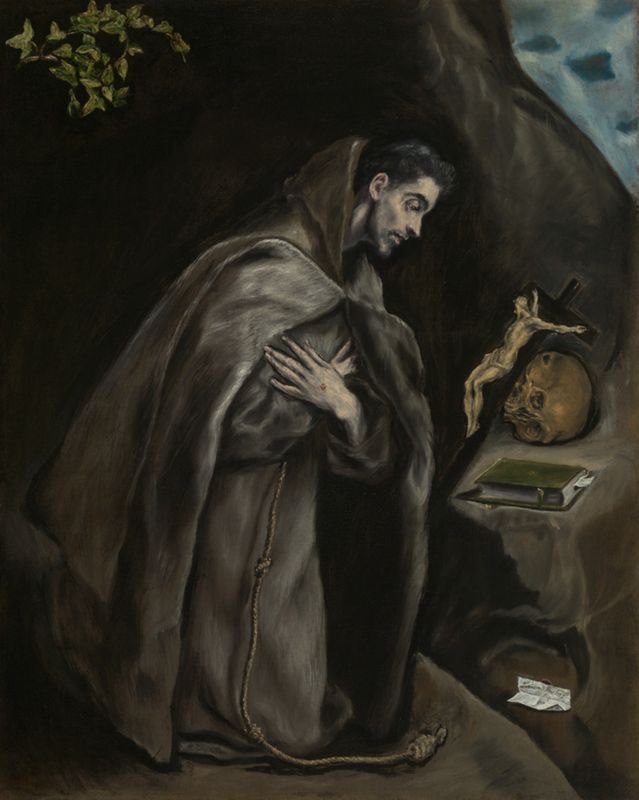 Same era · 1570s–1600s
Saint Francis Kneeling in Meditation
El Greco · 1597 · Art Institute of Chicago
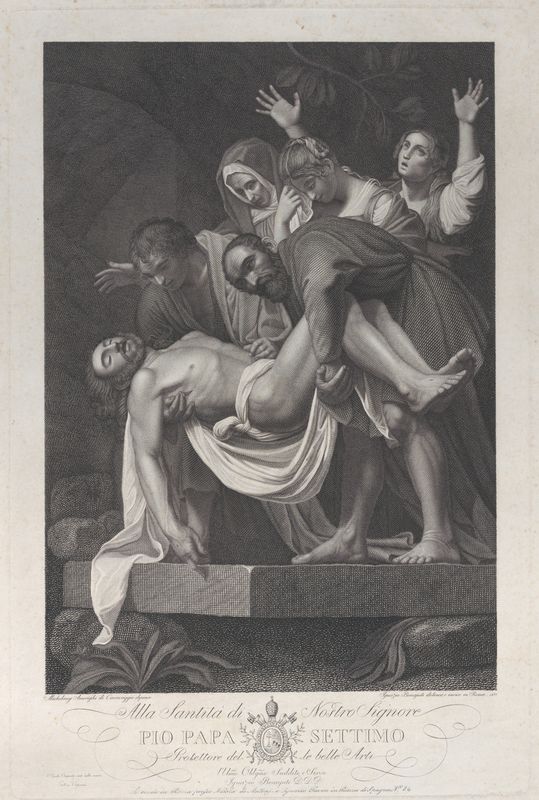 Same era · 1570s–1600s
The Entombment of Christ
Caravaggio · 1600 · Pinacoteca Vaticana
 Same era · 1570s–1600s
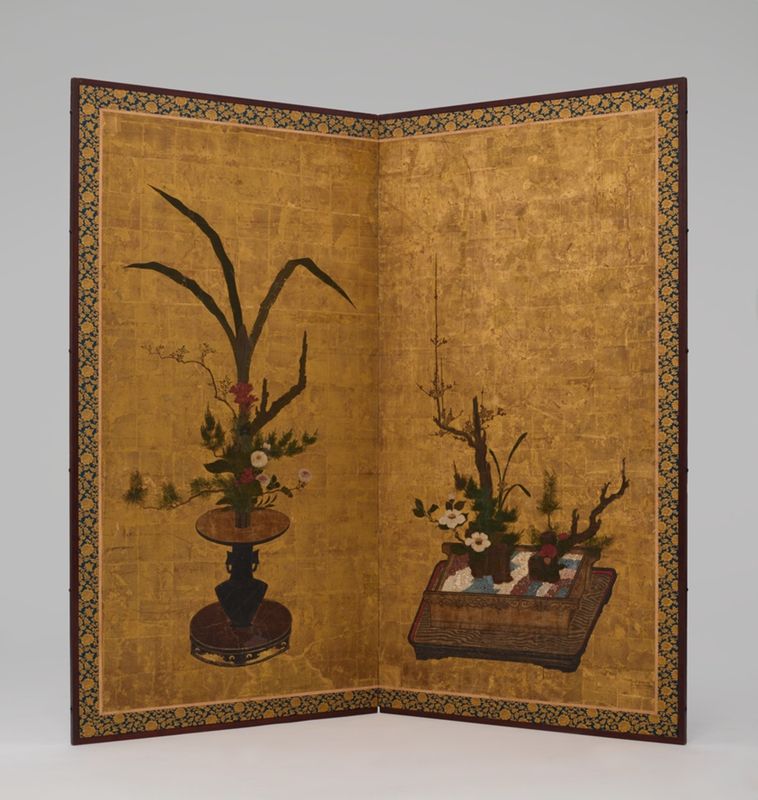
Flower Arrangements
Artist Unknown - The Mercat Cross, Aberdeen · 1595 · Art Institute of Chicago
 Same era · 1570s–1600s
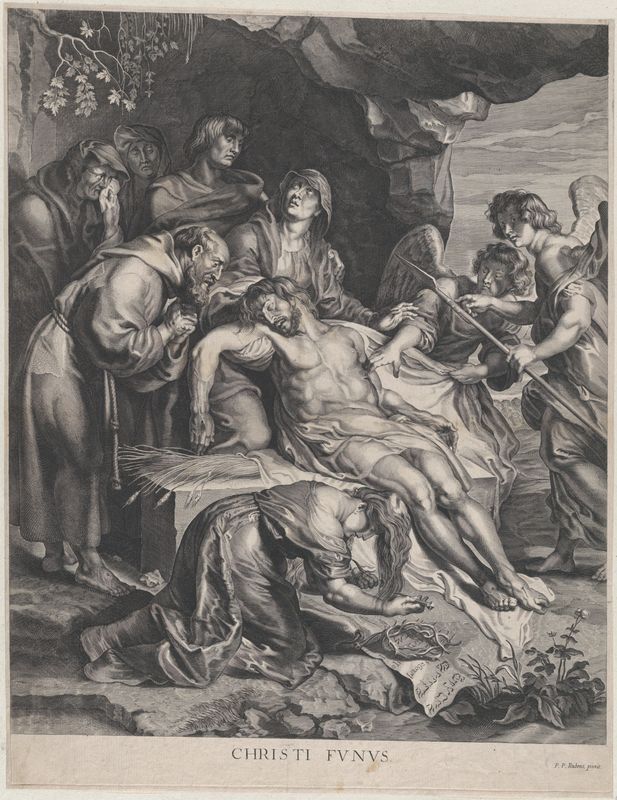
The Lamentation with Saint Francis and Two Angels
Peter Paul Rubens · 1603 · The Metropolitan Museum of Art
 Same era · 1570s–1600s
Wooded landscape with a road
Jan Brueghel the Elder · 1602
 Same era · 1570s–1600s
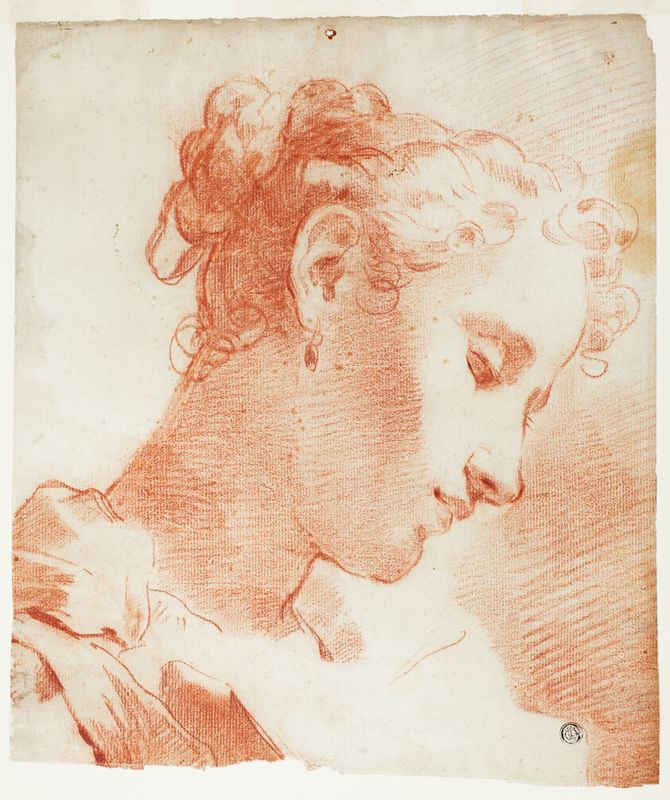
Female Head
Gaetano Gandolfi · 1592 · Art Institute of Chicago
 Same era · 1570s–1600s
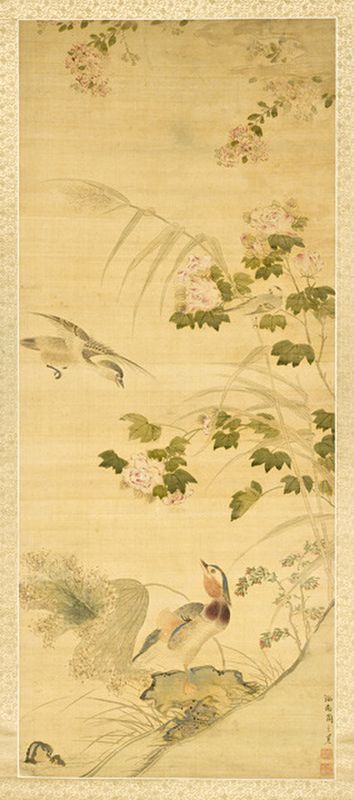
Flowers and Birds
Zhou Zhimian · 1595 · Los Angeles County Museum of Art
 Same era · 1570s–1600s
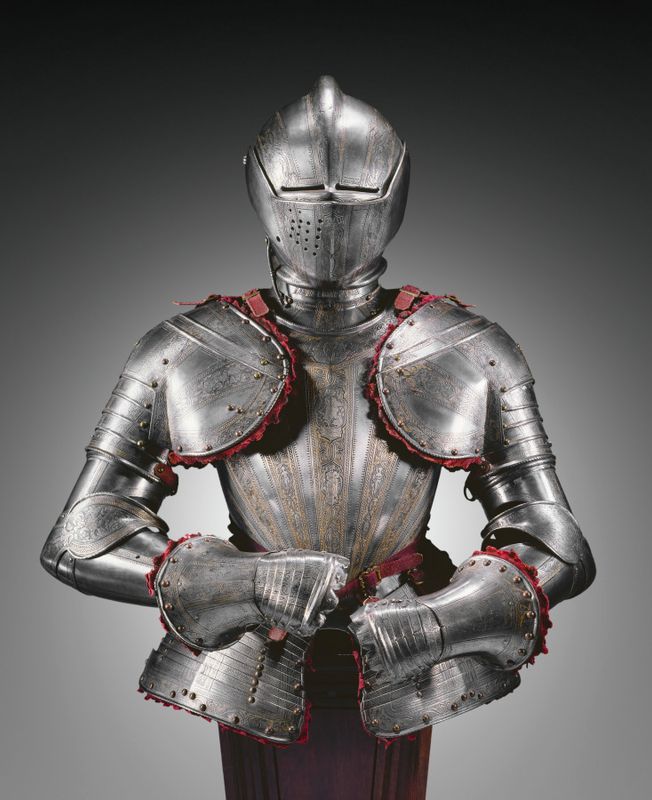
Half Armor for the Foot Tournament
Pompeo della Cesa · 1585 · Cleveland Museum of Art
 Same era · 1570s–1600s
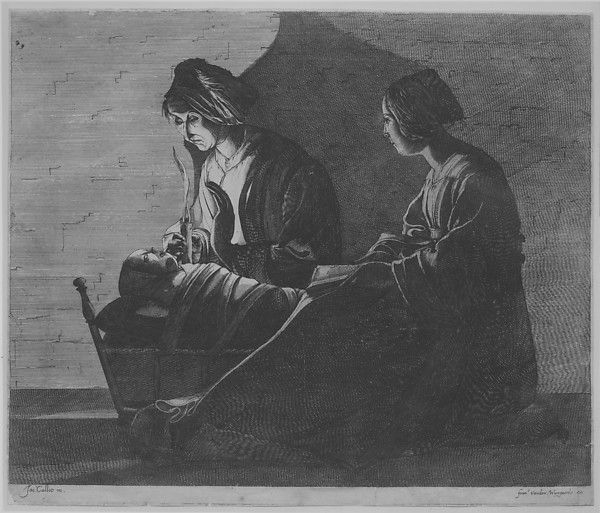
The Virgin and Child with Saint Anne
Georges de La Tour · 1600 · The Metropolitan Museum of Art
 Same era · 1570s–1600s
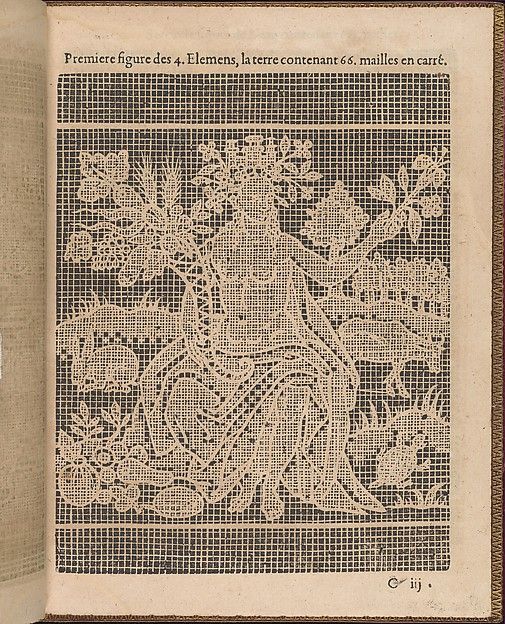
La Pratique de l'Aiguille, page 11 (recto)
Matthias Mignerak · 1605 · The Metropolitan Museum of Art
