
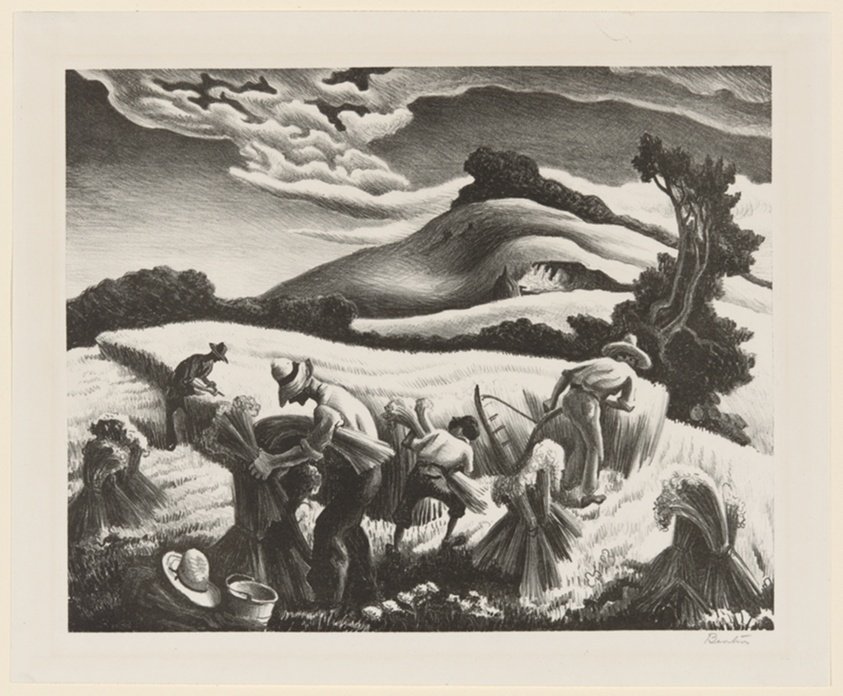
“This lithograph captures the intense physical labor of harvesting wheat by hand, reflecting a connection to the land during a time of great economic hardship. It's a powerful example of American Regionalism, showing everyday life with dramatic flair.”
In Thomas Hart Benton's 1939 lithograph, "Cradling Wheat," a lone figure dominates the foreground, bent in strenuous labor, cutting wheat by hand. The scene captures the rhythmic, almost dance-like motion of harvesting, with the worker’s body twisting and turning, echoing the undulating landscape. The artist uses a fluid, sculpted line to define the figure and the surrounding field, creating a sense of dynamic movement that is characteristic of the Regionalist style. This image, made during the height of the Great Depression, speaks to the resilience and enduring connection to the land felt by many Americans, especially in the Midwest. The print’s stark contrasts and dramatic lighting emphasize the physical demands of farm life, portraying an idealized yet powerful vision of rural labor.
- Artist
- Thomas Hart Benton
- Date
- 1939
- Medium
- Lithograph on white wove paper
- Location
- Art Institute of Chicago
- Dimensions
- Image: 24.4 × 30.5 cm (9 5/8 × 12 1/16 in.); Sheet: 29 × 35.4 cm (11 7/16 × 13 15/16 in.)
What to Notice
Four details hide in plain sight. Here’s where to look.
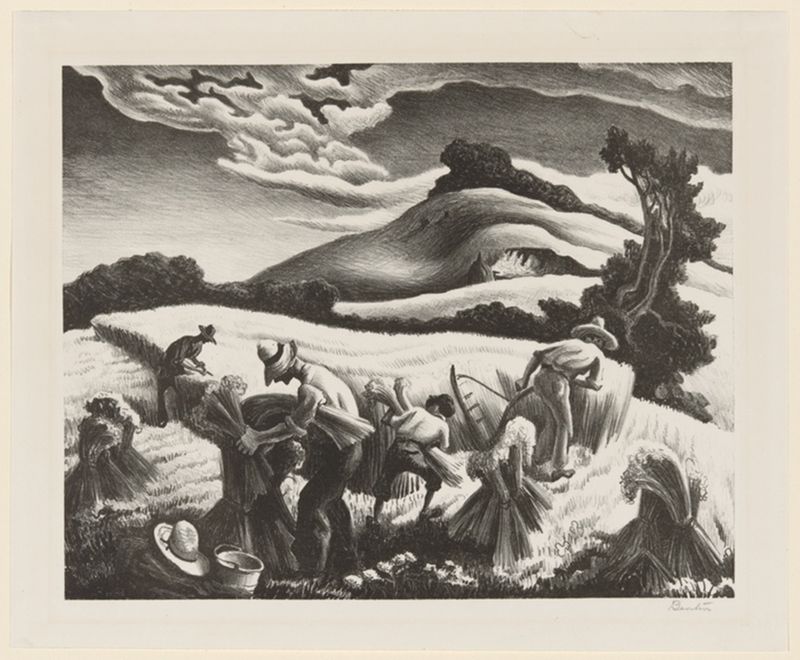
The way the worker’s body curves, almost merging with the wheat stalks.
Notice the long, flowing lines of the wheat field extending into the distance.
The subtle shading that gives depth to the figure’s muscular form.
The dramatic sky, with dark clouds suggesting impending weather or the end of the day.
Thomas Hart Benton
Thomas Hart Benton, a leading figure of American Regionalism, captured the vibrant spirit of everyday life across the United States, from cotton pickers to threshing wheat.
More from Social Realism
More works to explore
Beyond Benton and Social Realism: works from the same years.
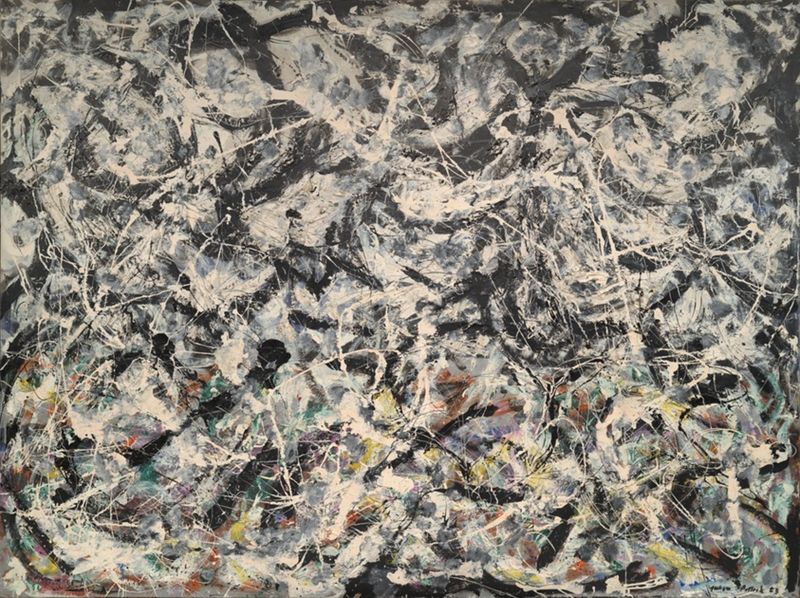 Same era · 1920s–1950s
Greyed Rainbow
Jackson Pollock · 1953 · Art Institute of Chicago
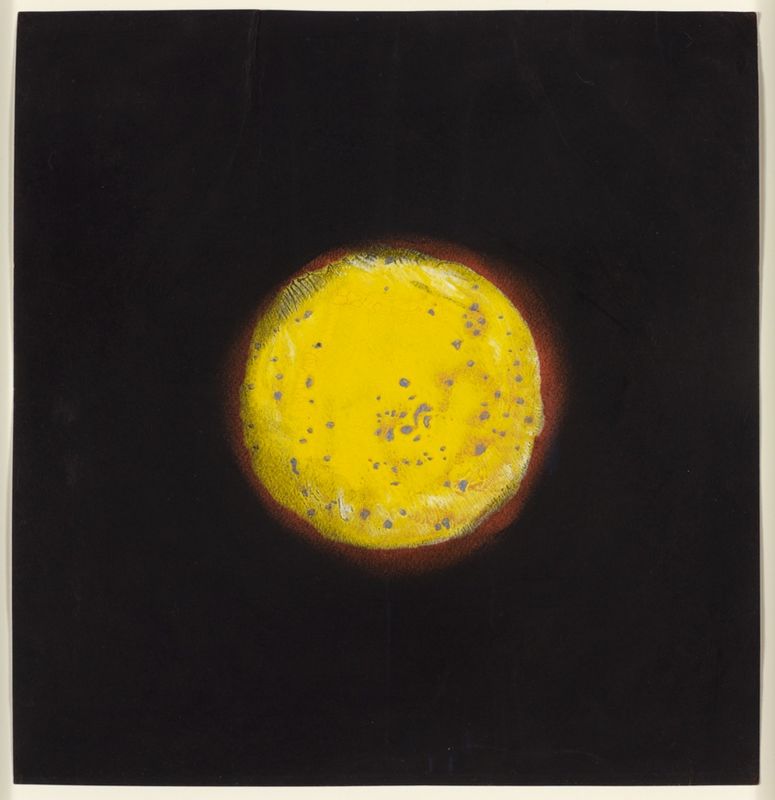 Same era · 1920s–1950s
Sun Spot
Yayoi Kusama · 1953 · Art Institute of Chicago
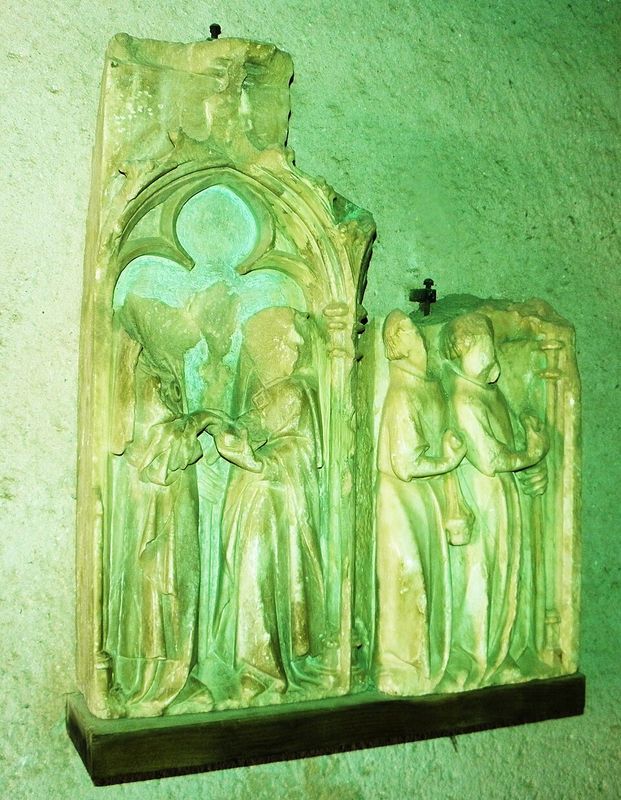 Same era · 1920s–1950s
Deux personnages
Pierre Alechinsky · 1950
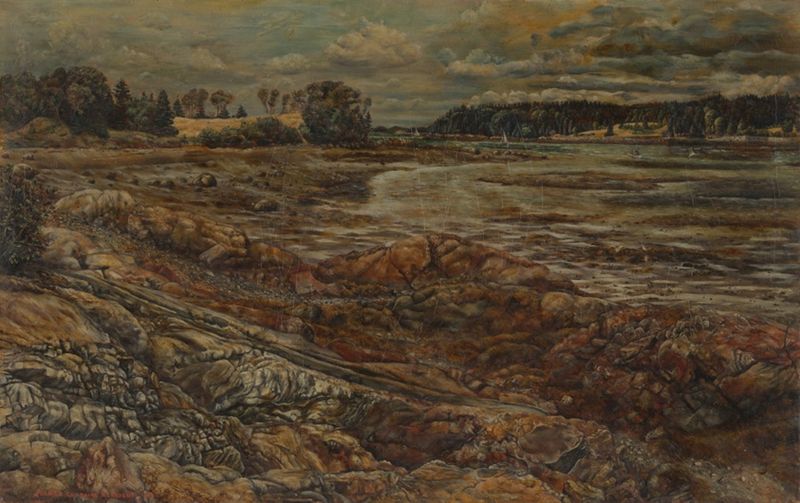 Same era · 1920s–1950s
Divided and Divided
Ivan Puni · 1941 · Art Institute of Chicago
 Same era · 1920s–1950s
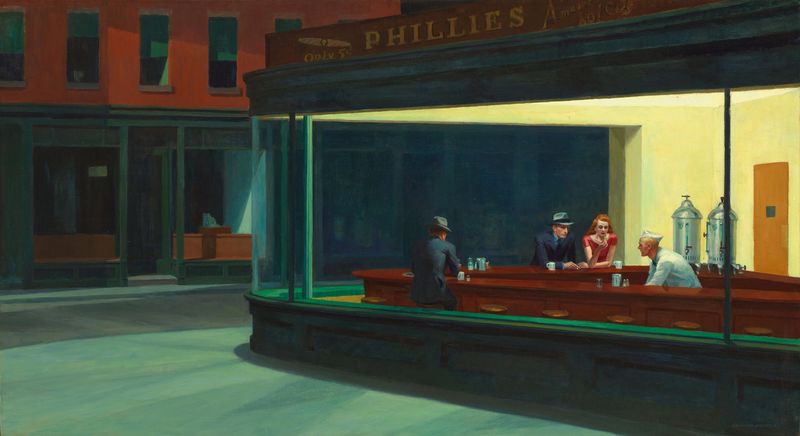
Nighthawks
Okada Saburosuke · 1942 · Art Institute of Chicago
 Same era · 1920s–1950s
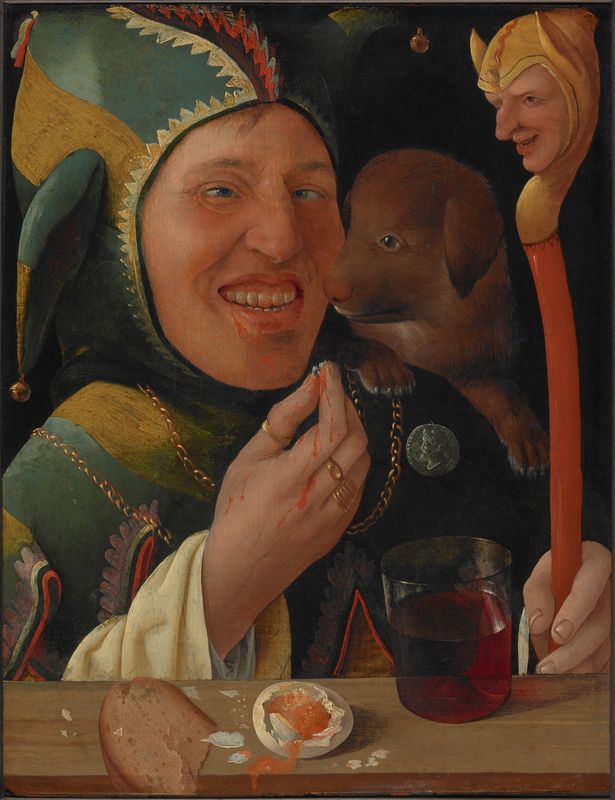
The Jester
Philip Evergood · 1950 · Whitney Museum of American Art
 Same era · 1920s–1950s
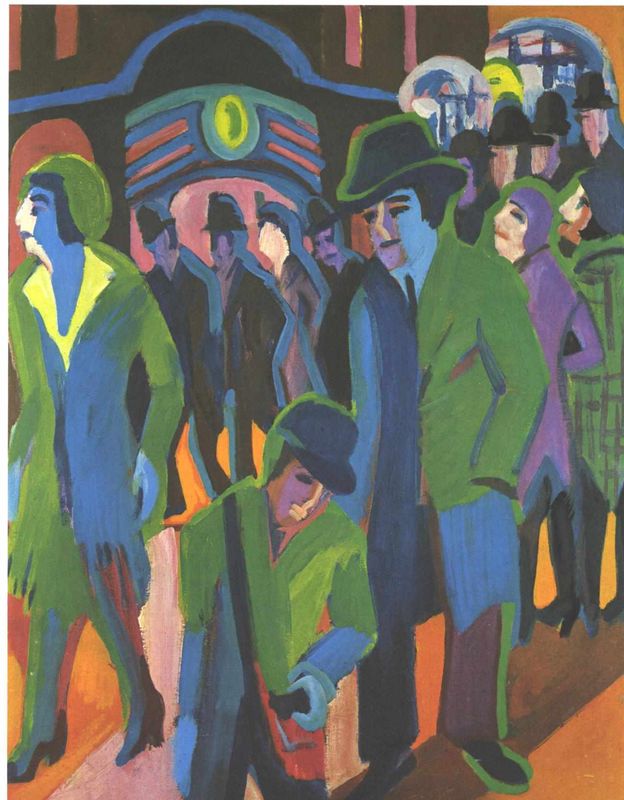
Straße mit Passanten bei Nachtbeleuchtung
Ernst Ludwig Kirchner · 1927 · Museum Frieder Burda
 Same era · 1920s–1950s
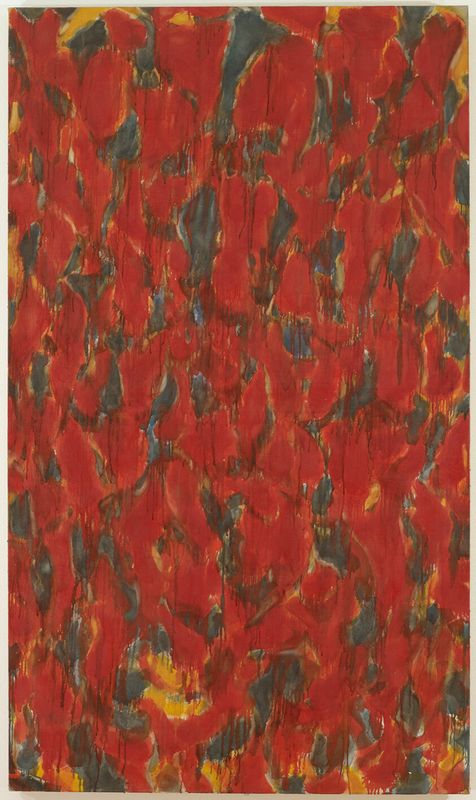
Red No. 2
Sam Francis · 1954 · Art Institute of Chicago
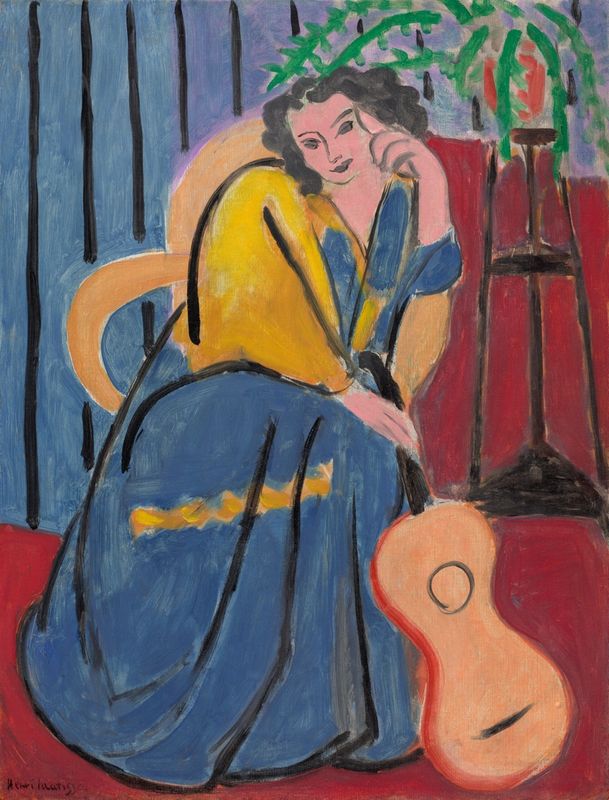 Same era · 1920s–1950s
Girl in Yellow and Blue with Guitar
Henri Matisse · 1939 · Art Institute of Chicago
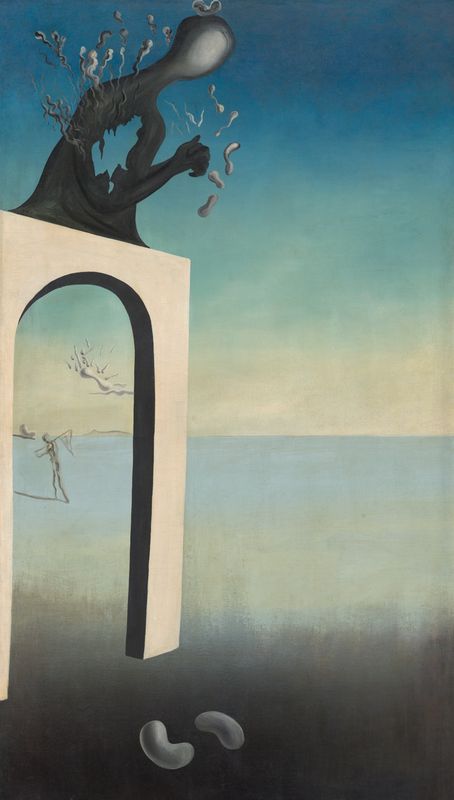 Same era · 1920s–1950s
Untitled (Dream of Venus) formerly Visions of Eternity
Salvador Dalí · 1939 · Art Institute of Chicago
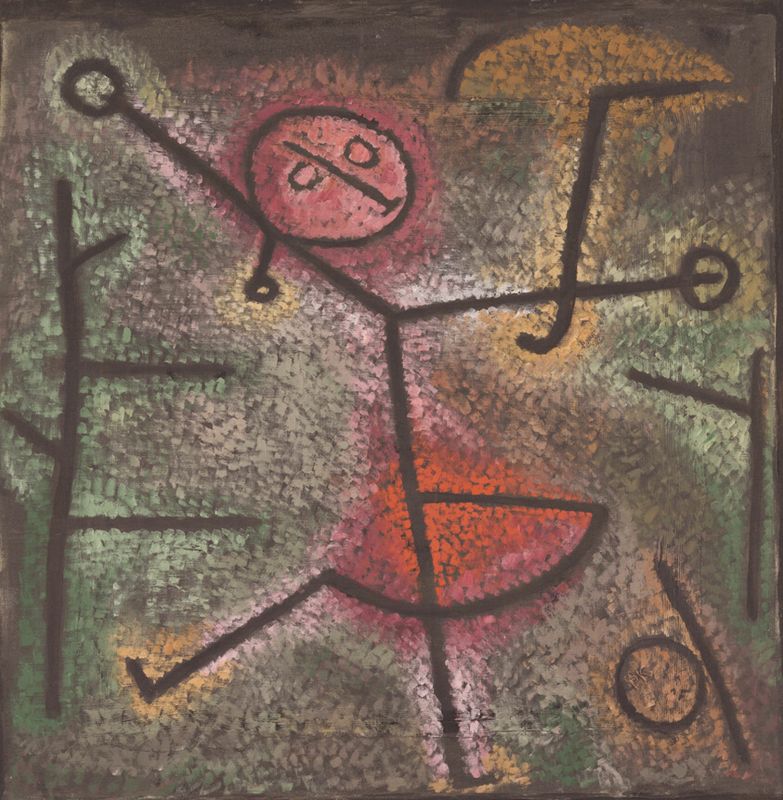 Same era · 1920s–1950s
Dancing Girl
Paul Klee · 1940 · Art Institute of Chicago
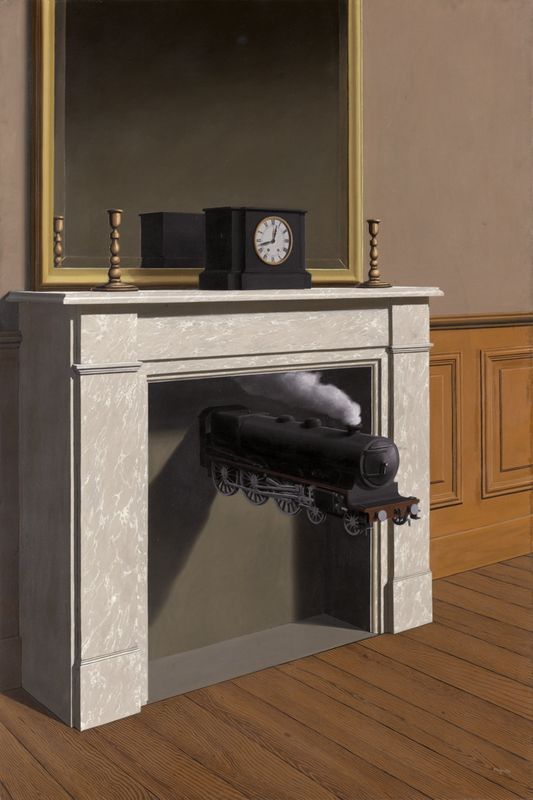 Same era · 1920s–1950s
La durée poignardée (Time Transfixed)
René Magritte · 1938 · Art Institute of Chicago