01
The resting face
Find the small, softly drawn face in the middle. Just a few light lines give her a drowsy, faraway look.
1 of 4 on the painting
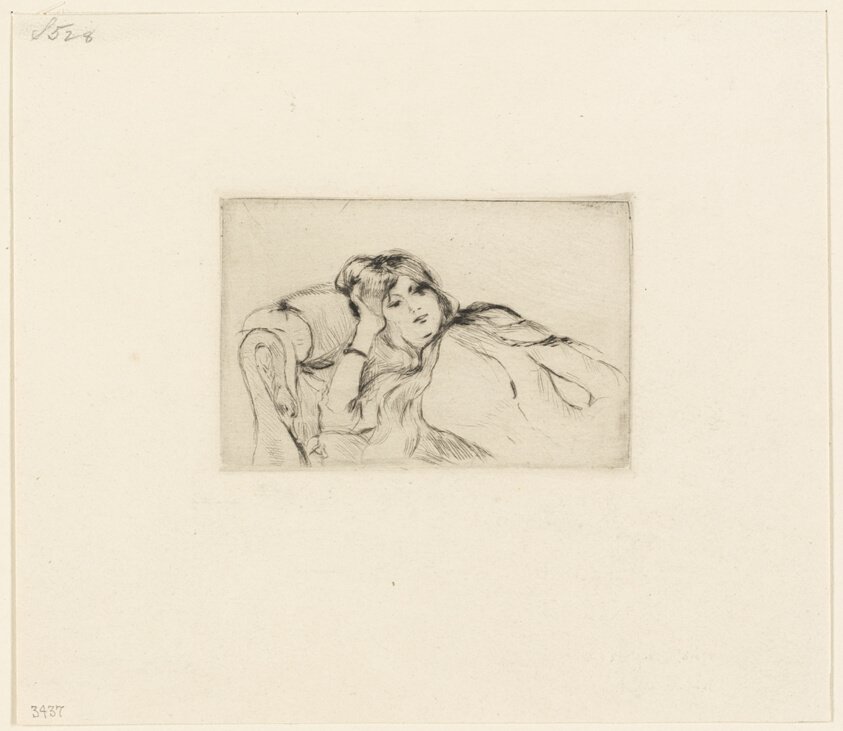
“This drypoint offers a rare, intimate glimpse into a private moment of rest, rendered with the delicate lines of a technique Berthe Morisot used sparingly. It’s a quiet, personal reflection on daily life, characteristic of Impressionism.”
A young woman reclines on a couch, her head softly resting on a cushion, in this intimate drypoint by Berthe Morisot. The scene captures a moment of quiet repose, a hallmark of the Impressionist movement's focus on everyday life. Morisot, one of the few women to exhibit with the Impressionists, often depicted domestic scenes and female models, creating a sense of naturalness and immediacy. Here, the fine lines of the drypoint technique allow for delicate details, from the gentle curls of the model's hair to the intricate carving of a swan on the armrest of the ornate chair beside her. This print feels particularly personal, offering a glimpse into a private world, rendered with a light touch that suggests rather than defines, inviting the viewer to complete the scene in their mind.
Five details hide in plain sight. Pick one and we’ll show you exactly where to look.
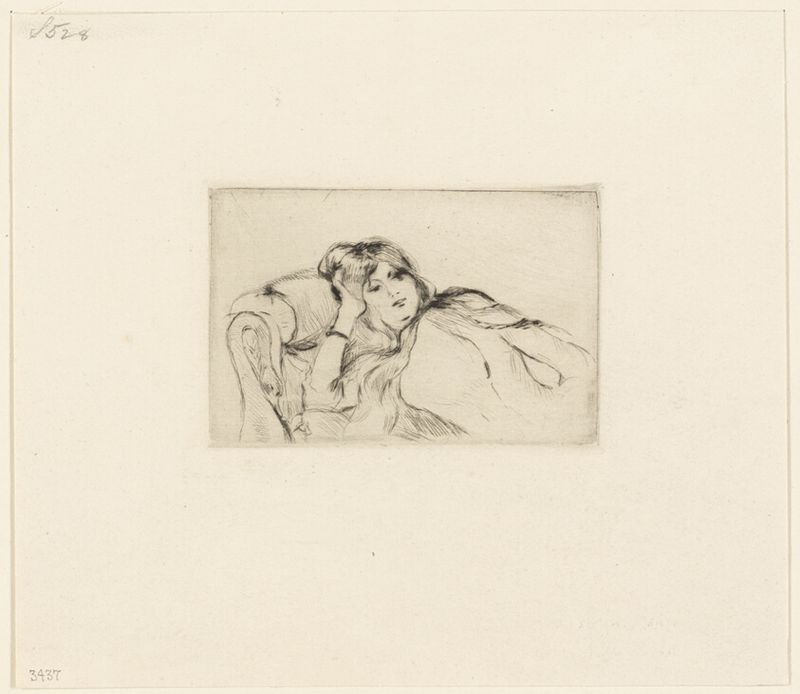
Find the small, softly drawn face in the middle. Just a few light lines give her a drowsy, faraway look.
Her hand props up her head at the left of her face, and a dark band at the wrist may be a bracelet or cuff. The pose feels relaxed and casual.
Look at the long hair falling past her shoulder. Many fine, quick strokes of the drypoint needle give it movement and a soft, slightly fuzzy look.
On the far left, the chair arm curls into a scroll shape, drawn with firmer, darker lines than the figure. It frames her pose and gives the soft figure something solid to lean against.
The tiny plate sits in a wide field of blank paper. That empty space makes the scene feel quiet, private and hushed.
The full narration walks you through Young Woman at Rest — the story behind it, the details most visitors miss, and why it matters. Free in the Art Whisper app.
Berthe Morisot, a pioneering Impressionist, captured intimate domestic scenes and landscapes, often featuring women and children, with a luminous touch.
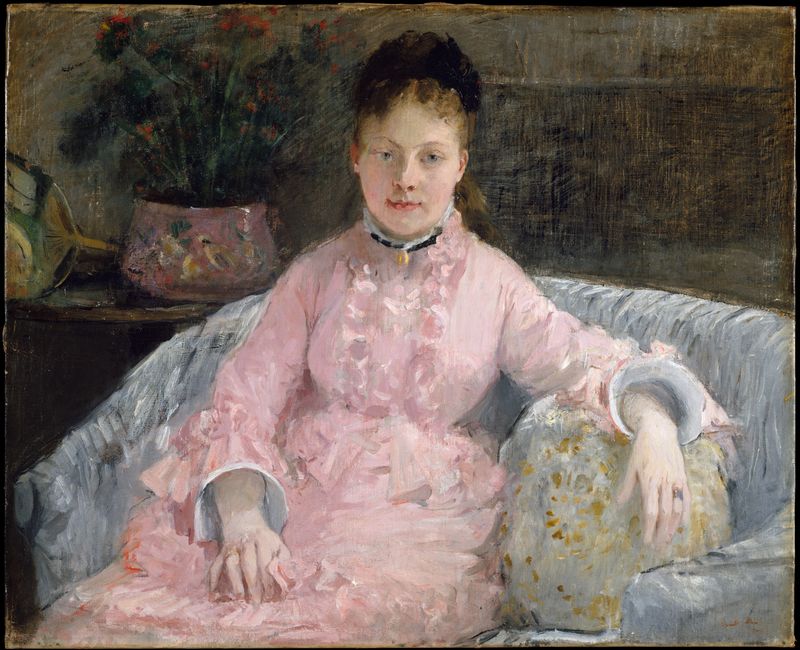 The Pink Dress (Albertie-Marguerite Carré, later Madame Ferdinand-Henri Himmes, 1854–1935)
1870 · Metropolitan Museum of Art
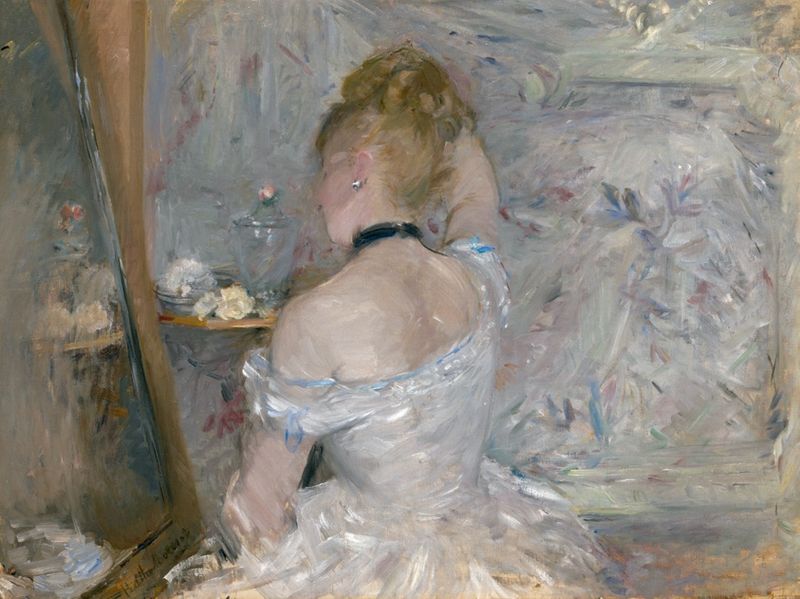 Woman at Her Toilette
1877 · Art Institute of Chicago
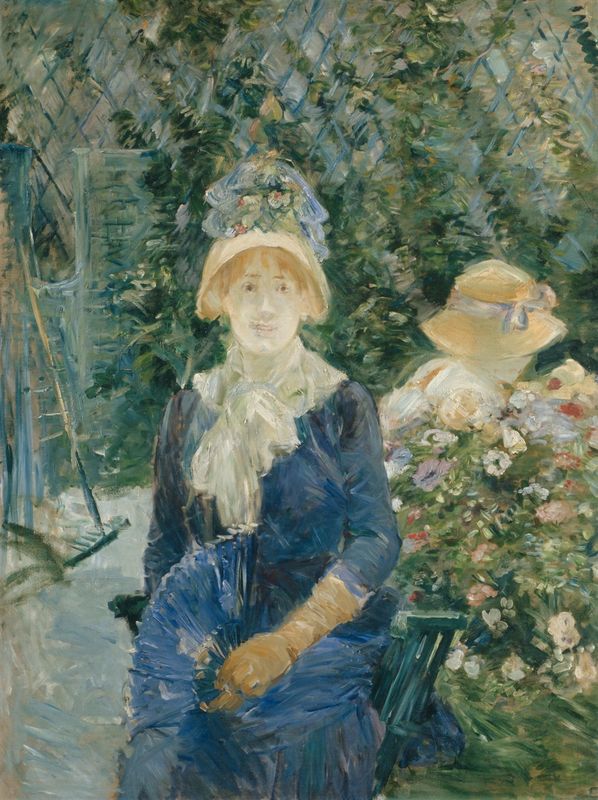 Woman in a Garden
1882 · Art Institute of Chicago
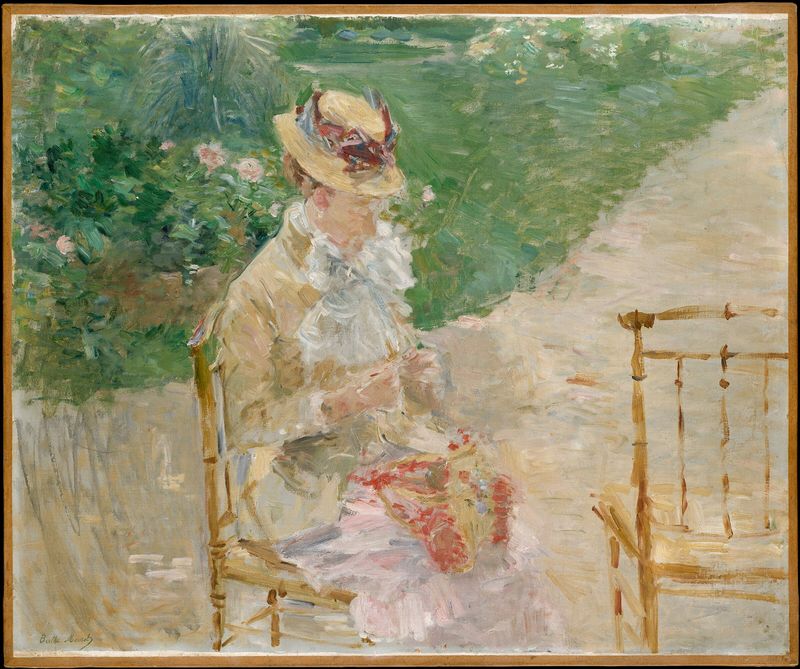 Young Woman Knitting
1883 · Metropolitan Museum of Art
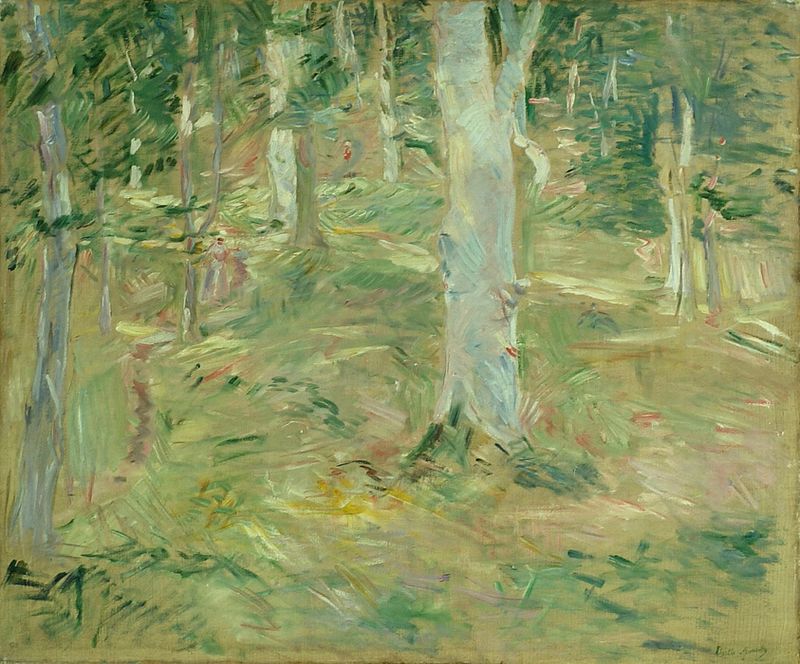 Forêt de Compiègne
1885 · Art Institute of Chicago
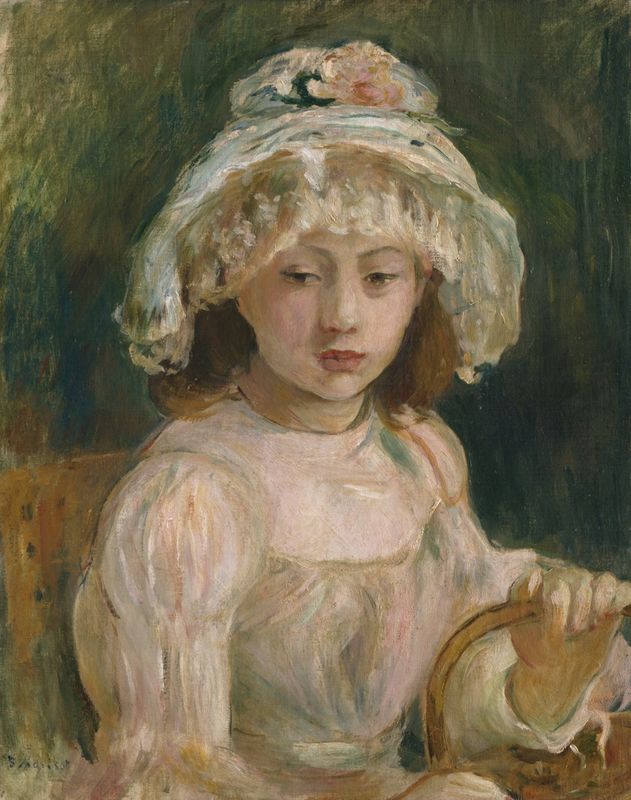 Young Girl with Hat
1891 · Art Institute of Chicago
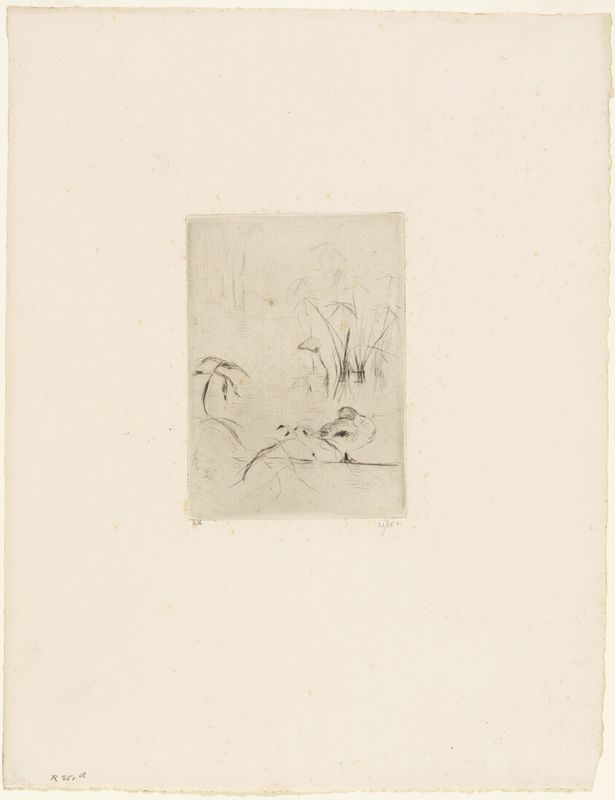 The Duck
1888 · Cleveland Museum of Art
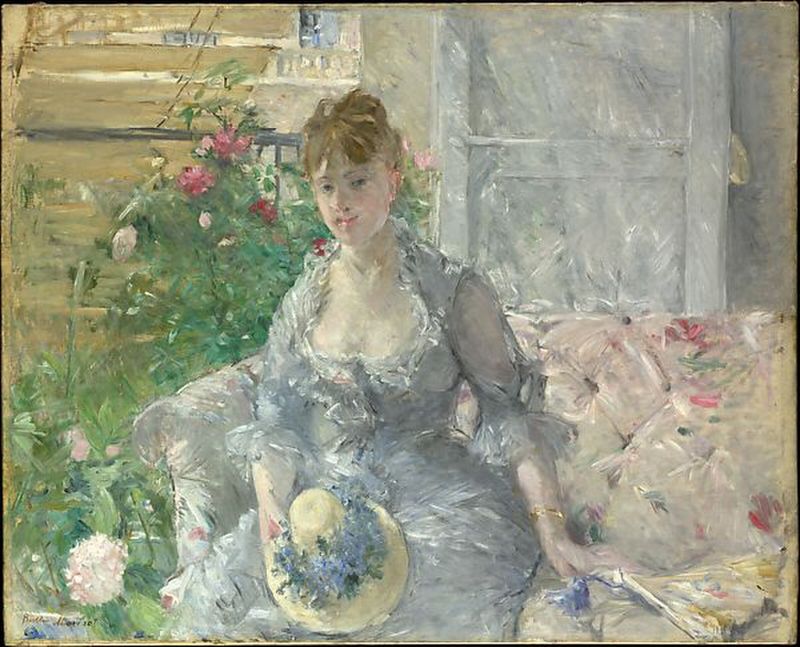 Young Woman Seated on a Sofa
1879 · Metropolitan Museum of Art
Beyond Morisot and Impressionism: works from the same years.
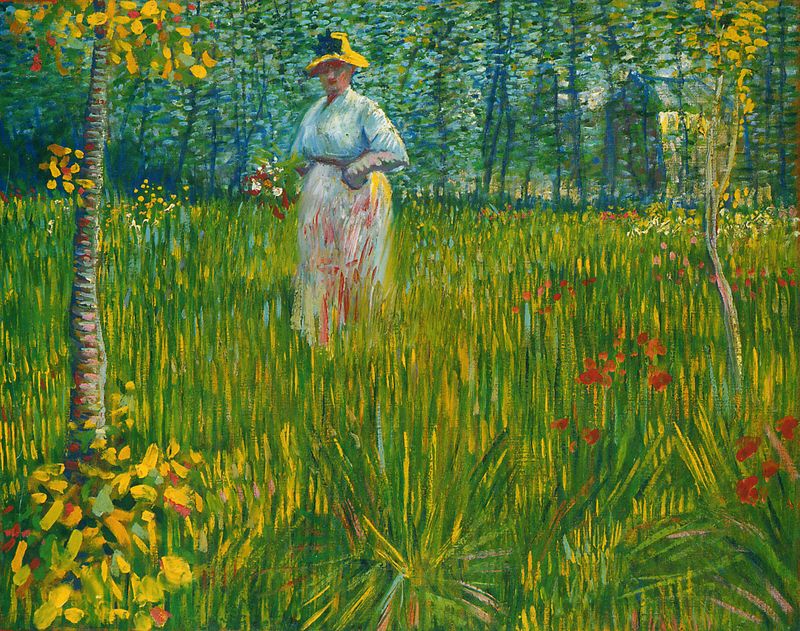 Same era · 1870s–1900s
A Woman Walking in a Garden
Vincent van Gogh · 1887 · Frans Buffa & sons
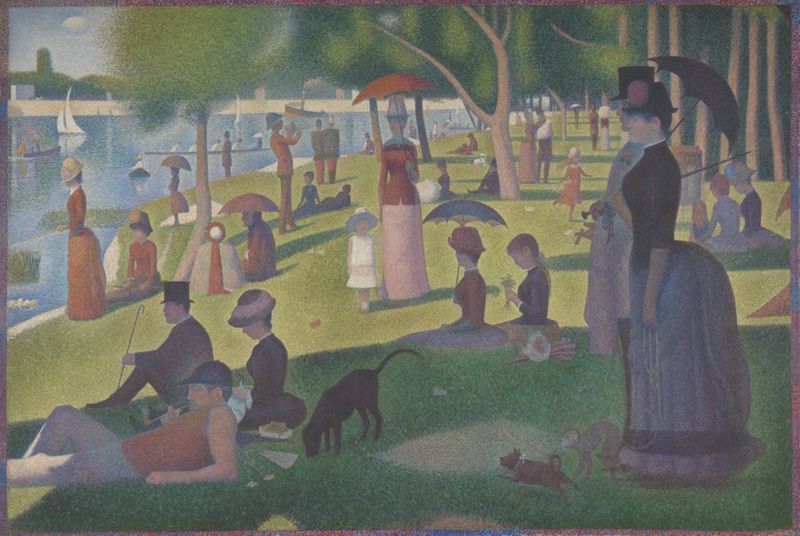 Same era · 1870s–1900s
A Sunday on La Grande Jatte — 1884
Okada Saburosuke · 1884 · Art Institute of Chicago
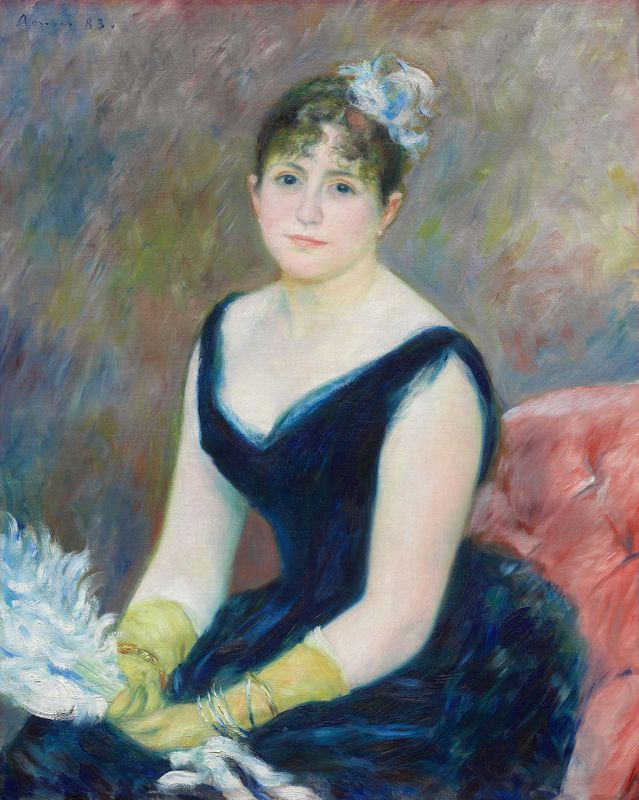 Same era · 1870s–1900s
Madame Léon Clapisson
Léon-Victor Dupré · 1883 · Art Institute of Chicago
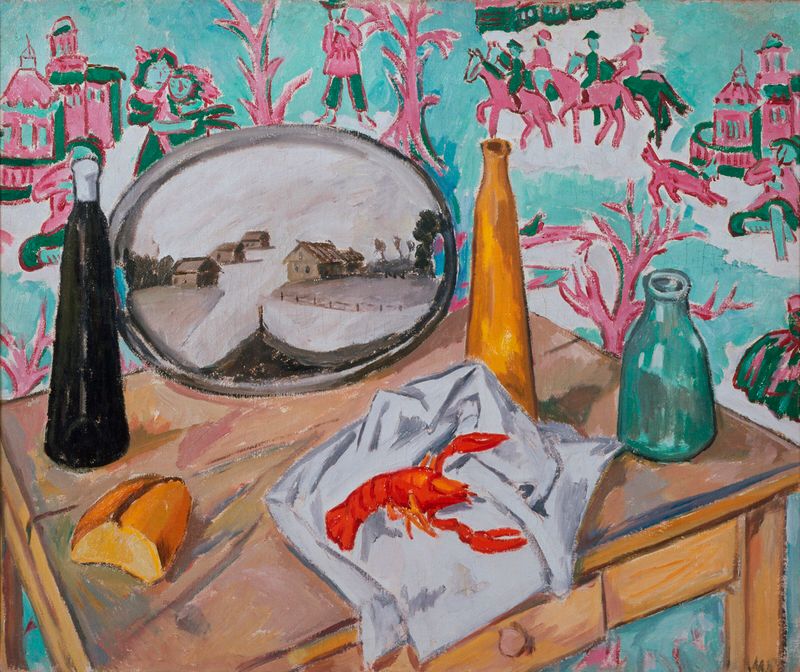 Same era · 1870s–1900s
Still Life with Crayfish
Mikhail Larionov · 1900 · Museum Ludwig
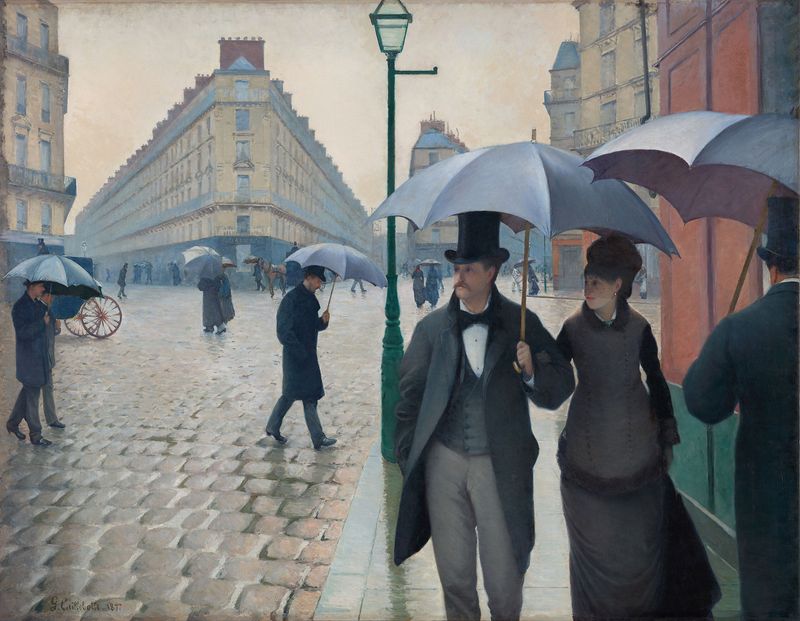 Same era · 1870s–1900s
Paris Street; Rainy Day
Kawabata Gyokushō · 1877 · Art Institute of Chicago
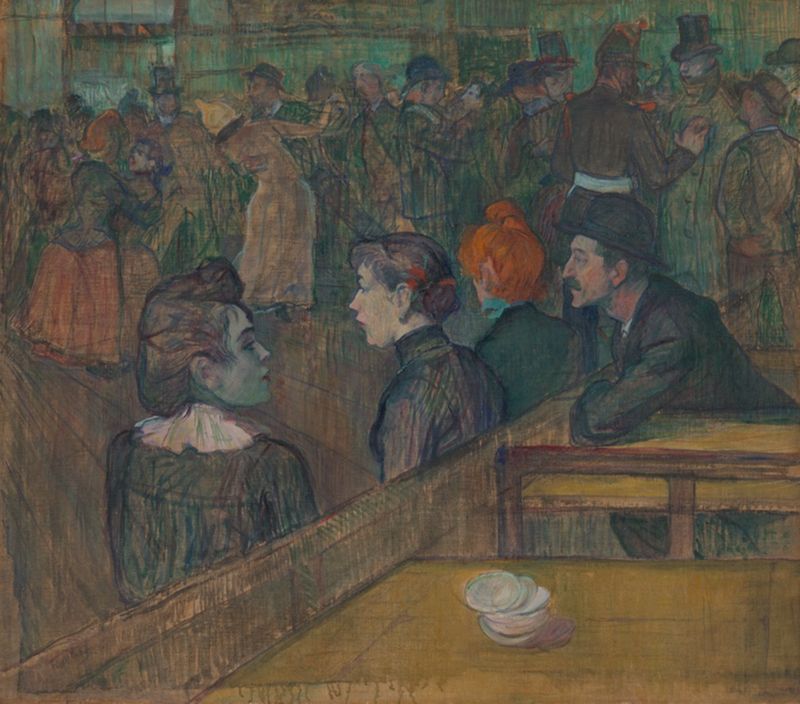 Same era · 1870s–1900s
Moulin de la Galette
Henri de Toulouse-Lautrec · 1889 · Art Institute of Chicago
 Same era · 1870s–1900s
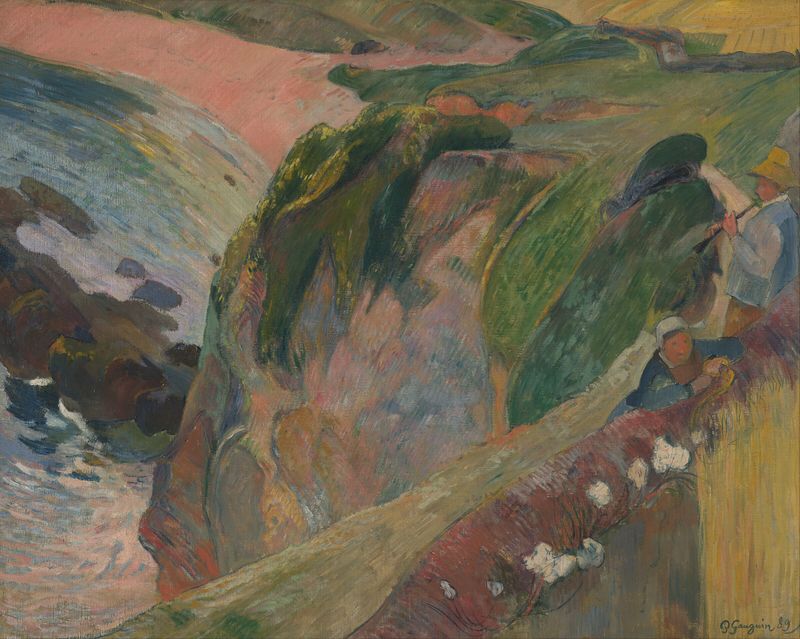
The Flageolet Player on the Cliff
Paul Gauguin · 1889 · Q1117704
 Same era · 1870s–1900s
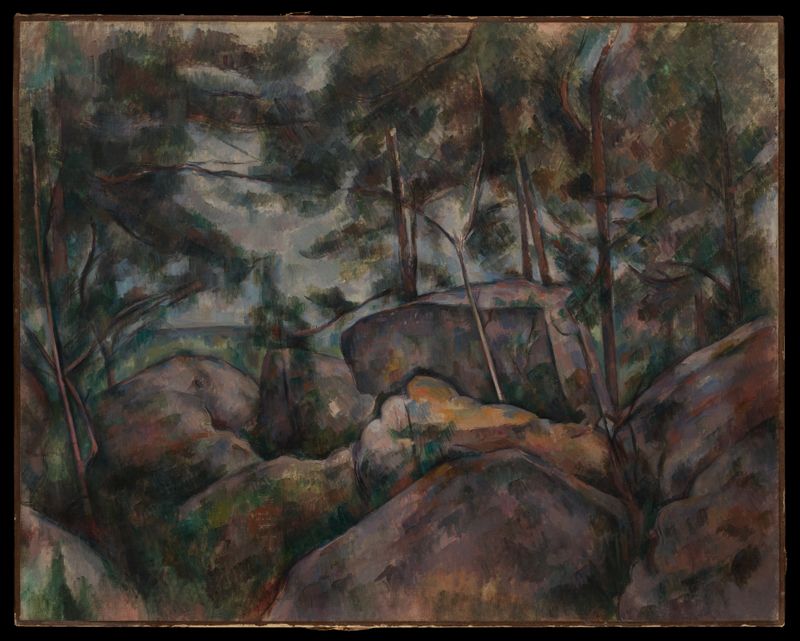
Rocks at Fontainebleau
Paul Cézanne · 1890 · The Metropolitan Museum of Art
 Same era · 1870s–1900s
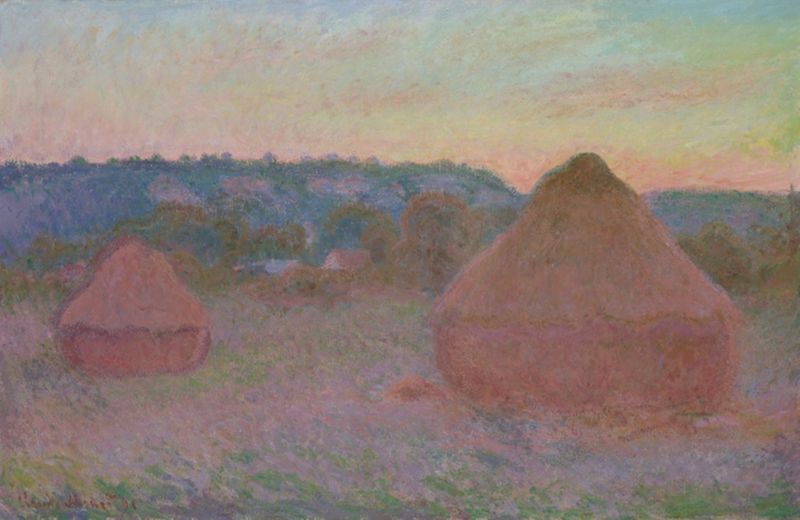
Stacks of Wheat (End of Day, Autumn)
Claude Monet · 1890 · Art Institute of Chicago
 Same era · 1870s–1900s
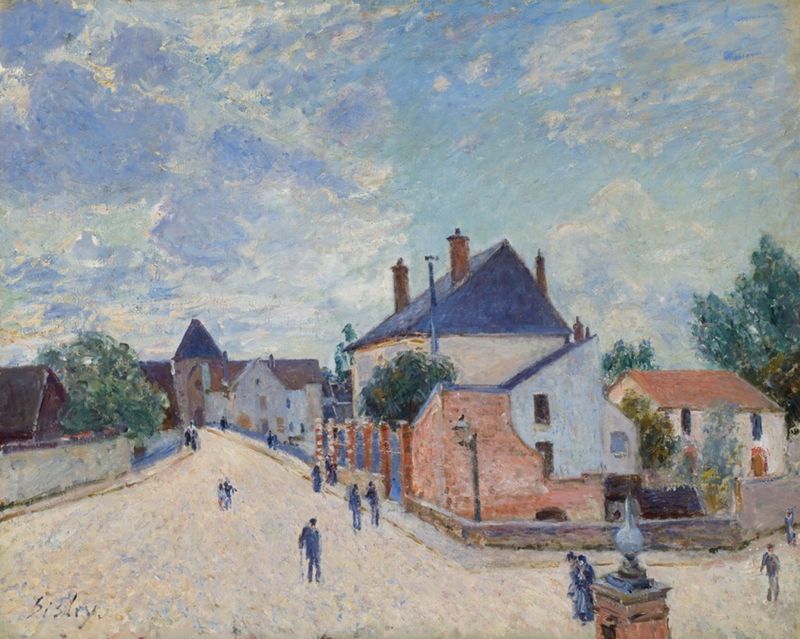
Street in Moret
Alfred Sisley · 1890 · Art Institute of Chicago
 Same era · 1870s–1900s
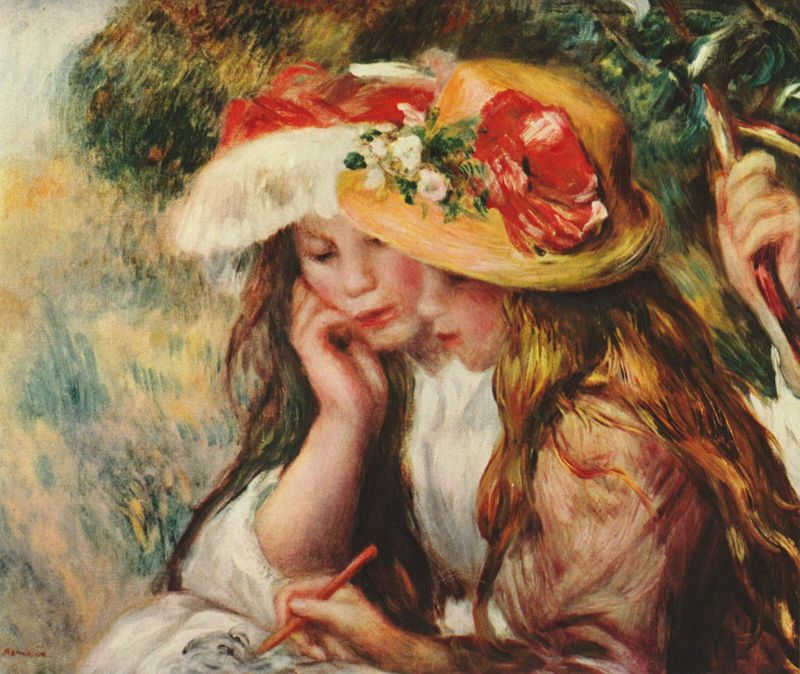
Two Girls Reading in a Garden
Pierre-Auguste Renoir · 1890
 Same era · 1870s–1900s
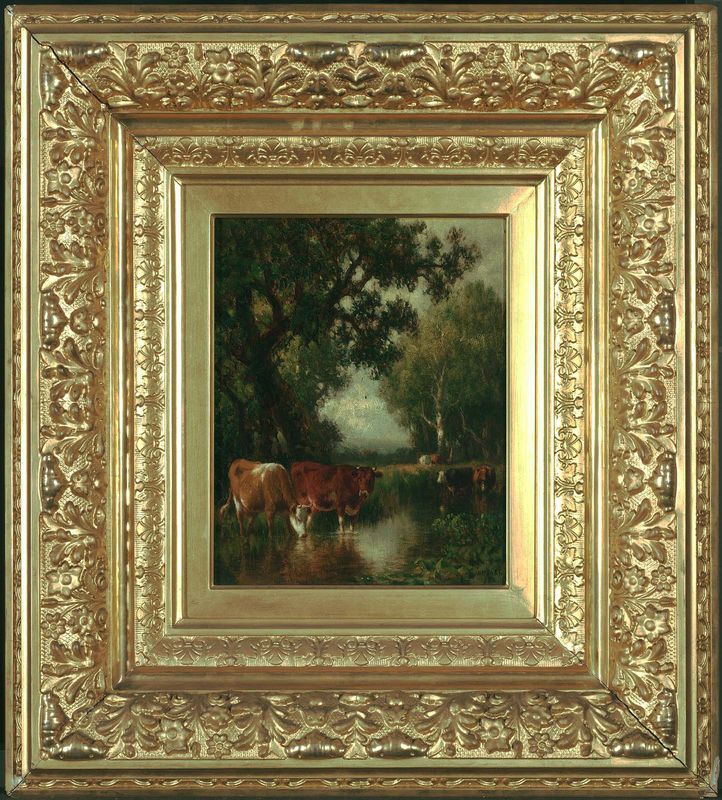
Cows Drinking at a Pool
William Hart · 1886 · Museum of Fine Arts Boston