01
The bare shoulder
Look at the pale back and shoulder at the center. Warm pinks set against cool whites make the skin glow and anchor the soft, hazy figure.
1 of 5 on the painting
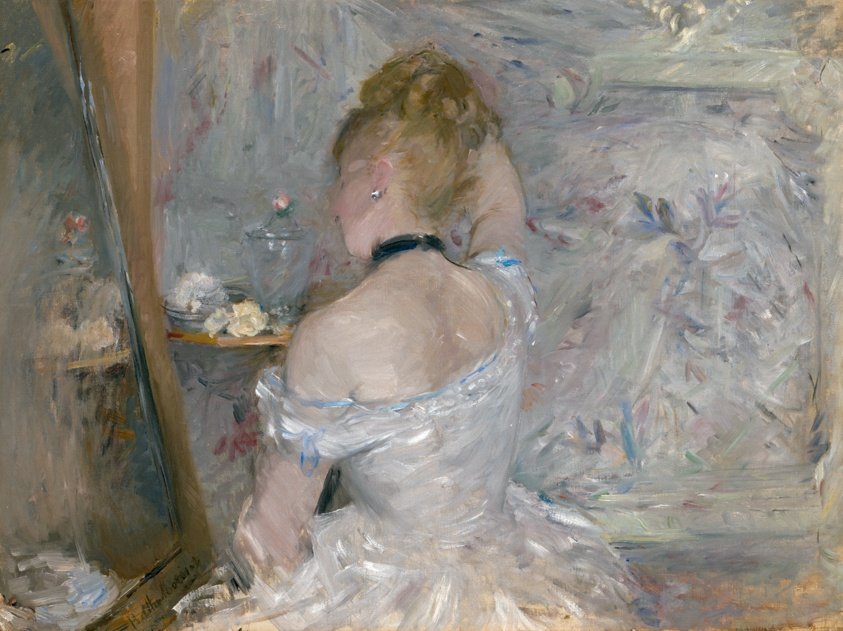
“This painting captures a private moment of a woman at her toilette, using soft, impressionistic brushwork to evoke light and intimacy. It offers a glimpse into domestic life through a sensitive, personal lens.”
A woman sits before a dressing table, her back mostly to us, caught in a private moment. She is absorbed in her reflection, perhaps adjusting her hair or contemplating her appearance. The artist uses loose, feathery brushstrokes, typical of Impressionism, to capture the shifting light and intimate atmosphere of the scene. Notice how the light spills in from an unseen window, illuminating the delicate fabric of her dress and the objects on the table. The soft, muted colors and the casual posture of the figure invite us into this quiet domestic space, a common subject for women painters of the period. This work exemplifies the Impressionist fascination with everyday life and the fleeting effects of light, rendered with a particular sensitivity to the subtle emotions of an interior world.
Five details hide in plain sight. Pick one and we’ll show you exactly where to look.
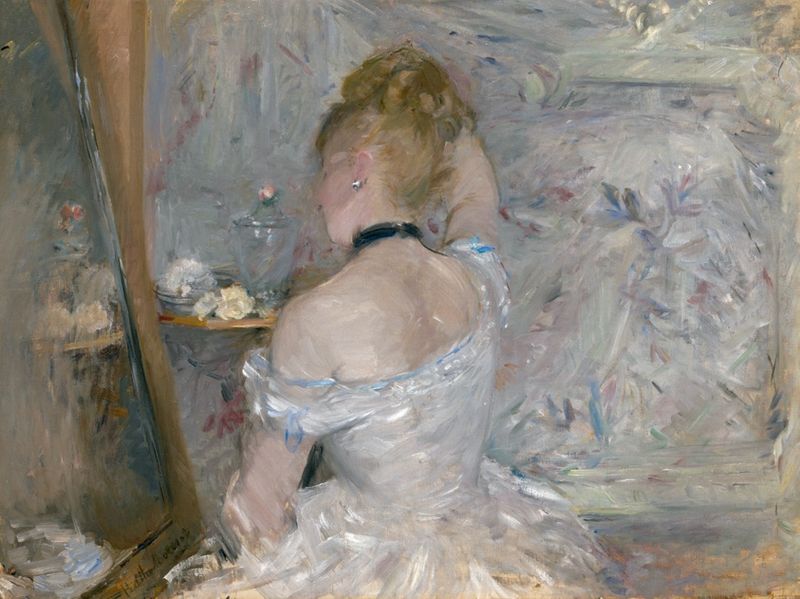
Look at the pale back and shoulder at the center. Warm pinks set against cool whites make the skin glow and anchor the soft, hazy figure.
Study the blond hair piled up at the top. Golden, loose strokes blur into the face and ear, so she stays turned away. A small earring glints.
Find the dark band at the neck, one of the darkest accents in the picture. It sharpens the soft edges around it and draws the eye to the turned head.
On the small table, find the glass jar with a pink flower and the white blooms in front. These objects suggest the private ritual of dressing.
Follow the dress down to the lower center, where it turns to loose, feathery white strokes. The skirt barely holds a shape, yet it feels airy.
The full narration walks you through Woman at Her Toilette — the story behind it, the details most visitors miss, and why it matters. Free in the Art Whisper app.
Berthe Morisot, a pioneering Impressionist, captured intimate domestic scenes and landscapes, often featuring women and children, with a luminous touch.
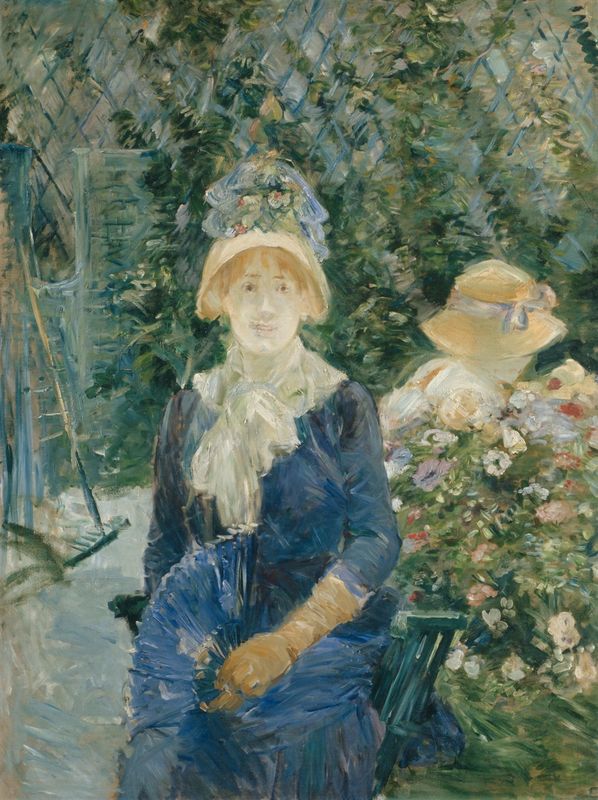 Woman in a Garden
1882 · Art Institute of Chicago
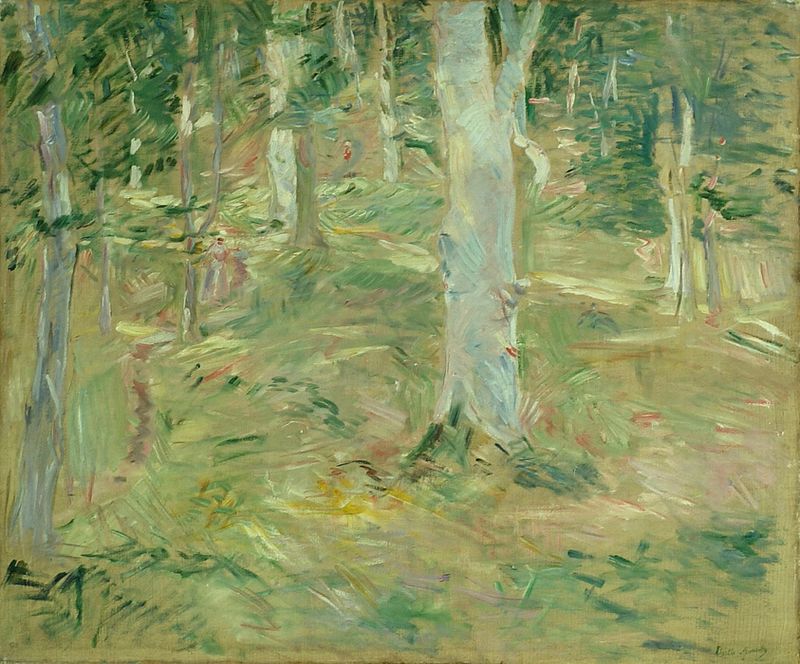 Forêt de Compiègne
1885 · Art Institute of Chicago
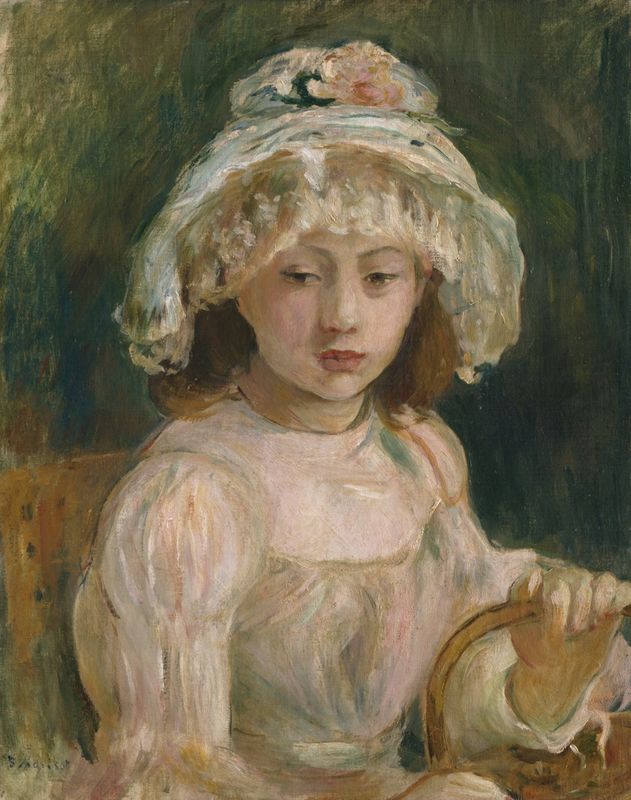 Young Girl with Hat
1891 · Art Institute of Chicago
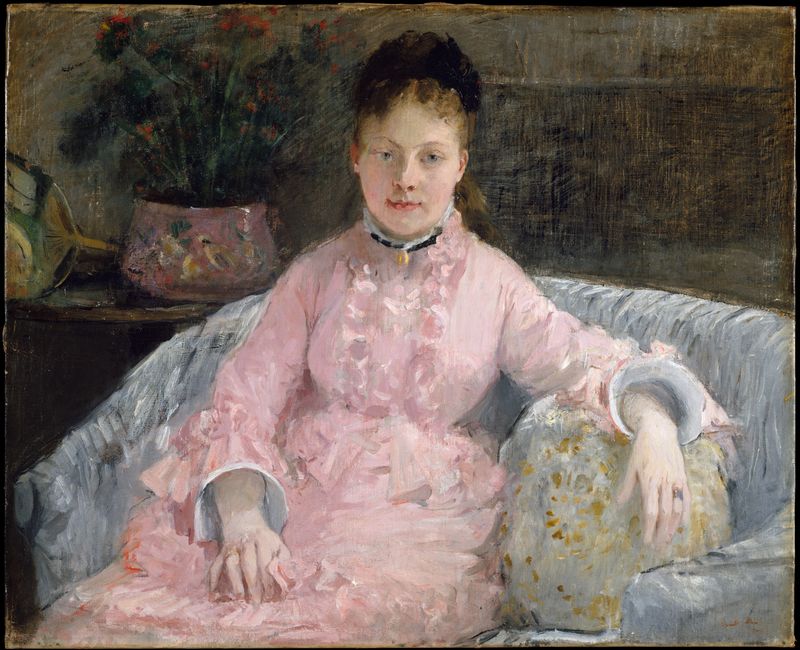 The Pink Dress (Albertie-Marguerite Carré, later Madame Ferdinand-Henri Himmes, 1854–1935)
1870 · Metropolitan Museum of Art
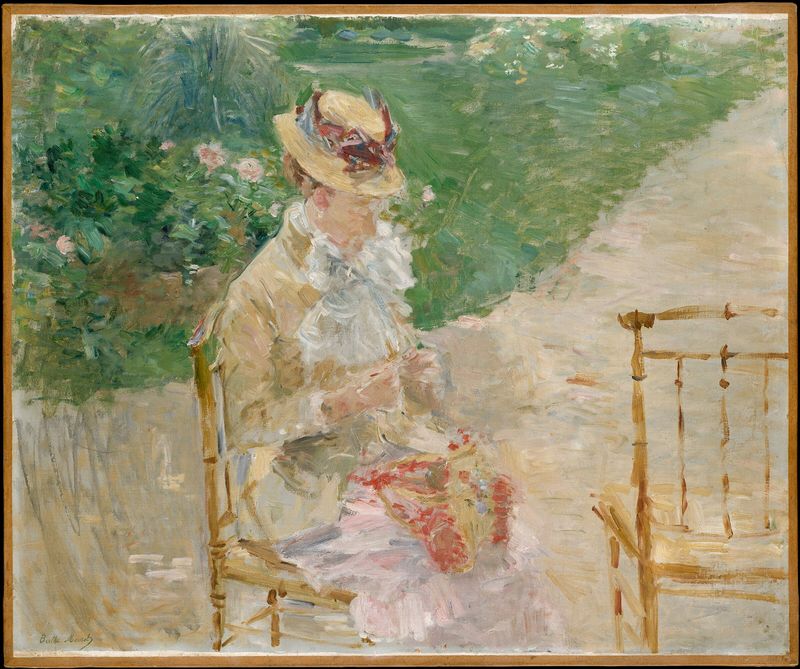 Young Woman Knitting
1883 · Metropolitan Museum of Art
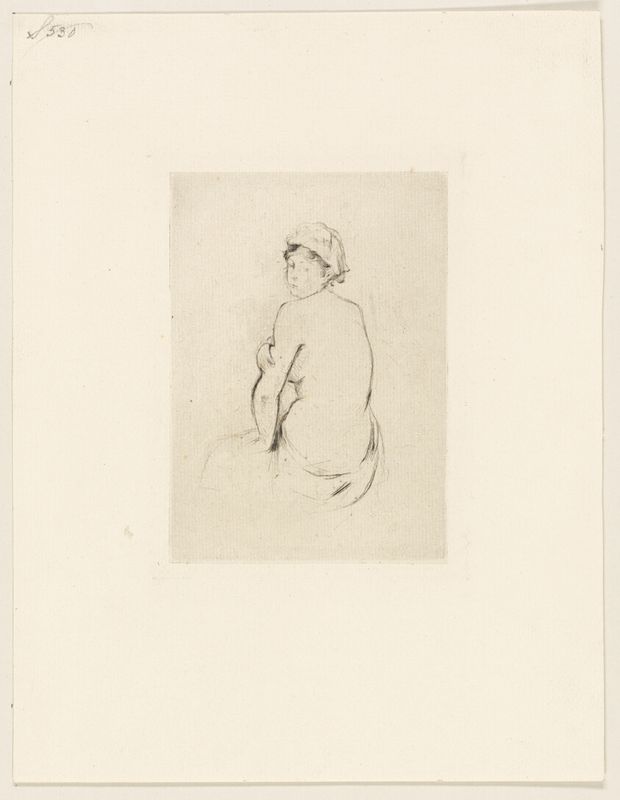 Nude Seen from Behind
1889 · Art Institute of Chicago
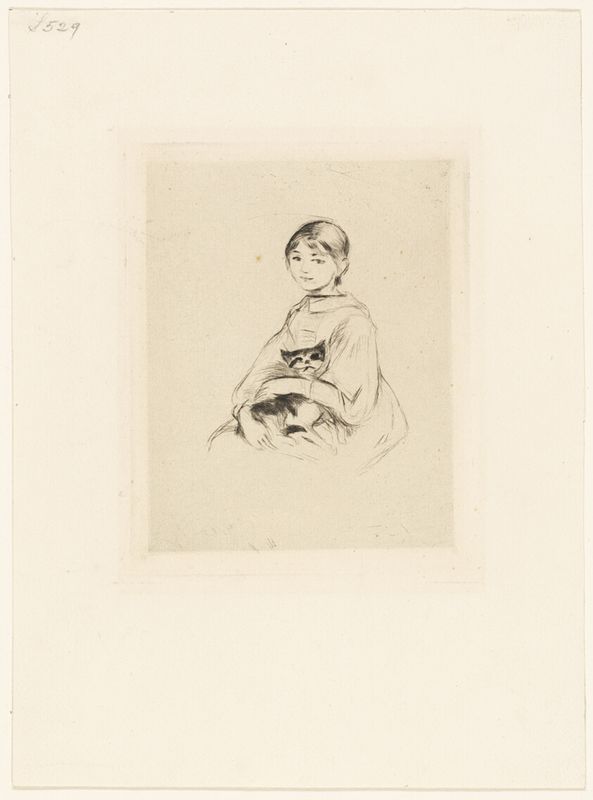 Young Girl with a Cat
1889 · Art Institute of Chicago
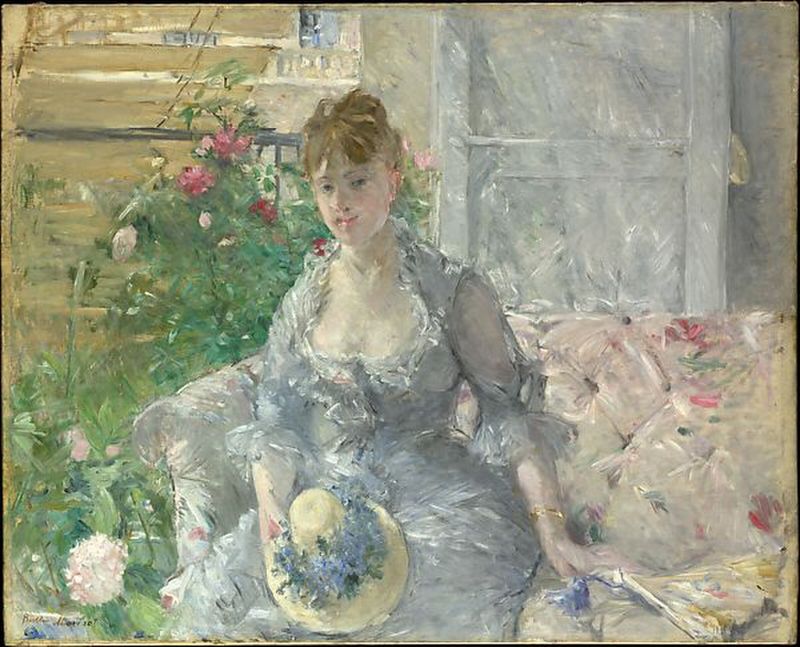 Young Woman Seated on a Sofa
1879 · Metropolitan Museum of Art
Beyond Morisot and Impressionism: works from the same years.
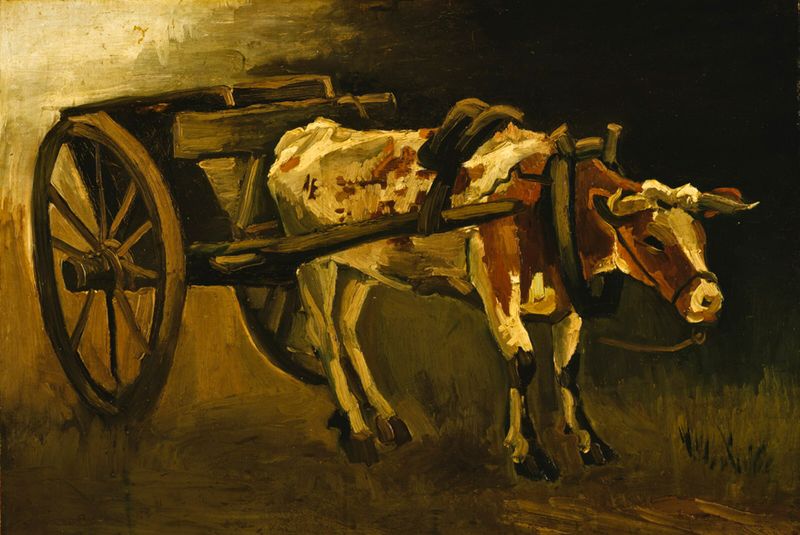 Same era · 1860s–1890s
Cart with Red and White Ox
Vincent van Gogh · 1884 · Kröller-Müller Museum
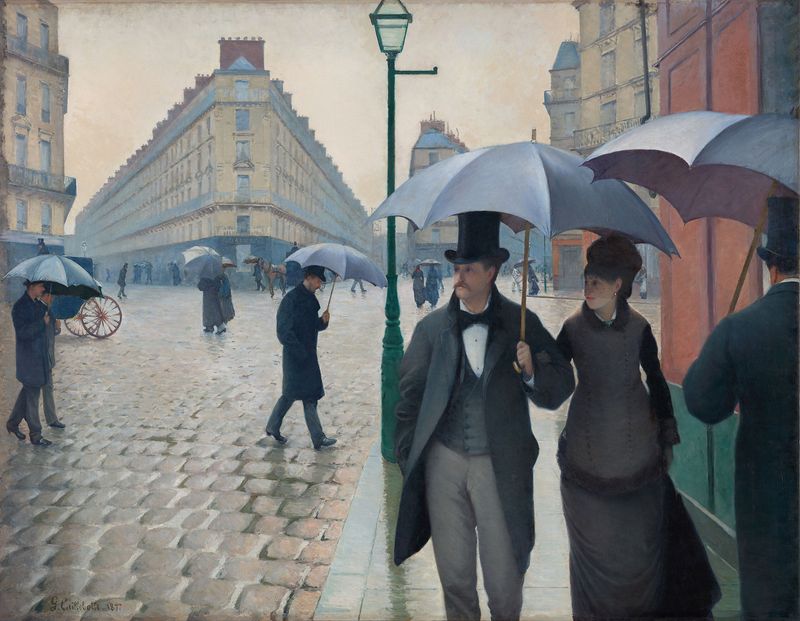 Same era · 1860s–1890s
Paris Street; Rainy Day
Kawabata Gyokushō · 1877 · Art Institute of Chicago
 Same era · 1860s–1890s
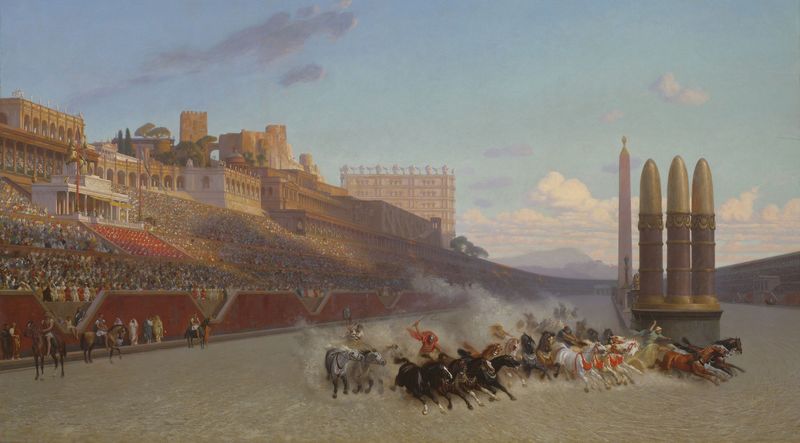
Chariot Race
Léon-Victor Dupré · 1876 · Art Institute of Chicago
 Same era · 1860s–1890s
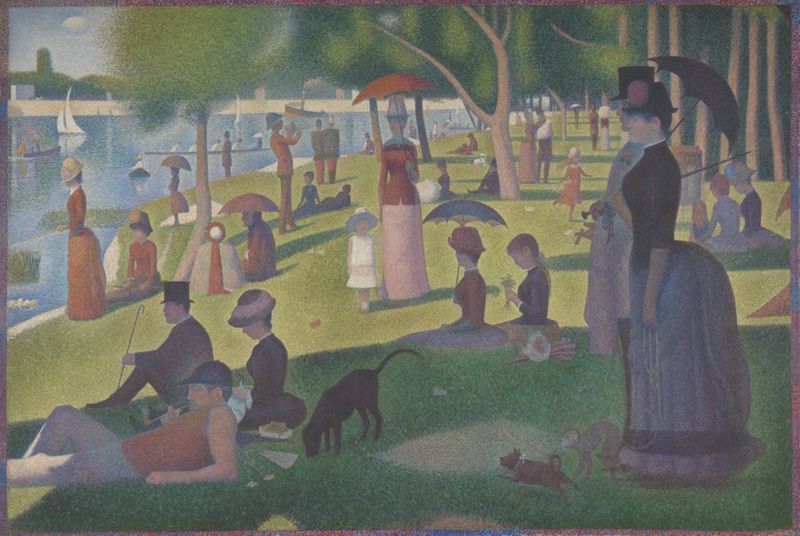
A Sunday on La Grande Jatte — 1884
Okada Saburosuke · 1884 · Art Institute of Chicago
 Same era · 1860s–1890s
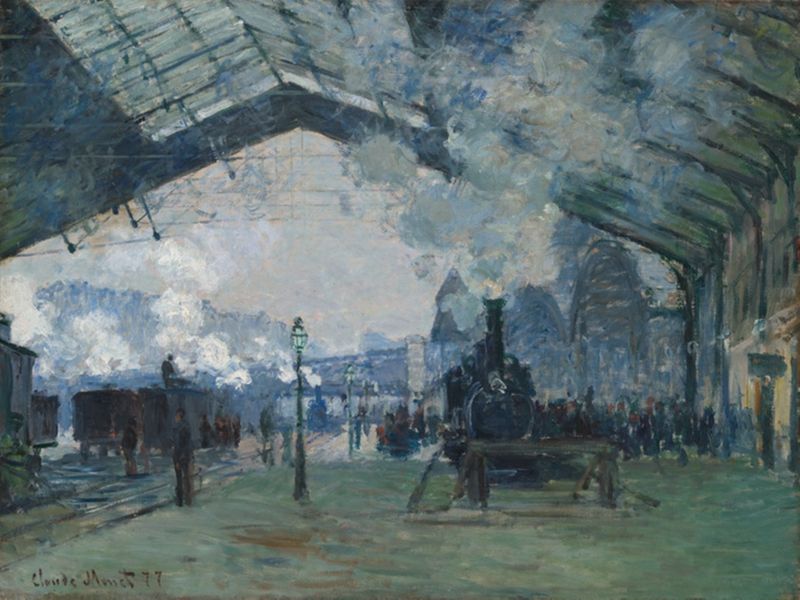
Arrival of the Normandy Train, Gare Saint-Lazare
Claude Monet · 1877 · Art Institute of Chicago
 Same era · 1860s–1890s
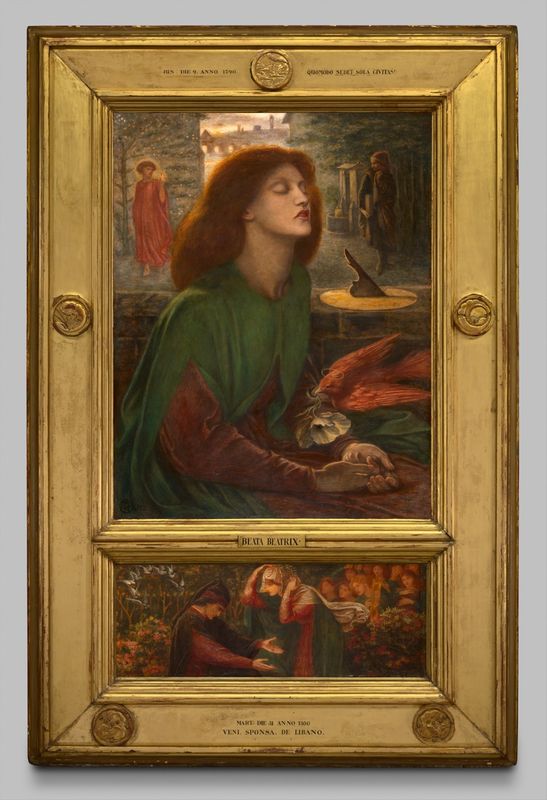
Beata Beatrix
Dante Gabriel Rossetti · 1877 · Birmingham Museums Trust
 Same era · 1860s–1890s
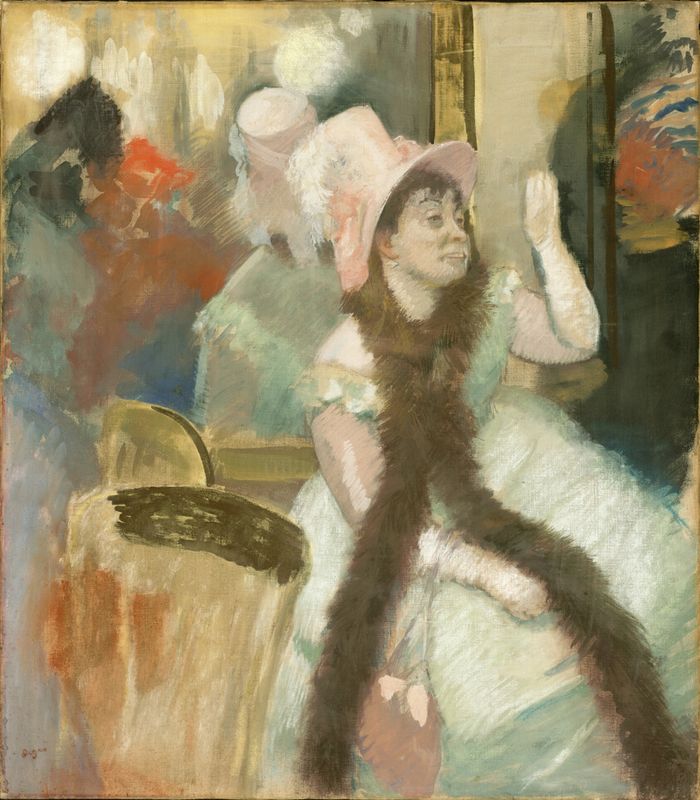
Portrait after a Costume Ball (Portrait of Madame Dietz-Monnin)
Edgar Degas · 1877 · Art Institute of Chicago
 Same era · 1860s–1890s
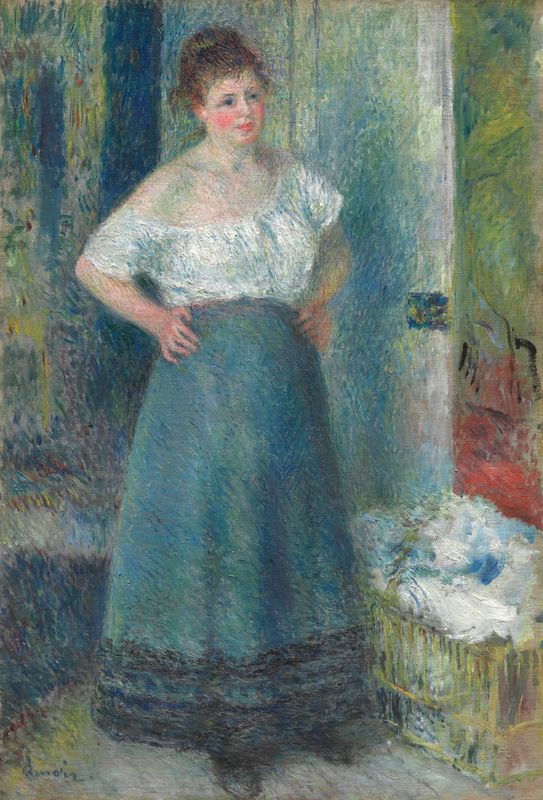
The Laundress
Pierre-Auguste Renoir · 1877 · Art Institute of Chicago
 Same era · 1860s–1890s
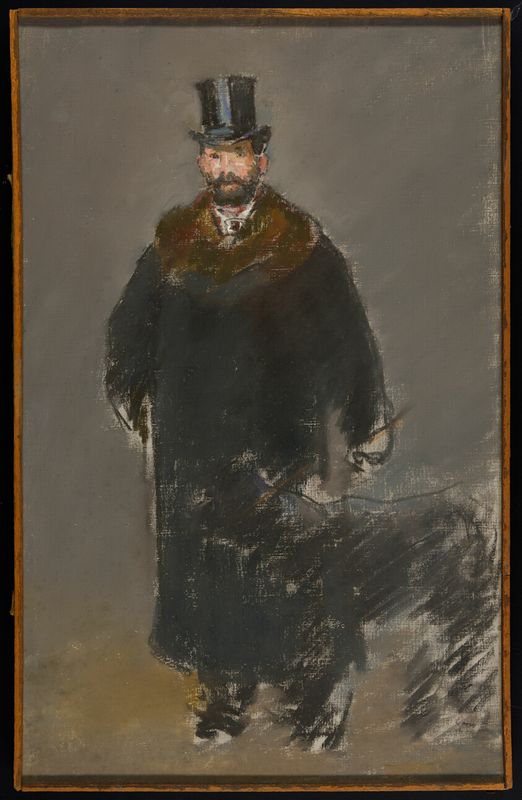
The Man with the Dog
Édouard Manet · 1877 · Art Institute of Chicago
 Same era · 1860s–1890s
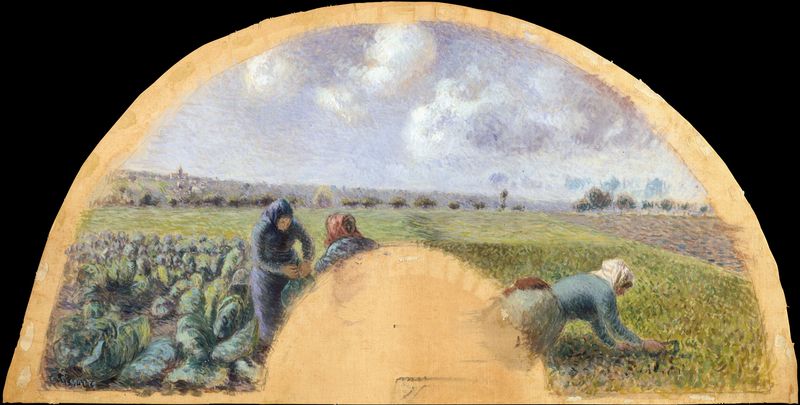
Fan Mount: The Cabbage Gatherers
Camille Pissarro · 1878 · Metropolitan Museum of Art
 Same era · 1860s–1890s
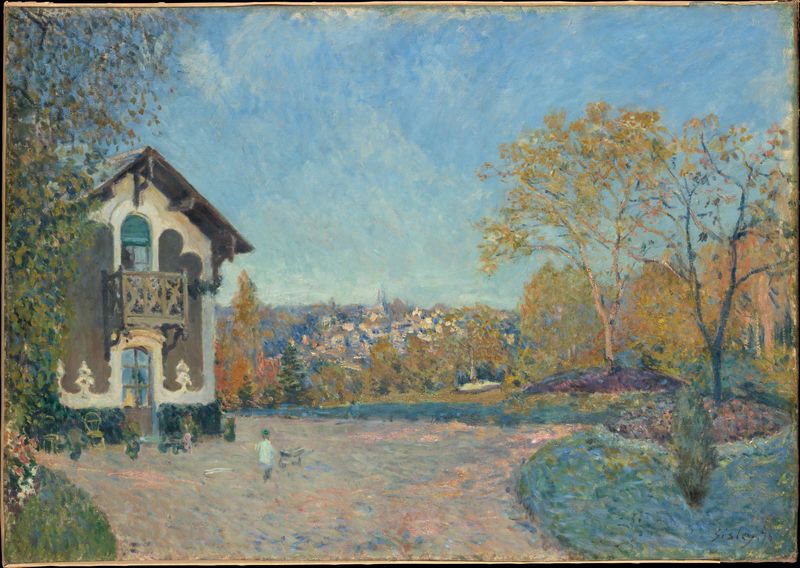
View of Marly-le-Roi from Coeur-Volant
Alfred Sisley · 1876 · The Metropolitan Museum of Art
 Same era · 1860s–1890s
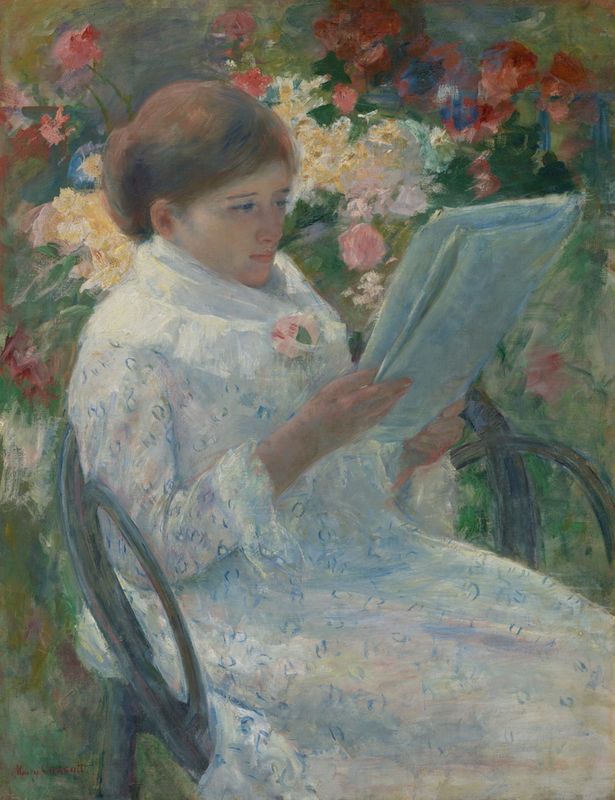
On a Balcony
Mary Cassatt · 1879 · Art Institute of Chicago