01
The steam locomotive
Look at the small engine crossing the bridge at right. Its round lamp and tall funnel make it the one crisp, mechanical shape in a scribbly landscape.
1 of 5 on the painting
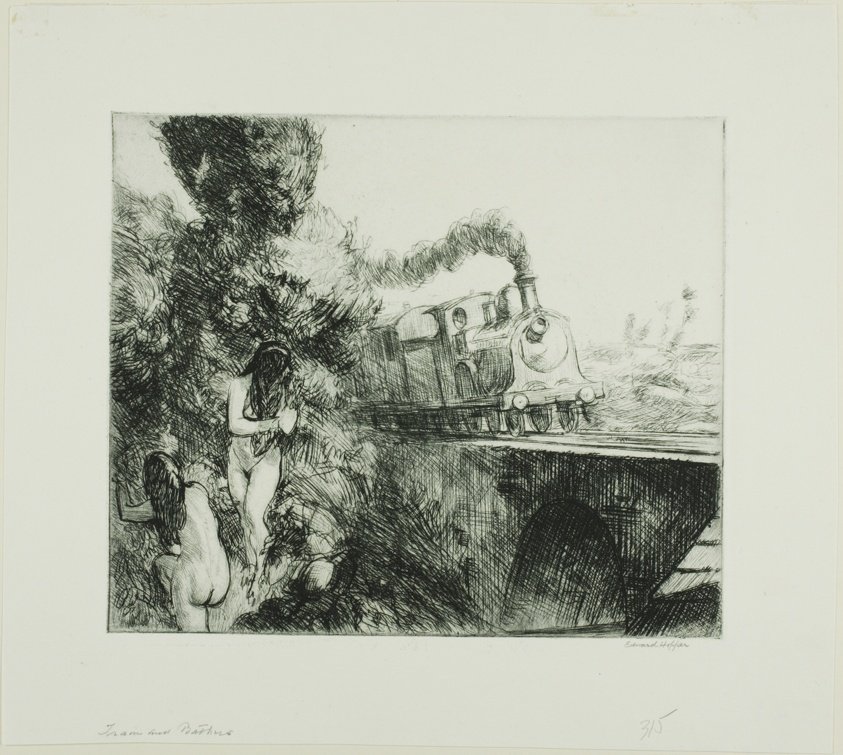
“Stop and observe the stark contrast between the powerful, modern train and the tranquil bathers in this etching. It's a vivid snapshot of early 20th-century American life, where industry and leisure share the same landscape but occupy different worlds.”
In this etching, a lone train car dominates the middle ground, its dark form cutting across the landscape. You can almost hear its rumble as it passes, casting a deep shadow. To the right, a small group of bathers dot the riverbank, their figures simplified, almost anonymous, as they prepare to enter the water or perhaps have just emerged. The contrast between the powerful, modern machine and the timeless, leisurely human activity creates a quiet tension. It’s a scene that captures a moment of modern American life, where industry and nature coexist, yet remain distinctly separate. The composition draws your eye from the stark lines of the train to the softer curves of the figures and the distant shore, all rendered with a striking clarity typical of early 20th-century American realism.
Five details hide in plain sight. Pick one and we’ll show you exactly where to look.
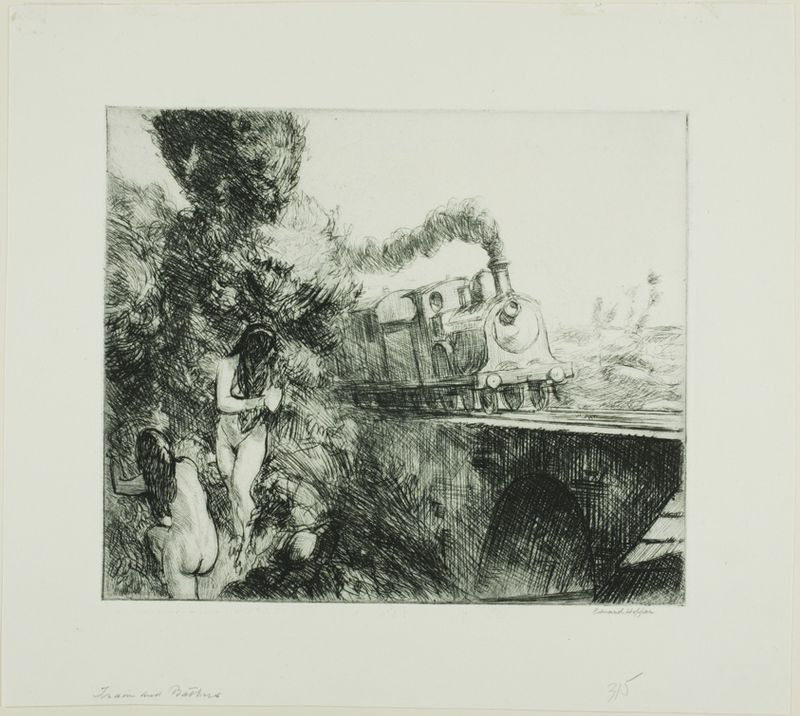
Look at the small engine crossing the bridge at right. Its round lamp and tall funnel make it the one crisp, mechanical shape in a scribbly landscape.
At the lower left edge, a second nude woman is seen from behind, her back turned to us. She sits close to the edge of the print, which makes the view feel a little like a glimpse of a private moment.
Follow the plume drifting left from the smokestack. Loose, curling lines make it look soft and heavy, a sharp contrast to the hard-edged engine below.
Below the tracks, a black arch in the bridge wall is the darkest spot in the print. It anchors the lower right and balances the bathers at left.
Look at the dense trees on the left. Layers of crossing lines build up deep darks, and the figures glow pale against them.
The full narration walks you through Train and Bathers — the story behind it, the details most visitors miss, and why it matters. Free in the Art Whisper app.
Painter of 'Nighthawks' who captured the isolation and drama of modern American life in luminous, cinematic scenes.
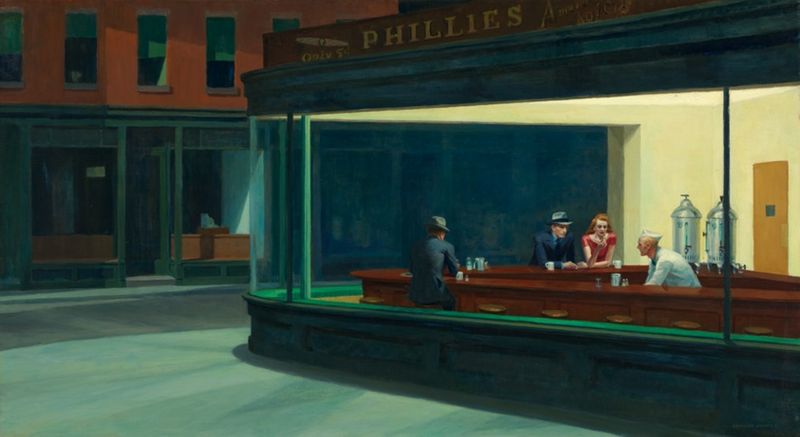 Nighthawks
1942 · Art Institute of Chicago
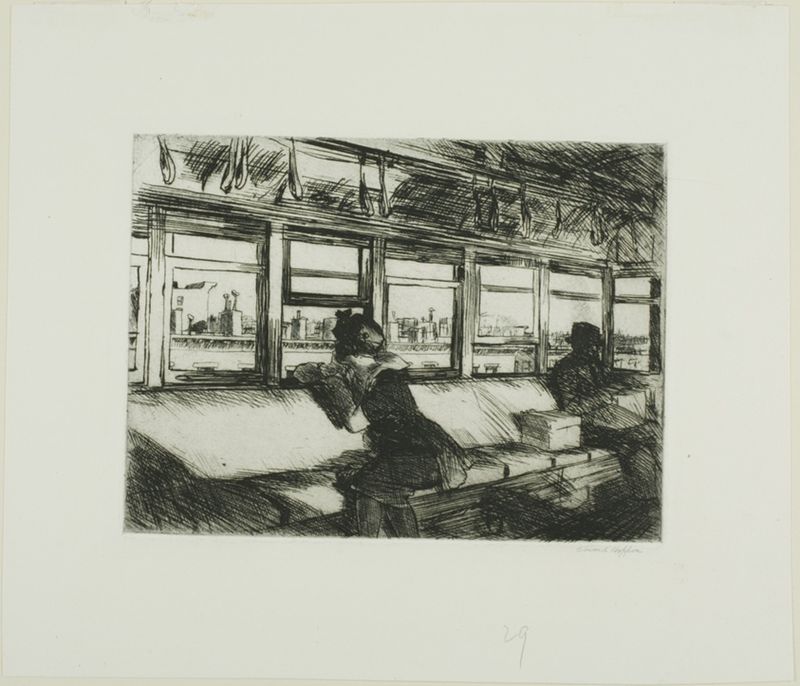
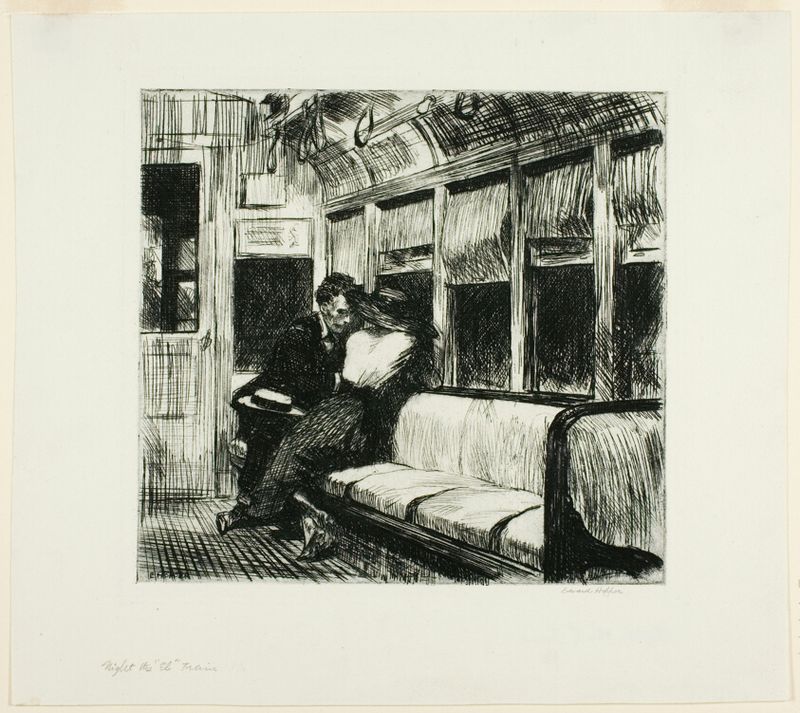 Night on the El Train
1918 · The Metropolitan Museum of Art
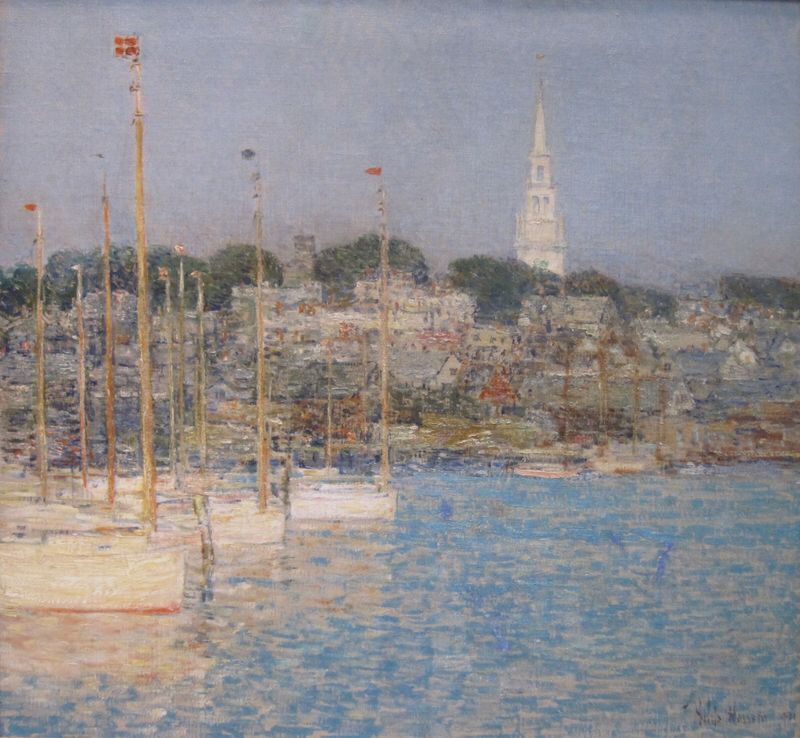
 House Tops
1921 · The Metropolitan Museum of Art
 Cat Boat
1922 · The Metropolitan Museum of Art
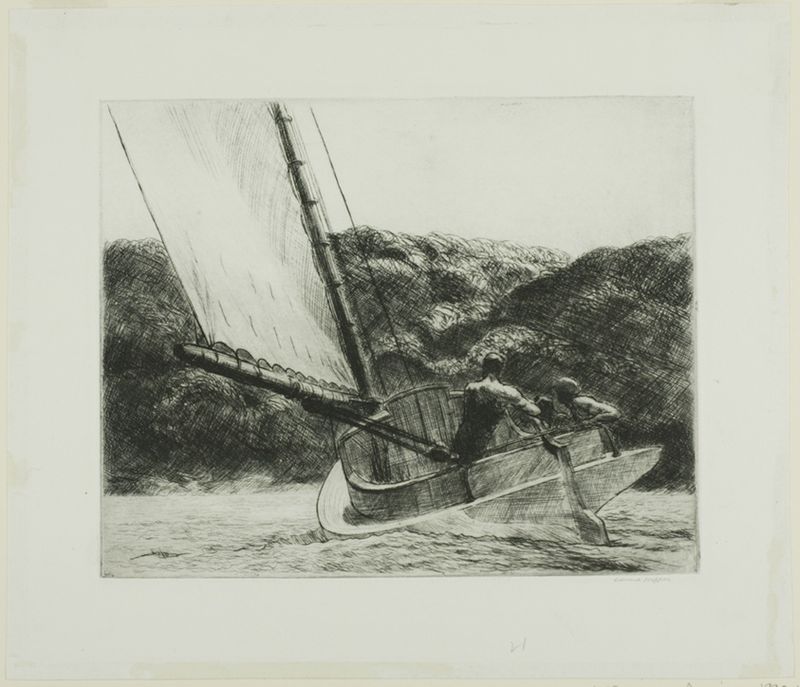 The Cat Boat
1922 · The Metropolitan Museum of Art
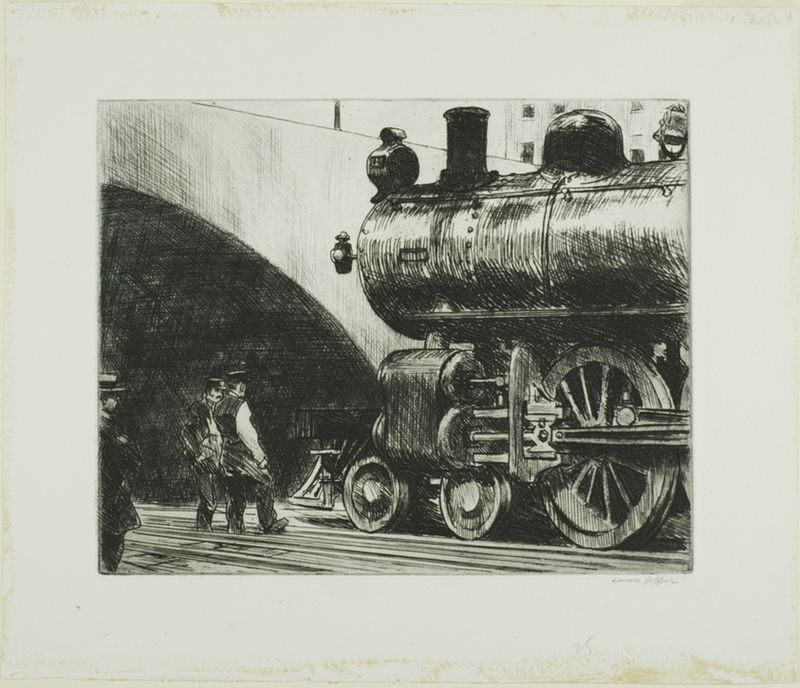 The Locomotive
1923 · Cleveland Museum of Art
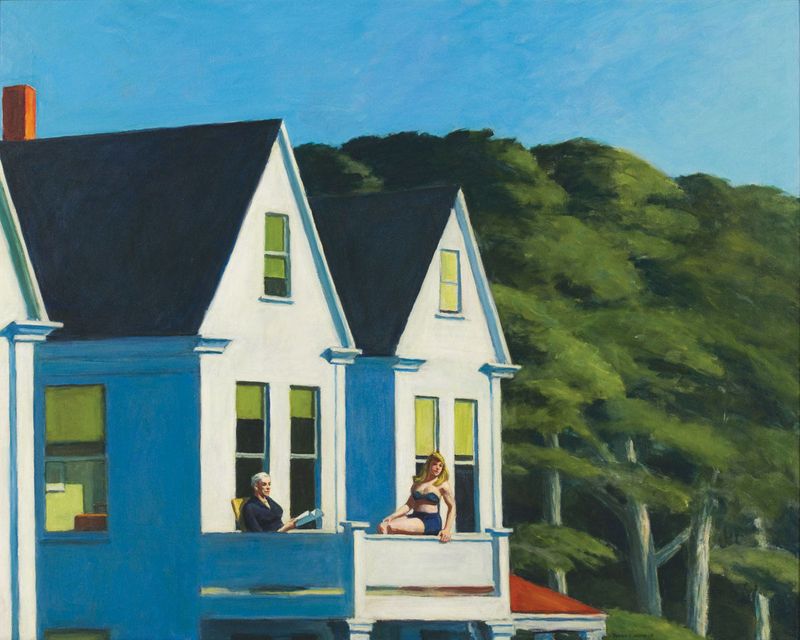 Second Story Sunlight
1960 · Whitney Museum of American Art
Beyond Hopper: works from the same years.
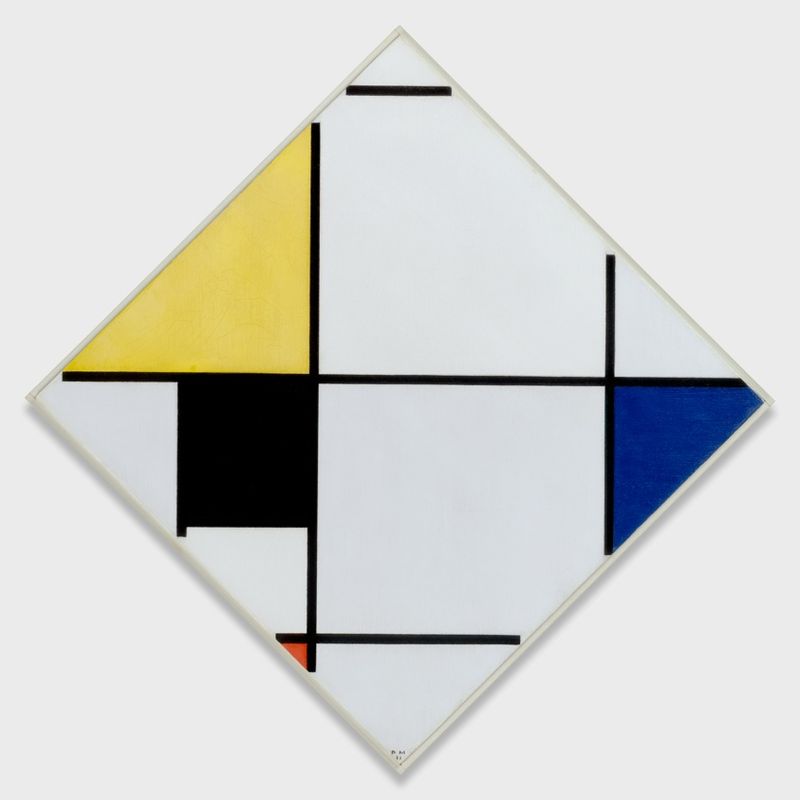 Same era · 1900s–1930s
Lozenge Composition with Yellow, Black, Blue, Red, and Gray
Piet Mondrian · 1921 · Art Institute of Chicago
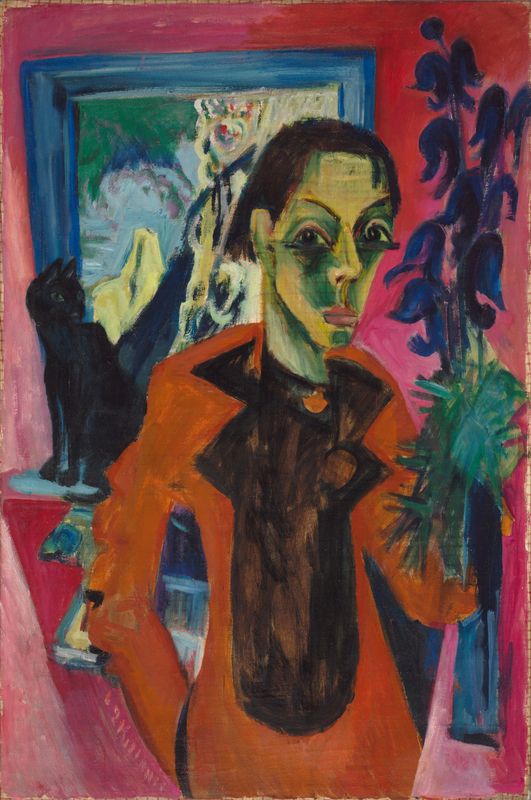 Same era · 1900s–1930s
Self-Portrait with Cat
Ernst Ludwig Kirchner · 1920 · Museum Folkwang
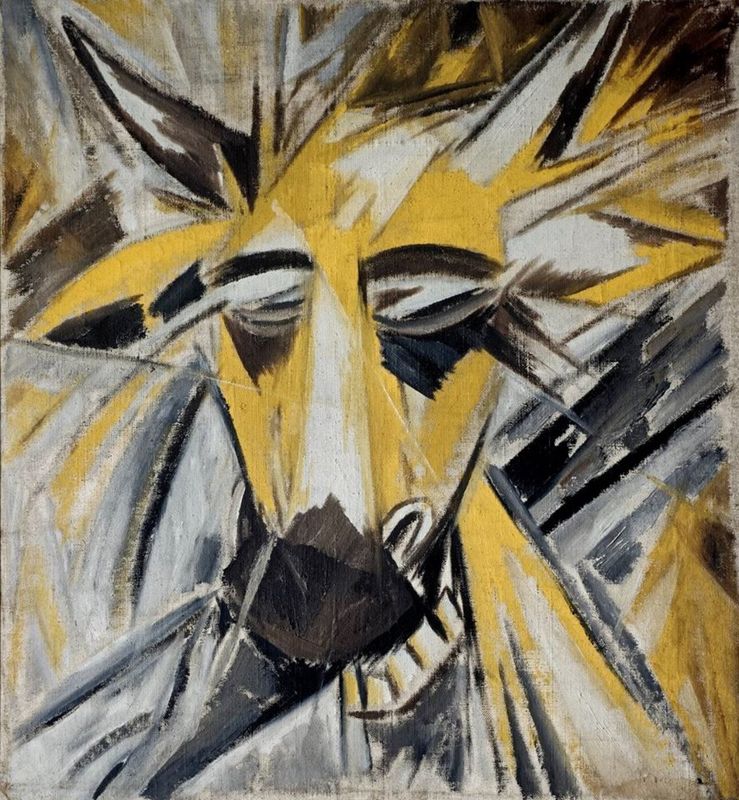 Same era · 1900s–1930s
Bull's Head
Mikhail Larionov · 1913 · Tretyakov Gallery
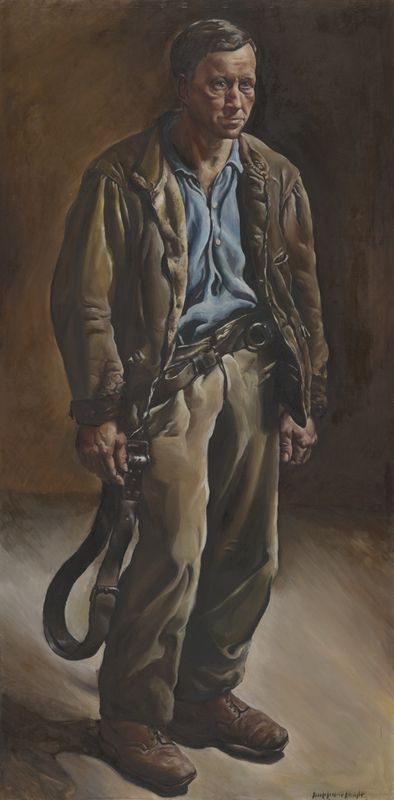 Same era · 1900s–1930s
The Lineman
Ivan Puni · 1927 · Art Institute of Chicago
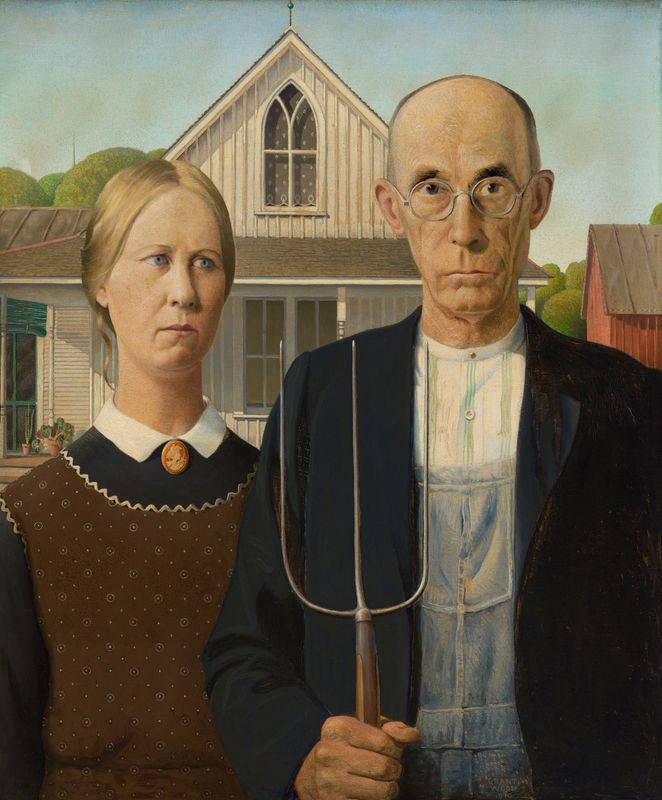 Same era · 1900s–1930s
American Gothic
Okada Saburosuke · 1930 · Art Institute of Chicago
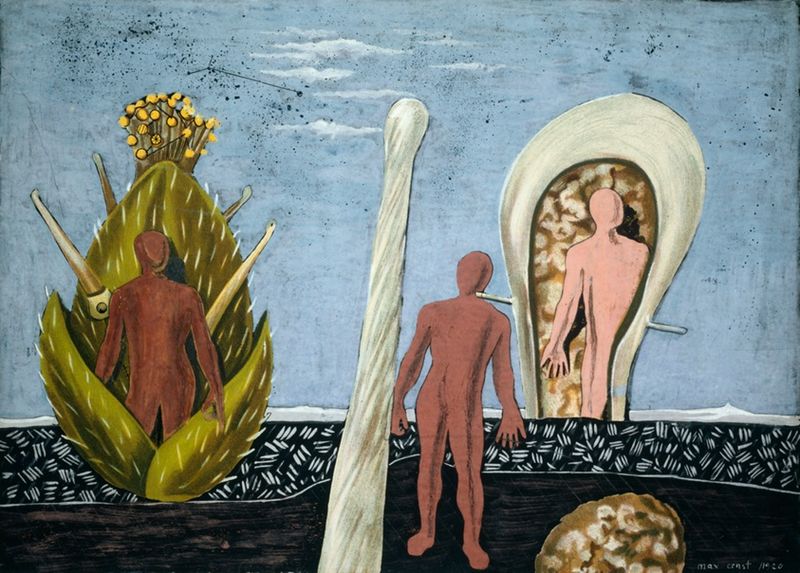 Same era · 1900s–1930s
Dada Gauguin
Max Ernst · 1920 · Art Institute of Chicago
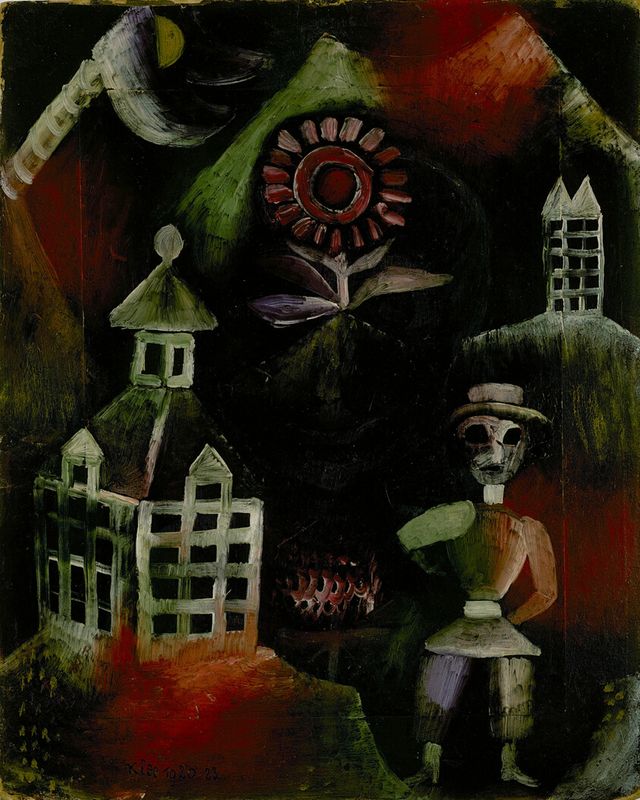 Same era · 1900s–1930s
Schoolhouse
Paul Klee · 1920 · Art Institute of Chicago
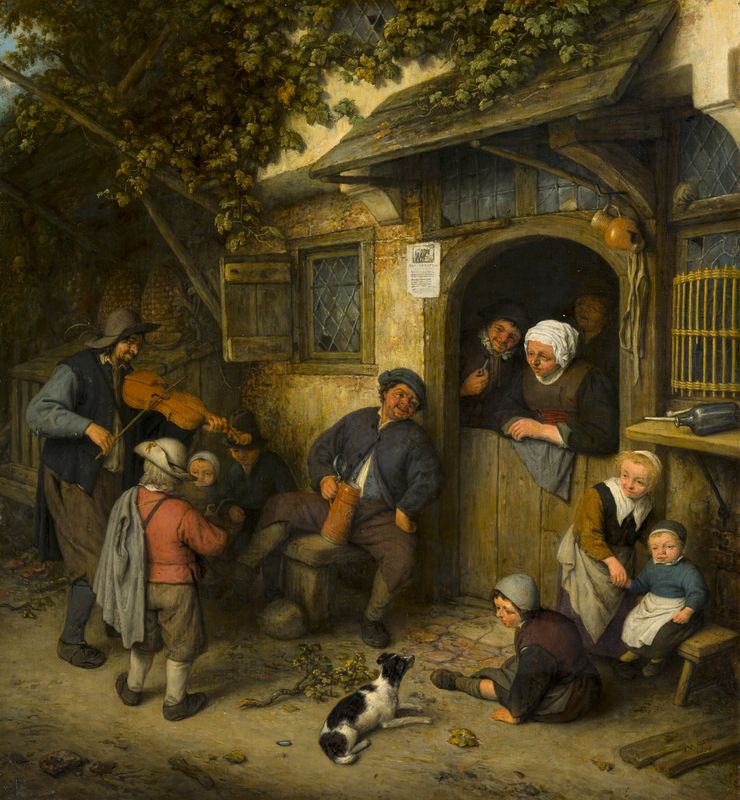 Same era · 1900s–1930s
The Fiddler
Norman Rockwell · 1921 · Brandywine Museum of Art
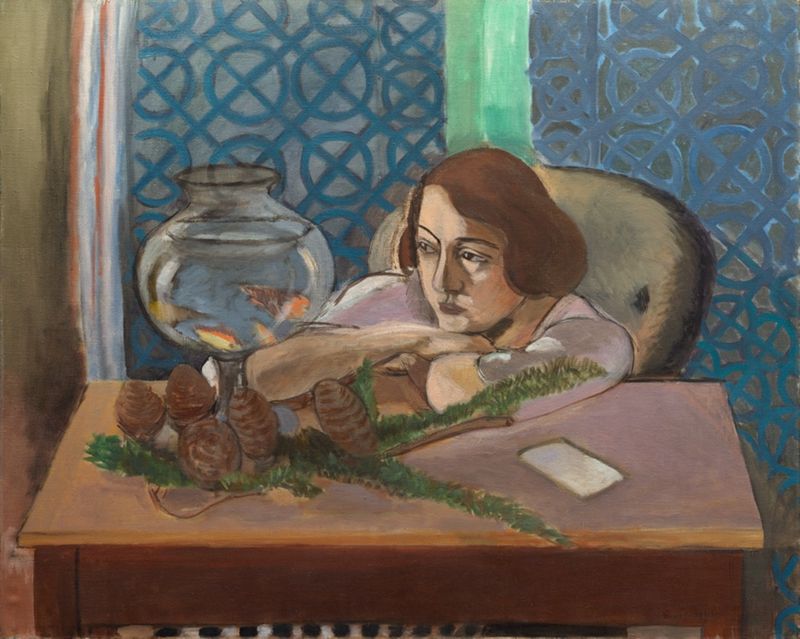 Same era · 1900s–1930s
Woman before an Aquarium
Henri Matisse · 1921 · Art Institute of Chicago
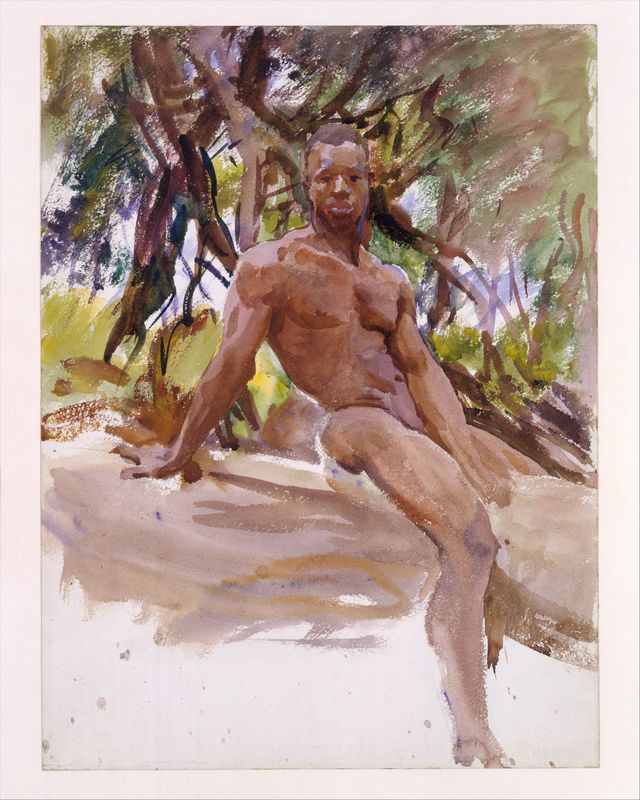 Same era · 1900s–1930s
Man and Trees, Florida
John Singer Sargent · 1917 · The Metropolitan Museum of Art
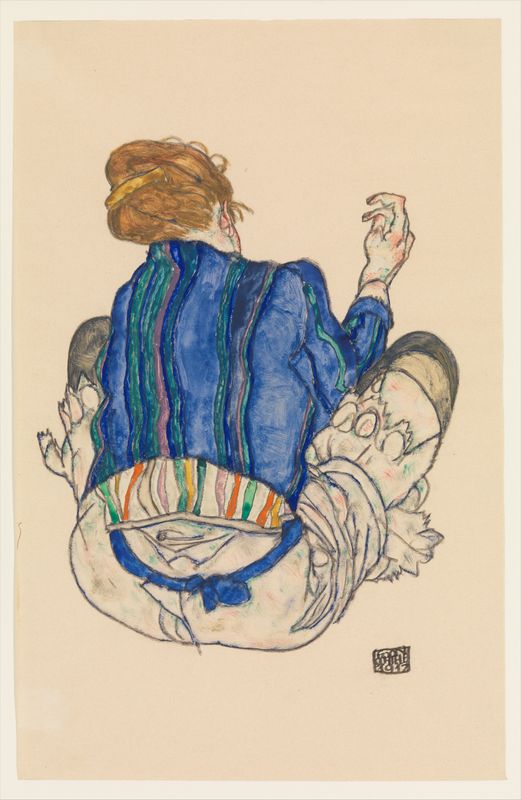 Same era · 1900s–1930s
Seated Woman, Back View
Egon Schiele · 1917 · The Metropolitan Museum of Art
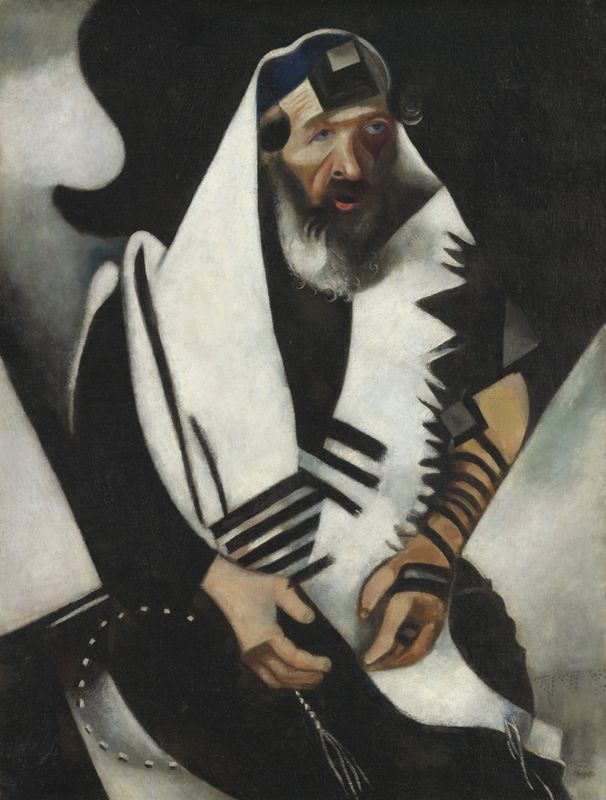 Same era · 1900s–1930s
The Praying Jew
Marc Chagall · 1923 · Art Institute of Chicago
