01
Weathered bald profile
In the center, the bald man's furrowed cheek and neck are carefully lined. Age is shown as a map of creases, not smoothed away.
1 of 5 on the painting
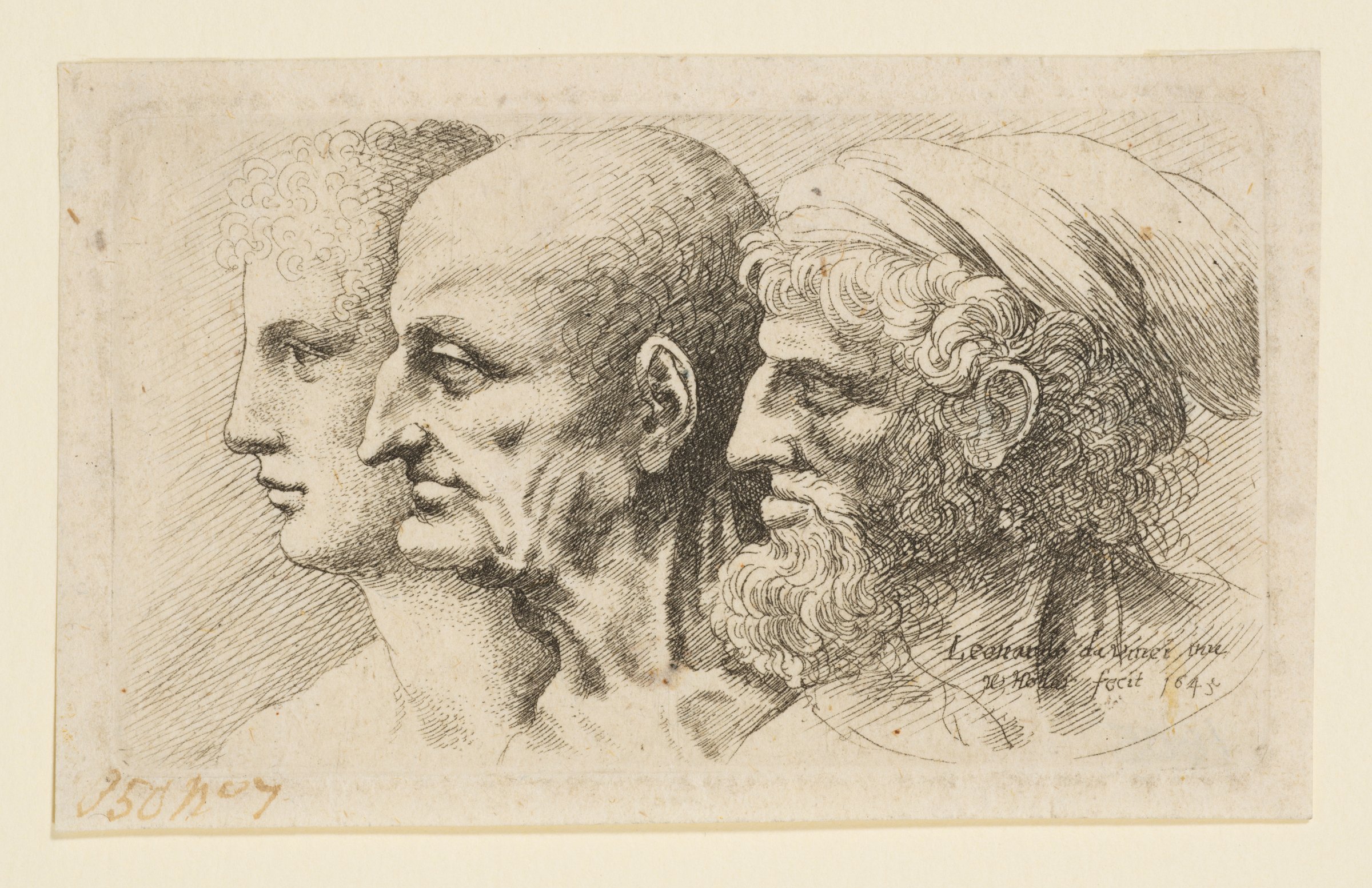
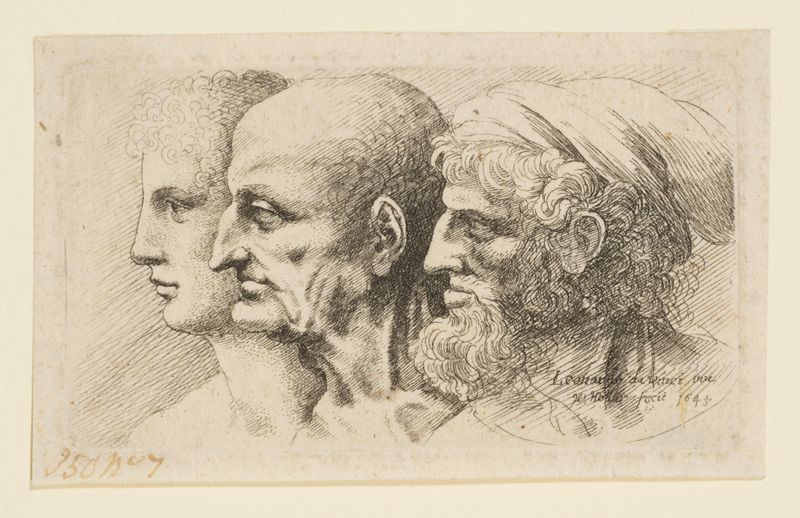
“Stop and observe this intimate etching by Leonardo da Vinci, where three distinct profiles emerge from the shadows, inviting you to ponder the artist's study of human character and expression. It's a small but powerful example of Renaissance observation.”
Three distinct profiles emerge from the darkness in this small etching, each head turned to the left. The central figure, with his long, flowing beard and intense gaze, dominates the composition, his features rendered with a striking expressiveness. To his right, a younger man with a more delicate profile appears, while on his left, a third, more enigmatic face is partially obscured. The meticulous lines of the etching capture the subtle contours of their faces, suggesting a keen observation of human physiognomy. This work, though small, speaks to the Renaissance fascination with human character and the study of individual features, a subject that captivated artists of the period. Even in this modest format, the piece invites close inspection, revealing the careful study behind each portrayed face.
Five details hide in plain sight. Pick one and we’ll show you exactly where to look.
In the center, the bald man's furrowed cheek and neck are carefully lined. Age is shown as a map of creases, not smoothed away.
On the right, the bearded man's tight curls and full beard are drawn in looping, scribbled lines. His slight smile gives him the warmest expression of the three.
The young man's hair at upper left is a cluster of small loops, light and airy. Compare it with the denser, darker hair on the right.
Fine parallel diagonal lines fill the background behind the heads, especially at upper left and lower left. They build soft shadow using only thin etched strokes.
Lower right, the small lettering reads as Leonardo da Vinci's name, followed by a second name and "fecit" (Latin for "made it") with a date of 1645. The wording suggests Leonardo's design was etched by another hand.
The full narration walks you through Three Heads in Profile — the story behind it, the details most visitors miss, and why it matters. Free in the Art Whisper app.
Leonardo da Vinci, the ultimate Renaissance polymath, filled notebooks with observations on everything from anatomy to flight, alongside masterpieces like the 'Mona Lisa'.
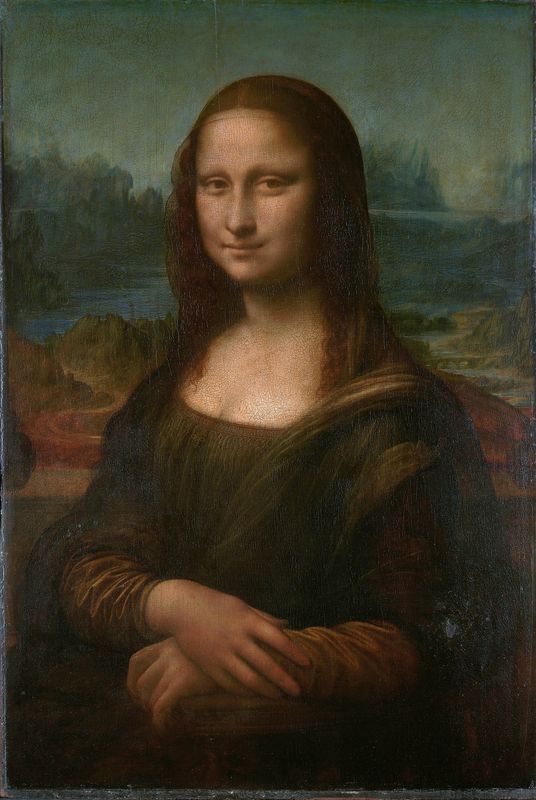 Mona Lisa
1503 · Department of Paintings of the Louvre
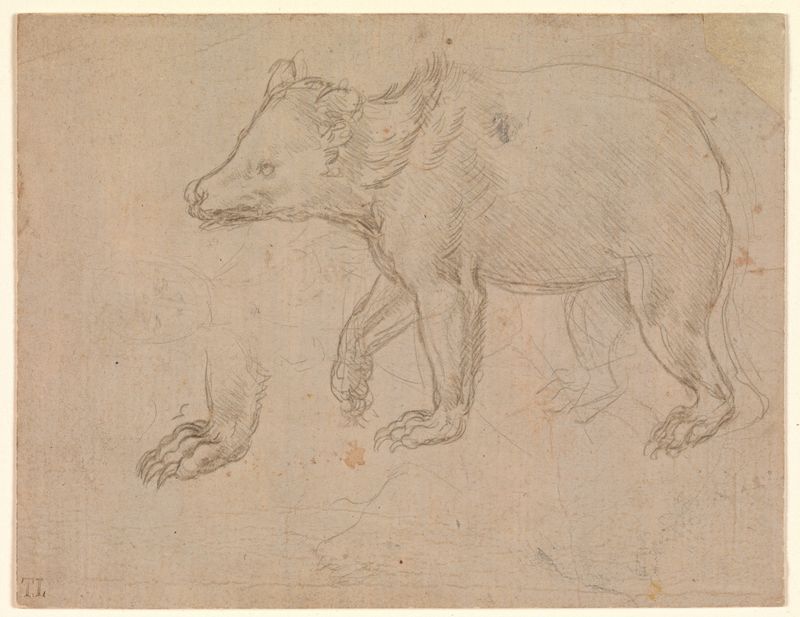 A Bear Walking
1477 · The Metropolitan Museum of Art
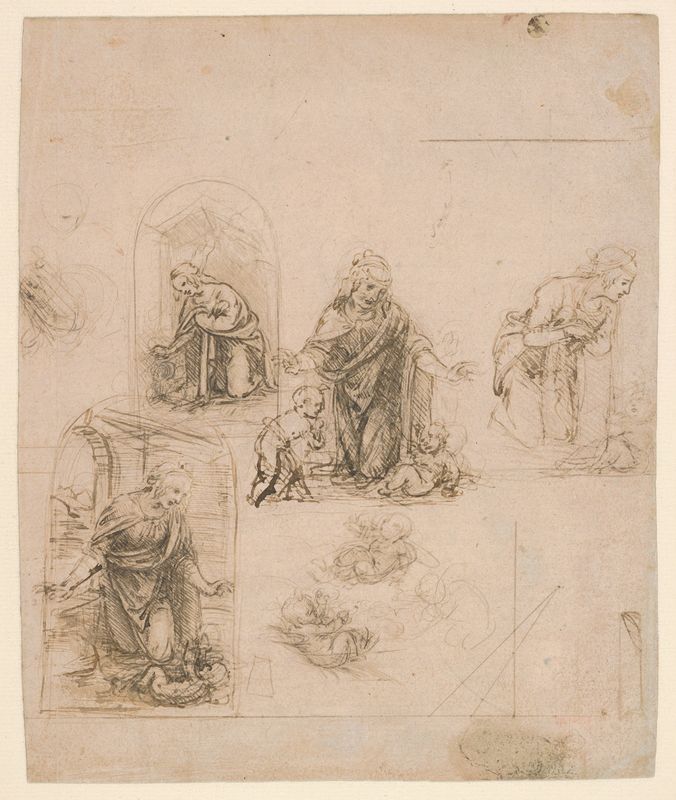 Compositional Sketches for the Virgin Adoring the Christ Child, with and without the Infant St. John the Baptist; Diagram of a Perspectival Projection (recto); Slight Doodles (verso)
1480 · The Metropolitan Museum of Art
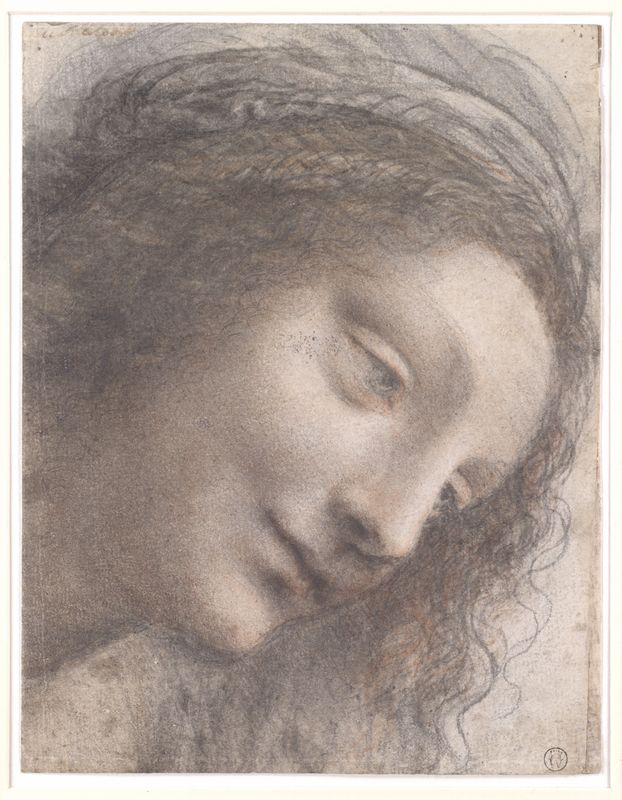 The Head of the Virgin in Three-Quarter View Facing Right
1510 · The Metropolitan Museum of Art
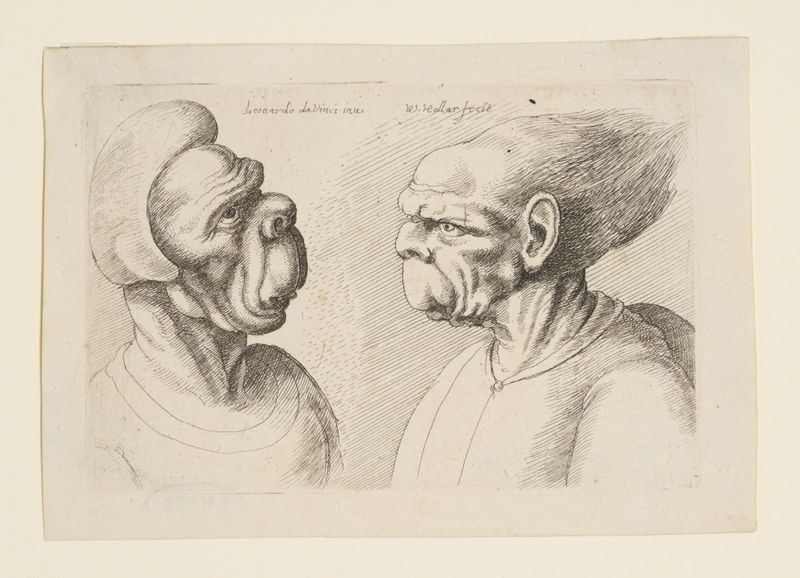 Two Deformed Heads with Very Long Upper Lips
1645 · The Metropolitan Museum of Art
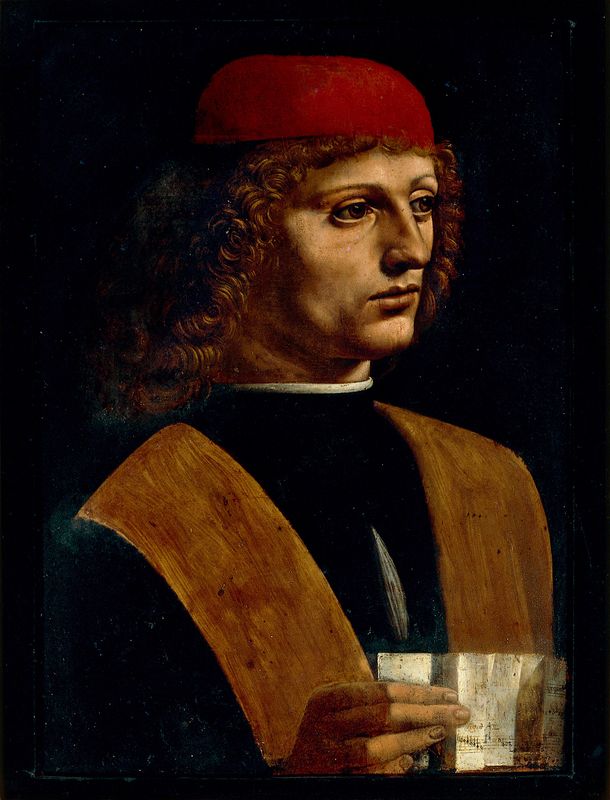 Portrait of a Musician
1485 · Pinacoteca Ambrosiana
Beyond da Vinci and Renaissance: works from the other movements Three Heads in Profile belongs to.
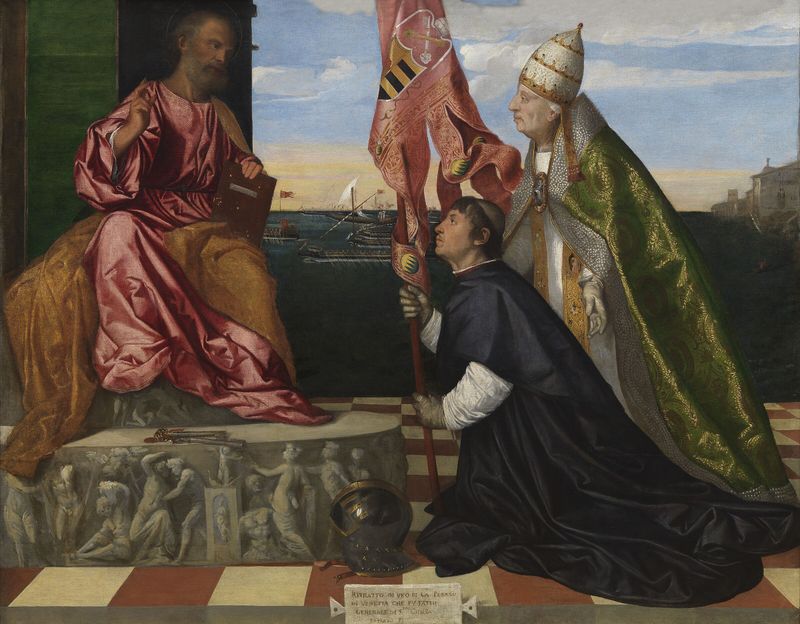 Same movement · High Renaissance
Jacopo Pesaro, Bishop of Paphos, being presented by Pope Alexander VI to Saint Peter
Titian · 1504 · Royal Museum of Fine Arts Antwerp
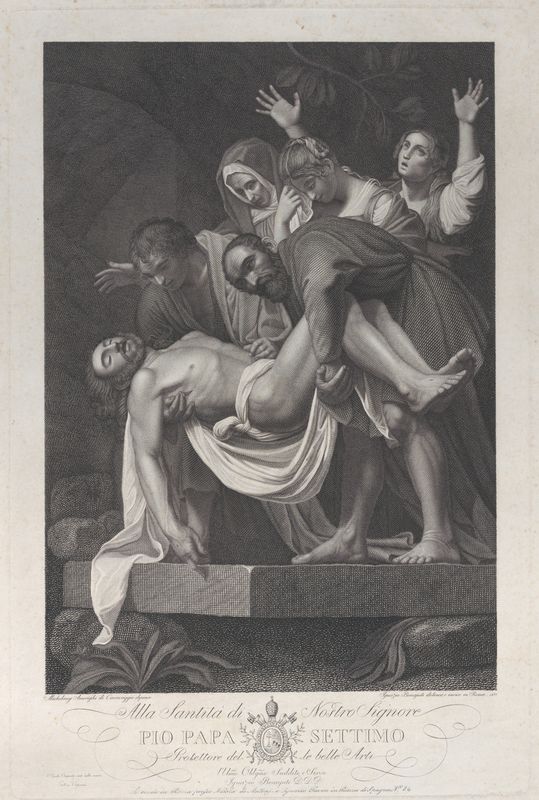 Same movement · Academic art
The Entombment of Christ
Caravaggio · 1600 · Pinacoteca Vaticana
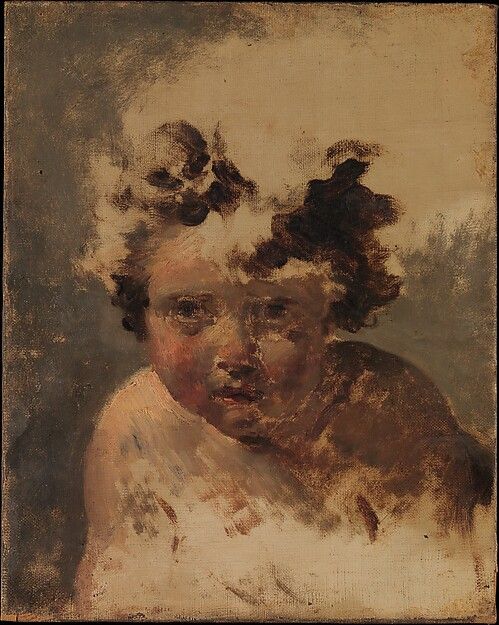 Same movement · Academic art
Head of a Child
Jacques-Louis David · 1768 · The Metropolitan Museum of Art
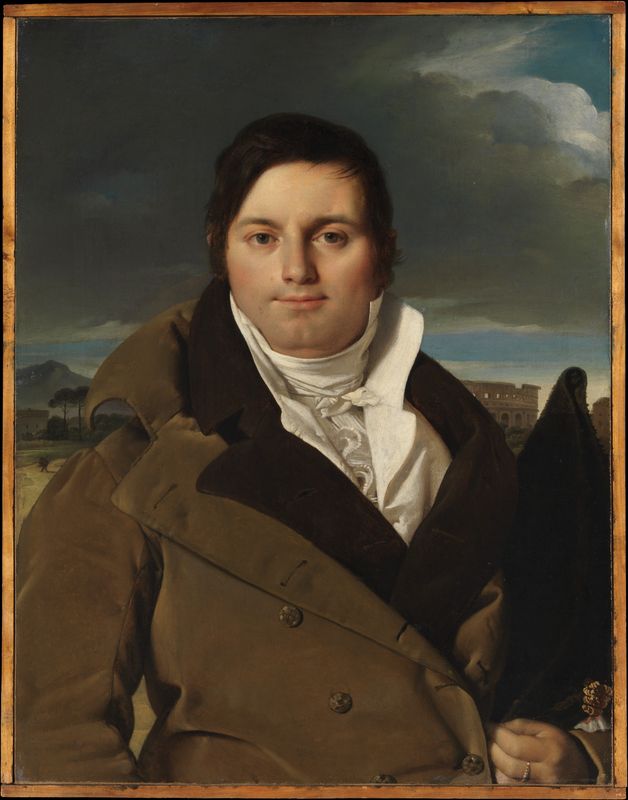 Same movement · Academic art
Joseph-Antoine Moltedo (born 1775)
Jean-Auguste-Dominique Ingres · 1805 · The Metropolitan Museum of Art
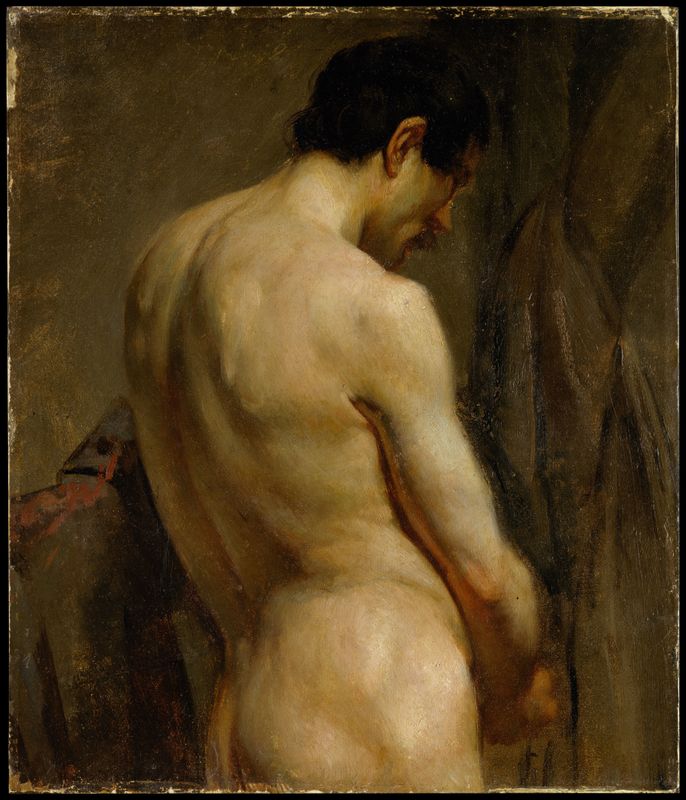 Same movement · Academic art
Male Academy Figure: Half-Length, Side View
Eugène Delacroix · 1819 · Karen B. Cohen Collection