01
The burdened pilgrim
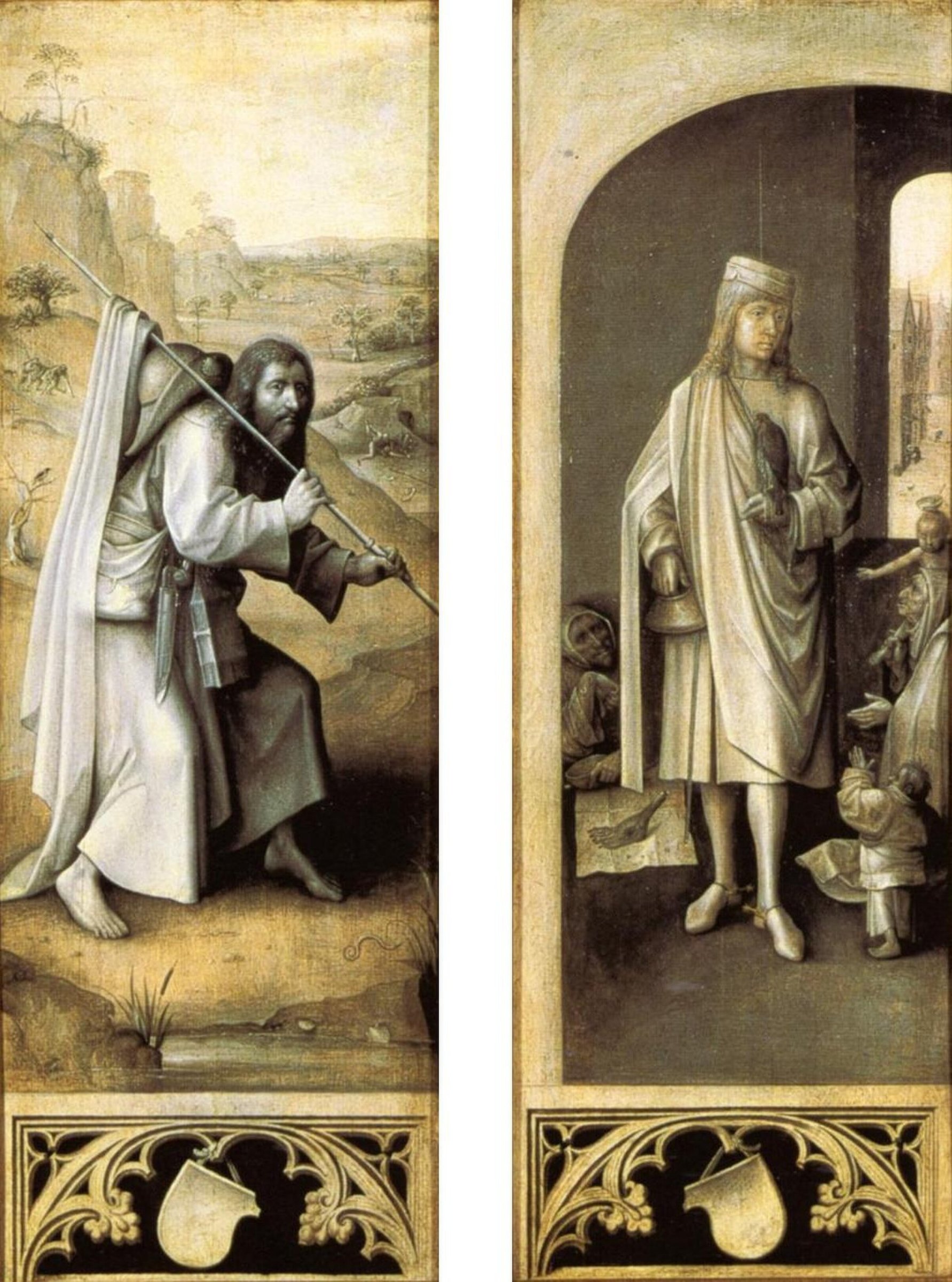
On the left panel, a bearded man in pale robes strides barefoot, leaning forward under a bundle slung on a long staff. His bent, heavy walk sets a weary tone for the panel.
1 of 5 on the painting
“Step into a world where salvation is scarce and damnation is vivid. This engraving, designed in the fantastical style of Hieronymus Bosch, offers a chilling, detailed vision of the Last Judgment, teeming with grotesque creatures and tormented souls.”
This engraving, titled "The Last Judgment," plunges us into a chaotic vision of good and evil. In the upper left, a narrow chasm offers a sliver of hope, through which a select few souls are ushered into heaven. Below, the scene explodes with a nightmarish battle, where grotesque devils torment the damned. The creatures here, with their undulating forms, rowdiness, and even flatulence, are characteristic of the fantastical imagery associated with Hieronymus Bosch. While the print is inscribed "Bosche" (likely referring to the artist's birthplace, 's-Hertogenbosch) at the top, the engraving itself was made by Alart du Hameel, possibly based on a now-lost painting by Bosch. This collaboration or interpretation captures the artist's unique ability to visualize humanity's deepest fears and the consequences of sin in vivid, unsettling detail.
Five details hide in plain sight. Pick one and we’ll show you exactly where to look.
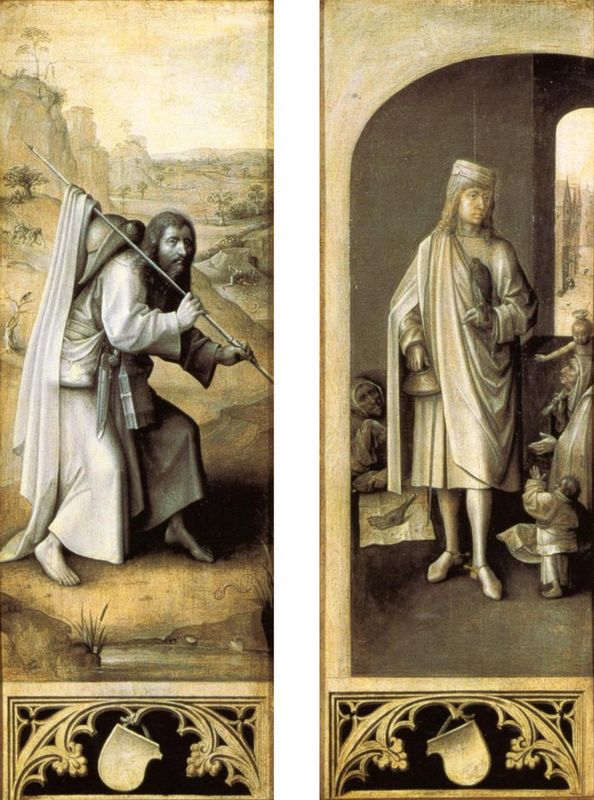
On the left panel, a bearded man in pale robes strides barefoot, leaning forward under a bundle slung on a long staff. His bent, heavy walk sets a weary tone for the panel.
Under the arch on the right, a slender young man in a cap and draped cloak stands stiffly, in sharp contrast to the pilgrim's stooped, weary walk.
At the right edge, a small figure reaches up toward a larger one, while a hooded man crouches in shadow at the left of the room. Both sit close to the young man, who stands apart and calm.
A sheet on the floor by his feet shows a drawn hand. It is a small, odd detail in a bare room, and it invites the eye to puzzle over it.
Beneath each panel, a pale shield hangs within dark Gothic tracery with leafy curling forms. The bright carved shapes make a rich base for the quiet scenes above.
The full narration walks you through The Last Judgment — the story behind it, the details most visitors miss, and why it matters. Free in the Art Whisper app.
Hieronymus Bosch, a Dutch painter from the Northern Low Countries, filled his oak panels with fantastic illustrations of religious concepts, from the Garden of Eden to macabre depictions of hell.
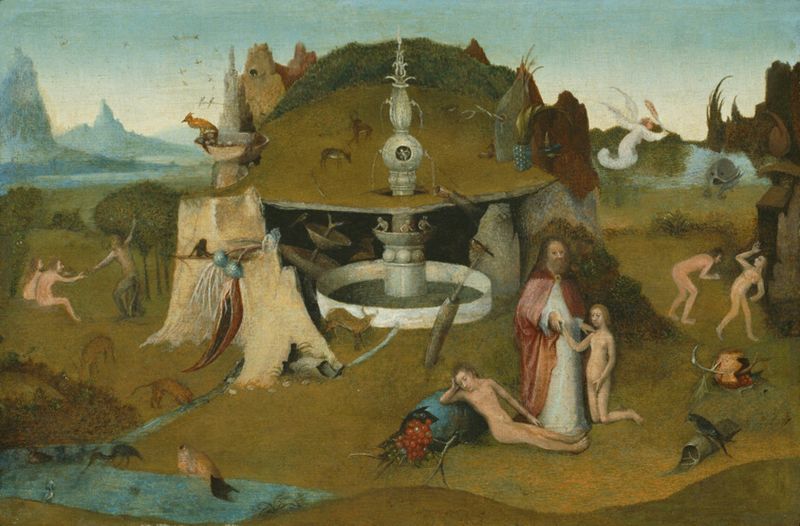 The Garden of Paradise
1495 · Art Institute of Chicago
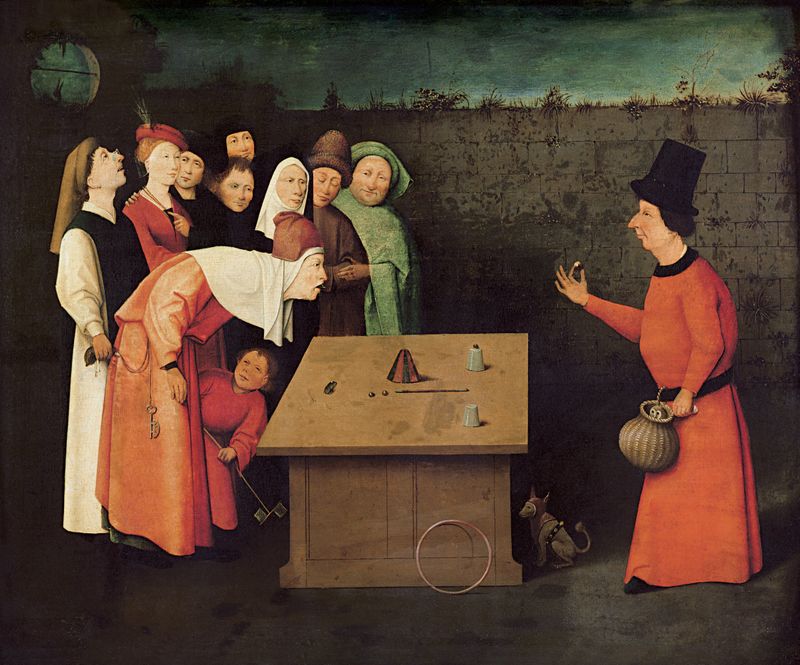 The Conjurer (The Juggler)
1502
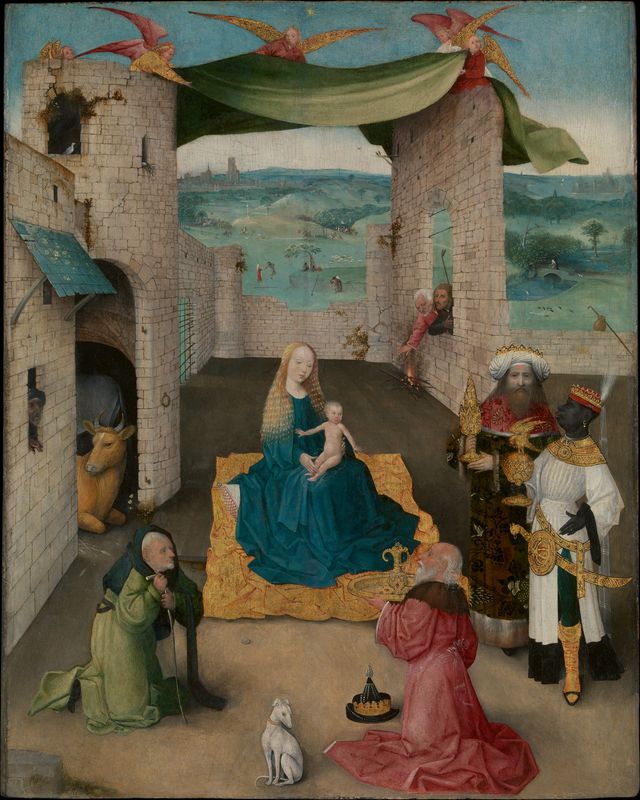 The Adoration of the Magi
Noordbrabants Museum
 Panel
1500 · Art Institute of Chicago
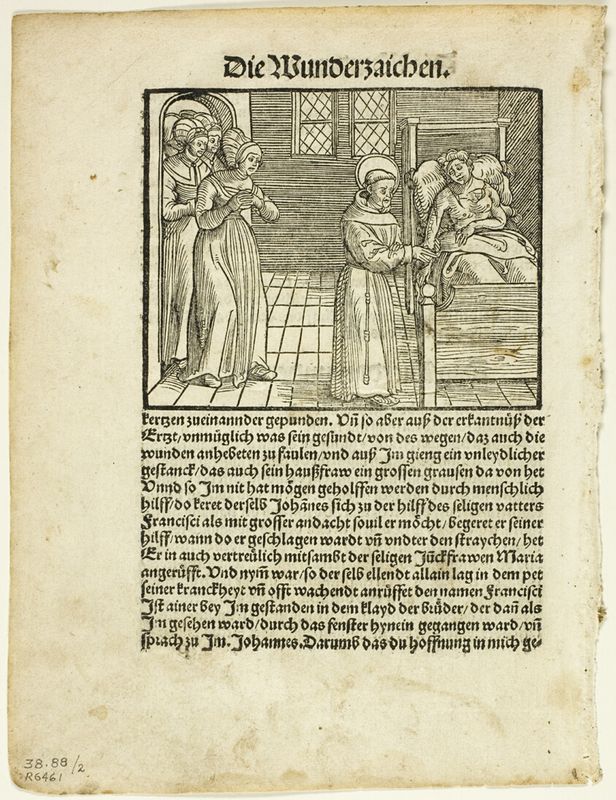 Saint Francis Heals the Grievous Wounds of One John at Lerida, plate two from Woodcuts from Books of the XVI Century
1512 · Art Institute of Chicago
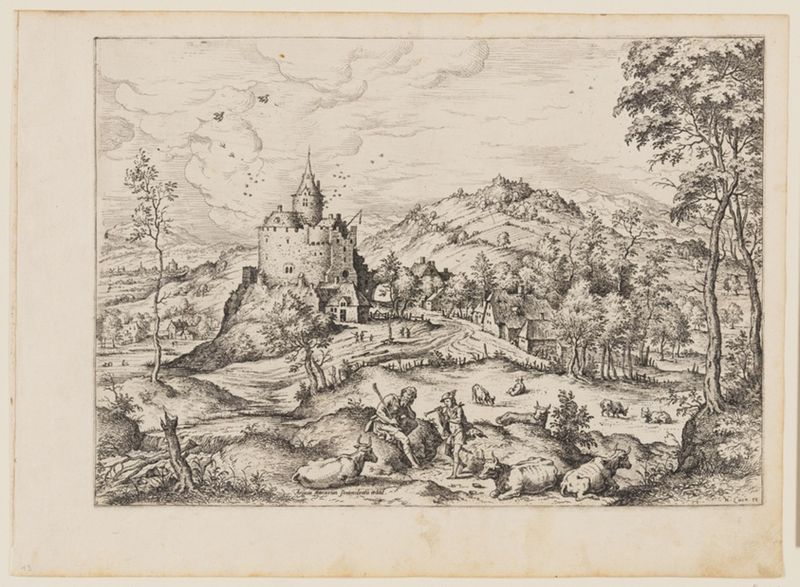 Mercury Lulling to Sleep Argus, from Landscapes with Biblical and Mythological Scenes
Art Institute of Chicago
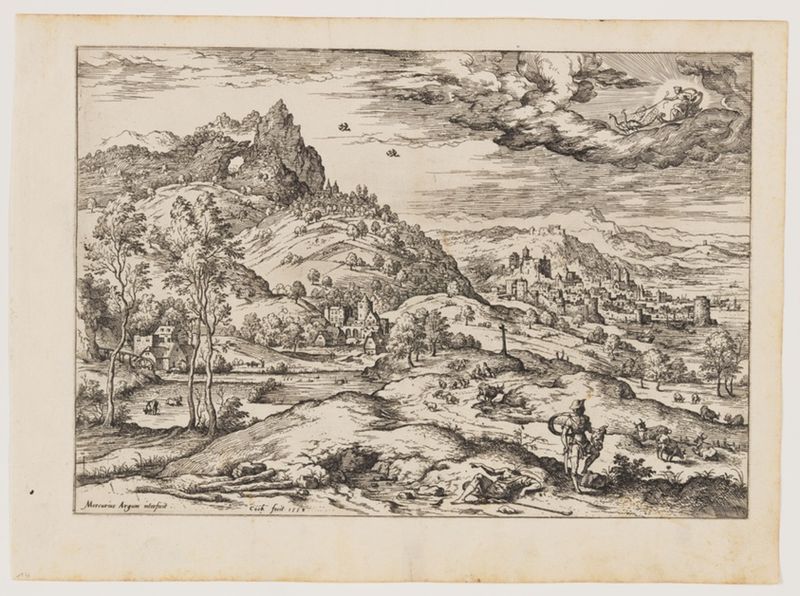 Mercury with Head of Argus in His Hand, from Landscapes with Biblical and Mythological Scenes
Art Institute of Chicago
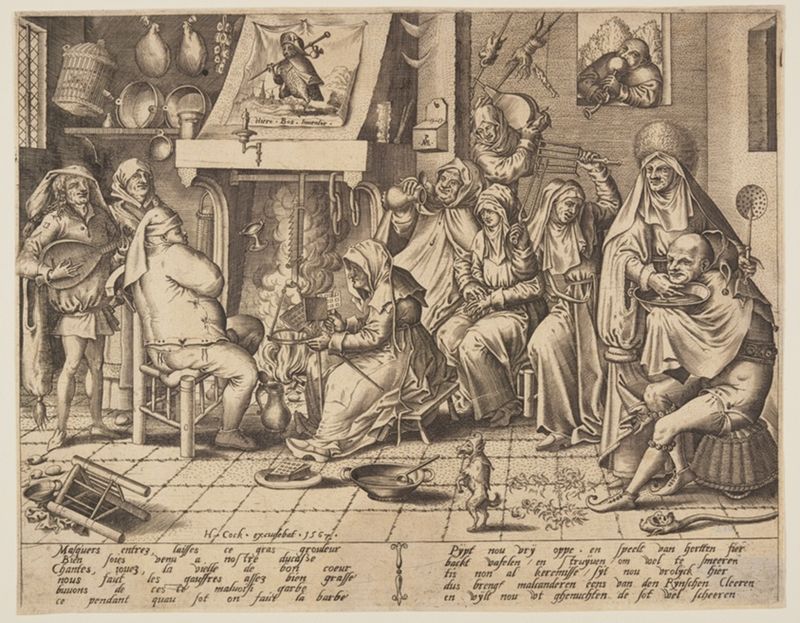 Shrove Tuesday
Art Institute of Chicago
Beyond Bosch and Northern Renaissance: works from the same years.
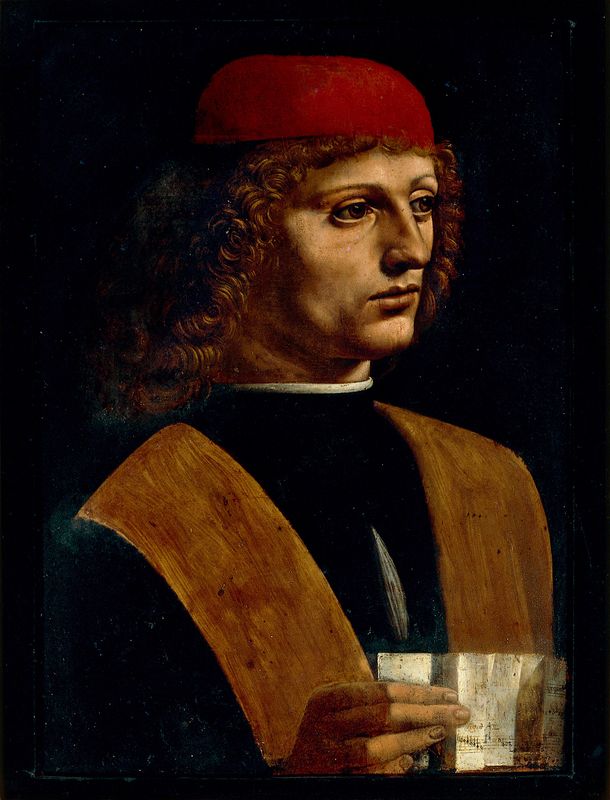 Same era · 1460s–1490s
Portrait of a Musician
Leonardo da Vinci · 1485 · Pinacoteca Ambrosiana
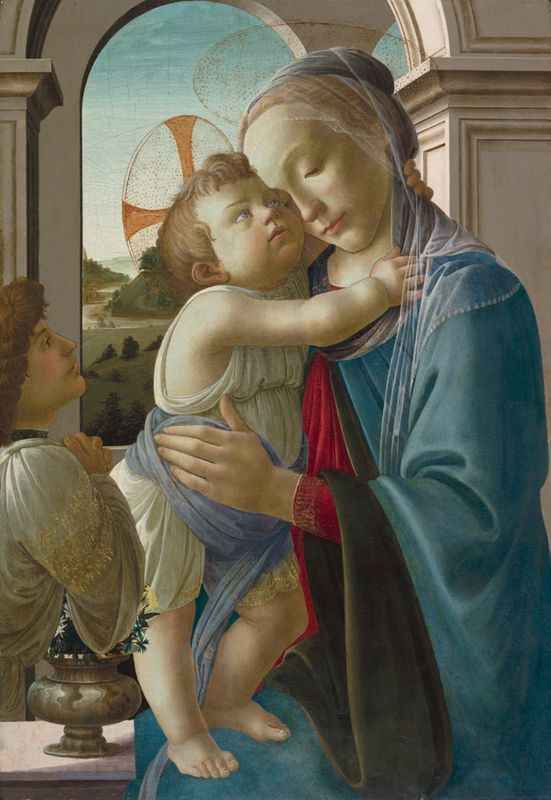 Same era · 1460s–1490s
Virgin and Child with an Angel
Sandro Botticelli · 1470 · Isabella Stewart Gardner Museum
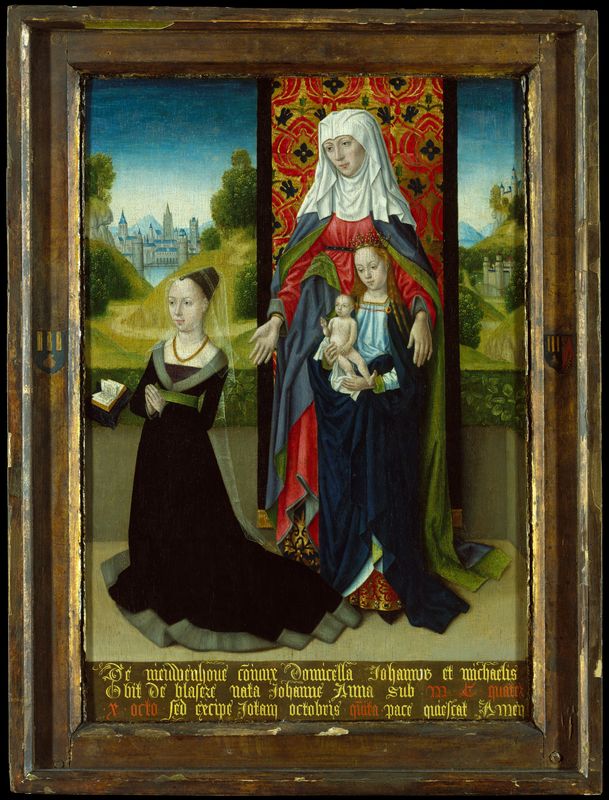 Same era · 1460s–1490s
Virgin and Child with Saint Anne Presenting Anna van Nieuwenhove
Master of the View of Saint Gudula · 1479 · The Metropolitan Museum of Art
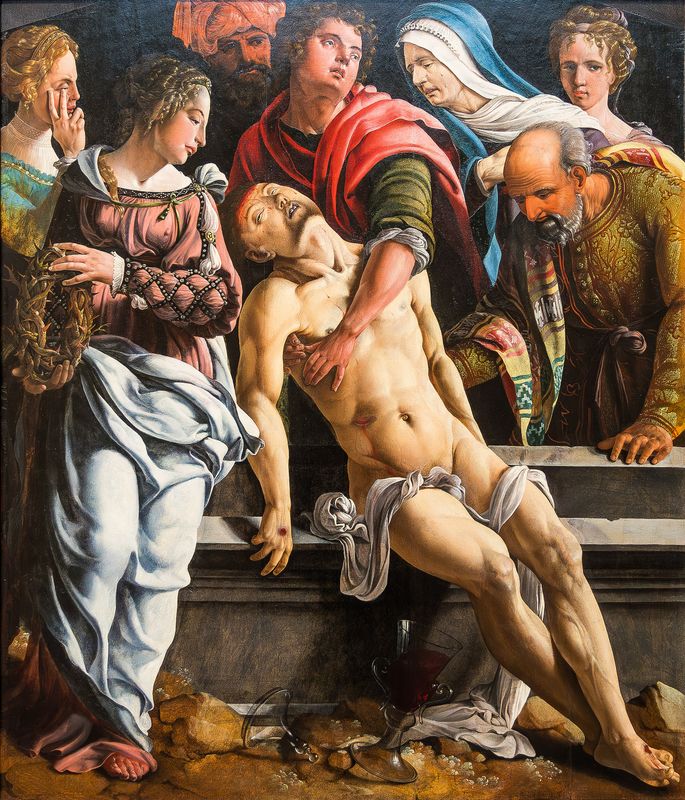 Same era · 1460s–1490s
The Lamentation
Albrecht Dürer · 1477 · The Metropolitan Museum of Art
 Same era · 1460s–1490s
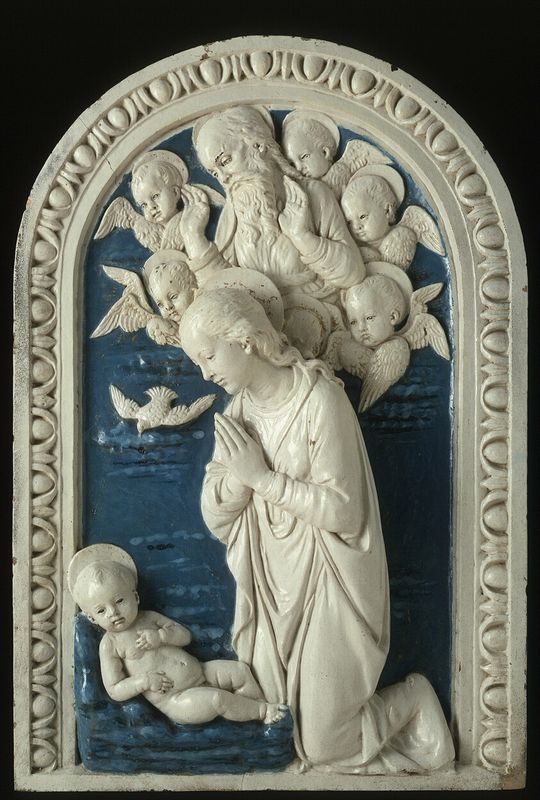
Adoration of the Christ Child
Workshop of Andrea della Robbia · 1479 · Art Institute of Chicago
 Same era · 1460s–1490s
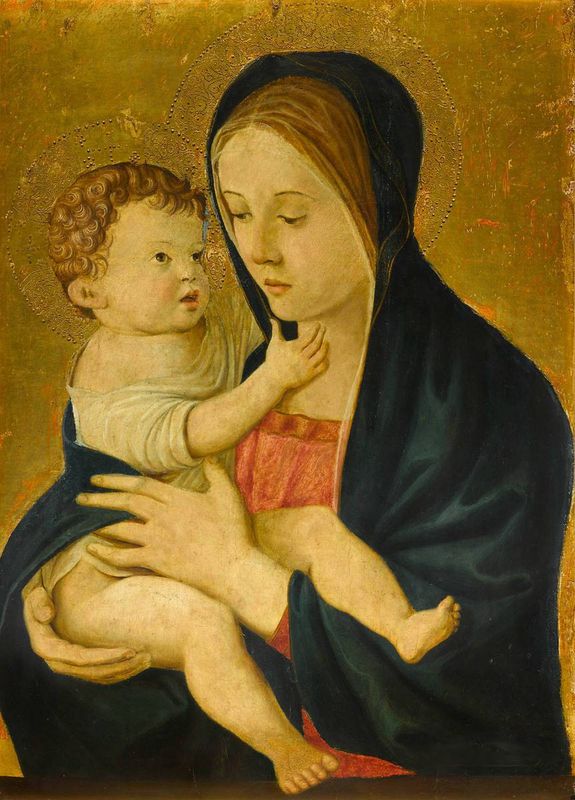
Madonna and Child
Giovanni Bellini · 1470 · Musée Fesch
 Same era · 1460s–1490s
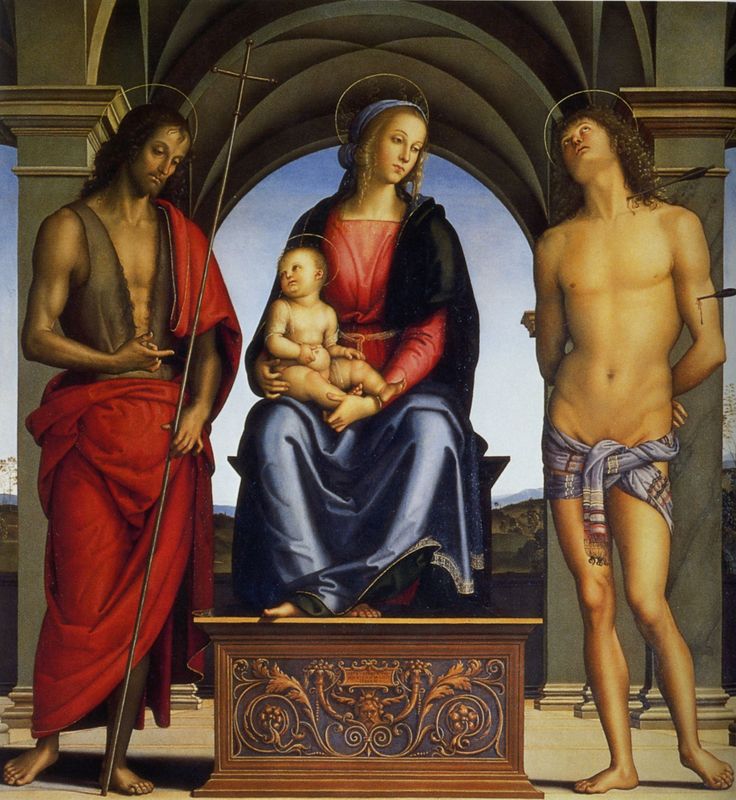
Madonna and Child Enthroned with Saints John the Baptist and Sebastian
Pietro Perugino · 1493 · Uffizi Gallery