01
Christ's lifeless body
Look at the pale, stretched body at the bottom right. His head tips back as mourners hold him, and his long legs stretch out across the foreground.
1 of 5 on the painting
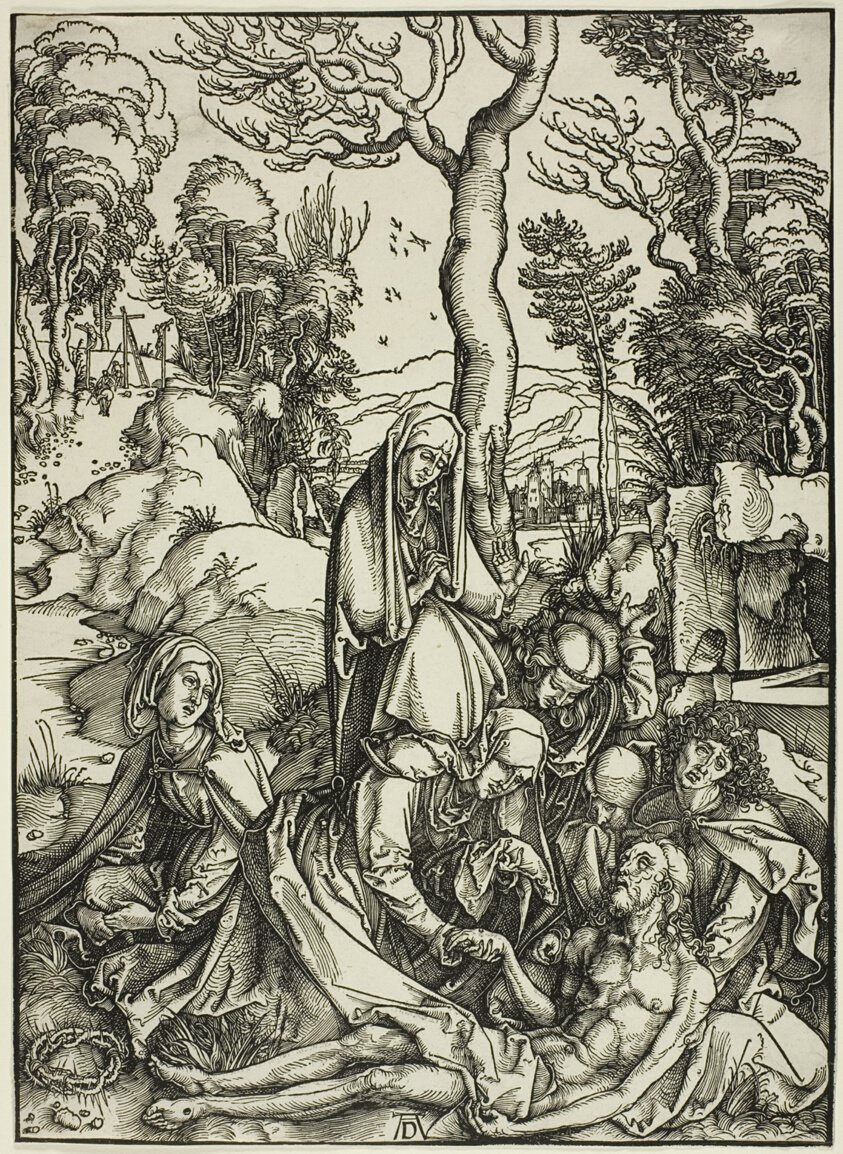
“This woodcut plunges you into a scene of intense grief, showing Christ's body after the crucifixion with a dramatic use of light and shadow that makes the sorrow palpable.”
In this powerful woodcut, Dürer captures the raw grief surrounding Christ's body after the crucifixion. The scene unfolds with a dramatic intensity, drawing the viewer into the emotional core of the narrative. Mary, collapsed in anguish, cradles her son's head, her face etched with profound sorrow. The composition is tightly focused on the central figures, creating an intimate yet monumental portrayal of suffering. Notice how the artist uses deep shadows and stark contrasts to heighten the drama, a characteristic of the German Renaissance. The detailed rendering of drapery and musculature, even in this print medium, speaks to a careful study of form. This print is part of Dürer's "Large Passion" series, a significant undertaking that allowed him to disseminate religious narratives widely across Europe.
Five details hide in plain sight. Pick one and we’ll show you exactly where to look.
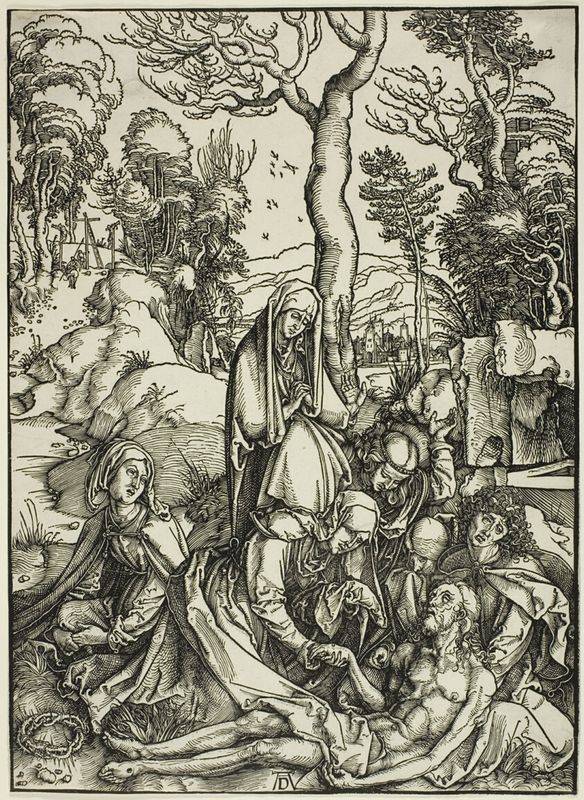
Look at the pale, stretched body at the bottom right. His head tips back as mourners hold him, and his long legs stretch out across the foreground.
The tall hooded woman in the center sits bent over the group, her hands pressed together. Her bowed head gives the crowded scene a quiet center.
In the lower left corner, the crown of thorns lies coiled in the grass. It is a quiet reminder of the suffering that just ended.
Far back on the upper left hill, a tiny cross and small figures suggest Calvary. The crucifixion lies far behind the grief in the foreground.
Study the heavy cloak spreading across the lower left. Dense parallel and crossing lines, cut as ridges, build its folds and shadows without any color or paint.
The full narration walks you through The Lamentation, from The Large Passion — the story behind it, the details most visitors miss, and why it matters. Free in the Art Whisper app.
Renaissance master who revolutionized printmaking across Europe before turning 30.
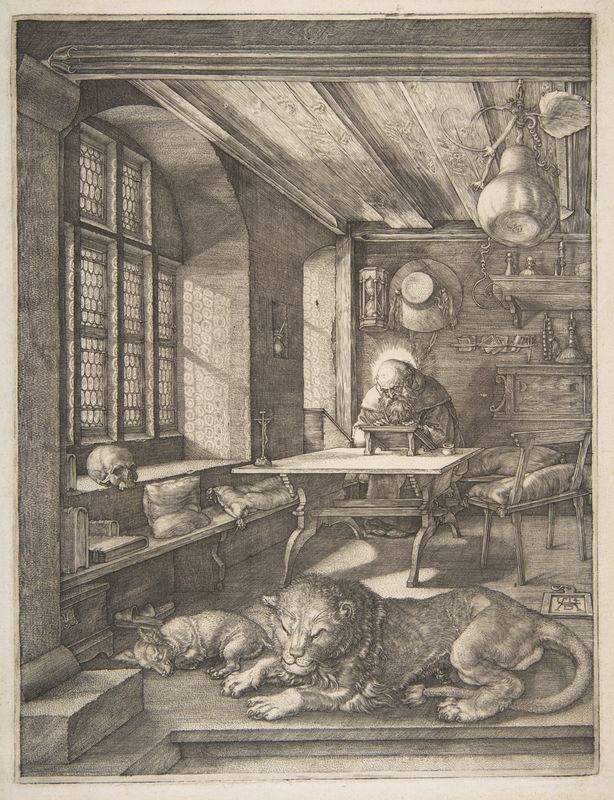 Saint Jerome in His Study
1521 · National Museum of Ancient Art
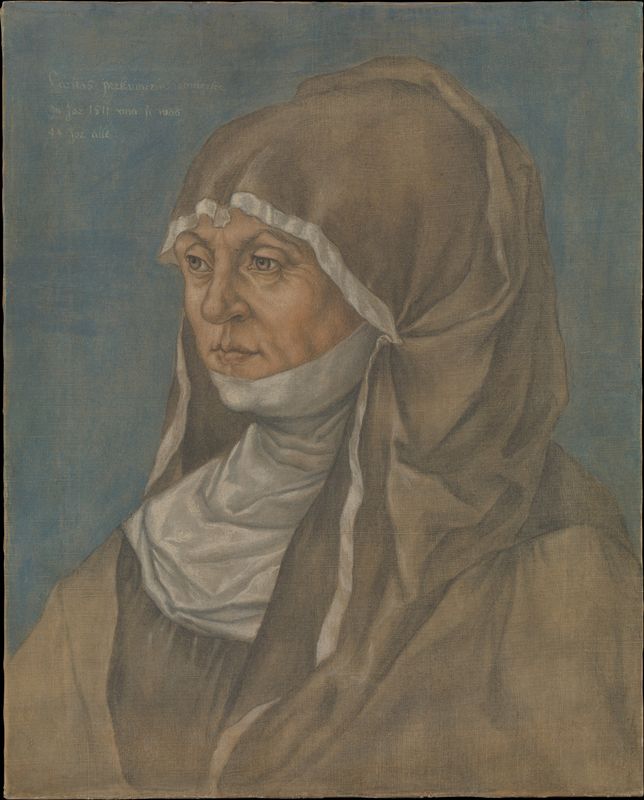 Portrait of a Woman, Said to Be Caritas Pirckheimer (1467–1532)
The Metropolitan Museum of Art
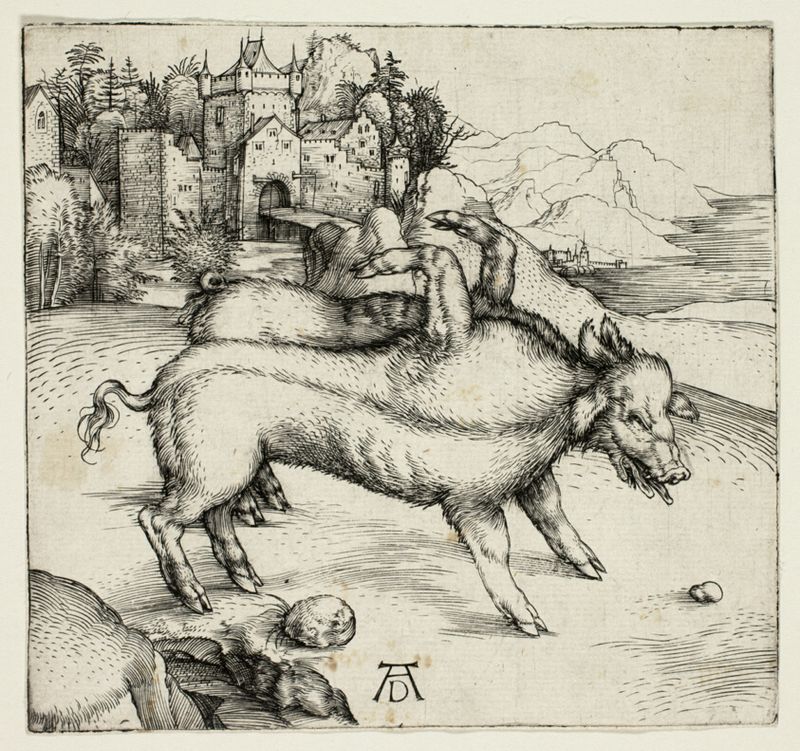 The Monstrous Sow of Landser
1496 · Art Institute of Chicago
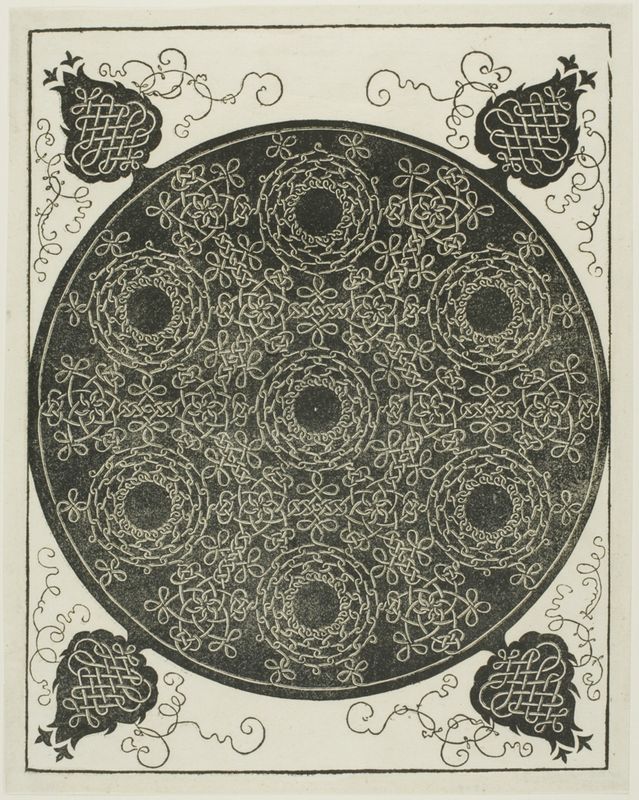 The Fourth Knot
1507 · Art Institute of Chicago
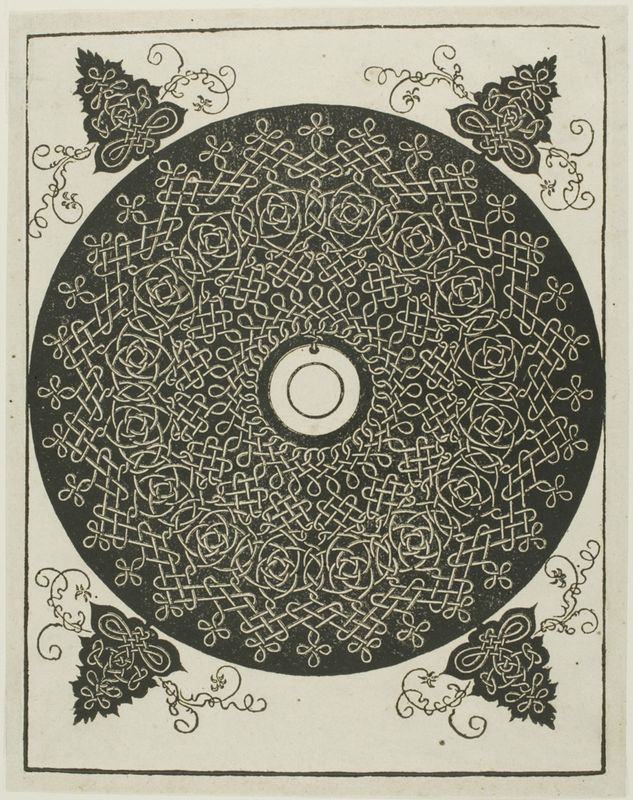 The Third Knot
1507 · Art Institute of Chicago
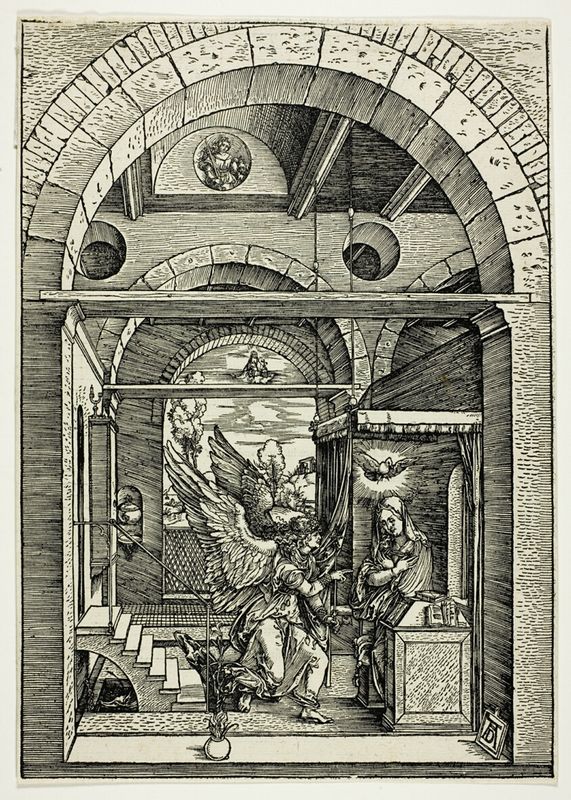 The Annunciation, from The Life of the Virgin
1511 · Art Institute of Chicago
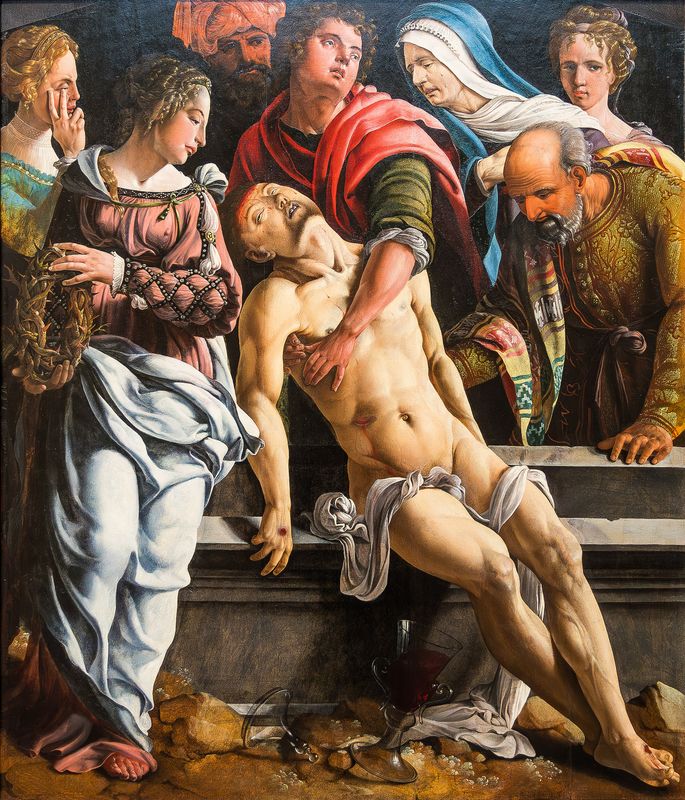 The Lamentation
1477 · The Metropolitan Museum of Art
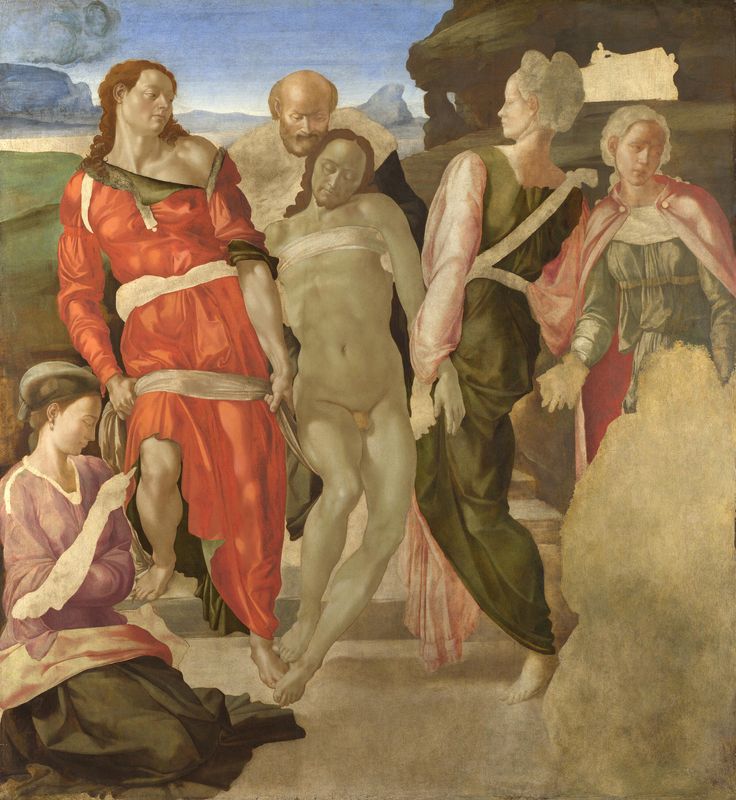 The Entombment
1485 · The Metropolitan Museum of Art
Beyond Dürer and Northern Renaissance: works from the same years.
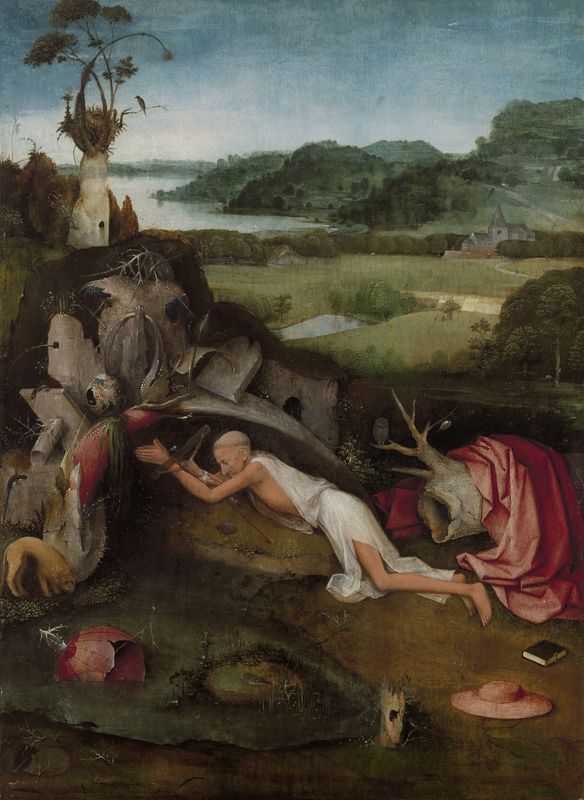 Same era · 1480s–1510s
Saint Jerome
Hieronymus Bosch · 1500 · Museum of Fine Arts Ghent (MSK)
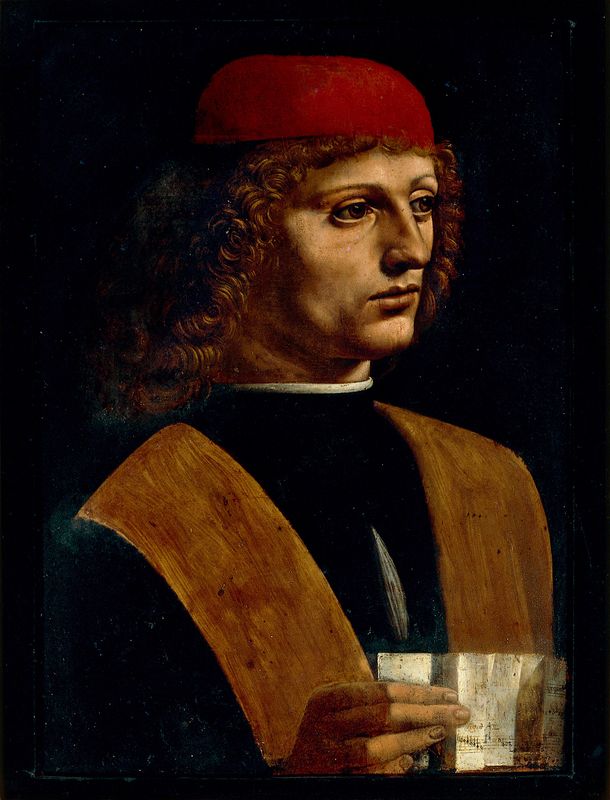 Same era · 1480s–1510s
Portrait of a Musician
Leonardo da Vinci · 1485 · Pinacoteca Ambrosiana
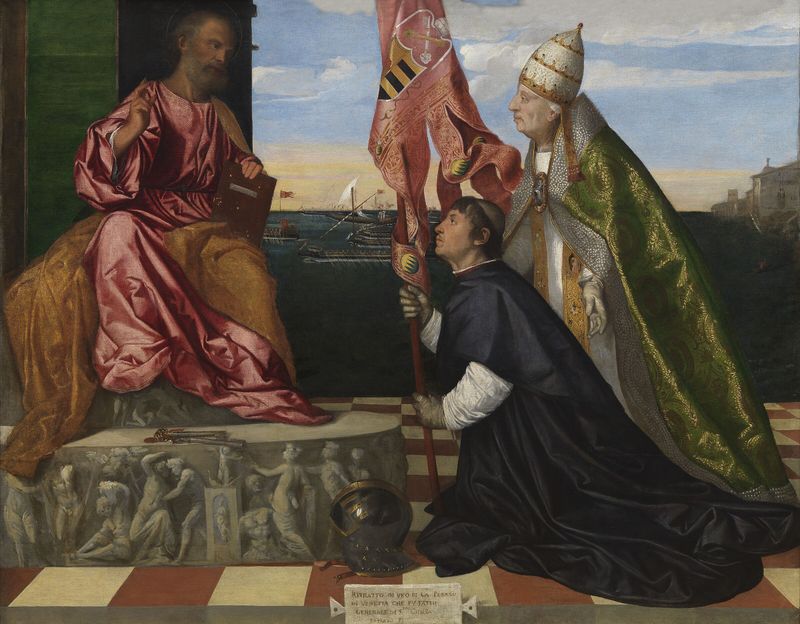 Same era · 1480s–1510s
Jacopo Pesaro, Bishop of Paphos, being presented by Pope Alexander VI to Saint Peter
Titian · 1504 · Royal Museum of Fine Arts Antwerp
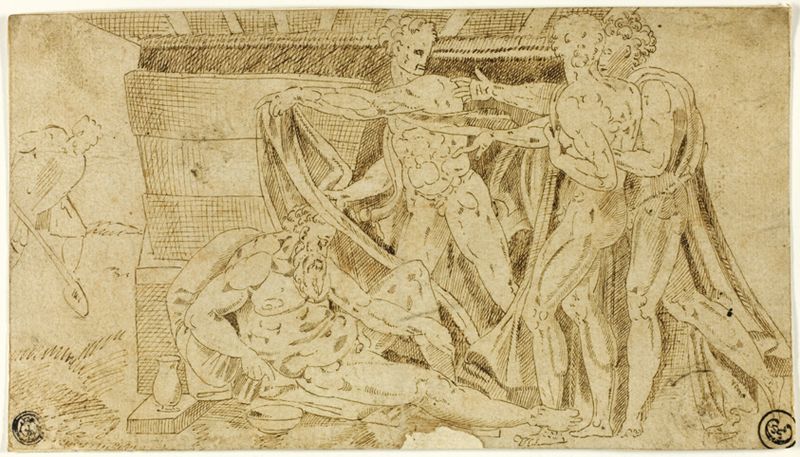 Same era · 1480s–1510s
Drunkenness of Noah
Michelangelo · 1509 · Sistine Chapel
 Same era · 1480s–1510s
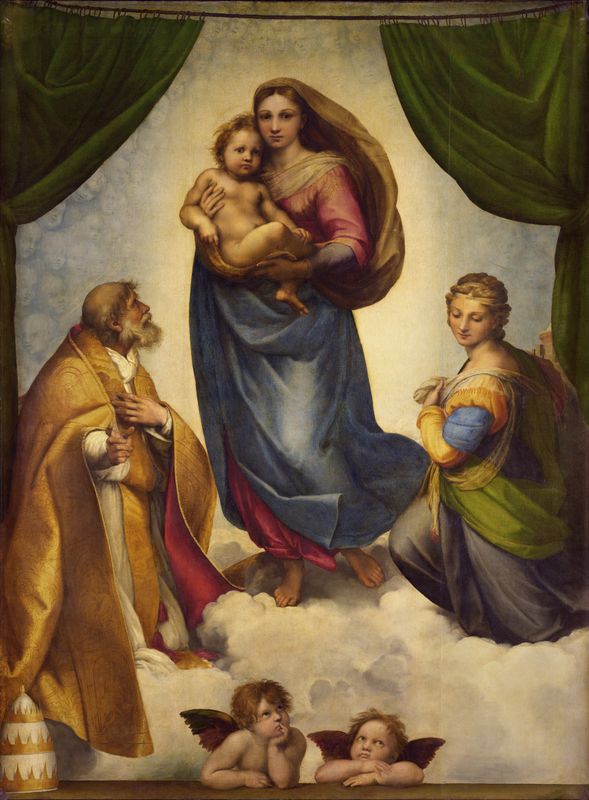
Sistine Madonna (Madonna di San Sisto)
Raphael (Raffaello Sanzio da Urbino) · 1512
 Same era · 1480s–1510s
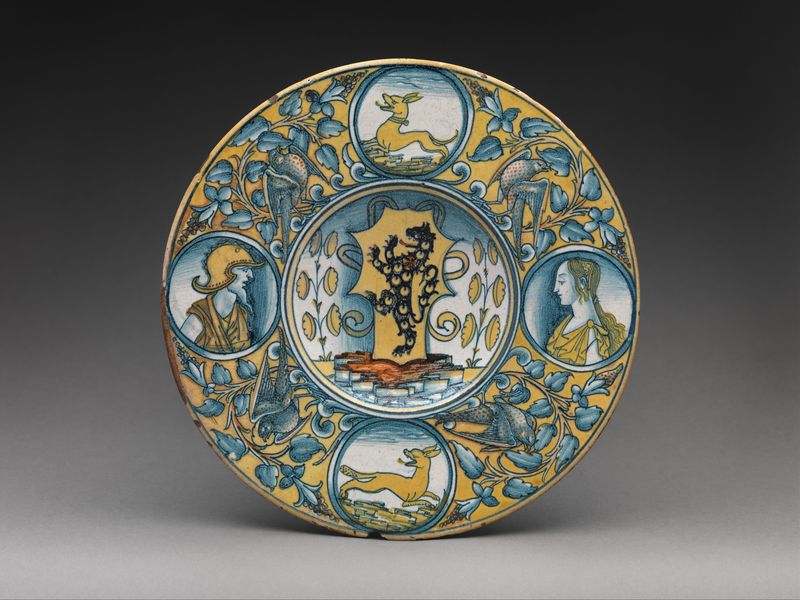
Plate with arms of the Tosinghi family
Artist Unknown - The Mercat Cross, Aberdeen · 1495 · The Metropolitan Museum of Art
 Same era · 1480s–1510s
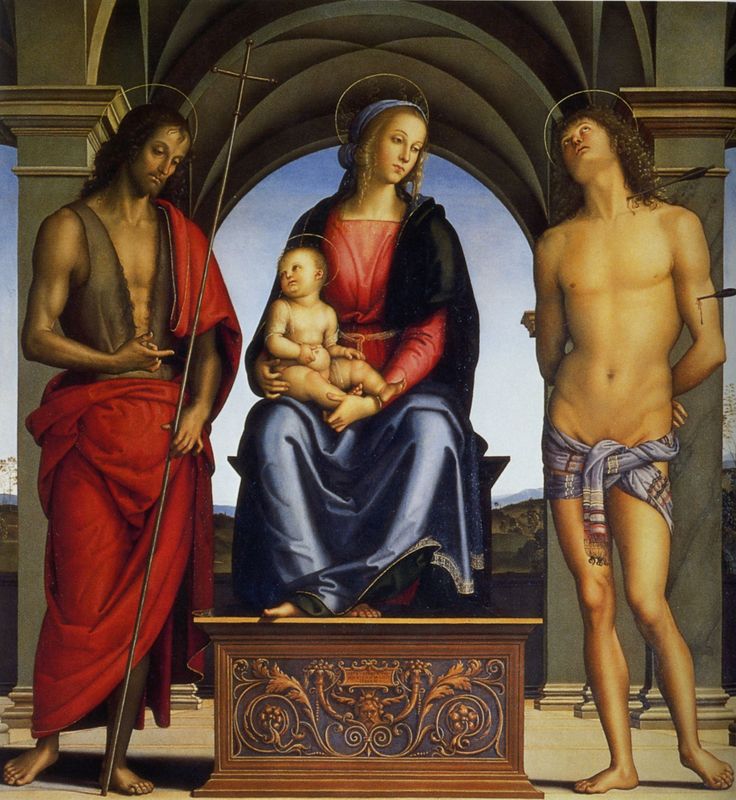
Madonna and Child Enthroned with Saints John the Baptist and Sebastian
Pietro Perugino · 1493 · Uffizi Gallery
 Same era · 1480s–1510s
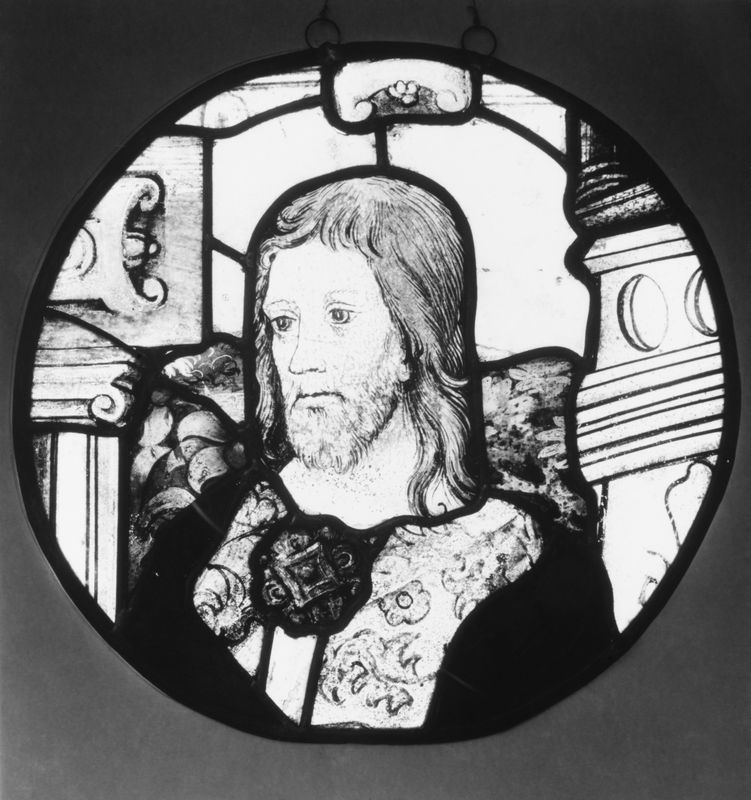
Head of Saint John the Baptist (one of a pair)
Master of the View of Saint Gudula · 1495 · The Metropolitan Museum of Art