01
Raised arms
Both arms bend up behind the head, forming a loose frame around the hidden face. The pose turns a private grooming moment into a strong shape.
1 of 5 on the painting
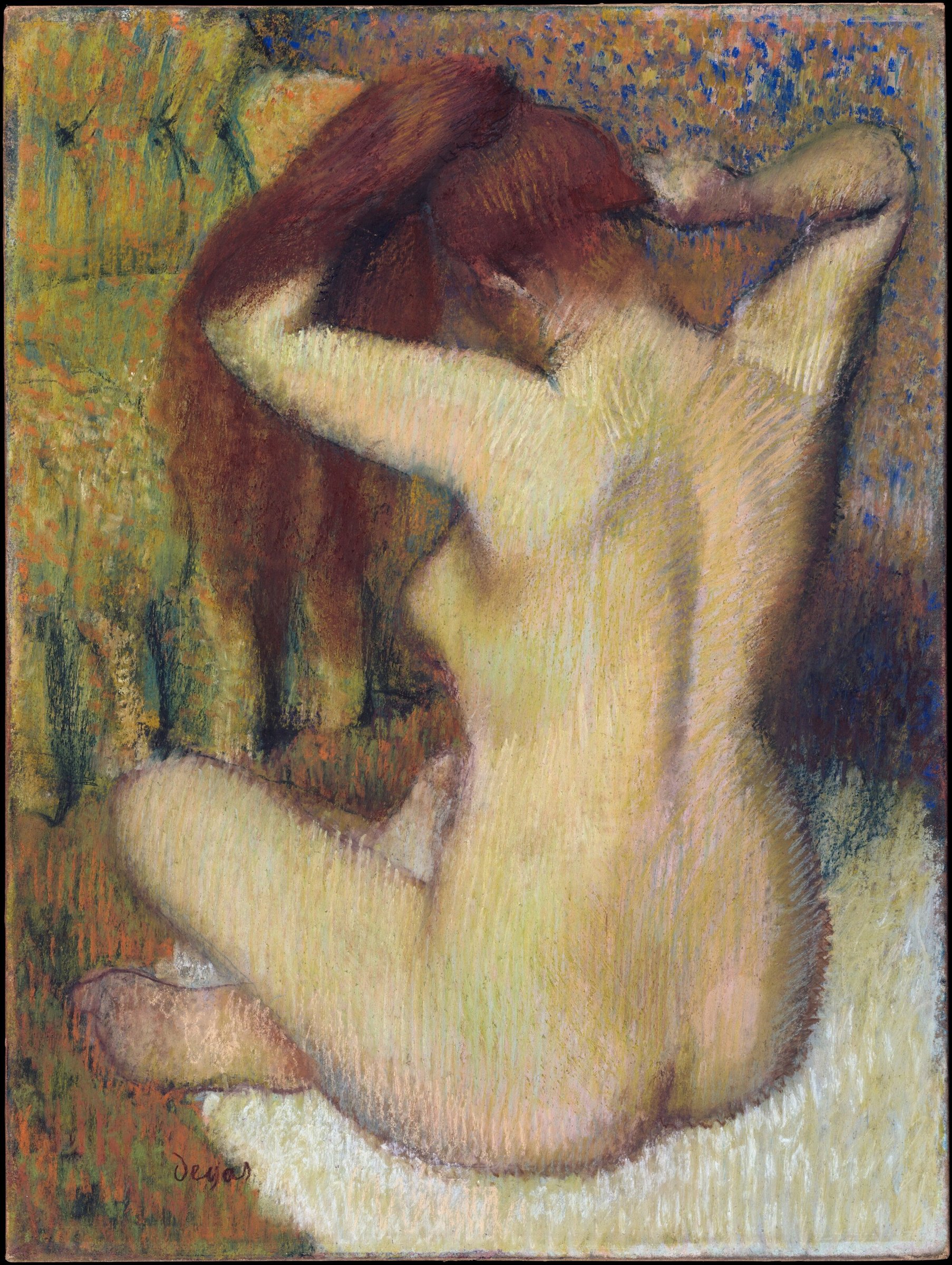
“Observe the striking contrasts and simplified forms in this intimate yet detached nude. Vallotton's painting draws you in with its bold outlines and a cool, almost clinical observation of the human figure.”
In "Nude Combing Her Hair," a woman sits with her back to us, her body a study in simplified forms. The scene is intimate, yet there's a certain detachment, a characteristic often found in works by Félix Vallotton. Her skin, rendered in smooth, almost porcelain tones, contrasts sharply with the deep shadows that define the room's corners and the dark mass of her hair. This starkness, a hallmark of the Nabis movement he was associated with, emphasizes line and flat areas of color over realistic modeling. The painting, created in 1916, reflects a shift from his earlier, more graphic woodcut style towards a greater focus on painting, yet retains a powerful, almost graphic quality in its composition. The deliberate lack of emotional expression invites the viewer to consider the formal elements of the painting itself, rather than projecting a narrative onto the figure.
Five details hide in plain sight. Pick one and we’ll show you exactly where to look.
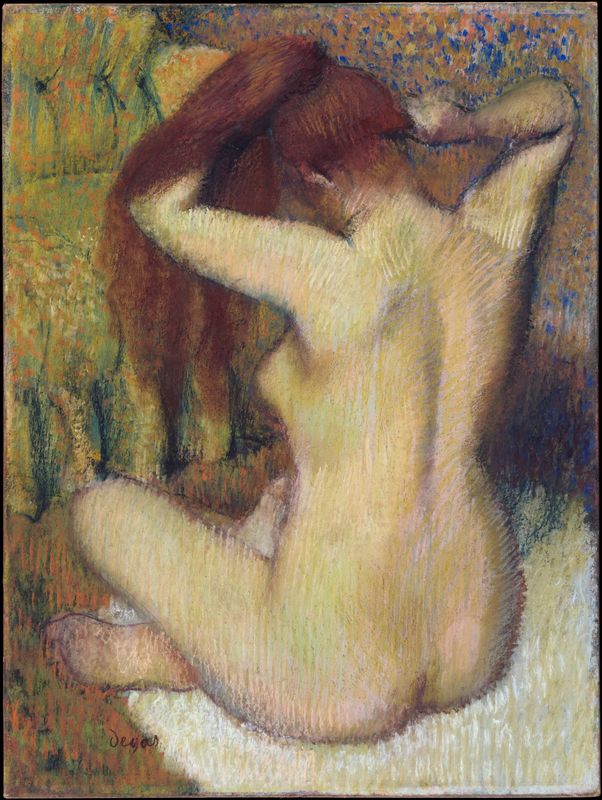
Both arms bend up behind the head, forming a loose frame around the hidden face. The pose turns a private grooming moment into a strong shape.
The dark red hair falls in heavy hanging locks on the left. Its deep tones push the pale body forward.
Look at the back, where long parallel strokes of yellow, pink and green build the skin. The flesh reads as vibrating colour rather than smooth blending, a handling typical of pastel.
The bent legs and tucked foot at lower left curve around the body and anchor the figure to the floor. Her back is turned, so we watch her unobserved.
At the top right, flecks of blue and orange scatter across the wall. They make the background shimmer and set off the warm flesh by contrast.
The full narration walks you through Nude Combing Her Hair — the story behind it, the details most visitors miss, and why it matters. Free in the Art Whisper app.
Félix Vallotton, 'The Foreign Nabi,' masterfully blended stark realism with the bold simplification of the modern woodcut, capturing intimate domestic dramas and Parisian life.
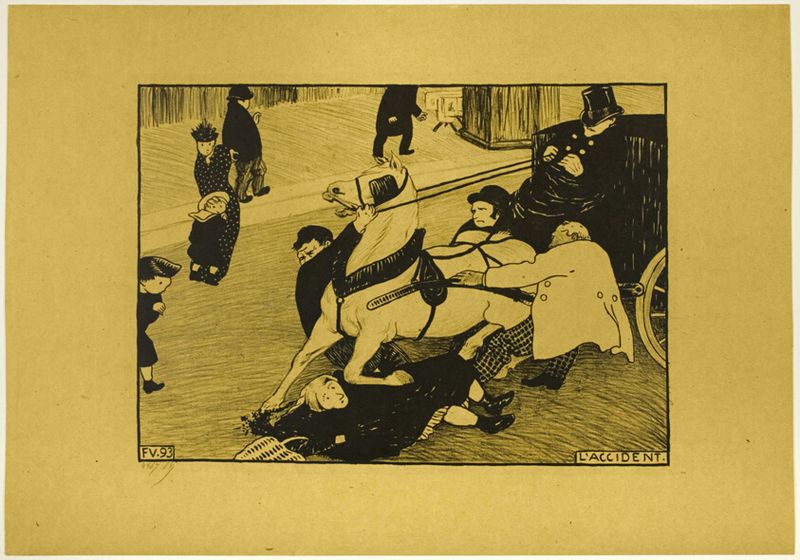 The Accident
1893 · Art Institute of Chicago
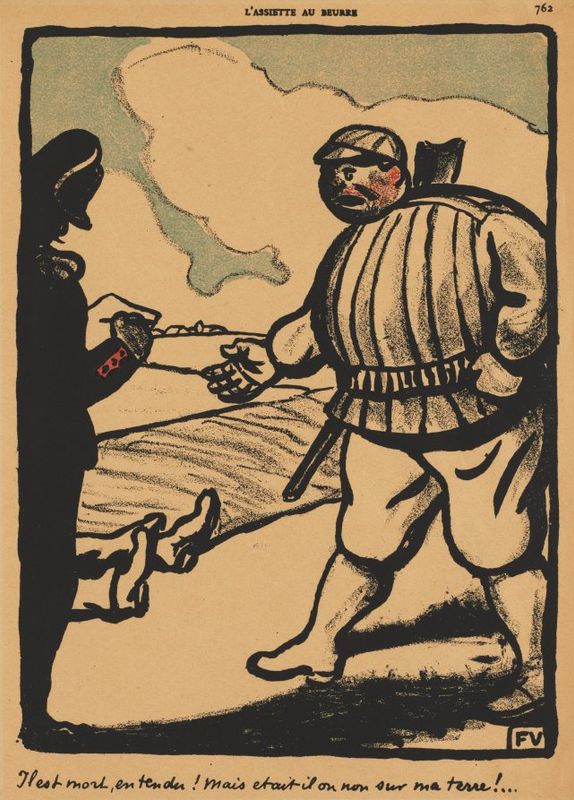 All right, so he's dead!...
1901 · Cleveland Museum of Art
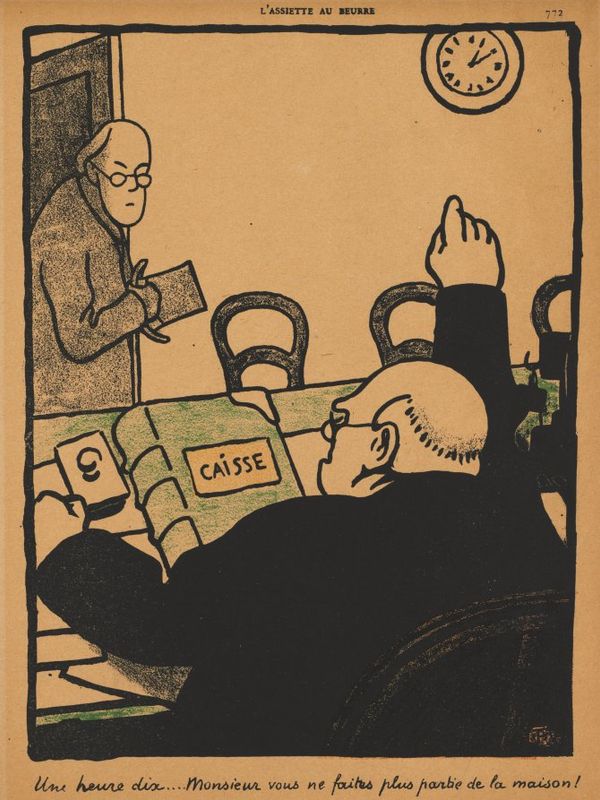 Ten past one...
1901 · Cleveland Museum of Art
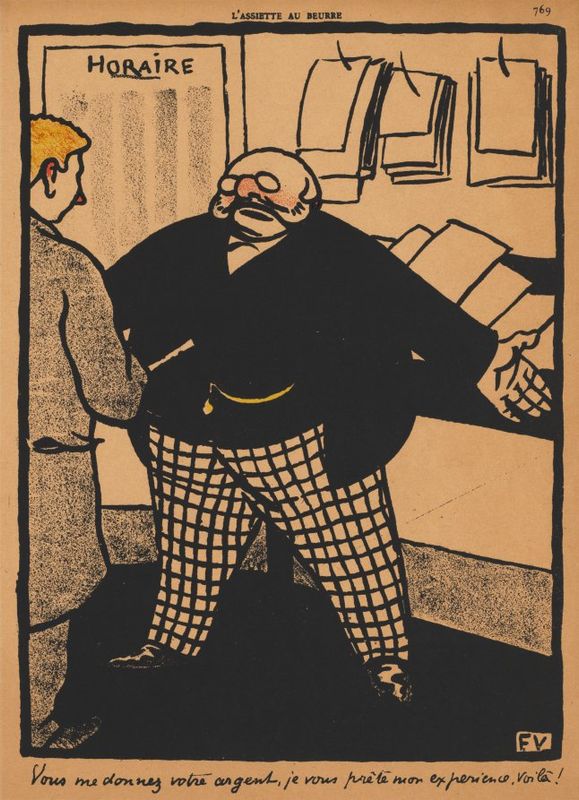 You give me your money...
1901 · Cleveland Museum of Art
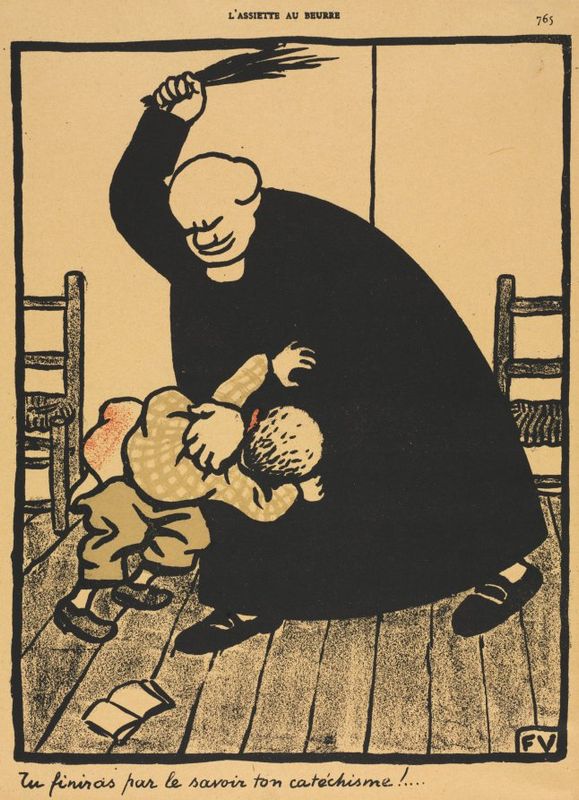 You'll learn...
1901 · Cleveland Museum of Art
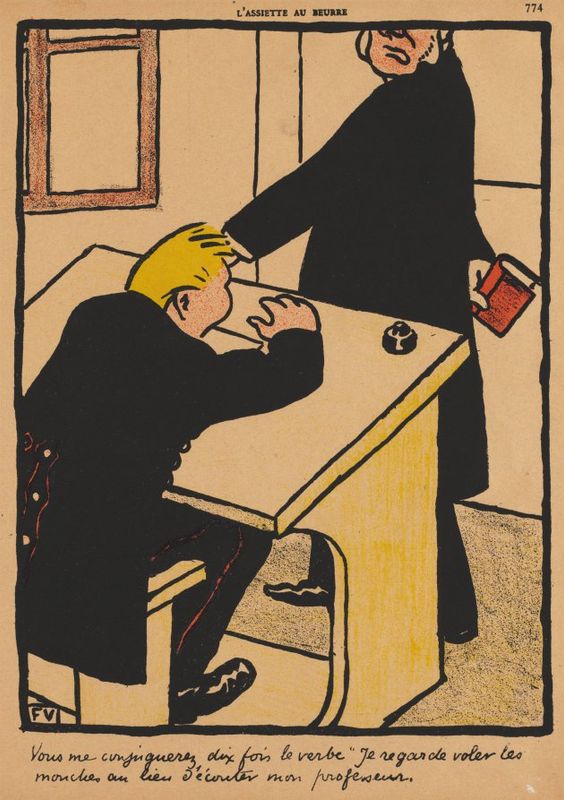 You shall conjugate...
1901 · Cleveland Museum of Art
Beyond Vallotton: works from the same years.
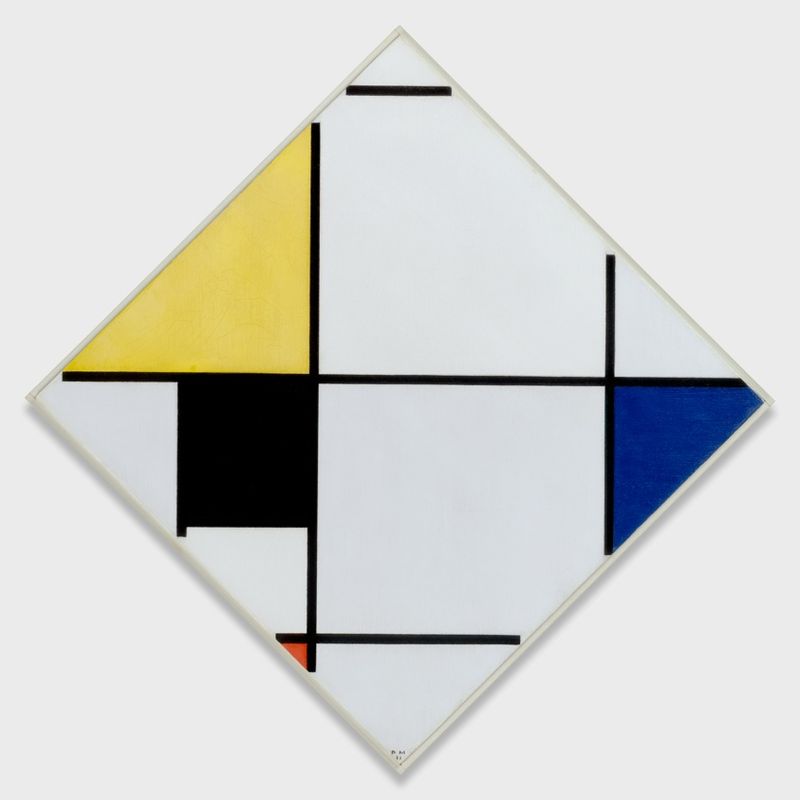 Same era · 1900s–1930s
Lozenge Composition with Yellow, Black, Blue, Red, and Gray
Piet Mondrian · 1921 · Art Institute of Chicago
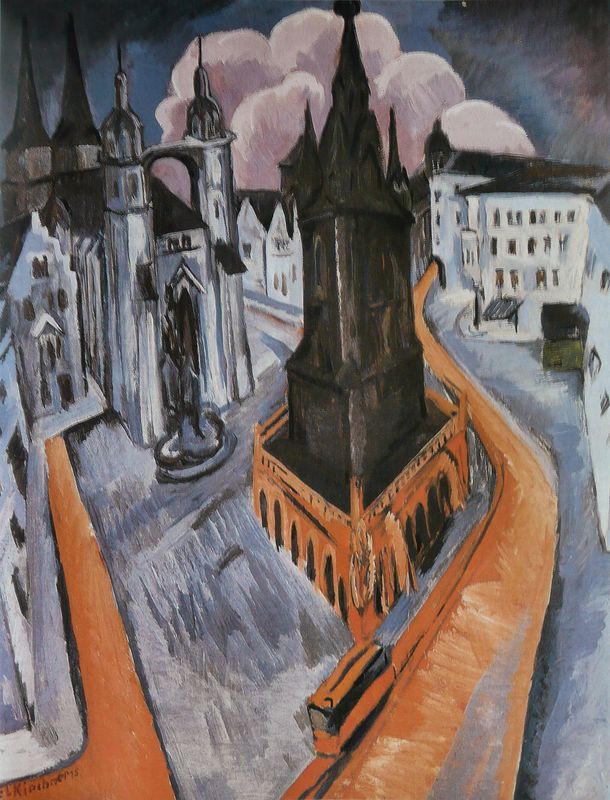 Same era · 1900s–1930s
The Red Tower in Halle
Ernst Ludwig Kirchner · 1915 · Museum Folkwang
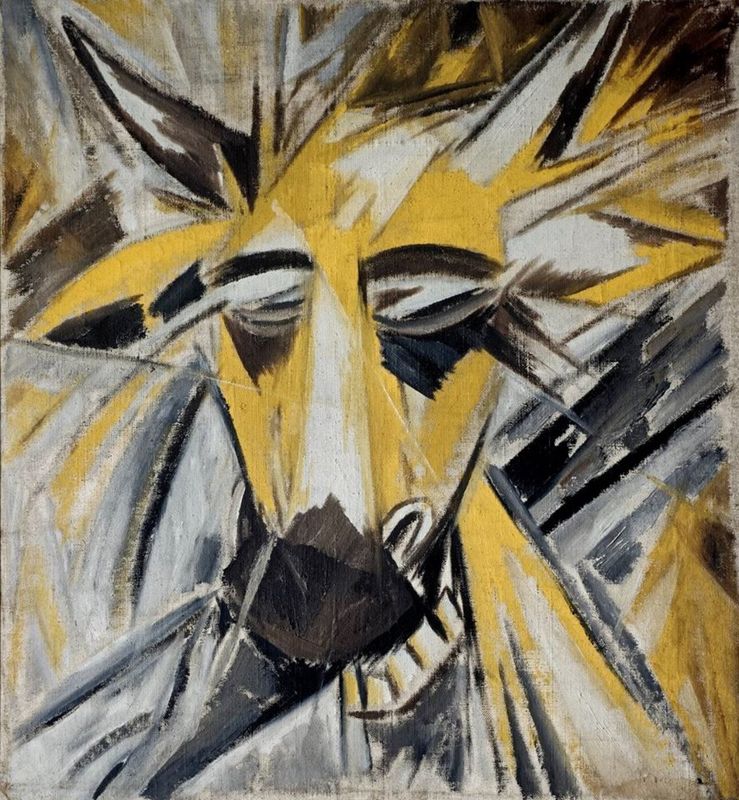 Same era · 1900s–1930s
Bull's Head
Mikhail Larionov · 1913 · Tretyakov Gallery
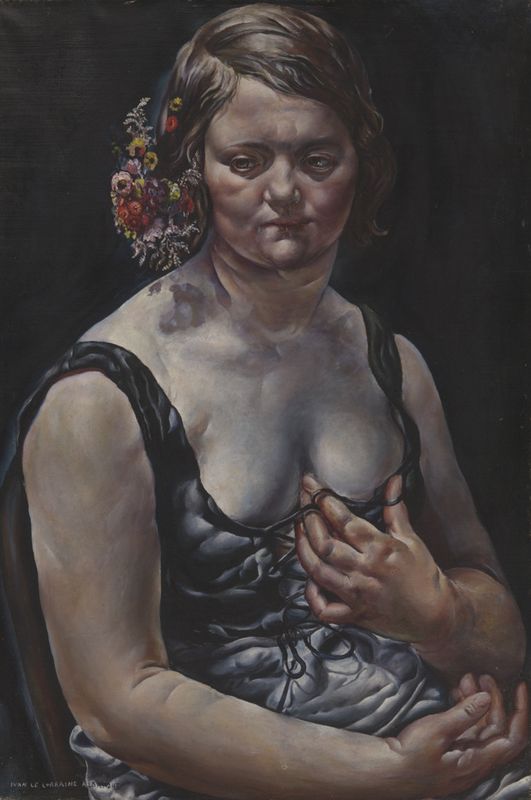 Same era · 1900s–1930s
Memories of the Past
Ivan Puni · 1927 · Art Institute of Chicago
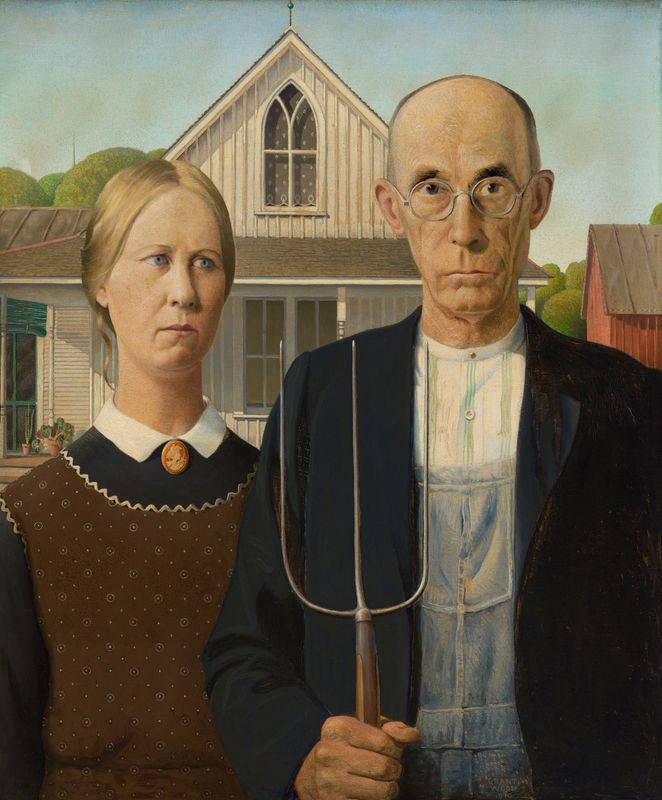 Same era · 1900s–1930s
American Gothic
Okada Saburosuke · 1930 · Art Institute of Chicago
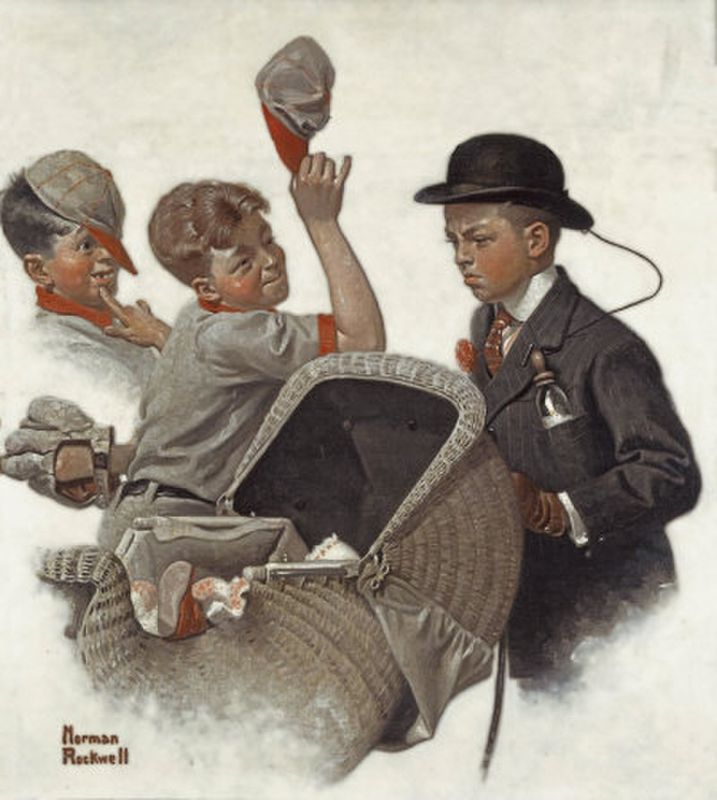 Same era · 1900s–1930s
Boy with Baby Carriage
Norman Rockwell · 1916 · Norman Rockwell Museum
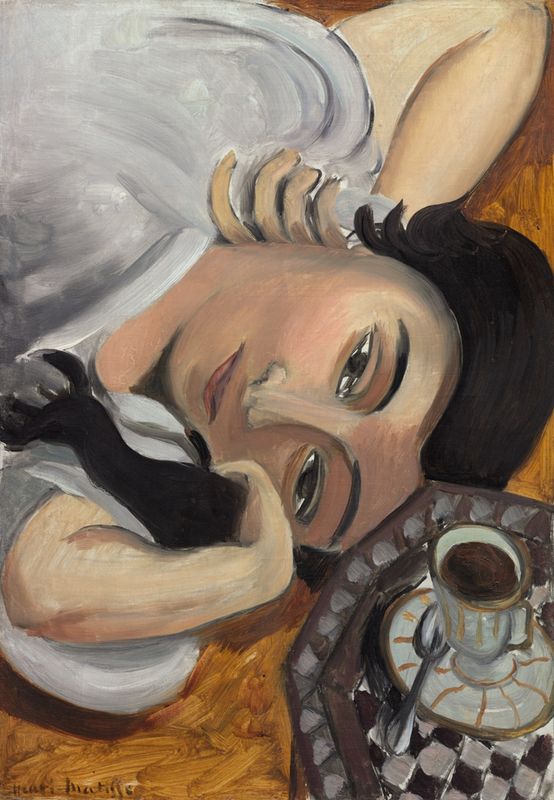 Same era · 1900s–1930s
Laurette with a Cup of Coffee
Henri Matisse · 1916 · Art Institute of Chicago
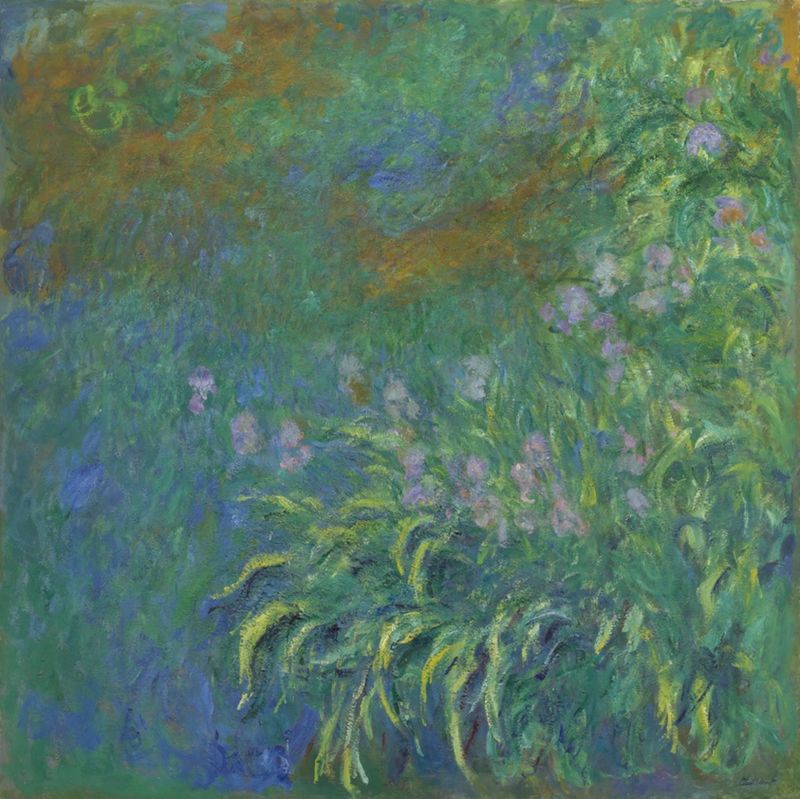 Same era · 1900s–1930s
Irises
Claude Monet · 1915 · National Gallery
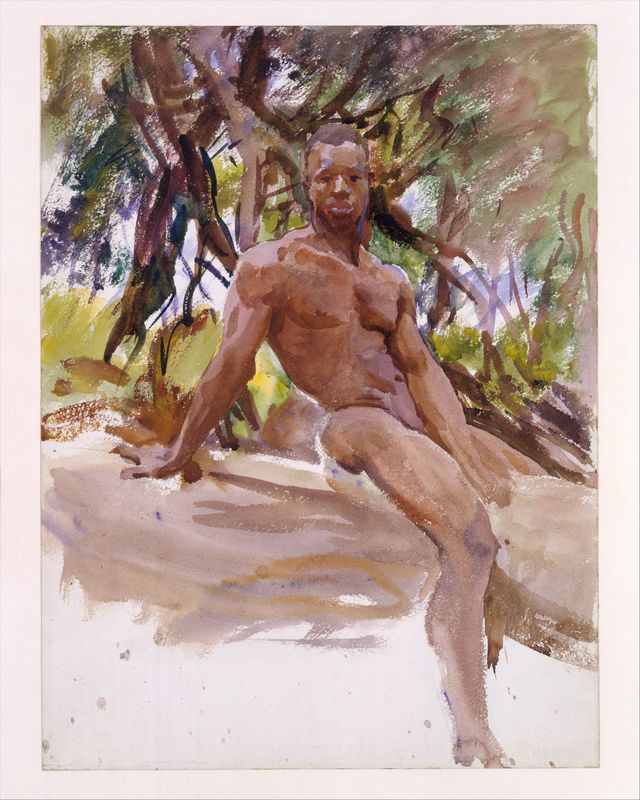 Same era · 1900s–1930s
Man and Trees, Florida
John Singer Sargent · 1917 · The Metropolitan Museum of Art
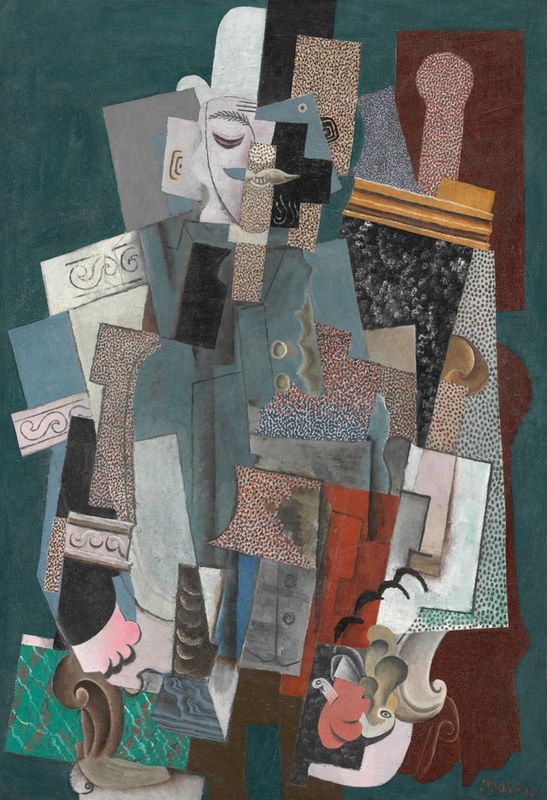 Same era · 1900s–1930s
Man with a Pipe
Pablo Picasso · 1915 · Art Institute of Chicago
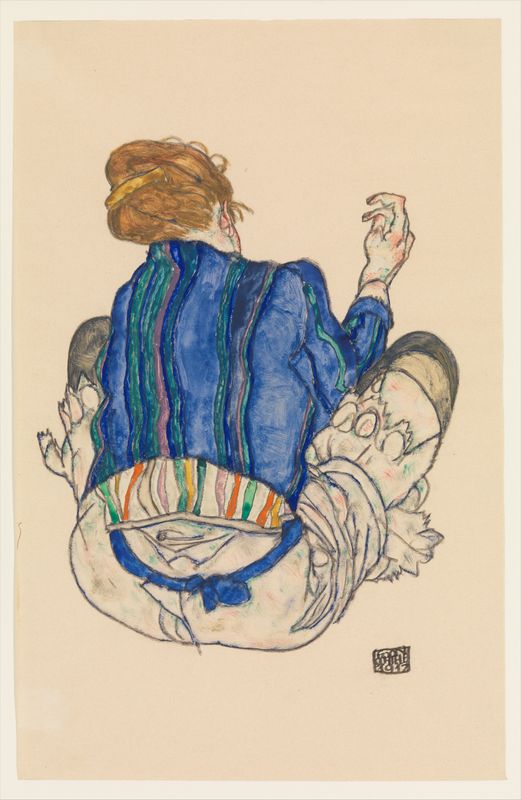 Same era · 1900s–1930s
Seated Woman, Back View
Egon Schiele · 1917 · The Metropolitan Museum of Art
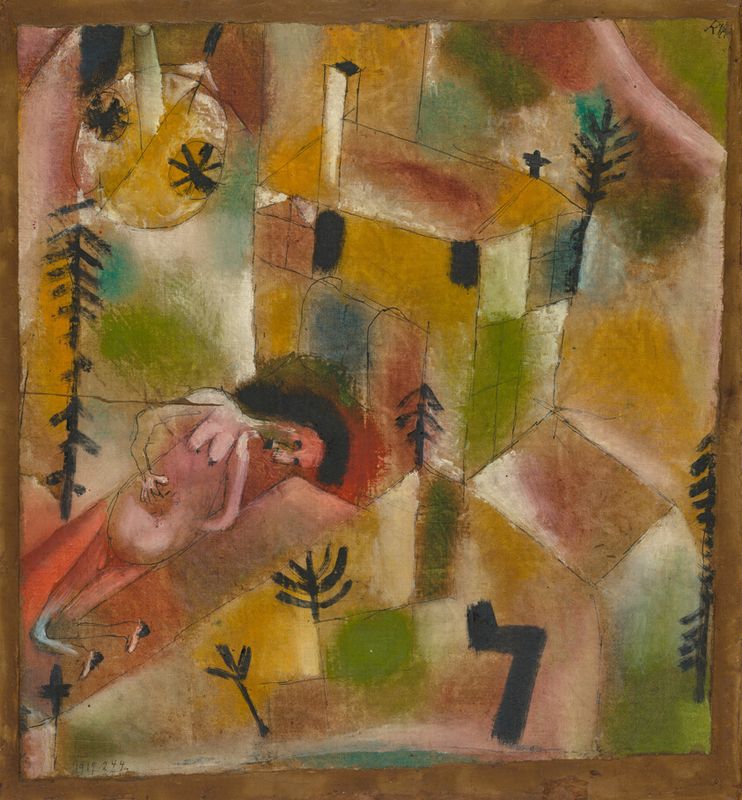 Same era · 1900s–1930s
Death in the Garden (Legend)
Paul Klee · 1919 · Art Institute of Chicago
