
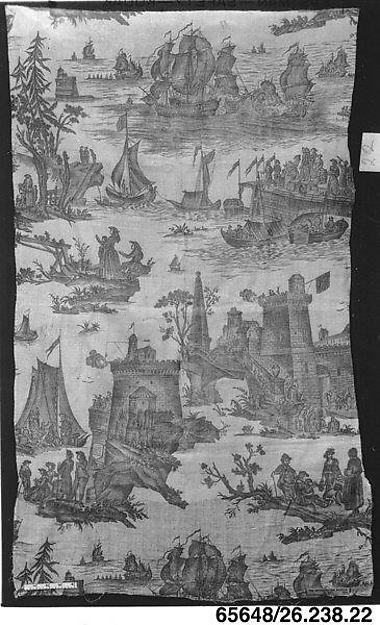
“Step into a pivotal 18th-century naval battle. This printed linen captures the drama and detail of a real French victory off Martinique, transforming a historical event into a decorative and commemorative artwork.”
This dramatic textile, "Le Combat de la Motte-Picquet à la Martinique," plunges us into a pivotal moment of naval history. Created in 1783, it depicts a real battle that took place off the coast of Martinique during the American Revolutionary War. The linen fabric, printed with incredible detail, captures the chaos and heroism of the French fleet, led by Admiral de la Motte-Picquet, engaging the British. Smoke billows from cannons, sails billow, and tiny figures scramble on the decks, bringing the high seas conflict to life. This piece served not just as decoration, but as a vivid chronicle, celebrating a French victory that resonated deeply at the time. It speaks to the era's fascination with current events and the power of imagery to shape public perception.
- Artist
- Favre-Petitpierre et cie
- Date
- 1783
- Medium
- Linen
- Location
- The Metropolitan Museum of Art
- Dimensions
- L. 47 x W. 28 inches 119.4 x 71.1 cm
- Collection
- European Sculpture and Decorative Arts
- Culture
- French, Nantes
- Credit line
- Rogers Fund, 1926
What to Notice
Four details hide in plain sight. Here’s where to look.
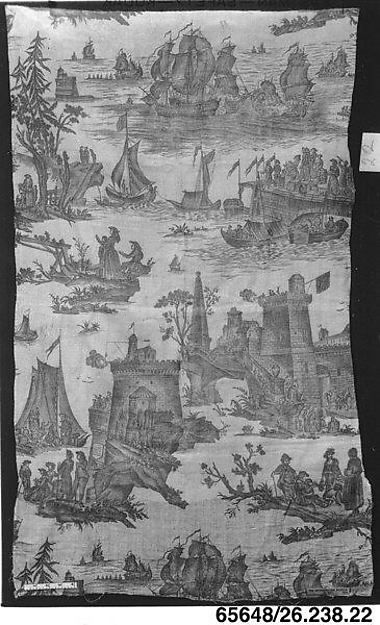
Look closely at the ships' rigging; you can almost feel the tension in the sails.
Spot the tiny figures on deck, engaged in battle amidst cannon fire.
Observe the dramatic plume of smoke rising from the cannons, obscuring parts of the scene.
Notice the turbulent waves, suggesting the motion of the ships in combat.
Stand in front of it and listen
The full narration walks you through "Le Combat de la Motte-Picquet à la Martinique" — the story behind it, the details most visitors miss, and why it matters. Free in the Art Whisper app.
Favre-Petitpierre et cie
French textile firm that turned cotton yardage into narrative art, printing Homer and Napoleon onto your curtains.
Further Works by cie
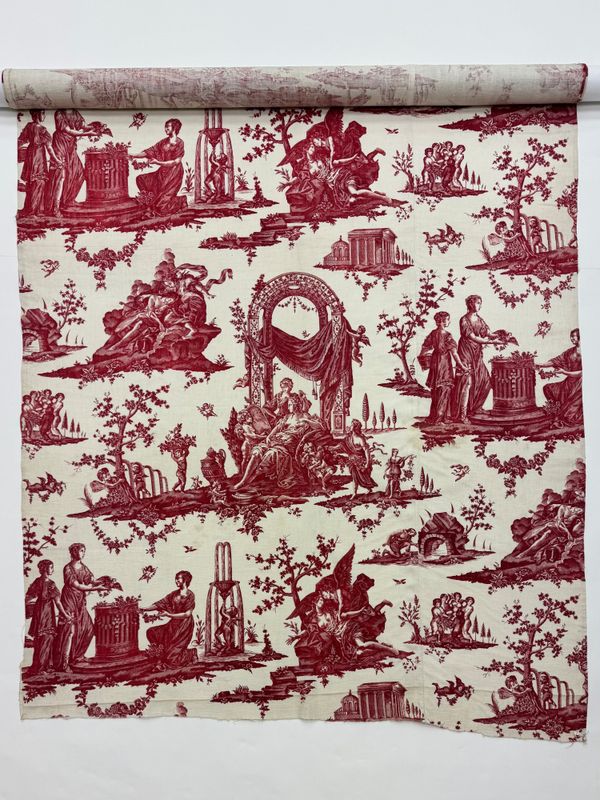 "Venus à sa Toilette"
1770 · The Metropolitan Museum of Art
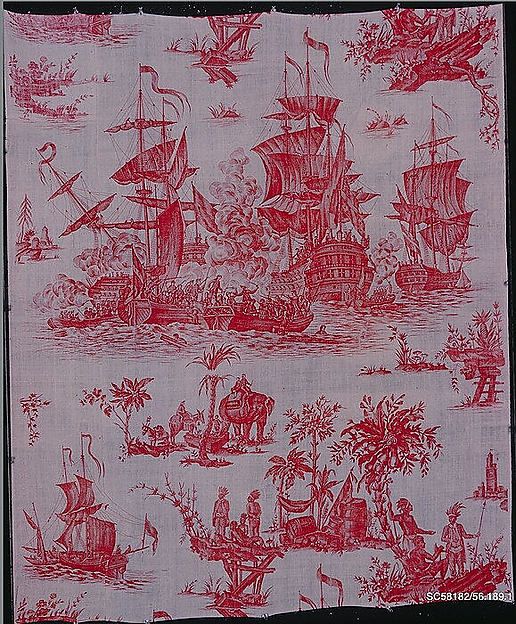 "Battle between the Héros and the Superb"
1778 · The Metropolitan Museum of Art
 "La Maison Brulante"
1780 · The Metropolitan Museum of Art
 "Le Port de Cherbourg"
1781 · The Metropolitan Museum of Art
 "Panurge dans l'île des lanternes"
1781 · The Metropolitan Museum of Art
 La Foire du Caire (The Cairo Fair)
1785 · The Metropolitan Museum of Art
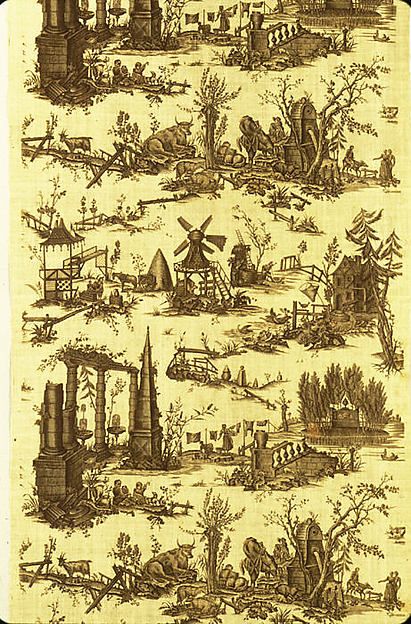 "Tomb of Rousseau"
1785 · The Metropolitan Museum of Art
 Les Champs Elysées or L'Escamoteur
1797 · The Metropolitan Museum of Art
More works to explore
Beyond cie: works from the same years.
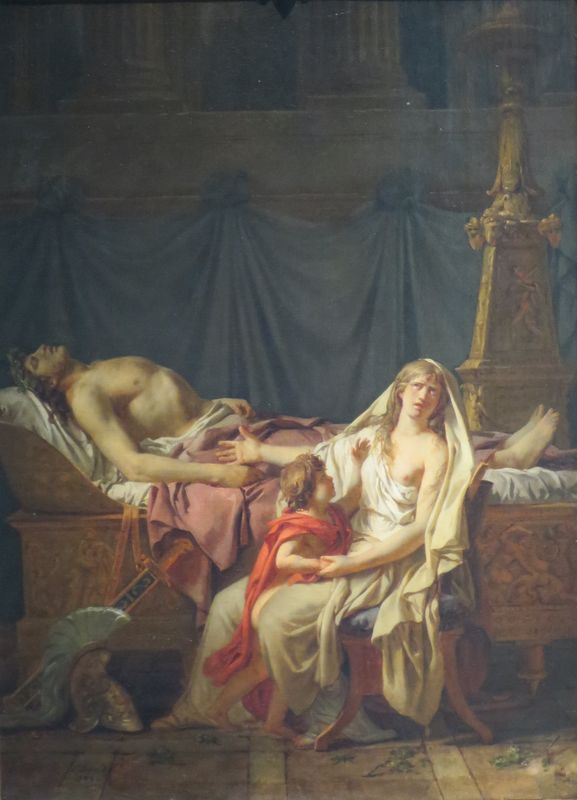 Same era · 1760s–1790s
Andromache Mourning Hector
Jacques-Louis David · 1783 · Pushkin Museum of Fine Arts
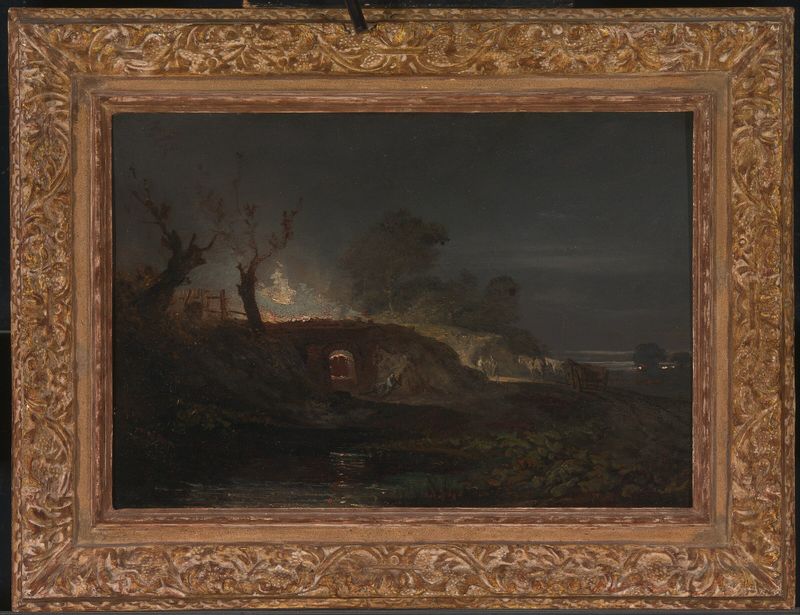 Same era · 1760s–1790s
A Limekiln, Possibly at Briton Ferry in South Wales
J. M. W. Turner · 1797 · Yale Center for British Art
 Same era · 1760s–1790s
Louis-Philippe-Joseph, Duke of Orleans 'Philippe Egalité' (1747-1793) (after Sir Joshua Reynolds)
Samuel Drummond · 1785 · National Trust
 Same era · 1760s–1790s
Portrait of a Man
Benjamin West · 1790 · Art Institute of Chicago
 Same era · 1760s–1790s
Portrait of a Lady
John Smart of Ipswich · 1773 · Yale Center for British Art
 Same era · 1760s–1790s
Milton Dictating to His Daughter
Henry Fuseli · 1794 · Art Institute of Chicago
 Same era · 1760s–1790s
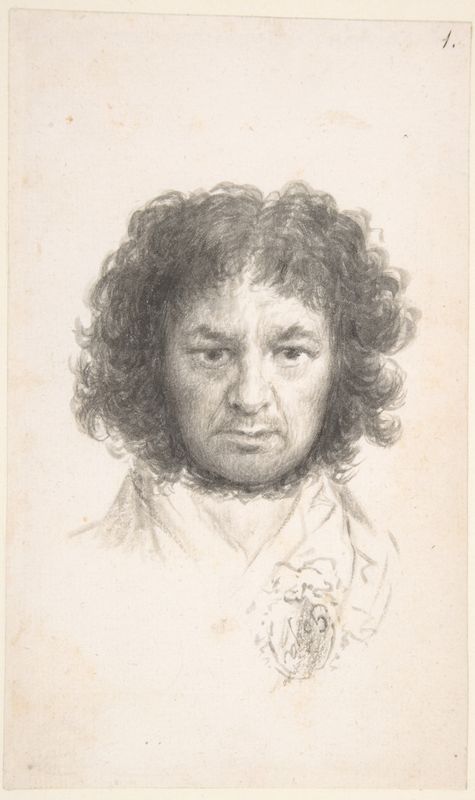
Self-Portrait
Francisco Goya · 1783 · Musée des Beaux-Arts d'Agen
 Same era · 1760s–1790s
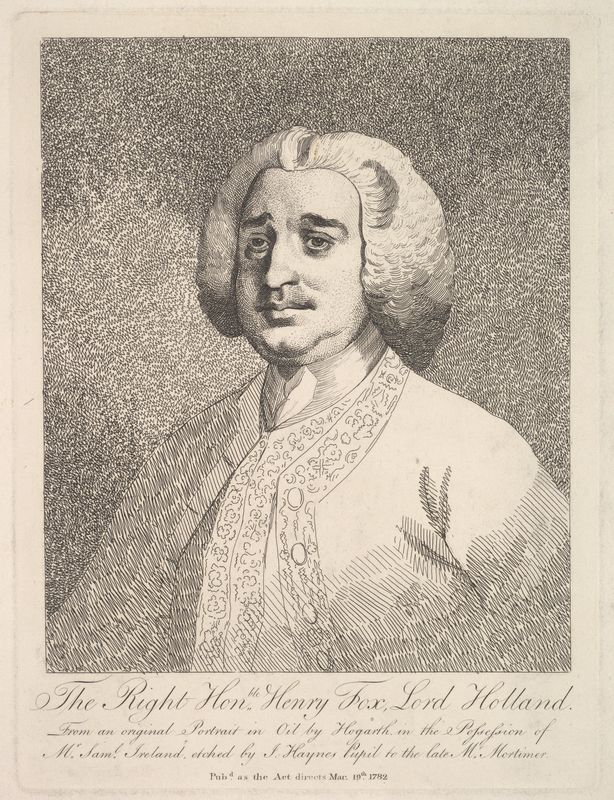
The Right Honorable Henry Fox, Lord Holland
William Hogarth · 1782 · The Metropolitan Museum of Art
 Same era · 1760s–1790s
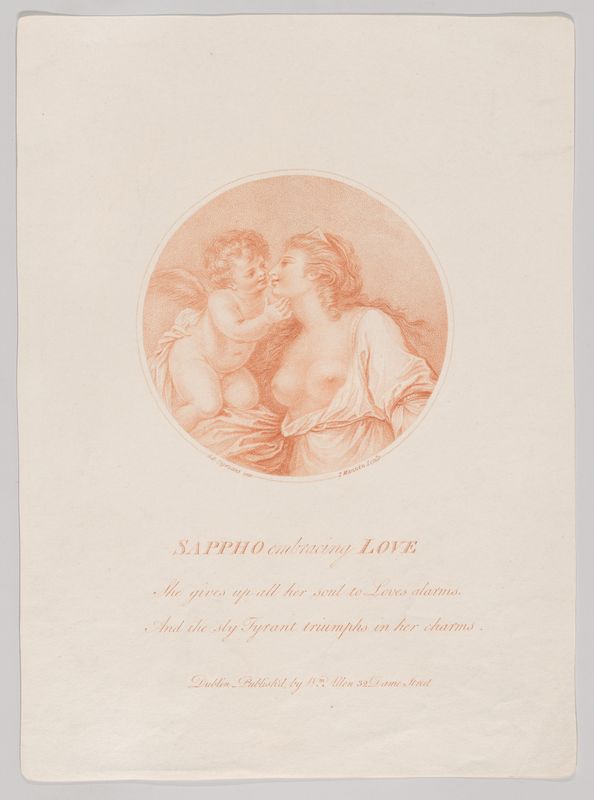
Sappho embracing Love
John Mannin · 1786 · The Metropolitan Museum of Art
 Same era · 1760s–1790s
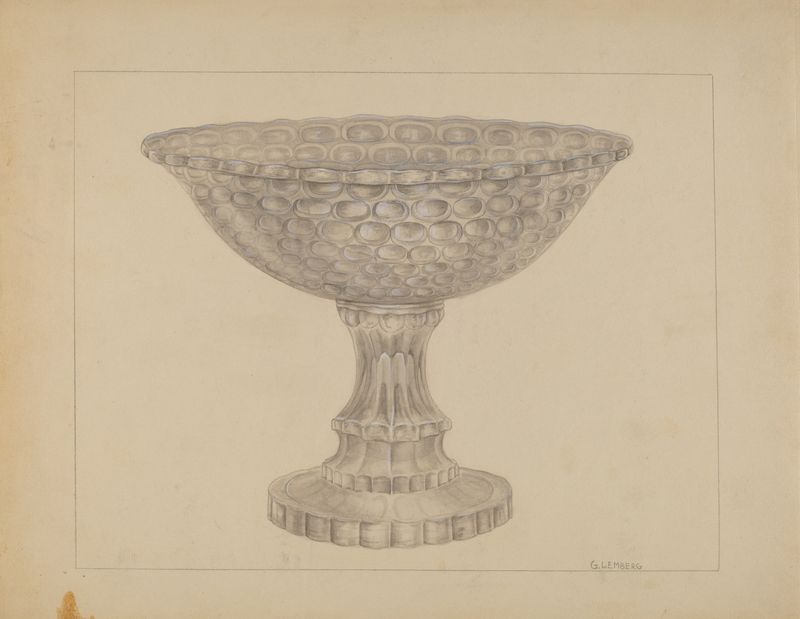
Punch Bowl
Artist Unknown - The Mercat Cross, Aberdeen · 1789 · Art Institute of Chicago
 Same era · 1760s–1790s
Looking Glass
unknown composer author · 1790 · Art Institute of Chicago
 Same era · 1760s–1790s
A young girl walks towards the left with one infant on her shoulder and holding another small child's hand, while two children walk at right with a torch and a basket
Luca Cambiaso · 1775 · The Metropolitan Museum of Art