01
Bright break in the valley
Look at the small white flare at the center, where the valley dips. It is the lightest spot in the land, and the eye lands here first.
1 of 5 on the painting
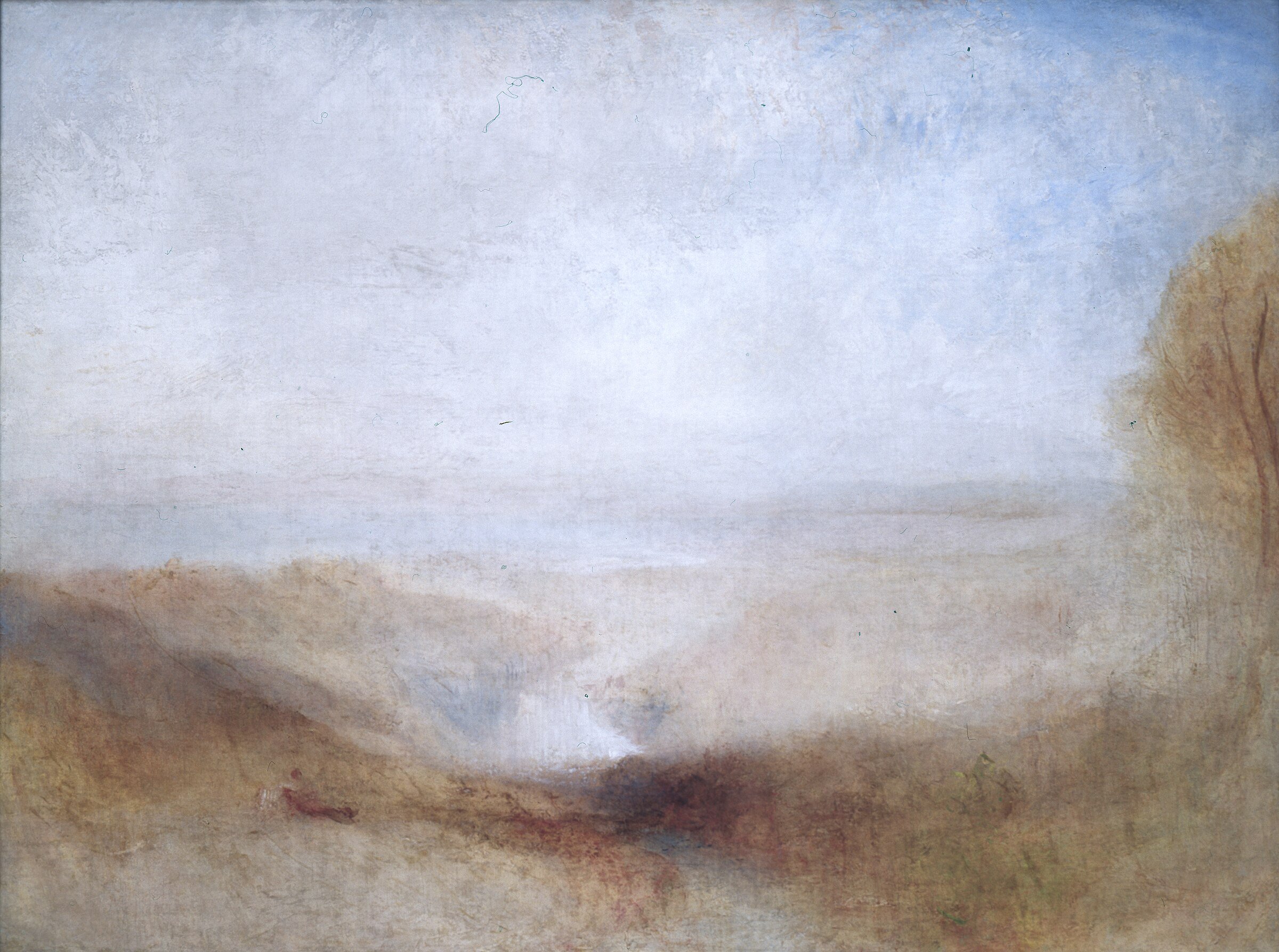
“Stop to appreciate this serene landscape by J. M. W. Turner, where a vast river leads your eye to a distant, shimmering bay under a soft, atmospheric sky. It's a prime example of Romanticism's celebration of nature's tranquil beauty.”
In this expansive landscape, J. M. W. Turner invites us to gaze upon a tranquil scene where a wide river meanders towards a distant bay, bathed in a soft, ethereal light. The sky, a symphony of pale yellows and muted blues, suggests either the gentle glow of dawn or the quiet calm of dusk, reflecting subtly on the water's surface. Your eye is drawn through the composition by the receding forms of the landscape, from the immediate foreground with its hints of vegetation, across the flowing water, and into the hazy distance where land meets sea. This painting, created around 1835, captures a moment of serene beauty, characteristic of the Romantic movement's appreciation for nature's grandeur and emotional resonance. The soft brushwork and delicate color transitions create a sense of atmospheric depth, making the distant horizon feel almost limitless.
Five details hide in plain sight. Pick one and we’ll show you exactly where to look.
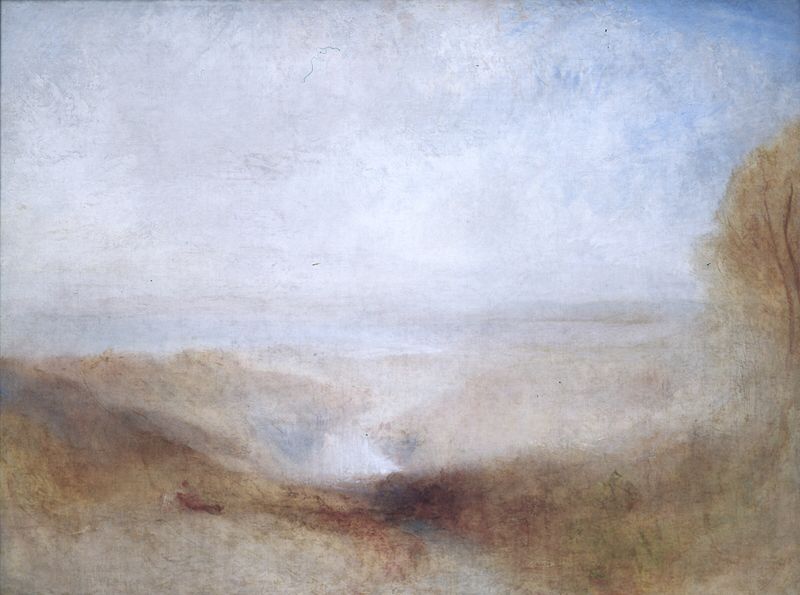
Look at the small white flare at the center, where the valley dips. It is the lightest spot in the land, and the eye lands here first.
The golden tree on the right edge acts like a curtain. Its warm, dense color pushes your eye back across the hazy space to the left.
Find the far horizon across the middle. Land, water and sky melt into one pale band, so no hard line says where the bay ends.
In the upper sky, the paint looks thin and scrubbed in pale veils, with a patch of blue breaking through at the upper right. The air seems to move.
On the left slope, a small reddish shape rests on the ground. It may be a person lying down, and it makes the hills feel vast.
The full narration walks you through Landscape with a river and a bay in the background — the story behind it, the details most visitors miss, and why it matters. Free in the Art Whisper app.
J. M. W. Turner, the 'painter of light,' transformed landscape painting with his turbulent marine scenes and expressive use of color.
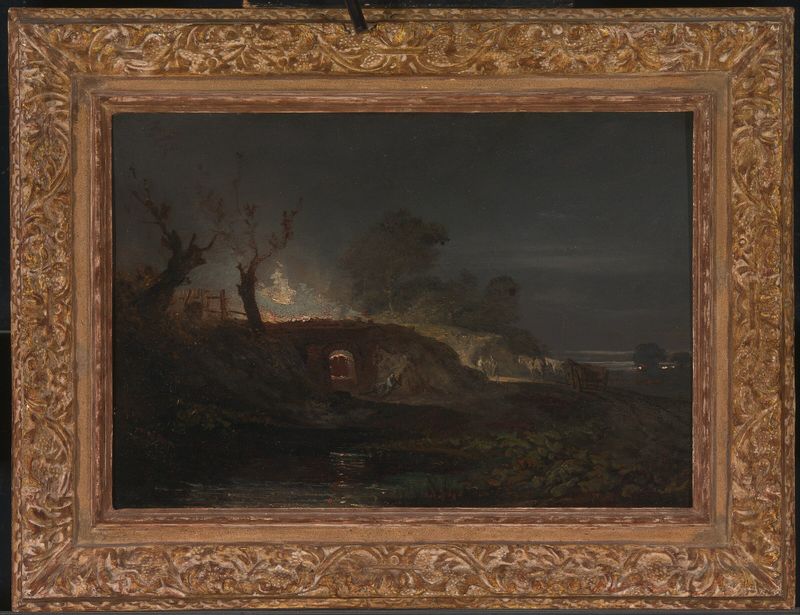 A Limekiln, Possibly at Briton Ferry in South Wales
1797 · Yale Center for British Art
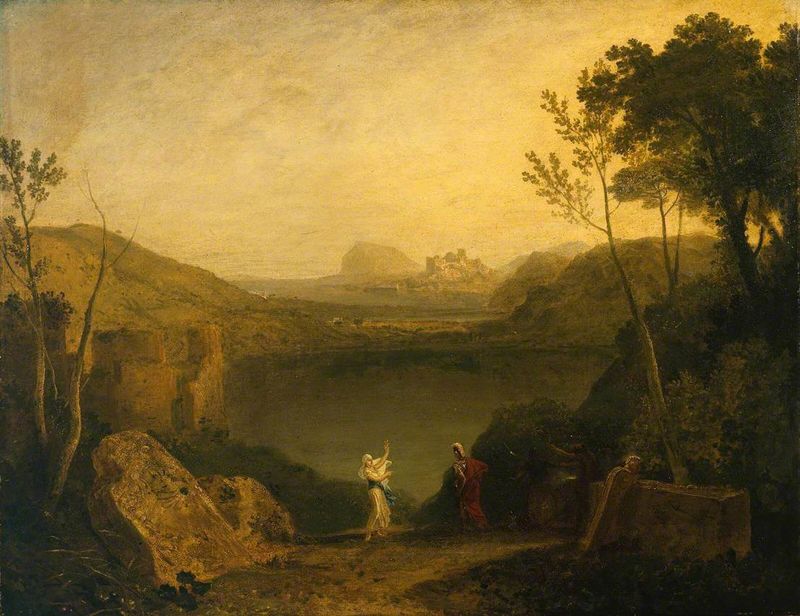 Aeneas and the Sibyl, Lake Avernus
1798 · National Gallery
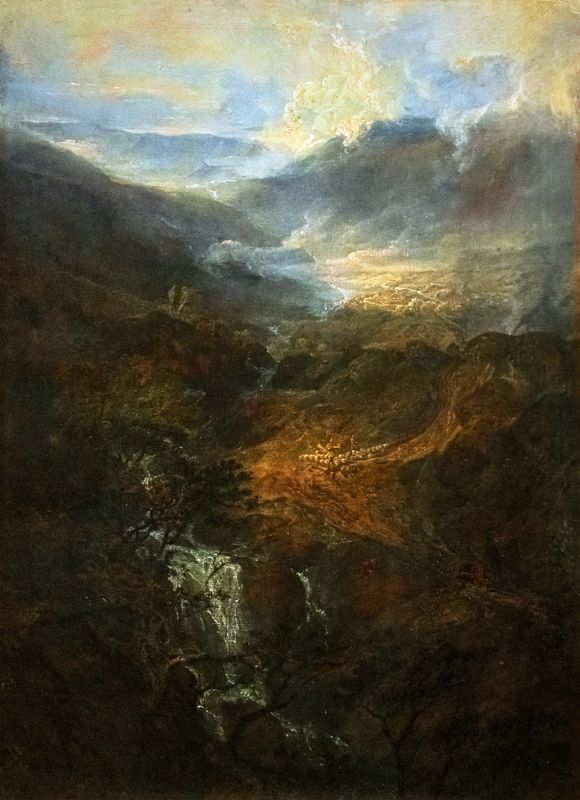 Morning amongst the Coniston Fells, Cumberland
1798 · National Gallery
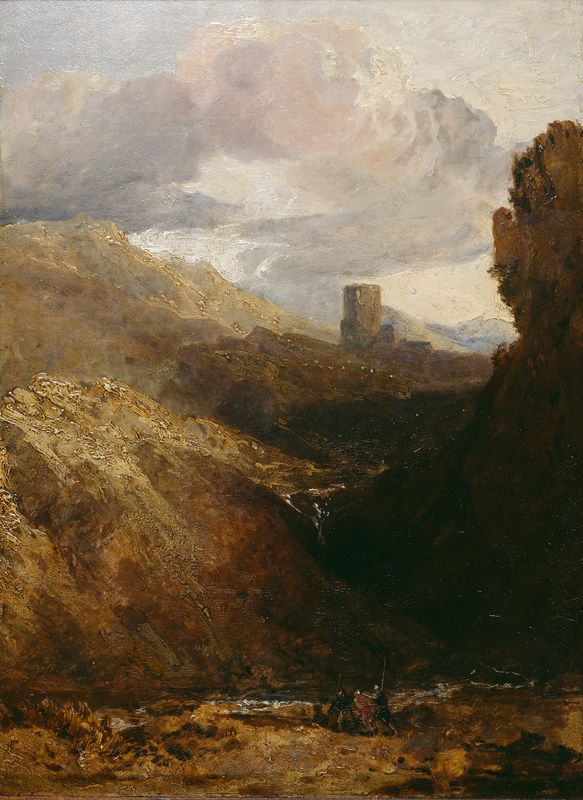 Dolbadarn Castle
1800 · National Library of Wales
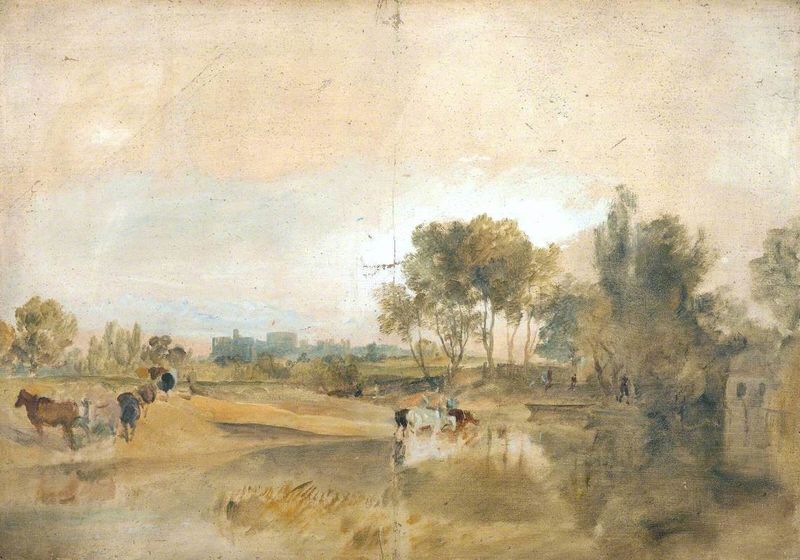 A Thames Backwater with Windsor Castle in the Distance
1805 · National Gallery
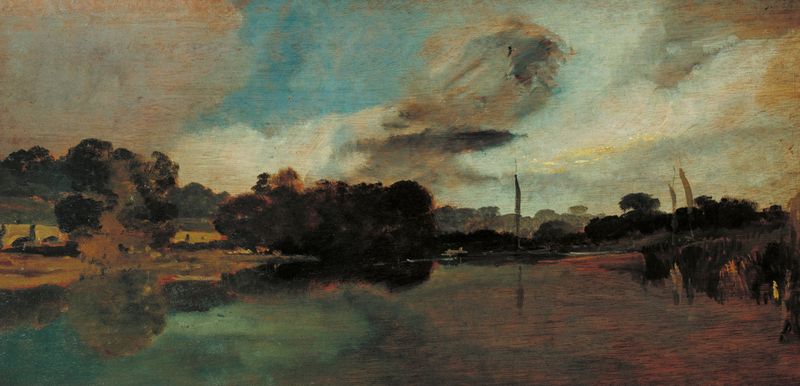 Walton Reach
1805 · National Gallery
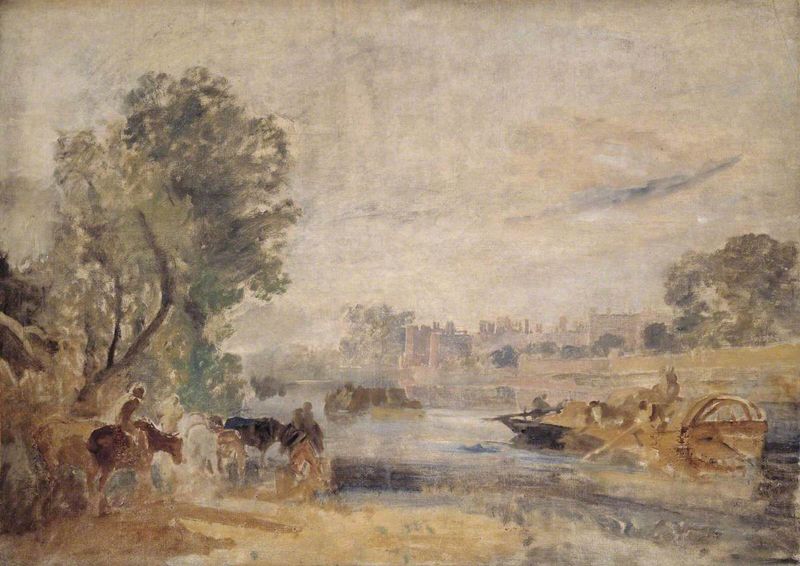 Hampton Court from the Thames
1806 · National Gallery
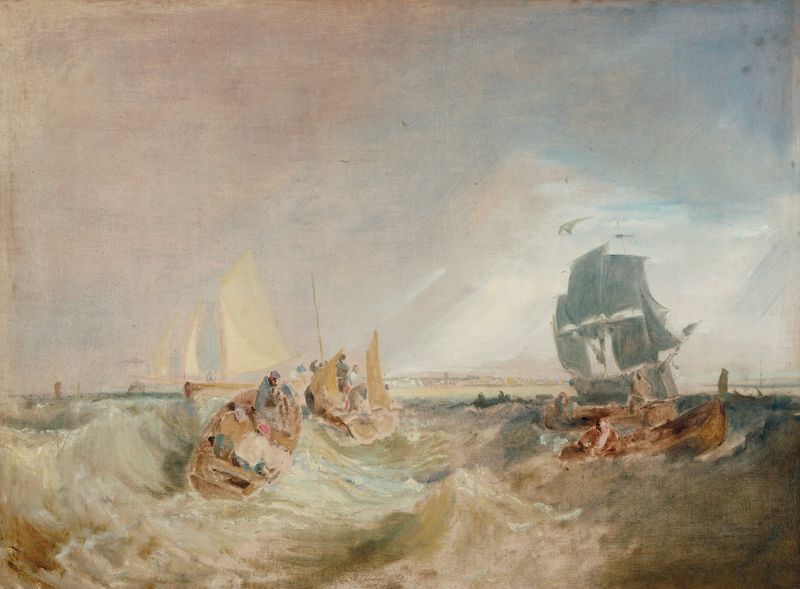 Shipping at the Mouth of the Thames
1806 · National Gallery
Beyond Turner and Romanticism: works from the same years.
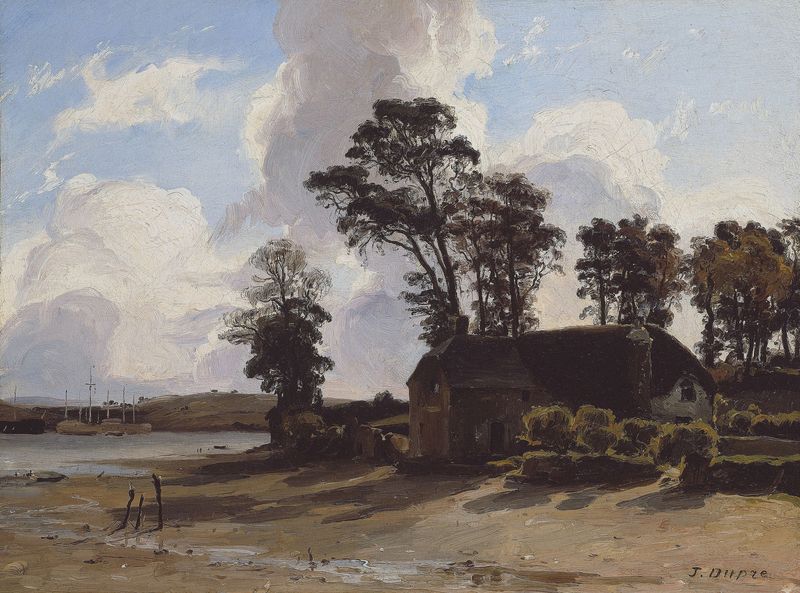 Same era · 1820s–1850s
The Estuary Farm
Léon-Victor Dupré · 1831 · Art Institute of Chicago
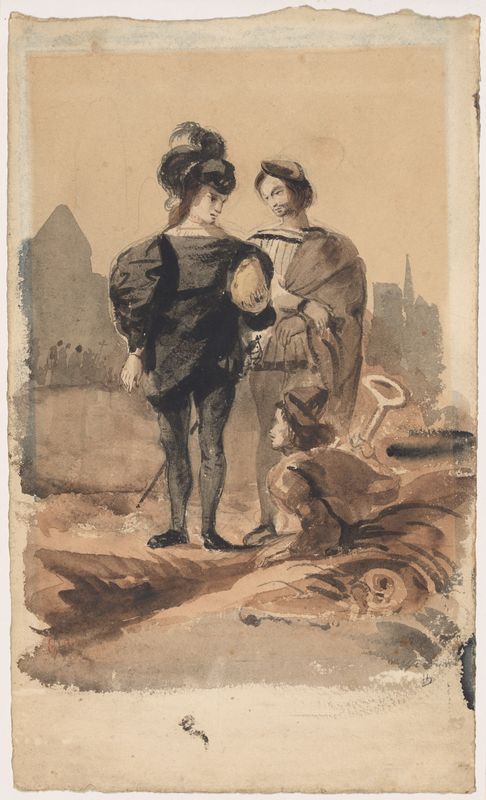 Same era · 1820s–1850s
Hamlet and Horatio in the Graveyard
Eugène Delacroix · 1839 · Department of Paintings of the Louvre
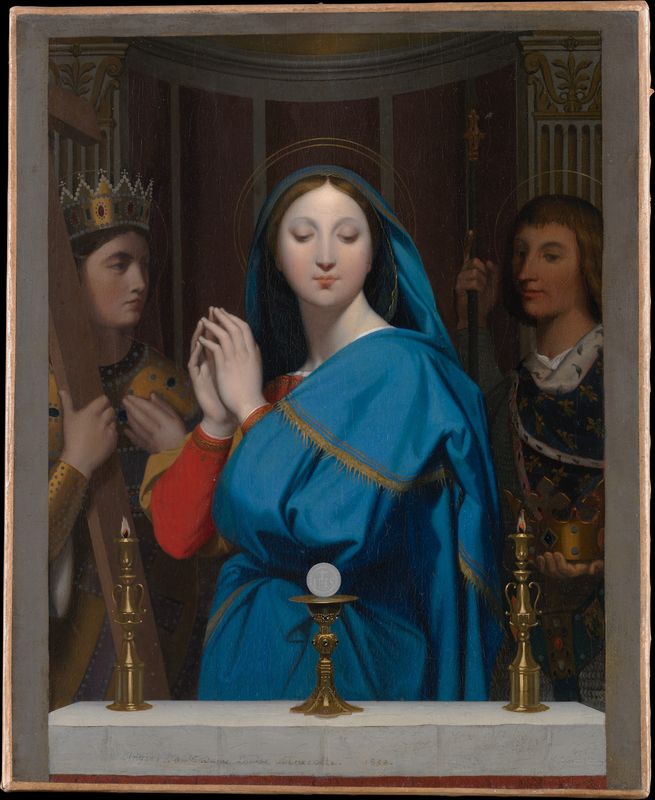 Same era · 1820s–1850s
The Virgin Adoring the Host
Jean-Auguste-Dominique Ingres · 1841 · Pushkin Museum of Fine Arts
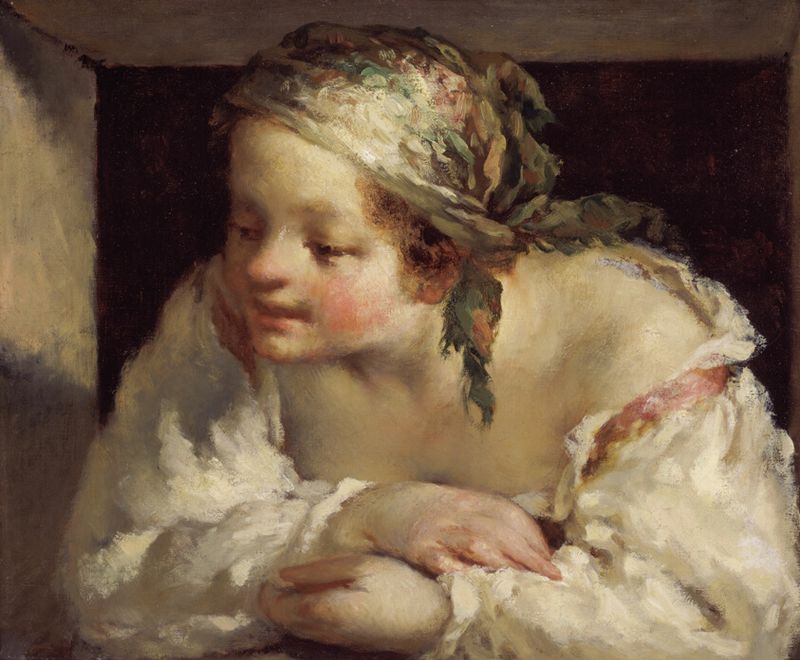 Same era · 1820s–1850s
Young Woman
Jean-François Millet · 1844 · Art Institute of Chicago
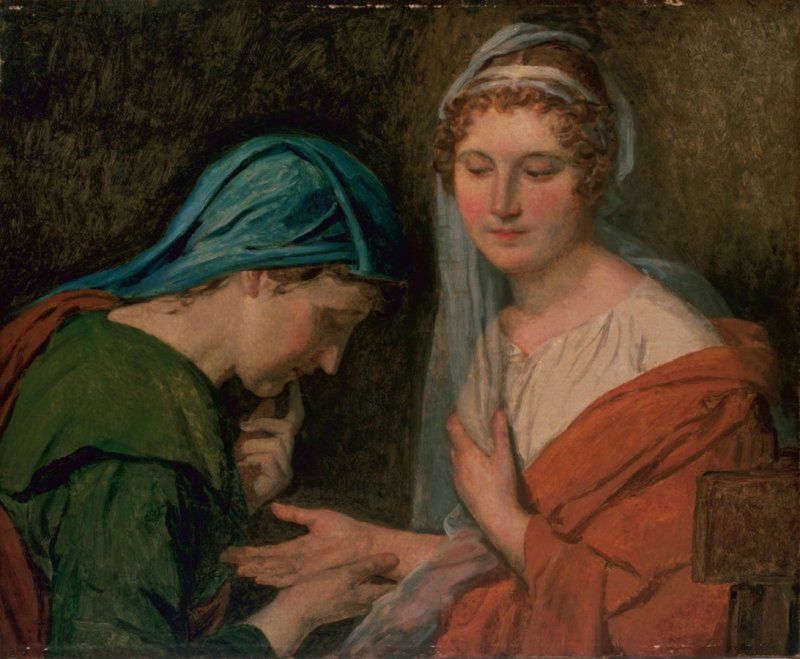 Same era · 1820s–1850s
The Fortune Teller (La Bonne Aventure)
Jacques-Louis David · 1824 · Fine Arts Museums of San Francisco
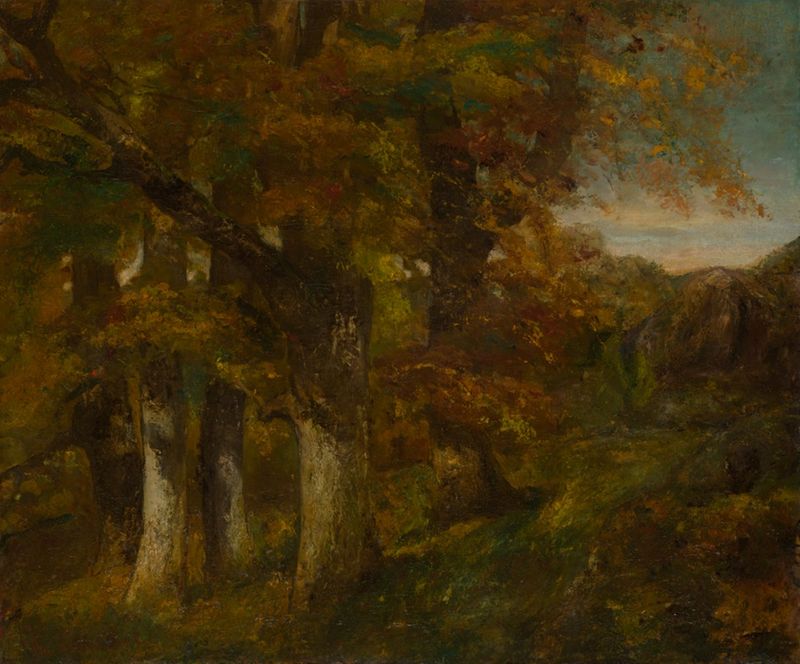 Same era · 1820s–1850s
Wooded Landscape
Gustave Courbet · 1848 · Art Institute of Chicago
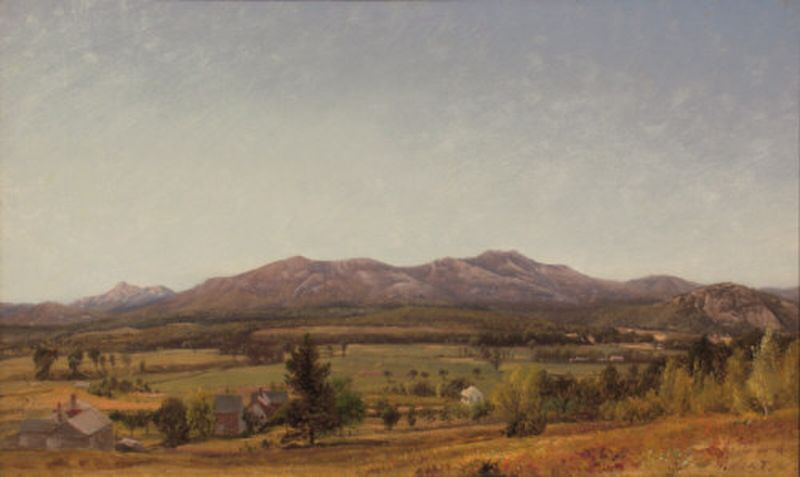 Same era · 1820s–1850s
Mount Chocorua and Moat Mountain from North Conway
William Hart · 1850
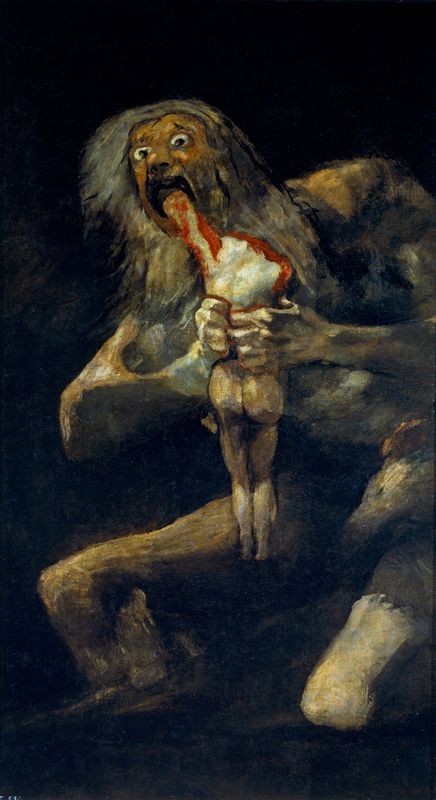 Same era · 1820s–1850s
Saturn Devouring His Son
Francisco Goya · 1820 · Museo del Prado
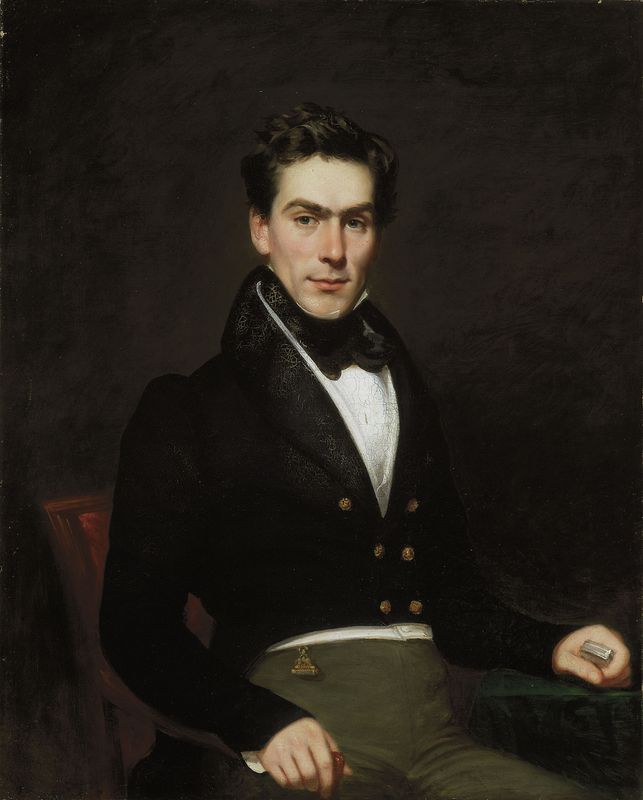 Same era · 1820s–1850s
Mr. James Mackie
Samuel Alcock & Company · 1830 · Art Institute of Chicago
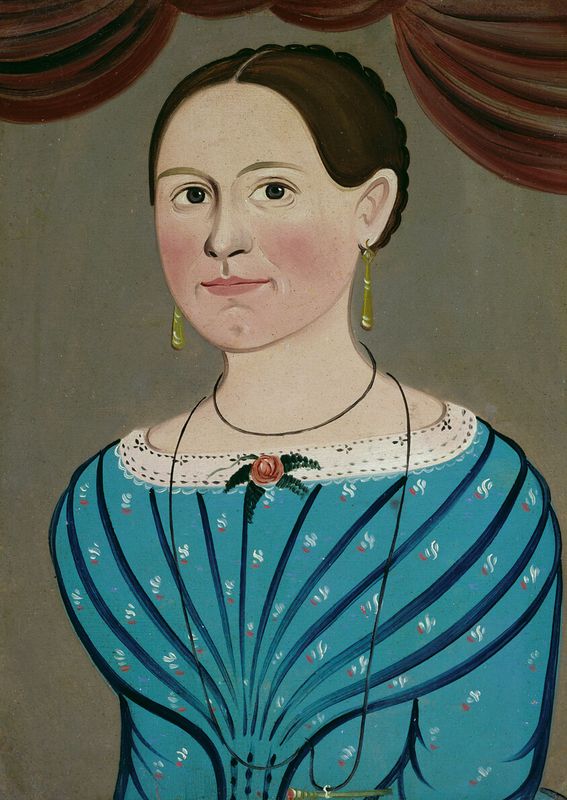 Same era · 1820s–1850s
Woman in a Blue Dress
School of William Matthew Prior · 1840 · Art Institute of Chicago
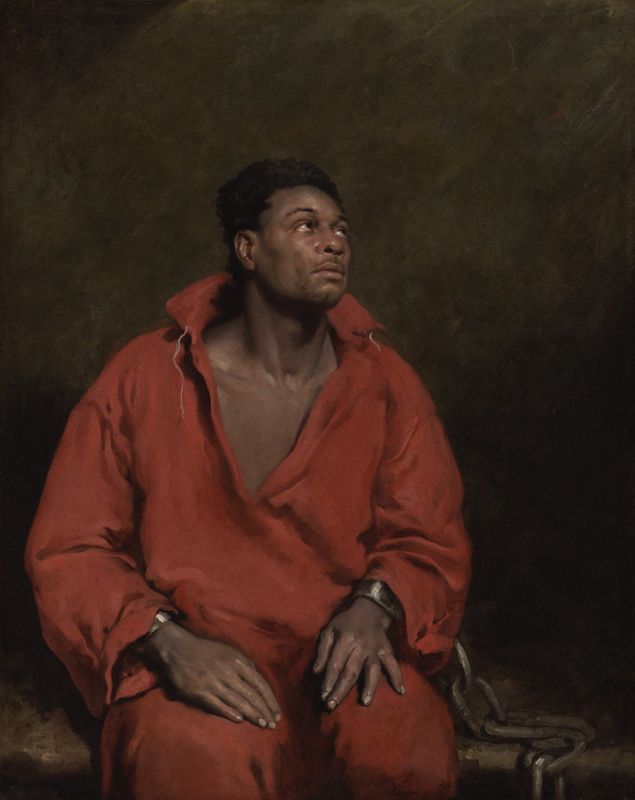 Same era · 1820s–1850s
The Captive Slave (Ira Aldridge)
John Philip Simpson · 1827 · Art Institute of Chicago
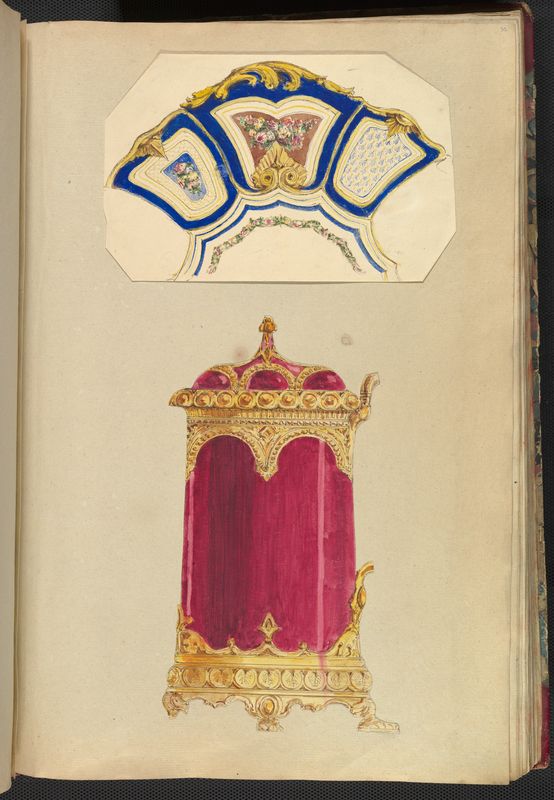 Same era · 1820s–1850s
Designs for a Decorated Dish, or Platter, and a Biscuit Barrel
Alfred Henry Forrester [Alfred Crowquill] · 1845 · The Metropolitan Museum of Art