01
The armed hunter
On the left, the hunter stands behind the wall with his gun upright against his shoulder and a stiff, wary look on his face.
1 of 5 on the painting
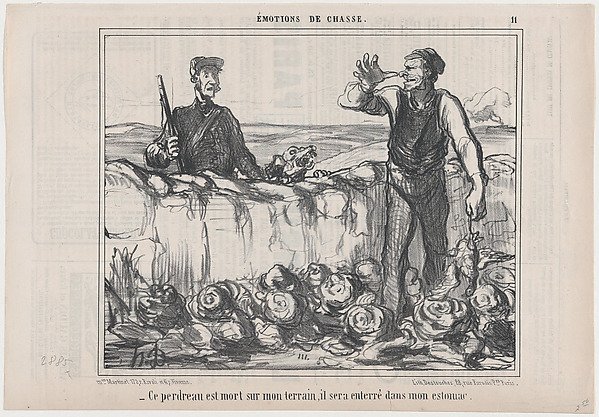
“This lithograph by Honoré Daumier offers a humorous yet pointed critique of bourgeois vanity, showing a hunter's exaggerated pride over a small partridge. It's a classic example of Daumier's ability to capture human foibles with wit and sharp observation.”
In this lithograph, a hunter stands proudly over his kill, a partridge, his dog at his side. The title, "Ce perdreau est mort sur mon terrain..." (This partridge died on my land...), hints at the self-importance and territoriality of the Parisian bourgeoisie, a frequent target of Honoré Daumier's satire. The scene, published in the humorous newspaper Le Charivari in 1857, captures a moment of quiet triumph for the hunter, whose exaggerated posture and stern expression underscore the absurdity of his pride. Daumier often used such everyday scenarios to comment on broader societal traits, here poking fun at vanity and ownership. The stark contrasts of light and shadow, typical of lithography, emphasize the figures and their immediate surroundings, drawing the viewer's eye to the hunter's satisfied gaze and the small, lifeless bird.
Five details hide in plain sight. Pick one and we’ll show you exactly where to look.
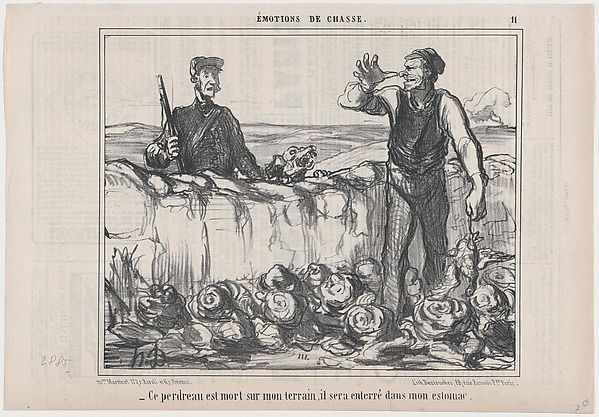
On the left, the hunter stands behind the wall with his gun upright against his shoulder and a stiff, wary look on his face.
The farmer on the right holds his nose with a splayed hand, a gesture that turns his scorn into the picture's punchline.
Between the two men, a dog's head peeks over the top of the wall. It is easy to miss, and it suggests the dog may have fetched the bird.
Heavy cabbages fill the foreground, showing what the farmer protects. The hunter's trespass costs him real crops.
The caption below gives the farmer's line: the partridge died on his land, so it will be buried in his stomach. The joke only lands once you read it.
The full narration walks you through Ce perdreau est mort sur mon terrain..., from Émotions de Chasse, published in Le Charivari, October 10, 1857 — the story behind it, the details most visitors miss, and why it matters. Free in the Art Whisper app.
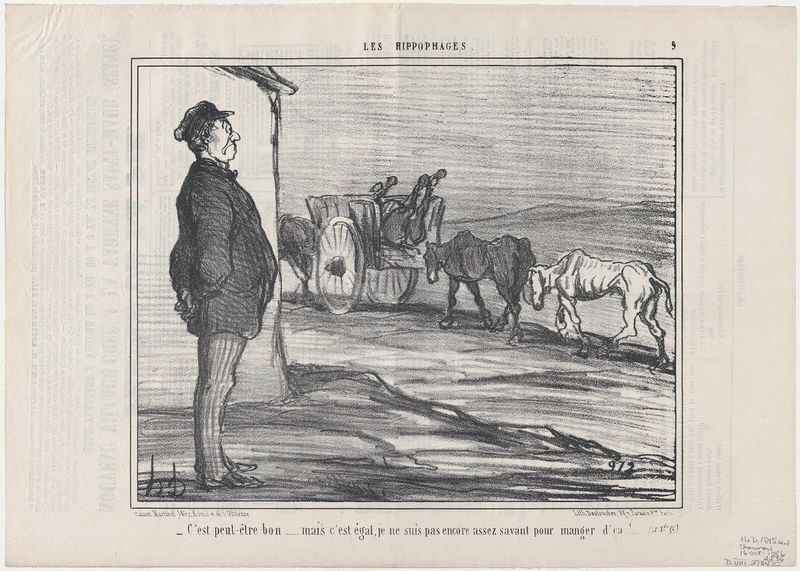 C'est peut-être bon...mais c'est égal..., from Les Hippophages, published in Le Charivari, October 23, 1856
1856 · The Metropolitan Museum of Art
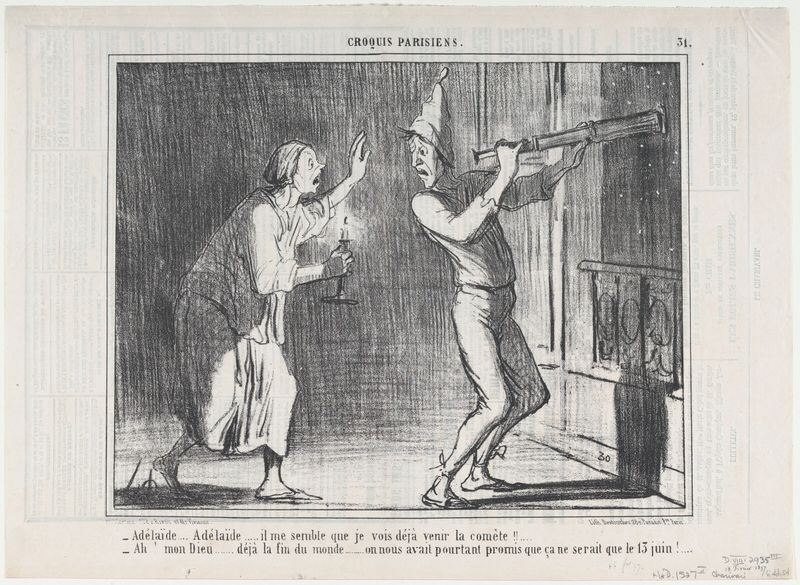 Adèlaïde...Il me semble que je vois...la comète! (Adelaide...I think I see the comet!), from Croquis Parisiens, published in Le Charivari, February 18, 1857
1857 · The Metropolitan Museum of Art
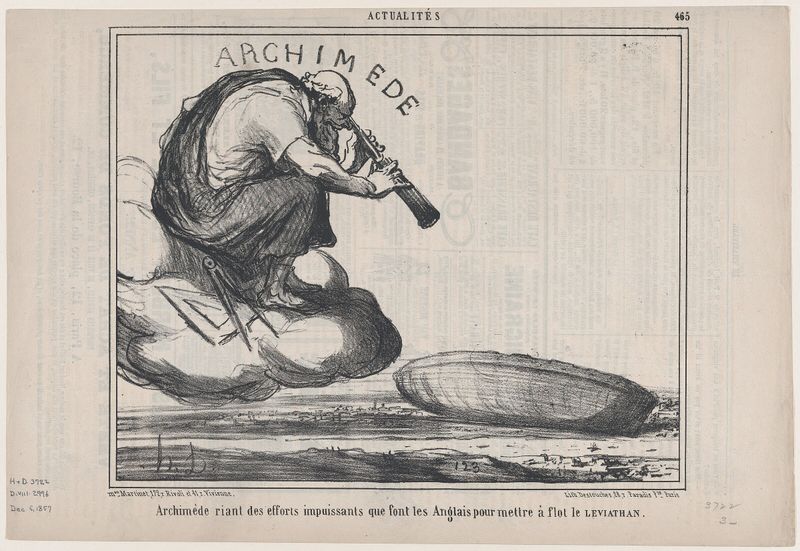 Archimède riant des efforts impuissants que font les Anglais pour mettre à flot le Leviathan, from Actualités, published in Le Charivari, December 5, 1857
1857 · The Metropolitan Museum of Art
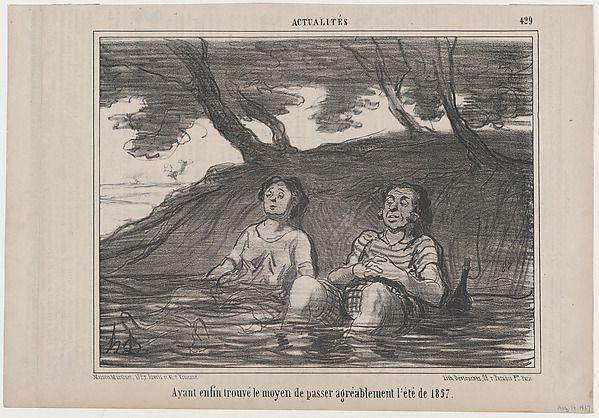 Ayant enfin trouvé..., from Actualités, published in Le Charivari, August 14, 1857
1857 · The Metropolitan Museum of Art
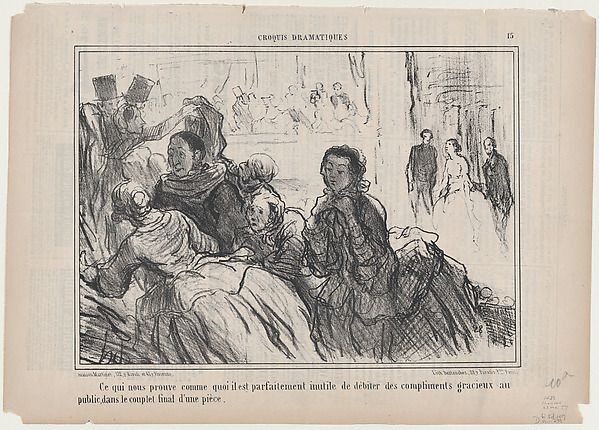 Ce qui nous prouve comme quoi il est... inutile..., from Croquis Dramatiques, published in Le Charivari, May 23, 1857
1857 · The Metropolitan Museum of Art
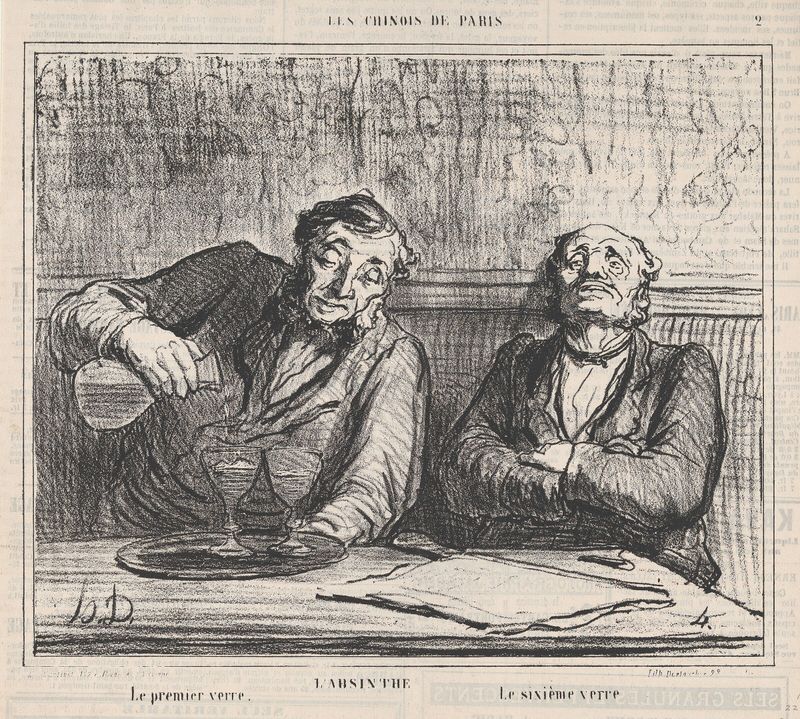 Absinthe: The first glass, the sixth glass, from 'The Chinese of Paris," published in Le Charivari, December 22, 1863
1863 · The Metropolitan Museum of Art
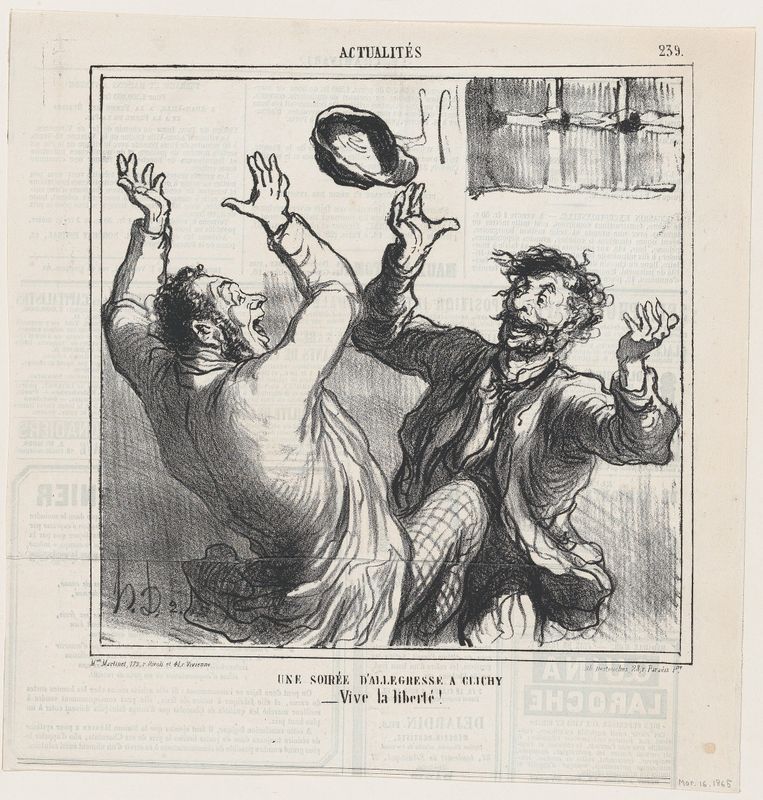 A happy evening party in Clichy, from 'News of the day,' published in Le Charivari, March 16, 1865
1865 · The Metropolitan Museum of Art
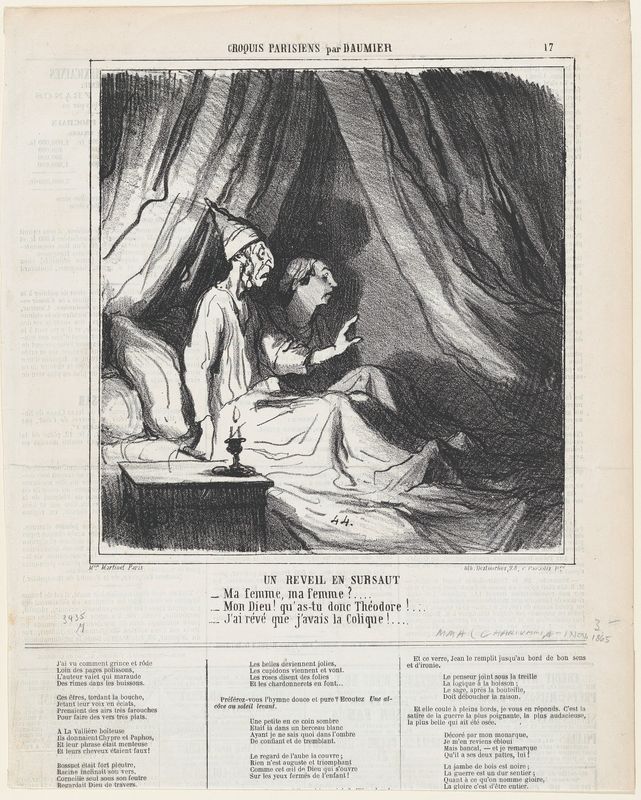 A sudden awakening, from 'Parisian sketches,' published in Le Charivari, November 1, 1865
1865 · The Metropolitan Museum of Art
Beyond Daumier and Naturalism: works from the same years.
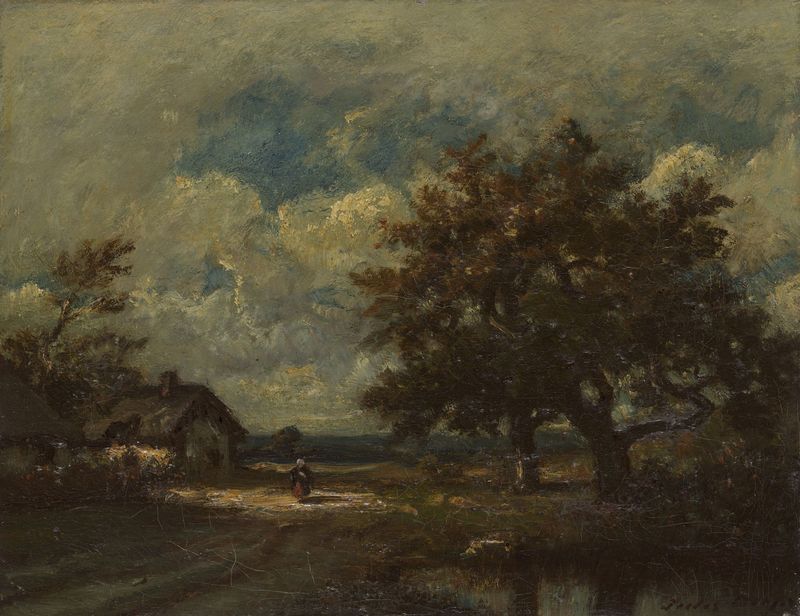 Same era · 1840s–1870s
The Cottage by the Roadside, Stormy Sky
Léon-Victor Dupré · 1855 · Art Institute of Chicago
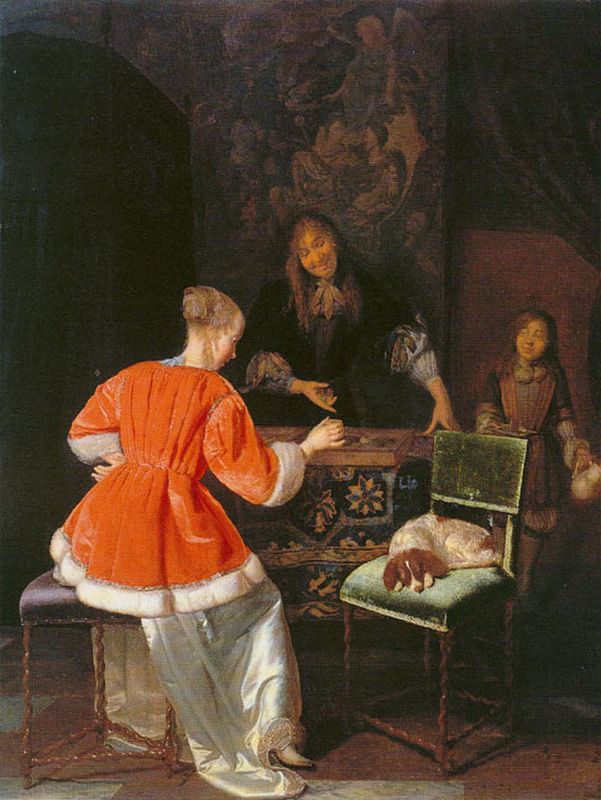 Same era · 1840s–1870s
The Backgammon Players
Philip Webb · 1861 · The Metropolitan Museum of Art
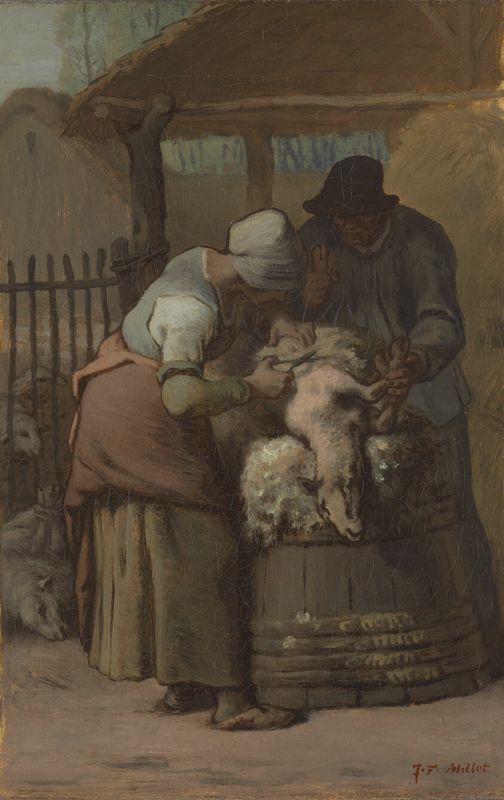 Same era · 1840s–1870s
The Sheepshearers
Jean-François Millet · 1857 · Art Institute of Chicago
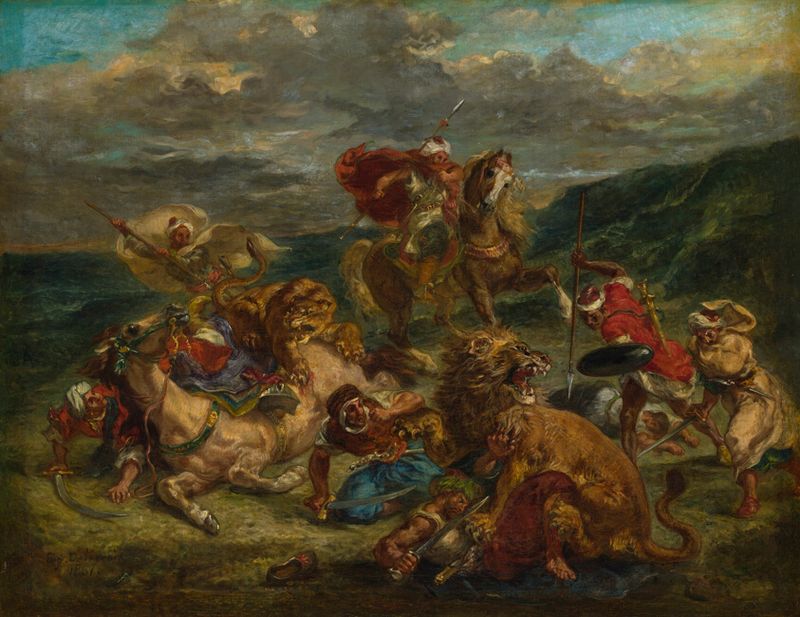 Same era · 1840s–1870s
Lion Hunt
Eugène Delacroix · 1858 · Museum of Fine Arts Boston
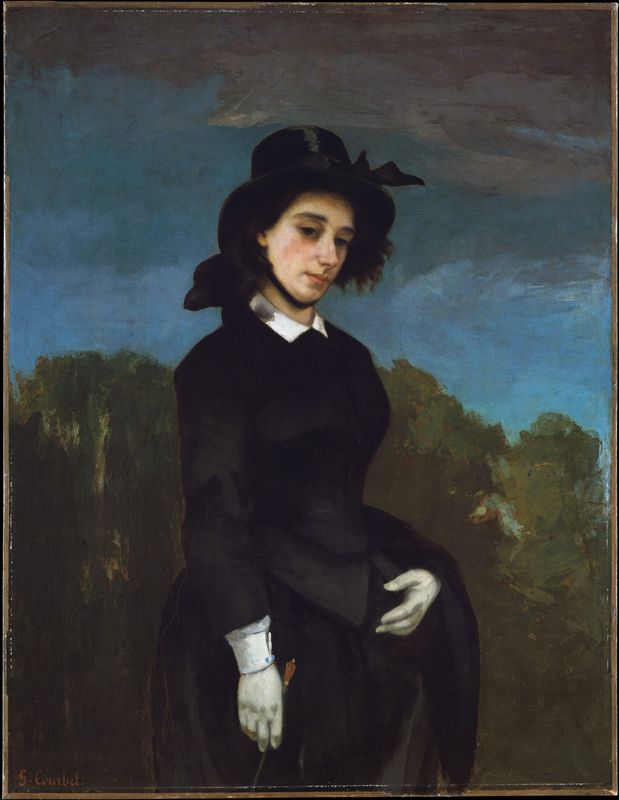 Same era · 1840s–1870s
Woman in a Riding Habit (L'Amazone)
Gustave Courbet · 1856 · Metropolitan Museum of Art
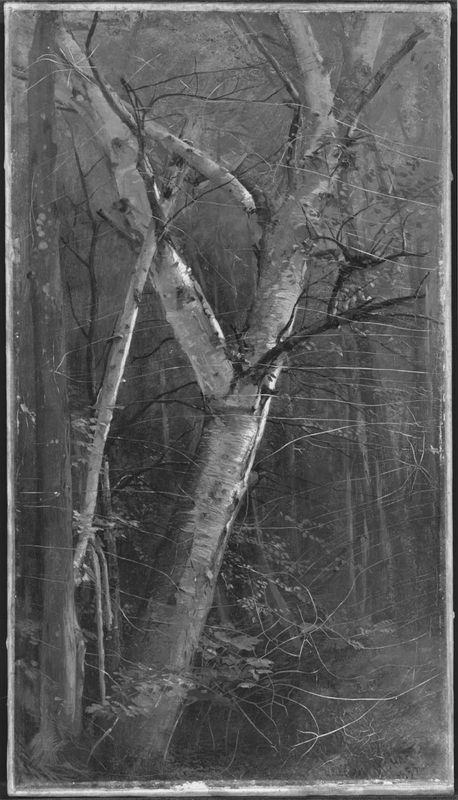 Same era · 1840s–1870s
Birches
William Hart · 1855 · Museum of Fine Arts Boston
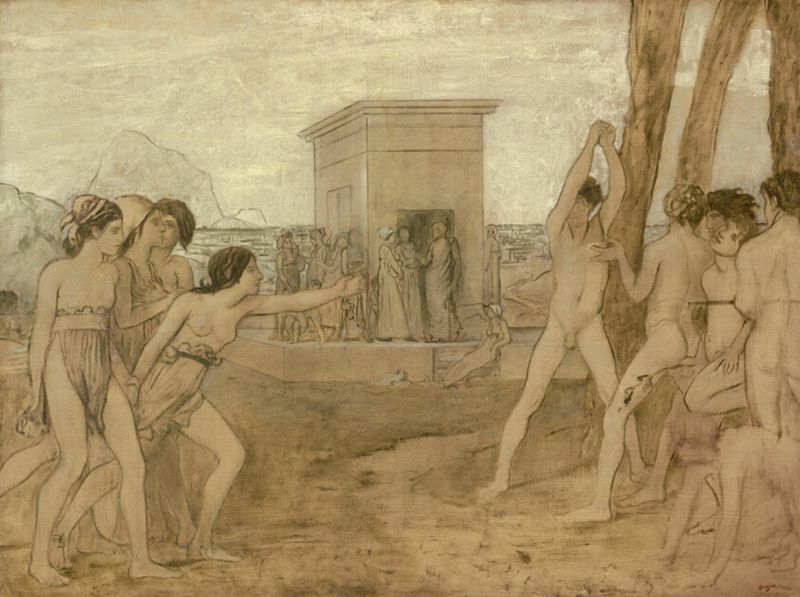 Same era · 1840s–1870s
Young Spartan Girls Challenging Boys
Edgar Degas · 1860 · Art Institute of Chicago
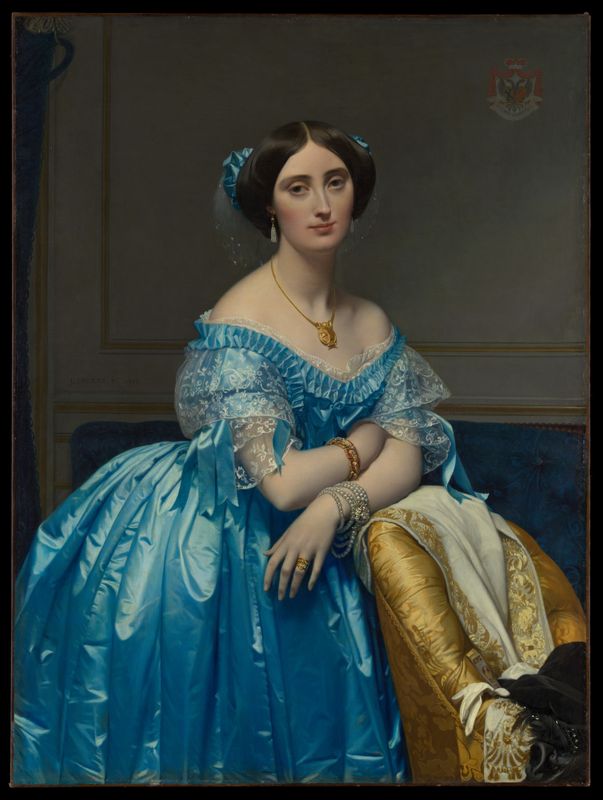 Same era · 1840s–1870s
Joséphine-Éléonore-Marie-Pauline de Galard de Brassac de Béarn (1825–1860), Princesse de Broglie
Jean-Auguste-Dominique Ingres · 1853 · Metropolitan Museum of Art
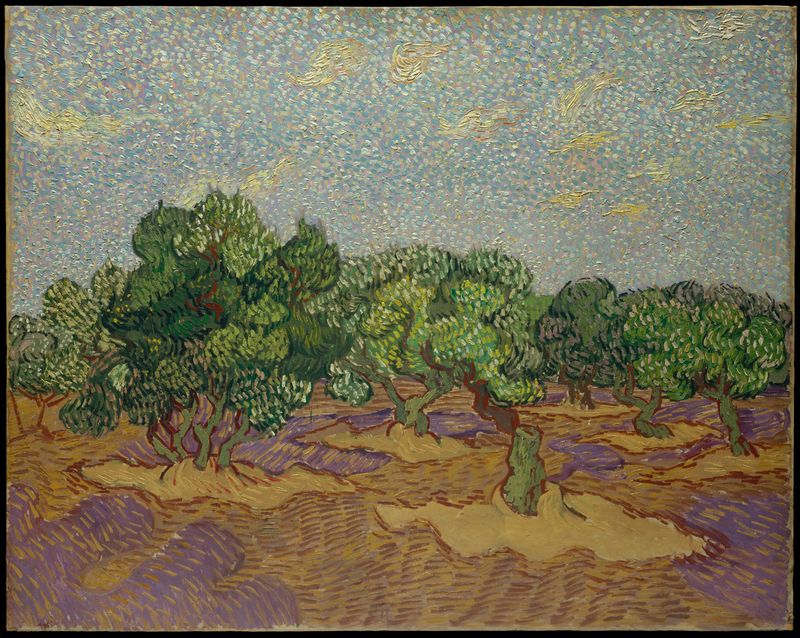 Same era · 1840s–1870s
Olive Trees
Vincent van Gogh · 1853 · The Metropolitan Museum of Art
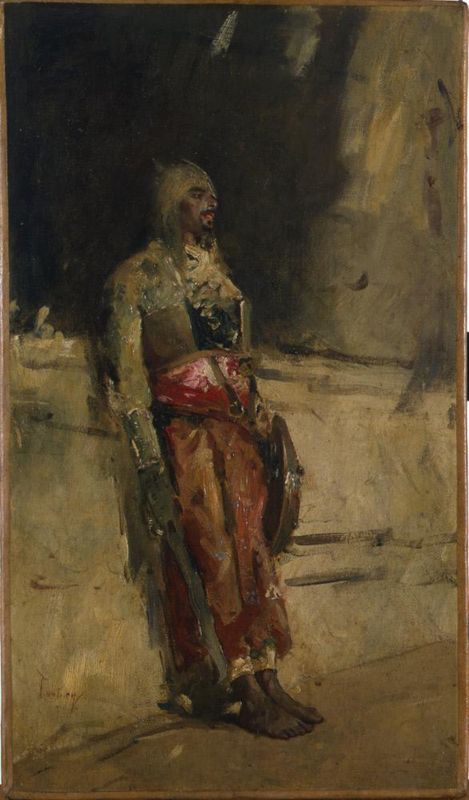 Same era · 1840s–1870s
An Arab Warrior
Mariano Fortuny Marsal · 1862 · Hispanic Society of America
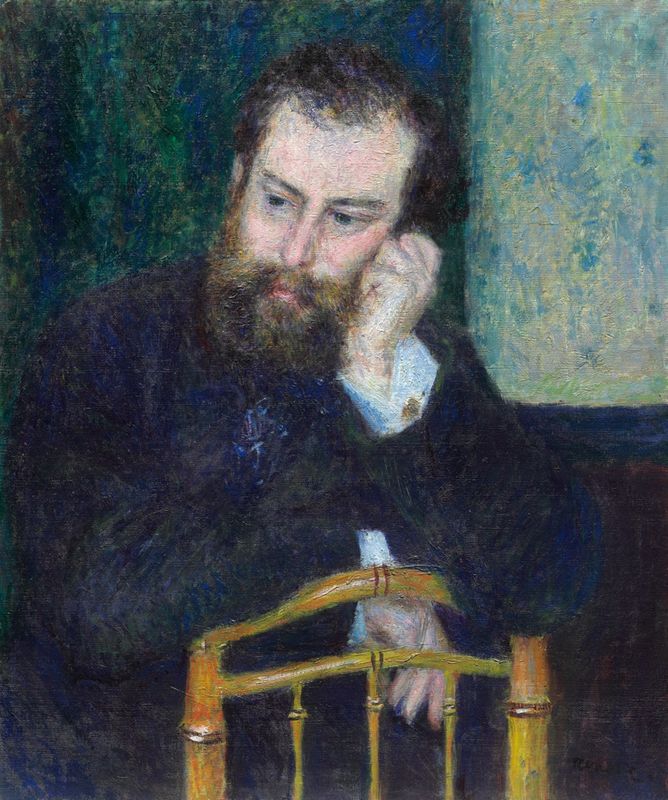 Same era · 1840s–1870s
Alfred Sisley
Pierre-Auguste Renoir · 1864 · Foundation E.G. Bührle Collection
 Same era · 1840s–1870s
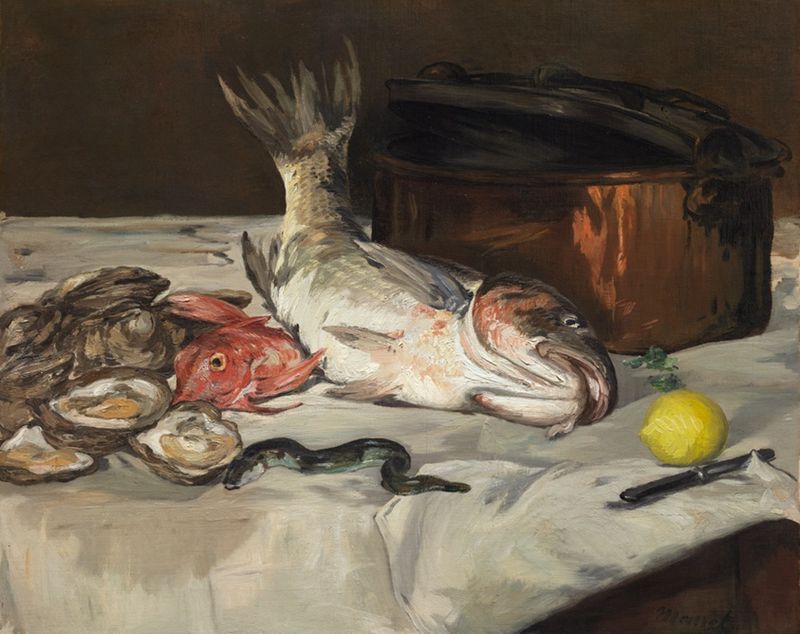
Fish (Still Life)
Édouard Manet · 1864 · Art Institute of Chicago