01Whole painting
Diagram beside finished letter
Each row pairs a gridded sketch with finished bold letters. Your eye moves from the plan to the result, then on to the next letter in the alphabet.
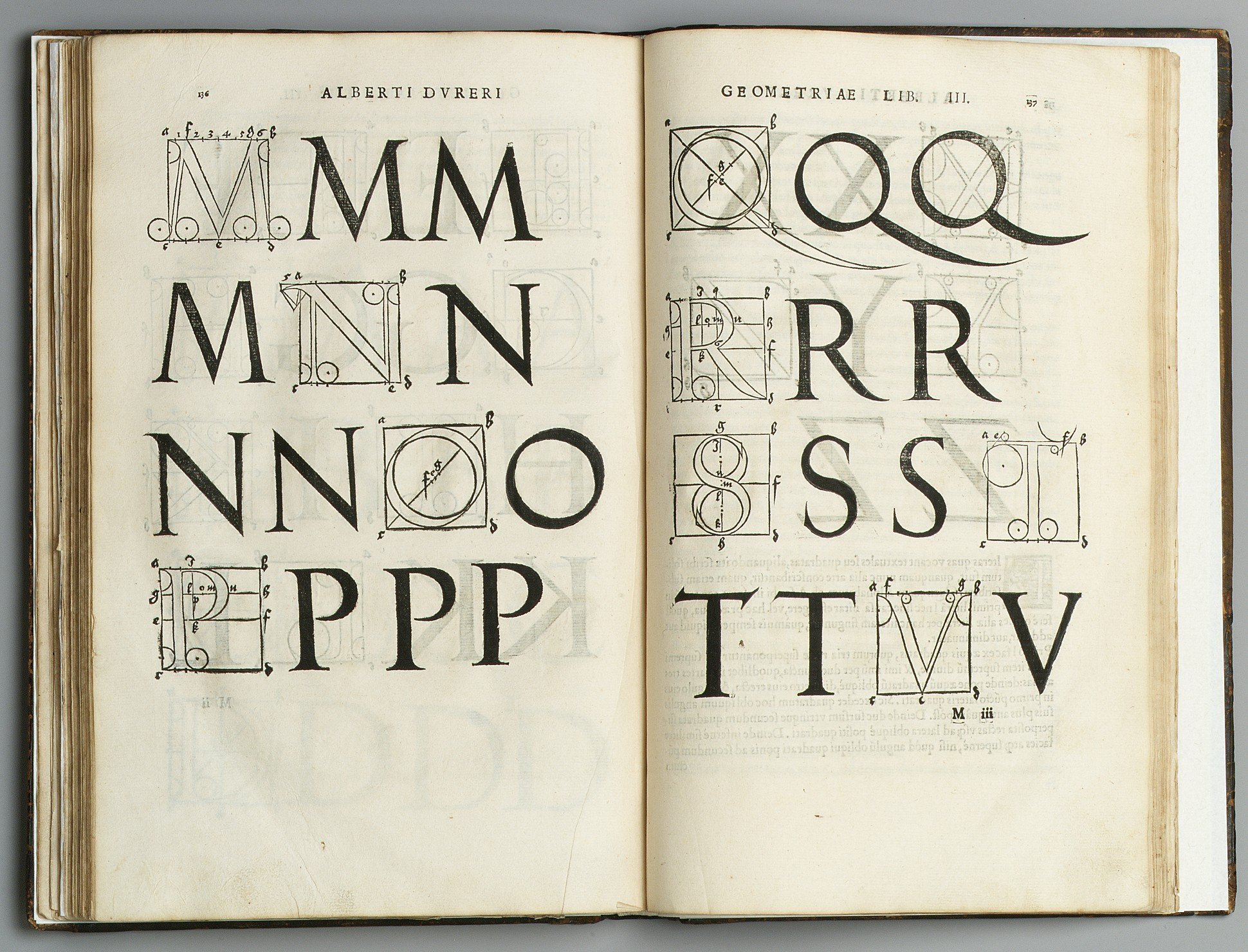
“Explore Albrecht Dürer's lesser-known role as an architectural theorist through this illustrated book. It reveals the German Renaissance master's intellectual depth beyond his famous prints and paintings.”
This illustrated book, titled "Alberti Dvreri pictoris et architecti praestantissimi De vrbibvs...", offers a fascinating glimpse into the theoretical side of Albrecht Dürer, a towering figure of the German Renaissance. While Dürer is perhaps best known for his masterful prints like "Adam and Eve" and "The Four Horsemen of the Apocalypse," he was also a profound theorist, deeply interested in mathematics, perspective, and proportion. This book, published posthumously, likely compiles his extensive research and writings on urban planning and fortification, a testament to his multifaceted genius. Dürer's contact with major Italian artists such as Raphael and Leonardo da Vinci influenced his rigorous approach to art and architecture, pushing him to explore the scientific principles underlying artistic creation. This work demonstrates his commitment to intellectual inquiry beyond the canvas or woodblock, solidifying his reputation not just as a painter and printmaker, but also as a significant architectural theorist.
Five details hide in plain sight. Pick one and we’ll show you exactly where to look.
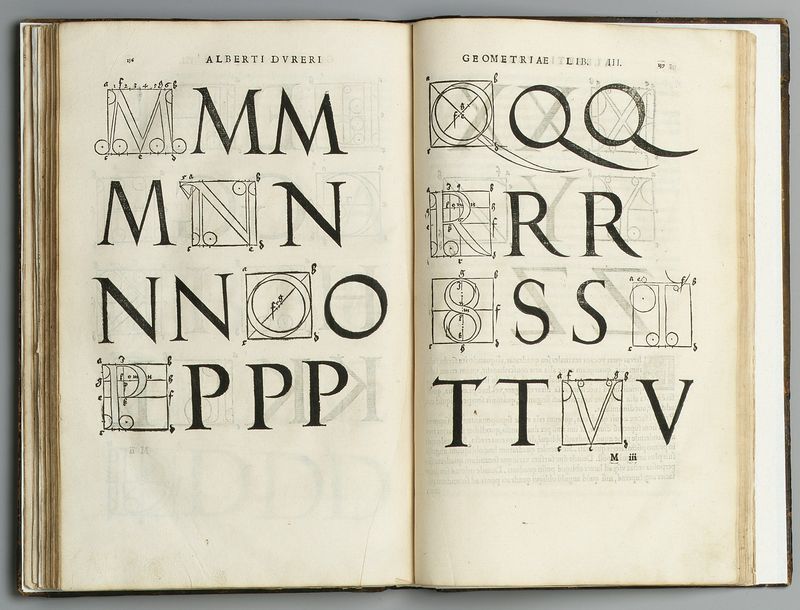
Each row pairs a gridded sketch with finished bold letters. Your eye moves from the plan to the result, then on to the next letter in the alphabet.
On the right page, look at the big Q whose tail sweeps out in a long, thin curve. Set beside its construction diagram, it shows how the letter's grace rests on a geometric plan.
Find the small square with a circle and a diagonal line inside, beside the Q. Dürer builds the letter from simple shapes, so you can see the method.
At lower left, the P diagram sits inside a grid of crossing lines with small circles near the base. The curve and stem are laid out by measurement, not drawn by eye.
Pale, reversed shapes of other letters show faintly through the paper, especially on the left page. They are most likely the printing on the reverse side showing through the thin sheet.
The full narration walks you through "Alberti Dvreri pictoris et architecti praestantissimi De vrbibvs..." — the story behind it, the details most visitors miss, and why it matters. Free in the Art Whisper app.
Renaissance master who revolutionized printmaking across Europe before turning 30.
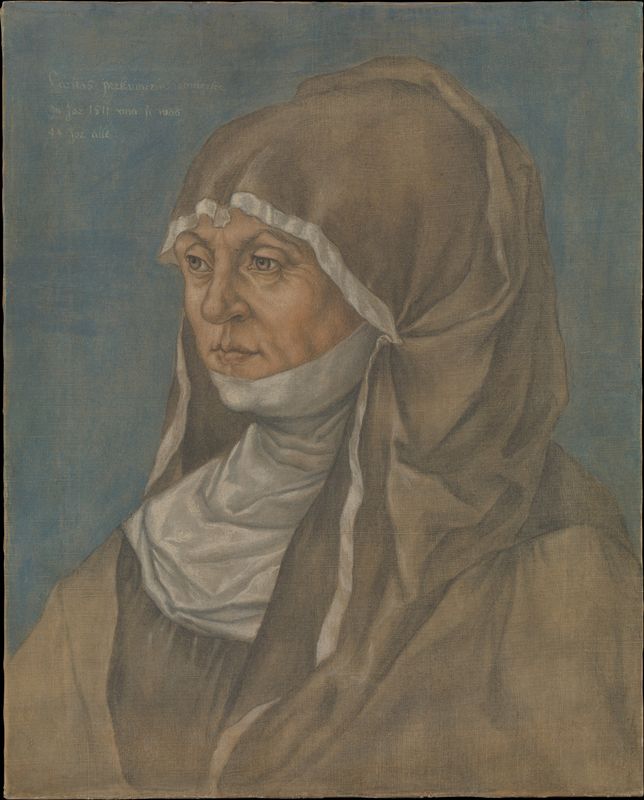 Portrait of a Woman, Said to Be Caritas Pirckheimer (1467–1532)
The Metropolitan Museum of Art
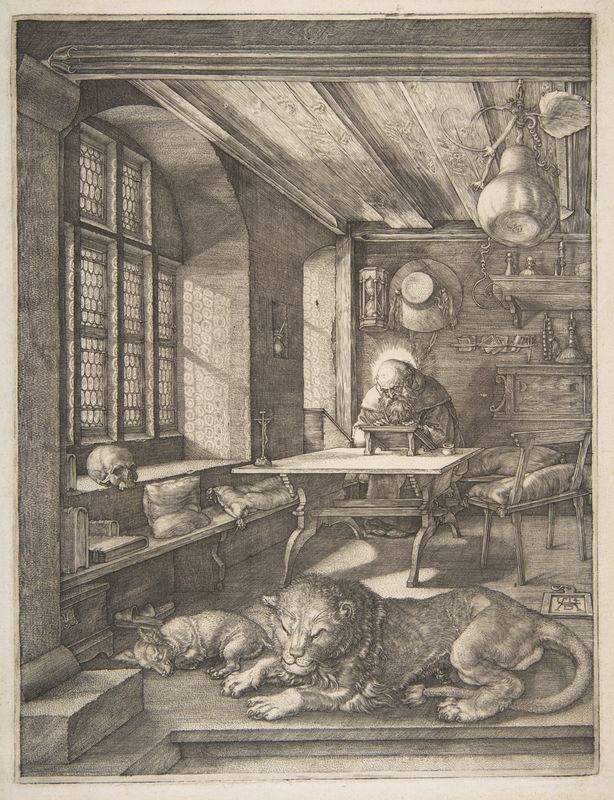 Saint Jerome in His Study
1521 · National Museum of Ancient Art
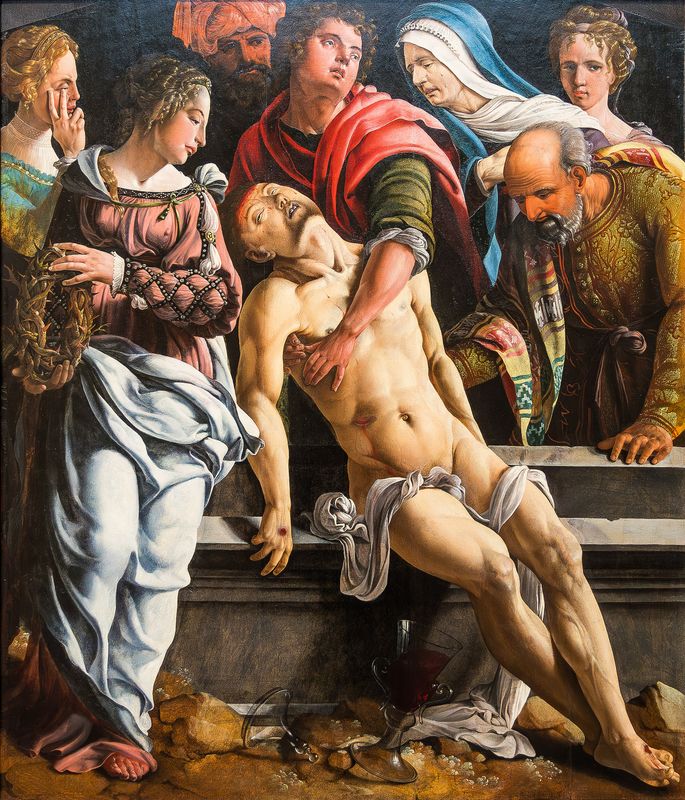 The Lamentation
1477 · The Metropolitan Museum of Art
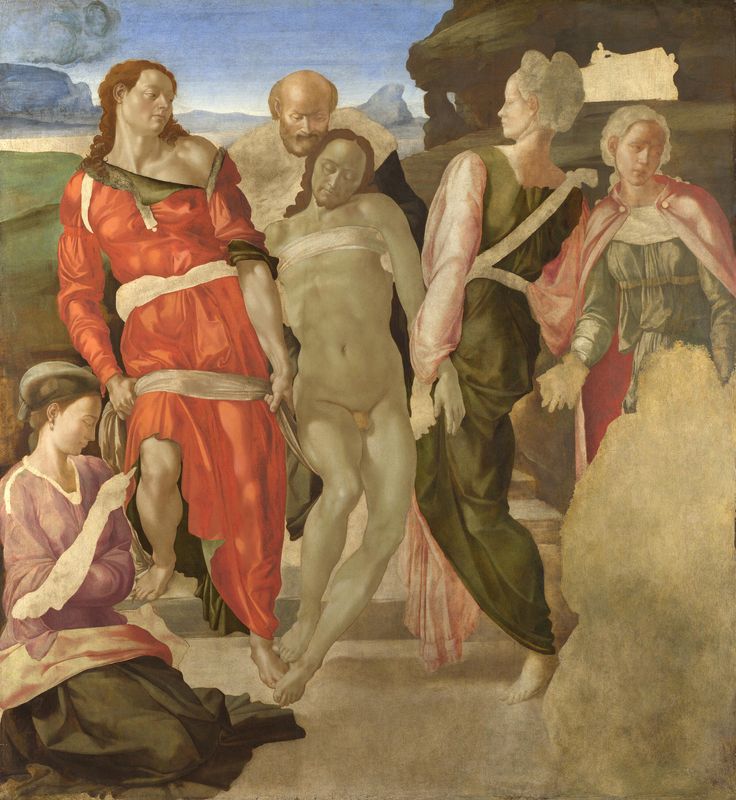 The Entombment
1485 · The Metropolitan Museum of Art
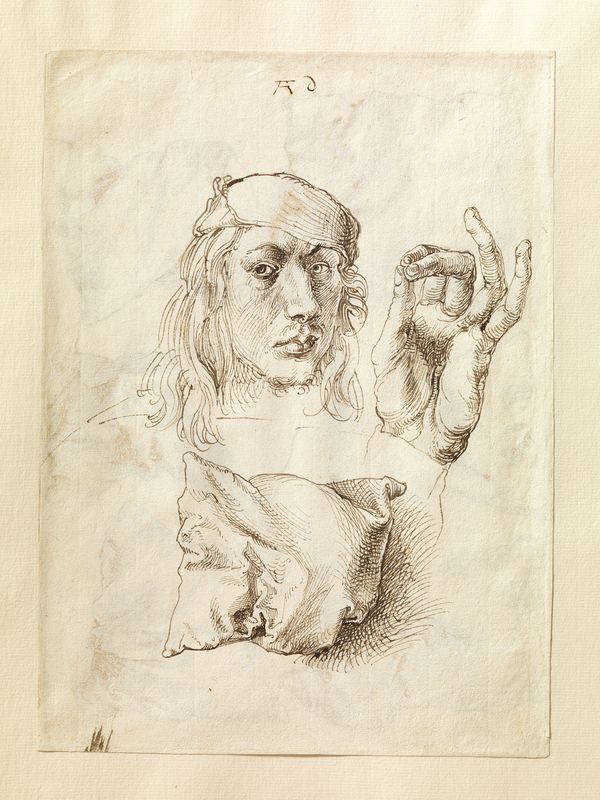 Self-portrait, Study of a Hand and a Pillow (recto); Six Studies of Pillows (verso)
1493 · The Metropolitan Museum of Art
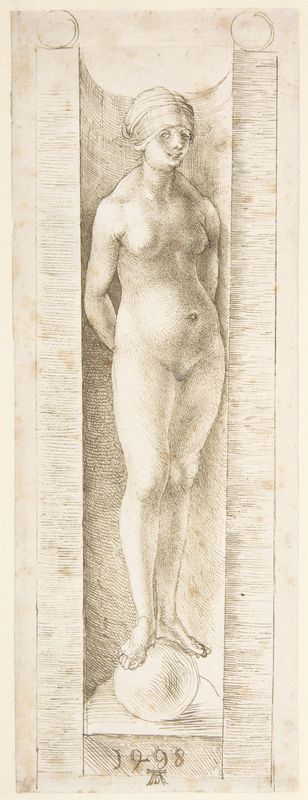 Fortuna in a Niche
1498 · The Metropolitan Museum of Art
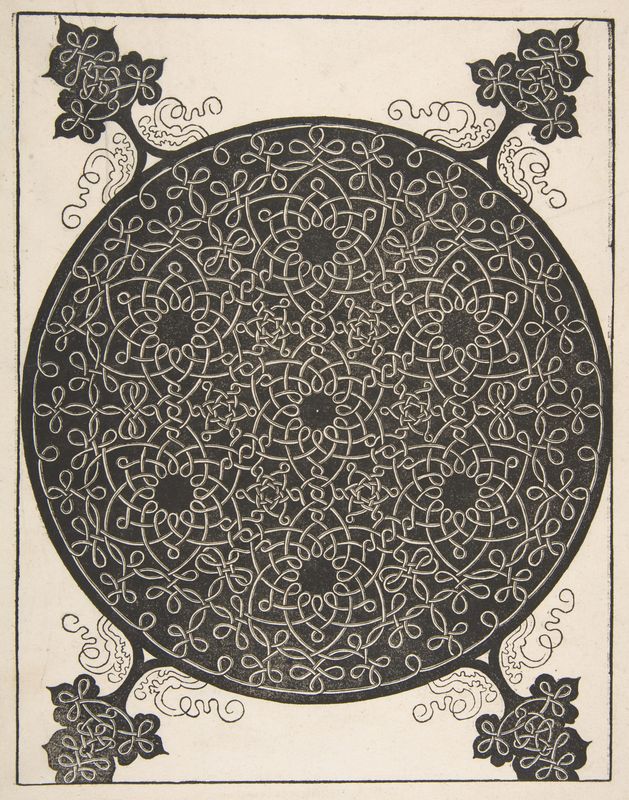 Embroidery Pattern with Seven Six-pointed Stars and Four Corner Pieces
1500 · The Metropolitan Museum of Art
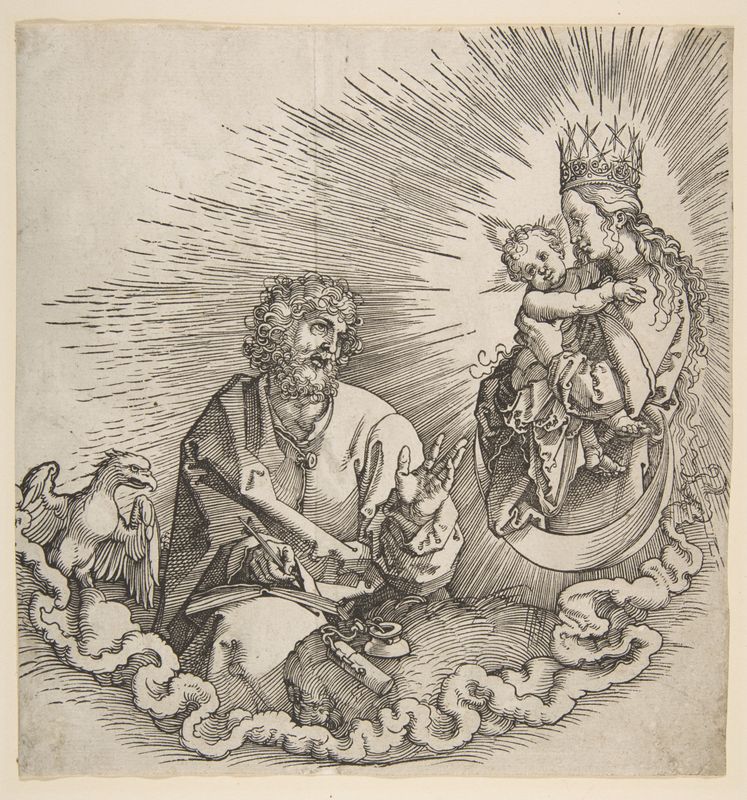 The Virgin Appearing to Saint John, Frontispiece to the Apocalypse
1511 · The Metropolitan Museum of Art
Beyond Dürer and Northern Renaissance: works from the same years.
 Same era · 1520s–1550s
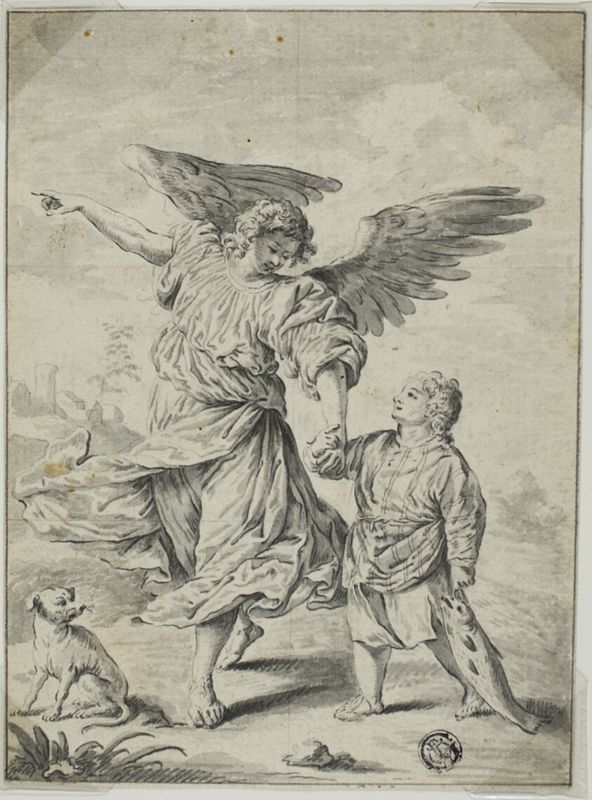
Tobias and the Angel
Titian · 1530 · Madonna dell'Orto
 Same era · 1520s–1550s
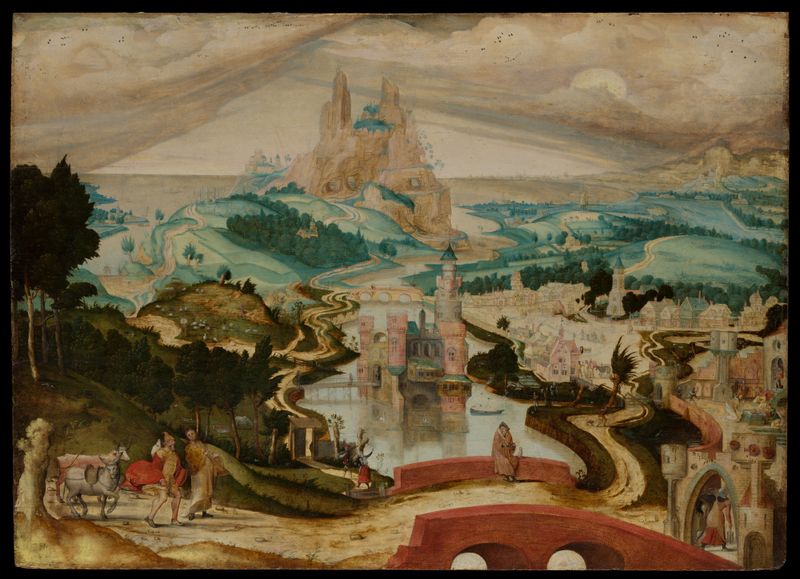
The Arrival in Bethlehem
Master of the View of Saint Gudula · 1540 · The Metropolitan Museum of Art
 Same era · 1520s–1550s
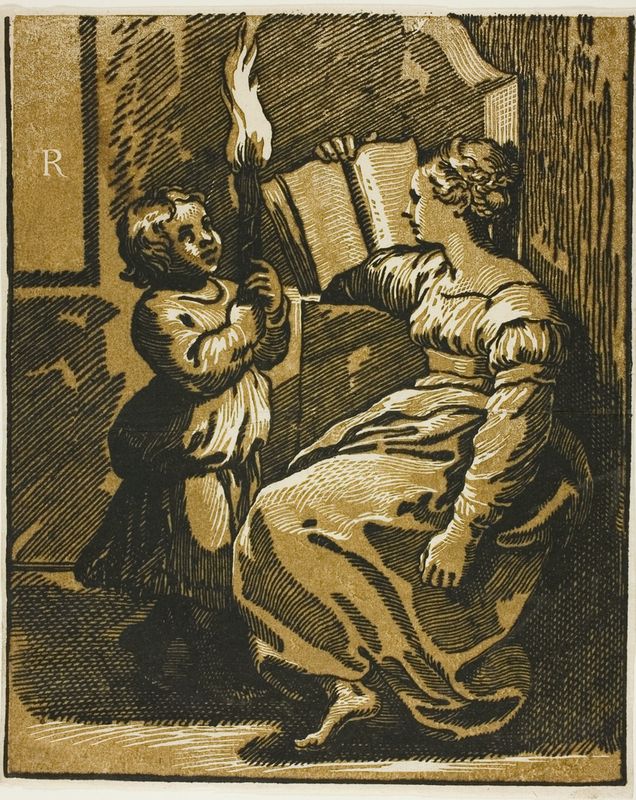
The Sibyl and a Child Bearing a Torch
Artist Unknown - The Mercat Cross, Aberdeen · 1520 · Art Institute of Chicago
 Same era · 1520s–1550s
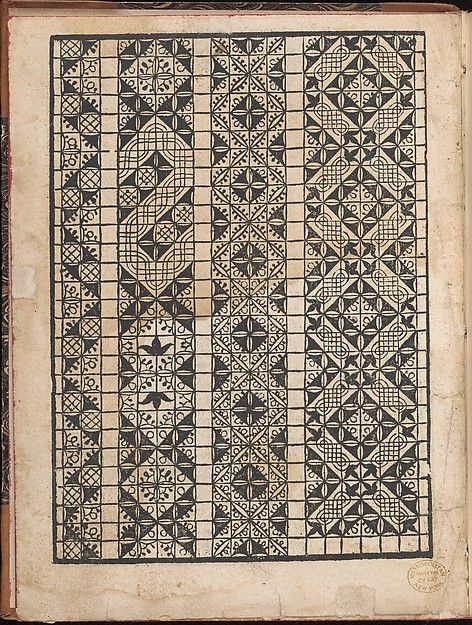
Spechio di pensieri delle belle et Virtudiose donne, page 14 (recto)
Matteo Pagano · 1546 · The Metropolitan Museum of Art
 Same era · 1520s–1550s
Large Alpine Landscape
Pieter Bruegel the Elder · 1550 · The Metropolitan Museum of Art