01
The passed teacup
Two hands meet at a blue saucer near the center of the print. The seated visitor reaches toward it as the hostess holds it out, a small, quiet exchange between the women.
1 of 5 on the painting
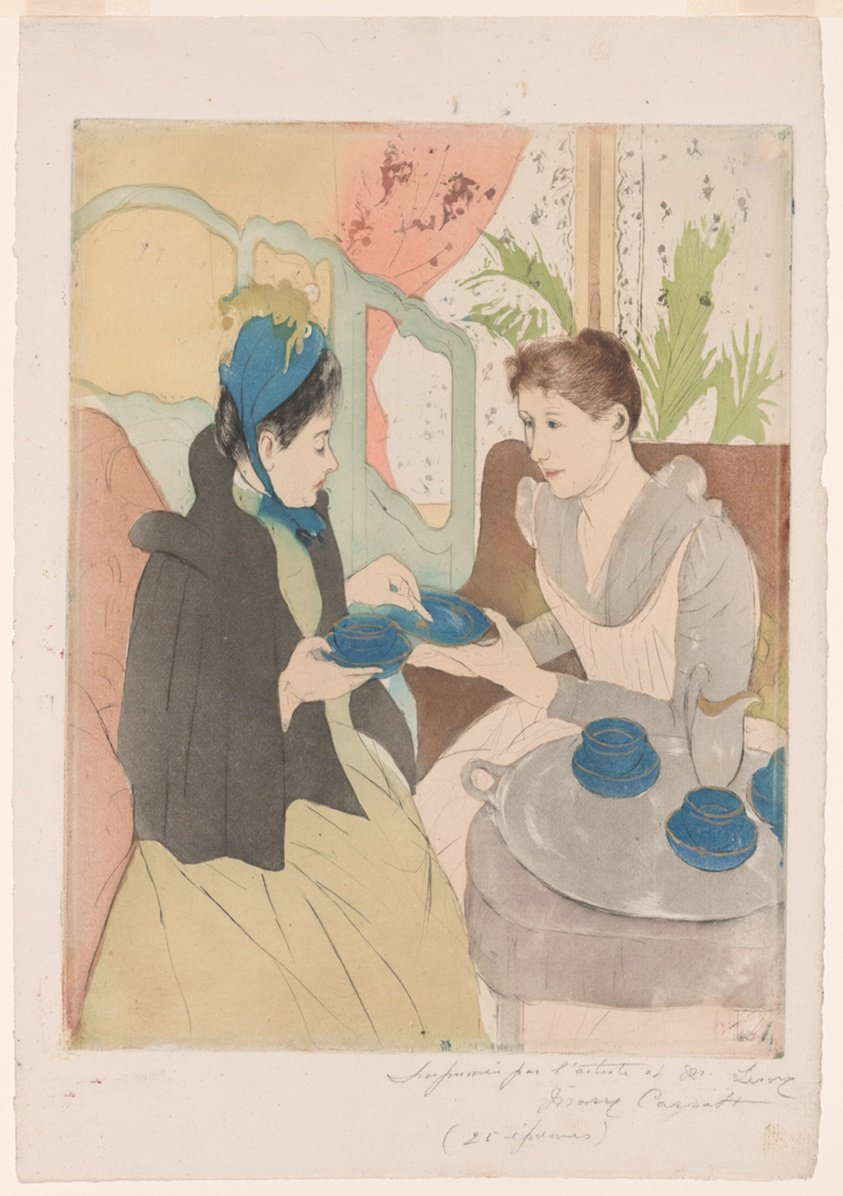
“Stop to appreciate this delicate print, which offers a quiet glimpse into a private moment of a 19th-century tea party, rendered with a soft, intimate touch.”
In "Afternoon Tea Party," a woman dressed in an elegant hat and gloves holds a teacup, seemingly engaged in conversation. Her companion, partially obscured, suggests a private, intimate gathering rather than a grand social event. The soft, muted colors, achieved through drypoint and aquatint, lend a delicate quality to the scene, emphasizing the quiet dignity of the moment. This print, made in 1890, captures a common ritual of late 19th-century upper-class life, yet it focuses on the internal world of the figures, a characteristic often found in Impressionist works. The artist, Mary Cassatt, spent much of her adult life in France and exhibited with the Impressionists, often depicting the domestic and social lives of women.
Five details hide in plain sight. Pick one and we’ll show you exactly where to look.
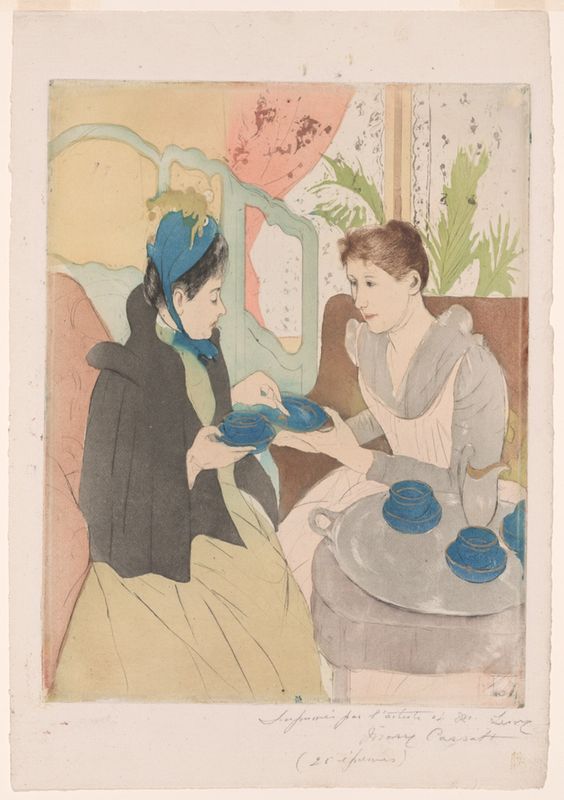
Two hands meet at a blue saucer near the center of the print. The seated visitor reaches toward it as the hostess holds it out, a small, quiet exchange between the women.
The two women lean toward each other with their faces angled inward, and the visitor's dark cape stands out against the pale tones around her.
The visitor's blue bonnet with its yellow plume and blue ribbon is the strongest color on the left, and the blue teacups on the right pick it up.
Blue cups on the round table at lower right repeat the blue of the hat and the cup in hand, tying the two sides together.
Look at the yellow skirt. Fine, sharp lines in the folds show the drypoint needle drawing straight into the plate.
The full narration walks you through Afternoon Tea Party — the story behind it, the details most visitors miss, and why it matters. Free in the Art Whisper app.
Mary Cassatt, an American painter and printmaker, captured the intimate world of women and children with remarkable tenderness, often exhibiting with the Impressionists in France.
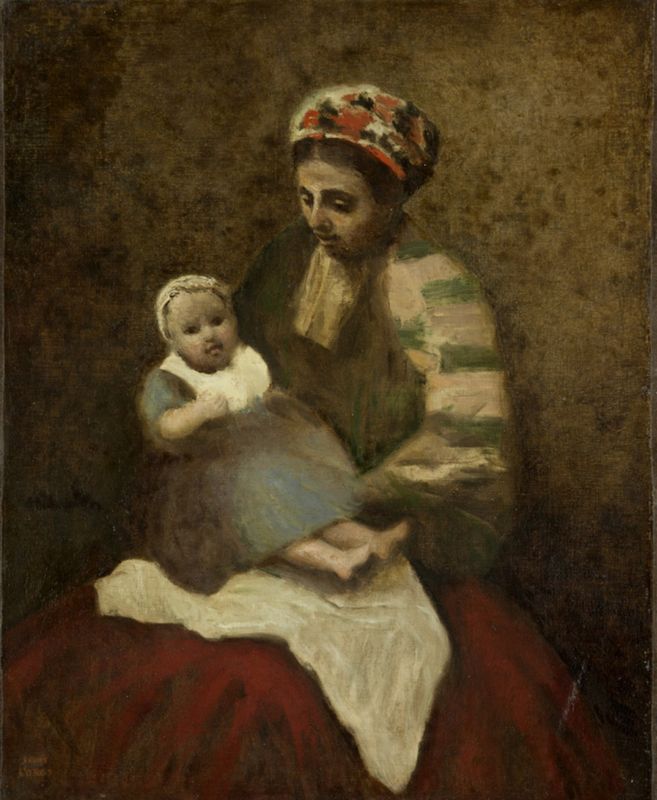 Nurse and Child
1896 · The Metropolitan Museum of Art
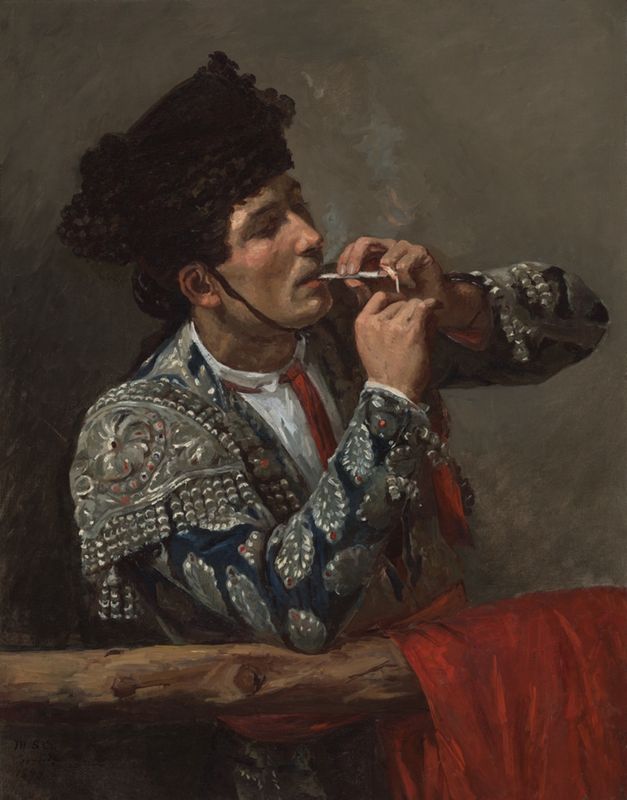 After the Bullfight
1873 · Art Institute of Chicago
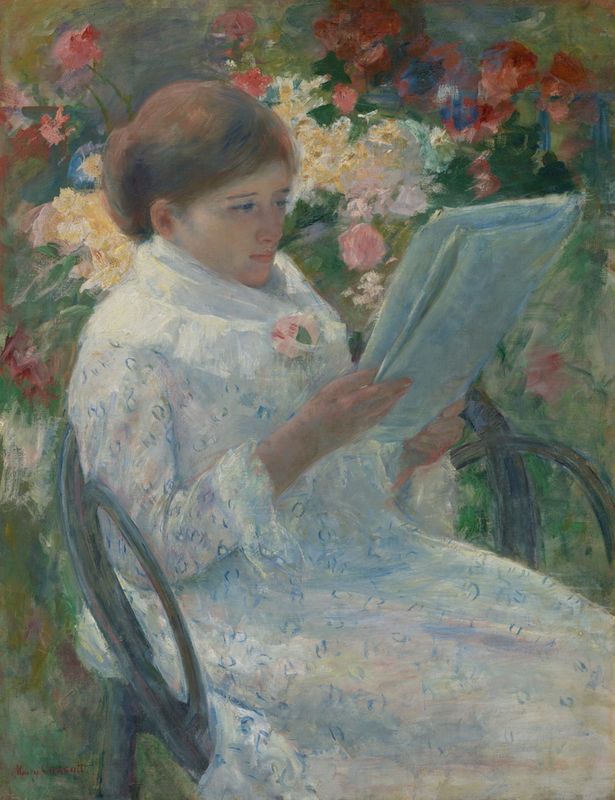 On a Balcony
1879 · Art Institute of Chicago
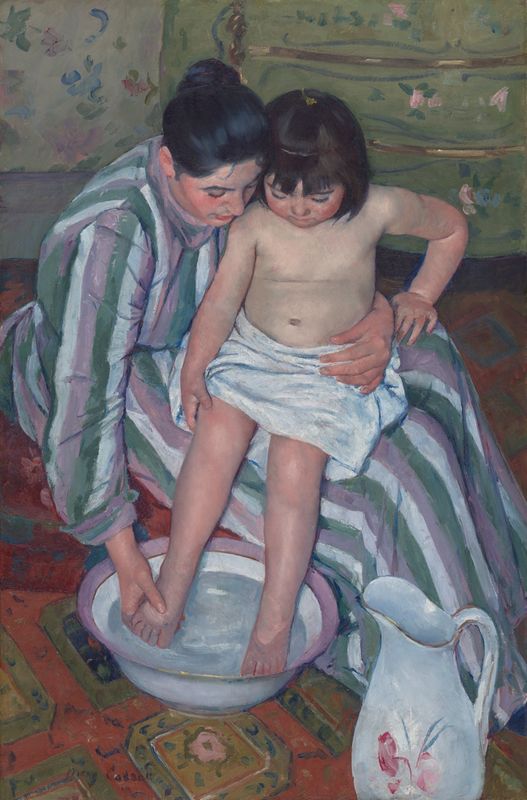 The Child's Bath
1893 · Art Institute of Chicago
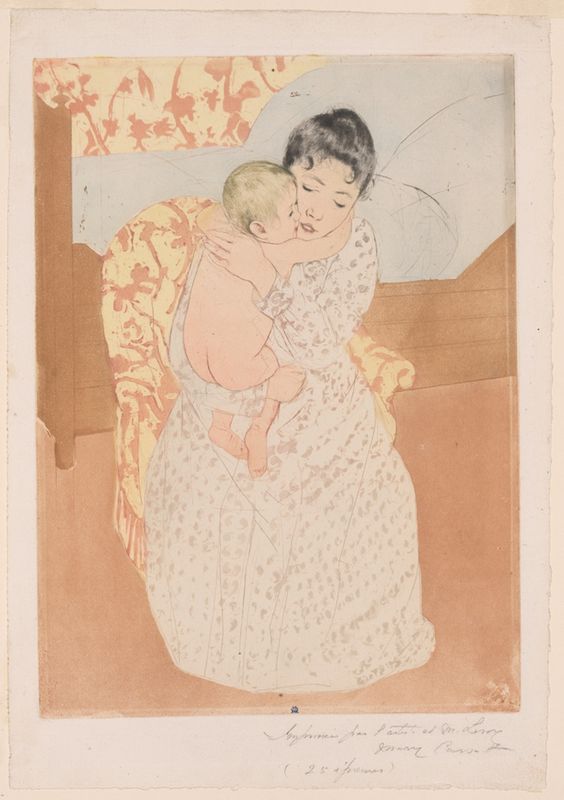 Maternal Caress
1896 · Philadelphia Museum of Art
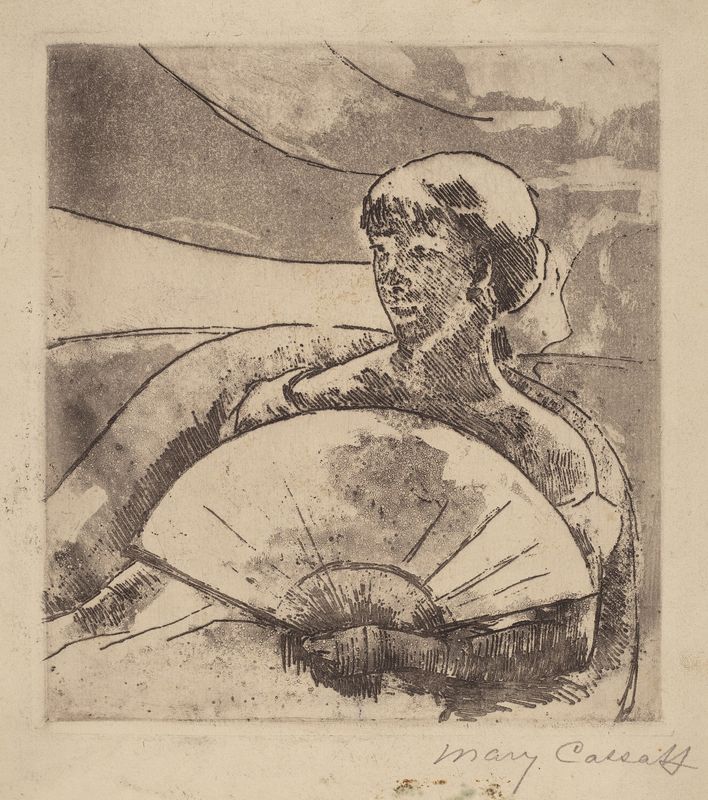 In the Opera Box (No. 3)
1875 · The Metropolitan Museum of Art
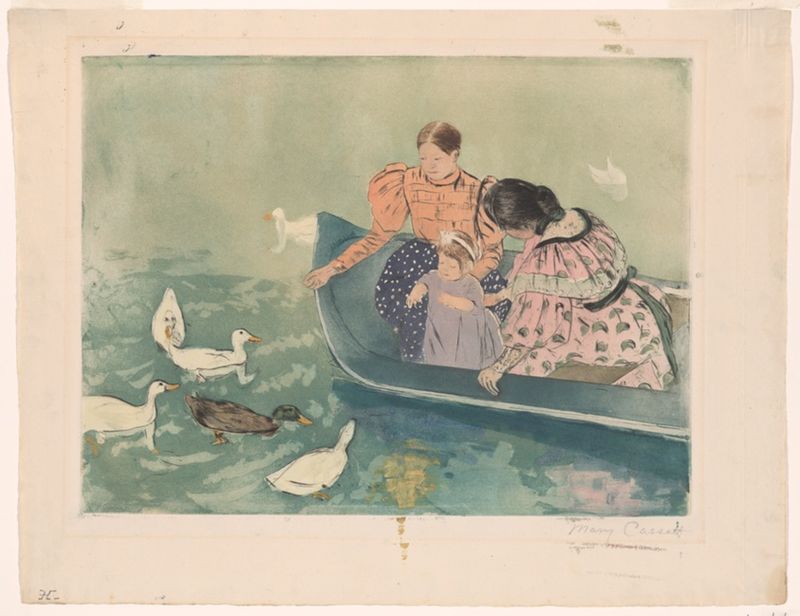 Feeding the Ducks
1890 · The Metropolitan Museum of Art
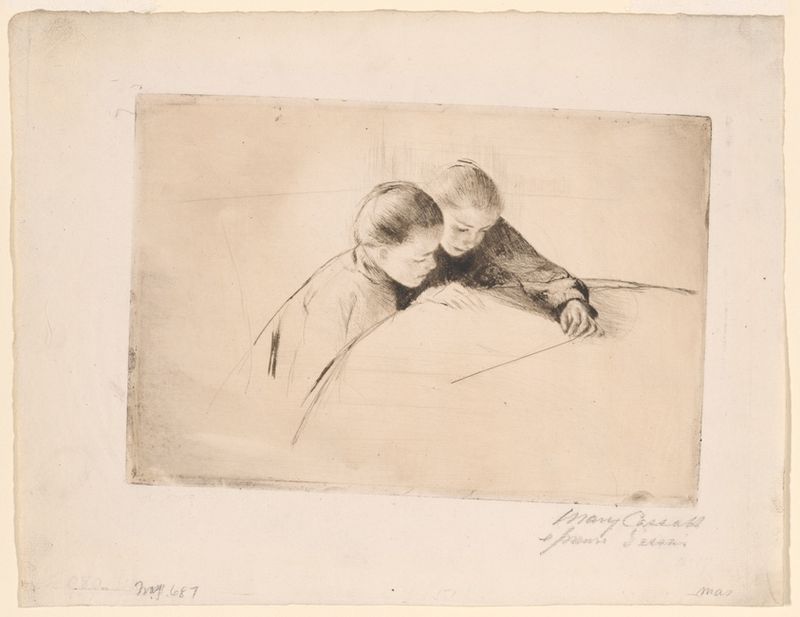 The Map
1890 · The Metropolitan Museum of Art
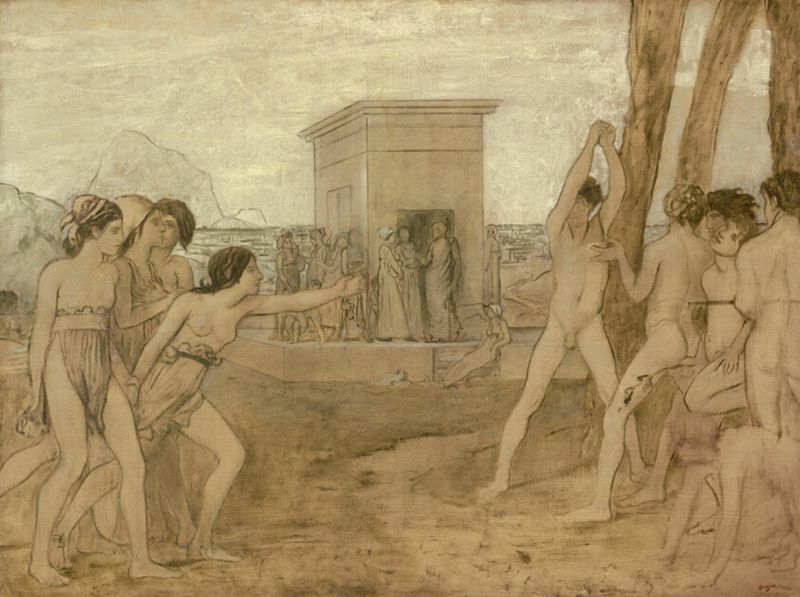 Young Spartan Girls Challenging Boys
Degas · 1860 · Art Institute of Chicago
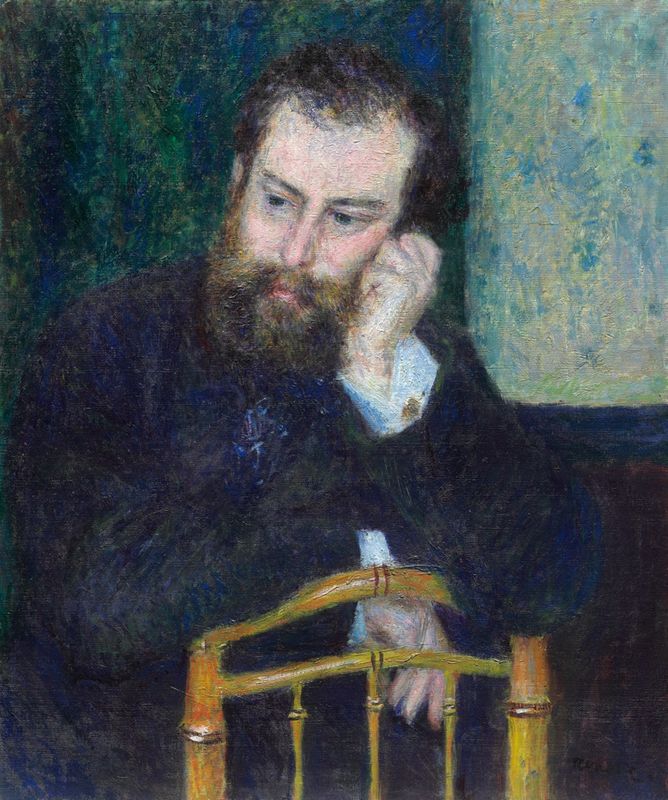 Alfred Sisley
Renoir · 1864 · Foundation E.G. Bührle Collection
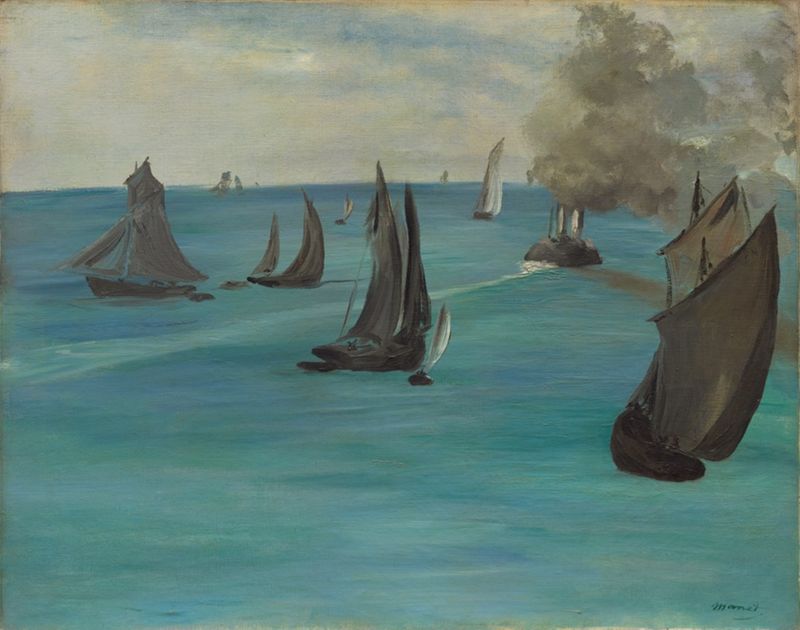 Sea View, Calm Weather (Vue de mer, temps calme)
Manet · 1864 · Art Institute of Chicago
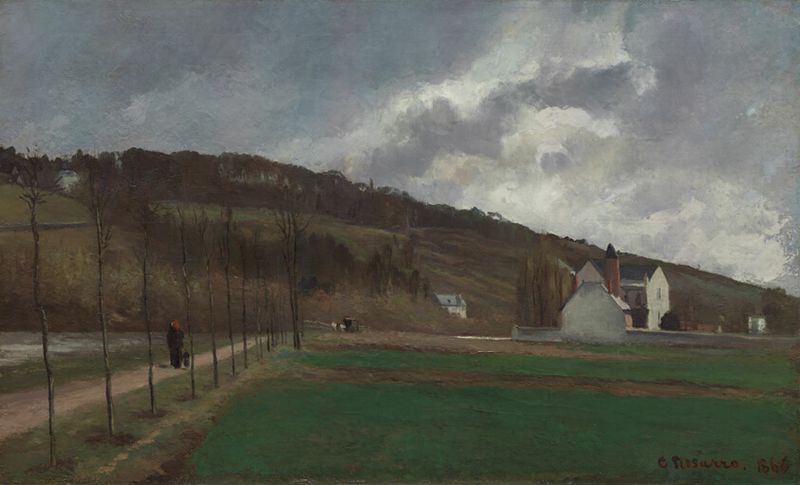 The Banks of the Marne in Winter
Pissarro · 1866 · Art Institute of Chicago
Beyond Cassatt and Impressionism: works from the same years, and from the other movements Afternoon Tea Party belongs to.
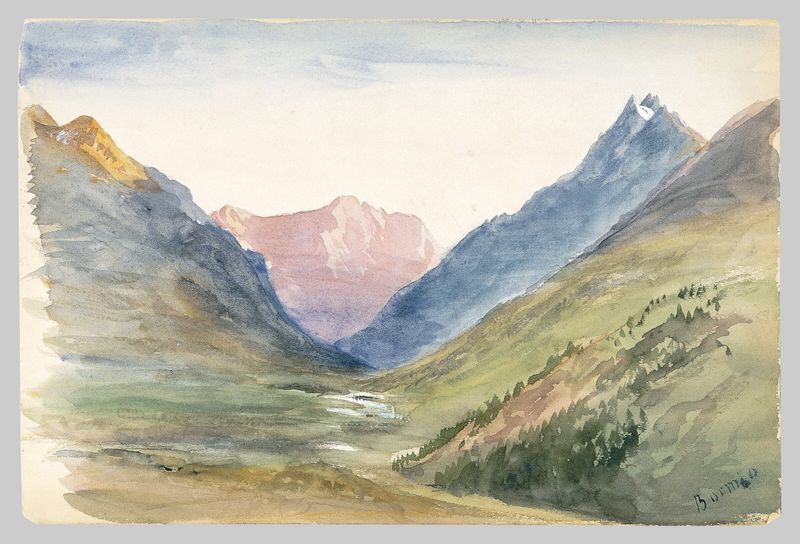 Same movement · Tonalism
Mountain View at Bormio (from Switzerland 1869 Sketchbook)
John Singer Sargent · 1869 · The Metropolitan Museum of Art
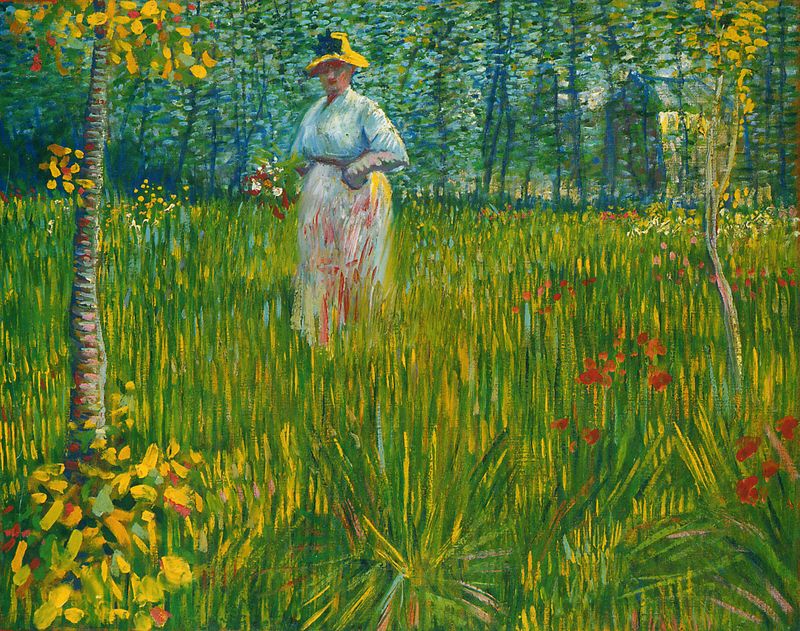 Same era · 1870s–1900s
A Woman Walking in a Garden
Vincent van Gogh · 1887 · Frans Buffa & sons
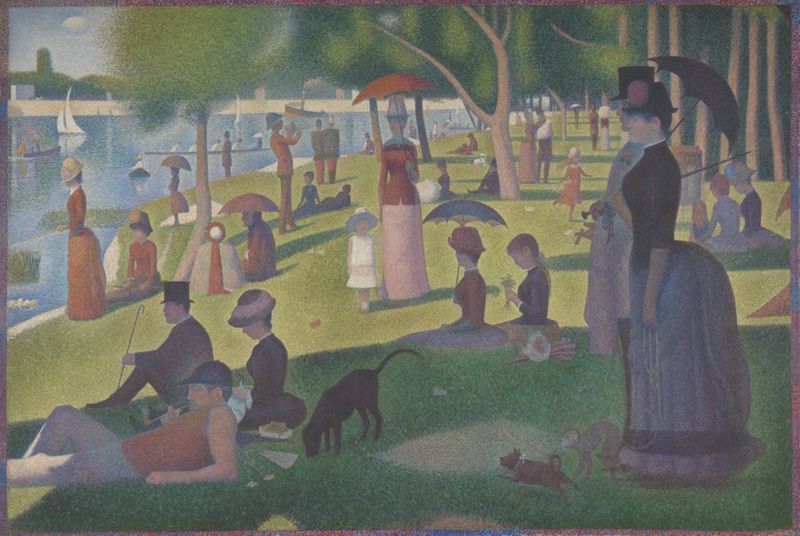 Same era · 1870s–1900s
A Sunday on La Grande Jatte — 1884
Okada Saburosuke · 1884 · Art Institute of Chicago
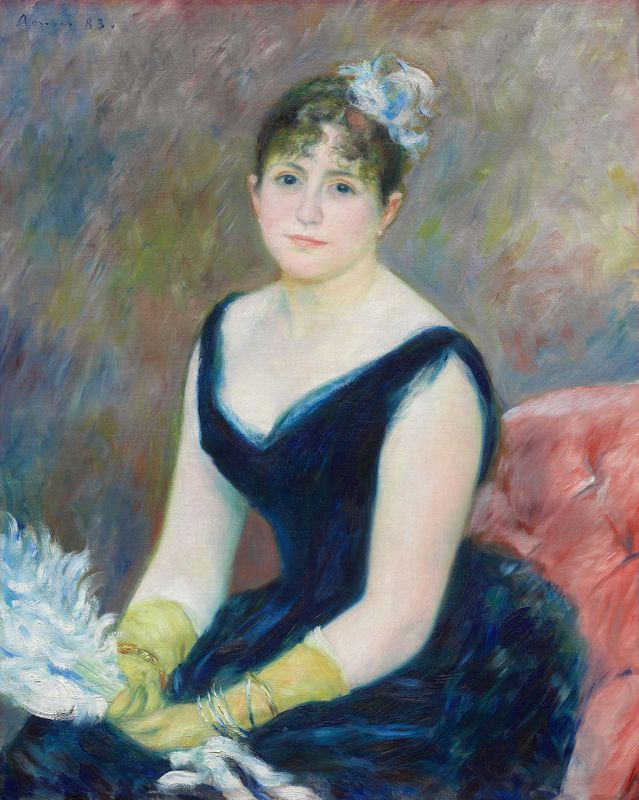 Same era · 1870s–1900s
Madame Léon Clapisson
Léon-Victor Dupré · 1883 · Art Institute of Chicago
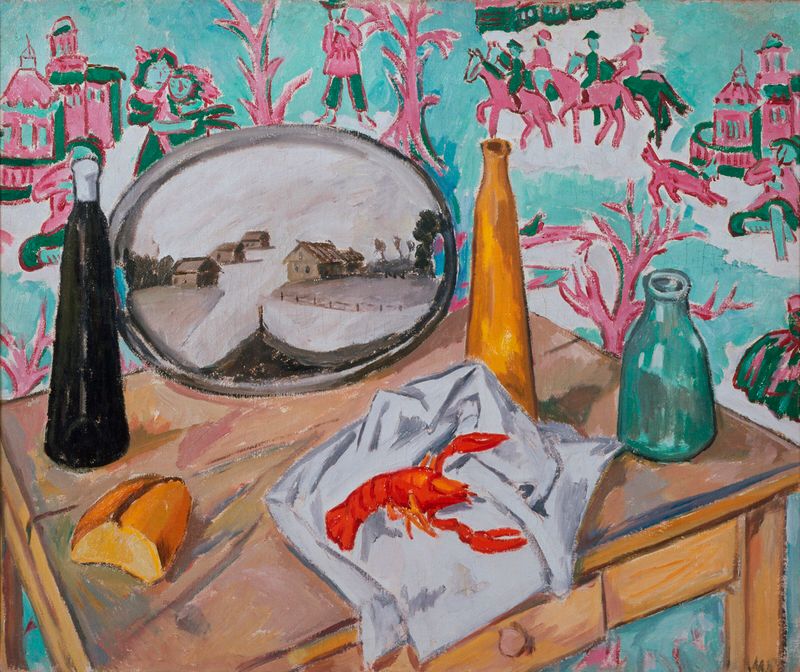 Same era · 1870s–1900s
Still Life with Crayfish
Mikhail Larionov · 1900 · Museum Ludwig
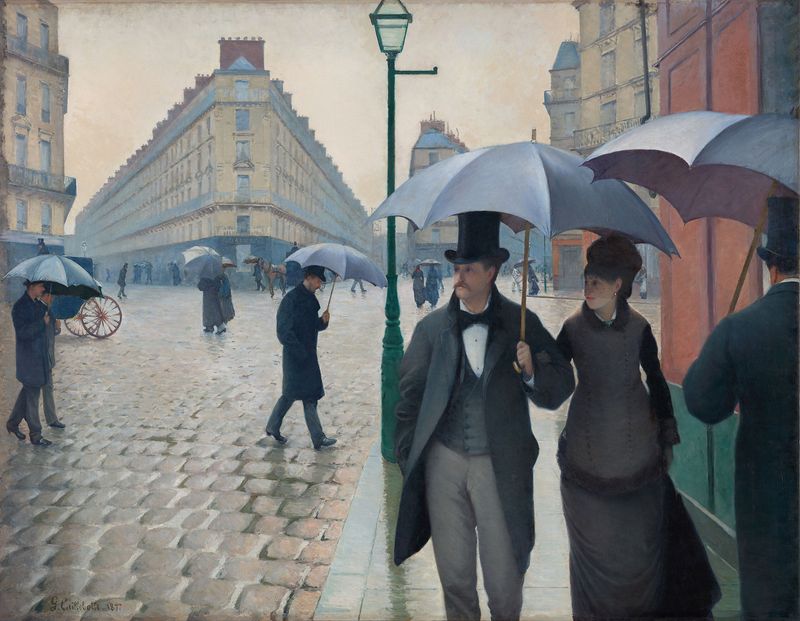 Same era · 1870s–1900s
Paris Street; Rainy Day
Kawabata Gyokushō · 1877 · Art Institute of Chicago
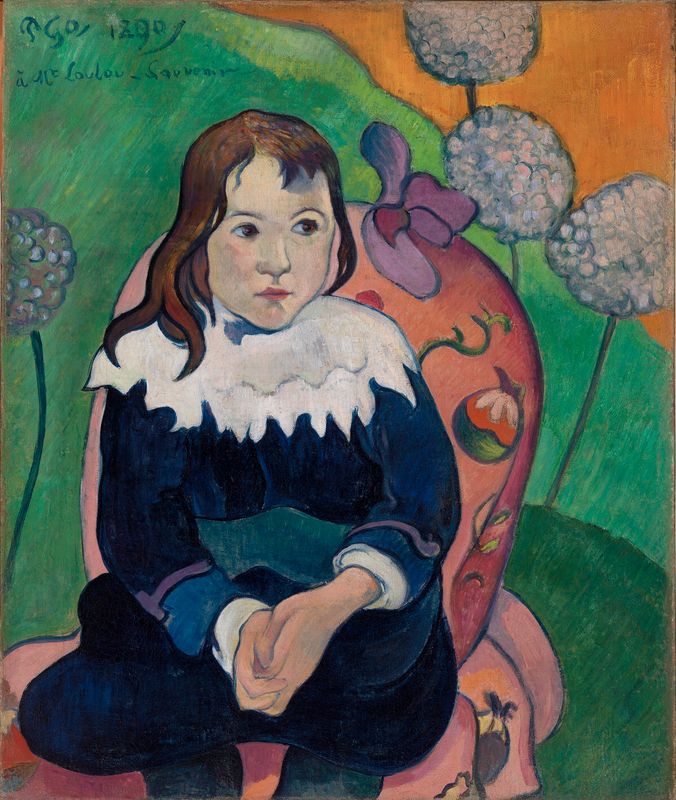 Same era · 1870s–1900s
Mr. Loulou (Louis Le Ray)
Paul Gauguin · 1890 · Barnes Foundation
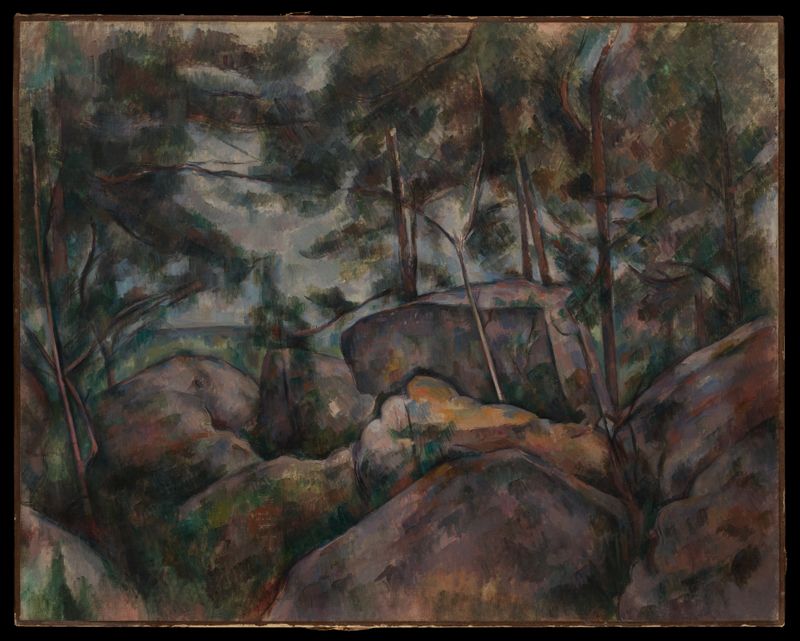 Same era · 1870s–1900s
Rocks at Fontainebleau
Paul Cézanne · 1890 · The Metropolitan Museum of Art
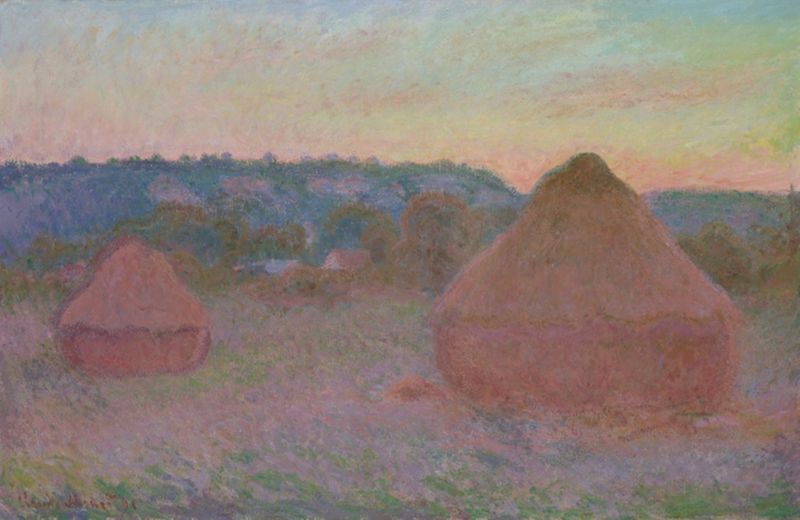 Same era · 1870s–1900s
Stacks of Wheat (End of Day, Autumn)
Claude Monet · 1890 · Art Institute of Chicago
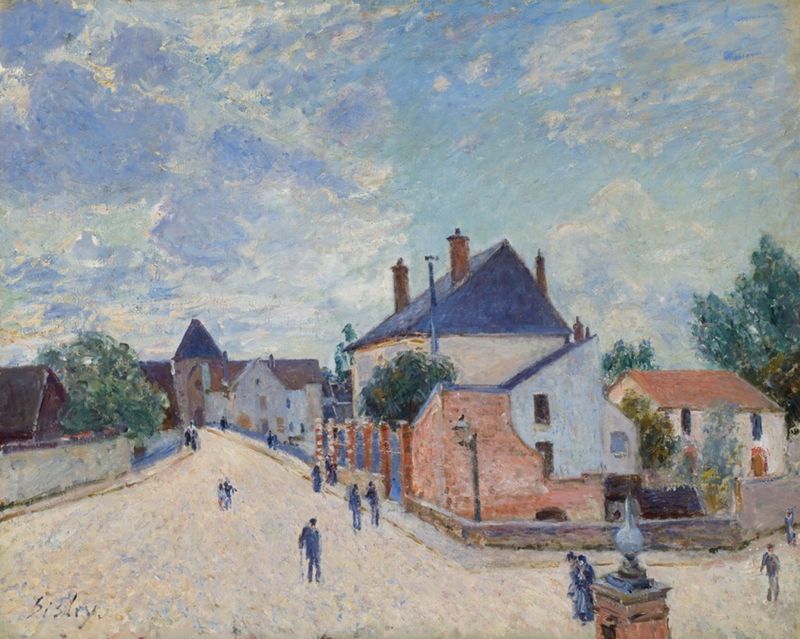 Same era · 1870s–1900s
Street in Moret
Alfred Sisley · 1890 · Art Institute of Chicago
 Same era · 1870s–1900s
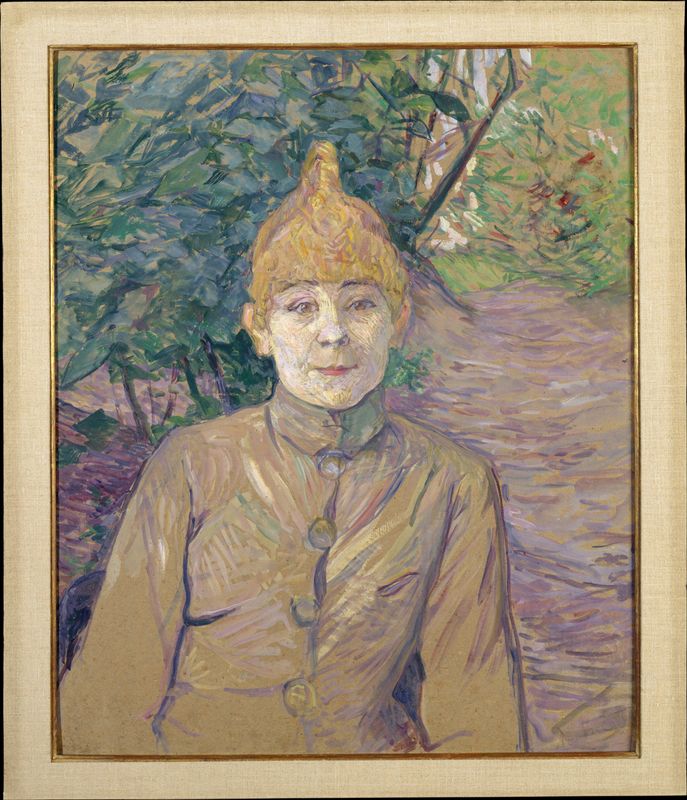
The Streetwalker
Henri de Toulouse-Lautrec · 1890 · The Metropolitan Museum of Art
 Same era · 1870s–1900s
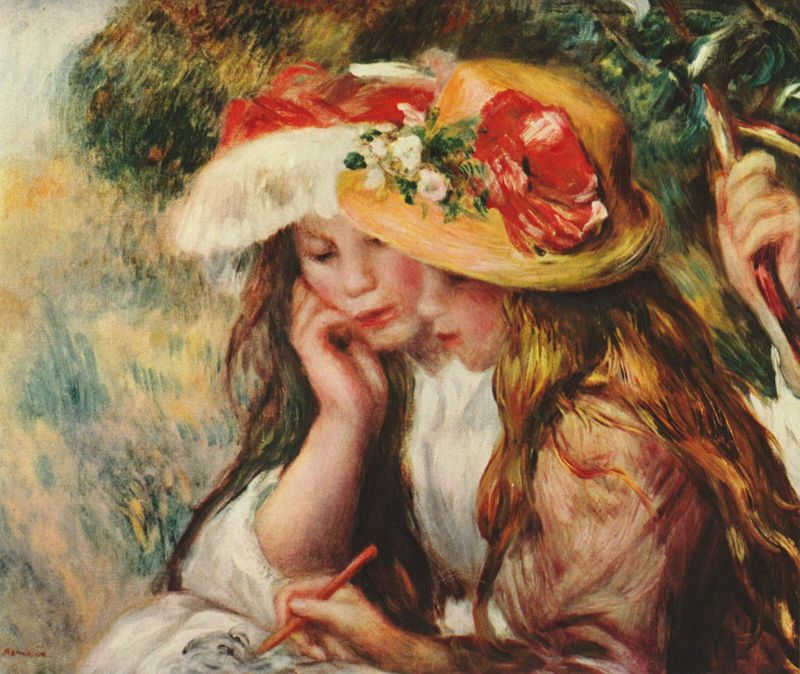
Two Girls Reading in a Garden
Pierre-Auguste Renoir · 1890
 Same era · 1870s–1900s
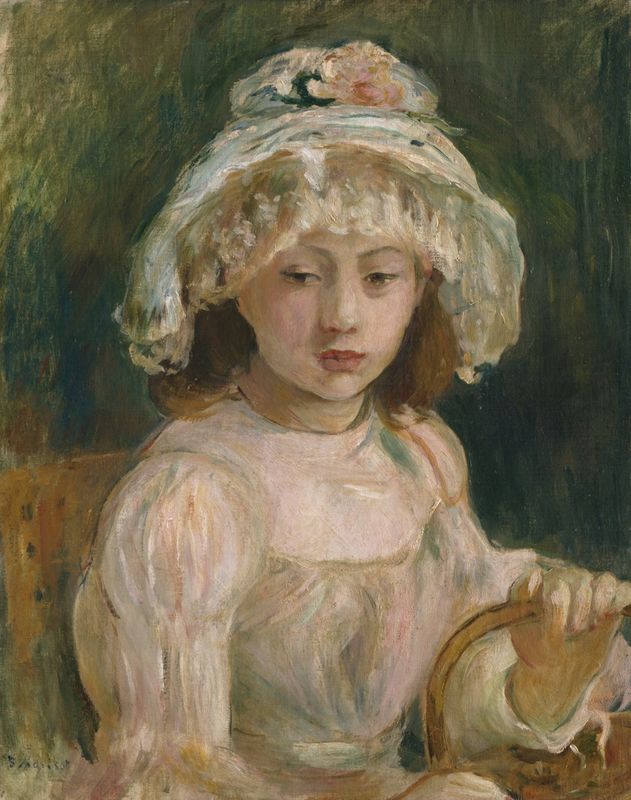
Young Girl with Hat
Berthe Morisot · 1891 · Art Institute of Chicago
