
“Imagine standing in front of a painting that, up close, looks like a mosaic of tiny colored dots — but step back a few feet and suddenly a glowing, vibrant landscape snaps into focus.”
That's Divisionism at work. Emerging in late 19th-century Italy, this style took the scientific ideas behind French Neo-Impressionism and pushed them even further, asking painters to treat color not as something mixed on a palette, but as something assembled in the eye of the viewer. The result is paintings that seem to hum with an almost electric light.
The core idea was borrowed from color theory: place two complementary colors side by side in small strokes or dots, and the human eye will blend them into a third, more luminous color than any mixture of paint could produce. Italian masters of the style like Giovanni Segantini, Gaetano Previati, and Angelo Morbelli applied this with a particular passion, often using longer, more brushstroke-like dabs rather than the perfectly round dots favored by French Pointillists. This gave Italian Divisionism a slightly more expressive, almost vibrating quality.
What sets Divisionism apart in a gallery is its atmosphere. These paintings don't just depict light — they seem to generate it. Haystacks glow, mountain lakes shimmer, and factory workers are bathed in an almost spiritual radiance. The movement had a surprisingly political edge too, with many artists drawn to Socialist ideals, using their luminous technique to dignify the lives of laborers and peasants. It's a style that rewards patience: the longer you look, the more the painted world seems to breathe.
- Period
- c. 1885–1907
- Peak
- around 1895
- Born in
- Italy
- Key artists
- Albert Dubois-Pillet, Anna Boch, Charles Angrand, Emile Bernard
- Came before
- Impressionism
- Came after
- Italian Futurism
When it happened
- CAME BEFOREImpressionism
- ~1885 · STARTED
- ~1895 · PEAKED
- ~1907 · ENDED
- CAME AFTERItalian Futurism
What makes it Divisionism
Separated Color Dots or Strokes
Colors are applied as distinct dabs, never blended on canvas — the eye does the mixing from a distance.
e.g. The Two Mothers by Giovanni SegantiniLuminous, Glowing Light Effects
Complementary colors placed side by side create an optical brightness no mixed paint color can match.
e.g. Ave Maria at the Crossing by Giovanni SegantiniElongated, Expressive Brushmarks
Italian Divisionists often used longer strokes rather than round dots, giving surfaces a woven, energetic texture.
e.g. The Alarm Clock by Angelo MorbelliSocial Realist Subject Matter
Laborers, peasants, and everyday life depicted with dignity — politics encoded in luminous paint.
e.g. For Eighty Cents by Angelo MorbelliSymbolic or Spiritual Atmosphere
The glowing technique often lends scenes a transcendent, almost mystical quality beyond pure realism.
e.g. The Nirvana of Gaetano PreviatiHow to spot Divisionism
Three signs you’re standing in front of one — all easy to see in Darío de Regoyos playing the guitar.
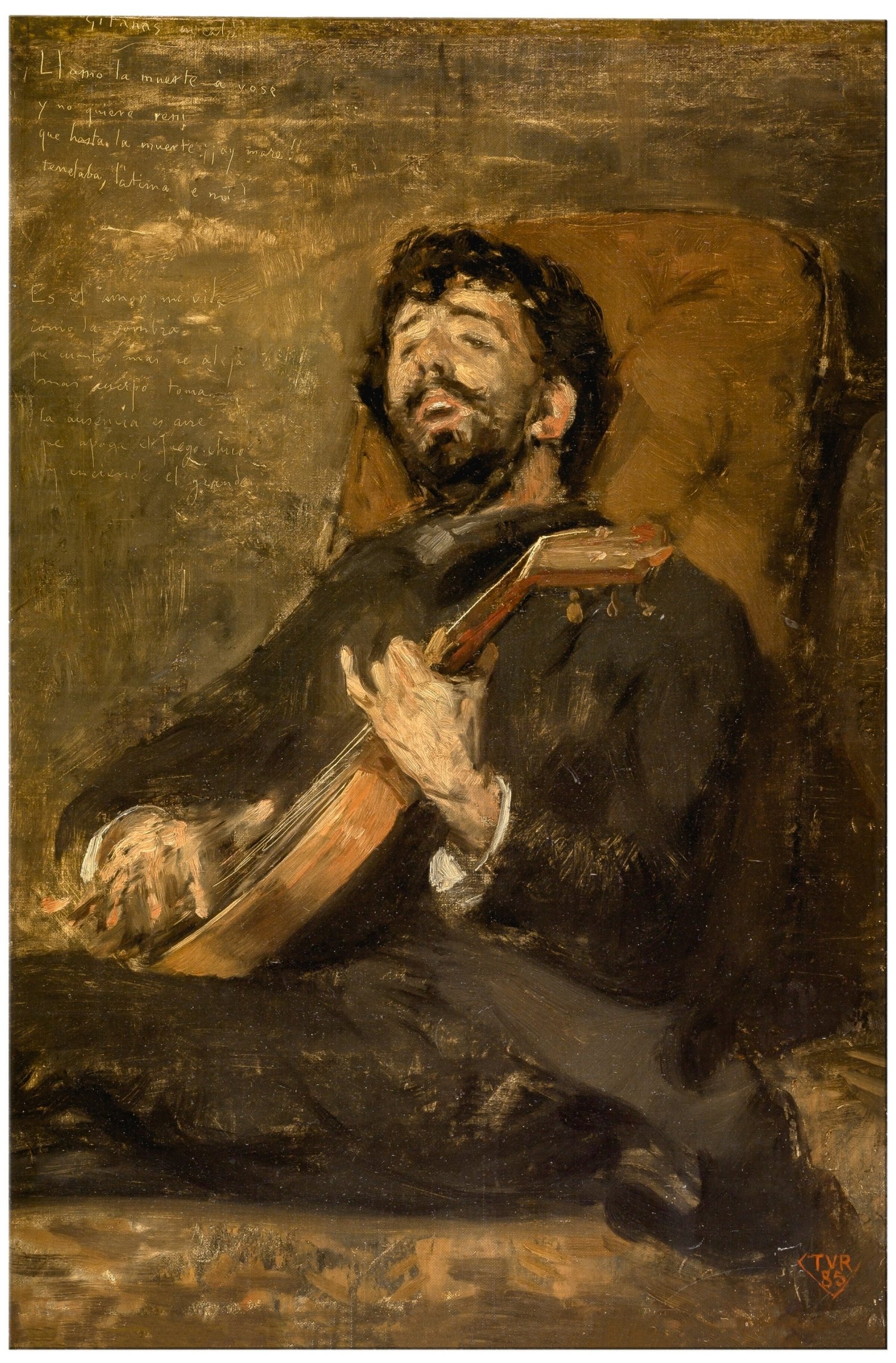
Step close to the canvas — you should see distinct dots or strokes of pure color. Now step back and watch them merge into a glowing scene.
Look for an almost electric brightness, especially in skies and water. The light feels generated from within, not painted on top.
Check the brushwork — Italian Divisionist strokes are often longer and more linear than French Pointillist dots, almost like stitches of color.
Divisionism is also called 'Chromoluminarism' — a name that sounds like a superpower, and honestly, making paint glow from within kind of is one.
Young Umberto Boccioni absorbed Divisionism before inventing Futurism — those vibrating dots helped inspire paintings of pure speed and motion.
Unlike the French Pointillists, most Italian Divisionists never met Seurat. They developed their technique independently from his scientific writings alone.
The artists who defined it
Works to know
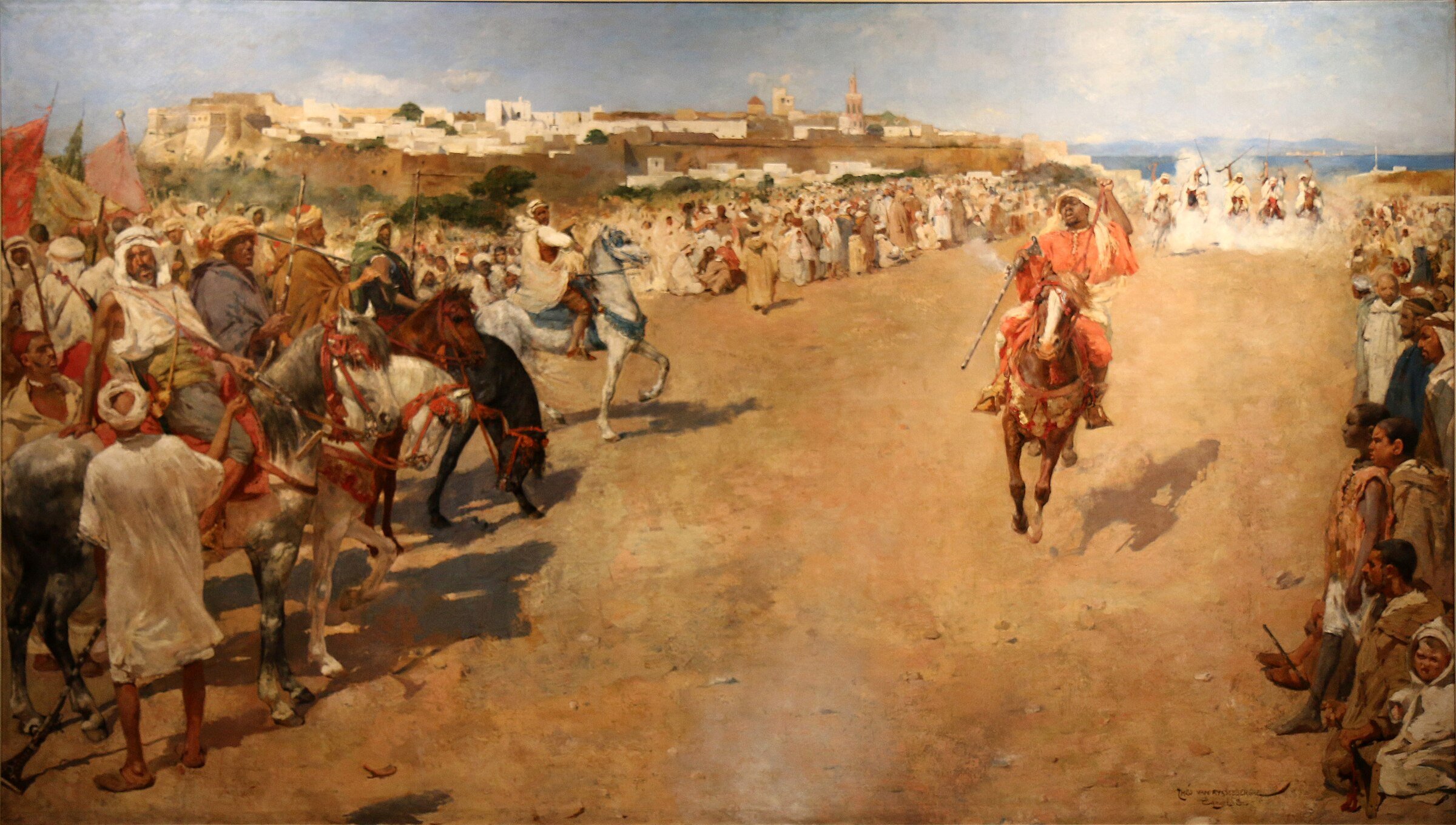
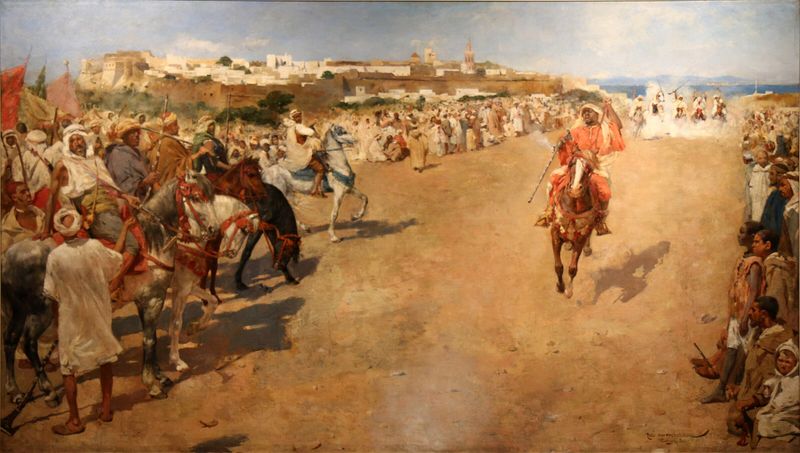 Arabian fantasia
1884 · Royal Museums of Fine Arts of Belgium
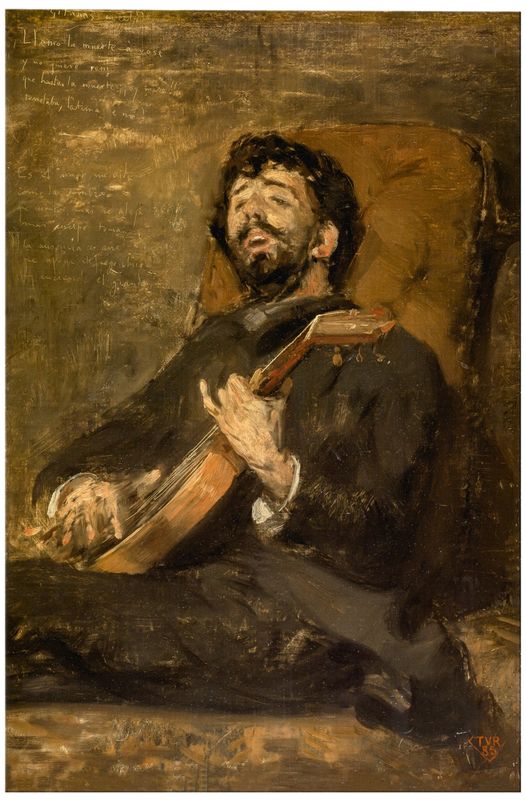 Darío de Regoyos playing the guitar
1885 · Museo del Prado
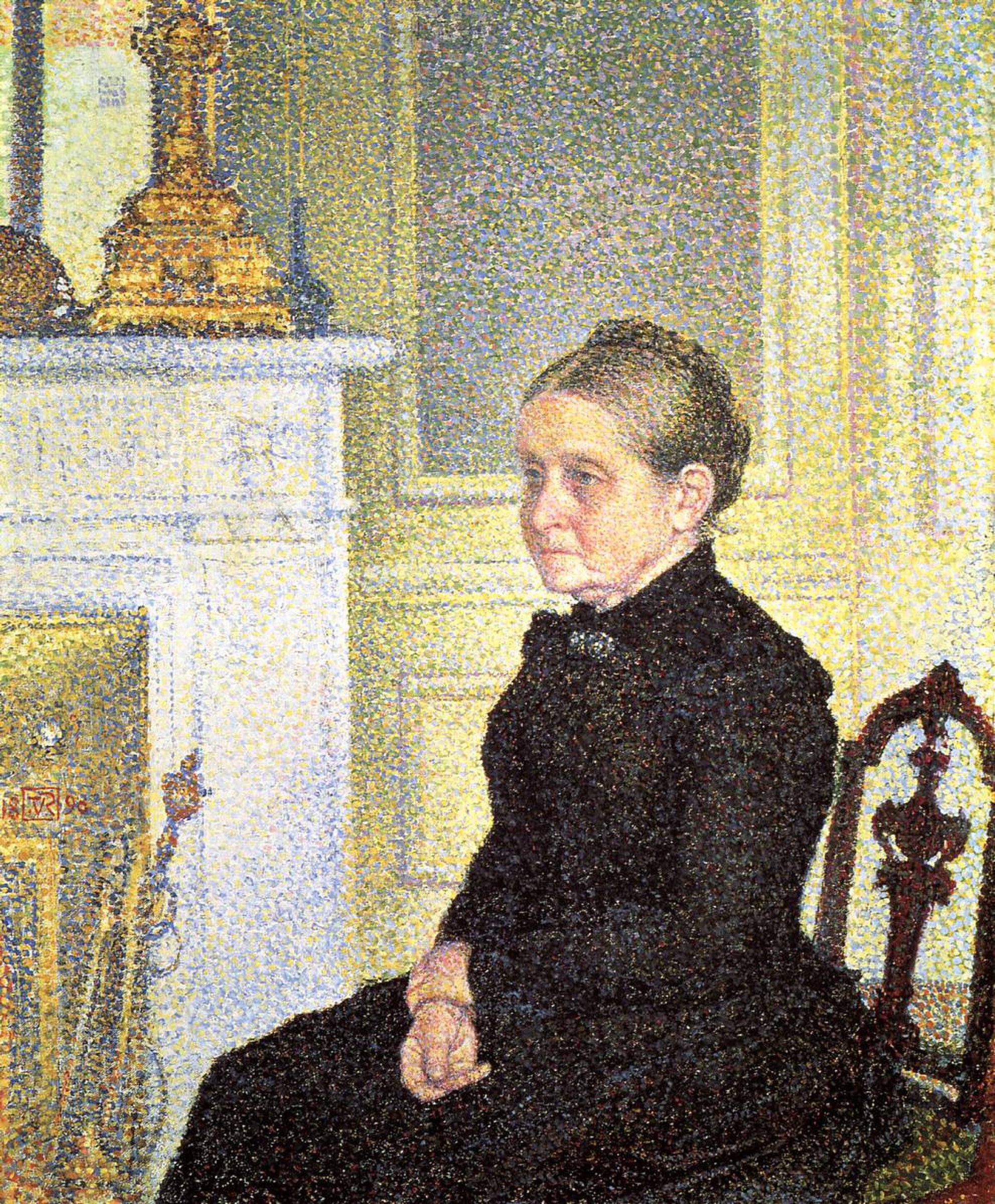
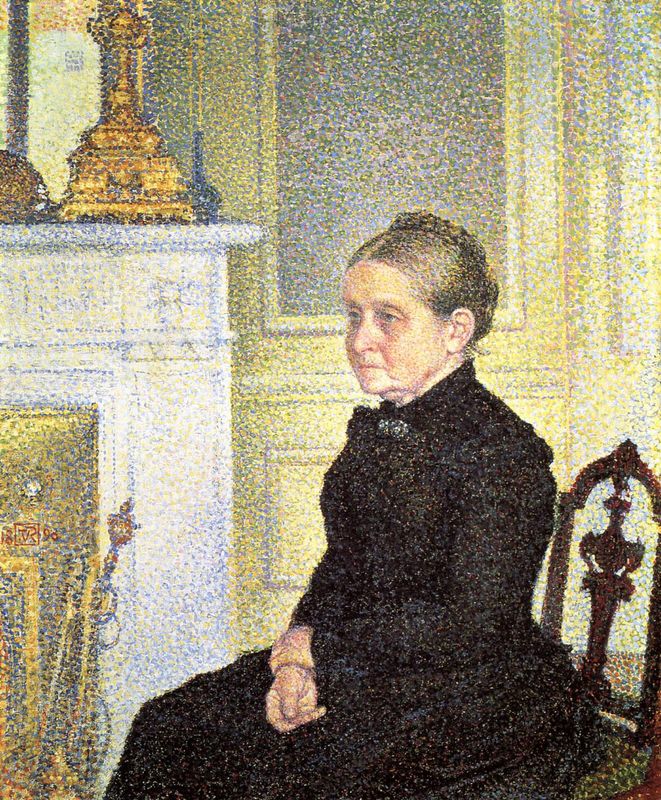 Portrait of Madame Charles Maus
1890 · Royal Museums of Fine Arts of Belgium
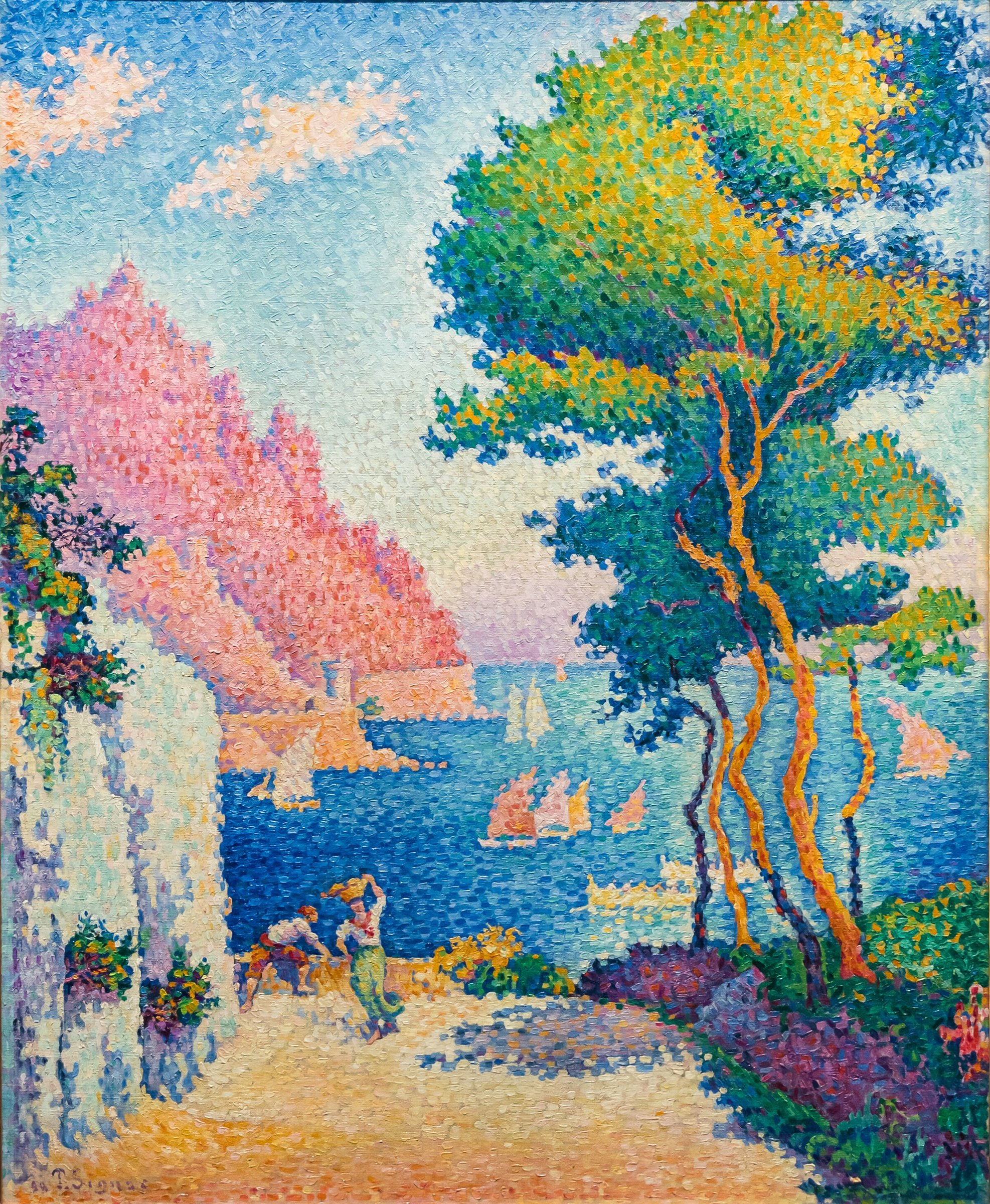
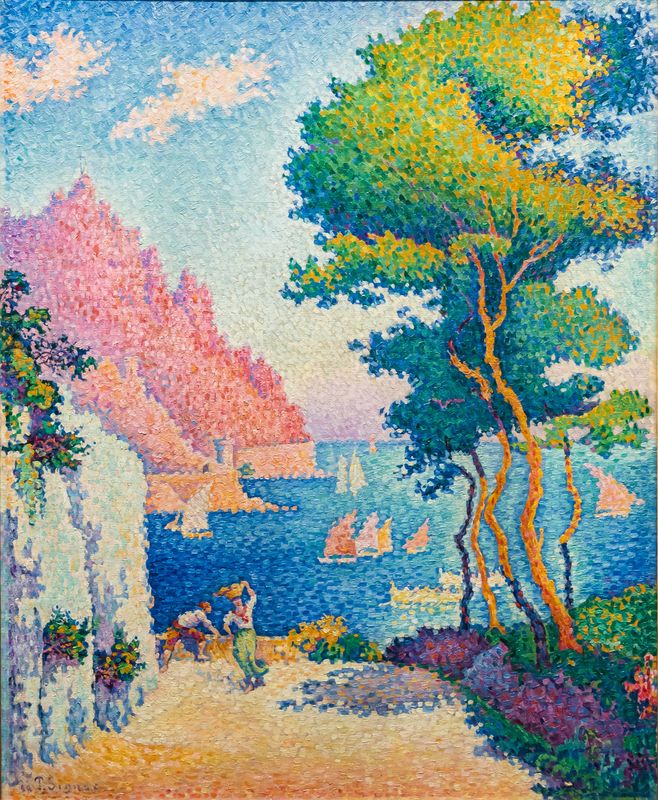 Capo di Noli, near Genoa
1898 · Wallraf–Richartz Museum
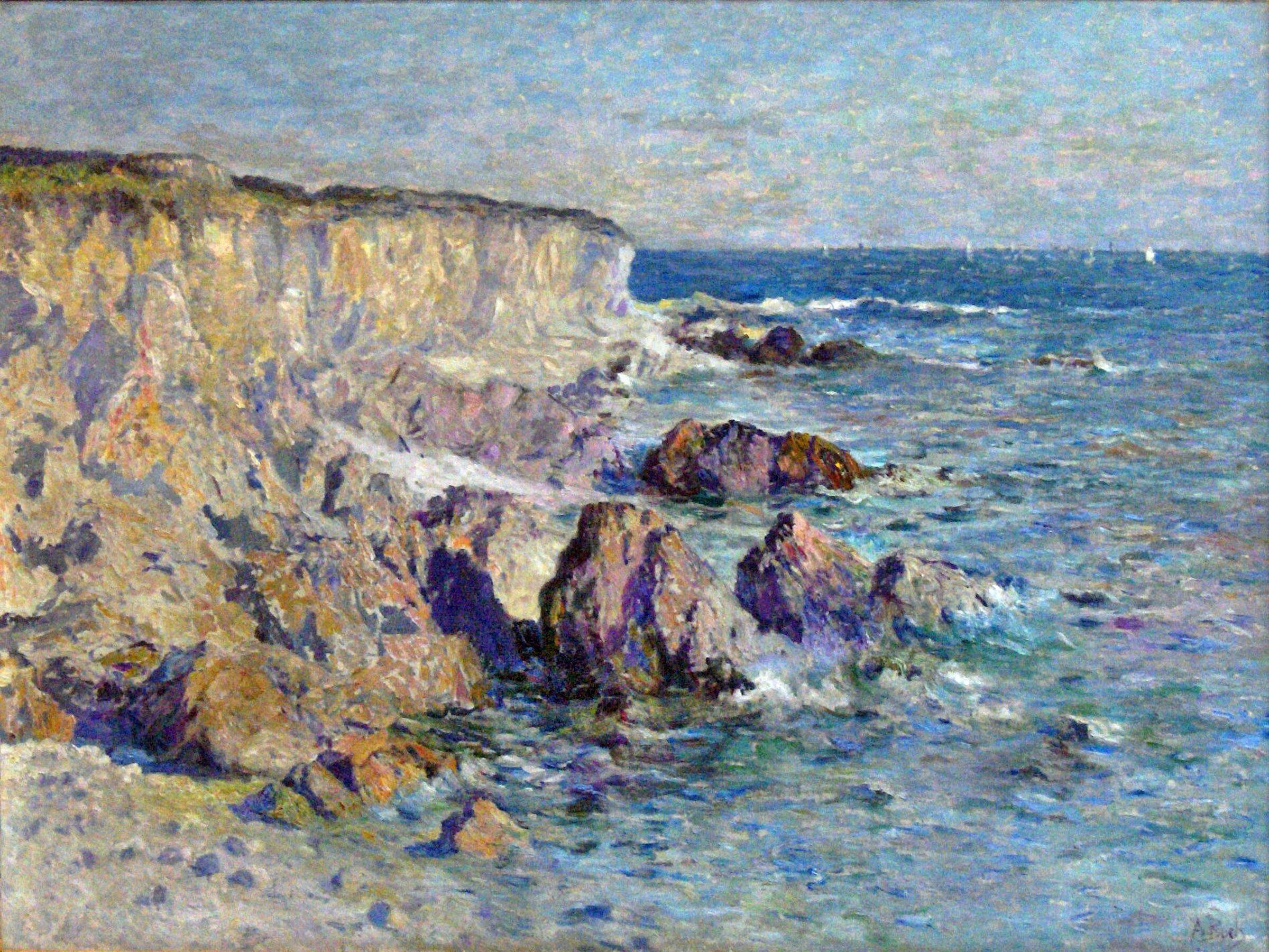
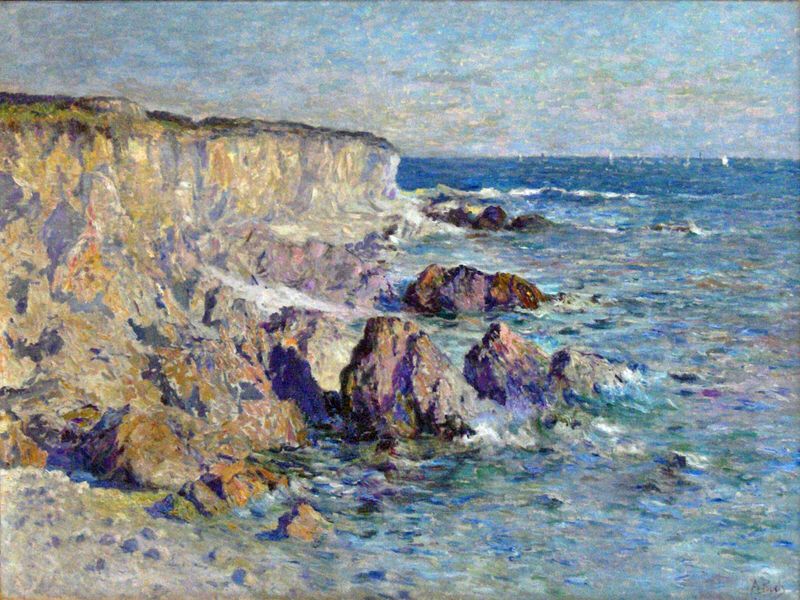 The Shores of Brittany
1901 · Royal Museums of Fine Arts of Belgium
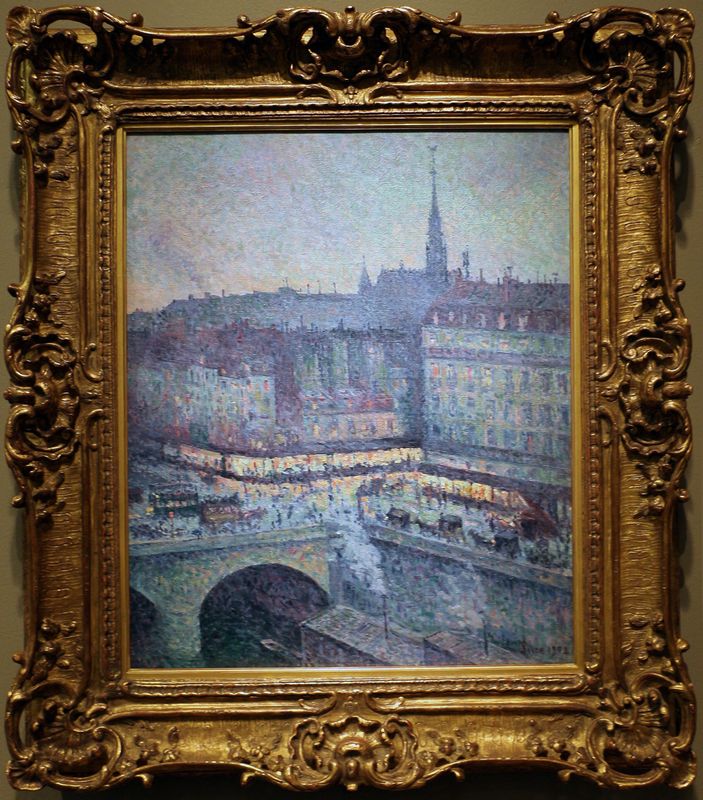 La Sainte-Chapelle
1902 · Art Institute of Chicago
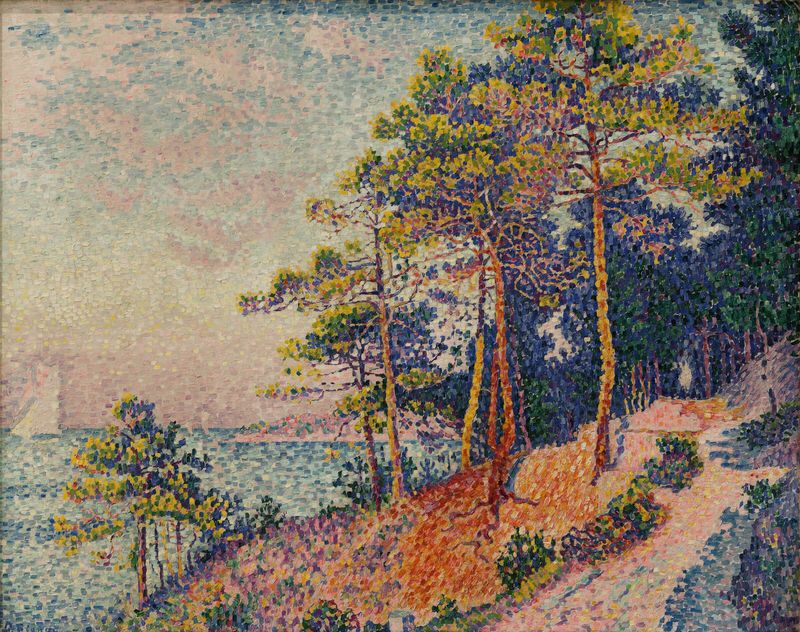 Le Sentier des Douanes
1905 · Museum of Grenoble
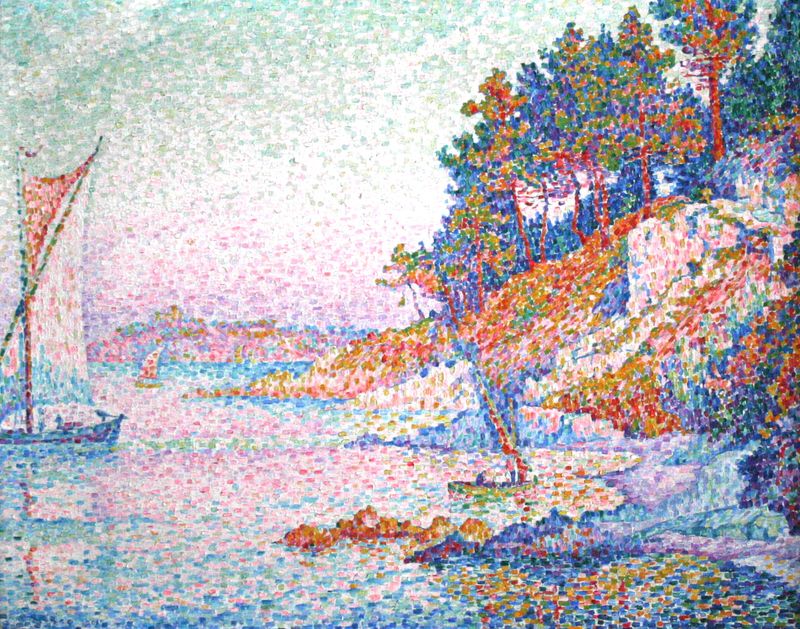 Calanque
1906 · Royal Museums of Fine Arts of Belgium
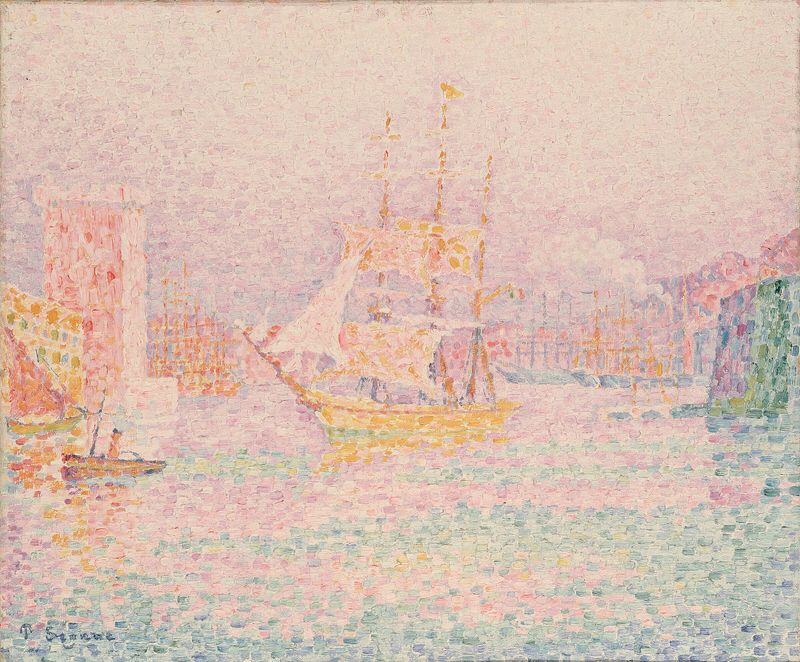 Port de Marseilles
1907 · Hermitage Museum
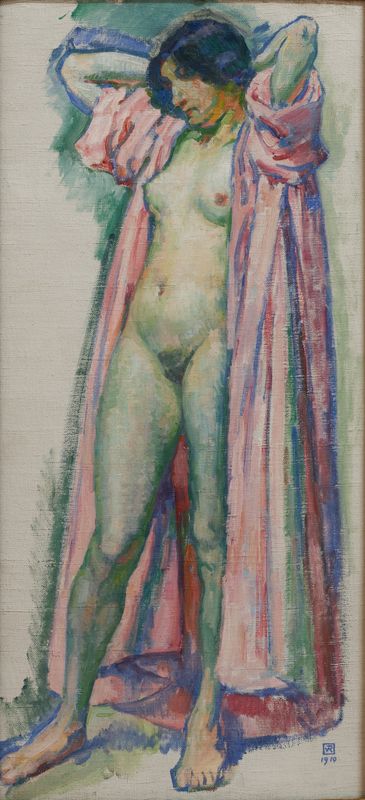 Woman in pink bathrobe
1910 · Museum of Grenoble
Take Divisionism to the museum
Point your phone at any painting and Art Whisper tells you its story — who made it, what to notice, and why it matters. Free to start.